

Investigating the association between prepregnancy body mass index and adverse pregnancy outcomes: a large cohort study of 536 098 Chinese pregnant women in rural China
Open accessThe DOI matches its Crossref record; 38 of the 39 references it cites were found in a registry or an index.
Abstract
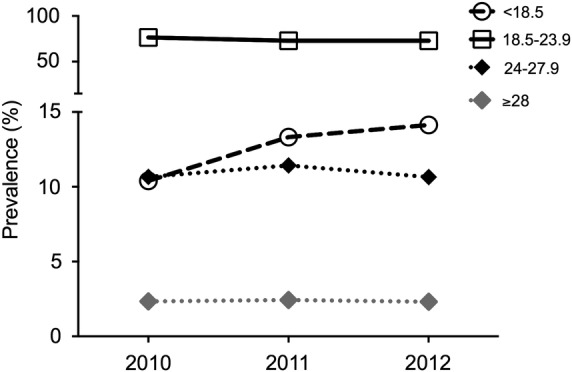
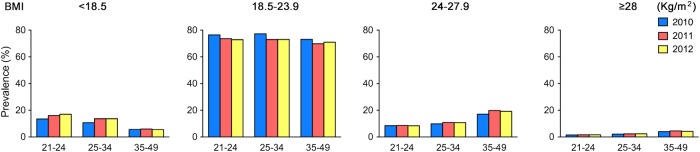
Objective: Unhealthy maternal weight before pregnancy increases the risk of various adverse pregnancy outcomes. We conducted a nutrition survey to provide baseline data on the prepregnant nutritional status of mothers in order to better understand the association between prepregnancy maternal body mass index (BMI) and adverse pregnancy outcomes. Design: A large, prospective, population-based cohort study. Setting: Data from the National Free Preconception Health Examination Project (NFPHEP) in China during 2010–2012. Participants: 536 098 pregnant women out of 2 120 131 were evaluated. Primary and secondary outcome measures: The primary adverse pregnancy outcomes included preterm birth (PTB), low birth weight (LBW), spontaneous miscarriage (SM), ectopic pregnancy (EP) and stillbirth (SB). A χ 2 test was used to compare the prevalence of each BMI category during 2010–2012. Univariable and multiple logistic regression analyses were performed to assess the association between prepregnancy BMI and various adverse pregnancy outcomes. Results: Between 2010 and 2012, the average BMI decreased from 21.31 to 21.16, while underweight prevalence increased from 10.40% to 14.14%. An age-stratified subgroup analysis indicated that the underweight prevalence increased from 13.52% to 17.02% among women aged 21–24 and from 10.72% to 13.71% among women aged 25–34. Overweight prevalence increased from 9.84% to 10.75% (25–34 years) and from 17.10% to 19.20% (35–49 years). Obesity prevalence increased from 2.17% to 2.42% and from 4% to 4.2% among women aged 25–34 and 35–49 respectively. Prepregnancy underweight was associated with PTB, LBW and SM; overweight women had an increased risk of LBW; obese women had a higher risk of LBW, SM, EP and SB. Conclusions: While the average prepregnancy BMI decreased, the prevalence of underweight individuals in a very large population significantly increased. The abnormal prepregnancy BMIs were associated with increased risks of adverse pregnancy outcomes. Most notably, underweight prepregnant women appeared to be at a greater risk of developing adverse pregnancy outcomes in China's rural areas.
Overview
The claims and statistics of this paper haven’t been checked yet.
Free: it reads the open-access text and checks the first 5 claims that cite a source we can check. Create a free account to check every claim.
Integrity signals
Registry
Cites
Statistics
Figures
Verification
Claims the paper makes
The claims and statistics of this paper haven’t been checked yet.
Free: it reads the open-access text and checks the first 5 claims that cite a source we can check. Create a free account to check every claim.
Claims other papers make about this one
Each is checked against this paper’s own text: does it say what the citing paper says it does?
The source backs part of the claim, not all of it — or backs it for a different population, condition or comparison.
In the citing paper
“Pan et al. 38 investigated more than half a million pregnancies in China and found that, although overweight was not a risk factor for miscarriage, BMI > 28 kg m–2 (cut‐off for obesity in Asians) was associated with a 16% greater risk.”
From Overweight, obesity and excessive weight gain in pregnancy as risk factors for adverse pregnancy outcomes: A narrative review (2022) · cites this paper as [38]
Experimental — accuracy not yet measuredThe cited source says what the claim attributes to it.
In the citing paper
“large studies of Asian populations indicate a modest but significant risk.”
From Overweight, obesity and excessive weight gain in pregnancy as risk factors for adverse pregnancy outcomes: A narrative review (2022) · cites this paper as [38]
Self-check
Percentages, sums and reported differences re-computed from the paper’s own numbers.
The self-check needs the paper’s full text.
Citations
Cites
Prevalence of Obesity and Trends in the Distribution of Body Mass Index Among US Adults, 1999-2010
Flegal, K. M., Carroll, M. D., Kit, B. K., & Ogden, C. L. (2012) · JAMA · doi:10.1001/jama.2012.39 · Cited by 5,385 · cited 1×
“were overweight or obese, defined as having a BMI of 25 or higher.(3) Overweight or obesity before pregnancy is associated with an increased risk of maternal and neonatal complications, such as gestational hypertension, preeclampsia, gestational diabetes, premature rupture of membranes, prematurity, macrosomia and sho…”
Background(2002) · PubMed · Cited by 1,755
Maternal obesity and pregnancy outcome: a study of 287 213 pregnancies in London
Sebire, N., Jolly, M., Harris, J., Wadsworth, J., Joffe, M., Beard, R., Regan, L., & Robinson, S. (2001) · International Journal of Obesity · doi:10.1038/sj.ijo.0801670 · Cited by 1,743
Bei‐Fan, Z., & the Cooperative Meta‐analysis Group of Working Group on Obesity in China (2002) · Asia Pacific Journal of Clinical Nutrition · doi:10.1046/j.1440-6047.11.s8.9.x · Cited by 1,270
Obesity, obstetric complications and cesarean delivery rate–a population-based screening study
Weiss, J. L., Malone, F. D., Emig, D., Ball, R. H., Nyberg, D. A., Comstock, C. H., Saade, G., Eddleman, K., Carter, S. M., Craigo, S. D., et al. (2004) · American Journal of Obstetrics and Gynecology · doi:10.1016/j.ajog.2003.09.058 · Cited by 1,138
Prepregnancy Weight and the Risk of Adverse Pregnancy Outcomes
Cnattingius, S., Bergström, R., Lipworth, L., & Kramer, M. S. (1998) · New England Journal of Medicine · doi:10.1056/nejm199801153380302 · Cited by 1,047 · cited 1×
“INTRODUCTION Prepregnancy body mass index (BMI) is believed to be an important indicator of pregnancy outcomes.(1) 2 Being underweight or overweight prior to pregnancy may increase risk for pregnancy complications.”
BackgroundZhou, Cooperative, B.-F., & on (2002) · 生物医学与环境科学:英文版 · Cited by 992
Pregnancy complications and outcomes among overweight and obese nulliparous women
(2001) · American Journal of Public Health · doi:10.2105/ajph.91.3.436 · Cited by 757
Leptin and reproduction: a review
Moschos, S., Chan, J. L., & Mantzoros, C. S. (2002) · Fertility and Sterility · doi:10.1016/s0015-0282(01)03010-2 · Cited by 557 · cited 1×
“deficiencies.(32) Some studies have suggested abnormally low serum leptin concentrations were detected in women who had a miscarriage.”
Background
Cited by
Langley‐Evans, S. C., Pearce, J., & Ellis, S. (2022) · Journal of Human Nutrition and Dietetics · doi:10.1111/jhn.12999 · Cited by 288
“Pan et al.(38) investigated more than half a million pregnancies in China and found that, although overweight was not a risk factor for miscarriage, BMI > 28 kg m (cut‐off for obesity in Asians) was associated with a 16% greater risk.”
BackgroundVats, H., Saxena, R., Sachdeva, M. P., Walia, G. K., & Gupta, V. (2021) · Obesity Research & Clinical Practice · doi:10.1016/j.orcp.2021.10.005 · Cited by 236
Liu, L., Ma, Y., Wang, N., Lin, W., Liu, Y., & Wen, D. (2019) · BMC Pregnancy and Childbirth · doi:10.1186/s12884-019-2249-z · Cited by 192
Tran, N. T., Nguyen, L. T., Berde, Y., Low, Y. L., Tey, S. L., & Huynh, D. T. T. (2019) · BMC Pregnancy and Childbirth · doi:10.1186/s12884-019-2643-6 · Cited by 69
Mocking, M., Savitri, A. I., Uiterwaal, C. S. P. M., Amelia, D., Antwi, E., Baharuddin, M., Grobbee, D. E., Klipstein‐Grobusch, K., & Browne, J. L. (2018) · BMC Public Health · doi:10.1186/s12889-018-5704-2 · Cited by 63
Gondwe, A., Ashorn, P., Ashorn, U., Dewey, K. G., Maleta, K. M., Nkhoma, M., Mbotwa, J., & Jorgensen, J. M. (2018) · PLoS ONE · doi:10.1371/journal.pone.0206035 · Cited by 60
Effect of PM2.5 on macrosomia in China: A nationwide prospective cohort study
Chen, S., Wang, S., Li, T., Zhu, H., Liang, S., Xu, K., Zhang, Y., Yuan, X., Yang, Y., Pan, H., et al. (2019) · Pediatric Obesity · doi:10.1111/ijpo.12584 · Cited by 51
Self-citationLi, J., Wang, H., Hao, J., Chen, Y., Liu, L., Yu, Z., Fu, L., Tao, F., & Xu, D. (2017) · Environmental Pollution · doi:10.1016/j.envpol.2017.05.009 · Cited by 46
Flores, T. R., Mielke, G. I., Wendt, A. T., Nunes, B. P., & Bertoldi, A. D. (2018) · European Journal of Clinical Nutrition · doi:10.1038/s41430-017-0073-y · Cited by 41
Addressing the gaps in nutritional care before and during pregnancy
Killeen, S. L., Geraghty, A. A., O’Brien, E. C., O'Reilly, S. L., Yelverton, C. A., & McAuliffe, F. M. (2021) · Proceedings of The Nutrition Society · doi:10.1017/s0029665121003724 · Cited by 37
“Evidence suggests that both overweight and underweight in women are associated with higher risk of complications such as spontaneous abortion compared to those with a healthy BMI((126)).”
Impact of maternal obesity on the risk of preterm delivery: insights into pathogenic mechanisms
Tersigni, C., Neri, C., D’Ippolito, S., Garofalo, S., Martino, C., Lanzone, A., Scambia, G., & Simone, N. D. (2020) · The Journal of Maternal-Fetal & Neonatal Medicine · doi:10.1080/14767058.2020.1817370 · Cited by 34
Early Life Programming of Health and Disease: The Long-Term Consequences of Obesity in Pregnancy
Langley‐Evans, S. C. (2022) · Journal of Human Nutrition and Dietetics · doi:10.1111/jhn.13023 · Cited by 33
Wu, C., Li, J., Xia, W., Li, Y., Zhang, B., Zhou, A., Hu, J., Li, C., Zhao, H., Jiang, M., et al. (2018) · Environment International · doi:10.1016/j.envint.2018.07.022 · Cited by 32
Self-citationNationwide-free preconception care strategy: Experience from China
Xu, J., Li, X., & Zhou, Q. (2022) · Frontiers in Public Health · doi:10.3389/fpubh.2022.934983 · Cited by 29
“14% in 2012 (53), especially among women younger than 35 years (51).”
BackgroundLatent Class Analysis of Low Birth Weight and Preterm Delivery among Australian Women
HENDRYX, M. S., Chojenta, C., & Byles, J. (2020) · The Journal of Pediatrics · doi:10.1016/j.jpeds.2019.11.007 · Cited by 29
Zeng, M., Liu, Y., Mao, Y., He, Y., Li, M., Liu, J., Zhu, Q., Chen, L., & Zhou, W. (2022) · BMC Pregnancy and Childbirth · doi:10.1186/s12884-022-04836-3 · Cited by 28
Chen, Y., Wan, K., Gong, Y., Zhang, X., Liang, Y., Wang, X., Feng, P., He, F., Zhou, R., Yang, D., et al. (2021) · Scientific Reports · doi:10.1038/s41598-021-87135-9 · Cited by 27
Gudipally, M., Farooq, F., Basany, K., Haggerty, C. L., Tang, G., Kusneniwar, G. N., Jammy, G. R., Bunker, C. H., & Reddy, P. S. (2022) · AJOG Global Reports · doi:10.1016/j.xagr.2022.100134 · Cited by 23
“comparison across studies and populations is often difficult because of variation in BMI categorization.(13,54,80,81,83,88) −101 Hence, future intervention trials”
BackgroundAssociation of pre-pregnancy body mass index with adverse pregnancy outcome among first-time mothers
Li, L., Chen, Y., Lin, Z., Lin, W., Liu, Y., Ou, W., Zeng, C., & Li, K. (2020) · PeerJ · doi:10.7717/peerj.10123 · Cited by 24
Habib, M., Raynes‐Greenow, C. H., Ariff, S., Soofi, S. B., Hussain, A., Junejo, Q., Hussain, A., Shaheen, F., & Black, K. I. (2017) · Eastern Mediterranean Health Journal · doi:10.26719/2017.23.11.754 · Cited by 22
“Previous studies have also demonstrated the association between maternal underweight and LBW (41,42).”
BackgroundResultBai, X., Zhou, Z., Luo, Y., Yang, H., Zhu, H., Chen, S., & Pan, H. (2022) · Journal of Personalized Medicine · doi:10.3390/jpm12040550 · Cited by 21
Kudesia, R., Talib, H. J., & Pollack, S. E. (2016) · Journal of Pediatric and Adolescent Gynecology · doi:10.1016/j.jpag.2016.07.004 · Cited by 21
Wei, J., Wang, T., Shu, J., Liu, Y., Song, X., Sun, M., Zhong, T., Chen, Q., Luo, M., Zhang, S., et al. (2022) · Frontiers in Public Health · doi:10.3389/fpubh.2022.1036689 · Cited by 20
Self-citationCai, J., Liu, L., Jiang, X., Li, P., Sha, A., & Ren, J. (2020) · BJOG An International Journal of Obstetrics & Gynaecology · doi:10.1111/1471-0528.16378 · Cited by 18
Guo, T., Yang, Y., Jia, J., Deng, Y., Wang, Y., Zhang, Y., Zhang, H., He, Y., Zhao, J., Peng, Z., et al. (2022) · British Journal Of Nutrition · doi:10.1017/s000711452200054x · Cited by 18
“increased risk of LGA, while maternal preconception underweight is associated with an increased risk of SGA(17,18).”
BackgroundSelf-citationMisgina, K. H., Boezen, H. M., van der Beek, E. M., Mulugeta, A., & Groen, H. (2021) · BMJ Open · doi:10.1136/bmjopen-2020-043484 · Cited by 15
Wan, O. Y., Chan, S. S. C., Chung, J. P. W., Kwok, J. W., Lao, T. T., & Sahota, D. S. (2020) · Hong Kong Medical Journal · doi:10.12809/hkmj198276 · Cited by 15
Wang, X., Lin, Y., Liu, Z., Huang, X., Chen, R., & Huang, H. (2021) · BMC Pregnancy and Childbirth · doi:10.1186/s12884-021-04027-6 · Cited by 14
“[23] indicated that prepregnancy obesity was associated with a higher risk of stillbirth than normal weight; thus, obese pregnant women should be guided towards an appropriate diet and exercise.”
BackgroundMaternal health behaviors during pregnancy in rural Northwestern China
Ma, Y., Gao, Y., Li, J. J., Sun, A., Wang, B., Zhang, J., Dill, S., Medina, A., & Rozelle, S. (2020) · BMC Pregnancy and Childbirth · doi:10.1186/s12884-020-03444-3 · Cited by 13
Zeng, M., He, Y., Li, M., Liu, Y., Zhu, Q., Liu, J., Mao, Y., Chen, Q., Du, J., & Zhou, W. (2021) · BMJ Open · doi:10.1136/bmjopen-2020-048530 · Cited by 13
Qu, P., Liu, F., Zhao, D., Wang, Y., Wang, M., Wang, L., Dang, S., Wang, D., Shi, J., & Shi, W. (2019) · Reproductive BioMedicine Online · doi:10.1016/j.rbmo.2019.06.007 · Cited by 12
Wu, M., Yan, Y., Zou, S., Wu, S., Feng, L., Liu, Y., Guo, W., Tang, W., & Liang, K. (2022) · AIDS Care · doi:10.1080/09540121.2022.2039358 · Cited by 11
“(Pan et al., 2016).”
Hu, R., Chen, Y., Zhang, Y., Qian, Z. M., Liu, Y., Vaughn, M. G., Xu, S., Zheng, T., Liu, M., & Zhang, B. (2017) · BMJ Open · doi:10.1136/bmjopen-2017-017309 · Cited by 11
Self-citationThe body mass index and the risk of ectopic pregnancy: a 5-year retrospective case-control study
Ji, J.-S., Liu, L., Huang, H., Chen, H., Xiao, L., Lu, X.-Y., Ni, Y.-Y., Jia, W., & Huang, L. (2024) · BMC Pregnancy and Childbirth · doi:10.1186/s12884-024-06319-z · Cited by 10
“Another study suggested that obese women were at higher risk of ectopic pregnancy [16].”
BackgroundBai, X., Zhou, Z., Su, M., Li, Y., Yang, L., Liu, K., Yang, H., Zhu, H., Chen, S., & Pan, H. (2022) · Frontiers in Public Health · doi:10.3389/fpubh.2022.940182 · Cited by 8
Self-citationAlmutairy, S., & Aldakhil, L. O. (2022) · Journal of Pregnancy · doi:10.1155/2022/5778321 · Cited by 8
Ge, X., Wang, K., Sun, Y., & Bu, Z. (2023) · Reproductive Biology and Endocrinology · doi:10.1186/s12958-023-01146-x · Cited by 7
The Impact of Nutrient Intake on Pregnancy Outcomes: Narrative Review
Yadak, A., Al-Kuran, O., Allehdan, S., Badran, E., & Tayyem, R. (2025) · Current Research in Nutrition and Food Science Journal · doi:10.12944/crnfsj.13.2.4 · Cited by 7
McCurdy, R. J., Delgado, D. J., Baxter, J. K., & Berghella, V. (2020) · The Journal of Maternal-Fetal & Neonatal Medicine · doi:10.1080/14767058.2020.1802714 · Cited by 6
Luo, Y., Zhang, Y., Pan, H., & Chen, S. (2021) · Frontiers in Public Health · doi:10.3389/fpubh.2021.735699 · Cited by 5
Self-citationXu, Q., Zhou, Q., Yang, Y., Liu, F., Wang, L., Wang, Q., Shen, H., Xu, Z., Zhang, Y., Yan, D., et al. (2021) · Frontiers in Reproductive Health · doi:10.3389/frph.2021.622346 · Cited by 5
Self-citationPriorities for Research in Agricultural Education.
Mannebach, A. J. (1981) · Cited by 4
Bai, X., Zhou, Z., Zheng, Z., Li, Y., Liu, K., Zheng, Y., Yang, H., Zhu, H., Chen, S., & Pan, H. (2024) · BMC Medical Informatics and Decision Making · doi:10.1186/s12911-024-02556-6 · Cited by 4
Self-citationRobson, S., & Norman, R. J. (2017) · Australian and New Zealand Journal of Obstetrics and Gynaecology · doi:10.1111/ajo.12693 · Cited by 4
Xu, R., Liu, Y., Cui, H., Xu, X., Wang, F., Meng, Z., & Liu, Q. (2024) · Heliyon · doi:10.1016/j.heliyon.2024.e35628 · Cited by 4
“The nutritional status before pregnancy is most evaluated by pre-pregnancy body mass index (BMI), with a low BMI indicating minimal maternal nutrient reserves [46].”
BackgroundHajri, W. S., Sukurni, S., Afrini, I. M., Saida, S., & Sukmadi, A. (2025) · Abdimas Galuh · doi:10.25157/ag.v7i1.17637 · Cited by 4
Kung, W., Kuo, H., Chang, C.-F., Zen, Y., & Lin, C. (2024) · Reproductive Sciences · doi:10.1007/s43032-024-01525-8 · Cited by 3
de la Riviere, M.-E. L., Bousquet, M., Tavernier, E., Maillard, V., Desmarchais, A., Uzbekova, S., Guérif, F., Binet, A., & Elis, S. (2025) · Journal of the Endocrine Society · doi:10.1210/jendso/bvaf066 · Cited by 3
“…involving more than half a million pregnancies showed that a BMI > 28 kg/m 2 (the threshold for obesity in Asians) was associated with a 16% higher risk of miscarriage [41]. was further confirmed by another Asian study that reported a higher risk of miscarriage associated with both overweight (8”
Utami, T. W., Wiyono, L., Muskitta, N. I., Soer, N. H. P., Sumarsudi, K. H. S., & Felicia, I. (2020) · Pakistan Journal of Nutrition · doi:10.3923/pjn.2020.460.467 · Cited by 3
Association of Normal-Range Hemoglobin A1c Value During Midpregnancy with Adverse Birth Outcomes
Zhang, L., Zhai, R., Huo, Z., Wei, Z., Zhang, Z., Wei, R., & Man, D. (2021) · International Journal of General Medicine · doi:10.2147/ijgm.s313952 · Cited by 3
Ali, E. H., Alkindi, S. S. A., Osman, M. A., Hilali, W., Mirgani, H. M., Adam, G., Morsi, M. M., Hussein, I. S., & Ghebremeskel, K. (2021) · Oman Medical Journal · doi:10.5001/omj.2021.81 · Cited by 3
Nutritional Knowledge of Prospective Brides in Indonesia: A Systematic Review
Siregar, M. H. (2023) · JURNAL Al-AZHAR INDONESIA SERI SAINS DAN TEKNOLOGI · doi:10.36722/sst.v8i1.1251 · Cited by 3
“In particular, underweight pregnant women appear to be at greater risk for adverse pregnancy outcomes in rural China.[7], therefore it is important to ensure that the nutritional status of the prospective bride and groom is normal.”
Liu, Z., Zhou, X., & Zhu, J. (2025) · European Journal of Clinical Pharmacology · doi:10.1007/s00228-024-03800-8 · Cited by 2
PREGNANCY OUTCOMES DO INFLUENCE BY EXTREMES OF BODY MASS INDEX
Razzaq, L., Devi, R., Tariq, S., Seetlani, A., & Jamshed, S. (2021) · Pakistan Armed Forces Medical Journal · doi:10.51253/pafmj.v71i2.4841 · Cited by 2
Marchi, J. (2020) · Arrow@dit (Dublin Institute of Technology) · Cited by 1
Decreasing trend in lean body mass in young Japanese adult women associated with their birth weightPreprint
Hisatsune, M., & Hakoda, M. (2023) · Research Square · doi:10.21203/rs.3.rs-3479514/v1
Langley-Evans, S. (2021) · Wiley eBooks · doi:10.1002/9781119717577.ch3
(2020) · PeerJ · doi:10.7287/peerj.10123v0.1/reviews/2
“The proportions of overweight and obesity were lower than underweight in our study, which were similar to previously reported data from other Chinese studies (Pan et al., 2016).”
BackgroundResultAssociation between pre-pregnancy BMI and preterm birth in Chinese women: a retrospective study
Li, Q., Lu, X., Zhang, J., & Duan, T. (2026) · Annals of Medicine · doi:10.1080/07853890.2026.2639163
“…association between preconception underweight and PTB, however, neither overweight nor obesity was significantly associated with PTB risk [17]; The study adopted data from the National Free Preconception Checkups Project (NFPCP) in China during 2010–2012, and included women who had…”
Bai, X., Zhou, Z., Zheng, Z., Li, Y., Liu, K., Zheng, Y., Yang, H., Zhu, H., Chen, S., & Pan, H. (2024) · Figshare · doi:10.6084/m9.figshare.26074219
Self-citationAddressing the inequalities in maternal and child healthcare utilization
(2023) · Frontiers research topics · doi:10.3389/978-2-8325-4130-2
Luo, Y., Zhang, Y., Pan, H., & Chen, S. (2021) · doi:10.3389/fpubh.2021.735699.s001
Self-citationBai, X., Zhou, Z., Su, M., Li, Y., Yang, L., Liu, K., Yang, H., Zhu, H., Chen, S., & Pan, H. (2022) · doi:10.3389/fpubh.2022.940182.s001
Self-citationMohammednur, M. M. (2017) · University of the Western Cape Electronic Theses and Dissertations Repository (University of the Western Cape)
SANTOS, J. A. (2017) · LA Referencia (Red Federada de Repositorios Institucionales de Publicaciones Científicas)
Metadata
- Authors
- Pan, Y., Zhang, S., Wang, Q., Shen, H., Zhang, Y., Li, Y., Yan, D., & Sun, L.
- Affiliations
- Jiangsu Province Hospital (CN)
- National Health and Family Planning Commission (CN)
- National Research Institute for Family Planning, Beijing, China
- Corresponding author
- Sun, Lizhou
- Venue
- BMJ Open
- Publisher
- BMJ
- Published
- 2016-07
- Volume
- 6
- Issue
- 7
- Pages
- e011227
- ISSN
- 2044-6055 (ISSN-L)
- PMC
- PMC4964214
- OpenAlex
- W2478048921
- Cited by
- 58
- References
- 39
- Citations by year
- 2026: 1 · 2025: 3 · 2024: 4 · 2023: 3 · 2022: 11 · 2021: 12 · 2020: 10 · 2019: 4 · 2018: 4 · 2017: 4 · 2016: 1
- FWCI
- 5.59
- Type
- journal article
- Language
- en
- Open access
- gold
- doi.org
- Licence
- cc-by-nc
- Locations
- BMJ Open (publishedVersion, cc-by-nc)
- Europe PMC (PubMed Central) (publishedVersion, cc-by-nc)
- PubMed Central (publishedVersion, cc-by-nc)
- PubMed (publishedVersion)
- HighWire Press Open Archive (submittedVersion)
- Funders
- National Health and Family Planning Commission of the People's Republic of China (AMCHS-2014-03)
- Topics
- Health Sciences › Medicine › Obstetrics and Gynecology › Gestational Diabetes Research and Management
- Health Sciences › Medicine › Pediatrics, Perinatology and Child Health › Maternal and Neonatal Healthcare
- Health Sciences › Medicine › Public Health, Environmental and Occupational Health › Obesity, Physical Activity, Diet
- Keywords
- pre-pregnancy body mass index, maternal obesity, maternal underweight, maternal overweight, adverse pregnancy outcomes, preterm birth, low birth weight, miscarriage, ectopic pregnancy, stillbirth, maternal nutritional status, rural China, maternal age, Chinese pregnant women, maternal nutrition education
- MeSH terms
- Abortion, Spontaneous, Adult, China, Female, Humans, Infant, Low Birth Weight, Middle Aged, Nutritional Status, Pregnancy, Pregnancy Outcome, Pregnancy, Ectopic, Prospective Studies, Rural Health, Body Mass Index, Prevalence, Premature Birth, Stillbirth, Young Adult
About these checks
Registry, retraction, Cites and statistics results are computed, not judged, with one exception: a printed reference that no index lists is read once by a model before it counts as a citation error. Claims are extracted by a model and kept only when their quote appears verbatim in the text; each cited source is then checked, with a model’s help, for whether it says what the claim relies on. Those verdicts can be wrong — read the claim’s quote and the cited source before relying on one.
Statistics and arithmetic are recomputed, not judged.
Confidence bands are shown only for fields calibrated on our annotated test set. None is calibrated yet, so no band is shown.
What counts as a claim ›How we measure confidence ›How we check this ›
Are you an author, or do you see a problem with this page? Request a review
Data sources
Bibliographic data: Semantic Scholar, OpenAlex, Crossref.
Contains information from the Semantic Scholar Academic Graph Datasets, made available under the ODC Attribution License (ODC-BY 1.0).
Semantic Scholar’s data is described in: Kinney, R., et al. (2023). The Semantic Scholar Open Data Platform. arXiv:2301.10140.
