

The DOI matches its Crossref record; 86 of the 89 references it cites were found in a registry or an index; 15 of the 62 sources its claims cite were checked for support.
Comparing group-based acceptance and commitment therapy (ACT) with enhanced usual care for adolescents with functional somatic syndromes: a study protocol for a randomised trial
Open accessAbstract
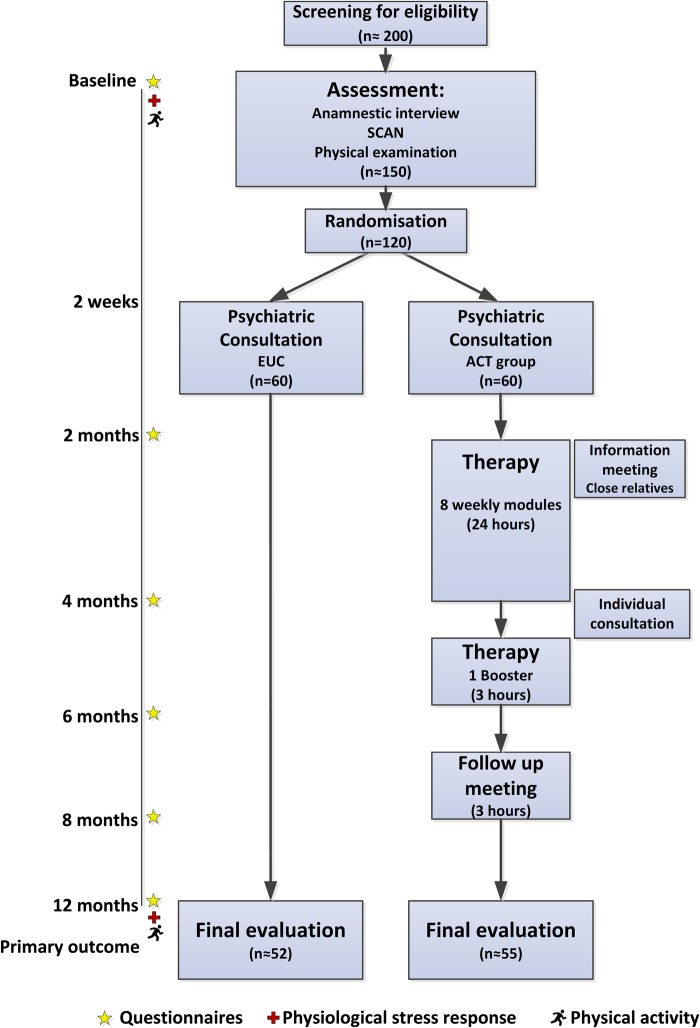
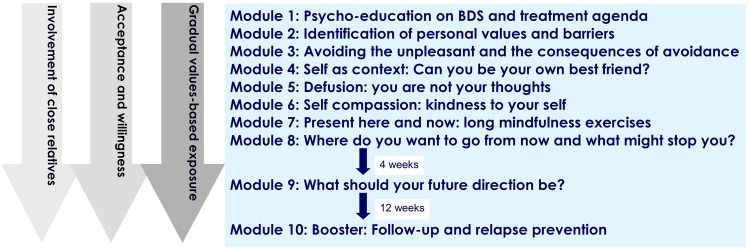
Introduction: Functional somatic syndromes (FSS) are common in adolescents, characterised by severe disability and reduced quality of life. Behavioural treatments such as acceptance and commitment therapy (ACT) has shown promising results in children and adolescents with FSS, but has focused on specific syndromes such as functional pain. The current study will compare the efficacy of group-based ACT with that of enhanced usual care (EUC) in adolescents with a range of FSS operationalised by the unifying construct of multiorgan bodily distress syndrome (BDS). Methods and analysis: A total of 120 adolescents aged 15-19 and diagnosed with multiorgan BDS, of at least 12 months duration, will be assessed and randomised to either: (1) EUC: a manualised consultation with a child and adolescent psychiatrist and individualised treatment plan or (2) manualised ACT-based group therapy plus EUC. The ACT programme consists of 9 modules (ie, 27 hours) and 1 follow-up meeting (3 hours). The primary outcome is physical health, assessed by an Short Form Health Survey (SF-36) aggregate score 12 months after randomisation. Secondary outcomes include selfreported symptom severity, symptom interference, depression and anxiety, illness worry, perceived stress and global improvement; as well as objective physical activity and bodily stress response measured by heart rate variability, hair cortisol and inflammatory biomarkers. Process measures are illness perception, illness-related behaviour and psychological flexibility. Ethics and dissemination: The study is conducted in accordance with Helsinki Declaration II. Approval has been obtained from the Science Ethics Committee of the Central Denmark Region and the Danish Data Protection. The results will be sought to be published according to the CONSORT statement in peer-reviewed journals. Discussion: This is one of the first larger randomised clinical trials evaluating the effect of a group-based intervention for adolescents with a range of severe FSS.
Overview
CoChat Summary
TL;DR
This is a study protocol for a single-site, non-blinded randomized controlled trial comparing manualized group-based ACT plus enhanced usual care with enhanced usual care alone for adolescents with multiorgan bodily distress syndrome (BDS). The trial plans to enroll 120 adolescents aged 15–19 and will assess physical health at 12 months as the primary outcome.
Key findings
- Not stated in the paper.
- The planned sample is 120 adolescents aged 15–19, randomized to EUC or ACT-based group therapy plus EUC.
- The ACT program consists of 9 modules (27 hours total) plus 1 follow-up meeting (3 hours).
- The primary outcome is physical health at 12 months, measured by an SF-36 aggregate score based on physical functioning, bodily pain, and vitality, with a score range of 15 to 65.
Methods
- Design: Single-site, non-blinded randomized controlled trial with two conditions: group-based ACT and enhanced usual care.
- Sample/data: Adolescents aged 15–19 with multiorgan BDS of at least 12 months’ duration, moderate-to-severe impairment, and Danish language/background criteria; 120 participants are planned.
- Analysis: Intention-to-treat analysis using random-effects model regression adjusted for prognostic baseline characteristics; missing data will be examined with a random-effects model on multiple imputed data.
Limitations
- The paper states there is no comparison with an evidence-based control treatment; the control is enhanced usual care rather than an active evidence-based psychotherapy.
- The paper states blinding is not possible for participants, therapists, and the clinician providing the standard psychiatric consultation.
- The paper states the study is in a specialized setting, which may limit generalizability to everyday clinical practice and other populations; it also says results cannot automatically be applied to younger adolescents.
- Evident from the text: this is a protocol, so the paper reports planned methods and outcomes rather than trial results.
Model-written summary. Check it against the paper before relying on it.
Integrity signals
Registry
Cites
Statistics
Figures
Verification
Claims the paper makes
9 Valid · 3 Not valid · 32 Not checked · 35 Own results and interpretations
Every source the paper cites for this claim was checked and supports it.
In the paper
“By reducing avoidance behaviour and symptom interference, ACT can increase functioning and enhance quality of life, through value-driven acceptance and exposure strategies.48”
§ Comparing group-based acceptance and commitment therapy (ACT) with enhanced usual care for adolescents with functional somatic syndromes: a study protocol for a randomised trial > Background Functional somatic syndromes (FSS), including chronic fatigue syndrome, juvenile fibromyalgia, functional gastrointestinal disorders and idiopathic pain syndromes, are well-known conditions in adolescents. FSS are diagnostic unities representing clusters of related functional somatic symptoms. Prevalence rates vary considerably due to differences in case definitions, assessment instruments and study populations.1–3 Studies attempting to cover the whole range of different functional somatic symptoms suggest that 5–10% of children and adolescents in the general population are substantially affected and likely to need care.4 5 Suffering from FSS during adolescence often has high personal and societal consequences. Adolescents have a higher risk of psychosocial problems such as social isolation, long-term school absence and reduced quality of life,6 and anxiety and depression are common comorbidities.7 8 A substantial proportion show continuity of functional symptoms into adulthood9–11 and are less likely to obtain a college education.9 Furthermore, adolescents diagnosed with FSS have higher overall healthcare costs due to increased use of medication and healthcare services.9 12 The aetiology of FSS remains unknown. Recent studies suggest a potential correlation between physiological stress and FSS, with physical inactivity as a potential covariate.13–16 It is proposed that a (patho)physiological response to prolonged or severe mental and/or physical stress in genetically susceptible individuals may trigger symptom development.17 High co-occurrence of different types of FSS, especially various pain syndromes, has been shown in children and adolescents.18–20 Children reporting multiple symptoms have an associated higher frequency of distress and impairment (eg, higher kindergarten/school absenteeism and consultations with physicians).21 Moreover, adult patients presenting with multiple symptoms from several organ systems have a poorer prognosis and a higher risk of chronification.22–24 Thus, an attempt to recognise the most severely affected patients with the highest illness burden may encompass sampling patients with the highest symptom load (ie, multiple symptoms from several organ systems). Recently, the empirically based unifying diagnostic category bodily distress syndrome (BDS) was introduced.25 The diagnosis describes specific symptom patterns and includes a multiorgan subtype and four single organ subtypes; in adult samples, it has been shown to capture a range of FSS including fibromyalgia, irritable bowel syndrome, non-cardiac chest pain and chronic fatigue syndrome.26 Multiorgan BDS comprising multiple symptoms from at least three specific symptom groups thus offers a diagnostic unity potentially including the most severely affected patients. Cognitive–behavioural therapy (CBT) has been shown to reduce symptoms and increase functioning in adults with FSS,27–30 whereas the evidence for treatment in adolescents is sparse. Family-based CBT and internet-delivered CBT have proven effective in young patients with specific FSS.31–36 However, the development of specifically tailored treatments for each FSS or symptom profile seems to be an inefficient strategy due to the costly nature of establishing separate clinics in each medical (sub)specialty, the fragmented care available and difficulty in handling multisymptomatic patients at those clinics.17 37 38 Recent studies suggest that adult patients with various FSS can feasibly receive the same treatment delivered in a group format, regardless of their main functional symptom.39 40 In adolescents, group treatment has been widely used and shown to be feasible in the treatment of psychiatric and non-psychiatric diseases.41 42 Group format offers several benefits including peer modelling, diminishment of stigma, increased motivation and higher acceptance of feedback from peers as opposed to professionals.43 Hence, a unified group-based treatment may be advantageous for adolescents with various FSS due to feasibility, accessibility of treatment and potential healthcare savings. Acceptance and commitment therapy (ACT), which derives from CBT, has shown promising results in children and adolescents with chronic functional pain.44 45 Evidence suggests that acceptance of pain is related to enhanced physical and emotional functioning, whereas attempts to control pain may lead to higher pain and disability.46 47 By reducing avoidance behaviour and symptom interference, ACT can increase functioning and enhance quality of life, through value-driven acceptance and exposure strategies.48 Symptom avoidance seems to be a general problem leading to disability and lower quality of life in patients with FSS.49 This provides a rationale for a therapeutic approach focused on reduction of avoidance behaviour and acceptance of somatic symptoms.
What the sources say
- Supportedcites [48] source
The Acceptance section (p. 7) describes acceptance as an alternative to avoidance that increases values-based action, and Committed action (p. 9) includes exposure among ACT's behavior-change methods. Research on ACT (p. 12) links psychological flexibility with better quality-of-life outcomes, while Other studies (p. 19) reports improved functioning after ACT-based treatment. (LLM, conf=0.86)
plainstates a cause- Asserted: passes — The authors put it forward as true.
- Checkable: passes — It can be checked against evidence.
- Load-bearing: passes — The paper’s conclusions depend on it.
- Based: passes — The paper gives a reason why it holds.
- Supported
In the paper
“Acceptance and commitment therapy (ACT), which derives from CBT, has shown promising results in children and adolescents with chronic functional pain.44 45”
§ Comparing group-based acceptance and commitment therapy (ACT) with enhanced usual care for adolescents with functional somatic syndromes: a study protocol for a randomised trial > Background Functional somatic syndromes (FSS), including chronic fatigue syndrome, juvenile fibromyalgia, functional gastrointestinal disorders and idiopathic pain syndromes, are well-known conditions in adolescents. FSS are diagnostic unities representing clusters of related functional somatic symptoms. Prevalence rates vary considerably due to differences in case definitions, assessment instruments and study populations.1–3 Studies attempting to cover the whole range of different functional somatic symptoms suggest that 5–10% of children and adolescents in the general population are substantially affected and likely to need care.4 5 Suffering from FSS during adolescence often has high personal and societal consequences. Adolescents have a higher risk of psychosocial problems such as social isolation, long-term school absence and reduced quality of life,6 and anxiety and depression are common comorbidities.7 8 A substantial proportion show continuity of functional symptoms into adulthood9–11 and are less likely to obtain a college education.9 Furthermore, adolescents diagnosed with FSS have higher overall healthcare costs due to increased use of medication and healthcare services.9 12 The aetiology of FSS remains unknown. Recent studies suggest a potential correlation between physiological stress and FSS, with physical inactivity as a potential covariate.13–16 It is proposed that a (patho)physiological response to prolonged or severe mental and/or physical stress in genetically susceptible individuals may trigger symptom development.17 High co-occurrence of different types of FSS, especially various pain syndromes, has been shown in children and adolescents.18–20 Children reporting multiple symptoms have an associated higher frequency of distress and impairment (eg, higher kindergarten/school absenteeism and consultations with physicians).21 Moreover, adult patients presenting with multiple symptoms from several organ systems have a poorer prognosis and a higher risk of chronification.22–24 Thus, an attempt to recognise the most severely affected patients with the highest illness burden may encompass sampling patients with the highest symptom load (ie, multiple symptoms from several organ systems). Recently, the empirically based unifying diagnostic category bodily distress syndrome (BDS) was introduced.25 The diagnosis describes specific symptom patterns and includes a multiorgan subtype and four single organ subtypes; in adult samples, it has been shown to capture a range of FSS including fibromyalgia, irritable bowel syndrome, non-cardiac chest pain and chronic fatigue syndrome.26 Multiorgan BDS comprising multiple symptoms from at least three specific symptom groups thus offers a diagnostic unity potentially including the most severely affected patients. Cognitive–behavioural therapy (CBT) has been shown to reduce symptoms and increase functioning in adults with FSS,27–30 whereas the evidence for treatment in adolescents is sparse. Family-based CBT and internet-delivered CBT have proven effective in young patients with specific FSS.31–36 However, the development of specifically tailored treatments for each FSS or symptom profile seems to be an inefficient strategy due to the costly nature of establishing separate clinics in each medical (sub)specialty, the fragmented care available and difficulty in handling multisymptomatic patients at those clinics.17 37 38 Recent studies suggest that adult patients with various FSS can feasibly receive the same treatment delivered in a group format, regardless of their main functional symptom.39 40 In adolescents, group treatment has been widely used and shown to be feasible in the treatment of psychiatric and non-psychiatric diseases.41 42 Group format offers several benefits including peer modelling, diminishment of stigma, increased motivation and higher acceptance of feedback from peers as opposed to professionals.43 Hence, a unified group-based treatment may be advantageous for adolescents with various FSS due to feasibility, accessibility of treatment and potential healthcare savings. Acceptance and commitment therapy (ACT), which derives from CBT, has shown promising results in children and adolescents with chronic functional pain.44 45 Evidence suggests that acceptance of pain is related to enhanced physical and emotional functioning, whereas attempts to control pain may lead to higher pain and disability.46 47 By reducing avoidance behaviour and symptom interference, ACT can increase functioning and enhance quality of life, through value-driven acceptance and exposure strategies.48 Symptom avoidance seems to be a general problem leading to disability and lower quality of life in patients with FSS.49 This provides a rationale for a therapeutic approach focused on reduction of avoidance behaviour and acceptance of somatic symptoms.
What the sources say
- Not matchedcites 44 45
Couldn’t be matched to a paper in Crossref, so it can’t be checked.
plainstates a possible cause- Asserted: passes — The authors put it forward as true.
- Checkable: passes — It can be checked against evidence.
- Load-bearing: passes — The paper’s conclusions depend on it.
- Based: passes — The paper gives a reason why it holds.
- Not matched
In the paper
“Thorough assessment of all patients providing them with evidence-based understanding of their illness.”
- Also stated in: § Discussion · plain
“Furthermore, all patients are given a thorough assessment providing them with a positive and evidence-based understanding of their illness,88 89”
§ Comparing group-based acceptance and commitment therapy (ACT) with enhanced usual care for adolescents with functional somatic syndromes: a study protocol for a randomised trial > Abstract > Trial registration number
What the sources say
- Not matchedcites 88 89
Couldn’t be matched to a paper in Crossref, so it can’t be checked.
plain- Asserted: passes — The authors put it forward as true.
- Checkable: passes — It can be checked against evidence.
- Load-bearing: unclear — It is unclear whether the paper’s conclusions depend on it.
- Based: passes — The paper gives a reason why it holds.
- Also stated in: § Discussion · plain
In the paper
“Recent studies suggest that adult patients with various FSS can feasibly receive the same treatment delivered in a group format, regardless of their main functional symptom.39 40”
§ Comparing group-based acceptance and commitment therapy (ACT) with enhanced usual care for adolescents with functional somatic syndromes: a study protocol for a randomised trial > Background Functional somatic syndromes (FSS), including chronic fatigue syndrome, juvenile fibromyalgia, functional gastrointestinal disorders and idiopathic pain syndromes, are well-known conditions in adolescents. FSS are diagnostic unities representing clusters of related functional somatic symptoms. Prevalence rates vary considerably due to differences in case definitions, assessment instruments and study populations.1–3 Studies attempting to cover the whole range of different functional somatic symptoms suggest that 5–10% of children and adolescents in the general population are substantially affected and likely to need care.4 5 Suffering from FSS during adolescence often has high personal and societal consequences. Adolescents have a higher risk of psychosocial problems such as social isolation, long-term school absence and reduced quality of life,6 and anxiety and depression are common comorbidities.7 8 A substantial proportion show continuity of functional symptoms into adulthood9–11 and are less likely to obtain a college education.9 Furthermore, adolescents diagnosed with FSS have higher overall healthcare costs due to increased use of medication and healthcare services.9 12 The aetiology of FSS remains unknown. Recent studies suggest a potential correlation between physiological stress and FSS, with physical inactivity as a potential covariate.13–16 It is proposed that a (patho)physiological response to prolonged or severe mental and/or physical stress in genetically susceptible individuals may trigger symptom development.17 High co-occurrence of different types of FSS, especially various pain syndromes, has been shown in children and adolescents.18–20 Children reporting multiple symptoms have an associated higher frequency of distress and impairment (eg, higher kindergarten/school absenteeism and consultations with physicians).21 Moreover, adult patients presenting with multiple symptoms from several organ systems have a poorer prognosis and a higher risk of chronification.22–24 Thus, an attempt to recognise the most severely affected patients with the highest illness burden may encompass sampling patients with the highest symptom load (ie, multiple symptoms from several organ systems). Recently, the empirically based unifying diagnostic category bodily distress syndrome (BDS) was introduced.25 The diagnosis describes specific symptom patterns and includes a multiorgan subtype and four single organ subtypes; in adult samples, it has been shown to capture a range of FSS including fibromyalgia, irritable bowel syndrome, non-cardiac chest pain and chronic fatigue syndrome.26 Multiorgan BDS comprising multiple symptoms from at least three specific symptom groups thus offers a diagnostic unity potentially including the most severely affected patients. Cognitive–behavioural therapy (CBT) has been shown to reduce symptoms and increase functioning in adults with FSS,27–30 whereas the evidence for treatment in adolescents is sparse. Family-based CBT and internet-delivered CBT have proven effective in young patients with specific FSS.31–36 However, the development of specifically tailored treatments for each FSS or symptom profile seems to be an inefficient strategy due to the costly nature of establishing separate clinics in each medical (sub)specialty, the fragmented care available and difficulty in handling multisymptomatic patients at those clinics.17 37 38 Recent studies suggest that adult patients with various FSS can feasibly receive the same treatment delivered in a group format, regardless of their main functional symptom.39 40 In adolescents, group treatment has been widely used and shown to be feasible in the treatment of psychiatric and non-psychiatric diseases.41 42 Group format offers several benefits including peer modelling, diminishment of stigma, increased motivation and higher acceptance of feedback from peers as opposed to professionals.43 Hence, a unified group-based treatment may be advantageous for adolescents with various FSS due to feasibility, accessibility of treatment and potential healthcare savings. Acceptance and commitment therapy (ACT), which derives from CBT, has shown promising results in children and adolescents with chronic functional pain.44 45 Evidence suggests that acceptance of pain is related to enhanced physical and emotional functioning, whereas attempts to control pain may lead to higher pain and disability.46 47 By reducing avoidance behaviour and symptom interference, ACT can increase functioning and enhance quality of life, through value-driven acceptance and exposure strategies.48 Symptom avoidance seems to be a general problem leading to disability and lower quality of life in patients with FSS.49 This provides a rationale for a therapeutic approach focused on reduction of avoidance behaviour and acceptance of somatic symptoms.
What the sources say
- Not matchedcites 39 40
Couldn’t be matched to a paper in Crossref, so it can’t be checked.
hedged- Asserted: passes — The authors put it forward as true.
- Checkable: passes — It can be checked against evidence.
- Load-bearing: passes — The paper’s conclusions depend on it.
- Based: passes — The paper gives a reason why it holds.
- Not matched
A statement the paper makes itself — it cites no source for it, so there is none to check. The quote shows it is in the paper.
In the paper
“whereas the evidence for treatment in adolescents is sparse.”
§ Comparing group-based acceptance and commitment therapy (ACT) with enhanced usual care for adolescents with functional somatic syndromes: a study protocol for a randomised trial > Background Functional somatic syndromes (FSS), including chronic fatigue syndrome, juvenile fibromyalgia, functional gastrointestinal disorders and idiopathic pain syndromes, are well-known conditions in adolescents. FSS are diagnostic unities representing clusters of related functional somatic symptoms. Prevalence rates vary considerably due to differences in case definitions, assessment instruments and study populations.1–3 Studies attempting to cover the whole range of different functional somatic symptoms suggest that 5–10% of children and adolescents in the general population are substantially affected and likely to need care.4 5 Suffering from FSS during adolescence often has high personal and societal consequences. Adolescents have a higher risk of psychosocial problems such as social isolation, long-term school absence and reduced quality of life,6 and anxiety and depression are common comorbidities.7 8 A substantial proportion show continuity of functional symptoms into adulthood9–11 and are less likely to obtain a college education.9 Furthermore, adolescents diagnosed with FSS have higher overall healthcare costs due to increased use of medication and healthcare services.9 12 The aetiology of FSS remains unknown. Recent studies suggest a potential correlation between physiological stress and FSS, with physical inactivity as a potential covariate.13–16 It is proposed that a (patho)physiological response to prolonged or severe mental and/or physical stress in genetically susceptible individuals may trigger symptom development.17 High co-occurrence of different types of FSS, especially various pain syndromes, has been shown in children and adolescents.18–20 Children reporting multiple symptoms have an associated higher frequency of distress and impairment (eg, higher kindergarten/school absenteeism and consultations with physicians).21 Moreover, adult patients presenting with multiple symptoms from several organ systems have a poorer prognosis and a higher risk of chronification.22–24 Thus, an attempt to recognise the most severely affected patients with the highest illness burden may encompass sampling patients with the highest symptom load (ie, multiple symptoms from several organ systems). Recently, the empirically based unifying diagnostic category bodily distress syndrome (BDS) was introduced.25 The diagnosis describes specific symptom patterns and includes a multiorgan subtype and four single organ subtypes; in adult samples, it has been shown to capture a range of FSS including fibromyalgia, irritable bowel syndrome, non-cardiac chest pain and chronic fatigue syndrome.26 Multiorgan BDS comprising multiple symptoms from at least three specific symptom groups thus offers a diagnostic unity potentially including the most severely affected patients. Cognitive–behavioural therapy (CBT) has been shown to reduce symptoms and increase functioning in adults with FSS,27–30 whereas the evidence for treatment in adolescents is sparse. Family-based CBT and internet-delivered CBT have proven effective in young patients with specific FSS.31–36 However, the development of specifically tailored treatments for each FSS or symptom profile seems to be an inefficient strategy due to the costly nature of establishing separate clinics in each medical (sub)specialty, the fragmented care available and difficulty in handling multisymptomatic patients at those clinics.17 37 38 Recent studies suggest that adult patients with various FSS can feasibly receive the same treatment delivered in a group format, regardless of their main functional symptom.39 40 In adolescents, group treatment has been widely used and shown to be feasible in the treatment of psychiatric and non-psychiatric diseases.41 42 Group format offers several benefits including peer modelling, diminishment of stigma, increased motivation and higher acceptance of feedback from peers as opposed to professionals.43 Hence, a unified group-based treatment may be advantageous for adolescents with various FSS due to feasibility, accessibility of treatment and potential healthcare savings. Acceptance and commitment therapy (ACT), which derives from CBT, has shown promising results in children and adolescents with chronic functional pain.44 45 Evidence suggests that acceptance of pain is related to enhanced physical and emotional functioning, whereas attempts to control pain may lead to higher pain and disability.46 47 By reducing avoidance behaviour and symptom interference, ACT can increase functioning and enhance quality of life, through value-driven acceptance and exposure strategies.48 Symptom avoidance seems to be a general problem leading to disability and lower quality of life in patients with FSS.49 This provides a rationale for a therapeutic approach focused on reduction of avoidance behaviour and acceptance of somatic symptoms.
plain- Asserted: passes — The authors put it forward as true.
- Checkable: passes — It can be checked against evidence.
- Load-bearing: passes — The paper’s conclusions depend on it.
- Based: passes — The paper gives a reason why it holds.
20 more claims
Create a free account to see all 79 claims and every source verdict.
- Probably not a substantial claim. 45
- It may state two separate claims as one. 21
Citations
Cites
A Global Measure of Perceived Stress
Cohen, S., Kamarck, T., & Mermelstein, R. (1983) · Journal of Health and Social Behavior · doi:10.2307/2136404 · Cited by 32,807
Guidelines for the process of cross-cultural adaptation of self-report measures
Beaton, D. E., Bombardier, C., Guillemin, F., & Ferraz, M. B. (2000) · Spine · doi:10.1097/00007632-200012150-00014 · Cited by 14,542 · cited 1×
“Three questionnaires (Limitation Index (LI),(52) Avoidance and Fusion Questionnaire in Youth (AFQ-Y8),(53) and Psychological Inflexibility in Pain Scale (PIPS-12)(54)) have been translated with reference to standard procedures with initial translation, synthesis of translations and back-translation.(55)”
MethodCONSORT 2010 Statement: updated guidelines for reporting parallel group randomised trials
the CONSORT Group, Schulz, K. F., Altman, D. G., & Moher, D. (2010) · BMC Medicine · doi:10.1186/1741-7015-8-18 · Cited by 13,371
Acceptance and commitment therapy: model, processes and outcomes
Hayes, S. C., Luoma, J. B., Bond, F. W., Masuda, A., & Lillis, J. (2006) · Behaviour Research and Therapy · doi:10.1016/j.brat.2005.06.006 · Cited by 6,587 · cited 1×
“47 By reducing avoidance behaviour and symptom interference, ACT can increase functioning and enhance quality of life, through value-driven acceptance and exposure strategies.(48) Symptom avoidance seems to be a general problem leading to disability and lower quality of life in patients with FSS.”
BackgroundCONSORT 2010 statement: updated guidelines for reporting parallel group randomized trials
Schulz, K. F., Altman, D. G., Moher, D., & for the CONSORT Group* (2010) · Annals of Internal Medicine · doi:10.7326/0003-4819-152-11-201006010-00232 · Cited by 3,824
THE McMASTER FAMILY ASSESSMENT DEVICE*
Epstein, N. B., Baldwin, L. M., & Bishop, D. S. (1983) · Journal of Marital and Family Therapy · doi:10.1111/j.1752-0606.1983.tb01497.x · Cited by 3,510
The Brief Illness Perception Questionnaire
Broadbent, E., Petrie, K. J., Main, J., & Weinman, J. (2006) · Journal of Psychosomatic Research · doi:10.1016/j.jpsychores.2005.10.020 · Cited by 3,431
SCAN: Schedules fonr Clinical Assessment in Neuropsychiatry
Wing, J. K. (1990) · Archives of General Psychiatry · doi:10.1001/archpsyc.1990.01810180089012 · Cited by 2,517
Review of the Psychometric Evidence of the Perceived Stress Scale
Lee, E.-H. (2012) · Asian Nursing Research · doi:10.1016/j.anr.2012.08.004 · Cited by 2,305
Psychometric properties of the credibility/expectancy questionnaire
Devilly, G. J., & Borkovec, T. D. (2000) · Journal of Behavior Therapy and Experimental Psychiatry · doi:10.1016/s0005-7916(00)00012-4 · Cited by 2,295 · cited 1×
“Credibility regarding treatment is assessed before the individual standard psychiatric consultation.(78) At end of treatment, that is, after module 9, the participants com-”
Background
Research works printed but not linked: 2
- Clarke GN , DeBar LL . Group cognitive-behavioral treatment for adolescent depression. In: Weisz J , Kazdin A, eds . Evidence-based psychotherapies for children and adolescents. 2nd edn. New York: The Guilford Press, 2010:111, 112, 121.
- Christensen, 2010, Measuring mental health by questionnaires in primary care—unidimensionality, responsiveness and compliance, Eur Psychiatr Rev, 3, 8
Cited by
Current status of acceptance and commitment therapy for chronic pain: A narrative review
Feliu Soler, A., Montesinos, F., Gutiérrez-Martínez, O., Scott, W., McCracken, L., & Luciano, J. (2018) · Journal of Pain Research · doi:10.2147/jpr.s144631 · Cited by 198
“72 Thus, only limited progress has been made in understanding which specific patient-level characteristics make someone with chronic pain a particularly good or poor candidate for ACT.”
InfluentialAcceptance and Commitment Therapy for Pediatric Chronic Pain: Theory and Application
Pielech, M., Vowles, K., & Wicksell, R. (2017) · Children · doi:10.3390/children4020010 · Cited by 99
“, [44]), cystic fibrosis [45], and anxiety disorders [46], as well as medical conditions that involve pain as a primary symptom [47].”
BackgroundSelf-citationFang, S., & Ding, D. (2020) · Journal of Contextual Behavioral Science · doi:10.1016/j.jcbs.2020.04.005 · Cited by 81
Kozlowska, K., Chudleigh, C., Savage, B., Hawkes, C., Scher, S., & Nunn, K. P. (2023) · Harvard Review of Psychiatry · doi:10.1097/hrp.0000000000000358 · Cited by 31
Frostholm, L., & Rask, C. U. (2019) · Clinical Psychology in Europe · doi:10.32872/cpe.v1i1.32217 · Cited by 18
“Recently, a study protocol describing the design of a large RCT comparing groupbased ACT with enhanced usual care for adolescents with various FSS was published (Kallesøe et al., 2016).”
BackgroundSelf-citation
Metadata
- Authors
- Kallesøe, K. H., Schröder, A., Wicksell, R. K., Fink, P., Ørnbøl, E., & Rask, C. U.
- Affiliations
- Aarhus University Hospital (DK)
- Karolinska Institutet (SE)
- Corresponding author
- Kallesøe, Karen Hansen
- ORCID
- Venue
- BMJ Open
- Publisher
- BMJ
- Published
- 2016-09
- Volume
- 6
- Issue
- 9
- Pages
- e012743
- ISSN
- 2044-6055 (ISSN-L)
- PMC
- PMC5030556
- OpenAlex
- W2519558121
- Cited by
- 23
- References
- 89
- Citations by year
- 2025: 2 · 2024: 4 · 2023: 2 · 2021: 4 · 2020: 3 · 2019: 3 · 2018: 2 · 2017: 2
- FWCI
- 2.07
- Type
- journal article
- Language
- en
- Open access
- gold
- doi.org
- Licence
- cc-by-nc
- Locations
- BMJ Open (publishedVersion, cc-by-nc)
- PubMed Central (publishedVersion, cc-by-nc)
- PubMed (publishedVersion)
- HighWire Press Open Archive (acceptedVersion)
- Funders
- TrygFonden
- Topics
- Health Sciences › Medicine › Psychiatry and Mental health › Psychosomatic Disorders and Their Treatments
- Social Sciences › Psychology › Clinical Psychology › Mindfulness and Compassion Interventions
- Health Sciences › Medicine › Psychiatry and Mental health › Fibromyalgia and Chronic Fatigue Syndrome Research
- Keywords
- functional somatic syndromes, acceptance and commitment therapy, group therapy, adolescents, enhanced usual care, physical health, heart rate variability, hair cortisol, inflammatory markers, psychological flexibility, illness perception, anxiety and depression, quality of life
- MeSH terms
- Adolescent, Adult, Anxiety, Depression, Female, Fibromyalgia, Gastrointestinal Diseases, Group Processes, Heart Rate, Humans, Hydrocortisone, Inflammation, Male, Pain, Quality of Life, Research Design, Stress, Physiological, Stress, Psychological, Syndrome, Fatigue Syndrome, Chronic, Young Adult, Pain Management, Acceptance and Commitment Therapy
About these checks
Registry, retraction, Cites and statistics results are computed, not judged, with one exception: a printed reference that no index lists is read once by a model before it counts as a citation error. Claims are extracted by a model and kept only when their quote appears verbatim in the text; each cited source is then checked, with a model’s help, for whether it says what the claim relies on. Those verdicts can be wrong — read the claim’s quote and the cited source before relying on one.
The claim verdicts this report counts are experimental: their accuracy is not yet measured.
A language model drew the claims from the paper on 2026-10-11, under version 3 of the claim definition (model deepseek-v4.1-flash, prompt extract-v3).
A second model labelled each claim on 2026-10-11 (model jev-1.13-20260917, definition revision gold-guideline-v0.2).
Cited sources are checked with a language model’s help (gpt-6-sol).
Statistics and arithmetic are recomputed, not judged.
Confidence bands are shown only for fields calibrated on our annotated test set. None is calibrated yet, so no band is shown.
What counts as a claim ›How we measure confidence ›How we check this ›
Are you an author, or do you see a problem with this page? Request a review
How to cite
Cite CoChat for the checks on this page, and the paper for its own findings.
- This page
- CoChat. (2026). Citation check: Comparing group-based acceptance and commitment therapy (ACT) with enhanced usual care for adolescents with functional somatic syndromes: a study protocol for a randomised trial. https://app.cochat.ai/papers/10.1136/bmjopen-2016-012743
- The paper
- Kallesøe, K. H., Schröder, A., Wicksell, R. K., Fink, P., Ørnbøl, E., & Rask, C. U. (2016). Comparing group-based acceptance and commitment therapy (ACT) with enhanced usual care for adolescents with functional somatic syndromes: a study protocol for a randomised trial. BMJ Open. https://doi.org/10.1136/bmjopen-2016-012743
Data sources
Bibliographic data: Semantic Scholar, OpenAlex, Crossref.
Contains information from the Semantic Scholar Academic Graph Datasets, made available under the ODC Attribution License (ODC-BY 1.0).
Semantic Scholar’s data is described in: Kinney, R., et al. (2023). The Semantic Scholar Open Data Platform. arXiv:2301.10140.
