

The DOI matches its Crossref record; 135 of the 135 references it cites were found in a registry or an index.
Combining modifiable risk factors and risk of dementia: a systematic review and meta-analysis
Open accessAbstract
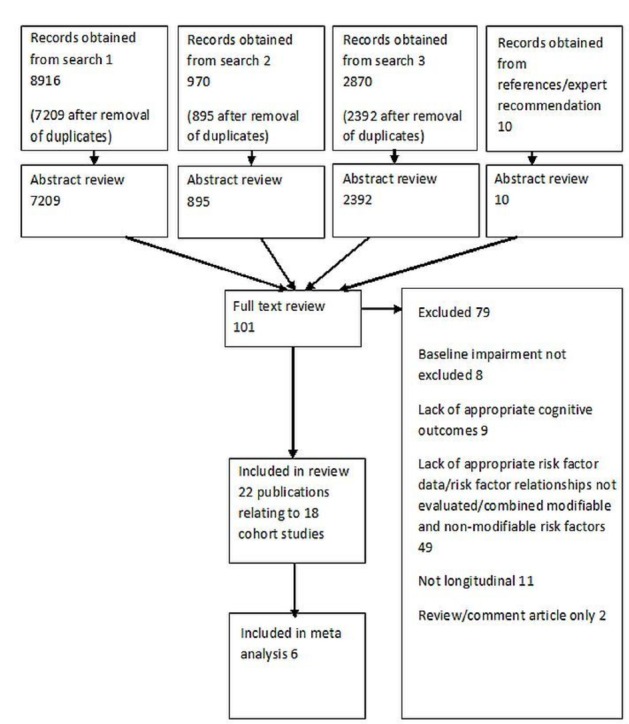
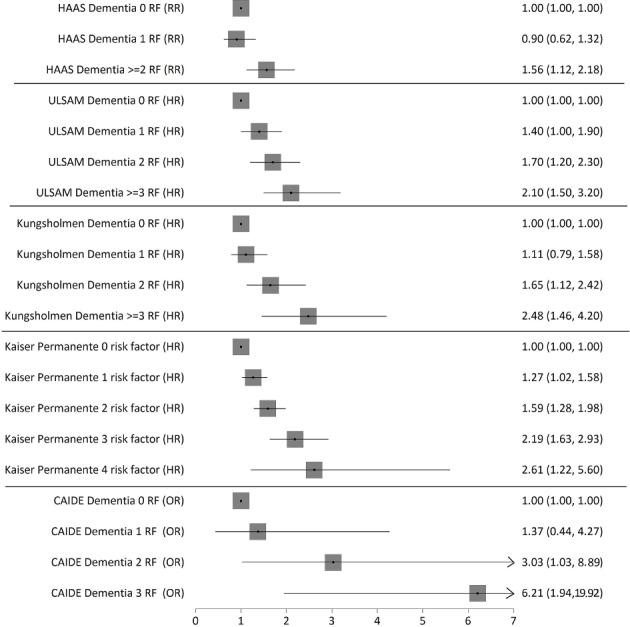
Objective: To systematically review the literature relating to the impact of multiple co-occurring modifiable risk factors for cognitive decline and dementia. Design: A systematic review and meta-analysis of the literature relating to the impact of co-occurring key risk factors for incident cognitive decline and dementia. All abstracts and full text were screened independently by two reviewers and each article assessed for bias using a standard checklist. A fixed effects meta-analysis was undertaken. Data sources: Databases Medline, Embase and PsycINFO were searched from 1999 to 2017. Eligibility criteria: For inclusion articles were required to report longitudinal data from participants free of cognitive decline at baseline, with formal assessment of cognitive function or dementia during follow-up, and an aim to examine the impact of additive or clustered comorbid risk factor burden in with two or more core modifiable risk factors. Results: Seventy-nine full-text articles were examined. Twenty-two articles (18 studies) were included reporting data on >40 000 participants. Included studies consistently reported an increased risk associated with greater numbers of intraindividual risk factors or unhealthy behaviours and the opposite for healthy or protective behaviours. A meta-analysis of studies with dementia outcomes resulted in a pooled relative risk for dementia of 1.20 (95% CI 1.04 to 1.39) for one risk factor, 1.65 (95% CI 1.40 to 1.94) for two and 2.21 (95% CI 1.78 to 2.73) for three or more, relative to no risk factors. Limitations include dependence on published results and variations in study outcome, cognitive assessment, length of follow-up and definition of risk factor exposure. Conclusions: The strength of the reported associations, the consistency across studies and the suggestion of a dose response supports a need to keep modifiable risk factor exposure to a minimum and to avoid exposure to additional modifiable risks. Further research is needed to establish whether particular combinations of risk factors confer greater risk than others. PROSPERO registration number: 42016052914.
Overview
The claims and statistics of this paper haven’t been checked yet.
Run the check — free, no account needed. It reads the open-access text and checks the sources it cites.
Integrity signals
Registry
Cites
Statistics
Figures
Verification
Claims the paper makes
The claims and statistics of this paper haven’t been checked yet.
Run the check — free, no account needed. It reads the open-access text and checks the sources it cites.
Claims other papers make about this one
Each is checked against this paper’s own text: does it say what the citing paper says it does?
The source backs part of the claim, not all of it — or backs it for a different population, condition or comparison.
In the citing paper
“Increasing evidence also points to air pollution as an emerging risk factor for dementia, heart and cardiovascular disease and lung cancer.1,14”
From Common risk factors for major noncommunicable disease, a systematic overview of reviews and commentary: the implied potential for targeted risk reduction (2019) · cites this paper as [14]
Experimental — accuracy not yet measured
Self-check
Percentages, sums and reported differences re-computed from the paper’s own numbers.
The self-check needs the paper’s full text.
Citations
Cites
López-Otín, C., Blasco, M. A., Partridge, L., Serrano, M., & Kroemer, G. (2013) · Cell · doi:10.1016/j.cell.2013.05.039 · Cited by 14,982
Child abuse: Adolescent records vs. adult recall
Femina, D. D., Yeager, C. A., & Lewis, D. O. (1990) · Child Abuse & Neglect · doi:10.1016/0145-2134(90)90033-p · Cited by 8,820
Ngandu, T., Lehtisalo, J., Solomon, A., Levälahti, E., Ahtiluoto, S., Antikainen, R., Bäckman, L., Hänninen, T., Jula, A., Laatikainen, T., et al. (2015) · The Lancet · doi:10.1016/s0140-6736(15)60461-5 · Cited by 3,689
Methods for Trend Estimation from Summarized Dose-Response Data, with Applications to Meta-Analysis
Greenland, S., & Longnecker, M. P. (1992) · American Journal of Epidemiology · doi:10.1093/oxfordjournals.aje.a116237 · Cited by 2,353
Obesity and Vascular Risk Factors at Midlife and the Risk of Dementia and Alzheimer Disease
Kivipelto, M., Ngandu, T., Fratiglioni, L., Viitanen, M., Kåreholt, I., Winblad, B., Helkala, E.-L., Tuomilehto, J., Soininen, H., & Nissinen, A. (2005) · Archives of Neurology · doi:10.1001/archneur.62.10.1556 · Cited by 1,291
Midlife cardiovascular risk factors and risk of dementia in late life
Whitmer, R. A., Sidney, S., Selby, J., Johnston, S. C., & Yaffe, K. (2005) · Neurology · doi:10.1212/01.wnl.0000149519.47454.f2 · Cited by 1,238 · cited 2×
“Study sample sizes ranged from 322(102) to 8845.(93) Two studies recruited only men(88) 98 and for five articles, >50% of the participants were male.”
BackgroundKivipelto, M., Ngandu, T., Laatikainen, T. K., Winblad, B. G., Soininen, H. S., & Tuomilehto, J. (2006) · The Lancet Neurology · doi:10.1016/s1474-4422(06)70537-3 · Cited by 1,170
Prediction models for cardiovascular disease risk in the general population: systematic review
Damen, J. A. A. G., Hooft, L., Schuit, E., Debray, T. P. A., Collins, G. S., Tzoulaki, I., Lassale, C. M., Siontis, G. C. M., Chiocchia, V., Roberts, C., et al. (2016) · BMJ · doi:10.1136/bmj.i2416 · Cited by 935
Physical Activity, Diet, and Risk of Alzheimer Disease
Scarmeas, N. (2009) · JAMA · doi:10.1001/jama.2009.1144 · Cited by 916 · cited 1×
“The Whitehall study found a relationship between increased risk factor exposure and different measures of cognitive decline using both latent growth curve(106) and logistic regression analyses(107); the Washington Heights study reported an increased risk of incident AD(89) with greater numbers of risk factors and a lo…”
MethodAggregation of vascular risk factors and risk of incident Alzheimer disease
Luchsinger, J. A., Reitz, C., Honig, L. S., Tang, M. X., Shea, S., & Mayeux, R. (2005) · Neurology · doi:10.1212/01.wnl.0000172914.08967.dc · Cited by 790 · cited 3×
“90 93 96 101 There were 12 articles where baseline measures were taken in midlife (>40 and ≤65 years)(88) 93 96 98 99 101–103 105–108 and 9 articles where the baseline was in late life (>65 years).(89) 91 92 94 95 97 100 104 109 One study included those in earlier adult life with baseline age ~26 years.”
BackgroundResultInfluential
Cited by
Sorted by citations
Licher, S., Ahmad, S., Karamujić‐Čomić, H., Voortman, T., Leening, M. J. G., Ikram, M. A., & Ikram, M. K. (2019) · Nature Medicine · doi:10.1038/s41591-019-0547-7 · Cited by 242
Peters, R., Ee, N., Peters, J., Beckett, N., Booth, A., Rockwood, K., & Anstey, K. J. (2019) · Therapeutic Advances in Chronic Disease · doi:10.1177/2040622319880392 · Cited by 213
Self-citationHypertension and the Risk of Dementia
Sierra, C. (2020) · Frontiers in Cardiovascular Medicine · doi:10.3389/fcvm.2020.00005 · Cited by 212
Lisko, I., Kulmala, J., Annetorp, M., Ngandu, T., Mangialasche, F., & Kivipelto, M. (2020) · Journal of Internal Medicine · doi:10.1111/joim.13227 · Cited by 190
Biological and environmental predictors of heterogeneity in neurocognitive ageing
Nyberg, L. H., Boraxbekk, C., Sörman, D. E., Hansson, P., Herlitz, A., Kauppi, K., Ljungberg, J. K., Lövheim, H., Lundquist, A., Adolfsson, A. N., et al. (2020) · Ageing Research Reviews · doi:10.1016/j.arr.2020.101184 · Cited by 156
“Evidence is increasing for air pollution to be risk factor for cognitive decline, Alzheimer’s disease and other cognitive disorders, as stated in several literature reviews (Block and Calderón-Garcidueñas, 2009; Block et al., 2012; Clifford et al., 2016; Kilian and Kitazawa, 2018; Peters et al., 2019; Power et al., 20…”
Cardiometabolic multimorbidity, genetic risk, and dementia: a prospective cohort study
Tai, X. Y., Veldsman, M., Lyall, D. M., Littlejohns, T. J., Langa, K. M., Husain, M., Ranson, J. M., & Llewellyn, D. J. (2022) · The Lancet Healthy Longevity · doi:10.1016/s2666-7568(22)00117-9 · Cited by 145
Anstey, K. J., Peters, R. K., Mortby, M. E., Kiely, K. M., Eramudugolla, R., Cherbuin, N., Huque, M. H., & Dixon, R. A. (2021) · Scientific Reports · doi:10.1038/s41598-021-86397-7 · Cited by 142
Self-citationAdiponectin and Cognitive Decline
Rizzo, M. R., Fasano, R., & Paolisso, G. (2020) · International Journal of Molecular Sciences · doi:10.3390/ijms21062010 · Cited by 137
“However, obesity is an independent risk factor for the development of cognitive decline, AD and its progression, morbidity, and mortality [56].”
BackgroundMaki, P. M., & Jaff, N. G. (2022) · Climacteric · doi:10.1080/13697137.2022.2122792 · Cited by 129
“Communicable diseases such as HIV are also more common in LMICs and findings from HIV studies in the USA cannot be generalized to those in LMICs where use of antiretroviral therapy is not as widespread.”
BackgroundInfluentialJin, X., He, W., Zhang, Y., Gong, E., Niu, Z., Ji, J. S., Li, Y., Zeng, Y., & Yan, L. L. (2021) · PLoS Medicine · doi:10.1371/journal.pmed.1003597 · Cited by 125
Leso, V., Fontana, L., Caturano, A., Vetrani, I., Fedele, M., & Iavicoli, I. (2021) · International Journal of Environmental Research and Public Health · doi:10.3390/ijerph18126540 · Cited by 111
Kalaria, R. N., Maestre, G. E., Mahinrad, S., Acosta, D. M., Akinyemi, R., Alladi, S., Allegri, R., Arshad, F., Babalola, D. O., Baiyewu, O., et al. (2024) · Alzheimer s & Dementia · doi:10.1002/alz.13836 · Cited by 110
Caunca, M. R., Odden, M. C., Glymour, M. M., Elfassy, T., Kershaw, K. N., Sidney, S., Yaffe, K., Launer, L., & Zeki Al Hazzouri, A. (2020) · JAMA Neurology · doi:10.1001/jamaneurol.2020.0860 · Cited by 73
“Income, median (IQR), $1000 21 (14-43) 30 (21-43) 30 (21-43)”
Clinical Guidelines for Cognitive Disorders in Elderly and Older Patients
Bogolepova, A. N., Васенина, Е. Е., Gomzyakova, N. A., Gusev, E. I., Dudchenko, N. G., Emelin, А. Y., Zalutskaya, N. M., Isaev, R. I., Kotovskaya, Y. V., Levin, O. S., et al. (2021) · S S Korsakov Journal of Neurology and Psychiatry · doi:10.17116/jnevro20211211036 · Cited by 72
Curran, E. M., Chong, T. W. H., Godbee, K., Abraham, C., Lautenschlager, N. T., & Palmer, V. J. (2021) · PLoS ONE · doi:10.1371/journal.pone.0257540 · Cited by 68
“The optimal combinations, doses and durations of interventions are as yet unknown [3, 9, 10].”
The association between allostatic load and brain: A systematic review
Lenart-Bugla, M., Szcześniak, D., Bugla, B., Kowalski, K., Niwa, S., Rymaszewska, J., & Misiak, B. (2022) · Psychoneuroendocrinology · doi:10.1016/j.psyneuen.2022.105917 · Cited by 61
The role of lifestyle factors in cognitive health and dementia in oldest-old: A systematic review
Ye, K. X., Sun, L., Wang, L., Khoo, A. L. Y., Lim, K. X., Lü, G., Yu, L., Li, C., Maier, A. B., & Feng, L. (2023) · Neuroscience & Biobehavioral Reviews · doi:10.1016/j.neubiorev.2023.105286 · Cited by 67
Stephen, R., Barbera, M., Peters, R. K., Ee, N., Zheng, L., Lehtisalo, J., Kulmala, J., Håkansson, K., Chowdhary, N., Dua, T., et al. (2021) · Frontiers in Neurology · doi:10.3389/fneur.2021.763573 · Cited by 58
Self-citationContributions of Modifiable Risk Factors to Dementia Incidence: A Bayesian Network Analysis
Liang, J., Lü, L., Li, J., Qu, X.-Y., Li, J., Qian, S., Wang, Y., Jia, R., Wang, C., & Xu, Y. (2020) · Journal of the American Medical Directors Association · doi:10.1016/j.jamda.2020.04.006 · Cited by 51
Bell, G., Singham, T., Saunders, R., John, A., & Stott, J. (2022) · Ageing Research Reviews · doi:10.1016/j.arr.2022.101594 · Cited by 39
Cognitive Impairment and Associated Factors in Rural Elderly in North China
Wang, J., Xiao, L. D., Wang, K., Luo, Y., & Li, X. (2020) · Journal of Alzheimer s Disease · doi:10.3233/jad-200404 · Cited by 46
The Association Between Early Age‐Related Hearing Loss and Brain β‐Amyloid
Golub, J. S., Sharma, R. K., Rippon, B., Brickman, A. M., & Luchsinger, J. A. (2020) · The Laryngoscope · doi:10.1002/lary.28859 · Cited by 45
Parial, L. L., Lam, S. C., Ho, J. Y. S., Suen, L. K. P., & Leung, A. Y. M. (2021) · Aging & Mental Health · doi:10.1080/13607863.2020.1786801 · Cited by 43
Artificial intelligence for dementia prevention
Newby, D., Orgeta, V., Marshall, C. R., Lourida, I., Albertyn, C. P., Tamburin, S., Raymont, V., Veldsman, M., Koychev, I., Bauermeister, S., et al. (2023) · Alzheimer's & Dementia · doi:10.1002/alz.13463 · Cited by 42
“Finally, we discuss the opportunities of how ML methods could enhance and improve our understanding of risk factors by using different data types (multimodal data) and application of ML approaches from other disciplines.”
BackgroundSubjective Versus Objective Assessment of Cognitive Functioning in Primary Care
Hess, C. W., Levy, B., Hashmi, A. Z., Hogan, J., Greenspan, S., Elber, A., Falcon, K., & Driscoll, D. F. (2020) · The Journal of the American Board of Family Medicine · doi:10.3122/jabfm.2020.03.190265 · Cited by 42
Wu, Z.-M., Woods, R., Wolfe, R., Storey, E., Chong, T., Shah, R., Orchard, S., McNeil, J., Murray, A., & Ryan, J. (2021) · Alzheimer's & Dementia · doi:10.1002/dad2.12180 · Cited by 43
“Length of follow-up, years 4 (3-5) 4 (3-5) 3 (3-5) 3 (3-5) 3 (3-5) <.”
Yang, J. J., Keohane, L. M., Pan, X.-F., Qu, R., Shu, X.-O., Lipworth, L., Braun, K., Steinwandel, M. D., Dai, Q., Shrubsole, M., et al. (2022) · Neurology · doi:10.1212/wnl.0000000000200774 · Cited by 39
“Our findings support significant benefits of healthy lifestyles for ADRD prevention among socioeconomically disadvantaged Americans, suggesting that promoting healthy lifestyles and reducing barriers to lifestyle changes are crucial to tackling the growing burden and disparities posed by ADRD.”
BackgroundInfluentialHarnessing the potential of machine learning and artificial intelligence for dementia research
Ranson, J. M., Bucholc, M., Lyall, D. M., Newby, D., Winchester, L. M., Oxtoby, N. P., Veldsman, M., Rittman, T., Marzi, S. J., Skene, N., et al. (2023) · Brain Informatics · doi:10.1186/s40708-022-00183-3 · Cited by 43
“Most dementia risk factors are moderately correlated [107, 108].”
BackgroundGonzález‐Domínguez, R., Castellano‐Escuder, P., Carmona, F., Lefèvre‐Arbogast, S., Low, D. Y., Preez, A. D., Ruigrok, S. R., Manach, C., Urpí-Sardà, M., Kőrösi, A., et al. (2021) · Molecular Nutrition & Food Research · doi:10.1002/mnfr.202100606 · Cited by 39
Wu‐Chung, E. L., Leal, S. L., Denny, B. T., Cheng, S. L., & Fagundes, C. P. (2021) · Neuroscience & Biobehavioral Reviews · doi:10.1016/j.neubiorev.2021.12.010 · Cited by 49
Hand movements in Mild Cognitive Impairment: clinical implications and insights for future research
Ilardi, C. R., Iavarone, A., Marra, M. L., Iachini, T., & Chieffi, S. (2022) · Journal of Integrative Neuroscience · doi:10.31083/j.jin2102067 · Cited by 38
“Hence there is a need for special attention on prevention and management of dementia risk factors including age-related psychophysiological decline, unhealthy lifestyle habits [3,4], environmental factors [5], cardiocerebrovascular diseases [6,7], sleep disturbances [8,9], anxiety [10,11], and apathetic symptoms [12,1…”
BackgroundAtrial Fibrillation and Cognitive Impairment: An Associated Burden or Burden by Association?
Manolis, T. A., Manolis, A. S., Apostolopoulos, E. J., Melita, H., & Manolis, A. S. (2020) · Angiology · doi:10.1177/0003319720910669 · Cited by 40
“21 for 3 or more, relative to no risk factors.(143) The authors concluded that the strength of the reported associations, the consistency across studies, and Table 4.”
BackgroundAssociation Between Regular Laxative Use and Incident Dementia in UK Biobank Participants
Yang, Z., Wei, C., Li, X., Yuan, J.-Q., Gao, X., Li, B., Zhao, Z.-Y., Toh, S., Yu, X., Brayne, C., et al. (2023) · Neurology · doi:10.1212/wnl.0000000000207081 · Cited by 35
Welberry, H., Tisdell, C. C., Huque, M. H., & Jorm, L. R. (2023) · American Journal of Epidemiology · doi:10.1093/aje/kwad138 · Cited by 37
Li, M., Huang, Y., Liu, Z., Shen, R., Chen, H., Ma, C., Zhang, T., Li, S., & Prince, M. J. (2020) · BMC Geriatrics · doi:10.1186/s12877-020-01539-2 · Cited by 36
Franz, C. E., Hatton, S. N., Elman, J. A., Warren, T. S., Gillespie, N. A., Whitsel, N. A., Puckett, O. K., Dale, A. M., Eyler, L. T., Fennema‐Notestine, C., et al. (2021) · Neurobiology of Aging · doi:10.1016/j.neurobiolaging.2021.08.007 · Cited by 34
Liu, D., Li, L., An, L., Cheng, G., Chen, C., Zou, M., Zhang, B., Gan, X.-G., Xu, L., Ou, Y., et al. (2021) · General Psychiatry · doi:10.1136/gpsych-2021-100564 · Cited by 36
Bermejo‐Pareja, F., & del Ser, T. (2024) · Journal of Clinical Medicine · doi:10.3390/jcm13020536 · Cited by 39
Age Moderates Associations of Hypertension, White Matter Hyperintensities, and Cognition
Guevarra, A. C., Ng, S. C., Saffari, S. E., Wong, B. Y. X., Chander, R. J., Ng, K. P., & Kandiah, N. (2020) · Journal of Alzheimer s Disease · doi:10.3233/jad-191260 · Cited by 33
Lenart‐Bugla, M., Łuc, M., Pawłowski, M., Szcześniak, D. M., Seifert, I., Wiegelmann, H., Gerhardus, A., Wolf‐Ostermann, K., Rouwette, E. A. J. A., Ikram, M. A., et al. (2022) · Brain Sciences · doi:10.3390/brainsci12091214 · Cited by 38
“The most frequently studied factors are cardio-metabolic and vascular disorders, smoking, low physical activity, low education, and nutritional deficiencies [8,9].”
BackgroundStephan, B. C. M., Siervo, M., & Brayne, C. (2020) · Alzheimer s & Dementia · doi:10.1002/alz.12127 · Cited by 33
Artificial intelligence for dementia genetics and omics
Bettencourt, C., Skene, N., Bandres‐Ciga, S., Anderson, E., Winchester, L. M., Foote, I. F., Schwartzentruber, J., Botia, J. A., Nalls, M., Singleton, A., et al. (2023) · Alzheimer's & Dementia · doi:10.1002/alz.13427 · Cited by 30
Du, X. L., Song, L., Schulz, P. E., Xu, H., & Chan, W. (2021) · Journal of Alzheimer s Disease · doi:10.3233/jad-215657 · Cited by 30
Ashley, L., Surr, C., Kelley, R., Price, M. L., Griffiths, A. W., Fowler, N. R., Giza, D. E., Neal, R. D., Martin, C., Hopkinson, J. B., et al. (2022) · CA A Cancer Journal for Clinicians · doi:10.3322/caac.21767 · Cited by 33
“Many risk factors are interrelated, and research indicates that having more risk factors confers a greater risk for developing dementia.(23,24) It is estimated that there are currently over 50 million PLWD”
BackgroundLaPlume, A. A., McKetton, L., Levine, B., Troyer, A. K., & Anderson, N. D. (2022) · Alzheimer's & Dementia: Diagnosis, Assessment & Disease Monitoring · doi:10.1002/dad2.12337 · Cited by 29
Dementia Risk among Coronavirus Disease Survivors: A Nationwide Cohort Study in South Korea
Park, H.-Y., Song, I., & Oh, T.-K. (2021) · Journal of Personalized Medicine · doi:10.3390/jpm11101015 · Cited by 31
“Finally, subgroup analyses were performed using multivariable Cox regression modeling with respect to sex, age, CCI, underlying psychiatric illness, diabetes mellitus and cerebrovascular disease (CVD), which are all risk factors for the development of dementia [25].”
MethodLaPlume, A. A., McKetton, L., Levine, B., Anderson, N. D., & Troyer, A. K. (2022) · Alzheimer s & Dementia Diagnosis Assessment & Disease Monitoring · doi:10.1002/dad2.12301 · Cited by 29
Hwang, P. H., Ang, T. F. A., De Anda‐Duran, I., Liu, X., Liu, Y., Gurnani, A., Mez, J., Auerbach, S., Joshi, P., Yuan, J., et al. (2023) · Alzheimer's & Dementia · doi:10.1002/alz.12940 · Cited by 28
Zhang, S., Xiao, Y., Cheng, Y., Ma, Y., Liu, J., Li, C., & Shang, H. (2024) · BMC Medicine · doi:10.1186/s12916-024-03525-6 · Cited by 28
“The covariates were selected based on the identified risk factors for dementia in previous reports [28–30], including sex, age at baseline, ethnicity, body mass index (BMI), education level, Townsend Deprivation Index (TDI), smoking status, drinking status, metabolic equivalent of tasks (MET),…”
MethodUndergraduate nursing students’ knowledge of and attitudes toward people with alzheimer’s disease
Aljezawi, M., Qadire, M. I. A., Suliman, M., Omari, O. A., & Khalaf, A. (2022) · BMC Geriatrics · doi:10.1186/s12877-022-03389-6 · Cited by 33
“AD develops as an interaction of complex risk factors; some are non-modifiable, such as age, family history, genetic mutations, and others are modifiable [5].”
BackgroundContador, I., Buch-Vicente, B., del Ser, T., Velasco, S. L., Villarejo‐Galende, A., Benito‐León, J., & Bermejo‐Pareja, F. (2024) · Journal of Clinical Medicine · doi:10.3390/jcm13144100 · Cited by 31
Qureshi, D., Luben, R., Hayat, S. A., Talarico, R., Allen, N. E., Kuźma, E., & Littlejohns, T. J. (2024) · The Lancet Healthy Longevity · doi:10.1016/j.lanhl.2024.100652 · Cited by 28
Cognitive health expectancies of cardiovascular risk factors for cognitive decline and dementia
Zheng, L., Matthews, F. E., & Anstey, K. J. (2020) · Age and Ageing · doi:10.1093/ageing/afaa111 · Cited by 26
“These results are in line with recent findings on the dose–response effect of multiple risk factors in increasing dementia risk [16] and reinforce the need for individuals with pre-existing cardiovascular conditions to avoid exposure to additional cardiovascular risk factors in order to maintain cognitive health.”
ResultSelf-citationThe Impact of Vascular Risk Factors on Post-stroke Cognitive Impairment: The Nor-COAST Study
Aam, S., Gynnild, M. N., Munthe‐Kaas, R., Saltvedt, I. T., Lydersen, S., Knapskog, A., Ihle‐Hansen, H., Ellekjær, H., Eldholm, R. S., & Fure, B. (2021) · Frontiers in Neurology · doi:10.3389/fneur.2021.678794 · Cited by 28
Zhao, X., Xu, X., Yan, Y., Lipnicki, D. M., Pang, T., Crawford, J. D., Cheng, C., Cheng, C.-Y., Venketasubramanian, N., Chong, E., et al. (2024) · The Lancet Regional Health - Western Pacific · doi:10.1016/j.lanwpc.2024.101198 · Cited by 29
Katayama, O., Lee, S., Bae, S., Makino, K., Shinkai, Y., Chiba, I., Harada, K., & Shimada, H. (2020) · Journal of Clinical Medicine · doi:10.3390/jcm9041076 · Cited by 25
“For dementia prevention, modifiable risk factor exposure should be kept to a minimum, and exposure to additional modifiable risks should be avoided [9].”
BackgroundWang, Z.-Q., Fei, L., Xu, Y., Deng, F., & Zhong, B. (2022) · Frontiers in Public Health · doi:10.3389/fpubh.2022.1032118 · Cited by 24
The Risk of Dementia in Relation to Cognitive and Brain Reserve
Lamballais, S., Zijlmans, J. L., Vernooij, M. W., Ikram, M. K., Luik, A. I., & Ikram, M. A. (2020) · Journal of Alzheimer s Disease · doi:10.3233/jad-200264 · Cited by 24
Foster, H. M. E., Polz, P., Gill, J. M. R., Celis-Morales, C. A., Mair, F. S., & O’Donnell, C. A. (2023) · Wellcome Open Research · doi:10.12688/wellcomeopenres.18708.2 · Cited by 23
“Numerous single LF specific guidelines exist, but these are often too complex to digest for most people and they often fail to account for interactions with other LFs or social contexts 57-59.’”
Tomata, Y., Li, X., Karlsson, I., Mosing, M. A., Pedersen, N. L., & Hägg, S. (2020) · Journal of Internal Medicine · doi:10.1111/joim.13071 · Cited by 20
Gender Differences in Brain-Heart Connection
Trevisan, C., Sergi, G., & Maggi, S. (2020) · Springer eBooks · doi:10.1007/978-3-030-28008-6_61 · Cited by 20
Clinical guidelines «Cognitive disorders in the elderly and senile persons»
Tkacheva, O. N., Yahno, N. N., Незнанов, Н. Г., Шпорт, С. В., Shamalov, N. A., Levin, O. S., Kostyuk, G. P., Gusev, E. I., Martynov, M. Y., Si, G., et al. (2025) · S S Korsakov Journal of Neurology and Psychiatry · doi:10.17116/jnevro2025125337 · Cited by 22
Cardiovascular Risk Factors and Risk of Alzheimer Disease and Mortality: A Latent Class Approach
Ruthirakuhan, M. T., Cogo‐Moreira, H., Swardfager, W., Herrmann, N., Lanctôt, K. L., & Black, S. E. (2022) · Journal of the American Heart Association · doi:10.1161/jaha.122.025724 · Cited by 21
“Using data collected from the National Alzheimer’s Coordinating Center (NACC) data set, we conducted a latent class analysis (LCA) with CVRFs in cognitively normal elderly individuals to identify distinct groups of CVRFs.”
InfluentialEverly, J., Plummer, J., Lohman, M. C., & Neils‐Strunjas, J. (2022) · American Journal of Speech-Language Pathology · doi:10.1044/2022_ajslp-22-00035 · Cited by 21
Ibrahim, A., Ludin, A. F. M., Singh, D. K. A., Rajab, N. F., & Shahar, S. (2023) · Frontiers in Physiology · doi:10.3389/fphys.2023.1077078 · Cited by 18
Shimada, H., Doi, T., Tsutsumimoto, K., Makino, K., Harada, K., Tomida, K., & Arai, H. (2024) · Journal of Alzheimer s Disease · doi:10.3233/jad-231420 · Cited by 18
Effectiveness of eHealth Interventions Targeting Employee Health Behaviors: Systematic Review
Sevic, A., Hashemi, N. S. P., Thørrisen, M. M., Strømstad, K., Skarpaas, L. S., Storm, M., & Brønnick, K. (2023) · Journal of Medical Internet Research · doi:10.2196/38307 · Cited by 19
“Health behaviors such as smoking, alcohol use, poor diet, and physical inactivity may considerably increase one’s risk of NCDs [6-10].”
Boreu, Q. F., Guàrdia-Sancho, A., Santos, J. M., Poch, P. R., Ginesta, J. P., Puig-Ribera, A. M., & Muñoz-Padros, J. (2019) · Cognitive Neuropsychiatry · doi:10.1080/13546805.2019.1676709 · Cited by 17
“…that cognitive impairment contributes to a worsening of CVR in young people with SMD, whereas in people without SMD, evidence shows that exposure to a greater number of cardiovascular risk factors is related to an increased risk in the future of cognitive decline or dementia (Peters et al., 2019).”
BackgroundAndrews, M., Cheema, B. S., & Siette, J. (2024) · Archives of Gerontology and Geriatrics · doi:10.1016/j.archger.2024.105535 · Cited by 20
Foote, I. F., Jacobs, B. M., Mathlin, G., Watson, C. J., Bothongo, P. L., Waters, S., Dobson, R., Noyce, A. J., Bhui, K. S., Korszun, A., et al. (2022) · Neurobiology of Aging · doi:10.1016/j.neurobiolaging.2022.02.016 · Cited by 16
Shin, W.-Y., Kang, E. S., Oh, Y. H., Sha, M., Xia, Q., Jeong, S., & Cho, Y. (2025) · BMC Gastroenterology · doi:10.1186/s12876-025-03814-1 · Cited by 16
“Previous studies suggest that apparent associations between metabolic factors and dementia risk may be due to reverse causation bias, with prodromal dementia causing weight loss, lower blood pressure, and changes in serum lipid levels years before diagnosis [41, 42].”
Harrison, F., Mortby, M. E., Mather, K. A., Sachdev, P. S., & Brodaty, H. (2023) · Alzheimer s & Dementia Diagnosis Assessment & Disease Monitoring · doi:10.1002/dad2.12505 · Cited by 15
“62 Second, within the dementia field, apathy is not established as an independent risk factor 1 and has not been considered to date in risk reductionefforts,suchasmultidomaininterventions.”
BackgroundLobo, E., Gracia‐García, P., Lobo, A., Saz, P., & De‐la‐Cámara, C. (2021) · International Journal of Environmental Research and Public Health · doi:10.3390/ijerph18137092 · Cited by 15
Wang, M., Fan, C., Han, Y., Wang, Y., Cai, H., Zhong, W., Yang, X., Wang, Z., Wang, H., & Han, Y. (2025) · Frontiers in Public Health · doi:10.3389/fpubh.2025.1529969 · Cited by 16
Rosenich, E., Bransby, L., Yassi, N., Fripp, J., Laws, S. M., Martins, R. N., Fowler, C. J., Rainey‐Smith, S. R., Rowe, C. C., Masters, C. L., et al. (2022) · Neurology · doi:10.1212/wnl.0000000000200118 · Cited by 13
“Epidemiologic studies have identified risk factors for dementia, although the mechanisms of these are incompletely understood.(5) For example, physiologic characteristics such as elevated blood pressure and cholesterol levels, obesity, and diabetes,(6,7) as well as behavioral characteristics such as smoking(8) and low…”
BackgroundVishwanath, S., Hopper, I., Chowdhury, E., Wolfe, R. S., Freak‐Poli, R., Reid, C. M., Tonkin, A. M., Murray, A. M., Shah, R. C., Chong, T. T. ‐., et al. (2023) · Gerontology · doi:10.1159/000535284 · Cited by 15
Rockwood, K. J., Andrew, M. K., Aubertin‐Leheudre, M., Belleville, S., Bherer, L., Bowles, S. K., Kehler, D. S., Lim, A. S. P., Middleton, L. E., Phillips, N. A., et al. (2020) · Alzheimer s & Dementia Translational Research & Clinical Interventions · doi:10.1002/trc2.12083 · Cited by 17
Self-citationResting heart rate and cognitive decline: a meta-analysis of prospective cohort studies
Kim, H.-B., Jung, Y. H., & Han, H. J. (2022) · Journal of Clinical Neurology · doi:10.3988/jcn.2022.18.6.619 · Cited by 14
Associations between data-driven lifestyle profiles and cognitive function in the AusDiab study
Dingle, S. E., Bowe, S. J., Bujtor, M., Milte, C. M., Daly, R. M., Anstey, K. J., Shaw, J. E., & Torres, S. J. (2022) · BMC Public Health · doi:10.1186/s12889-022-14379-z · Cited by 12
Self-citationNguyen, H., Phan, H., Terry, D. R., Doherty, K., & McInerney, F. (2021) · Aging & Mental Health · doi:10.1080/13607863.2021.1884843 · Cited by 15
Probing the Pre-diagnostic Phase of Parkinson's Disease in Population-Based Studies
Dommershuijsen, L. J., Boon, A. J. W., & Ikram, M. K. (2021) · Frontiers in Neurology · doi:10.3389/fneur.2021.702502 · Cited by 13
“A recent meta-analysis, for instance, has illustrated a dose-response relationship between the number of modifiable risk factors and the risk of dementia (73).”
BackgroundBrain, J., Tully, P. J., Turnbull, D. A., Tang, E. Y. H., Greene, L., Beach, S., Siervo, M., & Stephan, B. C. M. (2022) · PLoS ONE · doi:10.1371/journal.pone.0271611 · Cited by 14
“Key non-modifiable factors including age [18, 19], gender [20, 21], genetics [22], and ethnicity [23, 24] may also modify the association between cardiovascular disease and risk of dementia.”
BackgroundHow an Intergenerational Book Club Can Prevent Cognitive Decline in Older Adults: A Pilot Study
Plummer, J., Nguyen, K., Everly, J., Kiesow, A., Leith, K. H., Aging, C. O. G. S. I., & Neils-Strunjas, J. (2023) · Gerontology and Geriatric Medicine · doi:10.1177/23337214221150061 · Cited by 15
“blood pressure, midlife high cholesterol, diabetes, depression, low social engagement, and low cognitive engagement (Lincoln, 2014; Peters et al., 2019; Prince et al., 2014); many of these risk factors may be prevented by a healthy, active lifestyle (Crous-Bou et al.”
BackgroundModern aspects of diagnosis and treatment of cognitive impairments (literature review)
Борисовна, Л. А., Zakharov, V. V., & Васильевна, В. Н. (2023) · Neurology neuropsychiatry Psychosomatics · doi:10.14412/2074-2711-2023-1-83-89 · Cited by 13
Risk of dementia in adults with cerebral palsy: a matched cohort study using general practice data
Smith, K. J., Peterson, M. D., Victor, C. R., & Ryan, J. M. (2021) · BMJ Open · doi:10.1136/bmjopen-2020-042652 · Cited by 13
Xu, C. D., Padilla, V., Lozano, S., Gamez, D., Su, B., Wang, X., Maestre, G. E., & Wang, K. (2023) · Genes · doi:10.3390/genes14071405 · Cited by 13
“Behaviors and chronic diseases that increase the risk for dementia include smoking, a poor diet, a sedentary lifestyle, hypertension, diabetes, hypercholesterolemia, high BMI, depression, anxiety, and low cognitive engagement [2,3].”
BackgroundData‐driven lifestyle patterns and risk of dementia in older Australian women
Dingle, S. E., Bowe, S. J., Bujtor, M., Milte, C. M., Daly, R. M., Byles, J., Cavenagh, D., & Torres, S. J. (2023) · Alzheimer s & Dementia · doi:10.1002/alz.13467 · Cited by 11
“3 18–24 A previous study examined the clustering of diet, physical activity, smoking, alcohol consumption, social interaction, and church attendance, using the person-centered approach of latent class analysis (LCA) and subsequent associations with dementia risk in 2491 healthy US adults aged ≥ 65…”
MethodThalamocortical Functional Connectivity in Patients With White Matter Hyperintensities
Chen, C., Wang, X., Cao, S., Zhang, J., Wang, Z., Pan, W. H., Yang, J., Tian, Y., Qiu, B., Wei, Q., et al. (2021) · Frontiers in Aging Neuroscience · doi:10.3389/fnagi.2021.632237 · Cited by 12
Lower cortical thickness and increased brain aging in adults with cocaine use disorder
Schinz, D., Schmitz‐Koep, B., Tahedl, M., Teckenberg, T., Schultz, V., Schulz, J., Zimmer, C., Sorg, C., Gaser, C., & Hedderich, D. M. (2023) · Frontiers in Psychiatry · doi:10.3389/fpsyt.2023.1266770 · Cited by 12
Du, X. L., Song, L., Schulz, P. E., Xu, H., & Chan, W. (2022) · Journal of Alzheimer s Disease · doi:10.3233/jad-220548 · Cited by 11
Amos, J. G., Zheng, L., Eramudugolla, R., Parekh, D., Huque, M. H., Delbaere, K., Lautenschlager, N. T., & Anstey, K. J. (2023) · BMJ Open · doi:10.1136/bmjopen-2023-075015 · Cited by 12
Self-citationZhang, Y., Yuan, X., Jiang, Z., Hu, R., Liang, H., Mao, Q., Xiong, Y., Zhang, J., & Liu, M. (2024) · Frontiers in Public Health · doi:10.3389/fpubh.2024.1422000 · Cited by 11
Huque, M. H., Kootar, S., Kiely, K. M., Anderson, C. S., van Boxtel, M. P. J., Brodaty, H., Sachdev, P. S., Carlson, M. C., Fitzpatrick, A. L., Whitmer, R. A., et al. (2024) · BMC Medicine · doi:10.1186/s12916-024-03711-6 · Cited by 10
Self-citationNon-invasive brain stimulation in cognitive sciences and Alzheimer's disease
Carrarini, C., Pappalettera, C., Pera, D. L., & Rossini, P. M. (2025) · Frontiers in Human Neuroscience · doi:10.3389/fnhum.2024.1500502 · Cited by 10
Abhishek, M. L., Sundarakumar, J. S., Hameed, S. K. S., Teams, S. &. T. S., & Ravindranath, V. (2022) · Alzheimer s & Dementia · doi:10.1002/alz.12715 · Cited by 10
Demnitz, N., Hulme, O. J., Siebner, H. R., Kjær, M., Ebmeier, K. P., Boraxbekk, C., & Gillan, C. M. (2023) · Neurobiology of Aging · doi:10.1016/j.neurobiolaging.2023.07.023 · Cited by 11
Modifiable dementia risk factors and AT(N) biomarkers: findings from the EPAD cohort
Roccati, E., Bindoff, A. D., Collins, J. M., Eastgate, J., Borchard, J., Alty, J., King, A. E., Vickers, J. C., Carboni, M., & Logan, C. A. (2024) · Frontiers in Aging Neuroscience · doi:10.3389/fnagi.2024.1346214 · Cited by 11
“Modifiable risk factors tend to co-occur (Griffin et al., 2014; Morris et al., 2016), where clusters typically consist of smoking, excess alcohol consumption, and physical inactivity (Peters et al., 2019).”
BackgroundDesign and overview of the Origins of Alzheimer’s Disease Across the Life course (ORACLE) study
Lamballais, S., Adank, M. C., Hussainali, R. F., Schalekamp–Timmermans, S., Vernooij, M. W., Luik, A. I., Steegers, E. A. P., & Ikram, M. A. (2020) · European Journal of Epidemiology · doi:10.1007/s10654-020-00696-3 · Cited by 11
Predicting Cognitive Impairment in Cerebrovascular Disease Using Spoken Discourse Production
Roberts, A., Aveni, K., Basque, S. R., Orange, J. B., McLaughlin, P. M., Ramirez, J., Troyer, A. K., Gutierrez, S., Chen, A., Bartha, R., et al. (2021) · Topics in Language Disorders · doi:10.1097/tld.0000000000000242 · Cited by 10
“Although the presence of CVD is an independent risk factor for dementia, the incidence of VCI increases with age, specifically in adults older than 75 years, with the risk of developing VaD doubling every 5.3 years (OʼBrien & Thomas, 2015; Peters et al., 2019).”
BackgroundInfluentialFactors associated with dropout in the longitudinal Vogel study of cognitive decline
Haberstumpf, S., Leinweber, J., Lauer, M., Polak, T. T., Deckert, J., & Herrmann, M. J. (2021) · European Journal of Neuroscience · doi:10.1111/ejn.15446 · Cited by 12
Metadata
- Authors
- Peters, R., Booth, A., Rockwood, K., Peters, J., D’Este, C., & Anstey, K. J.
- Affiliations
- UNSW Sydney (AU)
- University of Sheffield (GB)
- Dalhousie University (CA)
- Australian National University (AU)
- Corresponding author
- Peters, Ruth
- Venue
- BMJ Open
- Publisher
- BMJ
- Published
- 2019-01
- Volume
- 9
- Issue
- 1
- Pages
- e022846
- ISSN
- 2044-6055 (ISSN-L)
- PMC
- PMC6352772
- OpenAlex
- W2912629063
- Cited by
- 255
- References
- 135
- Citations by year
- 2026: 32 · 2025: 42 · 2024: 37 · 2023: 32 · 2022: 36 · 2021: 42 · 2020: 30 · 2019: 4
- FWCI
- 4.73
- Type
- journal article
- Language
- en
- Open access
- gold
- doi.org
- Licence
- cc-by-nc
- Locations
- BMJ Open (publishedVersion, cc-by-nc)
- Europe PMC (PubMed Central) (publishedVersion, other-oa)
- PubMed Central (publishedVersion, cc-by-nc)
- PubMed (publishedVersion)
- White Rose Research Online (University of Leeds, The University of Sheffield, University of York) (acceptedVersion)
- UNSWorks (UNSW Sydney) (submittedVersion, cc-by-nc-nd)
- ANU Open Research (Australian National University) (submittedVersion, cc-by-nc)
- Spiral (Imperial College London) (submittedVersion, cc-by-nc)
- NOVA (University of Newcastle Australia) (submittedVersion, cc-by-nc)
- Funders
- Dalhousie Medical Research Foundation
- Dalhousie University
- Canadian Institutes of Health Research
- Topics
- Health Sciences › Medicine › Psychiatry and Mental health › Dementia and Cognitive Impairment Research
- Health Sciences › Medicine › Endocrinology, Diabetes and Metabolism › Menopause: Health Impacts and Treatments
- Health Sciences › Medicine › Cardiology and Cardiovascular Medicine › Cardiovascular Health and Risk Factors
- Keywords
- dementia risk, cognitive decline, modifiable risk factors, comorbidities, risk factor burden, protective behavior, unhealthy behaviours, dose-response relationship
- MeSH terms
- Dementia, Humans, Risk Factors, Incidence, Cognitive Dysfunction
About these checks
Registry, retraction, Cites and statistics results are computed, not judged, with one exception: a printed reference that no index lists is read once by a model before it counts as a citation error. Claims are extracted by a model and kept only when their quote appears verbatim in the text; each cited source is then checked, with a model’s help, for whether it says what the claim relies on. Those verdicts can be wrong — read the claim’s quote and the cited source before relying on one.
Statistics and arithmetic are recomputed, not judged.
Confidence bands are shown only for fields calibrated on our annotated test set. None is calibrated yet, so no band is shown.
What counts as a claim ›How we measure confidence ›How we check this ›
Are you an author, or do you see a problem with this page? Request a review
