

Preoperative predictors of poor acute postoperative pain control: a systematic review and meta-analysis
Open accessThe DOI matches its Crossref record; 71 of the 81 references it cites were found in a registry or an index; 7 of the 34 sources its claims cite were checked for support.
Abstract
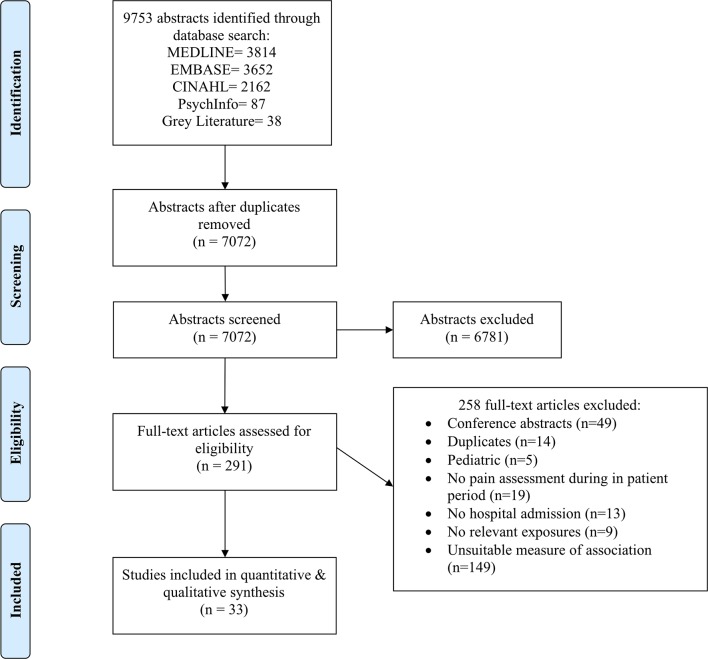
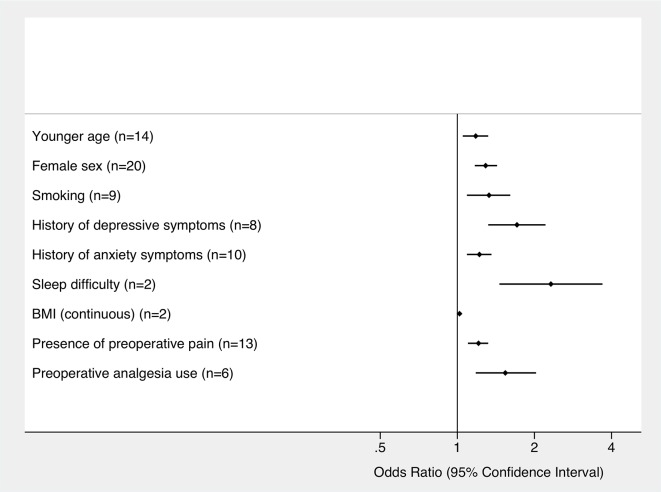
Objectives: Inadequate postoperative pain control is common and is associated with poor clinical outcomes. This study aimed to identify preoperative predictors of poor postoperative pain control in adults undergoing inpatient surgery. Design: Systematic review and meta-analysis Data sources: MEDLINE, Embase, CINAHL and PsycINFO were searched through October 2017. Eligibility criteria: Studies in any language were included if they evaluated postoperative pain using a validated instrument in adults (≥18 years) and reported a measure of association between poor postoperative pain control (defined by study authors) and at least one preoperative predictor during the hospital stay. Data extraction and synthesis: Two reviewers screened articles, extracted data and assessed study quality. Measures of association for each preoperative predictor were pooled using random effects models. Results: Thirty-three studies representing 53 362 patients were included in this review. Significant preoperative predictors of poor postoperative pain control included younger age (OR 1.18 [95% CI 1.05 to 1.32], number of studies, n=14), female sex (OR 1.29 [95% CI 1.17 to 1.43], n=20), smoking (OR 1.33 [95% CI 1.09 to 1.61], n=9), history of depressive symptoms (OR 1.71 [95% CI 1.32 to 2.22], n=8), history of anxiety symptoms (OR 1.22 [95% CI 1.09 to 1.36], n=10), sleep difficulties (OR 2.32 [95% CI 1.46 to 3.69], n=2), higher body mass index (OR 1.02 [95% CI 1.01 to 1.03], n=2), presence of preoperative pain (OR 1.21 [95% CI 1.10 to 1.32], n=13) and use of preoperative analgesia (OR 1.54 [95% CI 1.18 to 2.03], n=6). Pain catastrophising, American Society of Anesthesiologists status, chronic pain, marital status, socioeconomic status, education, surgical history, preoperative pressure pain tolerance and orthopaedic surgery (vs abdominal surgery) were not associated with increased odds of poor pain control. Study quality was generally high, although appropriate blinding of predictor during outcome ascertainment was often limited. Conclusions: Nine predictors of poor postoperative pain control were identified. These should be recognised as potentially important factors when developing discipline-specific clinical care pathways to improve pain outcomes and to guide future surgical pain research. PROSPERO registration number: CRD42017080682.
Overview
CoChat Summary
TL;DR
This systematic review and meta-analysis of 33 studies and 53,362 adults undergoing inpatient surgery identified nine preoperative predictors of poor acute postoperative pain control. The strongest associations were sleep difficulties and depressive symptoms, while several commonly suspected factors were not significantly associated.
Key findings
- Nine significant preoperative predictors of poor postoperative pain control were identified: younger age (OR 1.18, 95% CI 1.05–1.32, n=14), female sex (OR 1.29, 95% CI 1.17–1.43, n=20), smoking (OR 1.33, 95% CI 1.09–1.61, n=9), depressive symptoms (OR 1.71, 95% CI 1.32–2.22, n=8), anxiety symptoms (OR 1.22, 95% CI 1.09–1.36, n=10), sleep difficulties (OR 2.32, 95% CI 1.46–3.69, n=2), higher BMI as continuous (OR 1.02, 95% CI 1.01–1.03, n=2), preoperative pain (OR 1.21, 95% CI 1.10–1.32, n=13), and preoperative analgesia use (OR 1.54, 95% CI 1.18–2.03, n=6).
- Significant heterogeneity was detected for five predictors: female sex, younger age, preoperative pain, anxiety symptoms, and smoking, with I² values from 50.4% to 82.4%.
- Fourteen predictors were not significantly associated with poor pain control, including pain catastrophising, ASA status, chronic pain, marital status, socioeconomic status, education, surgical history, preoperative pressure pain tolerance, and orthopaedic versus abdominal surgery.
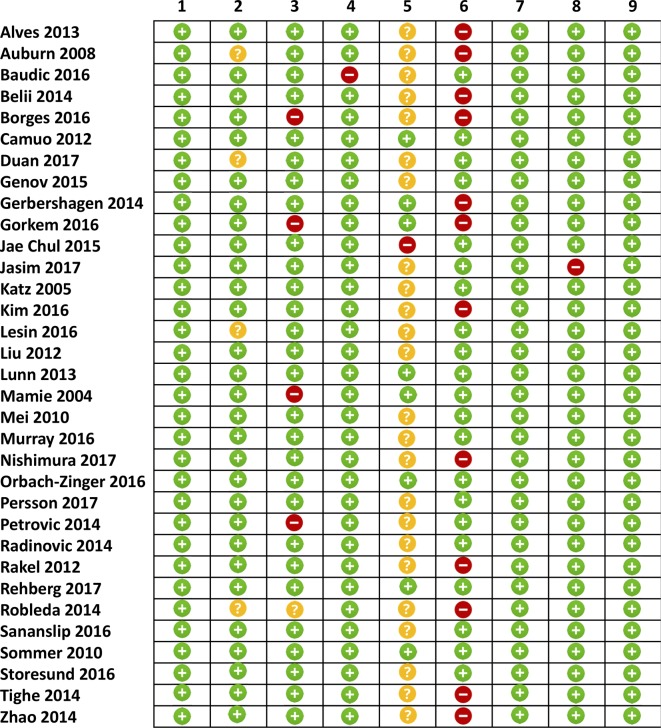
- Study quality was generally high, but blinding of predictors during outcome ascertainment was often limited.
Methods
- Systematic review and meta-analysis of observational studies in adults (≥18 years) undergoing inpatient surgery, with postoperative pain assessed by a validated instrument and poor pain control defined by study authors.
- Searched MEDLINE, Embase, CINAHL, and PsycINFO through October 2017; 33 studies representing 53,362 patients were included.
- Pooled ORs with 95% CIs were calculated using DerSimonian and Laird random effects models; heterogeneity was assessed with Cochran’s Q and I², with stratified analysis and meta-regression for prespecified factors.
Limitations
- The paper states that included studies were observational, so residual confounding cannot be excluded; heterogeneity in definitions of poor pain control, surgical procedure/specialty, timing and instrument of pain assessment, and thresholds for continuous predictors made interpretation challenging.
- The paper states that some predictors were evaluated by few studies and may be underpowered, and that significant statistical heterogeneity could not be explained by stratified analysis or meta-regression.
- Evident from the text: 25 of 33 studies (76%) had no blinding or no reporting of blinding of predictors during outcome ascertainment, and 12 studies (36%) did not adjust for at least three potential confounders.
Model-written summary. Check it against the paper before relying on it.
Integrity signals
Registry
Cites
Statistics
Figures
Verification
Claims the paper makes
5 Valid · 1 Not valid · 17 Not checked · 82 Own results and interpretations
None of the sources cited for this claim have been checked yet.
In the paper
“Since its publication was nearly a decade ago, many additional studies have been published with improved methodological rigour;21–24 thus, providing a new opportunity to provide an updated summary of the literature and to generate pooled estimates of risk.”
§ Preoperative predictors of poor acute postoperative pain control: a systematic review and meta-analysis > Introduction
What the sources say
- Not checked yetcites [21] Gorkem U, Togrul C, Sahiner Y, et al Preoperative anxiety may increase postcesarean delivery pain and analgesic consumption. Minerva Anestesiol 2016; 82: 974– 80. 27028449
- Not checked yetcites [22] Katz J, Poleshuck EL, Andrus CH, et al Risk factors for acute pain and its persistence following breast cancer surgery. Pain 2005; 119(1-3): 16– 25. 10.1016/j.pain.2005.09.008 16298063 source
- Could not verifycites [23] Liu SS, Buvanendran A, Rathmell JP, et al Predictors for moderate to severe acute postoperative pain after total hip and knee replacement. Int Orthop 2012; 36: 2261– 7. 10.1007/s00264-012-1623-5 22842653 PMC3479283 sourceExperimental — accuracy not yet measured
Our copy of Liu et al. (2012) is a single multi-centre, cross-sectional observational study (Methods, p. n/a: 'This study was a multi-centre, cross-sectional, observational study involving Hospital for Special Surgery...'); it reports its own logistic-regression odds ratios (Abstract) but nowhere states that a previous review appeared nearly a decade ago, that subsequently published studies show improved methodological rigour, or that an updated pooled summary of risk is therefore warranted. The Introduction cites earlier work on pain control and the need to identify predictors, and its reference list credits prior syntheses ([9] Ip et al. 2009 qualitative systematic review; [11] Liu and Wu 2007 systematic review), but the Discussion's forward-looking statements concern 'future longitudinal studies' and 'efficacy of interventions', not an updated review with pooled estimates (Discussion, limitations paragraph). Searches run: 'previous systematic review of predictors of postoperative pain limitations methodological' and 'additional studies needed pooled estimates of risk factors acute postoperative pain'; no passage in our copy addresses the claim, and no passage contradicts it either. (LLM, conf=0.62)
- Not checked yetcites [24] Nishimura D, Kosugi S, Onishi Y, et al Psychological and endocrine factors and pain after mastectomy. Eur J Pain 2017; 21: 1144– 53. 10.1002/ejp.1014 28169489 source
plain- Asserted: passes — The authors put it forward as true.
- Checkable: passes — It can be checked against evidence.
- Load-bearing: passes — The paper’s conclusions depend on it.
- Based: passes — The paper gives a reason why it holds.
The cited sources support only part of this claim — read each source’s verdict below.
In the paper
“However, quantitative analysis was not possible due to variability in the reporting of measures of associations and study design heterogeneity of the included studies.”
§ Preoperative predictors of poor acute postoperative pain control: a systematic review and meta-analysis > Introduction
What the sources say
- Partly supportedcites [20] Ip HY, Abrishami A, Peng PW, et al Predictors of postoperative pain and analgesic consumption: a qualitative systematic review. Anesthesiology 2009; 111: 657– 77. 10.1097/ALN.0b013e3181aae87a 19672167 sourceExperimental — accuracy not yet measured
Our copy supports the reporting-variability half of the claim: in Data Extraction, Data Analysis, and Conclusion Synthesis the authors state that meta-analysis of regression coefficients was carried out only for gender and anxiety 'because they are adequately reported among the studies in a consistent way,' and that for age and type of surgery 'nor was a meta-analysis performed because these factors were defined or treated differently among the studies.' But two parts are not supported: (a) the blanket statement that quantitative analysis 'was not possible' overstates the source, which did perform random-effects meta-analyses (MIX 1.0, I²) for two factors; (b) the Discussion gives a different reason for the inability to pool data — 'it is impractical to obtain the raw data from every study that spans over a few decades' — and no passage attributes the limitation to 'study design heterogeneity' of the included studies, so that qualifier is not stated in our copy. (LLM, conf=0.75)
plain- Asserted: passes — The authors put it forward as true.
- Checkable: passes — It can be checked against evidence.
- Load-bearing: passes — The paper’s conclusions depend on it.
- Based: passes — The paper gives a reason why it holds.
- Partly supported
The cited sources support only part of this claim — read each source’s verdict below.
In the paper
“The use of preoperative analgesia, especially opioid therapy, has been linked to poor postoperative pain control in numerous studies.23 68”
§ Preoperative predictors of poor acute postoperative pain control: a systematic review and meta-analysis > Discussion
What the sources say
- Partly supportedcites [23] Liu SS, Buvanendran A, Rathmell JP, et al Predictors for moderate to severe acute postoperative pain after total hip and knee replacement. Int Orthop 2012; 36: 2261– 7. 10.1007/s00264-012-1623-5 22842653 PMC3479283 sourceExperimental — accuracy not yet measured
Our copy supports the association itself: the Discussion ('We identified... preoperative use of opioids, anti-depressants and anti-convulsants... as risk factors for acute moderate to severe pain') and the Abstract/Table 3 report home opioid use predicting moderate-to-severe pain at rest (OR 1.63, 95% CI 1.32-2.01), with anticonvulsants and antidepressants predicting pain with activity; the Discussion also invokes opioid-induced hyperalgesia [22] as a speculative mechanism. What it does not support is the 'numerous studies' framing — this is a single multi-centre cross-sectional analysis of 897 THR/TKR patients, and the paper explicitly notes its analysis 'was observational and can only determine associations'; it reviews prior literature ([8,9,19,20]) for gender, age, BMI and preoperative pain, not for preoperative analgesic/opioid use. Additionally, opioid use was a predictor only for pain at rest, not for pain with activity (Table 2, p=0.34), so the claim's generality exceeds this source. (LLM, conf=0.78)
- Not checked yetcites [68] Kampe S, Wendland M, Welter S, et al Independent Predictors for Higher Postoperative Pain Intensity During Recovery After Open Thoracic Surgery: A Retrospective Analysis in 621 Patients. Pain Med 2018; 19: pnx238– pnx38. 10.1093/pm/pnx238 29635531 source
plainstates an association- Asserted: passes — The authors put it forward as true.
- Checkable: passes — It can be checked against evidence.
- Load-bearing: passes — The paper’s conclusions depend on it.
- Based: passes — The paper gives a reason why it holds.
- Partly supported
The cited sources support only part of this claim — read each source’s verdict below.
In the paper
“In addition to the predictors previously described, we identified six additional preoperative predictors of poor postoperative pain control.20”
§ Preoperative predictors of poor acute postoperative pain control: a systematic review and meta-analysis > Discussion
What the sources say
- Partly supportedcites [20] Ip HY, Abrishami A, Peng PW, et al Predictors of postoperative pain and analgesic consumption: a qualitative systematic review. Anesthesiology 2009; 111: 657– 77. 10.1097/ALN.0b013e3181aae87a 19672167 sourceExperimental — accuracy not yet measured
Our copy of Ip et al. (2009) is indeed a systematic review identifying preoperative predictors of postoperative pain outcomes (Abstract; Inclusion Criteria: 'The potential risk factor or predictive factor had to be identified preoperatively'), so the general thrust of the claim is in it. However, no passage enumerates 'six additional preoperative predictors of poor postoperative pain control': the paper groups its findings into four major categories (demographics, psychological, preoperative pain, surgery-related; Table 2/Table 3 discussion) and concludes that 'preexisting pain, anxiety, age, and type of surgery are the four most significant predictors for postoperative pain' with type of surgery, age and psychological distress for analgesic consumption (Discussion, Conclusion; Abstract). The specific count of six additional predictors, and the framing 'in addition to the predictors previously described', are not stated in this source; the review also addresses pain intensity/analgesic consumption rather than 'poor pain control' as such. (LLM, conf=0.70)
plainstates an association- Asserted: passes — The authors put it forward as true.
- Checkable: passes — It can be checked against evidence.
- Load-bearing: passes — The paper’s conclusions depend on it.
- Based: passes — The paper gives a reason why it holds.
- Partly supported
The cited sources support only part of this claim — read each source’s verdict below.
In the paper
“This may be due to greater preoperative severity of pain, opioid-induced hyperalgesia and central or peripheral sensitisation to pre-existing nociception.23 69”
§ Preoperative predictors of poor acute postoperative pain control: a systematic review and meta-analysis > Discussion
What the sources say
- Supportedcites [23] Liu SS, Buvanendran A, Rathmell JP, et al Predictors for moderate to severe acute postoperative pain after total hip and knee replacement. Int Orthop 2012; 36: 2261– 7. 10.1007/s00264-012-1623-5 22842653 PMC3479283 source
The Discussion (page not provided) identifies preoperative opioid and anticonvulsant use among risk factors for postoperative pain. It explicitly proposes greater underlying pain severity, central or peripheral sensitisation, and opioid-induced hyperalgesia as possible explanations, while calling these mechanisms speculative. (LLM, conf=0.92)
- Partly supportedcites [69] Angst MS, Clark JD Opioid-induced hyperalgesia: a qualitative systematic review. Anesthesiology 2006; 104: 570– 87. 16508405 sourceExperimental — accuracy not yet measured
The Recent Evidence section (page unavailable) reports increased postoperative pain after higher intraoperative opioid doses and says opioid-induced hyperalgesia is a possible explanation, while cautioning that acute tolerance could also explain it. The paper discusses peripheral and spinal sensitization as mechanisms of opioid-induced hyperalgesia, but the passages do not link poor postoperative pain control after preoperative analgesia to greater preoperative pain severity or to sensitization from pre-existing nociception. (LLM, conf=0.85)
hedgedstates a possible cause- Asserted: passes — The authors put it forward as true.
- Checkable: passes — It can be checked against evidence.
- Load-bearing: unclear — It is unclear whether the paper’s conclusions depend on it.
- Based: passes — The paper gives a reason why it holds.
- Supported
51 more claims
Create a free account to see all 105 claims and to verify the 27 references still open.
- Probably not a substantial claim. 34
- It may state two separate claims as one. 25
Claims other papers make about this one
Each is checked against this paper’s own text: does it say what the citing paper says it does?
The source backs part of the claim, not all of it — or backs it for a different population, condition or comparison.
In the citing paper
“Systematic reviews and meta-analyses have summarized the available evidence and concluded that emotional and cognitive factors are significantly associated with both acute postsurgical pain 25,49,69 and CPSP.19,26,58”
From Can perioperative psychological interventions decrease the risk of postsurgical pain and disability? A systematic review and meta-analysis of randomized controlled trials (2022) · cites this paper as [69]
Experimental — accuracy not yet measured
Self-check
Percentages, sums and reported differences re-computed from the paper’s own numbers.
Each contradiction between two passages listed here was confirmed by an independent check.
Rated minor: it would not touch a result — a value no result rests on, a p-value that stays on the same side of the significance level, or a conflict that is clerical, resolved elsewhere in the paper, or outside its own findings.
In the paper
§ Preoperative predictors of poor acute postoperative pain control: a systematic review and meta-analysis > Abstract > Results
“history of depressive symptoms (OR 1.71 [95% CI 1.32 to 2.22], n=8)”
§ Preoperative predictors of poor acute postoperative pain control: a systematic review and meta-analysis > Results > Preoperative predictors of poor postoperative pain control
“| History of depressive symptoms | 8 | 3042 | 1.71 (1.32 to 2.21) | 0.018 |”
Citations
Cites
Measuring inconsistency in meta-analyses
Higgins, J. P. T., Thompson, S. G., Deeks, J. J., & Altman, D. G. (2003) · BMJ · doi:10.1136/bmj.327.7414.557 · Cited by 63,139 · cited 1×
“Between-study heterogeneity was examined and quantified using the Cochran's Q test and I(2) statistic.(38) Stratified analysis and meta-regression were performed to explore for potential sources of heterogeneity based on an a priori list of factors related to study quality and clinical prognosis.”
MethodLiberati, A., Altman, D. G., Tetzlaff, J., Mulrow, C., Gøtzsche, P. C., Ioannidis, J. P. A., Clarke, M., Devereaux, P. J., Kleijnen, J., & Moher, D. (2009) · PLoS Medicine · doi:10.1371/journal.pmed.1000100 · Cited by 28,164
Dermyshi, E., Wang, Y., Yan, C., Hong, W., Qiu, G., Gong, X., & Zhang, T. (2017) · Neonatology · doi:10.1159/000454668 · Cited by 24,451
Meta-analysis of Observational Studies in Epidemiology<SUBTITLE>A Proposal for Reporting</SUBTITLE>
Stroup, D. F. (2000) · JAMA · doi:10.1001/jama.283.15.2008 · Cited by 20,623
Shamseer, L., Moher, D., Clarke, M., Ghersi, D., Liberati, A., Petticrew, M., Shekelle, P., Stewart, L. A., & the PRISMA-P Group (2015) · BMJ · doi:10.1136/bmj.g7647 · Cited by 13,120
Liberati, A., Altman, D. G., Tetzlaff, J., Mulrow, C., Gøtzsche, P. C., Ioannidis, J. P. A., Clarke, M., Devereaux, P. J., Kleijnen, J., & Moher, D. (2009) · Journal of Clinical Epidemiology · doi:10.1016/j.jclinepi.2009.06.006 · Cited by 10,578
PRESS Peer Review of Electronic Search Strategies: 2015 Guideline Statement
McGowan, J., Sampson, M., Salzwedel, D. M., Cogo, E., Foerster, V., & Lefebvre, C. (2016) · Journal of Clinical Epidemiology · doi:10.1016/j.jclinepi.2016.01.021 · Cited by 5,700
Zhang, J., & Yu, K. F. (1998) · JAMA · doi:10.1001/jama.280.19.1690 · Cited by 4,138 · cited 1×
“RRs were converted to OR using the formula, OR=RR/(1/[1/ (1−Po)]+Po), where Po is the incidence of the outcome of interest in the non-exposed group.(37) When raw data were presented, ORs were manually calculated.”
MethodAn estimation of the global volume of surgery: a modelling strategy based on available data
Weiser, T. G., Regenbogen, S. E., Thompson, K. D., Haynes, A. B., Lipsitz, S. R., Berry, W. R., & Gawande, A. A. (2008) · The Lancet · doi:10.1016/s0140-6736(08)60878-8 · Cited by 2,511
Systematic Reviews in Health Care : Meta-Analysis in Context
Egger, M., Smith, G. D., & Altman, D. G. (2000) · Cited by 2,401
Research works printed but not linked: 2
- 10.1097/00000658-200308000-00003 · DOI
- Radinovic K, Milan Z, Markovic-Denic L, et al Predictors of severe pain in the immediate postoperative period in elderly patients following hip fracture surgery. Injury 2014; 45: 1246– 50. 10.1016/j.injury.2014.05.024 24929779 · DOI · Paper page
Cited by
Acute postoperative pain management
Small, C., & Laycock, H. (2020) · British Journal of Surgery · doi:10.1002/bjs.11477 · Cited by 368
Friedrich, S., Reis, S., Meybohm, P., & Kranke, P. (2022) · Current Opinion in Anaesthesiology · doi:10.1097/aco.0000000000001186 · Cited by 170
“Several studies identified a correlation between preoperative anxiety and poor postoperative pain control and functional disability, which was confirmed in a meta-analysis including more than 50000 patients [32].”
BackgroundPatient and Procedural Determinants of Postoperative Pain Trajectories
Vasilopoulos, T., Wardhan, R., Rashidi, P., Fillingim, R. B., Wallace, M. R., Crispen, P. L., Parvataneni, H. K., Prieto, H. A., Machuca, T., Hughes, S. J., et al. (2021) · Anesthesiology · doi:10.1097/aln.0000000000003681 · Cited by 170
“Sociodemographic and behavioral factors have been strongly associated with acute postoperative pain intensity over the last few decades.(41,42) However, much of this early work on preoperative predictors of acute postoperative pain used pain intensity assessments on a single day after surgery Fig.”
BackgroundFiore, J. F., El‐Kefraoui, C., Chay, M.-A., Nguyen-Powanda, P., Do, U., Olleik, G., Rajabiyazdi, F., Kouyoumdjian, A., Derksen, A., Landry, T., et al. (2022) · The Lancet · doi:10.1016/s0140-6736(22)00582-7 · Cited by 159
Varallo, G., Giusti, E. M., Manna, C., Castelnuovo, G., Pizza, F., Franceschini, C., & Plazzi, G. (2022) · Sleep Medicine Reviews · doi:10.1016/j.smrv.2022.101630 · Cited by 152
Sluka, K. A., Wager, T. D., Sutherland, S. P., Labosky, P. A., Balach, T., Bayman, E. O., Berardi, G., Brummett, C. M., Burns, J. W., Buvanendran, A., et al. (2023) · Pain · doi:10.1097/j.pain.0000000000002938 · Cited by 136
“Psychological factors have become increasingly recognized as important predictors of the transition from acute to chronic pain with particularly strong evidence for anxiety, depression, pain catastrophizing, and fear of movement as predictive factors.(2,11,12,23,27,28,40,51,52,63,76,86,95,99,111,114) Poor social suppo…”
BackgroundSchnabel, A., Yahiaoui‐Doktor, M., Meißner, W., Zahn, P. K., & Pogatzki-Zahn, E. M. (2020) · PAIN Reports · doi:10.1097/pr9.0000000000000831 · Cited by 117
“There is ample evidence that psychological factors are important predictors for postoperative pain.(11,22,28) We also included 2 psychological factors; due to study design properties, we were only able to include data from the first postoperative day.”
BackgroundResultMartínez-Calderón, J., Flores-Cortés, M., Morales‐Asencio, J. M., & Luque-Suárez, A. (2020) · Clinical Journal of Pain · doi:10.1097/ajp.0000000000000838 · Cited by 113
Postoperative Pain Management in Enhanced Recovery Pathways
Cheung, C. K., Adeola, J. O., Beutler, S. S., & Urman, R. D. (2022) · Journal of Pain Research · doi:10.2147/jpr.s231774 · Cited by 139
“The use of nonopioid analgesic modalities is especially important in patients with chronic pain who take opioids preoperatively as these patients are at increased risk for severe postoperative pain, poor postoperative pain control, and opioidrelated adverse effects in the postoperative setting.(5,6,20,21) Implementati…”
BackgroundRational Multimodal Analgesia for Perioperative Pain Management
Joshi, G. P. (2023) · Current Pain and Headache Reports · doi:10.1007/s11916-023-01137-y · Cited by 143
The role of regional analgesia in personalized postoperative pain management
Chitnis, S., Tang, R., & Mariano, E. R. (2020) · Korean Journal of Anesthesiology · doi:10.4097/kja.20323 · Cited by 124
“A subset of this population which pose a particular challenge are those patients on preoperative analgesics with baseline opioid tolerance [24].”
BackgroundPrognostic prediction models for chronic postsurgical pain in adults: a systematic review
Papadomanolakis‐Pakis, N., Uhrbrand, P., Haroutounian, S., & Nikolajsen, L. (2021) · Pain · doi:10.1097/j.pain.0000000000002261 · Cited by 99
Preoperative sleep quality and adverse pain outcomes after total hip arthroplasty
Bjurström, M. F., Irwin, M. R., Bodelsson, M., Smith, M. T., & Mattsson, N. (2021) · European Journal of Pain · doi:10.1002/ejp.1761 · Cited by 86
“…age, female gender, high BMI, depression, anxiety, pain catastrophizing, sleep problems, preoperative pain [Ip et al., 2009; Kehlet et al., 2006; Yang et al., 2019]), and postoperative pain measures (BPI- sf pain severity and pain interference, WOMAC OA pain score, QoR- 15 pain score),…”
BackgroundA survey of postoperative pain treatments and unmet needs
Meißner, W., & Zaslansky, R. (2019) · Best practice & research. Clinical anaesthesiology · doi:10.1016/j.bpa.2019.10.003 · Cited by 84
Sleep Well and Recover Faster with Less Pain—A Narrative Review on Sleep in the Perioperative Period
Sipilä, R. M., & Kalso, E. A. (2021) · Journal of Clinical Medicine · doi:10.3390/jcm10092000 · Cited by 75
“However, in a recent systematic review, preoperatively measured sleep problems were the strongest predictor of poor control of acute postoperative pain [85].”
BackgroundMouraux, A., Bannister, K., Becker, S., Finn, D. P., Pickering, G. P., Pogatzki-Zahn, E. M., & Graven‐Nielsen, T. (2021) · European Journal of Pain · doi:10.1002/ejp.1730 · Cited by 69
Anxiety and Depression Affect Early Postoperative Pain Dimensions after Bariatric Surgery
Gravani, S., Matiatou, M., Nikolaidis, P. Τ., Menenakos, E., Zografos, C. G., Ζografos, G., & Albanopoulos, K. (2020) · Journal of Clinical Medicine · doi:10.3390/jcm10010053 · Cited by 60
“A variety of factors are associated with postoperative pain such as patients’ demographic and psychological parameters, different types of surgery and surgical characteristics [21,22].”
BackgroundGrape, S., Jaunin, E., El‐Boghdadly, K., Chan, V. W. S., & Albrecht, É. (2020) · Journal of Clinical Anesthesia · doi:10.1016/j.jclinane.2020.109744 · Cited by 67
“beneficial in patients with predictors of poor postoperative pain control [38], patients undergoing procedures that are likely to be more painful, or as a rescue in the low-risk patient who develops moderate-to-severe postoperative pain.”
BackgroundThe effect of massage therapy on pain after surgery: A comprehensive meta-analysis
Liu, C., Chen, X. '., & Wu, S. (2022) · Complementary Therapies in Medicine · doi:10.1016/j.ctim.2022.102892 · Cited by 72
van Boekel, R. L. M., Bronkhorst, E. M., Vloet, L. C. M., Steegers, M. A. H., & Vissers, K. C. P. (2021) · Scientific Reports · doi:10.1038/s41598-021-95963-y · Cited by 69
Clinical Update on Patient-Controlled Analgesia for Acute Postoperative Pain
Motamed, C. (2022) · Pharmacy · doi:10.3390/pharmacy10010022 · Cited by 63
“Several risk factors for high postoperative pain scores have been established [6,7].”
BackgroundLarsen, D. B., Laursen, M. B., Simonsen, O. H., Arendt‐Nielsen, L., & Petersen, K. K. (2021) · British Journal of Pain · doi:10.1177/20494637211005803 · Cited by 59
Touil, N., Pavlopoulou, A., Barbier, O., Libouton, X., & Lavand'homme, P. M. (2022) · British Journal of Anaesthesia · doi:10.1016/j.bja.2021.11.043 · Cited by 52
Fernández‐de‐las‐Peñas, C., Florêncio, L. L., De-la-Llave-Rincón, A. I., Ortega‐Santiago, R., Cigarán‐Méndez, M., Fuensalida‐Novo, S., Plaza‐Manzano, G., Arendt‐Nielsen, L., Valera‐Calero, J. A., & Navarro‐Santana, M. J. (2023) · Journal of Clinical Medicine · doi:10.3390/jcm12206624 · Cited by 70
“These results disagree with those observed by different reviews reporting that female sex, younger age, and higher BMI were associated with overall postoperative chronic pain [51].”
BackgroundResultInfluentialPreoperative Anxiety and Postoperative Pain in Patients With Laparoscopic Hysterectomy
Zhang, L., Hao, L., Hou, X.-L., Wu, Y., Jing, L., & Sun, R. (2021) · Frontiers in Psychology · doi:10.3389/fpsyg.2021.727250 · Cited by 69
Nadinda, P. G., van Ryckeghem, D. M. L., & Peters, M. L. (2022) · Pain · doi:10.1097/j.pain.0000000000002521 · Cited by 51
“…the available evidence and concluded that emotional and cognitive factors are significantly associated with both acute postsurgical pain 25,49,69 and CPSP. 19,26,58 Therefore, the question arises whether high and persistent levels of postsurgical pain, and concomitant functional impairments,…”
Ocay, D. D., Li, M. M. J., Ingelmo, P., Ouellet, J. A., Pagé, M. G., & Ferland, C. E. (2020) · Pain Research and Management · doi:10.1155/2020/9874739 · Cited by 45
“Furthermore, a recent meta-analysis on preoperative predictors of poor acute postoperative pain control revealed that preoperative analgesia use was a significant predictor [26].”
BackgroundChan, T. C. W., Wong, J. S. H., Wang, F., Fang, C. X., Yung, C. S.-Y., Chan, M. T. H., Chan, W. S. H., & Wong, S. S. C. (2024) · Anesthesiology · doi:10.1097/aln.0000000000005035 · Cited by 52
George, S. Z., Bolognesi, M. P., Bhavsar, N. A., Penrose, C. T., & Horn, M. E. (2021) · Journal of Pain · doi:10.1016/j.jpain.2021.09.007 · Cited by 51
Niklasson, A., Finan, P. H., Smith, M. T., Forsberg, A., Dietz, N., Kander, T., Werner, M. U., Irwin, M. R., Kosek, E., & Bjurström, M. F. (2024) · Sleep Medicine Reviews · doi:10.1016/j.smrv.2024.102014 · Cited by 64
Postoperative acute pain challenges in patients with cancer
Cata, J. P., Corrales, G., Speer, B. B., & Owusu‐Agyemang, P. (2019) · Best practice & research. Clinical anaesthesiology · doi:10.1016/j.bpa.2019.07.018 · Cited by 47
Shi, G., Liu, G., Gao, Q., Zhang, S., Wang, Q., Wu, L., He, P., & Yu, Q. (2023) · BMC Anesthesiology · doi:10.1186/s12871-023-02328-1 · Cited by 35
“In previous studies, it has been reported that preoperative pain can increase the incidence of acute post-operative pain [37].”
BackgroundYang, M. M. H., Riva-Cambrin, J. K., Cunningham, J., Jetté, N., Sajobi, T. T., Soroceanu, A., Lewkonia, P. D., Jacobs, W. B., & Casha, S. (2020) · Journal of Neurosurgery Spine · doi:10.3171/2020.5.spine20347 · Cited by 51
Self-citationArmstrong, R. A., Fayaz, A., Manning, G., Moonesinghe, R., the Peri‐operative Quality Improvement Programme (PQIP) delivery team, Oliver, C. M., & collaborative, F. T. P. (2023) · Anaesthesia · doi:10.1111/anae.15984 · Cited by 36
Podder, D., Stala, O., Hirani, R., Karp, A. M., & Etienne, M. (2025) · Neurology International · doi:10.3390/neurolint17060094 · Cited by 55
“Personalized, evidence-based pain management strategies have the potential to significantly improve recovery trajectories and overall patient outcomes [34].”
O’Rourke, M. J., Keshock, M. C., Boxhorn, C. E., Correll, D., O’Glasser, A. Y., Gazelka, H. M., Urman, R. D., & Mauck, K. F. (2021) · Mayo Clinic Proceedings · doi:10.1016/j.mayocp.2020.06.045 · Cited by 29
Risk Factors for Acute Postsurgical Pain: A Narrative Review
Liu, Q.-R., Dai, Y.-C., Ji, M., Liu, P., Dong, Y.-Y., & Yang, J. (2024) · Journal of Pain Research · doi:10.2147/jpr.s462112 · Cited by 45
Effect of Preoperative Anxiety on Postoperative Pain after Craniotomy
Valencia, L., Becerra, Á. I. L., Ojeda, N., Domínguez, A. A., Prados, M., González-Martín, J. M., & Rodríguez, A. (2022) · Journal of Clinical Medicine · doi:10.3390/jcm11030556 · Cited by 27
“A relationship between preoperative anxiety and acute postoperative pain in surgeries other than craniotomies has been defined [6].”
BackgroundConsensus statement on smoking cessation in patients with pain
Iida, H., Yamaguchi, S., Goyagi, T., Sugiyama, Y., Taniguchi, C., Matsubara, T., Yamada, N., Yonekura, H., & Iida, M. (2022) · Journal of Anesthesia · doi:10.1007/s00540-022-03097-w · Cited by 32
“The recommendation was based on the result of systematic review and meta-analysis [65].”
BackgroundAlaverdyan, H., Maeng, J., Park, P. K., Reddy, K. N., Gaume, M. P., Yaeger, L., Awad, M. M., & Haroutounian, S. (2024) · Journal of Pain · doi:10.1016/j.jpain.2024.104532 · Cited by 35
Evidence for Continuing Buprenorphine in the Perioperative Period
Li, A. H.-Y., Schmiesing, C. A., & Aggarwal, A. K. (2020) · Clinical Journal of Pain · doi:10.1097/ajp.0000000000000858 · Cited by 24
Prognostic clinical prediction models for acute post‐surgical pain in adults: a systematic review
Papadomanolakis‐Pakis, N., Munch, P. V., Carlé, N., Uhrbrand, C. G., Haroutounian, S., & Nikolajsen, L. (2024) · Anaesthesia · doi:10.1111/anae.16429 · Cited by 36
Li, J., Song, S., Huang, W., Fan, H., & Zhou, Z. (2023) · Journal of Molecular Liquids · doi:10.1016/j.molliq.2023.122443 · Cited by 22
Jen, T. T. H., Ke, J. X. C., Wing, K., Denomme, J., McIsaac, D. I., Huang, S.-C., Ree, R. M., Prabhakar, C., Schwarz, S. K. W., & Yarnold, C. H. (2022) · British Journal of Anaesthesia · doi:10.1016/j.bja.2022.03.030 · Cited by 21
Wiseman, L. K., Mahu, I. T., & Mukhida, K. (2022) · Journal of Obstetrics and Gynaecology Canada · doi:10.1016/j.jogc.2022.01.018 · Cited by 21
Riecke, J., Zerth, S. F., Schubert, A., Wiesmann, T., Dinges, H., Wulf, H., & Volberg, C. (2023) · BMJ Open · doi:10.1136/bmjopen-2022-069977 · Cited by 29
Berardi, G., Frey‐Law, L., Sluka, K. A., Bayman, E. O., Coffey, C. S., Ecklund, D. J., Vance, C. G. T., Dailey, D. L., Burns, J. W., Buvanendran, A., et al. (2022) · Frontiers in Medicine · doi:10.3389/fmed.2022.849214 · Cited by 31
Knowledge About Postoperative Pain and Its Management in Surgical Patients
Nasir, M. I., & Ahmed, A. (2020) · Cureus · doi:10.7759/cureus.6685 · Cited by 34
Acute postoperative pain impact trajectories and factors contributing to trajectory membership
Giordano, N. A., Kent, M. L., Kroma, R. B., Rojas, W., Lindl, M. J., Lujan, E., Buckenmaier, C. C., & Highland, K. B. (2022) · Pain Medicine · doi:10.1093/pm/pnac203 · Cited by 29
Preoperative psychological distress and acute postoperative pain among abdominal surgery patients
Periañez, C. A. H., & Castillo-Díaz, M. A. (2025) · Journal of Psychosomatic Research · doi:10.1016/j.jpsychores.2025.112055 · Cited by 26
Ye, Y., Gabriel, R. A., & Mariano, E. R. (2021) · Postgraduate Medicine · doi:10.1080/00325481.2021.1935281 · Cited by 21
“also been found to be a predictor of poorly controlled postoperative pain[67].”
BackgroundDoğan, S. D., Yurtseven, Ş., & Arslan, S. (2023) · Journal of PeriAnesthesia Nursing · doi:10.1016/j.jopan.2023.07.013 · Cited by 19
Hanley, A. W., Hinich, J., Kennedy, A., Newman, C., Martorella, G., Anderson, L. A., Pelt, C. E., Gililland, J. M., & Garland, E. L. (2023) · Mindfulness · doi:10.1007/s12671-023-02112-9 · Cited by 23
Hung, K., Huang, Y., Kuo, J., Hsu, C., Yew, M. K., Chen, J., Lin, M.-C., Chen, I., & Sun, C. (2022) · Diagnostics · doi:10.3390/diagnostics12092167 · Cited by 26
“analgesia as significant preoperative predictors of poor postoperative pain control [4].”
BackgroundHickey, T. R., Costa, G. P. A., de Oliveira, D. S., Podosek, A., Abelleira, A., Avila-Quintero, V. J., & Aquino, J. P. D. (2025) · Regional Anesthesia & Pain Medicine · doi:10.1136/rapm-2024-106014 · Cited by 29
“6 Meanwhile, exposure to surgery increases the odds of the most severe complication, opioid overdose, by over six times.”
Yang, M. M. H., Far, R., Riva-Cambrin, J. K., Sajobi, T. T., & Casha, S. (2024) · The Spine Journal · doi:10.1016/j.spinee.2024.04.019 · Cited by 27
Self-citationFactors predicting outcomes from chronic pain management interventions
Cohen, S. P., Wang, E. J., Roybal, A., & Chen, Y. (2025) · BMJ Medicine · doi:10.1136/bmjmed-2024-001143 · Cited by 26
“118 A review by Liu et al found that smoking predicted moderate- to-severe postoperative pain.”
The Acute Perioperative Pain Service: Impact, Organization, and Future Directions
Al-Saidi, I., Russell, A., & Dizdarevic, A. (2023) · Current Pain and Headache Reports · doi:10.1007/s11916-023-01133-2 · Cited by 23
Wortmann, D. E., van Minnen, B., Delli, K., Schortinghuis, J., Raghoebar, G. M., & Vissink, A. (2022) · International Journal of Oral and Maxillofacial Surgery · doi:10.1016/j.ijom.2022.09.002 · Cited by 22
Zhang, T., Yue, Z., Yu, L., Li, S., Xie, Y., Wei, J., Wu, M., Liu, H., & Tan, H. (2023) · BMC Surgery · doi:10.1186/s12893-023-01973-0 · Cited by 23
Yu, L., Zhang, X., Jiang, F., Zheng, H., Li, X., Ye, X., Gong, X., & Xing, H. (2023) · Journal of Affective Disorders · doi:10.1016/j.jad.2023.07.058 · Cited by 15
Albertz, M. L., Whitlock, P. W., Yang, F., Ding, L., Uchtman, M., Mecoli, M. D., Olbrecht, V. A., Moore, D. L., McCarthy, J. J., & Chidambaran, V. (2020) · Journal of Hip Preservation Surgery · doi:10.1093/jhps/hnab010 · Cited by 16
The magnitude and associated factors of post-operative pain among adult patients
Othow, C. O., Ferede, Y. A., Tawuye, H. Y., & Aytolign, H. A. (2022) · Annals of Medicine and Surgery · doi:10.1016/j.amsu.2022.104406 · Cited by 40
Bjurström, M. F., Bodelsson, M., Irwin, M. R., Orbjörn, C., Hansson, O., & Mattsson, N. (2021) · Pain Practice · doi:10.1111/papr.13051 · Cited by 19
Predictors of postoperative pain six months after breast surgery
Ghadimi, D. J., Looha, M. A., Akbari, M. E., & Akbari, A. (2023) · Scientific Reports · doi:10.1038/s41598-023-35426-8 · Cited by 29
Goel, S. K., Kim, V., Kearns, J., Sabo, D., Zoeller, L., Conboy, C., Kelm, N., Jackovich, A. E., & Chelly, J. E. (2024) · Journal of Clinical Medicine · doi:10.3390/jcm13206139 · Cited by 32
A practical guide for perioperative smoking cessation
Iida, H., Kai, T., Kuri, M., Tanabe, K., Nakagawa, M., Yamashita, C., Yonekura, H., Iida, M., & Fukuda, I. (2022) · Journal of Anesthesia · doi:10.1007/s00540-022-03080-5 · Cited by 15
CE: Assessing Movement-Evoked Pain
Booker, S. Q., Arnstein, P. M., & van Boekel, R. (2022) · AJN American Journal of Nursing · doi:10.1097/01.naj.0000822656.14887.1f · Cited by 16
Wang, Y.-C., Wang, C.-W., Wu, H.-L., et al. (2023) · Journal of the Chinese Medical Association · doi:10.1097/jcma.0000000000000895 · Cited by 15
“Lockout interval, min 6 (5-8) 6 (5-8) 6 (5-8) 0.”
Do, W., Kim, H.-S., Kim, S. H., et al. (2021) · BMC Anesthesiology · doi:10.1186/s12871-021-01507-2 · Cited by 14
Rebound Pain After Peripheral Nerve Block: A Review
Yin, W., Luo, D., Mi, H., Ren, Z., Li, L., Fan, Z., & Lin, J. (2025) · Drugs · doi:10.1007/s40265-025-02196-8 · Cited by 17
“This may be explained by the fact that female patients are more sensitive to painful stimuli than males are and that women are more self-focused and more inclined to tell others about their pain [7, 34].”
Do cytokines play a role in the transition from acute to chronic musculoskeletal pain?
Ebersberger, A., & Schaible, H. (2025) · Pharmacological Research · doi:10.1016/j.phrs.2025.107585 · Cited by 17
Collaborative, T., Xu, W., Liu, G., Varghese, C., Wells, C., Smith, N., Windsor, J. A., Gaborit, L., Goh, S., Basam, A., et al. (2024) · British journal of surgery · doi:10.1093/bjs/znad421 · Cited by 13
“Furthermore, although extensive physical co-morbidity data were collected, it was not possible to adjust for co-existing anxiety, depression or pain catastrophizing, which are other factors associated with pain severity 23 .”
BackgroundMethodZhang, T., Song, N., Li, S., Yu, L., Xie, Y., Yue, Z., Zhang, R., Wang, L., & Tan, H. (2023) · Nature and Science of Sleep · doi:10.2147/nss.s430453 · Cited by 17
Timerga, S., Befkadu, A., & Seyoum, F. (2024) · Annals of Medicine and Surgery · doi:10.1097/ms9.0000000000001724 · Cited by 17
“There is a need to improve the treatment of acute postoperative pain by administering effective methods of analgesic control through organized and systematized care, consistent with the requirements of each hospital [6,11 – 13] .”
MethodKumar, S., Ramasamy, K., Sistla, S. C., Penumadu, P., Natarajan, H., Rao, U. S. C., Nair, S. N., Vasuki, V., & Kundra, P. (2022) · Pain · doi:10.1097/j.pain.0000000000002821 · Cited by 13
Kiani, S. N., England, P., Gornitzky, A. L., Renjilian, C. B., Williams, B. A., & Ganley, T. J. (2023) · Journal of Pediatric Orthopaedics · doi:10.1097/bpo.0000000000002491 · Cited by 14
Owusu‐Agyemang, P., Feng, L., Porche, V. H., Williams, U. U., & Cata, J. P. (2022) · Frontiers in Medicine · doi:10.3389/fmed.2022.950444 · Cited by 14
Chapman, B. C., Shepherd, B., Moore, R., et al. (2021) · The American Journal of Surgery · doi:10.1016/j.amjsurg.2020.09.027 · Cited by 13
The Effect of Smoking Cessation on Acute Pain: A Systematic Review
Palma, M. I. V., Klivinyi, C., Lampl, T. S., Lang-Illievich, K., Bornemann‐Cimenti, H., & Szilagyi, I.-S. (2022) · Pain and Therapy · doi:10.1007/s40122-022-00462-1 · Cited by 15
Liu, M., Ni, R., Huang, S., Yang, X., Lin, Q., Lin, P., & Yang, J. (2022) · Journal of Clinical Nursing · doi:10.1111/jocn.16482 · Cited by 12
Morimoto, M., Nawari, A. N., Savić, R. M., & Marmor, M. T. (2024) · Sensors · doi:10.3390/s24155024 · Cited by 13
“Almost all of these models rely on baseline factors that are non-modifiable during the recovery process, such as previous narcotic use, pain at baseline, body mass index (BMI), age, history of anxiety or depression, and tobacco use [6].”
BackgroundWhale, K., & Gooberman‐Hill, R. (2022) · Trials · doi:10.1186/s13063-022-06584-3 · Cited by 13
“A recent systematic review and meta-analysis demonstrated that presence of preoperative pain predicts post-operative pain and that preoperative pain was one of the most studied predictors of pain after surgery [10].”
BackgroundMaurice-Szamburski, A., Grillo, P., Cuvillon, P., Gazeau, T., Delaunay, L., Auquier, P., Bringuier, S., & Capdevila, X. (2022) · British Journal of Anaesthesia · doi:10.1016/j.bja.2022.05.039 · Cited by 19
Giordano, N. A., Kent, M. L., Andersen, S. G., Scott-Richardson, M., & Highland, K. B. (2021) · Clinical Journal of Pain · doi:10.1097/ajp.0000000000000942 · Cited by 12
Bakker-Bons, M., Hijmering, R. M. J., Soer, R., & Wolff, A. P. (2025) · BJA Open · doi:10.1016/j.bjao.2025.100487 · Cited by 24
An Interactive Pain Application (MServ) Improves Postoperative Pain Management
Gordon-Williams, R., Trigo, A., Bassett, P., Williams, A. C. D. C., Cone, S., Lees, M., & Brandner, B. (2021) · Pain Research and Management · doi:10.1155/2021/8898170 · Cited by 14
“)ere may also have been premorbid medical and psychosocial differences not assessed that could have contributed to the likelihood of developing poorly controlled postoperative pain [47], but neither pain, preoperative medication use, anxiety, or depression scores differentiated groups at baseline.”
BackgroundChang, W.-K., Li, Y.-S., Wu, H.-L., Tai, Y.-H., Lin, S.-P., & Chang, K.-Y. (2021) · Journal of the Chinese Medical Association · doi:10.1097/jcma.0000000000000647 · Cited by 13
Current concepts and targets for preventing the transition of acute to chronic postsurgical pain
Oweidat, A., Kalagara, H. K. P., & Sondekoppam, R. V. (2024) · Current Opinion in Anaesthesiology · doi:10.1097/aco.0000000000001424 · Cited by 16
Tan, H., Wei, J., Li, S., Yu, L., Sun, H., Ke, J., Wang, Y., & Li, C. (2021) · Chinese Journal of Cancer Research · doi:10.21147/j.issn.1000-9604.2021.03.06 · Cited by 13
Nonopioid Postoperative Pain Management in Neurosurgery
Shlobin, N. A., & Rosenow, J. M. (2022) · Neurosurgery Clinics of North America · doi:10.1016/j.nec.2022.02.004 · Cited by 14
Confirmatory factor analysis of the International Pain Outcome questionnaire in surgery
Polanco-García, M., Granero, R., Gallart, L., García‐Lopez, J., & Montes, A. (2021) · PAIN Reports · doi:10.1097/pr9.0000000000000903 · Cited by 10
Kim, C.-S., Sim, J., Kim, Y.-J., Choi, S.-S., Kim, D.-H., & Leem, J.-G. (2021) · Pain Research and Management · doi:10.1155/2021/1541748 · Cited by 12
“Recent studies have identified several factors associated with poorly controlled postoperative pain, and smoking was one of the major factors [4, 5].”
BackgroundPredicting the Severity of Acute Pain after Cesarean Delivery: A Narrative Review
Sangkum, L., Chalacheewa, T., Tunprasit, C., Lavanrattanakul, P., & Liu, H. (2024) · Current Pain and Headache Reports · doi:10.1007/s11916-024-01301-y · Cited by 19
Holm, J. H., Andersen, C. L., & Toft, P. (2023) · European Journal of Anaesthesiology · doi:10.1097/eja.0000000000001921 · Cited by 10
Guan, Y., Tian, Y., & Fan, Y. (2023) · World Journal of Gastrointestinal Surgery · doi:10.4240/wjgs.v15.i3.374 · Cited by 11
Highland, K. B., Parry, J., Kent, M. L., Patzkowski, J. C., Patzkowski, M. S., Herrera, G. F., Kane, A., & Giordano, N. A. (2022) · Journal of Orthopaedic Research® · doi:10.1002/jor.25412 · Cited by 13
Postoperative pain intensity and patient satisfaction: A multicentre observational study
Córcoles-Jiménez, M.-P., Ruiz-García, M.-V., Cervera-Monteagudo, B., et al. (2025) · Applied Nursing Research · doi:10.1016/j.apnr.2024.151898 · Cited by 10
Termpornlert, S., Vijitpavan, A., Ngodngamthaweesuk, M., Sangkum, L., Saeaeh, L., Pipatpongsa, B., Leurcharusmee, P., Wanishpongpan, S., & Sakura, S. (2022) · Journal of Pain Research · doi:10.2147/jpr.s372780 · Cited by 10
Liu, J., Liu, M., Shi, S., Jiang, F., Zhang, Y., Guo, J., & Gong, X. (2024) · PAIN Reports · doi:10.1097/pr9.0000000000001163 · Cited by 11
“49 Higher pre-operative pain levels may indicate more extensive tissue damage, leading to increased inflammation and sensitization of peripheral nerves.”
Background
Metadata
- Authors
- Yang, M. M. H., Hartley, R. L., Leung, A. A., Ronksley, P. E., Jetté, N., Casha, S., & Riva-Cambrin, J.
- Affiliations
- University of Calgary (CA)
- Icahn School of Medicine at Mount Sinai (US)
- Corresponding author
- Yang, Michael M H
- ORCID
- Venue
- BMJ Open
- Publisher
- BMJ
- Published
- 2019-04
- Volume
- 9
- Issue
- 4
- Pages
- e025091
- ISSN
- 2044-6055 (ISSN-L)
- PMC
- PMC6500309
- OpenAlex
- W2927083218
- Cited by
- 414
- References
- 81
- Citations by year
- 2026: 39 · 2025: 81 · 2024: 75 · 2023: 76 · 2022: 60 · 2021: 51 · 2020: 26 · 2019: 6
- FWCI
- 7.37
- Type
- journal article
- Language
- en
- Open access
- gold
- doi.org
- Licence
- cc-by-nc
- Locations
- BMJ Open (publishedVersion, cc-by-nc)
- Europe PMC (PubMed Central) (publishedVersion, cc-by-nc)
- PubMed Central (publishedVersion, cc-by-nc)
- PubMed (publishedVersion)
- HighWire Press Open Archive (submittedVersion)
- Funders
- Canadian Institutes of Health Research
- Topics
- Health Sciences › Medicine › Anesthesiology and Pain Medicine › Anesthesia and Pain Management
- Health Sciences › Medicine › Anesthesiology and Pain Medicine › Pain Management and Opioid Use
- Health Sciences › Medicine › Pediatrics, Perinatology and Child Health › Pediatric Pain Management Techniques
- Keywords
- postoperative pain, preoperative predictors, inadequate pain control, inpatient surgery, age, sex differences, smoking, depressive symptoms, anxiety symptoms, sleep disorders, body mass index, preoperative pain, preoperative analgesia, pain catastrophizing, American Society of Anesthesiologists classification, chronic pain, socioeconomic status, marital status, orthopedic surgery, abdominal surgery, postoperative analgesia
- MeSH terms
- Adult, Analgesia, Anesthesia, Conduction, Humans, Pain, Postoperative, Postoperative Pain, Preoperative Care, Elective Surgical Procedures, Risk Assessment
About these checks
Registry, retraction, Cites and statistics results are computed, not judged, with one exception: a printed reference that no index lists is read once by a model before it counts as a citation error. Claims are extracted by a model and kept only when their quote appears verbatim in the text; each cited source is then checked, with a model’s help, for whether it says what the claim relies on. Those verdicts can be wrong — read the claim’s quote and the cited source before relying on one.
The claim verdicts this report counts are experimental: their accuracy is not yet measured.
A language model drew the claims from the paper on 2026-10-05, under version 3 of the claim definition (model deepseek-v4.1-flash, prompt extract-v3).
A second model labelled each claim on 2026-10-05 (model jev-1.13-20260917, definition revision gold-guideline-v0.2).
Cited sources are checked with a language model’s help (qwen3.8-omni-flash and gpt-6-sol).
Statistics and arithmetic are recomputed, not judged.
Confidence bands are shown only for fields calibrated on our annotated test set. None is calibrated yet, so no band is shown.
What counts as a claim ›How we measure confidence ›How we check this ›
Are you an author, or do you see a problem with this page? Request a review
Data sources
Bibliographic data: Semantic Scholar, OpenAlex, Crossref.
Contains information from the Semantic Scholar Academic Graph Datasets, made available under the ODC Attribution License (ODC-BY 1.0).
Semantic Scholar’s data is described in: Kinney, R., et al. (2023). The Semantic Scholar Open Data Platform. arXiv:2301.10140.
