

Creatine and pregnancy outcomes, a prospective cohort study in low-risk pregnant women: study protocol
Open accessThe DOI matches its Crossref record; 33 of the 33 references it cites were found in a registry or an index.
Abstract
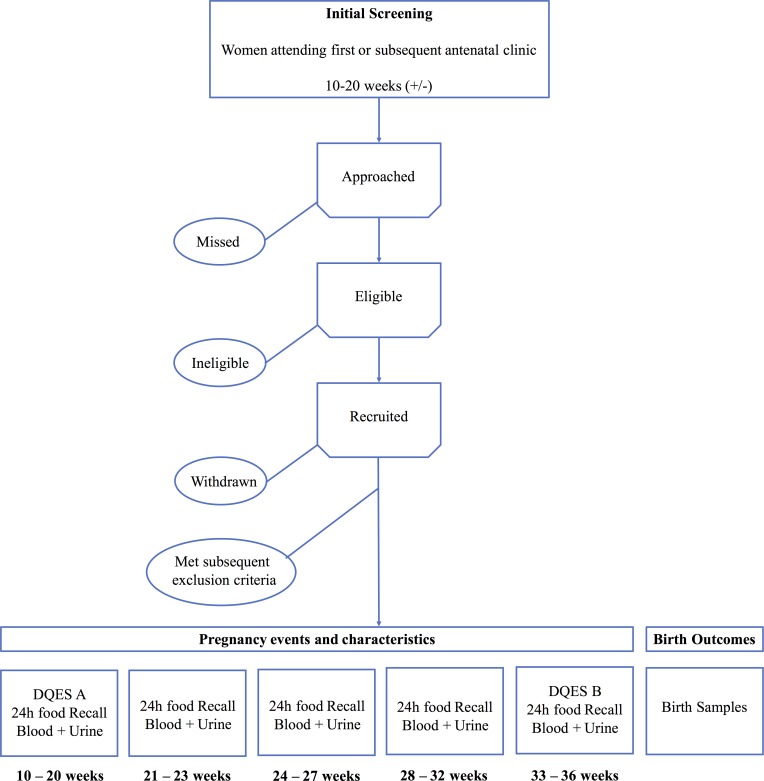
Introduction: The creatine kinase circuit is central to the regulation of high-energy phosphate metabolism and the maintenance of cellular energy turnover. This circuit is fuelled by creatine, an amino acid derivative that can be obtained from a diet containing animal products, and by synthesis in the body de novo. A recent retrospective study conducted in a cohort of 287 pregnant women determined that maternal excreted levels of creatine may be associated with fetal growth. This prospective study aims to overcome some of the limitations associated with the previous study and thoroughly characterise creatine homeostasis throughout gestation in a low-risk pregnant population. Methods and analysis: This study is recruiting women with a singleton low-risk pregnancy who are attending Monash Health, in Melbourne, Australia. Maternal blood and urine samples, along with dietary surveys, are collected at five time points during pregnancy and then at delivery. Cord blood and placenta (including membranes and cord) are collected at birth. A biobank of tissue samples for future research is being established. Primary outcome measures will include creatine, creatine kinase and associated metabolites in antenatal bloods and urine, cord bloods and placenta, along with molecular analysis of the creatine transporter (SLC6A8) and synthesising enzymes L - arginine:glycine amidinotransferase (AGAT) and guanidinoacetate methyltransferase (GAMT) in placental tissues. Secondary outcome measures include dietary protein intake over pregnancy and any associations with maternal creatine, pregnancy events and birth outcomes. Ethics and dissemination: Ethical approval was granted in August 2015 from Monash Health (Ref: 14140B) and Monash University (Ref: 7785). Study outcomes will be disseminated at international conferences and published in peer-reviewed scientific journals. Trial registration number: ACTRN12618001558213; Pre-results.
Overview
The claims and statistics of this paper haven’t been checked yet.
Free: it reads the open-access text and checks the first 5 claims that cite a source we can check. Create a free account to check every claim.
Integrity signals
Registry
Cites
Statistics
Figures
Verification
Claims the paper makes
The claims and statistics of this paper haven’t been checked yet.
Free: it reads the open-access text and checks the first 5 claims that cite a source we can check. Create a free account to check every claim.
Claims other papers make about this one
Each is checked against this paper’s own text: does it say what the citing paper says it does?
The source backs part of the claim, not all of it — or backs it for a different population, condition or comparison.
In the citing paper
“Currently, clinical trials are underway to better understand how creatine may affect both the mother and developing fetus [75].”
From Creatine Supplementation in Children and Adolescents (2021) · cites this paper as [75]
Experimental — accuracy not yet measuredThe source backs part of the claim, not all of it — or backs it for a different population, condition or comparison.
In the citing paper
“Although there are no human studies evaluating the effects of creatine supplementation during pregnancy, creatine could provide a safe, low-cost nutritional interventional for reducing intra- and post-partum complications associated with cellular energy depletion [169].”
From Common questions and misconceptions about creatine supplementation: what does the scientific evidence really show? (2021) · cites this paper as [169]
Experimental — accuracy not yet measuredThe cited source says what the claim attributes to it.
In the citing paper
“Available literature suggests that creatine metabolism may play an essential role in the bioenergetics of successful reproduction and that creatine supplementation may improve reproductive and/or perinatal outcomes [7,277,278,279,280,283,284,286,288].”
From Creatine in health and disease (2021) · cites this paper as [286]
The cited source says what the claim attributes to it.
In the citing paper
“There has also been recent interest in examining the potential benefits of creatine supplementation for pregnant women with potential benefits extending to the developing fetus [75,76].”
From Creatine Supplementation in Children and Adolescents (2021) · cites this paper as [75]
In the citing paper
“CrM supplementation could provide a safe, low-cost nutritional strategy for reducing intra- and post-partum complications associated with cellular energy depletion [57].”
From Creatine supplementation in women's health: a lifespan perspective (2021) · cites this paper as [57]
Self-check
Percentages, sums and reported differences re-computed from the paper’s own numbers.
The self-check needs the paper’s full text.
Citations
Cites
von Elm, E., Altman, D. G., Egger, M., Pocock, S. J., Gøtzsche, P. C., Vandenbroucke, J. P., & Initiative, F. T. S. (2007) · PLoS Medicine · doi:10.1371/journal.pmed.0040296 · Cited by 23,020
von Elm, E., Altman, D. G., Egger, M., Pocock, S. J., Gøtzsche, P. C., & Vandenbroucke, J. P. (2007) · The Lancet · doi:10.1016/s0140-6736(07)61602-x · Cited by 21,320
Creatine and Creatinine Metabolism
Wyss, M., & Kaddurah-Daouk, R. (2000) · Physiological Reviews · doi:10.1152/physrev.2000.80.3.1107 · Cited by 2,950 · cited 2×
“Creatine is taken up by cells via the specific creatine transporter SLC6A8.(5) Dietary creatine supplementation has been studied extensively in non-pregnant humans, primarily as an ergogenic aid to elite athlete training, due to its enhanced ability to supply energy to cells with high energy demand.”
BackgroundThe creatine kinase system and pleiotropic effects of creatine
Wallimann, T., Tokarska-Schlattner, M., & Schlattner, U. (2011) · Amino Acids · doi:10.1007/s00726-011-0877-3 · Cited by 797
Poslusna, K., Ruprich, J., de Vries, J. H. M., Jakubikova, M., & van't Veer, P. (2009) · British Journal of Nutrition · doi:10.1017/s0007114509990602 · Cited by 695
Effect of oral creatine supplementation on skeletal muscle phosphocreatine resynthesis
Greenhaff, P. L., Bodin, K., Soderlund, K., & Hultman, E. (1994) · American Journal of Physiology-Endocrinology and Metabolism · doi:10.1152/ajpendo.1994.266.5.e725 · Cited by 531
Evolution and Physiological Roles of Phosphagen Systems
Ellington, W. R. (2001) · Annual Review of Physiology · doi:10.1146/annurev.physiol.63.1.289 · Cited by 517 · cited 1×
“IntroduCtIon Cells with high energy turnover use the creatine kinase circuit to buffer fluctuations in ATP supply and demand.(1) Creatine is critical for this pathway, and can be obtained from a diet containing fish, meat or dairy, as well as produced by the body endogenously, via a two-step enzymatic reaction (de nov…”
BackgroundOlsen, S., Aagaard, P., Kadi, F., Tufekovic, G., Verney, J., Olesen, J. L., Suetta, C., & Kjær, M. (2006) · The Journal of Physiology · doi:10.1113/jphysiol.2006.107359 · Cited by 319
BALSOM, P. D., SÖDERLUND, K., SJÖDIN, B., & EKBLOM, B. (1995) · Acta Physiologica Scandinavica · doi:10.1111/j.1748-1716.1995.tb09914.x · Cited by 292
Optimising sample collection for placental research
Burton, G. J., Sebire, N. J., Myatt, L., Tannetta, D., Wang, Y.-L., Sadovsky, Y., Staff, A. C., & Redman, C. W. (2014) · Placenta · doi:10.1016/j.placenta.2013.11.005 · Cited by 263
Cited by
Antonio, J., Candow, D. G., Forbes, S. C., Gualano, B., Jagim, A. R., Kreider, R. B., Rawson, E. S., Smith-Ryan, A. E., VanDusseldorp, T. A., Willoughby, D. S., et al. (2021) · Journal of the International Society of Sports Nutrition · doi:10.1186/s12970-021-00412-w · Cited by 345
“Although there are no human studies evaluating the effects of creatine supplementation during pregnancy, creatine could provide a safe, low-cost nutritional interventional for reducing intra- and post-partum complications associated with cellular energy depletion [169].”
BackgroundCreatine in health and disease
Kreider, R. B., & Stout, J. R. (2021) · Nutrients · doi:10.3390/nu13020447 · Cited by 227
Creatine Metabolism in Female Reproduction, Pregnancy and Newborn Health
Muccini, A. M., Tran, N. T., de Guingand, D. L., Philip, M., Della Gatta, P. A., Galinsky, R., Sherman, L. S., Kelleher, M. A., Palmer, K. R., Berry, M. J., et al. (2021) · Nutrients · doi:10.3390/nu13020490 · Cited by 78
“A prospective longitudinal cohort study (the Creatine and Pregnancy Outcomes (CPO) study) has been undertaken to address these knowledge gaps [88].”
BackgroundSelf-citationCreatine supplementation in women's health: a lifespan perspective
Smith-Ryan, A. E., Cabre, H. E., Eckerson, J. M., & Candow, D. G. (2021) · Nutrients · doi:10.3390/nu13030877 · Cited by 92
“Although there are no human studies to date that have evaluated the effect of CrM supplementation during pregnancy, CrM supplementation could provide a safe, low-cost nutritional strategy for reducing intra- and post-partum complications associated with cellular energy depletion [57].”
BackgroundCreatine Supplementation in Children and Adolescents
Jagim, A. R., & Kerksick, C. M. (2021) · Nutrients · doi:10.3390/nu13020664 · Cited by 61
“of creatine supplementation for pregnant women with potential benefits extending to the developing fetus [75,76].”
Backgroundde Guingand, D. L., Palmer, K. R., Snow, R. J., Davies-Tuck, M. L., & Ellery, S. J. (2020) · Nutrients · doi:10.3390/nu12061780 · Cited by 35
Self-citationTran, N. T., Kelly, S. B., Snow, R. J., Walker, D. W., Ellery, S. J., & Galinsky, R. (2021) · Cells · doi:10.3390/cells10112902 · Cited by 27
“In healthy adult females, creatine supplementation has a good safety profile [14] and a prospective cohort study of maternal creatine supplementation and postnatal outcomes is ongoing (ACTRN12618001558213) [15].”
BackgroundSelf-citationActive Women Across the Lifespan: Nutritional Ingredients to Support Health and Wellness
Smith‐Ryan, A. E., Cabre, H. E., & Moore, S. R. (2022) · Sports Medicine · doi:10.1007/s40279-022-01755-3 · Cited by 21
Fernando, M., Coster, T., Ellery, S. J., de Guingand, D. L., Lim, S. S., Harrison, C. L., Teede, H. J., Naderpoor, N., & Mousa, A. (2020) · Nutrients · doi:10.3390/nu12092495 · Cited by 18
“This cohort was also recruited in early pregnancy (<20 weeks gestation) from Monash Health, for a prospective observational study aimed at characterising creatine homeostasis in low-risk pregnancies [29].”
MethodSelf-citationXie, K., Li, Y., Chen, D., Yu, B., Luo, Y., Mao, X., Huang, Z., Yu, J., Luo, J., Zheng, P., et al. (2020) · Food & Function · doi:10.1039/d0fo02472d · Cited by 17
Creatine metabolism at the uterine–placental interface throughout gestation in sheep
Sah, N., Stenhouse, C., Halloran, K. M., Moses, R. M., Seo, H., Burghardt, R. C., Johnson, G. A., Wu, G., & Bazer, F. W. (2023) · Biology of Reproduction · doi:10.1093/biolre/ioad052 · Cited by 18
van der Pligt, P. F., Kuswara, K., McNaughton, S. A., Abbott, G., Islam, S. M. S., Huynh, K., Meikle, P. J., Mousa, A., & Ellery, S. J. (2023) · European Journal of Nutrition · doi:10.1007/s00394-023-03244-3 · Cited by 17
Self-citationA Multi-Ingredient Supplement Protects against Obesity and Infertility in Western Diet-Fed Mice
Nilsson, M. I., May, L. L., Roik, L. J., Fuda, M. R., Luo, A., Hettinga, B. P., Bujak, A. L., & Tarnopolsky, M. A. (2023) · Nutrients · doi:10.3390/nu15030611 · Cited by 17
de Guingand, D. L., Palmer, K. R., Bilardi, J. E., & Ellery, S. J. (2020) · Midwifery · doi:10.1016/j.midw.2019.102599 · Cited by 15
Self-citationde Guingand, D. L., Palmer, K. R., Callahan, D. L., Snow, R. J., Davies-Tuck, M. L., & Ellery, S. J. (2024) · American Journal of Clinical Nutrition · doi:10.1016/j.ajcnut.2023.11.006 · Cited by 13
Self-citationA remarkable rodent: Regeneration and reproduction in spiny mice (Acomys)
Seifert, A. W., & Temple-Smith, P. D. (2022) · Current topics in developmental biology/Current Topics in Developmental Biology · doi:10.1016/bs.ctdb.2021.12.017 · Cited by 9
van der Pligt, P. F., Ellery, S. J., de Guingand, D. L., Abbott, G., Gatta, P. A. D., & Daly, R. M. (2023) · BMC Pregnancy and Childbirth · doi:10.1186/s12884-022-05336-0 · Cited by 9
“Women were recruited from antenatal clinics between 10–20 weeks gestation and at consent elected to have samples, collected as part of the CPO study, stored as a biobank for future research approved by Monash Health.”
MethodInfluentialSelf-citationApplication of ABTS method for assessment of radical-binding effect of Creatine monohydrate
Tsvetkova, D. D., Kostadinova, I., Landzhov, B. V., Vezenkov, L., Marinov, L., & Ivanova, I. (2023) · Journal Of Advanced Pharmacy Education And Research · doi:10.51847/rxgogbiukj · Cited by 8
“In different studies has been reported that Creatine supplementation are effective in muscular atrophy and sarcopenia [24], can improve reproductive perinatal outcomes [25, 26], and during pregnancy prevents acute deficits in skeletal muscle after birth asphyxia [27].”
Backgroundvan der Pligt, P. F., Ebrahimi, S., Kuswara, K., Abbott, G., McNaughton, S. A., Islam, S. M. S., & Ellery, S. J. (2023) · Nutrition Metabolism and Cardiovascular Diseases · doi:10.1016/j.numecd.2023.11.001 · Cited by 8
Self-citationEbrahimi, S., Ellery, S. J., Leech, R. M., & van der Pligt, P. (2024) · Journal of Human Nutrition and Dietetics · doi:10.1111/jhn.13274 · Cited by 7
Self-citationFernando, M., Ellery, S. J., de Guingand, D. L., Marquina, C., Lim, S. S., Harrison, C. L., Teede, H. J., Naderpoor, N., & Mousa, A. (2020) · Journal of Clinical Medicine · doi:10.3390/jcm9072186 · Cited by 5
Self-citationArginine Metabolism in Decidual Macrophages During Pregnancy
Zhang, Y., Mei, J., & Zhang, H. (2025) · American Journal of Reproductive Immunology · doi:10.1111/aji.70196 · Cited by 4
Chiarot, A., Minhas, M., de Maat, N. M., Doan, J., Nilsson, M. I., Hettinga, B. P., Faghih, M., Neal, M. S., Nederveen, J. P., & Tarnopolsky, M. A. (2025) · Biomolecules · doi:10.3390/biom15091258 · Cited by 2
“CrM has well-documented benefits for SkM and performance [75] and is being investigated in obstetric and neonatal medicine for preventing preterm birth [73,74,76,105].”
Red Meat in Human Evolution, Health, and Disease: From A Blessing to A Curse?
Jaco, J., Banda, K., Varki, A. P., & Gagneux, P. (2026) · The Quarterly Review of Biology · doi:10.1086/741185 · Cited by 2
Hill, M. G. (2024) · Seminars in Fetal and Neonatal Medicine · doi:10.1016/j.siny.2024.101529 · Cited by 2
Genç, S., Eren, M., Kükrer, S., Yurci, A., Cıngıllıoğlu, B., Köse, E., Şahin, O., Sirinoglu, H. A., & Mihmanlı, V. (2021) · Journal of Surgery and Medicine · doi:10.28982/josam.980386 · Cited by 1
“Creatine kinase (CK) is important in the regulation of high-energy phosphate metabolism [3].”
BackgroundSupplementation for athletes – part 1 – creatine
Szewczyk, P. B., Osowski, M., Dorożyński, B., & Szura, E. (2023) · Farmacja Polska · doi:10.32383/farmpol/166058 · Cited by 1
Metadata
- Authors
- De Guingand, D. L., Ellery, S. J., Davies-Tuck, M. L., & Dickinson, H.
- Affiliations
- The Ritchie Centre, Hudson Institute of Medical Research and Department of Obstetrics and Gynaecology, Monash University, Clayton, Victoria, Australia
- Hudson Institute of Medical Research (AU)
- Corresponding author
- Ellery, Stacey J
- Venue
- BMJ Open
- Publisher
- BMJ
- Published
- 2019-01
- Volume
- 9
- Issue
- 1
- Pages
- e026756
- ISSN
- 2044-6055 (ISSN-L)
- PMC
- PMC6340624
- OpenAlex
- W2908556859
- Cited by
- 27
- References
- 33
- Citations by year
- 2026: 1 · 2025: 2 · 2024: 3 · 2023: 7 · 2022: 2 · 2021: 7 · 2020: 4 · 2019: 1
- FWCI
- 3.62
- Type
- journal article
- Language
- en
- Open access
- gold
- doi.org
- Licence
- cc-by-nc
- Locations
- BMJ Open (publishedVersion, cc-by-nc)
- Europe PMC (PubMed Central) (publishedVersion, other-oa)
- PubMed Central (publishedVersion, cc-by-nc)
- PubMed (publishedVersion)
- DOAJ (DOAJ: Directory of Open Access Journals) (acceptedVersion)
- Minerva Access (University of Melbourne) (submittedVersion, cc-by-nc)
- Funders
- Stillbirth Foundation
- Andrea Logan Trust
- Topics
- Health Sciences › Medicine › Pediatrics, Perinatology and Child Health › Birth, Development, and Health
- Health Sciences › Medicine › Obstetrics and Gynecology › Pregnancy and preeclampsia studies
- Health Sciences › Nursing › Nutrition and Dietetics › Muscle metabolism and nutrition
- Keywords
- creatine, pregnancy outcomes, creatine kinase, high-energy phosphate metabolism, SLC6A8, arginine:glycine amidinotransferase, GAMT, placenta, umbilical cord blood, protein intake, low-risk pregnancy, fetal growth, birth outcomes
- MeSH terms
- Amidinotransferases, Australia, Creatine, Energy Metabolism, Female, Homeostasis, Humans, Nerve Tissue Proteins, Placenta, Pregnancy, Prospective Studies, Research Design, Fetal Development, Plasma Membrane Neurotransmitter Transport Proteins, Guanidinoacetate N-Methyltransferase, Observational Studies as Topic
About these checks
Registry, retraction, Cites and statistics results are computed, not judged, with one exception: a printed reference that no index lists is read once by a model before it counts as a citation error. Claims are extracted by a model and kept only when their quote appears verbatim in the text; each cited source is then checked, with a model’s help, for whether it says what the claim relies on. Those verdicts can be wrong — read the claim’s quote and the cited source before relying on one.
Statistics and arithmetic are recomputed, not judged.
Confidence bands are shown only for fields calibrated on our annotated test set. None is calibrated yet, so no band is shown.
What counts as a claim ›How we measure confidence ›How we check this ›
Are you an author, or do you see a problem with this page? Request a review
Data sources
Bibliographic data: Semantic Scholar, OpenAlex, Crossref.
Contains information from the Semantic Scholar Academic Graph Datasets, made available under the ODC Attribution License (ODC-BY 1.0).
Semantic Scholar’s data is described in: Kinney, R., et al. (2023). The Semantic Scholar Open Data Platform. arXiv:2301.10140.
