

Association between maternal education and breast feeding practices in China: a population-based cross-sectional study
Open accessThe DOI matches its Crossref record; 44 of the 45 references it cites were found in a registry or an index.
Abstract
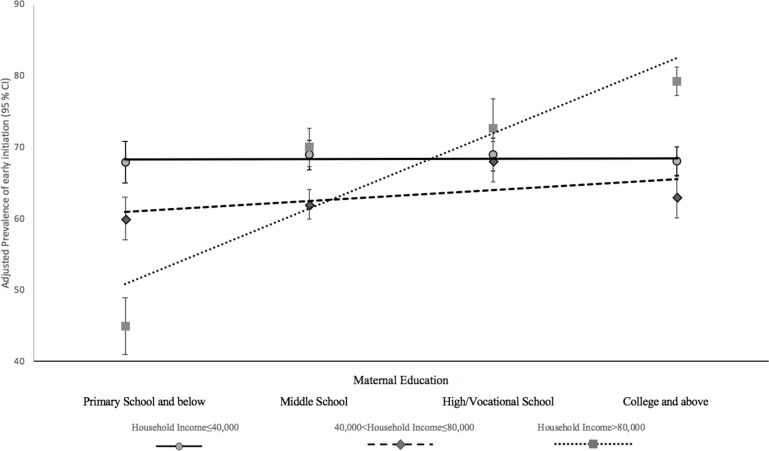
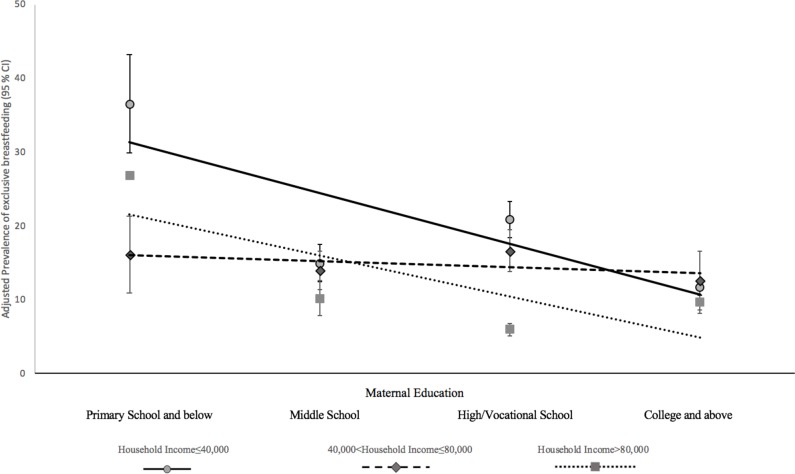
Objective: To investigate the association between maternal education and breast feeding in the Chinese population, with a consideration of household income and health-seeking behaviours. Design: A nationally representative population-based cross-sectional study. Setting: 77 counties from 12 geographically distinct regions in China. Participants: 10 408 mothers with children from 0 to 12 months of age, aged 15–53 years old (mean: 29.15, SD: 5.11) were classified into primary school or below group (n=781), middle school group (n=3842), high school/vocational school group (n=1990), college or above group (n=3795), according to their highest completed education. Outcomes: Five breastfeeding outcomes, including early initiation of breast feeding (EIB), exclusive breast feeding (EBF) under 6 months, predominant breast feeding under 6 months, current breast feeding and children ever breast fed, were calculated based on the standardised questionnaire from the WHO and Wellstart International’s toolkit for monitoring and evaluating breastfeeding activities. Results: The absolute risk of EIB and EBF in the lowest maternal education level was 64.85% and 26.53%, respectively, whereas the absolute risk of EIB and EBF in the highest maternal education level was 77.21% and 14.06%, respectively. A higher level of maternal education was positively associated with EIB (risk ratio (RR): 1.22; 95% CI: 1.12 to 1.30) and was inversely associated with EBF (RR: 0.59; 95% CI: 0.38 to 0.88). Stratified by household income, a positive association with EIB was observed only in the group with the highest household income and an inverse association with EBF was found in both low household and high household income groups. Conclusions: Mothers with a higher education were more likely to initiate early breast feeding when they were also from a high-income household while also being less likely to exclusively breast feed their babies. Routine and successful nursing is crucial for the health of infants and is influenced by maternal education. Future public health interventions to promote breast feeding should consider the issues related to the educational level of mothers.
Overview
The claims and statistics of this paper haven’t been checked yet.
Free: it reads the open-access text and checks the first 5 claims that cite a source we can check. Create a free account to check every claim.
Integrity signals
Registry
Cites
Statistics
Figures
Verification
Claims the paper makes
The claims and statistics of this paper haven’t been checked yet.
Free: it reads the open-access text and checks the first 5 claims that cite a source we can check. Create a free account to check every claim.
Claims other papers make about this one
Each is checked against this paper’s own text: does it say what the citing paper says it does?
The source backs part of the claim, not all of it — or backs it for a different population, condition or comparison.
In the citing paper
“Similar to previous studies [43], women with low levels of education were less likely to breastfeed.”
From Fulfilment of expectations on birth and the postpartum period – A Swedish cohort study (2022) · cites this paper as [43]
Experimental — accuracy not yet measured
Self-check
Percentages, sums and reported differences re-computed from the paper’s own numbers.
The self-check needs the paper’s full text.
Citations
Cites
Breastfeeding in the 21st century: epidemiology, mechanisms, and lifelong effect
Victora, C. G., Bahl, R., Barros, A. J. D., França, G. V. A., Horton, S., Krasevec, J., Murch, S., Sankar, M. J., Walker, N., & Rollins, N. C. (2016) · The Lancet · doi:10.1016/s0140-6736(15)01024-7 · Cited by 8,040 · cited 1×
“Nevertheless, apart from knowledge, the EIB requires social support and access to healthcare services.(3) Women with lower household incomes may not have the financial ability to obtain healthcare services.”
BackgroundBreastfeeding and the Use of Human Milk
Breastfeeding, S. O. (2005) · Pediatrics · doi:10.1542/peds.2004-2491 · Cited by 5,323 · cited 1×
“IntrODuCtIOn Extensive research has reported the diverse and compelling advantages of breast feeding for infants, mothers, families and society.(1)Breastfeeding has become more common in the last few years because of numerous interventions conducted at multiple levels from the communities, hospitals, and society as a…”
BackgroundBreastfeeding and the use of human milk
BREASTFEEDING, S. O., Eidelman, A. I., Schanler, R. J., Johnston, M., Landers, S., Noble, L., Szucs, K., & Viehmann, L. (2012) · Pediatrics · doi:10.1542/peds.2011-3552 · Cited by 4,357
Barros, A. J., & Hirakata, V. N. (2003) · BMC Medical Research Methodology · doi:10.1186/1471-2288-3-21 · Cited by 4,140
Why invest, and what it will take to improve breastfeeding practices?
Rollins, N. C., Bhandari, N., Hajeebhoy, N., Horton, S., Lutter, C. K., Martines, J. C., Piwoz, E. G., Richter, L. M., & Victora, C. G. (2016) · The Lancet · doi:10.1016/s0140-6736(15)01044-2 · Cited by 2,944 · cited 4×
“Breastfeeding practices, however, are not merely biological issues but are also related to health behaviours and are influenced by multifactorial determinants, including historical, socioeconomic and cultural factors.(6) Women’s breastfeeding practices are also affected by”
BackgroundMethodResultInfluentialSocioeconomic status and health: The challenge of the gradient
Adler, N. E., Boyce, T., Chesney, M. A., Cohen, S., Folkman, S., Kahn, R. L., & Syme, S. L. (1994) · American Psychologist · doi:10.1037/0003-066x.49.1.15 · Cited by 2,383 · cited 1×
“Higher education may promote better breastfeeding knowledge and health behaviours.(42) Nevertheless, apart from knowledge, the EIB requires social support and access to healthcare services.”
BackgroundSOCIAL NETWORKS AND SOCIAL SUPPORT
(2016) · The Gerontologist · doi:10.1093/geront/gnw162.1463 · Cited by 1,004
Maternal education and child health: Is there a strong causal relationship?
Desai, S., & Alva, S. (1998) · Demography · doi:10.2307/3004028 · Cited by 781
Greenland, S. (2004) · American Journal of Epidemiology · doi:10.1093/aje/kwh221 · Cited by 727
Factors that positively influence breastfeeding duration to 6 months: A literature review
Meedya, S., Fahy, K., & Kable, A. (2010) · Women and Birth · doi:10.1016/j.wombi.2010.02.002 · Cited by 604
Research works printed but not linked: 1
- World Health Organization Acceptable medical reasons for use of breast-milk substitutes, 2009. 24809113
Cited by
Gayatri, M., & Dasvarma, G. (2020) · PLoS ONE · doi:10.1371/journal.pone.0239446 · Cited by 69
“Unlike some previous studies which have shown that mother’s age is associated with EIBF [14,15,36], the present study shows no statistically significant association between mother’s age and EIBF.”
BackgroundResultAssociation between Mother’s Education and Infant and Young Child Feeding Practices in South Asia
Tariqujjaman, M., Hasan, M. M., Mahfuz, M., Hossain, M., & Ahmed, T. (2022) · Nutrients · doi:10.3390/nu14071514 · Cited by 67
“A significant negative association between mother’s education and EBF practices was also observed in China, Saudi Arabia, the United Arab Emirates, and Lebanon [36,53–56].”
BackgroundWu, W. D., Zhao, A., Liu, B., Ye, W., Su, H.-W., Li, J., & Zhang, Y. (2021) · Nutrients · doi:10.3390/nu13020693 · Cited by 57
“The association of exclusively breastfeeding under six months with the maternal education level has been found in previous studies [24,25].”
ResultWako, W. G., Wayessa, Z. J., & Fikrie, A. (2022) · BMJ Open · doi:10.1136/bmjopen-2021-054302 · Cited by 54
Emotional and informational social support from health visitors and breastfeeding outcomes in the UK
Chambers, A. R., Emmott, E. H., Myers, S., & Page, A. E. (2023) · International Breastfeeding Journal · doi:10.1186/s13006-023-00551-7 · Cited by 47
“Affluent mothers, who predominate in our sample, typically have privileged access to support and information, and are likely to breastfeed for longer [53, 54].”
BackgroundShift-work and breastfeeding for women returning to work in a manufacturing workplace in Taiwan
Tsai, S.-Y. (2022) · International Breastfeeding Journal · doi:10.1186/s13006-022-00467-8 · Cited by 39
Li, X., Peng, Y., Li, Z., Christensen, B., Heckmann, A. B., Lagerqvist, C., Stenlund, H. C., Lönnerdal, B. L., Hernell, O., & West, C. E. (2021) · PLoS ONE · doi:10.1371/journal.pone.0251293 · Cited by 26
“This pattern was also seen is this multi-center study in China and is consistent with a recent Chinese cross-sectional study [42].”
ResultDueñas-Espín, I., Cáceres, Á. L., Álava, A., Ayala, J. P. A., Figueroa, K., Loor, V., Loor, W., Menéndez, M., Menéndez, D., Moreira, E., et al. (2021) · BMJ Open · doi:10.1136/bmjopen-2020-041625 · Cited by 24
Zhong, Y., Black, B., Kain, V. J., & Song, Y. (2022) · Frontiers in Pediatrics · doi:10.3389/fped.2022.887711 · Cited by 21
Terefe, A., Demtse, A. G., Abebe, F., Mislu, E. K., & Tachbele, E. (2024) · BMC Pediatrics · doi:10.1186/s12887-024-04545-0 · Cited by 19
“This might be due to poor education/counselling regard to feeding and better awareness on early initiation of feeding among mothers with higher educational level as supported by a study in china [32].”
BackgroundMa, R., Luo, Y., Wang, J., Zhou, Y., Sun, H., Ren, X., Xu, Q., Zhang, L., & Zou, L. (2020) · BMJ Open · doi:10.1136/bmjopen-2020-037266 · Cited by 21
Does ankyloglossia interfere with breastfeeding in newborns? A crosssectional study
Souza‐Oliveira, A. C., Cruz, P. V., Bendo, C. B., Batista, W. C., Bouzada, M. C. F., & Martins, C. C. (2021) · Journal of Clinical and Translational Research · doi:10.18053/jctres.07.202102.011 · Cited by 16
Karthigesu, K., Balakumar, S., & Arasaratnam, V. (2023) · International Breastfeeding Journal · doi:10.1186/s13006-023-00575-z · Cited by 15
The importance of community resources for breastfeeding
LoCasale‐Crouch, J., Wallace, M., Heeren, T., Kerr, S. M., Yue, Y., Deeken, G., Turnbull, K. L. P., Jaworski, B., Mateus, M. C., Moon, R. Y., et al. (2024) · International Breastfeeding Journal · doi:10.1186/s13006-024-00623-2 · Cited by 15
“Additionally, Tang and colleagues found that mothers with higher education and who were from high-income households were more likely to initiate breastfeeding than their counterparts without these resources [12].”
BackgroundBoucoiran, I., Kaida, A., Blakeley, C., Skerritt, L., Khan, S., Bakombo, D. M., Greene, S., Kennedy, V. L., Brophy, J. C., Balleny, R., et al. (2023) · AIDS Care · doi:10.1080/09540121.2023.2186341 · Cited by 13
“Lower education was found to correlate with having not breastfed before HIV diagnosis, which is consistent with previous reports (Acharya & Khanal, 2015; Ladomenou et al., 2007; Tang et al., 2019).”
ResultWang, C., Yu, G., Menon, R., Zhong, N. A., Qiao, C., Cai, J., Wang, W., Zhang, H., Liu, M., Sun, K., et al. (2022) · Environment International · doi:10.1016/j.envint.2022.107561 · Cited by 11
Odira, C. C. H., Onyeje, B. T., Udeogalanya, E. A., Olabisi, O. I., & Esan, D. T. (2025) · BMC Pregnancy and Childbirth · doi:10.1186/s12884-025-07705-x · Cited by 9
Ibrahim, K. H., Ali, A. M., & Tafese, Z. (2023) · PeerJ · doi:10.7717/peerj.15963 · Cited by 8
“Other studies reported maternal employment (Alina, Manan & Isa, 2013; Mekuria & Edris, 2015; Ratnayake & Rowel, 2018); lower educational status of the mother (Ratnayake & Rowel, 2018; Khanal et al., 2014; Asfaw, Argaw & Kefene, 2015; Tang et al., 2019); urban dwelling (Woldie & Edris, 2014; Fombong et al.”
Fulfilment of expectations on birth and the postpartum period – A Swedish cohort study
Larsson, B., Elfving, M., Vesterlund, E., Karlström, A., & Hildingsson, I. (2022) · Sexual & Reproductive Healthcare · doi:10.1016/j.srhc.2022.100748 · Cited by 7
Zegeye, A. F., Gebrehana, D. A., Bezabih, S. A., Mengistu, S. A., Adane, K. C., & Lakew, A. M. (2024) · BMC Health Services Research · doi:10.1186/s12913-024-12064-y · Cited by 8
Nisa, F., Damayanti, N. A., Suhariadi, F., Herisanty, W., & Afiyah, R. K. (2022) · Journal of Public Health Research · doi:10.1177/22799036221106619 · Cited by 10
Kebede, N., Alemu, G., & Cherie, N. (2023) · Journal of Neonatal Nursing · doi:10.1016/j.jnn.2023.03.006 · Cited by 7
Predictors of breastfeeding duration on mothers who return to work: a systematic review
Nurjanah, S., Wirjatmadi, B., Devy, S. R., Suminar, D. R., & Pratiwi, E. N. (2023) · Journal of Public Health in Africa · doi:10.4081/jphia.2023.2569 · Cited by 7
Hassen, H. M. (2024) · BMC Public Health · doi:10.1186/s12889-024-19945-1 · Cited by 8
“This aligns with the assumption that basic education can increase awareness about the benefits of early breastfeeding [46].”
BackgroundZhou, Q., & Feng, X. L. (2023) · International Breastfeeding Journal · doi:10.1186/s13006-023-00562-4 · Cited by 7
“The national surveys mentioned above both reported negative associations between maternal education and exclusive breastfeeding [9, 10], while data from Nanning city otherwise reported a positive association [11].”
BackgroundStinson, L. F., Pang, W. W., Rea, A., Fok, D., Chua, M. C., Tan, K. H., Yap, F. K. P., Godfrey, K. M., Shek, L. P., Eriksson, J. G., et al. (2025) · mSystems · doi:10.1128/msystems.00677-25 · Cited by 6
“Similarly, breastfeeding exclusivity has repeatedly been linked to maternal education level (100–104).”
Hubungan Dukungan Tenaga Kesehatan terhadap Pemberian Exclusive Breastfeeding (EBF) pada Ibu Bekerja
Sutrisminah, E., Hudaya, I., & Wahyuningsih, W. (2022) · Jurnal Kesehatan · doi:10.26630/jk.v13i1.2548 · Cited by 5
Gessese, G. T., Woldeamanuel, B. T., Demie, T. G., Biratu, T. D., & Handebo, S. (2022) · Frontiers in Nutrition · doi:10.3389/fnut.2022.970737 · Cited by 5
Hergholi, M., Hosseinzadeh, M., Sahebihagh, M. H., Zahedi, H., & Dahouri, A. (2026) · Journal of Health Population and Nutrition · doi:10.1186/s41043-025-01228-z · Cited by 7
“However, international studies have reported inconsistent findings; for instance, studies in Ethiopia and Bangladesh found an inverse relationship between education and breastfeeding, underscoring the influence of contextual, cultural, and health literacy factors [41–43].”
Mawi, N. E., Hu, R., Paulo, H. A., Chen, N., Liu, G., & Abba‐Aji, M. (2025) · PLoS ONE · doi:10.1371/journal.pone.0319408 · Cited by 4
“These findings are consistent with those of studies conducted in Saudi Arabia, India, and Ethiopia [4,16,29], and may be explained by the correlation between a high level of education and breastfeeding knowledge and a positive intention to breastfeed [30,31].”
Boyles, S. L., Weinstein, S. R., Bell, A. F., & Erickson, E. N. (2025) · Journal of Midwifery & Women s Health · doi:10.1111/jmwh.13781 · Cited by 4
Kim, Y. K., Kim, Y. J., Lee, S., & Park, P. G. (2025) · European Journal of Pediatrics · doi:10.1007/s00431-025-06565-z · Cited by 3
“The association between maternal higher education and breastfeeding has varied across studies [3, 38–40].”
Safar, T. S. A., Khamis, R. H., & Ahmed, S. R. H. (2021) · International Journal of Health Medicine and Nursing Practice · doi:10.47941/ijhmnp.435 · Cited by 4
“Mothers with a higher education were more likely to EIBF when they were also from a high-income household while likewise being less likely to EBF their babies (Tang et al., 2019).”
BackgroundBreastfeeding Practices of Women with HIV in Sub-Saharan Africa
Caldwell, C., Salihu, H. M., Dongarwar, D., Mercado-Evans, V., Batiste, A. J., Beal, T., & Valladares, E. (2023) · Nursing for Women s Health · doi:10.1016/j.nwh.2023.03.006 · Cited by 3
Nadeem, N., Ali, M., Chattha, M. J., Ahmed, M. M., & Mushtaq, I. (2024) · Journal of the Pakistan Medical Association · doi:10.47391/jpma.8351 · Cited by 3
“19 However, maternal education did not show any significant relationship with breastfeeding or hygiene practices, which is inconsistent with earlier findings.”
ResultFactors associated with infant feeding intention among usual‐risk pregnant women
Sales, N. M., de Oliveira, A. C. C. B., da Silva, F. M. S., Oliveira, L. N., Abreu, V. S. M., Gadelha, I. P., Ferreira, U. R., Soares, P. R. A. L., Ribeiro, S. G., & Aquino, P. D. S. (2024) · International Journal of Gynecology & Obstetrics · doi:10.1002/ijgo.15346 · Cited by 3
Zhang, X., Yu, J., Wei, Z., & Fewtrell, M. S. (2023) · World Journal of Pediatrics · doi:10.1007/s12519-023-00696-9 · Cited by 2
“Quantitative studies in China indicated that high-income mothers are less likely to maintain EBF because they can afford infant formula or find a paid carer to look after their infant [40].”
BackgroundTeng, Y.-F., & Ho, Y.-J. (2024) · Journal of Human Lactation · doi:10.1177/08903344241254785 · Cited by 2
“The model was constructed using age, education level, support system, and PBSES (Anstey et al., 2018; Colombo et al., 2018; Piro & Ahmed, 2020; Tang et al., 2019).”
Food Insecurity and Anxiety Symptoms Among Older Adults in Low- and Middle-Income Countries
Selvamani, Y., Fong, J. H. Y., & Khanal, G. (2025) · Clinical Gerontologist · doi:10.1080/07317115.2025.2552739 · Cited by 2
Byun, J., Lee, J., & Kim, T. (2021) · JOURNAL OF THE KOREAN SOCIETY OF MATERNAL AND CHILD HEALTH · doi:10.21896/jksmch.2021.25.1.21 · Cited by 2
Aytaç, H. M., & Berkol, T. D. (2022) · Florence Nightingale Journal of Nursing · doi:10.5152/fnjn.2022.20236 · Cited by 2
“Breastfeeding is not only a biological issue but also associated with multifactorial issues, including personal, social, economic, and traditional characteristics; therefore, breastfeeding can be influenced by age, weight, education, and confidence (Tang et al., 2019).”
BackgroundInfluences on Infant Feeding Practices: An Ecological Perspective
Muniandy, N. D. (2022) · Malaysian Journal of Medicine and Health Sciences · doi:10.47836//mjmhs18.4.25 · Cited by 3
Reshma, A. S., Bandyopadhyay, L., Paul, B., Jaiswal, A., Das, A., & Pal, N. S. (2023) · Journal of Surgical Specialties and Rural Practice · doi:10.4103/jssrp.jssrp_30_22 · Cited by 2
Mei, H., Zhang, Y., Chang, R., Xu, K., Zhang, J., & Wang, F. (2024) · BMC Public Health · doi:10.1186/s12889-023-17586-4 · Cited by 3
Aydın, E., Dağ, H., & Yiğit, Ö. (2023) · Iberoamerican Journal of Medicine · doi:10.53986/ibjm.2024.0003 · Cited by 2
Emzirme Sürecinde Annelerin Yaşadığı Zorluklar: Kavram Haritasıyla Bütüncül Bir İnceleme
Kırdar, İ., & Kaya, S. P. (2024) · Doğu Karadeniz Sağlık Bilimleri Dergisi · doi:10.59312/ebshealth.1468299 · Cited by 2
Dessie, A. M., Zemene, M. A., Gebeyehu, A. A., Anley, D. T., Anteneh, R. M., Moges, N., Chanie, E. S., Tsega, S. S., Belete, M. A., Alemayehu, E., et al. (2024) · Frontiers in Public Health · doi:10.3389/fpubh.2024.1407210 · Cited by 2
Lived experiences of first-time mothers with exclusive breastfeeding in Kafue, Zambia
Liseli, M. M., & Victoria, K. (2023) · Nursing & Care Open Access Journal · doi:10.15406/ncoaj.2023.09.00264 · Cited by 1
A prospective cohort study evaluating exclusive breastfeeding in late preterm infants
Menichini, D., Rossi, K., BONINI, E., DEICCO, M. L., Monari, F., Mario, S. D., Berardi, A., Facchinetti, F., & Neri, I. (2023) · Minerva Obstetrics and Gynecology · doi:10.23736/s2724-606x.23.05411-8 · Cited by 3
Mlangwa, M. M., Brudvik, P., & Åstrøm, A. N. (2024) · Tanzania journal of health research/Tanzania Journal of Health Research · doi:10.4314/thrb.v25i2.12 · Cited by 1
Fleur, R. G. S., von Ash, T., Alikhani, A., DUNSIGER, S. I., & Risica, P. M. (2024) · Journal of Human Lactation · doi:10.1177/08903344241274748 · Cited by 2
“Additional factors influencing breastfeeding decisions include maternal education and income level (Tang et al., 2019).”
The Protective Role of Neonatal Breastfeeding in Renal Health: A Systematic Review
Sivasankar, M., Raja, I. N., Parthasarathy, S., & Suchitra, S. (2025) · Journal of Neonatal Surgery · doi:10.52783/jns.v14.2216 · Cited by 1
Koçakoğlu, Ş. (2025) · Frontiers in Pediatrics · doi:10.3389/fped.2025.1633498 · Cited by 1
Omoyemi, B. B., Leong, O. S., Abdullah, K. L., Azmi, I. S. M. B. M., Omolabake, Z. U., Soh, K. L., & Soh, K. G. (2026) · International Journal of Nursing Education and Research · doi:10.52711/2454-2660.2026.00001 · Cited by 1
Breastfeeding Duration and Cognitive Performance Among Youths
Tang, X., Qiu, Y., Qin, Z., Yang, X., Luo, J., Hong, J., Guo, Y., Zhang, N., Lyu, S., Hu, R., et al. (2026) · JAMA Network Open · doi:10.1001/jamanetworkopen.2026.8725 · Cited by 1
Bag, T., Saha, M., & Saha, M. (2020) · Indian Journal of Child Health · doi:10.32677/ijch.2020.v07.i07.006 · Cited by 1
Breast feeding practice and misinformation among women in Iraq, a cross sectional study
(2023) · Journal of Population Therapeutics and Clinical Pharmacology · doi:10.47750/jptcp.2023.1110 · Cited by 1
Irianti, S., Lusiana, N., & Hidayat, A. N. (2021) · ProHealth Journal · doi:10.59802/phj.202118258 · Cited by 1
“Dukungan dari orang sekitar di tempat kerja juga membuat ibu terhindar dari stress kerja yang dapat mengganggu produksi ASI (Tang et al., 2019) Akhirnya kita harus menyadari bahwa hubungan antara perkerjaan ibu dan pemberian ASI eksklusif adalah hubungan yang kompleks.”
BackgroundNegesse, A., Girma, T., Desalegn, B. B., Kerac, M., & Berhane, M. (2024) · Frontiers in Nutrition · doi:10.3389/fnut.2024.1347780 · Cited by 1
Tracking the Progress in Breastfeeding after Implementation of MAA Programme in IndiaPreprint
Singh, S. K., & Srivast, S. (2020) · Research Square · doi:10.21203/rs.3.rs-134258/v1 · Cited by 1
Lee, J., & Kim, T. (2020) · doi:10.21203/rs.3.rs-25616/v2 · Cited by 1
The Rate and Influencing Factors of Exclusive Breastfeeding for the First 6 Months in Nanjing, ChinaPreprint
Chen, L., Zhang, L., Xu, Q., Dong, J., Liu, L. X., Chen, M., Hu, Y. F., Xiang, S. J., Zhang, M., Qian, J., et al. (2020) · doi:10.21203/rs.3.rs-50603/v1 · Cited by 1
Breastfeeding practices among mothers attending a tertiary care hospital in Kashmir
Ain, S. N., Qulsum, R., & Rizwan, A. (2023) · International Journal of Community Medicine and Public Health · doi:10.18203/2394-6040.ijcmph20230034
Influence of Hospitality Careers on Preferred Family Size
Francis, K., & Wandaka, J. K. M. (2023) · Advances in Social Sciences Research Journal · doi:10.14738/assrj.104.13947
Tarnoto, T. T., Rosa, E. M., Satriyandari, Y., & Mufdlillah, M. (2022) · Jurnal Kebidanan dan Keperawatan Aisyiyah · doi:10.31101/jkk.876
Pratiwi, B. A., Junita, J., Kosvianti, E., & Oktarianita, O. (2023) · Media Ilmu Kesehatan · doi:10.30989/mik.v11i3.791
Naicker, J., Sibiya, M. N., & Chetty, K. (2024) · New Voices in Psychology · doi:10.25159/2958-3918/16002
“Previous studies by Laksono et al. (2021) and Tang et al. (2019) revealed that mothers with higher educational levels were more likely to EBF than mothers with little or no education, and highly educated mothers can easily accept, promote and implement information about exclusive breastfeeding,…”
BackgroundDeterminants of exclusive breast feeding among mothers in a tertiary care hospital
Sagheer, U., Ali, A., Imam, H. S. H., Javaid, M., Hassan, M. H. U. H., & Farooq, U. (2025) · Journal of Rehman Medical Institute · doi:10.52442/jrmi.v10i4.899
“18 The relation between breastfeeding and occupation was significant statistically with p value=0.002.”
Influential(2025) · The Egyptian Journal of Hospital Medicine · doi:10.21608/ejhm.2025.444913
Hassen, H. M. (2025) · Maternal Health Neonatology and Perinatology · doi:10.1186/s40748-025-00230-x
“…were more likely to breastfeed at 1 year, but education level was negatively associated with breastfeeding at 2 years (Table 2) consistent with previous findings that rising and changes in maternal education influence continued breastfeeding practices in various ways [36, 41, 42, 50, 52, 58].”
Mei, H., Zhang, Y., Chang, R., Xu, K., Zhang, J., & Wang, F. (2024) · Figshare · doi:10.6084/m9.figshare.26660008
Chambers, A. R., Emmott, E., Myers, S., & Page, A. E. (2024) · Figshare · doi:10.6084/m9.figshare.26573506
Zhou, Q., & Feng, X. L. (2023) · Figshare · doi:10.6084/m9.figshare.22735506
Chambers, A. R., Emmott, E., Myers, S., & Page, A. E. (2024) · Figshare · doi:10.6084/m9.figshare.26573509
Kadın Sağlığı Perspektifinden Emzirme Süreci ve Ebelik
Demir, M., & Akıncı, M. (2025) · Özgür Yayınları eBooks · doi:10.58830/ozgur.pub1031.c4139
Singh, B. K., Bista, S., Yogesh, S., & Khanal, V. (2026) · PLoS ONE · doi:10.1371/journal.pone.0339128
Laverde, L. K. R. (2025) · Repositorio Digital de la Fundación Universitaria de Ciencias de la Salud (FUCSALUD)
Setiyorini, A., & Nugraheni, V. H. I. (2026) · Journal of Human Lactation · doi:10.1177/08903344261451999
Vardar, O., Gencer, H., & Serçekuş, P. (2026) · Journal of Human Lactation · doi:10.1177/08903344261455468
Wainaina, E., Chege, P., & Kamuhu, R. (2026) · International Journal of Nutrition and Food Sciences · doi:10.11648/j.ijnfs.20261504.12
Shodahl, S. (2026) · eScholarship (California Digital Library)
Liu, H. (2026) · Frontiers in Public Health · doi:10.3389/fpubh.2026.1881827
Exploring breastfeeding intentions and behaviors from a socio-ecological perspective
Seidu, R. M. A. (2026) · K-State Research Exchange (Kansas State University)
Metadata
- Authors
- Tang, K., Wang, H., Tan, S. H., Xin, T., Qu, X., Tang, T., Wang, Y., Liu, Y., & Gaoshan, J.
- Affiliations
- Tsinghua University (CN)
- Peking University (CN)
- United Nations Population Fund (US)
- Corresponding author
- Tang, Kun
- Venue
- BMJ Open
- Publisher
- BMJ
- Published
- 2019-08
- Volume
- 9
- Issue
- 8
- Pages
- e028485
- ISSN
- 2044-6055 (ISSN-L)
- PMC
- PMC6720234
- OpenAlex
- W2970670843
- Cited by
- 76
- References
- 45
- Citations by year
- 2026: 8 · 2025: 8 · 2024: 15 · 2023: 18 · 2022: 13 · 2021: 7 · 2020: 7
- FWCI
- 5.14
- Type
- journal article
- Language
- en
- Open access
- gold
- doi.org
- Licence
- cc-by
- Locations
- BMJ Open (publishedVersion, cc-by)
- PubMed Central (publishedVersion, cc-by)
- PubMed (publishedVersion)
- DOAJ (DOAJ: Directory of Open Access Journals) (submittedVersion, cc-by-sa)
- HighWire Press Open Archive (submittedVersion)
- Funders
- Bill and Melinda Gates Foundation
- Topics
- Health Sciences › Medicine › Epidemiology › Breastfeeding Practices and Influences
- Health Sciences › Nursing › Nutrition and Dietetics › Infant Nutrition and Health
- Health Sciences › Medicine › Pediatrics, Perinatology and Child Health › Global Maternal and Child Health
- Keywords
- maternal education, breastfeeding, early initiation of breastfeeding, exclusive breastfeeding, household income, health-seeking behavior, infant feeding, China
- MeSH terms
- Adult, Breast Feeding, China, Cross-Sectional Studies, Educational Status, Female, Humans, Infant, Infant, Newborn, Male, Mothers, Surveys and Questionnaires, Young Adult
About these checks
Registry, retraction, Cites and statistics results are computed, not judged, with one exception: a printed reference that no index lists is read once by a model before it counts as a citation error. Claims are extracted by a model and kept only when their quote appears verbatim in the text; each cited source is then checked, with a model’s help, for whether it says what the claim relies on. Those verdicts can be wrong — read the claim’s quote and the cited source before relying on one.
Statistics and arithmetic are recomputed, not judged.
Confidence bands are shown only for fields calibrated on our annotated test set. None is calibrated yet, so no band is shown.
What counts as a claim ›How we measure confidence ›How we check this ›
Are you an author, or do you see a problem with this page? Request a review
Data sources
Bibliographic data: Semantic Scholar, OpenAlex, Crossref.
Contains information from the Semantic Scholar Academic Graph Datasets, made available under the ODC Attribution License (ODC-BY 1.0).
Semantic Scholar’s data is described in: Kinney, R., et al. (2023). The Semantic Scholar Open Data Platform. arXiv:2301.10140.
