

Uptake and patient and provider communication modality preferences of virtual visits in primary care: a retrospective cohort study in Canada
Open accessPublished version of a preprint
The DOI matches its Crossref record; 34 of the 34 references it cites were found in a registry or an index.
Abstract
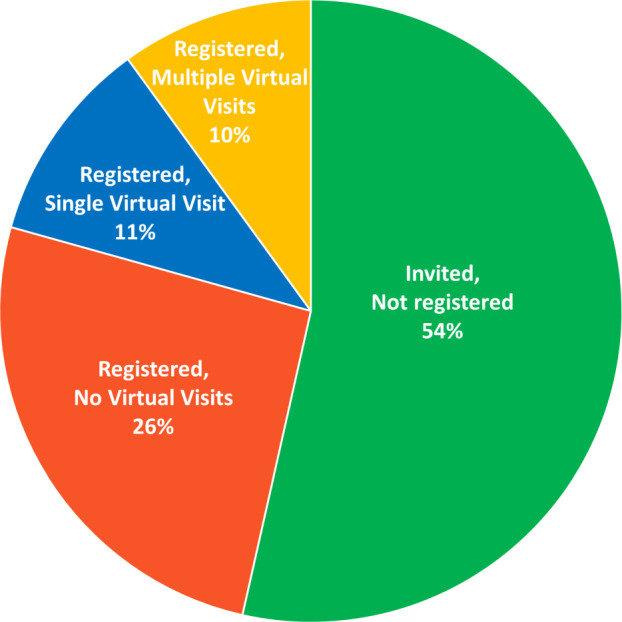
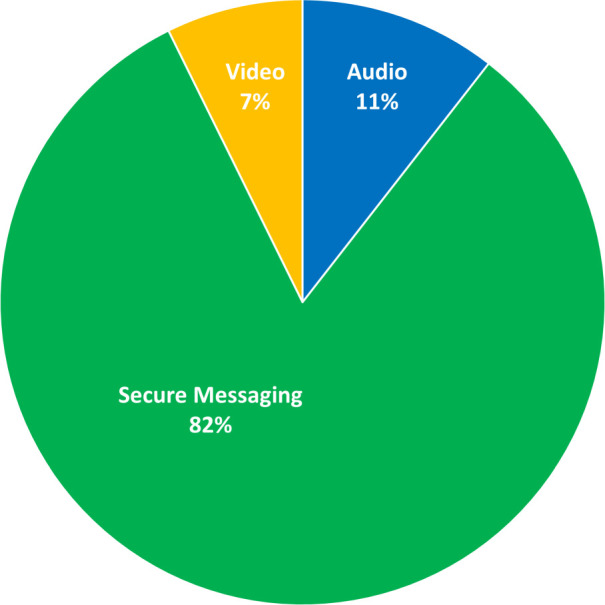
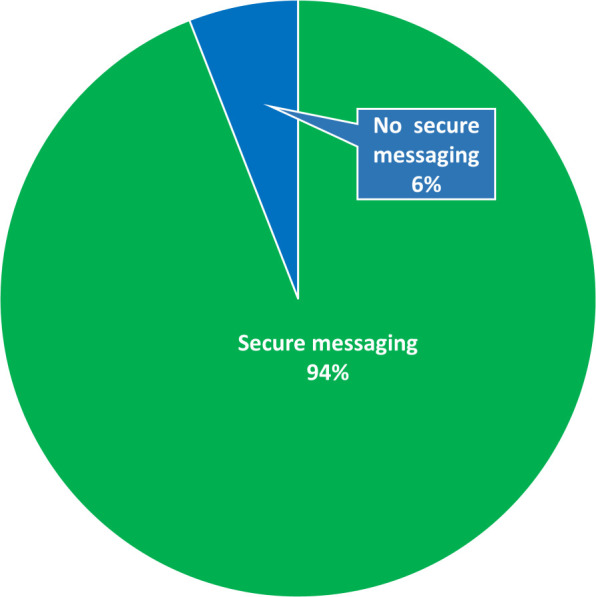
Objectives: To evaluate the uptake of a platform for virtual visits in primary care, examine patient and physician preferences for virtual communication methods and report on characteristics of visits and patients experience of care. Design: A retrospective cohort study. Setting: Primary care practices within five regions in Ontario, Canada after 18 months of access to virtual care services. Participants: 326 primary care providers and 14 291 registered patients. Interventions: Providers used a platform that allowed them to connect with their patients through synchronous (audio/video) and/or asynchronous (secure messaging) communication. Main outcome measures: User-level data from the platforms including patient demographics, practice characteristics, communication modality used, visit characteristics and patients’ satisfaction. Results: Among the participants, 44% of registered patients and 60% of registered providers used the platform at least once. Among patient users, 51% completed at least one virtual visit. The majority of virtual visits (94%) involved secure messaging. The most common patient requests were for medication prescriptions (24%) and follow-up from previous appointment (22%). The most common provider request was to follow-up on test results (59%). Providers indicated that 81% of virtual visits required no follow-up for that issue and 99% of patients reported that they would use virtual care services again. Conclusions: While there are a growing number of primary care video visit services, our study found that both patients and providers in rostered practices prefer secure messaging over video. Despite fears that virtual visits would be overused by patients, when patients connected with their own primary care provider, many virtual visits appeared to replace in-person visits, and patients did not overwhelm physicians with requests. This approach may improve access and continuity in primary care.
Overview
The claims and statistics of this paper haven’t been checked yet.
Free: it reads the open-access text and checks the first 5 claims that cite a source we can check. Create a free account to check every claim.
Integrity signals
Registry
Cites
Statistics
Figures
Verification
Claims the paper makes
The claims and statistics of this paper haven’t been checked yet.
Free: it reads the open-access text and checks the first 5 claims that cite a source we can check. Create a free account to check every claim.
Self-check
Percentages, sums and reported differences re-computed from the paper’s own numbers.
The self-check needs the paper’s full text.
Citations
Cites
Acceptability, benefits, and challenges of video consulting: a qualitative study in primary care
Donaghy, E., Atherton, H., Hammersley, V., McNeilly, H., Bikker, A., Robbins, L., Campbell, J., & McKinstry, B. (2019) · British Journal of General Practice · doi:10.3399/bjgp19x704141 · Cited by 537
Haight, M., Quan-Haase, A., & Corbett, B. A. (2014) · Information, Communication & Society · doi:10.1080/1369118x.2014.891633 · Cited by 391
Virtual Visits and Patient-Centered Care: Results of a Patient Survey and Observational Study
McGrail, K. M., Ahuja, M. A., & Leaver, C. A. (2017) · Journal of Medical Internet Research · doi:10.2196/jmir.7374 · Cited by 176
Doty, M. M., Tikkanen, R., Shah, A., & Schneider, E. C. (2020) · Health Affairs · doi:10.1377/hlthaff.2019.01088 · Cited by 123
Brant, H., Atherton, H., Ziebland, S., McKinstry, B., Campbell, J. L., & Salisbury, C. (2016) · British Journal of General Practice · doi:10.3399/bjgp16x685597 · Cited by 120
Virtual Visits for Acute, Nonurgent Care: A Claims Analysis of Episode-Level Utilization
Gordon, A. S., Adamson, W. C., & DeVries, A. R. (2017) · Journal of Medical Internet Research · doi:10.2196/jmir.6783 · Cited by 120
Pearl, R. (2014) · Health Affairs · doi:10.1377/hlthaff.2013.1005 · Cited by 119
Shi, Z., Mehrotra, A., Gidengil, C. A., Poon, S. J., Uscher-Pines, L., & Ray, K. N. (2018) · Health Affairs · doi:10.1377/hlthaff.2018.05091 · Cited by 108
Davis, S. E., Shenson, J. A., Chen, Q., Rosenbloom, S. T., Jackson, G. P., & Cronin, R. M. (2015) · Applied Clinical Informatics · doi:10.4338/aci-2014-12-ra-0117 · Cited by 106
Farr, M., Banks, J., Edwards, H. B., Northstone, K., Bernard, E., Salisbury, C., & Horwood, J. (2018) · BMJ Open · doi:10.1136/bmjopen-2017-019966 · Cited by 106
Cited by
Virtual care use before and during the COVID-19 pandemic: A repeated cross-sectional study
Bhatia, R. S., Chu, C., Pang, A., Tadrous, M., Stamenova, V., & Cram, P. (2021) · CMAJ Open · doi:10.9778/cmajo.20200311 · Cited by 272
“20 The observed higher use of telephone visits over video visits is in keeping with the literature, 2,21 and, in health care systems that rely on large virtual care programs, telephone calls and asynchronous messaging still represent the bulk of the virtual care provided.”
Self-citationMohammed, H. T., Hyseni, L., Bui, V., Gerritsen, B., Fuller, K., Sung, J., & Alarakhia, M. (2021) · PLoS ONE · doi:10.1371/journal.pone.0253665 · Cited by 142
Patterson, P. B., Roddick, J., Pollack, C., & Dutton, D. J. (2022) · Healthcare Management Forum · doi:10.1177/08404704221110084 · Cited by 71
“Virtual care is appealing to the public, due to its convenience compared to in-person services.(6,9,17,21-23) Despite public interest in Canada in using virtual healthcare, and expansion of private sector virtual care services,(8-10,24,25) integration in medical practices has been slow.”
BackgroundMethodInfluentialLi, E., Tsopra, R., Jiménez, G., Serafini, A., Gusso, G. D. F., Lingner, H., Fernández, M. J., Irving, G. J., Petek, D., Hoffman, R., et al. (2022) · PLOS Digital Health · doi:10.1371/journal.pdig.0000029 · Cited by 68
“observed that many virtual visits appeared to replace face-to-face visits, yet patients did not overwhelm physicians with requests [46].”
BackgroundExploring how virtual primary care visits affect patient burden of treatment
Kelley, L. T., Phung, M., Stamenova, V., Fujioka, J., Agarwal, P., Onabajo, N., Wong, I., Nguyen, M., Bhatia, R. S., & Bhattacharyya, O. (2020) · International Journal of Medical Informatics · doi:10.1016/j.ijmedinf.2020.104228 · Cited by 56
Self-citationDarley, S., Coulson, T., Peek, N., Moschogianis, S., van der Veer, S. N., Wong, D. C., & Brown, B. C. (2022) · Journal of Medical Internet Research · doi:10.2196/37436 · Cited by 53
Selick, A., Bobbette, N., Lunsky, Y., Hamdani, Y., Rayner, J., & Durbin, J. (2021) · Disability and health journal · doi:10.1016/j.dhjo.2021.101132 · Cited by 53
Older people, the digital divide and use of telehealth during the COVID-19 pandemic
Dykgraaf, S. H., Desborough, J., Sturgiss, E. A., Parkinson, A., Dut, G. M., & Kidd, M. R. (2022) · Australian Journal of General Practice · doi:10.31128/ajgp-03-22-6358 · Cited by 41
Lapointe‐Shaw, L., Salahub, C. M., Bird, C., Bhatia, R. S., Desveaux, L., Glazier, R. H., Hedden, L., Ivers, N. M., Martin, D., Na, Y., et al. (2023) · Journal of Medical Internet Research · doi:10.2196/40267 · Cited by 43
“Prior to April 2020, use of an approved platform (the Ontario Telemedicine Network [15]) and a video (rather than phone) visit were requirements to bill for a virtual visit.”
Self-citationPoitras, M.-È., Couturier, Y., Beaupré, P., Girard, A., Aubry, F., Vaillancourt, V. T., Carrier, J., Fortin, L., Racine, J., Morneau, J., et al. (2023) · Journal of Interprofessional Care · doi:10.1080/13561820.2023.2213712 · Cited by 42
“This lack of knowledge may impede the development of adequate support for health and social services professionals to implement effective collaborative practices, even in telehealth settings (A. Wong et al., 2021; Stamenova et al., 2020).”
BackgroundSelick, A., Durbin, J., Hamdani, Y., Rayner, J., & Lunsky, Y. (2022) · JMIR Formative Research · doi:10.2196/38916 · Cited by 39
“Other adults with IDDs may be supported by older parents with limited technology skills [15,16].”
BackgroundAgarwal, P., Wang, R., Meaney, C. A., Walji, S., Damji, A. N., Gill, N., Yip, G., Elman, D., Florindo, T., Fung, S., et al. (2022) · BMJ Open · doi:10.1136/bmjopen-2021-056868 · Cited by 36
Self-citationLeighton, C., Cooper, A., Porter, A., Edwards, A., & Joseph-Williams, N. (2024) · BJGP Open · doi:10.3399/bjgpo.2023.0177 · Cited by 34
A scoping review of virtual care in the health system: infrastructures, barriers, and facilitators
Babaei, N., Zamanzadeh, V., Valizadeh, L., Lotfi, M., Samad‐Soltani, T., Kousha, A., & Avazeh, M. (2023) · Home Health Care Services Quarterly · doi:10.1080/01621424.2023.2166888 · Cited by 33
“…to provide ongoing messages to various stakeholders so clinicians themselves can promote and better understand virtual care (Appireddy et al., 2019) and to prepare the work environment for a reliable internet connection for high-quality audio and video conferencing (Stamenova et al., 2020).”
BackgroundAsynchronous Telemedicine: A Systematic Literature Review
Culmer, N. P., Smith, T. B., Stager, C. G., Wright, A. L., Fickel, A. K., Tan, J. K., Clark, C., Meyer, H. R., & Grimm, K. (2023) · Telemedicine Reports · doi:10.1089/tmr.2023.0052 · Cited by 38
Yang, R., Zeng, K., & Jiang, Y. (2022) · Journal of Medical Internet Research · doi:10.2196/27167 · Cited by 28
“Despite the increasing popularity and potential impacts of e-communication on health care services, the actual use of e-communication among various patient populations still remains relatively low [9-12].”
BackgroundAlmalki, Z. S., Imam, M. T., Chahin, N. F. A., Alsammak, N. S., Entabli, S., Alhammad, S. K., Alanazi, G., Kharsa, R., Alonazi, L., Mandil, R. A., et al. (2023) · Journal of Multidisciplinary Healthcare · doi:10.2147/jmdh.s433653 · Cited by 30
“22,23 The results of this study confirm this observation.”
ResultUsing antibiotics wisely for respiratory tract infection in the era of covid-19
Leis, J. A., Born, K. B., Thériault, G., Ostrow, O., Grill, A. K., & Johnston, K. B. (2020) · BMJ · doi:10.1136/bmj.m4125 · Cited by 28
McLeod, S. L., Tarride, J., Mondoux, S. E., Paterson, J. M., Plumptre, L., Borgundvaag, E., Dainty, K. N., McCarron, J., Ovens, H. J., & Hall, J. N. (2023) · Canadian Medical Association Journal · doi:10.1503/cmaj.230492 · Cited by 28
Virtual care in the health care system: A concept analysis
Babaei, N., Zamanzadeh, V., Valizadeh, L., Lotfi, M., Kousha, A., Samad‐Soltani, T., & Avazeh, M. (2023) · Scandinavian Journal of Caring Sciences · doi:10.1111/scs.13227 · Cited by 26
Gujral, K., Scott, J. Y., Ambady, L., Dismuke‐Greer, C. E., Jacobs, J., Chow, A., Oh, A., & Yoon, J. (2021) · Telemedicine Journal and e-Health · doi:10.1089/tmj.2021.0284 · Cited by 24
Pendrith, C., Nayyar, D., Chu, C., O’Brien, T., Lyons, O. D., Agarwal, P., Martin, D., Bhatia, R. S., & Mukerji, G. (2022) · BMC Health Services Research · doi:10.1186/s12913-022-07566-6 · Cited by 26
“Within Ontario, a Canadian province with a population of 14,500,000 and universal health insurance, adoption of virtual care was low before the pandemic [5, 6].”
BackgroundSelf-citationKursīte, M., Stars, I., Strēle, I., Gobiņa, I., Ķīvīte‐Urtāne, A., Behmane, D., Dūdele, A., & Villeruša, A. (2022) · BMC Health Services Research · doi:10.1186/s12913-022-07634-x · Cited by 24
Moschogianis, S. F., Darley, S., Coulson, T., Peek, N. B., Cheraghi‐Sohi, S., & Brown, B. C. (2023) · British Journal of General Practice · doi:10.3399/bjgp.2023.0076 · Cited by 27
Ferguson, K., Fraser, M., Tuna, M., Bruntz, C., & Dahrouge, S. (2023) · JMIR Medical Informatics · doi:10.2196/43567 · Cited by 23
“Many studies reporting on the impact of portals on the use of traditional services evaluated systems that only provided options for web messaging or booking appointments [7-13].”
BackgroundQuesada-Caballero, M., Carmona-García, A., Chami-Peña, S., Caballero-Mateos, A. M., Fernández-Martín, O., la Fuente, G. A. C., & Romero‐Béjar, J. L. (2023) · Journal of Clinical Medicine · doi:10.3390/jcm12196160 · Cited by 22
“In four papers [19,25,28,29,35], the study population was composed of doctors (total 9684, of which 7742 corresponded to a single study [28]).”
Singer, A. G., Kosowan, L., LaBine, L., Shenoda, D., Katz, A., Abrams, E. M., Halas, G., Wong, S. T., Talpade, S., Kirby, S., et al. (2022) · BMC Family Practice · doi:10.1186/s12875-022-01890-w · Cited by 22
Nursing practice and teleconsultations in a pandemic context: A mixed‐methods study
Regragui, S., Malham, S. A., Gaboury, I., Bois, C., Deville‐Stoetzel, N., Maillet, L., Savoie, A., & Breton, M. (2023) · Journal of Clinical Nursing · doi:10.1111/jocn.16756 · Cited by 21
Developments in healthcare information systems in Ireland and internationally
ESRI, Walsh, B., Domhnaill, C. M., ESRI, Mohan, G., & ESRI (2021) · doi:10.26504/sustat105 · Cited by 32
Toward a universal definition of provider-patient attachment in primary care
Aggarwal, M., & Glazier, R. H. (2024) · Canadian Family Physician · doi:10.46747/cfp.7010634 · Cited by 18
Adams, A. M., Williams, K. K. A., Langill, J. C., Arsenault, M., Leblanc, I., Munro, K., & Haggerty, J. L. (2023) · CMAJ Open · doi:10.9778/cmajo.20220083 · Cited by 17
“38 Communication challenges were further exacerbated among socially vulnerable patients due to limited language proficiency and challenges related to access to and comfort with technology.”
Telehealth satisfaction among patients with chronic diseases: a cross-sectional analysis
Hendy, A. S., Abdelaliem, S. M. F., Zaher, A. M. S., Sadek, B. N., Nashwan, A. J., Al‐Jabri, M. M., Ahmeda, A. F., Hendy, A., Alabdullah, A. A. S., & Sinnokrot, S. M. (2025) · PeerJ · doi:10.7717/peerj.19245 · Cited by 18
“Other studies have shown that patients with higher education levels are more likely to use telemedicine ( Stamenova et al., 2020 ; Yoon et al., 2024 ).”
Men, F. K., Urquia, M. L., & Tarasuk, V. S. (2022) · CMAJ Open · doi:10.9778/cmajo.20210056 · Cited by 15
Rezahi, S., Mathers, A., Patel, P., Tilli, T., & Dolovich, L. R. (2021) · Canadian Pharmacists Journal / Revue des Pharmaciens du Canada · doi:10.1177/17151635211014922 · Cited by 11
“Furthermore, a retrospective review of primary care physicians and patients who used virtual care services for 18 months showed that virtual visits could replace in-person visits and that 51% of patients had completed at least 1 virtual visit.(9) Research is now also beginning to emerge that presents guidelines for op…”
BackgroundParpia, C., Moore, C., Beatty, M., Miranda, S., Adams, S. L., Stinson, J., Desai, A. D., Bartlett, L., Culbert, E., Cohen, E., et al. (2023) · JMIR Formative Research · doi:10.2196/42881 · Cited by 11
Pecina, J. L., Nigon, L. M., Penza, K. S., Murray, M. A., Kronebusch, B. J., Miller, N. E., & Jensen, T. B. (2021) · Journal of Medical Internet Research · doi:10.2196/25899 · Cited by 9
“The ability to access a triage nurse 24/7 or complete an e-visit with a response within a few hours has improved the care of outpatients and allowed more access for patients who need to be seen by a provider [10,13-15,17].”
BackgroundImpact of virtual visits on primary care physician work flows
Fujioka, J. K., Nguyen, M., Phung, M., Bhattacharyya, O. K., Kelley, L., Stamenova, V., Onabajo, N., Kidd, M. R., Desveaux, L., Wong, I., et al. (2023) · Canadian Family Physician · doi:10.46747/cfp.6904e86 · Cited by 8
Self-citationLeighton, C., Joseph-Williams, N., Porter, A., Edwards, A., & Cooper, A. (2025) · BMC Primary Care · doi:10.1186/s12875-025-02717-0 · Cited by 7
“Some involved patient questionnaires [6, 8, 21–28], some used decision support algorithms, for example recommending an antibiotic to prescribe [6, 25, 26], and some were part of a wider platform including services like video-consulting [29, 30].”
InfluentialPasat, Z., Sinn, C. J., Rahman, B., Gayowsky, A., Lokker, C., Tarride, J., Alarakhia, M., & Costa, A. P. (2024) · PLoS ONE · doi:10.1371/journal.pone.0299005 · Cited by 9
“For example, a cohort study of Ontario primary care patients and providers demonstrated that virtual care improved access and patient experience [24].”
BackgroundResultInfluentialDesveaux, L., Budhwani, S., Stamenova, V., Bhattacharyya, O. K., Shaw, J., & Bhatia, R. S. (2021) · Journal of Medical Internet Research · doi:10.2196/25797 · Cited by 7
“Findings indicated interest from patients [40,41] and providers [42] in conducting primary care visits through virtual modalities, with secure messaging being utilized for 94% of visits [41].”
Self-citationExploring virtual care clinical experience from non-physician healthcare providers (VCAPE)
Braund, H., Dalgarno, N., Ritsma, B. R., & Appireddy, R. (2023) · SSM - Qualitative Research in Health · doi:10.1016/j.ssmqr.2023.100289 · Cited by 7
“…K7L2V7, Canada. y 2023 he CC BY-NC-ND license (http://creativecommons.org/licenses/by-nc-nd/4.0/). virtual care, shorter wait times before the encounter, and avoiding travel (Appireddy et al., 2019; Hu et al., 2020; Rush, Burton, Van Der; Merwe, Hatt, & Galloway, 2019; Stamenova et al., 2020).”
BackgroundInfluentialBuchanan, S., Cronin, S., St-Amant, A., & Fitzsimon, J. P. (2025) · Journal of Primary Care & Community Health · doi:10.1177/21501319251345741 · Cited by 7
Walji, S., O’Brien, P. J., Loi, A., Rozmovits, L., & Bhattacharyya, O. K. (2024) · BMJ Open Quality · doi:10.1136/bmjoq-2024-002898 · Cited by 7
Self-citationChung-Lee, L., Catallo, C., & Meade, A. (2023) · Journal of Patient Experience · doi:10.1177/23743735231215603 · Cited by 5
“22 Finally, the experiences of patients may vary depending on the virtual modality chosen, 15 suggesting that the patient experience may be shaped by the preference for modality.”
BackgroundStamenova, V., Agarwal, P., Kelley, L., Fujioka, J. K., Nguyen, M., Phung, M., Wong, I., Onabajo, N., Bhatia, R. S., & Bhattacharyya, O. K. (2023) · doi:10.32920/24191469.v1 · Cited by 5
Self-citationPatient Preferences for In-Person vs Remote Care for Long-Term Conditions
Lenfant, T., Perrodeau, É., Ravaud, P., & Tran, V.-T. (2026) · JAMA Network Open · doi:10.1001/jamanetworkopen.2025.57759 · Cited by 4
Halas, G., Baldwin, A., LaBine, L., MacKay, K., Singer, A. G., & Katz, A. (2024) · Healthcare · doi:10.3390/healthcare12080861 · Cited by 4
“…interactions [7,8,18–20]. the current study provided some descriptions of virtual care use (Figure 1); however, much less is known about the perspectives of providers as predominant ‘users’ of virtual care, particularly as it becomes more integrated into primary healthcare interactions [7,8,18–20].”
BackgroundMethodInfluentialCrawford, A. S., Kirvan, A., Sanches, M., Gambin, A., Canso, D., & Serhal, E. (2025) · Journal of Medical Internet Research · doi:10.2196/49844 · Cited by 5
“Virtual care, often referred to as telehealth or telemedicine, refers to the provision of clinical care using information and communication technologies and can be delivered synchronously (ie, in real-time, at a distance) or asynchronously (ie, separated by time and space) [1,2].”
Telemedicine visits requiring follow-up in-person visits at an urban academic family medicine centre
Arsenault, M., Long, S., D’Souza, V., Ilie, A., & Todd, K. J. (2024) · Family Practice · doi:10.1093/fampra/cmae008 · Cited by 5
“2,13 Nevertheless, the majority of telemedicine visits were carried out successfully over the telephone.”
BackgroundMcCrady, E., Strychowsky, J. E., & Woolfson, J. P. (2022) · JMIR Pediatrics and Parenting · doi:10.2196/34115 · Cited by 3
“Interestingly, previous studies reporting on physician preference report that although audio or video visits represent the closest substitute to in-person visits, they are less convenient for providers when compared to asynchronous messaging, which allows time to review patient cases and respond when available [10,11].”
BackgroundHalas, G., Singer, A. G., Katz, A., LaBine, L., Baldwin, A., Wong, S. T., Kirby, S., Bohm, É., Abrams, E. M., MacKay, K., et al. (2022) · BMJ Open · doi:10.1136/bmjopen-2022-062807 · Cited by 3
Lai, K., & Abdul-Nabi, M. (2024) · Canadian Family Physician · doi:10.46747/cfp.701112704 · Cited by 2
Implementation and Evaluation of Virtual Care in Canadian Health Care Systems: A Scoping Review
Yang, B., Leader, J. S., Bowes, B., Aiyer, H. P., Dunn, H., Adams, S., O’Connell, M. E., McIntyre, L. J., Dani, H., Johnson, R., et al. (2026) · Telemedicine Journal and e-Health · doi:10.1177/15305627261425160 · Cited by 3
Frew, M., Wyndham‐West, M., & Abrams, H. B. (2022) · Design for Health · doi:10.1080/24735132.2022.2144498 · Cited by 3
“Poor internet access, a lack of access to digital devices, and low digital literacy amount to a broad spectrum of digital access and levels of digital exclusion (Stamenova et al. 2020).”
BackgroundKristiansen, E., Atherton, H., Bergmo, T. S., & Zanaboni, P. (2024) · Frontiers in Digital Health · doi:10.3389/fdgth.2024.1459684 · Cited by 2
Antoine, M. D., Cherba, M., Grosjean, S., Boet, S., & Waldolf, R. (2023) · University of Ottawa Journal of Medicine · doi:10.18192/uojm.v12i1.6320 · Cited by 2
Conceptualizing lifer versus destination patients for optimized care delivery
Lambrecht, J., Abir, M., Seiler, K., Kamdar, N. S., Peterson, T., Lin, P., Nham, W., & Greenwood‐Ericksen, M. B. (2023) · BMC Health Services Research · doi:10.1186/s12913-023-10214-2 · Cited by 1
Babaei, N., Zamanzadeh, V., Valizadeh, L., Lotfi, M., & Avazeh, M. (2025) · International Wound Journal · doi:10.1111/iwj.70719 · Cited by 1
Elfassy, M. D., Runeckles, K., Simms, N., Anderson, G., Simard, A., Brahmbhatt, D. H., Seto, E., Lipscombe, A., Faroutan, F., Miller, F. A., et al. (2025) · Canadian Journal of Cardiology · doi:10.1016/j.cjca.2025.07.026 · Cited by 2
Optimizing the role of virtual care in emergency medicine: a CAEP position statement
Kernick, A., McLeod, S. L., Mondoux, S. E., Hall, J. N., Chochinov, A., Lee, S., & Ho, K. (2025) · Canadian Journal of Emergency Medicine · doi:10.1007/s43678-025-00980-9 · Cited by 1
Lemieux, A., Kutcher, S., Tietcheu, B. R. G., Seitz, G., Trickovic, J., Archibald, D., Grosjean, S., Hogg, W. E., & Johnston, S. (2026) · BMJ Open · doi:10.1136/bmjopen-2025-115673 · Cited by 1
Assamad, D., Saeedi, S., Grewal, S. K., Jha, V., Luca, S., Clausen, M., Shaw, A., Lee, W., Bombard, Y., Hayeems, R. Z., et al. (2026) · European Journal of Human Genetics · doi:10.1038/s41431-026-02200-z · Cited by 1
平成23年改定版「監査役監査基準」「内部統制監査実施基準」の解説 (平成23年改定 監査役監査基準・内部統制監査基準--非業務執行役員としての監査役・監査委員の新たな指針)
武井, 一. (2011) · 別冊商事法務
Vainio, H., Castrén, M. K., & Kobylin, A. (2023) · Research Square · doi:10.21203/rs.3.rs-2462332/v1
Desveaux, L., Budhwani, S., Stamenova, V., Bhattacharyya, O. K., Shaw, J., & Bhatia, R. S. (2023) · doi:10.32920/24191463.v1
Self-citationMasriadi, M., & Idrus, H. H. (2024) · Journal of Multidisciplinary Healthcare · doi:10.2147/jmdh.s463189
Amiri, P., Jozpour, E., Kouhgardzadeh, L., Bahaadinbeigy, K., Soofi, M., & Mohammadi, A. (2024) · Frontiers in Health Informatics · doi:10.30699/fhi.v13i0.568
Ethical considerations in prevention and management of non-communicable diseases: a narrative review
Shahmohamadi, E., Ayati, A., Sharifi, Y., Ebrahimi, P., Gooshki, E. S., Djalalinia, S., Ebrahimpur, M., Payab, M., & Larijani, B. (2025) · Journal of Medical Ethics and History of Medicine · doi:10.18502/jmehm.v17i19.18671 · Cited by 1
Mohammadrezaei, D., Moineddin, R., Wang, J., Valencia, J. S., Lapadula, M. C., Ortigoza, Á., O’Neill, B. G., Gronsbell, J. L., Butt, D. A., Train, A. D., et al. (2025) · PLoS ONE · doi:10.1371/journal.pone.0324805
Fitzsimon, J. P., Godfrey, L., Cronin, S., & St-Amant, A. (2025) · uO Research (University of Ottawa) · doi:10.20381/ruor-31136
Singer, A. G., Kosowan, L., LaBine, L., Shenoda, D., Katz, A., Abrams, E. M., Halas, G., Wong, S. T., Talpade, S., Kirby, S., et al. (2024) · Figshare · doi:10.6084/m9.figshare.26552833
Alteraciones en enfermos crónicos producidas por el coronavirus sars-cov-2
Quesada-Caballero, M. (2024) · Institutional Repository of the University of Granada (University of Granada)
Selick, A. (2022) · TSpace (University of Toronto)
GAMBARAN PELAYANAN KESEHATAN PADA PRAKTIK MANDIRI DOKTER DI KABUPATEN SLEMAN
Ameline, A. S., & Andayani, T. N. (2026) · Jurnal Kesehatan Tambusai · doi:10.31004/jkt.v7i3.62526
Metadata
- Authors
- Stamenova, V., Agarwal, P., Kelley, L., Fujioka, J., Nguyen, M., Phung, M., Wong, I., Onabajo, N., Bhatia, R. S., & Bhattacharyya, O.
- Affiliations
- Women's College Hospital (CA)
- University of Toronto (CA)
- Corresponding author
- Stamenova, Vess
- ORCID
- Venue
- BMJ Open
- Publisher
- BMJ
- Published
- 2020-07
- Volume
- 10
- Issue
- 7
- Pages
- e037064
- ISSN
- 2044-6055 (ISSN-L)
- PMC
- PMC7342856
- OpenAlex
- W3038155222
- Cited by
- 70
- References
- 34
- Citations by year
- 2026: 3 · 2025: 9 · 2024: 10 · 2023: 22 · 2022: 14 · 2021: 9 · 2020: 2
- FWCI
- 8.81
- Type
- journal article
- Language
- en
- Open access
- gold
- doi.org
- Licence
- Locations
- BMJ Open (publishedVersion, cc-by-nc)
- PubMed Central (publishedVersion, cc-by-nc)
- PubMed (publishedVersion)
- HighWire Press Open Archive (submittedVersion, cc-by-nc)
- DOAJ (DOAJ: Directory of Open Access Journals) (submittedVersion)
- Funders
- Ministry of Health of Ontario
- Topics
- Health Sciences › Medicine › Public Health, Environmental and Occupational Health › Telemedicine and Telehealth Implementation
- Health Sciences › Medicine › Public Health, Environmental and Occupational Health › Healthcare Systems and Technology
- Health Sciences › Medicine › Family Practice › Primary Care and Health Outcomes
- Keywords
- virtual care, telemedicine, primary care, video consultation, secure messaging, asynchronous communication, patient preferences, provider preferences, patient satisfaction, continuity of care, health care access, Ontario
- MeSH terms
- Communication, Humans, Ontario, Primary Health Care, Retrospective Studies, Patient Satisfaction
About these checks
Registry, retraction, Cites and statistics results are computed, not judged, with one exception: a printed reference that no index lists is read once by a model before it counts as a citation error. Claims are extracted by a model and kept only when their quote appears verbatim in the text; each cited source is then checked, with a model’s help, for whether it says what the claim relies on. Those verdicts can be wrong — read the claim’s quote and the cited source before relying on one.
Statistics and arithmetic are recomputed, not judged.
Confidence bands are shown only for fields calibrated on our annotated test set. None is calibrated yet, so no band is shown.
What counts as a claim ›How we measure confidence ›How we check this ›
Are you an author, or do you see a problem with this page? Request a review
Data sources
Bibliographic data: Semantic Scholar, OpenAlex, Crossref.
Contains information from the Semantic Scholar Academic Graph Datasets, made available under the ODC Attribution License (ODC-BY 1.0).
Semantic Scholar’s data is described in: Kinney, R., et al. (2023). The Semantic Scholar Open Data Platform. arXiv:2301.10140.
