

Uptake and patient and provider communication modality preferences of virtual visits in primary care: a retrospective cohort study in Canada
Open accessPublished version of a preprint
The DOI matches its Crossref record; 34 of the 34 references it cites were found in a registry or an index.
Abstract
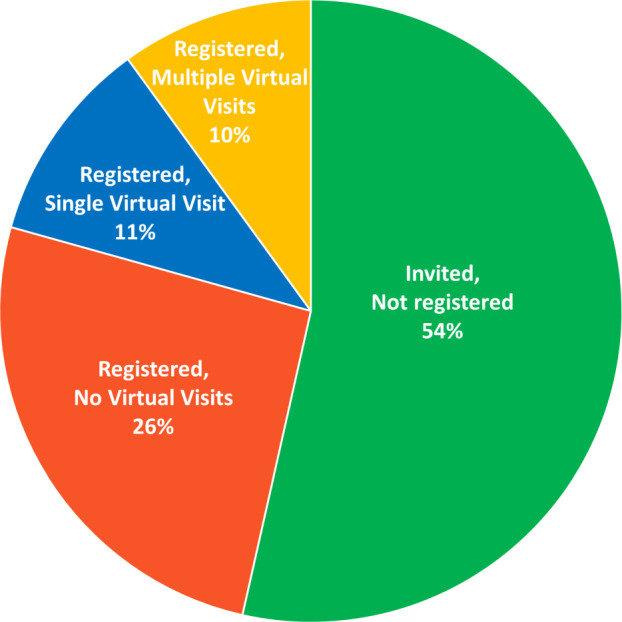
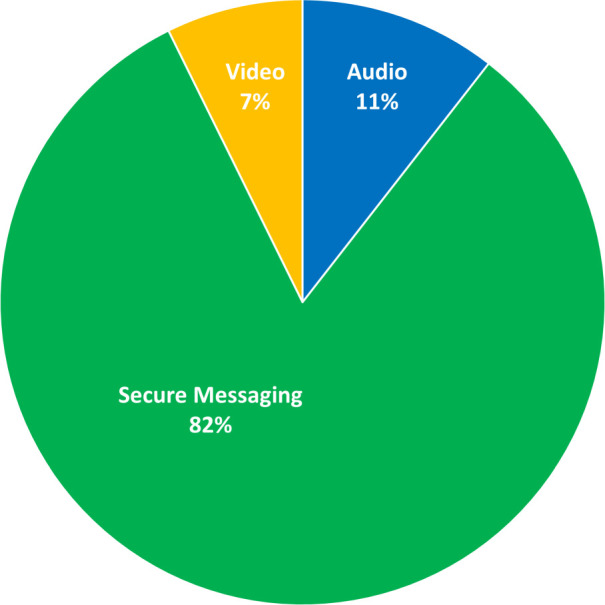
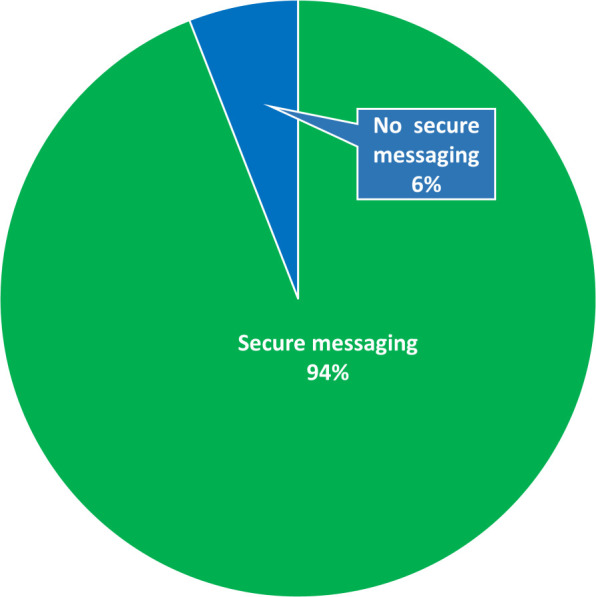
Objectives: To evaluate the uptake of a platform for virtual visits in primary care, examine patient and physician preferences for virtual communication methods and report on characteristics of visits and patients experience of care. Design: A retrospective cohort study. Setting: Primary care practices within five regions in Ontario, Canada after 18 months of access to virtual care services. Participants: 326 primary care providers and 14 291 registered patients. Interventions: Providers used a platform that allowed them to connect with their patients through synchronous (audio/video) and/or asynchronous (secure messaging) communication. Main outcome measures: User-level data from the platforms including patient demographics, practice characteristics, communication modality used, visit characteristics and patients’ satisfaction. Results: Among the participants, 44% of registered patients and 60% of registered providers used the platform at least once. Among patient users, 51% completed at least one virtual visit. The majority of virtual visits (94%) involved secure messaging. The most common patient requests were for medication prescriptions (24%) and follow-up from previous appointment (22%). The most common provider request was to follow-up on test results (59%). Providers indicated that 81% of virtual visits required no follow-up for that issue and 99% of patients reported that they would use virtual care services again. Conclusions: While there are a growing number of primary care video visit services, our study found that both patients and providers in rostered practices prefer secure messaging over video. Despite fears that virtual visits would be overused by patients, when patients connected with their own primary care provider, many virtual visits appeared to replace in-person visits, and patients did not overwhelm physicians with requests. This approach may improve access and continuity in primary care.
Overview
The claims and statistics of this paper haven’t been checked yet.
Free: it reads the open-access text and checks the first 5 claims that cite a source we can check. Create a free account to check every claim.
Integrity signals
Registry
Cites
Statistics
Figures
Verification
Claims the paper makes
The claims and statistics of this paper haven’t been checked yet.
Free: it reads the open-access text and checks the first 5 claims that cite a source we can check. Create a free account to check every claim.
Self-check
Percentages, sums and reported differences re-computed from the paper’s own numbers.
The self-check needs the paper’s full text.
Citations
Cites
Acceptability, benefits, and challenges of video consulting: a qualitative study in primary care
Donaghy, E., Atherton, H., Hammersley, V., McNeilly, H., Bikker, A., Robbins, L., Campbell, J., & McKinstry, B. (2019) · British Journal of General Practice · doi:10.3399/bjgp19x704141 · Cited by 537
Haight, M., Quan-Haase, A., & Corbett, B. A. (2014) · Information, Communication & Society · doi:10.1080/1369118x.2014.891633 · Cited by 391
Virtual Visits and Patient-Centered Care: Results of a Patient Survey and Observational Study
McGrail, K. M., Ahuja, M. A., & Leaver, C. A. (2017) · Journal of Medical Internet Research · doi:10.2196/jmir.7374 · Cited by 176
Doty, M. M., Tikkanen, R., Shah, A., & Schneider, E. C. (2020) · Health Affairs · doi:10.1377/hlthaff.2019.01088 · Cited by 123
Brant, H., Atherton, H., Ziebland, S., McKinstry, B., Campbell, J. L., & Salisbury, C. (2016) · British Journal of General Practice · doi:10.3399/bjgp16x685597 · Cited by 120
Virtual Visits for Acute, Nonurgent Care: A Claims Analysis of Episode-Level Utilization
Gordon, A. S., Adamson, W. C., & DeVries, A. R. (2017) · Journal of Medical Internet Research · doi:10.2196/jmir.6783 · Cited by 120
Pearl, R. (2014) · Health Affairs · doi:10.1377/hlthaff.2013.1005 · Cited by 119
Shi, Z., Mehrotra, A., Gidengil, C. A., Poon, S. J., Uscher-Pines, L., & Ray, K. N. (2018) · Health Affairs · doi:10.1377/hlthaff.2018.05091 · Cited by 108
Davis, S. E., Shenson, J. A., Chen, Q., Rosenbloom, S. T., Jackson, G. P., & Cronin, R. M. (2015) · Applied Clinical Informatics · doi:10.4338/aci-2014-12-ra-0117 · Cited by 106
Farr, M., Banks, J., Edwards, H. B., Northstone, K., Bernard, E., Salisbury, C., & Horwood, J. (2018) · BMJ Open · doi:10.1136/bmjopen-2017-019966 · Cited by 106
Impact of Patient Portal Secure Messages and Electronic Visits on Adult Primary Care Office Visits
North, F., Crane, S. J., Chaudhry, R., Ebbert, J. O., Ytterberg, K., Tulledge-Scheitel, S. M., & Stroebel, R. J. (2014) · Telemedicine and e-Health · doi:10.1089/tmj.2013.0097 · Cited by 100
Characteristics of Patients Who Seek Care via eVisits Instead of Office Visits
Mehrotra, A., Paone, S., Martich, G. D., Albert, S. M., & Shevchik, G. J. (2013) · Telemedicine and e-Health · doi:10.1089/tmj.2012.0221 · Cited by 98
Pilot Study of Providing Online Care in a Primary Care Setting
Adamson, S. C., & Bachman, J. W. (2010) · Mayo Clinic Proceedings · doi:10.4065/mcp.2010.0145 · Cited by 95
Acute Illness Care Patterns Change With Use of Telemedicine
McConnochie, K. M., Wood, N. E., Herendeen, N. E., Ng, P. K., Noyes, K., Wang, H., & Roghmann, K. J. (2009) · Pediatrics · doi:10.1542/peds.2008-2698 · Cited by 90
Randhawa, R. S., Chandan, J. S., Thomas, T., & Singh, S. (2019) · Primary Health Care Research & Development · doi:10.1017/s1463423618000361 · Cited by 73
Virtual Visits Partially Replaced In-Person Visits In An ACO-Based Medical Specialty Practice
Shah, S. J., Schwamm, L. H., Cohen, A. B., Simoni, M. R., Estrada, J., Matiello, M., Venkataramani, A. S., & Rao, S. K. (2018) · Health Affairs · doi:10.1377/hlthaff.2018.05105 · Cited by 66
Real-Time Patient–Provider Video Telemedicine Integrated with Clinical Care
Reed, M., Parikh, R. K., Huang, J., Ballard, D. W., Barr, I., & Wargon, C. (2018) · New England Journal of Medicine · doi:10.1056/nejmc1805746 · Cited by 61
Fagerlund, A. J., Holm, I. M., & Zanaboni, P. (2019) · BMJ Open · doi:10.1136/bmjopen-2018-028251 · Cited by 61
Hoonakker, P. L. T., Carayon, P., & Cartmill, R. S. (2017) · International Journal of Medical Informatics · doi:10.1016/j.ijmedinf.2017.01.004 · Cited by 60
Albert, S. M., Shevchik, G. J., Paone, S., & Martich, G. D. (2011) · Telemedicine and e-Health · doi:10.1089/tmj.2010.0156 · Cited by 58
Exploring how virtual primary care visits affect patient burden of treatment
Kelley, L. T., Phung, M., Stamenova, V., Fujioka, J., Agarwal, P., Onabajo, N., Wong, I., Nguyen, M., Bhatia, R. S., & Bhattacharyya, O. (2020) · International Journal of Medical Informatics · doi:10.1016/j.ijmedinf.2020.104228 · Cited by 56
Self-citationTang, P. C., Black, W., & Young, C. Y. (2006) · PubMed Central · Cited by 55
Carter, M., Fletcher, E., Sansom, A., Warren, F. C., & Campbell, J. L. (2018) · BMJ Open · doi:10.1136/bmjopen-2017-018688 · Cited by 54
On the effect of electronic patient portal on primary care utilization and appointment adherence
Zhong, X., Liang, M., Sanchez, R., Yu, M., Budd, P. R., Sprague, J. L., & Dewar, M. A. (2018) · BMC Medical Informatics and Decision Making · doi:10.1186/s12911-018-0669-8 · Cited by 48
The impact of e-visits on patient access to primary care
Zhong, X., Hoonakker, P., Bain, P. A., Musa, A. J., & Li, J. (2017) · Health Care Management Science · doi:10.1007/s10729-017-9404-8 · Cited by 37
Healthcare Service Utilization under a New Virtual Primary Care Delivery Model
Cheung, L., Leung, T. I., Ding, V. Y., Wang, J. X., Norden, J. G., Desai, M., Harrington, R. A., & Desai, S. A. (2018) · Telemedicine Journal and e-Health · doi:10.1089/tmj.2018.0145 · Cited by 30
Electronic Visits For Common Acute Conditions: Evaluation Of A Recently Established Program
Player, M. S., O'Bryan, E. C., Sederstrom, E., Pinckney, J., & Díaz, V. A. (2018) · Health Affairs · doi:10.1377/hlthaff.2018.05122 · Cited by 28
eVisit: A Pilot Study of a New Kind of Healthcare Delivery
Rema, P., Grant, S., Suzanne, P., Carl, D., & Jody, C. (2010) · Studies in Health Technology and Informatics · doi:10.3233/978-1-60750-588-4-262 · Cited by 24
Jamieson, D. G. (2006) · Paediatrics & Child Health · doi:10.1093/pch/11.9.573 · Cited by 24
Comparing Advanced Practice Providers and Physicians as Providers of e-Visits
Bellon, J. E., Stevans, J. M., Cohen, S. M., James, A. E., Reynolds, B. R., & Zhang, Y. (2015) · Telemedicine Journal and e-Health · doi:10.1089/tmj.2014.0248 · Cited by 22
Doctors question Hancock’s idea of GP video consultations for all
O’Dowd, A. (2018) · BMJ · doi:10.1136/bmj.k3934 · Cited by 17
Virtual care has potential to fragment primary care and disturb continuity of care, warn doctors
Glauser, W. (2019) · Canadian Medical Association Journal · doi:10.1503/cmaj.1095796 · Cited by 14
Redesigning primary care: Provider perspectives on the clinical utility of virtual visits
Fujioka, J. K., Nguyen, M., Phung, M., Bhattacharyya, O. K., Kelley, L., Stamenova, V., Onabajo, N., Kidd, M. R., Desveaux, L., Wong, I., et al. (2023) · Canadian Family Physician · doi:10.46747/cfp.6904e78 · Cited by 14
Self-citationGeneral practice by smartphone
Roland, M. O. (2019) · BMJ · doi:10.1136/bmj.l4713 · Cited by 9
Cited by
Virtual care use before and during the COVID-19 pandemic: A repeated cross-sectional study
Bhatia, R. S., Chu, C., Pang, A., Tadrous, M., Stamenova, V., & Cram, P. (2021) · CMAJ Open · doi:10.9778/cmajo.20200311 · Cited by 272
“20 The observed higher use of telephone visits over video visits is in keeping with the literature, 2,21 and, in health care systems that rely on large virtual care programs, telephone calls and asynchronous messaging still represent the bulk of the virtual care provided.”
Self-citationMohammed, H. T., Hyseni, L., Bui, V., Gerritsen, B., Fuller, K., Sung, J., & Alarakhia, M. (2021) · PLoS ONE · doi:10.1371/journal.pone.0253665 · Cited by 142
Patterson, P. B., Roddick, J., Pollack, C., & Dutton, D. J. (2022) · Healthcare Management Forum · doi:10.1177/08404704221110084 · Cited by 71
“Virtual care is appealing to the public, due to its convenience compared to in-person services.(6,9,17,21-23) Despite public interest in Canada in using virtual healthcare, and expansion of private sector virtual care services,(8-10,24,25) integration in medical practices has been slow.”
BackgroundMethodInfluentialLi, E., Tsopra, R., Jiménez, G., Serafini, A., Gusso, G. D. F., Lingner, H., Fernández, M. J., Irving, G. J., Petek, D., Hoffman, R., et al. (2022) · PLOS Digital Health · doi:10.1371/journal.pdig.0000029 · Cited by 68
“observed that many virtual visits appeared to replace face-to-face visits, yet patients did not overwhelm physicians with requests [46].”
BackgroundExploring how virtual primary care visits affect patient burden of treatment
Kelley, L. T., Phung, M., Stamenova, V., Fujioka, J., Agarwal, P., Onabajo, N., Wong, I., Nguyen, M., Bhatia, R. S., & Bhattacharyya, O. (2020) · International Journal of Medical Informatics · doi:10.1016/j.ijmedinf.2020.104228 · Cited by 56
Self-citation
Metadata
- Authors
- Stamenova, V., Agarwal, P., Kelley, L., Fujioka, J., Nguyen, M., Phung, M., Wong, I., Onabajo, N., Bhatia, R. S., & Bhattacharyya, O.
- Affiliations
- Women's College Hospital (CA)
- University of Toronto (CA)
- Corresponding author
- Stamenova, Vess
- ORCID
- Venue
- BMJ Open
- Publisher
- BMJ
- Published
- 2020-07
- Volume
- 10
- Issue
- 7
- Pages
- e037064
- ISSN
- 2044-6055 (ISSN-L)
- PMC
- PMC7342856
- OpenAlex
- W3038155222
- Cited by
- 70
- References
- 34
- Citations by year
- 2026: 3 · 2025: 9 · 2024: 10 · 2023: 22 · 2022: 14 · 2021: 9 · 2020: 2
- FWCI
- 8.81
- Type
- journal article
- Language
- en
- Open access
- gold
- doi.org
- Licence
- Locations
- BMJ Open (publishedVersion, cc-by-nc)
- PubMed Central (publishedVersion, cc-by-nc)
- PubMed (publishedVersion)
- HighWire Press Open Archive (submittedVersion, cc-by-nc)
- DOAJ (DOAJ: Directory of Open Access Journals) (submittedVersion)
- Funders
- Ministry of Health of Ontario
- Topics
- Health Sciences › Medicine › Public Health, Environmental and Occupational Health › Telemedicine and Telehealth Implementation
- Health Sciences › Medicine › Public Health, Environmental and Occupational Health › Healthcare Systems and Technology
- Health Sciences › Medicine › Family Practice › Primary Care and Health Outcomes
- Keywords
- virtual care, telemedicine, primary care, video consultation, secure messaging, asynchronous communication, patient preferences, provider preferences, patient satisfaction, continuity of care, health care access, Ontario
- MeSH terms
- Communication, Humans, Ontario, Primary Health Care, Retrospective Studies, Patient Satisfaction
About these checks
Registry, retraction, Cites and statistics results are computed, not judged, with one exception: a printed reference that no index lists is read once by a model before it counts as a citation error. Claims are extracted by a model and kept only when their quote appears verbatim in the text; each cited source is then checked, with a model’s help, for whether it says what the claim relies on. Those verdicts can be wrong — read the claim’s quote and the cited source before relying on one.
Statistics and arithmetic are recomputed, not judged.
Confidence bands are shown only for fields calibrated on our annotated test set. None is calibrated yet, so no band is shown.
What counts as a claim ›How we measure confidence ›How we check this ›
Are you an author, or do you see a problem with this page? Request a review
Data sources
Bibliographic data: Semantic Scholar, OpenAlex, Crossref.
Contains information from the Semantic Scholar Academic Graph Datasets, made available under the ODC Attribution License (ODC-BY 1.0).
Semantic Scholar’s data is described in: Kinney, R., et al. (2023). The Semantic Scholar Open Data Platform. arXiv:2301.10140.
