

Identifying factors influencing sustainability of innovations in cancer survivorship care: a qualitative study
Open accessThe DOI matches its Crossref record; 42 of the 42 references it cites were found in a registry or an index.
Abstract
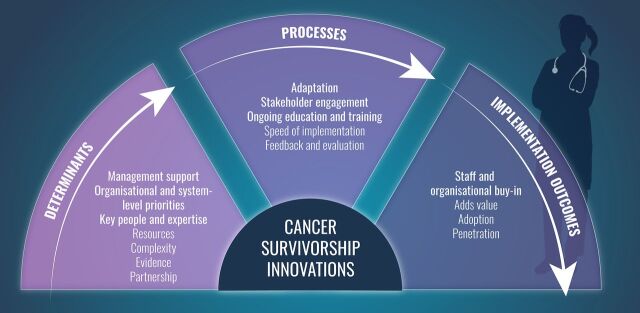
OBJECTIVES: Moving innovations into healthcare organisations to increase positive health outcomes remains a significant challenge. Even when knowledge and tools are adopted, they often fail to become integrated into the long-term routines of organisations. The objective of this study was to identify factors and processes influencing the sustainability of innovations in cancer survivorship care. DESIGN: Qualitative study using semistructured, in-depth interviews, informed by grounded theory. Data were collected and analysed concurrently using constant comparative analysis. SETTING: 25 cancer survivorship innovations based in six Canadian provinces. PARTICIPANTS: Twenty-seven implementation leaders and relevant staff from across Canada involved in the implementation of innovations in cancer survivorship. RESULTS: The findings were categorised according to determinants, processes and implementation outcomes, and whether a factor was necessary to sustainability, or important but not necessary. Seven determinants, six processes and three implementation outcomes were perceived to influence sustainability. The necessary determinants were (1) management support; (2) organisational and system-level priorities; and (3) key people and expertise. Necessary processes were (4) innovation adaptation; (5) stakeholder engagement; and (6) ongoing education and training. The only necessary implementation outcome was (7) widespread staff and organisational buy-in for the innovation. CONCLUSIONS: Factors influencing the sustainability of cancer survivorship innovations exist across multiple levels of the health system and are often interdependent. Study findings may be used by implementation teams to plan for sustainability from the beginning of innovation adoption initiatives.
Overview
The claims and statistics of this paper haven’t been checked yet.
Free: it reads the open-access text and checks the first 5 claims that cite a source we can check. Create a free account to check every claim.
Integrity signals
Registry
Cites
Statistics
Figures
Verification
Claims the paper makes
The claims and statistics of this paper haven’t been checked yet.
Free: it reads the open-access text and checks the first 5 claims that cite a source we can check. Create a free account to check every claim.
Claims other papers make about this one
Each is checked against this paper’s own text: does it say what the citing paper says it does?
The source backs part of the claim, not all of it — or backs it for a different population, condition or comparison.
In the citing paper
“Emerging evidence suggests that workforce-related factors including staffing shortages, role optimization, competency development, training requirements, leadership support, change management, and regulatory alignment are among the most important determinants of implementation success [9,10,11].”
From A Scoping Review of Implemented Innovations in Cancer Care: Implications for Pan-Canadian Scaling (2026) · cites this paper as [10]
Experimental — accuracy not yet measuredThe source backs part of the claim, not all of it — or backs it for a different population, condition or comparison.
In the citing paper
“Variations in funding models, digital infrastructure, regulatory frameworks, workforce availability, training opportunities, and data systems continue to affect implementation and spread across jurisdictions [9,10].”
From A Scoping Review of Implemented Innovations in Cancer Care: Implications for Pan-Canadian Scaling (2026) · cites this paper as [10]
Experimental — accuracy not yet measuredThe source backs part of the claim, not all of it — or backs it for a different population, condition or comparison.
In the citing paper
“While many innovative solutions have been developed to improve care, they are often not shared or expanded across the entire country.”
From A Scoping Review of Implemented Innovations in Cancer Care: Implications for Pan-Canadian Scaling (2026) · cites this paper as [10]
Experimental — accuracy not yet measuredThe source backs part of the claim, not all of it — or backs it for a different population, condition or comparison.
In the citing paper
“Interventions to improve handoff communication must be designed with local context and educational objectives in mind if they are to be accepted, successfully implemented, and sustained (4).”
From Cocreating the ICU-PAUSE Tool for Intensive Care Unit–Ward Transitions (2022) · cites this paper as [4]
Experimental — accuracy not yet measuredThe cited source says what the claim attributes to it.
In the citing paper
“Despite this progress, translating successful innovations into sustainable, system-wide practice remains challenging.”
From A Scoping Review of Implemented Innovations in Cancer Care: Implications for Pan-Canadian Scaling (2026) · cites this paper as [10]
Self-check
Percentages, sums and reported differences re-computed from the paper’s own numbers.
The self-check needs the paper’s full text.
Citations
Cites
Basics of Qualitative Research: Grounded Theory Procedures and Techniques.
Ellis, C., Strauss, A., & Corbin, J. (1992) · Contemporary Sociology · doi:10.2307/2074814 · Cited by 29,249
How Many Interviews Are Enough?: An Experiment with Data Saturation and Variability
Guest, G., Bunce, A., & Johnson, L. (2006) · Field Methods · doi:10.1177/1525822x05279903 · Cited by 20,808
Qualitative Interviewing: The Art of Hearing Data
Brooks, F. B., Rubin, H. J., & Rubin, I. S. (1996) · The Modern Language Journal · doi:10.2307/329757 · Cited by 11,180
Proctor, E., Silmere, H., Raghavan, R., Hovmand, P., Aarons, G., Bunger, A., Griffey, R., & Hensley, M. (2011) · Administration and Policy in Mental Health and Mental Health Services Research · doi:10.1007/s10488-010-0319-7 · Cited by 8,721
(1990) · Cited by 5,210
Making sense of implementation theories, models and frameworks
Nilsen, P. (2015) · Implementation Science · doi:10.1186/s13012-015-0242-0 · Cited by 4,447
Leading change: why transformation efforts fail
Kotter, J. P. (2009) · IEEE Engineering Management Review · doi:10.1109/emr.2009.5235501 · Cited by 3,566
The Challenge of Innovation Implementation
Klein, K. J., & Sorra, J. S. (1996) · The Academy of Management Review · doi:10.2307/259164 · Cited by 2,113
The dynamic sustainability framework: addressing the paradox of sustainment amid ongoing change
Chambers, D. A., Glasgow, R. E., & Stange, K. C. (2013) · Implementation Science · doi:10.1186/1748-5908-8-117 · Cited by 1,724
Wiltsey Stirman, S., Kimberly, J., Cook, N., Calloway, A., Castro, F., & Charns, M. (2012) · Implementation Science · doi:10.1186/1748-5908-7-17 · Cited by 1,355
Cited by
Zurynski, Y. A., Ludlow, K., Testa, L., Augustsson, H., Herkes, J., Hutchinson, K., Lamprell, G., McPherson, E., Carrigan, A., Ellis, L. A., et al. (2023) · Implementation Science · doi:10.1186/s13012-023-01315-x · Cited by 129
“Urquhart et al. [58] also reported the importance of adapting interventions to improve fit with cancer survivors’ needs in different settings, including transitioning to online delivery and tailoring of tools.”
BackgroundHart, N. H., Nekhlyudov, L., Smith, T. J., Yee, J., Fitch, M. I., Crawford, G. B., Koczwara, B., Ashbury, F. D., Lustberg, M. B., Mollica, M. A., et al. (2024) · JCO Oncology Practice · doi:10.1200/op.23.00716 · Cited by 73
Hart, N. H., Nekhlyudov, L., Smith, T. J., Yee, J., Fitch, M. I., Crawford, G. B., Koczwara, B., Ashbury, F. D., Lustberg, M. B., Mollica, M. A., et al. (2024) · Supportive Care in Cancer · doi:10.1007/s00520-024-08465-8 · Cited by 60
“…care provision, it is also integral that survivorship care programs for people affected by advanced or metastatic cancer are informed by the ongoing professional development of healthcare professionals, with education programs to be delivered to all stakeholders [11, 13, 24–26, 29, 31, 63, 66].”
BackgroundInfluentialApproaches to Spread, Scale-Up, and Sustainability
Papoutsi, C., Greenhalgh, T., & Marjanovic, S. (2024) · Cambridge University Press eBooks · doi:10.1017/9781009326049 · Cited by 46
Sistem Pemerintahan Berbasis Elektronik: Best Practice dari Pemerintah Daerah di Indonesia
Ahad, M. P. Y., & Barsei, A. N. (2023) · Jurnal Transformasi Administrasi · doi:10.56196/jta.v13i01.236 · Cited by 45
Cocreating the ICU-PAUSE Tool for Intensive Care Unit–Ward Transitions
Santhosh, L., Rojas, J. C., Garcia, B., Thomashow, M., & Lyons, P. G. (2022) · ATS Scholar · doi:10.34197/ats-scholar.2021-0135in · Cited by 21
“Interventions to improve handoff communication must be designed with local context and educational objectives in mind if they are to be accepted, successfully implemented, and sustained (4).”
Implementation of electronic prospective surveillance models in cancer care: a scoping review
Lopez, C. J., Teggart, K., Ahmed, M., Borhani, A., Kong, J., Fazelzad, R., Langelier, D. M., Campbell, K. L., Reiman, T., Greenland, J., et al. (2023) · Implementation Science · doi:10.1186/s13012-023-01265-4 · Cited by 18
“Factors such as management support, organizational priorities, and organizational buy-in have been identified as key factors for sustaining cancer survivorship interventions [94, 95].”
BackgroundRussell, L., McIntosh, R., Martin, C., Soo, W. K., & Ugalde, A. (2023) · BMC Health Services Research · doi:10.1186/s12913-023-09425-4 · Cited by 6
“Of the 16 factors perceived to influence sustainability, staff and organisational ‘buy-in’ for the program were outlined as necessary implementation prerequisites [16].”
BackgroundBurns, A. B., Kampman, H., Magee, L. A., Blackburn, J. L., Alton, M., & Pescosolido, B. A. (2024) · BMC Health Services Research · doi:10.1186/s12913-024-11962-5 · Cited by 3
“In line with findings from implementation research literature [30], we identified the importance of having a motivated implementation lead, or champion, to facilitate the development of such relationships among external stakeholders and to share information about community needs back to DMHA.”
Pitasi, O., Hildebrand, D. A., Liebe, R. A., Joyce, J. M., Nagykaldi, Z. J., Robertson, M. C., & Braun, A. C. (2024) · Journal of Cancer Survivorship · doi:10.1007/s11764-024-01687-z · Cited by 2
Pallin, N. D., Browne, J. P., Connolly, R. M., Hegarty, J. M., & McHugh, S. (2024) · BMJ Quality & Safety · doi:10.1136/bmjqs-2024-017561 · Cited by 3
HyLPD Digital Twin Control for UAV Stability in High‐Wind Conditions
Rose, C., McMurray, R. J., & Hadi, M. U. (2026) · Optimal Control Applications and Methods · doi:10.1002/oca.70089 · Cited by 1
“Unlike large-scale language models sometimes criticized as “stochastic parrots” for merely imitating training data without deeper reasoning [37], RL systems engage in sequential decision-making and adapt policies based on environmental feedback, encouraging a more dynamic and goal-oriented form of…”
Murnaghan, S., Kendell, C., SUSSMAN, J. S., Porter, G. A., Howell, D., Grunfeld, E., & Urquhart, R. (2021) · Current Oncology · doi:10.3390/curroncol28060416 · Cited by 4
“A recent study of 25 evidence-based cancer survivorship interventions, implemented in Canadian jurisdictions, identified a range of factors influencing their sustainability [43].”
BackgroundSelf-citationA Scoping Review of Implemented Innovations in Cancer Care: Implications for Pan-Canadian Scaling
Sampalli, T., Tomblin Murphy, G., Peacock, S., Navaratnam, S., Domm, D., & MacKenzie, K. (2026) · Current Oncology · doi:10.3390/curroncol33070395
“Variations in funding models, digital infrastructure, regulatory frameworks, workforce availability, training opportunities, and data systems continue to affect implementation and spread across jurisdictions [9,10].”
Russell, L., McIntosh, R., Martin, C., Soo, W. K., & Ugalde, A. (2023) · Figshare · doi:10.6084/m9.figshare.22767324
Lopez, C. J., Teggart, K., Ahmed, M., Borhani, A., Kong, J., Fazelzad, R., Langelier, D. M., Campbell, K. L., Reiman, T., Greenland, J., et al. (2023) · Figshare · doi:10.6084/m9.figshare.22705896
Lopez, C. J., Teggart, K., Ahmed, M., Borhani, A., Kong, J., Fazelzad, R., Langelier, D. M., Campbell, K. L., Reiman, T., Greenland, J., et al. (2023) · Figshare · doi:10.6084/m9.figshare.22705899
Lopez, C. J., Teggart, K., Ahmed, M., Borhani, A., Kong, J., Fazelzad, R., Langelier, D. M., Campbell, K. L., Reiman, T., Greenland, J., et al. (2023) · Figshare · doi:10.6084/m9.figshare.22705905
Zurynski, Y. A., Ludlow, K., Testa, L., Augustsson, H., Herkes, J., Hutchinson, K., Lamprell, G., McPherson, E., Carrigan, A., Ellis, L. A., et al. (2024) · Figshare · doi:10.6084/m9.figshare.26639073
Lopez, C. J., Teggart, K., Ahmed, M., Borhani, A., Kong, J., Fazelzad, R., Langelier, D. M., Campbell, K. L., Reiman, T., Greenland, J., et al. (2023) · Figshare · doi:10.6084/m9.figshare.22705902
Zurynski, Y. A., Ludlow, K., Testa, L., Augustsson, H., Herkes, J., Hutchinson, K., Lamprell, G., McPherson, E., Carrigan, A., Ellis, L. A., et al. (2024) · Figshare · doi:10.6084/m9.figshare.26639061
Zurynski, Y. A., Ludlow, K., Testa, L., Augustsson, H., Herkes, J., Hutchinson, K., Lamprell, G., McPherson, E., Carrigan, A., Ellis, L. A., et al. (2024) · Figshare · doi:10.6084/m9.figshare.26639064
Lopez, C. J., Teggart, K., Ahmed, M., Borhani, A., Kong, J., Fazelzad, R., Langelier, D. M., Campbell, K. L., Reiman, T., Greenland, J., et al. (2023) · Figshare · doi:10.6084/m9.figshare.22705893
Zurynski, Y. A., Ludlow, K., Testa, L., Augustsson, H., Herkes, J., Hutchinson, K., Lamprell, G., McPherson, E., Carrigan, A., Ellis, L. A., et al. (2024) · Figshare · doi:10.6084/m9.figshare.26639070
Lopez, C. J., Teggart, K., Ahmed, M., Borhani, A., Kong, J., Fazelzad, R., Langelier, D. M., Campbell, K. L., Reiman, T., Greenland, J., et al. (2023) · Figshare · doi:10.6084/m9.figshare.22705908
Russell, L., McIntosh, R., Martin, C., Soo, W. K., & Ugalde, A. (2023) · Figshare · doi:10.6084/m9.figshare.22767327
Russell, L., McIntosh, R., Martin, C., Soo, W. K., & Ugalde, A. (2023) · Figshare · doi:10.6084/m9.figshare.22767321
Russell, L., McIntosh, R., Martin, C., Soo, W. K., & Ugalde, A. (2023) · Figshare · doi:10.6084/m9.figshare.22767330
Zurynski, Y. A., Ludlow, K., Testa, L., Augustsson, H., Herkes, J., Hutchinson, K., Lamprell, G., McPherson, E., Carrigan, A., Ellis, L. A., et al. (2024) · Figshare · doi:10.6084/m9.figshare.26639067
SUPLEMENTASI ZAT BESI TERHADAP KADAR HEMOGLOBIN DAN DEPRESI POSTPARTUM
Sulistiawati, R., Dianna, D., & Fitriani, H. (2025) · Jurnal Kebidanan Khatulistiwa · doi:10.30602/jkk.v11i2.1892
Access to innovation in oncology from patients’ perspectives: a qualitative systematic review
Julliot-Delval, A., Teixeira, M., & Cartron, E. (2026) · EClinicalMedicine · doi:10.1016/j.eclinm.2026.103892 · Cited by 1
“8 These findings suggest that innovation may exist without being fully accessible when patients or organisations lack the resources required for its appropriation.”
Kierkegaard, P., Su, B., Gujral, D. M., Liesching-Schroder, K., Lagergren, P., McGregor, A. H., & Grayer, J. (2026) · npj Health Systems · doi:10.1038/s44401-026-00125-9 · Cited by 1
Metadata
- Authors
- Urquhart, R., Kendell, C., Cornelissen, E., Powell, B. J., Madden, L. L., Kissmann, G., Richmond, S. A., & Bender, J. L.
- Affiliations
- Dalhousie University (CA)
- Nova Scotia Health Authority (CA)
- University of British Columbia (CA)
- Washington University in St. Louis (US)
- Interior Health (CA)
- University of Toronto (CA)
- Corresponding author
- Urquhart, Robin
- ORCID
- Venue
- BMJ Open
- Publisher
- BMJ
- Published
- 2021-02
- Volume
- 11
- Issue
- 2
- Pages
- e042503
- ISSN
- 2044-6055 (ISSN-L)
- PMC
- PMC7925907
- OpenAlex
- W3128139193
- Cited by
- 32
- References
- 42
- Citations by year
- 2026: 5 · 2024: 10 · 2023: 15 · 2022: 1 · 2021: 1
- FWCI
- 7.87
- Type
- journal article
- Language
- en
- Open access
- gold
- doi.org
- Licence
- Locations
- BMJ Open (publishedVersion, cc-by-nc)
- PubMed Central (publishedVersion, cc-by-nc)
- PubMed (publishedVersion)
- DOAJ (DOAJ: Directory of Open Access Journals) (submittedVersion, cc-by-sa)
- Funders
- U.S. National Institute of Mental Health (K01MH113806; Powell, PI)
- U.S. National Cancer Institute (P50CA244431; Brownson, PI)
- Canadian Cancer Society Research Institute (704897)
- Topics
- Health Sciences › Health Professions › General Health Professions › Health Policy Implementation Science
- Health Sciences › Health Professions › General Health Professions › Health Sciences Research and Education
- Health Sciences › Medicine › Oncology › Cancer survivorship and care
- Keywords
- innovation sustainability, survivorship care, innovation implementation, health care organization, management support, organisational priorities, innovation adaptation, stakeholder engagement, staff education and training, implementation outcomes
- MeSH terms
- Survivorship, Canada, Delivery of Health Care, Humans, Neoplasms, Qualitative Research
About these checks
Registry, retraction, Cites and statistics results are computed, not judged, with one exception: a printed reference that no index lists is read once by a model before it counts as a citation error. Claims are extracted by a model and kept only when their quote appears verbatim in the text; each cited source is then checked, with a model’s help, for whether it says what the claim relies on. Those verdicts can be wrong — read the claim’s quote and the cited source before relying on one.
Statistics and arithmetic are recomputed, not judged.
Confidence bands are shown only for fields calibrated on our annotated test set. None is calibrated yet, so no band is shown.
What counts as a claim ›How we measure confidence ›How we check this ›
Are you an author, or do you see a problem with this page? Request a review
Data sources
Bibliographic data: Semantic Scholar, OpenAlex, Crossref.
Contains information from the Semantic Scholar Academic Graph Datasets, made available under the ODC Attribution License (ODC-BY 1.0).
Semantic Scholar’s data is described in: Kinney, R., et al. (2023). The Semantic Scholar Open Data Platform. arXiv:2301.10140.
