

Prediction model of in-hospital mortality in intensive care unit patients with heart failure: machine learning-based, retrospective analysis of the MIMIC-III database
Open accessThe DOI matches its Crossref record; 41 of the 41 references it cites were found in a registry or an index.
Abstract
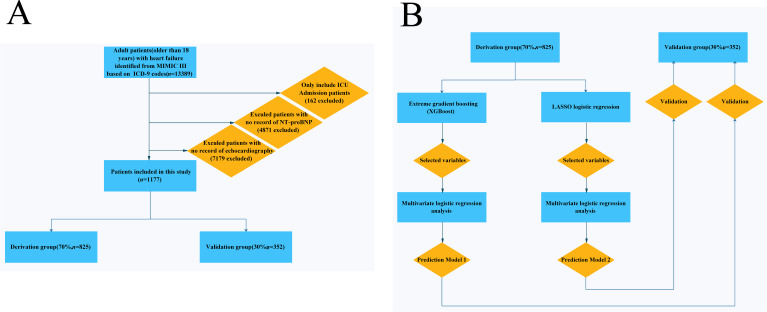
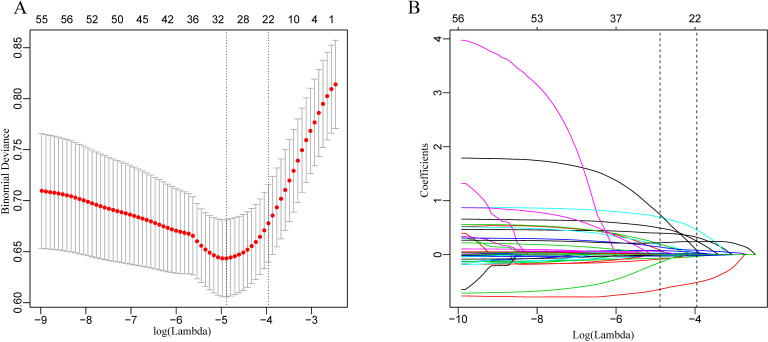
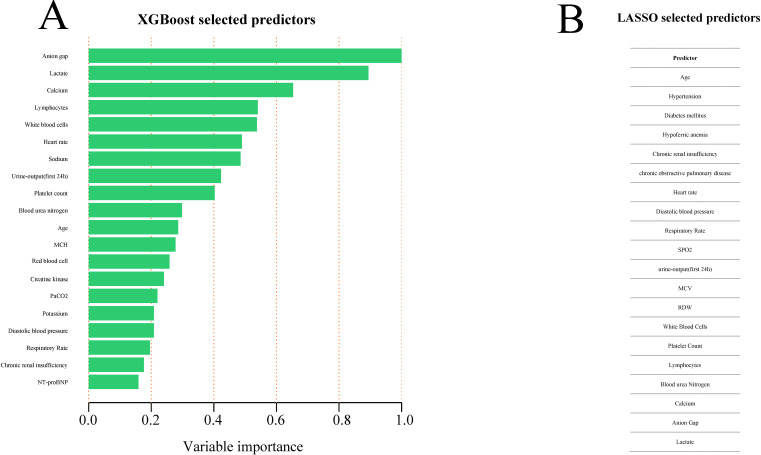
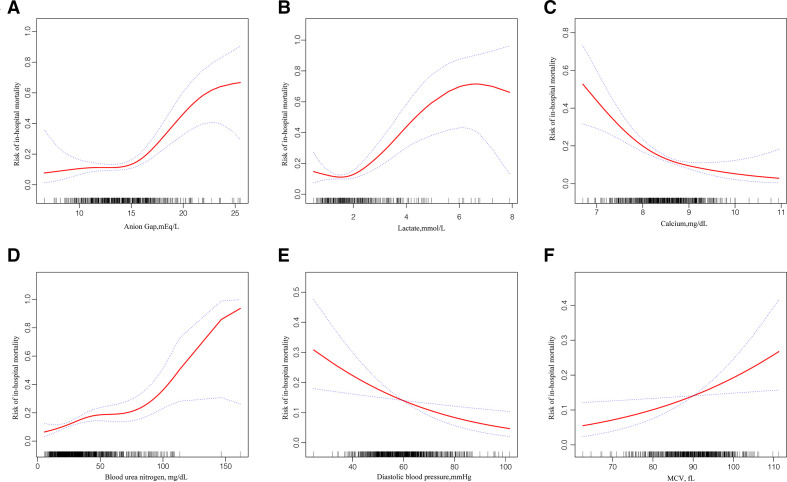
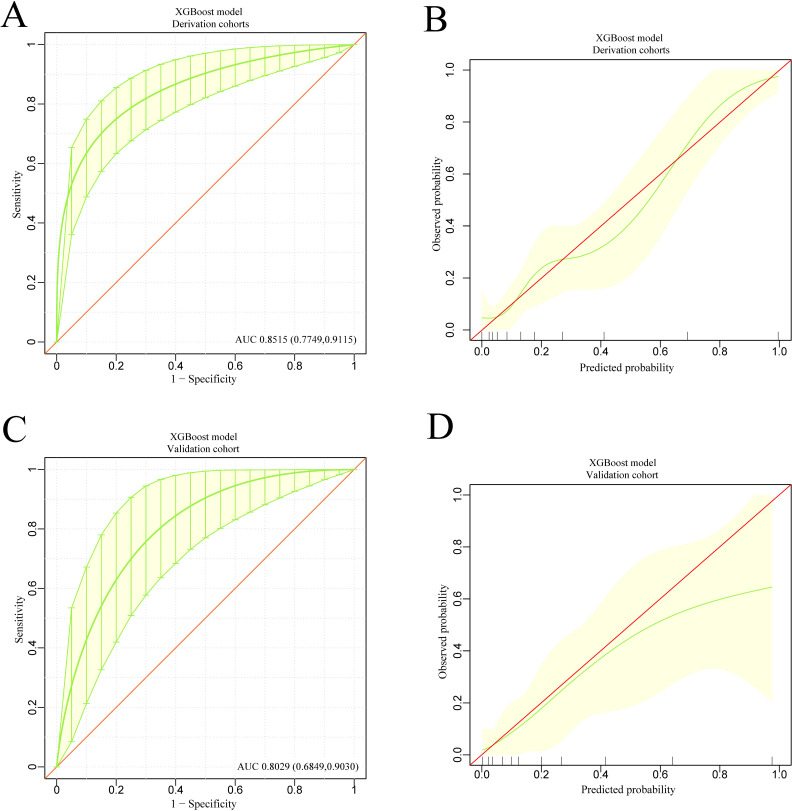
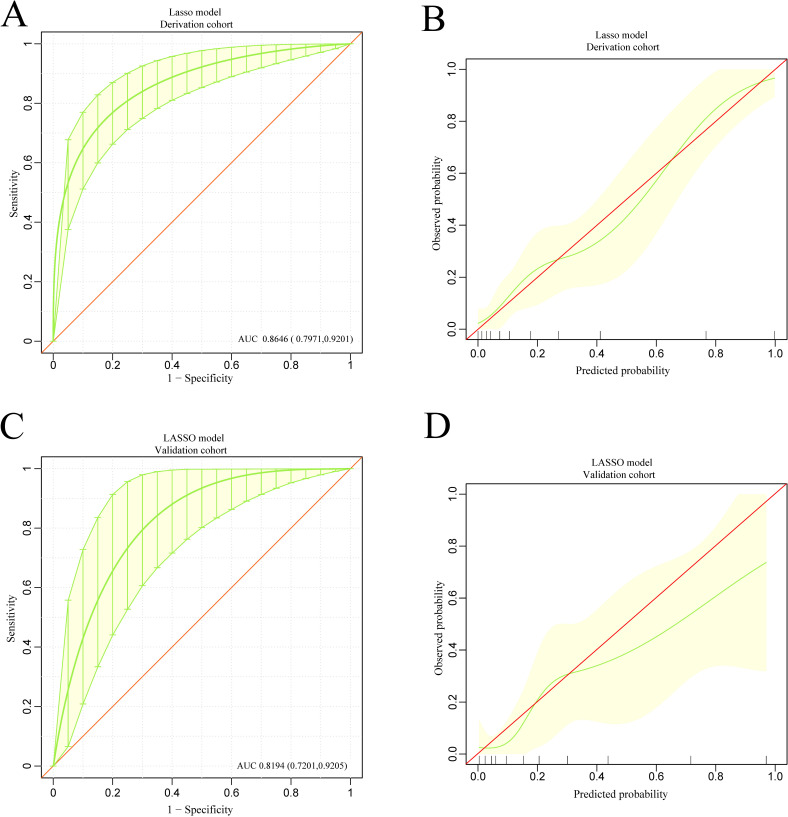
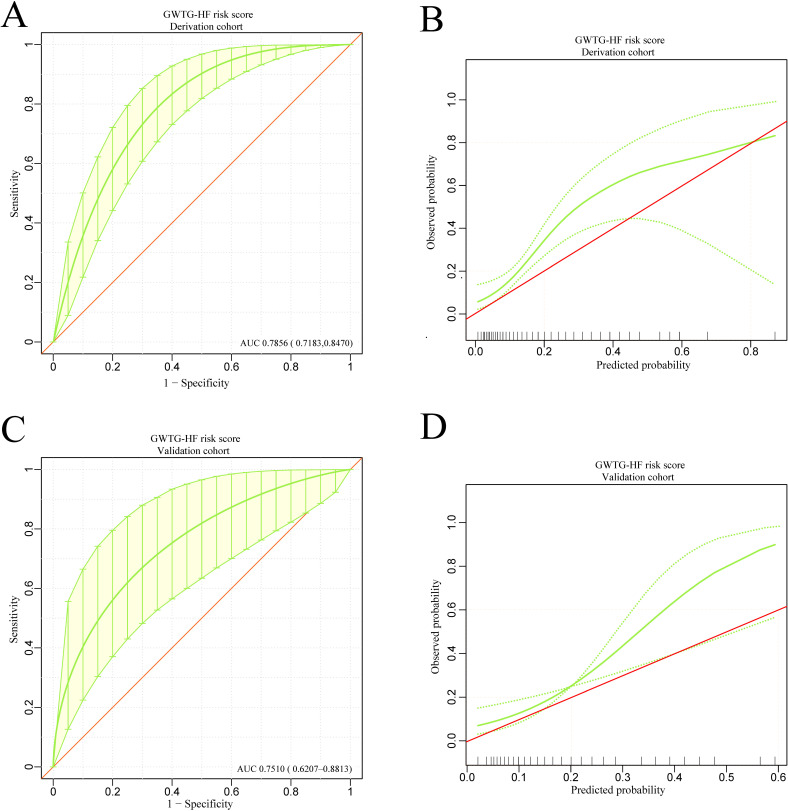
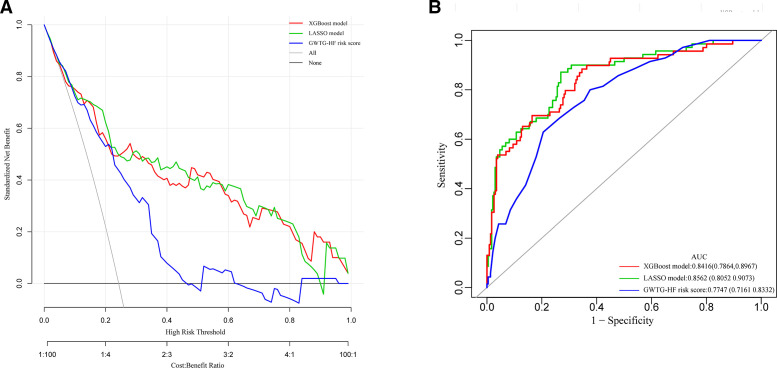
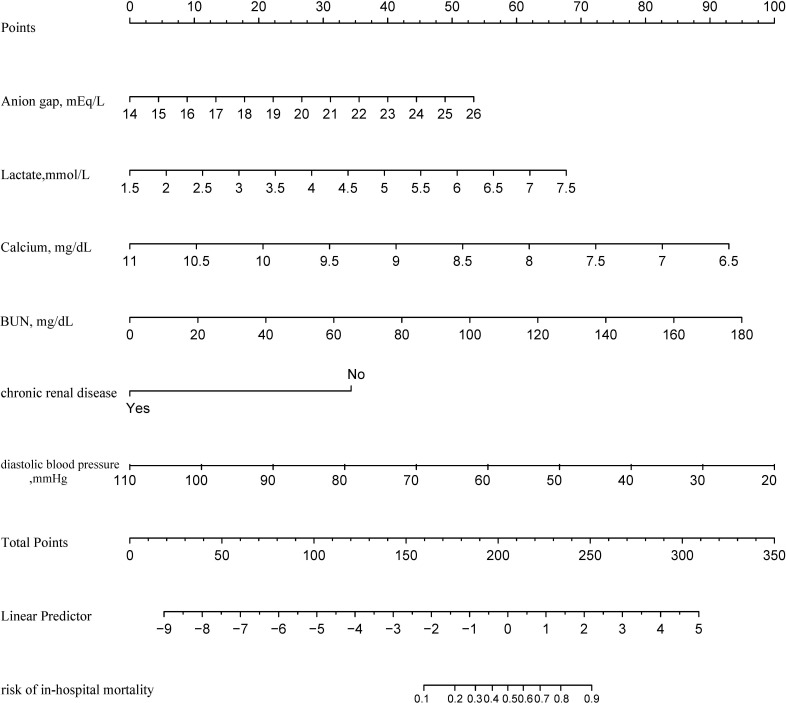
Objective: The predictors of in-hospital mortality for intensive care units (ICUs)-admitted heart failure (HF) patients remain poorly characterised. We aimed to develop and validate a prediction model for all-cause in-hospital mortality among ICU-admitted HF patients. Design: A retrospective cohort study. Setting and participants: Data were extracted from the Medical Information Mart for Intensive Care (MIMIC-III) database. Data on 1177 heart failure patients were analysed. Methods: Patients meeting the inclusion criteria were identified from the MIMIC-III database and randomly divided into derivation (n=825, 70%) and a validation (n=352, 30%) group. Independent risk factors for in-hospital mortality were screened using the extreme gradient boosting (XGBoost) and the least absolute shrinkage and selection operator (LASSO) regression models in the derivation sample. Multivariate logistic regression analysis was used to build prediction models in derivation group, and then validated in validation cohort. Discrimination, calibration and clinical usefulness of the predicting model were assessed using the C-index, calibration plot and decision curve analysis. After pairwise comparison, the best performing model was chosen to build a nomogram according to the regression coefficients. Results: Among the 1177 admissions, in-hospital mortality was 13.52%. In both groups, the XGBoost, LASSO regression and Get With the Guidelines-Heart Failure (GWTG-HF) risk score models showed acceptable discrimination. The XGBoost and LASSO regression models also showed good calibration. In pairwise comparison, the prediction effectiveness was higher with the XGBoost and LASSO regression models than with the GWTG-HF risk score model (p<0.05). The XGBoost model was chosen as our final model for its more concise and wider net benefit threshold probability range and was presented as the nomogram. Conclusions: Our nomogram enabled good prediction of in-hospital mortality in ICU-admitted HF patients, which may help clinical decision-making for such patients.
Overview
The claims and statistics of this paper haven’t been checked yet.
Free: it reads the open-access text and checks the first 5 claims that cite a source we can check. Create a free account to check every claim.
Integrity signals
Registry
Cites
Statistics
Figures
Verification
Claims the paper makes
The claims and statistics of this paper haven’t been checked yet.
Free: it reads the open-access text and checks the first 5 claims that cite a source we can check. Create a free account to check every claim.
Self-check
Percentages, sums and reported differences re-computed from the paper’s own numbers.
The self-check needs the paper’s full text.
Citations
Cites
DeLong, E. R., DeLong, D. M., & Clarke-Pearson, D. L. (1988) · Biometrics · doi:10.2307/2531595 · Cited by 22,649
McDonagh, T. A., Metra, M., Adamo, M., Gardner, R. S., Baumbach, A., Böhm, M., Burri, H., Butler, J., Čelutkienė, J., Chioncel, O., et al. (2021) · European Heart Journal · doi:10.1093/eurheartj/ehab670 · Cited by 19,442
2016 ESC Guidelines for the diagnosis and treatment of acute and chronic heart failure
Ponikowski, P., Voors, A. A., Anker, S. D., Bueno, H., Cleland, J. G. F., Coats, A. J. S., Falk, V., González-Juanatey, J. R., Harjola, V.-P., Jankowska, E. A., et al. (2016) · European Heart Journal · doi:10.1093/eurheartj/ehw128 · Cited by 11,429
MIMIC-III, a freely accessible critical care database
Johnson, A. E. W., Pollard, T. J., Shen, L., Lehman, L.-W. H., Feng, M., Ghassemi, M., Moody, B., Szolovits, P., Anthony Celi, L., & Mark, R. G. (2016) · Scientific Data · doi:10.1038/sdata.2016.35 · Cited by 8,141
Decision curve analysis: a novel method for evaluating prediction models
Vickers, A. J., & Elkin, E. B. (2006) · Medical Decision Making · doi:10.1177/0272989x06295361 · Cited by 6,341
Adams, K. F., Fonarow, G. C., Emerman, C. L., LeJemtel, T. H., Costanzo, M. R., Abraham, W. T., Berkowitz, R. L., Galvao, M., & Horton, D. P. (2005) · American Heart Journal · doi:10.1016/j.ahj.2004.08.005 · Cited by 2,116
Fonarow, G. C. (2005) · JAMA · doi:10.1001/jama.293.5.572 · Cited by 1,611
Predicting survival in heart failure: a risk score based on 39 372 patients from 30 studies
Pocock, S. J., Ariti, C. A., McMurray, J. J. V., Maggioni, A., Køber, L., Squire, I. B., Swedberg, K., Dobson, J., Poppe, K. K., Whalley, G. A., et al. (2013) · European Heart Journal · doi:10.1093/eurheartj/ehs337 · Cited by 1,331 · cited 1×
“Involving a small number of routinely collected variables, this tool can be easily used at the bedside.”
MethodSauerbrei, W., Royston, P., & Binder, H. (2007) · Statistics in Medicine · doi:10.1002/sim.3148 · Cited by 1,171 · cited 1×
“Second, we used the least absolute shrinkage and selection operator (LASSO) method, 19 which involves regression analysis to perform both variable selection and regularisation.”
MethodPlagnol, V., Curtis, J., Epstein, M., Mok, K. Y., Stebbings, E., Grigoriadou, S., Wood, N. W., Hambleton, S., Burns, S. O., Thrasher, A. J., et al. (2012) · Bioinformatics · doi:10.1093/bioinformatics/bts526 · Cited by 743 · cited 1×
“First, we used extreme gradient boosting (XGBoost), 17 a supervised machine-learning and data-mining tool, which involves a meta-algorithm, to construct a strong ensemble learner from weak learners, such as regression trees.”
Method
Cited by
Items 101–129 of 129
González-Cebrián, M., Rey, C. N., Ortega, S. P., Rodríguez, S. A., González, R. V., Loza, I. P., & Parellada-Vendrell, M. (2025) · Enfermería en cardiología: revista científica e informativa de la Asociación Española de Enfermería en Cardiología · doi:10.59322/92.516.lt5
Shukla, S., Gupta, S., & Sharma, S. (2024) · International Conference on Parallel, Distributed and Grid Computing (PDGC) · doi:10.1109/pdgc64653.2024.10984270
“Key predictors included maximum hemoglobin, minimum lactate, SAPS II score, age, and respiratory dysfunction.. Lie et al. [11] directed their efforts towards predicting in-hospital mortality among heart failure (HF) patients who were admitted to intensive care units (ICUs).”
Song, X., Qiang, Z., Qi, Z., & Liu, B. (2025) · Journal of International Medical Research · doi:10.1177/03000605251340304
“16 APACHE-II has been extensively utilized in ICU clinical practice.”
Assessing synthetic data generation utility for cohort data secondary usePreprint
Mazzoli, M., Elfert, J. N., Sacerdoti, P., Hirsch, M., Tira, M. D., & Paolotti, D. (2025) · medRxiv · doi:10.1101/2025.06.09.25329247
“This exemplary use case is grounded on the results and methods of a reference research paper 50 , in which the authors built a machine learning model of in-hospital mortality of patients within the MIMIC-III dataset.”
Zhang, W., Liu, Y., Feng, Z., Xiong, N., Tang, L., Chen, W., Zhu, X., Xue, J., Dai, W., & Yang, J. (2025) · Research Square · doi:10.21203/rs.3.rs-6824634/v1
Nazari, S., & Abdelrasoul, A. (2025) · Engineering Applications of Artificial Intelligence · doi:10.1016/j.engappai.2025.111741 · Cited by 3
Palmer, D. D. O. Q., Gismondi, R. A., Lanzieri, P. G., Lomba, G. S. B., & Seixas, F. L. (2025) · Cureus · doi:10.7759/cureus.89226 · Cited by 2
“Among these, XGBoost (XGB) demonstrated the highest area under the receiver operating characteristic curve (AUROC) during preliminary testing and was therefore selected, in line with prior studies utilizing the MIMIC database [19,20].”
InfluentialLin, M.-S., Wang, P.-C., Lin, M.-H., Kuo, T.-Y., Lin, Y.-S., Chen, T.-H., Tsai, M.-H., Yang, Y.-H., Lin, C.-L., Chung, C.-M., et al. (2024) · Figshare · doi:10.6084/m9.figshare.26591414
Yan, M., Liu, H., Xu, Q., Yu, S., Tang, K., & Xie, Y. (2024) · Figshare · doi:10.6084/m9.figshare.26625760
Yan, M., Liu, H., Xu, Q., Yu, S., Tang, K., & Xie, Y. (2024) · Figshare · doi:10.6084/m9.figshare.26625757
Yan, M., Liu, H., Xu, Q., Yu, S., Tang, K., & Xie, Y. (2024) · Figshare · doi:10.6084/m9.figshare.26625748
Yan, M., Liu, H., Xu, Q., Yu, S., Tang, K., & Xie, Y. (2024) · Figshare · doi:10.6084/m9.figshare.26625754
Yan, M., Liu, H., Xu, Q., Yu, S., Tang, K., & Xie, Y. (2024) · Figshare · doi:10.6084/m9.figshare.24295766
Yan, M., Liu, H., Xu, Q., Yu, S., Tang, K., & Xie, Y. (2024) · Figshare · doi:10.6084/m9.figshare.26625766
Yan, M., Liu, H., Xu, Q., Yu, S., Tang, K., & Xie, Y. (2024) · Figshare · doi:10.6084/m9.figshare.26625751
Yan, M., Liu, H., Xu, Q., Yu, S., Tang, K., & Xie, Y. (2023) · Figshare · doi:10.6084/m9.figshare.24295661
Yan, M., Liu, H., Xu, Q., Yu, S., Tang, K., & Xie, Y. (2024) · Figshare · doi:10.6084/m9.figshare.26625763
Kaya, F. I. (2026) · Karadeniz Fen Bilimleri Dergisi · doi:10.31466/kfbd.1678766
Haghighatgoo, P., & Afrasiabi, S. (2025) · National and International Iranian Conference on Biomedical Engineering (ICBME) · doi:10.1109/icbme68496.2025.11392525
“Recent studies have applied ML models to predict HF outcomes, including short-term readmission and mortality, with encouraging results [6, 7].”
InfluentialThe causal transparency framework: a multi-metric approach to algorithmic accountability
Marko, J. G. O., Neagu, D. C., & Anand, P. B. (2026) · AI and Ethics · doi:10.1007/s43681-026-01043-0 · Cited by 1
Wu, Y., Zhou, Y., Huang, Q., Sun, L., Zhu, L., He, T., & Meng, X. (2026) · Scientific Reports · doi:10.1038/s41598-026-46303-5 · Cited by 1
“Compared with other nomogram models 46,47 , this one integrates gene information, offering a more in-depth understanding of HF pathogenesis and thus a more effective prediction tool for clinical use.”
Chaptoukaev, H. (2025) · theses.fr (ABES) · doi:10.70675/d6c484f4zea27z4fedzac4dzd1a94b0332a6 · Cited by 1
An Empirical Study on Rough Set Theory for Feature Selection and Classification Model Optimization
Dandriyal, A., Sahu, P., Mahender, U., Rai, A., Mamatha, B., & Punia, S. (2025) · IEEE International Conference on Recent Trends in Computing and Smart Mobility (RCSM) · doi:10.1109/rcsm67767.2025.11507964
“Algorithm of learning factorization approach work effectively [24].”
Walker, J., & Harris, O. (2026) · Bulletin of pioneering researches of medical and clinical science · doi:10.51847/sc1t0nslnl
VARŠANDAN, M., Petrović, J., Dabic, P., Živković, T., Zivkovic, M. Z., Radomirović, B., Janicijevic, S., & Bačanin, N. (2026) · Lecture notes in networks and systems · doi:10.1007/978-3-032-23945-7_23
Pletenetska, A. O., Strelchenko, О., Булик, І., Bukhtiiarova, I., Liubchenko, T., & СТРЕЛЬЧЕНКО, А. М. (2026) · The Journal of V N Karazin Kharkiv National University series Medicine · doi:10.26565/2313-6693-2026-59-05
Heart Failure Patient Prediction Model Based on Genetic Algorithm-Optimized LightGBM
Bai, X., Wang, Z., Sun, Y., Luo, H., Han, D., Xie, S., & Bai, S. (2026) · International Symposium on Autonomous Systems (ISAS) · doi:10.1109/icaisisas68969.2026.11567840
“…be dynamically monitored, and sodium bicarbonate supplementation or optimized respiratory/dialysis support may be considered to maintain acid – base balance [19], [20], [21] ; The mean blood calcium level was 8.19 mg/dL, below the lower limit of the normal range (8.5 mg/dL), indicating…”
InfluentialMedina, J. E. C., de la Hoz, J. J. E., Ortega, L. F. M., & Acosta, T. (2026) · Scientia Medica · doi:10.15448/1980-6108.2026.1.49146
Kalp yetmezliği erken teşhisinde çok aşamalı topluluk öğrenmesi yöntemlerinin performans analizi
Katılmış, Z., & Kuruoğlu, B. (2026) · Balıkesir Üniversitesi Fen Bilimleri Enstitüsü Dergisi · doi:10.25092/baunfbed.1878226
Metadata
- Authors
- Li, F., Xin, H., Zhang, J., Fu, M., Zhou, J., & Lian, Z.
- Affiliations
- Fudan University (CN)
- Affiliated Hospital of Qingdao University (CN)
- Corresponding author
- Zhou, Jingmin
- Lian, Zhexun
- Venue
- BMJ Open
- Publisher
- BMJ
- Published
- 2021-07
- Volume
- 11
- Issue
- 7
- Pages
- e044779
- ISSN
- 2044-6055 (ISSN-L)
- PMC
- PMC8311359
- OpenAlex
- W3184022450
- Cited by
- 128
- References
- 41
- Citations by year
- 2026: 9 · 2025: 36 · 2024: 46 · 2023: 25 · 2022: 11 · 2021: 1
- FWCI
- 13.91
- Type
- journal article
- Language
- en
- Open access
- gold
- doi.org
- Licence
- Locations
- BMJ Open (publishedVersion, cc-by-nc)
- PubMed Central (publishedVersion, cc-by-nc)
- PubMed (publishedVersion)
- DOAJ (DOAJ: Directory of Open Access Journals) (submittedVersion, cc-by-sa)
- Funders
- National Basic Research Program of China (973 350 Program, 2012CB518605)
- National Natural Science Foundation of China (81370199)
- the Program for the Outstanding Academic Leaders supported by Shanghai Science and Technology Commission (16XD1400700)
- Topics
- Health Sciences › Medicine › Cardiology and Cardiovascular Medicine › Heart Failure Treatment and Management
- Health Sciences › Health Professions › Health Information Management › Artificial Intelligence in Healthcare
- Health Sciences › Medicine › Critical Care and Intensive Care Medicine › Sepsis Diagnosis and Treatment
- Keywords
- heart failure, in-hospital mortality, mortality prediction model, intensive care unit patients, nomogram, XGBoost, LASSO, risk factors, MIMIC-III
- MeSH terms
- Machine Learning, Critical Care, Heart Failure, Humans, Intensive Care Units, Retrospective Studies, Hospital Mortality
About these checks
Registry, retraction, Cites and statistics results are computed, not judged, with one exception: a printed reference that no index lists is read once by a model before it counts as a citation error. Claims are extracted by a model and kept only when their quote appears verbatim in the text; each cited source is then checked, with a model’s help, for whether it says what the claim relies on. Those verdicts can be wrong — read the claim’s quote and the cited source before relying on one.
Statistics and arithmetic are recomputed, not judged.
Confidence bands are shown only for fields calibrated on our annotated test set. None is calibrated yet, so no band is shown.
What counts as a claim ›How we measure confidence ›How we check this ›
Are you an author, or do you see a problem with this page? Request a review
Data sources
Bibliographic data: Semantic Scholar, OpenAlex, Crossref.
Contains information from the Semantic Scholar Academic Graph Datasets, made available under the ODC Attribution License (ODC-BY 1.0).
Semantic Scholar’s data is described in: Kinney, R., et al. (2023). The Semantic Scholar Open Data Platform. arXiv:2301.10140.
