

Prediction model of in-hospital mortality in intensive care unit patients with heart failure: machine learning-based, retrospective analysis of the MIMIC-III database
Open accessThe DOI matches its Crossref record; 41 of the 41 references it cites were found in a registry or an index.
Abstract
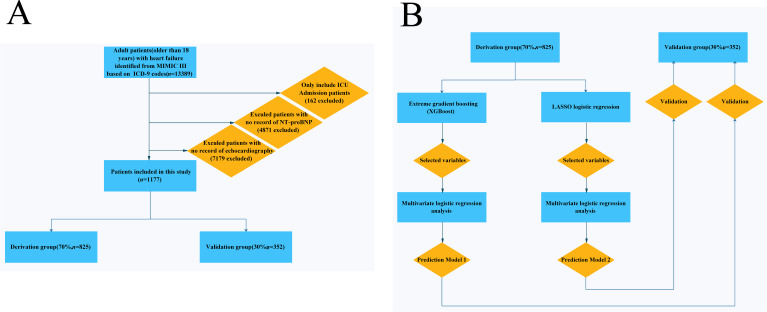
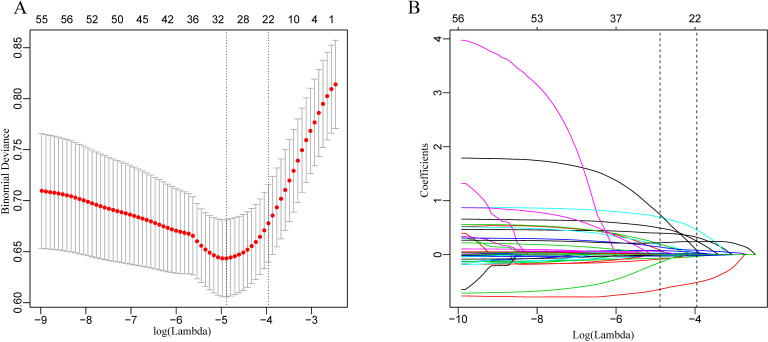
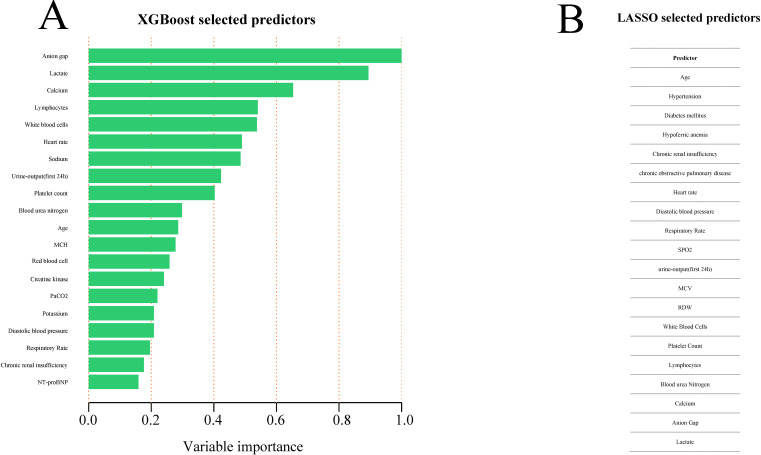
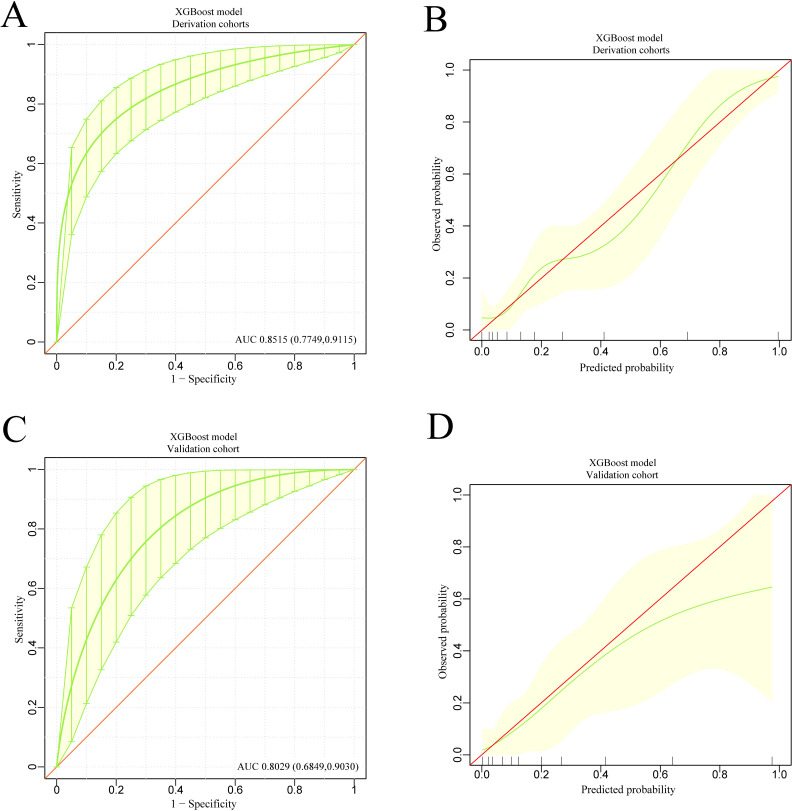
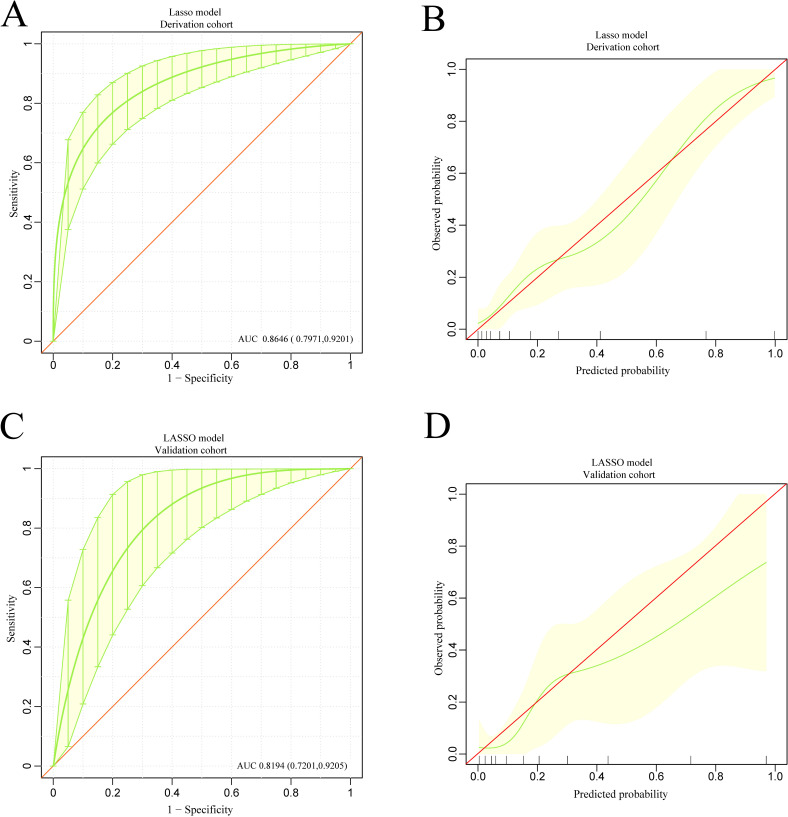
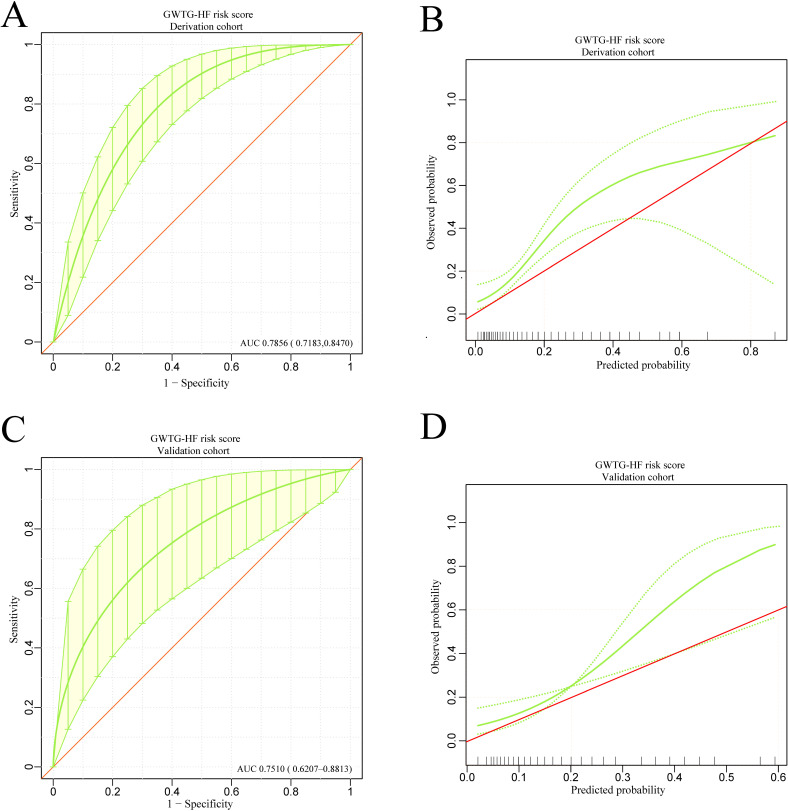
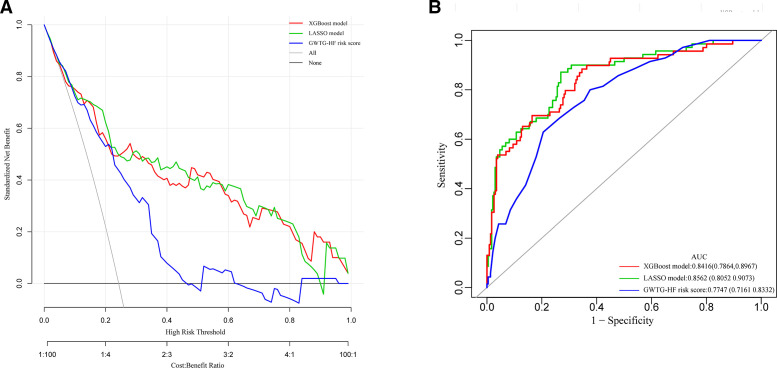
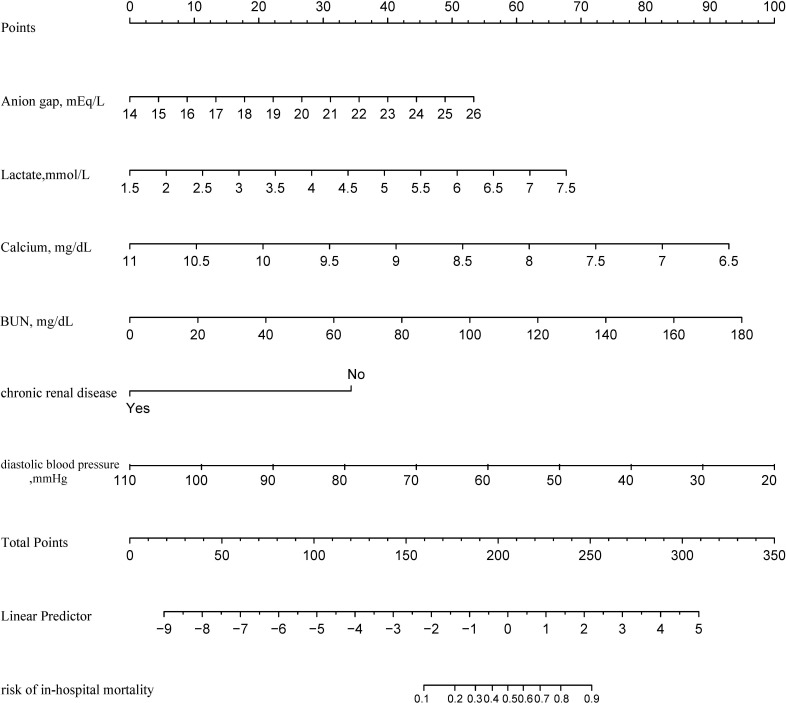
Objective: The predictors of in-hospital mortality for intensive care units (ICUs)-admitted heart failure (HF) patients remain poorly characterised. We aimed to develop and validate a prediction model for all-cause in-hospital mortality among ICU-admitted HF patients. Design: A retrospective cohort study. Setting and participants: Data were extracted from the Medical Information Mart for Intensive Care (MIMIC-III) database. Data on 1177 heart failure patients were analysed. Methods: Patients meeting the inclusion criteria were identified from the MIMIC-III database and randomly divided into derivation (n=825, 70%) and a validation (n=352, 30%) group. Independent risk factors for in-hospital mortality were screened using the extreme gradient boosting (XGBoost) and the least absolute shrinkage and selection operator (LASSO) regression models in the derivation sample. Multivariate logistic regression analysis was used to build prediction models in derivation group, and then validated in validation cohort. Discrimination, calibration and clinical usefulness of the predicting model were assessed using the C-index, calibration plot and decision curve analysis. After pairwise comparison, the best performing model was chosen to build a nomogram according to the regression coefficients. Results: Among the 1177 admissions, in-hospital mortality was 13.52%. In both groups, the XGBoost, LASSO regression and Get With the Guidelines-Heart Failure (GWTG-HF) risk score models showed acceptable discrimination. The XGBoost and LASSO regression models also showed good calibration. In pairwise comparison, the prediction effectiveness was higher with the XGBoost and LASSO regression models than with the GWTG-HF risk score model (p<0.05). The XGBoost model was chosen as our final model for its more concise and wider net benefit threshold probability range and was presented as the nomogram. Conclusions: Our nomogram enabled good prediction of in-hospital mortality in ICU-admitted HF patients, which may help clinical decision-making for such patients.
Overview
The claims and statistics of this paper haven’t been checked yet.
Free: it reads the open-access text and checks the first 5 claims that cite a source we can check. Create a free account to check every claim.
Integrity signals
Registry
Cites
Statistics
Figures
Verification
Claims the paper makes
The claims and statistics of this paper haven’t been checked yet.
Free: it reads the open-access text and checks the first 5 claims that cite a source we can check. Create a free account to check every claim.
Self-check
Percentages, sums and reported differences re-computed from the paper’s own numbers.
The self-check needs the paper’s full text.
Citations
Cites
DeLong, E. R., DeLong, D. M., & Clarke-Pearson, D. L. (1988) · Biometrics · doi:10.2307/2531595 · Cited by 22,649
McDonagh, T. A., Metra, M., Adamo, M., Gardner, R. S., Baumbach, A., Böhm, M., Burri, H., Butler, J., Čelutkienė, J., Chioncel, O., et al. (2021) · European Heart Journal · doi:10.1093/eurheartj/ehab670 · Cited by 19,442
2016 ESC Guidelines for the diagnosis and treatment of acute and chronic heart failure
Ponikowski, P., Voors, A. A., Anker, S. D., Bueno, H., Cleland, J. G. F., Coats, A. J. S., Falk, V., González-Juanatey, J. R., Harjola, V.-P., Jankowska, E. A., et al. (2016) · European Heart Journal · doi:10.1093/eurheartj/ehw128 · Cited by 11,429
MIMIC-III, a freely accessible critical care database
Johnson, A. E. W., Pollard, T. J., Shen, L., Lehman, L.-W. H., Feng, M., Ghassemi, M., Moody, B., Szolovits, P., Anthony Celi, L., & Mark, R. G. (2016) · Scientific Data · doi:10.1038/sdata.2016.35 · Cited by 8,141
Decision curve analysis: a novel method for evaluating prediction models
Vickers, A. J., & Elkin, E. B. (2006) · Medical Decision Making · doi:10.1177/0272989x06295361 · Cited by 6,341
Adams, K. F., Fonarow, G. C., Emerman, C. L., LeJemtel, T. H., Costanzo, M. R., Abraham, W. T., Berkowitz, R. L., Galvao, M., & Horton, D. P. (2005) · American Heart Journal · doi:10.1016/j.ahj.2004.08.005 · Cited by 2,116
Fonarow, G. C. (2005) · JAMA · doi:10.1001/jama.293.5.572 · Cited by 1,611
Predicting survival in heart failure: a risk score based on 39 372 patients from 30 studies
Pocock, S. J., Ariti, C. A., McMurray, J. J. V., Maggioni, A., Køber, L., Squire, I. B., Swedberg, K., Dobson, J., Poppe, K. K., Whalley, G. A., et al. (2013) · European Heart Journal · doi:10.1093/eurheartj/ehs337 · Cited by 1,331 · cited 1×
“Involving a small number of routinely collected variables, this tool can be easily used at the bedside.”
MethodSauerbrei, W., Royston, P., & Binder, H. (2007) · Statistics in Medicine · doi:10.1002/sim.3148 · Cited by 1,171 · cited 1×
“Second, we used the least absolute shrinkage and selection operator (LASSO) method, 19 which involves regression analysis to perform both variable selection and regularisation.”
MethodPlagnol, V., Curtis, J., Epstein, M., Mok, K. Y., Stebbings, E., Grigoriadou, S., Wood, N. W., Hambleton, S., Burns, S. O., Thrasher, A. J., et al. (2012) · Bioinformatics · doi:10.1093/bioinformatics/bts526 · Cited by 743 · cited 1×
“First, we used extreme gradient boosting (XGBoost), 17 a supervised machine-learning and data-mining tool, which involves a meta-algorithm, to construct a strong ensemble learner from weak learners, such as regression trees.”
Method
Cited by
Weiner, E. B., Dankwa-Mullan, I., Nelson, W. A., & Hassanpour, S. (2025) · PLOS Digital Health · doi:10.1371/journal.pdig.0000810 · Cited by 218
Peng, S., Huang, J., Liu, X., Deng, J., Sun, C., Tang, J., Chen, H., Cao, W., Wang, W., Duan, X., et al. (2022) · Frontiers in Cardiovascular Medicine · doi:10.3389/fcvm.2022.994359 · Cited by 88
Pang, K., Li, L., Ouyang, W., Liu, X., & Tang, Y. (2022) · Diagnostics · doi:10.3390/diagnostics12051068 · Cited by 84
“A study used admission and laboratory variables to construct an XGBoost model to predict in-hospital mortality among patients with heart failure and achieved a high AUC of 0.84 [16].”
MethodInfluentialKarpov, O. E., Николаевна, П. Е., Kurkin, S., Александрович, М. В., Gusev, A. V., Shusharina, N. N., & Hramov, A. E. (2023) · International Journal of Environmental Research and Public Health · doi:10.3390/ijerph20075335 · Cited by 72
Machine learning based readmission and mortality prediction in heart failure patients
Sabouri, M., Bitarafan‐Rajabi, A., Hajianfar, G., Gharibi, O., Mohebi, M., Avval, A. H., Naderi, N., & Shiri, I. (2023) · Scientific Reports · doi:10.1038/s41598-023-45925-3 · Cited by 51
“In other studies by Li et al. 23 and Kwon et al. 43 , renal functionality is assessed by measuring either means of creatinine or chronic renal insufficiency.”
BackgroundInfluentialLiu, X., Xie, Z., Zhang, Y., Huang, J., Kuang, L., Li, X., Li, H., Zou, Y., Xiang, T., Yin, N., et al. (2024) · Cardiovascular Diabetology · doi:10.1186/s12933-024-02503-9 · Cited by 60
Chiu, C., Wu, C.-M., Chien, T.-N., Kao, L., Li, C., & Jiang, H.-L. (2022) · Journal of Clinical Medicine · doi:10.3390/jcm11216460 · Cited by 55
“As a result of the study, we referred to the predictive variables that have been used by other researchers to predict HF mortality in patients [2,3,47,48,50] by measuring clinical symptoms 24 h before admission to the ICU, including Heart Rate, Respiratory Rate, Diastolic Blood Pressure, Systolic Blood Pressure, Tempe…”
BackgroundMethodDeng, Y., Liu, S., Wang, Z., Wang, Y., Jiang, Y., & Liu, B. (2022) · Frontiers in Medicine · doi:10.3389/fmed.2022.933037 · Cited by 68
Gao, Z., Liu, X., Kang, Y., Hu, P., Zhang, X., Yan, W., Yan, M., Yu, P., Zhang, Q., Xiao, W., et al. (2024) · Journal of Medical Internet Research · doi:10.2196/54363 · Cited by 40
“…condition, particularly when accompanied by advanced organ dysfunction or severe complications, a considerable portion of patients with HF may require immediate access to advanced, high-technology, life-saving care, which is typically available only in intensive care units (ICUs) [7].”
Jentzer, J. C., Kashou, A. H., & Murphree, D. H. (2023) · Intelligence-Based Medicine · doi:10.1016/j.ibmed.2023.100089 · Cited by 40
Lyu, W., Dong, X., Wong, R., Zheng, S., Abell-Hart, K., Wang, F., & Chen, C. (2022) · arXiv · doi:10.48550/arxiv.2208.10240 · Cited by 46
“In particular, deep learning based techniques(Dalal et al., 2021; Schwartz et al., 2021), have been used for prediction of in-hospital mortality(Kong et al., 2020; Li et al., 2021), diagnoses(Dong et al., 2019; Yang & Wu, 2021), length of stay(Cai et al., 2016), readmission(Teo et al., 2021).”
MethodHajishah, H., Kazemi, D., Safaee, E., Amini, M. J., Peisepar, M., Tanhapour, M. M., & Tavasol, A. (2025) · BMC Cardiovascular Disorders · doi:10.1186/s12872-025-04700-0 · Cited by 48
A Comparative Analysis of Hyper-Parameter Optimization Methods for Predicting Heart Failure Outcomes
Hidayaturrohman, Q. A., & Hanada, E. (2025) · Applied Sciences · doi:10.3390/app15063393 · Cited by 47
“While several recent studies have applied machine learning techniques to predict heart failure outcomes, most have focused either on single-model performance or on limited aspects of hyper-parameter tuning [3–6, 9, 10, 12”
InfluentialYu, Y., Gomez-Cabello, C. A., Haider, S. A., Genovese, A., Prabha, S., Trabilsy, M., Collaco, B. G., Wood, N. G., Bagaria, S., Tao, C., et al. (2025) · Diagnostics · doi:10.3390/diagnostics15172204 · Cited by 32
“In heart-failure cohorts, machine learning models—including XGBoost, LASSO, and ensembles—have shown good discrimination and calibration for in-hospital mortality and have been translated into nomogram-style tools for bedside use [15,16].”
Jameil, A. K., & Al-Raweshidy, H. S. (2024) · IET Wireless Sensor Systems · doi:10.1049/wss2.12101 · Cited by 36
Tasnim, N., Al Mamun, S. A., Shahidul Islam, M. S., Kaiser, M. S., & Mahmud, M. (2023) · Applied Sciences · doi:10.3390/app13106138 · Cited by 27
Boussi Rahmouni, H., Hassine, N. B. E. H., Chouchen, M., Ceylan, H. İ., Muntean, R. I., Bragazzi, N. L., & Dergaa, I. (2025) · Healthcare · doi:10.3390/healthcare13202553 · Cited by 25
“LASSO regression models showed comparable performance with additional interpretability benefits [67].”
Rong, R., Gu, Z., Lai, H., Nelson, T. L., Keller, T., Walker, C., Jin, K. W., Chen, C., Návar, A. M., Velasco, F. T., et al. (2025) · JAMIA Open · doi:10.1093/jamiaopen/ooaf026 · Cited by 39
Real-Time Remote Patient Monitoring and Alarming System for Noncommunicable Lifestyle Diseases
Ko, H. Y. K., Tripathi, N. K., Mozumder, C., Muengtaweepongsa, S., & Pal, I. (2023) · International Journal of Telemedicine and Applications · doi:10.1155/2023/9965226 · Cited by 26
“Data normalization procedure is excluded in [27] and the proposed system as the developed model will be embedded in mobile application to do real-time analysis of user fi lled vital signs values.”
BackgroundMethodInfluentialMulti-modal heart failure risk estimation based on short ECG and sampled long-term HRV
González, S., Yi, A. K.-C., Hsieh, W., Chen, W.-C., Wang, C., Wu, V. C., & Chang, S. (2024) · Information Fusion · doi:10.1016/j.inffus.2024.102337 · Cited by 22
“ML-based survival models were also used to estimate the mortality risk in heart failure patients [33, 34].”
MethodDiagnostic Codes in AI Prediction Models and Label Leakage of Same-Admission Clinical Outcomes
Ramadan, B., Liu, M.-C., Burkhart, M. C., Parker, W. F., & Beaulieu‐Jones, B. K. (2025) · JAMA Network Open · doi:10.1001/jamanetworkopen.2025.50454 · Cited by 35
Yang, W., Zou, H., Wang, M., Zhang, Q., Li, S., & Liang, H. (2023) · Heliyon · doi:10.1016/j.heliyon.2023.e13200 · Cited by 25
Tian, P., Liang, L., Zhao, X., Huang, B., Feng, J., Huang, L., Huang, Y., Zhai, M., Zhou, Q., Zhang, J., et al. (2023) · Journal of the American Heart Association · doi:10.1161/jaha.122.029124 · Cited by 24
Self-citationSong, Y., Song, N., Jia, L., & Pei, Y. (2024) · Frontiers in Pharmacology · doi:10.3389/fphar.2024.1319551 · Cited by 19
Psychological well-being of Ukrainian students three months after the emerge of full-scale war
Пінчук, І., Solonskyi, A., Yachnik, Y., Kopchak, O. O., Klasa, K., Sobański, J. A., & Odintsova, T. A. (2024) · Psychiatria Polska · doi:10.12740/pp/177073 · Cited by 50
Πετμεζάς, Γ., Papageorgiou, V. Ε., Vassilikos, V. P., Pagourelias, E. D., Tachmatzidis, D., Tsaklidis, G. M., Katsaggelos, A. K., & Maglaveras, N. (2025) · Journal of Biomedical Informatics · doi:10.1016/j.jbi.2025.104800 · Cited by 20
Hamid, M., Hajjej, F., Alluhaidan, A. S., & bin Mannie, N. W. (2025) · Scientific Reports · doi:10.1038/s41598-025-13790-x · Cited by 34
“Researchers have applied a variety of datasets and algorithms and their outcomes have enhanced the development of this domain 12–17 .”
Data processing pipeline for cardiogenic shock prediction using machine learning
Jajcay, N., Bezák, B., Segev, A., Matetzky, S., Jankova, J., Spartalis, Μ., Tahlawi, M. E., Guerra, F., Friebel, J., Thevathasan, T., et al. (2023) · Frontiers in Cardiovascular Medicine · doi:10.3389/fcvm.2023.1132680 · Cited by 19
Kim, J., Kim, Y. K., Kim, H., Jung, H., Koh, S., Kim, Y., Yoon, D., Yi, H., & Kim, H.-J. (2023) · JMIR Formative Research · doi:10.2196/44763 · Cited by 18
Newaz, A., Mohosheu, M. S., & Noman, M. A. A. (2023) · Informatics in Medicine Unlocked · doi:10.1016/j.imu.2023.101361 · Cited by 22
Si, Y., Abdollahi, A., Ashrafi, N., Placencia, G., Pishgar, E., Alaei, K., & Pishgar, M. (2025) · BMC Medical Informatics and Decision Making · doi:10.1186/s12911-025-03116-2 · Cited by 27
“This rigorous process also mitigates overfitting, underscoring the critical role of high-impact predictor selection in developing robust machine learning models for clinical applications.”
Hu, W., Yuan, L., Wang, X., Zang, B., Zhang, Y., Yan, X., Zhao, W., & Chao, Y. (2022) · International Journal of Clinical Practice · doi:10.1155/2022/7644535 · Cited by 13
“found that as lactic acid levels climbed, in-hospital mortality in patients with heart failure increased proportionately [20].”
Hernández-Arango, A., Arias, M. I., Pérez, V., Chavarría, L. D., & Jaimes, F. A. (2025) · Journal of Medical Systems · doi:10.1007/s10916-025-02140-z · Cited by 13
Sun, H., Kang, M., Zhang, H., Jiang, J., & Wang, Q. (2025) · Nursing in Critical Care · doi:10.1111/nicc.70206 · Cited by 17
Artificial Intelligence and Machine Learning Applications in Critically Ill Brain Injured Patients
Vitt, J. R., & Mainali, S. (2024) · Seminars in Neurology · doi:10.1055/s-0044-1785504 · Cited by 12
“29 Similarly,leveraging EHR and high-frequency hemodynamic data, another supervised ML model predicted sepsis onset with 85% accuracy hours before the presentation of symptoms.”
Du, H. Y., Siah, K. T. H., Zhang, V. R., Teh, R., Tan, C. Y. E., Yeung, W. L. K., Scaduto, C., Bolongaita, S., Kasunuran-Cruz, M. T., Liu, M., et al. (2021) · BMJ Open Gastroenterology · doi:10.1136/bmjgast-2021-000761 · Cited by 13
Cummins, J. A., Gerber, B. S., Fukunaga, M. I., Henninger, N., Kiefe, C. I., & Liu, F. (2025) · Health Data Science · doi:10.34133/hds.0179 · Cited by 19
“XGBoost [ 19 ] has demonstrated promising performance in previous studies using the MIMIC dataset [ 9 , 10 , 20 ].”
Pei, Y., Wu, Y., Zhang, M., Su, X. H., Cao, H., & Zhao, J. (2023) · Biochemical Genetics · doi:10.1007/s10528-023-10598-0 · Cited by 10
“Li et al., established a mortality prediction model for patients with heart failure in intensive care unit based on machine learning and mining MIMIC-III database (Li et al. 2021).”
Ren, L., Li, Z., Duan, L., Gao, J., & Qi, L. (2023) · ESC Heart Failure · doi:10.1002/ehf2.14592 · Cited by 10
Chen, Y., Deng, X., Lin, D., Yang, P., Wu, S., Wang, X., Zhou, H., Chen, X., Wang, X., Wu, W., et al. (2023) · The EPMA Journal · doi:10.1007/s13167-023-00342-4 · Cited by 10
“However, prior studies mainly focus on hospitalized patients with pronounced symptoms [9–11].”
BackgroundYu, C., Fang, Y., Jiang, F., Yin, S.-J., Jiang, M.-H., Li, Y.-J., Yang, H., Chen, L., Cai, W., & He, G. (2024) · Journal of Translational Medicine · doi:10.1186/s12967-024-05544-6 · Cited by 10
“…to predict the prognoses of severe HF patients, they either lacked the prediction of mortality risk during the vulnerable period [12, 13] or contained multiple complex parameters that might eventually overlook the significant effects of drug therapy on the prognoses of HF patients [14–17].”
BackgroundPrediction of In-Hospital Mortality for ICU Patients with Heart FailurePreprint
Zhang, J., Li, H., Ashrafi, N., Yu, Z., Placencia, G., & Pishgar, M. (2024) · medRxiv · doi:10.1101/2024.06.25.24309448 · Cited by 15
“[9 - 10].”
Self-citationZhou, H. (2024) · European Journal of Pediatrics · doi:10.1007/s00431-024-05682-5 · Cited by 8
“…de-identified health data for over 40,000 intensive care unit (ICU) patients treated at the Beth Israel Deaconess Medical Center between 2001 and 2012 [12], including demographics, vital signs, medications and laboratory tests, imaging reports, duration of hospital stay, and survival outcomes [13].”
BackgroundCurrent perspectives on the use of artificial intelligence in critical patient safety
Barea‐Mendoza, J. A., Fernández, M. V., Pardo, À., & Álvarez, J. G. (2024) · Medicina Intensiva (English Edition) · doi:10.1016/j.medine.2024.04.002 · Cited by 10
Predictive Analytics in Heart Failure Risk, Readmission, and Mortality Prediction: A Review
Hidayaturrohman, Q. A., & Hanada, E. (2024) · Cureus · doi:10.7759/cureus.73876 · Cited by 13
“Leveraging the MIMIC-III dataset, Li et al. developed an XGBoost-based predictive analytics model for all-cause in-hospital mortality of ICU-admitted patients with heart failure [59].”
Prediction of HER2 status via random forest in 3257 Chinese patients with gastric cancer
Tian, S., Yu, R., Zhou, F., Zhan, N., Li, J., Wang, X., & Peng, X. (2023) · Clinical and Experimental Medicine · doi:10.1007/s10238-023-01111-3 · Cited by 8
“A detailed description of these methods was reported in a previous study [17].”
Su, D., Zheng, J., Shao, Y.-K., Liu, J.-Y., Liu, X.-X., Yu, K., Feng, B.-H., Mei, H., & Qin, S. (2025) · DIGITAL HEALTH · doi:10.1177/20552076251335705 · Cited by 7
DFS-Enhanced Lightgbm: An Extended Lightgbm Model Applied to ICU Heart Failure Mortality Prediction
Lin, Z., & Zhu, S. (2023) · International Conference on High Performance Big Data and Intelligent Systems (HPBD&IS) · doi:10.1109/hdis60872.2023.10499633 · Cited by 7
“Predictive models, utilizing clinical data, vital signs, and lab results, are vital for estimating HF patient mortality in ICUs, promoting early interventions, and tailored treatment plans [4], [5].”
BackgroundDhami, A., Onyeukwu, K. A., Sattar, S., Batra, A., Mostafa, Y., Haris, M., Iqbal, A., Bokhari, S. F. H., & Siddique, M. U. (2025) · Cureus · doi:10.7759/cureus.90465 · Cited by 26
“For instance, the studies by Huang et [8,9,14,15,18,21].”
Xia, X., Tan, S., Zeng, R., Ouyang, C., & Huang, X. (2024) · Open Medicine · doi:10.1515/med-2024-0901 · Cited by 7
“Acute heart failure (AHF), in particular, represents a medical emergency that necessitates prompt and aggressive intervention [2].”
BackgroundJiang, H., Ji, L., Zhu, L., Wang, H., & Mao, F. (2025) · Discover Oncology · doi:10.1007/s12672-025-02685-y · Cited by 6
“Notably, XGBoost exhibited the most robust predictive performance, attaining a test-set AUC of 0.9592 and a cross-validation accuracy of 0.9111, alongside an external validation AUC of 0.84, underscoring its formidable generalization capability across heterogeneous datasets [28, 29].”
InfluentialBarea‐Mendoza, J. A., Fernández, M. V., Pardo, À., & Álvarez, J. G. (2024) · Medicina Intensiva · doi:10.1016/j.medin.2024.03.007 · Cited by 9
Liu, M., Fan, Z., Gao, Y., Mubonanyikuzo, V., Wu, R., Li, W., Xu, N., Liu, K., & Zhou, L. (2024) · Scientific Reports · doi:10.1038/s41598-024-63793-3 · Cited by 7
Weizman, O., Hamzi, K., Henry, P., Schurtz, G., Hauguel‐Moreau, M., Trimaille, A., Bédossa, M., Dib, J.-C., Attou, S., Boukertouta, T., et al. (2024) · European Heart Journal - Digital Health · doi:10.1093/ehjdh/ztae098 · Cited by 10
“7,8 However, risk stratification using ML techniques in CICU has been poorly evaluated.”
Lin, M., Wang, P., Lin, M., Kuo, T., Lin, Y., Chen, T., Tsai, M.-H., Yang, Y., Lin, C.-L., Chung, C., et al. (2023) · BMC Cardiovascular Disorders · doi:10.1186/s12872-023-03286-9 · Cited by 5
“5%) [25] and the ARIC community study (6 ~ 12%) [26].”
BackgroundTasnim, N., & Mamun, S. A. (2023) · International Conference on Electrical, Computer and Communication Engineering · doi:10.1109/ecce57851.2023.10101553 · Cited by 5
“Li et al. [15] are a group of researchers who have come up with a novel approach to Using XGBoost and Least Absolute Shrinkage and Selection Operator (LASSO) regression, researchers were able to identify independent risk variables for in-hospital mortality in ICU-admitted Heart Failure (HF)…”
MethodAkabane, S., Miyake, K., Iwagami, M., Tanabe, K., & Takagi, T. (2023) · Heliyon · doi:10.1016/j.heliyon.2023.e19695 · Cited by 5
Wang, Z., Huang, J., Zhang, Y., Liu, X., Shu, T., Duan, M., Wang, H., Yin, C., & Cao, J. (2023) · Frontiers in Medicine · doi:10.3389/fmed.2023.1237229 · Cited by 7
Ali, G., Al-Kafi, G. M. A., Faiza, J. T., Hoque, M. I., & Suha, S. A. (2024) · International Conference on Electrical Engineering and Information Communication Technology · doi:10.1109/iceeict62016.2024.10534482 · Cited by 5
“Li in-novatively develops an in-hospital mortality prediction model for ICU-admitted HF patients, outperforming traditional risk scoring models [5].”
BackgroundMethodInfluentialAdvancing ICU patient care with a Real-Time predictive model for mechanical Power to mitigate VILI
Ruíz-Botella, M., Manrique, S., Gómez, J. M., & Bodí, M. A. (2024) · International Journal of Medical Informatics · doi:10.1016/j.ijmedinf.2024.105511 · Cited by 5
Jiang, W., Liu, T., Sun, B., Zhong, L., Han, Z., Lu, M., & Lei, M. (2024) · BMC Musculoskeletal Disorders · doi:10.1186/s12891-024-08245-9 · Cited by 9
Yan, M., Liu, H., Xu, Q., Yu, S., Tang, K., & Xie, Y. (2023) · BMC Cardiovascular Disorders · doi:10.1186/s12872-023-03521-3 · Cited by 7
“In a prediction model for in-hospital mortality in ICU patients with HF using machine learning methods, showing good predictive performance [19].”
Yan, L., Zhang, J., Chen, L., Zhu, Z., Sheng, X., Zheng, G., & Yuan, J. (2024) · Clinical Cardiology · doi:10.1002/clc.70071 · Cited by 5
Self-citationAtamañuk, A. N., Gandino, I. J., Miranda, M. N., Cardozo, L. M., Escalante, S. E., Villalba, C., Bernal, D. A., Ross, G., Perna, E. R., & Delgado, D. (2025) · JACC Advances · doi:10.1016/j.jacadv.2025.101888 · Cited by 8
Ishida, T., Kawada, K., Jobu, K., Hamada, T., Kubo, T., Fukuda, H., Hyohdoh, Y., Kawai, K., Nakaoka, Y., Yabe, T., et al. (2025) · Geriatrics and gerontology international/Geriatrics & gerontology international · doi:10.1111/ggi.70151 · Cited by 4
Nazih, W., Abuhmed, T., Alharbi, M., & El–Sappagh, S. (2025) · PLoS ONE · doi:10.1371/journal.pone.0332134 · Cited by 8
“Li et al. [45] designed and validated a model driven by machine learning to foresee mortality in 1,177 heart failure patients admitted to the ICU, utilizing data from the MIMIC-III dataset.”
Yogitha, M., & Srinivas, K. (2023) · International Conference on Graphics and Signal Processing (ICGSP) · doi:10.1145/3606283.3606288 · Cited by 5
Pedarzani, E., Fogagnolo, A., Baldi, I., Berchialla, P., Panzini, I., Khan, M. R., Valpiani, G., Spadaro, S., Gregori, D., & Azzolina, D. (2025) · Journal of Clinical Medicine · doi:10.3390/jcm14020612 · Cited by 4
“Challenges in data collection or quality may affect predictive accuracy, necessitating future research to externally validate the algorithm’s robustness and expand its applicability across clinical settings and patient characteristics [45].”
Zarantonello, F., De Cassai, A., Pettenuzzo, T., Sella, N., Mormando, G., Bolzon, A., Fulvio, G. A., Bertoncello, C. A., & Boscolo, A. (2026) · Korean journal of anesthesiology · doi:10.4097/kja.251142 · Cited by 3
The impact of feature combinations on machine learning models for in-hospital mortality prediction
Stenwig, E., Rossi, P. S., Salvi, G., & Skjærvold, N. K. (2025) · Scientific Reports · doi:10.1038/s41598-025-26611-y · Cited by 4
Peng, S., Chen, Q., Ke, W., & Wu, Y. (2025) · Vascular Health and Risk Management · doi:10.2147/vhrm.s511277 · Cited by 4
“15 Nomograms, which provide visual representations of predictive model outcomes, are valuable tools for medical decision-making.”
Liu, H., Huang, Y., Zhuo, W., Wan, R., & Hong, K. (2022) · ESC Heart Failure · doi:10.1002/ehf2.14198 · Cited by 3
A Random Forest-based Prediction for Liver Cirrhosis
Wei, H. (2024) · Applied and Computational Engineering · doi:10.54254/2755-2721/67/20240642 · Cited by 5
Zhou, Z., Tong, C., Li, Y., Aili, A., Maimaitiming, M., Hong, T., Maimaiti, M., Tusuntuoheti, Y., Kelimu, A., & Yan, L. (2025) · Surgery · doi:10.1016/j.surg.2025.109406 · Cited by 2
Using Artificial Intelligence to Generate Synthetic Health Data
Girosi, F., Katragadda, S. P., Steier, J., & Vardavas, R. (2023) · RAND Corporation eBooks · doi:10.7249/wra2892-1 · Cited by 2
Laali, M., Ponnaiah, M., Coutance, G., Hékimian, G., D’Alessandro, C., Demondion, P., Lebreton, G., & Leprince, P. N. (2024) · JTCVS Open · doi:10.1016/j.xjon.2024.08.014 · Cited by 1
A machine learning-based nomogram model for predicting the recurrence of cystitis glandularis
Liu, X., Wang, Y., Wang, Y., Dao, P., Zhou, T., Zhu, W., Huang, C., Li, Y., Yan, Y., & Chen, M. (2024) · Therapeutic Advances in Urology · doi:10.1177/17562872241290183 · Cited by 1
“20,21 LASSO, employed as a dimensionality reduction method, was implemented using the R-package “glmnet” with the penalty parameter set through 10-fold cross-validation.”
MethodZahar, A., Belkho, Z., Kalkha, O. E., Khennou, F., & Meslouhi, O. E. (2024) · International Conference on Advances in Artificial Intelligence (ICAAI) · doi:10.1145/3704137.3704162 · Cited by 1
Zhang, M., Wang, D., He, J., & Peng, J. (2025) · Balkan Medical Journal · doi:10.4274/balkanmedj.galenos.2025.2025-2-49 · Cited by 1
Scherkl, C., Dierkes, T., Metzner, M., Czock, D., Seidling, H. M., Haefeli, W. E., & Meid, A. D. (2025) · BMC Medical Informatics and Decision Making · doi:10.1186/s12911-025-03096-3 · Cited by 2
“…techniques – especially Machine-learning methods in electronic health records (EHR) – are increasingly used to detect conditions [5], predict clinically important outcomes [6], identify risk factors for ADR [7], identify the propensity of ADR in general [8], or the likelihood of specific ADR [9].”
Mining Association Rules for ICU Patients: Unveiling Patterns in in-Hospital Mortality Prediction
Kafi, G. M. A. A., Arefin, M. S., & Reza, A. W. (2025) · IEEE International Conference on Quantum Photonics, Artificial Intelligence & Networking (QPAIN) · doi:10.1109/qpain66474.2025.11171891 · Cited by 2
“Studies focusing on heart failure patients in ICU have established the significant advantage of ML-based models over traditional scoring systems, utilizing rich EHR data from sources like MIMIC-III [8].”
Machine learning and medicine- a brief introduction
Lee, B. D., & Peterson, C. (2022) · The Southwest Respiratory and Critical Care Chronicles · doi:10.12746/swrccc.v10i45.1043 · Cited by 1
Gaudin, M., Kaur, S., Sharma, P., & Kumar, R. (2024) · Recent Advances in Electrical & Electronic Engineering (Formerly Recent Patents on Electrical & Electronic Engineering) · doi:10.2174/0123520965312805240506113451 · Cited by 1
Mondal, S., Maity, R., & Nag, A. (2024) · IEEE International Conference on Electronics, Computing and Communication Technologies (CONECCT) · doi:10.1109/conecct62155.2024.10677219 · Cited by 1
“In the study [7], the authors developed a model with the help of Extreme Gradient Boosting (XGB) and LASSO regression algorithms to predict in-hospital deaths using the MIMIC-III dataset over 1177 instances.”
MethodHodgman, M. W., Wittrup, E. M., & Najarian, K. (2024) · Annual International Conference of the IEEE Engineering in Medicine and Biology Society (EMBC) · doi:10.1109/embc53108.2024.10781773 · Cited by 1
“First, we hand-selected vitals and laboratory values commonly recorded in ICUs and used in similar studies [16], [18].”
InfluentialSNP Position Filtering and Multimodal Approach in Heart Failure Risk Prediction
Shin, S., Lee, S.-B., Kim, K.-B., Lee, H., & Song, G. (2025) · IEEE International Conference on Big Data and Smart Computing (BigComp) · doi:10.1109/bigcomp64353.2025.00067 · Cited by 1
Machine Learning Algorithms Predict Successful Weaning from Mechanical Ventilation Before IntubationPreprint
Kim, H., Kim, J., Kim, Y. K., Kim, H., Jung, H., Koh, S., Kim, Y., Yoon, D., & Yi, H. (2022) · Research Square · doi:10.21203/rs.3.rs-2232223/v1 · Cited by 1
Predictive Analytics in Heart Failure Prediction: A Systematic ReviewPreprint
Hidayaturrohman, Q. A., & Hanada, E. (2024) · Preprints.org · doi:10.20944/preprints202401.1671.v1 · Cited by 1
Hernández-Arango, A., Arias, M. I., Pérez, V., Chavarría, L. D., & Jaimes, F. A. (2024) · Research Square · doi:10.21203/rs.3.rs-4843892/v1 · Cited by 1
Liu, X., Zhang, Y., Deng, J., Liu, Y., Huang, J., Huang, Y., Duan, M., Yang, M., Tang, J., Liu, Y., et al. (2022) · Research Square · doi:10.21203/rs.3.rs-2282103/v1
Predicting Drug Treatment for Hospitalized Patients with Heart Failure
Zhou, L., & Miliou, I. (2023) · Communications in computer and information science · doi:10.1007/978-3-031-23633-4_19
Hafizhah, A. Z., Suakanto, S., Fa’rifah, R. Y., & Nuryatno, E. T. (2022) · International Conference on Advancement in Data Science, E-learning and Information System (ICADEIS) · doi:10.1109/icadeis56544.2022.10037280
PREDICTING MORTALITY RATE IN ICU USING MACHINE LEARNING: A STUDY
Nandi, S., Misra, M., & Majumder, S. (2023) · Towards Excellence · doi:10.37867/te150112
Winter, A., Kirsten, T., & Hartwig, M. (2024) · Communications in computer and information science · doi:10.1007/978-3-031-67088-6_5
Role of AI in Mortality Prediction in Intensive Care Unit Patients
Ray, P., Sharma, S., Rawal, R., & Shah, D. J. (2024) · Wiley eBooks · doi:10.1002/9781119847717.ch2 · Cited by 1
Zahra, P. A. N. A., Badriyah, T., & Kusuma, S. F. (2024) · International Electronics Symposium (IES) · doi:10.1109/ies63037.2024.10665786
Nemati, S., Mohammadi, B., & Hooshanginezhad, Z. (2024) · Journal of Clinical Laboratory Analysis · doi:10.1002/jcla.25109 · Cited by 1
Song, J., & Xu, G. (2024) · BMC Cardiovascular Disorders · doi:10.1186/s12872-024-04348-2
Machine Learning and Medical Data: Predicting ICU Mortality and Re-admission Risks
Bayram, U., & Roy, R. (2024) · Journal of Advanced Research in Natural and Applied Sciences · doi:10.28979/jarnas.1533962
Meena, S., Murthy, M. K., & Kodipalli, A. (2024) · IEEE International Conference for Women in Computing (InCoWoCo) · doi:10.1109/incowoco64194.2024.10863049
“Fuhai Li et al.[9] This study focused on developing and validating a model to predict in-hospital mortality of different HF patients admitted to ICU.”
Metadata
- Authors
- Li, F., Xin, H., Zhang, J., Fu, M., Zhou, J., & Lian, Z.
- Affiliations
- Fudan University (CN)
- Affiliated Hospital of Qingdao University (CN)
- Corresponding author
- Zhou, Jingmin
- Lian, Zhexun
- Venue
- BMJ Open
- Publisher
- BMJ
- Published
- 2021-07
- Volume
- 11
- Issue
- 7
- Pages
- e044779
- ISSN
- 2044-6055 (ISSN-L)
- PMC
- PMC8311359
- OpenAlex
- W3184022450
- Cited by
- 128
- References
- 41
- Citations by year
- 2026: 9 · 2025: 36 · 2024: 46 · 2023: 25 · 2022: 11 · 2021: 1
- FWCI
- 13.91
- Type
- journal article
- Language
- en
- Open access
- gold
- doi.org
- Licence
- Locations
- BMJ Open (publishedVersion, cc-by-nc)
- PubMed Central (publishedVersion, cc-by-nc)
- PubMed (publishedVersion)
- DOAJ (DOAJ: Directory of Open Access Journals) (submittedVersion, cc-by-sa)
- Funders
- National Basic Research Program of China (973 350 Program, 2012CB518605)
- National Natural Science Foundation of China (81370199)
- the Program for the Outstanding Academic Leaders supported by Shanghai Science and Technology Commission (16XD1400700)
- Topics
- Health Sciences › Medicine › Cardiology and Cardiovascular Medicine › Heart Failure Treatment and Management
- Health Sciences › Health Professions › Health Information Management › Artificial Intelligence in Healthcare
- Health Sciences › Medicine › Critical Care and Intensive Care Medicine › Sepsis Diagnosis and Treatment
- Keywords
- heart failure, in-hospital mortality, mortality prediction model, intensive care unit patients, nomogram, XGBoost, LASSO, risk factors, MIMIC-III
- MeSH terms
- Machine Learning, Critical Care, Heart Failure, Humans, Intensive Care Units, Retrospective Studies, Hospital Mortality
About these checks
Registry, retraction, Cites and statistics results are computed, not judged, with one exception: a printed reference that no index lists is read once by a model before it counts as a citation error. Claims are extracted by a model and kept only when their quote appears verbatim in the text; each cited source is then checked, with a model’s help, for whether it says what the claim relies on. Those verdicts can be wrong — read the claim’s quote and the cited source before relying on one.
Statistics and arithmetic are recomputed, not judged.
Confidence bands are shown only for fields calibrated on our annotated test set. None is calibrated yet, so no band is shown.
What counts as a claim ›How we measure confidence ›How we check this ›
Are you an author, or do you see a problem with this page? Request a review
Data sources
Bibliographic data: Semantic Scholar, OpenAlex, Crossref.
Contains information from the Semantic Scholar Academic Graph Datasets, made available under the ODC Attribution License (ODC-BY 1.0).
Semantic Scholar’s data is described in: Kinney, R., et al. (2023). The Semantic Scholar Open Data Platform. arXiv:2301.10140.
