

Persistent somatic symptoms across diseases - from risk factors to modification: scientific framework and overarching protocol of the interdisciplinary SOMACROSS research unit (RU 5211)
Open accessThe DOI matches its Crossref record; 81 of the 81 references it cites were found in a registry or an index.
Abstract
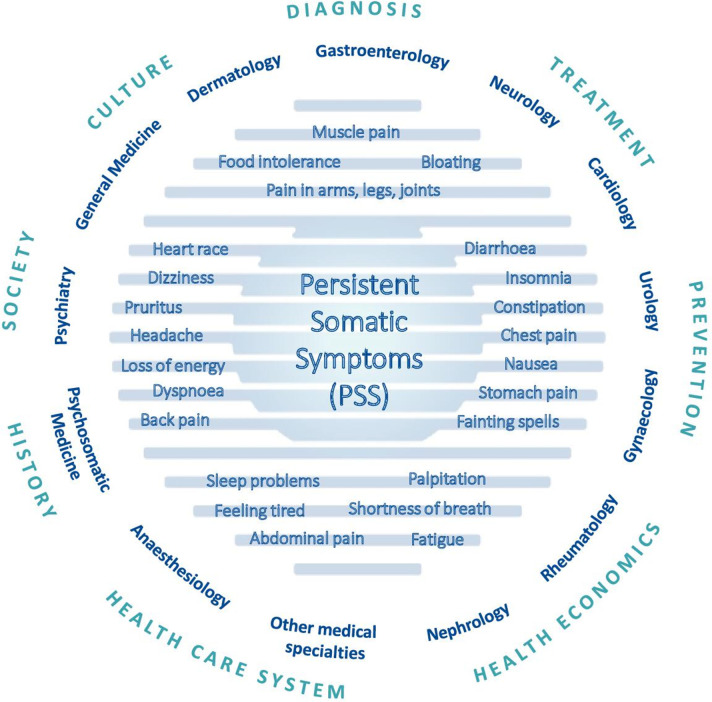
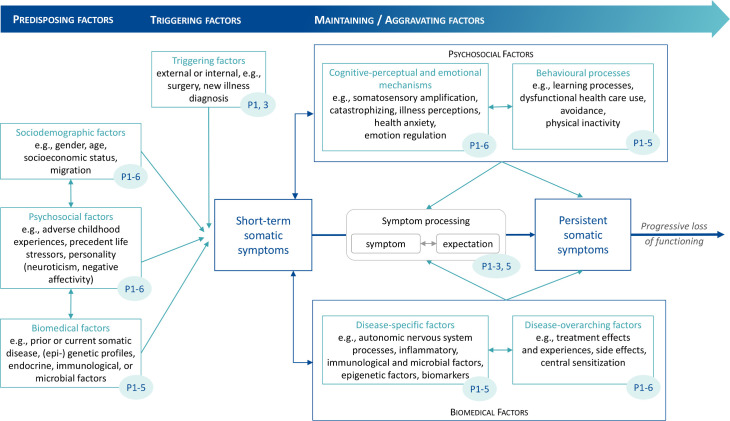
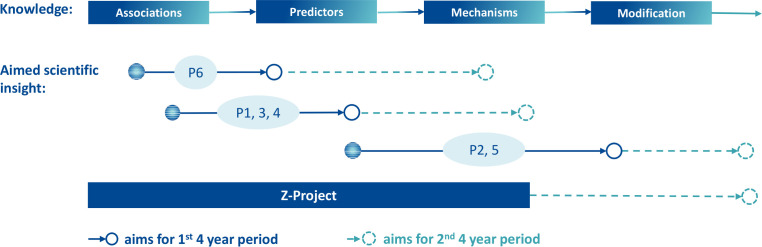
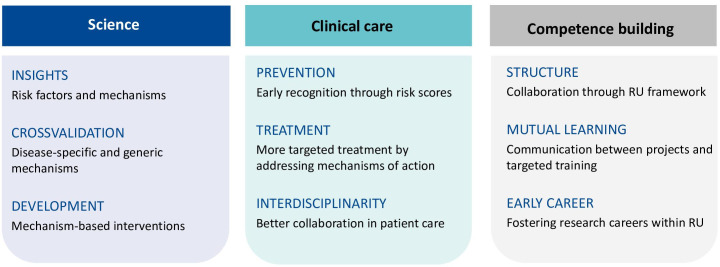
Introduction: Persistent somatic symptoms (PSS) are highly prevalent in all areas of medicine; they are disabling for patients and costly for society. The subjective symptom burden often correlates poorly with the underlying disease severity, and patients’ needs for effective treatment are far from being met. Initial evidence indicates that, in addition to disease-specific pathophysiological processes, psychological factors such as expectations, somatosensory amplification and prior illness experiences contribute to symptom persistence in functional as well as in somatic diseases. However, prospective studies investigating the transition from acute to chronic somatic symptoms, integrating pathophysiological, psychological and social factors, are scarce. A better understanding of the multifactorial mechanisms of symptom persistence is crucial for developing targeted mechanism-based interventions for effective prevention and treatment of PSS. Thus, the overall aim of the interdisciplinary SOMACROSS research unit is to identify generic and disease-specific risk factors and aetiological mechanisms of symptom persistence across a range of diseases. Methods and analysis: Seven projects will investigate risk factors and mechanisms of symptom persistence in a total of 3916 patients across 10 medical conditions. All study designs are prospective and share common assessment points, core instruments and outcome variables to allow comparison and validation of results across projects and conditions. Research will focus on the identification of generic and disease-specific mechanisms associated with unfavourable symptom course. The development of a multivariate prediction model will facilitate the understanding of the course of PSS across diseases. Ethics and dissemination: All individual SOMACROSS studies were approved by the ethics committees of the Medical Chambers Hamburg and Münster, Germany. Findings will be disseminated through peer-reviewed publications, scientific conferences and the involvement of relevant stakeholders, patients and the lay public. This interdisciplinary research unit will fundamentally contribute to earlier recognition of patients at risk, and to the development of prevention and tailored treatment concepts for PSS.
Overview
The claims and statistics of this paper haven’t been checked yet.
Free: it reads the open-access text and checks the first 5 claims that cite a source we can check. Create a free account to check every claim.
Integrity signals
Registry
Cites
Statistics
Figures
Verification
Claims the paper makes
The claims and statistics of this paper haven’t been checked yet.
Free: it reads the open-access text and checks the first 5 claims that cite a source we can check. Create a free account to check every claim.
Claims other papers make about this one
Each is checked against this paper’s own text: does it say what the citing paper says it does?
The source backs part of the claim, not all of it — or backs it for a different population, condition or comparison.
In the citing paper
“Multiple biological, psychological, and social risk factors contribute to the persistence of somatic symptoms”
From Persistent physical symptoms: definition, genesis, and management (2024) · cites this paper as [1]
Experimental — accuracy not yet measuredThe source backs part of the claim, not all of it — or backs it for a different population, condition or comparison.
In the citing paper
“new models for understanding risk factors and mechanisms of somatic symptom persistence have been developed”
From Persistent physical symptoms: definition, genesis, and management (2024) · cites this paper as [1]
Experimental — accuracy not yet measuredThe cited source says what the claim attributes to it.
In the citing paper
“Causal mechanisms of persistent physical symptoms appear to be complex and multifactorial”
From Persistent physical symptoms: definition, genesis, and management (2024) · cites this paper as [1]
The cited source says what the claim attributes to it.
In the citing paper
“Current evidence on the development of persistent physical symptoms is best represented by biopsychosocial vulnerability-stress models”
From Persistent physical symptoms: definition, genesis, and management (2024) · cites this paper as [1]
The cited source says what the claim attributes to it.
In the citing paper
“Neither purely biomedical nor purely psychological models are sufficient”
From Persistent physical symptoms: definition, genesis, and management (2024) · cites this paper as [1]
Self-check
Percentages, sums and reported differences re-computed from the paper’s own numbers.
The self-check needs the paper’s full text.
Citations
Cites
Diagnostic and Statistical Manual of Mental Disorders
American Psychiatric Association (2013) · doi:10.1176/appi.books.9780890425596 · Cited by 116,369
Kroenke, K., Spitzer, R. L., Williams, J. B. W., & Löwe, B. (2010) · General Hospital Psychiatry · doi:10.1016/j.genhosppsych.2010.03.006 · Cited by 4,057
Self-citationThe PHQ-15: Validity of a New Measure for Evaluating the Severity of Somatic Symptoms
Kroenke, K., Spitzer, R. L., & Williams, J. B. W. (2002) · Psychosomatic Medicine · doi:10.1097/00006842-200203000-00008 · Cited by 3,298
Psychosomatic medicine in Germany: more timely than ever
Zipfel, S., Herzog, W., Kruse, J., & Henningsen, P. (2016) · Psychotherapy and Psychosomatics · doi:10.1159/000447701 · Cited by 2,323
The American Psychiatric Association (APA)
Strentz, T. (2017) · Psychological Aspects of Crisis Negotiation · doi:10.1201/9781315150581-3 · Cited by 1,850
The potential role of hypocortisolism in the pathophysiology of stress-related bodily disorders
Heim, C., Ehlert, U., & Hellhammer, D. H. (2000) · Psychoneuroendocrinology · doi:10.1016/s0306-4530(99)00035-9 · Cited by 1,688
Neuroinflammation and Central Sensitization in Chronic and Widespread Pain
Ji, R.-R., Nackley, A., Huh, Y., Terrando, N., & Maixner, W. (2018) · Anesthesiology · doi:10.1097/aln.0000000000002130 · Cited by 1,630
Nonspecific medication side effects and the nocebo phenomenon
Barsky, A. J. (2002) · JAMA · doi:10.1001/jama.287.5.622 · Cited by 784
Pain Catastrophizing and Kinesiophobia: Predictors of Chronic Low Back Pain
Picavet, H. S. J. (2002) · American Journal of Epidemiology · doi:10.1093/aje/kwf136 · Cited by 744
The fear-avoidance model of pain
Vlaeyen, J. W. S., Crombez, G., & Linton, S. J. (2016) · Pain · doi:10.1097/j.pain.0000000000000574 · Cited by 716
Research works printed but not linked: 1
- Schappert SM, Rechtsteiner EA. Ambulatory medical care utilization estimates for 2007. Vital and health statistics Series 13, Data from the National Health Survey; 2011: 1– 38. 21614897
Cited by
Persistent physical symptoms: definition, genesis, and management
Löwe, B., Toussaint, A., Rosmalen, J. G. M., Huang, W.-L., Burton, C., Weigel, A., Levenson, J. L., & Henningsen, P. (2024) · The Lancet · doi:10.1016/s0140-6736(24)00623-8 · Cited by 280
Self-citationPsychological factors associated with Long COVID: a systematic review and meta-analysis
Engelmann, P., Reinke, M., Stein, C., Salzmann, S., Löwe, B., Toussaint, A. C., & Mora, M. C. S. (2024) · EClinicalMedicine · doi:10.1016/j.eclinm.2024.102756 · Cited by 106
Self-citationSmakowski, A., Hüsing, P., Völcker, S., Löwe, B., Rosmalen, J. G. M., Mora, M. C. S., & Toussaint, A. C. (2024) · Journal of Psychosomatic Research · doi:10.1016/j.jpsychores.2024.111608 · Cited by 105
Self-citationWhy the hypothesis of psychological mechanisms in long COVID is worth considering
Lemogne, C., Gouraud, C., Pitron, V., & Ranque, B. (2023) · Journal of Psychosomatic Research · doi:10.1016/j.jpsychores.2022.111135 · Cited by 94
Engelmann, P., Löwe, B., Brehm, T. T., Weigel, A., Ullrich, F., Addo, M. M., Wiesch, J. S. Z., Lohse, A. W., & Toussaint, A. C. (2022) · Frontiers in Psychology · doi:10.3389/fpsyg.2022.1022203 · Cited by 46
“The congruence between risk factors described in overarching disease models for the etiology of PSS (Henningsen et al., 2018; Löwe et al., 2022) and those that have been found for Long COVID so far suggests the investigation of potential psychological predictors of worsening of somatic symptoms over the course of the…”
BackgroundResultSelf-citationThe overlooked burden of persistent physical symptoms: a call for action in European healthcare
Toussaint, A., Weigel, A., Löwe, B., Blanch, J., Bogaerts, K., Boye, B., Burton, C., Cosci, F., Engelmann, P., Fink, P., et al. (2025) · The Lancet Regional Health - Europe · doi:10.1016/j.lanepe.2024.101140 · Cited by 44
“Panel 5 outlines the need for high-quality research and offers suggestions for achieving it.”
InfluentialSelf-citationSpeyer, É., Tu, C., Zee, J., Sesso, R., Lopes, A. A., Moutard, E., Omorou, A. Y., Stengel, B., Finkelstein, F. O., Pecoits-Filho, R., et al. (2024) · American Journal of Kidney Diseases · doi:10.1053/j.ajkd.2024.06.011 · Cited by 41
Burton, C., Mooney, C., Sutton, L., White, D., Dawson, J., Neilson, A. R., Rowlands, G., Thomas, S., Horspool, M., Fryer, K., et al. (2024) · The Lancet · doi:10.1016/s0140-6736(24)00700-1 · Cited by 39
Hüsing, P., Smakowski, A., Löwe, B., Kleinstäuber, M., Toussaint, A. C., & Mora, M. C. S. (2023) · Frontiers in Psychiatry · doi:10.3389/fpsyt.2023.1142484 · Cited by 32
Self-citationMcGhie-Fraser, B., Lucassen, P. L., Ballering, A., Abma, I. L., Brouwers, E. P. M., van Dulmen, S., & Hartman, T. O. (2023) · Journal of Psychosomatic Research · doi:10.1016/j.jpsychores.2023.111161 · Cited by 24
Leitlinie S1 für das Management postviraler Zustände am Beispiel Post-COVID-19
Rabady, S., Hoffmann, K., Aigner, M., Altenberger, J., Brose, M., Costa, U. M., Denk‐Linnert, D., Gruber, S., Götzinger, F., Helbok, R., et al. (2023) · Wiener klinische Wochenschrift · doi:10.1007/s00508-023-02242-z · Cited by 24
Mund, M., Uhlenbusch, N., Rillig, F., Weiler‐Normann, C., Herget, T., Kubisch, C., Löwe, B., & Schramm, C. (2023) · Orphanet Journal of Rare Diseases · doi:10.1186/s13023-023-02669-7 · Cited by 22
“The term comprises different bodily complaints like dizziness, palpitations, diarrhoea, pain, fatigue, and many more [16].”
BackgroundSelf-citationPetzke, T. M., Elspaß, L., Köteles, F. G., den Bergh, O. V., & Witthöft, M. (2024) · Journal of Psychosomatic Research · doi:10.1016/j.jpsychores.2024.111634 · Cited by 21
Carvalho, S. A., Eulálio, I., & Guiomar, R. (2025) · Journal of Psychosomatic Research · doi:10.1016/j.jpsychores.2025.112205 · Cited by 19
Kustra-Mulder, A., Löwe, B., & Weigel, A. (2023) · Journal of Psychosomatic Research · doi:10.1016/j.jpsychores.2023.111485 · Cited by 18
Self-citationKustra-Mulder, A., Liebau, M., Grewer, G., Rosmalen, J. G. M., Cosci, F., Rymaszewska, J., Löwe, B., & Weigel, A. (2024) · Journal of Psychosomatic Research · doi:10.1016/j.jpsychores.2024.111695 · Cited by 18
Self-citationReconsidering Persistent Somatic Symptoms: A Transdiagnostic and Transsymptomatic Approach
Löwe, B., Zipfel, S., den Bergh, O. V., & Henningsen, P. (2024) · Psychotherapy and Psychosomatics · doi:10.1159/000541741 · Cited by 18
Self-citationFryer, K., Sanders, T., Greco, M., Mooney, C., Deary, V., & Burton, C. (2023) · Patient Education and Counseling · doi:10.1016/j.pec.2023.107870 · Cited by 17
Respiratory dysfunction in persistent somatic symptoms: A systematic review of observational studies
Niwa, S., Fila-Witecka, K., den Bergh, O. V., & Rymaszewska, J. (2024) · Journal of Psychosomatic Research · doi:10.1016/j.jpsychores.2024.111607 · Cited by 17
Implementing the Biopsychosocial Model in Clinical Medicine: A Tribute to Giovanni Fava
Zipfel, S., Löwe, B., Giel, K. E., Friederich, H., & Henningsen, P. (2022) · Psychotherapy and Psychosomatics · doi:10.1159/000528451 · Cited by 18
Self-citationExplanation for symptoms and biographical repair in a clinic for persistent physical symptoms
Sanders, T., Fryer, K., Greco, M., Mooney, C., Deary, V., & Burton, C. D. (2024) · SSM - Qualitative Research in Health · doi:10.1016/j.ssmqr.2024.100438 · Cited by 16
Löwe, B., Nestoriuc, Y., Andresen, V., Vettorazzi, E., Zapf, A., Hübener, S., Maehder, K., Peters, L., & Lohse, A. W. (2022) · BMJ Open · doi:10.1136/bmjopen-2021-059529 · Cited by 15
Self-citationBeliefs about emotions predict psychological stress related to somatic symptoms
Reininger, K. M., Biel, H. M., Hennig, T., Zitzmann, S., Weigel, A., Spitzer, C., Toussaint, A. C., & Löwe, B. (2023) · British Journal of Clinical Psychology · doi:10.1111/bjc.12438 · Cited by 14
Self-citationLoesken, C., Maehder, K., Buck, L., Hartl, J., Löwe, B., Schramm, C., & Toussaint, A. C. (2023) · BMC Gastroenterology · doi:10.1186/s12876-023-02645-2 · Cited by 13
“Funding This study is carried out within the framework of Research Unit 5211 (FOR 5211) ’Persistent SOMAtic Symptoms ACROSS Diseases: From Risk Factors to Modification (SOMACROSS)’, funded by the German Research Foundation (Deutsche Forschungsgemeinschaft, DFG).”
BackgroundSelf-citationKnesebeck, O. V. D., Barbek, R., & Makowski, A. C. (2023) · BMJ Open · doi:10.1136/bmjopen-2022-070635 · Cited by 13
Weigel, A., Hüsing, P., Junge, M., & Löwe, B. (2023) · Journal of Psychosomatic Research · doi:10.1016/j.jpsychores.2023.111419 · Cited by 13
Self-citationEngelmann, P., Büchel, C., Frommhold, J., Klose, H. F. E., Lohse, A. W., Maehder, K., Nestoriuc, Y., Scherer, M., Suling, A. I., Toussaint, A. C., et al. (2023) · BJPsych Open · doi:10.1192/bjo.2023.591 · Cited by 13
“…COVID symptoms The above described risk factors for Long COVID are congruent with the risk factors described in the cross-disease SOMACROSS model for the aetiology of PSS. 9 Thus, we assume that this cross-disease biopsychosocial model for symptom persistence might also be applicable to Long COVID.”
BackgroundMethodInfluentialSelf-citationMora, M. C. S., Jessen, B., Schmidt‐Lauber, C., Löwe, B., Rösch, M., Dannemeyer, H., Gloy, J., den Bergh, O. V., & Huber, T. B. (2022) · BMJ Open · doi:10.1136/bmjopen-2022-067821 · Cited by 12
Self-citationMooney, C., White, D. A., Dawson, J., Deary, V., Fryer, K., Greco, M., Horspool, M. J., Neilson, A. R., Rowlands, G., Sanders, T., et al. (2022) · BMJ Open · doi:10.1136/bmjopen-2022-066511 · Cited by 12
“10 13–15 Disturbed interoception, or more specifically disturbed predictive interoceptive coding, 15 provides a fundamental explanation for PPS which can then be elaborated in a number of psychological 16 and biopsychosocial 17 models for persistent symptoms.”
BackgroundSalzmann, S., de Vroege, L., Engelmann, P., Fink, P., Fischer, S., Frisch, S., Gormsen, L. K., Hüfner, K., Kop, W. J., Köteles, F. G., et al. (2025) · BMC Medicine · doi:10.1186/s12916-025-03927-0 · Cited by 12
“Moreover, existing conceptual approaches and frameworks argue for the relevance of psychosocial factors in the development and persistence of somatic symptoms in general [13–15].”
Self-citationHenningsen, P., & Löwe, B. (2025) · Journal of Psychosomatic Research · doi:10.1016/j.jpsychores.2025.112161 · Cited by 12
Self-citationSchneider, G., Ständer, S., Kahnert, S., Pereira, M. P., Meß, C., Huck, V., Agelopoulos, K., Frank, G., & Schneider, S. W. (2022) · BMJ Open · doi:10.1136/bmjopen-2022-060811 · Cited by 11
Self-citationToussaint, A. C., Buck, L., Hartl, J., Löwe, B., & Schramm, C. (2022) · BMJ Open · doi:10.1136/bmjopen-2022-061419 · Cited by 11
Self-citationBarbek, R., Toussaint, A. C., Löwe, B., & Knesebeck, O. V. D. (2024) · Scientific Reports · doi:10.1038/s41598-024-54042-8 · Cited by 11
“SOC)” have been described in detail in the published study protocols 35,37 .”
BackgroundSelf-citationTreufeldt, H., Burton, C. D., & McGhie-Fraser, B. (2024) · Journal of Psychosomatic Research · doi:10.1016/j.jpsychores.2024.111828 · Cited by 11
Alitabar, S. H. S., & Goli, F. (2024) · International journal of body, mind and culture · doi:10.22122/ijbmc.v11i3.689 · Cited by 11
McGhie-Fraser, B., McLoughlin, C., Lucassen, P. L., Ballering, A., van Dulmen, S., Brouwers, E. P. M., Stone, J., & Hartman, T. O. (2024) · Journal of Psychosomatic Research · doi:10.1016/j.jpsychores.2024.111689 · Cited by 11
Nestoriuc, Y., Pauls, F., Blankenburg, K., Hahn, S., Wittenbecher, H., Löwe, B., & Toussaint, A. C. (2024) · BMJ Open · doi:10.1136/bmjopen-2023-083500 · Cited by 10
Self-citationHahn, S., Nestoriuc, Y., Kirchhof, S., Toussaint, A. C., Löwe, B., & Pauls, F. (2025) · BMJ Open · doi:10.1136/bmjopen-2024-091032 · Cited by 8
Self-citationPublic knowledge and beliefs about the irritable bowel syndrome - results from the SOMA.SOC study
Knesebeck, O. V. D., Löwe, B., Lüdecke, D., Bobardt, J. S., & Barbek, R. (2024) · BMC Public Health · doi:10.1186/s12889-024-17784-8 · Cited by 8
“SOC) which is embedded in the Research Unit 5211 “Persistent SOMAtic Symptoms ACROSS Diseases: From Risk Factors to Modification (SOMACROSS)” [24].”
MethodSelf-citationValidation of the Persistent Somatic Symptom Stigma Scale for Healthcare Professionals
McGhie-Fraser, B., Ballering, A., Lucassen, P. L., McLoughlin, C., Brouwers, E. P. M., Stone, J., Hartman, T. O., & van Dulmen, S. (2024) · Journal of Clinical Epidemiology · doi:10.1016/j.jclinepi.2024.111505 · Cited by 8
Rogge, A. A., Mukowski-Kickhöfel, R., Boeker, M., Budde, K., Debertshäuser, T., Dugas, M., Erim, Y., Friederich, H., Ganslandt, T., Giel, K. E., et al. (2025) · Journal of Healthcare Informatics Research · doi:10.1007/s41666-025-00187-8 · Cited by 8
Self-citationPeters, L., Matysiak, A., Hübener, S., Lohse, A. W., Nestoriuc, Y., Maehder, K., & Löwe, B. (2025) · Journal of Psychosomatic Research · doi:10.1016/j.jpsychores.2025.112395 · Cited by 7
Self-citationDietsche, S., Weeren, F., Meinlschmidt, G., Toussaint, A. C., Baenteli, I., Bahmane, S., Frick, A., Karpf, C., Studer, A., Wyss, K., et al. (2026) · General Hospital Psychiatry · doi:10.1016/j.genhosppsych.2025.12.023 · Cited by 7
Self-citationClifford, C., Twerenbold, R., Hartel, F., Löwe, B., & Kohlmann, S. (2024) · Journal of Psychosomatic Research · doi:10.1016/j.jpsychores.2024.111848 · Cited by 7
Self-citationFunk, M., Reinke, M., Löwe, B., & Engelmann, P. (2025) · PLoS ONE · doi:10.1371/journal.pone.0317905 · Cited by 7
“COV is associated with the interdisciplinary research unit SOMACROSS (RU 5211) [10].”
Self-citationHuang, W.-L., Chiu, Y., Löwe, B., Wu, C., & Liao, S. (2025) · Journal of Affective Disorders · doi:10.1016/j.jad.2025.119521 · Cited by 7
Self-citationKustra-Mulder, A., McGhie-Fraser, B., Petzke, T. M., Fila-Witecka, K., Rosmalen, J. G. M., Cosci, F., Löwe, B., & Weigel, A. (2025) · BMC Health Services Research · doi:10.1186/s12913-025-12986-1 · Cited by 7
“Persistent Somatic Symptoms (PSS) are subjectively distressing physical complaints that persist on most days for several months or more, regardless of their cause [1, 2].”
Self-citationPerceived discrimination in fatigue: a qualitative interview study in the SOMA.SOC project
Barbek, R., Makowski, A. C., & Knesebeck, O. V. D. (2025) · Frontiers in Sociology · doi:10.3389/fsoc.2025.1528312 · Cited by 6
Mamo, N., Kustra-Mulder, A., Hanssen, D. J. C., Weigel, A., Tak, L. M., Hartman, T. O., Löwe, B., & Rosmalen, J. G. M. (2025) · BMJ Open · doi:10.1136/bmjopen-2024-097593 · Cited by 6
Self-citationWhy Symptom Burden in Non-Dialysis CKD Matters
Mora, M. C. S., Jessen, B., & Huber, T. B. (2024) · American Journal of Kidney Diseases · doi:10.1053/j.ajkd.2024.07.005 · Cited by 6
Self-citationBarbek, R., Lüdecke, D., & Knesebeck, O. V. D. (2024) · Frontiers in Public Health · doi:10.3389/fpubh.2024.1388773 · Cited by 5
Barends, H., van der Horst, H. E., van der Wouden, J. C., Dessel, N. C.-V., Dekker, J., & Hoekstra, T. (2025) · BMJ Open · doi:10.1136/bmjopen-2023-083276 · Cited by 5
Kahnert, S., Kämpfer, N., Ramm, M., Geiser, F., & Conrad, R. (2025) · Journal of Psychosomatic Research · doi:10.1016/j.jpsychores.2025.112381 · Cited by 5
Quigley, N., Mistry, S. G., Vasant, D. H., & Vasani, S. S. (2023) · BMJ Open Gastroenterology · doi:10.1136/bmjgast-2022-000883 · Cited by 5
Rôle des facteurs psychologiques dans l’affection post-COVID-19
Lemogne, C., & Ranque, B. (2023) · Bulletin de l Académie Nationale de Médecine · doi:10.1016/j.banm.2023.05.001 · Cited by 5
Knesebeck, O. V. D., & Barbek, R. (2023) · Frontiers in Psychology · doi:10.3389/fpsyg.2023.1213721 · Cited by 5
“Vignettes were developed with the input of clinicians (colleagues of the SOMACROSS research unit, i.e., specialists from psychosomatic, general and internal medicine) considering typical symptoms described in the International Classification of Diseases (DIMDI, 2019).”
BackgroundInfluentialFränkl, E., Hasenbank, N., Dumröse, K., Löwe, B., & Kohlmann, S. (2023) · Health Expectations · doi:10.1111/hex.13931 · Cited by 5
Self-citationKleinstäuber, M., Diefenbach, M. A., & Rief, W. (2023) · Journal of Psychosomatic Research · doi:10.1016/j.jpsychores.2023.111580 · Cited by 5
Maehder, K., Peters, L., Hübener, S., Matysiak, A., Huber, S., Toussaint, A. C., Zapf, A., Vettorazzi, E., Weber, P., Stahlmann, K., et al. (2025) · EClinicalMedicine · doi:10.1016/j.eclinm.2025.103663 · Cited by 4
Self-citationEngelmann, P., Löwe, B., & Hüsing, P. (2022) · Internet Interventions · doi:10.1016/j.invent.2022.100582 · Cited by 4
Self-citationWoo, M. S., Mayer, C., Brehm, T. T., Andersen, G., Weigel, A., Löwe, B., Lohse, A. W., Addo, M. M., Gerloff, C. P., Knobloch, J. K. ‐., et al. (2023) · Brain Communications · doi:10.1093/braincomms/fcad092 · Cited by 4
“cific, highly prevalent in the general population and could be exacerbated by the pandemic itself with its fundamental impact on daily living.(54) Furthermore, Long COVID is current-”
BackgroundSelf-citationBresnick, S. D., Faasse, K., & McGuire, P. (2025) · Plastic & Reconstructive Surgery Global Open · doi:10.1097/gox.0000000000006735 · Cited by 4
“18 Patients who already have high levels of somatic symptoms present or are at high risk for developing SSD based on predisposing factors may develop SSD following breast implant surgery.”
Awakening the sense of the possible: the Symptoms Clinic as liminal affective technology
Greco, M., Deary, V., Fryer, K., Sanders, T., & Burton, C. D. (2025) · Social Science & Medicine · doi:10.1016/j.socscimed.2025.118395 · Cited by 4
Petzke, T. M., Köteles, F. G., den Bergh, O. V., & Witthöft, M. (2025) · Psychosomatic Medicine · doi:10.1097/psy.0000000000001413 · Cited by 4
Fiedorowicz, J. G., & Löwe, B. (2022) · Journal of Psychosomatic Research · doi:10.1016/j.jpsychores.2022.110995 · Cited by 4
Self-citationIdiopathic environmental intolerances
den Bergh, O. V., Pitron, V., Nordin, S., & Witthöft, M. (2023) · Elsevier eBooks · doi:10.1016/b978-0-12-824315-2.00595-9 · Cited by 4
Hybelius, J., Hammarberg, S. A. W., Salomonsson, S., Wachtler, C., Epstein, M., Olsson, A., Strand, E., Winter, L. S., Åkerlund, T., Björkander, D., et al. (2025) · Psychological Medicine · doi:10.1017/s0033291725101244 · Cited by 3
“…(i.e., the tendency to respond strongly to and engage in behaviors contingent on somatic symptoms), including hypervigilance and avoidance behaviors, are common across subtypes of persistent physical symptoms (Löwe et al., 2022),a transdiagnostic treatmentapproach could bea viable option.”
Maatkamp, M., Derksen, H. J., Paarlberg, A. J. C., Joosten, J. P. A., & Rovers, J. J. E. (2025) · Psychoanalytic Psychotherapy · doi:10.1080/02668734.2025.2573249 · Cited by 3
“…is used to describe all of the distressing somatic complaints, irrespective of their aetiology, that are present on most days for at least several months, and in which biological, psychological and social factors play a role in maintaining these somatic complaints (Löwe, Andresen, et al., 2022).”
Hahn, S., Pauls, F., Wittenbecher, H., Maehder, K., Löwe, B., Blankenburg, K., Toussaint, A. C., & Nestoriuc, Y. (2026) · Journal of Psychosomatic Research · doi:10.1016/j.jpsychores.2026.112546 · Cited by 3
Self-citationSystemic Symptoms Associated With Breast Implants: A Psychological Study of Beliefs and Emotions
Glicksman, C. A., McGuire, P., Barnes, K., Mora, M. C. S., & Faasse, K. (2025) · Aesthetic Surgery Journal · doi:10.1093/asj/sjaf125 · Cited by 3
Engelmann, P., Busmann, M., Löwe, B., & Hüsing, P. (2025) · Journal of Psychosomatic Research · doi:10.1016/j.jpsychores.2025.112500 · Cited by 3
Self-citationKanari, F. N., Alilou, M. M., Nemati, F., & Bayrami, M. (2024) · پویایی روانشناختی در اختلالهای خلقی. · doi:10.61838/kman.pdmd.3.2.4 · Cited by 3
Characteristics and predictors of persistent somatic symptoms in patients with cardiac disease
Clifford, C., Löwe, B., & Kohlmann, S. (2024) · Scientific Reports · doi:10.1038/s41598-024-76554-z · Cited by 3
“Previous research has indicated that subjective symptom burden is not directly associated to the severity of the disease itself 10 .”
BackgroundMethodResultInfluentialSelf-citationBuck, L., Herzberg, J., Lenaert, B., Löwe, B., Hartl, J., Schramm, C., & Toussaint, A. C. (2025) · Scientific Reports · doi:10.1038/s41598-025-16191-2 · Cited by 2
“LIV study is part of the interdisciplinary research unit SOMACROSS (RU 5211) entitled ’Persistent SOMAtic Symptoms ACROSS Diseases: From Risk Factors to Modification’ 57 .”
Self-citationLong-term conditions and symptom-based disorders – A community perspective
Barker, C. (2026) · Future Healthcare Journal · doi:10.1016/j.fhj.2026.100499 · Cited by 2
Köbler, P., Wilfert, L., Dechêne, A., Krauss-Köstler, E. K., Waller, C., & Stein, B. (2026) · BMC Psychiatry · doi:10.1186/s12888-026-08222-7 · Cited by 2
Toussaint, A. C., Hartl, J., Buck, L., Löwe, B., Stahlmann, K., Vettorazzi, E., & Schramm, C. (2026) · Journal of Psychosomatic Research · doi:10.1016/j.jpsychores.2026.112931 · Cited by 2
Self-citationCathébras, P. J., Ranque, B., & Lemogne, C. (2024) · La Revue de Médecine Interne · doi:10.1016/j.revmed.2024.08.005 · Cited by 2
Neilson, A. R., Mooney, C., Sutton, L., White, D. A., Dawson, J., Rowlands, G., Thomas, R. E., Woodward, J., Deary, V., & Burton, C. D. (2024) · Value in Health · doi:10.1016/j.jval.2024.09.015 · Cited by 2
Royeck, S., Meß, C., Weigel, A., Löwe, B., Toussaint, A. C., Schramm, C., Mora, M. C. S., Huber, T. B., Zeidler, C., Witte, F., et al. (2025) · Dermatology and Therapy · doi:10.1007/s13555-025-01539-3 · Cited by 2
“Supple-mental psychological interventions (e.g. stress coping interventions) may be beneficial in reducing psychological distress and improving overall QoL and to establish a patient-centred, holistic approach [13, 14, 16, 40].”
Self-citationFiedorowicz, J. G., Guthrie, E., & Löwe, B. (2023) · Journal of Psychosomatic Research · doi:10.1016/j.jpsychores.2023.111497 · Cited by 2
Self-citationPsychiatric aspect of persistent somatic symptoms after COVID-19: A systematic review
Setyanagara, A., Ulya, Z., Yudhantara, D. S., & Putri, F. R. (2023) · World Journal of Advanced Research and Reviews · doi:10.30574/wjarr.2023.20.3.2555 · Cited by 1
“This will cause the patient with PSS to experience disruptions in their daily lives in physical, mental, and material ways, which can reduce their quality of life [1,2,4].”
Abasi, I., Ghapanchi, A., Toussaint, A. C., Bitarafan, M., Zarabi, H., Derakhshan, F. S., Derakhshan, M. K., Banihashem, S., & Derakhshan, M. A. (2024) · Current Psychology · doi:10.1007/s12144-024-06973-8 · Cited by 2
“Somatic symptoms are frequently observed in patients with various medical conditions (Creed, 2011; Kroenke et al., 2010, 2013; Löwe et al., 2022) and psychiatric disorders (Bekhuis et al., 2015 ; Chen et al., 2022 ; Haftgoli et al., 2010).”
Self-citationStigmatisation of people with persistent somatic symptoms by healthcare professionals
McGhie-Fraser, B. (2025) · Radboud University Press eBooks · doi:10.54195/9789465150048 · Cited by 1
Hüsing, P., & Löwe, B. (2025) · Verhaltenstherapie · doi:10.1159/000542766 · Cited by 1
“Henningsen et al. [2018a] entwickelten ein ätiologisches Modell zur Entstehung und Aufrechterhaltung anhaltender Körperbeschwerden, das in weiteren Arbeiten, u.a. von der Arbeitsgruppe von Löwe, weiterentwickelt und empirisch überprüft wird [Löwe et al., 2022; Löwe, 2024].”
InfluentialSelf-citationCan somatic symptom disorder be an iatrogenic disease?
Horn, M., Fovet, T., Sobanski, V., & Amad, A. (2025) · BMC Psychiatry · doi:10.1186/s12888-025-06918-w · Cited by 1
“While this vulnerability-stress model is supported by several authors [2–6], there is a lack of prospective data demonstrating the transition from acute to chronic somatic symptoms while integrating pathophysiological, psychological, and social factors.”
Niwa, S., Fila-Pawlowska, K., Rymaszewska, M., Gebarski, H., den Bergh, O. V., & Rymaszewska, J. (2025) · Journal of Psychosomatic Research · doi:10.1016/j.jpsychores.2025.112342 · Cited by 1
Jessen, B., Christian, S.-L., Huber, T. B., Löwe, B., den Bergh, O. V., Witthöft, M., & Mora, M. C. S. (2025) · Journal of Psychosomatic Research · doi:10.1016/j.jpsychores.2025.112508 · Cited by 1
Self-citationPeters, L., Matysiak, A., Hübener, S., Lohse, A. W., Löwe, B., & Maehder, K. (2026) · General Hospital Psychiatry · doi:10.1016/j.genhosppsych.2026.03.004 · Cited by 1
Self-citationWittenbecher, H., Hahn, S., Nestoriuc, Y., Blankenburg, K., Strahl, A., Pauls, F., Maehder, K., Löwe, B., & Toussaint, A. C. (2026) · Psychosomatic Medicine · doi:10.1097/psy.0000000000001483 · Cited by 1
“Participants completed the questionnaire core set of the RU SOMACROSS (for a detailed overview, see the study protocol), 18 along with study-specific questionnaires.”
Self-citationHüsing, P., Huang, W., Maehder, K., Pauls, F., Nestoriuc, Y., Löwe, B., Blankenburg, K., Schmitz, S., Hahn, S., & Toussaint, A. C. (2026) · Journal of Psychosomatic Research · doi:10.1016/j.jpsychores.2026.112758 · Cited by 1
Self-citationHahn, S., Toussaint, A. C., Wittenbecher, H., Löwe, B., Blankenburg, K., Pauls, F., & Nestoriuc, Y. (2026) · International Journal of Behavioral Medicine · doi:10.1007/s12529-026-10482-2 · Cited by 1
Self-citationVangelova‐Korpinen, V., Liira, H., Kurki, S., Sainio, M. A., Malmivaara, A. V., Kanerva, M. J., Stenberg, J., Varonen, M., Venäläinen, M. S., Vuorela, P., et al. (2025) · PLoS ONE · doi:10.1371/journal.pone.0316169 · Cited by 1
Li, S., Zhou, Z., Cai, F., Cheng, L., Du, W., Bai, H., Li, Q., Wang, W., & Zhang, J. (2024) · Research Square · doi:10.21203/rs.3.rs-4233227/v1 · Cited by 1
Emotions and regulatory strategies in somatic and mindfulness processes
Micheli, N. (2023) · theses.fr (ABES) · doi:10.70675/cf425206z41acz4f4dzac58z555062343502 · Cited by 1
Kazi, K., Ali, S. M., Selby, D., McBeth, J., van der Veer, S. N., & Dixon, W. G. (2023) · Journal of Multimorbidity and Comorbidity · doi:10.1177/26335565221150129
Fatigue: Physiology and Pathology
(2024) · Frontiers research topics · doi:10.3389/978-2-8325-4471-6
Hasenbank, N., Buck, L., Maehder, K., Hartl, J., Löwe, B., Schramm, C., & Toussaint, A. C. (2024) · PPmP - Psychotherapie · Psychosomatik · Medizinische Psychologie · doi:10.1055/a-2434-6837
“LIV Studie [24]. einschlusskriterien Ausschlusskriterien Die Auswertung folgte einer hybriden Form des induktiven (Bottom-up) und deduktiven (Top-down) Vorgehens.”
Self-citation
Metadata
- Authors
- Löwe, B., Andresen, V., Van den Bergh, O., Huber, T. B., von dem Knesebeck, O., Lohse, A. W., Nestoriuc, Y., Schneider, G., Schneider, S. W., Schramm, C., Ständer, S., Vettorazzi, E., Zapf, A., Shedden-Mora, M., & Toussaint, A.
- Affiliations
- University Medical Center Hamburg-Eppendorf (DE)
- Israelitisches Krankenhaus (DE)
- Research Group on Health Psychology, University of Leuven, Leuven, Belgium
- Medical Sociology, University Medical Center Hamburg-Eppendorf, Hamburg, Germany
- Helmut Schmidt University (DE)
- University Hospital Münster (DE)
- University of Münster (DE)
- Department of Psychosomatic Medicine and Psychotherapy, University Medical Center Hamburg-Eppendorf, Hamburg, Germany
- Corresponding author
- Löwe, Bernd
- ORCID
- Venue
- BMJ Open
- Publisher
- BMJ
- Published
- 2022-01
- Volume
- 12
- Issue
- 1
- Pages
- e057596
- ISSN
- 2044-6055 (ISSN-L)
- PMC
- PMC8785206
- OpenAlex
- W4206937782
- Cited by
- 121
- References
- 80
- Citations by year
- 2026: 21 · 2025: 39 · 2024: 29 · 2023: 23 · 2022: 9
- FWCI
- 16.29
- Type
- journal article
- Language
- en
- Open access
- gold
- doi.org
- Licence
- Locations
- BMJ Open (publishedVersion, cc-by-nc)
- PubMed Central (publishedVersion, cc-by-nc)
- PubMed (publishedVersion)
- Lirias (submittedVersion, other-oa)
- DOAJ (DOAJ: Directory of Open Access Journals) (submittedVersion, cc-by-sa)
- Funders
- DFG (445297796)
- Topics
- Health Sciences › Medicine › Psychiatry and Mental health › Psychosomatic Disorders and Their Treatments
- Health Sciences › Health Professions › Physical Therapy, Sports Therapy and Rehabilitation › Musculoskeletal pain and rehabilitation
- Health Sciences › Medicine › Psychiatry and Mental health › Fibromyalgia and Chronic Fatigue Syndrome Research
- Keywords
- persistent physical symptoms, symptom persistence, risk factors, psychological factors, somatosensory amplification, prediction model, prevention, tailored treatment
- MeSH terms
- Medically Unexplained Symptoms, Interdisciplinary Research, Germany, Humans, Prospective Studies, Risk Factors
About these checks
Registry, retraction, Cites and statistics results are computed, not judged, with one exception: a printed reference that no index lists is read once by a model before it counts as a citation error. Claims are extracted by a model and kept only when their quote appears verbatim in the text; each cited source is then checked, with a model’s help, for whether it says what the claim relies on. Those verdicts can be wrong — read the claim’s quote and the cited source before relying on one.
Statistics and arithmetic are recomputed, not judged.
Confidence bands are shown only for fields calibrated on our annotated test set. None is calibrated yet, so no band is shown.
What counts as a claim ›How we measure confidence ›How we check this ›
Are you an author, or do you see a problem with this page? Request a review
Data sources
Bibliographic data: Semantic Scholar, OpenAlex, Crossref.
Contains information from the Semantic Scholar Academic Graph Datasets, made available under the ODC Attribution License (ODC-BY 1.0).
Semantic Scholar’s data is described in: Kinney, R., et al. (2023). The Semantic Scholar Open Data Platform. arXiv:2301.10140.
