

The DOI matches its Crossref record; 13 of the 13 references it cites were found in a registry or an index.
Cost-effectiveness of providing university students with a mindfulness-based intervention to reduce psychological distress: economic evaluation of a pragmatic randomised controlled trial
Abstract
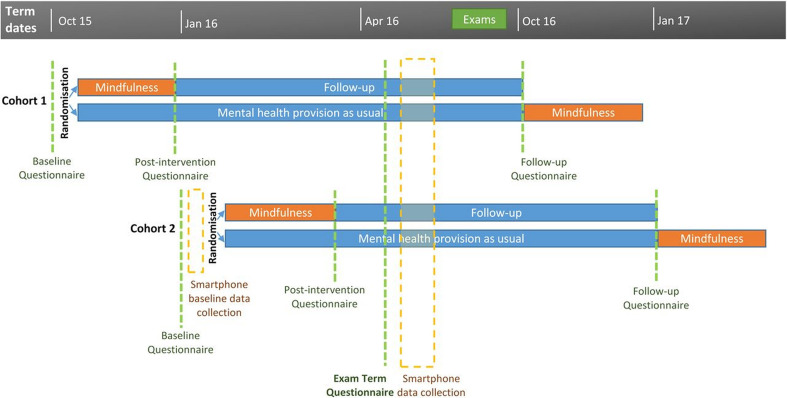
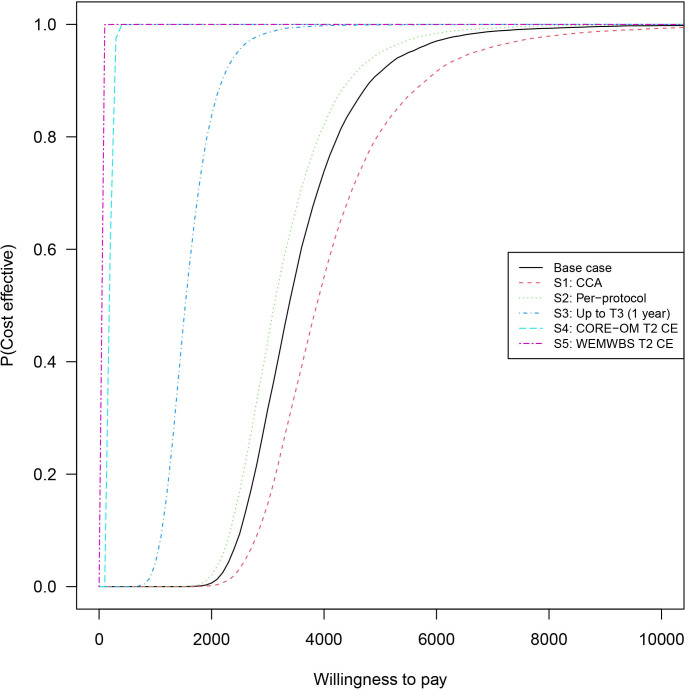
Objective: Increasing numbers of young people attending university has raised concerns about the capacity of student mental health services to support them. We conducted a randomised controlled trial (RCT) to explore whether provision of an 8 week mindfulness course adapted for university students (Mindfulness Skills for Students—MSS), compared with university mental health support as usual (SAU), reduced psychological distress during the examination period. Here, we conduct an economic evaluation of MSS+SAU compared with SAU. Design and setting: Economic evaluation conducted alongside a pragmatic, parallel, single-blinded RCT comparing provision of MSS+SAU to SAU. Participants: 616 university students randomised. Primary and secondary outcome measures: The primary economic evaluation assessed the cost per quality-adjusted life year (QALY) gained from the perspective of the university counselling service. Costs relate to staff time required to deliver counselling service offerings. QALYs were derived from the Clinical Outcomes in Routine Evaluation Dimension 6 Dimension (CORE-6D) preference based tool, which uses responses to six items of the Clinical Outcomes in Routine Evaluation Outcome Measure (CORE-OM; primary clinical outcome measure). Primary follow-up duration was 5 and 7 months for the two recruitment cohorts. Results: It was estimated to cost £1584 (2022 prices) to deliver an MSS course to 30 students, £52.82 per student. Both costs (adjusted mean difference: £48, 95% CI £40–£56) and QALYs (adjusted mean difference: 0.014, 95% CI 0.008 to 0.021) were significantly higher in the MSS arm compared with SAU. The incremental cost-effectiveness ratio (ICER) was £3355, with a very high (99.99%) probability of being cost-effective at a willingness-to-pay threshold of £20 000 per QALY. Conclusions: MSS leads to significantly improved outcomes at a moderate additional cost. The ICER of £3355 per QALY suggests that MSS is cost-effective when compared with the UK’s National Institute for Health and Care Excellence thresholds of £20 000 per QALY. Trial registration number: Australian and New Zealand Clinical Trials Registry, ACTRN12615001160527.
Overview
The claims and statistics of this paper haven’t been checked yet.
Run the check — free, no account needed. It reads the open-access text and checks the sources it cites.
Integrity signals
Registry
Cites
Statistics
Figures
Verification
Claims the paper makes
The claims and statistics of this paper haven’t been checked yet.
Run the check — free, no account needed. It reads the open-access text and checks the sources it cites.
Claims other papers make about this one
Each is checked against this paper’s own text: does it say what the citing paper says it does?
The check wasn’t confident either way, so it gives no verdict — never disputed.
In the citing paper
“Peer support may deter students from disclosing personal issues to their peers, while mindfulness programs face operational challenges: universities must invest in staff training, program delivery, and materials, and students must dedicate considerable time and effort to learn and maintain mindfulness practices [10, 11].”
From Canine-assisted therapy in reducing stress and anxiety levels of university students: systematic review and meta-analysis of randomized controlled trials (2025) · cites this paper as [11]
Experimental — accuracy not yet measuredIn the citing paper
“Peer support may deter students from disclosing personal issues to their peers, while mindfulness programs face operational challenges: universities must invest in staff training, program delivery, and materials, and students must dedicate considerable time and effort to learn and maintain mindfulness practices [10, 11].”
From Canine-assisted therapy in reducing stress and anxiety levels of university students: systematic review and meta-analysis of randomized controlled trials (2025) · cites this paper as [11]
Self-check
Percentages, sums and reported differences re-computed from the paper’s own numbers.
The self-check needs the paper’s full text.
Citations
Cites
Manca, A., Hawkins, N., & Sculpher, M. J. (2005) · Health Economics · doi:10.1002/hec.944 · Cited by 1,024
Towards a standardised brief outcome measure: Psychometric properties and utility of the CORE–OM
Evans, C., Connell, J., Barkham, M., Margison, F., McGrath, G., Mellor-Clark, J., & Audin, K. (2002) · British Journal of Psychiatry · doi:10.1192/bjp.180.1.51 · Cited by 934 · cited 1×
“17 The CORE-OM has been found to have strong convergent validity, internal and test-retest reliability and sensitivity to change, 18 and has been extensively used with UK university students.”
MethodFaria, R., Gomes, M., Epstein, D., & White, I. R. (2014) · PharmacoEconomics · doi:10.1007/s40273-014-0193-3 · Cited by 673
Russ, T. C., Stamatakis, E., Hamer, M., Starr, J. M., Kivimaki, M., & Batty, G. D. (2012) · BMJ · doi:10.1136/bmj.e4933 · Cited by 637
Galante, J., Dufour, G., Vainre, M., Wagner, A. P., Stochl, J., Benton, A., Lathia, N., Howarth, E., & Jones, P. B. (2018) · The Lancet Public Health · doi:10.1016/s2468-2667(17)30231-1 · Cited by 516
Self-citationWillan, A. R., Briggs, A. H., & Hoch, J. S. (2004) · Health Economics · doi:10.1002/hec.843 · Cited by 364
Dawson, A. F., Brown, W. W., Anderson, J., Datta, B., Donald, J. N., Hong, K., Allan, S., Mole, T. B., Jones, P. B., & Galante, J. (2020) · Applied Psychology: Health and Well-Being · doi:10.1111/aphw.12188 · Cited by 312
Self-citationConnell, J., Barkham, M., Stiles, W. B., Twigg, E., Singleton, N., Evans, O., & Miles, J. N. V. (2007) · British Journal of Psychiatry · doi:10.1192/bjp.bp.105.017657 · Cited by 201
Rith-Najarian, L. R., Boustani, M. M., & Chorpita, B. F. (2019) · Journal of Affective Disorders · doi:10.1016/j.jad.2019.06.035 · Cited by 176
Galante, J., Stochl, J., Dufour, G., Vainre, M., Wagner, A. P., & Jones, P. B. (2021) · Journal of Epidemiology and Community Health · doi:10.1136/jech-2020-214390 · Cited by 68
Self-citationDuration of psychological therapy: Relation to recovery and improvement rates in UK routine practice
Stiles, W. B., Barkham, M., & Wheeler, S. (2015) · British Journal of Psychiatry · doi:10.1192/bjp.bp.114.145565 · Cited by 53
Duarte, R., Lloyd, A., Kotas, E., Andronis, L., & White, R. (2019) · British Journal of Clinical Psychology · doi:10.1111/bjc.12208 · Cited by 39
van Dongen, J. M., van Berkel, J., Boot, C. R. L., Bosmans, J. E., Proper, K. I., Bongers, P. M., van der Beek, A. J., van Tulder, M. W., & van Wier, M. F. (2016) · Journal of Occupational & Environmental Medicine · doi:10.1097/jom.0000000000000736 · Cited by 36
Research works printed but not linked: 29
- 10.1016/S0140-6736(20)30925-9 · DOI · Paper page
- Mair D . Short-term counselling in higher education. In: Short-term counselling in higher education—context, theory and practice. Abingdon: Routledge, 2016: 7–26. doi:10.4324/9781315751078 · DOI
- Lattie EG , Lipson SK , Eisenberg D . Technology and college student mental health: challenges and opportunities. Front Psychiatry 2019;10:246. doi:10.3389/fpsyt.2019.00246 · DOI
- Lo Moro G , Soneson E , Jones PB , et al . Establishing a theory-based multi-level approach for primary prevention of mental disorders in young people. Int J Environ Res Public Health 2020;17:9445. doi:10.3390/ijerph17249445 · DOI
- 10.1002/cpp.365 · DOI
- Dufour, 2020, Current challenges in student mental health and counselling provision: how practice-based research can help demonstrate effectiveness, Couns and Psychother Res, 20, 565, 10.1002/capr.12310 · DOI
- Galante J , Dufour G , Benton A , et al . Protocol for the mindful student study: A randomised controlled trial of the provision of a Mindfulness intervention to support university students’ well-being and resilience to stress. BMJ Open 2016;6:e012300. doi:10.1136/bmjopen-2016-012300 · DOI
- Connell, 2008, The effectiveness of UK student counselling services: an analysis using the CORE system, British Journal of Guidance & Counselling, 36, 1, 10.1080/03069880701715655 · DOI
- 10.1177/0272989X12464431 · DOI
- 10.1007/s11136-010-9768-4 · DOI
- Tennant R , Hiller L , Fishwick R , et al . The Warwick-Edinburgh mental well-being scale (WEMWBS): development and UK validation. Health Qual Life Outcomes 2007;5:63. doi:10.1186/1477-7525-5-63 · DOI · Paper page
- 10.1002/hec.1693 · DOI
- 10.1002/sim.4067 · DOI · Paper page
- Little RJA , Rubin DB . Statistical analysis with missing data. In: Statistical analysis with missing data. 2nd ed. Hoboken, NJ: Wiley, 26 August 2002. doi:10.1002/9781119013563 · DOI · Paper page
- Drummond MF , Sculpher MJ , Claxton K , et al . Methods for the economic evaluation of health care programmes, 4th ed. Oxford: Oxford University Press, 2015.
- 10.1146/annurev.publhealth.23.100901.140534 · DOI
- 10.1177/0272989X9001000308 · DOI
- 10.1002/hec.903 · DOI
- Simpson, 2005, The costs and benefits of student retention for students, institutions and governments, Studies in Learning, Evaluation Innovation and Development, 2, 34
- Chiodelli, 2022, Mindfulness-based interventions in undergraduate students: A systematic review, J Am Coll Health, 70, 791, 10.1080/07448481.2020.1767109 · DOI
- Breedvelt, 2019, The effects of meditation, yoga, and Mindfulness on depression, anxiety, and stress in tertiary education students: A meta-analysis, Front Psychiatry, 10, 193, 10.3389/fpsyt.2019.00193 · DOI
- Juul L , Brorsen E , Gøtzsche K , et al . The effects of a Mindfulness program on mental health in students at an undergraduate program for teacher education: A randomized controlled trial in real-life. Front Psychol 2021;12:722771. doi:10.3389/fpsyg.2021.722771 · DOI
- 10.1016/j.beth.2017.07.001 · DOI
- 10.1016/j.jpsychores.2012.09.010 · DOI
- Lengacher, 2015, A cost-effective Mindfulness stress reduction program: A randomized control trial for breast cancer survivors, Nurs Econ, 33, 210
- Klatt, 2016, A Healthcare utilization cost comparison between employees receiving a Worksite Mindfulness or a diet/exercise lifestyle intervention to matched controls 5 years post intervention, Complement Ther Med, 27, 139, 10.1016/j.ctim.2016.05.008 · DOI · Paper page
- 10.1016/j.bbi.2012.10.009 · DOI · Paper page
- Curtis L , Burns A . Unit costs of health and social care 2019. Canterbury: Personal Social Services Research Unit, University of Kent, 2018. doi:10.22024/UniKent/01.02.79286 · DOI
- 10.1007/s12671-014-0282-6 · DOI
Cited by
Sorted by citations
Sim, S. Q., Liu, Z., Wu, Z., Wang, S., & Nisa, C. (2025) · BMC Complementary Medicine and Therapies · doi:10.1186/s12906-025-04955-2 · Cited by 14
Metadata
- Authors
- Wagner, A. P., Galante, J., Dufour, G., Barton, G., Stochl, J., Vainre, M., & Jones, P. B.
- Venue
- BMJ Open
- Publisher
- BMJ
- Published
- 2023-11
- Volume
- 13
- Issue
- 11
- Pages
- e071724
- ISSN
- 2044-6055
- PMC
- PMC10668272
- Cited by
- 7
- References
- 13
- Language
- en
- Funders
- National Institute for Health Research (NIHR) Applied Research Collaboration East of England (N/A)
- University of Cambridge Counselling Service (N/A)
- University of Cambridge Vice-Chancellor’s Endowment Fund (N/A)
About these checks
Registry, retraction, Cites and statistics results are computed, not judged, with one exception: a printed reference that no index lists is read once by a model before it counts as a citation error. Claims are extracted by a model and kept only when their quote appears verbatim in the text; each cited source is then checked, with a model’s help, for whether it says what the claim relies on. Those verdicts can be wrong — read the claim’s quote and the cited source before relying on one.
Statistics and arithmetic are recomputed, not judged.
Confidence bands are shown only for fields calibrated on our annotated test set. None is calibrated yet, so no band is shown.
What counts as a claim ›How we measure confidence ›How we check this ›
Are you an author, or do you see a problem with this page? Request a review
