

Healthcare professional perspective on barriers and facilitators of multidisciplinary team working in acute care setting: a systematic review and meta-synthesis
Open accessThe DOI matches its Crossref record; 61 of the 61 references it cites were found in a registry or an index.
Abstract
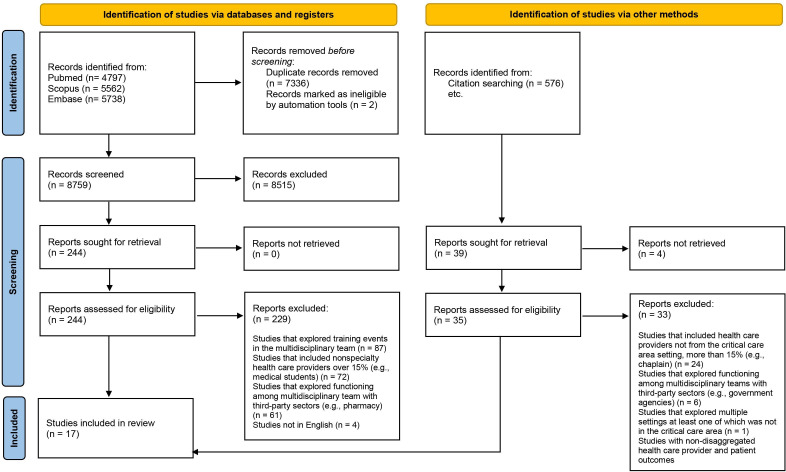
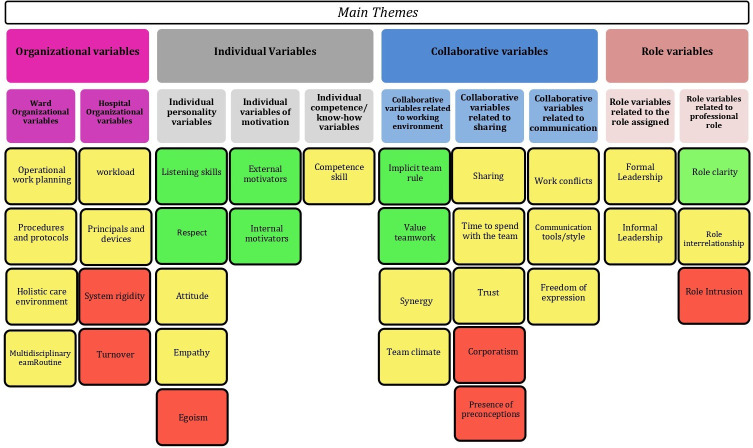
Objective: A multidisciplinary team is essential to providing high-quality, patient-centred care. However, its effectiveness can be either hindered or facilitated by various factors, such as the need for rapid decision-making, which may compromise patient outcomes despite individual efforts. The aim of this study is to synthesise the factors that may act as barriers and facilitators to the work of multidisciplinary teams in managing labour within acute care settings. Design: A systematic qualitative review and meta-synthesis was conducted following the five-step methodology proposed by Sandelowski et al . Data source: Three databases (Medline, Embase and Scopus) were systematically searched without time restrictions up to 25 May 2024. Eligibility criteria for selecting studies: Qualitative studies exploring perspectives, experiences and other similar factors were included. These studies were assessed for methodological quality using the Critical Appraisal Skills Programme. Data extraction and synthesis: The reviewers independently searched, screened and coded the results of the included studies. Data were synthesised using the method proposed by Thomas and Harden. Results: Seventeen studies were included in the meta-synthesis. Four key dimensions emerged, reflecting both the barriers and the facilitators of multidisciplinary team performances: (1) organisational variables, (2) individual variables, (3) collaborative variables and (4) role variables. A total of 36 variables were identified, which could function as barriers (n=6; eg, high staff turnover), facilitators (n=6; eg, strong listening skills) or both (n=24; eg, team climate), depending on the context. Conclusions: This meta-synthesis identifies specific barriers and facilitators and variables that can act as both. Understanding these factors enables targeted interventions to enhance the performance of multidisciplinary teams in clinical practice, particularly in acute care settings. PROSPERO registration number: CRD42022297395.
Overview
The claims and statistics of this paper haven’t been checked yet.
Free: it reads the open-access text and checks the first 5 claims that cite a source we can check. Create a free account to check every claim.
Integrity signals
Registry
Cites
Statistics
Figures
Verification
Claims the paper makes
The claims and statistics of this paper haven’t been checked yet.
Free: it reads the open-access text and checks the first 5 claims that cite a source we can check. Create a free account to check every claim.
Claims other papers make about this one
Each is checked against this paper’s own text: does it say what the citing paper says it does?
The source backs part of the claim, not all of it — or backs it for a different population, condition or comparison.
In the citing paper
“Hospital settings are a particularly unique context, characterised by complex organisational structures, multidisciplinary teams, and high-pressure, fast-paced work [17,18].”
From Explainable AI in hospital clinical decision support systems: A scoping review of healthcare professionals’ perspectives (2026) · cites this paper as [18]
Experimental — accuracy not yet measured
Self-check
Percentages, sums and reported differences re-computed from the paper’s own numbers.
The self-check needs the paper’s full text.
Citations
Cites
The PRISMA 2020 statement: An updated guideline for reporting systematic reviews
Page, M. J., McKenzie, J. E., Bossuyt, P. M., Boutron, I., Hoffmann, T. C., Mulrow, C. D., Shamseer, L., Tetzlaff, J. M., Akl, E. A., Brennan, S. E., et al. (2021) · BMJ · doi:10.1136/bmj.n71 · Cited by 108,283
Methods for the thematic synthesis of qualitative research in systematic reviews
Thomas, J., & Harden, A. (2008) · BMC Medical Research Methodology · doi:10.1186/1471-2288-8-45 · Cited by 9,312
Enhancing transparency in reporting the synthesis of qualitative research: ENTREQ
Tong, A., Flemming, K., McInnes, E., Oliver, S., & Craig, J. (2012) · BMC Medical Research Methodology · doi:10.1186/1471-2288-12-181 · Cited by 3,569 · cited 1×
“To ensure trans-parency in reporting, both the methods and the findings were documented in accordance with the Enhancing Transparency in Reporting the Synthesis of Qualitative Research (ENTREQ), 27 as detailed in online supplemental appendix S2.”
Methley, A. M., Campbell, S., Chew-Graham, C., McNally, R., & Cheraghi-Sohi, S. (2014) · BMC Health Services Research · doi:10.1186/s12913-014-0579-0 · Cited by 2,706 · cited 1×
“Due to the structure of the SPIDER tool, 30 31 the specific AC setting of interest was identified by the reviewers during the screening process.”
Beyond PICO: The SPIDER Tool for Qualitative Evidence Synthesis
Cooke, A., Smith, D., & Booth, A. (2012) · Qualitative Health Research · doi:10.1177/1049732312452938 · Cited by 2,608
Qualitative metasynthesis: Issues and techniques
Sandelowski, M., Docherty, S., & Emden, C. (1997) · Research in Nursing & Health · doi:10.1002/(sici)1098-240x(199708)20:4<365::aid-nur9>3.0.co;2-e · Cited by 1,046
Australasian College for Emergency Medicine
(1994) · Emergency Medicine · doi:10.1111/j.1442-2026.1994.tb00150.x · Cited by 725
Meta-Study of Qualitative Health Research
Paterson, B., Thorne, S., Canam, C., & Jillings, C. (2001) · doi:10.4135/9781412985017 · Cited by 664 · cited 1×
“…studies, ethnographies, grounded theory research and mixed-method or multimethod studies, provided that qualitative data could be clearly separated from quantitative data 28 29 ; and (5) studies focusing on the experiences of a single professional category in relation to multidisciplinary teamwork.”
Promoting a Culture of Safety as a Patient Safety Strategy: A Systematic Review
Weaver, S. J., Lubomksi, L. H., Wilson, R. F., Pfoh, E. R., Martinez, K. A., & Dy, S. M. (2013) · Annals of Internal Medicine · doi:10.7326/0003-4819-158-5-201303051-00002 · Cited by 602
Dixon-Woods, M., Sutton, A., Shaw, R., Miller, T., Smith, J., Young, B., Bonas, S., Booth, A., & Jones, D. (2007) · Journal of Health Services Research & Policy · doi:10.1258/135581907779497486 · Cited by 546 · cited 1×
“25 26 The meta-synthesis process comprised five distinct stages: (1) definition of key concepts, (2) systematic literature review, (3) quality assessment of the included studies, (4) data analysis and calculation of the effect dimension and (5) synthesis of the results.”
Using qualitative metasummary to synthesize qualitative and quantitative descriptive findings
Sandelowski, M., Barroso, J., & Voils, C. I. (2007) · Research in Nursing & Health · doi:10.1002/nur.20176 · Cited by 528 · cited 7×
“To address the research question, a systematic review of the literature was conducted to identify relevant studies, followed by a meta-synthesis using the Sandelowski et al .”
InfluentialThe Multidisciplinary Team (MDT) Approach and Quality of Care
Taberna, M., Gil Moncayo, F., Jané-Salas, E., Antonio, M., Arribas, L., Vilajosana, E., Peralvez Torres, E., & Mesía, R. (2020) · Frontiers in Oncology · doi:10.3389/fonc.2020.00085 · Cited by 513 · cited 1×
“…defined as groups of HCPs with diverse educational and professional backgrounds who collaborate to provide integrated, high-quality patient care 1 ; (2) HCPs, as defined by the WHO 3 ; (3) teams operating in AC settings, as defined by the Australian Institute of Health and Welfare 17 ; (4)…”
Guraya, S. Y., & Barr, H. (2018) · The Kaohsiung Journal of Medical Sciences · doi:10.1016/j.kjms.2017.12.009 · Cited by 471 · cited 1×
“66 The significance of formal leadership emerges clearly, particularly in situations where multidisciplinary teams need a central figure of reference to guide and coordinate their efforts.”
Leadership Styles and Nurses’ Job Satisfaction. Results of a Systematic Review
Specchia, M. L., Cozzolino, M. R., Carini, E., Di Pilla, A., Galletti, C., Ricciardi, W., & Damiani, G. (2021) · International Journal of Environmental Research and Public Health · doi:10.3390/ijerph18041552 · Cited by 386 · cited 2×
“Furthermore, Specchia et al 68 emphasised that leaders have the responsibility to promote technical and professional competencies among HCPs and actively work to enhance job satisfaction, recognising that motivated, satisfied professionals contribute to better patient outcomes and stronger team…”
Health systems and services: the role of acute care
Hirshon, J. M., Risko, N., Calvello, E. J., Stewart de Ramirez, S., Narayan, M., Theodosis, C., O’Neill, J., & for the Acute Care Research Collaborative at the University of Maryland Global Health Initiative (2013) · Bulletin of the World Health Organization · doi:10.2471/blt.12.112664 · Cited by 270 · cited 3×
“16 For instance, the emergency department (ED) offers services designed to restore, maintain and promote the health of patients requiring intensive medical or surgical interventions for acute conditions, trauma and emergent obstetric or gynaecological issues.”
InfluentialEffect Sizes in Qualitative Research: A Prolegomenon
Onwuegbuzie, A. J. (2003) · Quality and Quantity · doi:10.1023/a:1027379223537 · Cited by 257 · cited 1×
“25 36 This metric reflects how prominently an outcome appeared across different studies.”
Zajac, S., Woods, A., Tannenbaum, S., Salas, E., & Holladay, C. L. (2021) · Frontiers in Communication · doi:10.3389/fcomm.2021.606445 · Cited by 235 · cited 1×
“23 24 To date, no study has systematically synthesised these influencing factors.”
Factors influencing retention among hospital nurses: systematic review
Marufu, T. C., Collins, A., Vargas, L., Gillespie, L., & Almghairbi, D. (2021) · British Journal of Nursing · doi:10.12968/bjon.2021.30.5.302 · Cited by 215 · cited 1×
“56 A supportive work culture that values team stability is essential to optimising multidisciplinary team performance in AC settings.”
Nurses’ perceptions of multidisciplinary team work in acute health‐care
Atwal, A., & Caldwell, K. (2006) · International Journal of Nursing Practice · doi:10.1111/j.1440-172x.2006.00595.x · Cited by 208 · cited 4×
“38 47 48 Among the qualitative studies, eight studies used a descriptive qualitative method, 23 40 44–49 two adopted a phenomenological methodology 43 50 and two employed an ethnographic approach.”
InfluentialLiberati, E. G., Gorli, M., & Scaratti, G. (2016) · Social Science & Medicine · doi:10.1016/j.socscimed.2015.12.002 · Cited by 208 · cited 11×
“41 This can lead to ineffective decision-making and undermine team performance.”
InfluentialEddy, K., Jordan, Z., & Stephenson, M. (2016) · JBI Database of Systematic Reviews and Implementation Reports · doi:10.11124/jbisrir-2016-1843 · Cited by 178 · cited 1×
“Eddy et al 61 emphasised that all team members should be encouraged by their organisations to participate in teamwork educational programmes, as these initiatives foster a positive learning culture and strengthen interprofessional relationships.”
Professional differences in interprofessional working
Baxter, S. K., & Brumfitt, S. M. (2008) · Journal of Interprofessional Care · doi:10.1080/13561820802054655 · Cited by 169 · cited 2×
“51 However, it can become a liability when leadership roles are assumed based solely on professional seniority 7 rather than their technical skills or expertise.”
Team-Based Care and Patient Satisfaction in the Hospital Setting: A Systematic Review
Will, K. K., Johnson, M. L., & Lamb, G. (2019) · Journal of Patient-Centered Research and Reviews · doi:10.17294/2330-0698.1695 · Cited by 134 · cited 1×
“This collaboration has been shown to reduce adverse events and promote positive health outcomes, 12 such as shorter hospital stays, 13 increased patient satisfaction 9 and decreased hospital mortality rates, 14 particularly within”
Behruzi, R., Klam, S., Dehertog, M., Jimenez, V., & Hatem, M. (2017) · BMC Pregnancy and Childbirth · doi:10.1186/s12884-017-1381-x · Cited by 124 · cited 1×
“Behruzi et al 53 emphasised that the loss of a strong organisational culture Open access negatively impacts the performance of multidisciplinary teams, particularly in terms of care quality.”
Working Together in the Neonatal Intensive Care Unit: Provider Perspectives
Thomas, E. J., Sherwood, G. D., Mulhollem, J. L., Sexton, J. B., & Helmreich, R. L. (2004) · Journal of Perinatology · doi:10.1038/sj.jp.7211136 · Cited by 114 · cited 5×
“41 46 Allo-cating dedicated time for the team is crucial to fostering collaboration, as it allows HCPs to anticipate colleagues’ needs and coordinate more effectively.”
InfluentialAdaptive coordination in surgical teams: an interview study
Bogdanović, J., Perry, J., Guggenheim, M., & Manser, T. (2015) · BMC Health Services Research · doi:10.1186/s12913-015-0792-5 · Cited by 99 · cited 4×
“38 47 48 Among the qualitative studies, eight studies used a descriptive qualitative method, 23 40 44–49 two adopted a phenomenological methodology 43 50 and two employed an ethnographic approach.”
InfluentialLabrague, L. J., Sabei, S. D. A., Rawajfah, O. A., ABUALRUB, R. F., & Burney, I. A. (2021) · Journal of Nursing Management · doi:10.1111/jonm.13448 · Cited by 91 · cited 2×
“67 A formal leader should exhibit active listening skills to understand and address the needs of team members, maintain a system-wide perspective, considering both the immediate and long-term sustainability of team dynamics, and demonstrate commitment to continuous improvement in both team…”
Weller, J. M., Janssen, A. L., Merry, A., & ROBINSON, B. J. (2008) · Medical Education · doi:10.1111/j.1365-2923.2007.02971.x · Cited by 84 · cited 10×
“51 This behaviour fosters ‘siloed’ thinking, limits interdisciplinary collaboration and undermines the principles of integrated patient care.”
InfluentialEveryday practices at the medical ward: a 16-month ethnographic field study
Wolf, A., Ekman, I., & Dellenborg, L. (2012) · BMC Health Services Research · doi:10.1186/1472-6963-12-184 · Cited by 67 · cited 2×
“41 42 The remaining five studies did not specify their qualitative methodology.”
Expectant fathers: Influence of perinatal education on stress, coping, and spousal relations
Diemer, G. A. (1997) · Research in Nursing & Health · doi:10.1002/(sici)1098-240x(199708)20:4<281::aid-nur2>3.0.co;2-c · Cited by 67
Schilling, S., Armaou, M., Morrison, Z., Carding, P. N., Bricknell, M. C. M., & Connelly, V. J. (2022) · PLoS ONE · doi:10.1371/journal.pone.0272942 · Cited by 65 · cited 2×
“22 Therefore, the aim of the study is to synthesise the factors that can hinder (barriers) or facilitate (facilitators) multidisciplinary teamwork in AC settings.”
Murphy, M., McCloughen, A., & Curtis, K. A. (2018) · Australasian Emergency Care · doi:10.1016/j.auec.2018.11.003 · Cited by 60 · cited 1×
“58 The implementation of shared objectives can be facilitated through the introduction of organisational tools, such as multiprofessional audits.”
Qualitative Analysis of Effective Teamwork in the Operating Room (OR)
Paige, J. T., Garbee, D. D., Bonanno, L. S., & Kerdolff, K. (2020) · Journal of surgical education · doi:10.1016/j.jsurg.2020.09.019 · Cited by 57 · cited 10×
“44 47 The role interrelationship serves as a neutral variable, fostering effective teamwork when based on mutual trust among HCPs. 43 In environments where informal hierarchies are minimised and flexible work dynamics are encouraged, multidisciplinary teams can function cohesively with greater adaptability.”
InfluentialNursing teamwork in the care of older people: A mixed methods study
Anderson, J. E., Ross, A. J., Lim, R. H. M., Kodate, N., Thompson, K., Jensen, H., & Cooney, K. (2019) · Applied Ergonomics · doi:10.1016/j.apergo.2019.05.012 · Cited by 56
The Association of Nurse–Physician Teamwork and Mortality in Surgical Patients
Kang, X. L., Brom, H. M., Lasater, K. B., & McHugh, M. D. (2019) · Western Journal of Nursing Research · doi:10.1177/0193945919856338 · Cited by 55
Teamwork improvement in emergency trauma departments.
Khademian, Z., Sharif, F., Tabei, S. Z., Bolandparvaz, S., Abbaszadeh, A., & Abbasi, H. R. (2013) · PubMed Central · Cited by 53
Team nursing in acute care settings: Nurses’ experiences
Cioffi, J. M., & Ferguson, L. J. (2009) · Contemporary Nurse · doi:10.5172/conu.33.1.2 · Cited by 43 · cited 2×
“38 47 48 Among the qualitative studies, eight studies used a descriptive qualitative method, 23 40 44–49 two adopted a phenomenological methodology 43 50 and two employed an ethnographic approach.”
Synergistic strategies: Optimizing outcomes through a multidisciplinary approach to clinical rounds
Srinivas, V., Choubey, U., Motwani, J., Anamika, F., Chennupati, C., Garg, N., Gupta, V., & Jain, R. (2023) · Baylor University Medical Center Proceedings · doi:10.1080/08998280.2023.2274230 · Cited by 43 · cited 2×
“11 18 The HCPs involved in multidisciplinary teams within AC settings include physicians from various specialties, surgeons, anaesthesiologists, nurses, health assistants, midwives, health technicians 19 or therapists.”
Benefits and losses: a qualitative study exploring healthcare staff perceptions of teamworking
Baxter, S. K., & Brumfitt, S. M. (2008) · BMJ Quality & Safety · doi:10.1136/qshc.2007.022277 · Cited by 42 · cited 5×
“39 40 This openness fosters psychological safety, promotes active participation and enhances team learning.”
InfluentialSalih, Z. N. I., & Draucker, C. B. (2019) · Journal of Perinatology · doi:10.1038/s41372-019-0380-3 · Cited by 42
Ediger, K., Rashid, M., & Law, B. H. Y. (2022) · Frontiers in Pediatrics · doi:10.3389/fped.2022.845671 · Cited by 32 · cited 5×
“%) of the studies were conducted in the Americas, specifically in the USA, 43–46 Canada 23 47 and South America.”
InfluentialLiu, J., Masiello, I., Ponzer, S., & Farrokhnia, N. (2018) · BMJ Open · doi:10.1136/bmjopen-2017-019744 · Cited by 31 · cited 1×
“This collaboration has been shown to reduce adverse events and promote positive health outcomes, 12 such as shorter hospital stays, 13 increased patient satisfaction 9 and decreased hospital mortality rates, 14 particularly within”
Challenges to well‐being in critical care
Shaw, R. L., Morrison, R., Webb, S., Balogun, O., Duncan, H. P., & Butcher, I. (2024) · Nursing in Critical Care · doi:10.1111/nicc.13030 · Cited by 31
Gill, S. D., Lane, S. E., Sheridan, M., Ellis, E., Smith, D., & Stella, J. (2018) · Emergency Medicine Australasia · doi:10.1111/1742-6723.12964 · Cited by 30 · cited 1×
“To address this challenge, Gill et al 57 proposed the implementation of fast-track organisational models as a potential solution.”
Lapierre, A., Lefebvre, H., & Gauvin‐Lepage, J. (2019) · Journal of Trauma Nursing · doi:10.1097/jtn.0000000000000469 · Cited by 30 · cited 4×
“The highest intrastudy intensity was observed in the studies by Khademian et al 52 and Lapi-erre et al , 23 both reporting 100% intensity.”
InfluentialOh, S., Yu, M., Ryu, Y. M., Kim, H., & Lee, H. (2019) · Qualitative Health Research · doi:10.1177/1049732319871254 · Cited by 28 · cited 1×
“34 Higher total scores indicate higher methodological quality.”
Escher, C., Rystedt, H., Creutzfeldt, J., Meurling, L., Hedman, L., Felländer‐Tsai, L., & Kjellin, A. (2023) · Advances in Simulation · doi:10.1186/s41077-023-00257-0 · Cited by 28 · cited 1×
“64 Eliminating corporatism and reducing professional individualism are crucial steps towards fostering a cohesive and efficient multidisciplinary team.”
Defining a “Good Death” in Pediatric Oncology: A Mixed Methods Study of Healthcare Providers
Taylor, M. R., Barton, K. S., Kingsley, J., Heunis, J., & Rosenberg, A. R. (2020) · Children · doi:10.3390/children7080086 · Cited by 27
Kowalczuk, K., Krajewska-Kułak, E., & Sobolewski, M. (2019) · BioMed Research International · doi:10.1155/2019/6303474 · Cited by 25 · cited 1×
“55 To mitigate these barriers, healthcare authorities should invest in resources aimed at fostering a stable and continuous working environment.”
Teamwork in a coronary care unit: facilitating and hindering aspects
Goulart, B. F., Camelo, S. H. H., Simões, A. L. D. A., & Chaves, L. D. P. (2016) · Revista da Escola de Enfermagem da USP · doi:10.1590/s0080-623420160000400015 · Cited by 24 · cited 2×
“38 47 48 Among the qualitative studies, eight studies used a descriptive qualitative method, 23 40 44–49 two adopted a phenomenological methodology 43 50 and two employed an ethnographic approach.”
Simmons, D., & Sherwood, G. D. (2010) · Critical Care Nursing Clinics of North America · doi:10.1016/j.ccell.2010.03.007 · Cited by 23 · cited 3×
“45 Constructive conflict resolution encourages dialogue, problem-solving and innovation.”
The association between implementation of multidisciplinary rounds and clinical outcomes
Sreepathy, P. N. S., Kim, Y. J., Ahuja, Z., Shroff, A. R., & Nazir, N. T. (2022) · Frontiers in Cardiovascular Medicine · doi:10.3389/fcvm.2022.1005150 · Cited by 23 · cited 1×
“This collaboration has been shown to reduce adverse events and promote positive health outcomes, 12 such as shorter hospital stays, 13 increased patient satisfaction 9 and decreased hospital mortality rates, 14 particularly within”
Learning from the multidisciplinary team: advancing patient care through collaboration
Dawe, J., Cronshaw, H., & Frerk, C. (2024) · British Journal of Hospital Medicine · doi:10.12968/hmed.2023.0387 · Cited by 21 · cited 1×
“20 While multidisciplinary teamwork is a key objective for ensuring quality patient care in AC settings and is recognised as a vital component of effective healthcare delivery, 21 achieving it remains challenging.”
Lee, J. H., Ko, R., Park, T. K., Cho, Y. H., Suh, G. Y., & Yang, J. H. (2021) · Korean Circulation Journal · doi:10.4070/kcj.2021.0167 · Cited by 19 · cited 2×
“14 In the literature, the term acute care (AC) setting refers to an environment where patients with acute conditions requiring urgent medical attention receive treatment.”
Interprofessional relationships of a patient assistance team in critical care
Noce, L. G. D. A., de Oliveira, T. S., Melo, L. C., Silva, K. F. B., Parreira, B. D. M., & Goulart, B. F. (2020) · Revista Brasileira de Enfermagem · doi:10.1590/0034-7167-2019-0420 · Cited by 15
Opportunities to enhance ward audit: a multi-site qualitative study
Sykes, M. J., Thomson, R., Kolehmainen, N., Allan, L. M., & Finch, T. L. (2021) · BMC Health Services Research · doi:10.1186/s12913-021-06239-0 · Cited by 14 · cited 3×
“Sykes et al 59 highlighted the value of these audits, which can be conducted before an intervention, to clarify roles, objectives and planning (briefing); or after an intervention, to evaluate performance, discuss outcomes and identify areas for improvement (debriefing).”
InfluentialKeller, S., Jelsma, J. G. M., Tschan, F., Sevdalis, N., Löllgen, R., Creutzfeldt, J., Kennedy-Metz, L. R., Eppich, W., Semmer, N. K., HERZEELE, I. V., et al. (2024) · BMC Health Services Research · doi:10.1186/s12913-024-10555-6 · Cited by 14
Buscemi, J., Steglitz, J., & Spring, B. J. (2012) · Translational Behavioral Medicine · doi:10.1007/s13142-012-0169-9 · Cited by 13 · cited 1×
“Buscemi et al 65 emphasised that the modern healthcare environment demands effective multiprofessional collaboration to improve the quality of patient care.”
Identifying Gaps in Resuscitation Practices Across Level-IV Neonatal Intensive Care Units
Ali, N., Schierholz, E., Reed, D., Hightower, H. B., Johnson, B. A., Gupta, R., Gray, M. M., Ades, A. M., Wetzel, E. A., & on behalf of the Children's Hospitals Neonatal Consortium Resuscitation Focus Group (2022) · American Journal of Perinatology · doi:10.1055/a-1863-2312 · Cited by 11 · cited 2×
“11 18 The HCPs involved in multidisciplinary teams within AC settings include physicians from various specialties, surgeons, anaesthesiologists, nurses, health assistants, midwives, health technicians 19 or therapists.”
Optimizing Interprofessional Simulation with Intentional Pre-Briefing and Debriefing
Penn, J., Voyce, C., Nadeau, J., Crocker, A. F., Ramirez, M., & Smith, S. M. (2023) · Advances in Medical Education and Practice · doi:10.2147/amep.s395872 · Cited by 10 · cited 1×
“60 The audits serve as critical reflection points where the team can assess the situation, identify challenges and critical issues, propose solutions and implement strategies.”
Ziemek, J., Hoge, N., Woodward, K. F., Doerfler, E., Bradywood, A., Pletcher, A., Flaxman, A. D., & Iribarren, S. (2024) · BMC Health Services Research · doi:10.1186/s12913-024-11271-x · Cited by 9 · cited 2×
“20 However, there is no universal consensus regarding which professional roles should be included in AC teams given the wide range of healthcare professions involved.”
Cited by
Wang, X., Wang, Q., Ding, G., Wang, J., Tang, Y., & Feng, Y. (2025) · iScience · doi:10.1016/j.isci.2025.114082 · Cited by 28
Multiprofessional Interventions for Frailty in Patients with Heart Failure: A Comprehensive Review
Uchmanowicz, I., Jędrzejczyk, M., Lee, C. S., Hill, L., Vitale, C., Denfeld, Q. E., Vellone, E., Żółkowska, B., Janczak, S. D., Chamos, A. J., et al. (2025) · Current Heart Failure Reports · doi:10.1007/s11897-025-00727-8 · Cited by 13
“Such collaborative care can reduce complications and readmissions while improving function and quality of life [21–27].”
Van Dort, B. A., Engelsma, T., Sneekes, P., Peute, L., & Medlock, S. (2026) · PLOS Digital Health · doi:10.1371/journal.pdig.0001417 · Cited by 9
Kuipers, R., Reinke, L., Tulleken, J. E., & Reinders, J. J. (2025) · Journal of Multidisciplinary Healthcare · doi:10.2147/jmdh.s512952 · Cited by 3
Gonzalez, M., Chowdhury, F., Kee, M., MacLeod, B., Skidmore, B., & Woodgate, R. L. (2026) · Journal of Healthcare Leadership · doi:10.2147/jhl.s569934 · Cited by 5
Metadata
- Authors
- Pradelli, L., Risoli, C., Summer, E., Bellini, G., Mozzarelli, F., Anderson, G., Guasconi, M., Artioli, G., Bonacaro, A., & Sarli, L.
- Affiliations
- Azienda USL di Piacenza, Piacenza, Italy
- Fondazione Madonna della Bomba Scalabrini ETS, Piacenza, Italy
- University of Parma (IT)
- Agostino Gemelli University Polyclinic (IT)
- Corresponding author
- Guasconi, Massimo
- ORCID
- Venue
- BMJ Open
- Publisher
- BMJ
- Published
- 2025-03
- Volume
- 15
- Issue
- 3
- Pages
- e087268
- ISSN
- 2044-6055 (ISSN-L)
- PMC
- PMC11931918
- OpenAlex
- W4408745436
- Cited by
- 42
- References
- 60
- Citations by year
- 2026: 35 · 2025: 7
- FWCI
- 8.33
- Type
- journal article
- Language
- en
- Open access
- gold
- doi.org
- Licence
- Locations
- BMJ Open (publishedVersion, cc-by-nc)
- Europe PMC (PubMed Central) (publishedVersion, cc-by-nc)
- PubMed Central (publishedVersion, cc-by-nc)
- PubMed (publishedVersion)
- DOAJ (DOAJ: Directory of Open Access Journals) (submittedVersion, cc-by-sa)
- Topics
- Health Sciences › Health Professions › General Health Professions › Interprofessional Education and Collaboration
- Social Sciences › Psychology › Social Psychology › Team Dynamics and Performance
- Social Sciences › Arts and Humanities › History and Philosophy of Science › Interdisciplinary Research and Collaboration
- Keywords
- multidisciplinary team, barriers and facilitators, acute care, labor management, healthcare professionals' perspectives, team climate, employee turnover, listening skills, organizational factors, collaboration, role clarity, patient-centered care
- MeSH terms
- Attitude of Health Personnel, Health Personnel, Humans, Patient Care Team, Patient-Centered Care, Qualitative Research
About these checks
Registry, retraction, Cites and statistics results are computed, not judged, with one exception: a printed reference that no index lists is read once by a model before it counts as a citation error. Claims are extracted by a model and kept only when their quote appears verbatim in the text; each cited source is then checked, with a model’s help, for whether it says what the claim relies on. Those verdicts can be wrong — read the claim’s quote and the cited source before relying on one.
Statistics and arithmetic are recomputed, not judged.
Confidence bands are shown only for fields calibrated on our annotated test set. None is calibrated yet, so no band is shown.
What counts as a claim ›How we measure confidence ›How we check this ›
Are you an author, or do you see a problem with this page? Request a review
Data sources
Bibliographic data: Semantic Scholar, OpenAlex, Crossref.
Contains information from the Semantic Scholar Academic Graph Datasets, made available under the ODC Attribution License (ODC-BY 1.0).
Semantic Scholar’s data is described in: Kinney, R., et al. (2023). The Semantic Scholar Open Data Platform. arXiv:2301.10140.
