

Optimising Primary thErapy in pRimAry biliary cholangitis (OPERA): protocol for a randomised, double-blind, placebo-controlled trial of enhanced primary therapy with obeticholic acid
Open accessThe DOI matches its Crossref record; 35 of the 35 references it cites were found in a registry or an index; 23 of the 33 sources its claims cite were checked for support.
Abstract
Protocol for a randomized trial testing early combined UDCA and OCA in high-risk PBC.
Overview
CoChat Summary
TL;DR
OPERA is a multicentre, randomised, double-blind, placebo-controlled trial testing obeticholic acid plus UDCA as first-line therapy in 106 adults within 6 months of PBC diagnosis who are at enhanced risk of non-response to UDCA. The primary efficacy outcome is normalisation of serum alkaline phosphatase and total bilirubin at 26 weeks, with an optional liver biopsy sub-study examining bile duct senescence.
Key findings
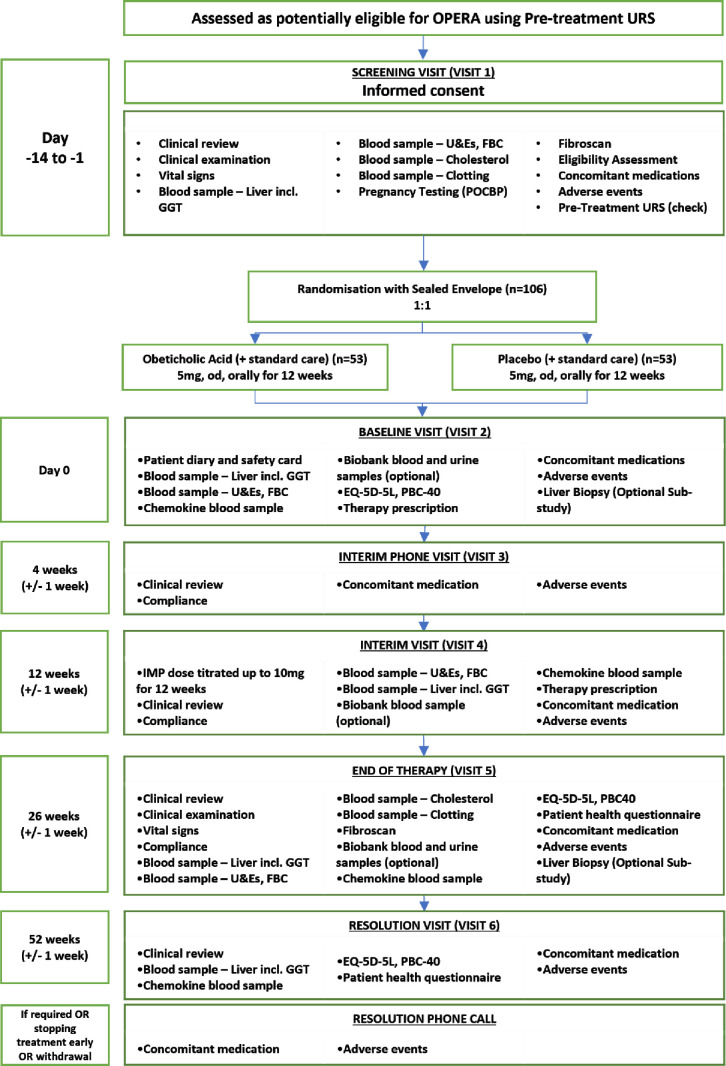
- The trial plans to randomise 106 participants 1:1 to UDCA plus OCA (n=53) or UDCA plus matched placebo (n=53), with a 26-week treatment phase and a 26-week follow-up period; the primary outcome is the percentage showing normalisation of serum alkaline phosphatase and total bilirubin at 26 weeks (disease remission).
- Sample size is powered at 90% using an augmented binary method; assumptions are a 20% control-arm normalisation rate at 6 months and a 45% experimental-arm normalisation rate, whereas a binary analysis would require 144 patients, and the augmented method reduces this to 48 per arm, increased by 10% to 53 per arm for dropout.
- An optional liver biopsy sub-study (n=30) will take pre- and post-therapy biopsies for immunohistochemistry analysis of senescence markers; the trial will also validate a chemokine composite biomarker based on CCL20 and CXCL11, reported to have a positive predictive value of 94%, negative predictive value of 78%, and area under the receiver operator curve of 0.91 for identifying UDCA non-responders.
- The protocol challenges the current step-up model by using the validated UDCA Response Score to identify high-risk patients at diagnosis and offering OCA from the outset; OCA/placebo is given at 5 mg once daily for 12 weeks, then titrated to 10 mg once daily until week 26 according to tolerability, with UDCA prescribed per NHS standard of care.
Methods
- Design: multicentre, double-blind, superiority, randomised, placebo-controlled CTIMP in England, recruiting from 14 centres; participants are adults within 6 months of PBC diagnosis, non-cirrhotic, with less than 3 months of UDCA treatment at consent and enhanced risk of non-response based on URS, randomised 1:1 with stratification by consent to the biopsy sub-study.
- Intervention and follow-up: OCA or matched placebo is taken orally at 5 mg once daily for 12 weeks, then titrated to 10 mg once daily from week 12 to week 26 according to tolerability; participants attend up to five in-person visits and one phone call, with clinical review, examination, vital signs, blood sampling, urine sampling, transient elastography, compliance checks, EQ-5D-5L, PBC-40, and Patient Health Questionnaire assessments.
- Analysis: primary analysis is intention-to-treat and repeated in per-protocol; the augmented binary method fits a bivariate normal regression model to ALP and bilirubin values expressed as percentage of ULN, estimates the OR of normalisation between arms, and obtains a 95% CI and p value via the delta method and Wald test; missing primary outcome data with >5% loss to follow-up may prompt multiple imputation sensitivity analysis.
Limitations
- Stated: the trial relies on a biochemical surrogate marker (blood liver biochemistry) as the primary endpoint and is not designed or powered to explore true clinical outcomes; it also explores only one advanced PBC therapy, OCA, and not alternatives such as elafibranor or seladelpar, which were licensed after the trial was designed and commenced.
- Stated: placebo-controlled trials of long-term therapy in a chronic disease such as PBC are very challenging, especially when second-line therapies are available on a conditional approval basis following UDCA failure, and the use and regulatory acceptability of surrogate markers in PBC has been controversial.
- Evident from the text: this is a protocol with no efficacy or safety results reported; the first patient was recruited in January 2024, and the manuscript is based on trial protocol V.6.0 dated 27 October 2025.
Model-written summary. Check it against the paper before relying on it.
Integrity signals
Registry
Cites
Statistics
Figures
Verification
Claims the paper makes
19 Valid · 3 Not valid · 5 Not checked · 20 Own results and interpretations
The cited sources support only part of this claim — read each source’s verdict below.
In the paper
“>80% continue to experience symptoms, especially fatigue and cognitive symptoms that are seemingly not modified by any current intervention.2 3 9 17”
§ Optimising Primary thErapy in pRimAry biliary cholangitis (OPERA): protocol for a randomised, double-blind, placebo-controlled trial of enhanced primary therapy with obeticholic acid > Introduction
What the sources say
- Partly supportedcites [2] Carbone M Mells GF Pells G et al Sex and age are determinants of the clinical phenotype of primary biliary cirrhosis and response to ursodeoxycholic acid Gastroenterology 2013 144 560 9 10.1053/j.gastro.2012.12.005 23246637 sourceExperimental — accuracy not yet measured
Table 2 reports fatigue and cognitive symptom scores among UDCA-treated patients, and the Results state that fatigue severity was not associated with biochemical response to UDCA. The paper does not establish that more than 80% of treated patients remain symptomatic or that no current intervention modifies those symptoms. (LLM, conf=0.82)
- Partly supportedcites [3] Dyson JK Wilkinson N Jopson L et al The inter-relationship of symptom severity and quality of life in 2055 patients with primary biliary cholangitis Aliment Pharmacol Ther 2016 44 1039 50 10.1111/apt.13794 27640331 PMC5082554 sourceExperimental — accuracy not yet measured
The Introduction says that UDCA and emerging second-line therapies do not effectively treat PBC symptoms. The Results measure fatigue and cognitive symptoms, and the Discussion identifies fatigue as a major problem. But the paper does not report that more than 80% of UDCA-treated patients continue to experience symptoms, or establish fatigue and cognitive symptoms as the predominant symptoms in that group. (LLM, conf=0.85)
- Not checked — no full text of the sourcecites [9] Rice S Albani V Minos D et al Effects of Primary Biliary Cholangitis on Quality of Life and Health Care Costs in the United Kingdom Clin Gastroenterol Hepatol 2021 19 768 76 10.1016/j.cgh.2020.06.025 32562892 source
plain- Asserted: passes — The authors put it forward as true.
- Checkable: passes — It can be checked against evidence.
- Load-bearing: passes — The paper’s conclusions depend on it.
- Based: passes — The paper gives a reason why it holds.
- Partly supported
Every source the paper cites for this claim was checked and supports it.
In the paper
“studies from UK-PBC have clearly shown that UDCA treatment failure can be accurately predicted by pretreatment clinical parameters including the patient’s age and serum biochemistry.10”
§ Optimising Primary thErapy in pRimAry biliary cholangitis (OPERA): protocol for a randomised, double-blind, placebo-controlled trial of enhanced primary therapy with obeticholic acid > Introduction
What the sources say
- Supportedcites [10] Carbone M Nardi A Flack S et al Pretreatment prediction of response to ursodeoxycholic acid in primary biliary cholangitis: development and validation of the UDCA Response Score Lancet Gastroenterol Hepatol 2018 3 626 34 10.1016/S2468-1253(18)30163-8 30017646 PMC6962055 source
The Abstract Findings report that pretreatment age and serum biochemistry were associated with UDCA response and were used to derive a predictive score. The same section reports an external-validation AUROC of 0.83 (0.79–0.87), supporting the claim that inadequate biochemical response could be accurately predicted. (LLM, conf=0.94)
boostedstates an association- Asserted: passes — The authors put it forward as true.
- Checkable: passes — It can be checked against evidence.
- Load-bearing: passes — The paper’s conclusions depend on it.
- Based: passes — The paper gives a reason why it holds.
- Supported
The cited sources support only part of this claim — read each source’s verdict below.
In the paper
“UK-PBC studies have demonstrated that therapy delay in PBC leads to a significantly reduced likelihood that the therapy will work when eventually used.10”
§ Optimising Primary thErapy in pRimAry biliary cholangitis (OPERA): protocol for a randomised, double-blind, placebo-controlled trial of enhanced primary therapy with obeticholic acid > Introduction
What the sources say
- Partly supportedcites [10] Carbone M Nardi A Flack S et al Pretreatment prediction of response to ursodeoxycholic acid in primary biliary cholangitis: development and validation of the UDCA Response Score Lancet Gastroenterol Hepatol 2018 3 626 34 10.1016/S2468-1253(18)30163-8 30017646 PMC6962055 sourceExperimental — accuracy not yet measured
The Results (Identification of variables that predict UDCA response; page not supplied) report that a shorter treatment time lag predicted response to UDCA. The Discussion (page not supplied) says delayed treatment was associated with inadequate response and may reduce the likelihood of responding. The claim overstates that association as a demonstrated causal effect and extends it from UDCA to therapy generally. (LLM, conf=0.87)
boostedstates a cause- Asserted: passes — The authors put it forward as true.
- Checkable: passes — It can be checked against evidence.
- Load-bearing: passes — The paper’s conclusions depend on it.
- Based: passes — The paper gives a reason why it holds.
- Partly supported
The cited sources support only part of this claim — read each source’s verdict below.
In the paper
“60% display persistently abnormal liver blood tests despite UDCA (59% in a UK-PBC nested cohort of 400 patients)16”
§ Optimising Primary thErapy in pRimAry biliary cholangitis (OPERA): protocol for a randomised, double-blind, placebo-controlled trial of enhanced primary therapy with obeticholic acid > Introduction
What the sources say
- Partly supportedcites [16] Jones DEJ Wetten A Barron-Millar B et al The relationship between disease activity and UDCA response criteria in primary biliary cholangitis: A cohort study EBioMedicine 2022 80 104068 10.1016/j.ebiom.2022.104068 35609437 PMC9130524 sourceExperimental — accuracy not yet measured
The Methods and Results describe 400 UDCA-treated patients in the UK-PBC Nested Cohort. Results Table 2 reports 182 (46%) with normal liver function tests, implying 218 of 400 (54.5%) had abnormal tests—not the cited 59%. The paper supports the claim that abnormal tests remained common despite UDCA, but not its specific percentage. (LLM, conf=0.88)
plainn = 400- Asserted: passes — The authors put it forward as true.
- Checkable: passes — It can be checked against evidence.
- Load-bearing: passes — The paper’s conclusions depend on it.
- Based: passes — The paper gives a reason why it holds.
- Partly supported
Every source the paper cites for this claim was checked and supports it.
In the paper
“there is now comprehensive data from the UK to show that the movement to addition of second-line therapy occurs in only around half of eligible patients.30”
§ Optimising Primary thErapy in pRimAry biliary cholangitis (OPERA): protocol for a randomised, double-blind, placebo-controlled trial of enhanced primary therapy with obeticholic acid > Discussion
What the sources say
- Supportedcites [30] Abbas N Smith R Flack S et al Critical shortfalls in the management of PBC: Results of a UK-wide, population-based evaluation of care delivery JHEP Rep 2024 6 100931 10.1016/j.jhepr.2023.100931 38089546 PMC10711474 source
The Results (Disease-modifying treatment) report that only 1,074 of 2,102 patients with inadequate response to first-line UDCA were prescribed second-line therapy (51%). The Results (Variation in PBC-related healthcare across the UK) also report rates of 50–52% among eligible patients in England, Scotland, and Wales. (LLM, conf=0.94)
boosted- Asserted: passes — The authors put it forward as true.
- Checkable: passes — It can be checked against evidence.
- Load-bearing: passes — The paper’s conclusions depend on it.
- Based: passes — The paper gives a reason why it holds.
- Supported
22 more claims · 10 with their cited sources checked
Create a free account to see all 47 claims and to verify the 1 reference still open.
- It may state two separate claims as one. 10
- Probably not a substantial claim. 13
Self-check
Percentages, sums and reported differences re-computed from the paper’s own numbers.
Each contradiction between two passages listed here was confirmed by an independent check.
Rated minor: it would not touch a result — a value no result rests on, a p-value that stays on the same side of the significance level, or a conflict that is clerical, resolved elsewhere in the paper, or outside its own findings.
In the paper
§ Optimising Primary thErapy in pRimAry biliary cholangitis (OPERA): protocol for a randomised, double-blind, placebo-controlled trial of enhanced primary therapy with obeticholic acid > Methods and analysis > Participant follow-up assessments
“It has six domains relating to fatigue, cognitive symptoms, social function, emotional status and general symptoms.”
§ Optimising Primary thErapy in pRimAry biliary cholangitis (OPERA): protocol for a randomised, double-blind, placebo-controlled trial of enhanced primary therapy with obeticholic acid > Methods and analysis > Participant follow-up assessments
“fatigue, cognitive symptoms, social function, emotional status and general symptoms”
Citations
Cites
Development and preliminary testing of the new five-level version of EQ-5D (EQ-5D-5L)
Herdman, M., Gudex, C., Lloyd, A., Janssen, M., Kind, P., Parkin, D., Bonsel, G., & Badia, X. (2011) · Quality of Life Research · doi:10.1007/s11136-011-9903-x · Cited by 9,795 · cited 1×
“► PP: Includes all participants who were randomised, received assigned treatment and achieved an 80% compliance rate to the intervention by week 26.”
A Placebo-Controlled Trial of Obeticholic Acid in Primary Biliary Cholangitis
Nevens, F., Andreone, P., Mazzella, G., Strasser, S. I., Bowlus, C., Invernizzi, P., Drenth, J. P. H., Pockros, P. J., Regula, J., Beuers, U., et al. (2016) · New England Journal of Medicine · doi:10.1056/nejmoa1509840 · Cited by 1,131 · cited 1×
“As noted in, Clinical effectiveness of Obeticholic Acid (section 4.4) of the NICE guideline for OCA in PBC 19 and based on the findings of the POISE Trial, 20 clinical effectiveness of OCA would be better measured at 10 mg.”
InfluentialSelf-citationLammers, W. J., van Buuren, H. R., Hirschfield, G. M., Janssen, H. L. A., Invernizzi, P., Mason, A. L., Ponsioen, C. Y., Floreani, A., Corpechot, C., Mayo, M. J., et al. (2014) · Gastroenterology · doi:10.1053/j.gastro.2014.08.029 · Cited by 498
Self-citationCarbone, M., Mells, G. F., Pells, G., Dawwas, M. F., Newton, J. L., Heneghan, M. A., Neuberger, J. M., Day, D. B., Ducker, S. J., Sandford, R. N., et al. (2013) · Gastroenterology · doi:10.1053/j.gastro.2012.12.005 · Cited by 386
Self-citationDense fine-mapping study identifies new susceptibility loci for primary biliary cirrhosis
The UK Primary Biliary Cirrhosis (PBC) Consortium, Liu, J. Z., The Wellcome Trust Case Control Consortium 3, Almarri, M. A., Gaffney, D. J., Mells, G. F., Jostins, L., Cordell, H. J., Ducker, S. J., Day, D. B., et al. (2012) · Nature Genetics · doi:10.1038/ng.2395 · Cited by 274
Self-citationJacoby, A., Rannard, A., Buck, D., Bhala, N., Newton, J. L., James, O. F. W., & Jones, D. E. J. (2005) · Gut · doi:10.1136/gut.2005.065862 · Cited by 267
Self-citationImpact of primary biliary cirrhosis on perceived quality of life: The UK-PBC national study
Mells, G. F., Pells, G., Newton, J. L., Bathgate, A. J., Burroughs, A. K., Heneghan, M. A., Neuberger, J. M., Day, D. B., Ducker, S. J., Sandford, R. N., et al. (2013) · Hepatology · doi:10.1002/hep.26365 · Cited by 227
Self-citationThe true impact of fatigue in primary biliary cirrhosis: A population study
Goldblatt, J., Taylor, P. J. S., Lipman, T., Prince, M. I., Baragiotta, A., Bassendine, M. F., James, O. F. W., & Jones, D. E. J. (2002) · Gastroenterology · doi:10.1053/gast.2002.32993 · Cited by 202
Self-citationTrivedi, P. J., Lammers, W. J., van Buuren, H. R., Parés, A., Floreani, A., Janssen, H. L. A., Invernizzi, P., Battezzati, P. M., Ponsioen, C. Y., Corpechot, C., et al. (2016) · Gut · doi:10.1136/gutjnl-2014-308351 · Cited by 178
Self-citationCognitive impairment in primary biliary cirrhosis: Symptom impact and potential etiology†
Newton, J. L., Hollingsworth, K. G., Taylor, R., El‐Sharkawy, A. M., Khan, Z. U., Pearce, R., Sutcliffe, K., Okonkwo, O., Davidson, A., Burt, J., et al. (2008) · Hepatology · doi:10.1002/hep.22371 · Cited by 156
Self-citationCarbone, M., Nardi, A., Flack, S., Carpino, G., Varvaropoulou, N., Gavrila, C., Spicer, A., Badrock, J., Bernuzzi, F., Cardinale, V., et al. (2018) · The Lancet Gastroenterology & Hepatology · doi:10.1016/s2468-1253(18)30163-8 · Cited by 155 · cited 3×
“10 This strategy will allow us to optimise treatment delivery in the higher risk group early on, without over-treating the lower risk patients.”
InfluentialSelf-citationMurillo Perez, C. F., Hirschfield, G. M., Corpechot, C., Floreani, A., Mayo, M. J., van der Meer, A., Ponsioen, C. Y., Lammers, W. J., Parés, A., Invernizzi, P., et al. (2019) · Alimentary Pharmacology & Therapeutics · doi:10.1111/apt.15533 · Cited by 117
Self-citationZhang, L.-N., Shi, T.-Y., Shi, X.-H., Wang, L., Yang, Y.-J., Liu, B., Gao, L.-X., Shuai, Z.-W., Kong, F., Chen, H., et al. (2013) · Hepatology · doi:10.1002/hep.26322 · Cited by 113 · cited 1×
“21 22 If a relapse is experienced by the participant after 26 weeks, they will be assessed for suitability to introduce OCA at 1 year post-UDCA start, according to current National Health Service (NHS) standard of care.”
Corpechot, C., Lemoinne, S., Soret, P.-A., Hansen, B., Hirschfield, G., Gulamhusein, A., Montano-Loza, A. J., Lytvyak, E., Pares, A., Olivas, I., et al. (2024) · Hepatology · doi:10.1097/hep.0000000000000529 · Cited by 94 · cited 1×
“34 Second, mechanistic studies have suggested ongoing inflammatory activity Open access in this group of persistently abnormal biochemistry ‘responders’.”
Self-citationThe new epidemiology of primary biliary cirrhosis
Griffiths, L., Dyson, J., & Jones, D. (2014) · Seminars in Liver Disease · doi:10.1055/s-0034-1383730 · Cited by 79
Self-citationDyson, J. K., Wilkinson, N., Jopson, L., Mells, G., Bathgate, A., Heneghan, M. A., Neuberger, J., Hirschfield, G. M., Ducker, S. J., The UK‐PBC Consortium, et al. (2016) · Alimentary Pharmacology & Therapeutics · doi:10.1111/apt.13794 · Cited by 78
Self-citationHarms, M. H., de Veer, R. C., Lammers, W. J., Corpechot, C., Thorburn, D., Janssen, H. L. A., Lindor, K. D., Trivedi, P. J., Hirschfield, G. M., Pares, A., et al. (2020) · Gut · doi:10.1136/gutjnl-2019-319057 · Cited by 46
Self-citationThe Serum Proteome and Ursodeoxycholic Acid Response in Primary Biliary Cholangitis
Barron‐Millar, B., Ogle, L., Mells, G., Flack, S., Badrock, J., Sandford, R., Kirby, J., Palmer, J., Jopson, L., Brain, J., et al. (2021) · Hepatology · doi:10.1002/hep.32011 · Cited by 45 · cited 2×
“24 Open access METHODS AND ANALYSIS Trial design and setting OPERA is a double-blinded, superiority, randomised, placebo-controlled, multi-centre clinical trial of an investigational medicinal product (CTIMP).”
Self-citationA Predictive Model for Fatigue and Its Etiologic Associations in Primary Biliary Cirrhosis
Newton, J. L., Pairman, J., Sutcliffe, K., Wilton, K., & Jones, D. E. J. (2008) · Clinical Gastroenterology and Hepatology · doi:10.1016/j.cgh.2007.11.021 · Cited by 43
Self-citationMurillo Perez, C. F., Ioannou, S., Hassanally, I., Trivedi, P. J., Corpechot, C., van der Meer, A. J., Lammers, W. J., Battezzati, P. M., Lindor, K. D., Nevens, F., et al. (2023) · Liver International · doi:10.1111/liv.15592 · Cited by 39 · cited 1×
“21 22 If a relapse is experienced by the participant after 26 weeks, they will be assessed for suitability to introduce OCA at 1 year post-UDCA start, according to current National Health Service (NHS) standard of care.”
Self-citationUK-Wide Multicenter Evaluation of Second-line Therapies in Primary Biliary Cholangitis
Abbas, N., Culver, E. L., Thorburn, D., Halliday, N., Crothers, H., Dyson, J. K., Phaw, A., Aspinall, R., Khakoo, S. I., Kallis, Y., et al. (2023) · Clinical Gastroenterology and Hepatology · doi:10.1016/j.cgh.2022.07.038 · Cited by 39 · cited 1×
“23 In parallel, we will validate and explore the clinical utility of a mechanistic composite biomarker linked to BEC senescence, based around circulating levels of the chemokines CCL20 and CXCL11.”
Self-citationPrimary biliary cholangitis drug evaluation and regulatory approval: Where do we go from here?
Jones, D. E. J., Beuers, U., Bonder, A., Carbone, M., Culver, E., Dyson, J., Gish, R. G., Hansen, B. E., Hirschfield, G., Jones, R., et al. (2024) · Hepatology · doi:10.1097/hep.0000000000000864 · Cited by 38
Self-citationRice, S., Albani, V., Minos, D., Fattakhova, G., Mells, G. F., Carbone, M., Flack, S., Varvaropoulou, N., Badrock, J., Spicer, A., et al. (2021) · Clinical Gastroenterology and Hepatology · doi:10.1016/j.cgh.2020.06.025 · Cited by 32
Self-citationEarly Molecular Stratification of High-risk Primary Biliary Cholangitis
Hardie, C., Green, K., Jopson, L., Millar, B., Innes, B., Pagan, S., Tiniakos, D., Dyson, J., Haniffa, M., Bigley, V., et al. (2016) · EBioMedicine · doi:10.1016/j.ebiom.2016.11.021 · Cited by 32 · cited 3×
“29 Given that this progressive process is only controlled, let alone reversed, by the more potent second-line therapies, to delay those therapies for arbitrary process reasons is completely counterintuitive.”
InfluentialSelf-citationAbbas, N., Smith, R., Flack, S., Bains, V., Aspinall, R. J., Jones, R. L., Burke, L., Thorburn, D., Heneghan, M., Yeoman, A., et al. (2024) · JHEP Reports · doi:10.1016/j.jhepr.2023.100931 · Cited by 31 · cited 2×
“30 This question is highly pertinent due to two factors; the first is that preclinical modelling in both mouse models of cholestasis and in human cell culture lines, both of which provide further evidence to suggest a key role for senescence in bile duct cell injury, suggests that OCA does indeed…”
Self-citationKuiper, E. M. M., Hansen, B. E., Lesterhuis, W., Robijn, R. J., Thijs, J. C., Engels, L. G. J. B., Koek, G. H., Aparicio, M. N., Kerbert-Dreteler, M. J., & van Buuren, H. R. (2010) · Clinics and Research in Hepatology and Gastroenterology · doi:10.1016/j.gcb.2010.07.018 · Cited by 28
Jones, D. E. J., Wetten, A., Barron-Millar, B., Ogle, L., Mells, G., Flack, S., Sandford, R., Kirby, J., Palmer, J., Brotherston, S., et al. (2022) · eBioMedicine · doi:10.1016/j.ebiom.2022.104068 · Cited by 22
Self-citationRenaming primary biliary cirrhosis—clarity or confusion?
Trivedi, P. J., & Hirschfield, G. M. (2015) · Nature Reviews Gastroenterology & Hepatology · doi:10.1038/nrgastro.2015.187 · Cited by 22
Self-citationYagi, M., Matsumoto, K., Komori, A., Abe, M., Hashimoto, N., Inao, M., Namisaki, T., Kawata, K., Ninomiya, M., Fujii, H., et al. (2020) · Liver International · doi:10.1111/liv.14534 · Cited by 20 · cited 1×
“18 The impact of waiting to institute more effective therapy in UDCA non-responders goes beyond delaying deriving clinical benefit.”
Younossi, Z. M., Stepanova, M., Golabi, P., Epstein, R. S., Strauss, M. E., Nader, F., & Racila, A. (2019) · Journal of Clinical Gastroenterology · doi:10.1097/mcg.0000000000001120 · Cited by 18
Anti-Cholestatic Therapy with Obeticholic Acid Improves Short-Term Memory in Bile Duct-Ligated Mice
Gee, L. M. V., Barron-Millar, B., Leslie, J., Richardson, C., Zaki, M. Y. W., Luli, S., Burgoyne, R. A., Cameron, R. I. T., Smith, G. R., Brain, J. G., et al. (2023) · The American Journal of Pathology · doi:10.1016/j.ajpath.2022.09.005 · Cited by 18 · cited 1×
“32 The second, linked factor is that in contrast to OCA, peroxisome proliferator-activated receptor agonists (another class of agent widely used for second-line therapy in PBC) were in the same models, not shown to be anti-senescent 29 (instead, the actions are mainly on the biochemical aspects of…”
Self-citationAnalysis of responder-based endpoints: improving power through utilising continuous components
Wason, J., McMenamin, M., & Dodd, S. (2020) · Trials · doi:10.1186/s13063-020-04353-8 · Cited by 16 · cited 4×
“25 This will consist of fitting a bivariate normal regression model to the alkaline phosphatase (ALP) and bilirubin values (expressed as a percentage of the ULN).”
InfluentialSelf-citationObeticholic Acid in Primary Biliary Cholangitis
Jindal, A., Gupta, A., & Sarin, S. (2016) · New England Journal of Medicine · doi:10.1056/nejmc1611913 · Cited by 12
Jopson, L., Khanna, A., Peterson, P., Rudell, E., Corrigan, M., & Jones, D. (2018) · Digestive Diseases and Sciences · doi:10.1007/s10620-018-5074-8 · Cited by 9 · cited 1×
“31 We believe a simpler treatment model, with definitive treatment started at the outset of the disease journey (in patients who would benefit from it), would significantly improve treatment ‘reach’.”
Self-citationEnsuring timely treatment of patients with primary biliary cholangitis
Marschall, H.-U. (2018) · The Lancet Gastroenterology & Hepatology · doi:10.1016/s2468-1253(18)30177-8 · Cited by 2 · cited 1×
“33 The fourth strength is that this trial demonstrates how the use of innovative statistical methods can help improve efficiency for rare diseases.”
Metadata
- Authors
- Dunn, S., Evans, L., Kennedy, C., Wafer, R., Moody, S., Wolstenhulme, F., Burton, E., Konkoth, A. B., Fisher, H., Chadwick, T., Banham, A., Hale, F., Christie, M., Barclay, S. T., Dyson, J., Smith, R., Aithal, G., Culver, E., Aspinall, R., Thorburn, D., Heneghan, M., Hancock, H. C., Trivedi, P., Mells, G., Wason, J., & Jones, D. E. J.
- Affiliations
- Newcastle University (GB)
- PPIE, Newcastle upon tyne, UK
- PBC Foundation (GB)
- Glasgow Royal Infirmary (GB)
- Newcastle upon Tyne Hospitals NHS Foundation Trust (GB)
- Cambridge University Hospitals NHS Foundation Trust (GB)
- Queen's Medical Centre (GB)
- Oxford University Hospitals NHS Trust (GB)
- Portsmouth Hospitals NHS Trust (GB)
- Department of Hepatology, Royal Free London NHS Trust, London, UK
- King's College London (GB)
- University Hospitals Birmingham NHS Foundation Trust (GB)
- University of Cambridge (GB)
- NIHR Newcastle Biomedical Research Centre (GB)
- Corresponding author
- Jones, David E J
- ORCID
- Dunn, Sarah
- Evans, Lysbeth
- Kennedy, Ciara
- Wafer, Rebecca
- Moody, Sam
- Wolstenhulme, Faye
- Burton, Emma
- Konkoth, Ann Breeze
- Fisher, Holly
- Chadwick, Thomas
- Banham, Annie
- Hale, Fiona
- Barclay, Stephen T
- Dyson, Jessica
- Smith, Rachel
- Aithal, Guruprasad
- Culver, Emma
- Aspinall, Richard
- Thorburn, Doug
- Heneghan, Michael
- Hancock, Helen C
- Trivedi, Palak
- Mells, George
- Wason, James
- Jones, David E J
- Venue
- BMJ Open
- Publisher
- BMJ
- Published
- 2026-03
- Volume
- 16
- Issue
- 3
- Pages
- e113812
- ISSN
- 2044-6055 (ISSN-L)
- PMC
- PMC12983740
- OpenAlex
- W7135016756
- Cited by
- 0
- References
- 34
- FWCI
- 0.00
- Type
- journal article
- Language
- en
- Open access
- gold
- doi.org
- Locations
- BMJ Open (publishedVersion, cc-by)
- PubMed (publishedVersion)
- PubMed Central (submittedVersion, cc-by)
- Apollo (University of Cambridge) (submittedVersion, cc-by)
- Funders
- Efficacy and Mechanism Evaluation Programme (NIHR131359)
- Topics
- Health Sciences › Medicine › Hepatology › Liver Diseases and Immunity
- Health Sciences › Medicine › Oncology › Drug Transport and Resistance Mechanisms
- Health Sciences › Medicine › Gastroenterology › Gallbladder and Bile Duct Disorders
- Keywords
- primary biliary cirrhosis, obeticholic acid, ursodeoxycholic acid, combination therapy, first-line therapy, disease-modifying therapy, farnesoid X receptor agonist, biochemical remission
- MeSH terms
- Receptor, Farnesoid X-Activated, Chenodeoxycholic Acid, Cholagogues and Choleretics
About these checks
Registry, retraction, Cites and statistics results are computed, not judged, with one exception: a printed reference that no index lists is read once by a model before it counts as a citation error. Claims are extracted by a model and kept only when their quote appears verbatim in the text; each cited source is then checked, with a model’s help, for whether it says what the claim relies on. Those verdicts can be wrong — read the claim’s quote and the cited source before relying on one.
The claim verdicts this report counts are experimental: their accuracy is not yet measured.
A language model drew the claims from the paper on 2026-10-10, under version 3 of the claim definition (model deepseek-v4.1-flash, prompt extract-v3).
A second model labelled each claim on 2026-10-10 (model jev-1.13-20260917, definition revision gold-guideline-v0.2).
Cited sources are checked with a language model’s help (gpt-6-sol).
Statistics and arithmetic are recomputed, not judged.
Confidence bands are shown only for fields calibrated on our annotated test set. None is calibrated yet, so no band is shown.
What counts as a claim ›How we measure confidence ›How we check this ›
Are you an author, or do you see a problem with this page? Request a review
Data sources
Bibliographic data: Semantic Scholar, OpenAlex, Crossref.
Contains information from the Semantic Scholar Academic Graph Datasets, made available under the ODC Attribution License (ODC-BY 1.0).
Semantic Scholar’s data is described in: Kinney, R., et al. (2023). The Semantic Scholar Open Data Platform. arXiv:2301.10140.
