

Do patient safety incident investigations align with systems thinking? An analysis of contributing factors and recommendations
Open accessThe DOI matches its Crossref record; 72 of the 72 references it cites were found in a registry or an index.
Abstract
Background: Globally, up to 17% of hospitalised people suffer a patient safety incident. Learning from adverse events through patient safety investigation is critical to prevention; however, their utility is still questioned. Two key investigation outputs include identifying contributing factors (CFs) and proposing recommendations to prevent future occurrences. Criticisms of current methods include incomplete analysis of CFs and weak incident prevention strategies. A proposed solution is systems thinking analysis, which recognises healthcare complexity. However, it is not clear whether such methods are being applied in practice. Objective: This study aimed to assess current use of systems thinking-based strategies by examining a set of Australian patient safety incident investigations. Methods: Investigations (n=300) from 56 different Australian health services were deductively analysed. Identified CFs were classified by healthcare system level using a framework combining Systems Engineering Initiative for Patient Safety (SEIPS) principles and AcciMap’s hierarchical structure. Recommendation sustainability and effectiveness were classified as weak, medium or strong using US Department of Veteran Affairs’ criteria. Results: 51% of incidents were issues with clinical processes and procedures. The investigations identified CFs that disproportionally focused on the people involved in those processes (n=677, 47%) rather than other system levels and as a consequence, most recommendations were of medium (n=665, 51%) and weak (n=560, 43%) strength. Notably, 10% of investigations lacked any CFs or recommendations. Conclusion: The focus on individual actions highlighted that simple linear thinking persists in patient safety incident investigations. This study proposes five key areas of effective incident analysis and investigation: a sociotechnical focus; improved data collection techniques; investigative independence; the professionalisation of investigators; and the aggregation of data. Learning from incidents is key to maximising their preventative effectiveness, especially in an increasingly complex healthcare system.
Overview
The claims and statistics of this paper haven’t been checked yet.
Free: it reads the open-access text and checks the first 5 claims that cite a source we can check. Create a free account to check every claim.
Integrity signals
Registry
Cites
Statistics
Figures
Verification
Claims the paper makes
The claims and statistics of this paper haven’t been checked yet.
Free: it reads the open-access text and checks the first 5 claims that cite a source we can check. Create a free account to check every claim.
Self-check
Percentages, sums and reported differences re-computed from the paper’s own numbers.
The self-check needs the paper’s full text.
Citations
Cites
Three Approaches to Qualitative Content Analysis
Hsieh, H.-F., & Shannon, S. E. (2005) · Qualitative Health Research · doi:10.1177/1049732305276687 · Cited by 44,601 · cited 1×
“25 85 To reduce the potential of bias, quality assurance processes were implemented, including inter-rater reliability tests, as well as engagement in regular reciprocal reflexive conversations and well-defined frameworks and business rules to guide the analysis to which changes were documented…”
Interrater reliability: The kappa statistic
McHugh, M. L. (2012) · Biochemia Medica · doi:10.11613/bm.2012.031 · Cited by 19,877
Risk management in a dynamic society: a modelling problem
Rasmussen, J. (1997) · Safety Science · doi:10.1016/s0925-7535(97)00052-0 · Cited by 2,994 · cited 9×
“AcciMap provided the structure for the hierarchical levels and SEIPS provided categories to classify the CFs within the levels.”
InfluentialWork system design for patient safety: the SEIPS model
Carayon, P., Schoofs Hundt, A., Karsh, B.-T., Gurses, A. P., Alvarado, C. J., Smith, M., & Flatley Brennan, P. (2006) · Quality in Health Care · doi:10.1136/qshc.2005.015842 · Cited by 1,795 · cited 5×
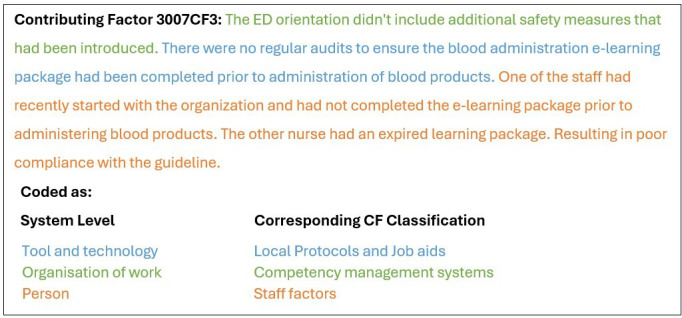
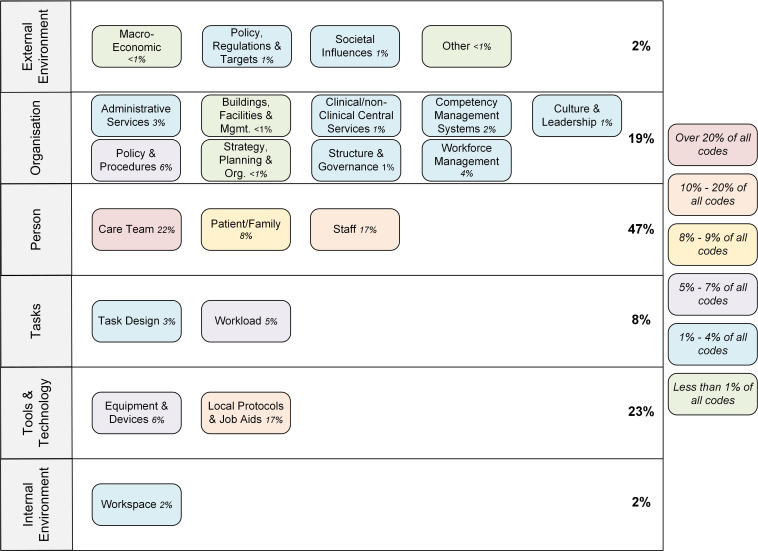
“These more recent versions of SEIPS reflect a sociotechnical systems approach to the patient journey 41 and posit that six elements make up any work situation: the people; the tasks; the tools; the physical environment; the organisation; and the external environment.”
InfluentialHolden, R. J., Carayon, P., Gurses, A. P., Hoonakker, P., Hundt, A. S., Ozok, A. A., & Rivera-Rodriguez, A. J. (2013) · Ergonomics · doi:10.1080/00140139.2013.838643 · Cited by 1,221 · cited 1×
“To ensure a hierarchically appropriate classification framework that could address the broad range of internal and external factors that could be identified in the CFs, SEIPS 2.0 40 and 3.0 41 were used as a foundation for separating the physical (internal) and external environment.”
InfluentialVincent, C. (2000) · BMJ · doi:10.1136/bmj.320.7237.777 · Cited by 498
SEIPS 3.0: human-centered design of the patient journey for patient safety
Carayon, P., Wooldridge, A., Hoonakker, P., Hundt, A. S., & Kelly, M. M. (2020) · Applied Ergonomics · doi:10.1016/j.apergo.2019.103033 · Cited by 493 · cited 2×
“To ensure a hierarchically appropriate classification framework that could address the broad range of internal and external factors that could be identified in the CFs, SEIPS 2.0 40 and 3.0 41 were used as a foundation for separating the physical (internal) and external environment.”
InfluentialSystems-based accident analysis methods: A comparison of Accimap, HFACS, and STAMP
Salmon, P. M., Cornelissen, M., & Trotter, M. J. (2012) · Safety Science · doi:10.1016/j.ssci.2011.11.009 · Cited by 437
Self-citationSystems science and systems thinking for public health: a systematic review of the field
Carey, G., Malbon, E., Carey, N., Joyce, A., Crammond, B., & Carey, A. (2015) · BMJ Open · doi:10.1136/bmjopen-2015-009002 · Cited by 432
The Safety of Inpatient Health Care
Bates, D. W., Levine, D. M., Salmasian, H., Syrowatka, A., Shahian, D. M., Lipsitz, S., Zebrowski, J. P., Myers, L. C., Logan, M. S., Roy, C. G., et al. (2023) · New England Journal of Medicine · doi:10.1056/nejmsa2206117 · Cited by 411
Deductive Qualitative Analysis: Evaluating, Expanding, and Refining Theory
Fife, S. T., & Gossner, J. D. (2024) · International Journal of Qualitative Methods · doi:10.1177/16094069241244856 · Cited by 400 · cited 1×
“25 85 To reduce the potential of bias, quality assurance processes were implemented, including inter-rater reliability tests, as well as engagement in regular reciprocal reflexive conversations and well-defined frameworks and business rules to guide the analysis to which changes were documented…”
The problem with root cause analysis
Peerally, M. F., Carr, S., Waring, J., & Dixon-Woods, M. (2017) · BMJ Quality & Safety · doi:10.1136/bmjqs-2016-005511 · Cited by 398 · cited 1×
“63 These findings suggest that when investigations focus on individual actions, incidents tend to be framed as being influenced by individual behaviours.”
The problem with incident reporting
Macrae, C. (2016) · BMJ Quality & Safety · doi:10.1136/bmjqs-2015-004732 · Cited by 387
Mitchell, I., Schuster, A., Smith, K., Pronovost, P., & Wu, A. (2016) · BMJ Quality & Safety · doi:10.1136/bmjqs-2015-004405 · Cited by 343 · cited 1×
“84 Identifying recurring patterns in CFs and the recommendations developed during the incident investigation process highlights opportunities to strengthen systems thinking and, in turn, reduce patient harm.”
Australian Institute of Health and Welfare
Sandison, B. (2018) · Impact · doi:10.21820/23987073.2018.2.80 · Cited by 272
Systems analysis of clinical incidents: the London protocol
Taylor-Adams, S., & Vincent, C. (2004) · Clinical Risk · doi:10.1258/1356262042368255 · Cited by 266
Kellogg, K. M., Hettinger, Z., Shah, M., Wears, R. L., Sellers, C. R., Squires, M., & Fairbanks, R. J. (2017) · BMJ Quality & Safety · doi:10.1136/bmjqs-2016-005991 · Cited by 216
SEIPS 101 and seven simple SEIPS tools
Holden, R. J., & Carayon, P. (2021) · BMJ Quality & Safety · doi:10.1136/bmjqs-2020-012538 · Cited by 213 · cited 1×
“10 11 12 13 The identification of CFs typically informs a set of recommendations designed to be implemented to prevent reoccurrence of similar incidents impacting other patients and to enable organisational learning.”
STAVROPOULOU, C., DOHERTY, C., & TOSEY, P. (2015) · The Milbank Quarterly · doi:10.1111/1468-0009.12166 · Cited by 212
Patient safety - the role of human factors and systems engineering.
Carayon, P., & Wood, K. E. (2010) · PubMed · Cited by 207
Etherington, C., Burns, J. K., Kitto, S. C., Brehaut, J., Britton, M., Singh, S. S., & Boet, S. (2021) · PLoS ONE · doi:10.1371/journal.pone.0249576 · Cited by 171
Shu, Y., He, X., Wu, P., Liu, Y., Ding, Y., & Zhang, Q. (2022) · Frontiers in Public Health · doi:10.3389/fpubh.2022.996179 · Cited by 145 · cited 1×
“33 34”
The big picture on accident causation: A review, synthesis and meta-analysis of AcciMap studies
Salmon, P. M., Hulme, A., Walker, G. H., Waterson, P. E., Berber, E., & Stanton, N. A. (2020) · Safety Science · doi:10.1016/j.ssci.2020.104650 · Cited by 144 · cited 3×
“43 60 The vast majority (>90”
Self-citationThe problem with making Safety-II work in healthcare
Verhagen, M. J., de Vos, M. S., Sujan, M. A., & Hamming, J. F. (2022) · BMJ Quality & Safety · doi:10.1136/bmjqs-2021-014396 · Cited by 142 · cited 4×
“76 Work- as-done may not be considered because incident investigations frequently rely solely on information collected from staff interviews and reviews of documentation.”
InfluentialModeling complex socio‐technical systems using the FRAM: A literature review
Salehi, V., Veitch, B., & Smith, D. (2020) · Human Factors and Ergonomics in Manufacturing & Service Industries · doi:10.1002/hfm.20874 · Cited by 132 · cited 1×
“81 Although this approach is used in healthcare agencies, 81 human factors and ergonomics expertise are underutilised.”
Sociotechnical systems analysis in health care: a research agenda
Carayon, P., Bass, E. J., Bellandi, T., Gurses, A. P., Hallbeck, M. S., & Mollo, V. (2011) · IIE Transactions on Healthcare Systems Engineering · doi:10.1080/19488300.2011.619158 · Cited by 128 · cited 2×
“The provision of healthcare is a complex socio-technical process, 62 not a simple linear one.”
Are root cause analyses recommendations effective and sustainable? An observational study
Hibbert, P. D., Thomas, M. J. W., Deakin, A., Runciman, W. B., Braithwaite, J., Lomax, S., Prescott, J., Gorrie, G., Szczygielski, A., Surwald, T., et al. (2018) · International Journal for Quality in Health Care · doi:10.1093/intqhc/mzx181 · Cited by 125 · cited 3×
“15 16 59 This approach results in less effective interventions as the broader systemic conditions that influence individual behaviour are not dealt with.”
Self-citationManaging error on the open road: The contribution of human error models and methods
Salmon, P. M., Lenné, M. G., Stanton, N. A., Jenkins, D. P., & Walker, G. H. (2010) · Safety Science · doi:10.1016/j.ssci.2010.04.004 · Cited by 118
Self-citationPeople, systems and safety: resilience and excellence in healthcare practice
Smith, A. F., & Plunkett, E. (2018) · Anaesthesia · doi:10.1111/anae.14519 · Cited by 117 · cited 1×
“75 However, when work- as-imagined 76 is used as the basis of the investigation of an adverse event, areas of key importance reflecting ‘work- as-done’, such as the habitual activities of clinicians, managers and supporting staff, can be missed.”
Goekcimen, K., Schwendimann, R., Pfeiffer, Y., Mohr, G., Jaeger, C., & Mueller, S. M. (2022) · Journal of Patient Safety · doi:10.1097/pts.0000000000001072 · Cited by 116 · cited 1×
“22 Our findings also provide further evidence of a research–practice gap in healthcare surrounding the approach to adverse event analysis.”
Root-cause analysis: swatting at mosquitoes versus draining the swamp
Trbovich, P., & Shojania, K. G. (2017) · BMJ Quality & Safety · doi:10.1136/bmjqs-2016-006229 · Cited by 109 · cited 2×
“21 Less often, human factors techniques such as observations 77 and simulation 78 are used, despite being essential to identifying the dynamic circumstances and variability of everyday practice—or work- as-done.”
A Systems Approach to Analyzing and Preventing Hospital Adverse Events
Leveson, N. G., Samost, A., Dekker, S. W. A., Finkelstein, S. N., & Raman, J. (2016) · Journal of Patient Safety · doi:10.1097/pts.0000000000000263 · Cited by 106 · cited 1×
“65 Healthcare, as a complex system, has interdependencies between people, teams, organisational environments, processes, equipment and technology 10 11 as well as broader influences like regulations, international standards and society.”
Safety analysis over time: seven major changes to adverse event investigation
Vincent, C. A., Carthey, J., Macrae, C., & Amalberti, R. (2017) · Implementation Science · doi:10.1186/s13012-017-0695-4 · Cited by 93 · cited 1×
“7 It is notable that analysis methods like AcciMap have been used successfully to support incident aggregation and the identification of trends in other sectors.”
Learning from failure: the need for independent safety investigation in healthcare
Macrae, C., & Vincent, C. (2014) · Journal of the Royal Society of Medicine · doi:10.1177/0141076814555939 · Cited by 80 · cited 2×
“…to learn important lessons from the best practice principles of safety-critical industries such as the aviation, maritime, railway industries 79 and some healthcare organisations such as the Health Services Safety Investigations Body (HSSIB) in England and the Norwegian Healthcare…”
Carson-Stevens, A., Hibbert, P., Williams, H., Evans, H. P., Cooper, A., Rees, P., Deakin, A., Shiels, E., Gibson, R., Butlin, A., et al. (2016) · Health Services and Delivery Research · doi:10.3310/hsdr04270 · Cited by 80
Self-citationIntegrating systemic accident analysis into patient safety incident investigation practices
Canham, A., Jun, G. T., Waterson, P. E., & Khalid, S. (2018) · Applied Ergonomics · doi:10.1016/j.apergo.2018.04.012 · Cited by 75 · cited 3×
“68 The findings of the current study present a clear need for the professionalisation of incident investigators, equipping the team with an understanding of complex sociotechnical systems methodologies to effectively lead, or at least be part of serious patient safety incident investigations.”
Taitz, J., Genn, K., Brooks, V., Ross, D., Ryan, K., Shumack, B., Burrell, T., & Kennedy, P. (2010) · BMJ Quality & Safety · doi:10.1136/qshc.2008.032144 · Cited by 68
Human Factors and Behavioural Safety
Stranks, J. W. (2007) · Routledge eBooks · doi:10.4324/9780080489001 · Cited by 62
Wright, J., Lawton, R., O'Hara, J. K., Armitage, G., Sheard, L., Marsh, C., Grange, A., McEachan, R., Cocks, K., Hrisos, S., et al. (2016) · Programme Grants for Applied Research · doi:10.3310/pgfar04150 · Cited by 57
Handbook of Systems Thinking Methods
Salmon, P. M., Stanton, N. A., Walker, G. H., Hulme, A., Goode, N., Thompson, J., & Read, G. J. M. (2022) · CRC Press eBooks · doi:10.1201/9780429281624 · Cited by 56
Self-citation“Old” and “new” safety thinking: Perspectives of aviation safety investigators
Karanikas, N., Chionis, D., & Plioutsias, A. (2020) · Safety Science · doi:10.1016/j.ssci.2020.104632 · Cited by 36
Systems-based investigation of patient safety incidents
Weaver, S., Stewart, K., & Kay, L. (2021) · Future Healthcare Journal · doi:10.7861/fhj.2021-0147 · Cited by 32 · cited 2×
“65 Healthcare, as a complex system, has interdependencies between people, teams, organisational environments, processes, equipment and technology 10 11 as well as broader influences like regulations, international standards and society.”
Can simulation improve the traditional method of root cause analysis: A preliminary investigation
Simms, E. R., Slakey, D. P., Garstka, M., Tersigni, S. A., & Korndorffer, J. R. (2012) · Surgery · doi:10.1016/j.surg.2012.07.029 · Cited by 31 · cited 1×
“21 Less often, human factors techniques such as observations 77 and simulation 78 are used, despite being essential to identifying the dynamic circumstances and variability of everyday practice—or work- as-done.”
Wrigstad, J., Bergström, J., & Gustafson, P. (2014) · BMJ Open · doi:10.1136/bmjopen-2014-005326 · Cited by 31 · cited 1×
“15 16 59 This approach results in less effective interventions as the broader systemic conditions that influence individual behaviour are not dealt with.”
Machen, S. (2023) · BMJ Open Quality · doi:10.1136/bmjoq-2022-002020 · Cited by 31 · cited 2×
“82 This practice offers significant promise, where aggregation of incident data allows investigators to identify complex patterns of CFs, and acts as a powerful tool to enhance the development and implementation of interventions that improve health-care.”
Improving RCA performance: the Cornerstone Award and the power of positive reinforcement
Bagian, J. P., King, B. J., Mills, P. D., & McKnight, S. D. (2011) · BMJ Quality & Safety · doi:10.1136/bmjqs.2010.049585 · Cited by 29
Self-citationSystems analysis of clinical incidents: development of a new edition of the London Protocol
Vincent, C. A., Irving, D., Bellandi, T., Higham, H., Michel, P., Staines, A., Taylor‐Adams, S. E., Brown, J. A., Hibbert, P. D., Hemmelgarn, C., et al. (2025) · BMJ Quality & Safety · doi:10.1136/bmjqs-2024-017987 · Cited by 29
Self-citationLea, W., Lawton, R., Vincent, C. A., & O'Hara, J. K. (2023) · Journal of Patient Safety · doi:10.1097/pts.0000000000001164 · Cited by 28 · cited 2×
“15 16 Even with concerted efforts in the preceding decade, 17 there is little evidence that incident analysis and investigation methods in healthcare are associated with reductions in patient harm.”
McLean, S. G., Finch, C. F., Goode, N., Clacy, A., Coventon, L., & Salmon, P. M. (2020) · Injury Prevention · doi:10.1136/injuryprev-2019-043424 · Cited by 25 · cited 1×
“83”
Self-citationde Kam, D., Kok, J., Grit, K. J., Leistikow, I. P., Vlemminx, M., & Bal, R. A. (2020) · Health Policy · doi:10.1016/j.healthpol.2020.05.018 · Cited by 24 · cited 1×
“72 73 Implications for policy, practice and research Our findings have implications related to how patient safety incident investigations are conducted.”
Peerally, M. F., Carr, S., Waring, J. J., Martin, G. P., & Dixon‐Woods, M. (2022) · Clinical Medicine · doi:10.7861/clinmed.2022-0042 · Cited by 24
Samra, R., Bottle, A., & Aylin, P. P. (2015) · BMJ Open · doi:10.1136/bmjopen-2015-008128 · Cited by 23
Mitchell, R. J., Faris, M. M., Lystad, R. P., Pulido, D. F., Norton, G., Baysari, M. T., Clay‐Williams, R., Hibbert, P. D., Carson‐Stevens, A., & Hughes, C. (2019) · Applied Ergonomics · doi:10.1016/j.apergo.2019.102920 · Cited by 22 · cited 1×
“In step 1, each incident investigation report was read in detail and the WHO’s International Classification for Patient Safety (ICPS) framework 35 36 Original research was used to identify the primary incident type.”
Self-citationSystems-based models for investigating patient safety incidents
Sampson, P., Back, J., & Drage, S. M. (2021) · BJA Education · doi:10.1016/j.bjae.2021.03.004 · Cited by 21
Systems Human Factors and Ergonomics Methods: Applications, Outcomes, and Future Directions
Jackson, S. L., Read, G. J. M., Hulme, A., & Salmon, P. M. (2025) · Human Factors and Ergonomics in Manufacturing & Service Industries · doi:10.1002/hfm.70002 · Cited by 20 · cited 1×
“55 Specifically, while it is widely acknowledged in the academic literature that investigations should be underpinned by a systems thinking approach, 56 this is not reflected in practice where a reductionist approach focused on staff and their equipment prevails.”
Self-citationContributory factors to patient safety incidents in primary care: protocol for a systematic review
Giles, S. J., Panagioti, M., Hernan, A. L., Cheraghi‐Sohi, S., & Lawton, R. (2015) · Systematic Reviews · doi:10.1186/s13643-015-0052-0 · Cited by 17 · cited 1×
“Investigations of serious harm incidents aim to understand their underlying causes, with key outputs including identification of contributing factors (CFs) (also known as contributory factors 6 ) and recommendations for incident prevention strategies.”
Ramsey, L., Sheard, L., Waring, J. J., McHugh, S., Simms‐Ellis, R., Louch, G., Ludwin, K., & O'Hara, J. K. (2025) · Frontiers in Health Services · doi:10.3389/frhs.2024.1473256 · Cited by 17 · cited 2×
“69 Ramsey et al 70 reported that incident investigators felt constrained to produce coherent descriptions of events despite conflicting accounts and gaps in understanding what happened.”
Hamilton, M. J., McEniery, J. A., Osborne, J. M., & Coulthard, M. G. (2018) · Journal of Paediatrics and Child Health · doi:10.1111/jpc.14344 · Cited by 16
Salmon, P. M., King, B. J., Hulme, A., Chari, S., McCormack, L., Tresillian, M. J., Bennett, K., & Read, G. J. M. (2022) · Safety Science · doi:10.1016/j.ssci.2022.106003 · Cited by 16
Self-citationHibbert, P. D., Raggett, L., Molloy, C. J., Westbrook, J. I., Magrabi, F., Mumford, V., Clay‐Williams, R., Lingam, R., Salmon, P. M., Middleton, S., et al. (2024) · BMJ Open · doi:10.1136/bmjopen-2024-085854 · Cited by 16 · cited 2×
“14 These recommendations can be variably effective and sustainable in improving care to patients.”
Self-citationBierbaum, M., Ying-hua, Y., Molloy, C. J., Bowditch, L., Salmon, P. M., Middleton, S., Braithwaite, J., & Hibbert, P. D. (2025) · Frontiers in Health Services · doi:10.3389/frhs.2025.1645575 · Cited by 16
Self-citationIntroducing national healthcare safety investigation bodies
Wiig, S., & Macrae, C. (2018) · British journal of surgery · doi:10.1002/bjs.11033 · Cited by 14
Jackson, S. L., Salmon, P. M., & Read, G. J. M. (2025) · Applied Ergonomics · doi:10.1016/j.apergo.2025.104468 · Cited by 10 · cited 1×
“57 58 This disparity could be linked to the focus on factors closer to the individuals involved with less consideration of the broader organisational and external factors that might have contributed to the incident but were less obvious.”
Self-citationKepner, S., & Jones, R. (2024) · Patient Safety · doi:10.33940/001c.116529 · Cited by 9
Hebert, C. A., Trudeau, S. A., Sprinkle, W., Moo, L. R., & McConnell, E. S. (2019) · Health & Social Care in the Community · doi:10.1111/hsc.12852 · Cited by 6
Schubel, L., Stein, L., Barrientos, R. E. R., Valdiviezo, C., Townsend, M., Basch, P., Weintraub, W., Hettinger, Z., Laccay, C., Chaney, K., et al. (2019) · Proceedings of the Human Factors and Ergonomics Society Annual Meeting · doi:10.1177/1071181319631288 · Cited by 6 · cited 1×
“74 The response, or recommendation, is an attempt to enhance these policies and knowledge.”
King, B. J., Read, G. J. M., Hulme, A., Chari, S., Clay‐Williams, R., Plant, K. L., McCormack, L., Tresillian, M. J., & Salmon, P. M. (2024) · Ergonomics · doi:10.1080/00140139.2024.2423170 · Cited by 6 · cited 1×
“16 Despite repeated calls for a systems thinking approach to analysis and investigation, 23 24 it is not clear whether such methods are being applied in practice.”
Self-citationA SEIPS-Based Analysis to Understand Safety Culture During Postpartum Hemorrhage
Hale-Lopez, K. L., Saenz, M. M., Verma, N., Chakravarthy, S., Ebert-Allen, R. A., Bond, W. F., & Wooldridge, A. R. (2025) · Healthcare · doi:10.3390/healthcare13050499 · Cited by 6 · cited 1×
“42 The term ‘physical’ when referencing the environment is referenced as ‘internal’ in these models and is used in the current study to reflect the more local surroundings directly controlled and experienced within the healthcare setting.”
What is going on? Contributory factors to automation-related aviation incidents and accidents
Read, G. J. M., O’Brien, A., Stanton, N. A., & Salmon, P. M. (2020) · Proceedings of the Human Factors and Ergonomics Society Annual Meeting · doi:10.1177/1071181320641412 · Cited by 4 · cited 1×
“57 58 This disparity could be linked to the focus on factors closer to the individuals involved with less consideration of the broader organisational and external factors that might have contributed to the incident but were less obvious.”
Self-citationEvaluating a system-wide, safety investigation in healthcare course in Norway: a qualitative study
Haraldseid-Driftland, C., Macrae, C., Guise, V., Schibevaag, L., Alsvik, J. G., Rosenberg, A., & Wiig, S. (2022) · BMJ Open · doi:10.1136/bmjopen-2021-058134 · Cited by 4 · cited 2×
“69 Ramsey et al 70 reported that incident investigators felt constrained to produce coherent descriptions of events despite conflicting accounts and gaps in understanding what happened.”
Klosko, R. C., Lynch, S. E., Cabral, D., Nagaraju, K., Johnston, Y., Steinberg, J. D., & McCall, K. L. (2023) · Vaccines · doi:10.3390/vaccines11020276 · Cited by 4 · cited 1×
“33 34”
Porter, J. E., Dabkowski, E., Smith, W., Fernando, A., & Seaward, L. (2025) · Public Health in Practice · doi:10.1016/j.puhip.2025.100598 · Cited by 2 · cited 1×
“A linear approach to investigation understands incidents as the culmination of a series of events, 64 for example, A causes B which causes C. 10 In contrast, a systems thinking-based approach is designed to capture the complexity of the healthcare system, 62 positing that incidents arise from…”
Research works printed but not linked: 2
- Commision CE Serious Adverse Event Review: Incident Analysis - Immediacy, Accountability, Kindness Sydney NSW Health 2020
- Dekker S Drift into Failure: From Hunting Broken Components to Understandig Complex Systems 1st edn CRC Press 2011
Cited by
Jabin, M. S. R. (2026) · Frontiers in Digital Health · doi:10.3389/fdgth.2026.1785086 · Cited by 10
“Digital technologies can alter established work practices, redistribute cognitive workload across clinicians (including doctors, nurses, and allied health professionals), and increase coupling and interdependence between system components (2, 3).”
Assessing the quality of patient safety incident investigation reports
Bowditch, L., Molloy, C. J., King, B. J., Abedi, M., Jackson, S. L., Bierbaum, M., Ying-hua, Y., Raggett, L., Salmon, P. M., Lingam, R., et al. (2026) · International Journal for Quality in Health Care · doi:10.1093/intqhc/mzag077 · Cited by 4
Self-citationMacrae, C. (2026) · Journal of Patient Safety and Risk Management · doi:10.1177/25160435261421366 · Cited by 3
Thinking and organising in systems: reframing the long problem of learning from incidents
Macrae, C. (2025) · BMJ Quality & Safety · doi:10.1136/bmjqs-2025-019407 · Cited by 2
“These challenges motivate a major study by Bowditch et al 6 in this issue of BMJ Quality and Safety , which examines whether incident investigations effectively engage with the complex systemic issues, and the sociotechnical sources of risk, which routinely threaten the safety of patients.”
InfluentialWang, Y., Bowditch, L., Molloy, C. J., Ying-hua, Y., Hibbert, P., & Magrabi, F. (2026) · Journal of the American Medical Informatics Association · doi:10.1093/jamia/ocag068 · Cited by 1
Self-citation
Metadata
- Authors
- Bowditch, L., Molloy, C., King, B., Abedi, M., Jackson, S., Bierbaum, M., Yu, Y., Raggett, L., Salmon, P., Braithwaite, J., Westbrook, J. I., Clay-Williams, R., Lingam, R., Middleton, S., Magrabi, F., Mumford, V., & Hibbert, P.
- Affiliations
- Macquarie University (AU)
- University of South Australia (AU)
- University of the Sunshine Coast (AU)
- Macquarie University Australian Institute of Health Innovation, Sydney, New South Wales, Australia
- Nomic Research, North Turramurra, Sydney, New South Wales, Australia
- UNSW Sydney (AU)
- St Vincent's Hospital Melbourne (AU)
- Corresponding author
- Hibbert, Peter
- ORCID
- Venue
- BMJ Quality & Safety
- Publisher
- BMJ
- Published
- 2025-09-12
- Volume
- 35
- Issue
- 7
- Pages
- 443-455
- ISSN
- 1475-3898 (ISSN-L)
- 2044-5415
- 2044-5423
- PMC
- PMC13311954
- OpenAlex
- W4414162719
- Cited by
- 16
- References
- 72
- Citations by year
- 2026: 15 · 2025: 1
- FWCI
- 20.78
- Type
- journal article
- Language
- en
- Open access
- hybrid
- doi.org
- Locations
- BMJ Quality & Safety (publishedVersion, cc-by)
- PubMed (publishedVersion)
- PubMed Central (publishedVersion, cc-by)
- Adelaide Research & Scholarship (AR&S) (University of Adelaide) (submittedVersion, cc-by)
- Funders
- National Health and Medical Research Council (NHMRC) Partnership (2017219)
- Topics
- Health Sciences › Medicine › Public Health, Environmental and Occupational Health › Patient Safety and Medication Errors
- Health Sciences › Medicine › Public Health, Environmental and Occupational Health › Healthcare Quality and Management
- Social Sciences › Safety Research › Occupational Health and Safety Research
- Keywords
- systems thinking, contributing factors, AcciMap, socio-technical systems, health care system complexity, data aggregation
- MeSH terms
- Australia, Humans, Risk Management, Systems Analysis, Safety Management, Medical Errors, Patient Safety
About these checks
Registry, retraction, Cites and statistics results are computed, not judged, with one exception: a printed reference that no index lists is read once by a model before it counts as a citation error. Claims are extracted by a model and kept only when their quote appears verbatim in the text; each cited source is then checked, with a model’s help, for whether it says what the claim relies on. Those verdicts can be wrong — read the claim’s quote and the cited source before relying on one.
Statistics and arithmetic are recomputed, not judged.
Confidence bands are shown only for fields calibrated on our annotated test set. None is calibrated yet, so no band is shown.
What counts as a claim ›How we measure confidence ›How we check this ›
Are you an author, or do you see a problem with this page? Request a review
Data sources
Bibliographic data: Semantic Scholar, OpenAlex, Crossref.
Contains information from the Semantic Scholar Academic Graph Datasets, made available under the ODC Attribution License (ODC-BY 1.0).
Semantic Scholar’s data is described in: Kinney, R., et al. (2023). The Semantic Scholar Open Data Platform. arXiv:2301.10140.
