

CPR decision-making conversations in the UK: an integrative review
Open accessThe DOI matches its Crossref record; 40 of the 41 references it cites were found in a registry or an index.
Abstract
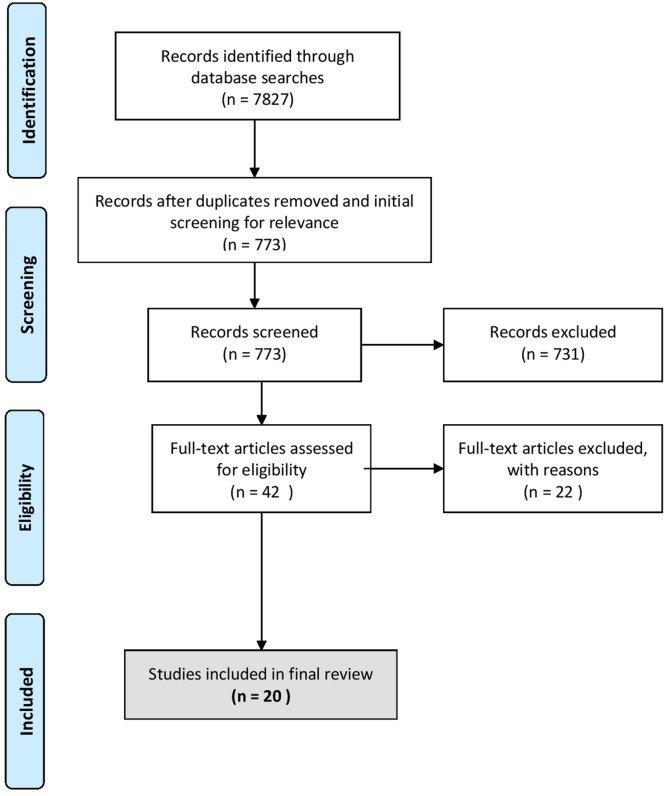
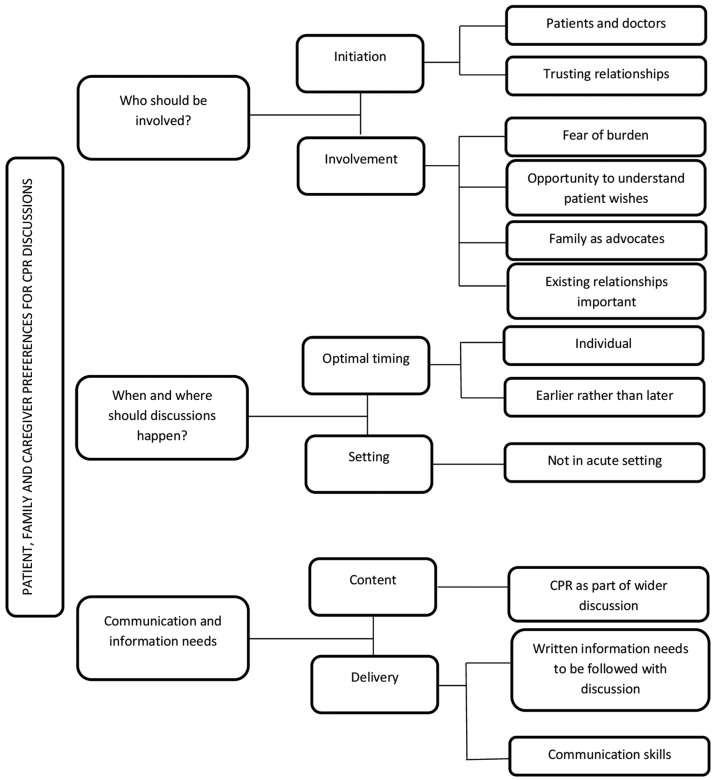
Objectives: Do Not Attempt Cardio-Pulmonary Resuscitation (DNACPR) discussions with patients and their caregivers have been subjected to intense ethical and legal debate in recent years. Legal cases and national guidelines have tried to clarify the best approach to DNACPR discussions; however, there is little evidence of how best to approach them from the patient, family or caregiver perspective. This paper describes published accounts of patient, family and caregiver experiences of discussions about advance cardiopulmonary resuscitation (CPR) decision making. Methods: An integrative review of the UK literature between 2000 and 2016 including qualitative and quantitative studies was conducted. Worldwide, 773 abstracts were identified, and 20 papers from the UK were included in the final analysis. Results: Patient, family and caregivers prefer discussions to be initiated by someone trusted, and wishes for family involvement vary depending on the context. Timing of discussions should be individualised, though discussions earlier in the illness are often preferable. Discussions held in the acute setting are suboptimal. CPR decisions should be part of a wider discussion about future care and adequate communication skills training is important. Conclusions: The findings of this review are at odds with the current statutory framework and potentially challenging for medical professionals who are working in a stretched health service, with pressure to discuss DNACPR decisions at the earliest opportunity. With increasing focus on person-centred care and realistic medicine, patient narratives must be considered by doctors and policy makers alike, to minimise harm.
Overview
The claims and statistics of this paper haven’t been checked yet.
Free: it reads the open-access text and checks the first 5 claims that cite a source we can check. Create a free account to check every claim.
Integrity signals
Registry
Cites
Statistics
Figures
Verification
Claims the paper makes
The claims and statistics of this paper haven’t been checked yet.
Free: it reads the open-access text and checks the first 5 claims that cite a source we can check. Create a free account to check every claim.
Self-check
Percentages, sums and reported differences re-computed from the paper’s own numbers.
The self-check needs the paper’s full text.
Citations
Cites
1 retracted
Mcmahon-Parkes, K., Moule, P., Benger, J. R., & Albarran, J. W. (2008) · International Journal of Nursing Studies · doi:10.1016/j.ijnurstu.2008.08.007 · Cited by 76 · cited 1×
“33 From the point of view of relatives themselves, Higginson et al ’s (2016) ethnographic study of patterns and conflicts in care and decision-making trajectories, described that families did not necessarily want to make decisions because they felt ill prepared.”
BackgroundRetractedQualitative Data Analysis: An Expanded Sourcebook
(1994) · Journal of Environmental Psychology · doi:10.1016/s0272-4944(05)80231-2 · Cited by 48,420
The integrative review: updated methodology
Whittemore, R., & Knafl, K. (2005) · Journal of Advanced Nursing · doi:10.1111/j.1365-2648.2005.03621.x · Cited by 10,241 · cited 1×
“At this point, data extraction and themes were cross-checked and a detailed analysis was conducted to extract, reduce and categorise subthemes, 14 using the constant comparative method 18 used in qualitative research.”
MethodHighet, G., Crawford, D., Murray, S. A., & Boyd, K. (2014) · BMJ Supportive & Palliative Care · doi:10.1136/bmjspcare-2013-000488 · Cited by 511
Cardiac Arrest: Report of Application of External Cardiac Massage on 118 Patients
Jude, J. R. (1961) · JAMA · doi:10.1001/jama.1961.03040500005002 · Cited by 293
Livingston, G., Leavey, G., Manela, M., Livingston, D., Rait, G., Sampson, E., Bavishi, S., Shahriyarmolki, K., & Cooper, C. (2010) · BMJ · doi:10.1136/bmj.c4184 · Cited by 239
End-of-life decision making: A qualitative study of elderly individuals
Rosenfeld, K. E., Wenger, N. S., & Kagawa-Singer, M. (2000) · Journal of General Internal Medicine · doi:10.1046/j.1525-1497.2000.06289.x · Cited by 234
How to critically appraise an article
Young, J. M., & Solomon, M. J. (2009) · Nature Clinical Practice Gastroenterology & Hepatology · doi:10.1038/ncpgasthep1331 · Cited by 178
Seymour, J., Gott, M., Bellamy, G., Ahmedzai, S. H., & Clark, D. (2004) · Social Science & Medicine · doi:10.1016/j.socscimed.2003.10.005 · Cited by 177 · cited 2×
“29 Seymour et al (2004) suggested that discussions should not take place too close to death, 25 but Pollock et al ’s (2015) case studies revealed that this frequently happened.”
Resuscitation policy should focus on the patient, not the decision
Fritz, Z., Slowther, A.-M., & Perkins, G. D. (2017) · BMJ · doi:10.1136/bmj.j813 · Cited by 162
Research works printed but not linked: 1
- BailII. England and Wales Court of Appeal (Civil Division) Decisions Tracey, R (On the Application Of) v Cambridge University Hospitals NHS Foundation Trust & Ors [2014] EWCA Civ 822 (17 June 2014). 2014 http://www.bailii.org/ew/cases/EWCA/Civ/2014/822.html2017
Cited by
Resilience, stress, and psychological well-being in nursing students: A systematic review
Li, Z.-S., & Hasson, F. (2020) · Nurse Education Today · doi:10.1016/j.nedt.2020.104440 · Cited by 416
A brave new world: the new normal for general practice after the COVID-19 pandemic
Khan, N., Jones, D. J., Grice, A., Alderson, S. L., Bradley, S. H., Carder, P., Drinkwater, J., Edwards, H. L., Essang, B., Richards, S. H., et al. (2020) · BJGP Open · doi:10.3399/bjgpopen20x101103 · Cited by 97
Bremer, A., Årestedt, K., Rosengren, E., CARLSSON, J., & Sandboge, S. (2021) · BMC Medical Ethics · doi:10.1186/s12910-021-00604-8 · Cited by 24
“However, the desire for relatives to be involved varied depending on the context, while the timing of the discussion should preferably be earlier in the patient’s illness rather than during an acute phase [33].”
Advance and future care planning: strategic approaches in Wales
Taubert, M., & Bounds, L. (2022) · BMJ Supportive & Palliative Care · doi:10.1136/bmjspcare-2021-003498 · Cited by 20
Recommended summary plan for emergency care and treatment: ReSPECT a mixed-methods study
Perkins, G. D., Hawkes, C. A., Eli, K., Griffin, J., Jacques, C., Huxley, C. J., Couper, K., Ochieng, C., Fuld, J., Fritz, Z., et al. (2022) · Health and Social Care Delivery Research · doi:10.3310/lfpe3627 · Cited by 16
Standing, H. C., Patterson, R., Dalkin, S. M., Exley, C., & Brittain, K. (2020) · Social Science & Medicine · doi:10.1016/j.socscimed.2020.113300 · Cited by 16
Jia, T., Luo, C., Wang, S., Wang, Z., Lu, X., Yang, Q., & Zhu, C. (2020) · Medical Science Monitor · doi:10.12659/msm.926815 · Cited by 18
A cross-sectional investigation of communication in do-not-resuscitate orders in Dutch hospitals
Schluep, M., Hoeks, S. E., Endeman, H., IJmkers, S., Romijn, T. M. M., Alsma, J., Bosch, F. H., Cornet, A. D., Knook, A. H. M., Koopman-van Gemert, A. W. M. M., et al. (2020) · Resuscitation · doi:10.1016/j.resuscitation.2020.04.004 · Cited by 15
“We support recommendations for national guidelines and training of CPR-counselling to help physicians guide their patients in shared decision-making.(8) As mentioned there is no protocol for CPR-directive conversations.”
BackgroundMethodHartanto, M., Moore, G., Robbins, T., Suthantirakumar, R., & Slowther, A. (2023) · Resuscitation Plus · doi:10.1016/j.resplu.2022.100351 · Cited by 13
“A previous integrative review on CPR discussions in the UK supports our findings regarding family member support and setting.(40) Patients wanted their families to be involved in CPR discussions and preferred conversations in GP surgeries as they considered hospital wards “too public.”
BackgroundManaging Do Not Attempt Cardiopulmonary Resuscitation conversations in the community
Hadley, J. M. (2020) · British Journal of Community Nursing · doi:10.12968/bjcn.2020.25.2.58 · Cited by 11
Tsai, J. C.-H., Ma, J.-W., Liu, S., Lin, T., & Hu, S.-Y. (2021) · Journal of Clinical Medicine · doi:10.3390/jcm10215131 · Cited by 11
Reid, E. A., Abathun, E., Feyisa, J. D., Mamo, Y., Wondemagegnhu, T., Hall, P. S., Fallon, M., & Grant, L. (2022) · BMJ Supportive & Palliative Care · doi:10.1136/spcare-2022-003996 · Cited by 12
Advance and future care planning
Hyson, L., & Fritz, Z. B. M. (2024) · BMJ · doi:10.1136/bmj-2023-074797 · Cited by 9
Moghbeli, G., Roshangar, F., Soheili, A., Ahmadi, F., Feizollahzadeh, H., & Hassankhani, H. (2024) · International Journal of Emergency Medicine · doi:10.1186/s12245-024-00788-x · Cited by 10
Slowther, A., Harlock, J., Bernstein, C. J., Bruce, K., Eli, K., Huxley, C., Lovell, J. M., Mann, C., Noufaily, A., Rees, S., et al. (2024) · Health and Social Care Delivery Research · doi:10.3310/nvtf7521 · Cited by 11
Clinical impact of frailty among patients with severe vital sign derangement: An observational study
Bech, L. K., Lindhardt, A., & Meyhoff, C. S. (2020) · Acta Anaesthesiologica Scandinavica · doi:10.1111/aas.13555 · Cited by 8
“Albumin g/L 27 [19-37] 25 [15-34] Grip strengthc (n = 15 vs n = 14) 16 [9.”
Taneja, R., Sibbald, R., Elliott, L., Burke, E., Bishop, K., Jones, P. M., & Goldszmidt, M. A. (2021) · Canadian Journal of Anesthesia/Journal canadien d anesthésie · doi:10.1007/s12630-020-01906-y · Cited by 6
Berry-Kilgour, N., Paulin, J., Psirides, A. J., & Pegg, T. J. (2023) · Internal Medicine Journal · doi:10.1111/imj.16046 · Cited by 5
Robinson, L., Lawrie, I., Hard, J., Hewson, T., Shaw, D., Shaw, W., & Shaw, J. J. (2023) · Postgraduate Medical Journal · doi:10.1093/postmj/qgad020 · Cited by 3
Gane, K., Sparks, T., & Thomas, E. (2024) · Journal of Small Animal Practice · doi:10.1111/jsap.13778 · Cited by 3
Physical and Mental Health Status of Tribal People in Odisha: A Systematic Literature Review
Behera, N., Pandey, K., & Shankar, S. (2024) · Global Social Welfare · doi:10.1007/s40609-024-00355-5 · Cited by 3
“CASP tool using the Hall et al. (2019) coding sytem (ranging from 0 to 10) measures overall methodological qualities of a qualitaive study, where a study score between 8 and 10 indicates excellant methodological quality, 4-7 indicates moderate quality, and 0-4 suggests poor quality.”
Hanson, S., Lassen, A. T., Nielsen, D. S., Ryg, J., Forero, R., & Brabrand, M. (2023) · Resuscitation · doi:10.1016/j.resuscitation.2023.109836 · Cited by 3
Preparing patients for surgery: Perioperative care and general practice
Morgan, R. W., Samuel, K., & Heller, R. (2022) · InnovAiT Education and inspiration for general practice · doi:10.1177/17557380221120441 · Cited by 3
Tomkow, L., Dewhurst, F., Hubmann, M., Straub, C., Damisa, E., Hanratty, B., & Todd, C. J. (2023) · Age and Ageing · doi:10.1093/ageing/afad087 · Cited by 3
“Rapid, untimely clinical deterioration meant that instead of being part of wider discussions about advance care planning, almost half of DNACPR decisions were made during emergency hospital admissions [5, 12].”
BackgroundSterie, A., Weber, O., Jox, R. J., & Truchard, E. R. (2023) · Health Communication · doi:10.1080/10410236.2023.2276587 · Cited by 4
“This implies an active dialogue between the physician and the patient, which is why the relevance of attempting CPR is routinely discussed with patients upon admission to the hospital (Hall et al., 2019).”
Walker, J., Burke, K., Wanat, M., Hobbs, H., Rocroi, I., & Sharpe, M. (2021) · BMJ Supportive & Palliative Care · doi:10.1136/bmjspcare-2021-003084 · Cited by 2
Consent: assessing and communicating risk
Horner, R., & Rimmer, C. (2019) · Surgery (Oxford) · doi:10.1016/j.mpsur.2019.05.009 · Cited by 2
Sengupta, P., Adieb, M., Maksimyan, S., & Crasta, M. (2023) · Journal of Biosciences and Medicines · doi:10.4236/jbm.2023.116013 · Cited by 2
COVID-19 disease: Resuscitation
Paschoud, D., Carter, C., & Notter, J. (2020) · Clinics in Integrated Care · doi:10.1016/j.intcar.2020.100023 · Cited by 2
Physician perspectives on the DNR order in Turkey: A survey of physicians in Internal Medicine
Güvercin, C. H., Pelin, K. A., & Canan, Y. G. A. (2023) · African Health Sciences · doi:10.4314/ahs.v23i1.71 · Cited by 2
Barnes-Harris, M., Datla, S., Abel, A. A. I., Clark, A. L., & Johnson, M. J. (2024) · PLoS ONE · doi:10.1371/journal.pone.0314631 · Cited by 1
Anggra, P., & Lewiandy, L. (2024) · Journal of Law Politic and Humanities · doi:10.38035/jlph.v5i1.898 · Cited by 1
“The DNACPR guidelines in the United Kingdom respect the principle of patient autonomy, enabling patients to control their own healthcare with clear information before making decisions (Hall, 2018).”
P11 SimPall an in-situ simulation course on Palliative Care for the Emergency Department
Edwards, S. L., Keillor, L., Krauze, S., Singh, R., Murray, K. B., & Grant, J. E. S. (2019) · BMJ Simulation & Technology Enhanced Learning · doi:10.1136/bmjstel-2019-aspihconf.116 · Cited by 1
“Death is an everyday occurrence, and with that comes the skills needed to talk to patients and families about when their end of life may be nearing.(1) The Royal College of Emergency Medicine’s guidelines suggest doctors need to have the skills to talk to these patients.”
BackgroundDo early DNACPR decisions prevent inappropriate CPR attempts
Coulden, A., & Cairns, H. (2023) · Resuscitation · doi:10.1016/j.resuscitation.2023.110102 · Cited by 1
O impacto da RCP precoce e de alta qualidade em indivíduos adultos e idosos: uma revisão integrativa
Lima, M. B. D., Pontes, J. J. F., & Ramos, R. R. (2024) · Biosciences and Health · doi:10.62331/2965-758x.v2.2024.57 · Cited by 1
“Nature exposed to our method of questioning”—resuscitation preferences and complex interventions
Hansel, J., Cochrane, N., Eusuf, D. V., Gardner, A., Hardern, T., Haslam, D., Moxon, H., & Shelton, C. (2021) · Canadian Journal of Anesthesia/Journal canadien d anesthésie · doi:10.1007/s12630-021-01998-0 · Cited by 1
“For example, the mere fact that a patient is approached for a second conversation about resuscitation preference might significantly influence their responses.(2)”
BackgroundP31 Experiences of developing in-situ palliative simulations in the emergency department
Edwards, S. L., Keillor, L., Krauze, S., Singh, R., Murray, K. B., & Grant, J. E. S. (2019) · BMJ Simulation & Technology Enhanced Learning · doi:10.1136/bmjstel-2019-aspihconf.135
Ndiyo, U., Belagodu, Z., Sarfi, S., Gurnett, P., & Moore, L. (2019) · BMJ Simulation & Technology Enhanced Learning · doi:10.1136/bmjstel-2019-aspihconf.134
Krarup, K. B., & Cutler, S. (2019) · BMJ Simulation & Technology Enhanced Learning · doi:10.1136/bmjstel-2019-aspihconf.117
Shaw, S., Miles, E., Aldridge, M. J., Cairns, T., Whittle, C., & Finucane, K. (2019) · BMJ Simulation & Technology Enhanced Learning · doi:10.1136/bmjstel-2019-aspihconf.115
Treatment escalation planning for surgical patients
Swain, C. S., Emslie, K., Fraser, T., Mahendran, B. S., & Spellar, K. (2020) · Bulletin of The Royal College of Surgeons of England · doi:10.1308/rcsbull.2020.e004
Resuscitation discussions: learning from Covid‐19
Davies, K. (2020) · The Clinical Teacher · doi:10.1111/tct.13278 · Cited by 1
A comparison of in-hospital cardiac arrests between a United States and United Kingdom hospital
Powell, L. E., Brady, W. J., Reiser, R. C., & Beckett, D. J. (2021) · The American Journal of Emergency Medicine · doi:10.1016/j.ajem.2021.01.005
Recognising the elephant in the room: Foundation doctors and anticipatory care planning
Chapman, H. R., Jassam, M., O’Rourke, R., & Anthony, R. (2021) · Future Healthcare Journal · doi:10.7861/fhj.2020-0200
Legal and Ethical Issues in Trauma Care
Bell, M. D. D. (2022) · Springer eBooks · doi:10.1007/978-3-030-83628-3_3
Sterie, A., Poncin, E., Jox, R. J., Truchard, E. R., & Major, K. (2022) · Research Square · doi:10.21203/rs.3.rs-1326439/v1
CPR-Directive Conversations in the Emergency Department: The Opinion of Elderly Patients
Kramp, K. H., de Hond, R., Mehrab, M., van Hooft, M. A. A., & Hessels, R. A. P. A. (2022) · Journal of Geriatric Emergency Medicine · doi:10.17294/2694-4715.1028
Mentzelopoulos, S. D., & Chalkias, A. F. (2023) · Resuscitation · doi:10.1016/j.resuscitation.2023.109877
Baihaqi, A. Z., Sasongko, H. P., & Haswita, H. (2023) · Advances in health sciences research/Advances in Health Sciences Research · doi:10.2991/978-94-6463-324-5_40
New Developments and Old Dilemmas in Ontario’s Resuscitation Policy at the End of Life
Apramian, T., Szego, M. J., & Langlois, D. (2024) · Canadian Journal of Bioethics · doi:10.7202/1112288ar
Cheung, K. Y., & Reid, D. (2025) · The American Journal of Emergency Medicine · doi:10.1016/j.ajem.2025.08.018
The care certificate: basic life support
Ellis, P. (2025) · British Journal of Healthcare Assistants · doi:10.12968/bjha.20250010r1
Bremer, A., Årestedt, K., Rosengren, E., Carlsson, J., & Sandboge, S. (2021) · Figshare · doi:10.6084/m9.figshare.14344382
Validated Education Tool Promoting Knowledge of CPR Measures Within Advance Care Planning
Kellogg, S. H., & Kellogg, S. H. (2023) · UA Campus Repository (The University of Arizona)
Shih, H.-H., Lo, C.-Y., Lu, S.-H., Lin, P., & Lee, K. (2026) · Palliative & Supportive Care · doi:10.1017/s1478951525100424
Harlock, J., Slowther, A., Bernstein, C. J., Huxley, C., Eli, K., Mann, C., Spencer, R. A., Blanchard, H., & Griffiths, F. E. (2026) · Journal of Long-Term Care · doi:10.31389/jltc.417
Liu, Y., & Chen, J. (2026) · British Journal of Anaesthesia · doi:10.1016/j.bja.2026.06.013
Kirk, M., Taiano, M., & Olawade, D. B. (2026) · Cure & Care · doi:10.1016/j.ccwv.2026.100044
Metadata
- Authors
- Hall, C. C., Lugton, J., Spiller, J. A., & Carduff, E.
- Affiliations
- Marie Curie (GB)
- Marie Curie Hospice (GB)
- Corresponding author
- Carduff, Emma
- Venue
- BMJ Supportive & Palliative Care
- Publisher
- BMJ
- Published
- 2018-08-14
- Volume
- 9
- Issue
- 1
- Pages
- 1-11
- ISSN
- 2045-435X (ISSN-L)
- 2045-4368
- PMC
- PMC6579491
- OpenAlex
- W2885917915
- Cited by
- 49
- References
- 41
- Citations by year
- 2026: 4 · 2025: 2 · 2024: 7 · 2023: 10 · 2022: 7 · 2021: 8 · 2020: 10 · 2019: 1
- FWCI
- 0.86
- Type
- journal article
- Language
- en
- Open access
- hybrid
- doi.org
- Licence
- cc-by-nc
- Locations
- BMJ Supportive & Palliative Care (publishedVersion, cc-by-nc)
- Europe PMC (PubMed Central) (publishedVersion, cc-by-nc)
- PubMed Central (publishedVersion, cc-by-nc)
- PubMed (publishedVersion)
- HighWire Press Open Archive (submittedVersion)
- Funders
- Scottish Government
- Topics
- Health Sciences › Medicine › Public Health, Environmental and Occupational Health › Palliative Care and End-of-Life Issues
- Health Sciences › Medicine › Emergency Medicine › Cardiac Arrest and Resuscitation
- Health Sciences › Medicine › Critical Care and Intensive Care Medicine › Family and Patient Care in Intensive Care Units
- Keywords
- DNACPR, advance care planning, patient and family experiences, caregiver involvement, timing of discussions, communication skills training, person-centred care, United Kingdom
- MeSH terms
- Communication, Decision Making, Female, United Kingdom, Humans, Male, Physicians, Resuscitation Orders, Cardiopulmonary Resuscitation, Advance Care Planning
About these checks
Registry, retraction, Cites and statistics results are computed, not judged, with one exception: a printed reference that no index lists is read once by a model before it counts as a citation error. Claims are extracted by a model and kept only when their quote appears verbatim in the text; each cited source is then checked, with a model’s help, for whether it says what the claim relies on. Those verdicts can be wrong — read the claim’s quote and the cited source before relying on one.
Statistics and arithmetic are recomputed, not judged.
Confidence bands are shown only for fields calibrated on our annotated test set. None is calibrated yet, so no band is shown.
What counts as a claim ›How we measure confidence ›How we check this ›
Are you an author, or do you see a problem with this page? Request a review
Data sources
Bibliographic data: Semantic Scholar, OpenAlex, Crossref.
Contains information from the Semantic Scholar Academic Graph Datasets, made available under the ODC Attribution License (ODC-BY 1.0).
Semantic Scholar’s data is described in: Kinney, R., et al. (2023). The Semantic Scholar Open Data Platform. arXiv:2301.10140.
