

CPR decision-making conversations in the UK: an integrative review
Open accessThe DOI matches its Crossref record; 40 of the 41 references it cites were found in a registry or an index.
Abstract
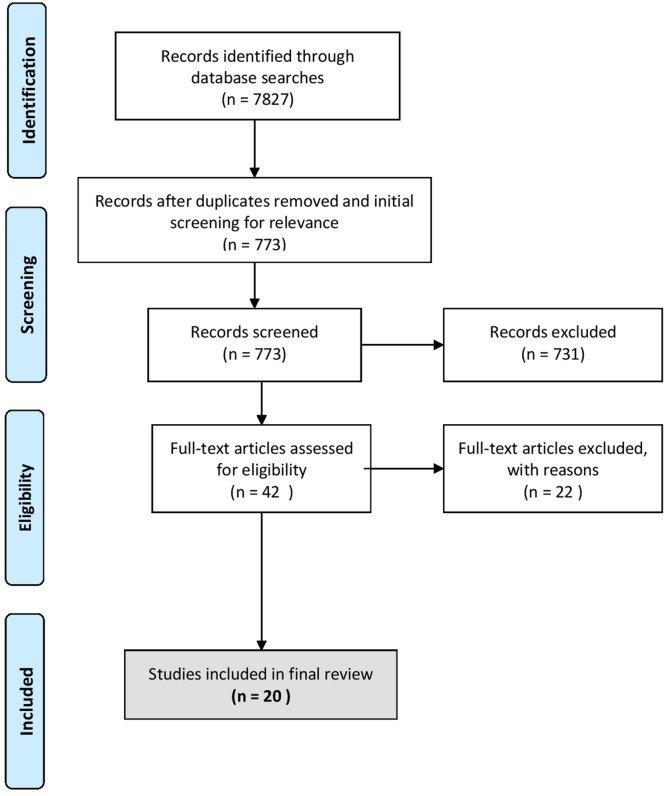
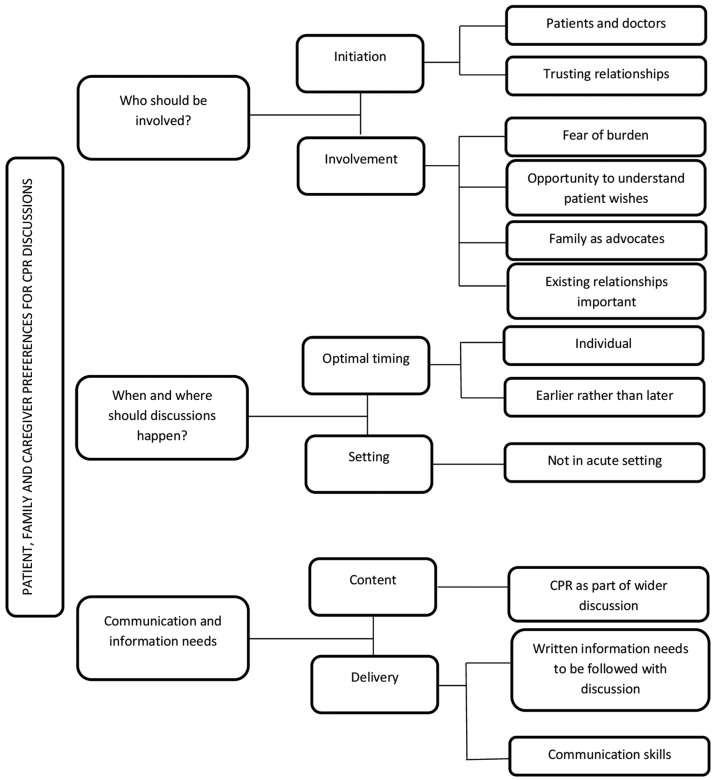
Objectives: Do Not Attempt Cardio-Pulmonary Resuscitation (DNACPR) discussions with patients and their caregivers have been subjected to intense ethical and legal debate in recent years. Legal cases and national guidelines have tried to clarify the best approach to DNACPR discussions; however, there is little evidence of how best to approach them from the patient, family or caregiver perspective. This paper describes published accounts of patient, family and caregiver experiences of discussions about advance cardiopulmonary resuscitation (CPR) decision making. Methods: An integrative review of the UK literature between 2000 and 2016 including qualitative and quantitative studies was conducted. Worldwide, 773 abstracts were identified, and 20 papers from the UK were included in the final analysis. Results: Patient, family and caregivers prefer discussions to be initiated by someone trusted, and wishes for family involvement vary depending on the context. Timing of discussions should be individualised, though discussions earlier in the illness are often preferable. Discussions held in the acute setting are suboptimal. CPR decisions should be part of a wider discussion about future care and adequate communication skills training is important. Conclusions: The findings of this review are at odds with the current statutory framework and potentially challenging for medical professionals who are working in a stretched health service, with pressure to discuss DNACPR decisions at the earliest opportunity. With increasing focus on person-centred care and realistic medicine, patient narratives must be considered by doctors and policy makers alike, to minimise harm.
Overview
The claims and statistics of this paper haven’t been checked yet.
Free: it reads the open-access text and checks the first 5 claims that cite a source we can check. Create a free account to check every claim.
Integrity signals
Registry
Cites
Statistics
Figures
Verification
Claims the paper makes
The claims and statistics of this paper haven’t been checked yet.
Free: it reads the open-access text and checks the first 5 claims that cite a source we can check. Create a free account to check every claim.
Self-check
Percentages, sums and reported differences re-computed from the paper’s own numbers.
The self-check needs the paper’s full text.
Citations
Cites
1 retracted
Mcmahon-Parkes, K., Moule, P., Benger, J. R., & Albarran, J. W. (2008) · International Journal of Nursing Studies · doi:10.1016/j.ijnurstu.2008.08.007 · Cited by 76 · cited 1×
“33 From the point of view of relatives themselves, Higginson et al ’s (2016) ethnographic study of patterns and conflicts in care and decision-making trajectories, described that families did not necessarily want to make decisions because they felt ill prepared.”
BackgroundRetractedQualitative Data Analysis: An Expanded Sourcebook
(1994) · Journal of Environmental Psychology · doi:10.1016/s0272-4944(05)80231-2 · Cited by 48,420
The integrative review: updated methodology
Whittemore, R., & Knafl, K. (2005) · Journal of Advanced Nursing · doi:10.1111/j.1365-2648.2005.03621.x · Cited by 10,241 · cited 1×
“At this point, data extraction and themes were cross-checked and a detailed analysis was conducted to extract, reduce and categorise subthemes, 14 using the constant comparative method 18 used in qualitative research.”
MethodHighet, G., Crawford, D., Murray, S. A., & Boyd, K. (2014) · BMJ Supportive & Palliative Care · doi:10.1136/bmjspcare-2013-000488 · Cited by 511
Cardiac Arrest: Report of Application of External Cardiac Massage on 118 Patients
Jude, J. R. (1961) · JAMA · doi:10.1001/jama.1961.03040500005002 · Cited by 293
Livingston, G., Leavey, G., Manela, M., Livingston, D., Rait, G., Sampson, E., Bavishi, S., Shahriyarmolki, K., & Cooper, C. (2010) · BMJ · doi:10.1136/bmj.c4184 · Cited by 239
End-of-life decision making: A qualitative study of elderly individuals
Rosenfeld, K. E., Wenger, N. S., & Kagawa-Singer, M. (2000) · Journal of General Internal Medicine · doi:10.1046/j.1525-1497.2000.06289.x · Cited by 234
How to critically appraise an article
Young, J. M., & Solomon, M. J. (2009) · Nature Clinical Practice Gastroenterology & Hepatology · doi:10.1038/ncpgasthep1331 · Cited by 178
Seymour, J., Gott, M., Bellamy, G., Ahmedzai, S. H., & Clark, D. (2004) · Social Science & Medicine · doi:10.1016/j.socscimed.2003.10.005 · Cited by 177 · cited 2×
“29 Seymour et al (2004) suggested that discussions should not take place too close to death, 25 but Pollock et al ’s (2015) case studies revealed that this frequently happened.”
Resuscitation policy should focus on the patient, not the decision
Fritz, Z., Slowther, A.-M., & Perkins, G. D. (2017) · BMJ · doi:10.1136/bmj.j813 · Cited by 162
Heslop, P., Blair, P. S., Fleming, P., Hoghton, M., Marriott, A., & Russ, L. (2013) · Explore Bristol Research · Cited by 152
Amblàs-Novellas, J., Murray, S. A., Espaulella, J., Martori, J. C., Oller, R., Martínez-Muñoz, M., Molist‐Brunet, N., Blay, C., & Gómez‐Batiste, X. (2016) · BMJ Open · doi:10.1136/bmjopen-2016-012340 · Cited by 136 · cited 1×
“40 The literature highlighted that for most illness trajectories, an earlier discussion was preferable than later, and leaving discussions too close to death is suboptimal.”
BackgroundIt isn’t like this on TV: Revisiting CPR survival rates depicted on popular TV shows
Portanova, J., Irvine, K., Yi, J. Y., & Enguidanos, S. M. (2015) · Resuscitation · doi:10.1016/j.resuscitation.2015.08.002 · Cited by 105
Missed Opportunities for Advance Care Planning Communication During Outpatient Clinic Visits
Ahluwalia, S. C., Levin, J. R., Lorenz, K., & Gordon, H. S. (2011) · Journal of General Internal Medicine · doi:10.1007/s11606-011-1917-0 · Cited by 101 · cited 1×
“41 42 There is evidence in the literature that PFC advocate a move towards CPR discussions becoming part of a wider discussion about realistic care and treatment options that includes a patient’s broader life values and goals of care.”
BackgroundDo-not-attempt-cardiopulmonary-resuscitation decisions: an evidence synthesis
Perkins, G. D., Griffiths, F., Slowther, A.-M., George, R., Fritz, Z., Satherley, P., Williams, B., Waugh, N., Cooke, M. W., Chambers, S., et al. (2016) · Health Services and Delivery Research · doi:10.3310/hsdr04110 · Cited by 91
Pollock, K., & Wilson, E. (2015) · Health Services and Delivery Research · doi:10.3310/hsdr03310 · Cited by 76 · cited 3×
“Pollock et al (2015) described a case, where, despite the presence of long term illness, DNACPR was completed 3 days before death.”
BackgroundInfluential(2001) · Journal of Medical Ethics · doi:10.1136/jme.27.5.310 · Cited by 75
Advance Care Planning Meets Group Medical Visits: The Feasibility of Promoting Conversations
Lum, H. D., Jones, J., Matlock, D. D., Glasgow, R. E., Lobo, I. E., Levy, C. R., Schwartz, R. S., Sudore, R. L., & Kutner, J. S. (2016) · The Annals of Family Medicine · doi:10.1370/afm.1906 · Cited by 69 · cited 2×
“42 43 Electronic palliative care summaries may facilitate communication between specialist and generalist services and sensitive communication with patients on admission to hospital.”
BackgroundDo not attempt cardiopulmonary resuscitation orders in acute medical settings: a qualitative study
Cohn, S., Fritz, Z. B. M., Frankau, J. M., Laroche, C. M., & Fuld, J. P. (2013) · QJM · doi:10.1093/qjmed/hcs222 · Cited by 67
Improving the end-of-life for people with dementia living in a care home: an intervention study
Livingston, G., Lewis-Holmes, E., Pitfield, C., Manela, M., Chan, D., Constant, E., Jacobs, H., Wills, G., Carson, N., & Morris, J. (2013) · International Psychogeriatrics · doi:10.1017/s1041610213001221 · Cited by 65 · cited 1×
“31 Older people largely assumed that family would be responsible and able for decision making if they became incapacitated and that this would increase the chances that their wishes were met.”
BackgroundHigginson, I. J., Rumble, C., Shipman, C., Koffman, J., Sleeman, K. E., Morgan, M., Hopkins, P. A., Noble, J., Bernal, W. E., Leonard, S., et al. (2015) · BMC Anesthesiology · doi:10.1186/s12871-016-0177-2 · Cited by 58 · cited 2×
“34 The relatives of patients with stroke in Cowey et al ’s (2015) study expressed most dissatisfaction and discomfort when they were excluded from making decisions, but at the same time felt responsible for making the ‘right’ choice.”
BackgroundMethodDilemmas in decision-making about resuscitation—a focus group study of older people
Vandrevala, T., Hampson, S. E., Daly, T., Arber, S., & Thomas, H. (2005) · Social Science & Medicine · doi:10.1016/j.socscimed.2005.08.038 · Cited by 53 · cited 3×
“32 Cox (2007) also reported that patients recognised that the conversations about resuscitation and EOL enabled them to discuss their wishes with their families.”
BackgroundPatients’ attitudes towards “do not attempt resuscitation” status
Gorton, A. J., Jayanthi, N. V. G., Lepping, P., & Scriven, M. W. (2008) · Journal of Medical Ethics · doi:10.1136/jme.2007.022772 · Cited by 48 · cited 3×
“Gorton et al (2008) found that of the 364 patients who completed a questionnaire about attitudes towards DNAR discussions, 14% would like to have the discussion after they became critically unwell, 33% during an outpatient clinic appointment, 37% on admission to hospital and 16% before surgery.”
BackgroundInfluentialA survey of key opinion leaders on ethical resuscitation practices in 31 European Countries
Mentzelopoulos, S. D., Bossaert, L., Raffay, V., Askitopoulou, H., Perkins, G. D., Greif, R., Haywood, K., Van de Voorde, P., & Xanthos, T. (2016) · Resuscitation · doi:10.1016/j.resuscitation.2015.12.010 · Cited by 48
Dying with motor neurone disease, what can we learn from family caregivers?
Ray, R., Brown, J., & Street, A. F. (2012) · Health Expectations · doi:10.1111/j.1369-7625.2012.00773.x · Cited by 42 · cited 1×
“29 Who should be involved in discussions?”
Gaber, K. A., Barnett, M., Planchant, Y., & McGavin, C. R. (2004) · Palliative Medicine · doi:10.1191/0269216304pm944oa · Cited by 42
Albarran, J. W., Moule, P., Benger, J. R., Mcmahon-Parkes, K., & Lockyer, L. (2009) · Resuscitation · doi:10.1016/j.resuscitation.2009.05.020 · Cited by 40
Is hospitalisation for COPD an opportunity for advance care planning? A qualitative study
Seamark, D., Blake, S., Seamark, C. J., Hyland, M. E., Greaves, C. J., Pinnuck, M., Ward, D. G., Hawkins, A., & Halpin, D. M. G. (2012) · Primary Care Respiratory Journal · doi:10.4104/pcrj.2012.00032 · Cited by 40 · cited 8×
“27 Livingston (2010) and McMahon-Parkes (2009) also noted that although consulting with families could be helpful, difficulties arose when there were disagreements or conflicts of interests.”
BackgroundInfluentialAckroyd, R., Russon, L., & Newell, R. (2007) · Palliative Medicine · doi:10.1177/0269216306074629 · Cited by 38 · cited 2×
“Seymour found that patients worried about making the ‘wrong’ decision if they responded when they were ill. Ackroyd et al (2007) suggested that as a result of being ill and vulnerable, discussions about CPR need to be handled sensitively and important information may not be well received or…”
BackgroundObolensky, L., Clark, T., Matthew, G., & Mercer, M. (2010) · Journal of Medical Ethics · doi:10.1136/jme.2009.033977 · Cited by 37 · cited 2×
“34 36 Fritz et al (2015) and Obolensky et al (2010) both support a move from away from the DNACPR form to consider treatment more generally as is illustrated in Fritz et al ’s paper about the development of the Universal Form for Treatment Options (UFTO)—a two-page form which is universal, simple,…”
BackgroundMethodValidation of a self-administered 24-hour recall questionnaire used in a large-scale dietary survey
Beer-Borst, S., & Amadò, R. (1995) · Zeitschrift für Ernährungswissenschaft · doi:10.1007/bf01623156 · Cited by 31 · cited 1×
“38”
Impact of a clinical pathway on end-of-life care following stroke: A mixed methods study
Cowey, E., Smith, L. N., Stott, D. J., McAlpine, C. H., Mead, G. E., Barber, M., & Walters, J. (2014) · Palliative Medicine · doi:10.1177/0269216314551378 · Cited by 29 · cited 2×
“35 Relatives’ involvement in discussion and decision making were often perceived as burdensome by patients.”
BackgroundIncreasing Advance Care Planning Completion at an Academic Internal Medicine Outpatient Clinic
Luu, N.-P., Nigrin, C., Peairs, K. S., Dy, S. M., Sawyer, M. D., Pitts, S. I., & Petty, B. G. (2017) · Journal of Pain and Symptom Management · doi:10.1016/j.jpainsymman.2017.05.006 · Cited by 26 · cited 1×
“42 43 Electronic palliative care summaries may facilitate communication between specialist and generalist services and sensitive communication with patients on admission to hospital.”
BackgroundFritz, Z., & Fuld, J. P. (2015) · Journal of Evaluation in Clinical Practice · doi:10.1111/jep.12256 · Cited by 23
Johnson, H., & Nelson, A. (2008) · Palliative Medicine · doi:10.1177/0269216308088690 · Cited by 19
Cox, K., Wilson, E., Jones, L., & Fyfe, D. (2007) · Psycho-Oncology · doi:10.1002/pon.1155 · Cited by 18 · cited 2×
“32 Cox (2007) also reported that patients recognised that the conversations about resuscitation and EOL enabled them to discuss their wishes with their families.”
BackgroundBreaking the death taboo — Older people's perspectives on end-of-life decisions
Vandrevala, T., Hampson, S., & Chrysanthaki, T. (2002) · Quality in Ageing and Older Adults · doi:10.1108/14717794200200020 · Cited by 13 · cited 4×
“28 Advance statements were described by PFC as a way of relieving families of the burden they may feel as a result of decision making.”
BackgroundMethodInfluentialThe Energy Expenditure of Free-Living Physical Activities in Primary Schoolchildren
Innerd, A. L., & Azevedo, L. B. (2016) · Journal of Physical Activity and Health · doi:10.1123/jpah.2015-0724 · Cited by 10
Time to intervene? lessons from the NCEPOD cardiopulmonary resuscitation report 2012
Direkze, S., & Jain, S. (2012) · British Journal of Hospital Medicine · doi:10.12968/hmed.2012.73.10.585 · Cited by 5
Improving access to the KIS in secondary care
Hall, C. C., Lunan, C. J., Finucane, A., & Spiller, J. A. (2017) · BMJ Open Quality · doi:10.1136/bmjoq-2017-000114 · Cited by 3 · cited 1×
“Tracey vs Cambridge University Hospital NHS FT (2015) Where a Do Not Attempt Cardio-Pulmonary Resuscitation (DNACPR) decision has been made, as per the case of Tracey vs Addenbrookes in 2015(9), Lord Dyson stated that ‘there should be a presumption in favour of patient involvement [in the decision].”
BackgroundSelf-citation
Research works printed but not linked: 1
- BailII. England and Wales Court of Appeal (Civil Division) Decisions Tracey, R (On the Application Of) v Cambridge University Hospitals NHS Foundation Trust & Ors [2014] EWCA Civ 822 (17 June 2014). 2014 http://www.bailii.org/ew/cases/EWCA/Civ/2014/822.html2017
Cited by
Resilience, stress, and psychological well-being in nursing students: A systematic review
Li, Z.-S., & Hasson, F. (2020) · Nurse Education Today · doi:10.1016/j.nedt.2020.104440 · Cited by 416
A brave new world: the new normal for general practice after the COVID-19 pandemic
Khan, N., Jones, D. J., Grice, A., Alderson, S. L., Bradley, S. H., Carder, P., Drinkwater, J., Edwards, H. L., Essang, B., Richards, S. H., et al. (2020) · BJGP Open · doi:10.3399/bjgpopen20x101103 · Cited by 97
Bremer, A., Årestedt, K., Rosengren, E., CARLSSON, J., & Sandboge, S. (2021) · BMC Medical Ethics · doi:10.1186/s12910-021-00604-8 · Cited by 24
“However, the desire for relatives to be involved varied depending on the context, while the timing of the discussion should preferably be earlier in the patient’s illness rather than during an acute phase [33].”
Advance and future care planning: strategic approaches in Wales
Taubert, M., & Bounds, L. (2022) · BMJ Supportive & Palliative Care · doi:10.1136/bmjspcare-2021-003498 · Cited by 20
Recommended summary plan for emergency care and treatment: ReSPECT a mixed-methods study
Perkins, G. D., Hawkes, C. A., Eli, K., Griffin, J., Jacques, C., Huxley, C. J., Couper, K., Ochieng, C., Fuld, J., Fritz, Z., et al. (2022) · Health and Social Care Delivery Research · doi:10.3310/lfpe3627 · Cited by 16
Metadata
- Authors
- Hall, C. C., Lugton, J., Spiller, J. A., & Carduff, E.
- Affiliations
- Marie Curie (GB)
- Marie Curie Hospice (GB)
- Corresponding author
- Carduff, Emma
- Venue
- BMJ Supportive & Palliative Care
- Publisher
- BMJ
- Published
- 2018-08-14
- Volume
- 9
- Issue
- 1
- Pages
- 1-11
- ISSN
- 2045-435X (ISSN-L)
- 2045-4368
- PMC
- PMC6579491
- OpenAlex
- W2885917915
- Semantic Scholar
- ed77a1edd1cfb280f7460b8808fe0575571d4bd1
- Cited by
- 49
- References
- 41
- Citations by year
- 2026: 4 · 2025: 2 · 2024: 7 · 2023: 10 · 2022: 7 · 2021: 8 · 2020: 10 · 2019: 1
- FWCI
- 0.86
- Type
- journal article
- Language
- en
- Open access
- hybrid
- doi.org
- Licence
- cc-by-nc
- Locations
- BMJ Supportive & Palliative Care (publishedVersion, cc-by-nc)
- Europe PMC (PubMed Central) (publishedVersion, cc-by-nc)
- PubMed Central (publishedVersion, cc-by-nc)
- PubMed (publishedVersion)
- HighWire Press Open Archive (submittedVersion)
- Funders
- Scottish Government
- Topics
- Health Sciences › Medicine › Public Health, Environmental and Occupational Health › Palliative Care and End-of-Life Issues
- Health Sciences › Medicine › Emergency Medicine › Cardiac Arrest and Resuscitation
- Health Sciences › Medicine › Critical Care and Intensive Care Medicine › Family and Patient Care in Intensive Care Units
- Keywords
- DNACPR, advance care planning, patient and family experiences, caregiver involvement, timing of discussions, communication skills training, person-centred care, United Kingdom
- MeSH terms
- Communication, Decision Making, Female, United Kingdom, Humans, Male, Physicians, Resuscitation Orders, Cardiopulmonary Resuscitation, Advance Care Planning
About these checks
Registry, retraction, Cites and statistics results are computed, not judged, with one exception: a printed reference that no index lists is read once by a model before it counts as a citation error. Claims are extracted by a model and kept only when their quote appears verbatim in the text; each cited source is then checked, with a model’s help, for whether it says what the claim relies on. Those verdicts can be wrong — read the claim’s quote and the cited source before relying on one.
Statistics and arithmetic are recomputed, not judged.
Confidence bands are shown only for fields calibrated on our annotated test set. None is calibrated yet, so no band is shown.
What counts as a claim ›How we measure confidence ›How we check this ›
Are you an author, or do you see a problem with this page? Request a review
Data sources
Bibliographic data: Semantic Scholar, OpenAlex, Crossref.
Contains information from the Semantic Scholar Academic Graph Datasets, made available under the ODC Attribution License (ODC-BY 1.0).
Semantic Scholar’s data is described in: Kinney, R., et al. (2023). The Semantic Scholar Open Data Platform. arXiv:2301.10140.
