

How we treat patients with leptomeningeal metastases
Open accessThe DOI matches its Crossref record; 18 of the 18 references it cites were found in a registry or an index.
Abstract
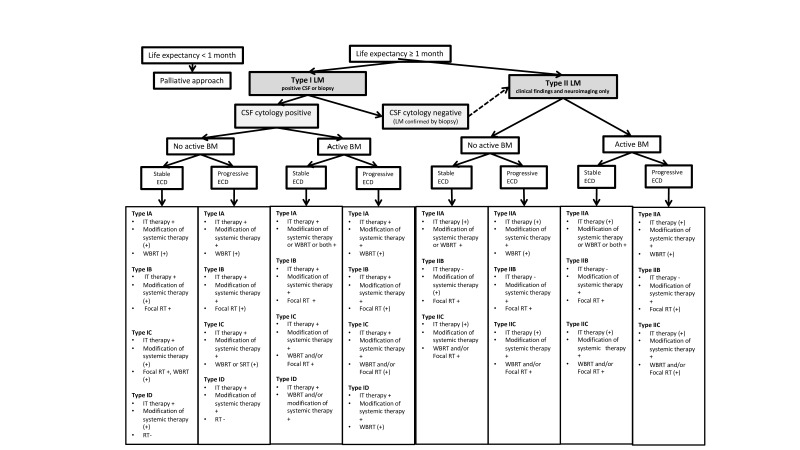
The goal of treatment of leptomeningeal metastasis is to improve survival and to maintain quality of life by delaying neurological deterioration. Tumour-specific therapeutic options include intrathecal pharmacotherapy, systemic pharmacotherapy and focal radiotherapy. Recently, improvement of leptomeningeal disease-related progression-free survival by adding intrathecal liposomal cytarabine to systemic treatment versus systemic treatment alone has been observed in a randomised phase III trial for patients with breast cancer with newly diagnosed leptomeningeal metastasis. Safety and efficacy of intrathecal administration of new agents such as trastuzumab are under evaluation. Systemic therapy using targeted agents and immunotherapy has also improved outcome in patients with brain metastasis, and its emerging role in the management of leptomeningeal metastasis needs to better studied in prospective series. Focal radiotherapy is commonly indicated for the treatment of macroscopic disease such as meningeal nodules or clinically symptomatic central nervous system structures, for example, base of skull with cranial nerve involvement or cauda equine syndrome. The role of whole brain radiotherapy is decreasing. An individualised combination of different therapeutic options should be used considering the presentation of leptomeningeal metastasis, as well as the histological and molecular tumour characteristics, the presence of concomitant brain and systemic metastases, and prior cancer-directed treatments.
Overview
The claims and statistics of this paper haven’t been checked yet.
Free: it reads the open-access text and checks the first 5 claims that cite a source we can check. Create a free account to check every claim.
Integrity signals
Registry
Cites
Statistics
Figures
Verification
Claims the paper makes
The claims and statistics of this paper haven’t been checked yet.
Free: it reads the open-access text and checks the first 5 claims that cite a source we can check. Create a free account to check every claim.
Claims other papers make about this one
Each is checked against this paper’s own text: does it say what the citing paper says it does?
The source backs part of the claim, not all of it — or backs it for a different population, condition or comparison.
In the citing paper
“However, two prospective trials have shown that the addition of intrathecal to systemic therapy has no OS or QoL advantage.102”
From 5th ESO-ESMO international consensus guidelines for advanced breast cancer (ABC 5) (2020) · cites this paper as [102]
Experimental — accuracy not yet measuredThe source backs part of the claim, not all of it — or backs it for a different population, condition or comparison.
In the citing paper
“Their use can cause a spectrum of toxicities ranging from myelosuppression to neurotoxicity.”
From 5th ESO-ESMO international consensus guidelines for advanced breast cancer (ABC 5) (2020) · cites this paper as [102]
Experimental — accuracy not yet measuredThe cited source says what the claim attributes to it.
In the citing paper
“Three agents are commonly used for intrathecal treatment of LMD: methotrexate, cytarabine (including liposomal cytarabine) or thioTEPA.100, 101, 102”
From 5th ESO-ESMO international consensus guidelines for advanced breast cancer (ABC 5) (2020) · cites this paper as [102]
Experimental — accuracy not yet measuredThe cited source says what the claim attributes to it.
In the citing paper
“Retrospective data suggest some activity of different agents used systemically.100, 101, 102”
From 5th ESO-ESMO international consensus guidelines for advanced breast cancer (ABC 5) (2020) · cites this paper as [102]
Self-check
Percentages, sums and reported differences re-computed from the paper’s own numbers.
The self-check needs the paper’s full text.
Citations
Cites
Le Rhun, E., Weller, M., Brandsma, D., Van den Bent, M., de Azambuja, E., Henriksson, R., Boulanger, T., Peters, S., Watts, C., Wick, W., et al. (2017) · Annals of Oncology · doi:10.1093/annonc/mdx221 · Cited by 637 · cited 5×
“In the presence of cranial nerve impairment, irradiation of skull base, interpeduncular cistern or the two first cervical vertebrae may be indicated; irradiation of lumbosacral vertebrae may be indicated for cauda equina syndrome.(1) No survival benefit of WBRT was observed in most retrospective studies of patients wi…”
BackgroundMethodInfluentialSelf-citationGlantz, M., Jaeckle, K. A., Chamberlain, M. C., Phuphanich, S., Recht, L. D., Swinnen, L. J., Maria, B., LaFollette, S., Schumann, G. B., Cole, B. F., et al. (1999) · PubMed · Cited by 529
Grossman, S. A., Finkelstein, D. M., Ruckdeschel, J. C., Trump, D. L., Moynihan, T., & Ettinger, D. S. (1993) · Journal of Clinical Oncology · doi:10.1200/jco.1993.11.3.561 · Cited by 364
Hitchins, R. N., Bell, D. R., Woods, R. L., & Levi, J. A. (1987) · Journal of Clinical Oncology · doi:10.1200/jco.1987.5.10.1655 · Cited by 352
Boogerd, W., van den Bent, M. J., Koehler, P. J., Heimans, J. J., van der Sande, J. J., Aaronson, N. K., Hart, A. A. M., Benraadt, J., & Vecht, C. J. (2004) · European Journal of Cancer · doi:10.1016/j.ejca.2004.08.012 · Cited by 286 · cited 1×
“57 months in the combined modality arm).(6) Yet, enrolment was stopped after 35 instead of 50 patients because of poor accrual, and a high rate of ventricular infection was noted with 18% of reservoir revisions which may have negatively influenced outcome in the experimental arm.”
BackgroundRhun, É. L., Devos, P., Boulanger, T., Smits, M., Brandsma, D., Rudà, R., Furtner, J., Hempel, J.-M., Postma, T. J., Roth, P., et al. (2019) · Neuro-Oncology · doi:10.1093/neuonc/noz024 · Cited by 142
Self-citationPan, Z., Yang, G., He, H., Zhao, G., Yuan, T., Li, Y., Shi, W., Gao, P., Dong, L., & Li, Y. (2016) · International Journal of Cancer · doi:10.1002/ijc.30214 · Cited by 116
Glantz, M., Horn, A. V., Fisher, R., & Chamberlain, M. C. (2010) · Cancer · doi:10.1002/cncr.24921 · Cited by 113 · cited 1×
“1136/esmoopen-2019-000507 presumably due to the different half-lives of the agents.(10) Altogether, clinical experience and available evidence favour the intraventricular route.”
BackgroundYang, J. C., Kim, D., Kim, S., Cho, B. C., Lee, J.-S., Ye, X., Yin, X., Yang, Z., Jiang, H., & Ahn, M. (2016) · Journal of Clinical Oncology · doi:10.1200/jco.2016.34.15_suppl.9002 · Cited by 95
Bonneau, C., Paintaud, G., Trédan, O., Dubot, C., Desvignes, C., Dieras, V. C., Taillibert, S., Tresca, P., Turbiez, I., Li, J., et al. (2018) · European Journal of Cancer · doi:10.1016/j.ejca.2018.02.032 · Cited by 94 · cited 1×
“Trastuzumab has been evaluated in a phase I study in patients with breast cancer with leptomeningeal metastases with Her2-positive tumours, with a good tolerance (NCT01373710).(9) Data of a second trial on safety of dose-escalated intrathecal trastuzumab are still pending (NCT01325207).”
Background
Cited by
5th ESO-ESMO international consensus guidelines for advanced breast cancer (ABC 5)
Cardoso, F., Paluch-Shimon, S., Senkus, E., Curigliano, G., Aapro, M. S., André, F., Barrios, C. H., Bergh, J., Bhattacharyya, G. S., Biganzoli, L., et al. (2020) · Annals of Oncology · doi:10.1016/j.annonc.2020.09.010 · Cited by 1,369
“] and taking into account the patient’s life expectancy.(102) Available active treatment options are RT, intra-CSF therapy and systemic therapy.”
BackgroundMethodInfluentialTolaney, S. M., Sahebjam, S., Le Rhun, E., Bachelot, T., Kabos, P., Awada, A., Yardley, D., Chan, A., Conte, P., Diéras, V., et al. (2020) · Clinical Cancer Research · doi:10.1158/1078-0432.ccr-20-1764 · Cited by 203
Aizer, A. A., Lamba, N., Ahluwalia, M. S., Aldape, K., Boire, A., Brastianos, P. K., Brown, P. D., Camidge, D. R., Chiang, V. L., Davies, M. A., et al. (2022) · Neuro-Oncology · doi:10.1093/neuonc/noac118 · Cited by 202
Self-citationLeptomeningeal Metastasis from Non–Small Cell Lung Cancer and Current Landscape of Treatments
Ozcan, G., Singh, M., & Vredenburgh, J. J. (2022) · Clinical Cancer Research · doi:10.1158/1078-0432.ccr-22-1585 · Cited by 136
Phase II study of ipilimumab and nivolumab in leptomeningeal carcinomatosis
Brastianos, P. K., Strickland, M. R., Lee, E. Q., Wang, N., Cohen, J. V., Chukwueke, U. N., Forst, D. A., Eichler, A. F., Overmoyer, B. A., Lin, N., et al. (2021) · Nature Communications · doi:10.1038/s41467-021-25859-y · Cited by 92
Update on the Management of Brain Metastasis
Singh, K., Saxena, S., Khosla, A. A., McDermott, M. W., Kotecha, R. R., & Ahluwalia, M. S. (2022) · Neurotherapeutics · doi:10.1007/s13311-022-01312-w · Cited by 65
Carausu, M., Carton, M., Darlix, A., Pasquier, D., Leheurteur, M., Debled, M., Mouret‐Reynier, M., Gonçalvès, A., Dalenc, F., Verret, B., et al. (2021) · ESMO Open · doi:10.1016/j.esmoop.2021.100150 · Cited by 49
“To date, very few randomized trials have been conducted on patients with LM, mostly based on heterogeneous histologies and endpoints.(1,7) Consequently, in the absence of strong evidence, treatment guidelines are based on expert opinion and consist of intrathecal (IT) therapy for most patients (methotrexate, cytarabin…”
Weller, M., Remón, J., Rieken, S., Vollmuth, P., Ahn, M., Minniti, G. C., Rhun, É. L., Westphal, M., Brastianos, P. K., Soo, R. A., et al. (2024) · Cancer Treatment Reviews · doi:10.1016/j.ctrv.2024.102807 · Cited by 43
Self-citationAlexander, M., Lin, E. H., & Cheng, H. (2020) · Current Treatment Options in Oncology · doi:10.1007/s11864-020-00759-3 · Cited by 40
Immunotherapy: an emerging modality to checkmate brain metastasis
Ahmad, A., Κhan, P., Rehman, A. U., Batra, S. K., & Nasser, M. W. (2023) · Molecular Cancer · doi:10.1186/s12943-023-01818-7 · Cited by 38
Intrathecal delivery and its applications in leptomeningeal disease
Khang, M., Bindra, R. S., & Saltzman, W. M. (2022) · Advanced Drug Delivery Reviews · doi:10.1016/j.addr.2022.114338 · Cited by 34
Karschnia, P., Rhun, É. L., Vogelbaum, M. A., van den Bent, M. J., Grau, S., Preusser, M., Soffietti, R., von Baumgarten, L., Westphal, M., Weller, M., et al. (2021) · European Journal of Cancer · doi:10.1016/j.ejca.2021.07.032 · Cited by 38
“decision to pursue anti-tumor therapy must be discussed considering clinical performance score, systemic disease status, and patient preference.(78) The major treatment modalities include intrathecal pharmacotherapy, systemic pharmacotherapy, and focal radiotherapy.”
BackgroundSelf-citationHong, M. H., Choi, Y. J., Ahn, H. K., Lim, S. M., Keam, B., Kim, D., Kim, T. M., Youk, J., Kim, Y. J., Hwang, S., et al. (2024) · JAMA Oncology · doi:10.1001/jamaoncol.2024.2640 · Cited by 29
The macro-metastasis/organ parenchyma interface (MMPI) - A hitherto unnoticed area
Blazquez, R., Sparrer, D., Wendl, C. M., Evert, M., Riemenschneider, M. J., Krahn, M. P., Erez, N., Proescholdt, M. A., & Pukrop, T. (2019) · Seminars in Cancer Biology · doi:10.1016/j.semcancer.2019.10.012 · Cited by 35
Leptomeningeal Metastases of the Spine: A Systematic Review
Palmisciano, P., Sagoo, N. S., Kharbat, A. F., Kenfack, Y. J., Bin-Alamer, O., Scalia, G., Umana, G. E., Aoun, S. G., & Haider, A. (2022) · Anticancer Research · doi:10.21873/anticanres.15519 · Cited by 24
Leptomeningeal Disease (LMD) in Patients with Melanoma Metastases
Khaled, M. L., Tarhini, A. A., Forsyth, P. A., Smalley, I., & Piña, Y. (2023) · Cancers · doi:10.3390/cancers15061884 · Cited by 27
Radiation Therapy in the Management of Leptomeningeal Disease From Solid Tumors
Barbour, A. B., Kotecha, R. R., Lazarev, S., Palmer, J. D., Robinson, T., Yerramilli, D., & Yang, J. T. (2023) · Advances in Radiation Oncology · doi:10.1016/j.adro.2023.101377 · Cited by 31
“16,17 For circumscribed symptomatic lesions, including CSF fl ow obstruction, IFRT is recommended.”
BackgroundMalhotra, J. D., Mambetsariev, I., Gilmore, G., Fricke, J., Nam, A., Gallego, N., Chen, B. T., Chen, M. Y., Amini, A., Lukas, R. V., et al. (2024) · JAMA Oncology · doi:10.1001/jamaoncol.2024.5218 · Cited by 27
Vollmuth, P., Karschnia, P., Sahm, F., Park, Y. W., Ahn, S. S., & Jain, R. (2025) · Korean Journal of Radiology · doi:10.3348/kjr.2024.0982 · Cited by 24
“…of importance because the presence of leptomeningeal metastases on initial diagnosis is an independent prognostic factor in patients with IDH-wildtype glioblastoma [30] and may change the treatment strategy (i.e., radiation field) in some institutions according to the extent of involvement [30,48].”
Rotating Magnetic Nanoparticle Clusters as Microdevices for Drug Delivery
Willis, A. J., Pernal, S. P., Gaertner, Z. A., Lakka, S. S., Sabo, M. E., Creighton, F. M., & Engelhard, H. H. (2020) · International Journal of Nanomedicine · doi:10.2147/ijn.s247985 · Cited by 23
Rossi, S. M., Murray, T. E., McDonough, L., & Kelly, H. M. (2020) · Expert Opinion on Drug Delivery · doi:10.1080/17425247.2021.1856074 · Cited by 24
Steininger, J., Gellrich, F. F., Engellandt, K., Meinhardt, M., Westphal, D., Beissert, S., Meier, F. E., & Oliva, I. C. G. (2023) · International Journal of Molecular Sciences · doi:10.3390/ijms241411443 · Cited by 26
Li, Z., Li, P., Yan, B., Gao, Q., Jiang, X., Zhan, Z., Yan, Q., Lizaso, A., & Huang, C. (2019) · Thoracic Cancer · doi:10.1111/1759-7714.13259 · Cited by 18
Jia, C., Xu, Q., Zhao, L., Kong, F., & Jia, Y. (2023) · Translational Oncology · doi:10.1016/j.tranon.2023.101832 · Cited by 19
“Presently, the treatment approaches for NSCLC with LM predominantly hinge on the histological and molecular NSCLC subtypes, systemic disease progression, neurological function, and prognosis [9,10].”
BackgroundIs there a role for CDK 4/6 inhibitors in breast cancer brain metastases?
Schlam, I. M., & Tolaney, S. M. (2021) · Oncotarget · doi:10.18632/oncotarget.27904 · Cited by 19
Engelhard, H. H., Willis, A. J., Hussain, S. I., Papavasiliou, G., Banner, D. J., Kwasnicki, A. M., Lakka, S. S., Hwang, S., Shokuhfar, T., Morris, S. C., et al. (2020) · Frontiers in Neurology · doi:10.3389/fneur.2020.596632 · Cited by 18
“It would be desirable to have a nanoparticle-drug conjugate that could be directed through CSF to target and kill cancer cells, especially early in the course of disease before CSF pathways become obstructed (16, 17).”
BackgroundSystemic treatments for breast cancer brain metastasis
Chen, Q., Xiong, J., Ma, Y., Wei, J., Liu, C., & Zhao, Y. (2023) · Frontiers in Oncology · doi:10.3389/fonc.2022.1086821 · Cited by 19
“The median patients’ survival in parenchymal and leptomeningeal disease was 3 to 23 and 3 to 4 months, respectively (8, 9).”
BackgroundA review on intrathecal administration of medications for leptomeningeal metastases in solid tumors
Wang, X., Yao, C., Li, Q., & Zhou, J. (2025) · Frontiers in Pharmacology · doi:10.3389/fphar.2025.1472945 · Cited by 22
“The speci fi c treatment methods hinge on the histological characteristics, molecular expression, systemic disease progression, neurological function, prognosis, and other factors of the malignant tumor (Le Rhun et al., 2019; Thakkar et al., 2020).”
Pan, J.-K., Lin, W.-D., Kuo, Y., Chen, Y., Loh, Z.-J., Lin, F., Cheng, H.-C., Hsiao, M., & Lu, P. (2023) · Oncogene · doi:10.1038/s41388-023-02769-5 · Cited by 17
“Clinical studies have demonstrated that compared with systemic treatment alone, in a randomized phase III trial, intrathecal liposomal cytarabine combined with systemic treatment improved progression-free survival among patients with LM in BC [9, 10].”
ResultNovel Therapeutic Approaches in Neoplastic Meningitis
Khosla, A. A., Saxena, S., Ozair, A., Venur, V. A., Peereboom, D. M., & Ahluwalia, M. S. (2022) · Cancers · doi:10.3390/cancers15010119 · Cited by 14
Laakmann, E., Schmidt, M., Lübbe, K., Agostinetto, E., van Ramshorst, M. S., Decker, T. W., Malter, W., Schettini, F., Sousa, M. F., Denkert, C., et al. (2025) · The Breast · doi:10.1016/j.breast.2025.104433 · Cited by 16
“Leptomeningeal metastases (LM) are defined as the spread of tumor cells within the leptomeninges and the subarachnoid space [1].”
Singh, S. R. K., Malapati, S. J., & Mattour, A. H. (2022) · Springer eBooks · doi:10.1007/978-3-030-93084-4_54 · Cited by 12
Tétu, P., Sirven-Villaros, L., Cuzzubbo, S., Ursu, R., Baroudjian, B., Delyon, J., Nataf, F., de Margerie‐Mellon, C., Allayous, C., Lefevre, W., et al. (2020) · Cancers · doi:10.3390/cancers12092635 · Cited by 12
“Focal radiotherapy could be used for the treatment of limited macroscopic leptomeningeal disease, whereas the use of WBRT is decreasing owing to poor survival benefit and radiation-induced cognitive toxicity [14].”
BackgroundAdvances in the Management of Central Nervous System Metastases in Non-Small Cell Lung Cancer
D’Aiello, A., Miao, E., & Cheng, H. (2023) · Cancers · doi:10.3390/cancers15030844 · Cited by 13
Alimonti, P., & Castro, L. N. G. (2023) · Antibodies · doi:10.3390/antib12020027 · Cited by 14
Fernandes, L., de Matos, L. V., Cardoso, D. S. D. A., Saraiva, M., Medeiros, R., Coelho, A., Miranda, H., & Martins, A. (2020) · CNS Oncology · doi:10.2217/cns-2020-0023 · Cited by 11
Intrameningioma metastasis: A case-based literature review
Papadakis, B. K., Vorrias, E., Bräutigam, K., Chochlidakis, N., Koutsopoulos, A. V., Mavroudis, D., Vakis, A. F., & Tsitsipanis, C. (2021) · Journal of Clinical Neuroscience · doi:10.1016/j.jocn.2021.08.028 · Cited by 11
Shi, M., Ding, X., Tang, L., Cao, W.-J., Su, B., & Zhang, J. (2024) · BMC Cancer · doi:10.1186/s12885-024-12244-3 · Cited by 12
Kumthekar, P., Blouw, B., Corkos, P., Nagpal, S., Tripathy, A., Piccioni, D. E., & Youssef, M. N. (2024) · Frontiers in Oncology · doi:10.3389/fonc.2024.1402651 · Cited by 13
Holdaway, M., Ablyazova, F., Huda, S., D’Amico, R. S., Wong, T., Shani, D., Ben-Shalom, N., & Boockvar, J. A. (2023) · Journal of Neuro-Oncology · doi:10.1007/s11060-023-04412-5 · Cited by 9
Survival outcomes among patients with breast cancer and leptomeningeal disease
Said, B. I., Jerzak, K. J., Chen, H., Moravan, V., Warner, E., Myrehaug, S. D., Tseng, C., Detsky, J. S., Dinakaran, D., Heyn, C., et al. (2025) · Scientific Reports · doi:10.1038/s41598-025-07191-3 · Cited by 10
Pan, Z., Chen, K., He, H., Jiang, T., Song, Y., Pang, X., Ye, X., Wang, M., Zhou, T., Dong, L., et al. (2023) · Radiotherapy and Oncology · doi:10.1016/j.radonc.2023.109740 · Cited by 11
Webb, M., Breen, W. G., Laack, N. N. I., Leventakos, K., Campian, J. L., & Sener, U. T. (2023) · CNS Oncology · doi:10.2217/cns-2023-0005 · Cited by 9
“Even targeted and immune checkpoint inhibitor (ICI) intrathecal therapies, while promising, have not led to significant improvements in overall survival [9,10].”
BackgroundLeptomeningeal metastases arising from gynecological cancers
Yano, H., Nagao, S., & Yamaguchi, S. (2019) · International Journal of Clinical Oncology · doi:10.1007/s10147-019-01556-1 · Cited by 13
“However, it is now possi‐ ble to expect improvement in survival by active treatments like the addition of intrathecal pharmacotherapy to systemic treatment and systemic therapy using targeted agents and immunotherapy [21].”
BackgroundDrug delivery in leptomeningeal disease: Navigating barriers and beyond
Arshad, N., Biswas, N., Gill, J. M., Kesari, S., & Ashili, S. (2024) · Drug Delivery · doi:10.1080/10717544.2024.2375521 · Cited by 8
“…compartment has been an intriguing goal for drug delivery systems. the main-stay therapeutic approach for lMD has constituted intrathecal administration of methotrexate, cytarabine, and thiotepa from the at least 1990s continuing through the present day (DeAngelis, 1998; le Rhun et al., 2019).”
BackgroundHosoda, T., & Katayama, M. (2020) · Journal of Infection and Chemotherapy · doi:10.1016/j.jiac.2020.10.025 · Cited by 10
Bae, C. R., Gelvosa, M. N., & Jeon, J. Y. (2022) · Current Oncology Reports · doi:10.1007/s11912-022-01229-9 · Cited by 8
Martín-Liberal, J., Márquez‐Rodas, I., Cerezuela-Fuentes, P., Soria, A., Garicano, F., Medina, J., Galindo, R. G., Oramás, J., Manzano, J. L., Delgado, M., et al. (2025) · Cancer Treatment Reviews · doi:10.1016/j.ctrv.2025.102886 · Cited by 11
The research progress on meningeal metastasis in solid tumors
Yue, Y., Ren, Y., Lu, C., Jiang, N., Wang, S., Fu, J., Kong, M., & Zhang, G. (2025) · Discover Oncology · doi:10.1007/s12672-025-01950-4 · Cited by 9
“…as the type, dose, and frequency of IT injections, ECOG PS scores, and chemotherapy drug flow disruptions within the CSF. Specifically, the abnormal distribution of chemotherapeutic drugs in the CSF space can increase intracranial pressure, leading to risks of hydrocephalus and encephalopathy [94].”
Jafari, F., Nodeh, M. M., Hosseinjani, H., Baharara, H., Azad, S., Arasteh, O., Johnston, T. P., & Sahebkar, A. (2023) · Current Medicinal Chemistry · doi:10.2174/0929867330666230508142657 · Cited by 6
Puri, S., Malani, R., Chalmers, A. W., Kerrigan, K. C., Patel, S. B., Monynahan, K., Cannon, L., Blouw, B., & Akerley, W. (2023) · Neuro-Oncology Advances · doi:10.1093/noajnl/vdad150 · Cited by 7
“1,8 Therapeutic strategies range from whole-brain radiation therapy (WBRT) to intrathecal therapy (IT).”
BackgroundTaniguchi, K., Suzuki, T., Okamura, T., Kurita, A., Nohara, G., Ishii, S., Kado, S., Takagi, A., Tsugane, M., & Shishido, Y. (2021) · Frontiers in Oncology · doi:10.3389/fonc.2021.754365 · Cited by 6
“The formation of multiple lesions such as leptomeningeal meningitis makes surgical resection impossible, and such patients cannot typically be treated with surgery only (36).”
BackgroundZhang, M., Tong, J., Ma, W., Luo, C., Liu, H., Jiang, Y., Qin, L., Wang, X., Yuan, L., Zhang, J., et al. (2022) · Frontiers in Oncology · doi:10.3389/fonc.2022.903851 · Cited by 7
“The efficacy of first-generation EGFR-TKIs for EGFR+ NSCLC remains poor because of low CSF penetration (25, 26).”
BackgroundInfluentialLeptomeningeal metastasis from extracranial solid tumors
Prabhash, K., Vallathol, D. H., Patil, V., Noronha, V., Joshi, A., & Menon, N. N. (2020) · Cancer Research Statistics and Treatment · doi:10.4103/crst.crst_38_20 · Cited by 8
Murthy, R. K., O'Brien, B. J., Berry, D. A., Raghavendra, A. S., Monroe, M. G., Johnson, J., White, J., Schwartz-Gomez, J., Topletz‐Erickson, A. R., Lobbous, M., et al. (2026) · Nature Cancer · doi:10.1038/s43018-026-01120-7 · Cited by 10
“…chemotherapy is most suitable for treating microscopic and linear macroscopic LM due to its limited penetrance beyond the subarachnoid space 28 , tucatinib in combination with trastuzumab and capecitabine affords an opportunity to treat nodular LM along with parenchymal brain metastasis…”
Trifanescu, O. G., Mitrea, D., Gales, L. N., Ciornei, A., Păun, M.-A., Butnariu, I., Trifanescu, R. A., Motaș, N., Toma, R.-V., Bîlteanu, L., et al. (2023) · Cancers · doi:10.3390/cancers15092508 · Cited by 7
Pearlman, A. H., Wang, Y., Kalluri, A. L., Parker, M., Cohen, J. D., Dudley, J. C., Rincón-Torroella, J., Xia, Y., Gensler, R. T., Horowitz, M. A., et al. (2025) · Cancer Discovery · doi:10.1158/2159-8290.cd-24-1788 · Cited by 5
Neurologic Complications in Patients with Cancer
Holroyd, K. B., Rubin, D. B., & Vaitkevicius, H. (2021) · Seminars in Neurology · doi:10.1055/s-0041-1733788 · Cited by 6
Paraneoplastic neuropathies and peripheral nerve hyperexcitability disorders
Shelly, S., Dubey, D., Mills, J. R., & Klein, C. J. (2024) · Handbook of clinical neurology · doi:10.1016/b978-0-12-823912-4.00020-7 · Cited by 6
Patil, V., Noronha, V., Vallathol, D. H., Menon, N. S., Mahajan, A., Janu, A., Parandare, N., & Prabhash, K. (2022) · ecancermedicalscience · doi:10.3332/ecancer.2022.1414 · Cited by 5
“The two commonest extracranial solid tumour sites leading to LMM are breast carcinoma and non-small cell lung cancer (NSCLC) [3].”
Backgroundde Bernardi, A., Bachelot, T., & Larrouquère, L. (2024) · Frontiers in Oncology · doi:10.3389/fonc.2023.1210873 · Cited by 7
Brooks, C. A., Bonura, A., & Beran, R. G. (2021) · BMJ Case Reports · doi:10.1136/bcr-2020-236265 · Cited by 4
Pan, Z., Ye, X., Huang, Y., Tai, P., Liu, M., Sun, X., Tang, R., Gu, A., Wang, Z., Shen, L., et al. (2025) · Journal of Neuro-Oncology · doi:10.1007/s11060-025-05160-4 · Cited by 4
Yun, W., Liu, A., Wen, J., Zhao, K., & Meng, X. (2025) · Therapeutic Advances in Medical Oncology · doi:10.1177/17588359251403396 · Cited by 5
Fowler, M. J., Riley, C. O., Tomasson, E., Mehta, S. M., Grande-Allen, K. J., Ballester, L. Y., Sandberg, D. I., Janssen, C. F., & Sirianni, R. W. (2023) · Biomaterials Advances · doi:10.1016/j.bioadv.2023.213646 · Cited by 3
Palliative approach to leptomeningeal carcinomatosis in oesophagogastric junction cancer
Cunha, R., Godinho, J. P. B., Inácio, M., & Neto, I. G. (2019) · BMJ Case Reports · doi:10.1136/bcr-2019-230114 · Cited by 5
Tesolin, D., Vergidis, D., & Ramchandar, K. (2021) · Cancer Reports · doi:10.1002/cnr2.1556 · Cited by 2
“The incidence appears to be increasing as improvement of systemic and local therapies increase patient overall survival.(7,8) Despite improvements in therapy, morbidity from LM disease itself and the toxicities from treatment, remain significant.”
BackgroundMethodWang, J., Yuan, Q., Li, L., Cao, K.-H., Liu, Q., Wang, H., Hu, K., Wu, X., & Wan, J. (2023) · OncoTargets and Therapy · doi:10.2147/ott.s402389 · Cited by 4
“Median survival for LM after lung cancer has ranged from the historical 6–8 weeks without tumor-specific treatment to the current 3–11 months in the context of LM-directed treatment.(1,5) Unfortunately, although the well-known unfavorable outcomes of LM from lung cancer have long been recognized, therapeutic strategie…”
BackgroundResultThe Riddle of the Sphinx: Progress in Leptomeningeal Metastasis of Non–Small Cell Lung Cancer
Zhao, Y., Yu, L., Wang, L., Wu, Y., Chen, H., Wang, Q., & Wu, Y. (2023) · Clinical Medicine Insights Oncology · doi:10.1177/11795549231205206 · Cited by 3
Treatment pattern and outcomes of leptomeningeal carcinomatosis in India – a retrospective study
Goyal, G., Singh, A., Avaronnan, M., Raut, N. V., Talreja, V. T., Chandrasekharan, A., Gupta, K., Bhosale, B., Kothari, R. K., Parekh, D. S., et al. (2023) · The Lancet Regional Health - Southeast Asia · doi:10.1016/j.lansea.2023.100331 · Cited by 4
“3 Breast cancer, lung cancer and melanoma are three malignancies commonly associated with LMC. 4,5 10 As a result of this improvement in extracranial control, there is an increase in relapse seen in sanctuary sites such as the central nervous system.”
BackgroundBardhan, M., Dey, D., Suresh, V., Javed, B., Venur, V. A., Joe, N., Kalidindi, R., Ozair, A., Khan, M., Mahtani, R. L., et al. (2023) · Expert Review of Neurotherapeutics · doi:10.1080/14737175.2023.2293223 · Cited by 4
“Levetiracetam, phenytoin, and valproic acid are a few examples of anti-epileptic medications (AEDs) that are frequently recommended to prevent and manage seizures [46].”
BackgroundInfluentialLeptomeningeal metastases in prostate cancer: A review of the current literature
Durrani, U. S., Rifai, K., Arshad, M., Paracha, A., Deol, E. S., Paracha, M., Waheed, F., Siddiqui, Z., Abid, A., Mustafic, E., et al. (2024) · Current Urology · doi:10.1097/cu9.0000000000000245 · Cited by 3
Clinical Outcome of Neoplastic Meningitis Associated with Breast Cancer
Abraham, M. M., Anoop, T. M., Rona Joseph, P., Vasudevan, A., & Kumar, B. S. (2022) · Journal of Neurosciences in Rural Practice · doi:10.1055/s-0041-1741505 · Cited by 3
Leptomeningeal Carcinomatosis: A Case Report and Literature Review
Hinke, M., Skovran, A., Dusini, N., & Azim, S. (2022) · Cureus · doi:10.7759/cureus.26790 · Cited by 4
A Brief Overview of Neurosurgical Management for Breast Cancer Metastasis.
Lucke-Wold, B. P., & Scott, K. (2020) · PubMed · Cited by 3
Building Team Medicine in the Management of CNS Metastases
Baskaran, A. B., Buerki, R. A., Khan, O. H., Gondi, V., Stupp, R., Lukas, R. V., & Villaflor, V. M. (2023) · Journal of Clinical Medicine · doi:10.3390/jcm12123901 · Cited by 3
Cerebrospinal fluid considerations in glioma
Pan, S., & Strahle, J. M. (2025) · Advances in cancer research · doi:10.1016/bs.acr.2025.05.002 · Cited by 2
Proton Craniospinal Irradiation for Leptomeningeal Metastases
Boreta, L. C., & Raleigh, D. R. (2025) · JAMA Oncology · doi:10.1001/jamaoncol.2025.2869 · Cited by 2
Liu, Y., Liang, J., Zhang, M., Cao, N., Xue, J., Zhang, X., Jia, Y., Chang, Z., Zhang, G., Li, Y., et al. (2025) · Frontiers in Cell and Developmental Biology · doi:10.3389/fcell.2025.1716168 · Cited by 2
“Aggressive treatment of low-risk LM patients is critical to preventing progressive neurological damage, underscoring the importance of personalized treatment strategies to optimize patient survival and quality of life (Le Rhun et al., 2017; Beauchesne, 2010; Le Rhun et al., 2019).”
Fisher, S., Topp, M. D., Airth, A., Campbell, B., Stylli, S. S., Hovens, C. M., & Dimou, J. (2026) · Journal of Clinical Neuroscience · doi:10.1016/j.jocn.2026.112076 · Cited by 2
Lee, S.-Y., Lomax, N., Berkmann, S., Vollmer, K., Riesterer, O., Bodis, S. B., & Rogers, S. J. (2021) · Strahlentherapie und Onkologie · doi:10.1007/s00066-021-01814-0 · Cited by 2
Brain and spinal cord metastases with seminoma: A case report
Yumioka, T., Morizane, S., Makishima, K., Adachi, T., Moriyasu, E., Iwamoto, H., Hikita, K., Honda, M., Umekita, Y., & Takenaka, A. (2022) · IJU Case Reports · doi:10.1002/iju5.12515 · Cited by 2
Piña, Y., Gramatzki, D., Forsyth, P. A., Lee, E. Q., & Rhun, É. L. (2021) · Hematology/Oncology Clinics of North America · doi:10.1016/j.hoc.2021.08.009 · Cited by 3
Smith, P. D., Bhenderu, L. S. S., Kommuri, S., Fleener, E. E., & Hoover, J. M. (2022) · Cureus · doi:10.7759/cureus.24008 · Cited by 2
“First-line treatment of LC consists of methotrexate, liposomal cytarabine, and thiotepa, while HER-2 overexpressing (OE) metastases open the door for use of targeted therapies [14].”
BackgroundLeptomeningeal Metastases and Intrathecal Chemotherapy
Katayama, M., Ohgino, K., & Tamura, R. (2022) · Digital Medicine and Healthcare Technology · doi:10.5772/dmht.03 · Cited by 3
Latest clinical research in leptomeningeal disease (LMD)—a narrative review
Chan, A. W., Wong, H. C. Y., TAPHOORN, M. J. B., Dirven, L., Rhun, É. L., Soliman, H., Oldenburger, E., Raman, S., Vassiliou, V., Bonomo, P., et al. (2023) · Annals of Palliative Medicine · doi:10.21037/apm-23-390 · Cited by 1
Leptomeningeal Disease as a Rare Complication of Primary Penile Urethral Cancer
Chen, N., Wheeler, T. M., Coburn, M. C., & Yen, A. E. (2020) · Case Reports in Oncological Medicine · doi:10.1155/2020/6349456 · Cited by 2
“LMD carries a very poor prognosis, and studies in the most common cancer types demonstrate overall survival of less than 6 months [8].”
BackgroundLeptomeningeal canceromatosis in patient with parameningeal rhabdomyosarcoma
Kazakova, L. L., & Zhukov, N. V. (2019) · Pediatric Hematology/Oncology and Immunopathology · doi:10.24287/1726-1708-2019-18-4-90-98 · Cited by 1
Gaisinskaya, P., Mamone, M., & Kelschenbach, K. (2022) · Cureus · doi:10.7759/cureus.25713 · Cited by 1
Chang, J. C., Gao, Y., Yu, M., Perdomo, W., Karki, S., & Bakirhan, K. (2021) · Current Problems in Cancer Case Reports · doi:10.1016/j.cpccr.2021.100126 · Cited by 1
Solís, S. T., Lozano, I. I., Carballo, L. M., Villanueva, M. M., Valle, R. D., Sánchez, J. J. G., Coello, A. F., Ghanem, R. A., Duque, S. G., Granados, G. O., et al. (2023) · Neurocirugía · doi:10.1016/j.neucir.2023.07.003 · Cited by 2
Solís, S. T., Lozano, I. I., Carballo, L. M., Villanueva, M. M., Valle, R. D., Sánchez, J. J. G., Coello, A. F., Ghanem, R. A., Duque, S. G., Granados, G. O., et al. (2023) · Neurocirugía (English Edition) · doi:10.1016/j.neucie.2023.07.010 · Cited by 2
Hirnmetastasen und Meningeosis neoplastica
Burger, M. C., & Steinbach, J. P. (2024) · Elsevier eBooks · doi:10.1016/b978-3-437-21004-4.00006-7 · Cited by 1
Lai, M., Mu, T., Liu, M., Hu, Q., Li, J., Huang, T., Li, Y., Chen, S., & Cai, L. (2024) · Oncology Letters · doi:10.3892/ol.2024.14432 · Cited by 1
“However, there is currently no clear consensus on the optimal management of LMD (8).”
BackgroundHirnmetastasen und Meningeosis neoplastica
Burger, M. C., & Steinbach, J. P. (2024) · Elsevier eBooks · doi:10.1016/b978-3-437-21011-2.00061-2 · Cited by 1
Lochrin, S. E., Buonocore, D. J., Young, R. J., Kaley, T. J., Postow, M. A., Wolchok, J. D., Shoushtari, A. N., Momtaz, P., Warner, A. B., & Callahan, M. K. (2024) · Pigment Cell & Melanoma Research · doi:10.1111/pcmr.13179 · Cited by 1
“These complementary clinical characteristics make the combination approach appealing in LMD, as rapid response and use of steroid are often required for symptom control (Le Rhun et al., 2019).”
Qiu, X., Lu, Z., Li, C., Chen, S., Zhou, X., Peng, Z., Chen, L., Zhao, W. P., Shi, J., He, J., et al. (2025) · Cancer Management and Research · doi:10.2147/cmar.s538752 · Cited by 1
Remón, J., Esteller, L., Rodrigo‐Calvo, M. T., Martín, R., Ramirez, D., Vives, J., Conde, E., & Hernández, S. (2020) · JCO Precision Oncology · doi:10.1200/po.19.00289 · Cited by 1
Surgical Adjuncts for Glioblastoma
Hartnett, S. D., Kroll, D. G., & Vogelbaum, M. A. (2020) · Neurosurgery Clinics of North America · doi:10.1016/j.nec.2020.08.005 · Cited by 1
Liu, Y., Gao, Y., Li, Y., Lin, F. W., Yuan, H., Kong, S., & Sun, X. (2020) · Materials Express · doi:10.1166/mex.2020.1830
Metadata
- Authors
- Le Rhun, E., Preusser, M., van den Bent, M., Andratschke, N., & Weller, M.
- Affiliations
- Medical University of Vienna (AT)
- University of Zurich (CH)
- Venue
- ESMO Open
- Publisher
- Elsevier BV
- Published
- 2019
- Volume
- 4
- Issue
- Suppl 2
- Pages
- e000507
- ISSN
- 2059-7029 (ISSN-L)
- PMC
- PMC6555600
- OpenAlex
- W2946608588
- Cited by
- 127
- References
- 18
- Citations by year
- 2026: 9 · 2025: 16 · 2024: 19 · 2023: 31 · 2022: 17 · 2021: 15 · 2020: 15 · 2019: 5
- FWCI
- 9.56
- Type
- journal article
- Language
- en
- Open access
- gold
- doi.org
- Licence
- cc-by-nc
- www.elsevier.com/tdm/userlicense/1.0/ (tdm)
- www.elsevier.com/legal/tdmrep-license (tdm)
- creativecommons.org/licenses/by-nc/4.0/ (vor, 728 d)
- Locations
- ESMO Open (publishedVersion, cc-by-nc)
- Europe PMC (PubMed Central) (publishedVersion, cc-by-nc)
- PubMed Central (publishedVersion, cc-by-nc)
- PubMed (publishedVersion)
- EUR Research Repository (Erasmus University Rotterdam) (publishedVersion, other-oa)
- Zurich Open Repository and Archive (University of Zurich) (acceptedVersion, cc-by-nc)
- EUR Research Repository (Erasmus University Rotterdam) (submittedVersion, other-oa)
- RePub (Erasmus University Rotterdam) (submittedVersion, other-oa)
- HAL (submittedVersion)
- DOAJ (DOAJ: Directory of Open Access Journals) (submittedVersion, cc-by-sa)
- Zurich Open Repository and Archive (University of Zurich) (submittedVersion, cc-by-nc)
- Zurich Open Repository and Archive (University of Zurich)
- Topics
- Health Sciences › Medicine › Oncology › Brain Metastases and Treatment
- Health Sciences › Medicine › Surgery › Management of metastatic bone disease
- Health Sciences › Medicine › Oncology › Glioma Diagnosis and Treatment
- Keywords
- leptomeningeal metastasis, intrathecal chemotherapy, liposomal cytarabine, systemic chemotherapy, focal radiotherapy, cauda equina syndrome, whole brain radiotherapy, breast cancer, trastuzumab, targeted therapy, immunotherapy, progression-free survival, quality of life
About these checks
Registry, retraction, Cites and statistics results are computed, not judged, with one exception: a printed reference that no index lists is read once by a model before it counts as a citation error. Claims are extracted by a model and kept only when their quote appears verbatim in the text; each cited source is then checked, with a model’s help, for whether it says what the claim relies on. Those verdicts can be wrong — read the claim’s quote and the cited source before relying on one.
Statistics and arithmetic are recomputed, not judged.
Confidence bands are shown only for fields calibrated on our annotated test set. None is calibrated yet, so no band is shown.
What counts as a claim ›How we measure confidence ›How we check this ›
Are you an author, or do you see a problem with this page? Request a review
Data sources
Bibliographic data: Semantic Scholar, OpenAlex, Crossref.
Contains information from the Semantic Scholar Academic Graph Datasets, made available under the ODC Attribution License (ODC-BY 1.0).
Semantic Scholar’s data is described in: Kinney, R., et al. (2023). The Semantic Scholar Open Data Platform. arXiv:2301.10140.
