

The vagal innervation of the gut and immune homeostasis
Open accessThe DOI matches its Crossref record; 124 of the 124 references it cites were found in a registry or an index.
Abstract
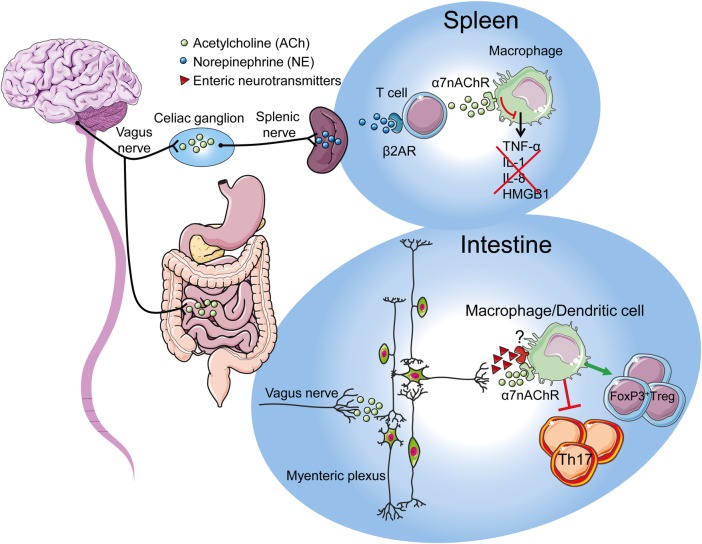
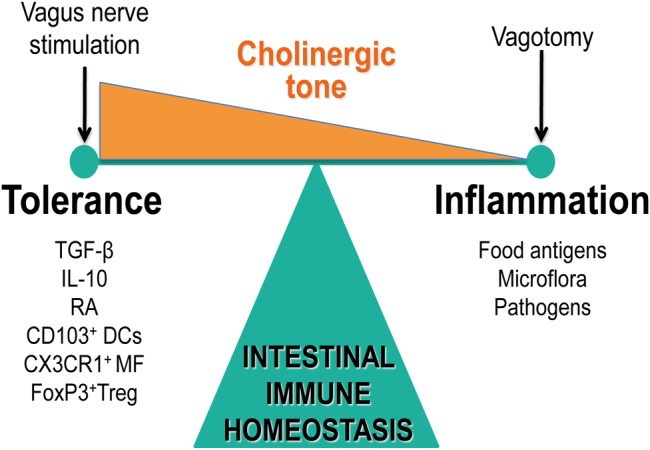
The central nervous system interacts dynamically with the immune system to modulate inflammation through humoral and neural pathways. Recently, in animal models of sepsis, the vagus nerve (VN) has been proposed to play a crucial role in the regulation of the immune response, also referred to as the cholinergic anti-inflammatory pathway. The VN, through release of acetylcholine, dampens immune cell activation by interacting with α-7 nicotinic acetylcholine receptors. Recent evidence suggests that the vagal innervation of the gastrointestinal tract also plays a major role controlling intestinal immune activation. Indeed, VN electrical stimulation potently reduces intestinal inflammation restoring intestinal homeostasis, whereas vagotomy has the reverse effect. In this review, we will discuss the current understanding concerning the mechanisms and effects involved in the cholinergic anti-inflammatory pathway in the gastrointestinal tract. Deeper investigation on this counter-regulatory neuroimmune mechanism will provide new insights in the cross-talk between the nervous and immune system leading to the identification of new therapeutic targets to treat intestinal immune disease.
Overview
The claims and statistics of this paper haven’t been checked yet.
Free: it reads the open-access text and checks the first 5 claims that cite a source we can check. Create a free account to check every claim.
Integrity signals
Registry
Cites
Statistics
Figures
Verification
Claims the paper makes
The claims and statistics of this paper haven’t been checked yet.
Free: it reads the open-access text and checks the first 5 claims that cite a source we can check. Create a free account to check every claim.
Claims other papers make about this one
Each is checked against this paper’s own text: does it say what the citing paper says it does?
The source backs part of the claim, not all of it — or backs it for a different population, condition or comparison.
In the citing paper
“On the one hand, ELS/CT-related autonomic imbalance with reduced vagal activity may further directly augment inflammation through a direct vagal efferent effect of autonomic brain regions (204–206).”
From Developmental Trajectories of Early Life Stress and Trauma: A Narrative Review on Neurobiological Aspects Beyond Stress System Dysregulation (2019) · cites this paper as [204]
Experimental — accuracy not yet measured
Self-check
Percentages, sums and reported differences re-computed from the paper’s own numbers.
The self-check needs the paper’s full text.
Citations
Cites
Vagus nerve stimulation attenuates the systemic inflammatory response to endotoxin
Borovikova, L. V., Ivanova, S., Zhang, M., Yang, H., Botchkina, G. I., Watkins, L. R., Wang, H., Abumrad, N., Eaton, J. W., & Tracey, K. J. (2000) · Nature · doi:10.1038/35013070 · Cited by 4,211
Tracey, K. J. (2002) · Nature · doi:10.1038/nature01321 · Cited by 3,728
Nicotinic acetylcholine receptor α7 subunit is an essential regulator of inflammation
Wang, H., Yu, M., Ochani, M., Amella, C. A., Tanovic, M., Susarla, S., Li, J. H., Wang, H., Yang, H., Ulloa, L., et al. (2003) · Nature · doi:10.1038/nature01339 · Cited by 3,228
Acetylcholine-Synthesizing T Cells Relay Neural Signals in a Vagus Nerve Circuit
Rosas-Ballina, M., Olofsson, P. S., Ochani, M., Valdés-Ferrer, S. I., Levine, Y. A., Reardon, C., Tusche, M. W., Pavlov, V. A., Andersson, U., Chavan, S., et al. (2011) · Science · doi:10.1126/science.1209985 · Cited by 1,551
Tracey, K. J. (2009) · Nature Reviews Immunology · doi:10.1038/nri2566 · Cited by 1,154
de Jonge, W. J., van der Zanden, E. P., The, F. O., Bijlsma, M. F., van Westerloo, D. J., Bennink, R. J., Berthoud, H.-R., Uematsu, S., Akira, S., van den Wijngaard, R. M., et al. (2005) · Nature Immunology · doi:10.1038/ni1229 · Cited by 1,074
Self-citationNeural regulation of innate immunity: a coordinated nonspecific host response to pathogens
Sternberg, E. M. (2006) · Nature Reviews Immunology · doi:10.1038/nri1810 · Cited by 1,064
Acetylcholine beyond neurons: the non‐neuronal cholinergic system in humans
Wessler, I., & Kirkpatrick, C. J. (2008) · British Journal of Pharmacology · doi:10.1038/bjp.2008.185 · Cited by 855
Huston, J. M., Ochani, M., Rosas-Ballina, M., Liao, H., Ochani, K., Pavlov, V. A., Gallowitsch-Puerta, M., Ashok, M., Czura, C. J., Foxwell, B., et al. (2006) · The Journal of Experimental Medicine · doi:10.1084/jem.20052362 · Cited by 683
Oral tolerance to food protein
Pabst, O., & Mowat, A. M. (2012) · Mucosal Immunology · doi:10.1038/mi.2012.4 · Cited by 656
Cited by
Items 101–200 of 286
Immunomodulatory effect of ghrelin in the intestinal mucosa
Eissa, N., & Ghia, J. (2015) · Neurogastroenterology & Motility · doi:10.1111/nmo.12703 · Cited by 43
Surgical Site Infiltration for Abdominal Surgery: A Novel Neuroanatomical-based Approach
Joshi, G. P., Janis, J. E., Haas, E. M., Ramshaw, B., Nihira, M. A., & Dunkin, B. J. (2016) · Plastic & Reconstructive Surgery Global Open · doi:10.1097/gox.0000000000001181 · Cited by 41
Lei, W., & Duan, Z. (2019) · Digestion · doi:10.1159/000504474 · Cited by 44
Liu, Y., Xu, F., Liu, S., Liu, G., Yang, X., Gao, W., Fan, K., Zhao, H., & Ma, J. (2020) · Progress in Neuro-Psychopharmacology and Biological Psychiatry · doi:10.1016/j.pnpbp.2020.109971 · Cited by 43
Mycotoxins and the Enteric Nervous System
Gonkowski, S., Gajęcka, M., & Makowska, K. (2020) · Toxins · doi:10.3390/toxins12070461 · Cited by 45
Gunterberg, V., Simrén, M., Öhman, L., Friberg, P., Jones, M. P., Van Oudenhove, L., & Strid, H. (2016) · Neurogastroenterology & Motility · doi:10.1111/nmo.12865 · Cited by 36
Jarczok, M. N., Guendel, H. O., McGrath, J. J., & Balint, E. M. (2019) · IntechOpen eBooks · doi:10.5772/intechopen.86822 · Cited by 49
Farmer, A. D., Albusoda, A., Amarasinghe, G., Ruffle, J. K., Fitzke, H., Idrees, R., Fried, R., Brock, C., & Aziz, Q. (2020) · Alimentary Pharmacology & Therapeutics · doi:10.1111/apt.15869 · Cited by 39
“Adam D Farmer* (1,2,3,4), Ahmed Albusoda* (1), Gehanjali Amarasinghe (1), James K Ruffle (1,5), Heather E Fitzke (1), Ruqaya Idrees (1), Ron Fried (1), Christina Brock (2), Qasim Aziz (1) 1.”
BackgroundYang, Y., Zhao, M., He, X., Wu, Q., Li, D., & Zang, W. (2021) · Frontiers in Pharmacology · doi:10.3389/fphar.2021.647481 · Cited by 45
“Interestingly, vagal nerve electrical stimulation potently reduces intestinal inflammation by restoring intestinal homeostasis, whereas vagotomy has the reverse effect (Matteoli and Boeckxstaens, 2013).”
BackgroundGene × environment interactions in autism spectrum disorders
Keil, K. P., & Lein, P. J. (2022) · Current topics in developmental biology/Current Topics in Developmental Biology · doi:10.1016/bs.ctdb.2022.11.001 · Cited by 44
McLarnon, S. R., Baban, B., Tucker, M. A., Seaton, A. J., Chang, K. C., Mannon, E. C., Sun, J., Patel, B., Wilson, K., Musall, J. B., et al. (2018) · The Journal of Immunology · doi:10.4049/jimmunol.1701605 · Cited by 37
Morishita, K., Coimbra, R. S. M., Langness, S. M., Eliceiri, B. P., & Costantini, T. W. (2015) · American Journal of Physiology-Gastrointestinal and Liver Physiology · doi:10.1152/ajpgi.00097.2015 · Cited by 36
WANG, Y. Y., Liu, Y., NI, X. Y., BAI, Z. H., CHEN, Q. Y., ZHANG, Y., & GAO, F. G. (2013) · Oncology Reports · doi:10.3892/or.2013.2962 · Cited by 35
Muthulingam, J. A., Olesen, S. S., Hansen, T. M., Brock, C., Drewes, A. M., & Frøkjær, J. B. (2021) · PLoS ONE · doi:10.1371/journal.pone.0247653 · Cited by 36
“Considering that the parasympathetic nervous system acts broadly anti-nociceptive, while the sympathetic nervous system acts mainly pro-nociceptive, it is implicated that a balance between them is required for normal pain perception [32].”
BackgroundWhy are bleeding trauma patients still dying? Towards a systems hypothesis of trauma
Dobson, G. P., Morris, J. L., & Letson, H. L. (2022) · Frontiers in Physiology · doi:10.3389/fphys.2022.990903 · Cited by 35
“The injury phenotype is driven by sympathetic discharge, an increase in stress hormone levels, immune dysregulation and inflammation along with loss of baroreceptor sensitivity and reduced heart rate variability (Dunser and Hasibeder, 2009; Huston and Tracey, 2011; Matteoli and Boeckxstaens, 2013).”
BackgroundThe Versatile Role of the Vagus Nerve in the Gastrointestinal Tract
Stakenborg, N., Giovangiulio, M. D., Boeckxstaens, G. E., & Matteoli, G. (2013) · EMJ Gastroenterology · doi:10.33590/emjgastroenterol/10314603 · Cited by 38
Self-citationAliu, A., Bosch, D. H. C. A., Keszthelyi, D., Ardabili, A. R., Colombel, J., Sawyer, R., Törnblom, H., Hart, A. L., Jonkers, D. M. A. E., Pierik, M. J., et al. (2024) · Alimentary Pharmacology & Therapeutics · doi:10.1111/apt.17988 · Cited by 36
“90 However, during a stress response, parasympathetic activity is diminished and inflammation is aggravated.”
BackgroundThe Pleiotropic MET Receptor Network: Circuit Development and the Neural-Medical Interface of Autism
Eagleson, K. L., Xie, Z., & Levitt, P. R. (2016) · Biological Psychiatry · doi:10.1016/j.biopsych.2016.08.035 · Cited by 34
Wang, Y., Dong, Z.-K., & Jin, W. (2025) · Molecular Cancer · doi:10.1186/s12943-025-02396-6 · Cited by 34
“The vagus nerve plays a critical role in the brain-gut-tumor axis by suppressing tumor-associated inflammation via the cholinergic anti-inflammatory pathway (CAP), which reduces the release of pro-tumor cytokines such as TNF-α and IL-6 [148].”
Brain-gut-microbiota axis in Parkinson’s disease: A historical review and future perspective
Dong, S., Sun, M., He, C. H., & Cheng, H. (2022) · Brain Research Bulletin · doi:10.1016/j.brainresbull.2022.02.015 · Cited by 34
Morishita, K., Costantini, T. W., Eliceiri, B. P., Bansal, V., & Coimbra, R. S. M. (2014) · The Journal of Trauma: Injury, Infection, and Critical Care · doi:10.1097/ta.0000000000000137 · Cited by 32
“Moreover, VNS has recently been considered to control intestinal immune homeostasis by altering the balance between tolerance and inflammation in the gut.(14) The aim of our study was to measure changes in the DC population in the ML after T/HS.”
BackgroundThe Gut–Brain Axis as a Therapeutic Target in Multiple Sclerosis
Bugă, A. M., Pădureanu, V., Riza, A., Oancea, C. N., Albu, C. V., & Nica, A. D. (2023) · Cells · doi:10.3390/cells12141872 · Cited by 34
“This mechanism leads to gut inflammation and alters intestinal homeostasis [24].”
BackgroundMischopoulou, M., D’Ambrosio, M., Bigagli, E., Luceri, C., Farrugia, G., & Cipriani, G. (2022) · Cellular and Molecular Gastroenterology and Hepatology · doi:10.1016/j.jcmgh.2022.02.017 · Cited by 32
Gałęcka, I., Szyryńska, N., & Całka, J. (2024) · Particle and Fibre Toxicology · doi:10.1186/s12989-024-00566-w · Cited by 31
“It also exhibits anti-inflammatory activity [54, 55].”
BackgroundSantisteban, M. M., Zubcevic, J. A., Baekey, D. M., & Raizada, M. K. (2013) · Current Hypertension Reports · doi:10.1007/s11906-013-0361-4 · Cited by 34
Balsera, B., Mulet, J. M., Fernández-Carvajal, A. M., de la Torre‐Martínez, R., Ferrer-Montiel, A. V., Hernández‐Jiménez, J. G., Estévez‐Herrera, J., Borges, R., Freitas, A. E., López, M. G., et al. (2014) · European Journal of Medicinal Chemistry · doi:10.1016/j.ejmech.2014.09.039 · Cited by 33
“Given that a7 nAChRs appear to be engaged in central and peripheral diseases that involve, among others, cognition disorders [4,5], schizophrenia [6], pain [7] and inflammation [8], there has been considerable interest in developing therapeutic agents able to target this receptor subtype.”
BackgroundMethodNovel nervous system mechanisms in visceral pain
Winter, B. Y. D., Deiteren, A., & Man, J. G. D. (2016) · Neurogastroenterology & Motility · doi:10.1111/nmo.12785 · Cited by 33
Cherkas, A., & Žarković, N. (2018) · Antioxidants · doi:10.3390/antiox7090118 · Cited by 32
“For example, an anti-inflammatory action of cholinergic (parasympathetic) signaling [39,40], adrenergic pathways’ interference with H2O2-mediated insulin signaling [41] and thermogenesis in adipose tissue [42], were demonstrated.”
BackgroundNeuroimmune pharmacological approaches
Holzer, P. D., Hassan, A. M., Jain, P., Reichmann, F., & Farzi, A. (2015) · Current Opinion in Pharmacology · doi:10.1016/j.coph.2015.09.003 · Cited by 29
“This neuroimmune interaction offers new therapeutic opportunities to treat intestinal inflammation and improve postoperative ileus as is evident from the beneficial effects of electrical stimulation of the vagus nerve [71].”
Towards improved control of inflammatory bowel disease
Eberhardson, M., Hedin, C. R. H., Carlson, M., Tarnawski, L., Levine, Y. A., & Olofsson, P. S. (2019) · Scandinavian Journal of Immunology · doi:10.1111/sji.12745 · Cited by 28
“releasing T cells to α7nAChR innate immune cells in the spleen.(48) Both pathways are likely to reduce macrophage release of pro‐inflammatory cytokines through activation of α7nAChR, with subsequent engagement of Jak2 and STAT3, or cAMP and cAMP response element‐binding Protein (CREB).”
BackgroundInhibition of human α7 nicotinic acetylcholine receptors by cyclic monoterpene carveol
Lozon, Y., Sultan, A. M., Lansdell, S. J., Prytkova, T. R., Sadek, B. S., Yang, K. S., Howarth, F. C., Millar, N. S., & Öz, M. (2016) · European Journal of Pharmacology · doi:10.1016/j.ejphar.2016.02.004 · Cited by 33
“Moreover, these receptors have been shown to be expressed in non-neuronal structures (Egea et al., 2015), and in immune system cells (Matteoli and Boeckxstaens, 2013).”
BackgroundNeural Control of Inflammation: Bioelectronic Medicine in Treatment of Chronic Inflammatory Disease
Eberhardson, M., Tarnawski, L., Centa, M., & Olofsson, P. S. (2019) · Cold Spring Harbor Perspectives in Medicine · doi:10.1101/cshperspect.a034181 · Cited by 29
Mallesh, S., Schneider, R., Schneiker, B., Lysson, M., Efferz, P., Lin, E. E., de Jonge, W. J., & Wehner, S. (2021) · International Journal of Molecular Sciences · doi:10.3390/ijms22136872 · Cited by 28
“Along the superior mesenteric ganglion, parasympathetic vagal fibers were detected [21], and the vagus nerve is also well known to exert profound immune modulatory effects [22].”
BackgroundJarczok, M. N., Koenig, J., Li, J., Mauss, D., Hoffmann, K., Schmidt, B., Fischer, J. E., & Thayer, J. F. (2016) · PLoS ONE · doi:10.1371/journal.pone.0160743 · Cited by 30
“In addition, efferent vagal activity inhibits the release of pro-inflammatory cytokines via the release of acetylcholine, termed the cholinergic antiinflammatory pathway [29,63].”
BackgroundRobinson‐Papp, J., Nmashie, A., Pedowitz, E., George, M. C., Sharma, S., Murray, J., Benn, E. K. T., Lawrence, S., Macháč, J., Heiba, S., et al. (2019) · Journal of NeuroVirology · doi:10.1007/s13365-019-00756-9 · Cited by 30
“intestinal mucosa, although this last effect is more controversial.(Matteoli and Boeckxstaens 2013; Matteoli et al. 2014) Disruption of any or all of these functions could”
Neuroimmunomodulation in the Gut: Focus on Inflammatory Bowel Disease
Bernardazzi, C., Pêgo, B., & de Souza, H. S. P. (2016) · Mediators of Inflammation · doi:10.1155/2016/1363818 · Cited by 30
“Another interesting example of this integration is the evidence of hypothalamic-pituitary-adrenal axis regulation of intestinal inflammation [78], through the anti-inflammatory effects of glucocorticoids [79].”
BackgroundNoninvasive Vagus Nerve Electrical Stimulation for Immune Modulation in Sepsis Therapy
Mac, C., Nguyen, G. L. T., Nguyên, D. T., Huang, S.-M., Peng, H., Chang, Y., Lo, S., Chiang, H. K., Yang, Y.-Z., Song, H., et al. (2025) · Journal of the American Chemical Society · doi:10.1021/jacs.4c16367 · Cited by 25
Old Dog New Tricks; Revisiting How Stroke Modulates the Systemic Immune Landscape
Krishnan, S., & Lawrence, C. B. (2019) · Frontiers in Neurology · doi:10.3389/fneur.2019.00718 · Cited by 31
Therapeutic implications of SARS-CoV-2 dysregulation of the gut-brain-lung axis
Johnson, S. D., Olwenyi, O. A., Bhyravbhatla, N., Thurman, M., Pandey, K., Klug, E., Johnston, M., Dyavar, S. R., Acharya, A., Podany, A. T., et al. (2021) · World Journal of Gastroenterology · doi:10.3748/wjg.v27.i29.4763 · Cited by 27
The contribution of mast cells to postoperative ileus in experimental and clinical studies
Peters, E. G., de Jonge, W. J., Smeets, B. J. J., & Luyer, M. D. P. (2015) · Neurogastroenterology & Motility · doi:10.1111/nmo.12579 · Cited by 24
Ye, Z., Zhu, Y., Tang, N., Zhao, X., Jiang, J., Ma, J., & Zhang, H. (2022) · Molecular Medicine · doi:10.1186/s10020-022-00485-6 · Cited by 23
Costes, L. M. M., van der Vliet, J., van Bree, S. H. W., Boeckxstaens, G. E., & Cailotto, C. (2014) · Autonomic Neuroscience · doi:10.1016/j.autneu.2014.07.006 · Cited by 23
Self-citationRahman, A. A., Robinson, A. M., Brookes, S. J., Eri, R. D., & Nurgali, K. (2016) · Cell and Tissue Research · doi:10.1007/s00441-016-2465-z · Cited by 23
“Given the potent antiinflammatory effect of the cholinergic innervation (Matteoli and Boeckxstaens 2013), the significant loss of VAChT-IR fibersmight play an important role in the severity of the inflammation observed inWinnie-prolapsemice.”
BackgroundClinical approach to autonomic dysfunction
Wells, R. M., & Tonkin, A. (2016) · Internal Medicine Journal · doi:10.1111/imj.13216 · Cited by 23
Xie, D.-P., Zhou, G., Chen, R.-L., Qin, X., Du, J., Zhang, Y., Weng, Y., Mai, S., Lai, F., & Han, Y. (2020) · Evidence-based Complementary and Alternative Medicine · doi:10.1155/2020/1914031 · Cited by 23
“provided some pieces of evidence for the first question [37, 38].”
BackgroundJia, X., Chen, Q., Zhang, Y., & Asakawa, T. (2023) · Frontiers in Cellular and Infection Microbiology · doi:10.3389/fcimb.2023.1296713 · Cited by 22
“More evidence has indicated that the vagus nerve is a route by which a -syn pathology can spread both to and from the brain (Pan-Montojo et al., 2012; Matteoli and Boeckxstaens, 2013; Gray et al., 2014; Liu et al., 2017).”
BackgroundInflammation in Posttraumatic Stress Disorder: Dysregulation or Recalibration?
Patas, K., Baker, D. G., Chrousos, G. P., & Agorastos, A. (2023) · Current Neuropharmacology · doi:10.2174/1570159x21666230807152051 · Cited by 22
“On the one hand, post-traumatic ANS imbalance with increased sympathetic and reduced vagal activity [118] may directly augment pro-inflammatory responses [117, 119].”
BackgroundTanaka, S., HAMMOND, B. F., Rosin, D. L., & Okusa, M. D. (2019) · Bioelectronic Medicine · doi:10.1186/s42234-019-0029-8 · Cited by 24
Harnessing the Inflammatory Reflex for the Treatment of Inflammation-Mediated Diseases
Levine, Y. A., Faltys, M., & Chernoff, D. (2020) · Cold Spring Harbor Perspectives in Medicine · doi:10.1101/cshperspect.a034330 · Cited by 22
Microbial orchestration of neuroimmune crosstalk: from homeostasis to disease
Ouyang, H., Yang, Y., Zhang, X., Cui, Y., & Zhang, Y. (2025) · Frontiers in Immunology · doi:10.3389/fimmu.2025.1679286 · Cited by 24
“The vagus nerve, a major afferent – efferent conduit of the GBA, senses microbial metabolites — including SCFAs, tryptophan derivatives, and secondary bile acids — via its peripheral terminals, transmitting these signals to brain regions implicated in emotion and homeostasis (35, 36).”
Central control of gastrointestinal functions in health and disease
Browning, K. N., Travagli, R. A., & Pellegrini, C. (2025) · Physiological Reviews · doi:10.1152/physrev.00010.2025 · Cited by 22
Yagi, M., Morishita, K., Ueno, A., Nakamura, H., Akabori, H., Senda, A., Kojima, M., Aiboshi, J., Costantini, T. W., Coimbra, R. S. M., et al. (2019) · Surgery · doi:10.1016/j.surg.2019.09.024 · Cited by 23
Rodrigues, F. L., Silva, L. E. V., Hott, S. C., Bomfim, G. F., Silva, C. A. A., Fazan, R., Resstel, L. B. M., Tostes, R. C., & Carneiro, F. S. (2015) · American Journal of Physiology-Regulatory, Integrative and Comparative Physiology · doi:10.1152/ajpregu.00150.2014 · Cited by 20
Na, H. S., Lee, S.-Y., Lee, D. H., Woo, J. S., Choi, S., Cho, K.-H., Kim, S. A., Go, E. J., Lee, A. R., Choi, J., et al. (2022) · Journal of Translational Medicine · doi:10.1186/s12967-022-03515-3 · Cited by 20
“The thus affected brain initiates a change in the acetylcholine/epinephrine balance through the efferent arc, which causes inflammation in the intestine [18, 19].”
BackgroundSun, H., Wang, T., Jiang, X., Li, M., He, X., Ma, Y., Li, X., Jin, W., & Jiao, Z. (2025) · Molecular Cancer · doi:10.1186/s12943-025-02412-9 · Cited by 19
“Diminished cholinergic signaling promotes pro-inflammatory macrophage polarization [202].”
Geronikolou, S. A., Albanopoulos, K., Chrousos, G. P., & Cokkinos, D. V. (2017) · Advances in experimental medicine and biology · doi:10.1007/978-3-319-56246-9_20 · Cited by 19
“In animal studies it has been shown that in the gut, the cross talk of the stimulated vagus nerve with immune cells increases the cholinergic tone, reducing mucosal inflammation-driving innate immune cells into a immunologic tolerance [42]: a case that seems to happen after sleeve gastrectomy, where the vagal tone def…”
BackgroundDey, P. (2025) · The FASEB Journal · doi:10.1096/fj.202502523rr · Cited by 18
“Additionally, the vagus nerve plays a crucial role in the “cholinergic anti-inflammatory pathway,” whereby efferent vagal activity can reduce peripheral inflammation by regulating the activation of immune cells, including those in the spleen [51].”
Tarras, S. L., Diebel, L. N., Liberati, D. M., & Ginnebaugh, K. R. (2013) · Surgery · doi:10.1016/j.surg.2013.07.018 · Cited by 17
Mishra, R. K., Sammi, S. R., Rawat, J. K., Roy, S., Singh, M., Gautam, S., Yadav, R. K., Devi, U., Ansari, M. N., Saeedan, A. S., et al. (2016) · RSC Advances · doi:10.1039/c6ra04614b · Cited by 18
Nutritional interventions to improve recovery from postoperative ileus
Smeets, B. J. J., & Luyer, M. D. P. (2018) · Current Opinion in Clinical Nutrition & Metabolic Care · doi:10.1097/mco.0000000000000494 · Cited by 18
Xia, H., Liu, Z., Liang, W., Zeng, X., Yang, Y., Chen, P., Zhong, Z., & Ye, Q. (2020) · Oxidative Medicine and Cellular Longevity · doi:10.1155/2020/1079129 · Cited by 22
“Previous studies have shown that VNS and CAP can provide protection from inflammation and injuries [38, 39].”
BackgroundNeuroimmune Control of Acute Kidney Injury and Inflammation
Inoue, T., & Okusa, M. D. (2015) · The Nephron journals/Nephron journals · doi:10.1159/000438496 · Cited by 17
The pig as preclinical model for laparoscopic vagus nerve stimulation
Wolthuis, A. M., Stakenborg, N., D’Hoore, A. J. L., & Boeckxstaens, G. E. (2015) · International Journal of Colorectal Disease · doi:10.1007/s00384-015-2435-z · Cited by 16
“Therefore, therapeutic strategies to prevent or shorten POI should aim to prevent the occurrence of surgery-induced intestinal inflammation.”
BackgroundInfluentialSelf-citationZhu, K., Zhang, M., Long, J., Zhang, S., & Luo, H. (2021) · Computational and Mathematical Methods in Medicine · doi:10.1155/2021/8323661 · Cited by 16
Pellegrini, C., Antonioli, L., Colucci, R., Tirotta, E., Gentile, D., Ippolito, C., Segnani, C., Levandis, G., Cerri, S., Blandini, F., et al. (2017) · Neuropharmacology · doi:10.1016/j.neuropharm.2017.05.016 · Cited by 16
“These observations lend support to the hypothesis that, during PD, imbalances of the neuro-immune brain-gut axis, with a consequent impairment of the vagus nerve anti-inflammatory pathway, could lead to the induction of enteric neuroinflammatory conditions contributing to GI motor disturbances (Fornai et al., 2016; Ji…”
Nociceptive innervation limits tertiary lymphoid structures to promote lung cancer
Ho, Y., Bregni, G., Stazi, M., Peinado, P., Chen, P., Ballabio, C., Boulat, V., Vadera, S., Guan, Y., Liu, Z., et al. (2026) · Cell · doi:10.1016/j.cell.2026.04.038 · Cited by 19
Tian, W., Xu, X. P., Yao, Z., Yang, F., Huang, M. J., Zhao, R., & Zhao, Y. (2020) · World Journal of Surgery · doi:10.1007/s00268-020-05787-6 · Cited by 15
Significance of vagus nerve function in terms of pathogenesis of psychosocial disorders
Kakinuma, Y. (2020) · Neurochemistry International · doi:10.1016/j.neuint.2020.104934 · Cited by 16
Stress and food allergy: mechanistic considerations
Schreier, H. M. C., & Wright, R. J. (2013) · Annals of Allergy Asthma & Immunology · doi:10.1016/j.anai.2013.08.002 · Cited by 16
Li, J., Wei, H., Zhang, Y., Wang, N., Chen, J., An, Z., Song, J., & Wu, W. (2025) · Ecotoxicology and Environmental Safety · doi:10.1016/j.ecoenv.2025.118140 · Cited by 16
Karmali, S. N., Jenkins, N., Sciusco, A., John, J., Haddad, F. S., & Ackland, G. L. (2015) · British Journal of Anaesthesia · doi:10.1093/bja/aev283 · Cited by 17
Makkar, S. K., Rath, N. C., Packialakshmi, B., Zhou, Z., Huff, G. R., & Donoghue, A. M. (2016) · PLoS ONE · doi:10.1371/journal.pone.0159433 · Cited by 15
“It is now known that the immune functions of lymphoid organs such as spleen is prone to control through neural output of autonomic system and T cell regulation subject to cholinergic output [55, 56].”
BackgroundZhou, L., Zheng, L., Zhang, X., Wang, Z., Yao, Y.-S., Xiu, X., Liu, C., Zhang, Y., Feng, X., & Zhu, J. (2021) · Frontiers in Pharmacology · doi:10.3389/fphar.2021.793374 · Cited by 14
Micic, Polovina, S. P., Micic, D., & Μacut, D. (2023) · Acta Endocrinologica (Bucharest) · doi:10.4183/aeb.2023.234 · Cited by 18
Interactome of Obesity: Obesidome
Geronikolou, S. A., Pavlopoulou, A., Cokkinos, D. V., & Chrousos, G. P. (2017) · Advances in experimental medicine and biology · doi:10.1007/978-3-319-57379-3_21 · Cited by 13
Tsai, Y., Lee, S.-Y., Jiang, J., & Chuang, J. (2021) · BMC Surgery · doi:10.1186/s12893-021-01413-x · Cited by 13
“This will also diminish the duration of postoperative ileus and decrease patient morbidity [21, 22, 26].”
BackgroundZhang, M., Wu, X., Liu, D., Li, H., Li, X., Yang, W., Ye, J., Hou, L., Wang, S., Ning, N., et al. (2026) · Cell stem cell · doi:10.1016/j.stem.2026.01.002 · Cited by 16
Li, T., Morselli, M., Su, T., Million, M., Larauche, M. H., Pellegrini, M. A., Taché, Y., & Yuan, P. (2023) · Communications Biology · doi:10.1038/s42003-023-04478-x · Cited by 13
Physical Exercise and Mechanism Related to Alzheimer’s Disease: Is Gut–Brain Axis Involved?
Sanchez‐Martinez, J., Solis‐Urra, P., Arancibia, J. E. O., & Plaza‐Díaz, J. (2024) · Brain Sciences · doi:10.3390/brainsci14100974 · Cited by 13
“Due to the vagus nerve’s role in this communication pathway, it is important that exercise facilitates interactions between the gut microbiome and the brain, which may result in the vagus nerve mediating the gut–brain axis [117].”
BackgroundMikołajczyk, A., Kozłowska, A., & Gonkowski, S. (2018) · International Journal of Molecular Sciences · doi:10.3390/ijms19092551 · Cited by 13
“This is connected with the fact that branches of the vagal nerve supply the GI tract from the oesophagus to the proximal colon [34].”
BackgroundLevine, Y. A., Koopman, F. A., Faltys, M. A., Zitnik, R. J., & Tak, P. P. (2014) · Bioelectronic Medicine · doi:10.15424/bioelectronmed.2014.00008 · Cited by 15
The crosstalk between probiotics and T cell immunity
Liu, Y., Cao, X., Liu, H., & Zhang, W. (2025) · Frontiers in Immunology · doi:10.3389/fimmu.2025.1695840 · Cited by 12
“These immune cells engage in a dynamic interplay with the microbial community that inhabits the gut, and their communications are bidirectional and involves an intricate network of signaling pathways and molecular mechanisms (4, 5).”
N-Benzylpiperidine Derivatives as α7 Nicotinic Receptor Antagonists
Criado, M., Mulet, J. M., Sala, F., Sala, S., Colmena, I., Gandía, L., Bautista‐Aguilera, Ó. M., Samadi, A., Chioua, M., & Marco, J. L. (2016) · ACS Chemical Neuroscience · doi:10.1021/acschemneuro.6b00122 · Cited by 10
Fang, C., Tseng, C., Wu, S., Chen, W. T., & Muo, C. (2017) · World Journal of Surgery · doi:10.1007/s00268-017-4127-z · Cited by 10
Postfundoplication retching: Strategies for management
Richards, C. A. (2020) · Journal of Pediatric Surgery · doi:10.1016/j.jpedsurg.2020.03.032 · Cited by 10
Analyzing the Complicated Connection Between Intestinal Microbiota and Cardiovascular Diseases
Kumar, T., Dutta, R. R., Velagala, V. R., Ghosh, B., & Mudey, A. B. (2022) · Cureus · doi:10.7759/cureus.28165 · Cited by 11
“The intestinal nervous system and the neuronal-glial-epithelial system coordinate the neural gut axis [69-71].”
BackgroundCushing, K. C., Chiplunker, A., Li, A., Sung, Y. J., Geisman, T., Chen, L.-S., Cresci, S., & Gutierrez, A. M. (2018) · Inflammatory Bowel Diseases · doi:10.1093/ibd/izx094 · Cited by 9
A brain-to-small intestine circuit mediates morphine-induced constipation in male mice
Ma, J., Peng, X., Zhang, M., Gao, W., Xu, Y., Wang, Z., Chai, X., Zhang, Z., Wang, S., & Cao, P. (2025) · Nature Communications · doi:10.1038/s41467-025-67765-7 · Cited by 9
Marshall‐Gradisnik, S., Smith, P. K., Nilius, B., & Staines, D. (2015) · Immunology and Immunogenetics Insights · doi:10.4137/iii.s25105 · Cited by 9
Shimoura, C. G., Young‐Stubbs, C. M., Chaudhari, S. K., Dinh, V. Q., & Mathis, K. W. (2023) · Autonomic Neuroscience · doi:10.1016/j.autneu.2023.103129 · Cited by 9
Buckinx, R., Alpaerts, K., Pintelon, I., Cools, N., Nassauw, L. V., Adriaensen, D., & Timmermans, J. (2017) · Cell and Tissue Research · doi:10.1007/s00441-017-2578-z · Cited by 9
Sudden Infant Death Syndrome, Infection, Prone Sleep Position, and Vagal Neuroimmunology
Goldwater, P. N. (2017) · Frontiers in Pediatrics · doi:10.3389/fped.2017.00223 · Cited by 11
“It is thought that the CAP and immune homeostasis are mediated through the vagal innervation of the gastrointestinal tract (37).”
Stimulation and Control of Homeostasis
Szász, A. (2022) · Open Journal of Biophysics · doi:10.4236/ojbiphy.2022.122004 · Cited by 9
Neurological Manifestations and Psychiatric Disorders in the Course of Inflammatory Bowel Diseases
Głuch, P., Swiatek, A., Dudek, P., Fabisiak, A., & Talar‐Wojnarowska, R. (2022) · Journal of Gastrointestinal and Liver Diseases · doi:10.15403/jgld-3965 · Cited by 9
“Recently VN innervation has been also considered as an important factor in maintaining the balanced immunological response [82, 104].”
BackgroundAn anatomic approach to understanding mechanisms of intestinal adaptation
Courtney, C. M., Onufer, E. J., Seiler, K. M., & Warner, B. W. (2018) · Seminars in Pediatric Surgery · doi:10.1053/j.sempedsurg.2018.07.002 · Cited by 8
Zeng, Z., Quan, C., Zhou, S., Gong, S., Iqbal, M., Kulyar, M. F., Nawaz, S., Li, K., & Li, J. (2023) · International Journal of Biological Macromolecules · doi:10.1016/j.ijbiomac.2023.127808 · Cited by 7
Physiopathological Roles of White Adiposity and Gut Functions in Neuroinflammation
Spinedi, E., & Docena, G. H. (2024) · International Journal of Molecular Sciences · doi:10.3390/ijms252111741 · Cited by 8
“Tissue-resident ILCs react to alarmins and cytokines, hormones, prostaglandins, and metabolites (e.g., aryl hydrocarbon receptor ligands, vitamin A) and are sensitive to neurotransmitters and neuropeptides [146].”
BackgroundBlast Waves Cause Immune System Dysfunction and Transient Bone Marrow Failure in a Mouse Model
Bergmann‐Leitner, E. S., Bobrov, A. G., Bolton, J. S., Rouse, M. D., Heyburn, L., Pavlovic, R., Garry, B., Alamneh, Y. A., Long, J. B., Swierczewski, B. E., et al. (2022) · Frontiers in Bioengineering and Biotechnology · doi:10.3389/fbioe.2022.821169 · Cited by 8
“, 2020), immune cells in the gut (Matteoli and Boeckxstaens, 2013; Bonaz et al., 2017) and bone marrow (Maryanovich et al.”
BackgroundAlpaerts, K., Buckinx, R., Adriaensen, D., Nassauw, L. V., & Timmermans, J. (2015) · The Anatomical Record · doi:10.1002/ar.23106 · Cited by 7
“Diminished Treg functioning has been shown to be an important factor in IBD pathogenesis (Kuhn et al., 1993; Roers et al., 2004; Maul et al., 2005; Jin et al., 2014).”
BackgroundRole of physical exercise, vagal nerve stimulation, and vagotomy in inflammatory bowel disease
da Silva, A. C. A., Severo, J. S., dos Santos, B. L. B., Soares, H. S., Martins, J. A., LIMA, R. S. P., Gadelha, K. K. L., Torres‐Leal, F. L., Correia‐de‐Sá, P., Magalhães, P. J. C., et al. (2025) · World Journal of Gastroenterology · doi:10.3748/wjg.v31.i38.111252 · Cited by 8
“Evidence suggests that the interaction between cholinergic signalling and Tregs may enhance the anti-inflammatory effects mediated by the vagus nerve, expanding the relevance of this neuroimmune axis in the control of inflammatory diseases [101,102].”
Metadata
- Authors
- Matteoli, G., & Boeckxstaens, G. E.
- Affiliations
- KU Leuven (BE)
- Corresponding author
- Matteoli, Gianluca
- Venue
- Gut
- Publisher
- BMJ
- Published
- 2012-09-29
- Volume
- 62
- Issue
- 8
- Pages
- 1214-1222
- ISSN
- 0017-5749 (ISSN-L)
- 1468-3288
- PMC
- PMC3711371
- OpenAlex
- W2127401626
- Semantic Scholar
- e782540e6eefdb3b0f65d1ca2a3bff022f19a493
- Cited by
- 276
- References
- 124
- Citations by year
- 2026: 24 · 2025: 17 · 2024: 13 · 2023: 11 · 2022: 20 · 2021: 22 · 2020: 23 · 2019: 21 · 2018: 21 · 2017: 25 · 2016: 22 · 2015: 27 · 2014: 21 · 2013: 8 · 2012: 1
- FWCI
- 1.70
- Type
- journal article
- Language
- en
- Open access
- hybrid
- doi.org
- Licence
- cc-by-nc
- Locations
- Gut (publishedVersion, cc-by-nc)
- Europe PMC (PubMed Central) (publishedVersion, cc-by-nc)
- PubMed Central (publishedVersion, cc-by-nc)
- PubMed (publishedVersion)
- Data Archiving and Networked Services (DANS) (submittedVersion)
- HighWire Press Open Archive (submittedVersion)
- Pure Amsterdam UMC (submittedVersion)
- Funders
- Fonds Wetenschappelijk Onderzoek
- Nederlandse Organisatie voor Wetenschappelijk Onderzoek
- Vlaamse regering
- Topics
- Life Sciences › Neuroscience › Neurology › Vagus Nerve Stimulation Research
- Health Sciences › Medicine › Gastroenterology › Gastrointestinal motility and disorders
- Life Sciences › Neuroscience › Cellular and Molecular Neuroscience › Neuropeptides and Animal Physiology
- Keywords
- vagus nerve, cholinergic anti-inflammatory pathway, acetylcholine, alpha7 nicotinic acetylcholine receptor, neuroimmune interactions, intestinal inflammation, intestinal homeostasis, vagotomy, sepsis
- MeSH terms
- Acetylcholine, Homeostasis, Humans, Inflammation, Intestines, Vagus Nerve, Inflammatory Bowel Diseases, Neuroimmunomodulation, Signal Transduction, Immunity, Mucosal, Ileus
About these checks
Registry, retraction, Cites and statistics results are computed, not judged, with one exception: a printed reference that no index lists is read once by a model before it counts as a citation error. Claims are extracted by a model and kept only when their quote appears verbatim in the text; each cited source is then checked, with a model’s help, for whether it says what the claim relies on. Those verdicts can be wrong — read the claim’s quote and the cited source before relying on one.
Statistics and arithmetic are recomputed, not judged.
Confidence bands are shown only for fields calibrated on our annotated test set. None is calibrated yet, so no band is shown.
What counts as a claim ›How we measure confidence ›How we check this ›
Are you an author, or do you see a problem with this page? Request a review
Data sources
Bibliographic data: Semantic Scholar, OpenAlex, Crossref.
Contains information from the Semantic Scholar Academic Graph Datasets, made available under the ODC Attribution License (ODC-BY 1.0).
Semantic Scholar’s data is described in: Kinney, R., et al. (2023). The Semantic Scholar Open Data Platform. arXiv:2301.10140.
