

The vagal innervation of the gut and immune homeostasis
Open accessThe DOI matches its Crossref record; 124 of the 124 references it cites were found in a registry or an index.
Abstract
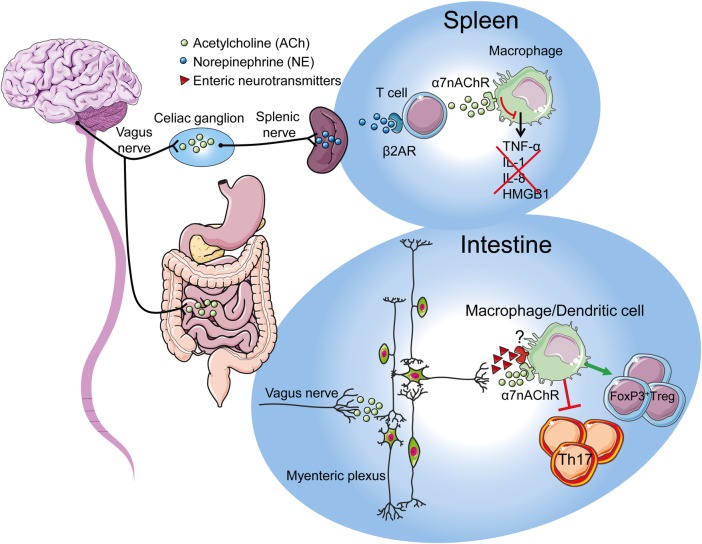
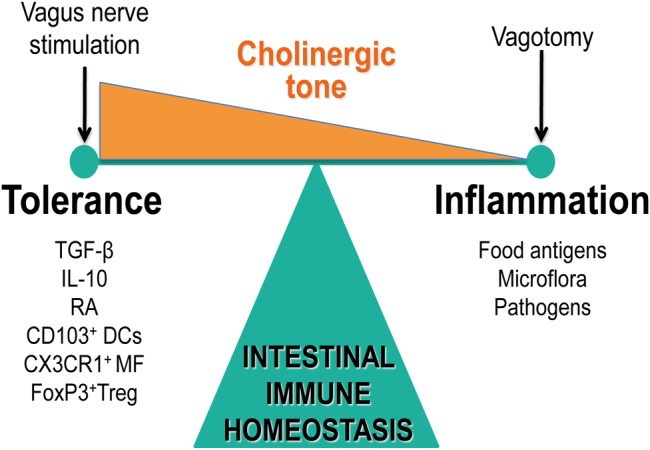
The central nervous system interacts dynamically with the immune system to modulate inflammation through humoral and neural pathways. Recently, in animal models of sepsis, the vagus nerve (VN) has been proposed to play a crucial role in the regulation of the immune response, also referred to as the cholinergic anti-inflammatory pathway. The VN, through release of acetylcholine, dampens immune cell activation by interacting with α-7 nicotinic acetylcholine receptors. Recent evidence suggests that the vagal innervation of the gastrointestinal tract also plays a major role controlling intestinal immune activation. Indeed, VN electrical stimulation potently reduces intestinal inflammation restoring intestinal homeostasis, whereas vagotomy has the reverse effect. In this review, we will discuss the current understanding concerning the mechanisms and effects involved in the cholinergic anti-inflammatory pathway in the gastrointestinal tract. Deeper investigation on this counter-regulatory neuroimmune mechanism will provide new insights in the cross-talk between the nervous and immune system leading to the identification of new therapeutic targets to treat intestinal immune disease.
Overview
The claims and statistics of this paper haven’t been checked yet.
Free: it reads the open-access text and checks the first 5 claims that cite a source we can check. Create a free account to check every claim.
Integrity signals
Registry
Cites
Statistics
Figures
Verification
Claims the paper makes
The claims and statistics of this paper haven’t been checked yet.
Free: it reads the open-access text and checks the first 5 claims that cite a source we can check. Create a free account to check every claim.
Claims other papers make about this one
Each is checked against this paper’s own text: does it say what the citing paper says it does?
The source backs part of the claim, not all of it — or backs it for a different population, condition or comparison.
In the citing paper
“On the one hand, ELS/CT-related autonomic imbalance with reduced vagal activity may further directly augment inflammation through a direct vagal efferent effect of autonomic brain regions (204–206).”
From Developmental Trajectories of Early Life Stress and Trauma: A Narrative Review on Neurobiological Aspects Beyond Stress System Dysregulation (2019) · cites this paper as [204]
Experimental — accuracy not yet measured
Self-check
Percentages, sums and reported differences re-computed from the paper’s own numbers.
The self-check needs the paper’s full text.
Citations
Cites
Vagus nerve stimulation attenuates the systemic inflammatory response to endotoxin
Borovikova, L. V., Ivanova, S., Zhang, M., Yang, H., Botchkina, G. I., Watkins, L. R., Wang, H., Abumrad, N., Eaton, J. W., & Tracey, K. J. (2000) · Nature · doi:10.1038/35013070 · Cited by 4,211
Tracey, K. J. (2002) · Nature · doi:10.1038/nature01321 · Cited by 3,728
Nicotinic acetylcholine receptor α7 subunit is an essential regulator of inflammation
Wang, H., Yu, M., Ochani, M., Amella, C. A., Tanovic, M., Susarla, S., Li, J. H., Wang, H., Yang, H., Ulloa, L., et al. (2003) · Nature · doi:10.1038/nature01339 · Cited by 3,228
Acetylcholine-Synthesizing T Cells Relay Neural Signals in a Vagus Nerve Circuit
Rosas-Ballina, M., Olofsson, P. S., Ochani, M., Valdés-Ferrer, S. I., Levine, Y. A., Reardon, C., Tusche, M. W., Pavlov, V. A., Andersson, U., Chavan, S., et al. (2011) · Science · doi:10.1126/science.1209985 · Cited by 1,551
Tracey, K. J. (2009) · Nature Reviews Immunology · doi:10.1038/nri2566 · Cited by 1,154
de Jonge, W. J., van der Zanden, E. P., The, F. O., Bijlsma, M. F., van Westerloo, D. J., Bennink, R. J., Berthoud, H.-R., Uematsu, S., Akira, S., van den Wijngaard, R. M., et al. (2005) · Nature Immunology · doi:10.1038/ni1229 · Cited by 1,074
Self-citationNeural regulation of innate immunity: a coordinated nonspecific host response to pathogens
Sternberg, E. M. (2006) · Nature Reviews Immunology · doi:10.1038/nri1810 · Cited by 1,064
Acetylcholine beyond neurons: the non‐neuronal cholinergic system in humans
Wessler, I., & Kirkpatrick, C. J. (2008) · British Journal of Pharmacology · doi:10.1038/bjp.2008.185 · Cited by 855
Huston, J. M., Ochani, M., Rosas-Ballina, M., Liao, H., Ochani, K., Pavlov, V. A., Gallowitsch-Puerta, M., Ashok, M., Czura, C. J., Foxwell, B., et al. (2006) · The Journal of Experimental Medicine · doi:10.1084/jem.20052362 · Cited by 683
Oral tolerance to food protein
Pabst, O., & Mowat, A. M. (2012) · Mucosal Immunology · doi:10.1038/mi.2012.4 · Cited by 656
Cited by
Innate immune responses to trauma
Huber-Lang, M., Lambris, J. D., & Ward, P. A. (2018) · Nature Immunology · doi:10.1038/s41590-018-0064-8 · Cited by 599
Furness, J. B., Rivera, L. R., Cho, H.-J., Bravo, D. M., & Callaghan, B. (2013) · Nature Reviews Gastroenterology & Hepatology · doi:10.1038/nrgastro.2013.180 · Cited by 526
Browning, K. N., & Travagli, R. A. (2014) · Comprehensive Physiology · doi:10.1002/cphy.c130055 · Cited by 541
“An increasing body of work supports the concept that the nervous and immune systems have a complex and intricate communication network, and that crosstalk between these systems is important in the regulation of immune responses [see reviews (66, 122, 123, 321, 372, 373)].”
InfluentialChronic vagus nerve stimulation in Crohn's disease: a 6‐month follow‐up pilot study
Bonaz, B., Sinniger, V., Hoffmann, D., Clarençon, D., Mathieu, N., Dantzer, C., Vercueil, L., Picq, C., Trocmé, C., Faure, P., et al. (2016) · Neurogastroenterology & Motility · doi:10.1111/nmo.12792 · Cited by 492
Moeser, A. J., Pohl, C. S., & Rajput, M. (2017) · Animal nutrition · doi:10.1016/j.aninu.2017.06.003 · Cited by 452
“…nervous system in modulating immune responses, secretory diarrhea and the epithelial barrier (Dhawan et al., 2012; Hirota and McKay, 2006; Matteoli and Boeckxstaens, 2013), there are potential implications for an upregulated cholinergic system in early weaned pigs as a pathogenic…”
BackgroundSharkey, K. A., & Mawe, G. M. (2023) · Physiological Reviews · doi:10.1152/physrev.00018.2022 · Cited by 390
Autonomic Nervous System and Immune System Interactions
Kenney, M. J., & Ganta, C. K. (2014) · Comprehensive Physiology · doi:10.1002/cphy.c130051 · Cited by 381
“In addition to the spleen, there is evidence that the cholinergic anti-inflammatory pathway modulates the gut immune sys-tem (195,303).”
The progress of gut microbiome research related to brain disorders
Zhu, S., Jiang, Y., Xu, K., Cui, M., Ye, W., Zhao, G., Jin, L., & Chen, X. (2020) · Journal of Neuroinflammation · doi:10.1186/s12974-020-1705-z · Cited by 419
Intestinal flora and disease mutually shape the regional immune system in the intestinal tract
Zhou, B., Yuan, Y., Zhang, S., Guo, C., Li, X., Li, G., Xiong, W., & Zeng, Z. (2020) · Frontiers in Immunology · doi:10.3389/fimmu.2020.00575 · Cited by 396
“However, the integrity of intestinal immune function depends on the expression of congenital genes and regulation of the neuroendocrine system (4, 5).”
BackgroundThe microbiome–gut–brain axis in Parkinson disease — from basic research to the clinic
Tan, A. H., Lim, S. Y., & Lang, A. E. (2022) · Nature Reviews Neurology · doi:10.1038/s41582-022-00681-2 · Cited by 392
Agorastos, A., Pervanidou, P., Chrousos, G. P., & Baker, D. G. (2019) · Frontiers in Psychiatry · doi:10.3389/fpsyt.2019.00118 · Cited by 385
Gracie, D. J., Hamlin, P. J., & Ford, A. C. (2019) · The Lancet Gastroenterology & Hepatology · doi:10.1016/s2468-1253(19)30089-5 · Cited by 354
Neuroplasticity and dysfunction after gastrointestinal inflammation
Brierley, S. M., & Linden, D. R. (2014) · Nature Reviews Gastroenterology & Hepatology · doi:10.1038/nrgastro.2014.103 · Cited by 311
Cholinergic modulation of the immune system presents new approaches for treating inflammation
Hoover, D. B. (2017) · Pharmacology & Therapeutics · doi:10.1016/j.pharmthera.2017.05.002 · Cited by 300
“Recent studies have shown that vagal input to theGI tract can also have important effects to modulate immune homeostasis (Matteoli & Boeckxstaens, 2013).”
BackgroundWorthington, J. J., Reimann, F., & Gribble, F. M. (2018) · Mucosal Immunology · doi:10.1038/mi.2017.73 · Cited by 262
“This anti-inflammatory role of the vagus nerve, and therefore eec peptide hormone stimulation, is an exciting and growing area of research.(334)”
BackgroundThe Pathophysiology of Sepsis-Associated AKI
Kuwabara, S., Goggins, E., & Okusa, M. D. (2022) · Clinical Journal of the American Society of Nephrology · doi:10.2215/cjn.00850122 · Cited by 224
Methamphetamine: Effects on the brain, gut and immune system
Prakash, M. D., Tangalakis, K., Antonipillai, J., Stojanovska, L., Nurgali, K., & Apostolopoulos, V. (2017) · Pharmacological Research · doi:10.1016/j.phrs.2017.03.009 · Cited by 219
“The vagus nerve also indirectly modulates immune activity of the spleen through connections with the splenic sympathetic nerve (67, 68).”
Tailoring traditional Chinese medicine in cancer therapy
Li, S., Chen, X., Shi, H., Yi, M., Xiong, B., & Li, T. (2025) · Molecular Cancer · doi:10.1186/s12943-024-02213-6 · Cited by 163
“It is essential for the maturation of the intestinal immune system in the early years, especially around birth, and proper colonization of the intestinal microbiota can promote the maturation of intestinal mucosa-associated lymphoid tissues [137, 138].”
Gut–brain axis and the spread of α‐synuclein pathology: Vagal highway or dead end?
Breen, D. P., Halliday, G. M., & Lang, A. E. (2019) · Movement Disorders · doi:10.1002/mds.27556 · Cited by 193
“Moreover, the studies may not have factored in that the vagus nerve itself is believed to play an important antiinflammatory role, acting to dampen splenic immune responses and control intestinal immune activation.(31) Vagotomy has been shown to promote inflammation in experimental studies and this may be another pote…”
BackgroundHarnessing Gut Microbes for Mental Health: Getting From Here to There
Bruce-Keller, A. J., Salbaum, J. M., & Berthoud, H.-R. (2018) · Biological Psychiatry · doi:10.1016/j.biopsych.2017.08.014 · Cited by 189
“For example, stimulation of vagal motor outflow attenuates macrophage activation and dampens intestinal inflammation via α-7 nicotinic cholinergic receptors (57),(58).”
BackgroundHu, B., & Arya, A. (2018) · Brain Circulation · doi:10.4103/bc.bc_32_18 · Cited by 166
Gut microbiota, the immune system, and diet influence the neonatal gut–brain axis
Sherman, M. P., Zaghouani, H., & Niklas, V. (2015) · Pediatric Research · doi:10.1038/pr.2014.161 · Cited by 159
“The afferent vagus nerve is a major retrograde signaling system from gut to brain (15).”
BackgroundThe Dopaminergic System in Autoimmune Diseases
Pacheco, R., Contreras, F., & Zouali, M. (2014) · Frontiers in Immunology · doi:10.3389/fimmu.2014.00117 · Cited by 160
“This could also be the case in the enteric nervous system, where neurons from the enteric nervous system could respond to vagus nerve stimulation by secreting locally relevant neuromodulators, such as dopamine (99).”
BackgroundDaulatzai, M. A. (2014) · Neurochemical Research · doi:10.1007/s11064-014-1266-6 · Cited by 155
“A vast literature is available on various aspects of animal and human gut microbiota [7-15].”
BackgroundShi, X., Hu, Y., Zhang, B., Li, W., Chen, J. D., & Liu, F. (2021) · JCI Insight · doi:10.1172/jci.insight.150052 · Cited by 143
“Visceral hypersensitivity is an important cause of chronic abdominal pain in functional gastrointestinal diseases, and the vagus nerve exerts an antinociceptive effect within the viscera (68).”
Agorastos, A., Pervanidou, P., Chrousos, G. P., & Kolaitis, G. A. (2018) · HORMONES · doi:10.1007/s42000-018-0065-x · Cited by 157
Gut microbiota-derived short-chain fatty acids and hypertension: Mechanism and treatment
Yang, F., Chen, H., Gao, Y., An, N., Li, X., Pan, X., Yang, X., Tian, L., Sun, J., Xiong, X., et al. (2020) · Biomedicine & Pharmacotherapy · doi:10.1016/j.biopha.2020.110503 · Cited by 149
Addressing the Global Burden of Trauma in Major Surgery
Dobson, G. P. (2015) · Frontiers in Surgery · doi:10.3389/fsurg.2015.00043 · Cited by 145
“It is also becoming apparent that CNS imbalances leading to low heart rate variability (229, 230) are associated with increases in systemic inflammation, and possibly involve TNF-alpha production by spleen macrophages (231).”
BackgroundInfluentialNeuroanatomy of lower gastrointestinal pain disorders
Vermeulen, W. (2014) · World Journal of Gastroenterology · doi:10.3748/wjg.v20.i4.1005 · Cited by 116
Recognizing the role of the vagus nerve in depression from microbiota-gut brain axis
Tan, C., Yan, Q., Ma, Y., Fang, J., & Yang, Y. (2022) · Frontiers in Neurology · doi:10.3389/fneur.2022.1015175 · Cited by 130
“When exposed to cytokines including TNF and interleukin-1 beta (IL-1β), VA from nodose ganglion expressing cytokine receptors sense the peripheral inflammation condition and propagate action potentials to the CNS which then activates anti-inflammation responses including the cholinergic anti-inflammatory pathway (85,…”
BackgroundWorthington, J. J. (2015) · Biochemical Society Transactions · doi:10.1042/bst20150090 · Cited by 112
Schneider, N., Chandran, P., Sundby, M., Visioli, F., Gonçalves, F. D. C., Burks, S. R., Paz, A. H. D. R., & Frank, J. A. (2019) · EBioMedicine · doi:10.1016/j.ebiom.2019.06.033 · Cited by 126
Ultrasound Modulates the Splenic Neuroimmune Axis in Attenuating AKI
Gigliotti, J. C., Huang, L., Bajwa, A., Ye, H., Mace, E. H., Hossack, J. A., Kalantari, K., Inoue, T., Rosin, D. L., & Okusa, M. D. (2015) · Journal of the American Society of Nephrology · doi:10.1681/asn.2014080769 · Cited by 114
Li, Y., Zhu, W., Zuo, L., & Shen, B. (2016) · Inflammatory Bowel Diseases · doi:10.1097/mib.0000000000000791 · Cited by 124
“Through vagal efferent nerves and neuromediators, the central nerve system could effectively influence immune cells and modulate intestinal inflammation.(22,23) The important role of VN in intestinal inflammation has been demonstrated by studies with”
BackgroundParodi, B., & de Rosbo, N. K. (2021) · Frontiers in Immunology · doi:10.3389/fimmu.2021.718220 · Cited by 126
Garrido‐Gil, P., Rodriguez-Perez, A. I., Dominguez‐Meijide, A., Guerra, M. J., & Labandeira-García, J. L. (2018) · Molecular Neurobiology · doi:10.1007/s12035-018-0937-8 · Cited by 118
Zhao, L., Xiong, Q., Stary, C. M., Mahgoub, O. K., Ye, Y., Gu, L., Xiong, X., & Zhu, S. (2018) · Journal of Neuroinflammation · doi:10.1186/s12974-018-1382-3 · Cited by 113
“Using an animal model of chronic colitis, it was demonstrated that an anxiety-like behavior was a result of a disrupted gut microbiota, whereby probiotic treatment efficiently reversed the anxiolytic effect, which was comparable to the effect of vagotomy [7, 8].”
Gerbarg, P. L., Jacob, V. E., Stevens, L., Bosworth, B. P., Chabouni, F., DeFilippis, E. M., Warren, R., Trivellas, M., Patel, P. V., Webb, C. D., et al. (2015) · Inflammatory Bowel Diseases · doi:10.1097/mib.0000000000000568 · Cited by 103
The Gut’s Little Brain in Control of Intestinal Immunity
de Jonge, W. J. (2013) · ISRN Gastroenterology · doi:10.1155/2013/630159 · Cited by 94
Intestinal Epithelial Wnt Signaling Mediates Acetylcholine-Triggered Host Defense against Infection
Labed, S. A., Wani, K. A., Jagadeesan, S., Hakkim, A., Najibi, M., & Irazoqui, J. E. (2018) · Immunity · doi:10.1016/j.immuni.2018.04.017 · Cited by 94
Han, B., Li, X., & Hao, J. (2017) · Neuroscience & Biobehavioral Reviews · doi:10.1016/j.neubiorev.2017.04.002 · Cited by 108
“However, VNS induces ACh release from enteric neurons independent of spleen and T lymphocytes, and this ACh acts directly on resident macrophages in the gut, thereby alleviating intestinal inflammatory reactions (Matteoli and Boeckxstaens, 2013; Cailotto et al., 2014).”
BackgroundVazquez, E., Barranco, A., Ramirez, M., Gruart, A., Delgado-Garcia, J. M., Jimenez, M. L., Buck, R., & Rueda, R. (2016) · PLOS ONE · doi:10.1371/journal.pone.0166070 · Cited by 98
Neuro-Immune Circuits Regulate Immune Responses in Tissues and Organ Homeostasis
Jakob, M. O., Murugan, S., & Klose, C. S. N. (2020) · Frontiers in Immunology · doi:10.3389/fimmu.2020.00308 · Cited by 101
“There is strong evidence that modulation of the autonomic nervous system can exert strong anti-inflammatory effects, even after exhausted therapeutical modalities (8, 9).”
BackgroundLiu, F., Wu, J., Gong, L.-J., Yang, H.-S., & Chen, H. (2024) · Frontiers in Neuroscience · doi:10.3389/fnins.2024.1490300 · Cited by 110
Role of α7 nicotinic receptor in the immune system and intracellular signaling pathways
Zdanowski, R., Krzyżowska, M., Ujazdowska, D., Lewicka, A., & Lewicki, S. (2015) · Central European Journal of Immunology · doi:10.5114/ceji.2015.54602 · Cited by 107
“Acetylcholine may affect the immune system in two different ways – autocrine/paracrine (immune cells have the capacity of acetylcholine secretion) or nerve stimulation [17, 18].”
Pellegrini, C., Fornai, M., Colucci, R., Tirotta, E., Blandini, F., Levandis, G., Cerri, S., Segnani, C., Ippolito, C., Bernardini, N., et al. (2016) · Journal of Neuroinflammation · doi:10.1186/s12974-016-0608-5 · Cited by 91
“Previous studies have shown that the dorsal motor nucleus of the vagus (DMV)-vagus nerve axis, one of the earliest CNS sites affected by PD pathology, is significantly involved in the pathophysiology of visceral inflammation [28, 29].”
ResultGottfried‐Blackmore, A., Adler, E. P., Fernandez‐Becker, N., Clarke, J., Habtezion, A., & Nguyen, L. (2020) · Neurogastroenterology & Motility · doi:10.1111/nmo.13769 · Cited by 87
Targeting neural reflex circuits in immunity to treat kidney disease
Okusa, M. D., Rosin, D. L., & Tracey, K. J. (2017) · Nature Reviews Nephrology · doi:10.1038/nrneph.2017.132 · Cited by 89
Guyot, M., Simon, T., Panzolini, C., Ceppo, F., Daoudlarian, D., Murris, E., Macia, E., Abélanet, S., Sridhar, A., Vervoordeldonk, M. J., et al. (2019) · Brain Behavior and Immunity · doi:10.1016/j.bbi.2019.03.015 · Cited by 89
Botha, C., Farmer, A. D., Nilsson, M., Brock, C., Gavrila, A. D., Drewes, A. M., Knowles, C. H., & Aziz, Q. (2015) · Gut · doi:10.1136/gutjnl-2013-306698 · Cited by 77
Obstructive Sleep Apnea and Systemic Hypertension: Gut Dysbiosis as the Mediator?
Mashaqi, S., & Gozal, D. (2019) · Journal of Clinical Sleep Medicine · doi:10.5664/jcsm.7990 · Cited by 86
Gastrointestinal dysmotility disorders in critically ill dogs and cats
Whitehead, K., Cortes, Y., & Eirmann, L. (2016) · Journal of Veterinary Emergency and Critical Care · doi:10.1111/vec.12449 · Cited by 95
Dobson, G. P., & Letson, H. L. (2015) · The Journal of Trauma: Injury, Infection, and Critical Care · doi:10.1097/ta.0000000000000881 · Cited by 82
Jarczok, M. N., Koenig, J., Mauss, D., Fischer, J. E., & Thayer, J. F. (2014) · Journal of Internal Medicine · doi:10.1111/joim.12295 · Cited by 75
Postoperative ileus—An ongoing conundrum
Wattchow, D. A., Heitmann, P. T., Smolilo, D. J., Spencer, N. J., Parker, D. R., Hibberd, T. J., Brookes, S. J., Dinning, P. G., & Costa, M. (2020) · Neurogastroenterology & Motility · doi:10.1111/nmo.14046 · Cited by 87
Giunta, S., Xia, S., Pelliccioni, G., & Olivieri, F. (2023) · GeroScience · doi:10.1007/s11357-023-00947-7 · Cited by 85
“It was previously highlighted that in contrast to the HPA axis or the local production of anti-inflammatory cytokines, the CAP plays central role in immune homeostasis, since the modulatory effect of CAP is not only fast, but also integrated with the health status [58].”
BackgroundKaur, H., Singh, Y., Singh, S., & Singh, R. B. (2020) · Genome · doi:10.1139/gen-2020-0136 · Cited by 78
Crosstalk between cancer and the neuro-immune system
Kuol, N., Stojanovska, L., Apostolopoulos, V., & Nurgali, K. (2017) · Journal of Neuroimmunology · doi:10.1016/j.jneuroim.2017.12.016 · Cited by 80
The role of the vagus nerve in appetite control: Implications for the pathogenesis of obesity
Cork, S. C. (2018) · Journal of Neuroendocrinology · doi:10.1111/jne.12643 · Cited by 77
Gut–Brain Axis in Regulation of Blood Pressure
Yang, T., & Zubcevic, J. (2017) · Frontiers in Physiology · doi:10.3389/fphys.2017.00845 · Cited by 74
“The beneficial effects of vagal nerve stimulation extend to the reduction of intestinal, as well as systemic inflammation (Matteoli and Boeckxstaens, 2013; Koopman et al., 2016).”
BackgroundInoue, T., Abe, C., Kohro, T., Tanaka, S., Huang, L., Yao, J., Zheng, S., Ye, H., Inagi, R., Stornetta, R. L., et al. (2019) · Kidney International · doi:10.1016/j.kint.2018.09.020 · Cited by 77
Polychlorinated Biphenyls (PCBs): Risk Factors for Autism Spectrum Disorder?
Panesar, H. K., Kennedy, C. L., Keil Stietz, K. P., & Lein, P. J. (2020) · Toxics · doi:10.3390/toxics8030070 · Cited by 69
“Autonomic disturbances have been linked to gastrointestinal, bladder, and immune dysfunction [214,241,242], suggesting that the PNS may be a convergence point through which environmental factors such as PCBs influence the phenotypic expression of ASD comorbidities.”
BackgroundBlaylock, R. (2017) · Surgical Neurology International · doi:10.4103/sni.sni_441_16 · Cited by 66
“It is known that the dorsal motor nucleus of the vagus, one of the first areas involved in PD, can induce inflammation in the GI tract.[154]”
BackgroundSimultaneous optical and electrical in vivo analysis of the enteric nervous system
Rakhilin, N., Barth, B., Choi, J., Muñoz, N. L., Kulkarni, S., Jones, J. S., Small, D. M., Cheng, Y.-T., Cao, Y., LaVinka, C., et al. (2016) · Nature Communications · doi:10.1038/ncomms11800 · Cited by 64
Exosomal Induction of Tumor Innervation
Vermeer, P. D. (2019) · Cancer Research · doi:10.1158/0008-5472.can-18-3995 · Cited by 69
In-depth conversation: Spectrum and kinetics of neuroimmune afferent pathways
Quan, N. (2014) · Brain, Behavior, and Immunity · doi:10.1016/j.bbi.2014.02.006 · Cited by 66
“It is known that neurotransmitters such as norepinephrine and acetylcholine released at the site of inflammation can modulate local immune activity (Matteoli and Boeckxstaens, 2013; Straub et al., 2005).”
BackgroundDrugs and Bugs: The Gut-Brain Axis and Substance Use Disorders
Simpson, S., Mclellan, R., Wellmeyer, E., Matalon, F., & George, O. (2021) · Journal of Neuroimmune Pharmacology · doi:10.1007/s11481-021-10022-7 · Cited by 70
“Vagal stimulation is already an established treatment for resistant mood dosorders and is being explored for potential substance use disorder-related behavioral modification (Altschuler et al. 1993; Berthoud et al. 1991; Bremner 2020; Childs et al. 2017; Matteoli and Boeckxstaens 2013).”
Milovanović, B., Djajić, V., Bajić, D., Djoković, A., Krajnovic, T., Jovanovic, S., Verhaz, A., Kovačević, P., & Ostojić, M. (2021) · Frontiers in Neuroscience · doi:10.3389/fnins.2021.640835 · Cited by 70
“Accordingly, efferent vagal activity inhibits the release of pro-inflammatory cytokines via the release of acetylcholine and this physiological mechanism has been termed the cholinergic anti-inflammatory pathway5 (Pavlov and Tracey, 2012; Matteoli and Boeckxstaens, 2013).”
BackgroundThe Effects of Stress and Meditation on the Immune System, Human Microbiota, and Epigenetics.
Househam, A. M., Peterson, C. T., Mills, P. J., & Chopra, D. (2017) · PubMed · Cited by 97
Rawat, K., Singh, N., Kumari, P., & Saha, L. (2021) · Reviews in the Neurosciences · doi:10.1515/revneuro-2020-0078 · Cited by 56
Zhao, L., Ye, Y., Gu, L., Jian, Z., Stary, C. M., & Xiong, X. (2021) · Journal of Translational Medicine · doi:10.1186/s12967-021-02861-y · Cited by 63
Gut microbiota impact on stroke outcome: Fad or fact?
Winek, K., Meisel, A., & Dirnagl, U. (2016) · Journal of Cerebral Blood Flow & Metabolism · doi:10.1177/0271678x16636890 · Cited by 60
Medland, J. E., Pohl, C. S., Edwards, L. L., Frandsen, S., Bagley, K., Li, Y., & Moeser, A. J. (2016) · Neurogastroenterology & Motility · doi:10.1111/nmo.12828 · Cited by 53
Fornai, M., Pellegrini, C., Antonioli, L., Segnani, C., Ippolito, C., Barocelli, E., Ballabeni, V., Vegezzi, G., Harraq, Z. A., Blandini, F., et al. (2015) · Journal of Pharmacology and Experimental Therapeutics · doi:10.1124/jpet.115.228510 · Cited by 61
“…there is evidence that the vagus nerve exerts tonic anti-inflammatory actions and contributes to the maintenance of intestinal homeostasis (Matteoli and Boeckxstaens, 2013), whereas vagotomy confers an increased susceptibility to the development of inflammatory bowel diseases (Ghia et…”
BackgroundWang, S., Jiang, W., Ouyang, T., Shen, X.-Y., Wang, F., Qu, Y.-H., Zhang, M., Luo, T., & Wang, H.-Q. (2019) · Scientific Reports · doi:10.1038/s41598-019-56149-9 · Cited by 56
Hattori, N., & Yamashiro, Y. (2021) · Annals of Nutrition and Metabolism · doi:10.1159/000512226 · Cited by 58
Macrophages in diabetic gastroparesis – the missing link?
Neshatian, L., Gibbons, S. J., & Farrugia, G. (2015) · Neurogastroenterology & Motility · doi:10.1111/nmo.12418 · Cited by 55
Moschopoulos, C., Kratimenos, P., Koutroulis, I., Shah, B. V., Mowes, A., & Bhandari, V. (2018) · Mediators of Inflammation · doi:10.1155/2018/7456857 · Cited by 64
“The afferent and efferent vagus nerves play an important role in this bidirectional communication [62, 63].”
BackgroundNeuron-macrophage crosstalk in the intestine: a “microglia” perspective
Verheijden, S., Schepper, S. D., & Boeckxstaens, G. E. (2015) · Frontiers in Cellular Neuroscience · doi:10.3389/fncel.2015.00403 · Cited by 60
“Also in the intestinal muscularis externa, resident macrophages acquire a tolerogenic phenotype in order to restrict the release of inflammatory mediators which can affect smooth muscle and neuronal function (de Jonge et al., 2005; Matteoli and Boeckxstaens, 2013).”
BackgroundSelf-citationTropisetron and its targets in Alzheimer’s disease
Hashimoto, K. (2014) · Expert Opinion on Therapeutic Targets · doi:10.1517/14728222.2014.983901 · Cited by 54
“This led to the proposal of a ‘cholinergic anti-inflammatory pathway’ [18].”
BackgroundIntestinal Mucosal Barrier Is Regulated by Intestinal Tract Neuro-Immune Interplay
You, X., Zhang, H., Han, X., Wang, F., Zhuang, P., & Zhang, Y. (2021) · Frontiers in Pharmacology · doi:10.3389/fphar.2021.659716 · Cited by 53
Nowakowski, J., Chrobak, A., & Dudek, D. (2016) · Psychiatria Polska · doi:10.12740/pp/62382 · Cited by 49
“Vagal efferent fibers carry impulses of cholinergic anti-inflammatory reflex, thus controlling immune homeostasis of the gut [40].”
BackgroundDobson, G. P., Morris, J. L., & Letson, H. L. (2022) · Frontiers in Medicine · doi:10.3389/fmed.2022.968453 · Cited by 55
“An uncoupling is reflected by an increase in stress hormones, sympathetic discharge, loss of baroreceptor sensitivity, reduced heart rate variability (183, 184), unresolved inflammation, immune dysfunction, coagulopathy and mitochondrial dysfunction.”
BackgroundRueda‐Ruzafa, L., Cedillo, J. L., & Hone, A. J. (2021) · International Journal of Environmental Research and Public Health · doi:10.3390/ijerph18031189 · Cited by 53
Lista, S., Munafò, A., Caraci, F., Imbimbo, C., Emanuele, E., Minoretti, P., Pinto-Fraga, J., Merino-País, M., Crespo‐Escobar, P., López‐Ortiz, S., et al. (2025) · Ageing Research Reviews · doi:10.1016/j.arr.2025.102659 · Cited by 51
Liu, J., Lv, C., Yin, M., Zhu, M., Wang, B., Tian, J., Hashimoto, K., & Yu, Y. (2024) · The American Journal of Gastroenterology · doi:10.14309/ajg.0000000000003257 · Cited by 59
“VHS is a keyfactor in chronic abdominal pain associated with functional GI disorders, and vagus nerve modulation has been shown to have an antinociceptive e ff ect within the viscera (45,46).”
Neuro-immune interactions: Exploring the anti-inflammatory role of the vagus nerve
Liu, L., Lou, S., Fu, D., Ji, P., Xia, P., Shuang, S., Dong, W., Yuan, X., Wang, J., Xie, K., et al. (2025) · International Immunopharmacology · doi:10.1016/j.intimp.2025.114941 · Cited by 50
Eissa, N., Hussein, H. H., Kermarrec, L., Elgazzar, O., Metz‐Boutigue, M., Bernstein, C. N., & Ghia, J. (2017) · Biochemical Pharmacology · doi:10.1016/j.bcp.2017.08.013 · Cited by 51
Neuronal regulation of innate lymphoid cells
Klose, C. S. N., & Artis, D. (2018) · Current Opinion in Immunology · doi:10.1016/j.coi.2018.11.002 · Cited by 47
Khoury, T., & Ilan, Y. (2021) · Obesity Research & Clinical Practice · doi:10.1016/j.orcp.2021.02.003 · Cited by 50
Alterations in the distal colon innervation in Winnie mouse model of spontaneous chronic colitis
Rahman, A. A., Robinson, A. M., Jovanovska, V., Eri, R. D., & Nurgali, K. (2015) · Cell and Tissue Research · doi:10.1007/s00441-015-2251-3 · Cited by 52
Traumatic-Induced Coagulopathy as a Systems Failure: A New Window into Hemostasis
Dobson, G. P., Morris, J. L., Davenport, L. M., & Letson, H. L. (2020) · Seminars in Thrombosis and Hemostasis · doi:10.1055/s-0039-1701018 · Cited by 47
The Gut Microbiota’s Role in Neurological, Psychiatric, and Neurodevelopmental Disorders
Charitos, I. A., Inchingolo, A. M., Ferrante, L., Inchingolo, F., Inchingolo, A. D., Castellaneta, F., Cotoia, A., Palermo, A., Scacco, S., & Dipalma, G. (2024) · Nutrients · doi:10.3390/nu16244404 · Cited by 44
Zhai, Q., Lai, D., Cui, P., Zhou, R., Chen, Q., Hou, J., Su, Y.-T., Pan, L., Ye, H., Zhao, J., et al. (2017) · Critical Care Medicine · doi:10.1097/ccm.0000000000002646 · Cited by 45
“Excessive immune responses are controlled by this neural pathway and maintain homeostasis (11).”
BackgroundLiu, B., Wanders, A., Wirdefeldt, K., Sjölander, A., Sachs, M. C., Eberhardson, M., Ye, W., Ekbom, A., Olén, O., & Ludvigsson, J. F. (2020) · Alimentary Pharmacology & Therapeutics · doi:10.1111/apt.15715 · Cited by 43
The gut–brain axis in early Parkinson’s disease: from prodrome to prevention
Oliver, P. J., Civitelli, L., & Hu, M. T. (2025) · Journal of Neurology · doi:10.1007/s00415-025-13138-5 · Cited by 42
“…conduit for transport, while the effects of reduced α-synuclein transport in selective vagotomy are ameliorated by triggering a pro-inflammatory response that promotes pathological α-synuclein aggregation through disruption of the anti-inflammatory cholinergic pathways in the vagus nerve [59, 60].”
Neural reflex pathways in intestinal inflammation: hypotheses to viable therapy
Willemze, R. A., Luyer, M. D. P., Buurman, W. A., & de Jonge, W. J. (2015) · Nature Reviews Gastroenterology & Hepatology · doi:10.1038/nrgastro.2015.56 · Cited by 48
Gahring, L. C., Myers, E. J., Dunn, D. M., Weiss, R. B., & Rogers, S. W. (2017) · PLoS ONE · doi:10.1371/journal.pone.0175367 · Cited by 42
Darwin’s Other Dilemmas and the Theoretical Roots of Emotional Connection
Ludwig, R. J., & Welch, M. G. (2019) · Frontiers in Psychology · doi:10.3389/fpsyg.2019.00683 · Cited by 46
“In animal models of sepsis, the vagus nerve has been proposed to play a crucial role in the regulation of the immune response (Matteoli and Boeckxstaens, 2013).”
BackgroundThe Predictive Potential of Heart Rate Variability for Depression
Galin, S., & Keren, H. (2024) · Neuroscience · doi:10.1016/j.neuroscience.2024.03.013 · Cited by 46
“Through the cholinergic anti-inflammatory pathway, effer-ent vagal activity inhibits the release of pro-inflammatory cytokines, resulting in reduced inflammation (Pavlov and Tracey, 2012; Matteoli and Boeckxstaens, 2013).”
Metadata
- Authors
- Matteoli, G., & Boeckxstaens, G. E.
- Affiliations
- KU Leuven (BE)
- Corresponding author
- Matteoli, Gianluca
- Venue
- Gut
- Publisher
- BMJ
- Published
- 2012-09-29
- Volume
- 62
- Issue
- 8
- Pages
- 1214-1222
- ISSN
- 0017-5749 (ISSN-L)
- 1468-3288
- PMC
- PMC3711371
- OpenAlex
- W2127401626
- Semantic Scholar
- e782540e6eefdb3b0f65d1ca2a3bff022f19a493
- Cited by
- 276
- References
- 124
- Citations by year
- 2026: 24 · 2025: 17 · 2024: 13 · 2023: 11 · 2022: 20 · 2021: 22 · 2020: 23 · 2019: 21 · 2018: 21 · 2017: 25 · 2016: 22 · 2015: 27 · 2014: 21 · 2013: 8 · 2012: 1
- FWCI
- 1.70
- Type
- journal article
- Language
- en
- Open access
- hybrid
- doi.org
- Licence
- cc-by-nc
- Locations
- Gut (publishedVersion, cc-by-nc)
- Europe PMC (PubMed Central) (publishedVersion, cc-by-nc)
- PubMed Central (publishedVersion, cc-by-nc)
- PubMed (publishedVersion)
- Data Archiving and Networked Services (DANS) (submittedVersion)
- HighWire Press Open Archive (submittedVersion)
- Pure Amsterdam UMC (submittedVersion)
- Funders
- Fonds Wetenschappelijk Onderzoek
- Nederlandse Organisatie voor Wetenschappelijk Onderzoek
- Vlaamse regering
- Topics
- Life Sciences › Neuroscience › Neurology › Vagus Nerve Stimulation Research
- Health Sciences › Medicine › Gastroenterology › Gastrointestinal motility and disorders
- Life Sciences › Neuroscience › Cellular and Molecular Neuroscience › Neuropeptides and Animal Physiology
- Keywords
- vagus nerve, cholinergic anti-inflammatory pathway, acetylcholine, alpha7 nicotinic acetylcholine receptor, neuroimmune interactions, intestinal inflammation, intestinal homeostasis, vagotomy, sepsis
- MeSH terms
- Acetylcholine, Homeostasis, Humans, Inflammation, Intestines, Vagus Nerve, Inflammatory Bowel Diseases, Neuroimmunomodulation, Signal Transduction, Immunity, Mucosal, Ileus
About these checks
Registry, retraction, Cites and statistics results are computed, not judged, with one exception: a printed reference that no index lists is read once by a model before it counts as a citation error. Claims are extracted by a model and kept only when their quote appears verbatim in the text; each cited source is then checked, with a model’s help, for whether it says what the claim relies on. Those verdicts can be wrong — read the claim’s quote and the cited source before relying on one.
Statistics and arithmetic are recomputed, not judged.
Confidence bands are shown only for fields calibrated on our annotated test set. None is calibrated yet, so no band is shown.
What counts as a claim ›How we measure confidence ›How we check this ›
Are you an author, or do you see a problem with this page? Request a review
Data sources
Bibliographic data: Semantic Scholar, OpenAlex, Crossref.
Contains information from the Semantic Scholar Academic Graph Datasets, made available under the ODC Attribution License (ODC-BY 1.0).
Semantic Scholar’s data is described in: Kinney, R., et al. (2023). The Semantic Scholar Open Data Platform. arXiv:2301.10140.
