

Pleiotrophin regulates the ductular reaction by controlling the migration of cells in liver progenitor niches
Open accessThe DOI matches its Crossref record; 58 of the 58 references it cites were found in a registry or an index.
Abstract
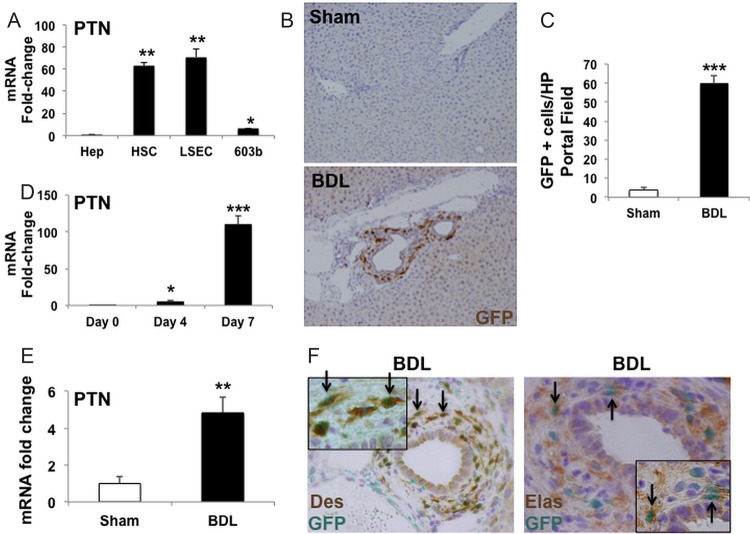
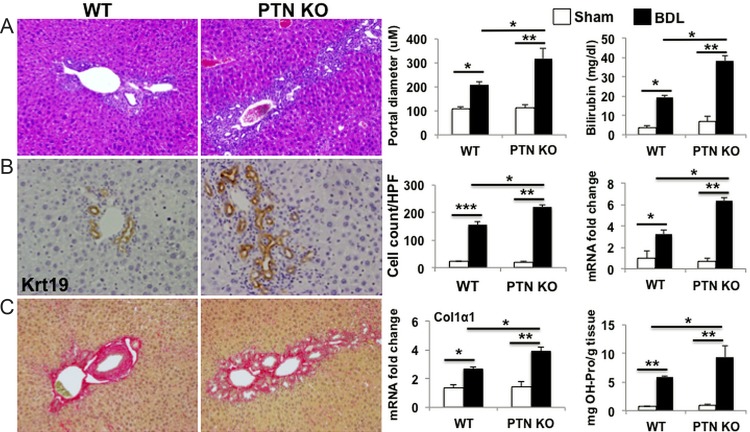
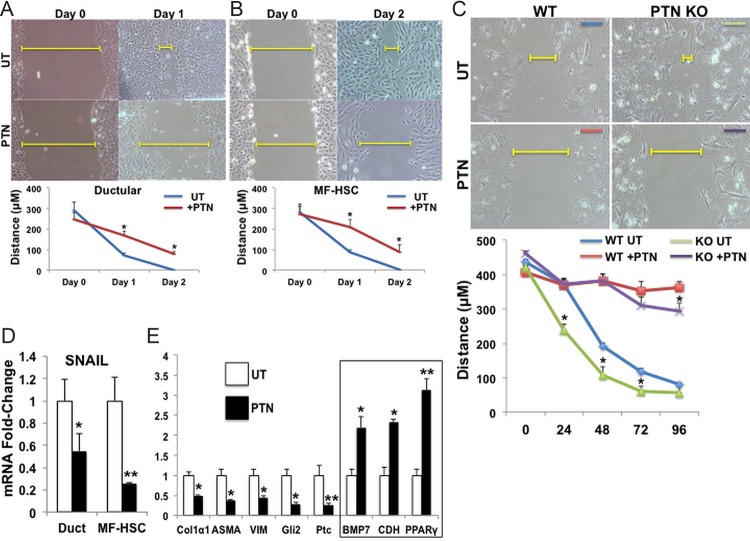
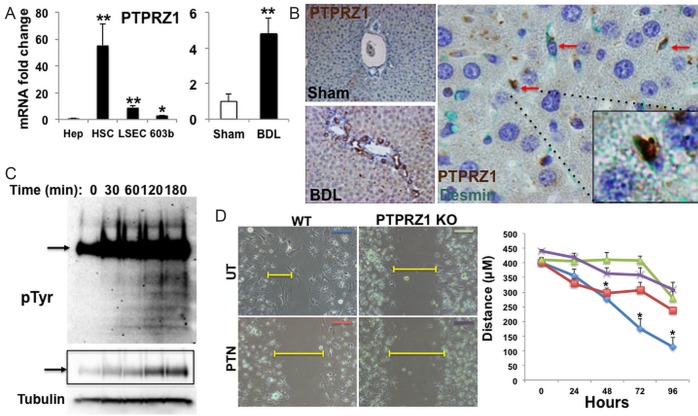
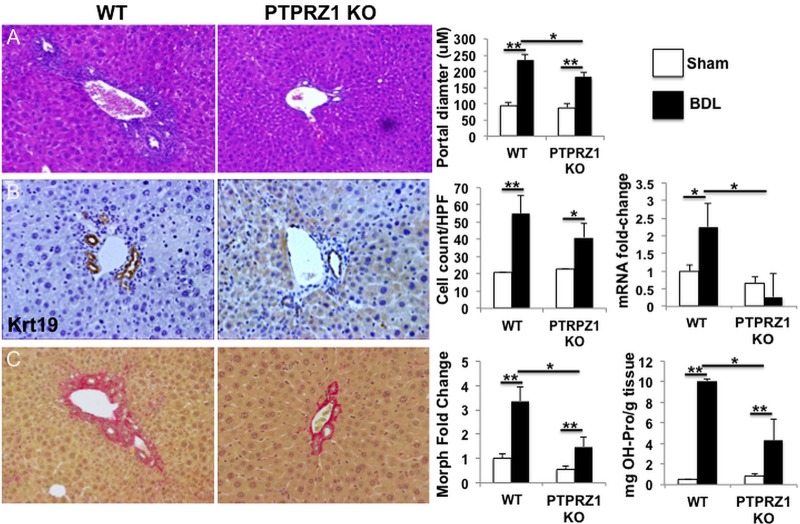
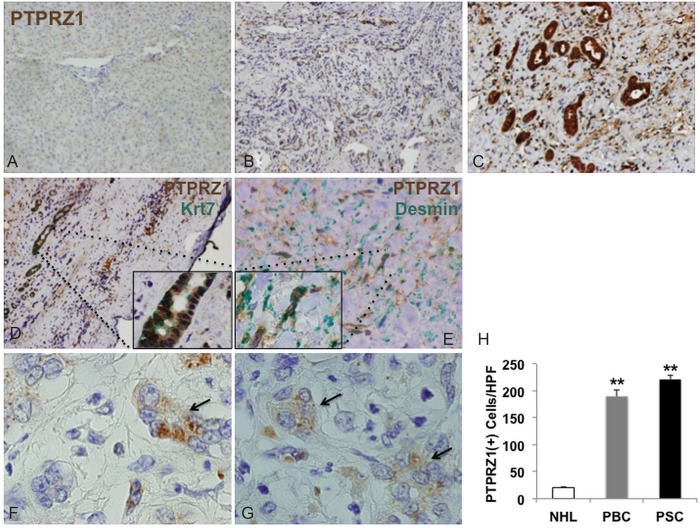
OBJECTIVE: The ductular reaction (DR) involves mobilisation of reactive-appearing duct-like cells (RDC) along canals of Hering, and myofibroblastic (MF) differentiation of hepatic stellate cells (HSC) in the space of Disse. Perivascular cells in stem cell niches produce pleiotrophin (PTN) to inactivate the PTN receptor, protein tyrosine phosphatase receptor zeta-1 (PTPRZ1), thereby augmenting phosphoprotein-dependent signalling. We hypothesised that the DR is regulated by PTN/PTPRZ1 signalling. DESIGN: PTN-GFP, PTN-knockout (KO), PTPRZ1-KO, and wild type (WT) mice were examined before and after bile duct ligation (BDL) for PTN, PTPRZ1 and the DR. RDC and HSC from WT, PTN-KO, and PTPRZ1-KO mice were also treated with PTN to determine effects on downstream signaling phosphoproteins, gene expression, growth, and migration. Liver biopsies from patients with DRs were also interrogated. RESULTS: Although quiescent HSC and RDC lines expressed PTN and PTPRZ1 mRNAs, neither PTN nor PTPRZ1 protein was demonstrated in healthy liver. BDL induced PTN in MF-HSC and increased PTPRZ1 in MF-HSC and RDC. In WT mice, BDL triggered a DR characterised by periportal accumulation of collagen, RDC and MF-HSC. All aspects of this DR were increased in PTN-KO mice and suppressed in PTPRZ1-KO mice. In vitro studies revealed PTN-dependent accumulation of phosphoproteins that control cell-cell adhesion and migration, with resultant inhibition of cell migration. PTPRZ1-positive cells were prominent in the DRs of patients with ductal plate defects and adult cholestatic diseases. CONCLUSIONS: PTN, and its receptor, PTPRZ1, regulate the DR to liver injury by controlling the migration of resident cells in adult liver progenitor niches.
Overview
The claims and statistics of this paper haven’t been checked yet.
Free: it reads the open-access text and checks the first 5 claims that cite a source we can check. Create a free account to check every claim.
Integrity signals
Registry
Cites
Statistics
Figures
Verification
Claims the paper makes
The claims and statistics of this paper haven’t been checked yet.
Free: it reads the open-access text and checks the first 5 claims that cite a source we can check. Create a free account to check every claim.
Claims other papers make about this one
Each is checked against this paper’s own text: does it say what the citing paper says it does?
The source backs part of the claim, not all of it — or backs it for a different population, condition or comparison.
In the citing paper
“Of note, mesenchymal-ductular interactions inhibit ductular proliferation during recovery, mediated by cell contact-dependent signals such as Notch2.50,51”
From Understanding the cellular interactome of non-alcoholic fatty liver disease (2022) · cites this paper as [51]
Experimental — accuracy not yet measured
Self-check
Percentages, sums and reported differences re-computed from the paper’s own numbers.
The self-check needs the paper’s full text.
Citations
Cites
Molecular mechanisms of epithelial–mesenchymal transition
Lamouille, S., Xu, J., & Derynck, R. (2014) · Nature Reviews Molecular Cell Biology · doi:10.1038/nrm3758 · Cited by 8,091
Beausoleil, S. A., Villén, J., Gerber, S. A., Rush, J., & Gygi, S. P. (2006) · Nature Biotechnology · doi:10.1038/nbt1240 · Cited by 1,577
Henderson, N. C., Arnold, T. D., Katamura, Y., Giacomini, M. M., Rodriguez, J. D., McCarty, J. H., Pellicoro, A., Raschperger, E., Betsholtz, C., Ruminski, P. G., et al. (2013) · Nature Medicine · doi:10.1038/nm.3282 · Cited by 866
Hippo Pathway Activity Influences Liver Cell Fate
Yimlamai, D., Christodoulou, C., Galli, G. G., Yanger, K., Pepe-Mooney, B., Gurung, B., Shrestha, K., Cahan, P., Stanger, B. Z., & Camargo, F. D. (2014) · Cell · doi:10.1016/j.cell.2014.03.060 · Cited by 857
Furuyama, K., Kawaguchi, Y., Akiyama, H., Horiguchi, M., Kodama, S., Kuhara, T., Hosokawa, S., Elbahrawy, A., Soeda, T., Koizumi, M., et al. (2011) · Nature Genetics · doi:10.1038/ng.722 · Cited by 834
Boulter, L., Govaere, O., Bird, T. G., Radulescu, S., Ramachandran, P., Pellicoro, A., Ridgway, R. A., Seo, S. S., Spee, B., Van Rooijen, N., et al. (2012) · Nature Medicine · doi:10.1038/nm.2667 · Cited by 747
Talins and kindlins: partners in integrin-mediated adhesion
Calderwood, D. A., Campbell, I. D., & Critchley, D. R. (2013) · Nature Reviews Molecular Cell Biology · doi:10.1038/nrm3624 · Cited by 619
Meng, K., Rodríguez-Peña, A., Dimitrov, T., Chen, W., Yamin, M., Noda, M., & Deuel, T. F. (2000) · Proceedings of the National Academy of Sciences · doi:10.1073/pnas.020487997 · Cited by 418
Omenetti, A., Porrello, A., Jung, Y., Yang, L., Popov, Y., Choi, S. S., Witek, R. P., Alpini, G., Venter, J., Vandongen, H. M., et al. (2008) · Journal of Clinical Investigation · doi:10.1172/jci35875 · Cited by 341
Self-citationCardinale, V., Wang, Y., Carpino, G., Cui, C.-B., Gatto, M., Rossi, M., Berloco, P. B., Cantafora, A., Wauthier, E., Furth, M. E., et al. (2010) · Hepatology · doi:10.1002/hep.24590 · Cited by 337 · cited 1×
“Anonomised unstained liver sections from formalin-fi xed paraf-fi n embedded tissue blocks of individuals with normal liver (3), adult polycystic disease (n=1), von Meyenburg complexes (n=1), primary biliary cirrhosis (n=2) and primary sclerosing cholangitis (n=4) were obtained from the Duke…”
Method
Cited by
Shi, Y., Ping, Y.-F., Zhou, W., He, Z.-C., Chen, C., Bian, B.-S.-J., Zhang, L., Chen, L., Lan, X., Zhang, X.-C., et al. (2017) · Nature Communications · doi:10.1038/ncomms15080 · Cited by 344
Du, K., Hyun, J., Premont, R. T., Choi, S. S., Michelotti, G. A., Swiderska-Syn, M., Dalton, G. D., Thelen, E., Rizi, B. S., Jung, Y., et al. (2018) · Gastroenterology · doi:10.1053/j.gastro.2017.12.022 · Cited by 339
Self-citationSong, Y., Liu, C., Liu, X., Trottier, J., Beaudoin, M., Zhang, L. R., Pope, C. A., Peng, G., Barbier, O., Zhong, X., et al. (2017) · Hepatology · doi:10.1002/hep.29209 · Cited by 155
“It was reported that hepatic progenitor cells are the source of proliferating biliary epithelial cells in BDL-induced liver fibrosis.((39)) Consistently, H19 appeared to be more effective in small cholangicytes than in large cholangiocytes.”
BackgroundHimburg, H. A., Termini, C. M., Schlussel, L., Kan, J., Li, M., Zhao, L., Fang, T., Sasine, J. P., Chang, V. Y., & Chute, J. P. (2018) · Cell Stem Cell · doi:10.1016/j.stem.2018.07.003 · Cited by 140
“PTN Is Expressed by BM LepR Stromal Cells and VE-cad ECs We utilized Ptn-EGFP mice to identify cells that express PTN in the adult BM (Michelotti et al., 2016).”
MethodSelf-citationUnderstanding the cellular interactome of non-alcoholic fatty liver disease
Wallace, S. J., Tacke, F., Schwabe, R. F., & Henderson, N. C. (2022) · JHEP Reports · doi:10.1016/j.jhepr.2022.100524 · Cited by 116
“Of note, mesenchymal-ductular interactions inhibit ductular proliferation during recovery, mediated by cell contact-dependent signals such as Notch2.”
BackgroundCalcium Signaling in Liver Injury and Regeneration
Oliva-Vilarnau, N., Hankeova, S., Vorrink, S. U., Mkrtchian, S., Andersson, E. R., & Lauschke, V. M. (2018) · Frontiers in Medicine · doi:10.3389/fmed.2018.00192 · Cited by 85
“In humans, oval cells are commonly termed hepatic progenitor cells (HPCs) and are observed in “ductular reactions,” an emerging structure observed in a range of chronic liver injuries, including non-alcoholic steatohepatitis (NASH) (105, 106) and cholestasis (107).”
BackgroundRole of High-Mobility Group Box-1 in Liver Pathogenesis
Khambu, B., Yan, S., Huda, N., & Yin, X. (2019) · International Journal of Molecular Sciences · doi:10.3390/ijms20215314 · Cited by 79
Bai, P., Xia, N., Sun, H., & Kong, Y. (2017) · Journal of Cellular and Molecular Medicine · doi:10.1111/jcmm.13213 · Cited by 67
Papadimitriou, Ε., Pantazaka, E., Castana, P., Tsalios, T., Polyzos, A., & Beis, D. (2016) · Biochimica et Biophysica Acta (BBA) - Reviews on Cancer · doi:10.1016/j.bbcan.2016.09.007 · Cited by 74
Guo, H., Tian, L., Zhang, J. Z., Kitani, T., Paik, D. T., Lee, W. H., & Wu, J. C. (2019) · Stem Cell Reports · doi:10.1016/j.stemcr.2019.01.022 · Cited by 59
Lukacs‐Kornek, V., & Lammert, F. (2016) · Journal of Hepatology · doi:10.1016/j.jhep.2016.10.033 · Cited by 60
On the role of pleiotrophin and its receptors in development and angiogenesis
Papadimitriou, Ε., Mourkogianni, E., Ντενέκου, Δ., Christopoulou, M., Κουτσιούμπα, Μ., & Λάμπρου, Μ. (2021) · The International Journal of Developmental Biology · doi:10.1387/ijdb.210122ep · Cited by 56
Xia, Z., Ouyang, D., Li, Q., Li, M., Zou, Q., Li, L., Yi, W., & Zhou, E. (2019) · Journal of Cancer · doi:10.7150/jca.28231 · Cited by 72
“PTPRZ1-PTN interaction in liver cells modulates the tyrosine phosphorylation of factors, such as Src, focal adhesion kinase (FAK), PTEN, MEK, and Erk1/2, that control cell-cell adhesion, cell-matrix interactions and cell migration, including an increase in tyrosinephosphorylated β-catenin, which is known to cause loss…”
BackgroundRole of the Hippo pathway in liver regeneration and repair: recent advances
Pibiri, M., & Simbula, G. (2022) · Inflammation and Regeneration · doi:10.1186/s41232-022-00235-5 · Cited by 51
Chaudhari, P., Tian, L., Deshmukh, A. P., & Jang, Y.-Y. (2016) · Experimental Biology and Medicine · doi:10.1177/1535370216657901 · Cited by 43
“5 in liver epithelial cells (hepatoblasts) which are located near the portal vein branches, where biliary cells differentiate; while at the later developmental stages SOX9 expression is restricted to the biliary cells in mice.47 In mice, the reactive ductular cells and many hepatocytic cells near the periportal tracts…”
BackgroundSingle-cell transcriptome analysis reveals liver injury induced by glyphosate in mice
Wu, J., Sun, X., Wu, C., Hong, X., Xie, L., Shi, Z., Zhao, L., Du, Q., Xiao, W. L., Sun, J., et al. (2023) · Cellular & Molecular Biology Letters · doi:10.1186/s11658-023-00426-z · Cited by 32
The rete testis harbors Sertoli-like cells capable of expressing DMRT1
Malolina, E. A., & Kulibin, A. Y. (2019) · Reproduction · doi:10.1530/rep-19-0183 · Cited by 31
Huang, J., Jiang, H.-Y., Cai, H., Liu, Y., Zhu, Y., Lin, S., Hu, T., Wang, T.-T., Yang, W., Xiao, B., et al. (2019) · Oncogene · doi:10.1038/s41388-018-0643-z · Cited by 30
Rational engineering of lung alveolar epithelium
Leiby, K. L., Yuan, Y., Ng, R., Raredon, M. S. B., Adams, T. S., Baevova, P., Greaney, A. M., Hirschi, K. K., Campbell, S. G., Kaminski, N., et al. (2023) · npj Regenerative Medicine · doi:10.1038/s41536-023-00295-2 · Cited by 27
Pleiotrophin and metabolic disorders: insights into its role in metabolism
Ballesteros-Pla, C., Sánchez‐Alonso, M. G., Pizarro‐Delgado, J., Zuccaro, A., Sevillano, J., & Ramos, P. (2023) · Frontiers in Endocrinology · doi:10.3389/fendo.2023.1225150 · Cited by 24
“In this line of evidence, PTN potentiates regeneration after partial hepatectomy (68), regulates the proliferation of bile ducts after liver injury and is overall implicated in liver regeneration and development (68, 69).”
BackgroundHepatobiliary acid-base homeostasis: Insights from analogous secretory epithelia
Trampert, D. C., van de Graaf, S. F. J., Jongejan, A., Elferink, R. P. J. O., & Beuers, U. H. (2020) · Journal of Hepatology · doi:10.1016/j.jhep.2020.10.010 · Cited by 22
Loss of pericyte smoothened activity in mice with genetic deficiency of leptin
Xie, G., Swiderska‐Syn, M., Jewell, M. L., Machado, M. V., Michelotti, G. A., Premont, R. T., & Diehl, A. M. (2017) · BMC Cell Biology · doi:10.1186/s12860-017-0135-y · Cited by 16
“Wound-healing assays were performed by scraping cell monolayers as described previously [66].”
Self-citationSun, J. L., Wang, J., Zhang, N., Yang, R., Chen, K., & Kong, D. (2019) · Gene · doi:10.1016/j.gene.2019.04.078 · Cited by 13
Zhao, J., Yue, P., Mi, N., Li, M., Fu, W., Zhang, X., Gao, L., Bai, M., Tian, L., Jiang, N., et al. (2024) · Medical Review · doi:10.1515/mr-2024-0029 · Cited by 11
“In biliary fi brosis,potentialmyo fi broblastprecursorsincludeliver stem cells [234], hepatocytes [235, 236], cholangiocytes [237, 238], portal fi broblasts [239 – 241], HSCs [242], perivascular cells[243], andbone marrow-derivedcells[244].”
BackgroundKatraki-Pavlou, S., Kastana, P., Bousis, D., Ντενέκου, Δ., Varela, A., Davos, C. H., Νίκου, Σ., Papadaki, E., Tsigkas, G., Athanasiadis, E. I., et al. (2021) · American Journal of Physiology-Heart and Circulatory Physiology · doi:10.1152/ajpheart.00400.2021 · Cited by 8
Zapatería, B., Sevillano, J., Sánchez‐Alonso, M. G., Limones, M., Pizarro‐Delgado, J., Zuccaro, A., Herradón, G., Medina‐Gómez, G., & Ramos, P. (2021) · The FASEB Journal · doi:10.1096/fj.202101181r · Cited by 7
Liu, Y., Peng, Y., Chen, L., Xiang, Y., Zhang, X., & Song, J. (2025) · International Journal of Oral Science · doi:10.1038/s41368-024-00345-5 · Cited by 5
CELLULAR AND MOLECULAR MECHANISMS OF LIVER FIBROGENESIS
Lebedeva, E. I., & Myadelets, O. D. (2019) · Hepatology and Gastroenterology · doi:10.25298/2616-5546-2019-3-2-119-126 · Cited by 7
“Временные и функциональные взаимосвязи между элементами протоковой реакции остаются неопределенными и неясными [26, 27].”
Redox experimental medicine and liver regeneration
Bellanti, F., Vendemiale, G., & Serviddio, G. (2022) · Redox Experimental Medicine · doi:10.1530/rem-22-0008 · Cited by 5
Zhao, Z., Duan, X., Huang, H., Zhang, Y., Wang, M., Qin, J., Lin, S., & Chen, H. (2026) · Glia · doi:10.1002/glia.70148 · Cited by 3
Monocyte Activation Drives Atrial Fibrillation in Hypertension
Deng, Q.-W., Xu, Z., Zhang, W., Kang, Y., Rong, W., Xia, J.-H., Gao, P., Li, X.-D., & Wang, J. (2026) · Cardiovascular Drugs and Therapy · doi:10.1007/s10557-026-07867-6 · Cited by 3
“Conversely, PTN signaling was increased in SMCs but slightly decreased in fibroblasts, consistent with differential regulation of extra - cellular matrix-related pathways [50].”
Modulation of liver regeneration by the nuclear factor erythroid 2-related factor 2
Bellanti, F., Serviddio, G., & Vendemiale, G. (2023) · Advances in Redox Research · doi:10.1016/j.arres.2023.100066 · Cited by 3
Foster, D. G., Javkhlan, N., Black, B. P., Vestal, B. E., Riches, D. W. H., & Redente, E. F. (2026) · JCI Insight · doi:10.1172/jci.insight.199660 · Cited by 2
Campinoti, S., Kirubendran, K., Wei, L., Medic, M., Joshi, O., & Urbani, L. (2026) · npj gut and liver. · doi:10.1038/s44355-026-00075-x · Cited by 1
Chand, V. (2023) · Queensland University of Technology · doi:10.5204/thesis.eprints.249238 · Cited by 1
Sari, I., Uzun, B., Oguz, M. O., Gursoy, E., Satlykov, N., Gemalmayan, A. D., Gonullu, N. G., Valenta, T., Aerts‐Kaya, F., Gizer, M., et al. (2025) · bioRxiv (Cold Spring Harbor Laboratory) · doi:10.1101/2025.01.14.632538 · Cited by 1
Regulation of the ductular reaction by pleiotrophin
(2015) · Nature Reviews Gastroenterology & Hepatology · doi:10.1038/nrgastro.2015.16
Effects of Pleiotrophin (PTN) on the resistance to paclitaxel in ovarian cancer cells
Li, Y., Liu, H., Linlin, D., You, L., Zhang, Y., Xingxing, W., Lin, X., & Yang, L. (2023) · Journal of Radiology and Oncology · doi:10.29328/journal.jro.1001046
Wu, J., Sun, X., Wu, C., Hong, X., Xie, L., Shi, Z., Zhao, L., Du, Q., Xiao, W. L., Sun, J., et al. (2023) · Figshare · doi:10.6084/m9.figshare.22605205
Wu, J., Sun, X., Wu, C., Hong, X., Xie, L., Shi, Z., Zhao, L., Du, Q., Xiao, W., Sun, J., et al. (2023) · Figshare · doi:10.6084/m9.figshare.22605202
Yıldırım, M., Dayanan, R., Bulan, D. D., ÇİLEK, N., Kahraman, N. Ç., Üçok, B. S., Çelen, Ş., & Çağlar, A. T. (2026) · International Journal of Gynecology & Obstetrics · doi:10.1002/ijgo.70907
Role of Gli1+ cells in chronic liver diseases
Raposo, M. A. (2024) · theses.fr (ABES) · doi:10.70675/a0379d76z79c0z4341zba7bz0abd8648eed2
Wang, P., Li, M., Zhou, Z., Luo, K., Lu, Y., Zhang, Z., Su, J., Zhang, S., Tu, Y., Luo, H., et al. (2026) · Liver International · doi:10.1111/liv.70935
“Mechanically, the PTN/PTPRZ1 signalling regulates inter-cellular adhesion and migration by influencing phosphoprotein accumulation [92].”
Metadata
- Authors
- Michelotti, G. A., Tucker, A., Swiderska-Syn, M., Machado, M. V., Choi, S. S., Kruger, L., Soderblom, E., Thompson, J. W., Mayer-Salman, M., Himburg, H. A., Moylan, C. A., Guy, C. D., Garman, K. S., Premont, R. T., Chute, J. P., & Diehl, A. M.
- Affiliations
- Duke University (US)
- University of California, Los Angeles (US)
- Corresponding author
- Diehl, Anna Mae
- ORCID
- Venue
- Gut
- Publisher
- BMJ
- Published
- 2015-01-16
- Volume
- 65
- Issue
- 4
- Pages
- 683-692
- ISSN
- 0017-5749 (ISSN-L)
- 1468-3288
- PMC
- PMC4504836
- OpenAlex
- W2135918563
- Cited by
- 40
- References
- 58
- Citations by year
- 2026: 5 · 2025: 2 · 2024: 1 · 2023: 7 · 2022: 3 · 2021: 3 · 2020: 1 · 2019: 7 · 2018: 3 · 2017: 4 · 2016: 3 · 2015: 1
- FWCI
- 2.17
- Type
- journal article
- Language
- en
- Open access
- hybrid
- doi.org
- Licence
- cc-by-nc
- Locations
- Gut (publishedVersion, cc-by-nc)
- Europe PMC (PubMed Central) (publishedVersion, cc-by-nc)
- PubMed Central (publishedVersion, cc-by-nc)
- PubMed (publishedVersion)
- DukeSpace (Duke University) (submittedVersion, cc-by-nc-nd)
- HighWire Press Open Archive (submittedVersion)
- Funders
- Howard Hughes Medical Institute
- National Institutes of Health (5r37aa010154-20)
- National Institute on Alcohol Abuse and Alcoholism (R37 AA-010154)
- National Institute of Diabetes and Digestive and Kidney Diseases (R01DK077794)
- Topics
- Health Sciences › Medicine › Hepatology › Liver physiology and pathology
- Health Sciences › Medicine › Hepatology › Liver Diseases and Immunity
- Health Sciences › Medicine › Surgery › Organ Transplantation Techniques and Outcomes
- Keywords
- pleiotrophin, PTPRZ1, ductular reaction, hepatic stellate cells, myofibroblast differentiation, cell migration, cell-cell adhesion, bile duct ligation, liver injury, cholestasis
- MeSH terms
- Animals, Bile Ducts, Carrier Proteins, Cell Differentiation, Cell Movement, Immunohistochemistry, Liver Diseases, Phosphoproteins, RNA, Blotting, Western, Signal Transduction, Biomarkers, Cytokines, Mice, Knockout, Mice, Receptor-Like Protein Tyrosine Phosphatases, Class 5, Real-Time Polymerase Chain Reaction
About these checks
Registry, retraction, Cites and statistics results are computed, not judged, with one exception: a printed reference that no index lists is read once by a model before it counts as a citation error. Claims are extracted by a model and kept only when their quote appears verbatim in the text; each cited source is then checked, with a model’s help, for whether it says what the claim relies on. Those verdicts can be wrong — read the claim’s quote and the cited source before relying on one.
Statistics and arithmetic are recomputed, not judged.
Confidence bands are shown only for fields calibrated on our annotated test set. None is calibrated yet, so no band is shown.
What counts as a claim ›How we measure confidence ›How we check this ›
Are you an author, or do you see a problem with this page? Request a review
Data sources
Bibliographic data: Semantic Scholar, OpenAlex, Crossref.
Contains information from the Semantic Scholar Academic Graph Datasets, made available under the ODC Attribution License (ODC-BY 1.0).
Semantic Scholar’s data is described in: Kinney, R., et al. (2023). The Semantic Scholar Open Data Platform. arXiv:2301.10140.
