

Signalling via the osteopontin and high mobility group box-1 axis drives the fibrogenic response to liver injury
Open accessThe DOI matches its Crossref record; 27 of the 28 references it cites were found in a registry or an index.
Abstract
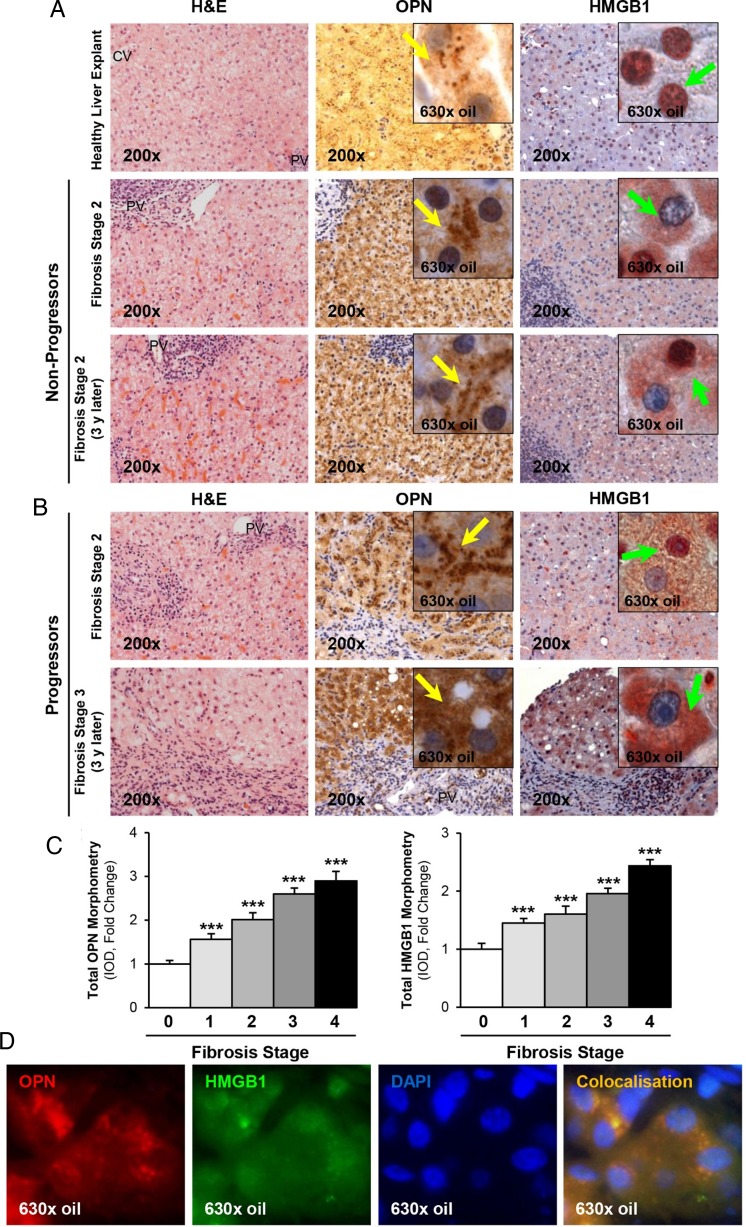
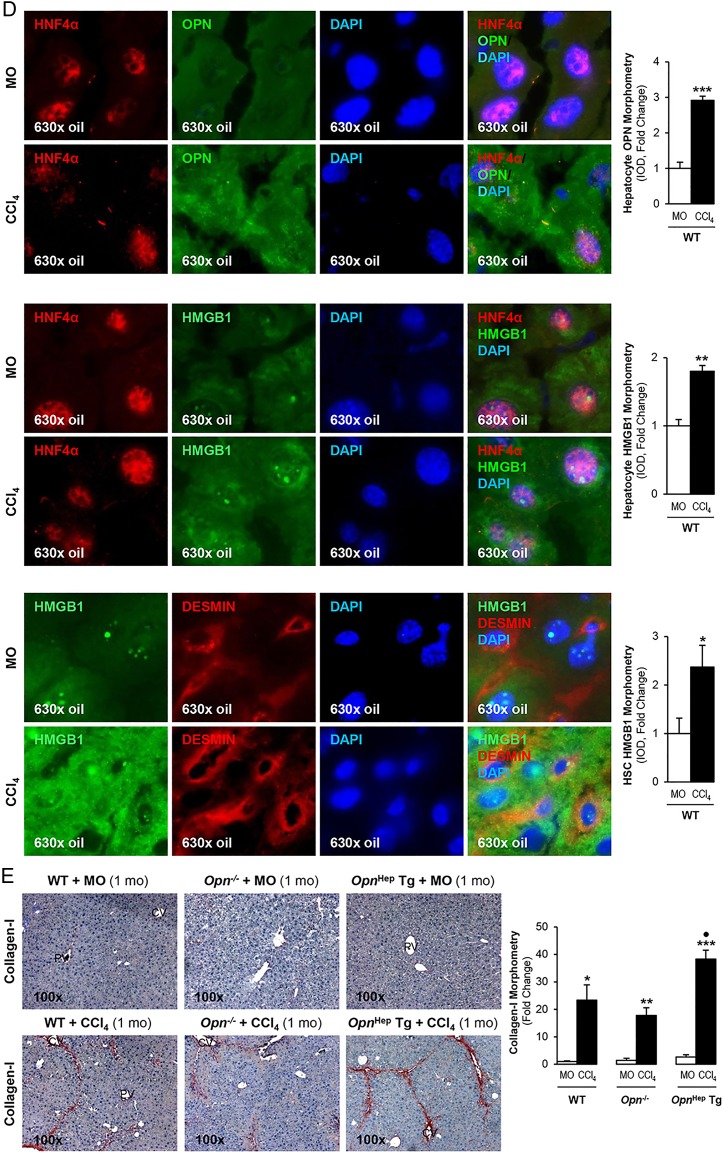
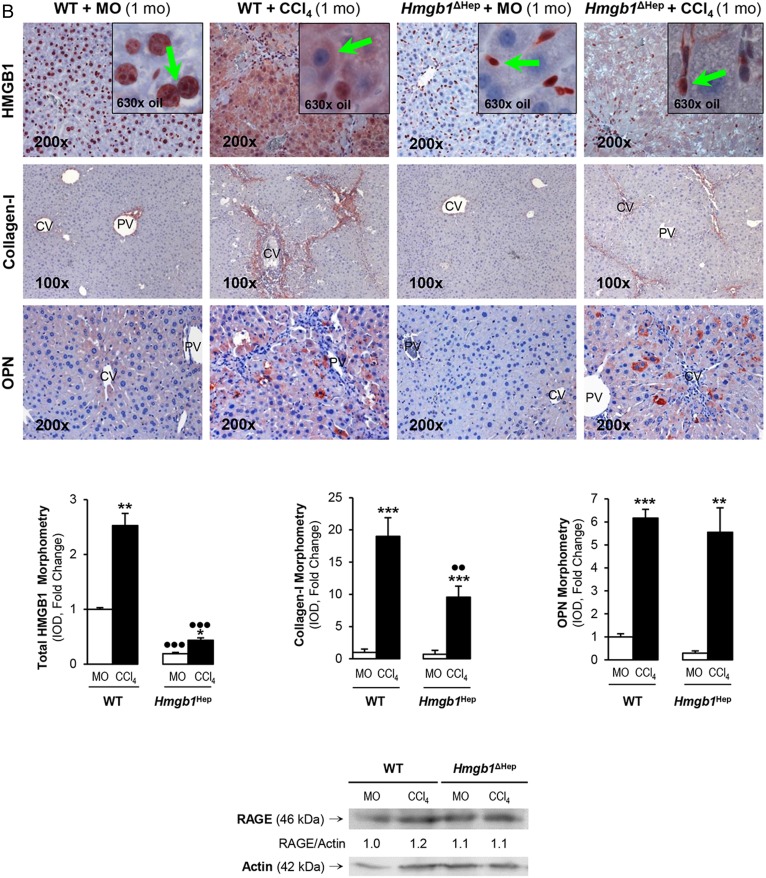
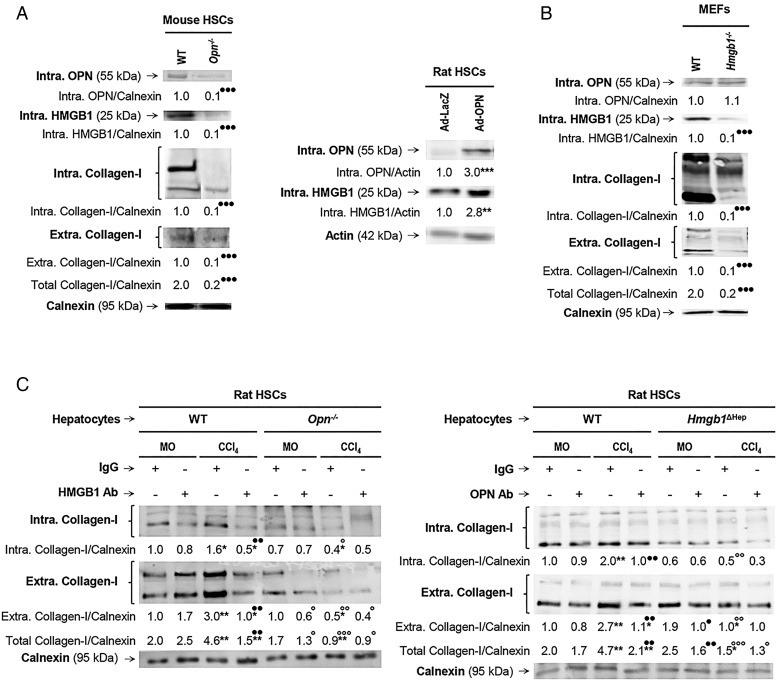
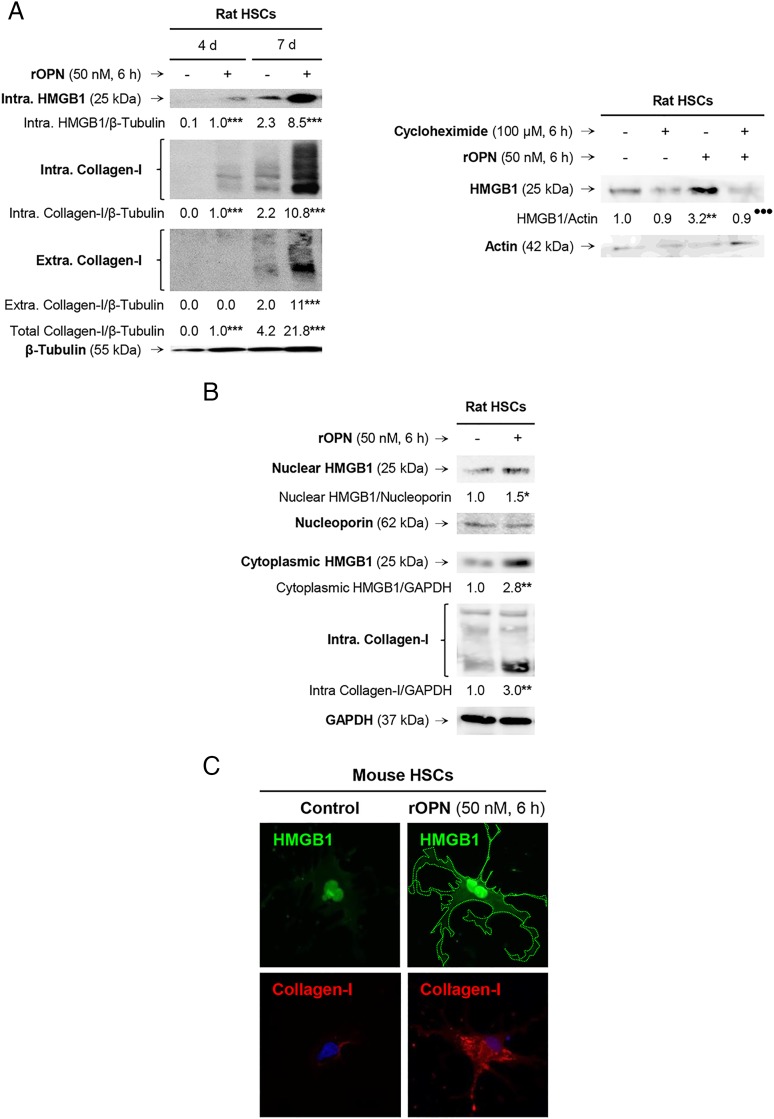
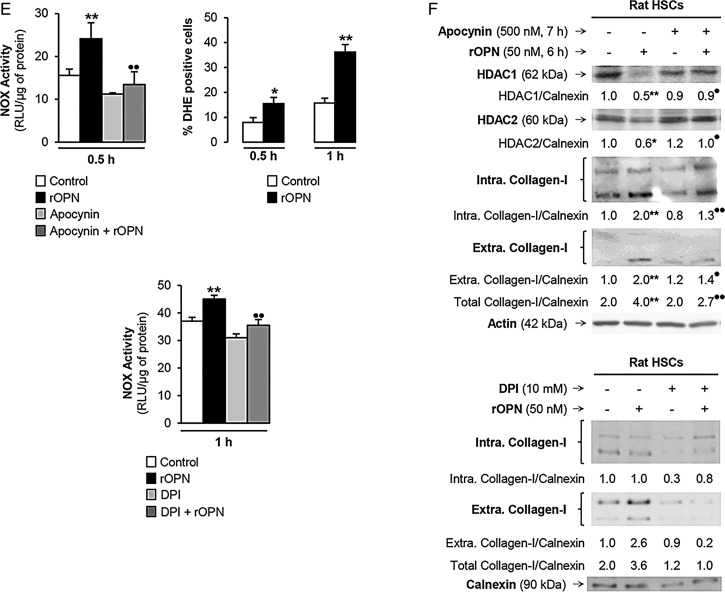
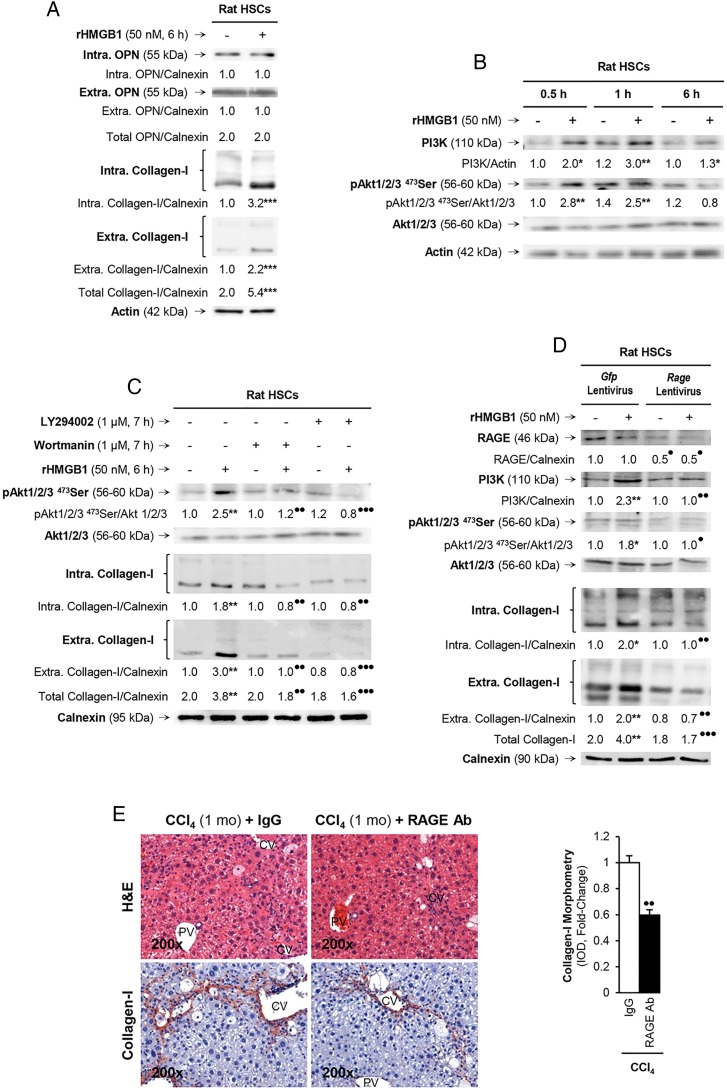
Objective: Liver fibrosis is associated with significant collagen-I deposition largely produced by activated hepatic stellate cells (HSCs); yet, the link between hepatocyte damage and the HSC profibrogenic response remains unclear. Here we show significant induction of osteopontin (OPN) and high-mobility group box-1 (HMGB1) in liver fibrosis. Since OPN was identified as upstream of HMGB1, we hypothesised that OPN could participate in the pathogenesis of liver fibrosis by increasing HMGB1 to upregulate collagen-I expression. Design and results: Patients with long-term hepatitis C virus (HCV) progressing in disease stage displayed enhanced hepatic OPN and HMGB1 immunostaining, which correlated with fibrosis stage, whereas it remained similar in non-progressors. Hepatocyte cytoplasmic OPN and HMGB1 expression was significant while loss of nuclear HMGB1 occurred in patients with HCV-induced fibrosis compared with healthy explants. Well-established liver fibrosis along with marked induction of HMGB1 occurred in CCl 4 -injected Opn Hep transgenic yet it was less in wild type and almost absent in Opn −/− mice. Hmgb1 ablation in hepatocytes ( Hmgb1 ΔHep ) protected mice from CCl 4 -induced liver fibrosis. Coculture with hepatocytes that secrete OPN plus HMGB1 and challenge with recombinant OPN (rOPN) or HMGB1 (rHMGB1) enhanced collagen-I expression in HSCs, which was blunted by neutralising antibodies (Abs) and by Opn or Hmgb1 ablation. rOPN induced acetylation of HMGB1 in HSCs due to increased NADPH oxidase activity and the associated decrease in histone deacetylases 1/2 leading to upregulation of collagen-I. Last, rHMGB1 signalled via receptor for advanced glycation end-products and activated the PI3K–pAkt1/2/3 pathway to upregulate collagen-I. Conclusions: During liver fibrosis, the increase in OPN induces HMGB1, which acts as a downstream alarmin driving collagen-I synthesis in HSCs.
Overview
The claims and statistics of this paper haven’t been checked yet.
Free: it reads the open-access text and checks the first 5 claims that cite a source we can check. Create a free account to check every claim.
Integrity signals
Registry
Cites
Statistics
Figures
Verification
Claims the paper makes
The claims and statistics of this paper haven’t been checked yet.
Free: it reads the open-access text and checks the first 5 claims that cite a source we can check. Create a free account to check every claim.
Claims other papers make about this one
Each is checked against this paper’s own text: does it say what the citing paper says it does?
The source backs part of the claim, not all of it — or backs it for a different population, condition or comparison.
In the citing paper
“Dying or damaged hepatocytes secrete damage-associated molecular patterns including high mobility group box 1 protein (HMGB1), osteopontin (SPP1), purinoceptor 14 (P2Y14) ligands, apoptotic bodies, microRNA (miRNA), and DNA that can be packaged into microvesicles and directly taken up by HSCs, leading to their activation into collagen-producing myofibroblasts (see “Cellular plasticity”, below) (23”
From Found in translation—Fibrosis in metabolic dysfunction–associated steatohepatitis (MASH) (2023) · cites this paper as [26]
Experimental — accuracy not yet measuredIn the citing paper
“NKT cells secrete HSC activating ligands sonic hedgehog (Shh) and osteopontin (Opn) in the MCD mouse model of NASH (117–120).”
From Hepatic Stellate Cell-Immune Interactions in NASH (2022) · cites this paper as [119]
Self-check
Percentages, sums and reported differences re-computed from the paper’s own numbers.
The self-check needs the paper’s full text.
Citations
Cites
1 retracted
Antoine, D. J., Williams, D. P., Kipar, A., Laverty, H., & Park, B. K. (2010) · Molecular Medicine · doi:10.2119/molmed.2010.00126 · Cited by 102
Self-citationRetractedRelease of chromatin protein HMGB1 by necrotic cells triggers inflammation
Scaffidi, P., Misteli, T., & Bianchi, M. E. (2002) · Nature · doi:10.1038/nature00858 · Cited by 4,221
HMG-1 as a Late Mediator of Endotoxin Lethality in Mice
Wang, H., Bloom, O., Zhang, M., Vishnubhakat, J. M., Ombrellino, M., Che, J., Frazier, A., Yang, H., Ivanova, S., Borovikova, L., et al. (1999) · Science · doi:10.1126/science.285.5425.248 · Cited by 3,385
Yang, Y., Li, S., Yang, Q., Shi, Y., Zheng, M., Liu, Y., Chen, F., Song, G., Xu, H., Wan, T., et al. (2014) · Cellular Physiology and Biochemistry · doi:10.1159/000358696 · Cited by 3,253
Monocytic cells hyperacetylate chromatin protein HMGB1 to redirect it towards secretion
Bonaldi, T. (2003) · The EMBO Journal · doi:10.1093/emboj/cdg516 · Cited by 1,249
Toll-Like Receptor 9 Promotes Steatohepatitis by Induction of Interleukin-1β in Mice
Miura, K., Kodama, Y., Inokuchi, S., Schnabl, B., Aoyama, T., Ohnishi, H., Olefsky, J. M., Brenner, D. A., & Seki, E. (2010) · Gastroenterology · doi:10.1053/j.gastro.2010.03.052 · Cited by 741
Tsung, A., Klune, J. R., Zhang, X., Jeyabalan, G., Cao, Z., Peng, X., Stolz, D. B., Geller, D. A., Rosengart, M. R., & Billiar, T. R. (2007) · The Journal of Experimental Medicine · doi:10.1084/jem.20070247 · Cited by 620
High‐mobility group box 1 (HMGB1) protein at the crossroads between innate and adaptive immunity
Bianchi, M. E., & Manfredi, A. A. (2007) · Immunological Reviews · doi:10.1111/j.1600-065x.2007.00574.x · Cited by 600
Miura, K., Yang, L., van Rooijen, N., Brenner, D. A., Ohnishi, H., & Seki, E. (2013) · Hepatology · doi:10.1002/hep.26081 · Cited by 282
Urtasun, R., Lopategi, A., George, J., Leung, T.-M., Lu, Y., Wang, X., Ge, X., Fiel, M. I., & Nieto, N. (2012) · Hepatology · doi:10.1002/hep.24701 · Cited by 257
Self-citation
Cited by
Items 101–153 of 153
Emerging Players in Autophagy Deficiency-Induced Liver Injury and Tumorigenesis
Yang, H., Ni, H., & Ding, W. (2019) · Gene Expression · doi:10.3727/105221619x15486875608177 · Cited by 14
Osteopontin and HMGB1: novel regulators of HSC activation
Borthwick, L. A., & Mann, D. A. (2016) · Nature Reviews Gastroenterology & Hepatology · doi:10.1038/nrgastro.2016.58 · Cited by 14
HMGB1 links chronic liver injury to progenitor responses and hepatocarcinogenesis
Hernandez, C., Huebener, P., Pradère, J., Antoine, D. J., Friedman, R. A., & Schwabe, R. F. (2019) · Journal of Clinical Investigation · doi:10.1172/jci128262 · Cited by 13
Self-citationMyeloid cell path to malignancy: insights into liver cancer
Ramirez, C. F. A., & Akkari, L. (2025) · Trends in cancer · doi:10.1016/j.trecan.2025.02.006 · Cited by 12
Ge, X., Han, H., Désert, R., Das, S., Song, Z., Komakula, S. S. B., Chen, W., Athavale, D., Lantvit, D. D., & Nieto, N. (2024) · Cellular and Molecular Gastroenterology and Hepatology · doi:10.1016/j.jcmgh.2024.05.010 · Cited by 12
Self-citationTibaldi, E. V., Brocca, A., Sticca, A., Gola, E., Pizzi, M., Bordin, L., Pagano, M. A., Mazzorana, M., Donà, G., Violi, P., et al. (2019) · The FASEB Journal · doi:10.1096/fj.201900880r · Cited by 12
Liu, M., Ma, Y., Cheang, W. S., Su, Z., & Xu, S. (2026) · Molecular Therapy · doi:10.1016/j.ymthe.2026.04.011 · Cited by 11
Wang, K., Lu, D., Zhang, B., Wang, S., Liu, Q., Zhang, Q., Geng, J., & Shan, Q. (2016) · Cellular Physiology and Biochemistry · doi:10.1159/000452561 · Cited by 11
Matricellular Proteins and Organ Fibrosis
Prakoura, N., & Chatziantoniou, C. (2017) · Current Pathobiology Reports · doi:10.1007/s40139-017-0138-6 · Cited by 11
HMGB1 promotes ductular reaction and tumorigenesis in autophagy-deficient livers
Khambu, B., Huda, N., Chen, X., Antoine, D. J., Li, Y., Dai, G., Köhler, U. A., Zong, W., Waguri, S., Werner, S., et al. (2019) · Journal of Clinical Investigation · doi:10.1172/jci129234 · Cited by 10
Self-citationEmerging Roles of High-mobility Group Box-1 in Liver Disease
Wang, L., Dong, Z., Zhang, Y., & Peng, L. (2024) · Journal of Clinical and Translational Hepatology · doi:10.14218/jcth.2024.00317 · Cited by 8
A patent review on HMGB1 inhibitors for the treatment of liver diseases
Raj, R., Shen, P., Yu, B., & Zhang, J. (2024) · Expert Opinion on Therapeutic Patents · doi:10.1080/13543776.2024.2338105 · Cited by 8
Guo, Y., Zhang, Q., Li, B., Dai, W., Shen, B., Shen, Z., Wang, J., Ge, Q., Zhangdi, H., Chen, G., et al. (2025) · Hepatology · doi:10.1097/hep.0000000000001458 · Cited by 8
HMGB1: key mediator in digestive system diseases
Liu, H.-Q., Liao, X., Zuo, Z., Min, Q., Li, Y., Xiong, J., Lv, Q., Xie, X., Zhou, J., Liao, Z., et al. (2025) · Inflammation Research · doi:10.1007/s00011-025-02002-x · Cited by 7
Möbius, P., Preidl, R. H. M., Weber, M., Amann, K., Neukam, F. W., & Wehrhan, F. (2017) · Strahlentherapie und Onkologie · doi:10.1007/s00066-017-1192-z · Cited by 7
Post-translational modifications drive the effects of HMGB1 in alcohol-associated liver disease
Ge, X., Nithyananthan, S., Song, Z., Désert, R., Han, H., Das, S., Komakula, S. S. B., Wang, C., Lantvit, D. D., Ge, Z., et al. (2024) · Hepatology Communications · doi:10.1097/hc9.0000000000000549 · Cited by 6
Self-citationGolub, A., Ordak, M., Nasierowski, T., & Bujalska‐Zadrożny, M. (2023) · International Journal of Molecular Sciences · doi:10.3390/ijms24119413 · Cited by 6
Zhong, Y., Zhou, L. F., Wang, H., Lin, S., Liu, T., Kong, X., Xiao, G., & Gao, H. (2023) · Journal of Biological Chemistry · doi:10.1016/j.jbc.2023.105601 · Cited by 6
El-Khazragy, N. N., Khalifa, M. M., Salem, A. M. H., Swellam, M. M., & Hegazy, M. G. A. (2018) · Journal of Cellular Biochemistry · doi:10.1002/jcb.28018 · Cited by 6
Schonfeld, M. P., Nataraj, K., Mah, S., Zhong, W. H., Weinman, S. A., & Tikhanovich, I. (2025) · Cellular and Molecular Gastroenterology and Hepatology · doi:10.1016/j.jcmgh.2025.101689 · Cited by 5
Ramoni, D., Liberale, L., & Montecucco, F. (2024) · World Journal of Gastroenterology · doi:10.3748/wjg.v30.i47.5086 · Cited by 5
Overexpression of HMGB1 in hepatocytes accelerates PTEN inactivation-induced liver cancer
Athavale, D., Barahona, I., Song, Z., Désert, R., Chen, W., Han, H., Das, S., Ge, X., Komakula, S. S. B., Gao, S., et al. (2023) · Hepatology Communications · doi:10.1097/hc9.0000000000000311 · Cited by 5
Self-citationDeng, Y., Zhang, T., Cai, Y., Ke, L., He, X., Zhang, C., Liu, L., Li, Q., Zhao, Y., Xu, G., et al. (2024) · Biochimica et Biophysica Acta (BBA) - Molecular Basis of Disease · doi:10.1016/j.bbadis.2024.167586 · Cited by 4
Extracellular Vesicles in Liver Disease: Redefining Diagnostic and Therapeutic Strategies
Kim, A.-R., Kang, M., Kim, D., Yemaneberhan, K. H., & Choi, D. (2026) · International Journal of Stem Cells · doi:10.15283/ijsc25052 · Cited by 4
Li, C., Wen, R., Xiong, Y., Tan, Q.-W., Zhai, X., Xiong, Y., & Dai, L. (2025) · International Immunopharmacology · doi:10.1016/j.intimp.2025.115469 · Cited by 4
He, Q., Fu, Y., Ding, X., Li, D., Wang, Z., Tian, D., & Yan, W. (2018) · Laboratory Investigation · doi:10.1038/s41374-018-0141-5 · Cited by 4
Pro-fibrogenic role of alarmin high mobility group box 1 in HIV–hepatitis B virus coinfection
Singh, K. P., Pallett, L. J., Singh, H., Chen, A., Otano, I., Duriez, M., Rombouts, K., Pinzani, M., Crane, M., Fusai, G., et al. (2022) · AIDS · doi:10.1097/qad.0000000000003435 · Cited by 3
Antoine, D. J. (2018) · Methods in pharmacology and toxicology · doi:10.1007/978-1-4939-7677-5_26 · Cited by 3
Self-citationWang, Y., Yu, H., Cen, Z., Zhu, Y., & Wu, W. (2023) · Metabolism Open · doi:10.1016/j.metop.2023.100267 · Cited by 3
Wang, J., Tang, Q., Yuan, Z., Zhang, H., Miao, Y., Shen, W., Shen, W., Yu, Q., Zhang, L., & Jiang, Z. (2025) · Chemico-Biological Interactions · doi:10.1016/j.cbi.2025.111752 · Cited by 3
Osteopontin as a Biomarker in Liver Disease
Brůha, R. (2016) · Biomarkers in disease · doi:10.1007/978-94-007-7742-2_44-1 · Cited by 3
Dong, Z., Yao, M., Zheng, W., & Yao, D. (2018) · PubMed Central · doi:10.3760/cma.j.issn.1007-3418.2018.11.014 · Cited by 3
Matricellular Proteins and Organ Fibrosis
Prakoura, N., & Chatziantoniou, C. (2017) · Current Pathobiology Reports · doi:10.1007/s40139-017-0130-1 · Cited by 2
Liu, K.-J., Zhang, B. F., Tang, Y., Tan, Z., Bu, Y., & Lv, Y. (2026) · The FASEB Journal · doi:10.1096/fj.202601011r · Cited by 2
From fatty liver to nonalcoholic steatohepatitis with fibrosis
Muriel, P. (2022) · Elsevier eBooks · doi:10.1016/b978-0-323-99764-5.00013-5 · Cited by 1
Osteopontin: a central hub in the pathogenesis and therapeutic intervention of liver disease
Yang, J., Yao, Y., & Zhou, Z. (2025) · Annals of Medicine · doi:10.1080/07853890.2025.2596538 · Cited by 1
Das, S., Nithyananthan, S., Alén, R., Komakula, S. S. B., Song, Z., Ge, X., Han, H., Désert, R., Athavale, D., Magdaleno, F., et al. (2024) · Alcoholism Clinical and Experimental Research · doi:10.1111/acer.15304 · Cited by 1
Self-citationLiu, Y., Fang, M., Guo, H., Zhang, X., Mei, X., Ji, L., Yuan, W., Gao, Y., Wang, J., Qian, Z., et al. (2025) · Journal of Virus Eradication · doi:10.1016/j.jve.2025.100606
Monoacylglycerol Lipase, a new anti-inflammatory and anti-fibrogenic target in the liver
Chokr, D. (2018) · theses.fr (ABES) · doi:10.70675/6aac5cc4z3085z4939zb6c9ze439b795571f
The circadian clock controls hepatic inflammation in MASLD
Hebras, A., Bicharel, M., Delhaye, S., Ferri, L., Duhem, C., Gimenez, M., Thorel, Q., Ram, U. B., Vallez, E., Bellengier, C., et al. (2026) · JHEP Reports · doi:10.1016/j.jhepr.2026.101992
The Role of High Mobility Group Box 1 (HMGB1) in the Pathogenesis of Liver Fibrosis
Meng, Y., Guo, Q., Zhang, Y., Li, S., Lü, B., & Huang, Z. (2026) · The International Journal of Gastroenterology and Hepatology Diseases · doi:10.2174/0126662906453775260622111232
The roles of endoplasmic reticulum stress and Bax inhibitor-1 in non-alcoholic fatty liver disease
Lebeaupin, C. (2018) · theses.fr (ABES) · doi:10.70675/de500ab2z3c59z484dz8f58z7c3173626c42
The role of MRI in stratifying and evaluating chronic liver disease
Eddowes, P. J. (2018) · University of Birmingham Institutional Research Archive (University of Birmingham)
Toll-Like Receptors, PAMPs, and DAMPs in Hepatotoxicity
Zhang, Y., Kim, S. J., Zhang, H., & Tsung, A. (2025) · Elsevier eBooks · doi:10.1016/b978-0-323-95488-4.00270-9
Osteopontin as a Biomarker in Liver Disease
Brůha, R. (2017) · Biomarkers in disease · doi:10.1007/978-94-007-7675-3_44
Jung, E. J., & Wang, X. (2026) · iNew Medicine · doi:10.1002/inm3.70097
Rôle de la protéine HMGB1 dérivée des macrophages au cours d'une réaction inflammatoire
Piccolo, E. B. (2021) · theses.fr (ABES) · doi:10.70675/2856e006z81b0z4a9ezadcdzd2fdca1f46ab
DE ONTRAFELING VAN NIEUWE FACETTEN IN HCV-GERELATEERDE LEVERPATHOGENESE
Benkheil, M. (2018) · Lirias (KU Leuven)
Yang, K., Fan, T., Zhang, H., Yan, Y., Wang, Y., Mao, J., Yang, Z., Yang, Y., Xing, Y., & Yang, W. (2026) · Investigative Ophthalmology & Visual Science · doi:10.1167/iovs.67.8.15
Vaccination Against HMGB1 Protects Mice from CCl4-Induced Liver Injury, Inflammation, and Fibrosis
Li, Q., Li, H., Huo, Y., Tian, H., Zhu, L., Zheng, X., Sun, W., Zhang, X., & Hao, Z. (2026) · Inflammation · doi:10.1007/s10753-026-02578-4
A RELAÇÃO DAS CÉLULAS ESTRELADAS NAS PRINCIPAIS ETIOLOGIAS DA CIRROSE HEPÁTICA
Alves, M. C., Júnior, M. M. D. M., Ávila, B. D. O., ROCHA, H. F., Latorraca, E. F., & Caputo, L. R. G. (2023) · Revista Contemporânea · doi:10.56083/rcv3n8-116
Li, W., Li, H. U., Wu, C., & Li, K. P. (2023) · Authorea · doi:10.22541/au.167425252.27830921/v1
Metadata
- Authors
- Arriazu, E., Ge, X., Leung, T.-M., Magdaleno, F., Lopategi, A., Lu, Y., Kitamura, N., Urtasun, R., Theise, N., Antoine, D. J., & Nieto, N.
- Affiliations
- Icahn School of Medicine at Mount Sinai (US)
- University of Illinois Chicago (US)
- Division of Liver Diseases, Department of Medicine, Icahn School of Medicine at Mount Sinai, New York, New York, USA
- Mount Sinai Beth Israel (US)
- University of Liverpool (GB)
- Corresponding author
- Nieto, Natalia
- ORCID
- Venue
- Gut
- Publisher
- BMJ
- Published
- 2016-01-27
- Volume
- 66
- Issue
- 6
- Pages
- 1123-1137
- ISSN
- 0017-5749 (ISSN-L)
- 1468-3288
- PMC
- PMC5532463
- OpenAlex
- W2290978591
- Cited by
- 144
- References
- 28
- Citations by year
- 2026: 5 · 2025: 18 · 2024: 14 · 2023: 12 · 2022: 16 · 2021: 8 · 2020: 15 · 2019: 13 · 2018: 19 · 2017: 17 · 2016: 7
- FWCI
- 13.45
- Type
- journal article
- Language
- en
- Update notices
- correction (2020-02-07)
- Open access
- hybrid
- doi.org
- Licence
- cc-by-nc
- Locations
- Gut (publishedVersion, cc-by-nc)
- PubMed Central (publishedVersion, cc-by-nc)
- PubMed (publishedVersion)
- HighWire Press Open Archive (submittedVersion)
- Edinburgh Research Explorer (University of Edinburgh) (submittedVersion, cc-by-nc)
- Funders
- University of Pittsburgh
- Wellcome Trust
- National Institutes of Health (4u01aa021893-05)
- Medical Research Council (MR/L006758/1, MR/K026739/1)
- National Institute on Alcohol Abuse and Alcoholism (U01AA021887, U01-AA021893, P20AA017067)
- National Institute of Diabetes and Digestive and Kidney Diseases (R56DK069286, R01DK069286, R01DK111677)
- Topics
- Health Sciences › Medicine › Hepatology › Liver physiology and pathology
- Health Sciences › Medicine › Hepatology › Liver Disease Diagnosis and Treatment
- Life Sciences › Biochemistry, Genetics and Molecular Biology › Biochemistry › Bone and Dental Protein Studies
- Keywords
- liver fibrosis, osteopontin, HMGB1, alarmins, hepatic stellate cells, type I collagen, hepatitis C virus, hepatocyte activation, HMGB1 acetylation, NADPH oxidase, histone deacetylase, RAGE, PI3K/Akt signaling, CCl4-induced fibrosis
- MeSH terms
- Receptor for Advanced Glycation End Products, Acetylation, Animals, Carbon Tetrachloride, Cell Nucleus, Cells, Cultured, Cytoplasm, Humans, Liver Cirrhosis, Mice, Transgenic, Recombinant Proteins, Signal Transduction, Gene Expression, Case-Control Studies, Mice, Knockout, Disease Progression, NADPH Oxidases, Hepatitis C, Chronic, Hepatocytes, Collagen Type I, HMGB1 Protein, Proto-Oncogene Proteins c-akt, Mice, Osteopontin, Hepatic Stellate Cells, Histone Deacetylase 1, Histone Deacetylase 2, Antibodies, Neutralizing, Phosphatidylinositol 3-Kinase
About these checks
Registry, retraction, Cites and statistics results are computed, not judged, with one exception: a printed reference that no index lists is read once by a model before it counts as a citation error. Claims are extracted by a model and kept only when their quote appears verbatim in the text; each cited source is then checked, with a model’s help, for whether it says what the claim relies on. Those verdicts can be wrong — read the claim’s quote and the cited source before relying on one.
Statistics and arithmetic are recomputed, not judged.
Confidence bands are shown only for fields calibrated on our annotated test set. None is calibrated yet, so no band is shown.
What counts as a claim ›How we measure confidence ›How we check this ›
Are you an author, or do you see a problem with this page? Request a review
Data sources
Bibliographic data: Semantic Scholar, OpenAlex, Crossref.
Contains information from the Semantic Scholar Academic Graph Datasets, made available under the ODC Attribution License (ODC-BY 1.0).
Semantic Scholar’s data is described in: Kinney, R., et al. (2023). The Semantic Scholar Open Data Platform. arXiv:2301.10140.
