

Proton pump inhibitors alter the composition of the gut microbiota
Open accessThe DOI matches its Crossref record; 46 of the 48 references it cites were found in a registry or an index.
Abstract
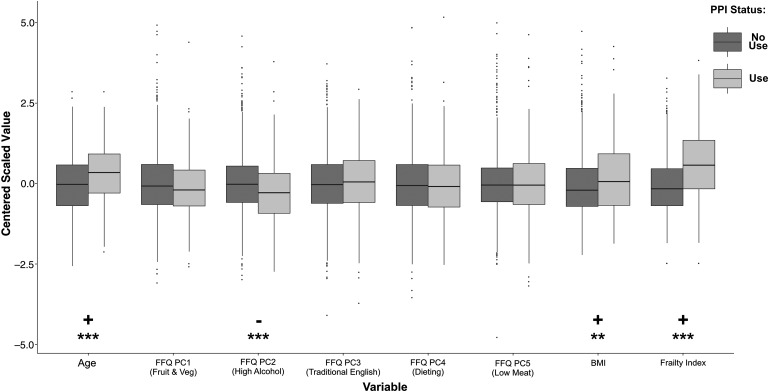
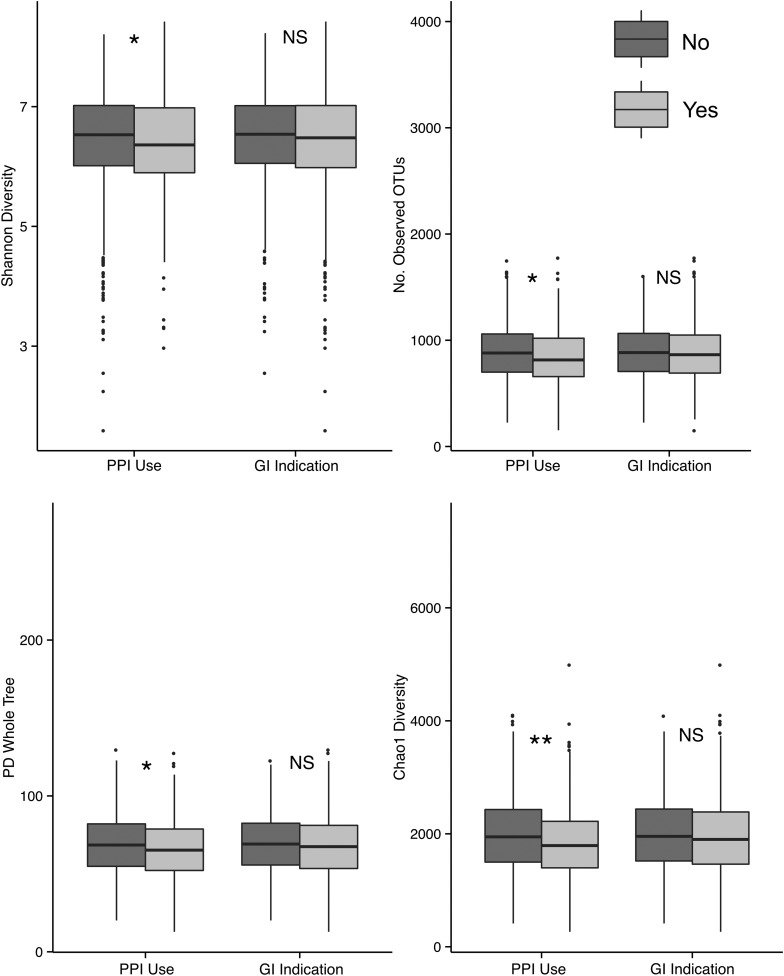
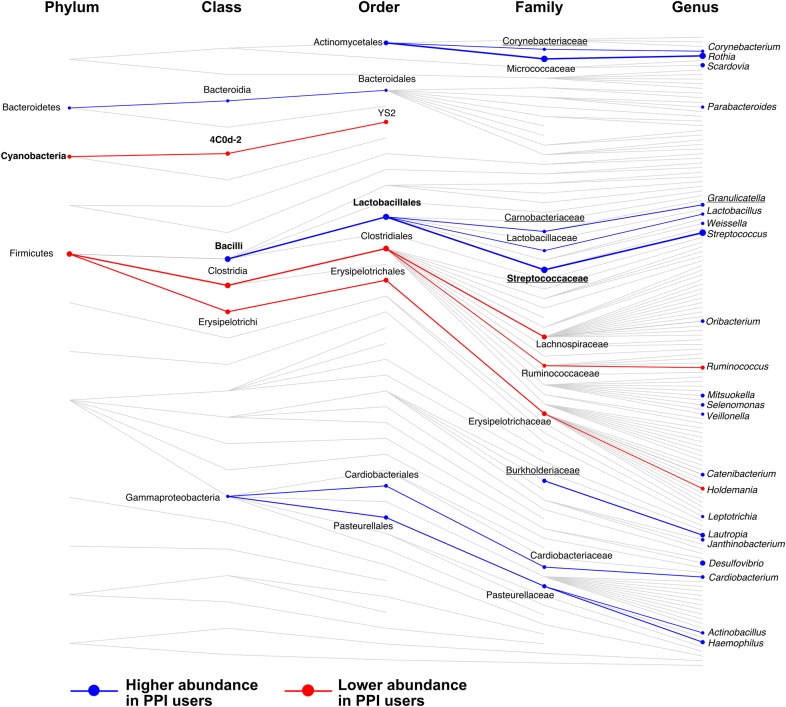
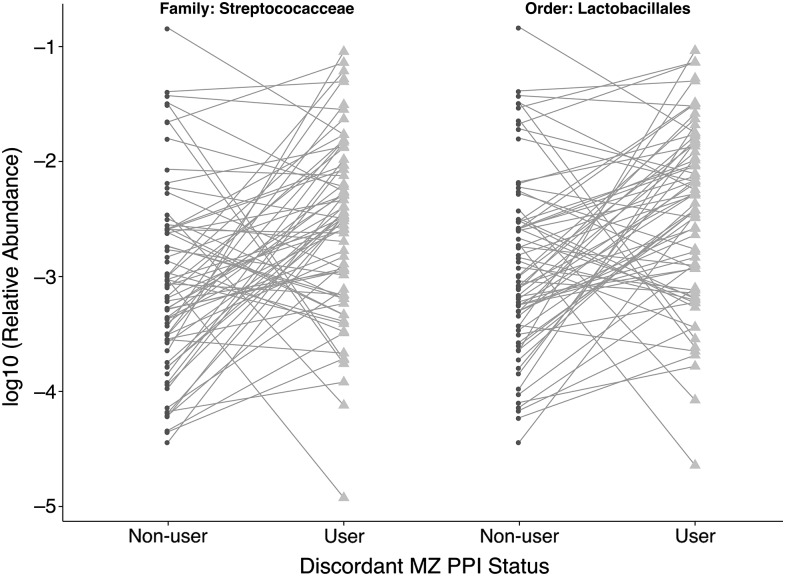
Objective: Proton pump inhibitors (PPIs) are drugs used to suppress gastric acid production and treat GI disorders such as peptic ulcers and gastro-oesophageal reflux. They have been considered low risk, have been widely adopted, and are often over-prescribed. Recent studies have identified an increased risk of enteric and other infections with their use. Small studies have identified possible associations between PPI use and GI microbiota, but this has yet to be carried out on a large population-based cohort. Design: We investigated the association between PPI usage and the gut microbiome using 16S ribosomal RNA amplification from faecal samples of 1827 healthy twins, replicating results within unpublished data from an interventional study. Results: We identified a significantly lower abundance in gut commensals and lower microbial diversity in PPI users, with an associated significant increase in the abundance of oral and upper GI tract commensals. In particular, significant increases were observed in Streptococcaceae. These associations were replicated in an independent interventional study and in a paired analysis between 70 monozygotic twin pairs who were discordant for PPI use. We propose that the observed changes result from the removal of the low pH barrier between upper GI tract bacteria and the lower gut. Conclusions: Our findings describe a significant impact of PPIs on the gut microbiome and should caution over-use of PPIs, and warrant further investigation into the mechanisms and their clinical consequences.
Overview
The claims and statistics of this paper haven’t been checked yet.
Free: it reads the open-access text and checks the first 5 claims that cite a source we can check. Create a free account to check every claim.
Integrity signals
Registry
Cites
Statistics
Figures
Verification
Claims the paper makes
The claims and statistics of this paper haven’t been checked yet.
Free: it reads the open-access text and checks the first 5 claims that cite a source we can check. Create a free account to check every claim.
Claims other papers make about this one
Each is checked against this paper’s own text: does it say what the citing paper says it does?
In the citing paper
“PPIs, for instance, enrich Firmicutes and oral taxa like Streptococcus salivarius and Micrococcaceae, expand Veillonella and Enterocloster, and reduce overall diversity, a profile linked to Clostridioides difficile infection and adverse metabolic shifts.43,92–97”
From Gut dysbiosis in oncology: a risk factor for immunoresistance (2026) · doi:10.1038/s41422-025-01212-6 · cites this paper as [94]
In the citing paper
“These PDAC GOMS matched gut microbiome signatures observed in individuals taking PPIs24.”
From Gut OncoMicrobiome Signatures (GOMS) as next-generation biomarkers for cancer immunotherapy (2023) · cites this paper as [24]
In the citing paper
“PPIs by reducing gastric acid secretion can produce profound changes in the colonic microbiota, mainly characterized by a decrease in the abundance of commensal bacteria, which is associated with a reduction in microbial diversity and an increase of oral bacteria in the stool[108,109].”
From Proton pump inhibitors and dysbiosis: current knowledge and aspects to be clarified (2019) · cites this paper as [108]
Self-check
Percentages, sums and reported differences re-computed from the paper’s own numbers.
The self-check needs the paper’s full text.
Citations
Cites
Fitting Linear Mixed-Effects Models Using lme4
Bates, D., Mächler, M., Bolker, B., & Walker, S. (2015) · Journal of Statistical Software · doi:10.18637/jss.v067.i01 · Cited by 86,835
QIIME allows analysis of high-throughput community sequencing data
Caporaso, J. G., Kuczynski, J., Stombaugh, J., Bittinger, K., Bushman, F. D., Costello, E. K., Fierer, N., Peña, A. G., Goodrich, J. K., Gordon, J. I., et al. (2010) · Nature Methods · doi:10.1038/nmeth.f.303 · Cited by 34,887
Self-citationStructure, function and diversity of the healthy human microbiome
The Human Microbiome Project Consortium (2012) · Nature · doi:10.1038/nature11234 · Cited by 11,726
A core gut microbiome in obese and lean twins
Turnbaugh, P. J., Hamady, M., Yatsunenko, T., Cantarel, B. L., Duncan, A., Ley, R. E., Sogin, M. L., Jones, W. J., Roe, B. A., Affourtit, J. P., et al. (2009) · Nature · doi:10.1038/nature07540 · Cited by 7,823
Self-citationA standard procedure for creating a frailty index
Searle, S. D., Mitnitski, A., Gahbauer, E. A., Gill, T. M., & Rockwood, K. (2008) · BMC Geriatrics · doi:10.1186/1471-2318-8-24 · Cited by 3,568
Gut microbiota composition correlates with diet and health in the elderly
Claesson, M. J., Jeffery, I. B., Conde, S., Power, S. E., O’Connor, E. M., Cusack, S., Harris, H. M. B., Coakley, M., Lakshminarayanan, B., O’Sullivan, O., et al. (2012) · Nature · doi:10.1038/nature11319 · Cited by 3,314
Human Genetics Shape the Gut Microbiome
Goodrich, J. K., Waters, J. L., Poole, A. C., Sutter, J. L., Koren, O., Blekhman, R., Beaumont, M., Van Treuren, W., Knight, R., Bell, J. T., et al. (2014) · Cell · doi:10.1016/j.cell.2014.09.053 · Cited by 3,164
Self-citationMicrobial co-occurrence relationships in the human microbiome
Faust, K., Sathirapongsasuti, J. F., Izard, J., Segata, N., Gevers, D., Raes, J., & Huttenhower, C. (2012) · PLoS Computational Biology · doi:10.1371/journal.pcbi.1002606 · Cited by 1,527 · cited 1×
“22 23 Using ampli fi cation and sequencing of the variable regions of the 16S ribosomal subunit it is possible to pro fi le the taxonomic composition of the microbiome of a given sample.”
MethodClostridium difficile Infection
Leffler, D. A., & Lamont, J. T. (2015) · New England Journal of Medicine · doi:10.1056/nejmra1403772 · Cited by 1,450
Jakobsson, H. E., Jernberg, C., Andersson, A. F., Sjölund-Karlsson, M., Jansson, J. K., & Engstrand, L. (2010) · PLoS ONE · doi:10.1371/journal.pone.0009836 · Cited by 1,160
Cited by
Items 901–977 of 977
Beresescu, G. F., Ion, R. M., Crișan, A.-S., & Bors, A. (2026) · Biomedicines · doi:10.3390/biomedicines14040838
Delaroque, C. (2024) · theses.fr (ABES) · doi:10.70675/a6243be7z43e4z4245za0f4zc5e315cd66ef
IMPACT OF PROTON PUMP INHIBITORS ON LONG-TERM GUT HEALTH.
Mujahed aslam, H. K., Khan, H., Khan, D., & ullah, H. (2024) · Lex localis - Journal of Local Self-Government · doi:10.52152/s7fdgg55
Mariaule, V. (2024) · theses.fr (ABES) · doi:10.70675/1d41e841zf788z4dd7z8784zc26304e24ea1
Effets de la transition alimentaire sur le dialogue entre le microbiote intestinal et son hôte
Rhimi, S. (2024) · theses.fr (ABES) · doi:10.70675/0b524b3dz5f2cz4f30zab4ez77ebd6be3176
Rôle dépendant du sexe du récepteur constitutif aux androstanes CAR dans le métabolisme hépatique
Huillet, M. (2024) · theses.fr (ABES) · doi:10.70675/540eb301z7e1az46b2z8bc9z8e0347fb266a
García-Mendoza, C., Rodríguez-Torres, M. E., Martínez-López, J., & Fernández-Ruiz, A. B. (2025) · International Journal of Pharmaceutical and Clinical Research · doi:10.33545/26647591.2025.v7.i2c.178
Proton pump inhibitors and risk of Parkinson’s disease: A systematic review and meta-analysis
Makhlouf, H. A., Yousef, O., Kassar, O., Aldemerdash, M. A., Sabet, H., & Meshref, M. M. (2026) · Naunyn-Schmiedeberg s Archives of Pharmacology · doi:10.1007/s00210-026-05313-w
Wang, F. (2026) · Journal of Gastroenterology and Hepatology · doi:10.1111/jgh.70399
Composition and diversity of gut microbiota in non-erosive reflux disease
Wei, X., Wang, G., Wei, Y., Zhang, T., Lu, M., Xu, L., Zhang, B., & Tang, X. (2026) · Frontiers in Microbiology · doi:10.3389/fmicb.2026.1795756
Can gut microbiome influence anemia due to gastrointestinal losses?
Santos, M. L., Mateo, S. G., Martí, P. R., & Homedes, C. S. (2026) · Gastroenterología y Hepatología (English Edition) · doi:10.1016/j.gastre.2026.502706
Ogunka-Nnoka, C., Enyong, B., Itohan, E., Asaba, E., Ozuru, P., & Ogonu, F. (2026) · American Journal of Food Science and Technology · doi:10.54536/ajfst.v5i1.6721
Proton pump inhibitors in acute-on-chronic liver failure: A sheep in a sheep�s clothing.
Rodríguez‐Perálvarez, M. (2026) · Revista Española de Enfermedades Digestivas · doi:10.17235/reed.2026.12005/2026
The Role of Diet and Gut Microbiome in CKD Progression and Therapy
Lau, W. L., Li, W., Sumida, K., & Kalantar‐Zadeh, K. (2026) · Journal of Clinical Medicine · doi:10.3390/jcm15103934
Oba, T., Hozaka, Y., Yoshida, T., Sinan, H., Sleiman, E. A., Shin, E. J., Afghani, E., Canto, M. I., & Goggins, M. (2026) · Gastro Hep Advances · doi:10.1016/j.gastha.2026.101027
Sun, X., Li, X.-M., Liu, W.-Z., Qu, K.-Q., Li, T.-H., Ding, J.-N., Lu, D.-F., Liu, X.-H., Lin, Y., Liang, X., et al. (2026) · Annals of Surgical Oncology · doi:10.1245/s10434-026-19837-1
Shahani, A., Lohana, A., Kumar, P., Rasheed, F., Piryanka, & Yousuf, Y. M. (2026) · Journal of Gastroenterology and Hepatology · doi:10.1111/jgh.70525
Rojas-McKenzie, M., Fraga, J. P., Iturriaga, C., Hernandez, C. D., Pérez‐Mateluna, G., Urzua, M. D., Serrano, C. A., Casanello, P. C., Harris, P. R., Castro-Rodríguez, J. A., et al. (2026) · Pediatric Pulmonology · doi:10.1002/ppul.71715
Takenaka, M., Mitsuoka, T., & Sakurai, H. (2026) · JMIR Formative Research · doi:10.2196/93531
El-Tahir, R., Qureshi, S., Ashfaq, N., Sikandar, S., Omar, S., Shah, P., & Bitar, E. (2026) · Open Journal of Internal Medicine · doi:10.4236/ojim.2026.163028
Coote, E., Patel, N., & Vijayanarayanan, R. (2026) · Journal of Oral Microbiology · doi:10.1080/20002297.2026.2705699 · Cited by 1
Javan, G. T., Nunzio, M. D., Grassi, S., Iancu, L., & Procopio, N. (2026) · Science & Justice · doi:10.1016/j.scijus.2026.101493
Wu, R., Fu, S., Zhang, Y., Dong, Y., & Wang, J. (2026) · Frontiers in Physiology · doi:10.3389/fphys.2026.1895249
Alzahrani, M., Alabbasi, A. A., Sayes, M., Altemani, R. F. H., Sultan, F. A., & Alhuthali, L. (2026) · Infectious Diseases in Clinical Practice · doi:10.1097/ipc.0000000000001632
Gastroesophageal Reflux Disease: A Practical Guide
Lazebnik, L. B., Zhilina, A. A., Tarasova, L. V., Туркина, С. В., Shavkuta, G. V., Khlynova, O. V., Belkin, A. N., Belousova, L. N., Bessonov, A. G., Исааковна, Б. Е., et al. (2026) · Экспериментальная и клиническая гастроэнтерология · doi:10.31146/1682-8658-ecg-241-9-5-106
The Role of Gut Microbiota in Chronic Kidney Disease and Outcomes of Kidney Transplantation
Gürer, E. E., Kıvanç, D., & Çiftçi, H. Ş. (2026) · Turkish Journal of Nephrology · doi:10.5152/turkjnephrol.2026.24911
Lupu, V. V., Jechel, E., Răileanu, A. A., Anton, S. C., Bozomitu, L. I., Frăsinariu, O. E., Temneanu, O. R., Forna, L., Cuciureanu, M. D., Nedelcu, A. H., et al. (2026) · Frontiers in Nutrition · doi:10.3389/fnut.2026.1909690
Karstad, E. S., Birkeland, E. E., Avershina, E., Botteri, E., Odsbu, I., Berstad, P. M., Blix, H. S., Robertsen, I., & Rounge, T. B. (2026) · medRxiv · doi:10.64898/2026.08.12.26360274
Raza, F., Jabbar, D., Ullah, F. N. U. M., & Khan, M. (2026) · Journal of Gastroenterology and Hepatology · doi:10.1111/jgh.70665
Zhan, X.-L. (2026) · Journal of Korean Medical Science · doi:10.3346/jkms.2026.41.e331
Towards understanding the establishment and maintenance of a healthy oral ecosystem
Kaan, A. M. (2026) · UvA-DARE (University of Amsterdam)
Rehman, L., Song, W., Rehman, A., Singh, K., Rawat, S. G., Darbaniyan, F., Le, C. C., Aletti, F. M., Weng, J., Liu, J., et al. (2026) · bioRxiv (Cold Spring Harbor Laboratory) · doi:10.64898/2026.09.01.748711
Helicobacter pylori陰性の胃MALTリンパ腫患者における胃粘膜細菌叢の検討
Tanaka, T. (2022) · Institutional Repositories DataBase (IRDB)
Tariq, M. I. (2026) · Aesthetic Surgery Journal Open Forum · doi:10.1093/asjof/ojag170
Chen, Y., Gu, Q., Zhao, M., Zhao, A., Kong, Z., Shen, H., Zhang, Y., Wang, S., Li, L., Xie, H., et al. (2026) · Cardiovascular Toxicology · doi:10.1007/s12012-026-10174-z
Reflux in bronchiectasis: current evidence and clinical implications
Flowers, R. C., Chablaney, S., & Basavaraj, A. (2026) · Current Opinion in Pulmonary Medicine · doi:10.1097/mcp.0000000000001309
The cervicovaginal gut microbiota axis as a key determinant of systemic physiology
Rosenn, E. H., Zuniga, M., Lipshitz, M., Fox, E., Engel, M., & Pasinetti, G. M. (2026) · Gut Microbes · doi:10.1080/19490976.2026.2726648 · Cited by 1
Fang, S., Yang, X., & Liu, F. (2026) · Frontiers in Medicine · doi:10.3389/fmed.2026.1959574
A prospective case-control study of the gut bacteriome and mycobiome in glioblastomaPreprint
Herz, M., Schmid, K., Ankenbrand, M. J., Roth, E., Huenniger, K., Guendermann, N., Nickl, R., Kessler, A. F., Cattaneo, A., Monoranu, C. M., et al. (2026) · medRxiv · doi:10.64898/2026.09.23.26363766
Fatima, N., & Fatima, H. (2026) · Journal of Pharma Insights and Research. · doi:10.69613/57atcf80
Association between Proton Pump Inhibitor Use and Incident Gout: A Population-Based Cohort Study
Gil, J. Y., Kim, J. H., Park, S., Han, J. M., & Lee, K. E. (2026) · Drug Targets and Therapeutics · doi:10.58502/dtt.26.0019
Proton pump inhibitors and durvalumab in PACIFIC
Ding, G., Li, Q., Wang, J., & Wu, J. (2026) · The Lancet Oncology · doi:10.1016/s1470-2045(26)00344-x
Sy‐Janairo, M. L. L., Janairo, J., Mariano, P., Gopez-Cervantes, J., & Cua, I. (2021) · Philippine Journal of Gastroenterology
Proton Pump Inhibitors and the Gut Microbiota: From Mechanisms to Clinical Implications
Deutschbein, F., Severino, A., Ferrari, M., Capuano, E., Fusco, W. G., Varca, S., Rondinella, D., Galasso, T., Porcari, S., Gasbarrini, A., et al. (2026) · Microorganisms · doi:10.3390/microorganisms14102236
Wang, Z., Zhang, H., 田佩洲, Li, S., Li, L., Tian, K., Shi, X., Wu, C., Fan, Y., & Lv, Y. (2026) · Pharmacological Research · doi:10.1016/j.phrs.2026.109667
Regulation of host chromatin by bacterial metabolites
Sjöland, W., & Krautkramer, K. A. (2026) · Elsevier eBooks · doi:10.1016/b978-0-443-19001-8.00031-3
Lee, S. H., Na, S.-I., Park, S. C., Cho, B. R., Lee, B., Cho, Y., Cho, H., Youk, H.-J., & Ryu, D. R. (2026) · Frontiers in Cellular and Infection Microbiology · doi:10.3389/fcimb.2026.1942212
Bilski, J., Schramm‐Luc, A., Szczepanik, M., Pierzchalski, P., & Luc, K. (2026) · Frontiers in Immunology · doi:10.3389/fimmu.2026.1936364
Xu, Z., Wu, X., 林敏美, & 叶林淼 (2026) · Research Square · doi:10.21203/rs.3.rs-10912025/v1
Microbiota-host interactions: key mechanisms linking periodontitis and systemic lupus erythematosus
Wu, X., Zhang, X., Guo, Y., Zhang, R., Li, H., & Zhao, W. (2026) · Frontiers in Cellular and Infection Microbiology · doi:10.3389/fcimb.2026.1942138
Exploring gut microbiome dysbiosis in vasculitis in adults: a systematic review
Hashemzadeh, K., Ghamari, M., Deutsch, S., Schwarting, A., & Triantafyllias, K. (2026) · Systematic Reviews · doi:10.1186/s13643-026-03359-8
Sohail, R., Khan, Z., Shah, H. H., Orciuolo, J., Fan, D., Patel, R. D., Zamudio, A. E., Chaudhry, S., Khattak, R., & Suresh, M. G. (2026) · World Journal of Gastroenterology · doi:10.3748/wjg.120932
Ma, R., & Xiao, Y. (2026) · Journal of Neurogastroenterology and Motility · doi:10.5056/jnm25237
Zhong, S.-S., Yu, Y., Zhong, X.-H., Xie, J., & Liu, M. (2026) · Drug Design Development and Therapy · doi:10.2147/dddt.s653279
Gut microbiota signature in patients with Hashimoto’s thyroiditis framed in polyautoimmunity
Stramazzo, I., Filardo, S., Baldini, E., Bagaglini, M. F., Carretti, A. L., Fallahi, P., Pietro, M. D., Sessa, R., Severi, C., Centanni, M., et al. (2026) · Frontiers in Endocrinology · doi:10.3389/fendo.2026.1954461
Naito, Y., Kitae, H., Mizushima, K., Ouchi, N., Adachi, A., Kamitani, T., Yamamoto, T., Narumoto, J., Kitani, T., Matoba, S., et al. (2026) · Research Square · doi:10.21203/rs.3.rs-11417332/v1
Zahra, J. A., Joma, H., Awwad, A., Radwan, R., Khalili, H., Omran, Y., & Ihmoud, F. (2026) · PLoS ONE · doi:10.1371/journal.pone.0353315
Wang, J., Ibrahim, K., Zaman, R., Nguyen, P., Tanas, Y., Cho, D., Patel, K., Horani, K., & Weiss, W. (2026) · Research Square · doi:10.21203/rs.3.rs-11435174/v1
Zhou, W., Chen, X., Fan, Q., Yu, H., & Jiang, W. (2022) · doi:10.3389/fphar.2022.979215.s005
Dong, Y., Wang, P., Jie Jiao, Yang, X., and, M. C., & Li, J. (2022) · doi:10.3389/fcell.2022.861829.s005
DeClercq, V., Nearing, J. T., & Langille, M. G. I. (2021) · doi:10.1371/journal.pone.0261032.r004
Choi, H. G., Min, C., Yoo, D. M., Tan, B. K., Kim, J.-H., Kim, H. I., Park, J.-Y., Park, S., Hwang, Y. I., Jang, S. H., et al. (2022) · doi:10.3389/fphar.2022.888610.s001
Lopes, S., Pabst, L., Dory, A., Klotz, M., Gourieux, B., Michel, B., & Mascaux, C. (2023) · doi:10.3389/fimmu.2023.1070076.s001
Lin, G., Kageyama, S., Maeda, A., Sakamoto, E., Ma, J., Asakawa, M., Furuta, M., Yamashita, Y., & Takeshita, T. (2024) · doi:10.3389/fcimb.2024.1358684.s001
Chen, Y., Xia, S.-Y., Ru, F.-X., Feng, J.-J., Tao, J., Wei, Z.-Y., Li, X., Qian, C., Lin, Q., & Chen, J.-H. (2023) · doi:10.3389/fmicb.2023.1112709.s001
Bhavyashree, M., Das, D., Mondal, M. I., Paul, S., & Ghosh, S. (2026) · International Journal of Modern Science and Research Technology · doi:10.67317/ijmsrt26nov004
Hisamatsu, D., Ogata, Y., Suda, W., Mabuchi, Y., Naraoka, Y., Yamato, T., Ikeba, A., Kumagai, K., Hattori, M., & Akazawa, C. (2025) · doi:10.3389/fphar.2025.1455753.s002
Wang, Y., Wu, S., Wang, L., Wang, Y., Liu, D., Fu, Y., & Xie, Y. (2022) · doi:10.3389/fcimb.2022.865320.s001
Huizhu Guo, Zhang, R., Pei Zhang, Zhaoyang Chen, Yuqing Hua, Huang, X., & Li, X. (2023) · doi:10.3389/fphar.2023.1129948.s001
Wang, K., Wang, S., Chen, Y., Lu, X., Wang, D., Zhang, Y., Pan, W., Zhou, C., & Zou, D. (2024) · doi:10.3389/fimmu.2024.1327503.s002
Gut Assessment in Kidney Disease
Zakaria, L., & Isreb, M. (2026) · Springer eBooks · doi:10.1007/978-3-032-24334-8_8
Arai, J., Hayakawa, Y., Fujiwara, H., & Kasuga, M. (2026) · Journal of Clinical Medicine · doi:10.3390/jcm15229000
Zhang, Y., Wang, C., Tian, Q.-Y., & Wei, S. (2026) · Frontiers in Pharmacology · doi:10.3389/fphar.2026.1994062
Metadata
- Authors
- Jackson, M. A., Goodrich, J. K., Maxan, M.-E., Freedberg, D. E., Abrams, J. A., Poole, A. C., Sutter, J. L., Welter, D., Ley, R. E., Bell, J. T., Spector, T. D., & Steves, C. J.
- Affiliations
- King's College London (GB)
- Cornell University (US)
- King's College Hospital (GB)
- Columbia University Irving Medical Center (US)
- St Thomas' Hospital (GB)
- Corresponding author
- Steves, Claire J
- ORCID
- Venue
- Gut
- Publisher
- BMJ
- Published
- 2015-12-30
- Volume
- 65
- Issue
- 5
- Pages
- 749-756
- ISSN
- 0017-5749 (ISSN-L)
- 1468-3288
- PMC
- PMC4853574
- OpenAlex
- W2224656683
- Semantic Scholar
- 5c2da3f7586966babd3a6299bc342d40340e916d
- Cited by
- 895
- References
- 48
- Citations by year
- 2026: 71 · 2025: 81 · 2024: 90 · 2023: 89 · 2022: 107 · 2021: 102 · 2020: 107 · 2019: 82 · 2018: 69 · 2017: 62 · 2016: 35
- FWCI
- 24.01
- Type
- journal article
- Language
- en
- Open access
- hybrid
- doi.org
- Licence
- cc-by
- Locations
- Gut (publishedVersion, cc-by)
- PubMed Central (publishedVersion, cc-by)
- PubMed (publishedVersion)
- Research Portal (King's College London) (submittedVersion, cc-by)
- HighWire Press Open Archive (submittedVersion)
- Funders
- Wellcome Trust
- Chronic Disease Research Foundation
- National Institute for Health and Care Research (NF-SI-0514-10027)
- King's College London
- National Institutes of Health (KL2TR000081, 1dp2od007444-01, TR000081)
- National Institute of Diabetes and Digestive and Kidney Diseases (R01DK093595, P30DK020541)
- National Center for Advancing Translational Sciences (TR000081, NIH KL2TR000081)
- Topics
- Life Sciences › Biochemistry, Genetics and Molecular Biology › Molecular Biology › Gut microbiota and health
- Health Sciences › Medicine › Gastroenterology › Gastrointestinal motility and disorders
- Health Sciences › Medicine › Gastroenterology › Helicobacter pylori-related gastroenterology studies
- Keywords
- proton pump inhibitors, gut microbiota, microbial diversity, Streptococcaceae, oral commensals, gastric acid suppression, monozygotic twins
- MeSH terms
- Gastrointestinal Microbiome, Adult, Aged, Aged, 80 and over, Female, Humans, Male, Middle Aged, Upper Gastrointestinal Tract, Proton Pump Inhibitors, Young Adult
About these checks
Registry, retraction, Cites and statistics results are computed, not judged, with one exception: a printed reference that no index lists is read once by a model before it counts as a citation error. Claims are extracted by a model and kept only when their quote appears verbatim in the text; each cited source is then checked, with a model’s help, for whether it says what the claim relies on. Those verdicts can be wrong — read the claim’s quote and the cited source before relying on one.
Statistics and arithmetic are recomputed, not judged.
Confidence bands are shown only for fields calibrated on our annotated test set. None is calibrated yet, so no band is shown.
What counts as a claim ›How we measure confidence ›How we check this ›
Are you an author, or do you see a problem with this page? Request a review
Data sources
Bibliographic data: Semantic Scholar, OpenAlex, Crossref.
Contains information from the Semantic Scholar Academic Graph Datasets, made available under the ODC Attribution License (ODC-BY 1.0).
Semantic Scholar’s data is described in: Kinney, R., et al. (2023). The Semantic Scholar Open Data Platform. arXiv:2301.10140.
