

Proton pump inhibitors alter the composition of the gut microbiota
Open accessThe DOI matches its Crossref record; 46 of the 48 references it cites were found in a registry or an index.
Abstract
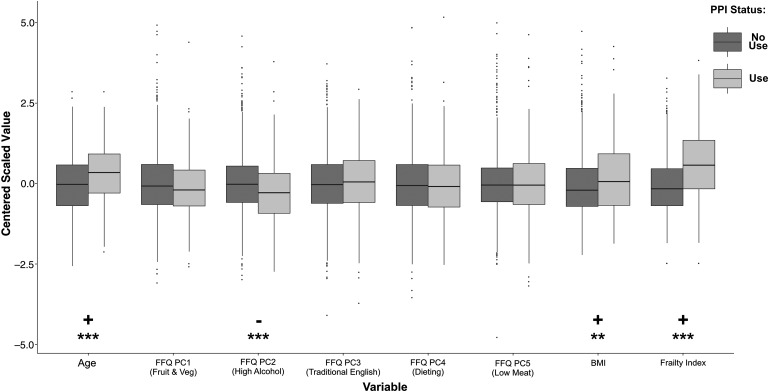
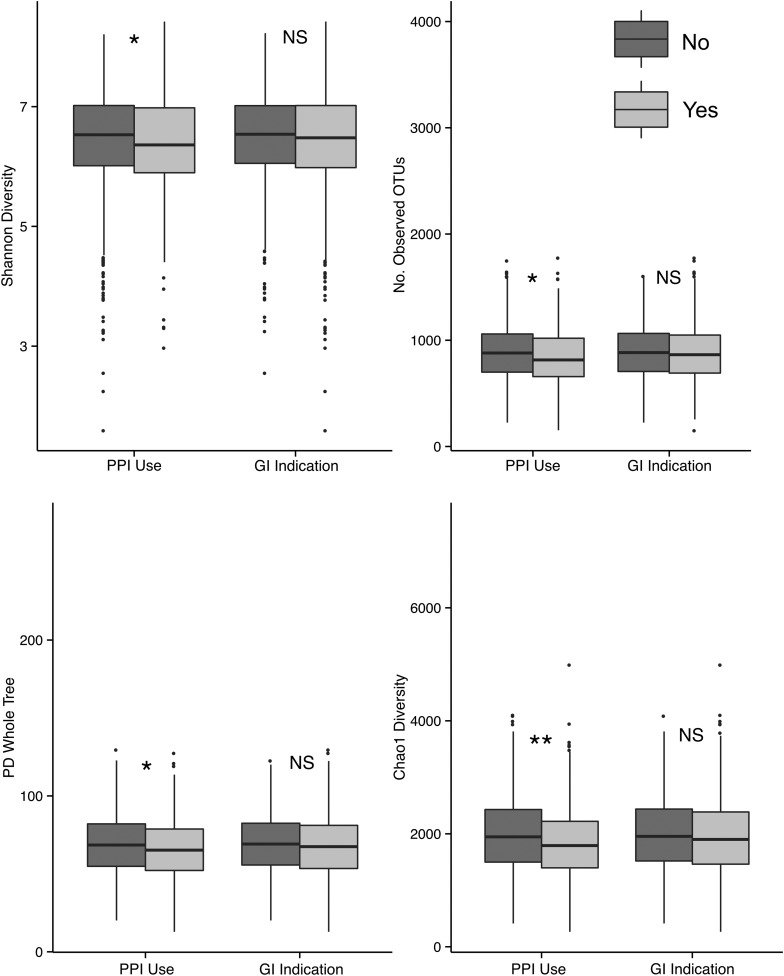
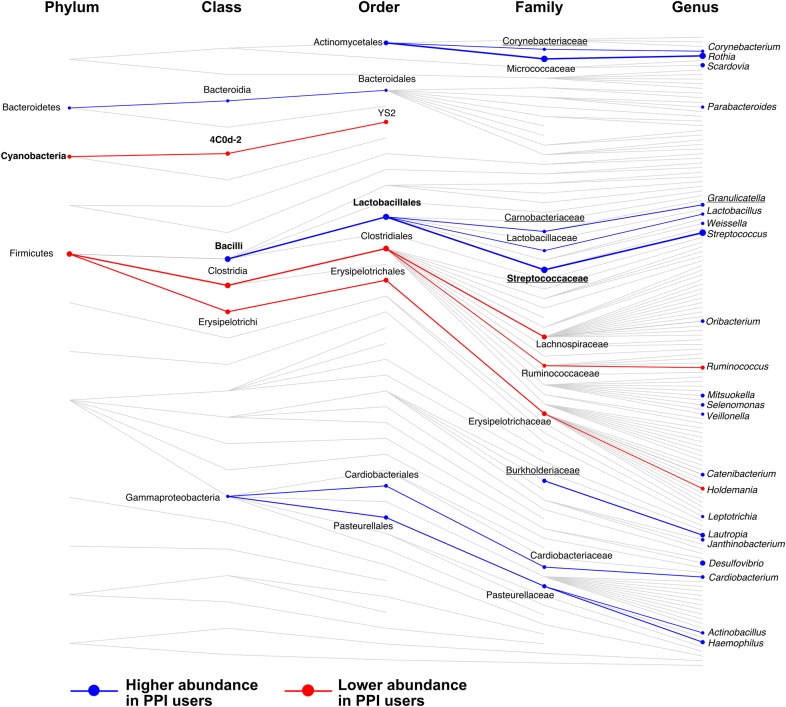
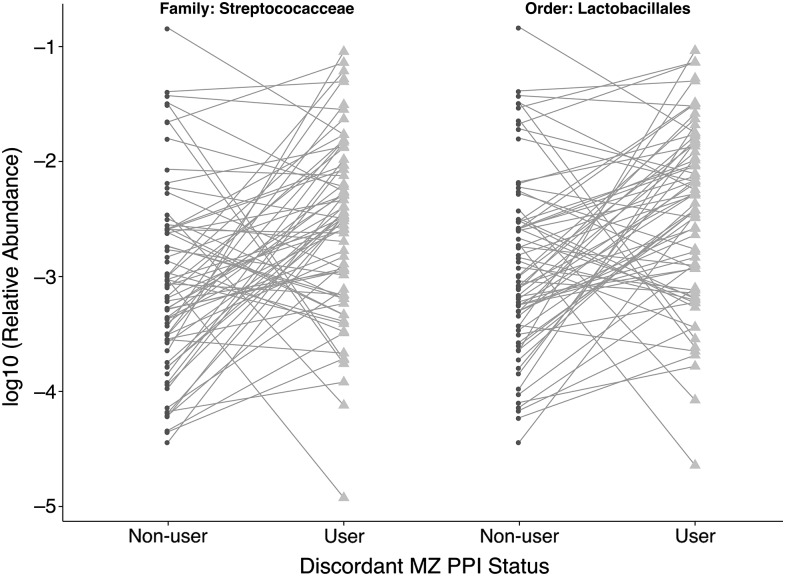
Objective: Proton pump inhibitors (PPIs) are drugs used to suppress gastric acid production and treat GI disorders such as peptic ulcers and gastro-oesophageal reflux. They have been considered low risk, have been widely adopted, and are often over-prescribed. Recent studies have identified an increased risk of enteric and other infections with their use. Small studies have identified possible associations between PPI use and GI microbiota, but this has yet to be carried out on a large population-based cohort. Design: We investigated the association between PPI usage and the gut microbiome using 16S ribosomal RNA amplification from faecal samples of 1827 healthy twins, replicating results within unpublished data from an interventional study. Results: We identified a significantly lower abundance in gut commensals and lower microbial diversity in PPI users, with an associated significant increase in the abundance of oral and upper GI tract commensals. In particular, significant increases were observed in Streptococcaceae. These associations were replicated in an independent interventional study and in a paired analysis between 70 monozygotic twin pairs who were discordant for PPI use. We propose that the observed changes result from the removal of the low pH barrier between upper GI tract bacteria and the lower gut. Conclusions: Our findings describe a significant impact of PPIs on the gut microbiome and should caution over-use of PPIs, and warrant further investigation into the mechanisms and their clinical consequences.
Overview
The claims and statistics of this paper haven’t been checked yet.
Free: it reads the open-access text and checks the first 5 claims that cite a source we can check. Create a free account to check every claim.
Integrity signals
Registry
Cites
Statistics
Figures
Verification
Claims the paper makes
The claims and statistics of this paper haven’t been checked yet.
Free: it reads the open-access text and checks the first 5 claims that cite a source we can check. Create a free account to check every claim.
Claims other papers make about this one
Each is checked against this paper’s own text: does it say what the citing paper says it does?
In the citing paper
“PPIs, for instance, enrich Firmicutes and oral taxa like Streptococcus salivarius and Micrococcaceae, expand Veillonella and Enterocloster, and reduce overall diversity, a profile linked to Clostridioides difficile infection and adverse metabolic shifts.43,92–97”
From Gut dysbiosis in oncology: a risk factor for immunoresistance (2026) · doi:10.1038/s41422-025-01212-6 · cites this paper as [94]
In the citing paper
“These PDAC GOMS matched gut microbiome signatures observed in individuals taking PPIs24.”
From Gut OncoMicrobiome Signatures (GOMS) as next-generation biomarkers for cancer immunotherapy (2023) · cites this paper as [24]
In the citing paper
“PPIs by reducing gastric acid secretion can produce profound changes in the colonic microbiota, mainly characterized by a decrease in the abundance of commensal bacteria, which is associated with a reduction in microbial diversity and an increase of oral bacteria in the stool[108,109].”
From Proton pump inhibitors and dysbiosis: current knowledge and aspects to be clarified (2019) · cites this paper as [108]
Self-check
Percentages, sums and reported differences re-computed from the paper’s own numbers.
The self-check needs the paper’s full text.
Citations
Cites
Fitting Linear Mixed-Effects Models Using lme4
Bates, D., Mächler, M., Bolker, B., & Walker, S. (2015) · Journal of Statistical Software · doi:10.18637/jss.v067.i01 · Cited by 86,835
QIIME allows analysis of high-throughput community sequencing data
Caporaso, J. G., Kuczynski, J., Stombaugh, J., Bittinger, K., Bushman, F. D., Costello, E. K., Fierer, N., Peña, A. G., Goodrich, J. K., Gordon, J. I., et al. (2010) · Nature Methods · doi:10.1038/nmeth.f.303 · Cited by 34,887
Self-citationStructure, function and diversity of the healthy human microbiome
The Human Microbiome Project Consortium (2012) · Nature · doi:10.1038/nature11234 · Cited by 11,726
A core gut microbiome in obese and lean twins
Turnbaugh, P. J., Hamady, M., Yatsunenko, T., Cantarel, B. L., Duncan, A., Ley, R. E., Sogin, M. L., Jones, W. J., Roe, B. A., Affourtit, J. P., et al. (2009) · Nature · doi:10.1038/nature07540 · Cited by 7,823
Self-citationA standard procedure for creating a frailty index
Searle, S. D., Mitnitski, A., Gahbauer, E. A., Gill, T. M., & Rockwood, K. (2008) · BMC Geriatrics · doi:10.1186/1471-2318-8-24 · Cited by 3,568
Gut microbiota composition correlates with diet and health in the elderly
Claesson, M. J., Jeffery, I. B., Conde, S., Power, S. E., O’Connor, E. M., Cusack, S., Harris, H. M. B., Coakley, M., Lakshminarayanan, B., O’Sullivan, O., et al. (2012) · Nature · doi:10.1038/nature11319 · Cited by 3,314
Human Genetics Shape the Gut Microbiome
Goodrich, J. K., Waters, J. L., Poole, A. C., Sutter, J. L., Koren, O., Blekhman, R., Beaumont, M., Van Treuren, W., Knight, R., Bell, J. T., et al. (2014) · Cell · doi:10.1016/j.cell.2014.09.053 · Cited by 3,164
Self-citationMicrobial co-occurrence relationships in the human microbiome
Faust, K., Sathirapongsasuti, J. F., Izard, J., Segata, N., Gevers, D., Raes, J., & Huttenhower, C. (2012) · PLoS Computational Biology · doi:10.1371/journal.pcbi.1002606 · Cited by 1,527 · cited 1×
“22 23 Using ampli fi cation and sequencing of the variable regions of the 16S ribosomal subunit it is possible to pro fi le the taxonomic composition of the microbiome of a given sample.”
MethodClostridium difficile Infection
Leffler, D. A., & Lamont, J. T. (2015) · New England Journal of Medicine · doi:10.1056/nejmra1403772 · Cited by 1,450
Jakobsson, H. E., Jernberg, C., Andersson, A. F., Sjölund-Karlsson, M., Jansson, J. K., & Engstrand, L. (2010) · PLoS ONE · doi:10.1371/journal.pone.0009836 · Cited by 1,160
Cited by
Items 101–200 of 977
Nardelli, S., Gioia, S., Ridola, L., Farcomeni, A., Merli, M., & Riggio, O. (2019) · Hepatology · doi:10.1002/hep.30304 · Cited by 109
Gastric microbiota: An emerging player in Helicobacter pylori -induced gastric malignancies
Espinoza, J. L., Matsumoto, A., Tanaka, H., & Matsumura, I. (2017) · Cancer Letters · doi:10.1016/j.canlet.2017.11.009 · Cited by 109
Effects of Proton Pump Inhibitors on the Gastric Mucosa-Associated Microbiota in Dyspeptic Patients
Paroni Sterbini, F., Palladini, A., Masucci, L., Cannistraci, C. V., Pastorino, R., Ianiro, G., Bugli, F., Martini, C., Ricciardi, W., Gasbarrini, A., et al. (2016) · Applied and Environmental Microbiology · doi:10.1128/aem.01437-16 · Cited by 108
“Also, in the largest study published to date, 16S rRNA gene profiling of fecal samples collected from 1,827 healthy twins found that PPI use was associated with significant increases in the abundances of oral and upper gastrointestinal tract bacteria and in particular of the Streptococcaceae family (54).”
BackgroundMartinsen, T. C., Fossmark, R., & Waldum, H. L. (2019) · International Journal of Molecular Sciences · doi:10.3390/ijms20236031 · Cited by 109
Intestinal Dysbiosis Secondary to Proton-Pump Inhibitor Use
Naito, Y., Kashiwagi, K., Takagi, T., Andoh, A., & Inoue, R. (2018) · Digestion · doi:10.1159/000481813 · Cited by 107
Acharya, C., & Bajaj, J. S. (2021) · Gastroenterology · doi:10.1053/j.gastro.2020.10.056 · Cited by 78
Hsu, P., Pan, C., Kao, J. Y., Tsay, F., Peng, N., Kao, S., Wang, H.-M., Tsai, T., Wu, D., Chen, C., et al. (2018) · Helicobacter · doi:10.1111/hel.12498 · Cited by 105
Antacid therapy in idiopathic pulmonary fibrosis: more questions than answers?
Johannson, K. A., Strambu, I. R., Ravaglia, C., Grutters, J. C., Valenzuela, C., Moğulkoç, N., Luppi, F., Richeldi, L., Wells, A. U., Vancheri, C., et al. (2017) · The Lancet Respiratory Medicine · doi:10.1016/s2213-2600(17)30219-9 · Cited by 101
Human gastric microbiota transplantation recapitulates premalignant lesions in germ-free mice
Kwon, S.-K., Park, J. C., Kim, K. H., Yoon, J., Cho, Y., Lee, B., Lee, J.-J., Jeong, H., Oh, Y., Kim, S., et al. (2021) · Gut · doi:10.1136/gutjnl-2021-324489 · Cited by 101
Tomita, Y., Goto, Y., Sakata, S., Imamura, K., Minemura, A., Oka, K., Hayashi, A., Jodai, T., Akaike, K., Anai, M., et al. (2022) · OncoImmunology · doi:10.1080/2162402x.2022.2081010 · Cited by 100
“They have been considered low-risk and widely adopted; thus, PPIs are often overprescribed across the world.(14,15,17) It has been reported that multiple oral bacteria that related cancer development were found in the feces of PPI users.”
BackgroundPotential Role of the Microbiome in Barrett’s Esophagus and Esophageal Adenocarcinoma
Snider, E. J., Freedberg, D. E., & Abrams, J. A. (2016) · Digestive Diseases and Sciences · doi:10.1007/s10620-016-4155-9 · Cited by 101
Self-citationPhysiologic, pathophysiologic, and pharmacologic regulation of gastric acid secretion
Schubert, M. L. (2017) · Current Opinion in Gastroenterology · doi:10.1097/mog.0000000000000392 · Cited by 99
Lee, J. K., Merchant, S. A., Schneider, J. L., Jensen, C. D., FIREMAN, B. H., Quesenberry, C. P., & Corley, D. A. (2020) · The American Journal of Gastroenterology · doi:10.14309/ajg.0000000000000591 · Cited by 99
Systematically investigating the impact of medication on the gut microbiome
Maier, L., & Typas, A. (2017) · Current Opinion in Microbiology · doi:10.1016/j.mib.2017.11.001 · Cited by 98
Periodontal connection with intestinal inflammation: Microbiological and immunological mechanisms
Kitamoto, S., & Kamada, N. (2022) · Periodontology 2000 · doi:10.1111/prd.12424 · Cited by 98
Aspirin in the Prevention of Colorectal Neoplasia
Drew, D. A., & Chan, A. T. (2020) · Annual Review of Medicine · doi:10.1146/annurev-med-060319-120913 · Cited by 97
Oral microbiome alterations of healthy volunteers with proton pump inhibitor
Mishiro, T., Oka, K., Kuroki, Y., Takahashi, M., Tatsumi, K., Saitoh, T., Tobita, H., Ishimura, N., Sato, S., Ishihara, S., et al. (2018) · Journal of Gastroenterology and Hepatology · doi:10.1111/jgh.14040 · Cited by 96
Concomitant Proton Pump Inhibitor Use and Survival in Urothelial Carcinoma Treated with Atezolizumab
Hopkins, A. M., Kichenadasse, G., Karapetis, C. S., Rowland, A., & Sorich, M. J. (2020) · Clinical Cancer Research · doi:10.1158/1078-0432.ccr-20-1876 · Cited by 88
Gut Microbiota: The Missing Link Between Helicobacter pylori Infection and Metabolic Disorders?
Martín‐Núñez, G. M., Cornejo-Pareja, I. M., Clemente‐Postigo, M., & Tinahones, F. J. (2021) · Frontiers in Endocrinology · doi:10.3389/fendo.2021.639856 · Cited by 97
Gut Microbiota in Obesity and Metabolic Abnormalities: A Matter of Composition or Functionality?
Morán‐Ramos, S., López-Contreras, B. E., & Canizales‐Quinteros, S. (2017) · Archives of Medical Research · doi:10.1016/j.arcmed.2017.11.003 · Cited by 96
Salvatore, S., Abkari, A., Cai, W., Catto‐Smith, A. G., Cruchet, S., Gottrand, F., Hegar, B., Lifschitz, C. H., Ludwig, T. G., Shah, N., et al. (2018) · Acta Paediatrica · doi:10.1111/apa.14378 · Cited by 95
Shi, Y., Cai, S., Tian, Y.-P., Zhao, H., Zhang, Y.-B., Chen, J., Ren, R.-R., Luo, X., Peng, L., Sun, G., et al. (2019) · Genomics Proteomics & Bioinformatics · doi:10.1016/j.gpb.2018.12.004 · Cited by 95
Helicobacter pylori infection associates with fecal microbiota composition and diversity
Frost, F., Kacprowski, T., Rühlemann, M. C., Bang, C., Franke, A., Zimmermann, K., Nauck, M. A., Völker, U., Völzke, H., Biffar, R., et al. (2019) · Scientific Reports · doi:10.1038/s41598-019-56631-4 · Cited by 94
Xia, B., Yang, M. G., Nguyen, L. H., He, Q., Zhen, J., Yu, Y., Di, M., Qin, X. S., Lu, K., Kuo, Z. C., et al. (2021) · Gastroenterology · doi:10.1053/j.gastro.2021.08.005 · Cited by 94
The role of the microbiota in the management of intensive care patients
Szychowiak, P., Villageois-Tran, K., Patrier, J., Timsit, J., & Ruppé, É. (2022) · Annals of Intensive Care · doi:10.1186/s13613-021-00976-5 · Cited by 94
Horvath, A., Rainer, F., Bashir, M., Leber, B., Schmerboeck, B., Klymiuk, I., Groselj-Strele, A., Durdevic, M., Freedberg, D. E., Abrams, J. A., et al. (2019) · Scientific Reports · doi:10.1038/s41598-019-48352-5 · Cited by 93
Self-citationThe gut microbiota as a mediator of metabolic benefits after bariatric surgery
Anhê, F. F., Varin, T. V., Schertzer, J. D., & Marette, A. (2017) · Canadian Journal of Diabetes · doi:10.1016/j.jcjd.2017.02.002 · Cited by 93
Clostridium difficile Infection: An Epidemiology Update
Roo, A. C. D., & Regenbogen, S. E. (2020) · Clinics in Colon and Rectal Surgery · doi:10.1055/s-0040-1701229 · Cited by 95
Approach to the diagnosis and management of dysbiosis
Alagiakrishnan, K., Morgadinho, J., & Halverson, T. (2024) · Frontiers in Nutrition · doi:10.3389/fnut.2024.1330903 · Cited by 93
McGovern, A. S., Hamlin, A. S., & Winter, G. (2019) · Australian & New Zealand Journal of Psychiatry · doi:10.1177/0004867419877954 · Cited by 89
Ross, C. L., Spinler, J. K., & Savidge, T. (2016) · Anaerobe · doi:10.1016/j.anaerobe.2016.05.006 · Cited by 87
ABO antigen and secretor statuses are not associated with gut microbiota composition in 1,500 twins
Davenport, E., Goodrich, J. K., Bell, J. T., Spector, T. D., Ley, R. E., & Clark, A. G. (2016) · BMC Genomics · doi:10.1186/s12864-016-3290-1 · Cited by 87
Self-citationThe crosstalk between microbiome and asthma: Exploring associations and challenges
Abdel‐Aziz, M. I., Vijverberg, S. J. H., Neerincx, A. H., Kraneveld, A. D., & Maitland‐van der Zee, A. H. (2019) · Clinical & Experimental Allergy · doi:10.1111/cea.13444 · Cited by 75
The Role of the Microbiome in Gastrointestinal Cancer
Wroblewski, L. E., Peek, R. M., & Coburn, L. A. (2016) · Gastroenterology Clinics of North America · doi:10.1016/j.gtc.2016.04.010 · Cited by 85
Giordan, Q., Salleron, J., Vallance, C., Moriana, C., & Clément-Duchêne, C. (2021) · Frontiers in Immunology · doi:10.3389/fimmu.2021.716317 · Cited by 84
Impact of gut microbiota on drug metabolism: an update for safe and effective use of drugs
Noh, K., Kang, Y.-R., Nepal, M. R., Shakya, R., Kang, M. J., Kang, W., Lee, S., Jeong, H. G., & Jeong, T. C. (2017) · Archives of Pharmacal Research · doi:10.1007/s12272-017-0986-y · Cited by 85
Helicobacter pylori Infection, the Gastric Microbiome and Gastric Cancer
Pereira‐Marques, J., Ferreira, R. M., Pinto-Ribeiro, I., & Figueiredo, C. (2019) · Advances in experimental medicine and biology · doi:10.1007/5584_2019_366 · Cited by 83
Mima, K., Ogino, S., Nakagawa, S., Sawayama, H., Kinoshita, K., Krashima, R., Ishimoto, T., Imai, K., Iwatsuki, M., Hashimoto, D., et al. (2017) · Surgical Oncology · doi:10.1016/j.suronc.2017.07.011 · Cited by 85
Liu, J., Lahousse, L., Nivard, M. G., Bot, M., Chen, L., van Klinken, J. B., Thesing, C. S., Beekman, M., van den Akker, E. B., Slieker, R. C., et al. (2020) · Nature Medicine · doi:10.1038/s41591-019-0722-x · Cited by 85
An investigation into physical frailty as a link between the gut microbiome and cognitive health
Verdi, S., Jackson, M. A., Beaumont, M., Bowyer, R. C. E., Bell, J. T., Spector, T. D., & Steves, C. J. (2018) · Frontiers in Aging Neuroscience · doi:10.3389/fnagi.2018.00398 · Cited by 82
Self-citationMollica, V., Santoni, M., Matrana, M. R., Basso, U., Giorgi, U. D., Rizzo, A., Maruzzo, M., Marchetti, A., Rosellini, M., Bleve, S., et al. (2021) · Targeted Oncology · doi:10.1007/s11523-021-00861-y · Cited by 83
Hopkins, A. M., Kichenadasse, G., McKinnon, R. A., Abuhelwa, A. Y., Logan, J. M., Badaoui, S., Karapetis, C. S., Rowland, A., & Sorich, M. J. (2021) · British Journal of Cancer · doi:10.1038/s41416-021-01606-4 · Cited by 81
Intestinal Microbiota Is Altered in Patients with Gastric Cancer from Shanxi Province, China
Qi, Y.-F., Sun, J., Ren, L., Cao, X.-L., Dong, J.-H., Tao, K. X., Guan, X., Cui, Y.-N., & Su, W. (2018) · Digestive Diseases and Sciences · doi:10.1007/s10620-018-5411-y · Cited by 82
Gut microbiota response to antibiotics is personalized and depends on baseline microbiota
Rashidi, A., Ebadi, M., Rehman, T. U., Elhusseini, H., Nalluri, H., Kaiser, T., Holtan, S. G., Khoruts, A., Weisdorf, D. J., & Staley, C. M. (2021) · Microbiome · doi:10.1186/s40168-021-01170-2 · Cited by 81
The interaction of Akkermansia muciniphila with host-derived substances, bacteria and diets
Hagi, T., & Belzer, C. (2021) · Applied Microbiology and Biotechnology · doi:10.1007/s00253-021-11362-3 · Cited by 79
Xiao, X., Zhang, X., Wang, J., Liu, Y., Yan, H., Xing, X., & Yang, J. (2024) · Gut · doi:10.1136/gutjnl-2023-330883 · Cited by 79
Schubert, M. L. (2016) · Current Opinion in Gastroenterology · doi:10.1097/mog.0000000000000308 · Cited by 79
Salivary microbiome with gastroesophageal reflux disease and treatment
Kawar, N. I., Park, S. G., SCHWARTZ, J. L., Callahan, N. F., Obrez, A., Yang, B. J., Chen, Z., & Adami, G. R. (2021) · Scientific Reports · doi:10.1038/s41598-020-80170-y · Cited by 78
Cheung, K. S., Lam, L. K., Seto, W., & Leung, W. K. (2021) · Liver Cancer · doi:10.1159/000518090 · Cited by 78
Arab, J. P., Arrese, M. A., & Shah, V. H. (2020) · Hepatology Research · doi:10.1111/hepr.13473 · Cited by 78
Otsuka, T., Sugimoto, M., Inoue, R., Ohno, M., Ban, H., Nishida, A., Inatomi, O., Takahashi, S., Naito, Y., & Andoh, A. (2017) · Gut · doi:10.1136/gutjnl-2016-313312 · Cited by 76
Helicobacter pylori Infection Aggravates Dysbiosis of Gut Microbiome in Children With Gastritis
Yang, L., Zhang, J., Xu, J., Wei, X., Yang, J., Liu, Y., Li, H., Zhao, C., Wang, Y., Zhang, L., et al. (2019) · Frontiers in Cellular and Infection Microbiology · doi:10.3389/fcimb.2019.00375 · Cited by 76
Castellani, C., Singer, G., Kashofer, K., Huber-Zeyringer, A., Flucher, C., Kaiser, M., & Till, H. (2017) · Frontiers in Cellular and Infection Microbiology · doi:10.3389/fcimb.2017.00444 · Cited by 78
The role of gut microbiota in Clostridium difficile infection
Samarkos, M., Mastrogianni, E., & Kampouropoulou, O. (2018) · European Journal of Internal Medicine · doi:10.1016/j.ejim.2018.02.006 · Cited by 75
“ciation between PPI usage and the gut microbiota using 16S ribosomal RNA amplification from faecal samples of 1827 healthy twins, and confirmed that there was a lower abundance in gut commensals and a lower microbial diversity in PPI users [41].”
BackgroundLopes, S., Pabst, L., Dory, A., Klotz, M., Gourieux, B., Michel, B., & Mascaux, C. (2023) · Frontiers in Immunology · doi:10.3389/fimmu.2023.1070076 · Cited by 75
“RuizBanobre (48) 2021 119 Europe 96 (81) 69 99/20 Urothelial carcinoma Atezolizumab, pembrolizumab, nivolumab, durvalumab First, second, or beyond Monothera”
BackgroundGut Microbiota Composition Associated with Clostridioides difficile Colonization and Infection
Martínez, E. D., Taminiau, B., Rodriguez, C., & Daube, G. (2022) · Pathogens · doi:10.3390/pathogens11070781 · Cited by 75
Faleck, D. M., Salmasian, H., Furuya, Y. E., Larson, E., Abrams, J. A., & Freedberg, D. E. (2016) · The American Journal of Gastroenterology · doi:10.1038/ajg.2016.343 · Cited by 75
Self-citationMeta-analysis of the effects of proton pump inhibitors on the human gut microbiota
Zhang, J., Zhang, C., Zhang, Q., Yu, L., Chen, W., Xue, Y., & Zhai, Q. (2023) · BMC Microbiology · doi:10.1186/s12866-023-02895-w · Cited by 74
Child Weight Gain Trajectories Linked To Oral Microbiota Composition
Craig, S. J. C., Blankenberg, D., Parodi, A. C. L., Paul, I. M., Birch, L. L., Savage, J. S., Marini, M. E., Stokes, J. L., Nekrutenko, A., Reimherr, M., et al. (2018) · Scientific Reports · doi:10.1038/s41598-018-31866-9 · Cited by 68
Niikura, R., Hayakawa, Y., Hirata, Y., Yamada, A., Fujishiro, M., & Koike, K. (2017) · Gut · doi:10.1136/gutjnl-2017-315710 · Cited by 73
Yuan, J., He, Q., Nguyen, L. H., Wong, M. C. S., Huang, J., Yu, Y., Xia, B., Tang, Y., He, Y., & Zhang, C. (2020) · Gut · doi:10.1136/gutjnl-2020-322557 · Cited by 73
Gommers, L. M. M., Ederveen, T. H. A., van der Wijst, J., Bos, C., Kortman, G. A. M., Boekhorst, J., Bindels, R. J. M., de Baaij, J. H. F., & Hoenderop, J. G. J. (2019) · The FASEB Journal · doi:10.1096/fj.201900839r · Cited by 72
Wirbel, J., Essex, M., Forslund, S. K., & Zeller, G. (2024) · Genome biology · doi:10.1186/s13059-024-03390-9 · Cited by 73
Mahon, J., Lifschitz, C. H., Ludwig, T. G., Thapar, N., Glanville, J., Miqdady, M. S., Saps, M., Quak, S. H., Lenoir‐Wijnkoop, I., Edwards, M., et al. (2017) · BMJ Open · doi:10.1136/bmjopen-2016-015594 · Cited by 71
Haderer, M., Neubert, P., Rinner, E., Scholtis, A., Broncy, L., Gschwendtner, H., Kandulski, A., Pavel, V., Mehrl, A., Brochhausen, C., et al. (2021) · Gut · doi:10.1136/gutjnl-2020-321663 · Cited by 71
Publisher Correction: The gut–liver axis and the intersection with the microbiome
Tripathi, A., Debelius, J., Brenner, D. A., Karin, M., Loomba, R., Schnabl, B., & Knight, R. (2018) · Nature Reviews Gastroenterology & Hepatology · doi:10.1038/s41575-018-0031-8 · Cited by 70
Hussain, N., Naeem, M., & Pinato, D. J. (2021) · Human Vaccines & Immunotherapeutics · doi:10.1080/21645515.2020.1769398 · Cited by 69
“PPI use has been shown to significantly decrease the diversity of the gut microbiota and induce both positive and negative selection of specific bacterial species within the gut.(48) The effects of PPI, however, may not be exclusively detrimental: pre-clinical evidence has highlighted the anti-tumor potential of this…”
BackgroundInfection prevention for extremely low birth weight infants in the NICU
Fleiss, N., Tarun, S., & Polin, R. A. (2022) · Seminars in Fetal and Neonatal Medicine · doi:10.1016/j.siny.2022.101345 · Cited by 70
van Dorst, J. M., Tam, R. Y., & Ooi, C. Y. (2022) · Nutrients · doi:10.3390/nu14030480 · Cited by 68
Lundgren, D., Eklöf, V., Palmqvist, R., Hultdin, J., & Karling, P. (2019) · Scandinavian Journal of Gastroenterology · doi:10.1080/00365521.2019.1566493 · Cited by 63
Dissecting the role of the gut microbiota and diet on visceral fat mass accumulation
Roy, C. I. L., Bowyer, R. C. E., Fernandez, J. C., Pallister, T., Menni, C., Steves, C. J., Berry, S. E., Spector, T. D., & Bell, J. T. (2019) · Scientific Reports · doi:10.1038/s41598-019-46193-w · Cited by 67
Self-citationLi, M., Liu, J., Zhu, J., Wang, H., Sun, C., Gao, N. L., Zhao, X.-M., & Chen, W.-H. (2023) · Gut Microbes · doi:10.1080/19490976.2023.2205386 · Cited by 66
Rossi, G., Pezzuto, A., Sini, C., Tuzi, A., Citarella, F., McCusker, M. G., Nigro, O., Tanda, E., & Russo, A. (2019) · Critical Reviews in Oncology/Hematology · doi:10.1016/j.critrevonc.2019.07.005 · Cited by 66
Tam, R. Y., van Dorst, J. M., McKay, I. R., Coffey, M. J., & Ooi, C. Y. (2022) · Journal of Clinical Medicine · doi:10.3390/jcm11030649 · Cited by 67
Søgaard, M., Heide‐Jørgensen, U., Vandenbroucke, J. P., Schønheyder, H. C., & Vandenbroucke‐Grauls, C. M. J. E. (2017) · Clinical Microbiology and Infection · doi:10.1016/j.cmi.2017.03.026 · Cited by 65
Zhou, J., Shrestha, P., Qiu, Z. G., Harman, D. G., Teoh, W.-C., Al‐Sohaily, S., Liem, H., Turner, I. B., & Ho, V. (2020) · Journal of Clinical Medicine · doi:10.3390/jcm9072162 · Cited by 65
Impact of Helicobacter pylori infection on gut microbiota
Iino, C., & Shimoyama, T. (2021) · World Journal of Gastroenterology · doi:10.3748/wjg.v27.i37.6224 · Cited by 64
Factors associated with hospitalization in bronchiectasis exacerbations: a one-year follow-up study
Menéndez, R., Méndez, R., Polverino, E., Rosales-Mayor, E., Amara‐Elori, I., Reyes, S., Posadas, T., Fernández‐Barat, L., & Torres, A. (2017) · Respiratory Research · doi:10.1186/s12931-017-0659-x · Cited by 63
Kaur, G., Behl, T., BUNGAU, S. G., Kumar, A., Uddin, M. S., Mehta, V., Zengin, G., Mathew, B., Shah, M. A., & Arora, S. (2020) · Current Neuropharmacology · doi:10.2174/1570159x18666200606233050 · Cited by 64
Spakowicz, D., Hoyd, R., Muniak, M., Husain, M., Bassett, J. S., Wang, L., Tinoco, G., Patel, S. H., Burkart, J., Miah, A., et al. (2020) · BMC Cancer · doi:10.1186/s12885-020-06882-6 · Cited by 62
Role of the duodenal microbiota in functional dyspepsia
Brown, G., Hoedt, E. C., Keely, S., Shah, A., Walker, M. M., Holtmann, G., & Talley, N. J. (2022) · Neurogastroenterology & Motility · doi:10.1111/nmo.14372 · Cited by 63
Ciucci, S., Ge, Y., Durán, C., Palladini, A., Jiménez-Jiménez, V., Martínez-Sánchez, L. M., Wang, Y., Sales, S., Shevchenko, A., Poser, S. W., et al. (2017) · Scientific Reports · doi:10.1038/srep43946 · Cited by 52
Duodenal inflammation: an emerging target for functional dyspepsia?
Wauters, L. I., Burns, G. L., Ceulemans, M., Walker, M. M., Vanuytsel, T., Keely, S., & Talley, N. J. (2020) · Expert Opinion on Therapeutic Targets · doi:10.1080/14728222.2020.1752181 · Cited by 63
Yoshihara, T., Oikawa, Y., Kato, T., Kessoku, T., Kobayashi, T., Kato, S., Misawa, N., Ashikari, K., Fuyuki, A., Ohkubo, H., et al. (2020) · Gut Microbes · doi:10.1080/19490976.2020.1758290 · Cited by 61
Khaledi, M., Poureslamfar, B., Alsaab, H. O., Tafaghodi, S., Hjazi, A. M., Singh, R., Alawadi, A. H., Alsaalamy, A. H., Qasim, Q. A., & Sameni, F. (2024) · Annals of Microbiology · doi:10.1186/s13213-023-01744-5 · Cited by 59
Lee, S., Arefaine, B., Begum, N., Stamouli, M., Witherden, E. A., Mohamad, M., Harzandi, A., Zamalloa, A., Cai, H., Williams, R. L., et al. (2024) · Journal of Hepatology · doi:10.1016/j.jhep.2024.09.046 · Cited by 59
Proton pump inhibitor use associated with changes in gut microbiota composition
Reveles, K. R., Ryan, C. N., Chan, L., Cosimi, R. A., & Haynes, W. L. (2018) · Gut · doi:10.1136/gutjnl-2017-315306 · Cited by 52
Mullane, K. M., Dubberke, E. R., & Practice, O. B. O. T. A. I. C. O. (2019) · Clinical Transplantation · doi:10.1111/ctr.13564 · Cited by 59
Nadatani, Y., Watanabe, T., Suda, W., Nakata, A., Matsumoto, Y., Kosaka, S., Higashimori, A., Otani, K., Hosomi, S., Tanaka, F., et al. (2019) · Scientific Reports · doi:10.1038/s41598-019-53559-7 · Cited by 60
Kashtanova, D. A., Tkacheva, O. N., Strazhesko, I. D., Dudinskaya, Е. N., Kotovskaya, Y. V., Popenko, A., Tyakht, A., & Alexeev, D. G. (2019) · Healthy ageing and longevity · doi:10.1007/978-3-030-24970-0_17 · Cited by 59
Pre-hospitalization proton pump inhibitor use and clinical outcomes in COVID-19
Ramachandran, P., Perisetti, A., Gajendran, M., Jean-Louis, F., Bansal, P., Dwivedi, A. K., & Goyal, H. (2020) · European Journal of Gastroenterology & Hepatology · doi:10.1097/meg.0000000000002013 · Cited by 58
Di Sabatino, A., Lenti, M. V., Cammalleri, L., Corazza, G. R., & Pilotto, A. (2018) · Digestive and Liver Disease · doi:10.1016/j.dld.2018.03.010 · Cited by 53
The human microbiota is associated with cardiometabolic risk across the epidemiologic transition
Fei, N., Bernabé, B. P., Lie, L., Baghdan, D., Bedu-Addo, K., Plange‐Rhule, J., Forrester, T., Lambert, E. V., Bovet, P., Gottel, N., et al. (2019) · PLoS ONE · doi:10.1371/journal.pone.0215262 · Cited by 59
Wu, L., Wang, Z., Sun, G., Peng, L., Lu, Z.-S., Yan, B., Huang, K., & Yang, Y. (2019) · Scientific Reports · doi:10.1038/s41598-019-49415-3 · Cited by 58
Jahnke, J. R., Roach, J., Azcarate-Peril, M. A., & Thompson, A. L. (2021) · PLOS ONE · doi:10.1371/journal.pone.0251782 · Cited by 51
Roles of the gut microbiota in human neurodevelopment and adult brain disorders
Mallick, R., Basak, S., Das, R. K., Banerjee, A., Paul, S., Pathak, S., & Duttaroy, A. K. (2024) · Frontiers in Neuroscience · doi:10.3389/fnins.2024.1446700 · Cited by 58
Li, D. K., Yan, P., Abou‐Samra, A., Chung, R. T., & Butt, A. A. (2017) · Alimentary Pharmacology & Therapeutics · doi:10.1111/apt.14391 · Cited by 57
Oral-Intestinal Microbiota in Colorectal Cancer: Inflammation and Immunosuppression
Mo, S., Ru, H., Huang, M., Cheng, L., Mo, X., & Yan, L. (2022) · Journal of Inflammation Research · doi:10.2147/jir.s344321 · Cited by 56
Country-wide medical records infer increased allergy risk of gastric acid inhibition
Jordakieva, G., Kundi, M., Untersmayr, E., Pali‐Schöll, I., Reichardt, B., & Jensen‐Jarolim, E. (2019) · Nature Communications · doi:10.1038/s41467-019-10914-6 · Cited by 56
Uchiyama, A. A. T., Silva, P. A. I. A., Lopes, M. S. M., Yen, C. T., Ricardo, E. D., Mutão, T. S., Pimenta, J. R., Machado, L. M., Shimba, D. S., & Peixoto, R. D. (2021) · Current Oncology · doi:10.3390/curroncol28010076 · Cited by 57
Metadata
- Authors
- Jackson, M. A., Goodrich, J. K., Maxan, M.-E., Freedberg, D. E., Abrams, J. A., Poole, A. C., Sutter, J. L., Welter, D., Ley, R. E., Bell, J. T., Spector, T. D., & Steves, C. J.
- Affiliations
- King's College London (GB)
- Cornell University (US)
- King's College Hospital (GB)
- Columbia University Irving Medical Center (US)
- St Thomas' Hospital (GB)
- Corresponding author
- Steves, Claire J
- ORCID
- Venue
- Gut
- Publisher
- BMJ
- Published
- 2015-12-30
- Volume
- 65
- Issue
- 5
- Pages
- 749-756
- ISSN
- 0017-5749 (ISSN-L)
- 1468-3288
- PMC
- PMC4853574
- OpenAlex
- W2224656683
- Semantic Scholar
- 5c2da3f7586966babd3a6299bc342d40340e916d
- Cited by
- 895
- References
- 48
- Citations by year
- 2026: 71 · 2025: 81 · 2024: 90 · 2023: 89 · 2022: 107 · 2021: 102 · 2020: 107 · 2019: 82 · 2018: 69 · 2017: 62 · 2016: 35
- FWCI
- 24.01
- Type
- journal article
- Language
- en
- Open access
- hybrid
- doi.org
- Licence
- cc-by
- Locations
- Gut (publishedVersion, cc-by)
- PubMed Central (publishedVersion, cc-by)
- PubMed (publishedVersion)
- Research Portal (King's College London) (submittedVersion, cc-by)
- HighWire Press Open Archive (submittedVersion)
- Funders
- Wellcome Trust
- Chronic Disease Research Foundation
- National Institute for Health and Care Research (NF-SI-0514-10027)
- King's College London
- National Institutes of Health (KL2TR000081, 1dp2od007444-01, TR000081)
- National Institute of Diabetes and Digestive and Kidney Diseases (R01DK093595, P30DK020541)
- National Center for Advancing Translational Sciences (TR000081, NIH KL2TR000081)
- Topics
- Life Sciences › Biochemistry, Genetics and Molecular Biology › Molecular Biology › Gut microbiota and health
- Health Sciences › Medicine › Gastroenterology › Gastrointestinal motility and disorders
- Health Sciences › Medicine › Gastroenterology › Helicobacter pylori-related gastroenterology studies
- Keywords
- proton pump inhibitors, gut microbiota, microbial diversity, Streptococcaceae, oral commensals, gastric acid suppression, monozygotic twins
- MeSH terms
- Gastrointestinal Microbiome, Adult, Aged, Aged, 80 and over, Female, Humans, Male, Middle Aged, Upper Gastrointestinal Tract, Proton Pump Inhibitors, Young Adult
About these checks
Registry, retraction, Cites and statistics results are computed, not judged, with one exception: a printed reference that no index lists is read once by a model before it counts as a citation error. Claims are extracted by a model and kept only when their quote appears verbatim in the text; each cited source is then checked, with a model’s help, for whether it says what the claim relies on. Those verdicts can be wrong — read the claim’s quote and the cited source before relying on one.
Statistics and arithmetic are recomputed, not judged.
Confidence bands are shown only for fields calibrated on our annotated test set. None is calibrated yet, so no band is shown.
What counts as a claim ›How we measure confidence ›How we check this ›
Are you an author, or do you see a problem with this page? Request a review
Data sources
Bibliographic data: Semantic Scholar, OpenAlex, Crossref.
Contains information from the Semantic Scholar Academic Graph Datasets, made available under the ODC Attribution License (ODC-BY 1.0).
Semantic Scholar’s data is described in: Kinney, R., et al. (2023). The Semantic Scholar Open Data Platform. arXiv:2301.10140.
