

The DOI matches its Crossref record; 43 of the 43 references it cites were found in a registry or an index.
MerTK expressing hepatic macrophages promote the resolution of inflammation in acute liver failure
Open accessAbstract
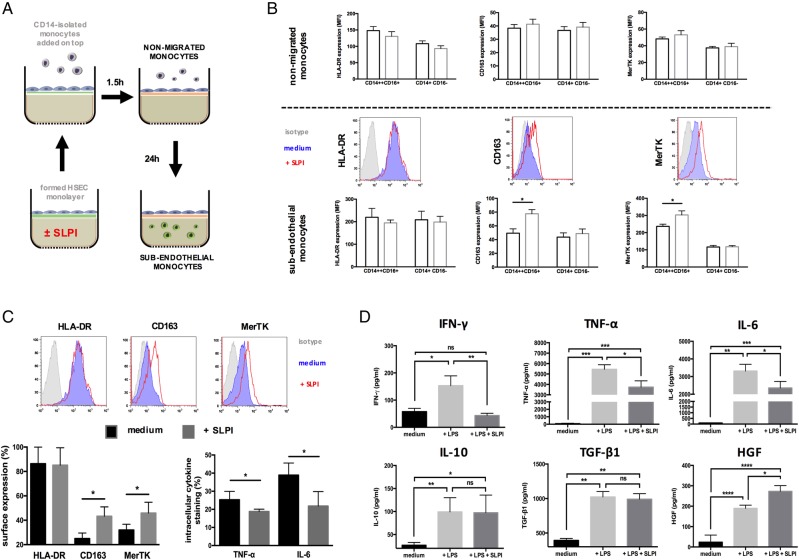
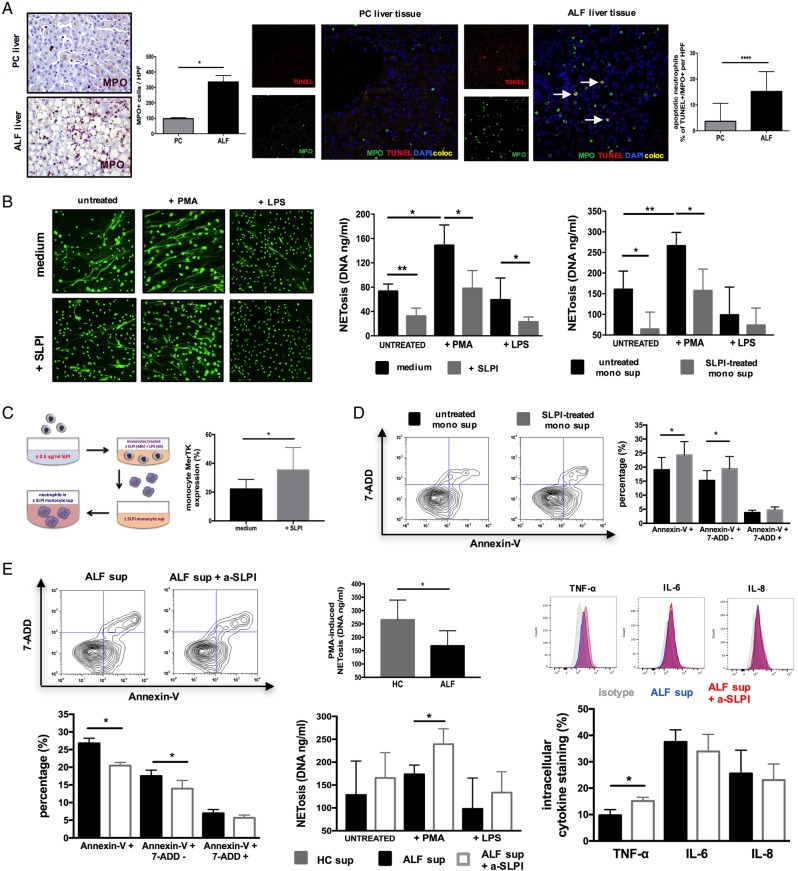
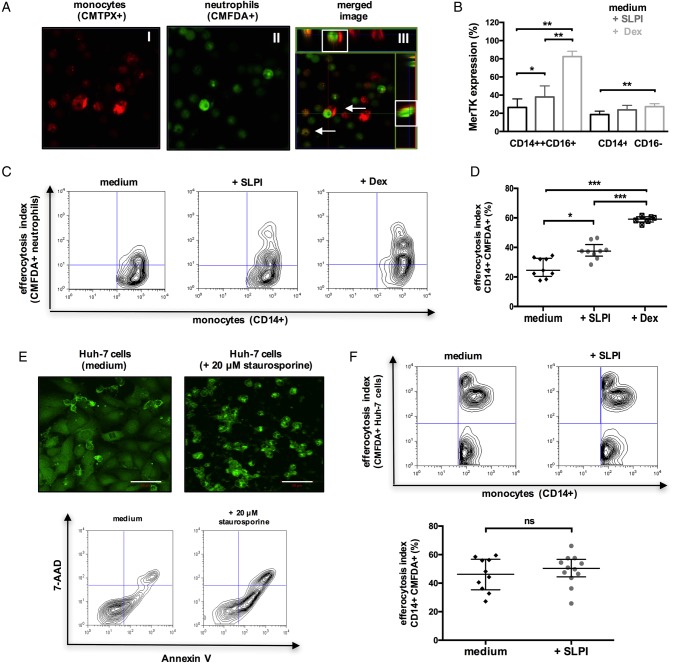
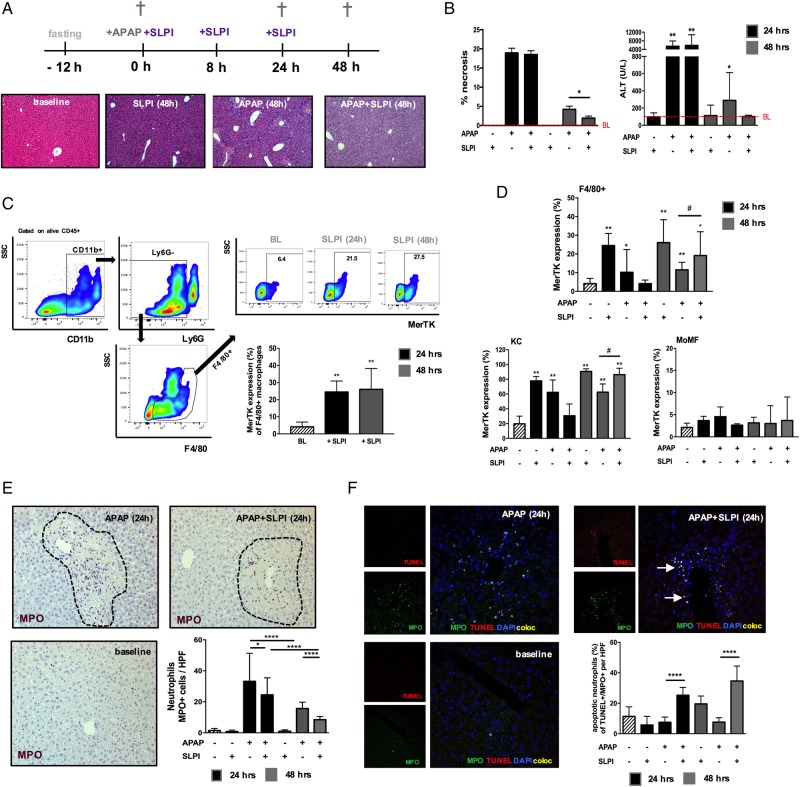
Objective: Acute liver failure (ALF) is characterised by overwhelming hepatocyte death and liver inflammation with massive infiltration of myeloid cells in necrotic areas. The mechanisms underlying resolution of acute hepatic inflammation are largely unknown. Here, we aimed to investigate the impact of Mer tyrosine kinase (MerTK) during ALF and also examine how the microenvironmental mediator, secretory leucocyte protease inhibitor (SLPI), governs this response. Design: Flow cytometry, immunohistochemistry, confocal imaging and gene expression analyses determined the phenotype, functional/transcriptomic profile and tissue topography of MerTK+ monocytes/macrophages in ALF, healthy and disease controls. The temporal evolution of macrophage MerTK expression and its impact on resolution was examined in APAP-induced acute liver injury using wild-type (WT) and Mer-deficient (Mer −/− ) mice. SLPI effects on hepatic myeloid cells were determined in vitro and in vivo using APAP-treated WT mice. Results: We demonstrate a significant expansion of resolution-like MerTK+HLA-DR high cells in circulatory and tissue compartments of patients with ALF. Compared with WT mice which show an increase of MerTK+MHCII high macrophages during the resolution phase in ALF, APAP-treated Mer −/− mice exhibit persistent liver injury and inflammation, characterised by a decreased proportion of resident Kupffer cells and increased number of neutrophils. Both in vitro and in APAP-treated mice, SLPI reprogrammes myeloid cells towards resolution responses through induction of a MerTK+HLA-DR high phenotype which promotes neutrophil apoptosis and their subsequent clearance. Conclusions: We identify a hepatoprotective, MerTK+, macrophage phenotype that evolves during the resolution phase following ALF and represents a novel immunotherapeutic target to promote resolution responses following acute liver injury.
Overview
The claims and statistics of this paper haven’t been checked yet.
Run the check — free, no account needed. It reads the open-access text and checks the sources it cites.
Integrity signals
Registry
Cites
Statistics
Figures
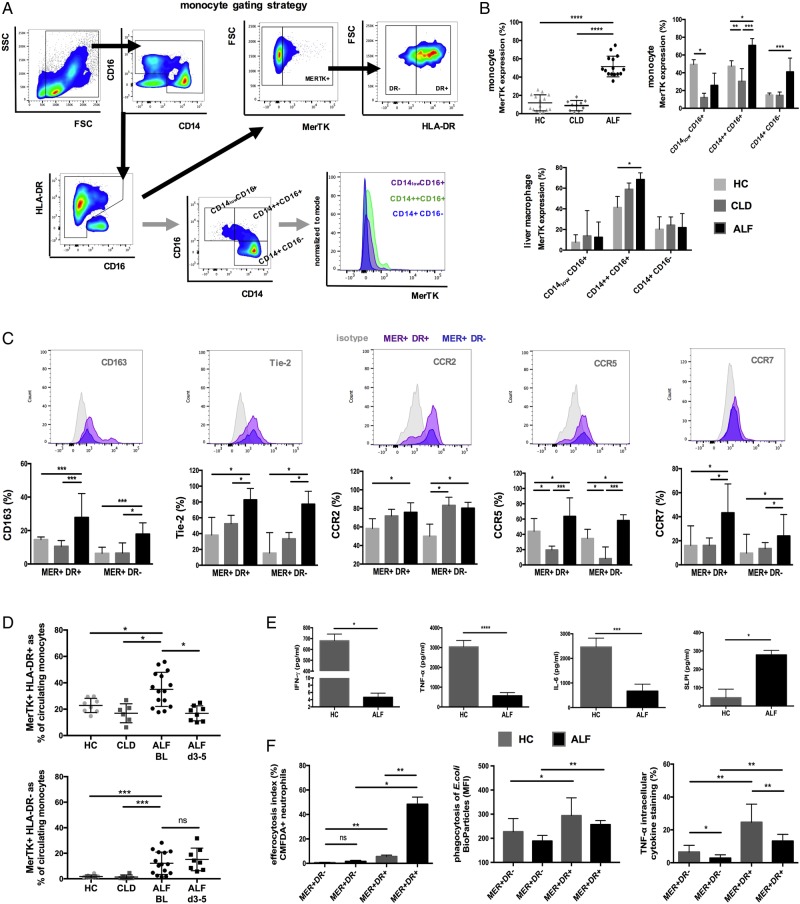
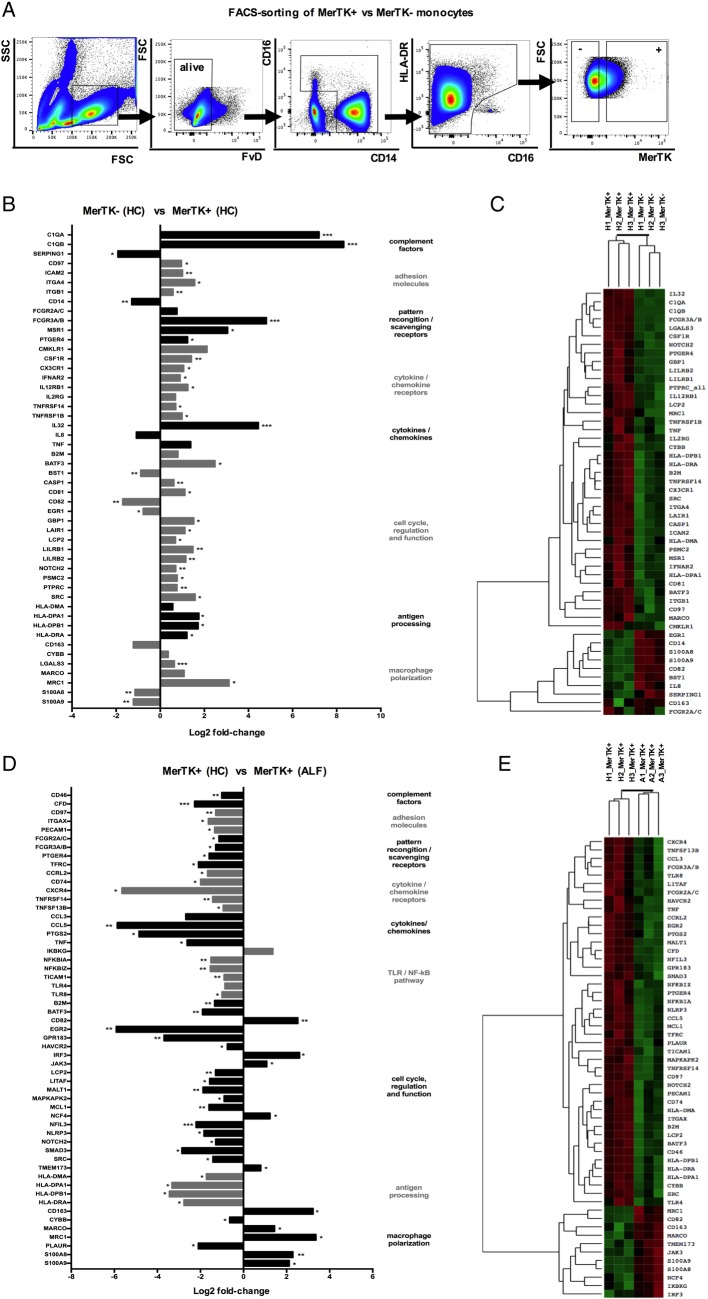
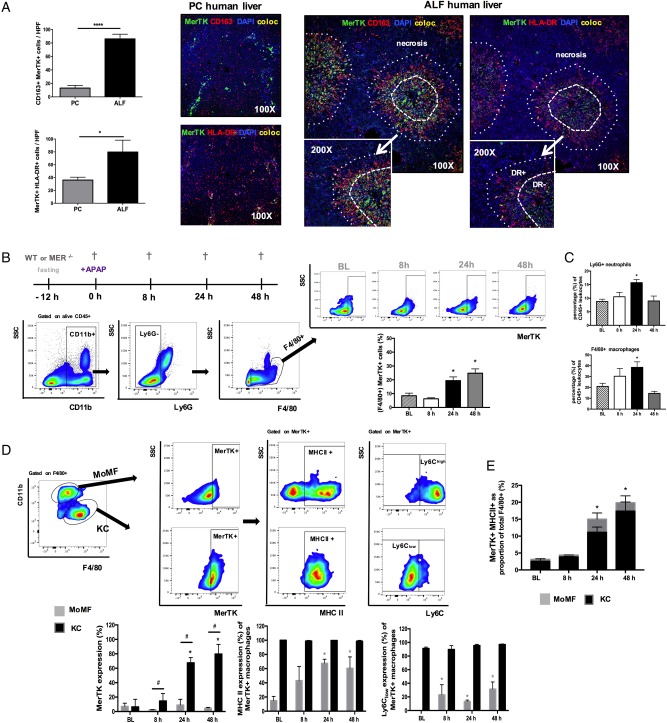
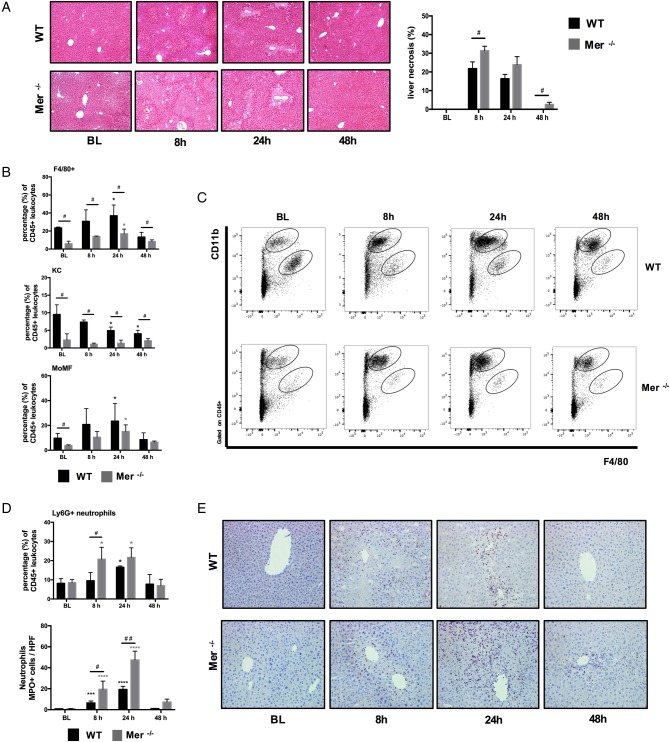
Verification
Claims the paper makes
The claims and statistics of this paper haven’t been checked yet.
Run the check — free, no account needed. It reads the open-access text and checks the sources it cites.
Claims other papers make about this one
Each is checked against this paper’s own text: does it say what the citing paper says it does?
The source backs part of the claim, not all of it — or backs it for a different population, condition or comparison.
In the citing paper
“The existence and protective role of this subset have been validated in APAP-induced acute liver failure (AALF) patients (44).”
From Macrophage duality in liver diseases: heterogeneity, plasticity, and the quest for precision therapeutics (2026) · cites this paper as [44]
Experimental — accuracy not yet measuredThe source backs part of the claim, not all of it — or backs it for a different population, condition or comparison.
In the citing paper
“During the recovery phase of APAP-ALI, the number of Mer tyrosine kinase (MerTK)+ macrophages increases significantly.”
From Macrophage duality in liver diseases: heterogeneity, plasticity, and the quest for precision therapeutics (2026) · cites this paper as [44]
Experimental — accuracy not yet measuredThe source backs part of the claim, not all of it — or backs it for a different population, condition or comparison.
In the citing paper
“They efficiently clear apoptotic/necrotic cells by recognizing “eat-me” signals like phosphatidylserine. This process not only removes the source of damage but also actively suppresses inflammation via downstream signaling (44).”
From Macrophage duality in liver diseases: heterogeneity, plasticity, and the quest for precision therapeutics (2026) · cites this paper as [44]
Experimental — accuracy not yet measured
Self-check
Percentages, sums and reported differences re-computed from the paper’s own numbers.
The self-check needs the paper’s full text.
Citations
Cites
1 retracted
Stutchfield, B. M., Antoine, D. J., MacKinnon, A. C., Gow, D., Bain, C. C., Hawley, C. A., Hughes, M. J., Francis, B., Wojtacha, D., Man, T. Y., et al. (2015) · Gastroenterology · doi:10.1053/j.gastro.2015.08.053 · Cited by 176
RetractedOrigin and functions of tissue macrophages
Epelman, S., Lavine, K. J., & Randolph, G. J. (2014) · Immunity · doi:10.1016/j.immuni.2014.06.013 · Cited by 1,585
Ramachandran, P., Pellicoro, A., Vernon, M. A., Boulter, L., Aucott, R. L., Ali, A., Hartland, S. N., Snowdon, V. K., Cappon, A., Gordon-Walker, T. T., et al. (2012) · Proceedings of the National Academy of Sciences · doi:10.1073/pnas.1119964109 · Cited by 1,001
Phagocytosis of apoptotic cells in homeostasis
Arandjelovic, S., & Ravichandran, K. S. (2015) · Nature Immunology · doi:10.1038/ni.3253 · Cited by 959
Immunobiology of the TAM receptors
Lemke, G., & Rothlin, C. V. (2008) · Nature reviews. Immunology · doi:10.1038/nri2303 · Cited by 893
Resolution of Inflammation: What Controls Its Onset?
Sugimoto, M. A., Sousa, L. P., Pinho, V., Perretti, M., & Teixeira, M. M. (2016) · Frontiers in Immunology · doi:10.3389/fimmu.2016.00160 · Cited by 638
Huang, H., Tohme, S. T., Al‐Khafaji, A. B., Tai, S., Loughran, P., Chen, L., Wang, S., Kim, J., Billiar, T. R., Wang, Y., et al. (2015) · Hepatology · doi:10.1002/hep.27841 · Cited by 551
TAM Receptor Signaling in Immune Homeostasis
Rothlin, C. V., Silva, E. A. C., Bosurgi, L., & Ghosh, S. (2015) · Annual Review of Immunology · doi:10.1146/annurev-immunol-032414-112103 · Cited by 531
Bernal, W. E., Donaldson, N., Wyncoll, D. L. A., & Wendon, J. A. (2002) · The Lancet · doi:10.1016/s0140-6736(02)07743-7 · Cited by 500
Self-citationZigmond, E., Samia-Grinberg, S., Pasmanik‐Chor, M., Brazowski, E., Shibolet, O., Halpern, Z., & Varol, C. (2014) · The Journal of Immunology · doi:10.4049/jimmunol.1400574 · Cited by 493
Cited by
Sorted by citations
Items 201–226 of 226
Liver regeneration after acetaminophen overdose
Bhushan, B., & Apte, U. M. (2024) · Elsevier eBooks · doi:10.1016/b978-0-443-15877-3.00016-8
Leal-Garcia, M. E., Pacheco, M. R., Reid, S. K., Tseng, V. S., Kirchhoff, M. A., Tadiboyina, S., Min, D., & McCreedy, D. A. (2025) · bioRxiv (Cold Spring Harbor Laboratory) · doi:10.1101/2025.05.28.656699
Trovato, F. M., Artru, F., Sheth, R., Abdalla, R., Wilson, J., Broderick, A., Smith, J., Atkinson, S. R., & McPhail, M. J. W. (2025) · Journal of Clinical and Translational Hepatology · doi:10.14218/jcth.2025.00074
Deng, F., Jiang, W., Wang, N., Wu, Y., Xu, J., Hou, R., & Jia, F. (2025) · Scientific Reports · doi:10.1038/s41598-025-19813-x · Cited by 1
Liver Macrophage Changes during Early Adaptation to Alcohol Exposure
Yuquimpo, K., Averilla, J. N., Li, Z., Ghosh, P., Rooge, S. B., Ruiz, I. A. P., Dunn, W., Gunewardena, S., Wozniak, A. L., Tikhanovich, I., et al. (2025) · American Journal Of Pathology · doi:10.1016/j.ajpath.2025.10.004
Chen, R., Gu, S., Xiong, F., Ji, L., Zhang, Z., Yang, B., & Wu, Y. (2025) · International Journal of Molecular Sciences · doi:10.3390/ijms262311631
Yang, W.-H., Shu, B., & Liu, L. (2025) · Frontiers in Cellular and Infection Microbiology · doi:10.3389/fcimb.2025.1653725
Zhan, Z., Jiang, Y., Chen, S., Yang, Q., Pan, G., Liu, Y., Fang, W., Chen, R., Tang, L., & Lin, C. (2025) · Journal of Ethnopharmacology · doi:10.1016/j.jep.2025.121067
Wu, H., Zheng, J., Xu, S., Fang, Y., Wu, Y., Zeng, J., Shao, A., Shi, L., Lü, J., Mei, S., et al. (2021) · Figshare · doi:10.6084/m9.figshare.13525169
Wu, H., Zheng, J., Xu, S., Fang, Y., Wu, Y., Zeng, J., Shao, A., Shi, L., Lü, J., Mei, S., et al. (2021) · Figshare · doi:10.6084/m9.figshare.13525178
Wu, H., Zheng, J., Xu, S., Fang, Y., Wu, Y., Zeng, J., Shao, A., Shi, L., Lü, J., Mei, S., et al. (2021) · Figshare · doi:10.6084/m9.figshare.13525181
Wu, H., Zheng, J., Xu, S., Fang, Y., Wu, Y., Zeng, J., Shao, A., Shi, L., Lü, J., Mei, S., et al. (2021) · Figshare · doi:10.6084/m9.figshare.13525175
Wu, H., Zheng, J., Xu, S., Fang, Y., Wu, Y., Zeng, J., Shao, A., Shi, L., Lü, J., Mei, S., et al. (2021) · Figshare · doi:10.6084/m9.figshare.13525163
Wu, H., Zheng, J., Xu, S., Fang, Y., Wu, Y., Zeng, J., Shao, A., Shi, L., Lü, J., Mei, S., et al. (2021) · Figshare · doi:10.6084/m9.figshare.13525172
Jiang, X., Wu, B., Xie, L., Li, H., Chen, C., Huang, P., Chen, X., Zhu, Q., Wang, H., & Hu, C. (2026) · Hepatology Communications · doi:10.1097/hc9.0000000000000865
Tang, Y., Xie, S., He, Y., Liu, J., Pan, M., Yu, R., Zhou, L., Liu, M., Liu, Y., & Cao, J. (2026) · Acta Pharmaceutica Sinica B · doi:10.1016/j.apsb.2026.02.011 · Cited by 1
Kupffer Cell Maintenance in Tissue Repair and Ageing
Adé, K. (2021) · theses.fr (ABES) · doi:10.70675/911ea1ffz0d8bz4037z9e5fza165f892d49e
Qiu, S., Hu, J., Guo, K., Shao, S., Zhang, Q., He, Y., Zheng, L., Shi, Z., Zhang, K., Wei, H., et al. (2026) · Metabolism · doi:10.1016/j.metabol.2026.156684
Legere, S. A., Nanjundappa, R. H., Meghnem, D., Haidl, I. D., Edgar, A., Hu, Q., Légaré, J., & Marshall, J. S. (2026) · Frontiers in Immunology · doi:10.3389/fimmu.2026.1802300
Myeloid Piezo1 improves inflammation resolution and phagocytosis in acute liver injury
Jiang, J., Chen, X., Tan, Q., Xu, H., Liu, S., Yao, Y., Wan, R., Chen, X., He, B., Luo, S., et al. (2026) · International Immunopharmacology · doi:10.1016/j.intimp.2026.117159 · Cited by 1
Niche-dependent immunometabolic regulation of tissue repair and regeneration
Xie, X., Zeng, L., Chi, Z., & Wang, D. (2026) · Immunity & Inflammation · doi:10.1007/s44466-026-00052-2
Wang, Q., Wang, Y., Wang, G., Fang, X., Fu, Y., Li, Z., Guo, Y., Ma, J., Hu, L., Zeng, X., et al. (2026) · npj Biofilms and Microbiomes · doi:10.1038/s41522-026-01133-1
Suganami, T., Tanaka, M., & Itoh, M. (2026) · Pharmacology & Therapeutics · doi:10.1016/j.pharmthera.2026.109123
Context-Dependent Roles of Liver Macrophages in MASH
Horn, P., & Tacke, F. (2026) · Seminars in Liver Disease · doi:10.1055/a-2954-5433
Exacerbation of inflammatory bone loss in TET2-driven clonal hematopoiesis
Wang, H., Hu, N., Barovic, M., Pan, B., Cheng, G., Li, X., Li, Y., Lim, J., Zhou, Y., Murray, P. J., et al. (2026) · The Journal of Immunology · doi:10.1093/jimmun/vkag248
Jiang, X., Ma, J., Liu, Z., & Chen, J. (2026) · Frontiers in Pharmacology · doi:10.3389/fphar.2026.1955615
Metadata
- Authors
- Triantafyllou, E., Pop, O. T., Possamai, L. A., Wilhelm, A., Liaskou, E., Singanayagam, A., Bernsmeier, C., Khamri, W., Petts, G., Dargue, R., Davies, S. P., Tickle, J., Yuksel, M., Patel, V. C., Abeles, R. D., Stamataki, Z., Curbishley, S. M., Ma, Y., Wilson, I. D., Coen, M., Woollard, K. J., Quaglia, A., Wendon, J., Thursz, M. R., Adams, D. H., Weston, C. J., & Antoniades, C. G.
- Affiliations
- King's College London (GB)
- St Mary's Hospital (GB)
- University of Birmingham (GB)
- Imperial College London (GB)
- Institute of Liver Studies, King's College Hospital, King's College London, London, UK
- Corresponding author
- Antoniades, Charalambos G
- ORCID
- Triantafyllou, Evangelos
- Pop, Oltin T
- Possamai, Lucia A
- Liaskou, Evaggelia
- Singanayagam, Arjuna
- Bernsmeier, Christine
- Khamri, Wafa
- Petts, Gemma
- Dargue, Rebecca
- Davies, Scott P
- Tickle, Joseph
- Patel, Vishal C
- Abeles, Robin D
- Stamataki, Zania
- Curbishley, Stuart M
- Ma, Yun
- Wilson, Ian D
- Coen, Muireann
- Woollard, Kevin J
- Quaglia, Alberto
- Wendon, Julia
- Thursz, Mark R
- Adams, David H
- Weston, Chris J
- Venue
- Gut
- Publisher
- BMJ
- Published
- 2017-04-27
- Volume
- 67
- Issue
- 2
- Pages
- 333-347
- ISSN
- 0017-5749 (ISSN-L)
- 1468-3288
- PMC
- PMC5868289
- OpenAlex
- W2609217537
- Cited by
- 226
- References
- 43
- Citations by year
- 2026: 18 · 2025: 27 · 2024: 25 · 2023: 23 · 2022: 33 · 2021: 47 · 2020: 15 · 2019: 20 · 2018: 13 · 2017: 5
- FWCI
- 8.96
- Type
- journal article
- Language
- en
- Open access
- hybrid
- doi.org
- Licence
- cc-by
- Locations
- Gut (publishedVersion, cc-by)
- Europe PMC (PubMed Central) (publishedVersion, cc-by)
- PubMed Central (publishedVersion, cc-by)
- PubMed (publishedVersion)
- St George's Online Research Archive (St George's University of London) (acceptedVersion)
- WestminsterResearch (University of Westminster) (acceptedVersion, cc-by)
- Research Portal (King's College London) (submittedVersion, cc-by)
- HighWire Press Open Archive (submittedVersion)
- University of Birmingham Research Portal (University of Birmingham) (submittedVersion, cc-by)
- Spiral (Imperial College London) (submittedVersion, other-oa)
- Funders
- National Institute for Health and Care Research (NF-SI-0512-10080, ACF-2010-21-029, CL-2015-21-002, NF-SI-0616-10012)
- Academy of Medical Sciences (SGL017\1027)
- King's College London
- University College London
- Rosetrees Trust (M115-F2, M439-F1, MR/K010514/1, M439-F1-CD2)
- National Heart and Lung Institute
- Medical Research Council (MR/M009157/1, MR/K010514/1, MC_PC_13057, MC_PC_14123)
- Topics
- Health Sciences › Medicine › Hepatology › Liver physiology and pathology
- Life Sciences › Pharmacology, Toxicology and Pharmaceutics › Pharmacology › Drug-Induced Hepatotoxicity and Protection
- Life Sciences › Immunology and Microbiology › Immunology › Phagocytosis and Immune Regulation
- Keywords
- MERTK, acute liver failure, hepatic macrophages, inflammation resolution, secretory leukocyte protease inhibitor, Kupffer cells, neutrophil apoptosis, myeloid cells, acetaminophen hepatotoxicity, HLA-DR, neutrophil clearance, hepatoprotection
- MeSH terms
- c-Mer Tyrosine Kinase, Acetaminophen, Adult, Aged, Animals, Female, Genes, MHC Class II, HLA-DR Antigens, Humans, Kupffer Cells, Macrophages, Male, Middle Aged, Monocytes, Neutrophils, Phenotype, Gene Expression, Case-Control Studies, Liver Failure, Acute, Mice, Secretory Leukocyte Peptidase Inhibitor, Transcriptome
About these checks
Registry, retraction, Cites and statistics results are computed, not judged, with one exception: a printed reference that no index lists is read once by a model before it counts as a citation error. Claims are extracted by a model and kept only when their quote appears verbatim in the text; each cited source is then checked, with a model’s help, for whether it says what the claim relies on. Those verdicts can be wrong — read the claim’s quote and the cited source before relying on one.
Statistics and arithmetic are recomputed, not judged.
Confidence bands are shown only for fields calibrated on our annotated test set. None is calibrated yet, so no band is shown.
What counts as a claim ›How we measure confidence ›How we check this ›
Are you an author, or do you see a problem with this page? Request a review
