

A purified membrane protein from Akkermansia muciniphila or the pasteurised bacterium blunts colitis associated tumourigenesis by modulation of CD8 + T cells in mice
Open accessThe DOI matches its Crossref record; 50 of the 50 references it cites were found in a registry or an index; 8 of the 36 sources its claims cite were checked for support.
Abstract
Objective: Gut microbiota have been linked to inflammatory bowel disease (IBD) and colorectal cancer (CRC). Akkermansia muciniphila ( A. muciniphila ) is a gram-negative anaerobic bacterium that is selectively decreased in the faecal microbiota of patients with IBD, but its causative role and molecular mechanism in blunting colitis-associated colorectal cancer (CAC) remain inconclusive. This study investigates how A. muciniphila engages the immune response in CAC. Design: Mice were given dextran sulfate sodium to induce colitis, followed by azoxymethane to establish CAC with or without pasteurised A. muciniphila or a specific outer membrane protein (Amuc_1100) treatment. Faeces from mice and patients with IBD or CRC were collected for 16S rRNA sequencing. The effects of A. muciniphila or Amuc_1100 on the immune response in acute colitis and CAC were investigated. Results: A. muciniphila was significantly reduced in patients with IBD and mice with colitis or CAC. A. muciniphila or Amuc_1100 could improve colitis, with a reduction in infiltrating macrophages and CD8 + cytotoxic T lymphocytes (CTLs) in the colon. Their treatment also decreased CD16/32 + macrophages in the spleen and mesenteric lymph nodes (MLN) of colitis mice. Amuc_1100 elevated PD-1 + CTLs in the spleen. Moreover, A. muciniphila and Amuc_1100 blunted tumourigenesis by expanding CTLs in the colon and MLN. Remarkably, they activated CTLs in the MLN, as indicated by TNF-α induction and PD-1downregulation. Amuc_1100 could stimulate and activate CTLs from splenocytes in CT26 cell conditioned medium. Conclusions: These data indicate that pasteurised A. muciniphila or Amuc_1100 can blunt colitis and CAC through the modulation of CTLs.
Overview
CoChat Summary
TL;DR
Pasteurised *Akkermansia muciniphila* or its outer membrane protein Amuc_1100 ameliorated DSS-induced colitis and blunted AOM/DSS colitis-associated tumourigenesis in mice. The protective effects were linked to modulation of CD8+ cytotoxic T lymphocytes (CTLs), including expansion/activation in colon and mesenteric lymph nodes and reduced PD-1+ CTLs.
Key findings
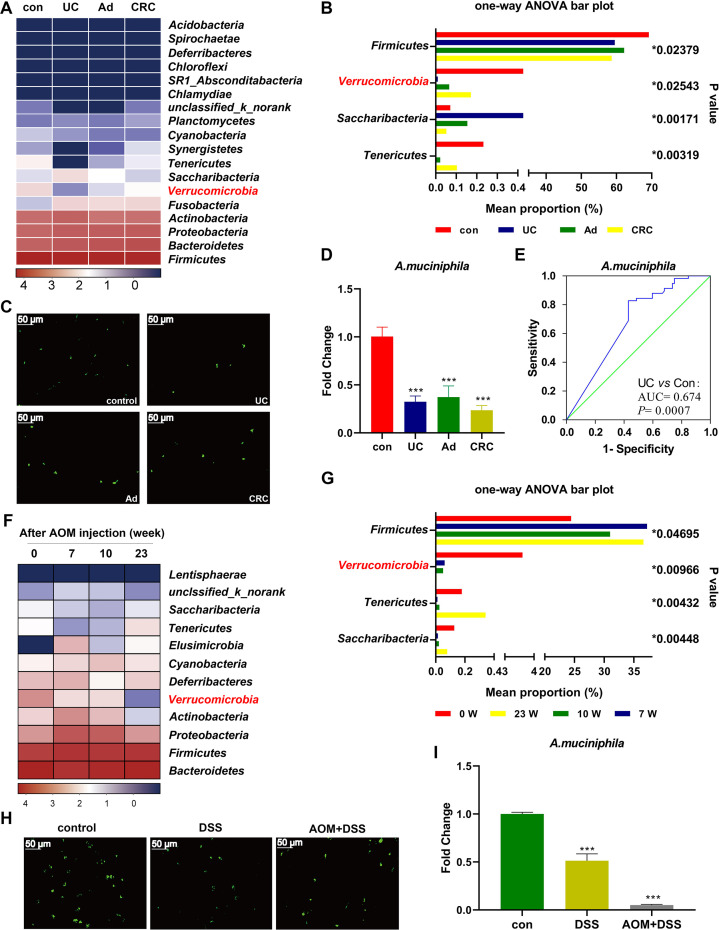
- *A. muciniphila* abundance was decreased in patients with UC, adenoma and CRC and in mice with colitis or CAC; ROC analysis for predicting UC gave AUC=0.674, p=0.0007.
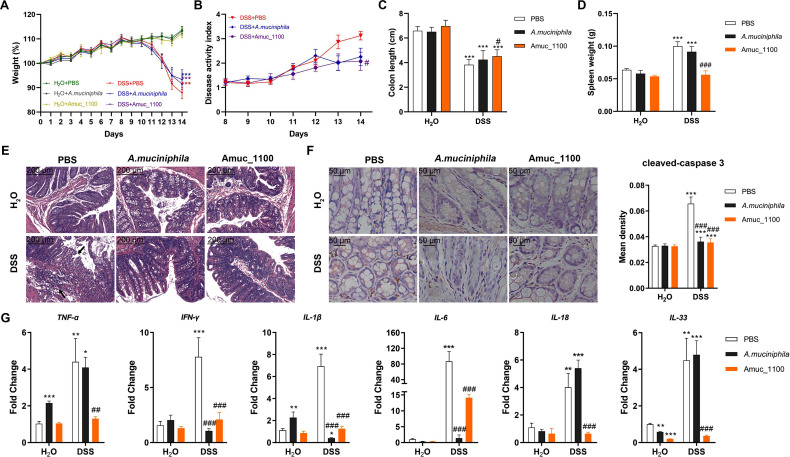
- In acute colitis, pasteurised *A. muciniphila* (1.5×10^8 CFU) or Amuc_1100 (3 µg) improved disease activity index, colon shortening, splenomegaly and histological injury, and decreased colonic proinflammatory cytokines including TNF-α, IFN-γ, IL-1β, IL-6, IL-18 and IL-33.
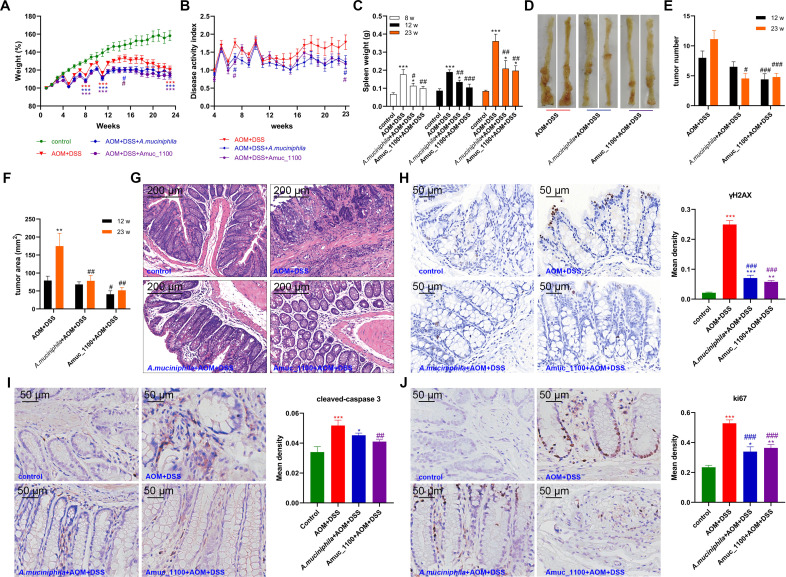
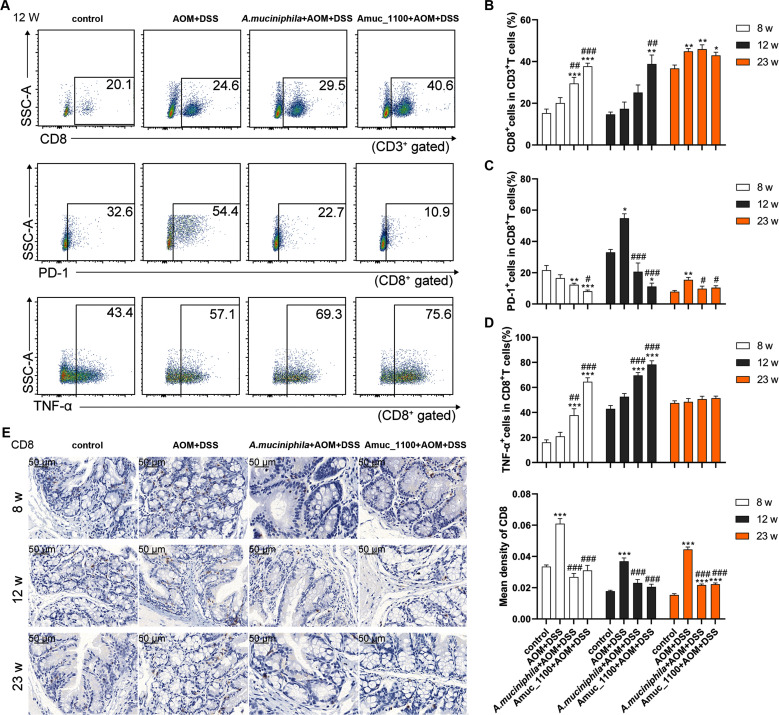
- In CAC, treatment delayed tumour formation and reduced tumour numbers and area by week 12, decreased γH2AX, cleaved caspase 3 and Ki67 in colon, and increased CTLs in MLN/colon while reducing PD-1+ CTLs and increasing TNF-α+ CTLs.
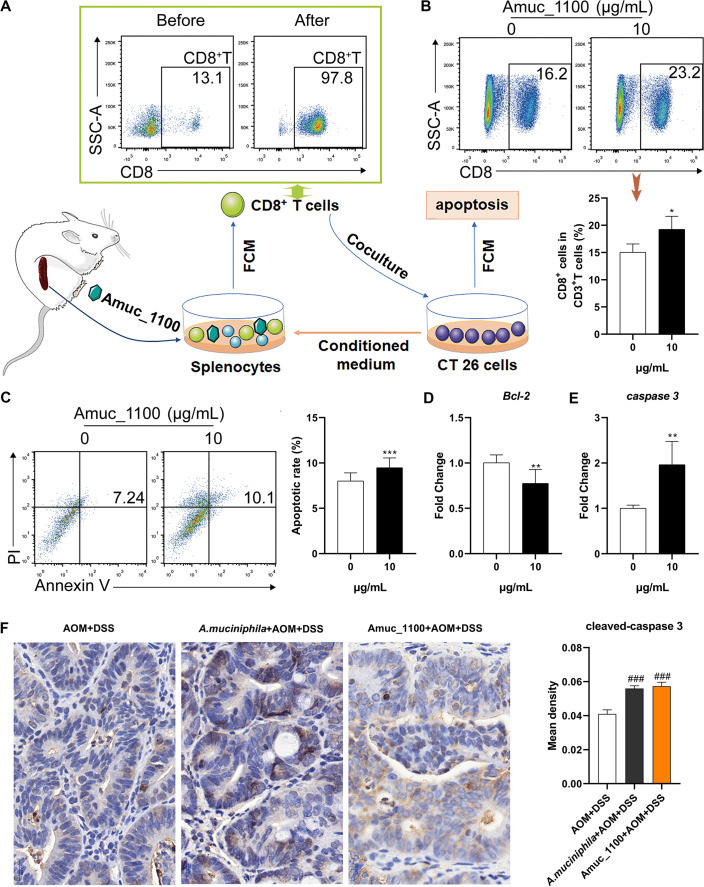
- In vitro, Amuc_1100 increased CTL proportion in splenocytes cultured in CT26-conditioned medium and CTLs pretreated with Amuc_1100 increased CT26 apoptosis, with Bcl-2 downregulation and caspase 3 upregulation.
Methods
- Mice received 2% DSS for acute colitis or AOM (10 mg/kg) plus three cycles of 2% DSS for CAC, with or without oral pasteurised *A. muciniphila* (1.5×10^8 CFU) or Amuc_1100 (3 µg) starting 2 weeks before induction.
- Human stool from active UC, adenoma, CRC and healthy controls underwent 16S rRNA V3 sequencing; *A. muciniphila* was quantified by qPCR and FISH.
- Immune responses were assessed by flow cytometry, immunohistochemistry, qPCR and CT26 coculture assays; statistics used one-way ANOVA with Tukey’s multiple comparisons, t-tests and ROC analysis.
Limitations
- The paper states that a dramatic microbial community shift was not observed in patients with adenoma or CAC because of interindividual variation and small sample size.
- The paper states that underlying mechanisms need further investigation and that interactions between macrophages and CTLs after treatment remain unclear.
- Evident from the text: findings are from male C57BL/6J mouse models and in vitro CT26 assays, with no human intervention testing of pasteurised *A. muciniphila* or Amuc_1100 for colitis/CAC.
Model-written summary. Check it against the paper before relying on it.
Integrity signals
Registry
Cites
Statistics
Figures
Verification
Claims the paper makes
8 Valid · 0 Not valid · 20 Not checked · 87 Own results and interpretations
Every source the paper cites for this claim was checked and supports it.
In the paper
“A. muciniphila improved clinical parameters, including spleen weight, colon inflammation index and colon histological score in chronic colitis.20”
§ A purified membrane protein from Akkermansia muciniphila or the pasteurised bacterium blunts colitis associated tumourigenesis by modulation of CD8+ T cells in mice > Introduction
What the sources say
- Supportedcites [20] Zhai R, Xue X, Zhang L, et al Strain-Specific Anti-inflammatory Properties of Two Akkermansia muciniphila Strains on Chronic Colitis in Mice. Front Cell Infect Microbiol 2019; 9: 239 10.3389/fcimb.2019.00239 31334133 PMC6624636 source
The Abstract (p. 1) states verbatim that in vivo both A. muciniphila strains exerted anti-inflammatory effects on chronic colitis, improving clinical parameters including spleen weight, colon inflammation index and colon histological score. The Results section 'A. muciniphila Strains Ameliorate Murine Chronic Colitis in a Strain-Specific Manner' (p. ~5) reports reduced spleen weight, colon inflammation index and colon histological score in the DSS+ATCC and DSS+139 groups versus the DSS group at day 46, noting significance only for strain ATCC. The claim's wording mirrors the source, including its own level of certainty; the only unstated qualifier is the murine DSS chronic-colitis model. (LLM, conf=0.93)
plainstates a cause- Asserted: passes — The authors put it forward as true.
- Checkable: passes — It can be checked against evidence.
- Load-bearing: unclear — It is unclear whether the paper’s conclusions depend on it.
- Based: passes — The paper gives a reason why it holds.
- Supported
The cited sources support only part of this claim — read each source’s verdict below.
In the paper
“Recent studies showed that both pasteurised A. muciniphila and Amuc_1100 (stable after pasteurisation) could partly recapitulate the beneficial effects of the live bacterium.16 21”
§ A purified membrane protein from Akkermansia muciniphila or the pasteurised bacterium blunts colitis associated tumourigenesis by modulation of CD8+ T cells in mice > Discussion
What the sources say
- Partly supportedcites [16] Depommier C, Everard A, Druart C, et al Supplementation with Akkermansia muciniphila in overweight and obese human volunteers: a proof-of-concept exploratory study. Nat Med 2019; 25: 1096– 103. 10.1038/s41591-019-0495-2 31263284 PMC6699990 sourceExperimental — accuracy not yet measured
Our copy supports the pasteurised-cell half of the sentence: the Abstract (Introduction and Results passages) reports that in overweight/obese insulin-resistant volunteers both Pasteurized and Alive A.muciniphila (10^10 cells/day, 3 months) improved insulin parameters — Pasteurized raised insulin sensitivity ~30% and lowered insulinemia, Alive significantly improved the insulin resistance score — and that in rodents 'pasteurization of A.muciniphila enhanced its beneficial properties'. However, no passage of our copy mentions Amuc_1100 or the stability of that outer-membrane protein after pasteurisation (searched: 'Amuc_1100', 'Amuc1100 purified outer membrane protein', 'membrane protein active form'); the paper credits the pasteurisation/membrane-protein work only to its reference 11 without naming the protein. The Amuc_1100 component of the claim is therefore not supported by this source. (LLM, conf=0.70)
- Not checked yetcites [21] Plovier H, Everard A, Druart C, et al A purified membrane protein from Akkermansia muciniphila or the pasteurized bacterium improves metabolism in obese and diabetic mice. Nat Med 2017; 23: 107– 13. 10.1038/nm.4236 27892954 source
hedgedstates a possible cause- Asserted: passes — The authors put it forward as true.
- Checkable: passes — It can be checked against evidence.
- Load-bearing: passes — The paper’s conclusions depend on it.
- Based: passes — The paper gives a reason why it holds.
- Partly supported
Every source the paper cites for this claim was checked and supports it.
In the paper
“The main contribution to colitis development was mediated by cytokine producing, proliferative, CTLs in the intraepithelial compartment of mice.32”
§ A purified membrane protein from Akkermansia muciniphila or the pasteurised bacterium blunts colitis associated tumourigenesis by modulation of CD8+ T cells in mice > Discussion
What the sources say
- Supportedcites [32] Wang Z, Vaughan TY, Zhu W, et al Gab2 and Gab3 Redundantly Suppress Colitis by Modulating Macrophage and CD8+ T-Cell Activation. Front Immunol 2019; 10: 486 10.3389/fimmu.2019.00486 30936879 PMC6431666 source
The Discussion states almost verbatim: 'we observed the main contribution to colitis development was mediated by cytokine producing, proliferative, CD8+ Gab2/3−/− T-cells in the intraepithelial compartment. In contrast, CD4+ T-cells had a smaller numerical contribution.' The supporting Results (Increased Numbers of Activated Gab2/3−/− CD8+ Intraepithelial Effector Cells in the Colon, Figure 7C–D) show expanded, Ki67+ proliferative CD8+ IELs producing IL-17, IFNγ and TNFα, with no change in LPL or MLN. The only wording shift is 'CTLs' for the paper's 'CD8+ T-cells' — the paper attributes cytokine production and proliferation to these IELs rather than measuring killing — and the claim omits the genotype qualifier (Gab2/3−/− mice) that bounds the finding. (LLM, conf=0.85)
plainstates a cause- Asserted: passes — The authors put it forward as true.
- Checkable: passes — It can be checked against evidence.
- Load-bearing: unclear — It is unclear whether the paper’s conclusions depend on it.
- Based: passes — The paper gives a reason why it holds.
- Supported
The cited sources support only part of this claim — read each source’s verdict below.
In the paper
“which aggravated tumour cells apoptosis.37 38”
§ A purified membrane protein from Akkermansia muciniphila or the pasteurised bacterium blunts colitis associated tumourigenesis by modulation of CD8+ T cells in mice > Discussion
What the sources say
- Not checked yetcites [37] Thomas DA, Massagué J Tgf-Beta directly targets cytotoxic T cell functions during tumor evasion of immune surveillance. Cancer Cell 2005; 8: 369– 80. 10.1016/j.ccr.2005.10.012 16286245 source
- Partly supportedcites [38] Bourboulia D, Stetler-Stevenson WG, metalloproteinases M Matrix metalloproteinases (MMPs) and tissue inhibitors of metalloproteinases (TIMPs): positive and negative regulators in tumor cell adhesion. Semin Cancer Biol 2010; 20: 161– 8. 10.1016/j.semcancer.2010.05.002 20470890 PMC2941566 sourceExperimental — accuracy not yet measured
Section 2.1 (Ligands; page unavailable) mentions TNF-α-induced apoptosis in prostate tumor cells. It does not identify CTLs as the source of TNF-α or show that CTL-derived TNF-α aggravated tumor-cell apoptosis. (LLM, conf=0.82)
plainstates a cause- Asserted: passes — The authors put it forward as true.
- Checkable: passes — It can be checked against evidence.
- Load-bearing: passes — The paper’s conclusions depend on it.
- Based: passes — The paper gives a reason why it holds.
A result the paper reports from its own data — it cites no other source for it, so there is none to check. The quote shows it is in the paper.
In the paper
“However, Amuc_1100 significantly alleviated the DAI (figure 2B).”
§ A purified membrane protein from Akkermansia muciniphila or the pasteurised bacterium blunts colitis associated tumourigenesis by modulation of CD8+ T cells in mice > Results > Pasteurised A. muciniphila or Amuc_1100 improved colitis in mice
plainstates a cause- Asserted: passes — The authors put it forward as true.
- Checkable: passes — It can be checked against evidence.
- Load-bearing: passes — The paper’s conclusions depend on it.
- Based: passes — The paper gives a reason why it holds.
62 more claims
Create a free account to see all 115 claims and to verify the 28 references still open.
- Probably not a substantial claim. 27
- It may state two separate claims as one. 27
Claims other papers make about this one
Each is checked against this paper’s own text: does it say what the citing paper says it does?
In the citing paper
“Supporting the adjuvant role of commensals against developing cancers, pasteurized A. muciniphila or its pili-like TLR2 agonist blunted azoxymethane-induced colitis and colon carcinogenesis by inducing TNFα-producing cytotoxic T lymphocytes in mesenteric lymph nodes (mLNs) that eventually reached the colonic mucosa (91).”
From The microbiome and human cancer (2021) · cites this paper as [91]
Self-check
Percentages, sums and reported differences re-computed from the paper’s own numbers.
Each contradiction between two passages listed here was confirmed by an independent check.
Rated major: it would touch a result — a value a result rests on, reported and recomputed p-values on opposite sides of the significance level, two passages that conflict with no sign which is right, or a cited work retracted before this paper was published.
In the paper
§ A purified membrane protein from Akkermansia muciniphila or the pasteurised bacterium blunts colitis associated tumourigenesis by modulation of CD8+ T cells in mice > Abstract > Results
“Moreover, A. muciniphila and Amuc_1100 blunted tumourigenesis by expanding CTLs in the colon and MLN.”
§ A purified membrane protein from Akkermansia muciniphila or the pasteurised bacterium blunts colitis associated tumourigenesis by modulation of CD8+ T cells in mice > Results > Pasteurised A. muciniphila or Amuc_1100 modulated immune response in CAC mice
“Furthermore, their treatment suppressed the colonic infiltration of CTLs in CAC mice (figure 5E).”
Rated major: it would touch a result — a value a result rests on, reported and recomputed p-values on opposite sides of the significance level, two passages that conflict with no sign which is right, or a cited work retracted before this paper was published.
In the paper
§ A purified membrane protein from Akkermansia muciniphila or the pasteurised bacterium blunts colitis associated tumourigenesis by modulation of CD8+ T cells in mice > Discussion
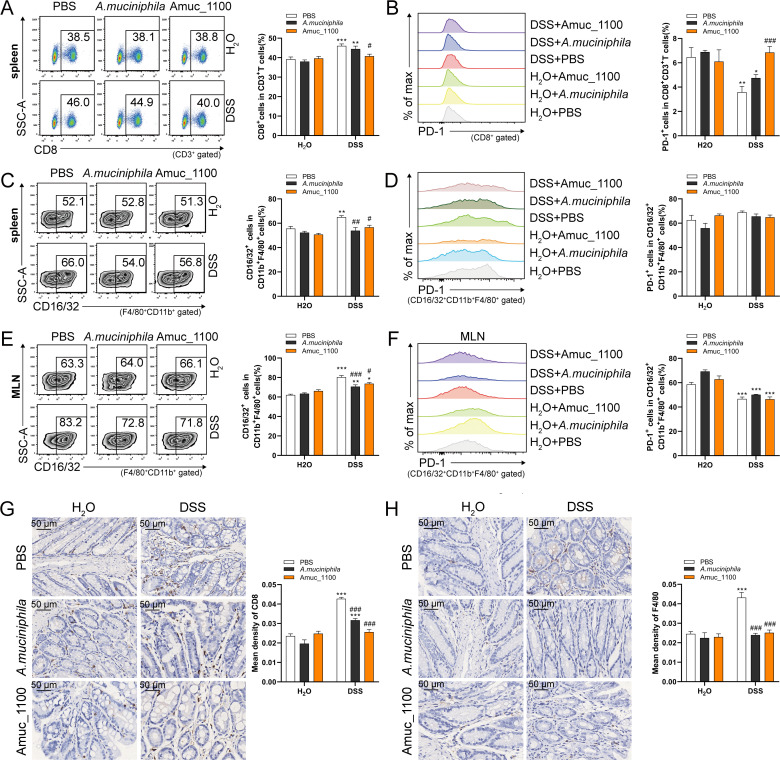
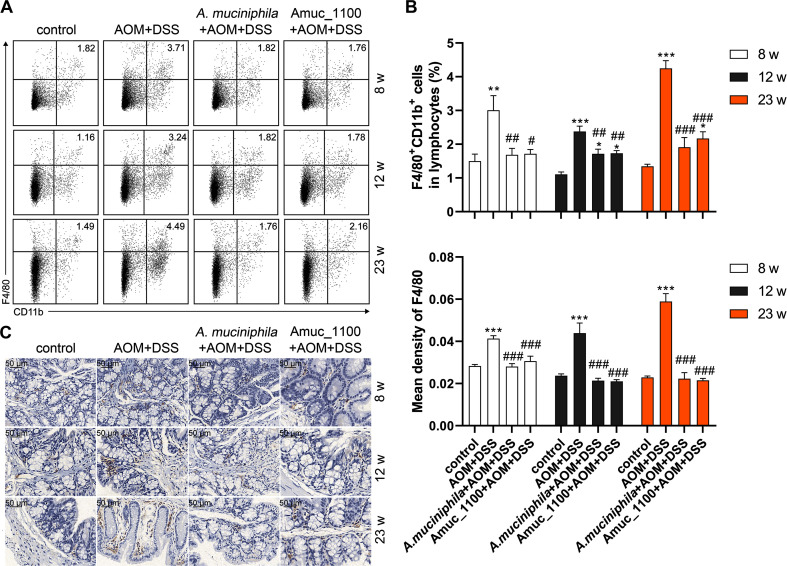
“A. muciniphila or Amuc_1100 treatment decreased these macrophage populations without disrupting their expression of CD16/32 or PD-1, indicating that their antitumour capabilities were independent of macrophage activation.”
§ A purified membrane protein from Akkermansia muciniphila or the pasteurised bacterium blunts colitis associated tumourigenesis by modulation of CD8+ T cells in mice > Results > Pasteurised A. muciniphila or Amuc_1100 modulated immune response in CAC mice
“However, their treatment significantly inhibited the expression of PD-1 on CD16/32+ macrophage in the MLN and spleen (figure 4B and online supplementary figure 10C)”
Rated minor: it would not touch a result — a value no result rests on, a p-value that stays on the same side of the significance level, or a conflict that is clerical, resolved elsewhere in the paper, or outside its own findings.
In the paper
§ A purified membrane protein from Akkermansia muciniphila or the pasteurised bacterium blunts colitis associated tumourigenesis by modulation of CD8+ T cells in mice > Materials and methods > Coculture of primary mouse CTLs with CT26 cells
“Splenocytes were isolated and cultured in fresh RPMI-1640 medium containing 20% FBS and CT26 conditioned medium (v/v, 1/1) with or without 10 µg/mL Amuc_1100 for 24 hours.”
§ A purified membrane protein from Akkermansia muciniphila or the pasteurised bacterium blunts colitis associated tumourigenesis by modulation of CD8+ T cells in mice > Results > Amuc_1100 induced activation of CTLs cultured in CT26 cell conditioned medium
“(B) The fraction of CTLs in the splenocytes cultured with CT26 cell conditioned medium with or without Amuc_1100 for 72 hours.”
Rated minor: it would not touch a result — a value no result rests on, a p-value that stays on the same side of the significance level, or a conflict that is clerical, resolved elsewhere in the paper, or outside its own findings.
In the paper
§ A purified membrane protein from Akkermansia muciniphila or the pasteurised bacterium blunts colitis associated tumourigenesis by modulation of CD8+ T cells in mice > Abstract > Design
“Mice were given dextran sulfate sodium to induce colitis, followed by azoxymethane to establish CAC”
§ A purified membrane protein from Akkermansia muciniphila or the pasteurised bacterium blunts colitis associated tumourigenesis by modulation of CD8+ T cells in mice > Materials and methods > Animal experiments
“The mouse CAC model was established by one intraperitoneal injection (i.p.) of 10 mg/kg azoxymethane (AOM) followed by three cycles of 2% DSS treatment (1 week per cycle)”
Citations
Cites
Gut microbiome influences efficacy of PD-1-based immunotherapy against epithelial tumors
Routy, B., Le Chatelier, E., Derosa, L., Duong, C. P. M., Alou, M. T., Daillère, R., Fluckiger, A., Messaoudene, M., Rauber, C., Roberti, M. P., et al. (2018) · Science · doi:10.1126/science.aan3706 · Cited by 5,671 · cited 2×
“18 Our previous study showed that the abundance of A. muciniphila was significantly decreased in dextran sulfate sodium (DSS)- induced colitis mice.”
Cross-talk between Akkermansia muciniphila and intestinal epithelium controls diet-induced obesity
Everard, A., Belzer, C., Geurts, L., Ouwerkerk, J. P., Druart, C., Bindels, L. B., Guiot, Y., Derrien, M., Muccioli, G. G., Delzenne, N. M., et al. (2013) · Proceedings of the National Academy of Sciences · doi:10.1073/pnas.1219451110 · Cited by 4,511 · cited 1×
“2 Inflammatorybowel disease (IBD), including Crohn’s disease and ulcerative colitis (UC), is a known risk factor for the development of CRC, namely, CAC.”
The commensal microbiome is associated with anti-PD-1 efficacy in metastatic melanoma patients
Matson, V., Fessler, J., Bao, R., Chongsuwat, T., Zha, Y., Alegre, M.-L., Luke, J. J., & Gajewski, T. F. (2018) · Science · doi:10.1126/science.aao3290 · Cited by 3,107 · cited 1×
“42 Oral gavages with A. muciniphila increased the efficacy of a PD-1 blockade with respect to tumour growth.”
Depommier, C., Everard, A., Druart, C., Plovier, H., Van Hul, M., Vieira-Silva, S., Falony, G., Raes, J., Maiter, D., Delzenne, N. M., et al. (2019) · Nature Medicine · doi:10.1038/s41591-019-0495-2 · Cited by 2,357 · cited 2×
“16 21 Thus, they were used to validate the role of A. muciniphila in the development of acute colitis and CAC.”
InfluentialThe immune contexture in cancer prognosis and treatment
Fridman, W. H., Zitvogel, L., Sautès–Fridman, C., & Kroemer, G. (2017) · Nature Reviews Clinical Oncology · doi:10.1038/nrclinonc.2017.101 · Cited by 2,263 · cited 1×
“34–36 Pasteurised A. muciniphila and Amuc_1100 significantly increased CTL percentage in the MLN and colon.”
Nishimura, S., Manabe, I., Nagasaki, M., Eto, K., Yamashita, H., Ohsugi, M., Otsu, M., Hara, K., Ueki, K., Sugiura, S., et al. (2009) · Nature Medicine · doi:10.1038/nm.1964 · Cited by 2,230
Plovier, H., Everard, A., Druart, C., Depommier, C., Van Hul, M., Geurts, L., Chilloux, J., Ottman, N., Duparc, T., Lichtenstein, L., et al. (2017) · Nature Medicine · doi:10.1038/nm.4236 · Cited by 2,204 · cited 3×
“16 21 Thus, they were used to validate the role of A. muciniphila in the development of acute colitis and CAC.”
BackgroundMethodInfluentialFusobacterium nucleatum Promotes Chemoresistance to Colorectal Cancer by Modulating Autophagy
Yu, T., Guo, F., Yu, Y., Sun, T., Ma, D., Han, J., Qian, Y., Kryczek, I., Sun, D., Nagarsheth, N., et al. (2017) · Cell · doi:10.1016/j.cell.2017.07.008 · Cited by 2,198
Dao, M. C., Everard, A., Aron-Wisnewsky, J., Sokolovska, N., Prifti, E., Verger, E. O., Kayser, B. D., Levenez, F., Chilloux, J., Hoyles, L., et al. (2016) · Gut · doi:10.1136/gutjnl-2014-308778 · Cited by 1,931
Gut microbiome development along the colorectal adenoma-carcinoma sequence
Feng, Q., Liang, S., Jia, H., Stadlmayr, A., Tang, L., Lan, Z., Zhang, D., Xia, H., Xu, X., Jie, Z., et al. (2015) · Nature Communications · doi:10.1038/ncomms7528 · Cited by 1,506 · cited 1×
“Nevertheless, A. muciniphila has previously been linked to an increased burden of CRC in human and mice, 25–27 and it was decreased during the progression of CAC in mice and in patients with CRC in this study.”
Self-citation
Cited by
Items 501–600 of 632
Maddux, S., Lubin, J., Green, J., Flores, J. N., Rozich, I., Duranova, T., Planet, P. J., & Silverman, M. A. (2022) · bioRxiv (Cold Spring Harbor Laboratory) · doi:10.1101/2022.08.16.504185 · Cited by 3
ISCAZIM: Integrated statistical correlation analysis for zero-inflated microbiome data
Fan, Z., Lv, J., Zhang, S., Gu, B., Wang, C., & Zhang, T. (2024) · Heliyon · doi:10.1016/j.heliyon.2024.e41184 · Cited by 3
“In addition, Akkermansia , Escherichia-Shigella , and Bifidobacterium can regulate the immune response in patients with IBD [42,54 – 56].”
Hu, M., Wang, F., Lian, W., Yang, C., Yang, J., Chen, I., Huang, C., Liou, J.-S., & Yang, M. (2025) · Journal of the Formosan Medical Association · doi:10.1016/j.jfma.2025.05.010 · Cited by 4
Kwon, S., Jo, S., Park, J., Park, J., Kim, Y., Baek, J., Kim, M., Choi, B., Hong, N. Y., Jung, H. K., et al. (2025) · Biotechnology and Bioengineering · doi:10.1002/bit.29031 · Cited by 2
“Several studies have demonstrated the positive effects of gut microbiota on inflammatory and metabolic diseases (Plovier et al. 2017; Wang et al. 2020; Yoon et al. 2021; J. Zhang et al. 2021).”
Lai, Y., Jiang, Z., Qiu, X., Hong, D., Liu, X., Liu, S., Wu, X., Guo, S., Bloomstein, J. D., Hwang, S. T., et al. (2025) · Journal of Investigative Dermatology · doi:10.1016/j.jid.2025.08.017 · Cited by 6
Self-citationZhao, J., Gu, Y., Sun, S., Guo, A., Zheng, M., Cai, D., Lin, K., & Liu, H. (2025) · Foods · doi:10.3390/foods14183248 · Cited by 2
Başaran, S. N. (2025) · International Microbiology · doi:10.1007/s10123-025-00733-9 · Cited by 3
“…effects are attributed to specific molecules and compounds such as outer membrane proteins (Amuc_1100 and Amuc_2172), short-chain fatty acids (SCFAs), phosphatidylethanolamine (PE), and a recently identified GLP-1-inducing peptide, P9 (Depom-mier et al. 2019; Wang et al. 2020; Bae et al. 2022).”
Tian, R., Zhang, C., Yin, P., Cui, S., Lu, W., Tian, F., Zhao, J., Zhai, Q., & Chen, W. (2025) · Food Bioscience · doi:10.1016/j.fbio.2025.107760 · Cited by 3
Self-citationInvisible influencers: the tumor microbiome’s impact on immunotherapy in colorectal cancer (CRC)
Omar, T. M., Al-Hussainy, A. F., Jyothi, S. R., Nayak, P. P., Janney, J. B., Singh, G., Polatova, D., Sameer, H. N., Salih, R. M., Adil, M., et al. (2025) · Expert Review of Anticancer Therapy · doi:10.1080/14737140.2025.2579656 · Cited by 3
“Moreover, its membrane protein Amuc-1100 enhances gut barrier integrity, reduces inflammation via TLR2 signaling, and stimulates the production of cytotoxic cytokines such as IFN-γ and granzyme B, contributing to tumor suppression [129].”
The Potential Anticancer Mechanisms of Probiotics: A Comprehensive Review
Tang, C., Qian, Y., Jia, S., Zhang, J., Zhang, Y., Ren, Y., Yong, H., Xu, J., Kan, J., & Liu, J. (2025) · Probiotics and Antimicrobial Proteins · doi:10.1007/s12602-025-10753-6 · Cited by 2
“[266, 267] Secondary bile acids Reduced the number of anti-cancer NKT cells and contributed to tumor formation [268] T a b l e 5 S upp r e ss i v e e ff ec t o f p r ob i o ti c s o r t h e i r m e t a bo lit e s a g a i n s t ca r c i nog e n e s i s - p r o m o ti ng m i c r oo r g a n i s m s a…”
Hattori, Y., Fujii, T., Tochio, T., Kumamoto, T., Hiro, J., Matsuoka, H., Masumori, K., Funasaka, K., Ohno, E., Hirooka, Y., et al. (2025) · Journal of the Anus Rectum and Colon · doi:10.23922/jarc.2025-048 · Cited by 5
Hua, D., Yang, Q., Zhou, X., Wu, D., Kang, Y., Tang, L., Li, B., Zhang, Z., Wang, X., Hong, W., et al. (2025) · mSystems · doi:10.1128/msystems.00689-25 · Cited by 2
Self-citationDong, X., Lin, L., Miao, W., Zhai, Z., Hao, Y., Zhang, M., Wang, R., Ge, S., Zhang, H., Ai, L., et al. (2025) · Nutrients · doi:10.3390/nu18010123 · Cited by 2
Zhang, S., Sun, Y., Li, Y., Chen, C., & Shaoping, N. (2026) · Food Research International · doi:10.1016/j.foodres.2026.118617 · Cited by 3
Wang, W., Wang, X., Zhou, Z.-D., Deng, X.-B., Luo, X.-W., Wang, Q., Zhang, G.-Y., Zhang, Z. G., Li, Z., He, X., et al. (2026) · Journal of Advanced Research · doi:10.1016/j.jare.2026.01.078 · Cited by 7
Self-citationAkkermansia muciniphila Selectively Reshapes Small Intestinal Cell Populations
Edens-Valentine, R., Engevik, K. A., Engevik, M. A., & Engevik, A. C. (2026) · Journal of Histochemistry & Cytochemistry · doi:10.1369/00221554261417734 · Cited by 2
Akkermansia muciniphila affects colitis by inhibiting ferroptosis signaling pathway
Zhang, L., Liu, Y., 韦开演, Wang, J., Lin, W., Zhuo, S., & Guan, G. (2026) · Scientific Reports · doi:10.1038/s41598-026-38452-4 · Cited by 2
Kim, G.-C., Do, J.-S., KIm, S. W., Yoon, J.-H., Kim, J., Jeon, D., Hitayezu, E., Mauliasari, I. R., Koo, N., Kim, J. J., et al. (2026) · Frontiers in Immunology · doi:10.3389/fimmu.2026.1762843 · Cited by 3
Lin, F., Zhang, D., Liu, S., Wu, B., Wang, J., Yan, T., & Jia, Y. (2026) · European Journal of Pharmacology · doi:10.1016/j.ejphar.2026.178798 · Cited by 3
The interaction between microbes and cytokines in cancer: unraveling the underlying effects
Li, Y., Zhu, Y., Zhang, F., Huang, C. L., & Wang, Z. (2026) · Journal of Translational Medicine · doi:10.1186/s12967-026-08174-2 · Cited by 3
Shen, B., Liu, H., Huang, W., Huang, R., Zhou, Q., Lin, X., Song, M., Chen, Z., Zhang, Y., Li, Y., et al. (2026) · npj Biofilms and Microbiomes · doi:10.1038/s41522-026-01000-z · Cited by 2
Sun, B., & Wang, T. (2026) · Frontiers in Immunology · doi:10.3389/fimmu.2026.1768792 · Cited by 4
Microbiome and cancer: mechanistic insights, diagnostic potential, and therapeutic strategies
Kumar, V., Chaudhary, A., Gautam, M., Verma, P., & Singh, M. (2026) · Frontiers in Cell and Developmental Biology · doi:10.3389/fcell.2026.1844436 · Cited by 3
Machado, M. S. G., Rodrigues, V. F., Barbosa, S. C., Elias‐Oliveira, J., Pereira, Í., Pereira, J., Pacheco, T., & Carlos, D. (2024) · Microorganisms · doi:10.3390/microorganisms12081717 · Cited by 2
“Studies have linked obesity and metabolic changes with increases in the Bacillota and Pseudomonadota phyla [41].”
BackgroundZhang, Y., Li, Q., Tan, H., & Nie, S. (2025) · Elsevier eBooks · doi:10.1016/b978-0-443-21630-5.00015-0 · Cited by 2
Microbiome in Colorectal Cancer
Huang, P., & Wong, C. C. (2023) · Springer eBooks · doi:10.1007/978-981-19-4492-5_3 · Cited by 3
SARS-CoV-2 triggered excessive inflammation and abnormal energy metabolism in gut microbiotaPreprint
Zhou, T., Zeng, Y., Wu, J., Li, J., Yan, J., Meng, W., Han, H., Feng, F., He, J., Zhao, S., et al. (2021) · bioRxiv (Cold Spring Harbor Laboratory) · doi:10.1101/2021.11.08.467715 · Cited by 2
Self-citationCore gut microbiota in rabbit: opportunities to strengthen the intestinal barrier
Combes, S., Cauquil, L., Rumeau, M., Paës, C., Pascal, G., Vicente, C. M., Beaumont, M., & Knudsen, C. (2025) · World Rabbit Science · doi:10.4995/wrs.2025.23465 · Cited by 3
Wang, Y., He, J., Chen, S., Lv, X., Chen, J., Ru, K., Liang, X., Mao, M., & Song, Y. (2025) · Frontiers in Microbiology · doi:10.3389/fmicb.2025.1569241 · Cited by 3
Akkermansia muciniphila: A Promising Next Generation Probiotic
Hasnain, M. A., & Moon, G. (2025) · Current Topic in Lactic Acid Bacteria and Probiotics · doi:10.35732/ctlabp.2025.11.1.1 · Cited by 1
Naz, S. S., & Ortega, J. S. (2025) · Probiotics and Antimicrobial Proteins · doi:10.1007/s12602-025-10745-6 · Cited by 1
Bacteria-Based Roles in Solid Tumors: Potential for Prevention and Treatment
Huang, J., Zhang, A., Sun, J., Fu, Y., Li, W., & Wang, Y. (2025) · Pathogens · doi:10.3390/pathogens14090874 · Cited by 2
“Studies have demonstrated that Fn can activate the autophagy pathway in CRC by regulating microRNA expression levels, and the activation of this autophagy pathway contributes to enhanced chemotherapeutic drug resistance in tumor cells [52,53].”
Szabó, P. J., Sági, V., Kassai, L. K., Kiss-Miki, R., Makra, N., Szabó, D., & Garami, M. (2025) · Cancers · doi:10.3390/cancers17213426 · Cited by 2
“In addition to IL-12 elevation, A. muciniphila can increase CD8 + T-lymphocyte activation [27] and granzyme B and IFN-γ expression, resulting in more efficient tumor elimination [28].”
Tan, H., Chen, M., Yao, H., Li, S., & Nie, S. (2025) · Journal of Agricultural and Food Chemistry · doi:10.1021/acs.jafc.5c09097 · Cited by 1
Intratumoral microbiota in colorectal cancer: roles, therapeutic potential, and challenges
Zhang, X., Qi, J., Dong, C., Zhang, L., Chen, J., Li, M., Jiang, T., & Song, J. (2025) · Journal of Advanced Research · doi:10.1016/j.jare.2025.11.067 · Cited by 5
Chen, N., Pang, D., & Shang, H. (2025) · Microbiological Research · doi:10.1016/j.micres.2025.128436 · Cited by 4
Chen, Z.-K., Zhao, J.-W., Wang, Y.-G., Wang, C., & Shi, M. (2026) · World Journal of Gastrointestinal Oncology · doi:10.4251/wjgo.v18.i1.115309 · Cited by 1
Zhang, X., Zeng, X., Wu, Y., Liu, X., Lin, X., Wang, H., Yisi, L., Kang, L., Wang, Z., Lu, D., et al. (2026) · Cell Reports · doi:10.1016/j.celrep.2025.116869 · Cited by 7
Chen, Y., He, Z., Shi, X., Zhang, J., Mao, L., Lu, Z., Zou, Z., Chen, C., Qin, X., & Li, Y. (2026) · Frontiers in Cellular and Infection Microbiology · doi:10.3389/fcimb.2026.1723364 · Cited by 3
Han, Y., Lu, J., Bu, X., Hu, L., Niu, C., Qiao, J., Wu, H., & Caiyin, Q. (2026) · Microorganisms · doi:10.3390/microorganisms14040820 · Cited by 1
“Wang et al. [53] reported that A. muciniphila and its protein components markedly ameliorated dextran sulfate sodium (DSS)-induced colitis in mice, as evidenced by reduced colon shortening, improved histopathological damage, and decreased inflammatory cell infiltration (Table 3).”
Mao, Q., Lin, B., Xia, W., Zhang, Y., Lei, Y., Cao, Q., & Xu, M. (2026) · Frontiers in Immunology · doi:10.3389/fimmu.2026.1811583 · Cited by 2
Zhang, H., Zhang, S., & Zhu, J. (2026) · Expert Opinion on Therapeutic Targets · doi:10.1080/14728222.2026.2671689 · Cited by 2
“…been reported to modulate immune cell composition in inflammatory and tumor settings, influencing macrophage infiltration and cytotoxic T lymphocyte activity [39], under-scoring its capacity to reshape immune tone in a context-dependent manner, although the host target has not yet been clarified.”
Self-citationMajeed, U., Fatima, R., Majeed, H., Fu, X., Meng, Q., & Luo, Y. (2026) · Journal of Drug Delivery Science and Technology · doi:10.1016/j.jddst.2026.108460 · Cited by 1
Mechanism and application of Akkermansia muciniphila in inflammatory diseases
Xie, L., Lu, J., Han, H., Liu, Z., Dong, C., Wu, H., & Qiao, J. (2026) · Frontiers in Cellular and Infection Microbiology · doi:10.3389/fcimb.2026.1819005 · Cited by 1
Dumlao, J. M., McCallum, P., Hodak, C. R., Guinto, E., Enns, W., Davey, L. E., & Choy, J. C. (2026) · BMC Microbiology · doi:10.1186/s12866-026-05202-5 · Cited by 1
Li, H., He, Z., Zhao, M., Yang, J., Bai, Y., Chen, J., & Li, Z. (2026) · Frontiers in Nutrition · doi:10.3389/fnut.2026.1863368 · Cited by 1
“Although inactivated A. muciniphila can broadly affect T cell subsets, including modulating CD8 + T cells to attenuate colitis-associated tumorigenesis (39), these effects are strain-dependent.”
Bacterial lipid structural diversity mediates commensalism and pathogenesis
Heaver, S. L., & Ley, R. E. (2026) · Nature Reviews Microbiology · doi:10.1038/s41579-026-01351-6 · Cited by 1
“Feeding purified Amuc_1100 to mice on a high-fat diet improved glucose tolerance and gut barrier function 99 , and in a separate experiment, Amuc_1100 improved markers of DSS-induced colitis in mice 101 .”
Gao, G., Zhao, X., Lu, X., Yu, S., & Chen, L. (2026) · Frontiers in Immunology · doi:10.3389/fimmu.2026.1912351 · Cited by 1
Wayal, V., Lee, M.-F., Wang, J., & Chen, Y. (2026) · Clinical Reviews in Allergy & Immunology · doi:10.1007/s12016-026-09201-2 · Cited by 1
Hyperoxia combined with the B‐cell antagonist rituximab led to intestinal dysbiosis in neonatal mice
Yang, K., Xu, Y., He, Y., Duan, C., Wang, H., & Ding, W. (2022) · Microbiology and Immunology · doi:10.1111/1348-0421.12984 · Cited by 1
Karaseva, A. B., Burovenko, I. Y., Цапиева, А. Н., Борщев, Ю. Ю., Суворов, А. Н., & Галагудза, М. М. (2022) · University therapeutic journal · doi:10.56871/4633.2022.37.29.005 · Cited by 1
Lakshmanan, A. P., Murugesan, S., & Bangarusamy, D. K. (2022) · Springer eBooks · doi:10.1007/978-981-16-6226-3_4 · Cited by 1
Integrated Bile Acid Profile Analysis for The Non-invasive Staging Diagnosis of Ulcerative ColitisPreprint
Cao, L., Wang, Y., Zhang, L., Che, Y., Huang, H., Shen, H., & Hao, H. (2022) · medRxiv · doi:10.1101/2022.03.14.22272391 · Cited by 1
Lan, X., Ma, J., Huang, Z., Chen, N., Jin, X., Weng, Y., Xu, Y., & Hu, Y. (2022) · Research Square · doi:10.21203/rs.3.rs-2261420/v1 · Cited by 1
Li, T., Lin, X., Shen, B., Zhang, W., Liu, Y., Liu, H., Wang, Y., Zheng, L., & Zhi, F. (2022) · SSRN Electronic Journal · doi:10.2139/ssrn.4178416
Xu, J., Lu, Y., Huang, Y., Li, L., Ye, S., Xu, X., Jiang, G., Chen, N., & Shen, D. (2023) · SSRN Electronic Journal · doi:10.2139/ssrn.4626258
Self-citationNext-generation probiotics: Health-promoting bacteria of the human gut
Golić, N., Đokić, J., Tolinački, M., & Živković, M. (2023) · Arhiv za farmaciju · doi:10.5937/arhfarm73-46921 · Cited by 2
“Furthermore, these studies demonstrated that the supplementation of mice CRC models or patients with Amuc_1100 or pasteurized A. muciniphila was able to delay the development of tumor, and that this effect correlates with the direction of the immune response towards the expansion of cytotoxic T lymphocytes in the colo…”
BackgroundZhang, S., Zhou, R., Xiong, S., Xie, X., Li, L., & Li, Y. (2024) · SSRN Electronic Journal · doi:10.2139/ssrn.4861698
Self-citationZhu, S., Jin, Y., Zhang, J., Zhou, M., Liu, B., Liu, X., Shen, J., & Chen, C. (2024) · BMC Cancer · doi:10.1186/s12885-024-12982-4
Microbiome engineering and cancer therapy
Ma, Y., Si, Z., Fang, H., & Chen, P. (2024) · Elsevier eBooks · doi:10.1016/b978-0-443-22348-8.00005-2
Pan, Y., Zong, G., Liu, M., Wang, Z., Zhu, H., Shan, Y., Li, X., Wei, Z., & Lu, Y. (2024) · SSRN Electronic Journal · doi:10.2139/ssrn.5002770
Ma, X.-K., Tian, X., Shao, X., Teng, H., Chen, Z.-X., Yan, H., & Hu, M. (2025) · Food Bioscience · doi:10.1016/j.fbio.2025.106023 · Cited by 1
Altered microbiota of rectal mucosa in rectal cancer patients
Zhang, H., Zhou, Y., Jiang, Y.-H., Hu, W.-P., Huang, L., Lin, H.-X., Zuo, Z., Du, J., & Lou, Y. (2025) · World Journal of Gastroenterology · doi:10.3748/wjg.v31.i13.105248 · Cited by 1
“…showed that RC patients had a lower abundance of Akkermansia muciniphila ( A. muciniphila ) , which is consistent with the findings of Wang et al [42], this is likely an epiphenomenon for poor outcomes, as A. muciniphila can suppress colorectal tumorigenesis[43]; however, excessively thick mucus…”
Zhang, F., Xie, Z., Tang, R., Tian, G., Huang, Y., Liu, Q., & Guo, X. (2025) · Food Bioscience · doi:10.1016/j.fbio.2025.106632 · Cited by 1
Kucherova, N. Y., & Tarasova, L. V. (2025) · Koloproktologia · doi:10.33878/2073-7556-2025-24-3-115-127
Recombinant Walnut-Derived Peptide Ameliorates d -Galactose-Induced Cognitive Deficits
Li, C., Zheng, D., Zhang, T., Qian, S., Liu, X., Yang, Z., Lim, K., Min, W., Huang, J., Yang, Y., et al. (2025) · Journal of Agricultural and Food Chemistry · doi:10.1021/acs.jafc.5c05601 · Cited by 2
Chen, X., Zhang, Z., Wang, Y.-Z., Cao, P., Zhu, Z., & Yang, Y. (2025) · World Journal of Traditional Chinese Medicine · doi:10.4103/wjtcm.wjtcm_97_24
Self-citationHitayezu, E., Mauliasari, I. R., Yu, S., Moon, S. H., Cho, B.-R., Kang, Y.-H., Lim, S. K., & Cha, K. H. (2025) · Journal of Microbiological Methods · doi:10.1016/j.mimet.2025.107269
Therapeutic effect of daucosterol on DSS-induced colitis in mice
Liang, J., Yang, H., Chen, K., Cai, J., Wang, Y., & Yong, Y. (2025) · BMC Microbiology · doi:10.1186/s12866-025-04556-6 · Cited by 1
“This finding is consistent with the results of the present study [36] Akkerman-sia reduces M1 polarization in macrophages by inhibiting histone deacetylase 5 (HDAC5), thereby improving epithelial barrier damage in DSS-induced mouse colon tissue [37].”
T cell KAT6A deficiency relieves inflammatory bowel disease in mice
Huang, S.-J., Ye, H.-L., Xu, S., Liu, T., Zhang, W., Wang, Y., & Duan, S. (2025) · Cell & Bioscience · doi:10.1186/s13578-025-01509-4
Chung, Y., Ryu, Y., An, B. C., Yoon, Y.-S., Choi, O., Kim, T. Y., Yoon, J., Ahn, J. Y., Park, H. J., Kwon, S.-K., et al. (2021) · Figshare · doi:10.6084/m9.figshare.14684422
Xie, R., Gu, Y., Li, M., Li, L., Yang, Y., Sun, Y., Zhou, B., Liu, T., Wang, S., Liu, W., et al. (2024) · Figshare · doi:10.6084/m9.figshare.26659621
Self-citationXie, R., Gu, Y., Li, M., Li, L., Yang, Y., Sun, Y., Zhou, B., Liu, T., Wang, S., Liu, W., et al. (2024) · Figshare · doi:10.6084/m9.figshare.26659606
Self-citationLiu, B., Liu, Z., Jiang, T., Gu, X., Yin, X., Cai, Z., Zou, X., Dai, L., & Zhang, B. (2024) · Figshare · doi:10.6084/m9.figshare.26692108
Xie, R., Gu, Y., Li, M., Li, L., Yang, Y., Sun, Y., Zhou, B., Liu, T., Wang, S., Liu, W., et al. (2024) · Figshare · doi:10.6084/m9.figshare.26659627
Self-citationLin, Y., Fan, L., Qi, Y., Xu, C., Jia, D., Jiang, Y., Chen, S., & Wang, L. (2024) · Figshare · doi:10.6084/m9.figshare.26604793
Self-citationWang, L., Shao, L., Chen, M.-Y., Wang, L., Zhang, W., Tan, F.-B., & Huang, W.-H. (2022) · Figshare · doi:10.6084/m9.figshare.22609723
Self-citationLiu, B., Liu, Z., Jiang, T., Gu, X., Yin, X., Cai, Z., Zou, X., Dai, L., & Zhang, B. (2024) · Figshare · doi:10.6084/m9.figshare.26692111
Hu, X., Cheng, W., Fan, S., Huang, Y., Chen, X., Jiang, Z., & Wang, J. (2021) · Figshare · doi:10.6084/m9.figshare.14795123
Xie, R., Gu, Y., Li, M., Li, L., Yang, Y., Sun, Y., Zhou, B., Liu, T., Wang, S., Liu, W., et al. (2024) · Figshare · doi:10.6084/m9.figshare.26659612
Self-citationXie, R., Gu, Y., Li, M., Li, L., Yang, Y., Sun, Y., Zhou, B., Liu, T., Wang, S., Liu, W., et al. (2024) · Figshare · doi:10.6084/m9.figshare.26659636
Self-citationZhao, H., Zhou, Y., Xu, J., Zhang, Y., Wang, H., Zhao, C., Huang, H., Yang, J., Huang, C., Li, Y., et al. (2024) · Figshare · doi:10.6084/m9.figshare.25649383
Self-citationXie, R., Gu, Y., Li, M., Li, L., Yang, Y., Sun, Y., Zhou, B., Liu, T., Wang, S., Liu, W., et al. (2024) · Figshare · doi:10.6084/m9.figshare.26659633
Self-citationXie, R., Gu, Y., Li, M., Li, L., Yang, Y., Sun, Y., Zhou, B., Liu, T., Wang, S., Liu, W., et al. (2024) · Figshare · doi:10.6084/m9.figshare.26659639
Self-citationXie, R., Gu, Y., Li, M., Li, L., Yang, Y., Sun, Y., Zhou, B., Liu, T., Wang, S., Liu, W., et al. (2024) · Figshare · doi:10.6084/m9.figshare.26659609
Self-citationXie, R., Gu, Y., Li, M., Li, L., Yang, Y., Sun, Y., Zhou, B., Liu, T., Wang, S., Liu, W., et al. (2024) · Figshare · doi:10.6084/m9.figshare.26659615
Self-citationZhao, H., Zhou, Y., Xu, J., Zhang, Y., Wang, H., Zhao, C., Huang, H., Yang, J., Huang, C., Li, Y., et al. (2024) · Figshare · doi:10.6084/m9.figshare.25649437
Self-citationXie, R., Gu, Y., Li, M., Li, L., Yang, Y., Sun, Y., Zhou, B., Liu, T., Wang, S., Liu, W., et al. (2024) · Figshare · doi:10.6084/m9.figshare.26659642
Self-citationHu, X., Cheng, W., Fan, S., Huang, Y., Chen, X., Jiang, Z., & Wang, J. (2021) · Figshare · doi:10.6084/m9.figshare.14795129
Wang, L., Shao, L., Chen, M.-Y., Wang, L., Zhang, W., Tan, F.-B., & Huang, W.-H. (2023) · Figshare · doi:10.6084/m9.figshare.22609726
Self-citationXie, R., Gu, Y., Li, M., Li, L., Yang, Y., Sun, Y., Zhou, B., Liu, T., Wang, S., Liu, W., et al. (2024) · Figshare · doi:10.6084/m9.figshare.26659618
Self-citationHu, X., Cheng, W., Fan, S., Huang, Y., Chen, X., Jiang, Z., & Wang, J. (2021) · Figshare · doi:10.6084/m9.figshare.14795117
Xie, R., Gu, Y., Li, M., Li, L., Yang, Y., Sun, Y., Zhou, B., Liu, T., Wang, S., Liu, W., et al. (2024) · Figshare · doi:10.6084/m9.figshare.26659645
Self-citationXie, R., Gu, Y., Li, M., Li, L., Yang, Y., Sun, Y., Zhou, B., Liu, T., Wang, S., Liu, W., et al. (2024) · Figshare · doi:10.6084/m9.figshare.26659630
Self-citationHu, S., Zhao, R., Yang, S., Li, Y., yin, W., Yu, S., Lyu, B., & Shen, Y. (2025) · Applied Materials Today · doi:10.1016/j.apmt.2025.103058 · Cited by 1
Ma, W., Wang, C., Jiang, X., Zeng, Y., Liao, Y., Yi, B., & Feng, S. (2026) · European journal of medical research · doi:10.1186/s40001-026-03860-9
“A sound mucus layer is the primary physical barrier against pathogens and endotoxin translocation [66].”
Gut microbiota: potential approaches to the treatment of hyperhomocysteinemia during pregnancy
Bochkovsky, S. K., Milyutina, Y. P., & Arutjunyan, A. V. (2026) · Экспериментальная и клиническая гастроэнтерология · doi:10.31146/1682-8658-ecg-239-7-108-116
Liu, J., Xu, X., Sun, S., Zhou, T., Cai, Y., Wang, Z., & Ding, Z. (2026) · Journal of Functional Foods · doi:10.1016/j.jff.2026.107198
Advances in non-invasive delivery strategies for anti-cancer therapy
Zou, L., You, X., Ma, J., Liu, C., Shang, X., Jia, Z., Gao, H., He, J., Li, L., & Xu, Y. (2026) · Journal of Controlled Release · doi:10.1016/j.jconrel.2026.114773
Self-citationThe dichotomous role of A. muciniphila in CRC: from probiotic to postbiotic
Ara, D. D., Noursina, A., & Abbasi, F. (2026) · Journal of Cellular and Molecular Immunology · doi:10.46439/immunol.5.041
Metadata
- Authors
- Wang, L., Tang, L., Feng, Y., Zhao, S., Han, M., Zhang, C., Yuan, G., Zhu, J., Cao, S., Wu, Q., Li, L., & Zhang, Z.
- Affiliations
- Nanjing Medical University (CN)
- Nanjing University of Chinese Medicine (CN)
- Corresponding author
- Zhang, Zhan
- Venue
- Gut
- Publisher
- BMJ
- Published
- 2020-03-13
- Volume
- 69
- Issue
- 11
- Pages
- 1988-1997
- ISSN
- 0017-5749 (ISSN-L)
- 1468-3288
- PMC
- PMC7569398
- OpenAlex
- W3012095940
- Semantic Scholar
- 0c9c10f77c1c28999e541637e441d126ab2d000f
- Cited by
- 630
- References
- 50
- Citations by year
- 2026: 75 · 2025: 141 · 2024: 119 · 2023: 110 · 2022: 106 · 2021: 68 · 2020: 11
- FWCI
- 23.93
- Type
- journal article
- Language
- en
- Open access
- hybrid
- doi.org
- Licence
- Locations
- Gut (publishedVersion, cc-by-nc)
- PubMed Central (publishedVersion, cc-by-nc)
- PubMed (publishedVersion)
- HighWire Press Open Archive (submittedVersion)
- Funders
- the National Natural Science Foundations of China (81502801, 81973096)
- Postgraduate Research & Practice Innovation Program of Jiangsu Province (KYCX18_1513)
- Topics
- Life Sciences › Biochemistry, Genetics and Molecular Biology › Molecular Biology › Gut microbiota and health
- Health Sciences › Medicine › Gastroenterology › Inflammatory Bowel Disease
- Health Sciences › Medicine › Oncology › Cancer Immunotherapy and Biomarkers
- Keywords
- Akkermansia muciniphila, colitis-associated colorectal cancer, CD8+ T cells, cytotoxic T lymphocytes, Amuc_1100, outer membrane proteins, gut microbiota, inflammatory bowel disease, DSS-induced colitis, azoxymethane, macrophages, PD-1, TNF-α, mesenteric lymph nodes
- MeSH terms
- Colitis-Associated Neoplasms, Akkermansia, Animals, Colitis, Disease Models, Animal, Feces, Female, Humans, Male, Membrane Proteins, CD8-Positive T-Lymphocytes, Mice, Carcinogenesis
About these checks
Registry, retraction, Cites and statistics results are computed, not judged, with one exception: a printed reference that no index lists is read once by a model before it counts as a citation error. Claims are extracted by a model and kept only when their quote appears verbatim in the text; each cited source is then checked, with a model’s help, for whether it says what the claim relies on. Those verdicts can be wrong — read the claim’s quote and the cited source before relying on one.
The claim verdicts this report counts are experimental: their accuracy is not yet measured.
A language model drew the claims from the paper on 2026-10-07, under version 3 of the claim definition (model deepseek-v4.1-flash, prompt extract-v3).
A second model labelled each claim on 2026-10-07 (model jev-1.13-20260917, definition revision gold-guideline-v0.2).
Cited sources are checked with a language model’s help (qwen3.8-omni-flash and gpt-6-sol).
Statistics and arithmetic are recomputed, not judged.
Confidence bands are shown only for fields calibrated on our annotated test set. None is calibrated yet, so no band is shown.
What counts as a claim ›How we measure confidence ›How we check this ›
Are you an author, or do you see a problem with this page? Request a review
Data sources
Bibliographic data: Semantic Scholar, OpenAlex, Crossref.
Contains information from the Semantic Scholar Academic Graph Datasets, made available under the ODC Attribution License (ODC-BY 1.0).
Semantic Scholar’s data is described in: Kinney, R., et al. (2023). The Semantic Scholar Open Data Platform. arXiv:2301.10140.
