

A purified membrane protein from Akkermansia muciniphila or the pasteurised bacterium blunts colitis associated tumourigenesis by modulation of CD8 + T cells in mice
Open accessThe DOI matches its Crossref record; 50 of the 50 references it cites were found in a registry or an index; 8 of the 36 sources its claims cite were checked for support.
Abstract
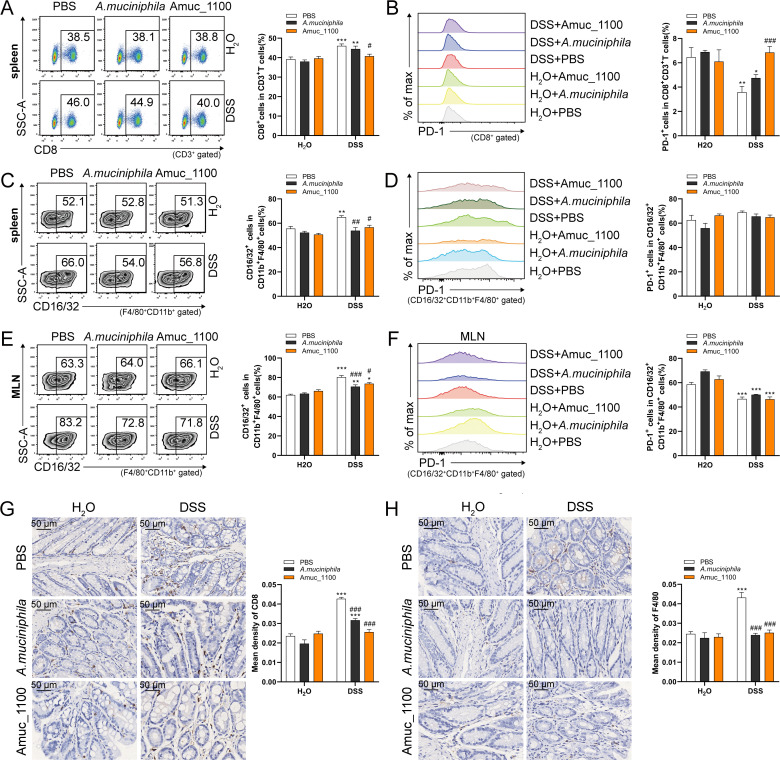
Objective: Gut microbiota have been linked to inflammatory bowel disease (IBD) and colorectal cancer (CRC). Akkermansia muciniphila ( A. muciniphila ) is a gram-negative anaerobic bacterium that is selectively decreased in the faecal microbiota of patients with IBD, but its causative role and molecular mechanism in blunting colitis-associated colorectal cancer (CAC) remain inconclusive. This study investigates how A. muciniphila engages the immune response in CAC. Design: Mice were given dextran sulfate sodium to induce colitis, followed by azoxymethane to establish CAC with or without pasteurised A. muciniphila or a specific outer membrane protein (Amuc_1100) treatment. Faeces from mice and patients with IBD or CRC were collected for 16S rRNA sequencing. The effects of A. muciniphila or Amuc_1100 on the immune response in acute colitis and CAC were investigated. Results: A. muciniphila was significantly reduced in patients with IBD and mice with colitis or CAC. A. muciniphila or Amuc_1100 could improve colitis, with a reduction in infiltrating macrophages and CD8 + cytotoxic T lymphocytes (CTLs) in the colon. Their treatment also decreased CD16/32 + macrophages in the spleen and mesenteric lymph nodes (MLN) of colitis mice. Amuc_1100 elevated PD-1 + CTLs in the spleen. Moreover, A. muciniphila and Amuc_1100 blunted tumourigenesis by expanding CTLs in the colon and MLN. Remarkably, they activated CTLs in the MLN, as indicated by TNF-α induction and PD-1downregulation. Amuc_1100 could stimulate and activate CTLs from splenocytes in CT26 cell conditioned medium. Conclusions: These data indicate that pasteurised A. muciniphila or Amuc_1100 can blunt colitis and CAC through the modulation of CTLs.
Overview
CoChat Summary
TL;DR
Pasteurised *Akkermansia muciniphila* or its outer membrane protein Amuc_1100 ameliorated DSS-induced colitis and blunted AOM/DSS colitis-associated tumourigenesis in mice. The protective effects were linked to modulation of CD8+ cytotoxic T lymphocytes (CTLs), including expansion/activation in colon and mesenteric lymph nodes and reduced PD-1+ CTLs.
Key findings
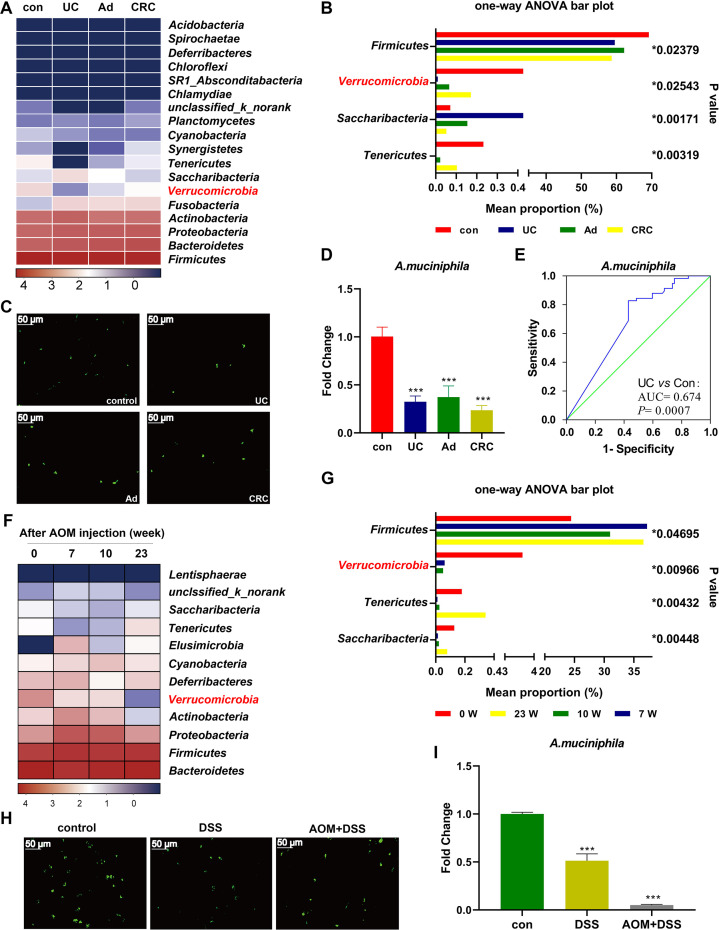
- *A. muciniphila* abundance was decreased in patients with UC, adenoma and CRC and in mice with colitis or CAC; ROC analysis for predicting UC gave AUC=0.674, p=0.0007.
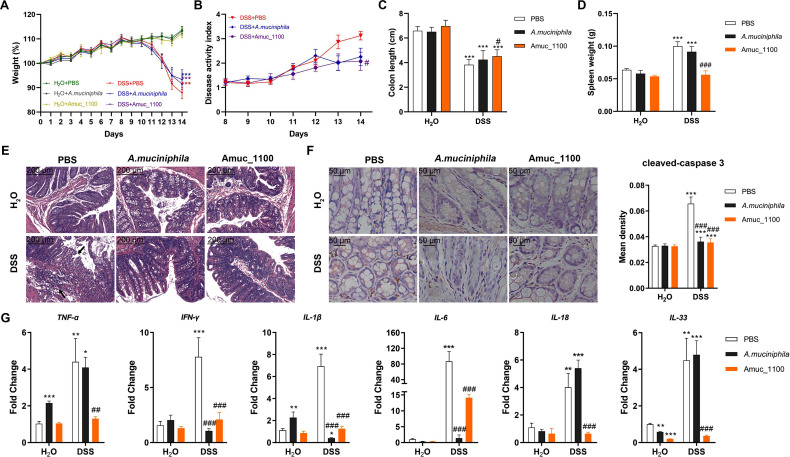
- In acute colitis, pasteurised *A. muciniphila* (1.5×10^8 CFU) or Amuc_1100 (3 µg) improved disease activity index, colon shortening, splenomegaly and histological injury, and decreased colonic proinflammatory cytokines including TNF-α, IFN-γ, IL-1β, IL-6, IL-18 and IL-33.
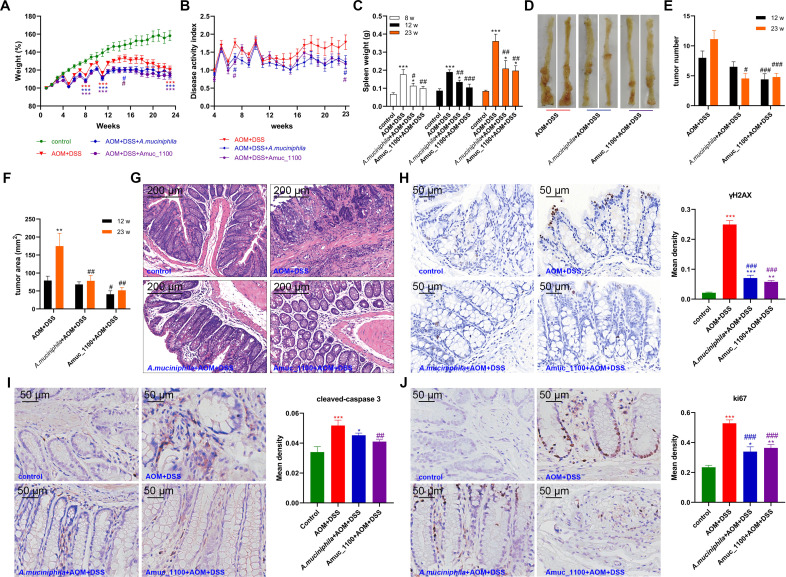
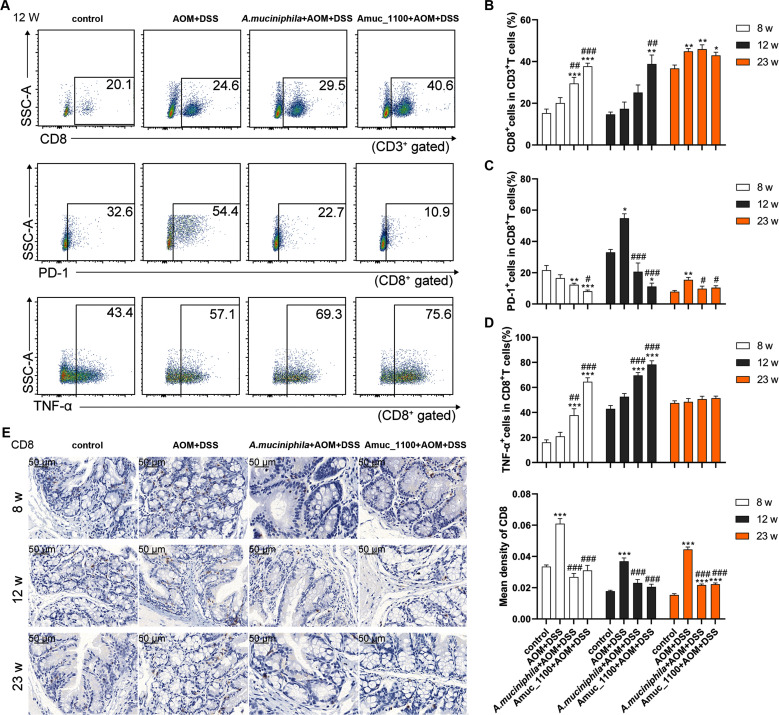
- In CAC, treatment delayed tumour formation and reduced tumour numbers and area by week 12, decreased γH2AX, cleaved caspase 3 and Ki67 in colon, and increased CTLs in MLN/colon while reducing PD-1+ CTLs and increasing TNF-α+ CTLs.
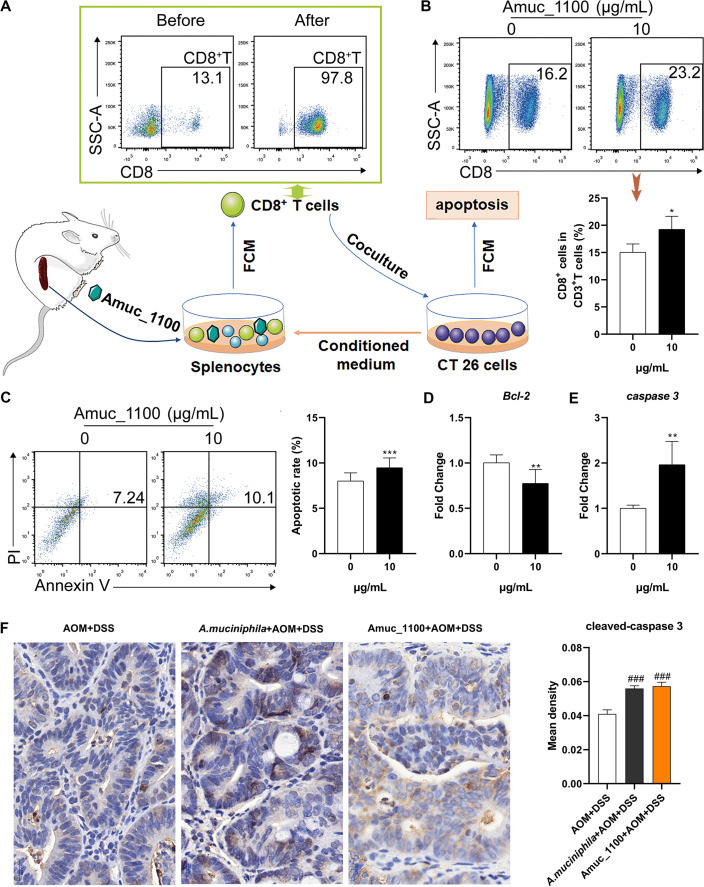
- In vitro, Amuc_1100 increased CTL proportion in splenocytes cultured in CT26-conditioned medium and CTLs pretreated with Amuc_1100 increased CT26 apoptosis, with Bcl-2 downregulation and caspase 3 upregulation.
Methods
- Mice received 2% DSS for acute colitis or AOM (10 mg/kg) plus three cycles of 2% DSS for CAC, with or without oral pasteurised *A. muciniphila* (1.5×10^8 CFU) or Amuc_1100 (3 µg) starting 2 weeks before induction.
- Human stool from active UC, adenoma, CRC and healthy controls underwent 16S rRNA V3 sequencing; *A. muciniphila* was quantified by qPCR and FISH.
- Immune responses were assessed by flow cytometry, immunohistochemistry, qPCR and CT26 coculture assays; statistics used one-way ANOVA with Tukey’s multiple comparisons, t-tests and ROC analysis.
Limitations
- The paper states that a dramatic microbial community shift was not observed in patients with adenoma or CAC because of interindividual variation and small sample size.
- The paper states that underlying mechanisms need further investigation and that interactions between macrophages and CTLs after treatment remain unclear.
- Evident from the text: findings are from male C57BL/6J mouse models and in vitro CT26 assays, with no human intervention testing of pasteurised *A. muciniphila* or Amuc_1100 for colitis/CAC.
Model-written summary. Check it against the paper before relying on it.
Integrity signals
Registry
Cites
Statistics
Figures
Verification
Claims the paper makes
8 Valid · 0 Not valid · 20 Not checked · 87 Own results and interpretations
Every source the paper cites for this claim was checked and supports it.
In the paper
“A. muciniphila improved clinical parameters, including spleen weight, colon inflammation index and colon histological score in chronic colitis.20”
§ A purified membrane protein from Akkermansia muciniphila or the pasteurised bacterium blunts colitis associated tumourigenesis by modulation of CD8+ T cells in mice > Introduction
What the sources say
- Supportedcites [20] Zhai R, Xue X, Zhang L, et al Strain-Specific Anti-inflammatory Properties of Two Akkermansia muciniphila Strains on Chronic Colitis in Mice. Front Cell Infect Microbiol 2019; 9: 239 10.3389/fcimb.2019.00239 31334133 PMC6624636 source
The Abstract (p. 1) states verbatim that in vivo both A. muciniphila strains exerted anti-inflammatory effects on chronic colitis, improving clinical parameters including spleen weight, colon inflammation index and colon histological score. The Results section 'A. muciniphila Strains Ameliorate Murine Chronic Colitis in a Strain-Specific Manner' (p. ~5) reports reduced spleen weight, colon inflammation index and colon histological score in the DSS+ATCC and DSS+139 groups versus the DSS group at day 46, noting significance only for strain ATCC. The claim's wording mirrors the source, including its own level of certainty; the only unstated qualifier is the murine DSS chronic-colitis model. (LLM, conf=0.93)
plainstates a cause- Asserted: passes — The authors put it forward as true.
- Checkable: passes — It can be checked against evidence.
- Load-bearing: unclear — It is unclear whether the paper’s conclusions depend on it.
- Based: passes — The paper gives a reason why it holds.
- Supported
The cited sources support only part of this claim — read each source’s verdict below.
In the paper
“Recent studies showed that both pasteurised A. muciniphila and Amuc_1100 (stable after pasteurisation) could partly recapitulate the beneficial effects of the live bacterium.16 21”
§ A purified membrane protein from Akkermansia muciniphila or the pasteurised bacterium blunts colitis associated tumourigenesis by modulation of CD8+ T cells in mice > Discussion
What the sources say
- Partly supportedcites [16] Depommier C, Everard A, Druart C, et al Supplementation with Akkermansia muciniphila in overweight and obese human volunteers: a proof-of-concept exploratory study. Nat Med 2019; 25: 1096– 103. 10.1038/s41591-019-0495-2 31263284 PMC6699990 sourceExperimental — accuracy not yet measured
Our copy supports the pasteurised-cell half of the sentence: the Abstract (Introduction and Results passages) reports that in overweight/obese insulin-resistant volunteers both Pasteurized and Alive A.muciniphila (10^10 cells/day, 3 months) improved insulin parameters — Pasteurized raised insulin sensitivity ~30% and lowered insulinemia, Alive significantly improved the insulin resistance score — and that in rodents 'pasteurization of A.muciniphila enhanced its beneficial properties'. However, no passage of our copy mentions Amuc_1100 or the stability of that outer-membrane protein after pasteurisation (searched: 'Amuc_1100', 'Amuc1100 purified outer membrane protein', 'membrane protein active form'); the paper credits the pasteurisation/membrane-protein work only to its reference 11 without naming the protein. The Amuc_1100 component of the claim is therefore not supported by this source. (LLM, conf=0.70)
- Not checked yetcites [21] Plovier H, Everard A, Druart C, et al A purified membrane protein from Akkermansia muciniphila or the pasteurized bacterium improves metabolism in obese and diabetic mice. Nat Med 2017; 23: 107– 13. 10.1038/nm.4236 27892954 source
hedgedstates a possible cause- Asserted: passes — The authors put it forward as true.
- Checkable: passes — It can be checked against evidence.
- Load-bearing: passes — The paper’s conclusions depend on it.
- Based: passes — The paper gives a reason why it holds.
- Partly supported
Every source the paper cites for this claim was checked and supports it.
In the paper
“The main contribution to colitis development was mediated by cytokine producing, proliferative, CTLs in the intraepithelial compartment of mice.32”
§ A purified membrane protein from Akkermansia muciniphila or the pasteurised bacterium blunts colitis associated tumourigenesis by modulation of CD8+ T cells in mice > Discussion
What the sources say
- Supportedcites [32] Wang Z, Vaughan TY, Zhu W, et al Gab2 and Gab3 Redundantly Suppress Colitis by Modulating Macrophage and CD8+ T-Cell Activation. Front Immunol 2019; 10: 486 10.3389/fimmu.2019.00486 30936879 PMC6431666 source
The Discussion states almost verbatim: 'we observed the main contribution to colitis development was mediated by cytokine producing, proliferative, CD8+ Gab2/3−/− T-cells in the intraepithelial compartment. In contrast, CD4+ T-cells had a smaller numerical contribution.' The supporting Results (Increased Numbers of Activated Gab2/3−/− CD8+ Intraepithelial Effector Cells in the Colon, Figure 7C–D) show expanded, Ki67+ proliferative CD8+ IELs producing IL-17, IFNγ and TNFα, with no change in LPL or MLN. The only wording shift is 'CTLs' for the paper's 'CD8+ T-cells' — the paper attributes cytokine production and proliferation to these IELs rather than measuring killing — and the claim omits the genotype qualifier (Gab2/3−/− mice) that bounds the finding. (LLM, conf=0.85)
plainstates a cause- Asserted: passes — The authors put it forward as true.
- Checkable: passes — It can be checked against evidence.
- Load-bearing: unclear — It is unclear whether the paper’s conclusions depend on it.
- Based: passes — The paper gives a reason why it holds.
- Supported
The cited sources support only part of this claim — read each source’s verdict below.
In the paper
“which aggravated tumour cells apoptosis.37 38”
§ A purified membrane protein from Akkermansia muciniphila or the pasteurised bacterium blunts colitis associated tumourigenesis by modulation of CD8+ T cells in mice > Discussion
What the sources say
- Not checked yetcites [37] Thomas DA, Massagué J Tgf-Beta directly targets cytotoxic T cell functions during tumor evasion of immune surveillance. Cancer Cell 2005; 8: 369– 80. 10.1016/j.ccr.2005.10.012 16286245 source
- Partly supportedcites [38] Bourboulia D, Stetler-Stevenson WG, metalloproteinases M Matrix metalloproteinases (MMPs) and tissue inhibitors of metalloproteinases (TIMPs): positive and negative regulators in tumor cell adhesion. Semin Cancer Biol 2010; 20: 161– 8. 10.1016/j.semcancer.2010.05.002 20470890 PMC2941566 sourceExperimental — accuracy not yet measured
Section 2.1 (Ligands; page unavailable) mentions TNF-α-induced apoptosis in prostate tumor cells. It does not identify CTLs as the source of TNF-α or show that CTL-derived TNF-α aggravated tumor-cell apoptosis. (LLM, conf=0.82)
plainstates a cause- Asserted: passes — The authors put it forward as true.
- Checkable: passes — It can be checked against evidence.
- Load-bearing: passes — The paper’s conclusions depend on it.
- Based: passes — The paper gives a reason why it holds.
A result the paper reports from its own data — it cites no other source for it, so there is none to check. The quote shows it is in the paper.
In the paper
“However, Amuc_1100 significantly alleviated the DAI (figure 2B).”
§ A purified membrane protein from Akkermansia muciniphila or the pasteurised bacterium blunts colitis associated tumourigenesis by modulation of CD8+ T cells in mice > Results > Pasteurised A. muciniphila or Amuc_1100 improved colitis in mice
plainstates a cause- Asserted: passes — The authors put it forward as true.
- Checkable: passes — It can be checked against evidence.
- Load-bearing: passes — The paper’s conclusions depend on it.
- Based: passes — The paper gives a reason why it holds.
62 more claims
Create a free account to see all 115 claims and to verify the 28 references still open.
- Probably not a substantial claim. 27
- It may state two separate claims as one. 27
Claims other papers make about this one
Each is checked against this paper’s own text: does it say what the citing paper says it does?
In the citing paper
“Supporting the adjuvant role of commensals against developing cancers, pasteurized A. muciniphila or its pili-like TLR2 agonist blunted azoxymethane-induced colitis and colon carcinogenesis by inducing TNFα-producing cytotoxic T lymphocytes in mesenteric lymph nodes (mLNs) that eventually reached the colonic mucosa (91).”
From The microbiome and human cancer (2021) · cites this paper as [91]
Self-check
Percentages, sums and reported differences re-computed from the paper’s own numbers.
Each contradiction between two passages listed here was confirmed by an independent check.
Rated major: it would touch a result — a value a result rests on, reported and recomputed p-values on opposite sides of the significance level, two passages that conflict with no sign which is right, or a cited work retracted before this paper was published.
In the paper
§ A purified membrane protein from Akkermansia muciniphila or the pasteurised bacterium blunts colitis associated tumourigenesis by modulation of CD8+ T cells in mice > Abstract > Results
“Moreover, A. muciniphila and Amuc_1100 blunted tumourigenesis by expanding CTLs in the colon and MLN.”
§ A purified membrane protein from Akkermansia muciniphila or the pasteurised bacterium blunts colitis associated tumourigenesis by modulation of CD8+ T cells in mice > Results > Pasteurised A. muciniphila or Amuc_1100 modulated immune response in CAC mice
“Furthermore, their treatment suppressed the colonic infiltration of CTLs in CAC mice (figure 5E).”
Rated major: it would touch a result — a value a result rests on, reported and recomputed p-values on opposite sides of the significance level, two passages that conflict with no sign which is right, or a cited work retracted before this paper was published.
In the paper
§ A purified membrane protein from Akkermansia muciniphila or the pasteurised bacterium blunts colitis associated tumourigenesis by modulation of CD8+ T cells in mice > Discussion
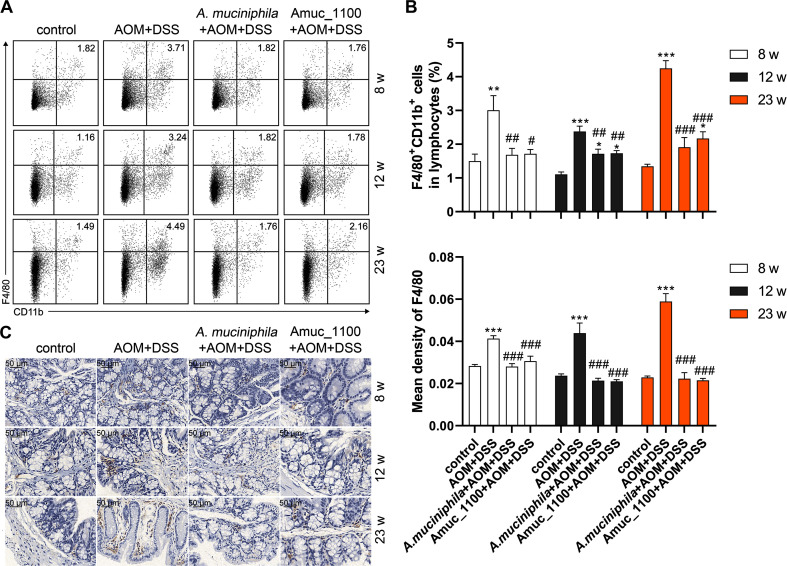
“A. muciniphila or Amuc_1100 treatment decreased these macrophage populations without disrupting their expression of CD16/32 or PD-1, indicating that their antitumour capabilities were independent of macrophage activation.”
§ A purified membrane protein from Akkermansia muciniphila or the pasteurised bacterium blunts colitis associated tumourigenesis by modulation of CD8+ T cells in mice > Results > Pasteurised A. muciniphila or Amuc_1100 modulated immune response in CAC mice
“However, their treatment significantly inhibited the expression of PD-1 on CD16/32+ macrophage in the MLN and spleen (figure 4B and online supplementary figure 10C)”
Rated minor: it would not touch a result — a value no result rests on, a p-value that stays on the same side of the significance level, or a conflict that is clerical, resolved elsewhere in the paper, or outside its own findings.
In the paper
§ A purified membrane protein from Akkermansia muciniphila or the pasteurised bacterium blunts colitis associated tumourigenesis by modulation of CD8+ T cells in mice > Materials and methods > Coculture of primary mouse CTLs with CT26 cells
“Splenocytes were isolated and cultured in fresh RPMI-1640 medium containing 20% FBS and CT26 conditioned medium (v/v, 1/1) with or without 10 µg/mL Amuc_1100 for 24 hours.”
§ A purified membrane protein from Akkermansia muciniphila or the pasteurised bacterium blunts colitis associated tumourigenesis by modulation of CD8+ T cells in mice > Results > Amuc_1100 induced activation of CTLs cultured in CT26 cell conditioned medium
“(B) The fraction of CTLs in the splenocytes cultured with CT26 cell conditioned medium with or without Amuc_1100 for 72 hours.”
Rated minor: it would not touch a result — a value no result rests on, a p-value that stays on the same side of the significance level, or a conflict that is clerical, resolved elsewhere in the paper, or outside its own findings.
In the paper
§ A purified membrane protein from Akkermansia muciniphila or the pasteurised bacterium blunts colitis associated tumourigenesis by modulation of CD8+ T cells in mice > Abstract > Design
“Mice were given dextran sulfate sodium to induce colitis, followed by azoxymethane to establish CAC”
§ A purified membrane protein from Akkermansia muciniphila or the pasteurised bacterium blunts colitis associated tumourigenesis by modulation of CD8+ T cells in mice > Materials and methods > Animal experiments
“The mouse CAC model was established by one intraperitoneal injection (i.p.) of 10 mg/kg azoxymethane (AOM) followed by three cycles of 2% DSS treatment (1 week per cycle)”
Citations
Cites
Gut microbiome influences efficacy of PD-1-based immunotherapy against epithelial tumors
Routy, B., Le Chatelier, E., Derosa, L., Duong, C. P. M., Alou, M. T., Daillère, R., Fluckiger, A., Messaoudene, M., Rauber, C., Roberti, M. P., et al. (2018) · Science · doi:10.1126/science.aan3706 · Cited by 5,671 · cited 2×
“18 Our previous study showed that the abundance of A. muciniphila was significantly decreased in dextran sulfate sodium (DSS)- induced colitis mice.”
Cross-talk between Akkermansia muciniphila and intestinal epithelium controls diet-induced obesity
Everard, A., Belzer, C., Geurts, L., Ouwerkerk, J. P., Druart, C., Bindels, L. B., Guiot, Y., Derrien, M., Muccioli, G. G., Delzenne, N. M., et al. (2013) · Proceedings of the National Academy of Sciences · doi:10.1073/pnas.1219451110 · Cited by 4,511 · cited 1×
“2 Inflammatorybowel disease (IBD), including Crohn’s disease and ulcerative colitis (UC), is a known risk factor for the development of CRC, namely, CAC.”
The commensal microbiome is associated with anti-PD-1 efficacy in metastatic melanoma patients
Matson, V., Fessler, J., Bao, R., Chongsuwat, T., Zha, Y., Alegre, M.-L., Luke, J. J., & Gajewski, T. F. (2018) · Science · doi:10.1126/science.aao3290 · Cited by 3,107 · cited 1×
“42 Oral gavages with A. muciniphila increased the efficacy of a PD-1 blockade with respect to tumour growth.”
Depommier, C., Everard, A., Druart, C., Plovier, H., Van Hul, M., Vieira-Silva, S., Falony, G., Raes, J., Maiter, D., Delzenne, N. M., et al. (2019) · Nature Medicine · doi:10.1038/s41591-019-0495-2 · Cited by 2,357 · cited 2×
“16 21 Thus, they were used to validate the role of A. muciniphila in the development of acute colitis and CAC.”
InfluentialThe immune contexture in cancer prognosis and treatment
Fridman, W. H., Zitvogel, L., Sautès–Fridman, C., & Kroemer, G. (2017) · Nature Reviews Clinical Oncology · doi:10.1038/nrclinonc.2017.101 · Cited by 2,263 · cited 1×
“34–36 Pasteurised A. muciniphila and Amuc_1100 significantly increased CTL percentage in the MLN and colon.”
Nishimura, S., Manabe, I., Nagasaki, M., Eto, K., Yamashita, H., Ohsugi, M., Otsu, M., Hara, K., Ueki, K., Sugiura, S., et al. (2009) · Nature Medicine · doi:10.1038/nm.1964 · Cited by 2,230
Plovier, H., Everard, A., Druart, C., Depommier, C., Van Hul, M., Geurts, L., Chilloux, J., Ottman, N., Duparc, T., Lichtenstein, L., et al. (2017) · Nature Medicine · doi:10.1038/nm.4236 · Cited by 2,204 · cited 3×
“16 21 Thus, they were used to validate the role of A. muciniphila in the development of acute colitis and CAC.”
BackgroundMethodInfluentialFusobacterium nucleatum Promotes Chemoresistance to Colorectal Cancer by Modulating Autophagy
Yu, T., Guo, F., Yu, Y., Sun, T., Ma, D., Han, J., Qian, Y., Kryczek, I., Sun, D., Nagarsheth, N., et al. (2017) · Cell · doi:10.1016/j.cell.2017.07.008 · Cited by 2,198
Dao, M. C., Everard, A., Aron-Wisnewsky, J., Sokolovska, N., Prifti, E., Verger, E. O., Kayser, B. D., Levenez, F., Chilloux, J., Hoyles, L., et al. (2016) · Gut · doi:10.1136/gutjnl-2014-308778 · Cited by 1,931
Gut microbiome development along the colorectal adenoma-carcinoma sequence
Feng, Q., Liang, S., Jia, H., Stadlmayr, A., Tang, L., Lan, Z., Zhang, D., Xia, H., Xu, X., Jie, Z., et al. (2015) · Nature Communications · doi:10.1038/ncomms7528 · Cited by 1,506 · cited 1×
“Nevertheless, A. muciniphila has previously been linked to an increased burden of CRC in human and mice, 25–27 and it was decreased during the progression of CAC in mice and in patients with CRC in this study.”
Self-citation
Cited by
Items 301–400 of 632
Frühbeck, G., Mentxaka, A., Ahechu, P., Gómez‐Ambrosi, J., Ramírez, B., Becerril, S., Rodríguez, A., Unamuno, X., Cienfuegos, J. A., Casado, M., et al. (2021) · Journal of Inflammation Research · doi:10.2147/jir.s335882 · Cited by 19
Nutrient acquisition of gut microbiota: Implications for tumor immunity
Wang, Y., Huang, J., Tong, H., Jiang, Y., Yu, J., & Ma, X. (2025) · Seminars in Cancer Biology · doi:10.1016/j.semcancer.2025.06.003 · Cited by 20
Jin, S., Lu, Y., Zuo, Y., Xu, Q., Hao, Y., Zuo, H., Cui, Z., Zhang, X., Wang, M., Li, H., et al. (2025) · Gut Microbes · doi:10.1080/19490976.2025.2555618 · Cited by 24
“40 Moreover, in our previous study, we observed that the oral administration of A. muciniphila or its OMVs significantly alleviates stress-related behavioral symptoms.”
Distribution of mucosal PD-1 expressing T cells in patients with colitis of different etiologies
Roosenboom, B., Horje, C. S. H. T., Smids, C., Leeuwis, J. W., van Koolwijk, E., Groenen, M. J. M., Wahab, P. J., & van Lochem, E. G. (2021) · Scandinavian Journal of Gastroenterology · doi:10.1080/00365521.2021.1906316 · Cited by 19
“However, another research group showed that PD-1 deficient mice did not develop colon inflammation explained by alterations in the gut microbiota [16], whereas another group showed that dextran sulfate sodium (DSS)-induced colitis improved through administering Akkermansia muciniphila , a gramnegative anaerobic bacter…”
BackgroundAmuc Prevents Liver Inflammation and Oxidative Stress in Mice Challenged with Salmonella Typhimurium
Song, Z., Si, X., Zhang, X., Chen, J., Jia, H., He, Y., Liu, H., Kou, Z., Dai, Z., & Wu, Z. (2022) · Journal of Nutrition · doi:10.1016/j.tjnut.2022.12.004 · Cited by 19
Phage therapy in gut microbiome
Chen, X., Mendes, B. G., Alves, B. S., & Duan, Y. (2023) · Progress in molecular biology and translational science · doi:10.1016/bs.pmbts.2023.04.005 · Cited by 21
Metal transporter SLC39A14/ZIP14 modulates regulation between the gut microbiome and host metabolism
Mitchell, S. B., Thorn, T. L., Lee, M.-T., Kim, Y., Comrie, J. M. C., Bai, Z. S., Johnson, E. L., & Aydemir, T. B. (2023) · American Journal of Physiology-Gastrointestinal and Liver Physiology · doi:10.1152/ajpgi.00091.2023 · Cited by 20
Du, Y., An, Y., Song, Y., Li, N., Zheng, J., & Lu, Y. (2024) · Experimental Neurology · doi:10.1016/j.expneurol.2024.114823 · Cited by 20
Impact of the ileal microbiota on colon cancer
Roberti, M. P., Rauber, C., Kroemer, G., & Zitvogel, L. (2021) · Seminars in Cancer Biology · doi:10.1016/j.semcancer.2021.09.016 · Cited by 18
Wu, S., Wei, F., Chen, Y., Chen, Z., Luo, Y., Fan, J., Xu, Y. Y., Hu, M., Li, P., & Gu, Q. (2025) · Probiotics and Antimicrobial Proteins · doi:10.1007/s12602-025-10474-w · Cited by 22
“…injury [69–71], whereas Akkermansia bolstered intestinal barrier function and immune response, inversely associated with inflammatory bowel disease [72, 73] Ligilactobacil-lus encompasses species adapted to vertebrate hosts, and fermented food, with its antioxidant, antibacterial, and…”
He, K., Dong, J., Ouyang, X.-M., Huo, Y., Cheng, X., Lin, Y., Li, Y., Gong, G., Liu, J., Ren, J., et al. (2022) · Frontiers in Nutrition · doi:10.3389/fnut.2022.911315 · Cited by 18
Liu, G., Huang, W., Chen, L., Tayier, N., You, L., Hamza, M., Tian, X., Wang, H., Nie, G., Zhu, M., et al. (2023) · Nano Today · doi:10.1016/j.nantod.2023.101993 · Cited by 17
Qin, X., Zhao, Q., Zhao, Q., Yang, L., Li, W., Wu, J., Liu, T., Zhong, W., Jiang, K., Liu, W., et al. (2024) · Pharmacological Research · doi:10.1016/j.phrs.2024.107372 · Cited by 19
The Urogenital System Microbiota: Is It a New Gamechanger in Urogenital Cancers?
Ece, G. T., Aktaş, A., Caner, A., Sağlık, İ., Atik, T. K., Bağcı, Ö. U., Bilman, F. B., Demirbakan, H., Havuz, S. G., Kaya, E., et al. (2025) · Microorganisms · doi:10.3390/microorganisms13020315 · Cited by 19
Wang, X., Li, A., Jing, H., Zhang, X., Dong, X., Song, Z., Wu, N., & Zheng, S. (2025) · Frontiers in Immunology · doi:10.3389/fimmu.2025.1653472 · Cited by 18
Huang, R., He, K., Duan, X., Xiao, J., Wang, H., & Xiang, G. (2022) · Computational and Mathematical Methods in Medicine · doi:10.1155/2022/1940846 · Cited by 17
RetractedZhu, Y., He, H., Tang, Y., Peng, Y., Hu, P., Sun, W., Liu, P., Jin, M., & Xu, X. (2022) · Frontiers in Nutrition · doi:10.3389/fnut.2022.889131 · Cited by 22
Hsa_Circ_0066351 Acts as a Prognostic and Immunotherapeutic Biomarker in Colorectal Cancer
Gao, Y., Zhou, Y., Le, W., Feng, Z., Chen, Y., Liu, P., Peng, Y., Huang, Q., Gao, L., Liu, Y., et al. (2022) · Frontiers in Immunology · doi:10.3389/fimmu.2022.927811 · Cited by 16
“As previous studies were focused on only one type of immune cell and one gene, the understanding of the CRC microenvironment may be incomplete (20, 21).”
BackgroundPotential risk of tamoxifen: gut microbiota and inflammation in mice with breast cancer
Li, H., Gao, X., Chen, Y., Wang, M., Xu, C., Yu, Q., Jin, Y., Song, J., & Zhu, Q. (2023) · Frontiers in Oncology · doi:10.3389/fonc.2023.1121471 · Cited by 20
“muciniphila has shown significant improvement in symptoms in DSS-induced acute colitis (48), and it has been found to attenuate colitis-associated tumorigenesis by reducing infiltrating macrophages and CD8 cytotoxic T lymphocytes in the colon (49).”
BackgroundPsara, E., Poulios, E., Papadopoulou, S. Κ., Tolia, M., Vasios, G. K., & Giaginis, C. (2023) · Anti-Cancer Agents in Medicinal Chemistry · doi:10.2174/1871520623666230816090229 · Cited by 16
Zhang, B., Cheng, Y., Jian, Q., Xiang, S., Xu, Q., Wang, C., Yang, C., Lin, J., & Zheng, C. (2024) · Frontiers in Pharmacology · doi:10.3389/fphar.2024.1375585 · Cited by 19
Akkermansia muciniphila improves gastric cancer treatment by modulating the immune microenvironment
Fang, J., Zhang, H., Zhang, X., Lu, X., Liu, J., Li, H., & Huang, J. (2024) · Future Microbiology · doi:10.2217/fmb-2023-0210 · Cited by 18
Beneficial microbiome and diet interplay in early-onset colorectal cancer
Zhou, Z., Kleis, L., Depetris-Chauvin, A., Jaskulski, S., Damerell, V., Michels, K. B., Gigic, B., Nöthlings, U., & Panagiotou, G. (2024) · EMBO Molecular Medicine · doi:10.1038/s44321-024-00177-0 · Cited by 24
Gut Microbiota-Mediated Modulation of Cancer Progression and Therapy Efficacy
Cheng, P., Shen, P., Shan, Y., Yu, Y., Deng, R., Chen, W., Lu, Y., & Wei, Z. (2021) · Frontiers in Cell and Developmental Biology · doi:10.3389/fcell.2021.626045 · Cited by 18
Jiang, Z., Li, W., Su, W., Wen, C., Gong, T., Zhang, Y., Wang, Y., Jin, M., & Lu, Z. (2021) · Frontiers in Nutrition · doi:10.3389/fnut.2021.733591 · Cited by 17
“Previous studies suggest that the abundance of Akkermansia decreased significantly in patients and mice with inflammatory bowel disease (64).”
Jiang, M., Jia, Y., Ma, C., Zeng, Z., Wu, Y., Gan, H., & Zhang, H. (2025) · Inflammatory Bowel Diseases · doi:10.1093/ibd/izaf057 · Cited by 15
Yang, L., Yang, J., Kong, X., Tang, Q., Song, R., Zhou, K., Quan, X., Zhang, Q., Zhang, Y., Zhang, C., et al. (2025) · Gut Microbes · doi:10.1080/19490976.2025.2587405 · Cited by 17
Self-citationFormyl peptide receptor-1 (FPR1) represses intestinal oncogenesis
Naour, J. L., Montégut, L., Pan, Y., Scuderi, S. A., Cordier, P., Joseph, A., Sauvat, A., Iebba, V., Paillet, J., Ferrere, G., et al. (2023) · OncoImmunology · doi:10.1080/2162402x.2023.2237354 · Cited by 15
“muciniphila in AOM/DSSinduced colon carcinogenesis is controversial.(50,51) Daily gavage of Lactobacillus rhamnosus GG (LGG) to WT mice increases gastrointestinal motility, and this effect is not seen in Fpr1 mice.”
BackgroundIshibashi, R., Matsuhisa, R., Nomoto, M., Chudan, S., Nishikawa, M., Tabuchi, Y., Ikushiro, S., Nagai, Y., & Furusawa, Y. (2023) · Microorganisms · doi:10.3390/microorganisms11081882 · Cited by 15
Intestinal microbiota: A bridge between intermittent fasting and tumors
Liu, J., Shao, N., Qiu, H., Zhao, J., Chen, C., Wan, J., He, Z., Zhao, X., & Xu, L. (2023) · Biomedicine & Pharmacotherapy · doi:10.1016/j.biopha.2023.115484 · Cited by 17
Fu, E., Qian, M., He, N., Yin, Y., Liu, Y., Han, Z., Han, Z., Zhao, Q., Cao, X., & Li, Z. (2024) · Advanced Science · doi:10.1002/advs.202403075 · Cited by 21
Daillère, R., Routy, B., Goubet, A., Cogdill, A. P., Ferrere, G., Silva, C. A.-C., Fluckiger, A., Ly, P., Haddad, Y., Pizzato, E., et al. (2020) · OncoImmunology · doi:10.1080/2162402x.2020.1794423 · Cited by 18
“muciniphila prevents colitis-induced colon cancer by mobilizing TNF producing CTL primed in the mesenteric lymph nodes and expressing low levels of PD1 despite their lytic potential.(74) We highlighted the capacity of A.”
BackgroundYan, J., Ouyang, J., Isnard, S., Zhou, X., Harypursat, V., Routy, J., & Chen, Y. (2021) · Frontiers in Immunology · doi:10.3389/fimmu.2021.741658 · Cited by 22
Supplemental Leuconostoc mesenteroides strain NTM048 attenuates imiquimod‐induced psoriasis in mice
Ogawa, C., Inoüe, R., Yonejima, Y., Hisa, K., Yamamoto, Y., & Suzuki, T. (2021) · Journal of Applied Microbiology · doi:10.1111/jam.15161 · Cited by 16
“muciniphila is also known to be reduced in obesity and inflammatory bowel diseases (Everard et al. 2013; Wang et al. 2020).”
BackgroundLi, Y., Yang, D., Zhao, H., Dou, L., Chen, Q., Cheng, Y., Hu, B., Tang, Y., Duan, Y., Guo, C., et al. (2025) · Journal of Translational Medicine · doi:10.1186/s12967-025-06674-1 · Cited by 16
Liu, J., Zhu, W., Liu, H., Ren, X., Qin, N., & Xia, X. (2023) · Food Science and Human Wellness · doi:10.26599/fshw.2022.9250215 · Cited by 16
Li, L., Liu, H., Yu, J., Sun, Z., Jiang, M., Yu, H., & Wang, C. (2023) · Nutrients · doi:10.3390/nu15235011 · Cited by 14
Self-citationLuo, L., Zhao, Y., Zhang, G., Dong, S., Xu, Y.-Y., Shi, H., Zhang, M., Liu, X., Wang, S., Luo, H., et al. (2024) · Journal of Pharmacology and Experimental Therapeutics · doi:10.1124/jpet.123.002020 · Cited by 18
Wang, M., Li, H., Zhang, W., Zhang, L., Wang, S., Miao, J., Jia, L., Zhang, Y., Gao, H., Zhang, X., et al. (2025) · PLoS ONE · doi:10.1371/journal.pone.0311207 · Cited by 18
Chen, Y.-N., Yang, Y., He, X., Liu, X., Yu, P., Liu, R., Wei, L., Zhang, B., Zou, T., Liu, H., et al. (2023) · Acta Biomaterialia · doi:10.1016/j.actbio.2023.09.033 · Cited by 13
Bibliometric Visualization Analysis of Microbiome-Gut-Brain Axis from 2004 to 2020
Wang, H., Long, T., You, J., Li, P., & Xu, Q. (2022) · Medical Science Monitor · doi:10.12659/msm.936037 · Cited by 13
Lin, Z., Wang, J., Luo, H., Huang, L., Pan, Z., Yang, S., Zhong, C., Shan, N., Ye, Z., Tan, H., et al. (2025) · Phytomedicine · doi:10.1016/j.phymed.2025.156856 · Cited by 14
The pathobiont role of Akkermansia muciniphila in colorectal cancer: a systematic review
Soheilipour, M., Noursina, A., Nekookhoo, M., Malekpour, E., Mirzaei, S. A., Shafieyoun, M. H., Rouzbahani, H., Chitsazi, M. R., & Safari, F. (2025) · BMC Gastroenterology · doi:10.1186/s12876-025-04293-0 · Cited by 18
“These PAMPs are present in both live and non-viable forms and are sufficient to elicit a beneficial immune response [11, 27, 36].”
InfluentialMucin-degrading gut bacteria: context-dependent roles in intestinal homeostasis and disease
Tiffany, E., Kim, K. S., Sittipo, P., Lee, D.-W., & Lee, Y. K. (2026) · Gut Microbes · doi:10.1080/19490976.2026.2614054 · Cited by 17
Effects of selenium-cadmium co-enriched Cardamine hupingshanensis on bone damage in mice
Zhang, L., Shi, W., Zhang, L., Sha, Y., Xu, J., Shen, L.-C., Li, Y.-H., Yuan, L., & Qin, L. (2024) · Ecotoxicology and Environmental Safety · doi:10.1016/j.ecoenv.2024.116101 · Cited by 13
Colorectal cancer and microbiota: systematic review
Imanbayev, N. M., Iztleuov, Y. M., Bekmukhambetov, Y., Abdelazim, I. A., Donayeva, A., Amanzholkyzy, A., Zhumasheva, A., Imanbayeva, A., & Aslan, Y. (2024) · Gastroenterology Review · doi:10.5114/pg.2024.136228 · Cited by 17
“Akkermansia muciniphila bacterium decreased in patients with ulcerative colitis [17] and in those with CRC [18].”
Impact of chronic stress on intestinal mucosal immunity in colorectal cancer progression
Yang, S., Li, Y., Zhang, Y., & Wang, Y. (2024) · Cytokine & Growth Factor Reviews · doi:10.1016/j.cytogfr.2024.10.007 · Cited by 15
Lee, H. W., Lee, S., Seo, J., Koo, Y., Kang, S., Choi, C. W., Park, S., Lee, S., Kim, S., Kim, J. H., et al. (2024) · Nutrients · doi:10.3390/nu16234113 · Cited by 12
Li, Y., Yue, X., Ren, X., Pang, Y., Wang, T., Huangfu, B., Mikhailovich, Z. A., Vasilievich, K. V., Zhang, M., Luan, Y., et al. (2024) · Journal of Dairy Science · doi:10.3168/jds.2024-25181 · Cited by 13
Mo, Y., He, X., Cui, H., Cheng, Y., Zhou, M., Cui, X., & Zhang, T. (2025) · Journal of Ethnopharmacology · doi:10.1016/j.jep.2024.119306 · Cited by 17
Han, H., Xiong, H., Liu, Z., Liu, X., Wang, H., Kou, J., Yi, D., Shi, Y. Q., Wu, H., & Qiao, J. (2025) · Frontiers in Microbiology · doi:10.3389/fmicb.2025.1542522 · Cited by 15
Wu, Y., Yao, Y., Shen, Y., Bai, H., Zhang, L. M., & Zhang, C. (2025) · Small · doi:10.1002/smll.202412286 · Cited by 15
Self-citationCancer trigger or remedy: two faces of the human microbiome
Grenda, A., & Krawczyk, P. A. (2021) · Applied Microbiology and Biotechnology · doi:10.1007/s00253-021-11125-0 · Cited by 13
“Furthermore, infection reduced the efficacy of anti-PD-1 immunotherapy in the MC38 syngeneic CRC tumor model.”
BackgroundResultInfluentialGlobal trends in Akkermansia muciniphila research: A bibliometric visualization
Li, Z., Ke, H., Wang, Y., Chen, S., Liu, X., Lin, Q., Wang, P., & Chen, Y. (2022) · Frontiers in Microbiology · doi:10.3389/fmicb.2022.1037708 · Cited by 15
“, 2018) or even prevents colitis-associated colorectal cancer (Wang et al., 2020).”
BackgroundZhang, Y., Wang, Y., Xin, E., Zhang, Z., Ma, D., Liu, T., Gao, F., Bian, T., Sun, Y., Wang, M., et al. (2023) · Journal of Ethnopharmacology · doi:10.1016/j.jep.2023.117555 · Cited by 16
Self-citationProfir, M., Roşu, O., Creţoiu, S. M., & Gașpar, B. S. (2024) · Microorganisms · doi:10.3390/microorganisms12050955 · Cited by 12
“Several studies brought evidence of the impact that gut microbiota alterations have on the immune system, and later on the development or digestive cancers or symptoms associated with CRC [68].”
Hu, X., Cheng, W., Fan, S., Huang, Y., Chen, X., Jiang, Z., & Wang, J. (2021) · BMC Infectious Diseases · doi:10.1186/s12879-021-06270-w · Cited by 13
The microbial revolution: Akkermansia muciniphila's role in overcoming immunotherapy challenges
Shi, Y., Fu, Y., & Tang, D. (2025) · International Immunopharmacology · doi:10.1016/j.intimp.2025.115374 · Cited by 11
Pathophysiology of colitis-associated colorectal cancer
Neufert, C. F., & Neurath, M. F. (2026) · Nature Reviews Gastroenterology & Hepatology · doi:10.1038/s41575-026-01197-6 · Cited by 19
Han, X., Zang, D., Liu, D., & Chen, J. (2022) · Frontiers in Immunology · doi:10.3389/fimmu.2022.988849 · Cited by 12
“But there are still many patients who are insensitive to corticosteroid and biological Abbreviations: ICIs, Immune Checkpoint Inhibitors; irAEs, Immune- Related Adverse Events; IMC, Immune Checkpoint Inhibitor-Mediated Colitis; CTLA-4, Cytotoxic T Lymphocyte Antigen-4; PD-1/PD-L1, Programmed Death-1/Programmed Death L…”
BackgroundMapping the regulatory effects of herbal organic compounds on gut bacteria
Zhang, Y., Chen, T., Hao, X., Yuanjia, H., Chen, M., Zhang, D., Cai, H. N., Luo, J., Kong, L., Huang, S.-T.-Z., et al. (2023) · Pharmacological Research · doi:10.1016/j.phrs.2023.106804 · Cited by 13
Metastasis and the Microbiome: The Impact of Bacteria in Disseminated Colorectal Cancer
Ayabe, R. I., & White, M. G. (2024) · Frontiers in Bioscience-Landmark · doi:10.31083/j.fbl2904152 · Cited by 14
Microbes in the tumor microenvironment: New additions to break the tumor immunotherapy dilemma
Zhou, L., Fan, S., Zhang, W., Wang, D., & Tang, D. (2024) · Microbiological Research · doi:10.1016/j.micres.2024.127777 · Cited by 13
Role of Gut Microbiome in Cancer Treatment
Mishra, V., & Mishra, Y. (2024) · Indian Journal of Microbiology · doi:10.1007/s12088-024-01340-4 · Cited by 12
“The administration of probiotics was associated with favorable changes in the gut microbiome composition and enhanced anti-tumor immune responses, suggesting that manipulating the microbiome through probiotics holds promise as an adjuvant therapy in cancer treatment [27].”
Tu, Y., Hou, A., Zhou, Z., Cheng, L., Luo, J., Deng, Y., Li, J., Li, J., Yang, J., & Liang, K. (2024) · Nano Today · doi:10.1016/j.nantod.2024.102390 · Cited by 11
Chang, Y., Long, M., Shan, H., Liu, L., Zhong, S., & Luo, J. (2025) · Critical Reviews in Oncology/Hematology · doi:10.1016/j.critrevonc.2025.104629 · Cited by 14
Intestinal luminal anion transporters and their interplay with gut microbiome and inflammation
Husain, N., Kumar, A., Anbazhagan, A. N., Gill, R. K., & Dudeja, P. K. (2025) · American Journal of Physiology-Cell Physiology · doi:10.1152/ajpcell.00026.2025 · Cited by 13
Zou, R., Wang, Y., Ye, F., Zhang, X., Wang, M., & Cui, S. (2021) · Clinical & Translational Oncology · doi:10.1007/s12094-021-02637-2 · Cited by 12
Wang, Z., Shi, L. S., Li, H., Wei, S., Li, J., & Yuan, L. (2022) · Journal of Agricultural and Food Chemistry · doi:10.1021/acs.jafc.2c04526 · Cited by 14
Progress of gut microbiome and its metabolomics in early screening of colorectal cancer
Zhou, L., Jiang, Z., Zhang, Z., Xing, J., Wang, D., & Tang, D. (2023) · Clinical & Translational Oncology · doi:10.1007/s12094-023-03097-6 · Cited by 12
Self-citationTang, X., Wang, L., Wang, D., Zhang, Y., Wang, T., Zhu, Z., Weng, Y., Tao, G., Wang, Q., Tang, L., et al. (2023) · Frontiers in Microbiology · doi:10.3389/fmicb.2023.1143463 · Cited by 12
Self-citationKhalili, L., Park, G., Nagpal, R., Bhide, P. G., & Salazar, G. (2025) · Current Neuropharmacology · doi:10.2174/011570159x360149250225041829 · Cited by 14
“Both A. muciniphila and its protein Amuc_1100 effectively suppress the recruitment and activation of CD16/32+ M1 macrophages by decreasing the number of cytotoxic T-lymphocytes [69].”
Host-microbiota interactions in genitourinary cancer immunotherapy
Xu, X., Cui, J., Li, W., Xu, Y., Yuan, S., Zeng, X., & Li, B. (2025) · Seminars in Cancer Biology · doi:10.1016/j.semcancer.2025.07.005 · Cited by 12
Jiang, M., Jia, Y., Ma, C., Zeng, Z., Li, Y. P., Li, L., Lin, H., Pang, J., Li, J., Chen, J., et al. (2025) · Frontiers in Immunology · doi:10.3389/fimmu.2025.1693007 · Cited by 11
Self-citationAllin, K. H., Jensen, C. B., Jacobsen, R. K., & Jess, T. (2022) · Journal of Gastroenterology · doi:10.1007/s00535-022-01896-2 · Cited by 10
Frizzled 7 modulates goblet and Paneth cell fate, and maintains homeostasis in mouse intestine
Gu, N.-X., Guo, Y., Lin, S., Wang, Y.-H., Lin, I., Chen, Y., & Yen, Y. (2023) · Development · doi:10.1242/dev.200932 · Cited by 11
Yu, S., Xie, J., Guo, Q., Yan, X., Wang, Y., Leng, T., Li, L., Zhou, J., Zhang, W., & Su, X. (2024) · Frontiers in Microbiology · doi:10.3389/fmicb.2024.1361945 · Cited by 11
Self-citationGut bacteria, host immunity, and colorectal cancer: From pathogenesis to therapy
Li, Y., Peng, J., & Meng, X. (2024) · European Journal of Immunology · doi:10.1002/eji.202451022 · Cited by 12
“Outer membrane vesicles of A. muciniphila or its specific outer membrane protein could expand CD8 + cytotoxic T lymphocytes (CTLs) in the colon and mesenteric lymph nodes [82, 83].”
Possible application of Akkermansia muciniphila in stress management
Misera, A., Marlicz, W. M., Podkówka, A., Łoniewski, I., & Skonieczna‐Żydecka, K. (2024) · Microbiome Research Reports · doi:10.20517/mrr.2023.81 · Cited by 11
Salivary exosomes exacerbate colitis by bridging the oral cavity and intestine
Yang, C., Chen, J., Zhao, Y., Wu, J., Xu, Y., Xu, J. L., Chen, F., Chen, Y., & Chen, N. (2024) · iScience · doi:10.1016/j.isci.2024.111061 · Cited by 13
Effects and mechanisms of Helicobacter pylori on cancers development and immunotherapy
Zhong, X., Zheng, H., Zhao, S., Wang, Z., Su, Y., Zhong, K., Wang, M., & Shi, Y. (2024) · Frontiers in Immunology · doi:10.3389/fimmu.2024.1469096 · Cited by 12
Self-citationAchasova, K. M., Snytnikova, O. A., Chanushkina, K. E., Morozova, M. V., Tsentalovich, Y. P., & Kozhevnikova, E. N. (2025) · Scientific Reports · doi:10.1038/s41598-025-96514-5 · Cited by 10
Gan, A., Kang, X., Goh, S. S., Wong, S. H., & Loo, S. C. J. (2025) · Journal of Functional Foods · doi:10.1016/j.jff.2025.106804 · Cited by 12
Zhang, X., Cai, J., Chen, L., Tai, J., Liu, J., & Cao, Y. (2025) · Phytomedicine · doi:10.1016/j.phymed.2025.157138 · Cited by 10
Structural insight into protein–protein interactions between intestinal microbiome and host
Post, S. E., & Brito, I. (2022) · Current Opinion in Structural Biology · doi:10.1016/j.sbi.2022.102354 · Cited by 12
Gao, W., Xiao, M., Gu, Z., Fu, X., Ren, X., Yu, Y., Liu, Z., Zhu, C., Kong, Q., & Mou, H. (2022) · Molecular Genetics and Genomics · doi:10.1007/s00438-022-01937-8 · Cited by 10
“muciniphila were positively correlated with the upregulation of the mRNA levels of functional genes such as Amuc_1100, an outer membrane protein that improves gastrointestinal motility and host metabolism (Plovier et al. 2017; Wang et al. 2020).”
BackgroundYang, Q., He, Y., Tian, L., Zhang, Z., Qiu, L., Tao, X., & Wei, H. (2023) · Food & Function · doi:10.1039/d2fo03045d · Cited by 10
Self-citationSu, J., Braat, H., Verhaar, A. P., & Peppelenbosch, M. P. (2022) · Frontiers in Pharmacology · doi:10.3389/fphar.2022.843133 · Cited by 10
Gao, X., & Jiang, J. (2024) · Frontiers in Immunology · doi:10.3389/fimmu.2024.1359029 · Cited by 12
Gong, J.-Z., Huang, J.-J., Pan, M., Jin, Q.-W., Fan, Y., Shi, W., & Huang, S.-Y. (2024) · International Journal of Biological Macromolecules · doi:10.1016/j.ijbiomac.2024.138270 · Cited by 9
Big lessons from the little Akkermansia muciniphila in hepatocellular carcinoma
Yang, Y., & Shi, X. (2025) · Frontiers in Immunology · doi:10.3389/fimmu.2025.1524563 · Cited by 15
Giambra, V., Caldarelli, M., Franza, L., Rio, P., Bruno, G., Iasio, S. D., Mastrogiovanni, A., Gasbarrini, A., Gambassi, G., & Cianci, R. (2025) · Biomedicines · doi:10.3390/biomedicines13040768 · Cited by 11
“Furthermore, a pasteurized strain of A. muciniphila Muc T and its outer membrane protein Amuc-1100 have been shown to downregulate collagen and proinflammatory cytokines in murine CRC, and decrease mRNA expression of proinflammatory cytokines in DSS-induced colitis [182].”
Dai, H., Yang, H., Wang, R., Wang, X., & Zhang, X. (2025) · Nutrients · doi:10.3390/nu17091505 · Cited by 10
“Akkermansia muciniphila is involved in both CRC and the immune response, and increasing its abundance can help alleviate colitis-associated CRC [167].”
Hwang, H.-G., Park, J.-W., Lee, H. J., Ko, M. Y., Ka, M., Lee, Y. K., Choi, J., In, S.-A., Lee, Y.-E., Lee, S., et al. (2025) · Gut Microbes · doi:10.1080/19490976.2025.2508424 · Cited by 11
“…regulatory T cells in the adipose tissue and the colon in models of diet-induced obesity and colitis 38,81,82 while modulating CD8 + T lymphocyte activation in cancer models, 83 suggesting that Akkermansia has a flexible role in immune regulation, adapting to different physiological contexts.”
Jiang, K.-X., Geng, J.-L., Yuan, Q., Li, J., Liu, W., Liu, H.-Y., Hu, Y., Zou, L., Wang, S., & Wu, D. (2025) · Food Bioscience · doi:10.1016/j.fbio.2025.107315 · Cited by 10
Mu, C., Zhou, Z., Li, J., Su, M., Xue, K., Zhang, J., Shi, S., Li, Y., Yao, X., Wang, M., et al. (2025) · npj Parkinson s Disease · doi:10.1038/s41531-025-01190-x · Cited by 10
Self-citationThe interplay mechanisms between gut microbiota and ferroptosis in inflammatory bowel disease
Shi, Z., Zhang, S., Zhai, H., Wu, Q., Li, Y., Xu, H., & Zhang, S. (2026) · Frontiers in Immunology · doi:10.3389/fimmu.2026.1753617 · Cited by 11
Self-citationColorectal Cancer and Microbiota Modulation for Clinical Use. A Systematic Review
Madrigal‐Matute, J., & Bañón-Escandell, S. (2022) · Nutrition and Cancer · doi:10.1080/01635581.2022.2108468 · Cited by 9
“Furthermore, probiotics have an intimate relationship with the immune system, particularly through homeostasis of epithelial cell junctions and modulation of T-lymphocytes and dendritic cell activation (31,32).”
BackgroundInfluentialYang, H., Han, N., Luo, Z., Xu, J., Guo, L., & Liu, Y. F. (2022) · Journal of Periodontology · doi:10.1002/jper.22-0294 · Cited by 11
Role of Gut Microbiome in Immune Regulation and Immune Checkpoint Therapy of Colorectal Cancer
Shi, L., Xu, Y., & Feng, M. (2022) · Digestive Diseases and Sciences · doi:10.1007/s10620-022-07689-0 · Cited by 9
“Akkermansia muciniphila is a Gram-negative anaerobic bacterium that not only expands the CD8+ cytotoxic T lymphocytes (CTLs) in colon and mesenteric lymph nodes (MLN) but also activates CTLs by TNF-α induction and PD-1 downregulation in a colitis and CRC mouse model [64].”
Background
Metadata
- Authors
- Wang, L., Tang, L., Feng, Y., Zhao, S., Han, M., Zhang, C., Yuan, G., Zhu, J., Cao, S., Wu, Q., Li, L., & Zhang, Z.
- Affiliations
- Nanjing Medical University (CN)
- Nanjing University of Chinese Medicine (CN)
- Corresponding author
- Zhang, Zhan
- Venue
- Gut
- Publisher
- BMJ
- Published
- 2020-03-13
- Volume
- 69
- Issue
- 11
- Pages
- 1988-1997
- ISSN
- 0017-5749 (ISSN-L)
- 1468-3288
- PMC
- PMC7569398
- OpenAlex
- W3012095940
- Semantic Scholar
- 0c9c10f77c1c28999e541637e441d126ab2d000f
- Cited by
- 630
- References
- 50
- Citations by year
- 2026: 75 · 2025: 141 · 2024: 119 · 2023: 110 · 2022: 106 · 2021: 68 · 2020: 11
- FWCI
- 23.93
- Type
- journal article
- Language
- en
- Open access
- hybrid
- doi.org
- Licence
- Locations
- Gut (publishedVersion, cc-by-nc)
- PubMed Central (publishedVersion, cc-by-nc)
- PubMed (publishedVersion)
- HighWire Press Open Archive (submittedVersion)
- Funders
- the National Natural Science Foundations of China (81502801, 81973096)
- Postgraduate Research & Practice Innovation Program of Jiangsu Province (KYCX18_1513)
- Topics
- Life Sciences › Biochemistry, Genetics and Molecular Biology › Molecular Biology › Gut microbiota and health
- Health Sciences › Medicine › Gastroenterology › Inflammatory Bowel Disease
- Health Sciences › Medicine › Oncology › Cancer Immunotherapy and Biomarkers
- Keywords
- Akkermansia muciniphila, colitis-associated colorectal cancer, CD8+ T cells, cytotoxic T lymphocytes, Amuc_1100, outer membrane proteins, gut microbiota, inflammatory bowel disease, DSS-induced colitis, azoxymethane, macrophages, PD-1, TNF-α, mesenteric lymph nodes
- MeSH terms
- Colitis-Associated Neoplasms, Akkermansia, Animals, Colitis, Disease Models, Animal, Feces, Female, Humans, Male, Membrane Proteins, CD8-Positive T-Lymphocytes, Mice, Carcinogenesis
About these checks
Registry, retraction, Cites and statistics results are computed, not judged, with one exception: a printed reference that no index lists is read once by a model before it counts as a citation error. Claims are extracted by a model and kept only when their quote appears verbatim in the text; each cited source is then checked, with a model’s help, for whether it says what the claim relies on. Those verdicts can be wrong — read the claim’s quote and the cited source before relying on one.
The claim verdicts this report counts are experimental: their accuracy is not yet measured.
A language model drew the claims from the paper on 2026-10-07, under version 3 of the claim definition (model deepseek-v4.1-flash, prompt extract-v3).
A second model labelled each claim on 2026-10-07 (model jev-1.13-20260917, definition revision gold-guideline-v0.2).
Cited sources are checked with a language model’s help (qwen3.8-omni-flash and gpt-6-sol).
Statistics and arithmetic are recomputed, not judged.
Confidence bands are shown only for fields calibrated on our annotated test set. None is calibrated yet, so no band is shown.
What counts as a claim ›How we measure confidence ›How we check this ›
Are you an author, or do you see a problem with this page? Request a review
Data sources
Bibliographic data: Semantic Scholar, OpenAlex, Crossref.
Contains information from the Semantic Scholar Academic Graph Datasets, made available under the ODC Attribution License (ODC-BY 1.0).
Semantic Scholar’s data is described in: Kinney, R., et al. (2023). The Semantic Scholar Open Data Platform. arXiv:2301.10140.
