

The role of gut microbiota in cancer treatment: friend or foe?
Open accessThe DOI matches its Crossref record; 135 of the 135 references it cites were found in a registry or an index.
Abstract
The gut microbiota has been implicated in cancer and shown to modulate anticancer drug efficacy. Altered gut microbiota is associated with resistance to chemo drugs or immune checkpoint inhibitors (ICIs), whereas supplementation of distinct bacterial species restores responses to the anticancer drugs. Accumulating evidence has revealed the potential of modulating the gut microbiota to enhance the efficacy of anticancer drugs. Regardless of the valuable findings by preclinical models and clinical data of patients with cancer, a more thorough understanding of the interactions of the microbiota with cancer therapy helps researchers identify novel strategy for cancer prevention, stratify patients for more effective treatment and reduce treatment complication. In this review, we discuss the scientific evidence on the role of gut microbiota in cancer treatment, and highlight the latest knowledge and technologies leveraged to target specific bacteria that contribute to tumourigenesis. First, we provide an overview of the role of the gut microbiota in cancer, establishing the links between bacteria, inflammation and cancer treatment. Second, we highlight the mechanisms used by distinct bacterial species to modulate cancer growth, immune responses, as well as the efficacy of chemotherapeutic drugs and ICIs. Third, we demonstrate various approaches to modulate the gut microbiota and their potential in translational research. Finally, we discuss the limitations of current microbiome research in the context of cancer treatment, ongoing efforts to overcome these challenges and future perspectives.
Overview
The claims and statistics of this paper haven’t been checked yet.
Free: it reads the open-access text and checks the first 5 claims that cite a source we can check. Create a free account to check every claim.
Integrity signals
Registry
Cites
Statistics
Figures
Verification
Claims the paper makes
The claims and statistics of this paper haven’t been checked yet.
Free: it reads the open-access text and checks the first 5 claims that cite a source we can check. Create a free account to check every claim.
Claims other papers make about this one
Each is checked against this paper’s own text: does it say what the citing paper says it does?
The cited source says what the claim attributes to it.
In the citing paper
“The chemotherapeutic agent, cyclophosphamide, was shown to alter intestinal microbiota in mice and promote “pathogenic” Th17 cell production [422]; however, removing gut microbiota via antibiotic treatment led to drug resistance [423, 424].”
From Tumor microenvironment signaling and therapeutics in cancer progression (2023) · cites this paper as [422]
Self-check
Percentages, sums and reported differences re-computed from the paper’s own numbers.
The self-check needs the paper’s full text.
Citations
Cites
PD-1 and PD-L1 Immune Checkpoint Blockade to Treat Breast Cancer
Hartkopf, A. D., Taran, F.-A., Wallwiener, M., Walter, C. B., Krämer, B., Grischke, E.-M., & Brucker, S. Y. (2016) · Breast Care · doi:10.1159/000453569 · Cited by 30,845
Adverse Renal Effects of Immune Checkpoint Inhibitors: A Narrative Review
Wanchoo, R., Karam, S., Uppal, N. N., Barta, V. S., Deray, G., Devoe, C., Launay-Vacher, V., Jhaveri, K. D., & on behalf of Cancer and Kidney International Network Workgroup on Immune Checkpoint Inhibitors (2017) · American Journal of Nephrology · doi:10.1159/000455014 · Cited by 15,256
Diet rapidly and reproducibly alters the human gut microbiome
David, L. A., Maurice, C. F., Carmody, R. N., Gootenberg, D. B., Button, J. E., Wolfe, B. E., Ling, A. V., Devlin, A. S., Varma, Y., Fischbach, M. A., et al. (2014) · Nature · doi:10.1038/nature12820 · Cited by 10,100
Enterotypes of the human gut microbiome
MetaHIT Consortium (additional members), Arumugam, M., Raes, J., Pelletier, E., Le Paslier, D., Yamada, T., Mende, D. R., Fernandes, G. R., Tap, J., Bruls, T., et al. (2011) · Nature · doi:10.1038/nature09944 · Cited by 7,548
Gut microbiome influences efficacy of PD-1-based immunotherapy against epithelial tumors
Routy, B., Le Chatelier, E., Derosa, L., Duong, C. P. M., Alou, M. T., Daillère, R., Fluckiger, A., Messaoudene, M., Rauber, C., Roberti, M. P., et al. (2018) · Science · doi:10.1126/science.aan3706 · Cited by 5,671
Gut microbiome modulates response to anti-PD-1 immunotherapy in melanoma patients
Gopalakrishnan, V., Spencer, C. N., Nezi, L., Reuben, A., Andrews, M. C., Karpinets, T. V., Prieto, P. A., Vicente, D., Hoffman, K., Wei, S. C., et al. (2018) · Science · doi:10.1126/science.aan4236 · Cited by 4,812 · cited 2×
“61 Taken together, a ratio of ‘beneficial’ bacteria to ‘non-beneficial’ bacteria is suggested to predict clinical response.”
Cross-talk between Akkermansia muciniphila and intestinal epithelium controls diet-induced obesity
Everard, A., Belzer, C., Geurts, L., Ouwerkerk, J. P., Druart, C., Bindels, L. B., Guiot, Y., Derrien, M., Muccioli, G. G., Delzenne, N. M., et al. (2013) · Proceedings of the National Academy of Sciences · doi:10.1073/pnas.1219451110 · Cited by 4,511
Commensal Bifidobacterium promotes antitumor immunity and facilitates anti–PD-L1 efficacy
Sivan, A., Corrales, L., Hubert, N., Williams, J. B., Aquino-Michaels, K., Earley, Z. M., Benyamin, F. W., Man Lei, Y., Jabri, B., Alegre, M.-L., et al. (2015) · Science · doi:10.1126/science.aac4255 · Cited by 3,888
Host microbiota constantly control maturation and function of microglia in the CNS
Erny, D., Hrabě de Angelis, A. L., Jaitin, D., Wieghofer, P., Staszewski, O., David, E., Keren-Shaul, H., Mahlakoiv, T., Jakobshagen, K., Buch, T., et al. (2015) · Nature Neuroscience · doi:10.1038/nn.4030 · Cited by 3,569
Anticancer immunotherapy by CTLA-4 blockade relies on the gut microbiota
Vétizou, M., Pitt, J. M., Daillère, R., Lepage, P., Waldschmitt, N., Flament, C., Rusakiewicz, S., Routy, B., Roberti, M. P., Duong, C. P. M., et al. (2015) · Science · doi:10.1126/science.aad1329 · Cited by 3,488
Cited by
Items 201–300 of 385
Dietary fungi in cancer immunotherapy: From the perspective of gut microbiota
Wei, Y., Song, D., Wang, R., Li, T., Wang, H., & Li, X. (2023) · Frontiers in Oncology · doi:10.3389/fonc.2023.1038710 · Cited by 9
Chang, Y., Ou, Q., Zhou, C., Liu, J., & Zhang, S. (2023) · Frontiers in Microbiology · doi:10.3389/fmicb.2023.1182006 · Cited by 13
“According to a previous study, dysbiosis of intestinal flora can lead to micro-ecological changes, which in turn, can lead to inflammatory bowel disease (IBD), CRC, and several other disease (Cheng et al., 2020).”
BackgroundVitamin D is a potential treatment for the management of gastrointestinal mucositis
Munem, F., Thianhlun, P. C. K., Anderson, P., & Stringer, A. M. (2023) · Current Opinion in Supportive and Palliative Care · doi:10.1097/spc.0000000000000651 · Cited by 11
Chen, X.-X., Ju, Q., Qiu, D., Zhou, Y., Wang, Y., Zhang, X., Li, J., Wang, M., Chang, N., Xu, X.-R., et al. (2025) · Cancer Immunology Immunotherapy · doi:10.1007/s00262-025-03996-3 · Cited by 13
Analysis of Gut Microbiota Composition in Lung Adenocarcinoma Patients with TCM Qi-Yin Deficiency
Chen, J., Wang, S., Shen, J., Hu, Q., Zhang, Y., Ma, D., & Chai, K. (2021) · The American Journal of Chinese Medicine · doi:10.1142/s0192415x21500786 · Cited by 10
Wu, Y., Shen, N., Hope, C., Noh, H. I., Richardson, B. N., Swartz, M. C., & Bai, J. (2017) · Beneficial Microbes · doi:10.1163/18762891-bja00026 · Cited by 11
Causal Relationship Between Gut Microbiota and Leukemia: Future Perspectives
Yang, Q., Wang, Z., Liu, M., & Gan, L. (2024) · Oncology and Therapy · doi:10.1007/s40487-024-00300-8 · Cited by 10
Pathogenesis of Bovine Mastitis and Influence of the Gut Microbiota: A Review
Zhu, S., Bian, S., Lu, J., Wang, Y., Iqbal, M., Kiani, F. A., Dong, H., Zhang, X., Yuan, Z., Liu, F., et al. (2026) · Journal of Agricultural and Food Chemistry · doi:10.1021/acs.jafc.5c13667 · Cited by 14
Ferreira, A. R. D. S., Märtson, A., de Boer, A., Wardill, H. R., Alffenaar, J. C., Harmsen, H. J. M., & Tissing, W. J. E. (2021) · Biomedicines · doi:10.3390/biomedicines9101389 · Cited by 10
“These complex interactions were previously shown in patients with gastric cancer [87,88].”
BackgroundRecomendaciones de prevención del cáncer. Actualización 2024
Bartolomé-Moreno, C., Melús-Palazón, E., Vallespín, C. V., Arana-Ballestar, S., Gallego, M., Navarro, J., & Bellas-Beceiro, B. (2024) · Atención Primaria · doi:10.1016/j.aprim.2024.103128 · Cited by 11
The influence of microbiota on the efficacy and toxicity of immunotherapy in cancer treatment
Mahmoudian, F., Gheshlagh, S. R., Hemati, M., Farhadi, S., & Eslami, M. (2024) · Molecular Biology Reports · doi:10.1007/s11033-024-10188-2 · Cited by 15
“They also play a role in the differentiation of memory T cells, which are critical for long-term immune surveillance and response supplementation with these bacteria [24].”
Bondarenko, V., Løkke, C. R., Dobrowolski, P., Mentzel, C. M. J., Castro-Mejía, J. L., Hansen, C. H. F., Sørensen, D. B., Nielsen, D. S., Krych, Ł., & Hansen, A. K. (2022) · Scientific Reports · doi:10.1038/s41598-022-17242-8 · Cited by 10
Argăseală, A., Maxim, C., Badea, M., Ioniță, L., Chifiriuc, M. C., Rostas, A. M., Bacalum, M., Răileanu, M., Ruta, L. L., FARCASANU, I. C., et al. (2022) · Molecules · doi:10.3390/molecules27030765 · Cited by 7
Fu, Y., Bonifacio-Mundaca, J., Desterke, C., Casafont, Í., & Mata-Garrido, J. (2025) · Genes · doi:10.3390/genes16080920 · Cited by 9
Zhao, C., Zhang, Z., Ding, R., Kongfan, Z., & Tao, J. (2022) · Biomolecules · doi:10.3390/biom13010052 · Cited by 7
Intestinal Flora in Chemotherapy Resistance of Biliary Pancreatic Cancer
Bai, L., Yan, X.-D., Lv, J., Qi, P., Song, X., & Zhang, L. (2023) · Biology · doi:10.3390/biology12081151 · Cited by 8
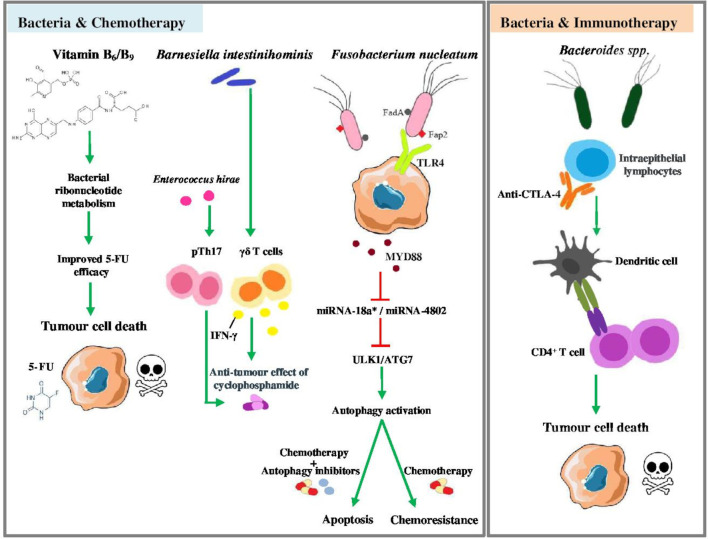
“Through Toll-like receptor 4 (TLR4) and myeloid differentiation factor 88 (Myd88) of the TLR signaling pathway, Fusobacterium induces the selective loss of two autophagy-related microRNAs (microRNA-18a [miR-18a] and microRNA-4802 [miR4802MYD88]), which activate autophagy, thereby reducing the antitumor activity of oxa…”
BackgroundInfluentialUnraveling the Complexities of Immune Checkpoint Inhibitors in Hepatocellular Carcinoma
Han, X., Sun, Q., Xu, M., Zhu, G., Gao, R., Ni, B., & Li, J. (2023) · Seminars in Liver Disease · doi:10.1055/s-0043-1776127 · Cited by 7
“96,97 Intestinal microbiota antigens can activate and mobilize DCs to promote the activation and proliferation of CD8 þ T cells, and its metabolite inosine can enhance the immune activity of tumor cells.”
BackgroundHuang, W., Jiang, T., He, J., Ruan, J., Wu, B., Tao, R., Xu, P., Wang, Y., Chen, R., Wang, H., et al. (2025) · Probiotics and Antimicrobial Proteins · doi:10.1007/s12602-025-10471-z · Cited by 9
“Alterations in the intestinal flora are associated with resistance to chemotherapeutic agents or immune checkpoint inhibitors (ICI), while supplementation with different bacterial species restores responses to anticancer drugs [139].”
Microbiota and Hematological Diseases
D’Angelo, G. (2022) · International Journal of Hematology-Oncology and Stem Cell Research · doi:10.18502/ijhoscr.v16i3.10139 · Cited by 11
Chen, X., Wu, J., Zhou, B., Zhu, M., Zhang, J., Zhou, N., Zhu, Y. Z., Zhang, X., Duan, X., & Men, K. (2024) · ACS Applied Materials & Interfaces · doi:10.1021/acsami.4c07684 · Cited by 7
Recent progress on drug delivery systems of regulating intratumoral bacteria for tumor therapy
Feng, J. Q., Liu, Y., Gong, L., Liu, C., Xiao, C., Chen, L., Jin, M., Gao, Z., Huang, W., & Li, Y. (2025) · Chinese Chemical Letters · doi:10.1016/j.cclet.2025.110907 · Cited by 7
Loganathan, T., & Doss, C. G. P. (2025) · PLoS ONE · doi:10.1371/journal.pone.0324742 · Cited by 7
Microbiome dynamics in breast cancer: Mechanisms, therapeutic impacts and research gaps
Effiong, M. E., Ikeji, N. C., Bella-Omunagbe, M., Afolabi, I. S., & Chinedu, S. N. (2025) · Critical Reviews in Oncology/Hematology · doi:10.1016/j.critrevonc.2025.104879 · Cited by 8
Hong, T., Wang, L., Ding, Y., Yi, L., Han, M., Gu, M., & Wu, J. (2025) · Cancer Science · doi:10.1111/cas.70201 · Cited by 10
“Although gut dysbiosis is linked to multiple cancers [7], its role in cervical cancer remains insufficiently explored (Table 1).”
Minaei, E., Joyce, P. M., Wade, S. J., Brownlee, C., Penney, C., Ranson, M., Aghmesheh, M., Sluyter, R., & Vine, K. L. (2025) · Journal of Controlled Release · doi:10.1016/j.jconrel.2025.114143 · Cited by 8
Loilome, W., Dokduang, H., Suksawat, M., & Padthaisong, S. (2021) · Expert Opinion on Investigational Drugs · doi:10.1080/13543784.2021.1955102 · Cited by 8
Bugs as Drugs: Understanding the Linkage between Gut Microbiota and Cancer Treatment
Rana, D., Salave, S., Perla, A., Nadkarni, A., Kolhe, S., Jindal, A. B., Mandoli, A., Dwivedi, P., & Benival, D. M. (2022) · Current Drug Targets · doi:10.2174/1389450123666220309101345 · Cited by 6
Targeting the microbiota-mitochondria crosstalk in neurodegeneration with senotherapeutics
Homolak, J. (2023) · Advances in protein chemistry and structural biology · doi:10.1016/bs.apcsb.2023.02.018 · Cited by 10
Li, M., Wu, X. Q., & Lee, T. K. (2025) · Clinical and Molecular Hepatology · doi:10.3350/cmh.2025.0476 · Cited by 7
Gut microbiota drives cancer evolution and therapy resistance
Min, S., Zhang, Y., Zhang, H., & Liu, Q. (2026) · Molecular Cancer · doi:10.1186/s12943-025-02564-8 · Cited by 10
“Species within the GM play a crucial role in this intricate landscape, exerting significant influence on cancer progression, immune modulation, and chemosensitivity through various mechanisms [161].”
Yang, X., Zhang, K., Xia, L., & Li, J. (2026) · iMetaMed · doi:10.1002/imm3.70030 · Cited by 5
Xu, Y., Chang, S., Qian, J., Yu, X., Wang, S., Shao, L., & Yu, W. (2024) · Clinical & Translational Oncology · doi:10.1007/s12094-024-03710-2 · Cited by 7
“Studies have shown that the gut microbiota may affect host anti-tumor immunity by regulating the host immune system and tumor microenvironment [8, 9].”
Ding, Y., Zhang, L., Zhao, W., Wang, T., Shi, Y., Zhuang, C., & Qu, Z. (2025) · Molecular Nutrition & Food Research · doi:10.1002/mnfr.70103 · Cited by 5
“Accumulating evidence underscores pivotal role of cellular intrinsic metabolites in bacteria-associated carcinogenesis [52].”
Huang, R., Jin, X., Liu, Q., Bai, X., Wu, Y., Wang, Y., He, X., Jiang, Z., Wang, L., & Zhu, W. (2025) · AMB Express · doi:10.1186/s13568-025-01910-9 · Cited by 6
“Numerous studies have shown that the gut microbiome can influence tumor progression through various mechanisms, and even modulate the efficacy of anti-cancer treatments (Cheng et al. 2020; Fernandes et al. 2022; Gopalakrishnan et al. 2018; Park et al. 2022).”
Nourishing the gut: the impact of diet on host–gut microbiota interaction
Masi, D., Roy, T. L., Adriouch, S., & Clément, K. (2024) · Current Opinion in Clinical Nutrition & Metabolic Care · doi:10.1097/mco.0000000000001009 · Cited by 10
Lim, E. S. Y., Ong, Y., Chou, Y., & Then, C. K. (2024) · Critical Reviews in Oncology/Hematology · doi:10.1016/j.critrevonc.2024.104468 · Cited by 6
Mechanisms and benefits of phytochemicals as an alternative therapeutic strategy in female cancers
Zhao, Y., Deng, S., Cao, D., Lin, C., Xu, M., Wang, J., Luo, L., Liu, S., & Liu, H. (2025) · Chinese Herbal Medicines · doi:10.1016/j.chmed.2025.04.002 · Cited by 11
“This interaction can result in beneficial effects, making gut microbiota a promising target for enhancing the efficacy of tumor treatment while minimizing side effects (Cheng, Wu, & Yu, 2020; Ma et al., 2019).”
Ding, K., Huo, Y., Fu, K., Chen, Y., Xia, L., Zhan, J., Liu, J., Liu, J., Liu, Y., Zhang, M., et al. (2025) · Microbiological Research · doi:10.1016/j.micres.2025.128342 · Cited by 5
Wang, J., Liu, Q., Jin, S., Yang, B., Wang, C., Tan, Y., Feng, W., Tao, J., Wang, H., Wang, Y., et al. (2025) · Clinical and Translational Gastroenterology · doi:10.14309/ctg.0000000000000841 · Cited by 4
Are we there yet? Gut microbiota for cancer diagnosis, prognosis and treatment
Ordóñez, C., Zurita, S., Ramírez, G., Cordeiro, F. B., García, K., Garaicoa, F. H., Orellana‐Manzano, A., Onofre, L. A. S., Pogo, J., & Carvajal‐Aldaz, D. (2025) · Seminars in Oncology · doi:10.1016/j.seminoncol.2025.152376 · Cited by 3
Omar, S. F. N. S., Lim, Y. A. L., Zafirah, A. R. S., Muslim, A., Ayub, Q., Nordin, S. A., Joseph, V. N. M. S., Musa, S., Jinam, T. A., & Ngui, R. (2025) · Scientific Reports · doi:10.1038/s41598-025-06983-x · Cited by 3
“Despite previous reports indicating that cancer treatment influences gut microbiota profiles 32,33 , this study did not observe significant differences in microbial species richness and composition between patients receiving treatment and those without symptoms before treatment.”
Altered gut microbiota and short-chain fatty acid in acute ischaemic stroke with active cancer
Song, W., Lin, X., Xia, G., Ren, Y., Gao, X., Shen, L., Wu, Q., & Yin, J. (2025) · Stroke and Vascular Neurology · doi:10.1136/svn-2025-004217 · Cited by 5
The interplay of the microbiome and breast cancer: beyond the gut: a narrative review
Singh, P. K., Rathi, D., Shweliya, M. A., Farooq, A., Anfaal, Z., Saleem, N. U. A., Hamza, M., Qadri, M., Rath, S., Hemida, M. F., et al. (2025) · Annals of Medicine and Surgery · doi:10.1097/ms9.0000000000004108 · Cited by 6
Roy, S., Ray, D., Laha, I., & Choudhury, L. (2024) · Cancer Investigation · doi:10.1080/07357907.2024.2301733 · Cited by 3
“A 2017 study on CRC by Gao et al. reported a prominent increase in the ratio of Ascomycota:Basidiomycota, coupled with the enrichment of the fungal members of Microascaceae and Sordariaceae families in patients suffering from CRC, in comparison to healthy individuals used as controls (62).”
BackgroundInfluentialJeong, Y., Hsieh, P.-H., Phal, Y. D., Bhargava, R., & Irudayaraj, J. (2024) · Analytical Chemistry · doi:10.1021/acs.analchem.4c00894 · Cited by 3
Liu, W., Hu, X., Choy, Y.-N., Lai, W., Xu, H., Zeng, Y., Lan, Q., Liu, L., Yue, R.-B., & Chu, Z. (2025) · Gastric Cancer · doi:10.1007/s10120-025-01587-w · Cited by 3
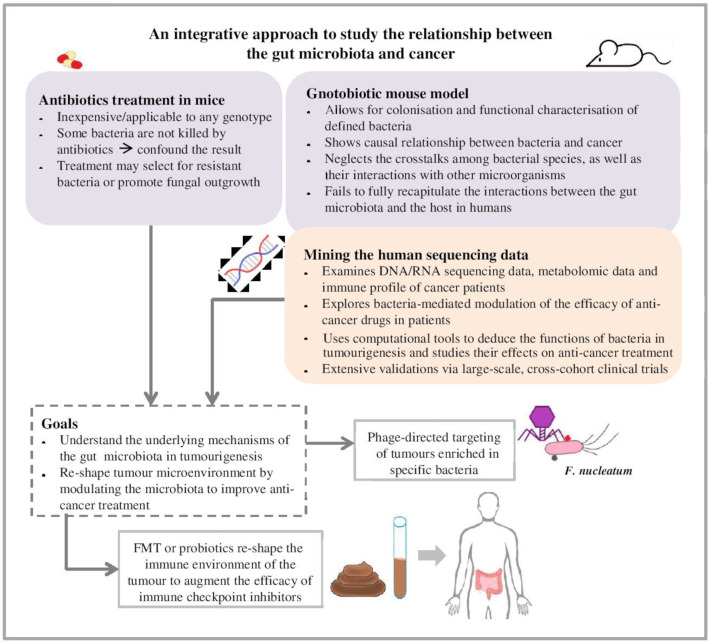
“Strategies such as antibiotics, fecal microbiota transplantation, probiotics, and dietary modifications have been shown to enhance the efficacy of GI cancer treatments and mitigate related complications [29].”
Fiala, O., Buti, S., Fujita, K., de Liaño, A. G., Fukuokaya, W., Kimura, T., Yanagisawa, T., Giannatempo, P., Angel, M. O., Mennitto, A., et al. (2025) · Clinical & Experimental Metastasis · doi:10.1007/s10585-025-10335-4 · Cited by 4
“Additionally, gut microbiota can modulate the efficacy of anti-cancer therapies [22–24].”
Gut microbiome and lung cancer: mechanisms, interactions, and dietary interventions
Chakraborty, J., Singh, N. L., & Das, B. K. (2025) · Gut Microbes Reports · doi:10.1080/29933935.2025.2501313 · Cited by 3
Sharma, V., Malla, M. A., Kori, R. K., Yadav, R. S., & Azam, Z. (2021) · The Open Microbiology Journal · doi:10.2174/1874285802115010177 · Cited by 7
The interplay between anticancer challenges and the microbial communities from the gut
Hobson, C. A., Bonacorsi, S., Baruchel, A., Tenaillon, O., & Birgy, A. (2022) · European Journal of Clinical Microbiology & Infectious Diseases · doi:10.1007/s10096-022-04435-2 · Cited by 3
Human microbiota: role in cancer progression and therapy
Rais, A., Chand, P., Malik, M., & Prasad, T. (2022) · Elsevier eBooks · doi:10.1016/b978-0-323-96128-8.00006-7 · Cited by 3
Gloria, L. D., & Niccolai, E. (2022) · Exploration of Immunology · doi:10.37349/ei.2022.00078 · Cited by 3
Kashyap, S., & Das, A. (2023) · Acta Microbiologica et Immunologica Hungarica · doi:10.1556/030.2023.02054 · Cited by 5
Najjary, S., Kros, J. M., Stricker, B. H. C., Ruiter, R., Shuai, Y., Kraaij, R., Steen, K. V., van der Spek, P. J., van Eijck, C. H. J., Ikram, M. A., et al. (2024) · Cancer Medicine · doi:10.1002/cam4.6860 · Cited by 4
“45,46 47–50 Firmicutes are one of the largest phyla of gram-positive bacteria living in the human intestine 51 and are associated with obesity and several pathological conditions.”
BackgroundWang, H., Kim, R., Wang, Y., Furtado, K. L., Sims, C. E., Tamayo, R., & Allbritton, N. L. (2024) · Frontiers in Bioengineering and Biotechnology · doi:10.3389/fbioe.2024.1382389 · Cited by 6
“Commensal microbiota also plays an essential role in the defense against pathogens (Cheng et al., 2020; Khan et al., 2021).”
BackgroundGut microbiome in dermatology – A narrative review
Pai, V. V., Sarath, A. P., & Kerkar, Z. (2025) · Indian Journal of Dermatology Venereology and Leprology · doi:10.25259/ijdvl_1094_2024 · Cited by 4
Non-small Cell Lung Cancer, Immunotherapy and the Influence of Gut Microbiome
Raziq, M. F., Manzoor, H., & Kayani, M. U. R. (2025) · Current Microbiology · doi:10.1007/s00284-025-04408-6 · Cited by 4
“Emerging evidence indicates that targeted manipulation of the gut microbiome through approaches such as probiotics, fecal microbiota transplantation (FMT), and dietary interventions could significantly enhance immunotherapy efficacy in patients with NSCLC [49, 72].”
Cekikj, M., Jakimovska, M., Kalajdzhiski, S., Özcan, O., & Sezerman, O. U. (2022) · Applied Sciences · doi:10.3390/app12094094 · Cited by 5
Tian, T., Zhou, Y., Xu, Y., & Xu, Y. (2023) · Heliyon · doi:10.1016/j.heliyon.2023.e16417 · Cited by 3
Yue, S., Zhang, Z., Bian, F., Zhang, Y., Gao, C., Zhu, Y., Li, J., & Picimbon, J. (2023) · Microbiology Research · doi:10.3390/microbiolres14030059 · Cited by 2
Colorectal cancer and gut microbiota
Ereemeeva, I. A., Багдасарова, Д. В., Артёмова, Е. В., Андреевна, К. А., & Феденко, А. А. (2024) · P A Herzen Journal of Oncology · doi:10.17116/onkolog20241302160 · Cited by 2
Luo, C., Zhang, W., Zhu, J., Qiu, T., & Fang, Q. (2024) · Heliyon · doi:10.1016/j.heliyon.2024.e33194 · Cited by 2
“Previous studies demonstrated that the gut microbiota of cancer patients had interaction effects with chemotherapy drugs [34 – 36].”
ResultAl-Matouq, J. A., Hawra, A., Alibrahim, N., Alsaffar, N., Radwan, Z. H., & Ali, M. D. (2025) · Cancers · doi:10.3390/cancers17020226 · Cited by 3
Xu, X., Xiong, S., Du, T., Liu, Q., Huang, X., Liu, C., Zhao, X., Xiong, T., & Xie, M. (2025) · Food Bioscience · doi:10.1016/j.fbio.2025.106672 · Cited by 4
Kan, Y., Liu, Y., Zhao, L., Jiang, C., Pang, W., Zhang, B., Lin, W., & Hu, J. (2025) · Food Science & Nutrition · doi:10.1002/fsn3.70789 · Cited by 2
“Evidence from murine models and cancer patients indicates that targeting the gut microbiota can alleviate intestinal mucositis and enhance the efficacy of anti-cancer drugs (Cheng et al. 2020).”
Kaźmierczak-Siedlecka, K., Kucharski, R., Stachowska, E., Pelikant‐Małecka, I., Marano, L., Makarewicz, W., Kalinowska, M., Dambrauskas, Z., & Kalinowski, L. (2026) · Frontiers in Pharmacology · doi:10.3389/fphar.2026.1732712 · Cited by 2
“Similarly, Bacteroides fragilis enhances the efficacy of anti–CTLA-4 therapy by inducing Th1-type immune responses in lymph nodes and promoting the maturation of intratumourous dendritic cells (DCs) (Cheng W. Y. et al., 2020).”
Song, W., Liu, S., Zang, D., Meng, W., Liu, C., & Chen, J. (2026) · Frontiers in Oncology · doi:10.3389/fonc.2025.1683347 · Cited by 4
“In order to develop gut microbiota-based antitum anti-tumor or therapies, the identi fi cation of target gut bacterial species is required (59).”
Unraveling the diagnostic and prognostic signatures of oral microbiota in head and neck cancer
Sung, H., Hyun, D.-W., Whon, T. W., Kim, P. S., Hyun, K. D., Lee, J., Lee, S.-Y., Choi, J.-W., Yoo, J.-H., Jung, M.-J., et al. (2026) · BMC Biology · doi:10.1186/s12915-026-02573-z · Cited by 2
“The associations between the microbiome and patient outcomes suggest that identifying oral microbiota with prognostic potential can offer valuable insights for future applications [99, 100].”
Stepanyan, A., Kotsafti, A., Rosato, A., Castagliuolo, I., Scarpa, M., Scarpa, M., on behalf of the IMMUNOREACT Study Group, Agostini, M., Angriman, I., Antoniutti, M., et al. (2026) · British Journal of Cancer · doi:10.1038/s41416-026-03443-9 · Cited by 3
Liu, J., Zhao, P., Jiang, D., Li, S. B., Jin, C., Xu, D., Wang, X. M., Chen, Y., Tang, B., & Qu, X. (2026) · Gut Microbes · doi:10.1080/19490976.2026.2672791 · Cited by 3
“7,8 The advancement of precision medicine has underscored the critical importance of personalized approaches in cancer treatment.”
Molecular studies on the impact of microbiome on anticancer drug resistance
Zhou, K., Lu, P., Xu, H., Wang, L., & Liang, X. (2026) · Frontiers in Immunology · doi:10.3389/fimmu.2026.1848345 · Cited by 2
Yang, M., Zhu, Y., Li, Q., Deng, Z., Xu, C., Wei, X., Ma, Y., Ding, C., Zhang, M., Ma, S., et al. (2026) · Acta Pharmaceutica Sinica B · doi:10.1016/j.apsb.2026.06.032 · Cited by 2
“…bacterial infections, such as Helicobacter pylori , drive tumorigenesis through mechanisms like activating the ß -catenin signaling pathway, while CRC patients exhibit enriched abundances of specific bacteria- Bacter-oides fragilis , Fusobacterium nucleatum , etc., in their fecal microbiota 36 .”
Microbiome and cancer: mechanistic insights, diagnostic potential, and therapeutic strategies
Kumar, V., Chaudhary, A., Gautam, M., Verma, P., & Singh, M. (2026) · Frontiers in Cell and Developmental Biology · doi:10.3389/fcell.2026.1844436 · Cited by 3
“Studies show that gut microbiota composition can influence the efficacy of chemotherapy, radiotherapy, and immunotherapy, with certain bacterial species enhancing or inhibiting therapeutic outcomes (Cheng et al., 2020; Lei et al., 2025).”
Javadi, M. M., Ahmadbeigi, G., Ataollahi, H., Boroomand, S., Kia, S. K., Soleimani, N., Zia-Jahromi, N., & Hedayati, M. (2026) · Biomedicine & Pharmacotherapy · doi:10.1016/j.biopha.2026.119745 · Cited by 3
Yang, Z., Chen, K., Liu, Y., Wang, X., Wang, S., & Hao, B. (2024) · Veterinary World · doi:10.14202/vetworld.2024.712-719 · Cited by 2
“Intestinal microbiota is essential for the absorption and transformation of nutrients in the animal’s daily diet, which organically maintains the entire homeostatic network of the body through its pivotal role in the control of bacteria and inflammation [34].”
BackgroundRole of mucositis in predicting gut microbiota composition in people with cancer
Scott, J. S., Li, A., & Wardill, H. R. (2024) · Current Opinion in Supportive and Palliative Care · doi:10.1097/spc.0000000000000700 · Cited by 2
“In the context of cancer and its treatment, the gut microbiota has been an area of intense focus and growth [5,6].”
BackgroundJia, Z., Liu, X., & Liao, W. (2024) · Microbiology Spectrum · doi:10.1128/spectrum.03948-23 · Cited by 3
“For instance, gut microbes associated with inflammation mitigation have been linked to reduced chemotherapy efficacy, whereas taxa associated with colitis have shown correlations with improved response to chemotherapy (11, 27).”
Assessment of Microbiome Signature for Predicting Prognosis of Gastrointestinal Cancers
Mehrabadi, S. (2024) · Current Cancer Therapy Reviews · doi:10.2174/0115733947333326240925092332 · Cited by 2
Exploring the Gut Microbiota as a Promising Target for Breast Cancer Treatment
Dari, M. A. G., Ghaedrahmati, F., Moalemnia, A., Dezfouli, M. A., Savari, F., Zamani, A. M., Ahmadi, B., Nazarbeigi, M., Farzaneh, M., & Zehtabi, M. (2025) · Current Molecular Medicine · doi:10.2174/0115665240351595250213103451 · Cited by 2
Li, J., Zhu, Y., Chang, Q., Gong, Y., Wan, J., & Xu, S. (2025) · Polish Journal of Microbiology · doi:10.33073/pjm-2025-006 · Cited by 2
“Over the decades, variations in the GM composition have been found to be related to diverse human pathologies, such as obesity (Davis 2016; Al-Assal et al. 2018), autoimmune diseases (Xu et al. 2019; Zhang et al. 2020b) and several types of cancers (Vivarelli et al. 2019; Cheng et al. 2020).”
Disease trends in a young Chinese cohort according to fecal metagenome and plasma metabolites
Jie, Z., Liang, S., Ding, Q., Li, F., Sun, X., Lin, Y., Chen, P., Cai, K., Zhou, H., Lu, H., et al. (2021) · Medicine in Microecology · doi:10.1016/j.medmic.2021.100037 · Cited by 2
Wu, C., & Tseng, C. (2023) · Springer eBooks · doi:10.1007/978-981-19-4492-5_5 · Cited by 2
Self-citationLactobacillus on Recovering of Immune-Damage by Chemotherapy (Cancer Treatment)Preprint
Yue, S., Zhang, Z., Bian, F., Zhang, Y., Chen, G., Li, J., & Picimbon, J. (2022) · Preprints.org · doi:10.20944/preprints202202.0218.v1 · Cited by 2
“Given the link between the gut and the immune system, gut microbes (or microflora) have become an important target to boost T cells and shape a better efficiency of cancer therapy [35-36].”
BackgroundEmerging Role of Gut Microbiome in Cancer Immunotherapy
Bharti, M., Modeel, S., Yadav, S., Yadav, P., Siwach, S., Dolkar, P., Nagar, S., Negi, T., & Negi, R. K. (2023) · Springer eBooks · doi:10.1007/978-981-99-3126-2_18 · Cited by 1
Human microbiome, cancer and cancer therapy
Veerasamy, R., Karunakaran, R., & Vasu, S. (2024) · Elsevier eBooks · doi:10.1016/b978-0-443-15435-5.00007-4 · Cited by 1
Johansen, S. U., Goll, R., Nordborg, A., Vernstad, K., Jensen, E., Florholmen, J. R., & Hansen, T. (2024) · Neuroendocrinology · doi:10.1159/000543247 · Cited by 1
“In addition, altered microbiota is reported to be associated with resistance to both chemotherapy and immunotherapy [12].”
Ung, W., & Bonavida, B. (2025) · Critical Reviews™ in Oncogenesis · doi:10.1615/critrevoncog.2025058249 · Cited by 1
Microbiome-mediated immune modulation in tumor microenvironment
Richards, J., Davis, E. L., Shakila, L., Narayanan, J., Aggarwal, S., Mishra, A., Venkata, K. K. M., Walther, B. K., & Dominic, A. (2025) · International review of cytology · doi:10.1016/bs.ircmb.2024.12.012 · Cited by 2
Worldwide Research Trends on Lung Cancer and Microbiota: A Bibliometric and Visualized Analysis
Ren, Y., Tan, S.-Y., Wang, Q., He, J., You, F., Ma, Q., & You, L. (2025) · Journal of Multidisciplinary Healthcare · doi:10.2147/jmdh.s516036 · Cited by 1
“4,7,8 Compared with host genetics, the microbiota could be more easily changed through several usage strategies, 9,10 the modulation of microbiota has also emerged as a frontier in anticancer therapy research.”
Omotayo, J. O., Ajibade, O. A., Oyovwi, M. O., & Oyawoye, O. M. (2025) · Food Chemistry Advances · doi:10.1016/j.focha.2025.101098 · Cited by 1
Cecil, A., Gentschev, I., Prehn, C. P., Hauck, S. M., Witting, M. A., Petrov, I. S., Ye, M., Othman, E. M., & Szalay, A. A. (2025) · Biomedicine & Pharmacotherapy · doi:10.1016/j.biopha.2025.118750 · Cited by 1
Recombinant live biotherapeutics: A new frontier in peptide drug biosynthesis and precision delivery
Chawla, M., Bhange, O., & Das, B. (2025) · Progress in molecular biology and translational science · doi:10.1016/bs.pmbts.2025.12.002 · Cited by 1
García-Gutiérrez, E., Arbulu, S., Oliver, C., Kumar, S., Dam, S. A., Jakobi, B., Pennone, V., Sardá, F. A. H., Mukherjee, A., & Cotter, P. D. (2026) · Frontiers in Microbiology · doi:10.3389/fmicb.2025.1643257 · Cited by 2
“Importantly, disruptions in the gut microbiota have been implicated in cancer development, particularly colorectal cancer, brought about through dysbiotic modulation of inflammation and production of carcinogenic metabolites (Cheng et al., 2020).”
Assessing the nutritional value and health risks of special low‑protein foods: narrative review
Ziadlou, M., & MacDonald, A. (2026) · Orphanet Journal of Rare Diseases · doi:10.1186/s13023-026-04266-w · Cited by 2
Wu, L., Li, S., Han, F., Guo, J., Zhang, X., & Xu, L. (2026) · Frontiers in Microbiology · doi:10.3389/fmicb.2026.1801367 · Cited by 3
“Instead, they promote the generation of beneficial AhR agonists like indole-3-propionic acid (IPA), which possesses antioxidant and neuroprotective properties and is linked to renal and cardiovascular health benefits (Heiss and Olofsson, 2019).”
The Human Gut Microbiota and Gastrointestinal Cancer: Current Status and Therapeutic Perspectives
Chowdhury, G., & Ramamurthy, D. (2022) · Springer eBooks · doi:10.1007/978-981-16-7672-7_4 · Cited by 1
Косарева, П. В., Konev, R. A., Godovalov, A. P., Sivakova, L. V., & Самоделкин, Е. И. (2023) · Bulletin of Siberian Medicine · doi:10.20538/1682-0363-2023-3-120-131 · Cited by 1
The Microbiome: A New Frontier in Overcoming Drug Resistance in Breast Cancer
Luvhengo, T. E., Miya, T. V., Basera, A., Fadebi, O. O., Mehrotra, R., & Dlamini, Z. (2024) · Springer eBooks · doi:10.1007/978-3-031-52860-6_11 · Cited by 1
Alharrasi, R., Balushi, A. Y. A., Kindi, F. A., Kindi, N. A. A., & Kamel, A. H. M. (2025) · Cureus · doi:10.7759/cureus.89943 · Cited by 4
Gut Microbiome in Health and Gastrointestinal Cancer
Lau, H. C.-H. (2023) · Springer eBooks · doi:10.1007/978-981-19-4492-5_2 · Cited by 1
Metadata
- Authors
- Cheng, W. Y., Wu, C.-Y., & Yu, J.
- Affiliations
- Chinese University of Hong Kong (HK)
- China Medical University (TW)
- Corresponding author
- Yu, Jun
- ORCID
- Venue
- Gut
- Publisher
- BMJ
- Published
- 2020-08-05
- Volume
- 69
- Issue
- 10
- Pages
- 1867-1876
- ISSN
- 0017-5749 (ISSN-L)
- 1468-3288
- PMC
- PMC7497589
- OpenAlex
- W3047455092
- Semantic Scholar
- 5f8d3d58386a82442ee54bfba0610c6f19211eff
- Cited by
- 384
- References
- 135
- Citations by year
- 2026: 38 · 2025: 78 · 2024: 59 · 2023: 71 · 2022: 98 · 2021: 37 · 2020: 2
- FWCI
- 5.00
- Type
- journal article
- Language
- en
- Open access
- hybrid
- doi.org
- Licence
- Locations
- Gut (publishedVersion, cc-by-nc)
- PubMed Central (publishedVersion, cc-by-nc)
- PubMed (publishedVersion)
- HighWire Press Open Archive (submittedVersion)
- Topics
- Life Sciences › Biochemistry, Genetics and Molecular Biology › Molecular Biology › Gut microbiota and health
- Life Sciences › Biochemistry, Genetics and Molecular Biology › Biotechnology › Bacterial Cancer Therapy
- Health Sciences › Medicine › Oncology › Cancer Immunotherapy and Biomarkers
- Keywords
- gut microbiota, cancer immunotherapy, immune checkpoint inhibitors, chemoresistance, microbiota modulation, inflammation and cancer, tumourigenesis, microbiome-targeted therapy, cancer treatment efficacy
- MeSH terms
- Gastrointestinal Microbiome, Antineoplastic Agents, Humans, Neoplasms, Treatment Outcome, Dysbiosis
About these checks
Registry, retraction, Cites and statistics results are computed, not judged, with one exception: a printed reference that no index lists is read once by a model before it counts as a citation error. Claims are extracted by a model and kept only when their quote appears verbatim in the text; each cited source is then checked, with a model’s help, for whether it says what the claim relies on. Those verdicts can be wrong — read the claim’s quote and the cited source before relying on one.
Statistics and arithmetic are recomputed, not judged.
Confidence bands are shown only for fields calibrated on our annotated test set. None is calibrated yet, so no band is shown.
What counts as a claim ›How we measure confidence ›How we check this ›
Are you an author, or do you see a problem with this page? Request a review
Data sources
Bibliographic data: Semantic Scholar, OpenAlex, Crossref.
Contains information from the Semantic Scholar Academic Graph Datasets, made available under the ODC Attribution License (ODC-BY 1.0).
Semantic Scholar’s data is described in: Kinney, R., et al. (2023). The Semantic Scholar Open Data Platform. arXiv:2301.10140.
