

The role of gut microbiota in cancer treatment: friend or foe?
Open accessThe DOI matches its Crossref record; 135 of the 135 references it cites were found in a registry or an index.
Abstract
The gut microbiota has been implicated in cancer and shown to modulate anticancer drug efficacy. Altered gut microbiota is associated with resistance to chemo drugs or immune checkpoint inhibitors (ICIs), whereas supplementation of distinct bacterial species restores responses to the anticancer drugs. Accumulating evidence has revealed the potential of modulating the gut microbiota to enhance the efficacy of anticancer drugs. Regardless of the valuable findings by preclinical models and clinical data of patients with cancer, a more thorough understanding of the interactions of the microbiota with cancer therapy helps researchers identify novel strategy for cancer prevention, stratify patients for more effective treatment and reduce treatment complication. In this review, we discuss the scientific evidence on the role of gut microbiota in cancer treatment, and highlight the latest knowledge and technologies leveraged to target specific bacteria that contribute to tumourigenesis. First, we provide an overview of the role of the gut microbiota in cancer, establishing the links between bacteria, inflammation and cancer treatment. Second, we highlight the mechanisms used by distinct bacterial species to modulate cancer growth, immune responses, as well as the efficacy of chemotherapeutic drugs and ICIs. Third, we demonstrate various approaches to modulate the gut microbiota and their potential in translational research. Finally, we discuss the limitations of current microbiome research in the context of cancer treatment, ongoing efforts to overcome these challenges and future perspectives.
Overview
The claims and statistics of this paper haven’t been checked yet.
Free: it reads the open-access text and checks the first 5 claims that cite a source we can check. Create a free account to check every claim.
Integrity signals
Registry
Cites
Statistics
Figures
Verification
Claims the paper makes
The claims and statistics of this paper haven’t been checked yet.
Free: it reads the open-access text and checks the first 5 claims that cite a source we can check. Create a free account to check every claim.
Claims other papers make about this one
Each is checked against this paper’s own text: does it say what the citing paper says it does?
The cited source says what the claim attributes to it.
In the citing paper
“The chemotherapeutic agent, cyclophosphamide, was shown to alter intestinal microbiota in mice and promote “pathogenic” Th17 cell production [422]; however, removing gut microbiota via antibiotic treatment led to drug resistance [423, 424].”
From Tumor microenvironment signaling and therapeutics in cancer progression (2023) · cites this paper as [422]
Self-check
Percentages, sums and reported differences re-computed from the paper’s own numbers.
The self-check needs the paper’s full text.
Citations
Cites
PD-1 and PD-L1 Immune Checkpoint Blockade to Treat Breast Cancer
Hartkopf, A. D., Taran, F.-A., Wallwiener, M., Walter, C. B., Krämer, B., Grischke, E.-M., & Brucker, S. Y. (2016) · Breast Care · doi:10.1159/000453569 · Cited by 30,845
Adverse Renal Effects of Immune Checkpoint Inhibitors: A Narrative Review
Wanchoo, R., Karam, S., Uppal, N. N., Barta, V. S., Deray, G., Devoe, C., Launay-Vacher, V., Jhaveri, K. D., & on behalf of Cancer and Kidney International Network Workgroup on Immune Checkpoint Inhibitors (2017) · American Journal of Nephrology · doi:10.1159/000455014 · Cited by 15,256
Diet rapidly and reproducibly alters the human gut microbiome
David, L. A., Maurice, C. F., Carmody, R. N., Gootenberg, D. B., Button, J. E., Wolfe, B. E., Ling, A. V., Devlin, A. S., Varma, Y., Fischbach, M. A., et al. (2014) · Nature · doi:10.1038/nature12820 · Cited by 10,100
Enterotypes of the human gut microbiome
MetaHIT Consortium (additional members), Arumugam, M., Raes, J., Pelletier, E., Le Paslier, D., Yamada, T., Mende, D. R., Fernandes, G. R., Tap, J., Bruls, T., et al. (2011) · Nature · doi:10.1038/nature09944 · Cited by 7,548
Gut microbiome influences efficacy of PD-1-based immunotherapy against epithelial tumors
Routy, B., Le Chatelier, E., Derosa, L., Duong, C. P. M., Alou, M. T., Daillère, R., Fluckiger, A., Messaoudene, M., Rauber, C., Roberti, M. P., et al. (2018) · Science · doi:10.1126/science.aan3706 · Cited by 5,671
Gut microbiome modulates response to anti-PD-1 immunotherapy in melanoma patients
Gopalakrishnan, V., Spencer, C. N., Nezi, L., Reuben, A., Andrews, M. C., Karpinets, T. V., Prieto, P. A., Vicente, D., Hoffman, K., Wei, S. C., et al. (2018) · Science · doi:10.1126/science.aan4236 · Cited by 4,812 · cited 2×
“61 Taken together, a ratio of ‘beneficial’ bacteria to ‘non-beneficial’ bacteria is suggested to predict clinical response.”
Cross-talk between Akkermansia muciniphila and intestinal epithelium controls diet-induced obesity
Everard, A., Belzer, C., Geurts, L., Ouwerkerk, J. P., Druart, C., Bindels, L. B., Guiot, Y., Derrien, M., Muccioli, G. G., Delzenne, N. M., et al. (2013) · Proceedings of the National Academy of Sciences · doi:10.1073/pnas.1219451110 · Cited by 4,511
Commensal Bifidobacterium promotes antitumor immunity and facilitates anti–PD-L1 efficacy
Sivan, A., Corrales, L., Hubert, N., Williams, J. B., Aquino-Michaels, K., Earley, Z. M., Benyamin, F. W., Man Lei, Y., Jabri, B., Alegre, M.-L., et al. (2015) · Science · doi:10.1126/science.aac4255 · Cited by 3,888
Host microbiota constantly control maturation and function of microglia in the CNS
Erny, D., Hrabě de Angelis, A. L., Jaitin, D., Wieghofer, P., Staszewski, O., David, E., Keren-Shaul, H., Mahlakoiv, T., Jakobshagen, K., Buch, T., et al. (2015) · Nature Neuroscience · doi:10.1038/nn.4030 · Cited by 3,569
Anticancer immunotherapy by CTLA-4 blockade relies on the gut microbiota
Vétizou, M., Pitt, J. M., Daillère, R., Lepage, P., Waldschmitt, N., Flament, C., Rusakiewicz, S., Routy, B., Roberti, M. P., Duong, C. P. M., et al. (2015) · Science · doi:10.1126/science.aad1329 · Cited by 3,488
The commensal microbiome is associated with anti-PD-1 efficacy in metastatic melanoma patients
Matson, V., Fessler, J., Bao, R., Chongsuwat, T., Zha, Y., Alegre, M.-L., Luke, J. J., & Gajewski, T. F. (2018) · Science · doi:10.1126/science.aao3290 · Cited by 3,107
Weber, J. S., D'Angelo, S. P., Minor, D., Hodi, F. S., Gutzmer, R., Neyns, B., Hoeller, C., Khushalani, N. I., Miller, W. H., Lao, C. D., et al. (2015) · The Lancet Oncology · doi:10.1016/s1470-2045(15)70076-8 · Cited by 2,676
Rubinstein, M. R., Wang, X., Liu, W., Hao, Y., Cai, G., & Han, Y. W. (2013) · Cell Host & Microbe · doi:10.1016/j.chom.2013.07.012 · Cited by 2,476
Intestinal inflammation targets cancer-inducing activity of the microbiota
Arthur, J. C., Perez-Chanona, E., Mühlbauer, M., Tomkovich, S., Uronis, J. M., Fan, T.-J., Campbell, B. J., Abujamel, T., Dogan, B., Rogers, A. B., et al. (2012) · Science · doi:10.1126/science.1224820 · Cited by 2,263
Commensal Bacteria Control Cancer Response to Therapy by Modulating the Tumor Microenvironment
Iida, N., Dzutsev, A., Stewart, C. A., Smith, L., Bouladoux, N., Weingarten, R. A., Molina, D. A., Salcedo, R., Back, T., Cramer, S., et al. (2013) · Science · doi:10.1126/science.1240527 · Cited by 2,251
Topalian, S. L., Sznol, M., McDermott, D. F., Kluger, H. M., Carvajal, R. D., Sharfman, W. H., Brahmer, J. R., Lawrence, D. P., Atkins, M. B., Powderly, J. D., et al. (2014) · Journal of Clinical Oncology · doi:10.1200/jco.2013.53.0105 · Cited by 2,222 · cited 1×
“59 A metagenomic analysis of faecal samples from non–small cell lung cancer (NSCLC) and renal cell carcinoma (RCC) patients receiving anti-PD-1 treatment indicated that non-responders had reduced levels of Akkermansia muciniphila , which had been shown to promote the recruitment of CCR9+CXCR3+CD4+…”
Molecular Analysis of Commensal Host-Microbial Relationships in the Intestine
Hooper, L. V., Wong, M. H., Thelin, A., Hansson, L., Falk, P. G., & Gordon, J. I. (2001) · Science · doi:10.1126/science.291.5505.881 · Cited by 2,202
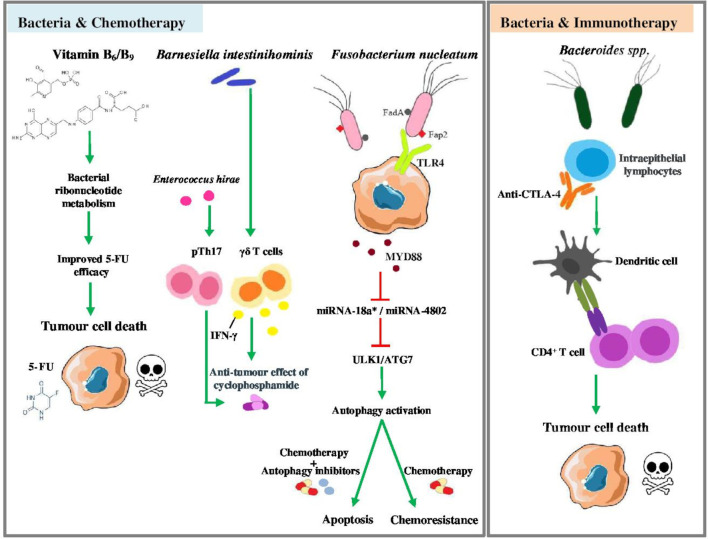
Fusobacterium nucleatum Promotes Chemoresistance to Colorectal Cancer by Modulating Autophagy
Yu, T., Guo, F., Yu, Y., Sun, T., Ma, D., Han, J., Qian, Y., Kryczek, I., Sun, D., Nagarsheth, N., et al. (2017) · Cell · doi:10.1016/j.cell.2017.07.008 · Cited by 2,198
The Intestinal Microbiota Modulates the Anticancer Immune Effects of Cyclophosphamide
Viaud, S., Saccheri, F., Mignot, G., Yamazaki, T., Daillère, R., Hannani, D., Enot, D. P., Pfirschke, C., Engblom, C., Pittet, M. J., et al. (2013) · Science · doi:10.1126/science.1240537 · Cited by 2,050 · cited 3×
“37 52 Mechanistically, E. hirae translocates from the small intestine to secondary lymphoid organs and increases the intratumorous CD8/Treg ratio, whereas B. intes-tinihominis accumulates in the colon and promotes the infiltration of IFN-γ -producing γδ T cells in cancer lesions.”
Fusobacterium nucleatum infection is prevalent in human colorectal carcinoma
Castellarin, M., Warren, R. L., Freeman, J. D., Dreolini, L., Krzywinski, M., Strauss, J., Barnes, R., Watson, P., Allen-Vercoe, E., Moore, R. A., et al. (2012) · Genome Research · doi:10.1101/gr.126516.111 · Cited by 2,043
Genomic analysis identifies association of Fusobacterium with colorectal carcinoma
Kostic, A. D., Gevers, D., Pedamallu, C. S., Michaud, M., Duke, F., Earl, A. M., Ojesina, A. I., Jung, J., Bass, A. J., Tabernero, J., et al. (2012) · Genome Research · doi:10.1101/gr.126573.111 · Cited by 1,960
Population-based metagenomics analysis reveals markers for gut microbiome composition and diversity
Zhernakova, A., Kurilshikov, A., Bonder, M. J., Tigchelaar, E. F., Schirmer, M., Vatanen, T., Mujagic, Z., Vila, A. V., Falony, G., Vieira-Silva, S., et al. (2016) · Science · doi:10.1126/science.aad3369 · Cited by 1,914
Geller, L. T., Barzily-Rokni, M., Danino, T., Jonas, O. H., Shental, N., Nejman, D., Gavert, N., Zwang, Y., Cooper, Z. A., Shee, K., et al. (2017) · Science · doi:10.1126/science.aah5043 · Cited by 1,817
Helicobacter pylori and gastrointestinal tract adenocarcinomas
Peek, R. M., & Blaser, M. J. (2002) · Nature Reviews Cancer · doi:10.1038/nrc703 · Cited by 1,813
Wu, S., Rhee, K.-J., Albesiano, E., Rabizadeh, S., Wu, X., Yen, H.-R., Huso, D. L., Brancati, F. L., Wick, E., McAllister, F., et al. (2009) · Nature Medicine · doi:10.1038/nm.2015 · Cited by 1,812
Nanoparticles in the clinic: an update
Anselmo, A. C., & Mitragotri, S. (2019) · Bioengineering & Translational Medicine · doi:10.1002/btm2.10143 · Cited by 1,766
Zmora, N., Zilberman-Schapira, G., Suez, J., Mor, U., Dori-Bachash, M., Bashiardes, S., Kotler, E., Zur, M., Regev-Lehavi, D., Brik, R. B.-Z., et al. (2018) · Cell · doi:10.1016/j.cell.2018.08.041 · Cited by 1,695
Tumor Microbiome Diversity and Composition Influence Pancreatic Cancer Outcomes
Riquelme, E., Zhang, Y., Zhang, L., Montiel, M., Zoltan, M., Dong, W., Quesada, P., Sahin, I., Chandra, V., San Lucas, A., et al. (2019) · Cell · doi:10.1016/j.cell.2019.07.008 · Cited by 1,577
Analysis of Fusobacterium persistence and antibiotic response in colorectal cancer
Bullman, S., Pedamallu, C. S., Sicinska, E., Clancy, T. E., Zhang, X., Cai, D., Neuberg, D., Huang, K., Guevara, F., Nelson, T., et al. (2017) · Science · doi:10.1126/science.aal5240 · Cited by 1,574 · cited 1×
“68 69 Further study of 309 subjects showed that complementing the faecal immunochemical test (FIT) with the detection of F. nucleatum improved diagnostic performance of FIT in colon cancer screening.”
Gut microbiome–mediated bile acid metabolism regulates liver cancer via NKT cells
Ma, C., Han, M., Heinrich, B., Fu, Q., Zhang, Q., Sandhu, M., Agdashian, D., Terabe, M., Berzofsky, J. A., Fako, V., et al. (2018) · Science · doi:10.1126/science.aan5931 · Cited by 1,508
Gur, C., Ibrahim, Y., Isaacson, B., Yamin, R., Abed, J., Gamliel, M., Enk, J., Bar-On, Y., Stanietsky-Kaynan, N., Coppenhagen-Glazer, S., et al. (2015) · Immunity · doi:10.1016/j.immuni.2015.01.010 · Cited by 1,490
Human primary liver cancer–derived organoid cultures for disease modeling and drug screening
Broutier, L., Mastrogiovanni, G., Verstegen, M. M., Francies, H. E., Gavarró, L. M., Bradshaw, C. R., Allen, G. E., Arnes-Benito, R., Sidorova, O., Gaspersz, M. P., et al. (2017) · Nature Medicine · doi:10.1038/nm.4438 · Cited by 1,471
Wong, B. C.-Y., Lam, S. K., Wong, W. M., Chen, J. S., Zheng, T. T., Feng, R. E., Lai, K. C., Hu, W. H. C., Yuen, S. T., Leung, S. Y., et al. (2004) · JAMA · doi:10.1001/jama.291.2.187 · Cited by 1,435
Yachida, S., Mizutani, S., Shiroma, H., Shiba, S., Nakajima, T., Sakamoto, T., Watanabe, H., Masuda, K., Nishimoto, Y., Kubo, M., et al. (2019) · Nature Medicine · doi:10.1038/s41591-019-0458-7 · Cited by 1,429
Garrett, W. S. (2015) · Science · doi:10.1126/science.aaa4972 · Cited by 1,404
Pushalkar, S., Hundeyin, M., Daley, D., Zambirinis, C. P., Kurz, E., Mishra, A., Mohan, N., Aykut, B., Usyk, M., Torres, L. E., et al. (2018) · Cancer Discovery · doi:10.1158/2159-8290.cd-17-1134 · Cited by 1,400
Wirbel, J., Pyl, P. T., Kartal, E., Zych, K., Kashani, A., Milanese, A., Fleck, J. S., Voigt, A. Y., Palleja, A., Ponnudurai, R., et al. (2019) · Nature Medicine · doi:10.1038/s41591-019-0406-6 · Cited by 1,373
Chaput, N., Lepage, P., Coutzac, C., Soularue, E., Le Roux, K., Monot, C., Boselli, L., Routier, E., Cassard, L., Collins, M., et al. (2017) · Annals of Oncology · doi:10.1093/annonc/mdx108 · Cited by 1,310 · cited 2×
“F. prausnitzii has been associated with improved clinical response to immune checkpoint blockade, 54 63 but it has also been shown to mitigate intestinal inflammation in the context of inflammatory bowel disease.”
Suez, J., Zmora, N., Zilberman-Schapira, G., Mor, U., Dori-Bachash, M., Bashiardes, S., Zur, M., Regev-Lehavi, D., Ben-Zeev Brik, R., Federici, S., et al. (2018) · Cell · doi:10.1016/j.cell.2018.08.047 · Cited by 1,184
Helicobacter pylori: gastric cancer and beyond
Polk, D. B., & Peek, R. M. (2010) · Nature Reviews Cancer · doi:10.1038/nrc2857 · Cited by 1,158
A defined commensal consortium elicits CD8 T cells and anti-cancer immunity
Tanoue, T., Morita, S., Plichta, D. R., Skelly, A. N., Suda, W., Sugiura, Y., Narushima, S., Vlamakis, H., Motoo, I., Sugita, K., et al. (2019) · Nature · doi:10.1038/s41586-019-0878-z · Cited by 1,145
Fusobacterium nucleatum in colorectal carcinoma tissue and patient prognosis
Mima, K., Nishihara, R., Qian, Z. R., Cao, Y., Sukawa, Y., Nowak, J. A., Yang, J., Dou, R., Masugi, Y., Song, M., et al. (2016) · Gut · doi:10.1136/gutjnl-2015-310101 · Cited by 1,080
Thomas, A. M., Manghi, P., Asnicar, F., Pasolli, E., Armanini, F., Zolfo, M., Beghini, F., Manara, S., Karcher, N., Pozzi, C., et al. (2019) · Nature Medicine · doi:10.1038/s41591-019-0405-7 · Cited by 1,030
Dubin, K., Callahan, M. K., Ren, B., Khanin, R., Viale, A., Ling, L., No, D., Gobourne, A., Littmann, E., Huttenhower, C., et al. (2016) · Nature Communications · doi:10.1038/ncomms10391 · Cited by 987
Exploiting CRISPR-Cas nucleases to produce sequence-specific antimicrobials
Bikard, D., Euler, C. W., Jiang, W., Nussenzweig, P. M., Goldberg, G. W., Duportet, X., Fischetti, V. A., & Marraffini, L. A. (2014) · Nature Biotechnology · doi:10.1038/nbt.3043 · Cited by 986 · cited 1×
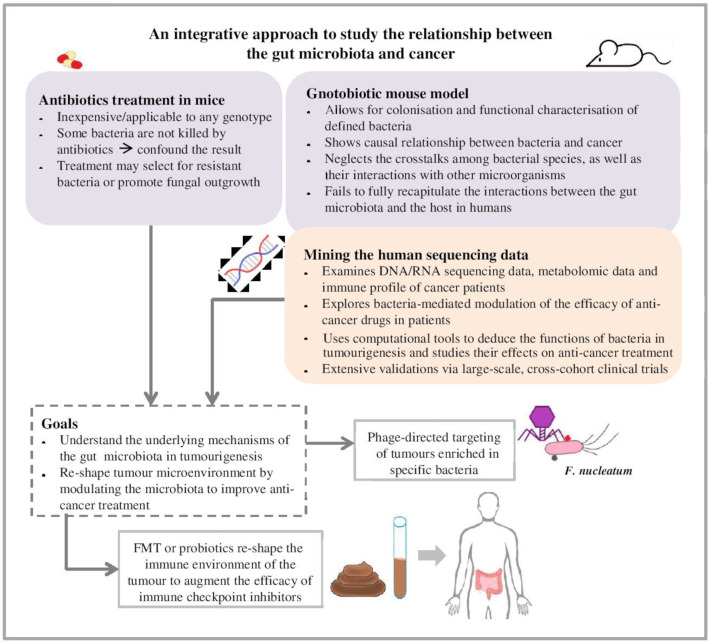
“Novel technologies, such as CRISPR-Cas9 system delivered by phage, 94 95 targeting specific bacteria at the microbiome–cancer interface are needed to minimise perturbation to the commensal microbiota, and to ensure effective cancer treatment.”
Modelling human development and disease in pluripotent stem-cell-derived gastric organoids
McCracken, K. W., Catá, E. M., Crawford, C. M., Sinagoga, K. L., Schumacher, M., Rockich, B. E., Tsai, Y.-H., Mayhew, C. N., Spence, J. R., Zavros, Y., et al. (2014) · Nature · doi:10.1038/nature13863 · Cited by 980
Michelotti, G. A., Machado, M. V., & Diehl, A. M. (2013) · Nature Reviews Gastroenterology & Hepatology · doi:10.1038/nrgastro.2013.183 · Cited by 974 · cited 2×
“…patients with cirrhosis 109 or non-alcoholic fatty liver disease 110 suggested that probiotics improved the severity of the diseases that are strongly linked to the development of HCC. 111 Recently, a study by Riehl et al delineated the mechanism of Lactobacillus rhamnosus GG (LGG) radioprotection.”
Gut microbiota modulation of chemotherapy efficacy and toxicity
Alexander, J. L., Wilson, I. D., Teare, J., Marchesi, J. R., Nicholson, J. K., & Kinross, J. M. (2017) · Nature Reviews Gastroenterology & Hepatology · doi:10.1038/nrgastro.2017.20 · Cited by 970
Commensal Microbiota Promote Lung Cancer Development via γδ T Cells
Jin, C., Lagoudas, G. K., Zhao, C., Bullman, S., Bhutkar, A., Hu, B., Ameh, S., Sandel, D., Liang, X. S., Mazzilli, S., et al. (2019) · Cell · doi:10.1016/j.cell.2018.12.040 · Cited by 964
Derosa, L., Hellmann, M. D., Spaziano, M., Halpenny, D., Fidelle, M., Rizvi, H., Long, N., Plodkowski, A. J., Arbour, K. C., Chaft, J. E., et al. (2018) · Annals of Oncology · doi:10.1093/annonc/mdy103 · Cited by 908
Daillère, R., Vétizou, M., Waldschmitt, N., Yamazaki, T., Isnard, C., Poirier-Colame, V., Duong, C. P. M., Flament, C., Lepage, P., Roberti, M. P., et al. (2016) · Immunity · doi:10.1016/j.immuni.2016.09.009 · Cited by 897 · cited 2×
“37 52 Mechanistically, E. hirae translocates from the small intestine to secondary lymphoid organs and increases the intratumorous CD8/Treg ratio, whereas B. intes-tinihominis accumulates in the colon and promotes the infiltration of IFN-γ -producing γδ T cells in cancer lesions.”
Abed, J., Emgård, J. E. M., Zamir, G., Faroja, M., Almogy, G., Grenov, A., Sol, A., Naor, R., Pikarsky, E., Atlan, K. A., et al. (2016) · Cell Host & Microbe · doi:10.1016/j.chom.2016.07.006 · Cited by 888
Quévrain, E., Maubert, M. A., Michon, C., Chain, F., Marquant, R., Tailhades, J., Miquel, S., Carlier, L., Bermúdez-Humarán, L. G., Pigneur, B., et al. (2016) · Gut · doi:10.1136/gutjnl-2014-307649 · Cited by 841 · cited 1×
“64 With its ability to produce short-chain fatty acids (SCFAs), which induce Treg cells and IL-10, F. prausnitzii would not be expected to promote anticancer immune responses.”
Antibiotic use and its consequences for the normal microbiome
Blaser, M. J. (2016) · Science · doi:10.1126/science.aad9358 · Cited by 836
Microbially Produced Imidazole Propionate Impairs Insulin Signaling through mTORC1
Koh, A., Molinaro, A., Ståhlman, M., Khan, M. T., Schmidt, C., Mannerås-Holm, L., Wu, H., Carreras, A., Jeong, H., Olofsson, L. E., et al. (2018) · Cell · doi:10.1016/j.cell.2018.09.055 · Cited by 824
In Vitro Expansion of Human Gastric Epithelial Stem Cells and Their Responses to Bacterial Infection
Bartfeld, S., Bayram, T., van de Wetering, M., Huch, M., Begthel, H., Kujala, P., Vries, R., Peters, P. J., & Clevers, H. (2015) · Gastroenterology · doi:10.1053/j.gastro.2014.09.042 · Cited by 820
Sequence-specific antimicrobials using efficiently delivered RNA-guided nucleases
Citorik, R. J., Mimee, M., & Lu, T. K. (2014) · Nature Biotechnology · doi:10.1038/nbt.3011 · Cited by 808
The Intestinal Microbiota in Colorectal Cancer.
Tilg, H., Adolph, T. E., Gerner, R. R., & Moschen, A. R. (2018) · Cancer Cell · doi:10.1016/j.ccell.2018.03.004 · Cited by 777
Discovery and inhibition of an interspecies gut bacterial pathway for Levodopa metabolism
Maini Rekdal, V., Bess, E. N., Bisanz, J. E., Turnbaugh, P. J., & Balskus, E. P. (2019) · Science · doi:10.1126/science.aau6323 · Cited by 753
Fecal microbiota transplantation for refractory immune checkpoint inhibitor-associated colitis
Wang, Y., Wiesnoski, D. H., Helmink, B. A., Gopalakrishnan, V., Choi, K., DuPont, H. L., Jiang, Z.-D., Abu-Sbeih, H., Sanchez, C. A., Chang, C.-C., et al. (2018) · Nature Medicine · doi:10.1038/s41591-018-0238-9 · Cited by 740
Frankel, A. E., Coughlin, L. A., Kim, J., Froehlich, T. W., Xie, Y., Frenkel, E. P., & Koh, A. Y. (2017) · Neoplasia · doi:10.1016/j.neo.2017.08.004 · Cited by 709
Bachem, A., Makhlouf, C., Binger, K. J., de Souza, D. P., Tull, D., Hochheiser, K., Whitney, P. G., Fernandez-Ruiz, D., Dähling, S., Kastenmüller, W., et al. (2019) · Immunity · doi:10.1016/j.immuni.2019.06.002 · Cited by 702
Gut mucosal microbiome across stages of colorectal carcinogenesis
Nakatsu, G., Li, X., Zhou, H., Sheng, J., Wong, S. H., Wu, W. K. K., Ng, S. C., Tsoi, H., Dong, Y., Zhang, N., et al. (2015) · Nature Communications · doi:10.1038/ncomms9727 · Cited by 701
Self-citationHelicobacter pylori Therapy for the Prevention of Metachronous Gastric Cancer
Choi, I. J., Kook, M.-C., Kim, Y.-I., Cho, S.-J., Lee, J. Y., Kim, C. G., Park, B., & Nam, B.-H. (2018) · New England Journal of Medicine · doi:10.1056/nejmoa1708423 · Cited by 673
Wong, S. H., Zhao, L., Zhang, X., Nakatsu, G., Han, J., Xu, W., Xiao, X., Kwong, T. N. Y., Tsoi, H., Wu, W. K. K., et al. (2017) · Gastroenterology · doi:10.1053/j.gastro.2017.08.022 · Cited by 634
Self-citationProbiotics modulated gut microbiota suppresses hepatocellular carcinoma growth in mice
Li, J., Sung, C. Y. J., Lee, N., Ni, Y., Pihlajamäki, J., Panagiotou, G., & El-Nezami, H. (2016) · Proceedings of the National Academy of Sciences · doi:10.1073/pnas.1518189113 · Cited by 626 · cited 1×
“108 Clinical trials assessing the therapeutic potential of VSL”
Mouse models for human intestinal microbiota research: a critical evaluation
Hugenholtz, F., & de Vos, W. M. (2018) · Cellular and Molecular Life Sciences · doi:10.1007/s00018-017-2693-8 · Cited by 577
Peptostreptococcus anaerobius promotes colorectal carcinogenesis and modulates tumour immunity
Long, X., Wong, C. C., Tong, L., Chu, E. S. H., Ho Szeto, C., Go, M. Y. Y., Coker, O. O., Chan, A. W. H., Chan, F. K. L., Sung, J. J. Y., et al. (2019) · Nature Microbiology · doi:10.1038/s41564-019-0541-3 · Cited by 557
Self-citationDai, Z., Coker, O. O., Nakatsu, G., Wu, W. K. K., Zhao, L., Chen, Z., Chan, F. K. L., Kristiansen, K., Sung, J. J. Y., Wong, S. H., et al. (2018) · Microbiome · doi:10.1186/s40168-018-0451-2 · Cited by 545
Self-citationAnticancer effects of the microbiome and its products
Zitvogel, L., Daillère, R., Roberti, M. P., Routy, B., & Kroemer, G. (2017) · Nature Reviews Microbiology · doi:10.1038/nrmicro.2017.44 · Cited by 538
A catalog of the mouse gut metagenome
Xiao, L., Feng, Q., Liang, S., Sonne, S. B., Xia, Z., Qiu, X., Li, X., Long, H., Zhang, J., Zhang, D., et al. (2015) · Nature Biotechnology · doi:10.1038/nbt.3353 · Cited by 520
Self-citationEnteric fungal microbiota dysbiosis and ecological alterations in colorectal cancer
Coker, O. O., Nakatsu, G., Dai, R. Z., Wu, W. K. K., Wong, S. H., Ng, S. C., Chan, F. K. L., Sung, J. J. Y., & Yu, J. (2019) · Gut · doi:10.1136/gutjnl-2018-317178 · Cited by 511
Self-citationZheng, D.-W., Dong, X., Pan, P., Chen, K.-W., Fan, J.-X., Cheng, S.-X., & Zhang, X.-Z. (2019) · Nature Biomedical Engineering · doi:10.1038/s41551-019-0423-2 · Cited by 495
Alisi, A., Bedogni, G., Baviera, G., Giorgio, V., Porro, E., Paris, C., Giammaria, P., Reali, L., Anania, F., & Nobili, V. (2014) · Alimentary Pharmacology & Therapeutics · doi:10.1111/apt.12758 · Cited by 471 · cited 1×
“#3 in patients with cirrhosis 109 or non-alcoholic fatty liver disease 110 suggested that probiotics improved the severity of the diseases that are strongly linked to the development of HCC. 111 Recently, a study by Riehl et al delineated the mechanism of Lactobacillus rhamnosus GG (LGG)…”
Fusobacterium in Colonic Flora and Molecular Features of Colorectal Carcinoma
Tahara, T., Yamamoto, E., Suzuki, H., Maruyama, R., Chung, W., Garriga, J., Jelinek, J., Yamano, H.-O., Sugai, T., An, B., et al. (2014) · Cancer Research · doi:10.1158/0008-5472.can-13-1865 · Cited by 465
Vokes, E. E., Ready, N., Felip, E., Horn, L., Burgio, M. A., Antonia, S. J., Arén Frontera, O., Gettinger, S., Holgado, E., Spigel, D., et al. (2018) · Annals of Oncology · doi:10.1093/annonc/mdy041 · Cited by 464
Human Microbiome Fusobacterium Nucleatum in Esophageal Cancer Tissue Is Associated with Prognosis
Yamamura, K., Baba, Y., Nakagawa, S., Mima, K., Miyake, K., Nakamura, K., Sawayama, H., Kinoshita, K., Ishimoto, T., Iwatsuki, M., et al. (2016) · Clinical Cancer Research · doi:10.1158/1078-0432.ccr-16-1786 · Cited by 457
Tsoi, H., Chu, E. S. H., Zhang, X., Sheng, J., Nakatsu, G., Ng, S. C., Chan, A. W. H., Chan, F. K. L., Sung, J. J. Y., & Yu, J. (2017) · Gastroenterology · doi:10.1053/j.gastro.2017.01.009 · Cited by 438
Self-citationGut microbiota promotes tumor growth in mice by modulating immune response
Sethi, V., Kurtom, S., Tarique, M., Lavania, S., Malchiodi, Z., Hellmund, L., Zhang, L., Sharma, U., Giri, B., Garg, B., et al. (2018) · Gastroenterology · doi:10.1053/j.gastro.2018.04.001 · Cited by 403
Jones, R. M., Luo, L., Ardita, C. S., Richardson, A. N., Kwon, Y. M., Mercante, J. W., Alam, A., Gates, C. L., Wu, H., Swanson, P. A., et al. (2013) · The EMBO Journal · doi:10.1038/emboj.2013.224 · Cited by 391
Alterations in Enteric Virome Are Associated With Colorectal Cancer and Survival Outcomes
Nakatsu, G., Zhou, H., Wu, W. K. K., Wong, S. H., Coker, O. O., Dai, Z., Li, X., Szeto, C.-H., Sugimura, N., Lam, T. Y.-T., et al. (2018) · Gastroenterology · doi:10.1053/j.gastro.2018.04.018 · Cited by 386
Self-citationHibberd, A. A., Lyra, A., Ouwehand, A. C., Rolny, P., Lindegren, H., Cedgård, L., & Wettergren, Y. (2017) · BMJ Open Gastroenterology · doi:10.1136/bmjgast-2017-000145 · Cited by 373
A metagenomic insight into our gut's microbiome
Lepage, P., Leclerc, M. C., Joossens, M., Mondot, S., Blottière, H. M., Raes, J., Ehrlich, D., & Doré, J. (2013) · Gut · doi:10.1136/gutjnl-2011-301805 · Cited by 370
Liver organoids: from basic research to therapeutic applications
Prior, N., Inacio, P., & Huch, M. (2019) · Gut · doi:10.1136/gutjnl-2019-319256 · Cited by 356
Antibiotic-mediated gut microbiome perturbation accelerates development of type 1 diabetes in mice
Livanos, A. E., Greiner, T. U., Vangay, P., Pathmasiri, W., Stewart, D., McRitchie, S., Li, H., Chung, J., Sohn, J., Kim, S., et al. (2016) · Nature Microbiology · doi:10.1038/nmicrobiol.2016.140 · Cited by 354
Ascierto, P. A., Long, G. V., Robert, C., Brady, B., Dutriaux, C., Di Giacomo, A. M., Mortier, L., Hassel, J. C., Rutkowski, P., McNeil, C., et al. (2019) · JAMA Oncology · doi:10.1001/jamaoncol.2018.4514 · Cited by 352
Dhiman, R. K., Rana, B., Agrawal, S., Garg, A., Chopra, M., Thumburu, K. K., Khattri, A., Malhotra, S., Duseja, A., & Chawla, Y. K. (2014) · Gastroenterology · doi:10.1053/j.gastro.2014.08.031 · Cited by 339 · cited 1×
“#3 in patients with cirrhosis 109 or non-alcoholic fatty liver disease 110 suggested that probiotics improved the severity of the diseases that are strongly linked to the development of HCC. 111 Recently, a study by Riehl et al delineated the mechanism of Lactobacillus rhamnosus GG (LGG)…”
Faecal microbiota transplantation protects against radiation‐induced toxicity
Cui, M., Xiao, H., Li, Y., Zhou, L., Zhao, S., Luo, D., Zheng, Q., Dong, J., Zhao, Y., Zhang, X., et al. (2017) · EMBO Molecular Medicine · doi:10.15252/emmm.201606932 · Cited by 328
Modelling human hepato-biliary-pancreatic organogenesis from the foregut–midgut boundary
Koike, H., Iwasawa, K., Ouchi, R., Maezawa, M., Giesbrecht, K., Saiki, N., Ferguson, A., Kimura, M., Thompson, W. L., Wells, J. M., et al. (2019) · Nature · doi:10.1038/s41586-019-1598-0 · Cited by 325
The gut microbiota regulates white adipose tissue inflammation and obesity via a family of microRNAs
Virtue, A. T., McCright, S. J., Wright, J. M., Jimenez, M. T., Mowel, W. K., Kotzin, J. J., Joannas, L., Basavappa, M. G., Spencer, S. P., Clark, M. L., et al. (2019) · Science Translational Medicine · doi:10.1126/scitranslmed.aav1892 · Cited by 317
Uribe-Herranz, M., Rafail, S., Beghi, S., Gil-de-Gómez, L., Verginadis, I., Bittinger, K., Pustylnikov, S., Pierini, S., Perales-Linares, R., Blair, I. A., et al. (2019) · Journal of Clinical Investigation · doi:10.1172/jci124332 · Cited by 316
Wong, S. H., Kwong, T. N. Y., Chow, T.-C., Luk, A. K. C., Dai, R. Z. W., Nakatsu, G., Lam, T. Y. T., Zhang, L., Wu, J. C. Y., Chan, F. K. L., et al. (2017) · Gut · doi:10.1136/gutjnl-2016-312766 · Cited by 310
Self-citationA randomized double-blind placebo-controlled trial of probiotics in post-surgical colorectal cancer
Zaharuddin, L., Mokhtar, N. M., Muhammad Nawawi, K. N., & Raja Ali, R. A. (2019) · BMC Gastroenterology · doi:10.1186/s12876-019-1047-4 · Cited by 288
Zhang, H.-L., Yu, L.-X., Yang, W., Tang, L., Lin, Y., Wu, H., Zhai, B., Tan, Y.-X., Shan, L., Liu, Q., et al. (2012) · Journal of Hepatology · doi:10.1016/j.jhep.2012.06.011 · Cited by 281
Hsieh, Y.-Y., Tung, S.-Y., Pan, H.-Y., Yen, C.-W., Xu, H.-W., Lin, Y.-J., Deng, Y.-F., Hsu, W.-T., Wu, C.-S., & Li, C. (2018) · Scientific Reports · doi:10.1038/s41598-017-18596-0 · Cited by 269
Self-citationBoursi, B., Mamtani, R., Haynes, K., & Yang, Y.-X. (2015) · European Journal of Cancer · doi:10.1016/j.ejca.2015.08.015 · Cited by 263
Biodiversity and functional genomics in the human microbiome
Morgan, X. C., Segata, N., & Huttenhower, C. (2013) · Trends in Genetics · doi:10.1016/j.tig.2012.09.005 · Cited by 263
Host-microbe co-metabolism dictates cancer drug efficacy in C. elegans
Scott, T. A., Quintaneiro, L. M., Norvaisas, P., Lui, P. P., Wilson, M. P., Leung, K.-Y., Herrera-Dominguez, L., Sudiwala, S., Pessia, A., Clayton, P. T., et al. (2017) · Cell · doi:10.1016/j.cell.2017.03.040 · Cited by 254
Sun, L., Ma, L., Ma, Y., Zhang, F., Zhao, C., & Nie, Y. (2018) · Protein & Cell · doi:10.1007/s13238-018-0546-3 · Cited by 253
Nanotechnology intervention of the microbiome for cancer therapy
Song, W., Anselmo, A. C., & Huang, L. (2019) · Nature Nanotechnology · doi:10.1038/s41565-019-0589-5 · Cited by 246
Escudier, B., Motzer, R. J., Sharma, P., Wagstaff, J., Plimack, E. R., Hammers, H. J., Donskov, F., Gurney, H., Sosman, J. A., Zalewski, P. G., et al. (2017) · European Urology · doi:10.1016/j.eururo.2017.03.037 · Cited by 240
Mego, M., Chovanec, J., Vochyanova-Andrezalova, I., Konkolovsky, P., Mikulova, M., Reckova, M., Miskovska, V., Bystricky, B., Beniak, J., Medvecova, L., et al. (2015) · Complementary Therapies in Medicine · doi:10.1016/j.ctim.2015.03.008 · Cited by 236
Hamada, T., Zhang, X., Mima, K., Bullman, S., Sukawa, Y., Nowak, J. A., Kosumi, K., Masugi, Y., Twombly, T. S., Cao, Y., et al. (2018) · Cancer Immunology Research · doi:10.1158/2326-6066.cir-18-0174 · Cited by 232
Riehl, T. E., Alvarado, D., Ee, X., Zuckerman, A., Foster, L., Kapoor, V., Thotala, D., Ciorba, M. A., & Stenson, W. F. (2019) · Gut · doi:10.1136/gutjnl-2018-316226 · Cited by 228 · cited 1×
“112 Yet, this mechanism remains to be validated in human.”
Enrichment of oral microbiota in early cystic precursors to invasive pancreatic cancer
Gaiser, R. A., Halimi, A., Alkharaan, H., Lu, L., Davanian, H., Healy, K., Hugerth, L. W., Ateeb, Z., Valente, R., Fernández Moro, C., et al. (2019) · Gut · doi:10.1136/gutjnl-2018-317458 · Cited by 227
The gut microbiota and gastrointestinal surgery
Guyton, K., & Alverdy, J. C. (2017) · Nature Reviews Gastroenterology & Hepatology · doi:10.1038/nrgastro.2016.139 · Cited by 221
Gut microbiota dependent anti-tumor immunity restricts melanoma growth in Rnf5−/− mice
Li, Y., Tinoco, R., Elmén, L., Segota, I., Xian, Y., Fujita, Y., Sahu, A., Zarecki, R., Marie, K., Feng, Y., et al. (2019) · Nature Communications · doi:10.1038/s41467-019-09525-y · Cited by 212
Randomised clinical trial of synbiotic therapy in elective surgical patients
Anderson, A. D. G., McNaught, C. E., Jain, P. K., & MacFie, J. (2004) · Gut · doi:10.1136/gut.2003.024620 · Cited by 201
Mucosal adherent bacterial dysbiosis in patients with colorectal adenomas
Lu, Y., Chen, J., Zheng, J., Hu, G., Wang, J., Huang, C., Lou, L., Wang, X., & Zeng, Y. (2016) · Scientific Reports · doi:10.1038/srep26337 · Cited by 199
Reis Ferreira, M., Andreyev, H. J. N., Mohammed, K., Truelove, L., Gowan, S. M., Li, J., Gulliford, S. L., Marchesi, J. R., & Dearnaley, D. P. (2019) · Clinical Cancer Research · doi:10.1158/1078-0432.ccr-19-0960 · Cited by 198
Long-term use of antibiotics and risk of colorectal adenoma
Cao, Y., Wu, K., Mehta, R., Drew, D. A., Song, M., Lochhead, P., Nguyen, L. H., Izard, J., Fuchs, C. S., Garrett, W. S., et al. (2018) · Gut · doi:10.1136/gutjnl-2016-313413 · Cited by 192
Fusobacterium nucleatum Outer Membrane Proteins Fap2 and RadD Induce Cell Death in Human Lymphocytes
Kaplan, C. W., Ma, X., Paranjpe, A., Jewett, A., Lux, R., Kinder-Haake, S., & Shi, W. (2010) · Infection and Immunity · doi:10.1128/iai.00567-10 · Cited by 182 · cited 1×
“50 Besides its pro-tumourigenic effects, F. nucleatum contributes to chemoresistance and it was enriched in CRC patients with recurrence post-chemotherapy.”
Angsantikul, P., Thamphiwatana, S., Zhang, Q., Spiekermann, K., Zhuang, J., Fang, R. H., Gao, W., Obonyo, M., & Zhang, L. (2018) · Advanced Therapeutics · doi:10.1002/adtp.201800016 · Cited by 180
Brown, K., Godovannyi, A., Ma, C., Zhang, Y., Ahmadi-Vand, Z., Dai, C., Gorzelak, M. A., Chan, Y., Chan, J. M., Lochner, A., et al. (2016) · The ISME Journal · doi:10.1038/ismej.2015.114 · Cited by 174
Carcinogenesis mechanisms of Fusobacterium nucleatum
Gholizadeh, P., Eslami, H., & Kafil, H. S. (2017) · Biomedicine & Pharmacotherapy · doi:10.1016/j.biopha.2017.02.102 · Cited by 172
Cyclophosphamide Induces Differentiation of Th17 Cells in Cancer Patients
Viaud, S., Flament, C., Zoubir, M., Pautier, P., LeCesne, A., Ribrag, V., Soria, J.-C., Marty, V., Vielh, P., Robert, C., et al. (2011) · Cancer Research · doi:10.1158/0008-5472.can-10-1259 · Cited by 170
Jin, Y., Kim, J., Lee, J. S., Min, S., Kim, S., Ahn, D., Kim, Y., & Cho, S. (2018) · Advanced Functional Materials · doi:10.1002/adfm.201801954 · Cited by 157
McNaught, C. E., Woodcock, N. P., MacFie, J., & Mitchell, C. J. (2002) · Gut · doi:10.1136/gut.51.6.827 · Cited by 156
van Praagh, J. B., de Goffau, M. C., Bakker, I. S., van Goor, H., Harmsen, H. J. M., Olinga, P., & Havenga, K. (2018) · Annals of Surgery · doi:10.1097/sla.0000000000002651 · Cited by 145
Fukugaiti, M. H., Ignacio, A., Fernandes, M. R., Ribeiro Júnior, U., Nakano, V., & Avila-Campos, M. J. (2015) · Brazilian Journal of Microbiology · doi:10.1590/s1517-838246420140665 · Cited by 133
Novel insight into the role of microbiota in colorectal surgery
Bachmann, R., Léonard, D., Delzenne, N. M., Kartheuser, A. H., & Cani, P. D. (2017) · Gut · doi:10.1136/gutjnl-2016-312569 · Cited by 109
yan, X., liu, L., li, H., qin, H., & sun, Z. (2017) · OncoTargets and Therapy · doi:10.2147/ott.s145949 · Cited by 107
Shin, J. M., Luo, T., Kamarajan, P., Fenno, J. C., Rickard, A. H., & Kapila, Y. L. (2017) · Scientific Reports · doi:10.1038/s41598-017-09786-x · Cited by 102
Sebrell, T. A., Hashimi, M., Sidar, B., Wilkinson, R. A., Kirpotina, L., Quinn, M. T., Malkoç, Z., Taylor, P. J., Wilking, J. N., & Bimczok, D. (2019) · Cellular and Molecular Gastroenterology and Hepatology · doi:10.1016/j.jcmgh.2019.02.010 · Cited by 97
Consoli, M. L. D., da Silva, R. S., Nicoli, J. R., Bruña‐Romero, O., da Silva, R. G., de Vasconcelos Generoso, S., & Correia, M. I. T. D. (2016) · Journal of Parenteral and Enteral Nutrition · doi:10.1177/0148607115584387 · Cited by 93
Effects of probiotics on chemotherapy in patients with lung cancer
Tian, Y., Li, M., Song, W., Jiang, R., & Li, Y. (2019) · Oncology Letters · doi:10.3892/ol.2019.9906 · Cited by 93
FLESCH, A. T., TONIAL, S. T., CONTU, P. D. C., & DAMIN, D. C. (2017) · Revista do Colégio Brasileiro de Cirurgiões · doi:10.1590/0100-69912017006004 · Cited by 87
Hyoju, S. K., Klabbers, R. E., Arron, M. N. N., Krezalek, M. A., Zaborin, A., Wiegerinck, M., Hyman, N., Zaborina, O. Y., Goor, H. V., & Alverdy, J. C. (2017) · Annals of Surgery · doi:10.1097/sla.0000000000002167 · Cited by 86
Koi, M., Okita, Y., & Carethers, J. M. (2018) · Journal of the Anus Rectum and Colon · doi:10.23922/jarc.2017-055 · Cited by 86
Long term but not short term exposure to obesity related microbiota promotes host insulin resistance
Foley, K. P., Zlitni, S., Denou, E., Duggan, B. M., Chan, R. W., Stearns, J. C., & Schertzer, J. D. (2018) · Nature Communications · doi:10.1038/s41467-018-07146-5 · Cited by 86
Theodoropoulos, G. E., Memos, N. A., Peitsidou, K., Karantanos, T., Spyropoulos, B. G., & Zografos, G. (2016) · PubMed Central · Cited by 77
Lv, Y.-P., Cheng, P., Zhang, J., Mao, F.-Y., Teng, Y., Liu, Y., Kong, H., Wu, X.-L., Hao, C.-J., Han, B., et al. (2019) · Science Advances · doi:10.1126/sciadv.aau6547 · Cited by 73
Romano, M., Ricci, V., & Zarrilli, R. (2006) · Nature Clinical Practice Gastroenterology & Hepatology · doi:10.1038/ncpgasthep0634 · Cited by 72
The future of faecal transplants
Giles, E. M., D’Adamo, G. L., & Forster, S. C. (2019) · Nature Reviews Microbiology · doi:10.1038/s41579-019-0271-9 · Cited by 72
Postoperative symbiotic in patients with head and neck cancer: a double-blind randomised trial
Lages, P. C., Generoso, S. D. V., & Correia, M. I. T. D. (2017) · British Journal Of Nutrition · doi:10.1017/s0007114517003403 · Cited by 29
Cited by
Cold and hot tumors: from molecular mechanisms to targeted therapy
Wu, B., Zhang, B., Li, B., Wu, H., & Jiang, M. (2024) · Signal Transduction and Targeted Therapy · doi:10.1038/s41392-024-01979-x · Cited by 682
Applications of multi‐omics analysis in human diseases
Chen, C., Wang, J., Pan, D., Wang, X., Xu, Y., Yan, J., Wang, L., Yang, X., Yang, M., & Liu, G. (2023) · MedComm · doi:10.1002/mco2.315 · Cited by 545
Role of the gut microbiota in anticancer therapy: from molecular mechanisms to clinical applications
Zhao, L.-Y., Mei, J.-X., Yu, G., Lei, L., Zhang, W.-H., Liu, K., Chen, X.-L., Kołat, D., Yang, K., & Hu, J.-K. (2023) · Signal Transduction and Targeted Therapy · doi:10.1038/s41392-023-01406-7 · Cited by 359
Tumor microenvironment signaling and therapeutics in cancer progression
Goenka, A., Khan, F., Verma, B., Sinha, P., Dmello, C. C., Jogalekar, M. P., Gangadaran, P., & Ahn, B. (2023) · Cancer Communications · doi:10.1002/cac2.12416 · Cited by 323
Cancer pharmacomicrobiomics: targeting microbiota to optimise cancer therapy outcomes
Ting, N. L.-N., Lau, H. C.-H., & Yu, J. (2022) · Gut · doi:10.1136/gutjnl-2021-326264 · Cited by 274
Self-citation
Metadata
- Authors
- Cheng, W. Y., Wu, C.-Y., & Yu, J.
- Affiliations
- Chinese University of Hong Kong (HK)
- China Medical University (TW)
- Corresponding author
- Yu, Jun
- ORCID
- Venue
- Gut
- Publisher
- BMJ
- Published
- 2020-08-05
- Volume
- 69
- Issue
- 10
- Pages
- 1867-1876
- ISSN
- 0017-5749 (ISSN-L)
- 1468-3288
- PMC
- PMC7497589
- OpenAlex
- W3047455092
- Cited by
- 384
- References
- 135
- Citations by year
- 2026: 38 · 2025: 78 · 2024: 59 · 2023: 71 · 2022: 98 · 2021: 37 · 2020: 2
- FWCI
- 5.00
- Type
- journal article
- Language
- en
- Open access
- hybrid
- doi.org
- Licence
- Locations
- Gut (publishedVersion, cc-by-nc)
- PubMed Central (publishedVersion, cc-by-nc)
- PubMed (publishedVersion)
- HighWire Press Open Archive (submittedVersion)
- Topics
- Life Sciences › Biochemistry, Genetics and Molecular Biology › Molecular Biology › Gut microbiota and health
- Life Sciences › Biochemistry, Genetics and Molecular Biology › Biotechnology › Bacterial Cancer Therapy
- Health Sciences › Medicine › Oncology › Cancer Immunotherapy and Biomarkers
- Keywords
- gut microbiota, cancer immunotherapy, immune checkpoint inhibitors, chemoresistance, microbiota modulation, inflammation and cancer, tumourigenesis, microbiome-targeted therapy, cancer treatment efficacy
- MeSH terms
- Gastrointestinal Microbiome, Antineoplastic Agents, Humans, Neoplasms, Treatment Outcome, Dysbiosis
About these checks
Registry, retraction, Cites and statistics results are computed, not judged, with one exception: a printed reference that no index lists is read once by a model before it counts as a citation error. Claims are extracted by a model and kept only when their quote appears verbatim in the text; each cited source is then checked, with a model’s help, for whether it says what the claim relies on. Those verdicts can be wrong — read the claim’s quote and the cited source before relying on one.
Statistics and arithmetic are recomputed, not judged.
Confidence bands are shown only for fields calibrated on our annotated test set. None is calibrated yet, so no band is shown.
What counts as a claim ›How we measure confidence ›How we check this ›
Are you an author, or do you see a problem with this page? Request a review
Data sources
Bibliographic data: Semantic Scholar, OpenAlex, Crossref.
Contains information from the Semantic Scholar Academic Graph Datasets, made available under the ODC Attribution License (ODC-BY 1.0).
Semantic Scholar’s data is described in: Kinney, R., et al. (2023). The Semantic Scholar Open Data Platform. arXiv:2301.10140.
