

Blood-based extracellular matrix biomarkers are correlated with clinical outcome after PD-1 inhibition in patients with metastatic melanoma
Open accessThe DOI matches its Crossref record; 35 of the 37 references it cites were found in a registry or an index.
Abstract
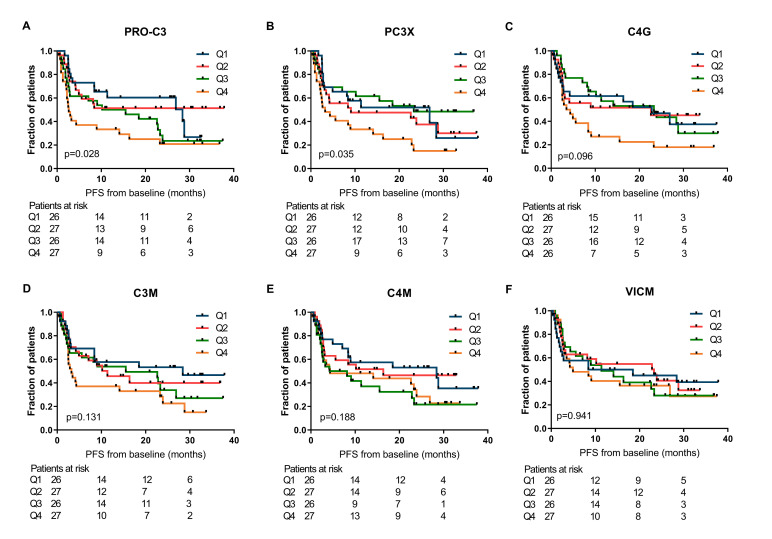
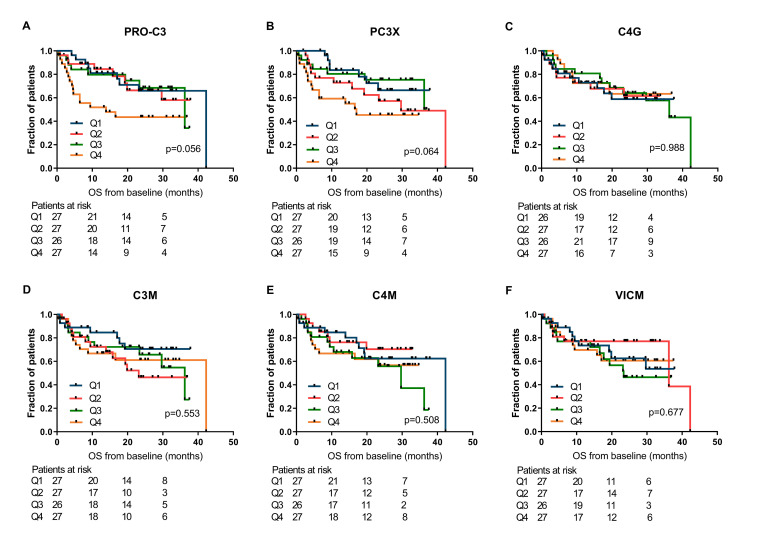
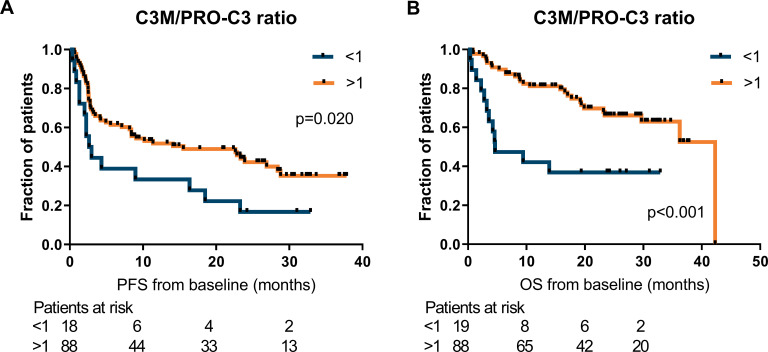
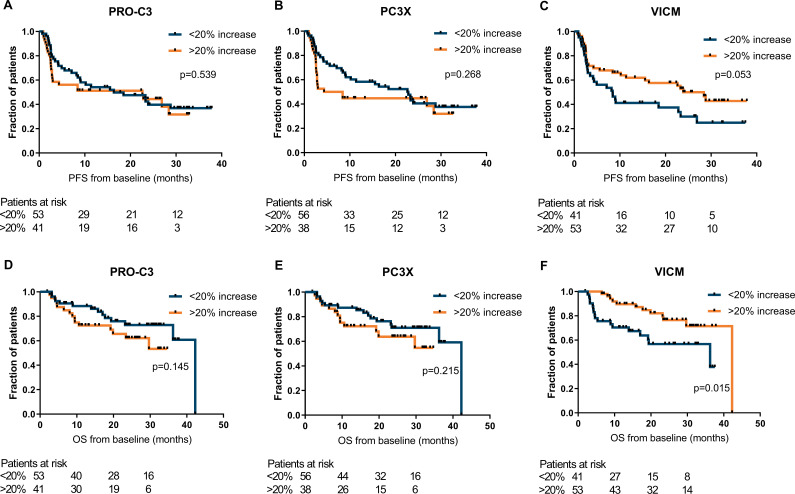
BACKGROUND: Immune checkpoint inhibitors that target the programmed cell death protein 1 (PD-1) receptor induce a response in only a subgroup of patients with metastatic melanoma. Previous research suggests that transforming growth factor beta signaling and a collagen-rich peritumoral stroma (tumor fibrosis), may negatively interfere with the interaction between T cells and tumor cells and thereby contribute to resistance mechanisms by immune-exclusion, while increased tumor infiltration of M1-like macrophages enhances T cell activity. Hence, the current study aimed to assess the relationship between blood-based markers of collagen or vimentin turnover (reflecting M1 macrophage activity) and clinical outcome in patients with metastatic melanoma after PD-1 inhibition. METHODS: Patients with metastatic melanoma who were treated with anti-PD-1 monotherapy between May 2016 and March 2019 were included in a prospective observational study. N-terminal pro-peptide of type III collagen (PRO-C3) cross-linked N-terminal pro-peptides of type III collagen (PC3X), matrix metalloprotease (MMP)-degraded type III (C3M) and type IV collagen (C4M), granzyme B-degraded type IV collagen and citrullinated and MMP-degraded vimentin (VICM) were measured with immunoassays in serum before (n=107), and 6 weeks after the first administration of immunotherapy (n=94). The association between biomarker levels and overall survival (OS) or progression-free survival (PFS) was assessed. RESULTS: Multivariate Cox regression analysis identified high baseline PRO-C3 (Q4) and PC3X (Q4) as independent variables of worse PFS (PRO-C3: HR=1.81, 95% CI=1.06 to 3.10, p=0.030 and PC3X: HR=1.86, 95% CI=1.09 to 3.18, p=0.023). High baseline PRO-C3 was also independently related to worse OS (HR=2.08, 95% CI=1.06 to 4.09, p=0.035), whereas a high C3M/PRO-C3 ratio was related to improved OS (HR=0.42, 95% CI=0.20 to 0.90, p=0.025). An increase in VICM (p<0.0001; in 56% of the patients) was observed after 6 weeks of treatment, and an increase in VICM was independently associated with improved OS (HR=0.28, 95% CI=0.10 to 0.77, p=0.014). CONCLUSIONS: Blood-based biomarkers reflecting excessive type III collagen turnover were associated with worse OS and PFS after PD-1 inhibition in metastatic melanoma. Moreover, an increase in VICM levels after 6 weeks of treatment was associated with improved OS. These findings suggest that type III collagen and vimentin turnover contribute to resistance/response mechanisms of PD-1 inhibitors and hold promise of assessing extracellular matrix-derived and stroma-derived components to predict immunotherapy response.
Overview
The claims and statistics of this paper haven’t been checked yet.
Free: it reads the open-access text and checks the first 5 claims that cite a source we can check. Create a free account to check every claim.
Integrity signals
Registry
Cites
Statistics
Figures
Verification
Claims the paper makes
The claims and statistics of this paper haven’t been checked yet.
Free: it reads the open-access text and checks the first 5 claims that cite a source we can check. Create a free account to check every claim.
Claims other papers make about this one
Each is checked against this paper’s own text: does it say what the citing paper says it does?
In the citing paper
“the accumulation of senescent cells in the tumor microenvironment may skew the system toward inflammation and fibrosis, hence causing local immunosuppression and physically hindering T lymphocytes to attain malignant cells, hence converting the tumor into an immune desert.257”
From Meta-hallmarks of aging and cancer (2023) · cites this paper as [257]
Self-check
Percentages, sums and reported differences re-computed from the paper’s own numbers.
The self-check needs the paper’s full text.
Citations
Cites
New response evaluation criteria in solid tumours: revised RECIST guideline (version 1.1)
Eisenhauer, E. A., Therasse, P., Bogaerts, J., Schwartz, L. H., Sargent, D., Ford, R., Dancey, J., Arbuck, S., Gwyther, S., Mooney, M., et al. (2009) · European Journal of Cancer · doi:10.1016/j.ejca.2008.10.026 · Cited by 29,534
Mutational landscape determines sensitivity to PD-1 blockade in non–small cell lung cancer
Rizvi, N. A., Hellmann, M. D., Snyder, A., Kvistborg, P., Makarov, V., Havel, J. J., Lee, W., Yuan, J., Wong, P., Ho, T. S., et al. (2015) · Science · doi:10.1126/science.aaa1348 · Cited by 7,802
TGFβ attenuates tumour response to PD-L1 blockade by contributing to exclusion of T cells
Mariathasan, S., Turley, S. J., Nickles, D., Castiglioni, A., Yuen, K., Wang, Y., Kadel III, E. E., Koeppen, H., Astarita, J. L., Cubas, R., et al. (2018) · Nature · doi:10.1038/nature25501 · Cited by 5,400
Elements of cancer immunity and the cancer–immune set point
Chen, D. S., & Mellman, I. (2017) · Nature · doi:10.1038/nature21349 · Cited by 5,352
Matrix Metalloproteinases: Regulators of the Tumor Microenvironment
Kessenbrock, K., Plaks, V., & Werb, Z. (2010) · Cell · doi:10.1016/j.cell.2010.03.015 · Cited by 5,151
Gershenwald, J. E., Scolyer, R. A., Hess, K. R., Sondak, V. K., Long, G. V., Ross, M. I., Lazar, A. J., Faries, M. B., Kirkwood, J. M., McArthur, G. A., et al. (2017) · CA: A Cancer Journal for Clinicians · doi:10.3322/caac.21409 · Cited by 2,283
PD-1 expression by tumour-associated macrophages inhibits phagocytosis and tumour immunity
Gordon, S. R., Maute, R. L., Dulken, B. W., Hutter, G., George, B. M., McCracken, M. N., Gupta, R., Tsai, J. M., Sinha, R., Corey, D., et al. (2017) · Nature · doi:10.1038/nature22396 · Cited by 2,247
Cox, T. R., & Erler, J. T. (2011) · Disease Models & Mechanisms · doi:10.1242/dmm.004077 · Cited by 1,569
Perforin and granzymes: function, dysfunction and human pathology
Voskoboinik, I., Whisstock, J. C., & Trapani, J. A. (2015) · Nature Reviews Immunology · doi:10.1038/nri3839 · Cited by 1,327
Distinct cellular mechanisms underlie anti-CTLA-4 and anti-PD-1 checkpoint blockade
Wei, S. C., Levine, J. H., Cogdill, A. P., Zhao, Y., Anang, N.-A. A. S., Andrews, M. C., Sharma, P., Wang, J., Wargo, J. A., Pe’er, D., et al. (2017) · Cell · doi:10.1016/j.cell.2017.07.024 · Cited by 1,302
Cited by
Yuan, Z., Li, Y., Zhang, S., Wang, X., Dou, H., Yu, X., Zhang, Z., Yang, S., & Xiao, M. (2023) · Molecular Cancer · doi:10.1186/s12943-023-01744-8 · Cited by 977
“Among them, collagen III and vimentin contribute to the prediction of the efficacy of PD-1 inhibitor [559].”
BackgroundMeta-hallmarks of aging and cancer
López-Otín, C., Pietrocola, F., Roiz-Valle, D., Galluzzi, L., & Kroemer, G. (2023) · Cell Metabolism · doi:10.1016/j.cmet.2022.11.001 · Cited by 529
Modulating extracellular matrix stiffness: A strategic approach to boost cancer immunotherapy
Mai, Z., Lin, Y., Lin, P., Zhao, X., & Cui, L. (2024) · Cell Death & Disease · doi:10.1038/s41419-024-06697-4 · Cited by 398
“Moreover, MMP and granzyme B-mediated degradation of type III and IV collagens may enhance prognoses [115].”
BackgroundImmune Modulatory Properties of Collagen in Cancer
Rømer, A. M. A., Thorseth, M.-L., & Madsen, D. H. (2021) · Frontiers in Immunology · doi:10.3389/fimmu.2021.791453 · Cited by 231
Mechanisms of resistance to immune checkpoint inhibitors in melanoma: What we have to overcome?
Ziogas, D. C., Theocharopoulos, C., Koutouratsas, T., Haanen, J. B. A. G., & Gogas, H. J. (2022) · Cancer Treatment Reviews · doi:10.1016/j.ctrv.2022.102499 · Cited by 130
The immune microenvironment of colorectal cancer
Kennel, K. B., & Greten, F. R. (2025) · Nature reviews. Cancer · doi:10.1038/s41568-025-00872-1 · Cited by 143
“Similarly, postoperative administration of a peptide vaccine targeting both G12D-mutated and G12R-mutated KRAS in resected pancreatic cancers and CRCs resulted in promis - ing recurrence-free survival in the three out of five patients with CRC”
Immune Therapy Resistance and Immune Escape of Tumors
Seliger, B., & Massa, C. (2021) · Cancers · doi:10.3390/cancers13030551 · Cited by 86
“In the clinical setting, the evaluation of blood markers for ECM remodeling is evaluated as a biomarker for therapy responsiveness and patients ́ stratification [42,43].”
BackgroundVijver, S. V., Singh, A., Mommers-Elshof, E. T. A. M., Meeldijk, J., Copeland, R., Boon, L., Langermann, S., Flies, D., Meyaard, L., & Ramos, M. I. P. (2021) · Frontiers in Immunology · doi:10.3389/fimmu.2021.733561 · Cited by 80
“Collagen fragments also seem to contribute to therapeutic resistance since high levels of C1M in the circulation associate with poor response to antiCTLA-4 therapy (22), and increased collagen turnover is associated with poor survival after anti-PD-1 therapy (42).”
BackgroundRegulation of tumor immunity and immunotherapy by the tumor collagen extracellular matrix
Flies, D. B., Langermann, S., Jensen, C., Karsdal, M. A., & Willumsen, N. (2023) · Frontiers in Immunology · doi:10.3389/fimmu.2023.1199513 · Cited by 88
Cancer immune exclusion: breaking the barricade for a successful immunotherapy
Bruni, S., Mercogliano, M., Mauro, F., Russo, R. C., & Schillaci, R. (2023) · Frontiers in Oncology · doi:10.3389/fonc.2023.1135456 · Cited by 68
Immunotherapy in melanoma: Can we predict response to treatment with circulating biomarkers?
Splendiani, E., Besharat, Z. M., Covre, A., Maio, M., Giacomo, A. M. D., & Ferretti, E. (2024) · Pharmacology & Therapeutics · doi:10.1016/j.pharmthera.2024.108613 · Cited by 68
Peng, H., Chao, Z., Wang, Z., Hao, X., Xi, Z., Ma, S., Guo, X., Zhang, J., Zhou, Q., Qu, G., et al. (2025) · Experimental Hematology and Oncology · doi:10.1186/s40164-024-00591-7 · Cited by 66
“These products can enter the blood-stream as biomarkers for cancer, potentially serving as new tools for the clinical diagnosis of high-risk metastatic patients [75].”
Crosstalk between T lymphocyte and extracellular matrix in tumor microenvironment
Lv, D., Fei, Y., Chen, H., Wang, J., Han, W., Cui, B., Feng, Y., Zhang, P., & Chen, J. (2024) · Frontiers in Immunology · doi:10.3389/fimmu.2024.1340702 · Cited by 78
Jensen, C., Nissen, N. I., von Arenstorff, C. S., Karsdal, M. A., & Willumsen, N. (2021) · Journal of Experimental & Clinical Cancer Research · doi:10.1186/s13046-021-02133-z · Cited by 45
Conserved immuno‐collagenic subtypes predict response to immune checkpoint blockade
Mei, J., Cai, Y., Xu, R., Li, Q., Chu, J., Luo, Z., Sun, Y., Shi, Y., Xu, J., Li, D., et al. (2024) · 癌症:英文版 · doi:10.1002/cac2.12538 · Cited by 43
“Notably, specific collagen markers have been linked to immunotherapy response and prognosis [63].”
BackgroundNissen, N. I., Johansen, A. Z., Chen, I. M., Johansen, J. S., Pedersen, R. S., Hansen, C. P., Karsdal, M. A., & Willumsen, N. (2022) · Cancers · doi:10.3390/cancers14030819 · Cited by 45
“Fibrillar collagens are the most well-studied collagens, and the two fibrillar fibroblast-derived collagens, type IIIand VI collagen, have shown potential as biomarkers in cancer [19,20,22,23,25,26].”
BackgroundWillumsen, N., Jensen, C., Green, G. A., Nissen, N. I., Neely, J., Nelson, D. M., Pedersen, R. S., Frederiksen, P., Chen, I. M., Boisen, M. K., et al. (2022) · Cellular and Molecular Life Sciences · doi:10.1007/s00018-022-04226-0 · Cited by 40
“[122] Melanoma, metastatic Nivolumab or Pembrolimumab 107 Serum 12.”
BackgroundTargeting inflamed and non-inflamed melanomas: biological background and clinical challenges
Indini, A., Massi, D., Pirro, M., Roila, F., Grossi, F., Sahebkar, A., Glodde, N., Bald, T., & Mandalà, M. (2022) · Seminars in Cancer Biology · doi:10.1016/j.semcancer.2022.06.005 · Cited by 42
Petersen, E. V., Chudakova, D. A., Skorova, E., Anikin, V., Reshetov, I. V., & Mynbaev, O. A. (2020) · Frontiers in Oncology · doi:10.3389/fonc.2020.575569 · Cited by 46
“In patients with metastatic melanoma, blood-based biomarkers of type III collagen turnover are associated with worse overall survival and progress-free survival following PD-1 inhibition immunotherapy (43).”
BackgroundThe Role of Extracellular Matrix Remodeling in Skin Tumor Progression and Therapeutic Resistance
Fromme, J. E., & Zigrino, P. (2022) · Frontiers in Molecular Biosciences · doi:10.3389/fmolb.2022.864302 · Cited by 31
Casadonte, R., Kriegsmann, M., Kriegsmann, K., Hauk, I., Meliß, R. R., Müller, F. M., & Kriegsmann, J. (2021) · Cancers · doi:10.3390/cancers13133197 · Cited by 26
“It has been shown that blood-based biomarkers reflecting excessive type III collagen were associated with worse survival after PD-1 inhibition in metastatic melanoma [51].”
BackgroundHigh expression of COL6A1 predicts poor prognosis and response to immunotherapy in bladder cancer
Zhang, X., Liu, J., Yang, X., Jiao, W., Shen, C., Zhao, X., & Wang, Y. (2022) · Cell Cycle · doi:10.1080/15384101.2022.2154551 · Cited by 27
Madsen, E. A., Thorlacius‐Ussing, J., Nissen, N. I., Jensen, C., Chen, I. M., Johansen, J. S., Diab, H. M. H., Jørgensen, L. N., Hansen, C. P., Karsdal, M. A., et al. (2022) · Cells · doi:10.3390/cells11233763 · Cited by 25
Fejza, A., Carobolante, G., Poletto, E., Camicia, L., Schinello, G., Siena, E. D., Ricci, G., Mongiat, M., & Andreuzzi, E. (2023) · Frontiers in Immunology · doi:10.3389/fimmu.2023.1270981 · Cited by 24
Metalloproteinases in dermal homeostasis
Kümper, M., Steinkamp, J., & Zigrino, P. (2022) · American Journal of Physiology-Cell Physiology · doi:10.1152/ajpcell.00450.2021 · Cited by 19
Exploiting ECM remodelling to promote immune-mediated tumour destruction
Pires, A., Burnell, S. E. A., & Gallimore, A. (2021) · Current Opinion in Immunology · doi:10.1016/j.coi.2021.09.006 · Cited by 22
“This pathway may explain the findings from two groups who demonstrated that markers of collagen turnover in the peripheral blood of melanoma patients correlated with reduced overall survival after treatment with PD-1 or CTLA-4 blocking antibodies [30,31].”
Salvati, A. L., & Poelstra, K. (2022) · Pharmaceutics · doi:10.3390/pharmaceutics14010217 · Cited by 18
“Similar processes occur during fibrotic processes in other organs such as the heart, kidney, lung and intestines [35,36], and even during tumorigenesis [37,38], so our approach may also be useful to anticancer therapies in particular in types of cancers associated with significant stroma formation.”
BackgroundHasselbalch, H. C., Junker, P., Skov, V., Kjær, L., Knudsen, T. A., Larsen, M. K., Holmström, M. O., Andersen, M. H., Jensen, C., Karsdal, M. A., et al. (2023) · Cancers · doi:10.3390/cancers15174323 · Cited by 16
Wu, Y., Yu, S., & Qiao, H. (2022) · Frontiers in Pharmacology · doi:10.3389/fphar.2022.990445 · Cited by 16
“Thus, type III collagen propeptide is a predictor of metastatic melanoma response to ICIs (Hurkmans et al., 2020), and type IV collagen fragments can also identify melanoma patients who benefit from anti-CTLA-4 (Jensen et al.”
BackgroundAptamers targeting a tumor-associated extracellular matrix component: The human mature collagen XIα1
Lorenzo-Gómez, R., Miranda‐Castro, R., Toyos, J. R. D. L., de-los-Santos-Álvarez, N., & Lobo-Castañón, M. J. (2021) · Analytica Chimica Acta · doi:10.1016/j.aca.2021.339206 · Cited by 14
Advances in cancer biomarkers: current detection strategies and challenges
Liu, Z., Huang, Z., Chen, X., Zhang, L., Wu, Q. D., Li, L., Yu, C., & Wei, J. (2025) · Coordination Chemistry Reviews · doi:10.1016/j.ccr.2025.217242 · Cited by 10
The role of various collagen types in tumor biology: a review
Zhou, Y., Jiang, Z., Cao, L., & Yang, J. (2025) · Frontiers in Oncology · doi:10.3389/fonc.2025.1549797 · Cited by 18
Crespo-Bravo, M., Hettich, A., Thorlacius‐Ussing, J., Cox, T. R., Karsdal, M. A., & Willumsen, N. (2024) · Clinical and Experimental Medicine · doi:10.1007/s10238-024-01431-y · Cited by 10
Samaržija, I., & Konjevoda, P. (2023) · Biomedicines · doi:10.3390/biomedicines11072006 · Cited by 9
“The numerous examples include: breast cancer [51], metastatic melanoma [52], gastric cancer [53], acute myeloid leukemia [54], non-small-cell lung cancer [55], glioblastoma [56], colon cancer [57], hepatocellular carcinoma [58], esophageal squamous cell carcinoma [59], and renal clear cell carcinoma [60].”
BackgroundCrucitta, S., Cucchiara, F., Marconcini, R., Bulleri, A., Manacorda, S., Capuano, A., Cioni, D., Nuzzo, A., de Jonge, E., Mathijssen, R. H. J., et al. (2024) · Frontiers in Molecular Biosciences · doi:10.3389/fmolb.2024.1288677 · Cited by 5
Moschella, F., Buccione, C., Ruspantini, I., Castiello, L., Gonzalez, A. R., Iacobone, F., Ferraresi, V., Palermo, B., Nisticò, P., Belardelli, F., et al. (2023) · Frontiers in Oncology · doi:10.3389/fonc.2023.1145667 · Cited by 5
“In the last few years, several papers highlighted the importance of monitoring both innate and adaptive immunity in peripheral blood to evaluate dysfunctions in cancer patients and to find relevant prognostic/predictive biomarkers for cancer immunotherapy that might facilitate patient selection and treatment decisions…”
BackgroundType IX Collagen Turnover Is Altered in Patients with Solid Tumors
Port, H., He, Y., Karsdal, M. A., Madsen, E. A., Bay‐Jensen, A., Willumsen, N., & Nielsen, S. H. (2024) · Cancers · doi:10.3390/cancers16112035 · Cited by 3
Nayak, D., Akers, K. G., Frederickson, A. M., Mbous, Y. P. V., & Aguiar‐Ibáñez, R. (2025) · Frontiers in Oncology · doi:10.3389/fonc.2025.1615795 · Cited by 3
Willumsen, N., Henriksen, K., Bager, C. L., Selnø, A. T. H., Mohamed, K. E., Leeming, D. J., Skarsfeldt, M. A., Nissen, N. I., Pedersen, R. S., Thorlacius‐Ussing, J., et al. (2025) · Scientific Reports · doi:10.1038/s41598-025-24463-0 · Cited by 2
Han, X., Caron, J. M., & Brooks, P. C. (2026) · American Journal Of Pathology · doi:10.1016/j.ajpath.2025.09.008 · Cited by 2
Caron, J. M., Han, X., Lary, C. W., Sathyanarayana, P., Remick, S. C., Ernstoff, M. S., Herlyn, M., & Brooks, P. C. (2023) · Oncology Reports · doi:10.3892/or.2023.8481 · Cited by 3
Vedarethinam, V., Vijayakumar, M., Mani, R. R., Chang, S. W., & Ravindran, B. (2025) · Journal of Radiation Research and Applied Sciences · doi:10.1016/j.jrras.2025.101636 · Cited by 1
Rasmussen, M. B., Chen, I. M., Johansen, J. S., Theile, S., Markussen, A., Christensen, T. D., Karsdal, M. A., & Willumsen, N. (2026) · BMC Medicine · doi:10.1186/s12916-026-04989-4 · Cited by 2
“A link between PRO-C3 and resistance to ICI have been observed in malignant melanoma [25, 40], while a general association between tumor fibrosis and immunotherapy resistance has been characterized across multiple cancer [44–46].”
Karakousis, V. A., Mantalovas, S., Karakousi, V. C., Vizirianakis, I. S., Papamitsou, T., Pavlidis, L., & Kosmidis, C. S. (2026) · Cells · doi:10.3390/cells15131182 · Cited by 2
Garcia-Santillan, A. D., Lichtenberg, J. Y., Shen, H., Rodriguez, J. M., Makar, S., Barra-Carrasco, J., Clark, N. M., Du, W., Martinez, L. M., Hadjis, A. D., et al. (2025) · bioRxiv (Cold Spring Harbor Laboratory) · doi:10.1101/2025.10.25.684515
Hidden architecture of resistance: The extracellular matrix in melanoma’s immune landscape
Guan, Y., Edny, G., Chandra, J., Souza-Fonseca-Guimarães, F., & Haass, N. K. (2026) · Seminars in Cancer Biology · doi:10.1016/j.semcancer.2026.06.004 · Cited by 1
Plasma COL3A1 propeptide as a promising prognostic marker in oral squamous cell carcinoma
Magan, M., Gu, X., Sgaramella, N., & Nylander, K. (2026) · Scientific Reports · doi:10.1038/s41598-026-57329-0
Therkelsen, M. L. N., Hetland, L. E., Werge, M. P., Thing, M., Rashu, E. B., Nabilou, P., Kimer, N., Junker, A. E., Guiliani, A. M., Karsdal, M. A., et al. (2026) · Annals of Hepatology · doi:10.1016/j.aohep.2026.102251
Circulating citrullinated proteins as candidate liquid biopsy analytes in cancer
Omer, A. B., Saleem, S., Khan, R., Rekha, A., & Bhavasar, R. (2026) · Clinica Chimica Acta · doi:10.1016/j.cca.2026.122904
Metadata
- Authors
- Hurkmans, D. P., Jensen, C., Koolen, S. L. W., Aerts, J., Karsdal, M. A., Mathijssen, R. H. J., & Willumsen, N.
- Affiliations
- Erasmus MC (NL)
- Nordic Bioscience (Denmark) (DK)
- Erasmus MC Cancer Institute (NL)
- Corresponding author
- Hurkmans, Daan P
- ORCID
- Venue
- Journal for ImmunoTherapy of Cancer
- Publisher
- BMJ
- Published
- 2020-10
- Volume
- 8
- Issue
- 2
- Pages
- e001193
- ISSN
- 2051-1426 (ISSN-L)
- PMC
- PMC7583811
- OpenAlex
- W3093845837
- Cited by
- 49
- References
- 37
- Citations by year
- 2026: 7 · 2025: 8 · 2024: 7 · 2023: 9 · 2022: 10 · 2021: 7 · 2020: 1
- FWCI
- 2.44
- Type
- journal article
- Language
- en
- Open access
- gold
- doi.org
- Licence
- Locations
- Journal for ImmunoTherapy of Cancer (publishedVersion, cc-by-nc)
- PubMed Central (publishedVersion, cc-by-nc)
- PubMed (publishedVersion)
- EUR Research Repository (Erasmus University Rotterdam) (publishedVersion, cc-by-nc)
- EUR Research Repository (Erasmus University Rotterdam) (submittedVersion, cc-by-nc)
- RePub (Erasmus University Rotterdam) (submittedVersion, other-oa)
- DOAJ (DOAJ: Directory of Open Access Journals) (submittedVersion, cc-by-sa)
- Funders
- Erasmus Medisch Centrum
- Danish Research Foundation
- Topics
- Health Sciences › Medicine › Oncology › Cancer Immunotherapy and Biomarkers
- Health Sciences › Medicine › Oncology › Cutaneous Melanoma Detection and Management
- Life Sciences › Biochemistry, Genetics and Molecular Biology › Molecular Biology › Melanoma and MAPK Pathways
- Keywords
- metastatic melanoma, anti-PD-1 therapy, immune checkpoint inhibitors, type III collagen, type IV collagen, vimentin, M1 macrophages, tumor fibrosis, immune exclusion, treatment response prediction, overall survival, progression-free survival, serum biomarkers, T cell infiltration, TGF-beta signaling
- MeSH terms
- Aged, Extracellular Matrix, Female, Humans, Male, Melanoma, Middle Aged, Biomarkers, Tumor, Treatment Outcome, Programmed Cell Death 1 Receptor
About these checks
Registry, retraction, Cites and statistics results are computed, not judged, with one exception: a printed reference that no index lists is read once by a model before it counts as a citation error. Claims are extracted by a model and kept only when their quote appears verbatim in the text; each cited source is then checked, with a model’s help, for whether it says what the claim relies on. Those verdicts can be wrong — read the claim’s quote and the cited source before relying on one.
Statistics and arithmetic are recomputed, not judged.
Confidence bands are shown only for fields calibrated on our annotated test set. None is calibrated yet, so no band is shown.
What counts as a claim ›How we measure confidence ›How we check this ›
Are you an author, or do you see a problem with this page? Request a review
Data sources
Bibliographic data: Semantic Scholar, OpenAlex, Crossref.
Contains information from the Semantic Scholar Academic Graph Datasets, made available under the ODC Attribution License (ODC-BY 1.0).
Semantic Scholar’s data is described in: Kinney, R., et al. (2023). The Semantic Scholar Open Data Platform. arXiv:2301.10140.
