

The DOI matches its Crossref record; 57 of the 58 references it cites were found in a registry or an index.
Integrated analysis of concomitant medications and oncological outcomes from PD-1/PD-L1 checkpoint inhibitors in clinical practice
Open accessAbstract
Background: Concomitant medications, such as steroids, proton pump inhibitors (PPI) and antibiotics, might affect clinical outcomes with immune checkpoint inhibitors. Methods: We conducted a multicenter observational retrospective study aimed at evaluating the impact of concomitant medications on clinical outcomes, by weighing their associations with baseline clinical characteristics (including performance status, burden of disease and body mass index) and the underlying causes for their prescription. This analysis included consecutive stage IV patients with cancer, who underwent treatment with single agent antiprogrammed death-1/programmed death ligand-1 (PD-1/PD-L1) with standard doses and schedules at the medical oncology departments of 20 Italian institutions. Each medication taken at the immunotherapy initiation was screened and collected into key categories as follows: corticosteroids, antibiotics, gastric acid suppressants (including proton pump inhibitors - PPIs), statins and other lipid-lowering agents, aspirin, anticoagulants, non-steroidal anti-inflammatory drugs (NSAIDs), ACE inhibitors/Angiotensin II receptor blockers, calcium antagonists, β-blockers, metformin and other oral antidiabetics, opioids. Results: From June 2014 to March 2020, 1012 patients were included in the analysis. Primary tumors were: non-small cell lung cancer (52.2%), melanoma (26%), renal cell carcinoma (18.3%) and others (3.6%). Baseline statins (HR 1.60 (95% CI 1.14 to 2.25), p=0.0064), aspirin (HR 1.47 (95% CI 1.04 to 2.08, p=0.0267) and β-blockers (HR 1.76 (95% CI 1.16 to 2.69), p=0.0080) were confirmed to be independently related to an increased objective response rate. Patients receiving cancer-related steroids (HR 1.72 (95% CI 1.43 to 2.07), p<0.0001), prophylactic systemic antibiotics (HR 1.85 (95% CI 1.23 to 2.78), p=0.0030), prophylactic gastric acid suppressants (HR 1.29 (95% CI 1.09 to 1.53), p=0.0021), PPIs (HR 1.26 (95% CI 1.07 to 1.48), p=0.0050), anticoagulants (HR 1.43 (95% CI: 1.16 to 1.77), p=0.0007) and opioids (HR 1.71 (95% CI 1.28 to 2.28), p=0.0002) were confirmed to have a significantly higher risk of disease progression. Patients receiving cancer-related steroids (HR 2.16 (95% CI 1.76 to 2.65), p<0.0001), prophylactic systemic antibiotics (HR 1.93 (95% CI 1.25 to 2.98), p=0.0030), prophylactic gastric acid suppressants (HR 1.29 (95% CI 1.06 to 1.57), p=0.0091), PPI (HR 1.26 (95% CI 1.04 to 1.52), p=0.0172), anticoagulants (HR 1.45 (95% CI 1.14 to 1.84), p=0.0024) and opioids (HR 1.53 (95% CI 1.11 to 2.11), p=0.0098) were confirmed to have a significantly higher risk of death. Conclusion: We confirmed the association between baseline steroids administered for cancer-related indication, systemic antibiotics, PPIs and worse clinical outcomes with PD-1/PD-L1 checkpoint inhibitors, which can be assumed to have immune-modulating detrimental effects.
Overview
The claims and statistics of this paper haven’t been checked yet.
Run the check — free, no account needed. It reads the open-access text and checks the sources it cites.
Integrity signals
Registry
Cites
Statistics
Figures
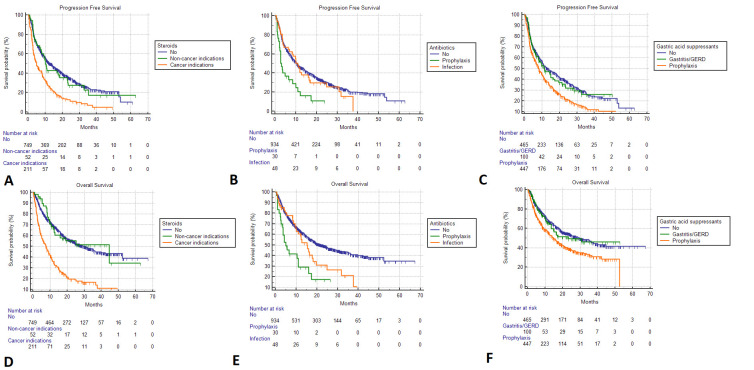
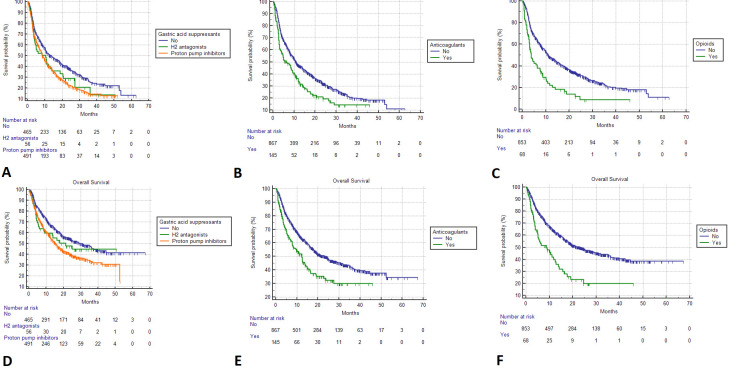
Verification
Claims the paper makes
The claims and statistics of this paper haven’t been checked yet.
Run the check — free, no account needed. It reads the open-access text and checks the sources it cites.
Claims other papers make about this one
Each is checked against this paper’s own text: does it say what the citing paper says it does?
In the citing paper
“As previously reported, they also link PPI use with fecal microbiota oralization32 and adverse outcomes in response to anti-PD-1 therapy33.”
From Intestinal microbiota signatures of clinical response and immune-related adverse events in melanoma patients treated with anti-PD-1 (2022) · cites this paper as [33]
Self-check
Percentages, sums and reported differences re-computed from the paper’s own numbers.
The self-check needs the paper’s full text.
Citations
Cites
New response evaluation criteria in solid tumours: revised RECIST guideline (version 1.1)
Eisenhauer, E. A., Therasse, P., Bogaerts, J., Schwartz, L. H., Sargent, D., Ford, R., Dancey, J., Arbuck, S., Gwyther, S., Mooney, M., et al. (2009) · European Journal of Cancer · doi:10.1016/j.ejca.2008.10.026 · Cited by 29,534
Coutinho, A. E., & Chapman, K. E. (2011) · Molecular and Cellular Endocrinology · doi:10.1016/j.mce.2010.04.005 · Cited by 1,815
The Influence of the Gut Microbiome on Cancer, Immunity, and Cancer Immunotherapy
Gopalakrishnan, V., Helmink, B. A., Spencer, C. N., Reuben, A., & Wargo, J. A. (2018) · Cancer Cell · doi:10.1016/j.ccell.2018.03.015 · Cited by 1,392 · cited 1×
“…restoration/ activation of T-cell responses against cancer, and therefore, might be altered by those factors which particularly affect the immune balance prior to the ICIs administration, such as disruption of the homeostatic balance within the gut microbiome 3 and drug-induced immune suppression.”
Cyclooxygenase-Dependent Tumor Growth through Evasion of Immunity
Zelenay, S., van der Veen, A. G., Böttcher, J. P., Snelgrove, K. J., Rogers, N. C., Acton, S. E., Chakravarty, P., Girotti, M. R., Marais, R., Quezada, S. A., et al. (2015) · Cell · doi:10.1016/j.cell.2015.08.015 · Cited by 1,146
Arbour, K. C., Mezquita, L., Long, N., Rizvi, H., Auclin, E., Ni, A., Martínez-Bernal, G., Ferrara, R., Lai, W. V., Hendriks, L. E. L., et al. (2018) · Journal of Clinical Oncology · doi:10.1200/jco.2018.79.0006 · Cited by 1,071
Cholesterol Induces CD8+ T Cell Exhaustion in the Tumor Microenvironment
Ma, X., Bi, E., Lu, Y., Su, P., Huang, C., Liu, L., Wang, Q., Yang, M., Kalady, M. F., Qian, J., et al. (2019) · Cell Metabolism · doi:10.1016/j.cmet.2019.04.002 · Cited by 1,033
Potentiating the antitumour response of CD8+ T cells by modulating cholesterol metabolism
Yang, W., Bai, Y., Xiong, Y., Zhang, J., Chen, S., Zheng, X., Meng, X., Li, L., Wang, J., Xu, C., et al. (2016) · Nature · doi:10.1038/nature17412 · Cited by 1,010
Derosa, L., Hellmann, M. D., Spaziano, M., Halpenny, D., Fidelle, M., Rizvi, H., Long, N., Plodkowski, A. J., Arbour, K. C., Chaft, J. E., et al. (2018) · Annals of Oncology · doi:10.1093/annonc/mdy103 · Cited by 908
Proton pump inhibitors alter the composition of the gut microbiota
Jackson, M. A., Goodrich, J. K., Maxan, M.-E., Freedberg, D. E., Abrams, J. A., Poole, A. C., Sutter, J. L., Welter, D., Ley, R. E., Bell, J. T., et al. (2016) · Gut · doi:10.1136/gutjnl-2015-310861 · Cited by 895
Algra, A. M., & Rothwell, P. M. (2012) · The Lancet Oncology · doi:10.1016/s1470-2045(12)70112-2 · Cited by 833
Research works printed but not linked: 2
- Woolley KK . How variables uncorrelated with the dependent variable can actually make excellent predictors: the important suppressor variable case. Southwest educational research association annual meeting proceedings, 1997. Available: https://eric.ed.gov/?id=ED407420 [Accessed 10 Jun 2020].
- Thompson, 1997, Examples of easily Explainable suppressor variables in multiple regression research, Multi Linear Regres Viewpoints, 24, 11
Cited by
Sorted by citations
Items 201–275 of 275
What should intensivists know about immune checkpoint inhibitors and their side effects?
Aleksandrov, V. Y. Z., Martínez‐Sagasti, F., Moreno, J. P.-S., & Mondéjar, H. H. (2025) · Medicina Intensiva (English Edition) · doi:10.1016/j.medine.2025.502135 · Cited by 1
Statins as potential adjuvant therapy in lung cancer: a narrative review
Tian, Y., Li, J., & Yang, X. (2025) · Journal of Thoracic Disease · doi:10.21037/jtd-2025-66 · Cited by 1
“In contrast, a retrospective analysis of 528 patients revealed non-significant trends toward prolonged PFS (HR =0.79; 95% CI: 0.62–1.01) and OS (HR =0.87; 95% CI: 0.72–1.06) with statin-immunotherapy combination therapy ( Table 3 ) (25 ).”
InfluentialClinical outcomes of concurrent use of corticosteroids and immune checkpoint inhibitors in oncology
Moskalenko, Y., Kravets, O., & Kovchun, V. Y. (2025) · Regulatory Mechanisms in Biosystems · doi:10.15421/0225062 · Cited by 1
Summa, S. D., Palma, G. D., Ghini, V., Apollonio, B., Risi, I. D., Tufaro, A., Strippoli, S., Luchinat, C., Tenori, L., & Guida, M. (2025) · Frontiers in Immunology · doi:10.3389/fimmu.2025.1536710 · Cited by 1
Xiong, J., Jian, H., Zhen-zhou, Y., & Xia, L. (2025) · Scientific Reports · doi:10.1038/s41598-025-16236-6 · Cited by 1
Modi, N. D., Abuhelwa, A. Y., Kuderer, N. M., Li, L. X., Lyman, G. H., Koczwara, B., Kichenadasse, G., Selth, L. A., Rickard, C., Haseloff, M., et al. (2025) · Cancer Medicine · doi:10.1002/cam4.71320 · Cited by 1
Zimmermann, N., Kött, J., Zell, T., Abedini, A. Z., Blomen, C. L., Belz, S., Deitert, B., Heidrich, I., Geidel, G., Rünger, A., et al. (2025) · European Journal of Cancer · doi:10.1016/j.ejca.2025.116195 · Cited by 1
COJOCARU, I., Guliciuc, M., Cojocaru, E., Șerban, C., Pascaru, G., Borz, M. B., Schițcu, V. H., Tișe, A.-I., Osoianu, I., & Rebegea, L. F. (2025) · Medicina · doi:10.3390/medicina62010046 · Cited by 1
“Finally, the study confirmed the association between steroids initially used for cancer-related indications, systemic antibiotics, PPIs, and poorer clinical outcomes with PD-1/PD-L1 checkpoint inhibitors and showed that these treatments may have negative immunomodulatory effects [28].”
Liu, Y., Zhang, J., Yang, L., Gan, J., Qi, Q., Fang, W., Zhang, H., Xu, R., Liu, S., Yang, J., et al. (2026) · Respiratory Research · doi:10.1186/s12931-025-03482-5 · Cited by 1
Bailey, S. L., Patel, J. D., Havighurst, T. C., Pozorski, V., Mohamoud, Y., Tesfamichae, D., Dow-Hillgartner, E. N., Jung, L., Birbrair, A., & Ma, V. T.-L. (2026) · Immunotherapy · doi:10.1080/1750743x.2026.2626241 · Cited by 1
“Cortellini et al. found that patients with stage IV cancer receiving prophylactic systemic antibiotics, but not antibiotics to treat an active infection, had a significantly higher risk of disease progression and death [33].”
Awada, A., Charbel, N., Faraj, S., Hassan, M., Awada, D., Issa, A., Nasr, W., Meski, S. E., Hatahet, Z., Tarhini, A., et al. (2026) · International Journal of Molecular Sciences · doi:10.3390/ijms27104178 · Cited by 1
“Baseline steroid use has consistently been linked to worse outcomes in patients treated with PD-1 or PD-L1 inhibitors, especially in patients with non-small-cell lung cancer [81,91].”
InfluentialStylianakis, D., Bertaglia, V., Sangiolo, D., Podda, M., Saba, G., Stylianakis, I., Denaro, N., Pisanu, A., Agelaki, S., Scartozzi, M., et al. (2026) · Cancer Treatment Reviews · doi:10.1016/j.ctrv.2026.103162 · Cited by 2
Sugimoto, K., Toyoda, S., Inoki, L., Mori, K., Yanagisawa, T., Tamura, K., Nukaya, T., Maenosono, R., Morinaka, H., Nishimura, S., et al. (2026) · International Journal of Clinical Oncology · doi:10.1007/s10147-026-03075-2 · Cited by 1
“Proton pump inhibitors are widely used medications that suppress gastric acid secretion, and their potential influ - ence on immune checkpoint inhibitor therapy has recently attracted increasing attention [6, 19].”
Ren, L., Suwanbai, M., Shi, L., Yan, S., Deng, C., Xie, W., Li, L., Yang, G., Wang, X., & Pan, X. (2026) · BMC Gastroenterology · doi:10.1186/s12876-026-05126-4 · Cited by 1
“In extrahepatic solid tumours, Cortellini et al. demonstrated that antibiotic exposure significantly impaired outcomes after PD-1/PD-L1 blockade, increasing the hazard for both progression-free and overall survival [23].”
Karatlı, S., Kaya, S., Çelik, S., İlhan, A., & Yıldırım, Ö. A. (2026) · Medicina · doi:10.3390/medicina62071413 · Cited by 1
Abu-Rafe, S., Shrem, N. S., Agbarya, A., Miari, A., Brenner, R., Dudnik, Y., Jama, A. A., Shalata, S., Rouvinov, K., Yasin, N. A., et al. (2026) · Medical Sciences · doi:10.3390/medsci14040420 · Cited by 1
“Differences in tumor types, treatment lines, exposure duration, and patient selection likely account for this variability [17].”
Veremme, L., Baudouin, A., Janoly-Duménil, A., & Charpiat, B. (2022) · Annales Pharmaceutiques Françaises · doi:10.1016/j.pharma.2022.11.006 · Cited by 1
Degtiareva, E. A., Анатольевна, П. С., & Имянитов, Е. Н. (2023) · Siberian Journal of Oncology · doi:10.21294/1814-4861-2023-22-1-141-150 · Cited by 1
Shah, J., Rivera, A. C. U., Lee, I. J.-A., Takigawa, K., Mathew, A., Wu, D., Lu, E., Shatila, M., Thomas, A. S., Zhang, H. C., et al. (2024) · American Journal of Clinical Oncology · doi:10.1097/coc.0000000000001156 · Cited by 1
Fiala, O., Hošek, P., Tkadlecová, M., Melichar, B., Zemánková, A., Kopecký, J., Vočka, M., Matějů, M., Lohynská, R., Šiková, D., et al. (2025) · Clinical & Experimental Metastasis · doi:10.1007/s10585-025-10347-0 · Cited by 1
Mao, H., Tong, J., Yan, X., Liu, C., Yang, M., & Guo, H. (2021) · Research Square · doi:10.21203/rs.3.rs-622772/v1 · Cited by 1
Modi, N. D., Abuhelwa, A. Y., Menz, B. D., McKinnon, R. A., Sorich, M. J., & Hopkins, A. M. (2021) · Frontiers in Pharmacology · doi:10.3389/fphar.2021.732622 · Cited by 1
“…medicines such as beta-blockers, statins, and metformin may boost immunotherapy actions (Kokolus et al., 2017; Afzal et al., 2018; Cortellini et al., 2020), while antibiotics and proton pump inhibitors may impair responses (Hopkins et al., 2020a; Hopkins et al., 2020b; Cortellini et al., 2020).”
BackgroundGao, Z., Ju, M., Liu, X., Zhou, H., Wang, R., Zheng, C., Dong, D., Zhu, Z., & Li, K. (2022) · Research Square · doi:10.21203/rs.3.rs-1732605/v1 · Cited by 1
Kristoff, T. J., Evans, S., Nayi, P., Abousaud, M. I., Steuer, C. E., Shin, D. M., Saba, N. F., & Schmitt, N. C. (2023) · Regular and Young Investigator Award Abstracts · doi:10.1136/jitc-2023-sitc2023.0489 · Cited by 1
Cao, Y.-H., Zhou, Y.-M., Wang, S., Guo, J., & Cen, L.-S. (2024) · World Journal of Diabetes · doi:10.4239/wjd.v15.i12.2387 · Cited by 1
Gobbini, É., Langlais, A., Missy, P., Chanoine, S., Besse, B., Souquet, P.-J., Barlési, F., Audigier-Valette, C., Métivier, A.-C., Monnet, I., et al. (2025) · SSRN Electronic Journal · doi:10.2139/ssrn.5194977 · Cited by 1
Maraszek, K. E., Tisdale, A. A., Reavis, H. D., Liu, X., Gomez, E. C., Dolskiy, A. A., Brown, C., Thakkar, D., Dungan, M., Adhikari, A., et al. (2026) · bioRxiv (Cold Spring Harbor Laboratory) · doi:10.64898/2026.05.20.726559 · Cited by 1
The interactions between antihypertensive drugs and novel anticancer therapy
Tadic, M. V., & Grassi, G. M. (2021) · Journal of Hypertension · doi:10.1097/hjh.0000000000002806
“The authors demonstrated that ACEI/ARB, betablockers or calcium channel blockers were not associated with progression-free survival or OS neither in univariable nor in multivariable analysis [9].”
Backgroundyunshan, W., Ren, Y., Feng, M., Liu, X., Hao, X., Li, J., Li, P., Gao, J., Qi, Q., Du, L., et al. (2021) · Research Square · doi:10.21203/rs.3.rs-1046804/v1
Wu, C., Ke, Y., Wan, L., & Xie, X. (2021) · SSRN Electronic Journal · doi:10.2139/ssrn.3982290
Cao, X., yafei, W., wei, H., Li, P., chongjie, G., & Li, Y. (2022) · doi:10.22541/au.165090979.95584138/v1
Mu, X., Wu, A., Ling, P., Zhou, H., & Yang, M. (2022) · Research Square · doi:10.21203/rs.3.rs-1601633/v1
Li, R., Huang, C., Hong, C., Wang, J., Li, Q., Hu, C., Cui, H., Dong, Z., Zhu, H., Liu, L., et al. (2022) · PubMed Central · doi:10.12122/j.issn.1673-4254.2022.05.10
Data from USP48 Stabilizes Gasdermin E to Promote Pyroptosis in Cancer
Ren, Y., Feng, M., Hao, X., Liu, X., Li, J., Li, P., Gao, J., Qi, Q., Du, L., Wang, C., et al. (2023) · doi:10.1158/0008-5472.c.6487386.v2
Influence of Antibiotic Use on the Effectiveness and Safety of Immune Checkpoint Inhibitors
Minamishima, T., Hida, H., Miyazaki, M., Kon, S., Senzaki, K., Nagai, T., & Yamada, K. (2022) · Iryo Yakugaku (Japanese Journal of Pharmaceutical Health Care and Sciences) · doi:10.5649/jjphcs.48.173
yang, H., Liu, Z., Li, R., Huang, R., & Peng, X. (2023) · Research Square · doi:10.21203/rs.3.rs-2934398/v1
Pizzutilo, E. G., Romanò, R., Roazzi, L., Agostara, A. G., Oresti, S., Zeppellini, A., Giannetta, L. G., Cerea, G., Signorelli, D., Siena, S., et al. (2023) · doi:10.1158/0008-5472.c.6742369
Pizzutilo, E. G., Romanò, R., Roazzi, L., Agostara, A. G., Oresti, S., Zeppellini, A., Giannetta, L. G., Cerea, G., Signorelli, D., Siena, S., et al. (2023) · doi:10.1158/0008-5472.c.6742369.v1
Do corticosteroids affect immunotherapy efficacy in malignancy? – A systematic reviewPreprint
Byron, Y., Yegorova‐Lee, S., & Tio, M. (2023) · Research Square · doi:10.21203/rs.3.rs-3578070/v1
Mikrobiom und ballaststoffreiche Kost
Voiß, P., Rolker, S., & Hugen, K. (2023) · Zeitschrift für Komplementärmedizin · doi:10.1055/a-2187-9971
Statins inhibit onco-dimerization of the 4Ig isoform of B7-H3Preprint
Sutton, M. N., Glazer, S. E., Zaki, A. A., Napoli, A. D., Yang, P., Bhosale, P., Liu, J., Gammon, S. T., & Piwnica-Worms, D. R. (2024) · bioRxiv (Cold Spring Harbor Laboratory) · doi:10.1101/2024.12.18.628944
Abstract Thinking and Statins With Immune Checkpoint Inhibitors: Enough to Change Clinical Practice?
Raghavan, D., & Symanowski, J. T. (2025) · JCO Oncology Practice · doi:10.1200/op-25-00117
Onkologische Therapie und Anästhesie
Volberg, C., Toussaint, K., Politt, K., Gschnell, M., & Wulf, H. (2025) · AINS - Anästhesiologie · Intensivmedizin · Notfallmedizin · Schmerztherapie · doi:10.1055/a-2442-5977
Li, W., & Wang, W. (2025) · Expert Opinion on Drug Safety · doi:10.1080/14740338.2025.2494684
“Additionally, a multicenter observational retrospective study has confirmed that the use of statins at baseline is independently associated with an elevated objective response rate in patients treated with ICIs [14].”
Update zur Behandlung immunvermittelter rheumatischer Nebenwirkungen unter Immuncheckpointinhibition
Gente, K. (2025) · Zeitschrift für Rheumatologie · doi:10.1007/s00393-025-01673-5
Santini, D., Zeppola, T., Russano, M., Citarella, F., Anesi, C., Buti, S., Tucci, M., Russo, A., Sergi, M. C., Adamo, V., et al. (2021) · Figshare · doi:10.6084/m9.figshare.14843317
Self-citationHuang, X., Zheng, Z., Zeng, B., Xiao, H., Zheng, H., Lin, Z., Song, J., Li, A., Chi, P., Yang, Y., et al. (2023) · Figshare · doi:10.6084/m9.figshare.22620550
Huang, X., Zheng, Z., Zeng, B., Xiao, H., Zheng, H., Lin, Z., Song, J., Li, A., Chi, P., Yang, Y., et al. (2023) · Figshare · doi:10.6084/m9.figshare.22620553
Huang, X., Zheng, Z., Zeng, B., Xiao, H., Zheng, H., Lin, Z., Song, J., Li, A., Chi, P., Yang, Y., et al. (2023) · Figshare · doi:10.6084/m9.figshare.22620559
Huang, X., Zheng, Z., Zeng, B., Xiao, H., Zheng, H., Lin, Z., Song, J., Li, A., Chi, P., Yang, Y., et al. (2023) · Figshare · doi:10.6084/m9.figshare.22620556
Mateo-Kubach, P., Santía, M. C., Hsu, H., Meschini, T., Taylor, A., Ramirez, P. T., & Zand, B. (2026) · International Journal of Gynecological Cancer · doi:10.1016/j.ijgc.2026.104495
Lu, D., Chen, S., Hong, Y., Lin, J., & Huang, Y. (2026) · Research Square · doi:10.21203/rs.3.rs-8333059/v1
Obesity and melanoma: unraveling the paradoxical survival benefit in immunotherapy
Yang, J., Hu, Q., & Xue, C. (2026) · Cancer and Metastasis Reviews · doi:10.1007/s10555-026-10324-3
Ben, T., Liu, Z., Cheng, S., Bai, Y., Gao, L., Zhang, J., Wang, R., & Xia, N. (2026) · Biochemistry and Biophysics Reports · doi:10.1016/j.bbrep.2026.102537
“However, due to tumor heterogeneity leading to variations in immune cell infiltration, immune checkpoint expression levels, and mutational burden, only approximately 10-20% of patients respond to monotherapy with immune checkpoint inhibitors [5].”
Roviello, G., Catalano, M., Gambale, E., Aquino, I. D. G., Lai, E., Messina, C. G. M., Vascotto, I. A., Rossi, V., Bimbatti, D., Erbetta, E., et al. (2026) · Clinical Genitourinary Cancer · doi:10.1016/j.clgc.2026.102550
Stone, S., Fadlullah, M. Z. H., Zhao, Y., Yang, E., McPherson, J. P., Florido, R., Watkins, G., Tan, A. C., Connolly, J. E., Brintz, B. J., et al. (2026) · Med · doi:10.1016/j.medj.2026.101100
The impact of stress on cancer immunotherapy: from mechanistic insights to intervention strategies
Wang, Z., Yao, J., Zhang, Y., & Ding, J. (2026) · Journal of Advanced Research · doi:10.1016/j.jare.2026.06.004
Rachofsky, C., Liu, M. H., D’Aiello, A., Halmos, B., McLellan, B. N., & Deutsch, A. (2026) · Journal of the American Academy of Dermatology · doi:10.1016/j.jaad.2026.06.046
Shahnam, A., DiConza, K., Jasnani, S., Desir, R., E, E. R. P., Babatunde, O. O., Kelly, C. M., Banks, L. B., Avutu, V., Chi, P., et al. (2026) · Cancer Medicine · doi:10.1002/cam4.72066
“This finding is consistent with prior studies associating antibiotic exposure near ICI initiation or during therapy with shorter survival outcomes, a relationship hypothesized to involve gut micro-biome disruption and impaired antitumor immune responses [3, 23, 27].”
Dietary reprogramming of T-cell function enhances anti-cancer immunotherapy efficacy
Pinato, D. J. (2026) · Journal of Hepatology · doi:10.1016/j.jhep.2026.06.001
Self-citationSu, X., Xiang, Y., Zhao, H., Li, O., Zhang, L., & Guo, B. (2026) · Frontiers in Microbiology · doi:10.3389/fmicb.2026.1839030
“Meanwhile, although the destructive impact of broad-spectrum antibiotics on the microbiota is widely documented (Derosa et al., 2018), proton pump inhibitors (PPIs) and other common medications can also independently alter microbial composition (Cortellini et al., 2020).”
Crosstalk Between Opioids and the Anti-Tumour Immune Checkpoint Axis
Alan, P., & Parat, M. (2026) · Current Oncology · doi:10.3390/curroncol33070411
“While several studies employed multivariable adjustment or propensity-based methods to mitigate confounding, residual confounding by indication remains likely [13,26,28].”
Lee, D. E., Lim, G., Ko, M., Kim, M., Chun, J. S., Lee, B., Kim, M., Kim, K., Choi, B. K., Seo, J., et al. (2026) · Clinical Pharmacology & Therapeutics · doi:10.1002/cpt.70424
“4 Consequently, evidence regarding the clinical impact of glucocorticoid co-administration has been derived primarily from observational studies in real-world settings.”
Xu, T., Li, J., Zhao, J., Wu, D., Liu, Z., Zheng, Y., Wang, X., Zhai, Y., & Cui, H. (2026) · Frontiers in Oncology · doi:10.3389/fonc.2026.1860717
“Multiple studies report improved survival in ICI-treated patients who develop irAE (10, 11) However, a meta-analysis of 17 studies found that this association was substantially attenuated after correction for immortal time bias (12).”
Li, Q., Min, X., Bai, J., Liu, X., & Ye, C. (2026) · Frontiers in Immunology · doi:10.3389/fimmu.2026.1925741
Tadesse, D. S., Befikadu, A. K., Mengiste, B., Yikna, B. B., Ali, A. M., Ayenew, K. D., Mulu, B. A., Atlaw, B. A., & Yehualashet, A. S. (2026) · Discover Medicine · doi:10.1007/s44337-026-00693-7
“This is postulated to occur mechanistically, through statin-induced maintenance of gut barrier integrity (through RhoA inhibition that stabilizes tight junctions between epithelial cells) and inhibition of Th17 polarization in the lung and colonic mucosa [38, 39].”
Cancer Neuroscience: From Local Neuro–Immune Microenvironments to Systemic Brain–Body Circuitry
Xie, M., Zhao, Y., Xing, X., Liu, Y., Zhao, J., Yao, M., Tang, J., & Zhao, J. (2026) · MedComm · doi:10.1002/mco2.71025
“Recent retrospective cohort studies and prospective clinical trials have further supported the translational relevance of β -blockade in oncology [ 243, 244 ].”
Proton pump inhibitors and durvalumab in PACIFIC – Authors' reply
Brunetti, L., Derosa, L., & Cortellini, A. (2026) · The Lancet Oncology · doi:10.1016/s1470-2045(26)00475-4
Self-citationOpioids and immunosuppression in patients with cancer
Mercadante, S. (2026) · Supportive Care in Cancer · doi:10.1007/s00520-026-11279-5
“Several retrospective studies have reported that cancer patients receiving ICIs who were also prescribed opioids had significantly worse progression-free survival (PFS) and over-all survival (OS) [8, 9, 16].”
InfluentialRen, X., Xue, L., Wang, Y., & Xiao, J. (2026) · Frontiers in Pharmacology · doi:10.3389/fphar.2026.1833275
“ICIs stimulate the immune system, thereby enhancing anti-tumor responses (Cortellini et al., 2020).”
Saini, D. K. (2026) · Medicine in Microecology · doi:10.1016/j.medmic.2026.100185
Editorial: Predictive biomarkers to immune checkpoint inhibitors in lung cancer
Russo, A., Rolfo, C. D., & Santarpía, M. (2026) · Frontiers in Immunology · doi:10.3389/fimmu.2026.2011872
Self-citationAntibiotics and outcomes of cancer immunotherapy: An updated meta-analysis and clinical applications
Porcari, S., Bolte, L. A., Björk, J. R., Elkrief, A., Derosa, L., Ferrari, M., Pezzullo, A. M., Severino, A., Fusco, W. G., Messaoudene, M., et al. (2026) · Cancer Cell · doi:10.1016/j.ccell.2026.09.012
Metadata
- Authors
- Cortellini, A., Tucci, M., Adamo, V., Stucci, L. S., Russo, A., Tanda, E. T., Spagnolo, F., Rastelli, F., Bisonni, R., Santini, D., Russano, M., Anesi, C., Giusti, R., Filetti, M., Marchetti, P., Botticelli, A., Gelibter, A., Occhipinti, M. A., Marconcini, R., Vitale, M. G., Nicolardi, L., Chiari, R., Bareggi, C., Nigro, O., Tuzi, A., De Tursi, M., Petragnani, N., Pala, L., Bracarda, S., Macrini, S., Inno, A., Zoratto, F., Veltri, E., Di Cocco, B., Mallardo, D., Vitale, M. G., Pinato, D. J., Porzio, G., Ficorella, C., & Ascierto, P. A.
- Affiliations
- University of L'Aquila (IT)
- Istituto Tumori Bari (IT)
- University of Messina (IT)
- University of Bari Aldo Moro (IT)
- Ospedale Policlinico San Martino (IT)
- Medical Oncology, ASUR District Area 4 Fermo, Fermo, Italy
- Università Campus Bio-Medico (IT)
- Azienda Ospedaliera Sant'Andrea (IT)
- Policlinico Umberto I (IT)
- Sapienza University of Rome (IT)
- Azienda Ospedaliera Universitaria Pisana (IT)
- Azienda Ospedaliero-Universitaria di Modena (IT)
- UOC Oncologia Padova Sud, Azienda ULSS 6 Euganea, Padova, Italy
- Fondazione IRCCS Ca' Granda Ospedale Maggiore Policlinico (IT)
- Ospedale di Circolo e Fondazione Macchi (IT)
- Department of Medical, Oral and Biotechnological Sciences, Gabriele d'Annunzio University of Chieti and Pescara, Chieti, Italy
- University of Chieti-Pescara (IT)
- European Institute of Oncology (IT)
- Medical Oncology, Azienda Ospedaliera S. Maria, Terni, Italy
- Azienda Ospedaliera S.Maria (IT)
- Ospedale Sacro Cuore Don Calabria (IT)
- Ospedale Santa Maria Goretti (IT)
- Medical Oncology, Santa Maria Goretti Hospital, Latina, Italy
- Istituto Nazionale Tumori IRCCS "Fondazione G. Pascale" (IT)
- Hammersmith Hospital (GB)
- Medical Oncology, St. Salvatore Hospital, L'Aquila, Italy
- Corresponding author
- Cortellini, Alessio
- ORCID
- Cortellini, Alessio
- Tucci, Marco
- Adamo, Vincenzo
- Stucci, Luigia Stefania
- Russo, Alessandro
- Tanda, Enrica Teresa
- Spagnolo, Francesco
- Bisonni, Renato
- Santini, Daniele
- Russano, Marco
- Giusti, Raffaele
- Filetti, Marco
- Marchetti, Paolo
- Botticelli, Andrea
- Gelibter, Alain
- Occhipinti, Mario Alberto
- Marconcini, Riccardo
- Vitale, Maria Giuseppa
- Nicolardi, Linda
- Chiari, Rita
- Nigro, Olga
- Petragnani, Nicola
- Pala, Laura
- Macrini, Serena
- Inno, Alessandro
- Zoratto, Federica
- Veltri, Enzo
- Mallardo, Domenico
- Vitale, Maria Grazia
- Pinato, David James
- Porzio, Giampiero
- Ficorella, Corrado
- Ascierto, Paolo Antonio
- Venue
- Journal for ImmunoTherapy of Cancer
- Publisher
- BMJ
- Published
- 2020-11
- Volume
- 8
- Issue
- 2
- Pages
- e001361
- ISSN
- 2051-1426 (ISSN-L)
- PMC
- PMC7646355
- OpenAlex
- W3097304584
- Cited by
- 275
- References
- 58
- Citations by year
- 2026: 36 · 2025: 46 · 2024: 50 · 2023: 56 · 2022: 50 · 2021: 36 · 2020: 1
- FWCI
- 12.91
- Type
- journal article
- Language
- en
- Open access
- gold
- doi.org
- Licence
- Locations
- Journal for ImmunoTherapy of Cancer (publishedVersion, cc-by-nc)
- PubMed Central (publishedVersion, cc-by-nc)
- PubMed (publishedVersion)
- IRIS Research product catalog (Sapienza University of Rome) (submittedVersion, cc-by-nc)
- DOAJ (DOAJ: Directory of Open Access Journals) (submittedVersion)
- CINECA IRIS Institutial Research Information System (University of Genoa) (submittedVersion, other-oa)
- CINECA IRIS Institutional Research Information System (University of Bari Aldo Moro) (submittedVersion, cc-by-nc)
- Funders
- Institute for Translational Medicine and Therapeutics
- Wellcome Trust (PS3416)
- Cancer Research UK
- National Institute for Health and Care Research
- Imperial Experimental Cancer Medicine Centre
- Topics
- Health Sciences › Medicine › Oncology › Cancer Immunotherapy and Biomarkers
- Life Sciences › Biochemistry, Genetics and Molecular Biology › Cancer Research › Ferroptosis and cancer prognosis
- Health Sciences › Medicine › Oncology › COVID-19 and healthcare impacts
- Keywords
- PD-1/PD-L1 inhibitors, immune checkpoint inhibitors, concomitant medications, drug-drug interactions, corticosteroids, proton pump inhibitors, statins, aspirin, beta-blockers, antibiotics, objective response rate, progression-free survival, overall survival, non-small cell lung cancer, melanoma, renal cell carcinoma, stage IV cancer, immunotherapy safety
- MeSH terms
- Immune Checkpoint Inhibitors, Adult, Aged, Aged, 80 and over, Female, Humans, Male, Middle Aged, Retrospective Studies, Young Adult
About these checks
Registry, retraction, Cites and statistics results are computed, not judged, with one exception: a printed reference that no index lists is read once by a model before it counts as a citation error. Claims are extracted by a model and kept only when their quote appears verbatim in the text; each cited source is then checked, with a model’s help, for whether it says what the claim relies on. Those verdicts can be wrong — read the claim’s quote and the cited source before relying on one.
Statistics and arithmetic are recomputed, not judged.
Confidence bands are shown only for fields calibrated on our annotated test set. None is calibrated yet, so no band is shown.
What counts as a claim ›How we measure confidence ›How we check this ›
Are you an author, or do you see a problem with this page? Request a review
