

Ipilimumab and nivolumab/pembrolizumab in advanced hepatocellular carcinoma refractory to prior immune checkpoint inhibitors
Open accessThe DOI matches its Crossref record; 34 of the 34 references it cites were found in a registry or an index.
Abstract
Background: Programmed cell death protein 1 (PD-1) pathway blockade with immune checkpoint inhibitors (ICIs) is a standard therapy in advanced hepatocellular carcinoma (HCC) nowadays. No strategies to overcome ICI resistance have been described. We aimed to evaluate the use of ipilimumab and anti-PD-1 ICIs (nivolumab or pembrolizumab) combinations in patients with advanced HCC with progression on prior ICIs. Methods: Patients with advanced HCC with documented tumor progression on prior ICIs and subsequently received ipilimumab with nivolumab/pembrolizumab were analyzed. Objective response rate (ORR), median duration of response (DOR), time-to-progression (TTP), overall survival (OS), and treatment-related adverse events (TRAEs) were assessed. Results: Twenty-five patients were included. The median age was 62 (range: 51–83). About 68% were of Child-Pugh (CP) Grade A and 48% had primary resistance to prior ICI. At median follow-up of 37.7 months, the ORR was 16% with a median DOR of 11.5 months (range: 2.76–30.3). Three patients achieved complete response. The median TTP was 2.96 months (95% CI: 1.61 to 4.31). Median OS was 10.9 months (95% CI: 3.99 to 17.8) and the 1 year, 2 year and 3 year survival rates were 42.4%, 32.3% and 21.6%, respectively. The ORR was 16.7% in primary resistance group and 15.4% in acquired resistance group (p=1.00). All responders were of CP A and Albumin-Bilirubin (ALBI) Grade 1 or 2. CP and ALBI Grades were significantly associated with OS (p=0.006 and p<0.001, respectively). Overall, 52% of patients experienced TRAEs and 12% experienced Grade 3 or above TRAEs. Conclusions: Ipilimumab and nivolumab/pembrolizumab can achieve durable antitumor activity and encouraging survival outcomes with acceptable toxicity in patients with advanced HCC who had prior treatment with ICIs.
Overview
The claims and statistics of this paper haven’t been checked yet.
Free: it reads the open-access text and checks the first 5 claims that cite a source we can check. Create a free account to check every claim.
Integrity signals
Registry
Cites
Statistics
Figures
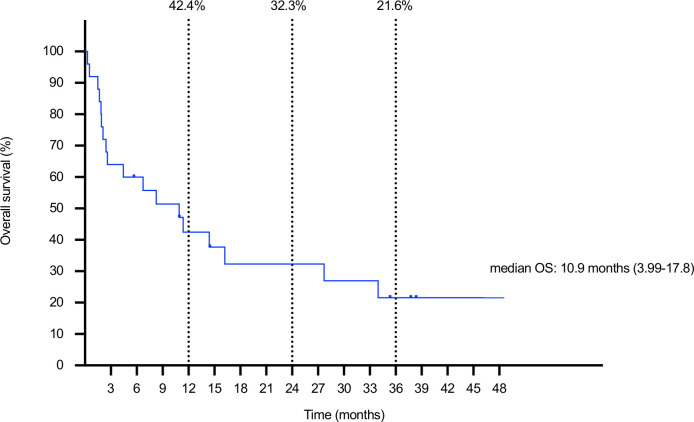
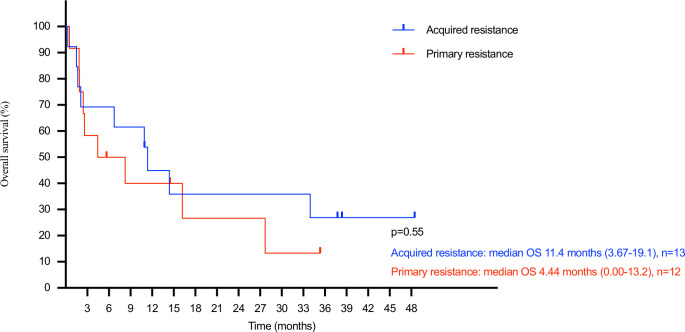
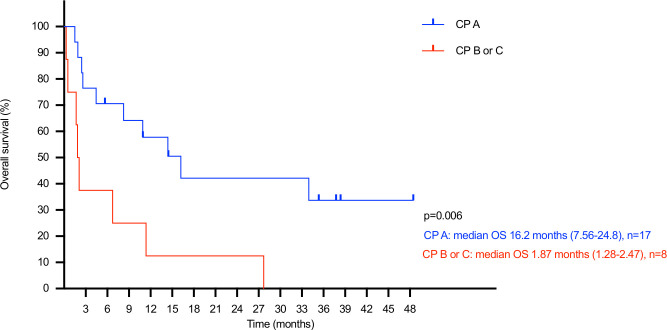
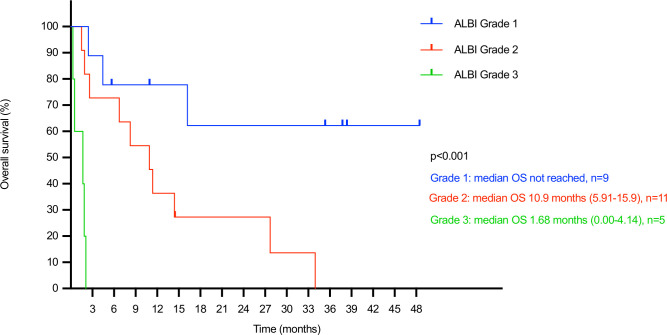
Verification
Claims the paper makes
The claims and statistics of this paper haven’t been checked yet.
Free: it reads the open-access text and checks the first 5 claims that cite a source we can check. Create a free account to check every claim.
Claims other papers make about this one
Each is checked against this paper’s own text: does it say what the citing paper says it does?
The source backs part of the claim, not all of it — or backs it for a different population, condition or comparison.
In the citing paper
“Small-cohort studies have suggested that patients receiving ipilimumab plus nivolumab after previous therapy with ICIs have an ORR of ~16% (ref. 150).”
From Adjuvant and neoadjuvant immunotherapies in hepatocellular carcinoma (2024) · cites this paper as [150]
Experimental — accuracy not yet measured
Self-check
Percentages, sums and reported differences re-computed from the paper’s own numbers.
The self-check needs the paper’s full text.
Citations
Cites
Bray, F., Ferlay, J., Soerjomataram, I., Siegel, R. L., Torre, L. A., & Jemal, A. (2018) · CA: A Cancer Journal for Clinicians · doi:10.3322/caac.21492 · Cited by 84,109
New response evaluation criteria in solid tumours: revised RECIST guideline (version 1.1)
Eisenhauer, E. A., Therasse, P., Bogaerts, J., Schwartz, L. H., Sargent, D., Ford, R., Dancey, J., Arbuck, S., Gwyther, S., Mooney, M., et al. (2009) · European Journal of Cancer · doi:10.1016/j.ejca.2008.10.026 · Cited by 29,534
Combined Nivolumab and Ipilimumab or Monotherapy in Untreated Melanoma
Larkin, J., Chiarion-Sileni, V., Gonzalez, R., Grob, J. J., Cowey, C. L., Lao, C. D., Schadendorf, D., Dummer, R., Smylie, M., Rutkowski, P., et al. (2015) · New England Journal of Medicine · doi:10.1056/nejmoa1504030 · Cited by 8,157
Atezolizumab plus bevacizumab in unresectable hepatocellular carcinoma
Finn, R. S., Qin, S., Ikeda, M., Galle, P. R., Ducreux, M., Kim, T.-Y., Kudo, M., Breder, V., Merle, P., Kaseb, A. O., et al. (2020) · New England Journal of Medicine · doi:10.1056/nejmoa1915745 · Cited by 7,470
Bettelli, E., Carrier, Y., Gao, W., Korn, T., Strom, T. B., Oukka, M., Weiner, H. L., & Kuchroo, V. K. (2006) · Nature · doi:10.1038/nature04753 · Cited by 6,992
El-Khoueiry, A. B., Sangro, B., Yau, T., Crocenzi, T. S., Kudo, M., Hsu, C., Kim, T.-Y., Choo, S.-P., Trojan, J., Welling, T. H., et al. (2017) · The Lancet · doi:10.1016/s0140-6736(17)31046-2 · Cited by 4,280
Self-citationCoordinated regulation of myeloid cells by tumours
Gabrilovich, D. I., Ostrand-Rosenberg, S., & Bronte, V. (2012) · Nature Reviews Immunology · doi:10.1038/nri3175 · Cited by 3,544
Hepatic Stellate Cells: Protean, Multifunctional, and Enigmatic Cells of the Liver
Friedman, S. L. (2008) · Physiological Reviews · doi:10.1152/physrev.00013.2007 · Cited by 2,842
Nivolumab plus ipilimumab in advanced non-small-cell lung cancer
Hellmann, M. D., Paz-Ares, L., Bernabe Caro, R., Zurawski, B., Kim, S.-W., Carcereny Costa, E., Park, K., Alexandru, A., Lupinacci, L., de la Mora Jimenez, E., et al. (2019) · New England Journal of Medicine · doi:10.1056/nejmoa1910231 · Cited by 2,823
Zhu, A. X., Finn, R. S., Edeline, J., Cattan, S., Ogasawara, S., Palmer, D., Verslype, C., Zagonel, V., Fartoux, L., Vogel, A., et al. (2018) · The Lancet Oncology · doi:10.1016/s1470-2045(18)30351-6 · Cited by 2,479
Cited by
Items 101–142 of 142
Zhang, N., Liu, T., Luo, M., Hao, J., Qin, S., Zhang, Y., Wang, G., Chen, Y., Zhang, J., Gu, S., et al. (2025) · Clinical Cancer Research · doi:10.1158/1078-0432.ccr-24-3412 · Cited by 4
Cheng, Y., Wang, J., Lü, Y., Xia, Y., Zhao, H., Wang, Q., Zhu, X.-L., Zu, Q., Li, H., Chen, Z., et al. (2025) · Hepatobiliary & pancreatic diseases international · doi:10.1016/j.hbpd.2025.09.004 · Cited by 4
Chen, V. C., Huang, S.-L., Huang, J., Hsu, T., Tzang, B., & McIntyre, R. S. (2023) · International Journal of Molecular Sciences · doi:10.3390/ijms241612630 · Cited by 4
Frager, S. Z., Cooper, W., Saenger, Y. M., & Schwartz, J. M. (2023) · World Journal of Meta-Analysis · doi:10.13105/wjma.v11.i2.47 · Cited by 3
Kaakour, D., Hagopian, G. G., Lee, S., & Lee, F.-C. (2022) · American Journal of Clinical Oncology · doi:10.1097/coc.0000000000000941 · Cited by 4
Tang, F., & Wang, N. (2023) · Immunobiology · doi:10.1016/j.imbio.2023.152723 · Cited by 3
Bishnoi, S. K., Kotasek, D., Aghmesheh, M., Yau, T. C. C., Cosman, R., Prawira, A., Moore, M. A., Chan, S. L., Mant, A. M., Eek, R. W., et al. (2024) · Cancer · doi:10.1002/cncr.35226 · Cited by 3
Self-citationMa, L., Zhang, Y., Fang, Y., Hao, C., Fan, Q., Jiang, D., Lu, L., Su, F., Chen, Y., Liu, Z., et al. (2025) · Investigational New Drugs · doi:10.1007/s10637-025-01506-x · Cited by 3
“%) from previous studies evaluating patients who had prior ipilimumab, nivolumab, or pembrolizumab treatment [7, 19].”
Sun, F. S. K., Wong, J. S. L., Mak, L.-Y., Wong, C. C.-L., Chew, V., Li, B. C. W., Leung, R., Cheung, T. T., & Yau, T. (2025) · Liver Cancer · doi:10.1159/000548536 · Cited by 3
“In fact, we and subsequently other groups have shown that combined blockade has activity in aHCC post-progression on single agent anti-PD1/L1, suggesting a possible distinct clinical effect as well [41–43].”
Self-citationTran, R. L., Li, T., de la Cerda, J., Schuler, F. W., Khaled, A. S., Pudakalakatti, S., Bhattacharya, P. K., Sinharay, S., & Pagel, M. D. (2025) · British Journal of Cancer · doi:10.1038/s41416-025-02962-1 · Cited by 5
A Phase 1b Study of Lenvatinib plus Nivolumab in Patients with Unresectable Hepatocellular Carcinoma
Ikeda, M., Kudo, M., Motomura, K., Okusaka, T., Kato, N., Hisai, T., Ikezawa, H., Shiba, S., Hoshi, T., Kuroda, M., et al. (2026) · Liver Cancer · doi:10.1159/000549681 · Cited by 6
Yuan, Z.-F., Lin, Y.-D., Wu, G.-S., Li, L., Yang, J.-P., & Zhang, J. (2023) · Annals of Translational Medicine · doi:10.21037/atm-22-6218 · Cited by 2
Roy, S., Harish, V., Mohd, S., & Singh, S. K. (2024) · Advanced Therapeutics · doi:10.1002/adtp.202400126 · Cited by 2
Xu, J., Wang, W., He, K., Tang, H., Niu, S., & Ma, Z. (2025) · American Journal of Translational Research · doi:10.62347/ymxr8481 · Cited by 2
Huang, H., Wei, Q., Leng, C., Wang, H., & Mei, B. (2024) · Medicine · doi:10.1097/md.0000000000038138 · Cited by 2
Sukowati, C. H. C., Cabral, L. K. D., & Tiribelli, C. (2022) · Annals of Hepatology · doi:10.1016/j.aohep.2022.100740 · Cited by 2
Minami, S., Sato, W., Yamamoto, K., Chiba, M., Takahashi, K., Matsuyama, M., Kikuchi, R., Sato, Y., Koshiishi, H., & Iijima, K. (2026) · Internal Medicine · doi:10.2169/internalmedicine.7779-26 · Cited by 1
Leonard, J., Duhamel, M., & Salzet, M. (2026) · Signal Transduction and Targeted Therapy · doi:10.1038/s41392-026-02902-2 · Cited by 2
Ye, Z., Li, W., Ouyang, H., Ruan, Z., Liu, X., Lin, X., & Chen, X. (2024) · Discover Oncology · doi:10.1007/s12672-024-01287-4 · Cited by 2
Chi-Han, L., Kuo, Y., Kuo, H.-C., Wang, C., Lin, S., Lee, C., Yu, M., Lee, W., Chen, C., & Hsieh, C. (2024) · Journal of Hepatocellular Carcinoma · doi:10.2147/jhc.s464105 · Cited by 1
Ren, M., Wang, Y., Xiang, Z., Ding, H., Xia, X., Ding, Z., Xie, J., Ding, N., & Yang, Y. (2026) · Clinical Oncology · doi:10.1016/j.clon.2026.104180 · Cited by 1
Advancing Systemic Treatment beyond First Line for Advanced Hepatocellular Carcinoma
Wysocki, P. T., Chmiel, P., Jassem, J., & Kraj, L. (2026) · Current Oncology Reports · doi:10.1007/s11912-026-01792-5 · Cited by 1
Fortuny, M., Chan, L. L., da Fonseca, L. G., Abou‐Alfa, G. K., Chan, S. L., & Reig, M. (2026) · Hepatology · doi:10.1097/hep.0000000000001767 · Cited by 1
Therapeutic insight into the role of nuclear protein HNF4α in liver carcinogenesis
Das, S., Ravi, H., Rajeswari, V. D., Venkatraman, G., Ramasamy, M., Dhanasekaran, S., & Ramanathan, G. (2024) · Advances in protein chemistry and structural biology · doi:10.1016/bs.apcsb.2024.05.001 · Cited by 1
Hepatitis C virus and hepatocellular carcinoma
Gupta, P. P., Sadrani, V. J., Gupta, P. P., Parab, M. M., & Bastikar, V. A. (2023) · Elsevier eBooks · doi:10.1016/b978-0-12-824152-3.00003-2 · Cited by 1
Liu, Y., & Li, W. (2022) · Research Square · doi:10.21203/rs.3.rs-1263474/v1
Nivolumab with Ipilimumab in the treatment of refractory hepatocellular carcinoma
Назировна, Х. М., Анатольевна, Д. И., Breder, V. V., & Лактионов, К. К. (2022) · Meditsinskiy sovet = Medical Council · doi:10.21518/2079-701x-2022-16-9-157-162
Biomarkers of Prediction of Immunotherapy and Updates on CTLA-4 Therapy
Sobhani, N., Roudi, R., D’Angelo, A., & Generali, D. (2023) · Springer eBooks · doi:10.1007/978-3-030-80962-1_165-1
Chon, Y. E., Kim, D. Y., Chon, H. J., & Kim, D. Y. (2024) · Clinical and Molecular Hepatology · doi:10.3350/cmh.2024.0394 · Cited by 2
Lee, K. W., Zang, D.-Y., Kim, H., Kim, J.-W., Kim, B. J., Kang, Y., Ryu, M., & Kim, H. K. (2025) · British Journal of Cancer · doi:10.1038/s41416-025-03052-y
Liver Cancer Immune Microenvironment and Immunotherapy
Liu, C., Tu, Y., & Zhang, L. (2025) · IntechOpen eBooks · doi:10.5772/intechopen.1009765
Biomarkers of Prediction of Immunotherapy and Updates on CTLA-4 Therapy
Sobhani, N., Roudi, R., D’Angelo, A., & Generali, D. (2025) · Springer eBooks · doi:10.1007/978-3-032-00765-0_165
Hsu, S.-J., Chao, Y.-C., Wang, S., Zheng, Q.-Y., Hu, Y., Zhang, Y., Zheng, X.-B., Xie, P.-J., Fu, Z.-G., Chen, Y.-X., et al. (2026) · International Journal of Radiation Oncology*Biology*Physics · doi:10.1016/j.ijrobp.2025.12.049 · Cited by 1
Research Progress of Targeted Therapy Strategies in Tumor Microenvironment
彭朝胜 (2026) · Advances in Clinical Medicine · doi:10.12677/acm.2026.161141
Systemtherapie beim hepatozellulären Karzinom
Bauer, U., & Ehmer, U. (2026) · Die Onkologie · doi:10.1007/s00761-026-01915-4
Circulating biomarkers of response to systemic treatments in advanced hepatocellular carcinoma
Campani, C. (2023) · theses.fr (ABES) · doi:10.70675/3ec25263z4942z4eb1zbc98z0ec33fa57a18
Anti-Tumor Immunity in Solid-Organ Transplant Recipients
Wong, J. S. L., Li, K. H. L., Li, B., Leung, R. C., Yap, D. Y. H., Chan, A. C. Y., Cheung, T.-T., & Yau, T. C. C. (2026) · Cancers · doi:10.3390/cancers18081216
Self-citationRenal cell carcinoma: Molecular mechanisms and emerging therapeutic strategies
Vaghela, A. R., Dulera, M., & Marakana, D. (2026) · World Advances in Renal Medicine · doi:10.25259/warm_19_2025
Consensus on standardized later-line systemic therapy for hepatocellular carcinoma
Yu, H., Cheng, J., Xia, F., Chan, S. L., Liu, X., Safadi, R., Lee, S. E., Enkhjargal, B., Ikeda, M., Kuzuya, T., et al. (2026) · Drug Resistance Updates · doi:10.1016/j.drup.2026.101468
Horitani, H., Kawashima, A., Ishizuya, Y., Yamamoto, Y., Hayashi, T., Inoguchi, S., Horibe, Y., Sassi, N., Hayashi, Y., Ujike, T., et al. (2026) · Japanese Journal of Clinical Oncology · doi:10.1093/jjco/hyag141
Vemula, S. S. M., Abdelhakeem, A., Majeed, U., Onteddu, N. K. R., & Mosalem, O. M. (2026) · Livers · doi:10.3390/livers6050085
“…with acceptable toxicity; however, ICI-based retreatment should be approached cautiously and reserved for patients with adequate liver function, as 12% experienced grade ≥ 3 treatment-related adverse events, and poorer outcomes were observed in those with higher Child–Pugh class or ALBI grade [45].”
Drug resistance: Mechanisms and strategies to overcome
Kalita, B., Bora, S. J., Sarma, P., & Aggarwal, S. (2026) · Elsevier eBooks · doi:10.1016/b978-0-443-38307-6.00004-1
Metadata
- Authors
- Wong, J. S. L., Kwok, G. G. W., Tang, V., Li, B. C. W., Leung, R., Chiu, J., Ma, K. W., She, W. H., Tsang, J., Lo, C. M., Cheung, T. T., & Yau, T.
- Affiliations
- Queen Mary Hospital (CN)
- Department of Medicine, Queen Mary Hospital, The University of Hong Kong, Hong Kong, China
- Department of Surgery, Queen Mary Hospital, The University of Hong Kong, Hong Kong, China
- Corresponding author
- Yau, Thomas
- Venue
- Journal for ImmunoTherapy of Cancer
- Publisher
- BMJ
- Published
- 2021-02
- Volume
- 9
- Issue
- 2
- Pages
- e001945
- ISSN
- 2051-1426 (ISSN-L)
- PMC
- PMC7875295
- OpenAlex
- W3128927131
- Cited by
- 142
- References
- 34
- Citations by year
- 2026: 16 · 2025: 27 · 2024: 24 · 2023: 33 · 2022: 27 · 2021: 15
- FWCI
- 9.00
- Type
- journal article
- Language
- en
- Open access
- gold
- doi.org
- Licence
- Locations
- Journal for ImmunoTherapy of Cancer (publishedVersion, cc-by-nc)
- PubMed Central (publishedVersion, cc-by-nc)
- PubMed (publishedVersion)
- The HKU Scholars Hub (University of Hong Kong) (publishedVersion)
- DOAJ (DOAJ: Directory of Open Access Journals) (submittedVersion, cc-by-sa)
- Funders
- Research Grant Council Theme Based Research Fund (T12-704/16-R)
- Topics
- Health Sciences › Medicine › Oncology › Cancer Immunotherapy and Biomarkers
- Health Sciences › Medicine › Hepatology › Hepatocellular Carcinoma Treatment and Prognosis
- Health Sciences › Medicine › Oncology › Colorectal Cancer Treatments and Studies
- Keywords
- hepatocellular carcinoma, ipilimumab, nivolumab, pembrolizumab, immune checkpoint inhibitors, anti-PD-1 therapy, immune checkpoint inhibitor resistance, combination immunotherapy, objective response rate, overall survival, Child-Pugh score, ALBI score, treatment-related adverse events, durable response, treatment toxicity, progression-free survival, treatment duration, cost-effectiveness
- MeSH terms
- Ipilimumab, Nivolumab, Immune Checkpoint Inhibitors, Aged, Aged, 80 and over, Antineoplastic Combined Chemotherapy Protocols, Female, Carcinoma, Hepatocellular, Humans, Liver Neoplasms, Male, Middle Aged, Retrospective Studies, Time Factors, Salvage Therapy, Treatment Outcome, Disease Progression, Drug Resistance, Neoplasm, Tumor Microenvironment, Antibodies, Monoclonal, Humanized
About these checks
Registry, retraction, Cites and statistics results are computed, not judged, with one exception: a printed reference that no index lists is read once by a model before it counts as a citation error. Claims are extracted by a model and kept only when their quote appears verbatim in the text; each cited source is then checked, with a model’s help, for whether it says what the claim relies on. Those verdicts can be wrong — read the claim’s quote and the cited source before relying on one.
Statistics and arithmetic are recomputed, not judged.
Confidence bands are shown only for fields calibrated on our annotated test set. None is calibrated yet, so no band is shown.
What counts as a claim ›How we measure confidence ›How we check this ›
Are you an author, or do you see a problem with this page? Request a review
Data sources
Bibliographic data: Semantic Scholar, OpenAlex, Crossref.
Contains information from the Semantic Scholar Academic Graph Datasets, made available under the ODC Attribution License (ODC-BY 1.0).
Semantic Scholar’s data is described in: Kinney, R., et al. (2023). The Semantic Scholar Open Data Platform. arXiv:2301.10140.
