

Ipilimumab and nivolumab/pembrolizumab in advanced hepatocellular carcinoma refractory to prior immune checkpoint inhibitors
Open accessThe DOI matches its Crossref record; 34 of the 34 references it cites were found in a registry or an index.
Abstract
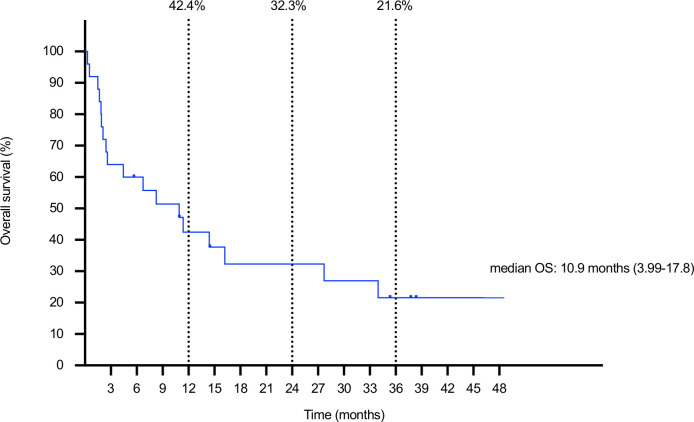
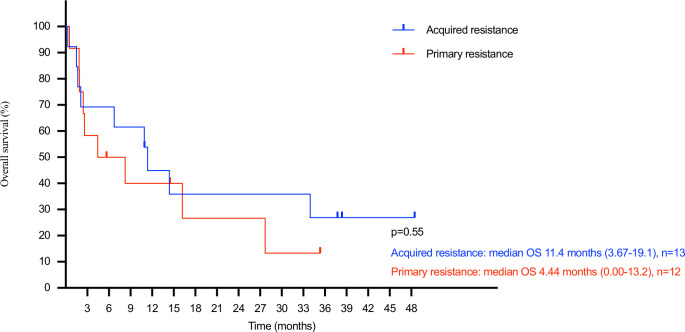
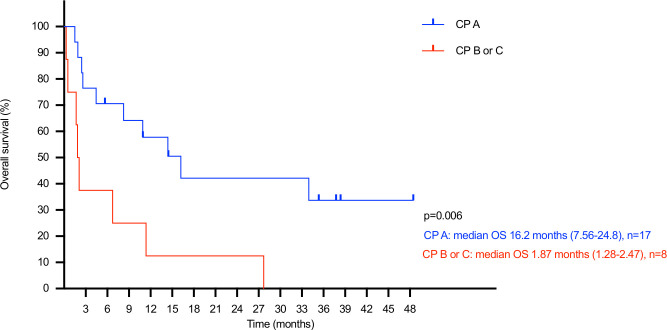
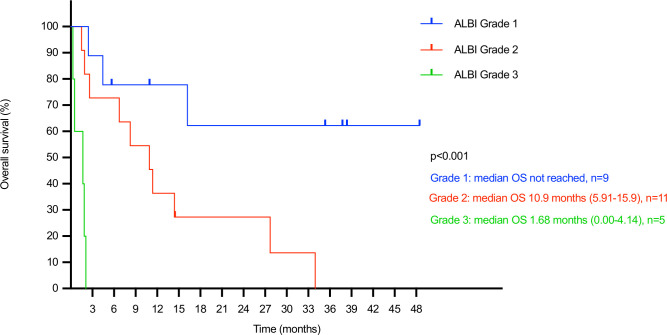
Background: Programmed cell death protein 1 (PD-1) pathway blockade with immune checkpoint inhibitors (ICIs) is a standard therapy in advanced hepatocellular carcinoma (HCC) nowadays. No strategies to overcome ICI resistance have been described. We aimed to evaluate the use of ipilimumab and anti-PD-1 ICIs (nivolumab or pembrolizumab) combinations in patients with advanced HCC with progression on prior ICIs. Methods: Patients with advanced HCC with documented tumor progression on prior ICIs and subsequently received ipilimumab with nivolumab/pembrolizumab were analyzed. Objective response rate (ORR), median duration of response (DOR), time-to-progression (TTP), overall survival (OS), and treatment-related adverse events (TRAEs) were assessed. Results: Twenty-five patients were included. The median age was 62 (range: 51–83). About 68% were of Child-Pugh (CP) Grade A and 48% had primary resistance to prior ICI. At median follow-up of 37.7 months, the ORR was 16% with a median DOR of 11.5 months (range: 2.76–30.3). Three patients achieved complete response. The median TTP was 2.96 months (95% CI: 1.61 to 4.31). Median OS was 10.9 months (95% CI: 3.99 to 17.8) and the 1 year, 2 year and 3 year survival rates were 42.4%, 32.3% and 21.6%, respectively. The ORR was 16.7% in primary resistance group and 15.4% in acquired resistance group (p=1.00). All responders were of CP A and Albumin-Bilirubin (ALBI) Grade 1 or 2. CP and ALBI Grades were significantly associated with OS (p=0.006 and p<0.001, respectively). Overall, 52% of patients experienced TRAEs and 12% experienced Grade 3 or above TRAEs. Conclusions: Ipilimumab and nivolumab/pembrolizumab can achieve durable antitumor activity and encouraging survival outcomes with acceptable toxicity in patients with advanced HCC who had prior treatment with ICIs.
Overview
The claims and statistics of this paper haven’t been checked yet.
Free: it reads the open-access text and checks the first 5 claims that cite a source we can check. Create a free account to check every claim.
Integrity signals
Registry
Cites
Statistics
Figures
Verification
Claims the paper makes
The claims and statistics of this paper haven’t been checked yet.
Free: it reads the open-access text and checks the first 5 claims that cite a source we can check. Create a free account to check every claim.
Claims other papers make about this one
Each is checked against this paper’s own text: does it say what the citing paper says it does?
The source backs part of the claim, not all of it — or backs it for a different population, condition or comparison.
In the citing paper
“Small-cohort studies have suggested that patients receiving ipilimumab plus nivolumab after previous therapy with ICIs have an ORR of ~16% (ref. 150).”
From Adjuvant and neoadjuvant immunotherapies in hepatocellular carcinoma (2024) · cites this paper as [150]
Experimental — accuracy not yet measured
Self-check
Percentages, sums and reported differences re-computed from the paper’s own numbers.
The self-check needs the paper’s full text.
Citations
Cites
Bray, F., Ferlay, J., Soerjomataram, I., Siegel, R. L., Torre, L. A., & Jemal, A. (2018) · CA: A Cancer Journal for Clinicians · doi:10.3322/caac.21492 · Cited by 84,109
New response evaluation criteria in solid tumours: revised RECIST guideline (version 1.1)
Eisenhauer, E. A., Therasse, P., Bogaerts, J., Schwartz, L. H., Sargent, D., Ford, R., Dancey, J., Arbuck, S., Gwyther, S., Mooney, M., et al. (2009) · European Journal of Cancer · doi:10.1016/j.ejca.2008.10.026 · Cited by 29,534
Combined Nivolumab and Ipilimumab or Monotherapy in Untreated Melanoma
Larkin, J., Chiarion-Sileni, V., Gonzalez, R., Grob, J. J., Cowey, C. L., Lao, C. D., Schadendorf, D., Dummer, R., Smylie, M., Rutkowski, P., et al. (2015) · New England Journal of Medicine · doi:10.1056/nejmoa1504030 · Cited by 8,157
Atezolizumab plus bevacizumab in unresectable hepatocellular carcinoma
Finn, R. S., Qin, S., Ikeda, M., Galle, P. R., Ducreux, M., Kim, T.-Y., Kudo, M., Breder, V., Merle, P., Kaseb, A. O., et al. (2020) · New England Journal of Medicine · doi:10.1056/nejmoa1915745 · Cited by 7,470
Bettelli, E., Carrier, Y., Gao, W., Korn, T., Strom, T. B., Oukka, M., Weiner, H. L., & Kuchroo, V. K. (2006) · Nature · doi:10.1038/nature04753 · Cited by 6,992
El-Khoueiry, A. B., Sangro, B., Yau, T., Crocenzi, T. S., Kudo, M., Hsu, C., Kim, T.-Y., Choo, S.-P., Trojan, J., Welling, T. H., et al. (2017) · The Lancet · doi:10.1016/s0140-6736(17)31046-2 · Cited by 4,280
Self-citationCoordinated regulation of myeloid cells by tumours
Gabrilovich, D. I., Ostrand-Rosenberg, S., & Bronte, V. (2012) · Nature Reviews Immunology · doi:10.1038/nri3175 · Cited by 3,544
Hepatic Stellate Cells: Protean, Multifunctional, and Enigmatic Cells of the Liver
Friedman, S. L. (2008) · Physiological Reviews · doi:10.1152/physrev.00013.2007 · Cited by 2,842
Nivolumab plus ipilimumab in advanced non-small-cell lung cancer
Hellmann, M. D., Paz-Ares, L., Bernabe Caro, R., Zurawski, B., Kim, S.-W., Carcereny Costa, E., Park, K., Alexandru, A., Lupinacci, L., de la Mora Jimenez, E., et al. (2019) · New England Journal of Medicine · doi:10.1056/nejmoa1910231 · Cited by 2,823
Zhu, A. X., Finn, R. S., Edeline, J., Cattan, S., Ogasawara, S., Palmer, D., Verslype, C., Zagonel, V., Fartoux, L., Vogel, A., et al. (2018) · The Lancet Oncology · doi:10.1016/s1470-2045(18)30351-6 · Cited by 2,479
Cited by
Therapeutic targets and biomarkers of tumor immunotherapy: response versus non-response
Wang, D.-R., Wu, X.-L., & Sun, Y.-L. (2022) · Signal Transduction and Targeted Therapy · doi:10.1038/s41392-022-01136-2 · Cited by 501
“Different from nivolumab, the prescription of pembrolizumab requires confirmed PD-L1 overexpression on tumors.(113,114) Nivolumab and pembrolizumab (coreda) were later approved as single agents for the second-line treatment of NSCLC (non-small cell lung cancer).”
BackgroundAdjuvant and neoadjuvant immunotherapies in hepatocellular carcinoma
Llovet, J. M., Pinyol, R., Yarchoan, M., Singal, A. G., Marron, T. U., Schwartz, M., Pikarsky, E., Kudo, M., & Finn, R. S. (2024) · Nature Reviews Clinical Oncology · doi:10.1038/s41571-024-00868-0 · Cited by 391
“Similarly, analyses of samples from patients enrolled in IMbrave 150 led to the identification of molecular predictors of improved outcomes (CD8 + T cell density, effector T (T eff ) cell signature and high expression of PD-L1) and also inferior outcomes (high T reg :T eff cell ratio) with…”
InfluentialCombination immunotherapy for hepatocellular carcinoma
Rimassa, L., Finn, R. S., & Sangro, B. (2023) · Journal of Hepatology · doi:10.1016/j.jhep.2023.03.003 · Cited by 359
Demirtas, C. O., D’Alessio, A., Rimassa, L., Sharma, R., & Pinato, D. J. (2021) · JHEP Reports · doi:10.1016/j.jhepr.2021.100347 · Cited by 219
“II) independently predicted improved OS Wong et al.(93) Retrospective 25 Ipilimumab+ nivolumab/ Ipilimumab+ pembrolizumab (n=12 / 13) Baseline ALBI grade, as well as CP score, was significantly associated with OS after a second-line ICI.”
BackgroundThe ALBI score: From liver function in patients with HCC to a general measure of liver function
Toyoda, H., & Johnson, P. J. (2022) · JHEP Reports · doi:10.1016/j.jhepr.2022.100557 · Cited by 208
Cappuyns, S., Corbett, V., Yarchoan, M., Finn, R. S., & Llovet, J. M. (2024) · JAMA Oncology · doi:10.1001/jamaoncol.2023.2677 · Cited by 167
Immune checkpoint inhibitors in hepatocellular carcinoma: emerging challenges in clinical practice
Pinter, M., Scheiner, B., & Pinato, D. J. (2023) · The Lancet. Gastroenterology & hepatology · doi:10.1016/s2468-1253(23)00147-4 · Cited by 155
Melero, I., Yau, T., Kang, Y.-K., Kim, T.-Y., Santoro, A., Sangro, B., Kudo, M., Hou, M.-M., Matilla, A., Tovoli, F., et al. (2024) · Annals of Oncology · doi:10.1016/j.annonc.2024.03.005 · Cited by 101
Self-citationReductions in AFP and PIVKA-II can predict the efficiency of anti-PD-1 immunotherapy in HCC patients
Sun, X., Mei, J., Lin, W., Yang, Z., Peng, W. J., Chen, J., Zhang, Y., Xu, L., & Chen, M. (2021) · BMC Cancer · doi:10.1186/s12885-021-08428-w · Cited by 87
“have also found HCC patients with patients with lower ALBI grades had better response to immunotherapy and prognosis [33].”
ResultRen, Z., Ducreux, M. P., Abou‐Alfa, G. K., Merle, P., Fang, W. J., Edeline, J., Li, Z., Wu, L., Assénat, E., Hu, S., et al. (2022) · Liver Cancer · doi:10.1159/000527175 · Cited by 82
“Nivolumab plus ipilimumab and pembrolizumab as a single agent received accelerated approval in the USA [12]; and camrelizumab as a single agent received approval in China [7, 8, 11].”
BackgroundChen, S., Xu, B., Wu, Z., Wang, P., Yu, W., Liu, Z., Huang, X., Wu, Y., Li, T., & Guo, W. (2021) · BMC Cancer · doi:10.1186/s12885-021-08858-6 · Cited by 70
“A single-centre retrospective review [25] assessing ipilimumab plus anti-PD-1 inhibitor in patients with advanced HCC with progression on previous immune checkpoint inhibitors demonstrated that the median OS was 10.”
BackgroundLi, J., Liang, Y.-B., Wang, Q., Luo, W.-L., Chen, X., Lakang, Y., Yang, Z.-S., Zuo, J.-X., Li, Y.-K., Li, Z., et al. (2025) · Liver Cancer · doi:10.1159/000549355 · Cited by 84
“[28, 29, 31–33, 35, 37].”
InfluentialZhang, L., Feng, J., Kuang, T., Chai, D., Qiu, Z., Deng, W., Dong, K., Zhao, K., & Wang, W. (2023) · International Immunopharmacology · doi:10.1016/j.intimp.2023.110019 · Cited by 73
Systemic Therapy for Hepatocellular Carcinoma: Current Updates and Outlook
Fan, Y., Xue, H., & Zheng, H. (2022) · Journal of Hepatocellular Carcinoma · doi:10.2147/jhc.s358082 · Cited by 70
“9 months, ORR = 16%) with tolerable toxicity.(216) As aforementioned, the synergistic effect between nivolumab and ipilimumab may explain this situation.”
BackgroundScheiner, B., Roessler, D., Phen, S., Lim, M., Pomej, K., Pressiani, T., Cammarota, A., Fründt, T., von Felden, J., Schulze, K., et al. (2022) · JHEP Reports · doi:10.1016/j.jhepr.2022.100620 · Cited by 75
Persano, M., Rimini, M., Tada, T., Suda, G., Shimose, S., Kudo, M., Cheon, J., Finkelmeier, F., Lim, H. Y., Presa, J., et al. (2023) · European Journal of Cancer · doi:10.1016/j.ejca.2023.05.021 · Cited by 72
Dong, Y., Wong, J. S. L., Sugimura, R., Lam, K. O., Li, B. K., Kwok, G. W., Leung, R. C.-Y., Chiu, J. W. Y., Cheung, T. T., & Yau, T. C. C. (2021) · Cancers · doi:10.3390/cancers13081949 · Cited by 65
“We recently published the first study on the use of ipilimumab–nivolumab/pembrolizumab in patients with PD-1 pathway ICI refractory HCC [36].”
BackgroundSelf-citationJin, H., Qin, S., He, J., Xiao, J., Li, Q., Mao, Y., & Zhao, L. (2022) · International Journal of Biological Sciences · doi:10.7150/ijbs.70691 · Cited by 61
“designed a combination therapy of CTLA-4 and PD-1 blockers, namely that all patients needed to receive ipilimumab 1 mg/kg with nivolumab 3 mg/kg or pembrolizumab 2 mg/kg scheduled every 3 weeks [153].”
Shi, Y., Han, G., Zhou, J., Shi, X., Jia, W., Cheng, Y., Jin, Y., Hua, X., Wen, T., Wu, J., et al. (2025) · The Lancet. Gastroenterology & hepatology · doi:10.1016/s2468-1253(25)00059-7 · Cited by 67
Current Status in Rechallenge of Immunotherapy
Hu, H. H., Wang, K., Jia, R., Zeng, Z., Zhu, M., Deng, Y., Xiong, Z., Tang, J., Xie, H., Wang, Y., et al. (2023) · International Journal of Biological Sciences · doi:10.7150/ijbs.82776 · Cited by 55
Roessler, D., Öcal, O., Philipp, A. B., Markwardt, D., Munker, S., Mayerle, J. V., Jochheim, L. S., Hammer, K., Lange, C. M., Geier, A., et al. (2022) · Journal of Cancer Research and Clinical Oncology · doi:10.1007/s00432-022-04206-8 · Cited by 56
“A recent study reported outcomes of 25 patients with advanced HCC treated with ipilimumab and PD-1 inhibition with pembrolizumab or nivolumab after prior antiPD-1/PD-L1 monotherapy (Wong et al. 2021).”
BackgroundLiu, F., Li, X., Zhang, Y., Ge, S., Shi, Z., Liu, Q., & Jiang, S. (2025) · Journal of Experimental & Clinical Cancer Research · doi:10.1186/s13046-025-03490-9 · Cited by 54
Gong, L., Kwong, D. L., Dai, W., Wu, P., Wang, Y., Lee, A. W. M., & Guan, X. (2021) · Frontiers in Oncology · doi:10.3389/fonc.2021.744889 · Cited by 52
Cerreto, M., Cardone, F., Cerrito, L., Stella, L., Santopaolo, F., Pallozzi, M., Gasbarrini, A., & Ponziani, F. R. (2023) · Current Oncology · doi:10.3390/curroncol30100633 · Cited by 45
“…have been obtained for Nivolumab (median OS 24 months) [41] or for Nivolumab-Ipilimumab (median OS 10.9 months in a retrospective real-world study) [53], but it is hoped that new randomized trials in the future will provide even more encouraging results, taking into account other combinations…”
BackgroundInfluentialSu, X., Li, J., Xu, X., Ye, Y., Wang, C., Pang, G., Liu, W., Liu, A., Zhao, C., & Hao, X. (2024) · Journal of Translational Medicine · doi:10.1186/s12967-024-05552-6 · Cited by 50
Hui, R. W., Mak, L., Cheung, T. T., Lee, V. H.-F., Seto, W., & Yuen, M. (2022) · Clinical and Molecular Hepatology · doi:10.3350/cmh.2022.0399 · Cited by 43
Self-citationImmune checkpoint inhibitors in the treatment of hepatocellular carcinoma
Akbulut, Z., Aru, B., Aydın, F., & Demirel, G. Y. (2024) · Frontiers in Immunology · doi:10.3389/fimmu.2024.1379622 · Cited by 44
Rahimi, A. R., Baghernejadan, Z., Hazrati, A., Malekpour, K., Samimi, L. N., Najafi, A., Falak, R., & Khorramdelazad, H. (2025) · Biomedicine & Pharmacotherapy · doi:10.1016/j.biopha.2025.118014 · Cited by 44
Zhao, H., Ling, Y., He, J., Dong, J., Mo, Q., Wang, Y., Zhang, Y., Hongbin, Y., & Tang, C. (2024) · Drug Resistance Updates · doi:10.1016/j.drup.2024.101084 · Cited by 42
Emerging role of circulating tumor cells in immunotherapy
Rzhevskiy, A. S., Kapitannikova, A. Y., Malinina, P., Volovetsky, A. B., Es, H. A., Kulasinghe, A., Thiery, J. P., Maslennikova, A., Zvyagin, A. V., & Warkiani, M. E. (2021) · Theranostics · doi:10.7150/thno.59677 · Cited by 40
“For the case of hepatocellular carcinoma (HCC), there is a modest number of clinical studies, which, however, have shown the effectiveness of the use of immunotherapy in first line of therapy (atezolizumab + bevacizumab, IMBrave150 [176]) and in subsequent lines in combinations (ipilimumab + nivolumab/pembrolizumab, A…”
Hajra, I. E., Sanduzzi‐Zamparelli, M., Sapena, V., Muñoz, S., Mauro, E., Llarch, N., Iserte, G., Forner, A., Ríos, J., Bruix, J., et al. (2023) · Hepatology · doi:10.1097/hep.0000000000000030 · Cited by 36
“5%) as Child-Pugh C.[27,29,31,33,35] Three of the studies included only ChildPugh B patients[13,26,30] and 1 study included Child-Pugh B and C patients only.”
BackgroundThe Treatment Landscape of Advanced Hepatocellular Carcinoma
Wong, K. M., King, G. G., & Harris, W. P. (2022) · Current Oncology Reports · doi:10.1007/s11912-022-01247-7 · Cited by 37
New Therapeutics for HCC: Does Tumor Immune Microenvironment Matter?
Khanam, A., & Kottilil, S. (2022) · International Journal of Molecular Sciences · doi:10.3390/ijms24010437 · Cited by 37
Immunotherapy for hepatocellular carcinoma
Wang, X., & Lu, J. (2024) · Chinese Medical Journal · doi:10.1097/cm9.0000000000003060 · Cited by 37
Liang, Y., Wang, B., Chen, Q., Fu, X., Jiang, C., Lin, Z., Zhuang, Q., Zeng, Y., Liu, X., & Zhang, D. (2023) · Theranostics · doi:10.7150/thno.87498 · Cited by 33
“Despite the wide use of ICI therapy, the clinical benefit remains limited, with an objective response rate (ORR) of only 10-20% in patients [11-13].”
BackgroundBiomarkers predicting the efficacy of immune checkpoint inhibitors in hepatocellular carcinoma
Qin, R., Jin, T., & Xu, F. (2023) · Frontiers in Immunology · doi:10.3389/fimmu.2023.1326097 · Cited by 32
Nivolumab + Ipilimumab for patients with hepatocellular carcinoma previously treated with Sorafenib
Tsang, J., Wong, J. S. L., Kwok, G. W., Li, B. C. W., Leung, R. C.-Y., Chiu, J. W. Y., Cheung, T. T., & Yau, T. C. C. (2021) · Expert Review of Gastroenterology & Hepatology · doi:10.1080/17474124.2021.1899808 · Cited by 30
“received nivolumab/pembrolizumab with ipilimumab [73].”
Self-citationImmunomodulatory Peptides for Tumor Treatment
Song, Y., Lei, L., Cai, X., Wei, H., & Yu, C. (2024) · Advanced Healthcare Materials · doi:10.1002/adhm.202400512 · Cited by 32
Liu, N., Steer, C. J., & Song, G. (2021) · Hepatology · doi:10.1002/hep.32182 · Cited by 29
“It is our conclusion that miR- 206 functioned as an immune system booster to counteract immunosuppression and enhance CTL- mediated immune surveillance. miR- 206 represents a potential immunotherapy against HCC.”
BackgroundInfluentialImmunotherapeutic Approaches for Treating Hepatocellular Carcinoma
Shen, W., Chen, Y., Pan, L., Sheldon, M., Sun, Y., Yao, F., & Ma, L. (2022) · Cancers · doi:10.3390/cancers14205013 · Cited by 32
“In another study of HCC patients with disease progression on prior single-agent ICI treatment, dual ICI therapy with ipilimumab plus either nivolumab or pembrolizumab was found to achieve durable anti-tumor response and encouraging survival outcomes [74].”
BackgroundFrontline therapy for advanced hepatocellular carcinoma: an update
Akce, M., El‐Rayes, B. F., & Bekaii‐Saab, T. (2022) · Therapeutic Advances in Gastroenterology · doi:10.1177/17562848221086126 · Cited by 30
KRTCAP2 as an immunological and prognostic biomarker of hepatocellular carcinoma
Sun, P., Zhang, H., Shi, J., Xu, M., Cheng, T., Lu, B., Yang, L. F., Zhang, X., & Huang, J. (2023) · Colloids and Surfaces B Biointerfaces · doi:10.1016/j.colsurfb.2023.113124 · Cited by 31
Insights into Sorafenib resistance in hepatocellular carcinoma: Mechanisms and therapeutic aspects
Yousef, E. H., Gayar, A. M. E., & El‐Magd, N. F. A. (2025) · Critical Reviews in Oncology/Hematology · doi:10.1016/j.critrevonc.2025.104765 · Cited by 30
Huang, P.-S., Wang, L., Wang, Y., Tsai, M.-M., Lin, T.-K., Liao, C., Yeh, C., & Lin, K. (2023) · Cells · doi:10.3390/cells12060869 · Cited by 26
“In recent years, immunotherapeutic research has undergone a rapid transformation, giving rise to the development of the immunotherapy-based second-line HCC treatments nivolumab and pembrolizumab [22].”
BackgroundYau, T. C. C., Tai, D. W.-M., Chan, S. L., Huang, Y., Choo, S. P., Hsu, C., Cheung, T. T., Lin, S., Yong, W. P., Lee, J. J. X., et al. (2022) · Liver Cancer · doi:10.1159/000525582 · Cited by 24
Self-citationKawashima, A., Yamamoto, Y., Sato, M., Nakata, W., Kakuta, Y., Ishizuya, Y., Yamaguchi, Y., Yamamoto, A., Yoshida, T., Takayama, H., et al. (2021) · Scientific Reports · doi:10.1038/s41598-021-00509-x · Cited by 25
Goff, P. H., Bhakuni, R., Pulliam, T. H., Lee, J. H., Hall, E. T., & Nghiem, P. (2021) · Cancers · doi:10.3390/cancers13143415 · Cited by 25
“In a mouse model of HCC, the addition of an ATRi to radiation plus an anti-PD-L1 antibody increased anti-tumor CD8 T cell activity, enhanced immune memory and prolonged survival relative to radiation + ICI alone [120].”
BackgroundDeng, M., Li, S., Wang, Q., Zhao, R., Zou, J., Lin, W., Mei, J., Wei, W., & Guo, R. (2022) · Annals of Medicine · doi:10.1080/07853890.2022.2048416 · Cited by 21
“ALBI grade plays a potential role in predicting prognosis in patients with advanced HCC receiving immunotherapy [27,28].”
BackgroundZanuso, V., Pirozzi, A., Balsano, R., Pressiani, T., & Rimassa, L. (2023) · Journal of Hepatocellular Carcinoma · doi:10.2147/jhc.s347932 · Cited by 24
“Moreover, preliminary real-world evidence has shown that nivolumab plus ipilimumab may be efficacious after other ICIs regimens.(96) The purpose of ICI rechallenge has been investigated in an international, retrospective, multicenter study enrolling patients receiving at least two lines of ICIbased therapy (first-line…”
BackgroundMiura, R., Ono, A., Yano, S., Amioka, K., Naruto, K., Yamaoka, K., Fujii, Y., Uchikawa, S., Fujino, H., Nakahara, T., et al. (2024) · Medicine · doi:10.1097/md.0000000000039289 · Cited by 23
“[7,8] Therefore, these results do not indicate the effectiveness of a sequential ICI rechallenge.”
BackgroundInfluentialSecond-Line Treatment Options for Hepatocellular Carcinoma: Current Landscape and Future Direction
Pathak, S., & Sonbol, M. B. (2021) · Journal of Hepatocellular Carcinoma · doi:10.2147/jhc.s268314 · Cited by 22
Tu, X.-Y., Lin, W., Zhai, X., Liang, S., Huang, G., Wang, J., Jia, W., Li, S., Li, B., & Cheng, B. (2025) · Phytomedicine · doi:10.1016/j.phymed.2025.156750 · Cited by 23
Self-citationMicroenvironment and Tumor Heterogeneity as Pharmacological Targets in Precision Oncology
Tonello, S., Rolla, R., Tillio, P. A., Sainaghi, P. P., & Colangelo, D. (2025) · Pharmaceuticals · doi:10.3390/ph18060915 · Cited by 23
“However, such strategies are non-specific and may be associated with the development of autoimmune diseases [108,109].”
Protein scaffolds in human clinics
Cano‐Garrido, O., Serna, N., Unzueta, U., Parladé, E., Mangues, R., Villaverde, A., & Vázquez, E. (2022) · Biotechnology Advances · doi:10.1016/j.biotechadv.2022.108032 · Cited by 21
Lai, K.-C., Chen, Y., Hung, Y., Chiang, N.-J., Chen, M., & Chen, S. (2024) · Hepatology International · doi:10.1007/s12072-024-10728-9 · Cited by 23
Immunotherapy in hepatocellular carcinoma: how will it reshape treatment sequencing?
Cammarota, A., Zanuso, V., Manfredi, G. F., Murphy, R., Pinato, D. J., & Rimassa, L. (2023) · Therapeutic Advances in Medical Oncology · doi:10.1177/17588359221148029 · Cited by 23
Sho, T., Suda, G., Ohara, M., Kohya, R., Sasaki, T., Yoshida, S., Hosoda, S., Ogawa, K., Kitagataya, T., Maehara, O., et al. (2024) · Targeted Oncology · doi:10.1007/s11523-024-01092-7 · Cited by 19
“These results were similar to the safety profile of patients treated with durvalumab/ tremelimumab as initial ICI therapy and were consistent with the results of previous studies [6, 7, 11, 12].”
Hwang, S. Y., Lee, S. L., Liu, H., & Lee, S. S. (2023) · Liver Cancer · doi:10.1159/000534303 · Cited by 21
“On the basis of the above, Wong et al. [32] concluded that ipilimumab with anti-PD-1(L1) inhibitors might be effective salvage therapy in patients with advanced HCC after failure of prior anti-PD-1(L1) inhibitors.”
BackgroundMethodInfluentialWei, W., Liu, C., Wang, M., Jiang, W., Wang, C., & Zhang, S. (2022) · Frontiers in Genetics · doi:10.3389/fgene.2022.906496 · Cited by 27
“…were screened from the published literature works, namely, METTL1 (Ma et al., 2021), WDR4 (Ma et al., 2021), DCP2 (Wurm and Sprangers, 2019), DCPS (Wulf et al., 2019), NUDT2 (Song et al., 2013), NUDT3 (Song et al., 2013), NUDT12 (Song et al., 2013), NUDT15 (Song et al., 2013), NUDT16 (Song et…”
Immune-Based Combination Therapies for Advanced Hepatocellular Carcinoma
Carloni, R., Sabbioni, S., Rizzo, A., Ricci, A. D., Palloni, A., Petrarota, C., Cusmai, A., Tavolari, S., Gadaleta‐Caldarola, G., & Brandi, G. (2023) · Journal of Hepatocellular Carcinoma · doi:10.2147/jhc.s390963 · Cited by 20
“4 months respectively; all responders were Child Pugh A HCC patients.(43) If this suggestion is confirmed in larger prospective studies, dual immune checkpoint blockade could represent a promising candidate for second-line treatment after atezolizumab plus bevacizumab in advanced HCC patients.”
Hsu, W., Wang, H., Chen, C., Lai, H., Chuang, P., Tsai, M.-H., Su, W., Chen, H., Chu, C., Chou, J., et al. (2021) · PubMed Central · Cited by 29
The present and the future of immunotherapy in hepatocellular carcinoma and biliary tract cancers
Cabibbo, G., Rimassa, L., Lamarca, Á., Masi, G., Daniele, B., Pinato, D. J., & Gardini, A. C. (2025) · Cancer Treatment Reviews · doi:10.1016/j.ctrv.2025.102955 · Cited by 24
A multidisciplinary approach with immunotherapies for advanced hepatocellular carcinoma
Lee, Y. R. (2023) · Journal of Liver Cancer · doi:10.17998/jlc.2023.09.04 · Cited by 18
Application of Immunotherapy in Hepatocellular Carcinoma
Miao, L., Zhang, Z., Ren, Z., & Li, Y. (2021) · Frontiers in Oncology · doi:10.3389/fonc.2021.699060 · Cited by 18
The rapidly evolving landscape of HCC: Selecting the optimal systemic therapy
Zanuso, V., Rimassa, L., & Braconi, C. (2023) · Hepatology · doi:10.1097/hep.0000000000000572 · Cited by 19
“[107] The ORR was 16% with a median DOR of 11.5 months, and 12% of patients achieved a complete response.”
InfluentialJo, A., Jeong, D., Eum, H. H., Kim, N., Na, M., Kang, H., & Lee, H. (2023) · International Journal of Cancer · doi:10.1002/ijc.34438 · Cited by 16
“However, the details of the action may differ,(3) and combination therapies of CTLA-4 and PD-(L)1 (PD-1 or PD-1 ligand) inhibitors have a broader patient spectrum and better therapeutic efficacy than a single arm in clinical settings.(4,5) Both CTLA-4 and PD-1 checkpoint molecules are induced upon T cell activation(6,…”
BackgroundImmunotherapy for recurrent hepatocellular carcinoma
Bhatt, A., & Wu, J. J. (2023) · World Journal of Gastroenterology · doi:10.3748/wjg.v29.i15.2261 · Cited by 15
Liu, Y., Pan, J., Gao, F., Xu, W., Li, H., & Qi, X. (2022) · Advances in Therapy · doi:10.1007/s12325-022-02371-3 · Cited by 13
Gao, F., Dong, J., Xue, C., An, L., Zhang, T., Wang, W.-J., Ou, C., & Dong, X. (2023) · Nano Today · doi:10.1016/j.nantod.2023.101831 · Cited by 12
Hsu, C., Mustafa, M. A., Kumar, A., Pramanik, A., Sharma, R., Mohammed, F., Jawad, I. A., Mohammed, I. J., Alshahrani, M. Y., Khalil, N. A. M. A., et al. (2024) · Pathology - Research and Practice · doi:10.1016/j.prp.2024.155266 · Cited by 18
Chen, L., Tang, W., Liu, J., Zhu, M., Mu, W., Tang, X., Liu, T., Zhu, Z., Weng, L., Cheng, Y., et al. (2024) · Biomaterials · doi:10.1016/j.biomaterials.2024.122956 · Cited by 15
Noninvasive prediction of the clinical benefit of immunotherapy in hepatocellular carcinoma
Ono, A., Hayes, C. N., Miura, R., Kawaoka, T., Tsuge, M., & Oka, S. (2025) · Journal of Gastroenterology · doi:10.1007/s00535-025-02251-x · Cited by 16
“The ALBI grade has been associated with OS and response rates in cohorts treated with ipilimumab combined with nivolumab or pembrolizumab [11] and in a pooled cohort of various ICI therapies ( n = 341, 85% Anti-PD[L]-1 monotherapy) [12].”
Liu, G., Zhou, W., Li, X., Guo, L., He, T., Juan, Z., & Gong, L. (2021) · Frontiers in Immunology · doi:10.3389/fimmu.2021.712351 · Cited by 13
Cao, X., Zhang, Y., Zhou, Q., Sujing, S., He, M., Wang, X., Ma, P., Yang, X., Lv, L., & Zhan, L. (2022) · Frontiers in Oncology · doi:10.3389/fonc.2022.794101 · Cited by 13
“line therapeutic options, such as immune checkpoint inhibitors, have also shown efficacy against HCC recently (8).”
BackgroundOvercoming the therapeutic resistance of hepatomas by targeting the tumor microenvironment
Zhang, J., Han, H., Wang, L., Wang, W., Yang, M., & Qin, Y. (2022) · Frontiers in Oncology · doi:10.3389/fonc.2022.988956 · Cited by 17
“Currently, the combination of ipilimumab and nivolumab/pembrolizumab has been associated with encouraging survival outcomes in patients with advanced HCC with primary resistance to prior immune checkpoint inhibitors (113).”
BackgroundArdizzone, A., Basilotta, R., Filippone, A., Crupi, L., Lanza, M., Lombardo, S. P., Colarossi, C., Sciacca, D., Cuzzocrea, S., Esposito, E., et al. (2023) · Cells · doi:10.3390/cells12060841 · Cited by 15
Tang, J. P., Yang, Y., Liu, D., Wang, B., Lin, Z., Wu, Z., Zhang, J., Zhang, D., Liu, Y., Ge, M., et al. (2025) · Nature Communications · doi:10.1038/s41467-025-67528-4 · Cited by 13
Dai, X.-Y., Yang, X.-J., Wu, H. M., Lv, Y., & Lan, T. (2025) · Cancers · doi:10.3390/cancers18010039 · Cited by 11
“Moreover, HCC patients with a lower albumin-bilirubin (ALBI) grade show better treatment responses and better prognosis to immunotherapy [137].”
Ye, Z., Zhang, Y., Chen, J., Wang, X., Hong, Y., & Zhao, Q. D. (2023) · International Immunopharmacology · doi:10.1016/j.intimp.2023.110344 · Cited by 11
Shao, Y., Chen, C.-T., Chuang, C.-H., Su, T., Ho, M., Tseng, T., Liu, T., Wu, T., Cheng, A., & Hsu, C. (2025) · British Journal of Cancer · doi:10.1038/s41416-025-02978-7 · Cited by 10
Suzuki, T., Mizuno, K., Yamamoto, T., Ito, T., Ishikawa, T., Honda, T., Akamatsu, S., Ishii, M., Ando, Y., & Kawashima, H. (2025) · Digestive and Liver Disease · doi:10.1016/j.dld.2025.02.027 · Cited by 10
Mechanisms and strategies to overcome immunotherapy resistance in hepatobiliary malignancies
Xiong, J., & Wang, Q. (2022) · Hepatobiliary & pancreatic diseases international · doi:10.1016/j.hbpd.2022.07.006 · Cited by 11
Navigating second-line therapy after immunotherapy in advanced HCC☆
Vogel, A., Saborowski, A. L., Rimassa, L., & El-Khoueiry, A. B. (2025) · JHEP Reports · doi:10.1016/j.jhepr.2025.101630 · Cited by 18
Dong, D., Zhu, X., Wang, H., Li, L., Wan, M., Li, S., Zhang, Y., Geng, J., Li, Y., & Wang, W. (2022) · Journal of Medical Imaging and Radiation Oncology · doi:10.1111/1754-9485.13398 · Cited by 9
Li, L., Liu, H.-T., Teng, Y., Deng, Z., Zhang, G.-L., Su, J., Ma, L., & Zhong, J. (2022) · Expert Opinion on Investigational Drugs · doi:10.1080/13543784.2022.2151891 · Cited by 12
“in 25 patients with advanced HCC who had progressed on ICIs, only one of whom had received atezo+bev as first-line treatment [97].”
BackgroundEstablished and Emerging Biomarkers of Immunotherapy in Renal Cell Carcinoma
Jani, Y. C., Jansen, C. S., Gerke, M. B., & Bilen, M. A. (2024) · Immunotherapy · doi:10.2217/imt-2023-0267 · Cited by 8
Maekawa, N., Konnai, S., Watari, K., Takeuchi, H., Nakanishi, T., Tachibana, T., Hosoya, K., Kim, S., Kinoshita, R., Owaki, R., et al. (2025) · Frontiers in Immunology · doi:10.3389/fimmu.2025.1570717 · Cited by 10
Zhang, R., Wang, F., You, Z., Deng, D., He, J., Yan, W., Quan, J., Wang, J., & Yan, S. (2024) · Journal of Cancer Research and Clinical Oncology · doi:10.1007/s00432-023-05539-8 · Cited by 9
“…a human anti-PD-1 (programmed cell death protein 1) IgG4 monoclonal antibody that inhibits PD-1, received US Food and Drug Administration (FDA) approval in 2017 as a second-line therapy for HCC patients who had experienced disease progression after initial sorafenib treat-ment (Wong et al. 2021).”
BackgroundYonemoto, T., Ogasawara, S., Kanogawa, N., Miwa, C., Fujiya, M., Tsuchiya, T., Sawada, M., Akatsuka, T., Izai, R., Yumita, S., et al. (2025) · Hepatology Research · doi:10.1111/hepr.14160 · Cited by 8
Systemic Treatment for Unresectable Hepatocellular Carcinoma: A Surgeon’s Perspective
Zhu, X., Zhao, L., Li, B., Cheng, Y., & Sun, H. (2025) · Journal of Hepatocellular Carcinoma · doi:10.2147/jhc.s504457 · Cited by 7
Self-citationDual Immune Checkpoint Blockade in Hepatocellular Carcinoma: Where do we Stand?
Carloni, R., Rizzo, A., Ricci, A. D., Frega, G., Federico, A. D., Palloni, A., Marco, M. D., Gadaleta‐Caldarola, G., & Brandi, G. (2022) · Future Oncology · doi:10.2217/fon-2021-0905 · Cited by 7
Lee, J. Y., Lee, J. J., Kim, S. H., Yoo, J.-S., Kim, J. H., Yang, K., Han, J. W., Jang, J. W., Choi, J. Y., Yoon, S. K., et al. (2024) · Frontiers in Oncology · doi:10.3389/fonc.2024.1495321 · Cited by 6
Krekeler, C., Wethmar, K., Mikesch, J., Kerkhoff, A., Menck, K., Lenz, G., Schildhaus, H., Wessolly, M., Hoffmann, M. W., Pascher, A., et al. (2023) · International Journal of Molecular Sciences · doi:10.3390/ijms241512056 · Cited by 6
“There are emerging data showing long-term disease control after re-challenging immunotherapy with CTLA-4 and PD-1 antibodies in patients whose tumors had progressed on single agent PD-1 blockade in melanoma [35,36], hepatocellular carcinoma [37], non-small cell lung cancer [38], and urothelial cancer [39].”
BackgroundNivolumab plus ipilimumab for hepatocellular carcinoma: a game-changer?
Marco, L. D., Valerio, F., Maculan, Y., Medici, B., Spallanzani, A., Dominici, M., Ricci, A. D., Rizzo, A., & Salati, M. (2026) · Expert Opinion on Biological Therapy · doi:10.1080/14712598.2026.2642273 · Cited by 5
Cowzer, D., Chou, J. F., Walch, H. S., Keane, F., Khalil, D. N., Shia, J., Do, R. K. G., Yarmohammadi, H., Erinjeri, J. P., Dika, I. E., et al. (2024) · The Oncologist · doi:10.1093/oncolo/oyae110 · Cited by 5
“41 These data are promising and suggest potential therapeutic utility of this approach, which should be studied further in prospective clinical trials.”
BackgroundHaghshomar, M., Kierans, A. S., Kulik, L., Miller, F. H., & Borhani, A. A. (2025) · British Journal of Radiology · doi:10.1093/bjr/tqaf123 · Cited by 6
Kim, H. J., Hwang, S. Y., Im, J. W., Jeon, G. J., & Jeon, W. (2023) · Journal of Liver Cancer · doi:10.17998/jlc.2023.02.23 · Cited by 5
“Here, we report a case that showed a near complete response (CR) of lung metastasis to nivolumab with ipilimumab therapy after achieving a near CR of intrahepatic tumor using sorafenib and RT in a patient with advanced HCC who had experienced treatment failure of AteBeva.”
BackgroundInfluentialKawamura, Y., Akuta, N., Fujiyama, S., Suzuki, F., & Kumada, H. (2023) · Cureus · doi:10.7759/cureus.45385 · Cited by 10
Relationships Between Indices of Tumor Aggressiveness in Hepatocellular Carcinoma
Carr, B. I., Guerra, V., Donghia, R., & Yilmaz, S. (2021) · Journal of Gastrointestinal Cancer · doi:10.1007/s12029-021-00720-z · Cited by 5
Yamashita, S., Hamamoto, S., Furukawa, J., Fujita, K., Takahashi, M., Miyake, M., Ito, N., Iwamoto, H., Kohjimoto, Y., & Hara, I. (2024) · Scientific Reports · doi:10.1038/s41598-024-63403-2 · Cited by 4
“These scoring systems are not just indicators of liver function, they are reportedly associated with prognosis in patients with hepatocellular carcinoma treated with ICIs, cardiac disease and coronavirus disease 18–24 .”
Background
Metadata
- Authors
- Wong, J. S. L., Kwok, G. G. W., Tang, V., Li, B. C. W., Leung, R., Chiu, J., Ma, K. W., She, W. H., Tsang, J., Lo, C. M., Cheung, T. T., & Yau, T.
- Affiliations
- Queen Mary Hospital (CN)
- Department of Medicine, Queen Mary Hospital, The University of Hong Kong, Hong Kong, China
- Department of Surgery, Queen Mary Hospital, The University of Hong Kong, Hong Kong, China
- Corresponding author
- Yau, Thomas
- Venue
- Journal for ImmunoTherapy of Cancer
- Publisher
- BMJ
- Published
- 2021-02
- Volume
- 9
- Issue
- 2
- Pages
- e001945
- ISSN
- 2051-1426 (ISSN-L)
- PMC
- PMC7875295
- OpenAlex
- W3128927131
- Cited by
- 142
- References
- 34
- Citations by year
- 2026: 16 · 2025: 27 · 2024: 24 · 2023: 33 · 2022: 27 · 2021: 15
- FWCI
- 9.00
- Type
- journal article
- Language
- en
- Open access
- gold
- doi.org
- Licence
- Locations
- Journal for ImmunoTherapy of Cancer (publishedVersion, cc-by-nc)
- PubMed Central (publishedVersion, cc-by-nc)
- PubMed (publishedVersion)
- The HKU Scholars Hub (University of Hong Kong) (publishedVersion)
- DOAJ (DOAJ: Directory of Open Access Journals) (submittedVersion, cc-by-sa)
- Funders
- Research Grant Council Theme Based Research Fund (T12-704/16-R)
- Topics
- Health Sciences › Medicine › Oncology › Cancer Immunotherapy and Biomarkers
- Health Sciences › Medicine › Hepatology › Hepatocellular Carcinoma Treatment and Prognosis
- Health Sciences › Medicine › Oncology › Colorectal Cancer Treatments and Studies
- Keywords
- hepatocellular carcinoma, ipilimumab, nivolumab, pembrolizumab, immune checkpoint inhibitors, anti-PD-1 therapy, immune checkpoint inhibitor resistance, combination immunotherapy, objective response rate, overall survival, Child-Pugh score, ALBI score, treatment-related adverse events, durable response, treatment toxicity, progression-free survival, treatment duration, cost-effectiveness
- MeSH terms
- Ipilimumab, Nivolumab, Immune Checkpoint Inhibitors, Aged, Aged, 80 and over, Antineoplastic Combined Chemotherapy Protocols, Female, Carcinoma, Hepatocellular, Humans, Liver Neoplasms, Male, Middle Aged, Retrospective Studies, Time Factors, Salvage Therapy, Treatment Outcome, Disease Progression, Drug Resistance, Neoplasm, Tumor Microenvironment, Antibodies, Monoclonal, Humanized
About these checks
Registry, retraction, Cites and statistics results are computed, not judged, with one exception: a printed reference that no index lists is read once by a model before it counts as a citation error. Claims are extracted by a model and kept only when their quote appears verbatim in the text; each cited source is then checked, with a model’s help, for whether it says what the claim relies on. Those verdicts can be wrong — read the claim’s quote and the cited source before relying on one.
Statistics and arithmetic are recomputed, not judged.
Confidence bands are shown only for fields calibrated on our annotated test set. None is calibrated yet, so no band is shown.
What counts as a claim ›How we measure confidence ›How we check this ›
Are you an author, or do you see a problem with this page? Request a review
Data sources
Bibliographic data: Semantic Scholar, OpenAlex, Crossref.
Contains information from the Semantic Scholar Academic Graph Datasets, made available under the ODC Attribution License (ODC-BY 1.0).
Semantic Scholar’s data is described in: Kinney, R., et al. (2023). The Semantic Scholar Open Data Platform. arXiv:2301.10140.
