

Statin-mediated inhibition of RAS prenylation activates ER stress to enhance the immunogenicity of KRAS mutant cancer
Open accessThe DOI matches its Crossref record; 49 of the 49 references it cites were found in a registry or an index.
Abstract
Background: Statins preferentially promote tumor-specific apoptosis by depleting isoprenoid such as farnesyl pyrophosphate and geranylgeranyl pyrophosphate. However, statins have not yet been approved for clinical cancer treatment due, in part, to poor understanding of molecular determinants on statin sensitivity. Here, we investigated the potential of statins to elicit enhanced immunogenicity of KRAS-mutant (KRAS mut) tumors. Methods: The immunogenicity of treated cancer cells was determined by western blot, flow cytometry and confocal microscopy. The immunotherapeutic efficacy of mono or combination therapy using statin was assessed in KRAS mut tumor models, including syngeneic colorectal cancer and genetically engineered lung and pancreatic tumors. Using NanoString analysis, we analyzed how statin influenced the gene signatures associated with the antigen presentation of dendritic cells in vivo and evaluated whether statin could induce CD8+ T-cell immunity. Multiplex immunohistochemistry was performed to better understand the complicated tumor-immune microenvironment. Results: Statin-mediated inhibition of KRAS prenylation provoked severe endoplasmic reticulum (ER) stress by attenuating the anti-ER stress effect of KRAS mutation, thereby resulting in the immunogenic cell death (ICD) of KRAS mut cancer cells. Moreover, statin-mediated ICD enhanced the cross-priming ability of dendritic cells, thereby provoking CD8+ T-cell immune responses against KRAS mut tumors. Combination therapy using statin and oxaliplatin, an ICD inducer, significantly enhanced the immunogenicity of KRAS mut tumors and promoted tumor-specific immunity in syngeneic and genetically engineered KRAS mut tumor models. Along with immune-checkpoint inhibitors, the abovementioned combination therapy overcame resistance to PD-1 blockade therapies, improving the survival rate of KRAS mut tumor models. Conclusions: Our findings suggest that KRAS mutation could be a molecular target for statins to elicit potent tumor-specific immunity.
Overview
The claims and statistics of this paper haven’t been checked yet.
Free: it reads the open-access text and checks the first 5 claims that cite a source we can check. Create a free account to check every claim.
Integrity signals
Registry
Cites
Statistics
Figures
Verification
Claims the paper makes
The claims and statistics of this paper haven’t been checked yet.
Free: it reads the open-access text and checks the first 5 claims that cite a source we can check. Create a free account to check every claim.
Claims other papers make about this one
Each is checked against this paper’s own text: does it say what the citing paper says it does?
The source backs part of the claim, not all of it — or backs it for a different population, condition or comparison.
In the citing paper
“This chemopreventive effect demonstrates that mevalonate pathway inhibition can block KRAS-driven tumorigenesis at early stages, suggesting potential applications in high-risk populations.”
From The antitumoral effect of statins in pancreatic ductal adenocarcinoma: a scoping review (2026) · cites this paper as Nam et al., 2021
Experimental — accuracy not yet measuredThe source backs part of the claim, not all of it — or backs it for a different population, condition or comparison.
In the citing paper
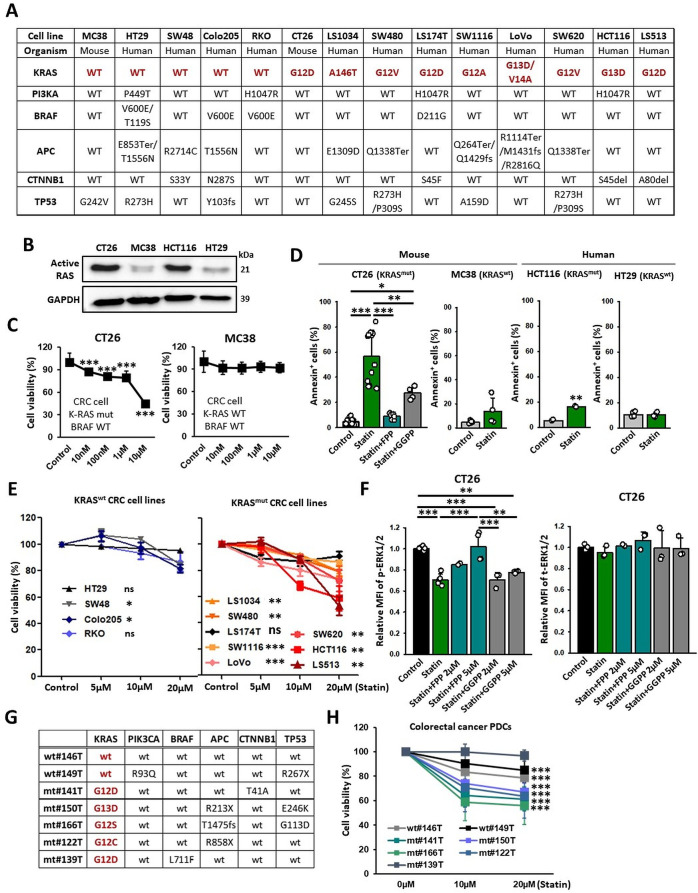
“The simvastatin effect in the CT26 murine KRASG12D cell line was reversed by the addition of mevalonate pathway metabolites involved in prenylation, FPP, and GGPP, supporting the idea that simvastatin acts by blocking KRAS protein prenylation.”
From The antitumoral effect of statins in pancreatic ductal adenocarcinoma: a scoping review (2026) · cites this paper as Nam et al., 2021
Experimental — accuracy not yet measuredThe cited source says what the claim attributes to it.
In the citing paper
“Interestingly, the only KRAS mutant lines without a statistically significant better response to simvastatin were those that also had BRAF mutations.”
From The antitumoral effect of statins in pancreatic ductal adenocarcinoma: a scoping review (2026) · cites this paper as Nam et al., 2021
The cited source says what the claim attributes to it.
In the citing paper
“The simvastatin + oxaliplatin group also had infiltrates with more CD8+ T-cells than the other groups (Nam et al., 2021).”
From The antitumoral effect of statins in pancreatic ductal adenocarcinoma: a scoping review (2026) · cites this paper as Nam et al., 2021
The cited source says what the claim attributes to it.
In the citing paper
“Nam et al. reported greater sensitivity in KRAS-mutant compared with wild-type cancers”
From The antitumoral effect of statins in pancreatic ductal adenocarcinoma: a scoping review (2026) · cites this paper as Nam et al., 2021
4 more claims about this paper
Create a free account to see every claim other papers make about this one.
Self-check
Percentages, sums and reported differences re-computed from the paper’s own numbers.
The self-check needs the paper’s full text.
Citations
Cites
Immunogenic Cell Death in Cancer Therapy
Kroemer, G., Galluzzi, L., Kepp, O., & Zitvogel, L. (2013) · Annual Review of Immunology · doi:10.1146/annurev-immunol-032712-100008 · Cited by 3,303 · cited 1×
“13 This evidence led us to hypothesize that statin could increase the immunogenicity of KRAS mut cancer cells through severe ER stress, resulting in the activation of APC-mediated T-cell immunity.”
Calreticulin exposure dictates the immunogenicity of cancer cell death
Obeid, M., Tesniere, A., Ghiringhelli, F., Fimia, G. M., Apetoh, L., Perfettini, J.-L., Castedo, M., Mignot, G., Panaretakis, T., Casares, N., et al. (2007) · Nature Medicine · doi:10.1038/nm1523 · Cited by 3,216 · cited 6×
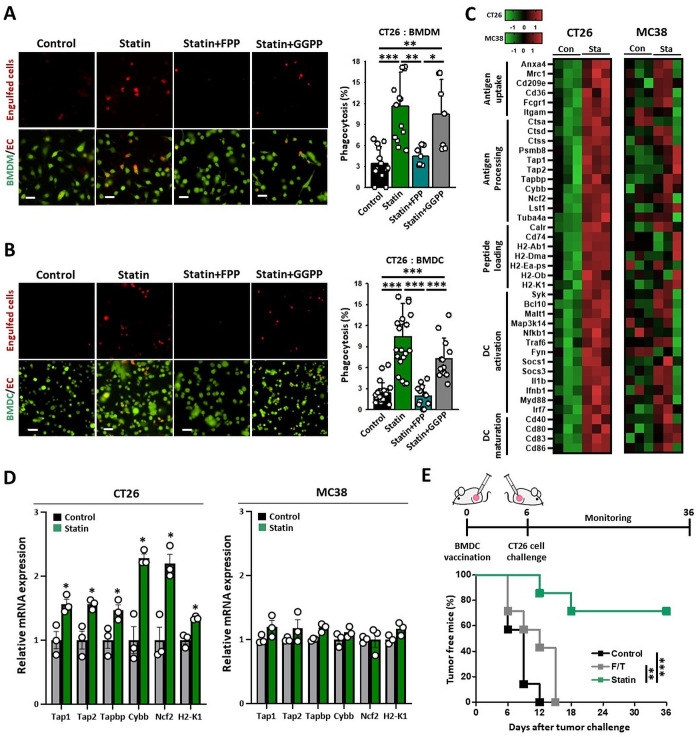
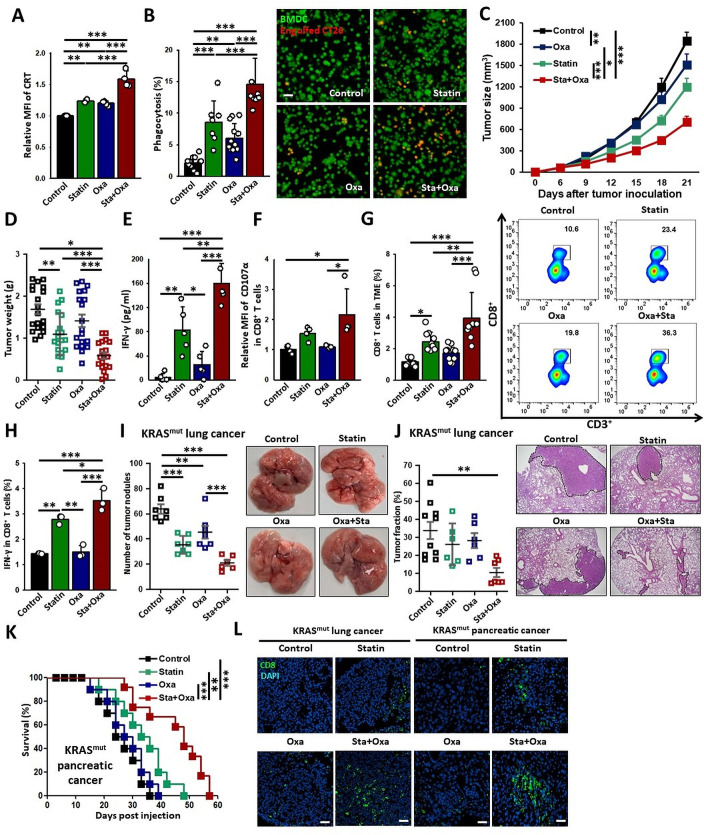
“20 We found that CT26 cells pretreated with simvastatin were readily engulfed by BMDMs and BMDCs (figure 3A,B), and that FPP impaired such effects (figure 3A,B), indicating that statin- induced-FPP depletion in KRAS mut tumor cells boosted cancer cell clearance.”
InfluentialThe Clinical KRAS(G12C) Inhibitor AMG 510 Drives Anti-Tumour Immunity
Canon, J., Rex, K., Saiki, A. Y., Mohr, C., Cooke, K., Bagal, D., Gaida, K., Holt, T., Knutson, C. G., Koppada, N., et al. (2019) · Nature · doi:10.1038/s41586-019-1694-1 · Cited by 2,277
Drugging the undruggable RAS: Mission Possible?
Cox, A. D., Fesik, S. W., Kimmelman, A. C., Luo, J., & Der, C. J. (2014) · Nature Reviews Drug Discovery · doi:10.1038/nrd4389 · Cited by 1,997
T-cell invigoration to tumour burden ratio associated with anti-PD-1 response
Huang, A. C., Postow, M. A., Orlowski, R. J., Mick, R., Bengsch, B., Manne, S., Xu, W., Harmon, S., Giles, J. R., Wenz, B., et al. (2017) · Nature · doi:10.1038/nature22079 · Cited by 1,664 · cited 1×
“28 Oxaliplatin is a first-line chemotherapeutic agent for colorectal, non- small-cell lung, and pancreatic cancers, which are tumors frequently exhibiting KRAS mutations.”
Immunostimulation with chemotherapy in the era of immune checkpoint inhibitors
Galluzzi, L., Humeau, J., Buqué, A., Zitvogel, L., & Kroemer, G. (2020) · Nature Reviews Clinical Oncology · doi:10.1038/s41571-020-0413-z · Cited by 1,349 · cited 1×
“Consistent with our Fluorescence-activated cell sorting (FACS) results, the combination therapy significantly increased CD8+ T cells in the TME (figure 6A).”
Chemical, pharmacokinetic and pharmacodynamic properties of statins: an update
Schachter, M. (2005) · Fundamental & Clinical Pharmacology · doi:10.1111/j.1472-8206.2004.00299.x · Cited by 1,211
Immunogenic death of colon cancer cells treated with oxaliplatin
Tesniere, A., Schlemmer, F., Boige, V, Kepp, O., Martins, I., Ghiringhelli, F., Aymeric, L., Michaud, M., Apetoh, L., Barault, L., et al. (2010) · Oncogene · doi:10.1038/onc.2009.356 · Cited by 1,173 · cited 1×
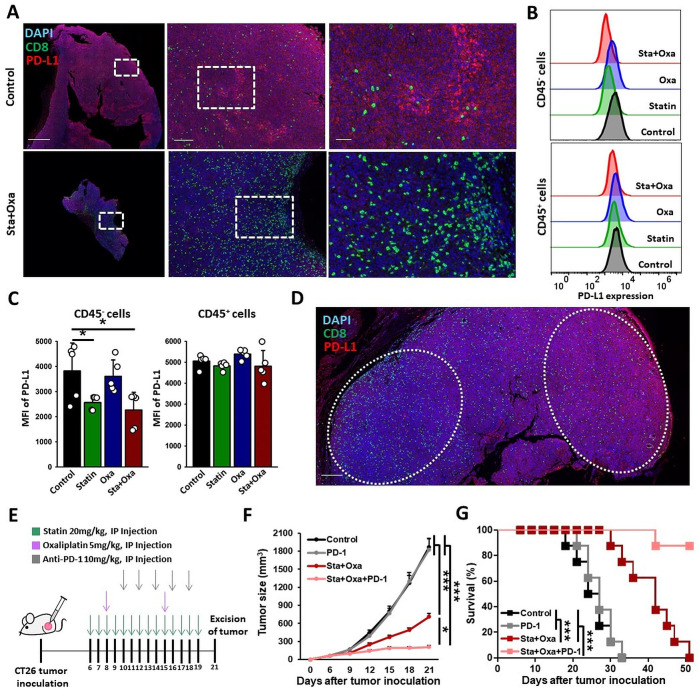
“To better understand the complicated tumor-immune microenvironment, we performed a multiplex IHC on the treated tumor tissues from the CT26 syngeneic tumor model.”
Aguirre, A. J., Bardeesy, N., Sinha, M., Lopez, L., Tuveson, D. A., Horner, J., Redston, M. S., & DePinho, R. A. (2003) · Genes & Development · doi:10.1101/gad.1158703 · Cited by 1,033 · cited 1×
“Importantly, the ternary combination treat-ment of simvastatin, oxaliplatin, and anti-PD-1 antibodies dramatically suppressed tumor growth and improved the survival rate of CT26 tumor-bearing mice (figure 6F,G).”
Statin use and reduced cancer-related mortality
Nielsen, S. F., Nordestgaard, B. G., & Bojesen, S. E. (2012) · New England Journal of Medicine · doi:10.1056/nejmoa1201735 · Cited by 1,030
Cited by
Beyond Lipid-Lowering: Effects of Statins on Cardiovascular and Cerebrovascular Diseases and Cancer
Morofuji, Y., Nakagawa, S., Ujifuku, K., Fujimoto, T., Otsuka, K., Niwa, M., & Tsutsumi, K. (2022) · Pharmaceuticals · doi:10.3390/ph15020151 · Cited by 151
“Several previous reports have indicated that statin-mediated Ras suppression regulates cellular proliferation and cell death, consequently leading to an antitumor effect [38,39].”
BackgroundYuan, Y., Li, P., Li, J., Zhao, Q., Chang, Y., & He, X. (2024) · Signal Transduction and Targeted Therapy · doi:10.1038/s41392-024-01759-7 · Cited by 132
“313 317 Despite preclinical and epidemiological data indicating that statins may have antitumour properties, clinical trial results show that statins exert varying therapeutic effects on different malignancies.”
BackgroundStatin drugs enhance responses to immune checkpoint blockade in head and neck cancer models
Kansal, V., Burnham, A. J., Kinney, B. L. C., Saba, N. F., Paulos, C. M., Lesinski, G. B., Buchwald, Z. S., & Schmitt, N. C. (2023) · Journal for ImmunoTherapy of Cancer · doi:10.1136/jitc-2022-005940 · Cited by 118
Lipid metabolism reprogramming of CD8+ T cell and therapeutic implications in cancer
Wang, R., Liu, Z., Fan, Z., & Zhan, H. (2023) · Cancer Letters · doi:10.1016/j.canlet.2023.216267 · Cited by 86
Yang, Y., Zhang, H., Huang, S., & Chu, Q. (2023) · Journal of Clinical Medicine · doi:10.3390/jcm12020709 · Cited by 84
“Statins can provoke the CD8+ T-cell immune response to KRAS-mutant tumors, and increase the sensitivity to PD-1 ICIs when combined with oxaliplatin [99].”
BackgroundEndoplasmic reticulum stress responses in anticancer immunity
Hwang, S., Chang, S., Rodríguez, P. C., & Cubillos‐Ruiz, J. R. (2025) · Nature reviews. Cancer · doi:10.1038/s41568-025-00836-5 · Cited by 80
“In preclinical studies, the 3-hydroxy-3-methylglutaryl (HMG) coenzyme A reductase inhibitor statin, which lowers extracellular cholesterol levels, was found to attenuate ER stress and enhance sensitivity to chemotherapeutic agents in CT26 mouse colon carcinoma cells 38 .”
How cancer cells remodel lipid metabolism: strategies targeting transcription factors
Jeong, D., Lee, S., & Chun, Y. (2021) · Lipids in Health and Disease · doi:10.1186/s12944-021-01593-8 · Cited by 65
Choi, Y., Kim, S. A., Jung, H., Kim, Y. K., Kim, S., Kim, J., Kim, J., Lee, Y., Jo, M. K., Woo, J., et al. (2024) · Journal for ImmunoTherapy of Cancer · doi:10.1136/jitc-2024-008864 · Cited by 60
Self-citationRegulation of protein prenylation
Jung, D., & Bachmann, H. S. (2023) · Biomedicine & Pharmacotherapy · doi:10.1016/j.biopha.2023.114915 · Cited by 58
The role of metabolic reprogramming in pancreatic cancer chemoresistance
Liu, C., Li, C., & Liu, Y. (2023) · Frontiers in Pharmacology · doi:10.3389/fphar.2022.1108776 · Cited by 59
“Moreover, statins promote apoptosis in tumors by depleting isoprenoids such as FPP and GGPP and interfering with the prenylation of signaling proteins such as KRAS (Jiang et al., 2021a; Nam et al., 2021).”
BackgroundMechanotransduction in response to ECM stiffening impairs cGAS immune signaling in tumor cells
Liu, Y., Yao, X., Zhao, Y., Fang, D., Shi, L., Yang, L., Song, G., Cai, K., Li, L., Deng, Q., et al. (2023) · Cell Reports · doi:10.1016/j.celrep.2023.113213 · Cited by 55
Impact of KRAS mutation on the tumor microenvironment in colorectal cancer
Zhou, Y., Kuang, Y., Wang, C., Yu, Y., Pan, L., & Hu, X. (2024) · International Journal of Biological Sciences · doi:10.7150/ijbs.88779 · Cited by 56
“Moreover, statin-mediated ICD enhances the cross-priming ability of dendritic cells, thereby stimulating CD8+ T-cell immune responses against KRAS mutant tumors [141].”
BackgroundBodywide ecological interventions on cancer
Kroemer, G., McQuade, J. L., Mérad, M., André, F., & Zitvogel, L. (2023) · Nature Medicine · doi:10.1038/s41591-022-02193-4 · Cited by 57
USP28 controls SREBP2 and the mevalonate pathway to drive tumour growth in squamous cancer
Maier, C. R., Hartmann, O., Prieto‐Garcia, C., Al-Shami, K. M., Schlicker, L., Vogel, F. C. E., Haid, S., Klann, K., Buck, V., Münch, C., et al. (2023) · Cell Death and Differentiation · doi:10.1038/s41418-023-01173-6 · Cited by 49
“It is also possible that impaired prenylation of RAS or RHO proteins leads to the activation of IFN signalling, for example by triggering ER-stress as reported previously [55].”
BackgroundKatsi, V. K., Papakonstantinou, I. P., & Tsioufis, K. P. (2023) · International Journal of Molecular Sciences · doi:10.3390/ijms241411786 · Cited by 47
“Statins inhibit β-Hydroxy-β-methylglutaryl-CoA (HMG-CoA) reductase, which catalyzes the rate-limiting step in hepatic cholesterol biosynthesis and inhibits the mevalonate pathway [341].”
BackgroundMutant RAS and the tumor microenvironment as dual therapeutic targets for advanced colorectal cancer
Janssen, J. B. E., Medema, J. P., Gootjes, E. C., Tauriello, D. V. F., & Verheul, H. M. W. (2022) · Cancer Treatment Reviews · doi:10.1016/j.ctrv.2022.102433 · Cited by 47
Advantage of extracellular vesicles in hindering the CD47 signal for cancer immunotherapy
Kim, Y. K., Hong, Y., Bae, Y. R., Goo, J., Kim, S. A., Choi, Y., Nam, G., Kwon, M., Yun, S. G., Lee, G., et al. (2022) · Journal of Controlled Release · doi:10.1016/j.jconrel.2022.09.042 · Cited by 40
Self-citationMolecular inhibition of RAS signalling to target ageing and age-related health
Laskovs, M., Partridge, L., & Slack, C. (2022) · Disease Models & Mechanisms · doi:10.1242/dmm.049627 · Cited by 41
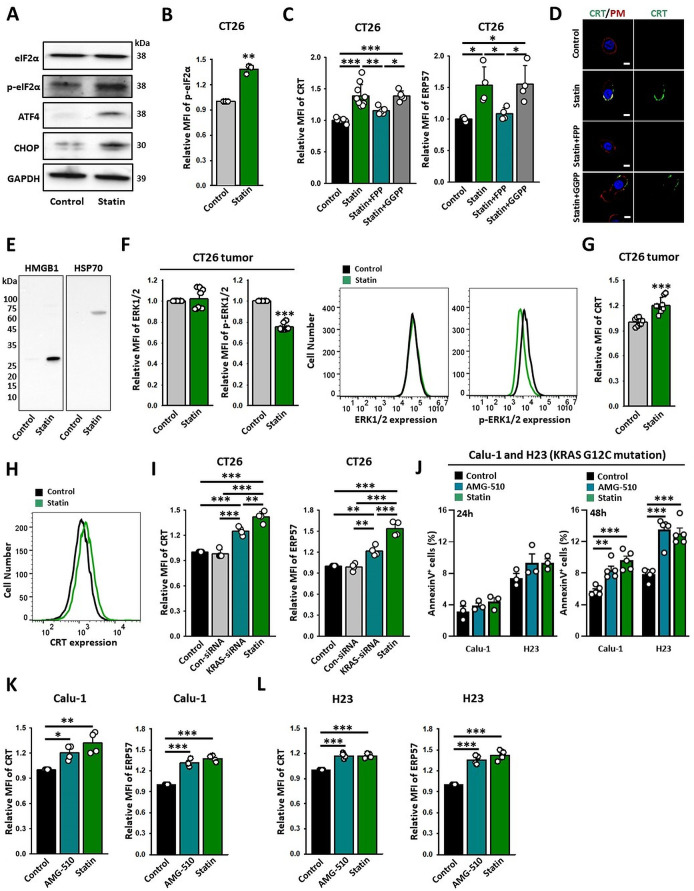
“Statins activate endoplasmic reticulum stress via inhibition of RAS prenylation, leading to enhanced immune responses against KRAS-mutant cancer cell lines and against KRAS-mutant tumours in the lung and liver of genetically engineered mouse models (Nam et al., 2021).”
BackgroundGui, L., Chen, K., Yan, J., Chen, P., Gao, W., & Ma, B. (2025) · Cell Reports Medicine · doi:10.1016/j.xcrm.2024.101913 · Cited by 48
Cellular metabolism in pancreatic cancer as a tool for prognosis and treatment (Review)
Zuzčák, M., & Trnka, J. (2022) · International Journal of Oncology · doi:10.3892/ijo.2022.5383 · Cited by 39
Zhang, Z., Yang, J., Liu, R., Ma, J., Wang, K., Wang, Q., & Tang, N. (2024) · Genes & Diseases · doi:10.1016/j.gendis.2024.101285 · Cited by 38
Recent Advances of WEE1 Inhibitors and Statins in Cancers With p53 Mutations
Meng, X., Gao, J. Z., Gomendoza, S. M. T., Li, J., & Yang, S. (2021) · Frontiers in Medicine · doi:10.3389/fmed.2021.737951 · Cited by 33
Pereira, M., Matuszewska, K., Glogova, A., & Petrik, J. (2022) · Cancers · doi:10.3390/cancers14143500 · Cited by 29
Multiple Strategies to Develop Small Molecular KRAS Directly Bound Inhibitors
Zhou, X., Ji, Y., & Zhou, J. (2023) · Molecules · doi:10.3390/molecules28083615 · Cited by 29
“For example, it was reported that statin-mediated inhibition of RAS prenylation activates endoplasmic reticulum (ER) stress to enhance the immunogenicity of KRAS-mutant cancer [96].”
BackgroundProtein lipidation in the tumor microenvironment: enzymology, signaling pathways, and therapeutics
Xu, M., & Xu, B. (2025) · Molecular Cancer · doi:10.1186/s12943-025-02309-7 · Cited by 24
Li, C., Wang, X., Chen, T., Li, W., Zhou, X., Wang, L., & Yang, Q. (2022) · Frontiers in Cell and Developmental Biology · doi:10.3389/fcell.2022.913824 · Cited by 27
Wang, G., Wang, J., Zhu, Z., Xu, X.-N., Shi, F., & Fu, X.-L. (2023) · Science Progress · doi:10.1177/00368504221147173 · Cited by 24
“Statins may be a valuable candidate for inducing ferroptosis in tumors, and the sensitivity of tumor cells to statin is influenced by SREBP2 inhibition.(127) Significantly, it has been shown preclinically and clinically that N-BPs, fatostatin, and statins could, respectively, target FPPS, SREBP-2, and HMGCR either alo…”
BackgroundSelvin, T., Berglund, M., Lenhammar, L., Jarvius, M., Nygren, P., Fryknäs, M., Larsson, R., & Andersson, C. R. (2023) · BMC Cancer · doi:10.1186/s12885-023-10645-4 · Cited by 23
“in 2021 simvastatin treatment was shown to inhibit KRAS prenylation, resulting in induction of immunogenic cell death (ICD) in KRAS mutant CRC cells [37].”
BackgroundYin, J., Fu, J., Shao, Y., Xu, J., Li, H., Chen, C., Zhao, Y., Zheng, Z., Yu, C., Zheng, L., et al. (2022) · Clinical and Experimental Medicine · doi:10.1007/s10238-022-00939-5 · Cited by 24
“Reciprocally, aberrant intracellular cholesterol may also cause endoplasmic reticulum stress [84, 85].”
BackgroundVos, W. G., Lutgens, E., & Seijkens, T. T. P. (2022) · Journal for ImmunoTherapy of Cancer · doi:10.1136/jitc-2022-005611 · Cited by 21
Wu, Y., Luo, H., Pan, Z., Chen, W., & Bi, L. (2025) · Cell Death Discovery · doi:10.1038/s41420-025-02878-y · Cited by 25
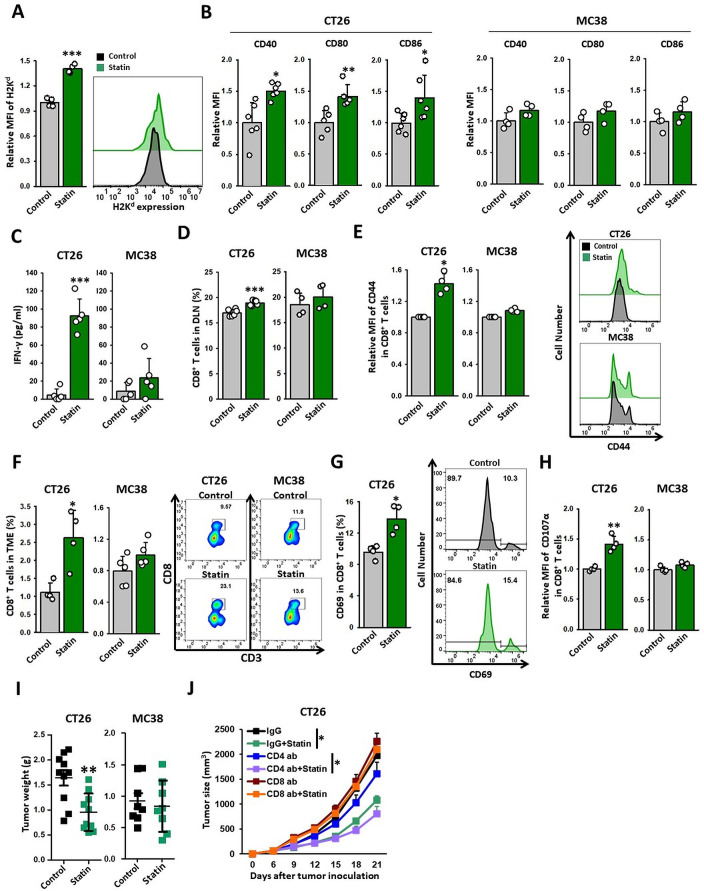
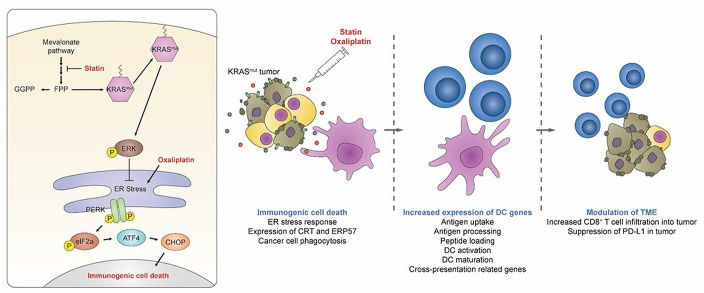
“Mechanistically, statins impair RAS protein prenylation in KRAS-mutant tumors, intensify ER stress, and induce immunogenic cell death (ICD), thereby enhancing CD8 ⁺ T-cell – mediated antitumor immunity and potentially over-coming resistance to PD-1 blockade therapies [111].”
Past and Future Strategies to Inhibit Membrane Localization of the KRAS Oncogene
Haidar, M., & Jacquemin, P. (2021) · International Journal of Molecular Sciences · doi:10.3390/ijms222413193 · Cited by 21
“Furthermore, the addition of checkpoint inhibitors to the aforementioned combination therapy sensitizes tumors to PD-1 blockade, triggering tumor suppressive effects [30].”
BackgroundThe role of statins in the regulation of breast and colorectal cancer and future directions
Dang, Y., Zhang, Y., & Wang, Z. (2025) · Frontiers in Pharmacology · doi:10.3389/fphar.2025.1578345 · Cited by 17
Mahmoudi, A. A., Heydari, S., Markina, Y. V., Barreto, G. E., & Sahebkar, A. (2022) · Biomedicine & Pharmacotherapy · doi:10.1016/j.biopha.2022.113304 · Cited by 17
Synergistic antitumor activity of regorafenib and rosuvastatin in colorectal cancer
Yuan, T., Wu, R., Wang, W., Liu, Y., Kong, W., Yang, B., He, Q., & Zhu, H. (2023) · Frontiers in Pharmacology · doi:10.3389/fphar.2023.1136114 · Cited by 17
Zhou, H., Gan, Y., Li, Y., Chen, X., Guo, Y., & Wang, R. (2023) · Journal of Medicinal Chemistry · doi:10.1021/acs.jmedchem.2c01721 · Cited by 18
(2023) · PubMed Central · Cited by 15
Resistance to immune checkpoint inhibitors in KRAS-mutant non-small cell lung cancer
Li, Y., Hu, L., Peng, X., Xu, H., Tang, B., & Xu, C. S. (2022) · Cancer Drug Resistance · doi:10.20517/cdr.2021.102 · Cited by 16
Cholesterol metabolism: a new checkpoint in cancer immunity
Zhao, L., Zheng, R., Liu, W., Li, X., Liu, H., Yin, H., Zhang, R., & Yang, A. (2025) · Trends in Molecular Medicine · doi:10.1016/j.molmed.2025.11.003 · Cited by 16
Lipid metabolic alterations in cancer: Common pathophysiology with cardiovascular disease
Llena-Meler, M., Canfrán‐Duque, A., Madrigal‐Matute, J., & Rotllán, N. (2026) · Seminars in Cancer Biology · doi:10.1016/j.semcancer.2026.01.003 · Cited by 13
Fu, Z., Zhang, X., Gao, Y., Fan, J., & Gao, Q. (2023) · Clinical and Translational Medicine · doi:10.1002/ctm2.1320 · Cited by 16
Gao, Y., Zuo, L., Zheng, Y., Sun, K., Gao, Y., Xu, X., Li, Z., & Zuo, D. (2025) · Breast Cancer Research · doi:10.1186/s13058-025-02045-2 · Cited by 13
“(APCs) to recognize and present tumor antigens [21].”
Xue, J., Zhang, L., Zhang, K., Zhou, K., & Zhao, H. (2025) · Frontiers in Immunology · doi:10.3389/fimmu.2025.1651769 · Cited by 11
“Precision combination strategies, which combine molecular targeted therapy with immunotherapy, not only enhance immune responses but also overcome tumour resistance (9 – 11).”
From targeted therapy to a novel way: Immunogenic cell death in lung cancer
Xu, J., Xiong, Y., Xu, Z., Xing, H., Zhou, L., & Zhang, X. (2022) · Frontiers in Medicine · doi:10.3389/fmed.2022.1102550 · Cited by 11
“Statins can stimulate CD8 + T cells and provoke severe ER stress by inhibiting RAS prenylation in KRAS-mutant (KRASmut) lung tumor models, thereby leading to the ICD effects (170).”
BackgroundJo, H., Kim, S. T., Lee, J., Park, S. H., Park, J. O., Park, Y. S., Lim, H. Y., Yu, J. I., Park, H. C., Choi, D. H., et al. (2022) · Cancer Research and Treatment · doi:10.4143/crt.2021.1527 · Cited by 9
“A recent study showed that statin could elicit effective antitumor immune responses by inducing immunogenic cell death as well as enhancing dendritic cellmediated CD8+ T-cell immunity against KRAS mutant tumors [30].”
BackgroundSelf-citationGallucci, G., Larocca, M., Navazio, A., Turazza, F. M., Inno, A., Canale, M. L., Oliva, S., Besutti, G., Tedeschi, A., Aschieri, D., et al. (2025) · International Journal of Molecular Sciences · doi:10.3390/ijms26010334 · Cited by 9
“…immunomodulatory effects, promoting immunogenic cell death in KRAS (Kirsten rat sarcoma viral oncogene homolog)—mutated cancer cells, through increased expression of “eat me” signals and damage-associated molecular patterns, while reducing proteins that suppress T cell antitumor responses [205].”
Coradini, D. (2022) · Exploration of Targeted Anti-tumor Therapy · doi:10.37349/etat.2022.00116 · Cited by 9
“In particular, statins act by inhibiting the catalytic activity of HMGCR, leading to the substantial reduction of mevalonic acid and depletion of the downstream intermediate products of the pathway, including farnesyl-PP and geranylgeranyl-PP, the two non-sterol isoprenoid derivatives essential for proper prenylation…”
BackgroundBrochado, A. C. B., de Moraes, J. A., de Oliveira, B. R., Lima, V. H. D. S., Mariano, E. D., Karande, S., Romasco, T., Leite, P. E. C., Mourão, C. F., & Alves, G. G. (2024) · Cancers · doi:10.3390/cancers16234003 · Cited by 8
Kristoff, T. J., Evans, S., Nayi, P., Abousaud, M. I., Goyal, S., Liu, Y., Shin, D. M., Steuer, C. E., Saba, N. F., & Schmitt, N. C. (2025) · Cancer Medicine · doi:10.1002/cam4.70718 · Cited by 7
“Numerous retrospective studies have shown improved survival in patients with solid tumors who are taking statins [3, 5–10, 18] , although the Manipulation of cholesterol may also indirectly impact tumor growth by enhancing the anti-tumor immune response [15, 19, 22–33].”
Liu, Z., Zhang, Y., Huang, J., Wang, Y., & Kang, X. (2023) · Frontiers in Pharmacology · doi:10.3389/fphar.2023.1154392 · Cited by 6
Duttenhefner, J. N., & Reindl, K. M. (2025) · Cancer Pathogenesis and Therapy · doi:10.1016/j.cpt.2025.06.004 · Cited by 6
“104 In a recent investigation, statin treatment activated the c-Jun N-terminal kinase (JNK) pathway, suppressed YAP/TAZ transcriptional activity, and reduced PD-L1 expression, revealing a dual mechanism of growth suppression and modulation in PDAC cells.”
Lee, Y. J., Kang, N., Nam, J., Lee, E. G., Ryoo, J., Kwon, S. S., Kim, Y. H., & Kang, H. S. (2024) · PLoS ONE · doi:10.1371/journal.pone.0299484 · Cited by 5
Self-citationInsight into the post-translational modifications in pregnancy and related complications
Yin, Y., Liao, L., Xu, Q. S., Xie, S., Yuan, L., & Zhou, R. (2024) · Biology of Reproduction · doi:10.1093/biolre/ioae149 · Cited by 6
Drug Repurposing in Oncology: A Strategic Pathway to Unlocking New Therapeutic Potential
Shaik, R., Laddika, S. G., Unnisa, M., Hamza, A., Begum, S., & Sarwar, S. F. (2025) · Therapeutic Innovation & Regulatory Science · doi:10.1007/s43441-025-00895-8 · Cited by 4
Li, J., Song, N., Ma, R., & Qu, X. (2025) · International Journal of Biological Sciences · doi:10.7150/ijbs.118831 · Cited by 5
“This indicates that statins have synergistic antitumor effects when used in combination with ICIs [190].”
Zhao, Y., Shang, Y., Luan, T., Yu, Z., Yang, Y., Niu, X., Li, H., Wang, S., Wang, C., & Liu, L. (2026) · Molecular Cancer · doi:10.1186/s12943-026-02674-x · Cited by 6
“Furthermore, decreasing extracellular cholesterol by statins provokes severe ER stress and thus elicits antitumor immunity in KRAS-mutant tumors [112].”
Coleman, M., Mascialino, S. J., Panjwani, A., Edwards, E., Sukhatme, V. V., Gavegnano, C., & Sukhatme, V. P. (2024) · Frontiers in Immunology · doi:10.3389/fimmu.2023.1281744 · Cited by 4
Hu, Z., Zheng, Y., Zheng, J., Wang, Y., Liao, J., Liu, Z., Li, J., & Cui, H. (2024) · Cancer Medicine · doi:10.1002/cam4.7241 · Cited by 4
Liu, Z., Liu, Q., Zeng, A., & Song, L. (2025) · International Immunopharmacology · doi:10.1016/j.intimp.2025.114024 · Cited by 7
Nguyen, T. T., Kim, H., Huy, T. X. N., Min, W., Lee, H.-J., Reyes, A. W. B., Lee, J., & Kim, S. (2022) · International Journal of Molecular Sciences · doi:10.3390/ijms23158337 · Cited by 5
“In the KRAS mutant tumor model, simvastatin treatment activated the dendritic cell-mediated CD8+ T cells immunity [39].”
BackgroundSelf-citationOzawa, M., Naito, S., Makinoshima, H., Ito, H., Tsuya, A., Narisawa, T., Fukuhara, H., Takai, Y., Ushijima, M., Yagi, M., et al. (2025) · BMC Cancer · doi:10.1186/s12885-025-14661-4 · Cited by 3
The E2F1-HMGCR axis promotes ferroptosis resistance in immune refractory tumor cells
Son, S. W., Lee, H.-J., Kang, N., Bae, S., Cho, E., Kwon, H., Yoon, D., Lee, C., Lee, S., Son, M. K., et al. (2025) · Nature Communications · doi:10.1038/s41467-025-66282-x · Cited by 4
“For instance, disrupting protein prenylation, a downstream process of the mevalonate pathway, can impair oncogenic signaling, reduce tumor cell proliferation, and enhance immunogenicity by interfering with RAS or RAC1 function 59 – 61 .”
Self-citationAmiri, L., Patnaik, R., Varghese, R. L., Huda, B., & Banerjee, Y. (2026) · International Journal of Molecular Sciences · doi:10.3390/ijms27020916 · Cited by 4
“…of farnesyl and geranylger-anyl intermediates suppresses prenylation dependent signalling nodes such as Ras and Rho family GTPases that converge on ERK-driven survival circuitry, with multiple cancer model studies supporting mevalonate pathway dependence through intermediate rescue logic [55,56].”
Nguyen, T., Ko, H.-J., Tsai, P.-Y., Cheng, T., Tran, T.-H., Doan, L. H., Hsiao, M., Chang, P. M., Liu, H., Hong, Y., et al. (2024) · Frontiers in Pharmacology · doi:10.3389/fphar.2024.1464647 · Cited by 3
“…also lead to the accumulation of reactive oxidative stress (ROS) by inhibiting G6PD enzyme activity (Marks and Banks, 1960) or by inhibiting protein isoprenylation to increase non-isoprenylated proteins (Schulz and Nyce, 1991), which can trigger ER stress (Mele et al., 2018; Nam et al., 2021).”
BackgroundRIT1M90I Is a Driver of Lung Adenocarcinoma Tumorigenesis and Resistance to Targeted Therapy
DiMarco, A. V., Ravichandran, M., Lau, J., Lima, A., Lacap, J. A., Larrocha, P. S.-L., Lin, E., Weng, J., Gerosa, L., Hunsaker, T., et al. (2025) · Cancer Research · doi:10.1158/0008-5472.can-24-3662 · Cited by 3
Kirsten rat sarcoma inhibitors in clinical development against nonsmall cell lung cancer
Li, Y., Hu, L., & Xu, C. S. (2021) · Current Opinion in Oncology · doi:10.1097/cco.0000000000000808 · Cited by 3
Modified Lipid Particle Recognition: A Link Between Atherosclerosis and Cancer?
Hall, A. E., Jade, D., Shaik, F., Homer‐Vanniasinkam, S., Muench, S. P., Harrison, M. A., & Ponnambalam, S. (2025) · Biology · doi:10.3390/biology14060675 · Cited by 3
Novel paradigms in KRAS targeting: Unveiling strategies to combat drug resistance
Luo, X., Zhou, F., Tang, Y., Liu, X., Xiao, R., Gu, M., Bai, J., Jiang, D., Yang, G., You, L., et al. (2025) · Chinese Medical Journal · doi:10.1097/cm9.0000000000003776 · Cited by 2
“[305] It is noteworthy that, in all these immunotherapeutic approaches, overcoming the immunosuppressive TME induced by mutant KRAS is indispensable for achieving their efficacy.”
Zhou, W., Li, Y., Sun, X., Yang, H., Shi, X., Yao, L., Jiang, J., Wang, E., Wang, H., Wei, Y., et al. (2026) · Advanced Science · doi:10.1002/advs.202523722 · Cited by 2
“To assess whether ADU-Sili enhances the efficacy of ICB, we employed the CT26 subcutaneous tumor model, which is known to be resistant to α -PD-1 therapy [ 46, 47 ].”
A review of anti-aging mechanisms of proteins, macropeptides, and related prenylated derivatives
Khoo, H. E., Xia, C., Huang, D., Chen, B., Kong, K. W., & Li, X. (2025) · International Journal of Biological Macromolecules · doi:10.1016/j.ijbiomac.2025.147005 · Cited by 1
Statin-dye conjugates for selective targeting of KRAS mutant cancer cells
Moon, H., Cai, Z., Cho, B. K., Chang, H., Hong, S. T., Zhao, J. J., Kwon, I. C., Roberts, T. M., Han, B., & Ryu, J. H. (2026) · PLoS ONE · doi:10.1371/journal.pone.0340189 · Cited by 1
“[8,9] To further clarify the contribution of the statin scaffold itself, we compared the cytotoxicity of unconjugated statins and their Cy5.”
Self-citationIgbinadolor, E., Kristoff, T. J., Shin, D. M., Steuer, C. E., Saba, N. F., & Schmitt, N. C. (2026) · Translational Cancer Research · doi:10.21037/tcr-2025-2041 · Cited by 1
Lang, S., Yang, X., Zhao, X., Dong, A., Liu, T., Yang, K., & Liu, T. (2026) · Journal of Controlled Release · doi:10.1016/j.jconrel.2026.114770 · Cited by 1
Targeting lung cancer: synergistic therapeutic strategy of cuproptosis and immunogenic cell death
Yang, Y., Pei, W., Ren, T., Wang, Y., Dai, L., Maimaitiaili, B., Meng, B., Tang, Q., & Feng, H. (2026) · Frontiers in Cell and Developmental Biology · doi:10.3389/fcell.2026.1732351 · Cited by 1
“Inhibiting KRAS membrane localization in patient-derived cancer cells induces ER stress to “force” cancer cell death, accompanied by a massive DAMP release that trigger ICD and generate more cytotoxic cells against KRAS mutations (Nam et al., 2021).”
Chen, Z., Xie, L., Wang, T., Liang, J., Chen, Y., & Chao, H. (2026) · Journal of Medicinal Chemistry · doi:10.1021/acs.jmedchem.6c00806 · Cited by 1
The antitumoral effect of statins in pancreatic ductal adenocarcinoma: a scoping review
Pîntea, A.-I., Croitoru, A. E., Dinu-Pîrvu, C. E., & Dima, S. O. (2026) · Frontiers in Pharmacology · doi:10.3389/fphar.2026.1815366
“Nam et al. demonstrated that simvastatin has a better antiproliferative effect in KRAS mutant cancers compared with KRAS wild-type by comparing the effect of simvastatin on multiple murine and human colorectal cancer cell lines with different mutational profiles (Nam et al., 2021).”
InfluentialKobets, T., & Williams, G. M. (2024) · Elsevier eBooks · doi:10.1016/b978-0-323-95488-4.00133-9
Jeong, D.-W., Lee, S., & Chun, Y.-S. (2021) · Figshare · doi:10.6084/m9.figshare.17010237
Statins in Gastroenterology: Mechanisms, Human Evidence, and Safety
Refaei, A. H. A., Basta, D., Msinjili, L., & Lebovics, E. (2026) · Cardiology in Review · doi:10.1097/crd.0000000000001105
Sartre, C. (2023) · theses.fr (ABES) · doi:10.70675/440a6512z8133z46dfzb1f2z7a2c6b5e1245
SAIMSARA (2026) · SAIMSARA Journal · doi:10.62487/saimsaradc4d1e0f
Khudaverdyan, A., Jabban, S., Morales, E. G., Moses, L. E., Feng, A., & Duvvuri, U. (2026) · Head & Neck · doi:10.1002/hed.70398
Kim, C.-S., Kim, Y., Kim, N., Yoon, H.-S., Kim, Y.-K., Ryu, E.-K., Sim, J., & Jeong, S.-M. (2026) · Journal of Gastrointestinal Oncology · doi:10.21037/jgo-2026-0469
Tadesse, D. S., Befikadu, A. K., Mengiste, B., Yikna, B. B., Ali, A. M., Ayenew, K. D., Mulu, B. A., Atlaw, B. A., & Yehualashet, A. S. (2026) · Discover Medicine · doi:10.1007/s44337-026-00693-7
“This inhibition as described by Nam et al. stimulates endoplasmic reticulum (ER) stress that is notable in increasing the immunogenicity of KRAS-mutant cancers [77].”
Truong, A., Ho, S., Lee, R. H., Wu, X. C., Kang, H., El‐Sayed, I. H., George, J. R., Heaton, C. M., Likhterov, I., Xu, M. J., et al. (2026) · Head & Neck · doi:10.1002/hed.70456
Zhou, X., Chen, Y., Hua, H., Shen, B., Liang, S., & Hua, D. (2026) · Drug Development Research · doi:10.1002/ddr.70388
Yadav, V., Dighe, S., Dhake, P., & Jain, S. (2026) · AAPS PharmSciTech · doi:10.1208/s12249-026-03546-9
“Additionally, they block RAS prenylation, improve immunogenicity, and trigger ferroptosis via the Nrf2-xCT/GPX4 pathway [15, 16].”
PERAN RETIKULUM ENDOPLASMA MEMICU KEMATIAN SEL KANKER DAN IMUN RESPONS: SYSTEMATIC REVIEW
Putri, H. E. (2024) · Jurnal Kesehatan Tambusai
Valliyodu, R., Siril, D. M., Sanil, H., Nazarudeen, A., Vijayamoorthy, A. U., Rajan, M. C. V., Sufina, S., Yesudas, C., Nalinakshan, A., Radhika, A., et al. (2026) · Cell Biochemistry and Function · doi:10.1002/cbf.70333
Pakola, S. A., Kudling, T. V., Ojala, N., Clubb, J. H. A., Arias, V., Jirovec, E., van der Heijden, M., Eleuteri, A., Haybout, L., Grönberg-Vähä-Koskela, S. A. M., et al. (2026) · International Journal of Cancer · doi:10.1002/ijc.70808
Metadata
- Authors
- Nam, G.-H., Kwon, M., Jung, H., Ko, E., Kim, S. A., Choi, Y., Song, S. J., Kim, S., Lee, Y., Kim, G. B., Han, J., Woo, J., Cho, Y., Jeong, C., Park, S.-Y., Roberts, T. M., Cho, Y. B., & Kim, I.-S.
- Affiliations
- Harvard University (US)
- Korea University Anam Hospital (KR)
- Samsung Medical Center (KR)
- Korea University (KR)
- Korea Institute of Science and Technology (KR)
- Kyung Hee University (KR)
- Dongguk University (KR)
- Corresponding author
- Kim, Seohyun
- Cho, Yong Beom
- Kim, In-San
- ORCID
- Venue
- Journal for ImmunoTherapy of Cancer
- Publisher
- BMJ
- Published
- 2021-07
- Volume
- 9
- Issue
- 7
- Pages
- e002474
- ISSN
- 2051-1426 (ISSN-L)
- PMC
- PMC8327837
- OpenAlex
- W3183405237
- Cited by
- 82
- References
- 49
- Citations by year
- 2026: 12 · 2025: 19 · 2024: 12 · 2023: 19 · 2022: 15 · 2021: 5
- FWCI
- 5.07
- Type
- journal article
- Language
- en
- Open access
- gold
- doi.org
- Licence
- Locations
- Journal for ImmunoTherapy of Cancer (publishedVersion, cc-by-nc)
- PubMed Central (publishedVersion, cc-by-nc)
- PubMed (publishedVersion)
- DOAJ (DOAJ: Directory of Open Access Journals) (submittedVersion, cc-by-sa)
- Funders
- KU-KIST Graduate School of Conversing Science and Technology Program
- the KIST Institutional Program
- Ministry of Science and ICT (2020R1C1C1003539, 2017R1A3B1023418)
- Korea Health Industry Development Institute (HI19C0753)
- SMC-KIST Collaborative Research Program
- Topics
- Life Sciences › Biochemistry, Genetics and Molecular Biology › Cancer Research › Cancer, Lipids, and Metabolism
- Health Sciences › Medicine › Oncology › Cancer Immunotherapy and Biomarkers
- Life Sciences › Immunology and Microbiology › Immunology › Immunotherapy and Immune Responses
- Keywords
- statins, KRAS mutation, Ras prenylation, endoplasmic reticulum stress, immunogenic cell death, cancer immunotherapy, CD8+ T cell immunity, anti-PD-1 resistance, tumor immune microenvironment, colorectal cancer, lung cancer, pancreatic cancer, farnesyl pyrophosphate, geranylgeranyl pyrophosphate
- MeSH terms
- Animals, Humans, Male, Mutation, Transfection, Proto-Oncogene Proteins p21(ras), Hydroxymethylglutaryl-CoA Reductase Inhibitors, Mice, Endoplasmic Reticulum Stress
About these checks
Registry, retraction, Cites and statistics results are computed, not judged, with one exception: a printed reference that no index lists is read once by a model before it counts as a citation error. Claims are extracted by a model and kept only when their quote appears verbatim in the text; each cited source is then checked, with a model’s help, for whether it says what the claim relies on. Those verdicts can be wrong — read the claim’s quote and the cited source before relying on one.
Statistics and arithmetic are recomputed, not judged.
Confidence bands are shown only for fields calibrated on our annotated test set. None is calibrated yet, so no band is shown.
What counts as a claim ›How we measure confidence ›How we check this ›
Are you an author, or do you see a problem with this page? Request a review
Data sources
Bibliographic data: Semantic Scholar, OpenAlex, Crossref.
Contains information from the Semantic Scholar Academic Graph Datasets, made available under the ODC Attribution License (ODC-BY 1.0).
Semantic Scholar’s data is described in: Kinney, R., et al. (2023). The Semantic Scholar Open Data Platform. arXiv:2301.10140.
