

Whole exome sequencing in family trios reveals de novo mutations in PURA as a cause of severe neurodevelopmental delay and learning disability
Open accessThe DOI matches its Crossref record; 42 of the 42 references it cites were found in a registry or an index.
Abstract
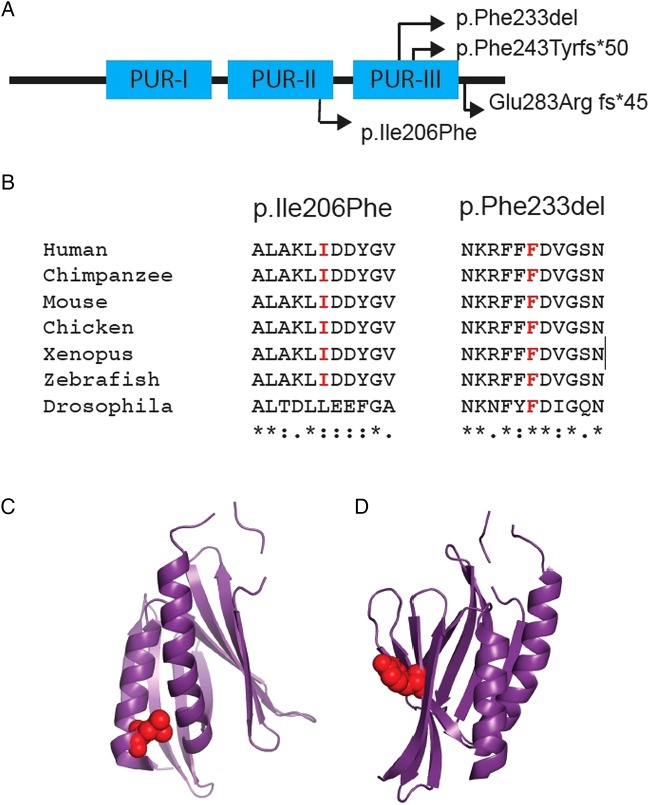
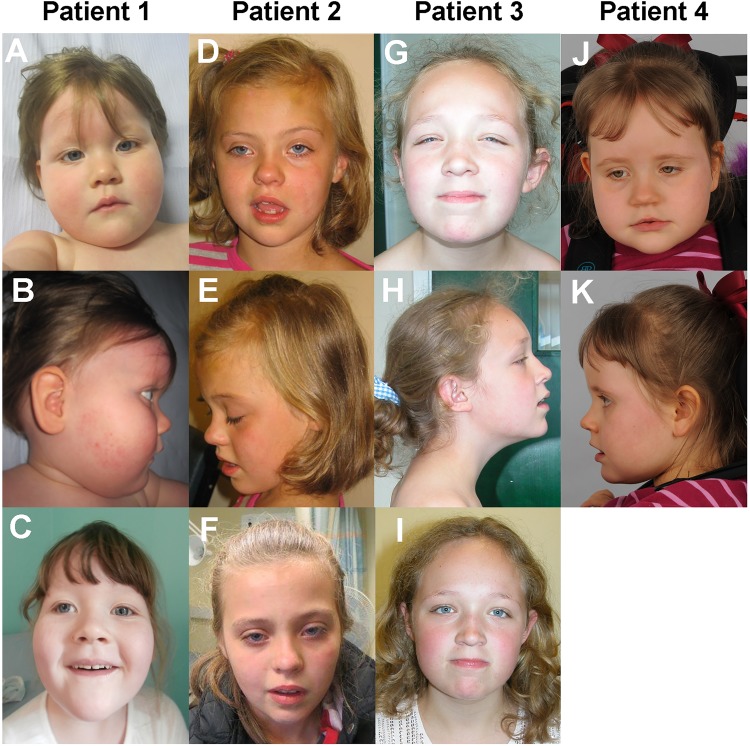
Background: De novo mutations are emerging as an important cause of neurocognitive impairment, and whole exome sequencing of case-parent trios is a powerful way of detecting them. Here, we report the findings in four such trios. Methods: The Deciphering Developmental Disorders study is using whole exome sequencing in family trios to investigate children with severe, sporadic, undiagnosed developmental delay. Three of our patients were ascertained from the first 1133 children to have been investigated through this large-scale study. Case 4 was a phenotypically isolated case recruited into an undiagnosed rare disorders sequencing study. Results: Protein-altering de novo mutations in PURA were identified in four subjects. They include two different frameshifts, one inframe deletion and one missense mutation. PURA encodes Pur-α, a highly conserved multifunctional protein that has an important role in normal postnatal brain development in animal models. The associated human phenotype of de novo heterozygous mutations in this gene is variable, but moderate to severe neurodevelopmental delay and learning disability are common to all. Neonatal hypotonia, early feeding difficulties and seizures, or ‘seizure-like’ movements, were also common. Additionally, it is suspected that anterior pituitary dysregulation may be within the spectrum of this disorder. Psychomotor developmental outcomes appear variable between patients, and we propose a possible genotype–phenotype correlation, with disruption of Pur repeat III resulting in a more severe phenotype. Conclusions: These findings provide definitive evidence for the role of PURA in causing a variable syndrome of neurodevelopmental delay, learning disability, neonatal hypotonia, feeding difficulties, abnormal movements and epilepsy in humans, and help clarify the role of PURA in the previously described 5q31.3 microdeletion phenotype.
Overview
The claims and statistics of this paper haven’t been checked yet.
Free: it reads the open-access text and checks the first 5 claims that cite a source we can check. Create a free account to check every claim.
Integrity signals
Registry
Cites
Statistics
Figures
Verification
Claims the paper makes
The claims and statistics of this paper haven’t been checked yet.
Free: it reads the open-access text and checks the first 5 claims that cite a source we can check. Create a free account to check every claim.
Claims other papers make about this one
Each is checked against this paper’s own text: does it say what the citing paper says it does?
The source backs part of the claim, not all of it — or backs it for a different population, condition or comparison.
In the citing paper
“PURA, is involved in transcriptional regulation 139 , and pathogenic variants cause severe myoclonic DEE with respiratory insufficiency and hypotonia 140 .”
From Developmental and epileptic encephalopathies (2024) · cites this paper as [139]
Experimental — accuracy not yet measured
Self-check
Percentages, sums and reported differences re-computed from the paper’s own numbers.
The self-check needs the paper’s full text.
Citations
Cites
Cingolani, P., Platts, A., Wang, L. L., Coon, M., Nguyen, T., Wang, L., Land, S. J., Lu, X., & Ruden, D. M. (2012) · Fly · doi:10.4161/fly.19695 · Cited by 11,816
A map of human genome variation from population-scale sequencing.
The 1000 Genomes Project Consortium (2010) · Nature · doi:10.1038/nature09534 · Cited by 7,877
Deriving the consequences of genomic variants with the Ensembl API and SNP Effect Predictor
McLaren, W., Pritchard, B., Rios, D., Chen, Y., Flicek, P., & Cunningham, F. (2010) · Bioinformatics · doi:10.1093/bioinformatics/btq330 · Cited by 1,586
Exome sequencing identifies MLL2 mutations as a cause of Kabuki syndrome
Ng, S. B., Bigham, A. W., Buckingham, K. J., Hannibal, M. C., McMillin, M. J., Gildersleeve, H. I., Beck, A. E., Tabor, H. K., Cooper, G. M., Mefford, H. C., et al. (2010) · Nature Genetics · doi:10.1038/ng.646 · Cited by 1,347
A de novo paradigm for mental retardation.
Vissers, L. E. L. M., de Ligt, J., Gilissen, C., Janssen, I., Steehouwer, M., de Vries, P., van Lier, B., Arts, P., Wieskamp, N., del Rosario, M., et al. (2010) · Nature Genetics · doi:10.1038/ng.712 · Cited by 852
dbNSFP: A lightweight database of human nonsynonymous SNPs and their functional predictions
Liu, X., Jian, X., & Boerwinkle, E. (2011) · Human Mutation · doi:10.1002/humu.21517 · Cited by 823
dbSNP—database for single nucleotide polymorphisms and other classes of minor genetic variation
Sherry, S. T., Ward, M., & Sirotkin, K. (1999) · Genome Research · doi:10.1101/gr.9.8.677 · Cited by 789
De novo mutations of SETBP1 cause Schinzel-Giedion syndrome
Hoischen, A., van Bon, B. W. M., Gilissen, C., Arts, P., van Lier, B., Steehouwer, M., de Vries, P., de Reuver, R., Wieskamp, N., Mortier, G., et al. (2010) · Nature Genetics · doi:10.1038/ng.581 · Cited by 489
Genetic and Epigenetic Networks in Intellectual Disabilities
van Bokhoven, H. (2011) · Annual Review of Genetics · doi:10.1146/annurev-genet-110410-132512 · Cited by 382
Robinson, P., & Mundlos, S. (2010) · Clinical Genetics · doi:10.1111/j.1399-0004.2010.01436.x · Cited by 354
Cited by
Helbig, K. L., Farwell Hagman, K. D., Shinde, D. N., Mroske, C., Powis, Z., Li, S., Tang, S., & Helbig, I. (2016) · Genetics in Medicine · doi:10.1038/gim.2015.186 · Cited by 363
Advancing epilepsy genetics in the genomic era
Myers, C. T., & Mefford, H. C. (2015) · Genome Medicine · doi:10.1186/s13073-015-0214-7 · Cited by 244
“3 deletions [31, 32].”
Developmental and epileptic encephalopathies
Scheffer, I. E., Zuberi, S., Mefford, H. C., Guerrini, R., & McTague, A. (2024) · Nature Reviews Disease Primers · doi:10.1038/s41572-024-00546-6 · Cited by 158
“PURA , is involved in transcriptional regulation 139 , and pathogenic variants cause severe myoclonic DEE with respiratory insufficiency and hypotonia 140 .”
Ohno, K., Ohkawara, B., Shen, X., Selcen, D., & Engel, A. G. (2023) · International Journal of Molecular Sciences · doi:10.3390/ijms24043730 · Cited by 141
Reijnders, M. R. F., Janowski, R., Alvi, M., Self, J. E., van Essen, T. J., Vreeburg, M., Rouhl, R. P. W., Stevens, S. J. C., Stegmann, A. P. A., Schieving, J., et al. (2018) · Journal of Medical Genetics · doi:10.1136/jmedgenet-2017-104946 · Cited by 102
“It has been suggested that disruption of PUR repeat III possibly results in a more severe phenotype, but additional studies are needed to better understand the genotype-phenotype correlation of PURA mutations.[7]”
BackgroundMethodInfluentialSelf-citationCircular RNA Cwc27 contributes to Alzheimer’s disease pathogenesis by repressing Pur-α activity
Song, C., Zhang, Y., Huang, W., Shi, J., Huang, Q., Jiang, M., Qiu, Y. L., Wang, T., Chen, H., & Wang, H. (2021) · Cell Death and Differentiation · doi:10.1038/s41418-021-00865-1 · Cited by 112
Pur-alpha regulates cytoplasmic stress granule dynamics and ameliorates FUS toxicity
Daigle, J. G., Krishnamurthy, K., Ramesh, N., Casci, I., Monaghan, J., McAvoy, K., Godfrey, E. W., Daniel, D. C., Johnson, E. M., Monahan, Z., et al. (2016) · Acta Neuropathologica · doi:10.1007/s00401-015-1530-0 · Cited by 69
“Recently, mutations have been identified in Pur-alpha that lead to profound neurodevelopmental delay, learning disabilities, neonatal hypotonia, seizures and encephalopathy, suggesting the neuronal functions of Pur-alpha in humans [36, 52].”
De novo mutations in PURA are associated with hypotonia and developmental delay
Tanaka, A. J., Bai, R., Cho, M. T., Anyane-Yeboa, K., Ahimaz, P., Wilson, A. L., Kendall, F., Hay, B., Moss, T., Nardini, M., et al. (2015) · Molecular Case Studies · doi:10.1101/mcs.a000356 · Cited by 66
“Head circumferences ranged from less than the 10th to the 97th percentile.”
BackgroundInfluentialChong, J. X., Caputo, V., Phelps, I. G., Stella, L., Worgan, L. C., Dempsey, J. C., Nguyen, A., Leuzzi, V., Webster, R., Pizzuti, A., et al. (2016) · The American Journal of Human Genetics · doi:10.1016/j.ajhg.2016.01.016 · Cited by 68
Daniel, D. C., & Johnson, E. M. (2017) · Gene · doi:10.1016/j.gene.2017.12.004 · Cited by 63
“3 microdeletion syndrome (Hunt et al., 2014; Lalani et al., 2014; Tanaka et al., 2015).”
BackgroundInfluentialBonaglia, M. C., Zanotta, N., Giorda, R., D’Angelo, M. G., & Zucca, C. (2015) · Molecular Cytogenetics · doi:10.1186/s13039-015-0193-9 · Cited by 56
“Different mechanisms based on mutation type have been postulated: either a dominant negative effect or functional haploinsufficiency in truncating mutations [8], and a negative effect on protein function in missense mutations [5].”
Jin, Z., Li, Z., Liu, Z., Jiang, Y. W., Cai, X., & Wu, J. (2017) · Biological reviews/Biological reviews of the Cambridge Philosophical Society · doi:10.1111/brv.12383 · Cited by 55
“Other candidate genes, such as PURA (Hunt et al., 2014), POGZ (Ye et al., 2015), and CTBP1 (Beck et al., 2016), have also been identified based on DNM recurrence in a large cohort of DD trios with affected offspring.”
BackgroundInfluentialKaspi, A., Hildebrand, M. S., Jackson, V. E., Braden, R. O., van Reyk, O., Howell, T., Debono, S., Lauretta, M. L., Morison, L. D., Coleman, M., et al. (2022) · Molecular Psychiatry · doi:10.1038/s41380-022-01764-8 · Cited by 54
“PURA is implicated in the control of both DNA replication and transcription [54], and PURA syndrome is noted to include ‘absent speech’ as a feature [55].”
BackgroundPURA- Related Developmental and Epileptic Encephalopathy: Phenotypic and Genotypic Spectrum
Johannesen, K. M., Gardella, E., Gjerulfsen, C. E., Bayat, A., Rouhl, R. P. W., Reijnders, M., Whalen, S., Keren, B., Buratti, J., Courtin, T., et al. (2021) · Neurology Genetics · doi:10.1212/nxg.0000000000000613 · Cited by 53
“PURA phenotypes are heterogeneous and can include moderate to severe intellectual disability (ID), hypotonia, movement disorders, epilepsy, dysmorphic facial features, and brain abnormalities.(7,10) Most patients do not achieve independent walking and remain nonverbal.”
BackgroundSelf-citationWeber, J., Bao, H., Hartlmüller, C., Wang, Z., Windhager, A., Janowski, R., Madl, T., Jin, P., & Niessing, D. (2016) · eLife · doi:10.7554/elife.11297 · Cited by 51
Genetic architecture of childhood speech disorder: a review
Morgan, A. T., Amor, D. J., John, M. S., Scheffer, I. E., & Hildebrand, M. S. (2024) · Molecular Psychiatry · doi:10.1038/s41380-024-02409-8 · Cited by 50
The Molecular Function of PURA and Its Implications in Neurological Diseases
Molitor, L., Bacher, S., Burczyk, S., & Niessing, D. (2021) · Frontiers in Genetics · doi:10.3389/fgene.2021.638217 · Cited by 50
Expanding the neurodevelopmental phenotype ofPURAsyndrome
Lee, B. H., Reijnders, M. R. F., Abubakare, O., Tuttle, E. T., Lape, B., Minks, K. Q., Stodgell, C., Bennetto, L., Kwon, J. M., Fong, C., et al. (2017) · American Journal of Medical Genetics Part A · doi:10.1002/ajmg.a.38521 · Cited by 48
“Phe233del mutation had infantile spasms with progressive epilepsy and central apnea (Hunt et al., 2014).”
BackgroundResultInfluentialSelf-citationA recurrent de novo missense mutation in UBTF causes developmental neuroregression
Toro, C., Hori, R. T., Malicdan, M. C. V., Tifft, C. J., Goldstein, A. C., Gahl, W. A., Adams, D. R., Fauni, H. B., Wolfe, L. A., Xiao, J., et al. (2018) · Human Molecular Genetics · doi:10.1093/hmg/ddx435 · Cited by 48
“Recent examples of successful trio WES for the identification of genetic etiologies in children with developmental delay and/or regression include PURA (30), KAT6A (31), ANK3 (32), TCF20 (33), and UBTF E210K (26).”
BackgroundBarbe, M. F., Krueger, J. J., Loomis, R. H., Otte, J., & Gordon, J. (2016) · Neuroscience · doi:10.1016/j.neuroscience.2016.09.018 · Cited by 35
“Protein-altering de novo mutations in PURA, which encodes the Pur-alpha protein, have recently been described in several young human subjects (Hunt et al., 2014, Lalani et al., 2014, Tanaka et al., 2015).”
BackgroundInfluentialNext-Generation Sequencing Technologies and Neurogenetic Diseases
Sun, H., Shen, X.-R., Fang, Z.-B., Jiang, Z., Wei, X., Wang, Z., & Yu, X. (2021) · Life · doi:10.3390/life11040361 · Cited by 34
Feature-driven classification reveals potential comorbid subtypes within childhood apraxia of speech
Stein, C. M., Benchek, P. H., Miller, G. J., Hall, N. B., Menon, D., Freebairn, L. A., Tag, J., Vick, J. C., Taylor, H. G., Lewis, B. A., et al. (2020) · BMC Pediatrics · doi:10.1186/s12887-020-02421-1 · Cited by 32
Mayorga, L., Gamboni, B., Mampel, A., & Roqué, M. (2018) · Molecular Genetics and Metabolism · doi:10.1016/j.ymgme.2017.12.436 · Cited by 27
Genetic investigations of the epileptic encephalopathies
Myers, C. T., & Mefford, H. C. (2016) · Progress in brain research · doi:10.1016/bs.pbr.2016.04.006 · Cited by 26
Molitor, L., Klostermann, M., Bacher, S., Merl‐Pham, J., Spranger, N., Burczyk, S., Ketteler, C., Rusha, E., Tews, D., Pertek, A., et al. (2023) · Nucleic Acids Research · doi:10.1093/nar/gkac1237 · Cited by 24
Trau, S. P., & Pizoli, C. E. (2019) · Pediatric Neurology · doi:10.1016/j.pediatrneurol.2019.09.008 · Cited by 24
Qiao, Y., Bagheri, H., Tang, F., Badduke, C., Martell, S., Lewis, M. E. S., Robinson, W. P., Connolly, M. B., Arbour, L. T., & Rajcan‐Separovic, E. (2018) · European Journal of Medical Genetics · doi:10.1016/j.ejmg.2018.06.010 · Cited by 23
Docherty, F., & Dimond, R. (2017) · Journal of Genetic Counseling · doi:10.1007/s10897-017-0171-y · Cited by 22
“In addition, the advent of new genetic technologies such as whole genome sequencing makes the testing of mother-father-child trios the gold standard in diagnostics (e.g. Hunt et al. 2014) therefore it is likely that fathers will continue to attend genetic counseling clinics in increasing numbers.”
BackgroundBotta‐Orfila, T., Tartaglia, G. G., & Michalon, A. (2016) · The Cerebellum · doi:10.1007/s12311-016-0800-2 · Cited by 21
“…activity upon sequestration is highly susceptible to deteriorate neuronal activity, as indicated by the severe neurodevelopmental phenotype observed in human carriers of mutations in Pur-alpha, including mental retardation, encephalopathy and seizures (Hunt et al., 2014; Lalani et al., 2014).”
Cabet, S., Lesca, G., Labalme, A., Portes, V. D., Guibaud, L., Sanlaville, D., & Pons, L. (2020) · European Journal of Medical Genetics · doi:10.1016/j.ejmg.2020.103897 · Cited by 20
PURA-Related Neurodevelopmental Disorders
Reijnders, M. R. F., Leventer, R. J., Lee, B. H., Baralle, D., Selber, P. R. P., Paciorkowski, A. R., & Hunt, D. (2017) · ePrints Soton (University of Southampton) · Cited by 20
Self-citationPatient with a novel purine‐rich element binding protein A mutation
Okamoto, N., Nakao, H., Niihori, T., & Aoki, Y. (2017) · Congenital Anomalies · doi:10.1111/cga.12214 · Cited by 20
“PURA encodes a highly conserved protein, Pur-a, that has important roles in DNA replication, DNA transcription, and mRNA trafficking (Hunt et al. 2014).”
BackgroundResultDai, W., Sun, Y. H., Fan, Y., Gao, Y., Zhan, Y., Wang, L., Xiao, B., Qiu, W., Gu, X., Sun, K., et al. (2022) · European Journal of Human Genetics · doi:10.1038/s41431-022-01217-4 · Cited by 19
“Widened subarachnoid space, delayed myelination or white matter abnormalities, moreover, were noted on brain-imaging studies in 15/18 patients which consistent with those previously described [10, 11, 17].”
BackgroundResultInfluentialMroczek, M., & Iyadurai, S. J. P. (2023) · International Journal of Molecular Sciences · doi:10.3390/ijms24032260 · Cited by 18
“The gait was described to be broad basic [9] or ataxic [6,9]; [36], p.”
BackgroundInfluentialCinquina, V., Ciaccio, C., Venturini, M., Masson, R., Ritelli, M., & Colombi, M. (2020) · Molecular Genetics & Genomic Medicine · doi:10.1002/mgg3.1562 · Cited by 18
“Different mechanisms based on the various types of mutations, that is, a dominant negative effect for structural variants and functional haploinsufficiency for truncating mutations, have been suggested (Hunt et al., 2014; Lalani et al., 2014); however, no clear-cut genotype-phenotype correlations have been recognized…”
BackgroundInfluentialLópez-Rivera, J. J., Rodríguez-Salazar, L., Soto-Ospina, A., Estrada-Serrato, C., Serrano, D., Chaparro-Solano, H. M., Londoño, O., Rueda, P. A., Ardila, G., Villegas-Lanau, A., et al. (2022) · Brain Sciences · doi:10.3390/brainsci12070871 · Cited by 17
A novel de novo mutation in the PURA gene associated with a new clinical finding: large brainstem
Rodríguez‐García, M. E., Cotrina‐Vinagre, F. J., Arranz-Canales, E., de Aragón, A. M., Hernández-Sánchez, L. C., Rodríguez-Fornés, F., Carnicero‐Rodríguez, P., Morales‐Conejo, M., Martín‐Hernández, E., & Martínez‐Azorín, F. (2020) · Journal of Genetics · doi:10.1007/s12041-019-1165-3 · Cited by 17
Premature Thelarche and the PURA Syndrome
Rezkalla, J. A., Wald, T. V., & Hansen, K. A. (2017) · Obstetrics and Gynecology · doi:10.1097/aog.0000000000002047 · Cited by 17
Hypotonic infant with PURA syndrome-related channelopathy successfully treated with pyridostigmine
Wyrebek, R., DiBartolomeo, M., Brooks, S. S., Geller, T. J., Crenshaw, M., & Iyadurai, S. J. P. (2022) · Neuromuscular Disorders · doi:10.1016/j.nmd.2022.01.005 · Cited by 16
The large family of PC4-like domains – similar folds and functions throughout all kingdoms of life
Janowski, R., & Niessing, D. (2020) · RNA Biology · doi:10.1080/15476286.2020.1761639 · Cited by 16
“Mutation in the PURA gene that encodes Pur-α results in a neuro-developmental disorder, termed PURA syndrome [10–12].”
Gao, J., Tian, L., Sun, Y., Li, W., Zhao, L., Sun, Y. P., Jing, Z., Zhou, L., Liu, F., & Zhao, X. (2020) · Cancer Letters · doi:10.1016/j.canlet.2020.10.030 · Cited by 16
Neonatal PURA syndrome: a case report and literature review
Liu, Y., Liu, R., Xu, T. W., Zhou, Y., & Zhang, S.-C. (2021) · Translational Pediatrics · doi:10.21037/tp-20-248 · Cited by 16
“Ten articles were retrieved, and 72 cases of PURA syndrome were reported (3-12), with the patients’ ages ranging from 6 months to 27 years.”
BackgroundErickson, R. P. (2016) · Mutation Research/Reviews in Mutation Research · doi:10.1016/j.mrrev.2015.12.002 · Cited by 15
Expanding the clinical phenotype and genetic spectrum of PURA-related neurodevelopmental disorders
Choi, S. A., Lee, H.-S., Park, T.-J., Park, S., Ko, Y. J., Kim, S. Y., Lim, B. C., Kim, K. J., & Chae, J. (2021) · Brain and Development · doi:10.1016/j.braindev.2021.05.009 · Cited by 15
YAP and TAZ Regulate Cc2d1b and Purβ in Schwann Cells
Belin, S., Herron, J., VerPlank, J. J. S., Park, Y., Feltri, L. M., & Poitelon, Y. (2019) · Frontiers in Molecular Neuroscience · doi:10.3389/fnmol.2019.00177 · Cited by 14
Tian, L., Xie, X., Das, U., Chen, Y., Sun, Y., Liu, F., Lu, H., Nan, P., Zhu, Y., Gu, X., et al. (2022) · Oncogene · doi:10.1038/s41388-022-02426-3 · Cited by 14
Grade Configuration: Who Goes Where? By Request Series.
Paglin, C., & Fager, J. J. (1997) · Cited by 14
Jenkins, M. M., Almli, L. M., Pangilinan, F., Chong, J. X., Blue, E., Shapira, S. K., White, J. J., McGoldrick, D. J., Smith, J. D., Mullikin, J. C., et al. (2019) · Birth Defects Research · doi:10.1002/bdr2.1554 · Cited by 13
“Full trios (mother, father, and child) were prioritized, a study design that enables identification of de novo variants causing disease (Chesi et al., 2013; Hunt et al., 2014).”
BackgroundSelf-citationPURA syndrome-causing mutations impair PUR-domain integrity and affect P-body association
Proske, M., Janowski, R., Bacher, S., Kang, H.-S., Monecke, T., Köhler, T., Hutten, S., Tretter, J., Crois, A., Molitor, L., et al. (2024) · eLife · doi:10.7554/elife.93561 · Cited by 12
Beaumont, R. N., Hawkes, G., Gunning, A. C., & Wright, C. F. (2024) · Genome Medicine · doi:10.1186/s13073-024-01333-4 · Cited by 13
“…of pLoFs in UKB may be the result of haploinsufficiency in these genes being genuinely highly pen-etrant; for example, STXBP1 , MED13L , and PURA (in which haploinsufficiency is associated with severe intellectual disability) [26–28] all have > 100 pLoFs in ClinVar but no coding pLoFs in UKB.”
Three Individuals with PURA Syndrome in a Cohort of Patients with Neuromuscular Disease
Mroczek, M., Zafeiriou, D., Gurgel‐Giannetti, J., de Azevedo, B. V. M., Roos, A., Bartels, E., Kohlschmidt, N., Phadke, R., Feng, L., Duff, J., et al. (2020) · Neuropediatrics · doi:10.1055/s-0040-1715625 · Cited by 12
Chromatin Imbalance as the Vertex Between Fetal Valproate Syndrome and Chromatinopathies
Parodi, C., Fede, E. D., Peron, A., Viganò, I., Grazioli, P., Castiglioni, S., Finnell, R. H., Gervasini, C., Vignoli, A., & Massa, V. (2021) · Frontiers in Cell and Developmental Biology · doi:10.3389/fcell.2021.654467 · Cited by 11
Early‐onset bradykinetic rigid syndrome and reflex seizures in a child with PURA syndrome
Solazzi, R., Fiorini, E., Parrini, E., Guerrini, R., Bernardina, B. D., Nardocci, N., & Cantalupo, G. (2021) · Epileptic Disorders · doi:10.1684/epd.2021.1328 · Cited by 11
A recurrent de novo missense mutation in UBTF causes developmental neuroregression
Toro, C., Hori, R. T., Malicdan, M. C. V., Tifft, C. J., Goldstein, A. C., Gahl, W. A., Adams, D. R., Fauni, H. B., Wolfe, L. A., Xiao, J., et al. (2018) · Human Molecular Genetics · doi:10.1093/hmg/ddy049 · Cited by 11
Genomic testing in healthcare: a hybrid space where clinical practice and research need to co-exist
Horton, R. H., & Lucassen, A. (2019) · Expert Review of Molecular Diagnostics · doi:10.1080/14737159.2019.1672540 · Cited by 11
Inherited PURA Pathogenic Variant Associated With a Mild Neurodevelopmental Disorder
Hildebrand, M. S., Braden, R. O., Lauretta, M. L., Kaspi, A., Leventer, R. J., Anderson, M., Goel, H., Bahlo, M., Scheffer, I. E., Amor, D. J., et al. (2024) · Neurology Genetics · doi:10.1212/nxg.0000000000200181 · Cited by 10
Self-citationComplex Movement Disorders in a Boy with PURA Syndrome
Lin, S., Lin, Y., Tsai, C., Huang, C., Ho, F., Tsai, S., & Lin, W. (2021) · Movement Disorders Clinical Practice · doi:10.1002/mdc3.13272 · Cited by 10
Infantile spasms related to a 5q31.2-q31.3 microdeletion including PURA
Shimojima, K. Y., Okamoto, N., Ohmura, K., Nagase, H., & Yamamoto, T. (2018) · Human Genome Variation · doi:10.1038/hgv.2018.7 · Cited by 10
Novel frameshift mutation in PURA gene causes severe encephalopathy of unclear cause
Spangenberg, L., Gueçaimburú, R., Tapié, A., Vivas, S., Rodríguez, S., Graña, M., Naya, H., & Raggio, V. E. (2021) · Molecular Genetics & Genomic Medicine · doi:10.1002/mgg3.1622 · Cited by 10
Expanding the PURA syndrome phenotype with manifestations in a Japanese female patient
Fukuda, Y., Kudo, Y., Saito, M., Kaname, T., Oota, T., & Shoji, R. (2022) · Human Genome Variation · doi:10.1038/s41439-022-00189-7 · Cited by 9
Movement Disorders in PURA Syndrome: A Video Case Series
Crippa, A. C. S., Bacheladenski, E. P., Rodrigues, D. C. B., Ferreira, L. P., Meira, A. T., & Franklin, G. L. (2023) · Movement Disorders Clinical Practice · doi:10.1002/mdc3.13804 · Cited by 8
Expansion of PURA -Related Phenotypes and Discovery of a Novel PURA Variant: A Case Report
Boczek, N. J., Macke, E. L., Kemppainen, J. L., Klee, E. W., Renaud, D. L., & Gavrilova, R. H. (2020) · Child Neurology Open · doi:10.1177/2329048x20955003 · Cited by 8
Martínez, S. M., Castaño-Giraldo, N., Nati-Castillo, H. A., Barahona-Machado, L. C., Arbeláez, T. M., González, G. G., & Izquierdo‐Condoy, J. S. (2024) · Frontiers in Pediatrics · doi:10.3389/fped.2024.1323014 · Cited by 7
PURA-related neurodevelopmental disorders: a systematic review on genotype-phenotype correlations
Taniguchi, N., Watanuki, K., Nakato, D., Takenouchi, T., Kosaki, K., & Koga, H. (2025) · Journal of Medical Genetics · doi:10.1136/jmg-2024-110379 · Cited by 7
Xiao, B., Dai, W., Zhan, Y., Qiu, W., Zhang, H., Liu, D., Xu, N., & Yu, Y. (2024) · Genetics in Medicine · doi:10.1016/j.gim.2024.101167 · Cited by 7
Ferris, L. A., & Kelm, R. J. (2018) · Journal of Cellular Biochemistry · doi:10.1002/jcb.27869 · Cited by 6
Síndrome PURA en una niña con retraso grave del desarrollo: un diagnóstico desafiante
Nogueira, M., Melo, C., Grangeia, A., Magalhães, T., Soares, C., Dias, R., Fonseca, J., Sampaio, M., & Sousa, R. (2022) · Revista de Neurología · doi:10.33588/rn.7405.2021068 · Cited by 6
“El síndrome PURA se descubrió recientemente como una causa de retraso en el desarrollo neuroló-gico de moderado a grave [5,6].”
BackgroundPURA and GLUT1: Sweet partners for brain health
Colombo, R. B., Maxit, C., Martinelli, D., Anderson, M., Masone, D., & Mayorga, L. (2024) · Biochimica et Biophysica Acta (BBA) - Molecular Basis of Disease · doi:10.1016/j.bbadis.2024.167261 · Cited by 5
Issa, A. B., Ayed, I. B., Jallouli, O., Souissi, A., Bouchaala, W., Saïd, M. B., Mallouli, S. Z., Masmoudi, S., Triki, C., Kacem, H. H., et al. (2023) · International Journal of Developmental Neuroscience · doi:10.1002/jdn.10266 · Cited by 5
“MRI brain scans of affected children indicated that the brain white matter is frequently dysmatured as a result of a sluggish and reduced myelination (Hunt et al., 2014; Lee et al., 2018; Tanaka et al., 2015).”
BackgroundInfluentialThe Role of Purα in Neuronal Development, the Progress in the Current Researches
Yuan, C., Li, P., Guo, S., Zhang, B., Sun, T., & Cui, J. (2016) · Journal of Neurology and Neuroscience · doi:10.21767/2171-6625.1000152 · Cited by 5
“Same as Khalili’s work, they also found that the PURA knock-out mice developed a continuous tremor at the age of 2 weeks and this symptom continued throughout lifetime; this observation is consistent with Khalili’s report, it indicates that disruption the endogenous level of Purα expression would be associated with th…”
ResultLiu, S.-N., Chi, C., Lee, H.-F., Tsai, C., Yang, Y.-L., & Wu, P.-Y. (2025) · Orphanet Journal of Rare Diseases · doi:10.1186/s13023-025-03908-9 · Cited by 4
Purα regulates the induction of Znf179 transcription during neuronal differentiation
Kuo, C.-J., Lee, K., Huang, C.-C. S., Wang, I., Hsieh, C. C., Lin, H.-C., & Lee, Y. (2020) · Biochemical and Biophysical Research Communications · doi:10.1016/j.bbrc.2020.10.047 · Cited by 4
Mishra, S., Girisha, K. M., & Shukla, A. (2020) · Clinical Dysmorphology · doi:10.1097/mcd.0000000000000360 · Cited by 4
PURA syndrome—a genetic cause of a neurodevelopmental disorder—case report
Kobak, J., Szczupak, M., Czerkiewicz, K., Bielocerkowski, S., & Krupa-Nurcek, S. (2025) · Frontiers in Pediatrics · doi:10.3389/fped.2025.1607213 · Cited by 3
Afshar, S., Ahmed, W., ÇELİK, E. Ö., Younis, S. S., Campbell, C., Potluri, Y. K. R., Kaur, J., Meda, D. S., Manjari, K. K., Khachikian, A., et al. (2026) · Cureus · doi:10.7759/cureus.105181 · Cited by 3
“PURA-NDD was first delineated in 2014 following the identification of de novo pathogenic variants in the PURA gene in individuals with severe neurodevelopmental delay and hypotonia [1-2].”
InfluentialA Colombian Boy with a Novel de novo PURA Variant: A Case Report
Sinisterra‐Díaz, S. E., Vasquez-Forero, D. M., Ordoñez, L., Prieto, L. E., & Pachajoa, H. (2024) · Molecular Syndromology · doi:10.1159/000541654 · Cited by 2
Heterozygous c. 175C >T variant in PURA gene causes severe developmental delay
Noda, Y., Kido, J., Misumi, Y., Sugawara, K., Ohori, S., Fujita, A., Matsumoto, N., Ueda, M., & Nakamura, K. (2023) · Clinical Case Reports · doi:10.1002/ccr3.7779 · Cited by 2
NEDRIHF syndrome or PURA syndrome : A rare cause of central hypotonia
Richa, S., Dwivedi, A., Shaw, S. C., & Singh, D. (2023) · Medical Journal Armed Forces India · doi:10.1016/j.mjafi.2023.08.009 · Cited by 2
Vertebrobasilar Insufficiency Presenting as Orthostatic Cerebellar Ataxia
Kim, G. S., Park, H., Song, P., Lee, J. J., & Cho, J. (2021) · Annals of Indian Academy of Neurology · doi:10.4103/aian.aian_490_20 · Cited by 2
“Caplan and Sergay described two cases with repetitive presentation of sudden dizziness, diplopia, loss of consciousness, Horner’s syndrome, or unilateral ataxia.[5] Both cases showed a clear orthostatic nature and had severe basilar artery stenosis in common.”
Triple mosaic variants of PURA in a patient with multiple congenital anomalies
Fujita, A., Suenaga, Y., Takeshita, E., Takahashi, Y., Suzuki, Y., Ohori, S., Tsuchida, N., Uchiyama, Y., Koshimizu, E., Miyatake, S., et al. (2025) · Journal of Human Genetics · doi:10.1038/s10038-024-01315-9 · Cited by 2
Foote, A. T., & Kelm, R. J. (2023) · Biochemistry · doi:10.1021/acs.biochem.3c00204 · Cited by 1
Wang, Y., Wang, P., He, J., Wang, H., & Liu, S. (2025) · Journal of Medical Genetics · doi:10.1136/jmg-2025-110818 · Cited by 1
A novel frameshift variant in PURA syndrome: role of NMD pathway in disease mechanism
Yang, H., & Zhou, X. (2025) · Gene · doi:10.1016/j.gene.2025.149930 · Cited by 1
5q31 duplications encompassing PURA are associated with a neurodevelopmental disorder
Challeat, L., Remizé, S., Alouane, T., Laurenceau, D., Boisseau, C., Hubert, C., Celton, N., Dû, N. L., Vonwill, S., Gevrin, C., et al. (2026) · European Journal of Human Genetics · doi:10.1038/s41431-026-02230-7 · Cited by 1
Guo, S., Zhang, B., Yuan, C., Li, P., Sun, T., & Cui, J. (2017) · BIO Web of Conferences · doi:10.1051/bioconf/20170801056 · Cited by 1
Cerón-Narváez, S. M., Pérez, D. A., Montaño, J. H., & Acosta-Aragón, M. A. (2024) · Biomédica · doi:10.7705/biomedica.7286 · Cited by 1
Neurodevelopmental disorders: a next generation
Reijnders, M. (2019) · Radboud Repository (Radboud University) · Cited by 2
Zhang, W., & Li, Y. (2021) · Research Square · doi:10.21203/rs.3.rs-445079/v1 · Cited by 1
Chai, J., Li, Y., & Jia, Z. (2015) · Journal of Neurology and Neuroscience · doi:10.21767/2171-6625.100021
DNA Damage and Repair, Neurodegeneration and the Role of Purα in DNA Repair
Chai, J., Li, Y., Ma, L., & Cui, J. (2016) · International Conference on Medicine and Biopharmaceutical · doi:10.1142/9789814719810_0064
Molecular and genetic basis of inherited optic neuropathies
Flannery, P. J. (2016)
Ferris, L. A. (2018) · ScholarWorks -A service of University of Vermont Libraries (University of Vermont)
PURA(Purine-rich-element-binding-protein-A)-Syndrom als seltene Ursache einer Entwicklungsstörung
Fazekas, I., Neuhann, T. F., & Schweigerer, L. (2020) · Monatsschrift Kinderheilkunde · doi:10.1007/s00112-020-01001-y
Growing Spectrum of Episodic Apnea with Hypotonia in a Young Infant
Maya, M., Karunakar, P., Kasinathan, A., Gunasekaran, D., & Ramamoorthy, J. G. (2020) · Annals of Indian Academy of Neurology · doi:10.4103/aian.aian_482_20
“[3,4] Older children present with moderate‐to‐severe intellectual impairment, absent speech, seizures, spasticity, unstable gait, and motor delay.[5] Uncontrolled seizures in some cases may result in loss of achieved milestones mimicking neuroregression.”
BackgroundPrediction of Isoform Functions and Interactions with ncRNAs via Deep Learning
Shaw, D. (2020) · eScholarship (California Digital Library)
Transcriptome-wide functions of the RNA-binding protein PURA in health and disease
Klostermann, M. (2024) · Publication Server of Goethe University Frankfurt am Main (Goethe University Frankfurt) · doi:10.21248/gups.86267
Systematic evaluation of de novo mutation calling tools using whole genome sequencing data
Shah, A., Monger, S., Troup, M., Ip, E., & Giannoulatou, E. (2025) · Briefings in Bioinformatics · doi:10.1093/bib/bbaf543
“This approach allows for the identification of genetic variants unique to the affected offspring and is commonly used to study sporadic genetic disorders caused by DNMs [11–17].”
Metadata
- Authors
- Hunt, D., Leventer, R. J., Simons, C., Taft, R., Swoboda, K. J., Gawne-Cain, M., study, T. D., Magee, A. C., Turnpenny, P. D., & Baralle, D.
- Affiliations
- Princess Anne Hospital (GB)
- Royal Children's Hospital (AU)
- The University of Queensland (AU)
- University of Utah (US)
- Southampton General Hospital (GB)
- Wellcome Sanger Institute (GB)
- Royal Devon and Exeter Hospital (GB)
- Corresponding author
- Hunt, David
- Baralle, Diana
- ORCID
- Venue
- Journal of Medical Genetics
- Publisher
- BMJ
- Published
- 2014-10-23
- Volume
- 51
- Issue
- 12
- Pages
- 806-813
- ISSN
- 0022-2593 (ISSN-L)
- 1468-6244
- PMC
- PMC4251168
- OpenAlex
- W2153803011
- Cited by
- 104
- References
- 41
- Citations by year
- 2026: 7 · 2025: 8 · 2024: 15 · 2023: 8 · 2022: 8 · 2021: 10 · 2020: 14 · 2019: 4 · 2018: 4 · 2017: 10 · 2016: 11 · 2015: 4
- FWCI
- 5.46
- Type
- journal article
- Language
- en
- Open access
- hybrid
- doi.org
- Licence
- cc-by-nc
- Locations
- Journal of Medical Genetics (publishedVersion, cc-by-nc)
- PubMed Central (publishedVersion, cc-by-nc)
- PubMed (publishedVersion)
- ePrints Soton (University of Southampton) (acceptedVersion)
- Minerva Access (University of Melbourne) (submittedVersion, cc-by-nc)
- HighWire Press Open Archive (submittedVersion)
- Royal Devon and Exeter Research Repository (Royal Devon and Exeter) (submittedVersion)
- Funders
- Wellcome Trust (WT 098051)
- National Institute for Health and Care Research (HICF-1009-003)
- University of Queensland
- Topics
- Life Sciences › Biochemistry, Genetics and Molecular Biology › Genetics › Genomics and Rare Diseases
- Life Sciences › Biochemistry, Genetics and Molecular Biology › Genetics › Genetics and Neurodevelopmental Disorders
- Life Sciences › Biochemistry, Genetics and Molecular Biology › Genetics › Genomic variations and chromosomal abnormalities
- Keywords
- PURA, de novo mutations, neurodevelopmental delay, learning disabilities, Purα, case-parent trios, frameshift mutation, missense mutations, neonatal hypotonia, feeding difficulties, seizures, genotype-phenotype correlation, developmental disorders
- MeSH terms
- Amino Acid Sequence, Brain, Child, Developmental Disabilities, Child, Preschool, DNA-Binding Proteins, Female, Humans, Infant, Learning Disabilities, Magnetic Resonance Imaging, Models, Molecular, Mutation, Phenotype, Protein Conformation, Transcription Factors, Facies, Amino Acid Substitution, Gene Order, High-Throughput Nucleotide Sequencing, Exome
About these checks
Registry, retraction, Cites and statistics results are computed, not judged, with one exception: a printed reference that no index lists is read once by a model before it counts as a citation error. Claims are extracted by a model and kept only when their quote appears verbatim in the text; each cited source is then checked, with a model’s help, for whether it says what the claim relies on. Those verdicts can be wrong — read the claim’s quote and the cited source before relying on one.
Statistics and arithmetic are recomputed, not judged.
Confidence bands are shown only for fields calibrated on our annotated test set. None is calibrated yet, so no band is shown.
What counts as a claim ›How we measure confidence ›How we check this ›
Are you an author, or do you see a problem with this page? Request a review
Data sources
Bibliographic data: Semantic Scholar, OpenAlex, Crossref.
Contains information from the Semantic Scholar Academic Graph Datasets, made available under the ODC Attribution License (ODC-BY 1.0).
Semantic Scholar’s data is described in: Kinney, R., et al. (2023). The Semantic Scholar Open Data Platform. arXiv:2301.10140.
