

Efficacy of intensive aphasia therapy in patients with chronic stroke: a randomised controlled trial
Open accessThe DOI matches its Crossref record; 24 of the 24 references it cites were found in a registry or an index.
Abstract
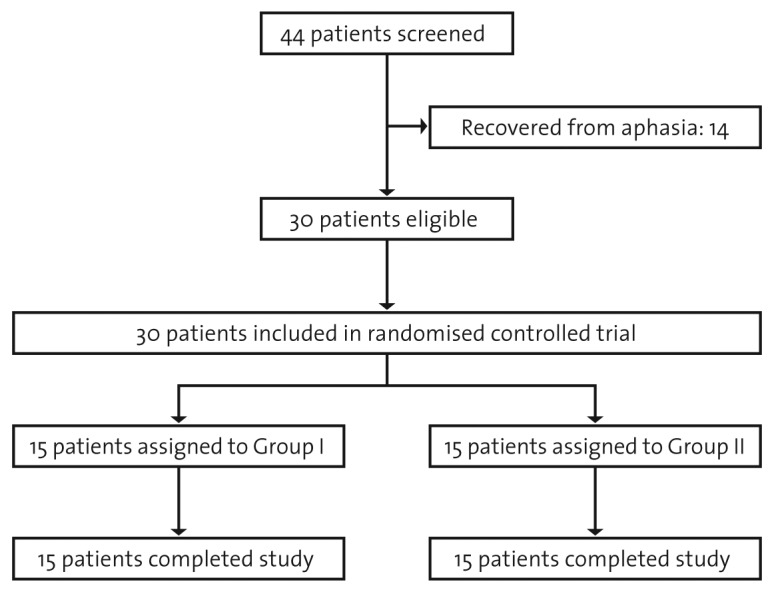
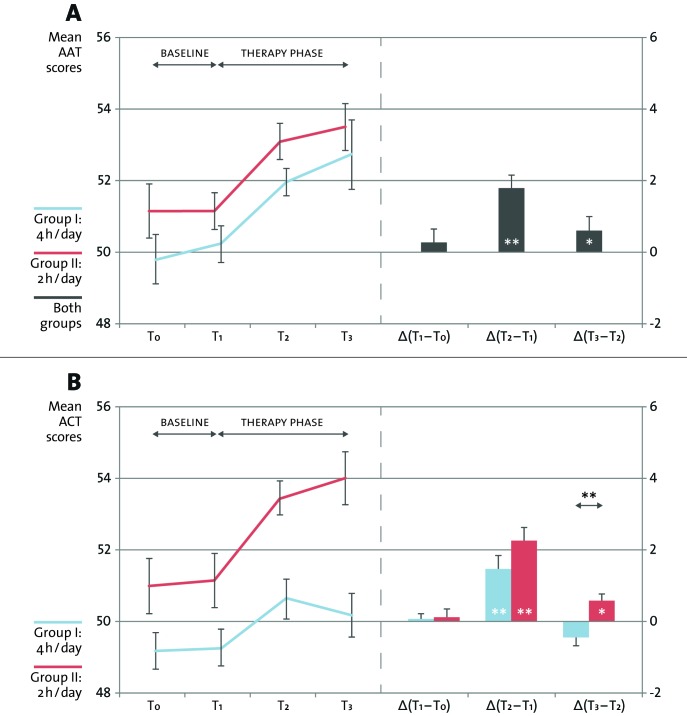
Objective: Recent evidence has fuelled the debate on the role of massed practice in the rehabilitation of chronic post-stroke aphasia. Here, we further determined the optimal daily dosage and total duration of intensive speech-language therapy. Methods: Individuals with chronic aphasia more than 1 year post-stroke received Intensive Language-Action Therapy in a randomised, parallel-group, blinded-assessment, controlled trial. Participants were randomly assigned to one of two outpatient groups who engaged in either highly-intensive practice (Group I: 4 hours daily) or moderately-intensive practice (Group II: 2 hours daily). Both groups went through an initial waiting period and two successive training intervals. Each phase lasted 2 weeks. Co-primary endpoints were defined after each training interval. Results: Thirty patients—15 per group—completed the study. A primary outcome measure (Aachen Aphasia Test) revealed no gains in language performance after the waiting period, but indicated significant progress after each training interval (gradual 2-week t -score change [CI]: 1.7 [±0.4]; 0.6 [±0.5]), independent of the intensity level applied (4-week change in Group I: 2.4 [±1.2]; in Group II: 2.2 [±0.8]). A secondary outcome measure (Action Communication Test) confirmed these findings in the waiting period and in the first training interval. In the second training interval, however, only patients with moderately-intensive practice continued to make progress (Time-by-Group interaction: P =0.009, η 2 =0.13). Conclusions: Our results suggest no added value from more than 2 hours of daily speech-language therapy within 4 weeks. Instead, these results demonstrate that even a small 2-week increase in treatment duration contributes substantially to recovery from chronic post-stroke aphasia.
Overview
The claims and statistics of this paper haven’t been checked yet.
Free: it reads the open-access text and checks the first 5 claims that cite a source we can check. Create a free account to check every claim.
Integrity signals
Registry
Cites
Statistics
Figures
Verification
Claims the paper makes
The claims and statistics of this paper haven’t been checked yet.
Free: it reads the open-access text and checks the first 5 claims that cite a source we can check. Create a free account to check every claim.
Claims other papers make about this one
Each is checked against this paper’s own text: does it say what the citing paper says it does?
The cited source says what the claim attributes to it.
In the citing paper
“Thus, these results replicate other findings indicating that even in chronic aphasia, language improvements can be achieved through intensive therapy [60, 61] which makes use of a pragmatic approach, such as conversational therapy [12–16].”
From Conversational Therapy through Semi-Immersive Virtual Reality Environments for Language Recovery and Psychological Well-Being in Post Stroke Aphasia (2020) · cites this paper as [61]
Self-check
Percentages, sums and reported differences re-computed from the paper’s own numbers.
The self-check needs the paper’s full text.
Citations
Cites
Statistical power analyses using G∗Power 3.1: tests for correlation and regression analyses
Faul, F., Erdfelder, E., Buchner, A., & Lang, A.-G. (2009) · Behavior Research Methods · doi:10.3758/brm.41.4.1149 · Cited by 37,615
The assessment and analysis of handedness: The Edinburgh inventory
Oldfield, R. C. (1971) · Neuropsychologia · doi:10.1016/0028-3932(71)90067-4 · Cited by 35,900 · cited 1×
“The trial was registered prospectively (German Clinical Trials Register; identifier: DRKS00007829).”
BackgroundHebb, D. O. (2005) · doi:10.4324/9781410612403 · Cited by 9,825 · cited 1×
“17 Although this neurobiological model appears to imply that the functional reorganisation of language increases with the amount of daily practice, it does not postulate unlimited learning capacities in a relatively short period of time.”
BackgroundStereotaxic Display of Brain Lesions
Rorden, C., & Brett, M. (2000) · Behavioural Neurology · doi:10.1155/2000/421719 · Cited by 2,590
Using confidence intervals in within-subject designs
Loftus, G. R., & Masson, M. E. J. (1994) · Psychonomic Bulletin & Review · doi:10.3758/bf03210951 · Cited by 2,448 · cited 1×
“7 As one possible reason for the advantage of moderately-intensive practice on the ACT, we propose that keeping the daily quantity of SLT below a critical threshold may diminish post-treatment fatigue, and hence facilitate immediate learning transfer to everyday situations after each training…”
BackgroundSpeech and language therapy for aphasia following stroke
Brady, M. C., Kelly, H., Godwin, J., Enderby, P., & Campbell, P. (2016) · Cochrane Database of Systematic Reviews · doi:10.1002/14651858.cd000425.pub4 · Cited by 1,159
The Corsi Block-Tapping Task: Standardization and Normative Data
Kessels, R. P. C., van Zandvoort, M. J. E., Postma, A., Kappelle, L. J., & de Haan, E. H. F. (2000) · Applied Neuropsychology · doi:10.1207/s15324826an0704_8 · Cited by 1,015 · cited 1×
“The trial was registered prospectively (German Clinical Trials Register; identifier: DRKS00007829).”
BackgroundIntensity of Aphasia Therapy, Impact on Recovery
Bhogal, S. K., Teasell, R., & Speechley, M. (2003) · Stroke · doi:10.1161/01.str.0000062343.64383.d0 · Cited by 719
Constraint-Induced Therapy of Chronic Aphasia After Stroke
Pulvermüller, F., Neininger, B., Elbert, T., Mohr, B., Rockstroh, B., Koebbel, P., & Taub, E. (2001) · Stroke · doi:10.1161/01.str.32.7.1621 · Cited by 683
Self-citationA meta-analysis of clinical outcomes in the treatment of aphasia
Robey, R. R. (1998) · Journal of Speech, Language, and Hearing Research · doi:10.1044/jslhr.4101.172 · Cited by 506
Cited by
Neuroplasticity of Language Networks in Aphasia: Advances, Updates, and Future Challenges
Kiran, S., & Thompson, C. K. (2019) · Frontiers in Neurology · doi:10.3389/fneur.2019.00295 · Cited by 250
Aphasia Recovery: When, How and Who to Treat?
Doogan, C., Dignam, J., Copland, D., & Leff, A. (2018) · Current Neurology and Neuroscience Reports · doi:10.1007/s11910-018-0891-x · Cited by 110
Bucur, M., & Papagno, C. (2019) · Neuroscience & Biobehavioral Reviews · doi:10.1016/j.neubiorev.2019.04.019 · Cited by 113
Neuroplasticity and aphasia treatments: new approaches for an old problem
Crosson, B., Rodriguez, A. D., Copland, D., Fridriksson, J., Krishnamurthy, L. C., Meinzer, M., Raymer, A. M., Krishnamurthy, V., & Leff, A. P. (2019) · Journal of Neurology, Neurosurgery & Psychiatry · doi:10.1136/jnnp-2018-319649 · Cited by 101
Maresca, G., Maggio, M. G., Latella, D., Cannavò, A., De Cola, M. C., Portaro, S., Stagnitti, M. C., Silvestri, G., Torrisi, M., Bramanti, A., et al. (2019) · Journal of Stroke and Cerebrovascular Diseases · doi:10.1016/j.jstrokecerebrovasdis.2019.104303 · Cited by 67
Innovative technology-based interventions in aphasia rehabilitation: a systematic review
Repetto, C., Paolillo, M. P., Tuena, C., Bellinzona, F., & Riva, G. (2021) · Aphasiology · doi:10.1080/02687038.2020.1819957 · Cited by 63
“…the best” (Bhogal et al., 2003; Cherney et al., 2008), whereas, on the contrary, other experiments have demonstrated that above a certain intensity level, increasing the intensity or duration of treatment does not correspond to a more beneficial outcome (Bakheit et al., 2007; Stahl et al., 2018).”
BackgroundHeikkinen, P., Pulvermüller, F., Mäkelä, J. P., Ilmoniemi, R. J., Lioumis, P., Kujala, T., Manninen, R.-L., Ahvenainen, A., & Klippi, A. (2019) · Frontiers in Neuroscience · doi:10.3389/fnins.2018.01036 · Cited by 66
Giachero, A., Calati, M., Pia, L., La Vista, L., Molo, M., Rugiero, C., Fornaro, C., & Marangolo, P. (2020) · Behavioural Neurology · doi:10.1155/2020/2846046 · Cited by 58
“Thus, these results replicate other findings indicating that even in chronic aphasia, language improvements can be achieved through intensive therapy [60, 61] which makes use of a pragmatic approach, such as conversational therapy [12–16].”
ResultIbáñez, A. M., Kühne, K., Miklashevsky, A. A., Monaco, E. L., Muraki, E. J., Ranzini, M., Speed, L. J., & Tuena, C. (2023) · Journal of Cognition · doi:10.5334/joc.228 · Cited by 69
Treatment dose in post-stroke aphasia: A systematic scoping review
Harvey, S. R., Carragher, M., Dickey, M. W., Pierce, J. E., & Rose, M. L. (2021) · Neuropsychological Rehabilitation · doi:10.1080/09602011.2020.1786412 · Cited by 47
Dose effects in behavioural treatment of post-stroke aphasia: a systematic review and meta-analysis
Harvey, S., Carragher, M., Dickey, M. W., Pierce, J. E., & Rose, M. L. (2020) · Disability and Rehabilitation · doi:10.1080/09638288.2020.1843079 · Cited by 50
“In very broad terms, the data suggest that a dose of 60 h of functional, multicomponent, patient-specific intervention provided at 10 h per week results in marginally better functional communication outcomes than 30 h [43], while a dose of 48 h of constraint treatment (ILAT) confers no additional benefit than 24 h pro…”
BackgroundResultInfluentialPierce, J. E., O’Halloran, R., Menahemi-Falkov, M., Togher, L., & Rose, M. L. (2020) · Neuropsychological Rehabilitation · doi:10.1080/09602011.2020.1768127 · Cited by 45
“studies (Dignam et al., 2015; Marcotte et al., 2018; Mozeiko et al., 2015; Stahl et al., 2018) since the recent narrative review by Dignam, Rodriguez, et al.”
BackgroundResultRose, M. L., Pierce, J. E., Scharp, V. L., Off, C. A., Babbitt, E. M., Griffin-Musick, J. R., & Cherney, L. R. (2021) · Disability and Rehabilitation · doi:10.1080/09638288.2021.1948621 · Cited by 43
Monnelly, K., Marshall, J., & Cruice, M. (2022) · Disability and Rehabilitation · doi:10.1080/09638288.2021.1964626 · Cited by 31
Berthier, M. L., Edelkraut, L., López‐González, F. J., López-Barroso, D., Mohr, B., Pulvermüller, F., STARKSTEIN, S. E., Jorge, R. E., Torres‐Prioris, M. J., & Dávila, G. (2022) · Brain and Language · doi:10.1016/j.bandl.2022.105205 · Cited by 30
Self-citationThe effects of intensity on a phonological treatment for anomia in post-stroke aphasia
Simić, T., Léonard, C., Laird, L., Stewart, S., & Rochon, E. A. (2021) · Journal of Communication Disorders · doi:10.1016/j.jcomdis.2021.106125 · Cited by 33
Constraint-induced aphasia therapy for patients with aphasia: A systematic review
Wang, G., Ge, L., Zheng, Q., Huang, P., & Xiang, J. (2020) · International Journal of Nursing Sciences · doi:10.1016/j.ijnss.2020.05.005 · Cited by 24
“Studies showed that high-intensity speech training can stimulate the corresponding brain language regions of patients and thus enable them to be gradually accustomed to normal language communication [17,18].”
BackgroundDreyer, F. R., Doppelbauer, L., Büscher, V., Arndt, V., Stahl, B., Lucchese, G., Hauk, O., Mohr, B., & Pulvermüller, F. (2020) · American Journal of Speech-Language Pathology · doi:10.1044/2020_ajslp-19-00150 · Cited by 24
“At the behavioral level, patients presented a significant increase of AAT scores following ILAT, in a range comparable to previous studies on ILAT efficiency (Pulvermüller et al., 2001; Stahl et al., 2018, 2016).”
InfluentialSelf-citationLow, T. A., Lindland, K., Kirton, A., Carlson, H. L., Harris, A. D., Goodyear, B. G., Monchi, O., Hill, M. D., & Dukelow, S. P. (2022) · Brain and Language · doi:10.1016/j.bandl.2022.105216 · Cited by 22
Ibáñez, A. M., Kühne, K., Miklashevsky, A. A., Monaco, E. L., Muraki, E. J., Ranzini, M., Speed, L. J., & Tuena, C. (2022) · doi:10.31219/osf.io/ej5y3 · Cited by 19
Marshall, I. J., McKevitt, C., Wang, Y., Wafa, H. A., Skolarus, L. E., Bhalla, A., Muruet-Gutierrez, W., Emmett, E. S., Sommerville, P., Birns, J., et al. (2022) · NIHR Open Research · doi:10.3310/nihropenres.13257.1 · Cited by 22
Georgiou, A. M., & Kambanaros, M. (2023) · Medicina · doi:10.3390/medicina59091674 · Cited by 25
Doppelbauer, L., Mohr, B., Dreyer, F. R., Stahl, B., Büscher, V., & Pulvermüller, F. (2021) · Neurorehabilitation and neural repair · doi:10.1177/15459683211029235 · Cited by 17
Self-citationStahl, B., Millrose, S., Denzler, P., Lucchese, G., Jacobi, F., & Flöel, A. (2022) · Stroke · doi:10.1161/strokeaha.122.039995 · Cited by 16
Self-citationRoberts, S. M., Bruce, R. M., Lim, L., Woodgate, H., Ledingham, K., Anderson, S., Lorca‐Puls, D. L., Gajardo‐Vidal, A., Leff, A. P., Hope, T. M. H., et al. (2021) · Neuropsychological Rehabilitation · doi:10.1080/09602011.2021.1944883 · Cited by 20
Cordella, C., Munsell, M., Godlove, J. M., Anantha, V., Advani, M., & Kiran, S. (2022) · Journal of Medical Internet Research · doi:10.2196/36135 · Cited by 14
“The existence of a lower threshold for improvement is similarly a source of debate in the limited available literature; for instance, a prior study found no significant differences in outcome for therapy delivered for 48 versus 24 total hours [33].”
BackgroundResultAuclair‐Ouellet, N., Tittley, L., & Root, K. (2021) · Aphasiology · doi:10.1080/02687038.2021.1959016 · Cited by 15
“…and empirical support for intensive compared to distributed treatments, and the focus on intensity to the detriment of other important treatment characteristics (Sage et al., 2011; Cherney et al., 2011, 2008; Dignam et al., 2016; Gravier et al., 2018; Pierce et al., in press; Stahl et al., 2017).”
BackgroundExamining Dose Frameworks to Improve Aphasia Rehabilitation Research
Harvey, S., Rose, M. L., Brogan, E., Pierce, J. E., Godecke, E., Brownsett, S. L. E., Churilov, L. P., Copland, D. A., Dickey, M. W., Dignam, J. K., et al. (2022) · Archives of Physical Medicine and Rehabilitation · doi:10.1016/j.apmr.2022.12.002 · Cited by 12
Turning the Spotlight to Cholinergic Pharmacotherapy of the Human Language System
Dávila, G., Torres‐Prioris, M. J., López-Barroso, D., & Berthier, M. L. (2023) · CNS Drugs · doi:10.1007/s40263-023-01017-4 · Cited by 11
Banco, E., Diana, L., Casati, C., Tesio, L., Vallar, G., & Bolognini, N. (2024) · European Journal of Physical and Rehabilitation Medicine · doi:10.23736/s1973-9087.24.08576-9 · Cited by 8
Zhang, T., Wu, X., Cao, S., & Park, S. (2018) · European Journal of Integrative Medicine · doi:10.1016/j.eujim.2018.10.012 · Cited by 8
Speech and language therapy for aphasia: parameters and outcomes
Thomas, L., Lander, L., Cox, N., & Romani, C. (2020) · Aphasiology · doi:10.1080/02687038.2020.1712588 · Cited by 11
“Van Hees et al. (2013) A Confrontational One to one 8 No Yes 6.”
BackgroundAravantinou-Fatorou, K., & Fotakopoulos, G. (2020) · Irish Journal of Medical Science (1971 -) · doi:10.1007/s11845-020-02328-x · Cited by 8
Copland, D. A. (2020) · International Journal of Speech-Language Pathology · doi:10.1080/17549507.2020.1768287 · Cited by 7
Dresang, H. C., Harvey, D. Y., Vnenchak, L., Parchure, S., Cason, S., Twigg, P., Faseyitan, O. K., Maher, L. M., Hamilton, R. H., & Coslett, H. B. (2025) · Neurobiology of Language · doi:10.1162/nol_a_00160 · Cited by 7
“Following Stahl et al. (2018), nonverbal expressions of the target, though not prohibited, would not be accepted as a substitute for the verbal response.”
Aphasia in neurology practice: A survey about perceptions and practices
Pauranik, A., Pauranik, N., Singh, P., Lahiri, D., & Krishnan, G. (2020) · Annals of Indian Academy of Neurology · doi:10.4103/aian.aian_788_20 · Cited by 7
“, beyond 2 years post onset) has not reached well among neurologists.[35]”
BackgroundXu, X., Chen, S., Li, Z., Zhang, L., Pan, T., Long, S., Yang, T., Li, M., Li, Q., Chen, N., et al. (2025) · Clinical Neurophysiology Practice · doi:10.1016/j.cnp.2025.10.001 · Cited by 6
“First, therapy intensity and dosage often fall short of the levels demonstrated to be most effective — high-frequency, high-dose therapy is associated with better outcomes, yet such delivery is difficult to achieve in standard clinical settings(Stahl et al. 2018).”
Li, T., Feng, J., Hu, R., Lv, M., Chang, W., Ma, X., Qi, W., Zhang, Y., Chen, X., Ding, L., et al. (2023) · BMJ Open · doi:10.1136/bmjopen-2022-065173 · Cited by 6
Feng, J., Hu, R., Lyu, M., Ma, X., Li, T., Meng, Y., Qi, W., Li, H., Zhang, Y., Ding, S., et al. (2025) · BMJ · doi:10.1136/bmj-2024-083605 · Cited by 11
Is Aphasia Treatment Beneficial for the Elderly? A Review of Recent Evidence
Fabian, R., Bunker, L. D., & Hillis, A. E. (2020) · Current Physical Medicine and Rehabilitation Reports · doi:10.1007/s40141-020-00287-z · Cited by 6
The Efficacy and Utility of Constant Therapy in Poststroke Aphasia Rehabilitation
Kiran, S., & Smith, Z. M. (2025) · Perspectives of the ASHA Special Interest Groups · doi:10.1044/2025_persp-24-00260 · Cited by 5
The management of subacute and chronic vascular aphasia: an updated review
Msigwa, S. S., & Cheng, X. (2020) · The Egyptian Journal of Neurology Psychiatry and Neurosurgery · doi:10.1186/s41983-020-00224-w · Cited by 4
“12-h and 6-h therapies proved lack of added therapeutic intensity benefit for an extra 2 h of daily therapy within a month [23, 47].”
BackgroundProgress in the clinical application of constraint-induced therapy following stroke since 2014
Cui, Y., Ma, N., Liu, X., Lian, Y., Li, Y., Xu, G., Zhang, J., & Li, Z. (2023) · Frontiers in Neurology · doi:10.3389/fneur.2023.1170420 · Cited by 4
Imaezue, G. C. (2024) · Aphasiology · doi:10.1080/02687038.2024.2351010 · Cited by 5
“Afterwards, the participants practiced with each intervention two hours per day, for 14 days/sessions across two to three weeks and the first treatment block was followed by a two-week no treatment period before the second treatment block (Imaezue et al., 2023; Stahl et al., 2018).”
Self-Improved Language Production in Nonfluent Aphasia Through Automated Recursive Self-Feedback
Imaezue, G. C., Tchernichovski, O., & Goral, M. (2024) · American Journal of Speech-Language Pathology · doi:10.1044/2024_ajslp-23-00320 · Cited by 5
First Do No Harm: An Opinion on Bundled Care for Stroke Patients
Ashley, M. J., Gordon, W. A., Masel, B. E., Thomas, P. W., & Connors, S. H. (2018) · Archives of Physical Medicine and Rehabilitation · doi:10.1016/j.apmr.2018.10.003 · Cited by 4
Beyond Language Deficits: Working Alliance and Resources as Predictors of Recovery From Aphasia
Stahl, B. (2023) · Stroke · doi:10.1161/strokeaha.123.043498 · Cited by 3
Self-citationMalaysia, U. T., Kamaruddin, A. I., Masrom, M. B., Malaysia, U. T., Aziz, M. A. A., Malaysia, U. S., Garraffa, M., Noor, N. M., & Malaysia, U. T. (2023) · International Journal of Integrated Engineering · doi:10.30880/ijie.2023.15.03.003 · Cited by 5
“Based on existing research, the hypothesis on the success rate of aphasia therapy is therapy should be intensive instead of focusing on the approach [4,5,6].”
BackgroundAravantinou‐Fatorou, A., Georgakopoulou, V., Spandidos, D. A., Papalexis, P., Tarantinos, K., Mathioudakis, N., Chlapoutakis, S., Τράκας, Ν., Sklapani, P., & Fotakopoulos, G. (2022) · World Academy of Sciences Journal · doi:10.3892/wasj.2022.177 · Cited by 3
“However, whether intensive speech therapy is useful or not remains controversial (8,9).”
Takato, M., Nanto, T., Kanamori, M., Nakao, Y., Horikawa, K., Eimoto, K., Toyota, K., Marumoto, K., Kaku, S., Uchiyama, Y., et al. (2022) · Progress in Rehabilitation Medicine · doi:10.2490/prm.20220060 · Cited by 3
Time to RE-Act: Ellis and Kendall’s Discussion of Systemic Racism
Page, S. J. (2022) · American Journal of Speech-Language Pathology · doi:10.1044/2022_ajslp-21-00316 · Cited by 3
Jäger, A., Steele, C. J., Dreyer, F. R., Osterloh, M. R., Sadlon, A., Nikulin, V. V., Mohr, B., & Pulvermüller, F. (2025) · Stroke · doi:10.1161/strokeaha.124.050064 · Cited by 3
“7–12 Hence, comparing brain function before and after such an intensive treatment in patients with chronic stroke likely minimizes the influence of the aforementioned confounding factors.”
Self-citationShekari, E., Seyfi, M., Zadeh, A. M., Batouli, S. A. H., Valinejad, V., Goudarzi, S., & Joghataei, M. T. (2022) · Applied Neuropsychology Adult · doi:10.1080/23279095.2022.2074849 · Cited by 3
“Providing more treatment sessions and hours in shorter periods, which is defined as extensity of therapy (Bhogal et al., 2003; Dignam et al., 2016; Sage et al., 2011; Stahl et al., 2018) may also explain the difference between the activation of the left or right hemispheres in naming improvement.”
BackgroundYAŞA, İ. C., & Malkoç, G. (2023) · The Annals of Clinical and Analytical Medicine · doi:10.4328/acam.21975 · Cited by 2
“For this reason, these results replicate other findings showing that language development can be achieved through intensive treatment, even in chronic Aphasia [12].”
End-user Needs and Perspectives on Speech Therapy Apps for Aphasia
Kamaruddin, A. I., Masrom, M. B., Aziz, M. A. A., & Noor, N. M. (2023) · IEEE National Biomedical Engineering Conference (NBEC) · doi:10.1109/nbec58134.2023.10352627 · Cited by 2
“During that golden period, active rehabilitation combined with a spontaneous recovery process could improve the outcomes for PWA [2,3,4].”
BackgroundMay, S., Muehlensiepen, F., Plotho, L., & Darkow, R. (2024) · BMJ Open · doi:10.1136/bmjopen-2024-085849 · Cited by 3
Li, X., Gao, Y., Zhang, C., Zhang, Q., Xin, X., Tan, Z., Zhang, B., Fan, R., Huang, X., Xu, M., et al. (2021) · Evidence-based Complementary and Alternative Medicine · doi:10.1155/2021/8880590 · Cited by 3
Stroke pathway – Evidence Base Commissioning. An Evidence Review
Marshall, I. J., McKevitt, C., Wang, Y., Wafa, H. A., Skolarus, L. E., Bhalla, A., Muruet-Gutierrez, W., Emmett, E. S., Sommerville, P., Birns, J., et al. (2022) · doi:10.3310/nihropenres.1115195.1 · Cited by 2
Gibbons, N., Cook, K. J., Sutherland, D., & Tillard, G. (2024) · Folia Phoniatrica et Logopaedica · doi:10.1159/000538988 · Cited by 2
Nunes, M. K. G., Teles, A. S., Farias, D. D. S., Souza, H. D. S., & Teixeira, S. S. (2024) · Procedia Computer Science · doi:10.1016/j.procs.2024.10.364 · Cited by 1
Romani, C., Olson, A., Cox, N., & Lander, L. (2025) · Aphasiology · doi:10.1080/02687038.2025.2467232 · Cited by 2
“Gains in aphasia treatment are contingent on the delivery of a high dose of therapy (Brady et al., 2016; Dignam et al., 2015; Stahl et al., 2018; Thomas et al., 2020), but this is often difficult to achieve because of fatigue and increased drop-out from intensive programmes (see Brady et al., 2016;…”
Greiner, N., Lauer, N., Schedel, V., & Pfingsten, A. (2025) · PM&R · doi:10.1002/pmrj.70006 · Cited by 1
“When comparing group therapy with an untreated con-trol condition, there is low-certainty and partially inconsistent evidence from one systematic review 80 and three RCTs 84,86,87 with a total of 331 participants that the group treatment approaches have a beneficial effect on language.”
InfluentialPulvermüller, F., Jäger, A., Osterloh, M. R., Knechtges, J., Arndt, V., Sadlon, A., Berthier, M. L., & Mohr, B. (2026) · Brain Communications · doi:10.1093/braincomms/fcag252 · Cited by 1
“9 Contrasting with the well-documented effects of therapy amount and intensity, no agreement exists regarding other factors that could influence therapy outcome.”
Self-citationShklovskij, V. M., Вадимовна, А. В., Ivanova, E. G., Mayorova, L. A., Petrushevsky, A. G., Ivanov, G., Kuptsova, S. V., Kondrateva, E. A., & Guekht, A. B. (2018) · S S Korsakov Journal of Neurology and Psychiatry · doi:10.17116/jnevro201811811120 · Cited by 1
Singh, P., Pauranik, N., & Pauranik, A. (2020) · Annals of Indian Academy of Neurology · doi:10.4103/aian.aian_670_20 · Cited by 1
Language and Cognitive Rehabilitation after Stroke
Brady, M., & Evans, J. J. (2020) · Cambridge University Press eBooks · doi:10.1017/9781316286234.025 · Cited by 1
Training flexible conceptual retrieval in post-stroke aphasia
Stampacchia, S., Hallam, G., Thompson, H. E., Nathaniel, U., Lanzoni, L., Smallwood, J., Ralph, M. A. L., & Jefferies, E. (2021) · Neuropsychological Rehabilitation · doi:10.1080/09602011.2021.1895847 · Cited by 1
“This was motivated by accumulating evidence that brief intensive aphasia therapies are associated with better outcomes than more distributed and prolonged interventions (Stahl et al., 2018).”
BackgroundImaezue, G. C., & Goral, M. (2025) · Journal of Communication Disorders · doi:10.1016/j.jcomdis.2025.106553 · Cited by 2
Shipkova, K. M. (2021) · Journal of Modern Foreign Psychology · doi:10.17759/jmfp.2021100412 · Cited by 2
Puls, L., & Diego, L. (2019) · UCL Discovery (University College London)
Shklovskij, V. M., Вадимовна, А. В., Ivanova, E. G., Mayorova, L. A., Petrushevsky, A. G., Ivanov, G., Kuptsova, S. V., Kondrateva, E., & Guekht, A. B. (2019) · Neuroscience and Behavioral Physiology · doi:10.1007/s11055-019-00856-3 · Cited by 1
Changing Trends from Traditional to Technology Based Approach
Ali, N. (2018) · Linguistics and Literature Review · doi:10.29145/2018/llr/040105 · Cited by 2
“…(Breitenstein et al., 2017; Cherney, Patterson & Raymer, 2011; Lucchese, Pulvermüller, Stahl, Dreyer & Mohr, 2017; McKelvey, Hux, Dietz & Beukelman, 2010; Mohr, Stahl, Berthier, & Pulvermüller, 2017; Patterson, Raymer & Cherney, 2017; Stahl et al., 2018; Swales, Hill & Finch, 2016; Varley, 2011).”
Nuevas líneas de tratamiento logopédico de las afasias: la terapia intensiva
García, E. S., & Rubio, P. M. (2021) · Revista de Logopedia Foniatría y Audiología · doi:10.1016/j.rlfa.2021.03.009
Porfírio, L. M., Gonçalves, L. A., Andrade, A. B. D. C., Gonçalves, L. A., GONÇALVES, M. L., & Motta, J. M. (2022) · Editora Pasteur eBooks · doi:10.29327/588083.2-8
YAŞA, İ. C. (2023) · The European Research Journal · doi:10.18621/eurj.1328853
Maragkou, V., Rangoussi, M., & Ventouras, E.-C. (2023) · Pan-Hellenic Conference on Progress in Computing and Informatics (PCI) · doi:10.1145/3635059.3635080
Goldenberg, G., & Randerath, J. (2024) · Elsevier eBooks · doi:10.1016/b978-3-437-21185-0.00004-2
25 Rehabilitation Measures and Prognosis of Acquired Language Disorders: Aphasia
Albrecht, K., Banco, E., Ellis, C., Hüsgen, A., Jebahi, F., Lehtihalmes, M., Mozzanica, F., Muò, R., Neubauer, K., Niepelt, R., et al. (2025) · European manual of medicine · doi:10.1007/978-3-031-48091-1_10 · Cited by 1
A Provisional Theory of Change and Basic Logic Model for Intensive Comprehensive Aphasia Programs
Monnelly, K., Marshall, J., Dipper, L. T., & Cruice, M. N. (2026) · Journal of Speech Language and Hearing Research · doi:10.1044/2025_jslhr-25-00519 · Cited by 1
Cherney, L. R., Diedrichs, V. A., Kinsey, L. E., & Quique, Y. M. (2026) · American Journal of Speech-Language Pathology · doi:10.1044/2026_ajslp-25-00603
Deniz, K., Shim, H., & Tranel, D. (2026) · Springer eBooks · doi:10.1007/978-3-032-13040-2_7
Fatullayeva, K., Jäger, A., Mohr, B., & Pulvermüller, F. (2026) · NeuroImage Stroke · doi:10.1016/j.ynist.2026.100005
Self-citationNetwork flexibility facilitates treatment-induced recovery in post-stroke aphasia
Falconer, I., Varkanitsa, M., Billot, A., & Kiran, S. (2026) · Brain Communications · doi:10.1093/braincomms/fcag279 · Cited by 1
Sancho, L. C., Saiz-Vázquez, O., Huerta, J. H. O., & Santamaría-Vázquez, M. (2026) · Clinics · doi:10.1016/j.clinsp.2026.101152
“24,25 The improvement observed in this heterogeneous sample, treated in different clinical centres, suggests that speech-language therapy may be beneficial even in real-world clinical contexts with methodological variability, which increases the ecological validity of the study.”
Metadata
- Authors
- Stahl, B., Mohr, B., Büscher, V., Dreyer, F. R., Lucchese, G., & Pulvermüller, F.
- Affiliations
- Universitätsmedizin Greifswald (DE)
- Charité – Universitätsmedizin Berlin (DE)
- Freie Universität Berlin (DE)
- Corresponding author
- Stahl, Benjamin
- Venue
- Journal of Neurology, Neurosurgery & Psychiatry
- Publisher
- BMJ
- Published
- 2017-12-22
- Volume
- 89
- Issue
- 6
- Pages
- 586-592
- ISSN
- 0022-3050 (ISSN-L)
- 1468-330X
- PMC
- PMC6031278
- OpenAlex
- W2780086059
- Cited by
- 86
- References
- 24
- Citations by year
- 2026: 7 · 2025: 8 · 2024: 8 · 2023: 12 · 2022: 14 · 2021: 10 · 2020: 15 · 2019: 7 · 2018: 5
- FWCI
- 4.24
- Type
- journal article
- Language
- en
- Open access
- hybrid
- doi.org
- Licence
- cc-by-nc
- Locations
- Journal of Neurology Neurosurgery & Psychiatry (publishedVersion, cc-by-nc)
- Europe PMC (PubMed Central) (publishedVersion, other-oa)
- PubMed Central (publishedVersion, cc-by-nc)
- PubMed (publishedVersion)
- Max Planck Digital Library (submittedVersion, other-oa)
- AIRUS (submittedVersion)
- HighWire Press Open Archive (submittedVersion)
- MPG.PuRe (Max Planck Society) (submittedVersion, other-oa)
- Funders
- Deutsche Forschungsgemeinschaft
- Topics
- Life Sciences › Neuroscience › Cognitive Neuroscience › Neurobiology of Language and Bilingualism
- Health Sciences › Medicine › Rehabilitation › Stroke Rehabilitation and Recovery
- Social Sciences › Psychology › Developmental and Educational Psychology › Language Development and Disorders
- Keywords
- post-stroke aphasia, chronic stroke, massed practice, treatment intensity, language recovery, Aachen Aphasia Test
- MeSH terms
- Aged, Aphasia, Chronic Disease, Female, Humans, Language Therapy, Male, Middle Aged, Speech Therapy, Time Factors, Treatment Outcome, Recovery of Function, Stroke
About these checks
Registry, retraction, Cites and statistics results are computed, not judged, with one exception: a printed reference that no index lists is read once by a model before it counts as a citation error. Claims are extracted by a model and kept only when their quote appears verbatim in the text; each cited source is then checked, with a model’s help, for whether it says what the claim relies on. Those verdicts can be wrong — read the claim’s quote and the cited source before relying on one.
Statistics and arithmetic are recomputed, not judged.
Confidence bands are shown only for fields calibrated on our annotated test set. None is calibrated yet, so no band is shown.
What counts as a claim ›How we measure confidence ›How we check this ›
Are you an author, or do you see a problem with this page? Request a review
Data sources
Bibliographic data: Semantic Scholar, OpenAlex, Crossref.
Contains information from the Semantic Scholar Academic Graph Datasets, made available under the ODC Attribution License (ODC-BY 1.0).
Semantic Scholar’s data is described in: Kinney, R., et al. (2023). The Semantic Scholar Open Data Platform. arXiv:2301.10140.
