

On attention models for human activity recognition
Open accessThe DOI matches its Crossref record; 12 of the 12 references it cites were found in a registry or an index.
Abstract
Deep Learning methods have become very attractive in the wider, wearables-based human activity recognition (HAR) research community. The majority of models are based on either convolutional or explicitly temporal models, or combinations of both. In this paper we introduce attention models into HAR research as a data driven approach for exploring relevant temporal context. Attention models learn a set of weights over input data, which we leverage to weight the temporal context being considered to model each sensor reading. We construct attention models for HAR by adding attention layers to a state-of-the-art deep learning HAR model (DeepConvLSTM) and evaluate our approach on benchmark datasets achieving significant increase in performance. Finally, we visualize the learned weights to better understand what constitutes relevant temporal context.
Overview
The claims and statistics of this paper haven’t been checked yet.
Free: it reads the open-access text and checks the first 5 claims that cite a source we can check. Create a free account to check every claim.
Integrity signals
Registry
Cites
Statistics
Figures
Verification
Claims the paper makes
The claims and statistics of this paper haven’t been checked yet.
Free: it reads the open-access text and checks the first 5 claims that cite a source we can check. Create a free account to check every claim.
Claims other papers make about this one
Each is checked against this paper’s own text: does it say what the citing paper says it does?
The cited source says what the claim attributes to it.
In the citing paper
“Temporal attention was applied by Murahari et al. [138] whereas continuous sensor and temporal attention were evaluated by Zeng et al. [214], both leading to increased performance.”
From Past, Present, and Future of Sensor-based Human Activity Recognition Using Wearables: A Surveying Tutorial on a Still Challenging Task (2025) · cites this paper as [138]
Self-check
Percentages, sums and reported differences re-computed from the paper’s own numbers.
The self-check needs the paper’s full text.
Citations
Cites
Hochreiter, S., & Schmidhuber, J. (1997) · Neural Computation · doi:10.1162/neco.1997.9.8.1735 · Cited by 102,318 · cited 2×
“For example, Long Short Term Memory (LSTM [7] models can learn infinite temporal contexts.”
Background(2014) · Cited by 33,419
Deep Convolutional and LSTM Recurrent Neural Networks for Multimodal Wearable Activity Recognition
Ordóñez, F., & Roggen, D. (2016) · Sensors · doi:10.3390/s16010115 · Cited by 2,761 · cited 6×
“For example, Convolutional Neural Networks (CNNs) in HAR employ a sliding window procedure to map the timeseries data to a fixed 2D representation that is fed into the convolution layers [9].”
BackgroundMethodInfluentialA tutorial on human activity recognition using body-worn inertial sensors
Bulling, A., Blanke, U., & Schiele, B. (2014) · ACM Computing Surveys · doi:10.1145/2499621 · Cited by 1,668 · cited 2×
“This is even more pertinent for HAR problems as there is typically only little, if any, relation between current and distant past activities [2].”
BackgroundMethodIntroducing a New Benchmarked Dataset for Activity Monitoring
Reiss, A., & Stricker, D. (2012) · 2012 16th International Symposium on Wearable Computers · doi:10.1109/iswc.2012.13 · Cited by 1,456 · cited 1×
“RIMENTS Our explorations of the benefits that attention models may bring to human activity recognition are based on experimental evaluations on standard datasets from the field: Opportunity [3], PAMAP2 [11], and Skoda [13]. These datasets are very diverse in terms of the nature of activities and the relative distributio…”
MethodAsk Me Anything: Dynamic Memory Networks for Natural Language Processing
Kumar, A., Irsoy, O., Ondruska, P., Iyyer, M., Bradbury, J., Gulrajani, I., Zhong, V., Paulus, R., & Socher, R. (2015) · arXiv · doi:10.48550/arxiv.1506.07285 · Cited by 1,020 · cited 1×
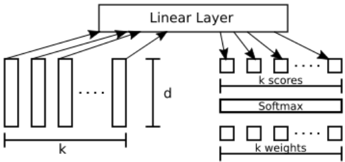
“es. In essence, such an approach would adapt the analysis windows in a data-driven manner. Attention models have been introduced for natural language processing tasks for part of speech (POS) tagging [8]. The formal idea is that a set of linear layers and non-linearities are used to learn weights over kvectors each of…”
BackgroundConvolutional Neural Networks for Human Activity Recognition using Mobile Sensors
Zeng, M., Nguyen, L. T., Yu, B., Mengshoel, O. J., Zhu, J., Wu, P., & Zhang, J. (2014) · Proceedings of the 6th International Conference on Mobile Computing, Applications and Services · doi:10.4108/icst.mobicase.2014.257786 · Cited by 876 · cited 1×
“Combined with clever combinations of pooling, that is, subsampling, and linear layers, very powerful recognition systems have been realized [1, 16, 15].”
BackgroundThe Opportunity challenge: A benchmark database for on-body sensor-based activity recognition
Chavarriaga, R., Sagha, H., Calatroni, A., Digumarti, S. T., Tröster, G., Millán, J. D. R., & Roggen, D. (2013) · Pattern Recognition Letters · doi:10.1016/j.patrec.2012.12.014 · Cited by 742 · cited 3×
“Arguably, this approach works very well as such models currently dominate the most challenging HAR benchmarks (such as Opportunity [3]).”
BackgroundMethodInfluentialDeep, Convolutional, and Recurrent Models for Human Activity Recognition Using Wearables
Hammerla, N. Y., Halloran, S., & Ploetz, T. (2016) · arXiv · doi:10.48550/arxiv.1604.08880 · Cited by 606 · cited 2×
“recognition results. Significant improvements over non-attention baselines are highlighted in bold (Wilson). Modeling Datasets Variant Opportunity PAMAP2 Skoda DeepConvLSTM [9] 67.2 74.8 91.2 b-LSTM-S [5] 68.4 83.8 92.1 Att. Model 70.7 87.5 91.3 Confidence Interval .003 .002 .004 each, with an overlap of 50% between con…”
BackgroundInfluentialEnsembles of Deep LSTM Learners for Activity Recognition using Wearables
Guan, Y., & Plötz, T. (2017) · Proceedings of the ACM on Interactive, Mobile, Wearable and Ubiquitous Technologies · doi:10.1145/3090076 · Cited by 511 · cited 4×
“We employ standard training and evaluation protocols based on hold out datasets as they have been defined in the original publications (and summarized, e.g., in [4]).”
BackgroundMethodInfluentialSelf-citation
Research works printed but not linked: 2
- T Tieleman and G Hinton. 2012. Lecture 6.5-rmsprop: Divide the gradient by a running average of its recent magnitude. COURSERA: Neural networks for machine learning 4, 2 (2012), 26-31.
- J Yang, Minh Nhut Nguyen, Phyo Phyo San, Xiaoli Li, and Shonali Krishnaswamy. 2015. Deep Convolutional Neural Networks on Multichannel Time Series for Human Activity Recognition.. In Proc. IJCAI.
Cited by
Items 101–157 of 157
WSN-Driven Posture Recognition and Correction Towards Basketball Exercise
Cai, X. (2022) · International Journal of Information System Modeling and Design · doi:10.4018/ijismd.300777 · Cited by 6
“2020) can be applied to human activity analysis (Murahari et al. 2018; Batool et al. 2019), human-computer interaction (Xu et al.”
BackgroundQuan, W., Tang, Y., Luo, W. H., & Zhang, L. (2025) · The Journal of Supercomputing · doi:10.1007/s11227-025-07576-1 · Cited by 5
“…perspectives, the practice of existing works often focuses on the effective fusion of feature representation of convolutional networks and attention mechanism, which enables the network to accurately locate and identify key components of different activities with a larger receptive field [10, 11].”
Human Activity Recognition Using Convolutional Neural Networks
Awad, O. F., Ahmed, S. R., Shaker, A. S., Majeed, D. A., Hussain, A.-S. T., & Taha, T. A. (2024) · Lecture notes in networks and systems · doi:10.1007/978-3-031-62871-9_20 · Cited by 6
Learning Bodily and Temporal Attention in Protective Movement Behavior DetectionPreprint
Wang, C., Peng, M., Olugbade, T. A., Lane, N., Williams, A. C. D. C., & Bianchi-Berthouze, N. (2019) · arXiv.org · doi:10.48550/arxiv.1904.10824 · Cited by 13
“In addition, we compare our work with the approach used in related HAR studies [19] [20] [21], where the sensor attention was computed before the extraction of temporal information.”
BackgroundMethodWang, L., Yan, Y., Huang, D., Pan, Y., Cheang, C. F., Luo, K., & Li, J. (2025) · IEEE Transactions on Consumer Electronics · doi:10.1109/tce.2025.3540853 · Cited by 6
“To comprehensively compare the performance of the AHARNet, we compared it with various structural models, such as LSTM [35], [36], CNN [19], [34], ConvLSTM [20], Attention [37], [38], [39], and Transformer [22].”
Eff-WHAR: A Lightweight Design for Efficient Wearable Sensor-Based Human Activity Recognition
Chen, Z., Zou, H., Wang, L., Wang, B., Zhang, F., Ma, S., Pan, Y., & Li, J. (2024) · IEEE Sensors Journal · doi:10.1109/jsen.2024.3509961 · Cited by 8
Equipment data-based activity recognition of construction machinery
Fischer, A., Bedrikow, A. B., Kessler, S., & Fottner, J. (2021) · IEEE International Conference on Engineering, Technology and Innovation (ICE/ITMC) · doi:10.1109/ice/itmc52061.2021.9570272 · Cited by 6
Repetitive Activity Monitoring from Multivariate Time Series: A Generic and Efficient Approach
Li, C.-T., Shen, J., Yang, Y., Cao, J., & Stojmenović, M. (2021) · IEEE International Conference on Mobile Ad-Hoc and Sensor Systems (MASS) · doi:10.1109/mass52906.2021.00014 · Cited by 4
KATN: Key Activity Detection via Inexact Supervised Learning
You, X., Zhang, L., Yu, H., Yuan, M., & Li, X. (2021) · Proceedings of the ACM on Interactive Mobile Wearable and Ubiquitous Technologies · doi:10.1145/3494957 · Cited by 5
“The attention mechanism has also been utilized in HAR task [32][47][28] and weakly labeled tasks[39][31].”
MethodChandrasekaran, K., Gerych, W., Buquicchio, L., Alajaji, A. S., Agu, E., & Rundensteiner, E. A. (2021) · IEEE International Conference on Smart Computing · doi:10.1109/smartcomp52413.2021.00026 · Cited by 4
Multitemporal Sampling Module for Real-Time Human Activity Recognition
Park, J., Lim, W.-S., Kim, D., & Lee, J. (2022) · IEEE Access · doi:10.1109/access.2022.3176606 · Cited by 5
“To address multi-modal sensory datasets, some other studies integrated an attention mechanism into the DL models [20]–[24].”
MethodAbedin, A., Ehsanpour, M., Shi, Q., Rezatofighi, H., & Ranasinghe, D. C. (2020) · arXiv (Cornell University) · doi:10.48550/arxiv.2007.07172 · Cited by 4
“In addition to the reported classification metrics, we further report on the explicitly designed misalignment measures of overfill/underfill, insertion, and deletion [50] and provide comparisons with the state-of-the-art HAR model [15] in Table 3.”
BackgroundMethodInfluentialTransformer Networks for Data Augmentation of Human Physical Activity RecognitionPreprint
Ramachandra, S., Hoelzemann, A., & Laerhoven, K. V. (2021) · arXiv (Cornell University) · doi:10.48550/arxiv.2109.01081 · Cited by 10
“[7] uses transformers to capture the spatial temporal context from the feature space of sensor reading sequence and classify the sensor data.”
MethodMekruksavanich, S., Phaphan, W., Jeefoo, P., & Jitpattanakul, A. (2024) · IEEE International Conference on Software Engineering and Service Science (ICSESS) · doi:10.1109/icsess62520.2024.10719376 · Cited by 3
“Murahari and Pl¨otz [30] proposed an integrated design combining CNN and LSTM for recognizing human actions.”
BackgroundOn Training Strategies for LSTMs in Sensor-Based Human Activity Recognition
Shao, S., Guan, Y., Guan, X., Missier, P., & Plötz, T. (2023) · IEEE International Conference on Pervasive Computing and Communications Workshops (PerCom Workshops) · doi:10.1109/percomworkshops56833.2023.10150305 · Cited by 3
“Mean F1 Dense Labelling [25] 0.624 DeepConvLSTM [16] 0.672 LSTM-S [15] 0.684 Bi-LSTM [15] 0.697 Attention Model [26] 0.707 LSTM Ensemble [18] 0.726 ± 0.01 Attend & Discriminate [27] 0.746 Delay( ∆ = 0 .”
MethodInfluentialSelf-citationMullick, T., Shaaban, S., Radović, A., & Doryab, A. (2024) · JMIR AI · doi:10.2196/47805 · Cited by 8
“Mobile and wearable sensing has garnered increasing interest in areas of physical health [1,2], mental health [3-5], and activity recognition [6,7].”
BackgroundDeep Learning for Facial Expression and Human Activity Recognition Using Smart Glasses
Marinova, M., Chona, E., Kotevski, A., Sazdov, B., Kiprijanovska, I., Stankoski, S., Gjoreski, M., Nduka, C. C., & Gjoreski, H. (2025) · IEEE Access · doi:10.1109/access.2025.3551610 · Cited by 8
“…[15], a convolutional neural network with LSTM (ConvLSTM) [16], a convolutional neural network with LSTM and attention layers (Attention ConvLSTM) [17], a one-dimensional convolutional neural network (CNN 1D) [18], a complex DL architecture with spectral and temporal processing capabilities…”
Ahmad, N., Leung, H.-F., & Farnia, F. (2025) · IEEE Internet of Things Journal · doi:10.1109/jiot.2025.3555799 · Cited by 4
“Due to the issue of synchronization of time stamps between the devices on both arms, following the studies [13], [14], [20], [37], [38], we use only data from the complete right-arm devices (i.e., 10 ) in our experiments.”
IMUZero: Zero-Shot Human Activity Recognition by Language-Based Cross Modality Fusion
Su, J., Ge, F., Wen, Z., Li, T., Bai, Y., Zhou, Y., & Zhang, X. (2025) · Proceedings of the ACM on Interactive Mobile Wearable and Ubiquitous Technologies · doi:10.1145/3770669 · Cited by 8
“Numerous works have investigated the CNN variants [11, 13, 26, 27, 34, 49] by integrating with specific novel network architecture (e.g., Long-Short Term Memory(LSTM) [14], Attention Network [26], etc) to enhance the activity pattern extraction ability.”
Sensor-Based Human Activity Recognition for Elderly In-patients with a Luong Self-Attention Network
Nithin, G. R., Chhabra, M., Hao, Y., Wang, B., & Zheng, R. (2021) · IEEE/ACM Conference on Connected Health: Applications, Systems and Engineering Technologies · doi:10.1109/chase52844.2021.00019 · Cited by 3
SenseMLP: a parallel MLP architecture for sensor-based human activity recognition
Li, W., Guo, J.-M., & Wu, H. (2024) · Multimedia Systems · doi:10.1007/s00530-024-01384-y · Cited by 1
“Various architectures, including Convolutional Neural Networks (CNNs) [9–16], hybrid CNN-RNN models [17–21], attention-based models [22–28], and self-attention/transformer-based models [29–35], have been proposed and shown to enhance HAR accuracy.”
An unsupervised statistical representation learning method for human activity recognition
Abdi, M. F., BabaAli, B., & Momeni, S. (2024) · Signal Image and Video Processing · doi:10.1007/s11760-024-03374-z · Cited by 3
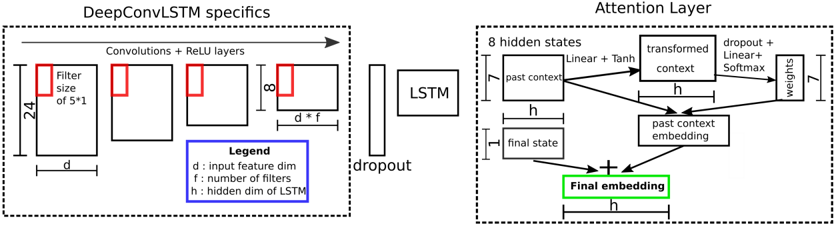
“[ 28], successfully integrated attention layers into the DeepConvLSTM model to better learn the temporal context in raw sensor data.”
Pfeiffer, J., Wolf, P., & Pereira, R. (2019) · IEEE Intelligent Vehicles Symposium · doi:10.1109/ivs.2019.8813858 · Cited by 2
“Approaches using LSTMs have already achieved state-of-the-art results in speech recognition [18] or human activity recognition [19].”
BackgroundPerson Identification Based on Accelerations Sensed in Smartphones with LSTM
Takahashi, Y., Nakamura, K., Kamiyama, T., Oguchi, M., & Yamaguchi, S. (2021) · Journal of Information Processing · doi:10.2197/ipsjjip.29.707 · Cited by 2
“[15] and [18] showed that analyzing the feature of sequence via LSTM is effective for accurate recognition.”
BackgroundMethodInfluentialA Deep Dilated Convolutional Self-attention Model for Multimodal Human Activity Recognition
Wang, S., Xiao, S., Wang, Y., Jiang, H., & Zhang, G. (2022) · Proceedings - International Conference on Pattern Recognition/Proceedings/International Conference on Pattern Recognition · doi:10.1109/icpr56361.2022.9956723 · Cited by 2
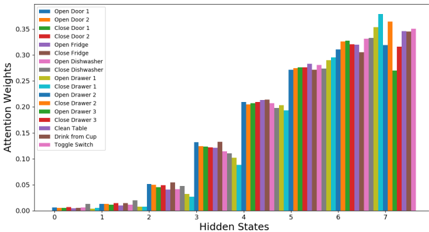
“More recently, the attention mechanism is introduced into the DeepConvLSTM, which improves the classification performance in HAR tasks and shows that the attention mechanism makes the model pay more attention to the parts that are more important to the recognition results [10].”
BackgroundSensor Data Augmentation by Resampling for Contrastive Learning in Human Activity RecognitionPreprint
Wang, J., Zhu, T., Gan, J., Chen, L., Ning, H., & Wan, Y. (2021) · arXiv (Cornell University) · doi:10.48550/arxiv.2109.02054 · Cited by 2
“Under supervised learning tasks, models such as LSTM [7], CNN [8], DeepConvLSTM [9], DeepConvLSTM-Attention [10] and Multi-Head Convolutional Attention [11] have been proposed to significantly improve the accuracy of HAR.”
MethodTeng, T. C. I., Wan, J., & Zhang, X. (2024) · Knowledge and Information Systems · doi:10.1007/s10115-024-02154-y · Cited by 3
Regardless of Sensor Location Human Activity Recognition Based on Transformer
He, Z., Tian, Y., He, Z., & Sun, Y. (2024) · International Conference on Cyber Security and Information Engineering (ICCSIE) · doi:10.1145/3689236.3695396 · Cited by 1
Human Action Recognition in Multi-Level Convolutional Temporal Attention Network
Huang, Q., Chen, Z., Li, C., & Qian, W. (2025) · IEEE International Conference on Acoustics, Speech, and Signal Processing · doi:10.1109/icassp49660.2025.10889140
“…Skoda SVM [13] - - 0.82 RF [14] - - 0.83 CNN [15] 0.59 0.41 0.85 LSTM [16] 0.63 0.38 0.89 DeepConvLSTM [17] 0.67 0.38 0.91 DeepConvLSTM+Attention [18] 0.71 - 0.91 LSTM+Continuous Attention [19] - - 0.94 Self-Attention [9] 0.66 0.53 0.94 RevTransformerAttention [20] - 0.52 - TTN [21] 0.66 0.47…”
InfluentialDong, L., Xu, X., He, G., Xu, Y., Rasol, J., Tao, C., & Zhang, Z. (2025) · Alexandria Engineering Journal · doi:10.1016/j.aej.2025.04.019 · Cited by 1
Mekruksavanich, S., & Jitpattanakul, A. (2025) · IEEE Access · doi:10.1109/access.2025.3605337 · Cited by 1
“Murahari et al. [32] developed a DeepConvLSTM network augmented with an attention mechanism, beginning with DeepConvLSTM layers followed by dropout, LSTM layers, and an attention layer to highlight critical temporal segments during training.”
Hua, X., Yin, W., Wang, L., Ma, M., Yuan, J., & Zhang, J. (2026) · Sensors · doi:10.3390/s26051721 · Cited by 1
Toward Wearable Sensor-Based Human Activity Recognition: A Survey
Zou, H., Chen, Z., Pan, Y., & Li, J. (2026) · IEEE Internet of Things Journal · doi:10.1109/jiot.2026.3702134 · Cited by 3
“(b) Hybrid DL-based (CNN + RNN [130], Attention [143], and GNN [151]). superior cross-subject and cross-dataset performance by learning both invariant local features and discriminative global patterns.”
Dynamic Early Time Series Classification Network
Chen, H., Tian, A., Zhang, Y., & Zhao, H. (2022) · International Conference on Control and Robotics (ICCR) · doi:10.1109/iccr55715.2022.10053847 · Cited by 2
“However, the local feature extraction ability of RNNs is insufficient [21].”
BackgroundTakeda, N., Legaspi, R., Nishimura, Y., Ikeda, K., Minamikawa, A., Plötz, T., & Chernova, S. (2024) · Journal of Ambient Intelligence and Smart Environments · doi:10.3233/ais-230429 · Cited by 2
“In the context of human activity recognition, it has also been reported that classification performance can be improved by weighting the sensors of interest among the observed sensor sequence [60].”
Self-citationWang, C. (2019) · 2019 8th International Conference on Affective Computing and Intelligent Interaction Workshops and Demos (ACIIW) · doi:10.1109/aciiw.2019.8925091 · Cited by 1
“[23] focused on temporal attention which they embedded at the end of a convolutional LSTM network (Conv-LSTM) [20].”
BackgroundHuman Activity Recognition Dataset for Pedestrians with Mobility Disabilities
Woo, Y., Hwang, S., Oh, S., Kang, M., Lee, S., Kim, J., Cha, J., & Kim, K. K. (2026) · Scientific Data · doi:10.1038/s41597-025-06527-y · Cited by 3
“Previous studies have also utilized state-of-the-art methods, such as hybrid models combining CNN and LSTM 11 or, recently, attention mechanisms, to further improve performance 54 .”
Haresamudram, H., Tang, C. I., Suh, S., Lukowicz, P., & Ploetz, T. (2024) · arXiv · Cited by 31
“Temporal attention was applied by Murahari et al. [130] whereas continuous sensor and temporal attention were evaluated by Zeng et al. [207], both leading to increased performance.”
Self-citationISWC 2018: Towards Smarter Wearable Technologies That Blend With Our Bodies
Peiris, R. L., Starner, T. E., Beigl, M., & Kunze, K. S. (2019) · IEEE Pervasive Computing · doi:10.1109/mprv.2019.2912252
Deep Learning for Computer Vision in Smart Cities
García-Retuerta, D. (2022) · Gredos (University of Salamanca) · doi:10.14201/gredos.150948 · Cited by 1
Wan, J., Teng, T. C. I., & Zhang, X. (2023) · doi:10.22541/au.169985538.89262193/v1
Xie, W., Huang, Q., Li, C., Wang, Y., & Liu, Y. (2023) · ACM International Conference on Multimedia in Asia (MMAsia) · doi:10.1145/3595916.3626425
“Ullah et al. [17] proposed a stacked LSTM network to recognize six human actions using smartphone data with 93.13% accuracy.”
MethodInfluentialEvaluation of Human Activity Recognition and Segmentation Based on the DETR Model
Li, S., Ban, L., Duan, F., Wan, Y., & Zhu, T. (2024) · Lecture notes in networks and systems · doi:10.1007/978-3-031-77571-0_46
Zeng, J., Xu, H., Gao, F., Sun, F., Wang, X., Li, X., Li, Y., Li, X., & Ai, W. (2025) · SSRN Electronic Journal · doi:10.2139/ssrn.5152077
Multi-scale Efficient Spatial Attention on Human Activity Recognition Using Wearable Sensors
Fan, J., Jindal, A., & Atapour–Abarghouei, A. (2025) · Communications in computer and information science · doi:10.1007/978-981-96-6963-9_11
Unsupervised Personalized Deep Learning for Wearable Human Activity Recognition
Huang, Y., Zhou, Y., Zhao, H., Riedel, T., & Beigl, M. (2025) · Lecture notes in computer science · doi:10.1007/978-981-96-6588-4_21
Zhao, Z., He, C., Jiang, X., & Xu, X. (2025) · Computers & Electrical Engineering · doi:10.1016/j.compeleceng.2025.110583 · Cited by 3
Satapati, R. K., & Rao, K. P. (2025) · International Conference on Recent Advances in Information Technology · doi:10.1109/rait65068.2025.11089138 · Cited by 1
“Li, Yong, and Luping Wang et al. [26] combines a residual network with a bi-directional LSTM (Bi-LSTM) to effectively extract spatio temporal features from sensor data.”
Alohali, M. A., Alzahrani, M. Y., Alghamdi, A. M., & Yaseen, I. (2025) · Journal of the Chinese Institute of Engineers · doi:10.1080/02533839.2025.2560446
“The HAR is approached in dual diverse methods, like utilizing wearable and external sensors (Murahari and Plötz 2018).”
Gupta, A. K., Garg, R. R., Verma, A., & Sain, M. (2025) · International Journal of Humanoid Robotics · doi:10.1142/s0219843625400237
Dual Attention-Driven Sync-LSTM for Concurrent Human Activity Recognition
Harish, S. J., & Kadiresan, N. (2026) · Communications in computer and information science · doi:10.1007/978-3-032-16830-6_5
Sheng, Q. Z., Liu, Y., & Yao, L. (2026) · Springer eBooks · doi:10.1007/978-3-032-16502-2_3
Aging Challenges and Smart Living
Sheng, Q. Z., Liu, Y., & Yao, L. (2026) · Springer eBooks · doi:10.1007/978-3-032-16502-2_2
Huan, R., Zhou, Y., Dong, G., Chen, P., Liang, R., & Chen, C. (2026) · Pattern Analysis and Applications · doi:10.1007/s10044-026-01750-8
“For example, Mura - hari et al. [ 7 ] proposed DeepConvLSTM+Attention, which integrates convolutional layers, recurrent neural networks, and attention mechanisms to better capture critical temporal features.”
Shift-Aware Operator Selection for Label-Free Test-Time Calibration in Cross-Domain Dataset
Deshagouni, M., & Akther, S. (2026) · IEEE International Conference on Big Data Computing Service and Applications (BigDataService) · doi:10.1109/bigdataservice70481.2026.00051
“Deep learning has become the dominant modelling paradigm for this task, with convolutional, recurrent, attention-based, and hybrid architectures achieving strong within-dataset accuracy on standard benchmarks [6]–[9].”
Gao, Y., & Liu, Z. (2026) · International Journal of e-Collaboration · doi:10.4018/ijec.420872
Mekruksavanich, S., Phaphan, W., & Jitpattanakul, A. (2026) · International Conference on Big Data Analytics and Practices (IBDAP) · doi:10.1109/ibdap69915.2026.11677760
“Early work added temporal attention to DeepConvLSTM [18] and attention-driven LSTMs for wearable HAR [19].”
Metadata
- Authors
- Murahari, V. S., & Plötz, T.
- Affiliations
- Georgia Institute of Technology (US)
- ORCID
- Murahari, Vishvak S.
- Venue
- Proceedings of the 2018 ACM International Symposium on Wearable Computers
- Publisher
- ACM
- Published
- 2018-10-08
- Pages
- 100-103
- OpenAlex
- W2803458625
- Cited by
- 157
- References
- 12
- Citations by year
- 2026: 10 · 2025: 17 · 2024: 31 · 2023: 24 · 2022: 27 · 2021: 22 · 2020: 16 · 2019: 10
- FWCI
- 3.62
- Type
- conference paper
- Language
- en
- Open access
- green
- arxiv.org
- Licence
- Locations
- ACM International Symposium on Wearable Computers (ISWC) (publishedVersion)
- arXiv (Cornell University) (submittedVersion, cc-by-nc-sa)
- arXiv (Cornell University) (submittedVersion)
- arXiv (Cornell University)
- Topics
- Physical Sciences › Computer Science › Computer Vision and Pattern Recognition › Context-Aware Activity Recognition Systems
- Physical Sciences › Computer Science › Computer Vision and Pattern Recognition › Human Pose and Action Recognition
- Physical Sciences › Computer Science › Signal Processing › Time Series Analysis and Forecasting
- Keywords
- human activity recognition, attention-based models, temporal context, wearable sensors, attention layers, sensor data
About these checks
Registry, retraction, Cites and statistics results are computed, not judged, with one exception: a printed reference that no index lists is read once by a model before it counts as a citation error. Claims are extracted by a model and kept only when their quote appears verbatim in the text; each cited source is then checked, with a model’s help, for whether it says what the claim relies on. Those verdicts can be wrong — read the claim’s quote and the cited source before relying on one.
Statistics and arithmetic are recomputed, not judged.
Confidence bands are shown only for fields calibrated on our annotated test set. None is calibrated yet, so no band is shown.
What counts as a claim ›How we measure confidence ›How we check this ›
Are you an author, or do you see a problem with this page? Request a review
Data sources
Bibliographic data: Semantic Scholar, OpenAlex, Crossref.
Contains information from the Semantic Scholar Academic Graph Datasets, made available under the ODC Attribution License (ODC-BY 1.0).
Semantic Scholar’s data is described in: Kinney, R., et al. (2023). The Semantic Scholar Open Data Platform. arXiv:2301.10140.
