

On attention models for human activity recognition
Open accessThe DOI matches its Crossref record; 12 of the 12 references it cites were found in a registry or an index.
Abstract
Deep Learning methods have become very attractive in the wider, wearables-based human activity recognition (HAR) research community. The majority of models are based on either convolutional or explicitly temporal models, or combinations of both. In this paper we introduce attention models into HAR research as a data driven approach for exploring relevant temporal context. Attention models learn a set of weights over input data, which we leverage to weight the temporal context being considered to model each sensor reading. We construct attention models for HAR by adding attention layers to a state-of-the-art deep learning HAR model (DeepConvLSTM) and evaluate our approach on benchmark datasets achieving significant increase in performance. Finally, we visualize the learned weights to better understand what constitutes relevant temporal context.
Overview
The claims and statistics of this paper haven’t been checked yet.
Free: it reads the open-access text and checks the first 5 claims that cite a source we can check. Create a free account to check every claim.
Integrity signals
Registry
Cites
Statistics
Figures
Verification
Claims the paper makes
The claims and statistics of this paper haven’t been checked yet.
Free: it reads the open-access text and checks the first 5 claims that cite a source we can check. Create a free account to check every claim.
Claims other papers make about this one
Each is checked against this paper’s own text: does it say what the citing paper says it does?
The cited source says what the claim attributes to it.
In the citing paper
“Temporal attention was applied by Murahari et al. [138] whereas continuous sensor and temporal attention were evaluated by Zeng et al. [214], both leading to increased performance.”
From Past, Present, and Future of Sensor-based Human Activity Recognition Using Wearables: A Surveying Tutorial on a Still Challenging Task (2025) · cites this paper as [138]
Self-check
Percentages, sums and reported differences re-computed from the paper’s own numbers.
The self-check needs the paper’s full text.
Citations
Cites
Hochreiter, S., & Schmidhuber, J. (1997) · Neural Computation · doi:10.1162/neco.1997.9.8.1735 · Cited by 102,318 · cited 2×
“For example, Long Short Term Memory (LSTM [7] models can learn infinite temporal contexts.”
Background(2014) · Cited by 33,419
Deep Convolutional and LSTM Recurrent Neural Networks for Multimodal Wearable Activity Recognition
Ordóñez, F., & Roggen, D. (2016) · Sensors · doi:10.3390/s16010115 · Cited by 2,761 · cited 6×
“For example, Convolutional Neural Networks (CNNs) in HAR employ a sliding window procedure to map the timeseries data to a fixed 2D representation that is fed into the convolution layers [9].”
BackgroundMethodInfluentialA tutorial on human activity recognition using body-worn inertial sensors
Bulling, A., Blanke, U., & Schiele, B. (2014) · ACM Computing Surveys · doi:10.1145/2499621 · Cited by 1,668 · cited 2×
“This is even more pertinent for HAR problems as there is typically only little, if any, relation between current and distant past activities [2].”
BackgroundMethodIntroducing a New Benchmarked Dataset for Activity Monitoring
Reiss, A., & Stricker, D. (2012) · 2012 16th International Symposium on Wearable Computers · doi:10.1109/iswc.2012.13 · Cited by 1,456 · cited 1×
“RIMENTS Our explorations of the benefits that attention models may bring to human activity recognition are based on experimental evaluations on standard datasets from the field: Opportunity [3], PAMAP2 [11], and Skoda [13]. These datasets are very diverse in terms of the nature of activities and the relative distributio…”
MethodAsk Me Anything: Dynamic Memory Networks for Natural Language Processing
Kumar, A., Irsoy, O., Ondruska, P., Iyyer, M., Bradbury, J., Gulrajani, I., Zhong, V., Paulus, R., & Socher, R. (2015) · arXiv · doi:10.48550/arxiv.1506.07285 · Cited by 1,020 · cited 1×
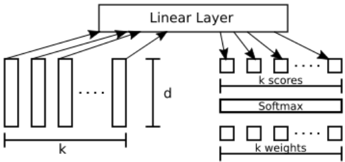
“es. In essence, such an approach would adapt the analysis windows in a data-driven manner. Attention models have been introduced for natural language processing tasks for part of speech (POS) tagging [8]. The formal idea is that a set of linear layers and non-linearities are used to learn weights over kvectors each of…”
BackgroundConvolutional Neural Networks for Human Activity Recognition using Mobile Sensors
Zeng, M., Nguyen, L. T., Yu, B., Mengshoel, O. J., Zhu, J., Wu, P., & Zhang, J. (2014) · Proceedings of the 6th International Conference on Mobile Computing, Applications and Services · doi:10.4108/icst.mobicase.2014.257786 · Cited by 876 · cited 1×
“Combined with clever combinations of pooling, that is, subsampling, and linear layers, very powerful recognition systems have been realized [1, 16, 15].”
BackgroundThe Opportunity challenge: A benchmark database for on-body sensor-based activity recognition
Chavarriaga, R., Sagha, H., Calatroni, A., Digumarti, S. T., Tröster, G., Millán, J. D. R., & Roggen, D. (2013) · Pattern Recognition Letters · doi:10.1016/j.patrec.2012.12.014 · Cited by 742 · cited 3×
“Arguably, this approach works very well as such models currently dominate the most challenging HAR benchmarks (such as Opportunity [3]).”
BackgroundMethodInfluentialDeep, Convolutional, and Recurrent Models for Human Activity Recognition Using Wearables
Hammerla, N. Y., Halloran, S., & Ploetz, T. (2016) · arXiv · doi:10.48550/arxiv.1604.08880 · Cited by 606 · cited 2×
“recognition results. Significant improvements over non-attention baselines are highlighted in bold (Wilson). Modeling Datasets Variant Opportunity PAMAP2 Skoda DeepConvLSTM [9] 67.2 74.8 91.2 b-LSTM-S [5] 68.4 83.8 92.1 Att. Model 70.7 87.5 91.3 Confidence Interval .003 .002 .004 each, with an overlap of 50% between con…”
BackgroundInfluentialEnsembles of Deep LSTM Learners for Activity Recognition using Wearables
Guan, Y., & Plötz, T. (2017) · Proceedings of the ACM on Interactive, Mobile, Wearable and Ubiquitous Technologies · doi:10.1145/3090076 · Cited by 511 · cited 4×
“We employ standard training and evaluation protocols based on hold out datasets as they have been defined in the original publications (and summarized, e.g., in [4]).”
BackgroundMethodInfluentialSelf-citation
Research works printed but not linked: 2
- T Tieleman and G Hinton. 2012. Lecture 6.5-rmsprop: Divide the gradient by a running average of its recent magnitude. COURSERA: Neural networks for machine learning 4, 2 (2012), 26-31.
- J Yang, Minh Nhut Nguyen, Phyo Phyo San, Xiaoli Li, and Shonali Krishnaswamy. 2015. Deep Convolutional Neural Networks on Multichannel Time Series for Human Activity Recognition.. In Proc. IJCAI.
Cited by
Deep Learning for Sensor-based Human Activity Recognition: Overview, Challenges and Opportunities
Chen, K., Zhang, D., Yao, L., Guo, B., Yu, Z., & Liu, Y. (2020) · arXiv · doi:10.48550/arxiv.2001.07416 · Cited by 314
“tworkswithone overall optimization function, which makes allowance for miscellaneous deep learning techniques including deep transfer learning [2], deep active learning [50], deep attention mechanism [101] J. ACM, Vol. 37, No. 4, Article 111. Publication date: August 2018. 111:4 K. Chen et al. and other not systematic…”
BackgroundInfluentialComputer vision applications in construction safety assurance
Fang, W., Ding, L., Love, P. E. D., Luo, H., Li, H., Peña-Mora, F., Zhong, B., & Zhou, C. (2020) · Automation in Construction · doi:10.1016/j.autcon.2019.103013 · Cited by 288
Attention induced multi-head convolutional neural network for human activity recognition
Khan, Z. N., & Ahmad, J. (2021) · Applied Soft Computing · doi:10.1016/j.asoc.2021.107671 · Cited by 187
Contrastive Predictive Coding for Human Activity Recognition
Haresamudram, H., Essa, I., & Plötz, T. (2021) · Proceedings of the ACM on Interactive, Mobile, Wearable and Ubiquitous Technologies · doi:10.1145/3463506 · Cited by 150
“Subsequent work on this architecture to improve performance includes temporal attention [55].”
BackgroundSelf-citationA review of machine learning-based human activity recognition for diverse applications
Kulsoom, F., Narejo, S., Mehmood, Z., Chaudhry, H. N., Butt, A., & Bashir, A. K. (2022) · Neural Computing and Applications · doi:10.1007/s00521-022-07665-9 · Cited by 168
“Some research worked used attention models to extract feature-based spatiotemporal context [116, 130, 114].”
MethodGjoreski, M., Janko, V., Slapničar, G., Mlakar, M., Reščič, N., Bizjak, J., Drobnič, V., Marinko, M., Mlakar, N., Luštrek, M., et al. (2020) · Information Fusion · doi:10.1016/j.inffus.2020.04.004 · Cited by 96
“Most recently, Murahari et al. [18] experimented with attention mechanisms in the DeepConvLSTM, which improved its performance in the AR domain by a few percentage points.”
Dilated causal convolution with multi-head self attention for sensor human activity recognition
Hamad, R. A., Kimura, M., Yang, L., Woo, W. L., & Wei, B. W. (2021) · Neural Computing and Applications · doi:10.1007/s00521-021-06007-5 · Cited by 109
“Reference [43] proposed DeepConvLSTM model based on attention mechanism for human activity recognition on smart home datasets.”
On the role of features in human activity recognition
Haresamudram, H., Anderson, D. V., & Plötz, T. (2019) · Proceedings of the 23rd International Symposium on Wearable Computers · doi:10.1145/3341163.3347727 · Cited by 90
“Improvements to the DeepConvLSTM have been proposed in [32], where an attention mechanism is added on the long short-term memory (LSTM) network to determine the ‘important’ time steps.”
BackgroundSelf-citationJalal, A., Batool, M., & Kim, K. (2020) · Sustainability · doi:10.3390/su122410324 · Cited by 86
“The attention model learns a set of weight over input data and adds this attention layer to the Deep Convolution LSTM for classification decisions.”
BackgroundInfluentialSensor Data Augmentation by Resampling in Contrastive Learning for Human Activity Recognition
Wang, J., Zhu, T., Gan, J., Chen, L. L., Ning, H., & Wan, Y. (2022) · IEEE Sensors Journal · doi:10.1109/jsen.2022.3214198 · Cited by 76
TinyHAR: A Lightweight Deep Learning Model Designed for Human Activity Recognition
Zhou, Y., Zhao, H., Huang, Y., Riedel, T., Hefenbrock, M., & Beigl, M. (2022) · Proceedings of the 2022 ACM International Symposium on Wearable Computers · doi:10.1145/3544794.3558467 · Cited by 78
“Information on some time steps may show more salient patterns [19] than their temporal surrounding.”
BackgroundLi, B., Yao, Z., Wang, J., Wang, S., Yang, X., & Sun, Y. (2020) · Electronics · doi:10.3390/electronics9111919 · Cited by 81
“This fixed window length with uniform dis ribution of sampl weights will not naturally lead to ideal mo eling [35], si ce not all obse vations at all time teps contr bu e equally to the mod l.”
BackgroundInfluentialImproving Deep Learning for HAR with Shallow LSTMs
Bock, M., Hölzemann, A., Moeller, M., & Van Laerhoven, K. (2021) · 2021 International Symposium on Wearable Computers · doi:10.1145/3460421.3480419 · Cited by 74
“H C ] 5 A ug 2 02 example, Murahari and Plötz [24] improved results by appending attention layers to the original architecture.”
BackgroundBarut, O., Zhou, L., & Luo, Y. (2020) · IEEE Internet of Things Journal · doi:10.1109/jiot.2020.2996578 · Cited by 70
“…that the residual bidirectional LSTM network is more accurate on both data sets when compared to baseline LSTMs and CNNs. Murahari and Ploetz [21] introduced attention models into HAR problems by adding additional attention layers to the DeepConvLSTM model and tested on Opportunity, PAMAP2,…”
MethodAttention-Based Deep Learning Framework for Human Activity Recognition With User Adaptation
Buffelli, D., & Vandin, F. (2021) · IEEE Sensors Journal · doi:10.1109/jsen.2021.3067690 · Cited by 68
“We then consider DeepConvLSTM [28] which is a CNN+LSTM approach, and its new attentive version proposed in [26] that we call DeepConvLSTM-Att.”
MethodXu, S., Zhang, L., Tang, Y., Han, C., Wu, H., & Song, A. (2023) · IEEE Transactions on Knowledge and Data Engineering · doi:10.1109/tkde.2023.3277839 · Cited by 77
“Thefrequencydistributionfor“Fall”,“Jump”and“Running”activities. attention mechanism has become a new research trend in HAR community [10], [11].”
BackgroundTwo-stream transformer network for sensor-based human activity recognition
Xiao, S., Wang, S., Huang, Z.-Z., Wang, Y., & Jiang, H.-F. (2022) · Neurocomputing · doi:10.1016/j.neucom.2022.09.099 · Cited by 67
Dual-Branch Interactive Networks on Multichannel Time Series for Human Activity Recognition
Tang, Y., Zhang, L., Wu, H., He, J., & Song, A. (2022) · IEEE Journal of Biomedical and Health Informatics · doi:10.1109/jbhi.2022.3193148 · Cited by 67
Multi-modal recognition of worker activity for human-centered intelligent manufacturing
Tao, W., Leu, M. C., & Yin, Z. (2020) · Engineering Applications of Artificial Intelligence · doi:10.1016/j.engappai.2020.103868 · Cited by 70
WEAR: An Outdoor Sports Dataset for Wearable and Egocentric Activity Recognition
Bock, M., Kuehne, H., Laerhoven, K. V., & Moeller, M. (2024) · Proceedings of the ACM on Interactive Mobile Wearable and Ubiquitous Technologies · doi:10.1145/3699776 · Cited by 126
“Following the success of the original DeepConvLSTM, researchers worked on extending the architecture [48, 72] or build up on the idea of combining convolutional and recurrent layers by proposing their own architectures [1, 73, 79, 84].”
Cheng, D., Zhang, L., Bu, C., Wu, H., & Song, A. (2023) · Knowledge-Based Systems · doi:10.1016/j.knosys.2023.110789 · Cited by 55
Mekruksavanich, S., & Jitpattanakul, A. (2022) · Mathematical Biosciences & Engineering · doi:10.3934/mbe.2022265 · Cited by 60
IF-ConvTransformer: A Framework for Human Activity Recognition Using IMU Fusion and ConvTransformer
Zhang, Y., Wang, L., Chen, H., Tian, A., Zhou, S., & Guo, Y. (2022) · Proceedings of the ACM on Interactive, Mobile, Wearable and Ubiquitous Technologies · doi:10.1145/3534584 · Cited by 46
“As discussed in Section 4, our IMU fusion block better facilitates the fusion of IMU sensors.”
BackgroundMethodInfluentialA human activity recognition method using wearable sensors based on convtransformer model
Zhang, Z., Wang, W., An, A., Qin, Y., & Yang, F. (2023) · Evolving Systems · doi:10.1007/s12530-022-09480-y · Cited by 48
“Attention can consider the contribution of all sensor readings and thus adjust their importance for label prediction (Murahari and Plötz 2018).”
BackgroundAgac, S., & İncel, Ö. D. (2023) · Diagnostics · doi:10.3390/diagnostics13111861 · Cited by 60
“In this section, we present the two datasets used in this study, which are extensively used in the sensor-based HAR domain [3], mainly when attention mechanism is the focus [19,27,29,34–36].”
BackgroundMethodInfluentialLeveraging Activity Recognition to Enable Protective Behavior Detection in Continuous Data
Wang, C., Gao, Y., Mathur, A., De C. Williams, A. C., Lane, N. D., & Bianchi-Berthouze, N. (2021) · Proceedings of the ACM on Interactive, Mobile, Wearable and Ubiquitous Technologies · doi:10.1145/3463508 · Cited by 41
“For instance, several data representations consider the relative relationships between sensors/joints [41-43], with network architectures designed to enable local processing of movement dynamics [12, 13, 44-46, 64].”
BackgroundDeep Ensemble Learning for Human Activity Recognition Using Wearable Sensors via Filter Activation
Huang, W., Zhang, L., Wang, S., Wu, H., & Song, A. (2022) · ACM Transactions on Embedded Computing Systems · doi:10.1145/3551486 · Cited by 53
“Although these invalid filters have been activated and have more effect to output, the internal activation could not provide any new information gain [25, 30, 31] to network, since their information source is internal filters.”
BackgroundMethodAdversarial Multi-view Networks for Activity Recognition
Bai, L., Yao, L., Wang, X., Kanhere, S. S., Guo, B., & Yu, Z. (2020) · Proceedings of the ACM on Interactive, Mobile, Wearable and Ubiquitous Technologies · doi:10.1145/3397323 · Cited by 40
“Based on this observation, Murahari and Plötz [39] extend the DeepConvLSTM [40] by adding the temporal attention module after the LSTM layer.”
BackgroundMethodInfluentialConvolutional Neural Network With Multihead Attention for Human Activity Recognition
Tan, T.-H., Chang, Y.-L., Wu, J.-R., Chen, Y.-F., & Alkhaleefah, M. (2023) · IEEE Internet of Things Journal · doi:10.1109/jiot.2023.3294421 · Cited by 41
“Another study [46] introduced an attention model as an approach for exploring relevant temporal context in order to improve the accuracy of modeling each sensor reading.”
BackgroundMiao, S., Chen, L., Hu, R., & Luo, Y. (2022) · Proceedings of the ACM on Interactive, Mobile, Wearable and Ubiquitous Technologies · doi:10.1145/3550331 · Cited by 36
“Since the data recorded from two arms are not synchronized in time, following [1, 13, 31, 33], we only use the data from the right arm.”
MethodSelf-Attention Networks for Human Activity Recognition Using Wearable Devices
Betancourt, C., Chen, W., & Kuan, C.-W. (2020) · Conference proceedings/Conference proceedings - IEEE International Conference on Systems, Man, and Cybernetics · doi:10.1109/smc42975.2020.9283381 · Cited by 34
“In the recent years, attention networks have been gaining popularity in HAR due to their success in other fields such as NLP research [23].”
BackgroundHaresamudram, H., Tang, C. I., Suh, S., Lukowicz, P., & Plötz, T. (2025) · Proceedings of the ACM on Interactive Mobile Wearable and Ubiquitous Technologies · doi:10.1145/3729467 · Cited by 33
“Temporal attention was applied by Murahari et al. [130] whereas continuous sensor and temporal attention were evaluated by Zeng et al. [207], both leading to increased performance.”
Self-citationA deep local-temporal architecture with attention for lightweight human activity recognition
Ige, A. O., & Noor, M. H. M. (2023) · Applied Soft Computing · doi:10.1016/j.asoc.2023.110954 · Cited by 33
Cheng, D., Zhang, L., Qin, L., Wang, S., Wu, H., & Song, A. (2024) · IEEE Journal of Biomedical and Health Informatics · doi:10.1109/jbhi.2024.3373019 · Cited by 31
“Model [23]; Pure Transformer Model: TransF.”
BackgroundLearning Temporal and Bodily Attention in Protective Movement Behavior Detection
Wang, C., Peng, M., Olugbade, T. A., Lane, N., Williams, A. C. D. C., & Bianchi-Berthouze, N. (2019) · 2019 8th International Conference on Affective Computing and Intelligent Interaction Workshops and Demos (ACIIW) · doi:10.1109/aciiw.2019.8925084 · Cited by 25
“On the other hand, except for that the BANet-compat is only a representative of the architectures used in [19][20][21], the results imply that encoding the importance of body joints at a single timestep is not valuable to the detection of protective behavior, but should be delayed to a higher-level processing given a…”
BackgroundMethodResultZhongkai, Z., Kobayashi, S., Kondo, K., Hasegawa, T., & Koshino, M. (2022) · IEEE Access · doi:10.1109/access.2022.3152530 · Cited by 34
“Murahari et al. [23] proposed a DeepConvLSTM architecture with an attention layer.”
Learning Disentangled Behaviour Patterns for Wearable-based Human Activity Recognition
Su, J., Wen, Z., Lin, T., & Guan, Y. (2022) · Proceedings of the ACM on Interactive Mobile Wearable and Ubiquitous Technologies · doi:10.1145/3517252 · Cited by 44
“To solve this problem, recent studies [13, 15, 35, 37, 56] leveraged the exceptional data representation ability of deep learning methods to expedite feature extraction.”
BackgroundZilelioglu, H., Khodabandelou, G., Chibani, A., & Amirat, Y. (2023) · IEEE Sensors Journal · doi:10.1109/jsen.2023.3267243 · Cited by 32
Towards deep clustering of human activities from wearables
Abedin, A., Motlagh, F., Shi, Q., Rezatofighi, H., & Ranasinghe, D. (2020) · Proceedings of the 2020 International Symposium on Wearable Computers · doi:10.1145/3410531.3414312 · Cited by 27
“aradigms for recognizing human activities from raw wearable data [2, 20, 23, 30]. Researchers have explored CNNs [8, 33, 39–41], RNNs [15, 18], and a combination of convolutional and recurrent layers [1, 29, 31] to effectively model the temporal dependencies inherent in sequences captured with sensors. However, acquis…”
BackgroundActSonic: Recognizing Everyday Activities from Inaudible Acoustic Wave Around the Body
Mahmud, S., Parikh, V., Liang, Q., Li, K., Zhang, R., Ajit, A., Gunda, V., Agarwal, D., Guimbretière, F. V., & Zhang, C. (2024) · Proceedings of the ACM on Interactive Mobile Wearable and Ubiquitous Technologies · doi:10.1145/3699752 · Cited by 44
“In this section, we provide an overview of related work focused on IMU, camera, and acoustic sensing-based activity recognition, and position the contribution of ActSonic within this landscape.”
Tahir, S. B. U. D., Dogar, A. B., Fatima, R., Yasin, A., Shafiq, M., Khan, J. A., Assam, M., Mohamed, A., & Attia, E.-A. (2022) · Sensors · doi:10.3390/s22176632 · Cited by 28
AutoAugHAR: Automated Data Augmentation for Sensor-based Human Activity Recognition
Zhou, Y., Zhao, H., Huang, Y., Röddiger, T., Kurnaz, M., Riedel, T., & Beigl, M. (2024) · Proceedings of the ACM on Interactive, Mobile, Wearable and Ubiquitous Technologies · doi:10.1145/3659589 · Cited by 25
“In order to address the ’forgetting’ limitations of LSTMs, DeepConvLSTM-Attention ( DCL-A ) [48] augments DeepConvLSTM with temporal attention, facilitating global temporal information exchange in a single forward pass.”
BackgroundGRU-based Attention Mechanism for Human Activity Recognition
Haque, M. N., Tonmoy, M. T. H., Mahmud, S., Ali, A. A., Khan, M. A., & Shoyaib, M. (2019) · International Conference on Advances in Science, Engineering and Robotics Technology (ICASERT) · doi:10.1109/icasert.2019.8934659 · Cited by 27
Human Complex Activity Recognition With Sensor Data Using Multiple Features
Huan, R., Jiang, C., Ge, L., Shu, J., Zhan, Z., Chen, P., Chi, K., & Liang, R. (2021) · IEEE Sensors Journal · doi:10.1109/jsen.2021.3130913 · Cited by 28
Han, C., Zhang, L., Tang, Y., Xu, S., Min, F., Wu, H., & Song, A. (2022) · IEEE Transactions on Instrumentation and Measurement · doi:10.1109/tim.2022.3191653 · Cited by 26
Kwon, H., Clifford, G. D., Genias, I., Bernhard, D., Esper, C. D., Factor, S. A., & McKay, J. L. (2023) · Sensors · doi:10.3390/s23041766 · Cited by 24
“This work uses a kind of interpretable deep learning methods, namely, attention-based approach [33,34], to quantify FOG in parkinsonism.”
BackgroundMethodBu, C., Zhang, L., Cui, H., Yang, G., & Wu, H. (2023) · IEEE Transactions on Industrial Informatics · doi:10.1109/tii.2023.3315773 · Cited by 28
“To ensure fair comparisons, we employ the same data preprocessing configu-rations and official training-validation-test split for all the four benchmarks [3], [9], [12], [26].”
BackgroundMethodMultiresolution Fusion Convolutional Network for Open Set Human Activity Recognition
Li, J., Xu, H., & Wang, Y. (2023) · IEEE Internet of Things Journal · doi:10.1109/jiot.2023.3243476 · Cited by 27
ConvBoost: Boosting ConvNets for Sensor-based Activity Recognition
Shao, S., Guan, Y., Zhai, B., Missier, P., & Plötz, T. (2023) · Proceedings of the ACM on Interactive Mobile Wearable and Ubiquitous Technologies · doi:10.1145/3596234 · Cited by 30
“Based on the aforementioned ConvNet backbones (CNN [42], ConvLSTM [22], and Attention Model [24]), we report the ¯ 𝐹 1 results of: i) the Proposed ConvBoost; ii) ConvNet variants of [7]; as well as iii) the original ConvNet baselines in Table 1.”
InfluentialSelf-citationSelf-Attention-Based Deep Convolution LSTM Framework for Sensor-Based Badminton Activity Recognition
Deng, J., Zhang, S., & Ma, J. (2023) · Sensors · doi:10.3390/s23208373 · Cited by 27
“[17] 94.30% 93.98% DeepConvLSTM_Att [18] 97.34% 97.15% DeepSense [9] 95.55% 95.18% AttnSense [10] 94.23% 93.86% SelfAttnNet [27] 95 It can be seen from Table 1 that our SADeepConvLSTM framework achieves the best recognition result compared to other methods, with the average recognition accuracy…”
BackgroundMethodResultInfluentialXia, S., Chu, L., Pei, L., Yu, W., & Qiu, R. C. (2022) · IEEE Transactions on Industrial Informatics · doi:10.1109/tii.2022.3173957 · Cited by 20
“According to Section III, we compare six kinds of variants, where L C , L SM , L B , L BC represent the sample-level classification loss [see (8)], the smoothing loss [see (9)], the boundary prediction loss [(12)], and the boundary consistency loss [see (16)], respectively.”
BackgroundMethodInfluentialHuman Activity Recognition Based on Two-Channel Residual–GRU–ECA Module with Two Types of Sensors
Wang, X., & Shang, J. (2023) · Electronics · doi:10.3390/electronics12071622 · Cited by 23
CNN‐LSTM‐Based Late Sensor Fusion for Human Activity Recognition in Big Data Networks
Baloch, Z., Shaikh, F. K., & Unar, M. A. (2022) · Wireless Communications and Mobile Computing · doi:10.1155/2022/3434100 · Cited by 24
“On the PAMAP2 dataset, the authors of [32] used attention models and achieved 87.”
MethodSun, Y., Xu, X., Tian, X., Zhou, L., & Li, Y. (2024) · Engineering Applications of Artificial Intelligence · doi:10.1016/j.engappai.2024.108705 · Cited by 26
Regional Attention Network (RAN) for Head Pose and Fine-Grained Gesture Recognition
Behera, A., Wharton, Z., Liu, Y., Ghahremani, M., Kumar, S., & Bessis, N. (2020) · IEEE Transactions on Affective Computing · doi:10.1109/taffc.2020.3031841 · Cited by 24
“visual question answering (VQA) [10], image captioning [11], [12], [13], human activities recognition [14], [15], [16], and other applications.”
BackgroundSensor-based Detection and Classification of Soccer Goalkeeper Training Exercises
Haladjian, J., Schlabbers, D., Taheri, S., Tharr, M., & Bruegge, B. (2020) · ACM Transactions on Internet of Things · doi:10.1145/3372342 · Cited by 18
“…Long-Short-Term-Memory (LSTM) - have been adapted to exploit the time-dependency of the sensor signals, attaining the highest recognition results so far on large public benchmark datasets [Li et al. 2018; Murahari and Plötz 2018; Neverova et al. 2016; Ordóñez and Roggen 2016; Zeng et al. 2018].”
BackgroundPhysiQ: Off-site Quality Assessment of Exercise in Physical Therapy
Wang, H. D., & Ma, M. (2022) · Proceedings of the ACM on Interactive Mobile Wearable and Ubiquitous Technologies · doi:10.1145/3570349 · Cited by 22
Agac, S., & İncel, Ö. D. (2024) · Computers & Electrical Engineering · doi:10.1016/j.compeleceng.2024.109274 · Cited by 21
Zhou, Y., King, T., Zhao, H., Huang, Y., Riedel, T., & Beigl, M. (2024) · Proceedings of the 2024 ACM International Symposium on Wearable Computers · doi:10.1145/3675095.3676624 · Cited by 17
“SOTA models like DeepConvLSTM-Attn [22], Attend [1], and ALAE-TAE [2] augment CNN-RNN frameworks with various attention designs to refine feature extraction.”
BackgroundMethodFilterNet: A Many-to-Many Deep Learning Architecture for Time Series Classification
(2020) · doi:10.3390/s20092498 · Cited by 17
Temporal Action Localization for Inertial-based Human Activity Recognition
Bock, M., Moeller, M., & Laerhoven, K. V. (2024) · Proceedings of the ACM on Interactive Mobile Wearable and Ubiquitous Technologies · doi:10.1145/3699770 · Cited by 29
“Building up on the idea of combining these two types of layers, researchers have worked on extending the original DeepConvLSTM or have introduced their own architectural designs [1, 4, 11–13, 28, 32, 33, 37, 50, 55–58, 64, 67].”
Mekruksavanich, S., & Jitpattanakul, A. (2024) · Symmetry · doi:10.3390/sym16050554 · Cited by 19
Haladjian, J. (2019) · Proceedings of the ACM on Interactive Mobile Wearable and Ubiquitous Technologies · doi:10.1145/3369813 · Cited by 19
“recognition applications with wearables [41, 60].”
Hierarchical Self Attention Based Autoencoder for Open-Set Human Activity Recognition
Tonmoy, M. T. H., Mahmud, S., Rahman, A. K. M. M., Amin, M. A., & Ali, A. (2021) · Pacific-Asia Conference on Knowledge Discovery and Data Mining · doi:10.1007/978-3-030-75768-7_28 · Cited by 26
“Attention mechanism, described as weighted average of feature representations, is adopted to model HAR task like other sequence modeling problem such as NLP in recent works [12, 13, 15, 29, 31].”
BackgroundMethodLi, S., Zhu, T., Nie, M., Ning, H., Liu, Z., & Chen, L. (2024) · IEEE Internet of Things Journal · doi:10.1109/jiot.2024.3493380 · Cited by 26
“[46]: An effective DL HAR model, which incorporates attention layers into the DeepConvLSTM.”
Xia, S., Chu, L., Pei, L., Yang, J., Yu, W., & Qiu, R. C. (2024) · IEEE Transactions on Mobile Computing · doi:10.1109/tmc.2024.3381171 · Cited by 23
“Murahari et al. [32] introduced the attention module into the DeepConvLSTM to automatically determine the relevant temporal context.”
MethodA hybrid CNN and BLSTM network for human complex activity recognition with multi-feature fusion
Huan, R., Zhan, Z., Ge, L., Chi, K., Chen, P., & Liang, R. (2021) · Multimedia Tools and Applications · doi:10.1007/s11042-021-11363-4 · Cited by 18
“Recently, studies have combined CNN and RNN for activity recognition tasks, which have achieved better results [8, 24, 26, 28, 40].”
BackgroundMethodInfluential(2024) · doi:10.2196/59469 · Cited by 14
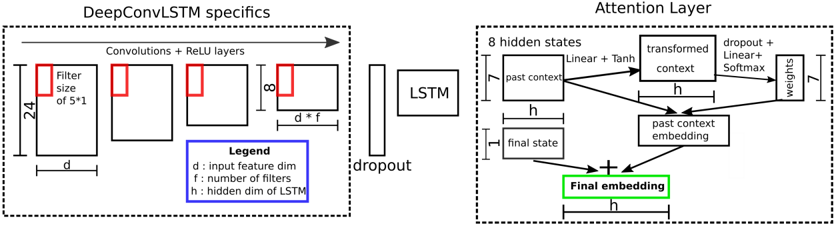
“Attention model: Incorporating insights from attention mechanisms, the attention model [25] comprises 4 convolutional layers with 64 feature maps followed by 2 LSTM layers, each with 128 hidden units [23], and an attention layer.”
MethodZou, H., Chen, Z., Zhang, C., Yuan, A., Wang, B., Wang, L., Li, J., & Pan, Y. (2024) · IEEE Sensors Journal · doi:10.1109/jsen.2024.3373444 · Cited by 16
“Therefore, some researchers have added it to DeepConvLSTM and DeepSense by implementing it into the CNNs and RNNs, hoping to achieve effective CF [39], [40], [41].”
MethodPrototype Similarity Learning for Activity Recognition
Bai, L., Yao, L., Wang, X., Kanhere, S. S., & Xiao, Y. (2020) · Lecture notes in computer science · doi:10.1007/978-3-030-47426-3_50 · Cited by 14
“These works utilize deep neural networks, such as Convolution Neural Networks (CNN) [5,16] and Long-Short Term Memory (LSTM) [8,11], as feature extractors to learn the representation of the input sensory segments automatically, and then map the representation to labels using another neural network…”
MethodResultInfluentialKumar, P., & Chauhan, S. (2021) · CCF Transactions on Pervasive Computing and Interaction · doi:10.1007/s42486-021-00063-5 · Cited by 13
RetractedCritical Overview of Visual Tracking with Kernel Correlation Filter
Yadav, S., & Payandeh, S. (2021) · Technologies · doi:10.3390/technologies9040093 · Cited by 15
Multi-agent Transformer Networks for Multimodal Human Activity Recognition
Li, J., Yao, L., Li, B., Wang, X., & Sammut, C. (2022) · ACM International Conference on Information and Knowledge Management (CIKM) · doi:10.1145/3511808.3557402 · Cited by 15
“Recent approaches utilized deep neural networks, such as CNN [2, 10, 26, 41, 50, 51, 54] and LSTM Networks [5, 18, 35, 38, 53], as feature extractors to learn the representation of the input sensory segments automatically, then map the representation to labels using another neural network [3].”
MethodBi-STAN: bilinear spatial-temporal attention network for wearable human activity recognition
Gao, C., Chen, Y., Jiang, X., Hu, L., Zhao, Z., & Zhang, Y. (2023) · International Journal of Machine Learning and Cybernetics · doi:10.1007/s13042-023-01781-1 · Cited by 13
“In ubiquitous computing, an attention mechanism is introduced to weight the temporal context [28].”
BackgroundZou, H., Chen, Z., Zhang, J., Wang, L., Zhang, F., Li, J., & Pan, Y. (2024) · IEEE Transactions on Emerging Topics in Computational Intelligence · doi:10.1109/tetci.2024.3378331 · Cited by 18
Masked Video and Body-Worn IMU Autoencoder for Egocentric Action Recognition
Zhang, M., Huang, Y., Liu, R., & Sato, Y. (2024) · Lecture notes in computer science · doi:10.1007/978-3-031-72649-1_18 · Cited by 31
Develompent of Activity Recognition Model using LSTM-RNN Deep Learning Algorithm
Gaur, D., & Dubey, S. K. (2022) · Journal of information and organizational sciences · doi:10.31341/jios.46.2.1 · Cited by 13
Chen, L., Luo, Y., Peng, L., Hu, R., Zhang, Y., & Miao, S. (2023) · Applied Intelligence · doi:10.1007/s10489-023-04997-4 · Cited by 13
Baseman, C. M., Fayfman, M., Schechter, M. C., Ostadabbas, S., Santamarina, G., Plötz, T., & Arriaga, R. I. (2023) · Journal of Diabetes Science and Technology · doi:10.1177/19322968231213378 · Cited by 15
“63 Long short-term memory sequential models of sensor data streams and attention weight distributions may be trained not only for each sensing modality but also for each timestep in a sequence of measurements.”
Self-citationLightweight human activity recognition method based on the MobileHARC model
Gong, X., Zhang, X., & Li, N. (2024) · Systems Science & Control Engineering · doi:10.1080/21642583.2024.2328549 · Cited by 13
“• DeepConvLSTM_Attn: To address the drawback of ‘forgetting’ in LSTM, Model (Vishvak & Thomas, 2018) enhances the DeepConvLSTM model with the use of a temporal attention mechanism.”
HardenVR: Harassment Detection in Social Virtual Reality
Wang, N., Zhou, J., Li, J., Han, B., Li, F., & Chen, S. (2024) · IEEE Conference on Virtual Reality and 3D User Interfaces (VR) · doi:10.1109/vr58804.2024.00033 · Cited by 16
“There is plenty of research on human activity recognition (HAR) [11,25,44,64,65,67].”
BackgroundMethodEnhanced Prediction Model for Human Activity Using an End-to-End Approach
Park, S., Lee, H. O., Hwang, Y. M., Ko, S., & Lee, B. (2022) · IEEE Internet of Things Journal · doi:10.1109/jiot.2022.3223674 · Cited by 11
“Besides, to explicitly utilize sensor modalities, an attention module was used with DLMs in [30], [31], [32], [34], and [35].”
BackgroundMethodViSig: Automatic Interpretation of Visual Body Signals Using On-Body Sensors
Cao, Y., Dhekne, A., & Ammar, M. (2023) · Proceedings of the ACM on Interactive Mobile Wearable and Ubiquitous Technologies · doi:10.1145/3580797 · Cited by 14
“[50] employs an attention model to rescale the importance of historical samples, while [14] proposes a framework which extracts inter-modality relation as features by an attentional GRU encoder.”
MethodDistilled mid-fusion transformer networks for multi-modal human activity recognition
Li, J., Yao, L., Li, B., & Sammut, C. (2025) · Knowledge-Based Systems · doi:10.1016/j.knosys.2025.114160 · Cited by 14
Spectrum-Guided Adversarial Disparity Learning
Liu, Z., Yao, L., Bai, L., Wang, X., & Wang, C. (2020) · ACM SIGKDD Conference on Knowledge Discovery and Data Mining (KDD) · doi:10.1145/3394486.3403054 · Cited by 9
“…Memory • ConvLSTM [18]: a hybrid model that combines both CNN and • En-LSTM [9]: an LSTM-based method that combines multiple • AttConvLSTM [17]: a hybrid model that applies attention layer • AAE [16]: a benchmark of adversarial autoencoder with FC • ConvAAE [1]: a state-of-the-art…”
The effect of hyperparameter search on artificial neural network in human activity recognition
Sütő, J. (2021) · Open Computer Science · doi:10.1515/comp-2020-0227 · Cited by 9
“Finally, Murahari and Plötz [17] extended”
BackgroundInfluentialHuang, Q., Xie, W., Li, C., Wang, Y.-F., & Liu, Y.-W. (2023) · Applied Sciences · doi:10.3390/app131910560 · Cited by 7
ALANet:Autoencoder-LSTM for pain and protective behaviour detection
Yuan, X., & Mahmoud, M. (2020) · International Conference on Automatic Face and Gesture Recognition · doi:10.1109/fg47880.2020.00063 · Cited by 12
“[16] used a similar attention mechanism.”
Investigating (re)current state-of-the-art in human activity recognition datasets
Bock, M., Hoelzemann, A., Moeller, M., & Laerhoven, K. V. (2022) · Frontiers in Computer Science · doi:10.3389/fcomp.2022.924954 · Cited by 10
“Extending up on the work of Ordóñez and Roggen (2016), researchers proposed variations of the DeepConvLSTM e.g., by appending attention layers to the original architecture (Murahari and Plötz, 2018) or adding dilated convolution layers in addition to normal convolution layers (Xi et al., 2018).”
MethodAhmad, N., & Leung, H.-F. (2024) · Proceedings of the ACM on Interactive Mobile Wearable and Ubiquitous Technologies · doi:10.1145/3643511 · Cited by 13
“In addition, Murahari and Plötz [35] use a hybrid architecture of CNN and long short-term memory networks (LSTM) with an attention mechanism to extract more abstract local and global temporal features.”
MethodResultDeep Architectures for Human Activity Recognition using Sensors
Baloch, Z., Shaikh, F. K., & Unar, M. A. (2019) · 3C Tecnología_Glosas de innovación aplicadas a la pyme · doi:10.17993/3ctecno.2019.specialissue2.14-35 · Cited by 10
“For instance, Murahari and Plötz (2018) used deep convolutional LSTM model to explore the temporal context in activity recognition. Lee, Grosse, Ranganath, and Ng (2009) proposed a convolutional deep belief network that used the probabilistic max–pooling technique for visual recognition tasks. In some studies, RNN and…”
BackgroundInfluentialA lightweight deep learning with feature weighting for activity recognition
Ige, A. O., & Noor, M. H. M. (2022) · Computational Intelligence · doi:10.1111/coin.12565 · Cited by 10
“In Murahari, 22 a DeepConvLSTM with attention was proposed to extend the work in Ordóñez, 47 and a relative improvement of 87.5% was recorded on the PAMAP2 dataset using the model with attention, and an accuracy of 74.8% on the model without attention.”
BackgroundMethodInfluentialDridi, J., Amayri, M., & Bouguila, N. (2024) · International Conference on Intelligent Information Technology (ICIIT) · doi:10.1145/3654522.3654541 · Cited by 10
“Murahari et al. have explored the temporal aspect in human AR datasets by applying attention models [47].”
ConvNet-based performers attention and supervised contrastive learning for activity recognition
Hamad, R. A., Yang, L., Woo, W. L., & Wei, B. W. (2022) · Applied Intelligence · doi:10.1007/s10489-022-03937-y · Cited by 9
“Moreover, the DeepConvLSTM method is suggested for HAR based on sensor data from smart homes [26].”
MethodMulti-Branch CNN GRU with attention mechanism for human action recognition
Verma, U., Tyagi, P., & Aneja, M. K. (2023) · Engineering Research Express · doi:10.1088/2631-8695/acd98c · Cited by 13
Adaptive soft threshold transformer for radar high‐resolution range profile target recognition
Chen, S., Huang, X., & Xu, W. (2024) · IET Radar Sonar & Navigation · doi:10.1049/rsn2.12563 · Cited by 9
Zufferey, N., Niksirat, K. S., Humbert, M., & Huguenin, K. (2024) · Proceedings on Privacy Enhancing Technologies · doi:10.56553/popets-2024-0139 · Cited by 9
“For instance, WAT data can be used to infer daily activities and habits (e.g., eating) [1, 32, 66, 76], drug usage (e.g., cocaine) [78], SARS-CoV-2 infections [54], mental health [2], and even personality traits [114].”
BackgroundALAE-TAE-CutMix+: Beyond the State-of-the-Art for Human Activity Recognition Using Wearable Sensors
Ahmad, N., & Leung, H.-F. (2023) · Annual IEEE International Conference on Pervasive Computing and Communications · doi:10.1109/percom56429.2023.10099138 · Cited by 6
“While in testing following [1], [16], a more practical and realistic technique, sample-by-sample evaluation is employed in which prediction is made for each test sample.”
BackgroundMethodInfluentialSelf-relation attention networks for weakly supervised few-shot activity recognition
Deng, S., Guo, Z., Teng, D., Lin, B., Chen, D., Jia, T., & Wang, H. (2023) · Knowledge-Based Systems · doi:10.1016/j.knosys.2023.110720 · Cited by 8
Tutorial on Deep Learning for Human Activity RecognitionPreprint
Bock, M., Hoelzemann, A., Moeller, M., & Laerhoven, K. V. (2021) · arXiv (Cornell University) · doi:10.48550/arxiv.2110.06663 · Cited by 7
Metadata
- Authors
- Murahari, V. S., & Plötz, T.
- Affiliations
- Georgia Institute of Technology (US)
- ORCID
- Murahari, Vishvak S.
- Venue
- Proceedings of the 2018 ACM International Symposium on Wearable Computers
- Publisher
- ACM
- Published
- 2018-10-08
- Pages
- 100-103
- OpenAlex
- W2803458625
- Cited by
- 157
- References
- 12
- Citations by year
- 2026: 10 · 2025: 17 · 2024: 31 · 2023: 24 · 2022: 27 · 2021: 22 · 2020: 16 · 2019: 10
- FWCI
- 3.62
- Type
- conference paper
- Language
- en
- Open access
- green
- arxiv.org
- Licence
- Locations
- ACM International Symposium on Wearable Computers (ISWC) (publishedVersion)
- arXiv (Cornell University) (submittedVersion, cc-by-nc-sa)
- arXiv (Cornell University) (submittedVersion)
- arXiv (Cornell University)
- Topics
- Physical Sciences › Computer Science › Computer Vision and Pattern Recognition › Context-Aware Activity Recognition Systems
- Physical Sciences › Computer Science › Computer Vision and Pattern Recognition › Human Pose and Action Recognition
- Physical Sciences › Computer Science › Signal Processing › Time Series Analysis and Forecasting
- Keywords
- human activity recognition, attention-based models, temporal context, wearable sensors, attention layers, sensor data
About these checks
Registry, retraction, Cites and statistics results are computed, not judged, with one exception: a printed reference that no index lists is read once by a model before it counts as a citation error. Claims are extracted by a model and kept only when their quote appears verbatim in the text; each cited source is then checked, with a model’s help, for whether it says what the claim relies on. Those verdicts can be wrong — read the claim’s quote and the cited source before relying on one.
Statistics and arithmetic are recomputed, not judged.
Confidence bands are shown only for fields calibrated on our annotated test set. None is calibrated yet, so no band is shown.
What counts as a claim ›How we measure confidence ›How we check this ›
Are you an author, or do you see a problem with this page? Request a review
Data sources
Bibliographic data: Semantic Scholar, OpenAlex, Crossref.
Contains information from the Semantic Scholar Academic Graph Datasets, made available under the ODC Attribution License (ODC-BY 1.0).
Semantic Scholar’s data is described in: Kinney, R., et al. (2023). The Semantic Scholar Open Data Platform. arXiv:2301.10140.
