

What Do You See?: Evaluation of Explainable Artificial Intelligence (XAI) Interpretability through Neural Backdoors
Open accessThe DOI matches its Crossref record; 49 of the 49 references it cites were found in a registry or an index.
Abstract
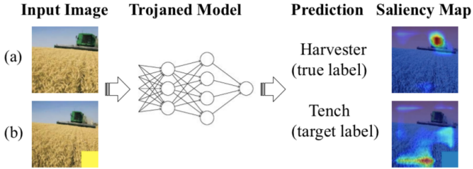
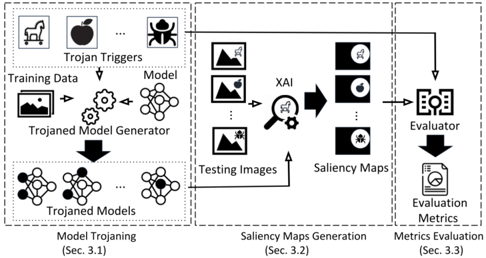
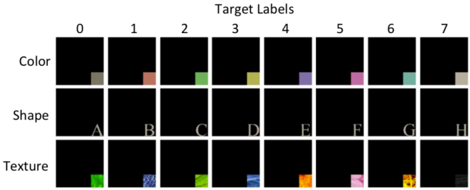
EXplainable AI (XAI) methods have been proposed to interpret how a deep neural network predicts inputs through model saliency explanations that highlight the input parts deemed important to arrive at a decision for a specific target. However, it remains challenging to quantify the correctness of their interpretability as current evaluation approaches either require subjective input from humans or incur high computation cost with automated evaluation. In this paper, we propose backdoor trigger patterns--hidden malicious functionalities that cause misclassification--to automate the evaluation of saliency explanations. Our key observation is that triggers provide ground truth for inputs to evaluate whether the regions identified by an XAI method are truly relevant to its output. Since backdoor triggers are the most important features that cause deliberate misclassification, a robust XAI method should reveal their presence at inference time. We introduce three complementary metrics for the systematic evaluation of explanations that an XAI method generates. We evaluate seven state-of-the-art model-free and model-specific post-hoc methods through 36 models trojaned with specifically crafted triggers using color, shape, texture, location, and size. We found six methods that use local explanation and feature relevance fail to completely highlight trigger regions, and only a model-free approach can uncover the entire trigger region. We made our code available at https://github.com/yslin013/evalxai.
Overview
The claims and statistics of this paper haven’t been checked yet.
Free: it reads the open-access text and checks the first 5 claims that cite a source we can check. Create a free account to check every claim.
Integrity signals
Registry
Cites
Statistics
Figures




Verification
Claims the paper makes
The claims and statistics of this paper haven’t been checked yet.
Free: it reads the open-access text and checks the first 5 claims that cite a source we can check. Create a free account to check every claim.
Claims other papers make about this one
Each is checked against this paper’s own text: does it say what the citing paper says it does?
The source backs part of the claim, not all of it — or backs it for a different population, condition or comparison.
In the citing paper
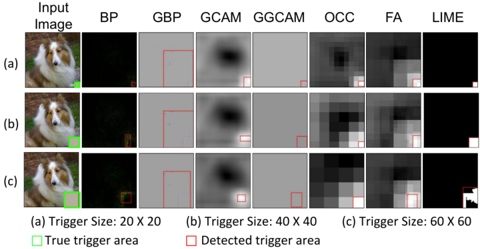
“For example, CAM is effective in detecting the entire trigger region, but may not always provide the accurate localization of the trigger [112].”
From Survey of Explainable AI Techniques in Healthcare (2023) · cites this paper as [112]
Experimental — accuracy not yet measuredIn the citing paper
“For example, CAM is effective in detecting the entire trigger region, but may not always provide the accurate localization of the trigger [112].”
From Survey of Explainable AI Techniques in Healthcare (2023) · cites this paper as [112]
In the citing paper
“Among the popular XAI methods, backpropagation has a high rate of success in detecting and recovering from Trojan attacks, particularly for models with large trigger sizes [112].”
From Survey of Explainable AI Techniques in Healthcare (2023) · cites this paper as [112]
In the citing paper
“LIME has a high rate of success in detecting small triggers [112].”
From Survey of Explainable AI Techniques in Healthcare (2023) · cites this paper as [112]
Self-check
Percentages, sums and reported differences re-computed from the paper’s own numbers.
The self-check needs the paper’s full text.
Citations
Cites
Deep Residual Learning for Image Recognition
He, K., Zhang, X., Ren, S., & Sun, J. (2016) · 2016 IEEE Conference on Computer Vision and Pattern Recognition (CVPR) · doi:10.1109/cvpr.2016.90 · Cited by 235,474 · cited 1×
“We use three image classification models: VGG-16 (Simonyan and Zisserman 2014), ResNet-50 (He et al. 2015) and AlexNet (Krizhevsky, Sutskever, and Hinton 2012) (Table 3 in the Appendix details models, such as their number of layers, parameters and accuracy).”
MethodVery Deep Convolutional Networks for Large-Scale Image Recognition
Simonyan, K., & Zisserman, A. (2014) · arXiv · doi:10.48550/arxiv.1409.1556 · Cited by 114,148 · cited 1×
“We use three image classification models: VGG-16 (Simonyan and Zisserman 2014), ResNet-50 (He et al.”
MethodImageNet classification with deep convolutional neural networks
Krizhevsky, A., Sutskever, I., & Hinton, G. E. (2017) · Communications of the ACM · doi:10.1145/3065386 · Cited by 112,155 · cited 7×
“We trojan three image classification models, VGG-16 [36], ResNet50 [13] and AlexNet [17], through poisoning attack (Algorithm 1).”
InfluentialYou Only Look Once: Unified, Real-Time Object Detection
Redmon, J., Divvala, S., Girshick, R., & Farhadi, A. (2016) · 2016 IEEE Conference on Computer Vision and Pattern Recognition (CVPR) · doi:10.1109/cvpr.2016.91 · Cited by 53,803 · cited 1×
“To handle multiple triggers, we plan to use object detection algorithms such as YOLO (Redmon et al. 2016) to capture multiple objects highlighted by the XAI methods.”
MethodImageNet Large Scale Visual Recognition Challenge
Russakovsky, O., Deng, J., Su, H., Krause, J., Satheesh, S., Ma, S., Huang, Z., Karpathy, A., Khosla, A., Bernstein, M., et al. (2015) · International Journal of Computer Vision · doi:10.1007/s11263-015-0816-y · Cited by 39,380 · cited 1×
“We evaluate seven XAI methods on 18 single target and 18multiple target trojaned models with the ImageNet dataset [31], which consists of one million images with 1,000 classes.”
MethodLearning representations by back-propagating errors
Rumelhart, D. E., Hinton, G. E., & Williams, R. J. (1986) · Nature · doi:10.1038/323533a0 · Cited by 31,892 · cited 1×
“, stamped with trigger) input x′, a model F′ is trained by solving a supervised learning problem through backpropagation [30], where x and x′ are classified to y (true label) and yt (target label) respectively.”
MethodPyTorch: An Imperative Style, High-Performance Deep Learning Library
Paszke, A., Gross, S., Massa, F., Lerer, A., Bradbury, J., Chanan, G., Killeen, T., Lin, Z., Gimelshein, N., Antiga, L., et al. (2019) · arXiv · doi:10.48550/arxiv.1912.01703 · Cited by 31,473 · cited 1×
“sion on the performance of each XAI method on trojaned models through introduced evaluation metrics. Lastly, we compare the computation cost of XAI methods. We conducted our experiments with PyTorch (Paszke et al. 2019) using NVIDIA Tesla T4 GPU and four vCPU with 26 GB of memory provided by the Google Cloud platform.…”
MethodInfluentialA Computational Approach to Edge Detection
Canny, J. (1986) · IEEE Transactions on Pattern Analysis and Machine Intelligence · doi:10.1109/tpami.1986.4767851 · Cited by 30,004 · cited 2×
“2), we leverage the popular Canny (Canny 1986) edge detection algorithm to identify the most salient region and draw a bounding box to cover the detected pixels.”
MethodGrad-CAM: Visual Explanations from Deep Networks via Gradient-Based Localization
Selvaraju, R. R., Cogswell, M., Das, A., Vedantam, R., Parikh, D., & Batra, D. (2017) · 2017 IEEE International Conference on Computer Vision (ICCV) · doi:10.1109/iccv.2017.74 · Cited by 24,513
"Why Should I Trust You?": Explaining the Predictions of Any Classifier
Ribeiro, M. T., Singh, S., & Guestrin, C. (2016) · Proceedings of the 22nd ACM SIGKDD International Conference on Knowledge Discovery and Data Mining · doi:10.1145/2939672.2939778 · Cited by 17,555
Research works printed but not linked: 1
- David Alvarez Melis and Tommi Jaakkola. 2018. Towards robust interpretabil- ity with self-explaining neural networks. In Advances in Neural Information Processing Systems. 7775-7784.
Cited by
Li, Y., Jiang, Y., Li, Z., & Xia, S.-T. (2024) · IEEE Transactions on Neural Networks and Learning Systems · doi:10.1109/tnnls.2022.3182979 · Cited by 682
“Most recently, backdoor attacks were also adopted for interpreting DNNs [111] and the evaluation of explainable AI methods [112].”
BackgroundSurvey of Explainable AI Techniques in Healthcare
Chaddad, A., Peng, J., Xu, J., & Bouridane, A. (2023) · Sensors · doi:10.3390/s23020634 · Cited by 591
Interpretable deep learning: interpretation, interpretability, trustworthiness, and beyond
Li, X., Xiong, H., Li, X., Wu, X., Zhang, X., Liu, J., Bian, J., & Dou, D. (2022) · Knowledge and Information Systems · doi:10.1007/s10115-022-01756-8 · Cited by 497
“[106] evaluated the trustworthiness of interpretation algorithms.”
BackgroundSecurity and Privacy Challenges of Large Language Models: A Survey
Das, B. C., Amini, M. H., & Wu, Y. (2025) · ACM Computing Surveys · doi:10.1145/3712001 · Cited by 445
Nazar, M., Alam, M. M., Yafi, E., & Su'ud, M. M. (2021) · IEEE Access · doi:10.1109/access.2021.3127881 · Cited by 312
Wani, N. A., Kumar, R., Mamta, Bedi, J., & Rida, I. (2024) · Information Fusion · doi:10.1016/j.inffus.2024.102472 · Cited by 193
Explainable artificial intelligence for cybersecurity: a literature survey
Charmet, F., Tanuwidjaja, H. C., Ayoubi, S., Gimenez, P.-F., Han, Y., Jmila, H., Blanc, G., Takahashi, T., & Zhang, Z. (2022) · Annals of Telecommunications · doi:10.1007/s12243-022-00926-7 · Cited by 167
“Lin et al. [74] highlighted the lack of rigorous and computationally inexpensive evaluation approaches and metrics to quantify the performance of explainability methods.”
BackgroundA survey of malware detection using deep learning
Bensaoud, A., Kalita, J. K., & Bensaoud, M. (2024) · Machine Learning with Applications · doi:10.1016/j.mlwa.2024.100546 · Cited by 224
“Lin et al. [109] presented seven different XAI methods and automated the evaluation of the correctness of explanation techniques.”
MethodEthical Framework for Harnessing the Power of AI in Healthcare and Beyond
Nasir, S., Khan, R. A., & Bai, S. (2024) · IEEE Access · doi:10.1109/access.2024.3369912 · Cited by 152
“These models offer transparency by explicitly showing how specific inputs lead to certain outputs [24].”
BackgroundExplainable Artificial Intelligence Methods in Combating Pandemics: A Systematic Review
Giuste, F., Shi, W., Zhu, Y., Naren, T., Isgut, M., Sha, Y., Tong, L., Gupte, M., & Wang, M. D. (2023) · IEEE Reviews in Biomedical Engineering · doi:10.1109/rbme.2022.3185953 · Cited by 128
The challenges of integrating explainable artificial intelligence into GeoAI
Jin, X., & Sieber, R. E. (2023) · Transactions in GIS · doi:10.1111/tgis.13045 · Cited by 108
“Gradient-based XAI meth - ods are constantly emerging (Lin et al., 2021 ), which could increase spatial context while preserving geographic structures.”
BackgroundSoK: Explainable Machine Learning for Computer Security Applications
Nadeem, A., Vos, D., Cao, C., Pajola, L., Dieck, S., Baumgartner, R., & Verwer, S. (2023) · IEEE European Symposium on Security and Privacy · doi:10.1109/eurosp57164.2023.00022 · Cited by 116
“Objective evaluation criteria are required to (a) limit the possibility of cherry-picking via visual inspection [102], (b) ensure that the explanation method works [70], [85], [87], and (c) ensure that the explanations are robust to adversarial attacks [29], [43], [44], [118]–[120].”
BackgroundXAI-Based Clinical Decision Support Systems: A Systematic Review
Kim, S. Y., Kim, D. H., Kim, M. J., Ko, H. J., & Jeong, O. R. (2024) · Applied Sciences · doi:10.3390/app14156638 · Cited by 68
Shi, W., Tong, L., Zhu, Y., & Wang, M. D. (2021) · IEEE Journal of Biomedical and Health Informatics · doi:10.1109/jbhi.2021.3074893 · Cited by 83
“Moreover, it remains challenging to quantify correctness of model interpretability as current evaluation approaches mainly require subjective input from humans [73].”
BackgroundA survey on artificial intelligence in histopathology image analysis
Abdelsamea, M. M., Zidan, U., Senousy, Z., Gaber, M. M., Rakha, E. A., & Ilyas, M. (2022) · Wiley Interdisciplinary Reviews Data Mining and Knowledge Discovery · doi:10.1002/widm.1474 · Cited by 101
Explainable Artificial Intelligence for Medical Applications: A Review
Sun, Q., Akman, A., & Schuller, B. W. (2025) · ACM Transactions on Computing for Healthcare · doi:10.1145/3709367 · Cited by 141
“In comparison to traditional backpropagation, GBP includes a regularization step to improve explainability by preserving positive gradients and suppressing negative gradients [98].”
Explainable Artificial Intelligence (XAI): An Engineering Perspective
Hussain, F., Hussain, R., & Hossain, E. (2021) · arXiv (Cornell University) · doi:10.48550/arxiv.2101.03613 · Cited by 36
“To date, some works in the literature have focused on the performance of XAI [7], [41], [42].”
Rickrolling the Artist: Injecting Backdoors into Text Encoders for Text-to-Image Synthesis
Struppek, L., Hintersdorf, D., & Kersting, K. (2023) · IEEE/CVF International Conference on Computer Vision (ICCV) · doi:10.1109/iccv51070.2023.00423 · Cited by 131
XAI-based Clinical Decision Support System: A Systematic Review
Kim, S., Kim, D., Kim, M., Ko, H., & Jeong, O. (2024) · doi:10.20944/preprints202406.0721.v1 · Cited by 72
Backdoor Attack With Sparse and Invisible Trigger
Gao, Y., Li, Y., Gong, X., Li, Z., Xia, S., & Wang, Q. (2024) · IEEE Transactions on Information Forensics and Security · doi:10.1109/tifs.2024.3411936 · Cited by 73
“Recently, there were also a few works exploiting and designing backdoor attacks for positive purposes [24, 25, 26, 27], which are out of the scope of this paper.”
BackgroundBayLIME: Bayesian Local Interpretable Model-Agnostic Explanations
Zhao, X., Huang, W., Huang, X., Robu, V., & Flynn, D. (2020) · Warwick Research Archive Portal (University of Warwick) · doi:10.48550/arxiv.2012.03058 · Cited by 68
“Second, we evaluate explanation fidelity through neural backdoors, inspired by [Lin et al., 2020, Sun et al., 2020].”
MethodBenchmarking eXplainable AI - A Survey on Available Toolkits and Open Challenges
Le, P. Q., Nauta, M., Nguyen, V. B., Pathak, S., Schlötterer, J., & Seifert, C. (2023) · International Joint Conference on Artificial Intelligence · doi:10.24963/ijcai.2023/747 · Cited by 63
Oblizanov, A., Shevskaya, N. V., Kazak, A., Rudenko, М., & Dorofeeva, A. A. (2023) · Applied System Innovation · doi:10.3390/asi6010026 · Cited by 44
Exemplary Natural Images Explain CNN Activations Better than State-of-the-Art Feature VisualizationPreprint
Borowski, J., Zimmermann, R. S., Schepers, J., Geirhos, R., Wallis, T. S. A., Bethge, M., & Brendel, W. (2020) · arXiv (Cornell University) · doi:10.48550/arxiv.2010.12606 · Cited by 45
“Many of the latter approaches show great insights (e.g. Hooker et al. (2019); Nguyen & Martı́nez (2020); Fel & Vigouroux (2020); Lin et al. (2020); Tritscher et al. (2020); Tjoa & Guan (2020)).”
BackgroundExplainable AI: To Reveal the Logic of Black-Box Models
Chinu, & Bansal, U. (2023) · New Generation Computing · doi:10.1007/s00354-022-00201-2 · Cited by 41
“Lin et al. [98] proposed a framework to evaluate the explanations based on neural networks, and saliency maps, and used metrics: Intersection over Union, Recovering Rate, Recovering Difference, Computation Cost, Misclassification Rate, and Classification Accuracy to test the effectiveness Academia…”
Sun, J., Shi, W., Giuste, F., Vaghani, Y. S., Tang, L., & Wang, M. D. (2023) · Scientific Reports · doi:10.1038/s41598-023-46493-2 · Cited by 36
A Survey of Neural Trojan Attacks and Defenses in Deep LearningPreprint
Wang, J., Hassan, G. M., & Akhtar, N. (2022) · arXiv (Cornell University) · doi:10.48550/arxiv.2202.07183 · Cited by 36
“Zhao et al. [46] used Trojans for neural network interpretability and Lin et al. [47] leveraged Trojans for the evaluation of explainable Artificial Intelligence methods.”
MethodCan Graph Neural Networks be Adequately Explained? A Survey
Li, X., Wang, J., & Yan, Z. (2025) · ACM Computing Surveys · doi:10.1145/3711122 · Cited by 42
“Specifically, triggers [118, 119] refer to the most important features that cause deliberate classification by DL models.”
Explainable artificial intelligence in ophthalmology
Tan, T. F., Dai, P., Zhang, X., Jin, L., Poh, S. S. J., Hong, D. C., Lim, J., Lim, G., Teo, Z. L., Liu, N., et al. (2023) · Current Opinion in Ophthalmology · doi:10.1097/icu.0000000000000983 · Cited by 30
“This facilitated objective evaluation of the interpretability of XAI methods, using quantitative metrics like intersection over union, in detecting the respective trigger areas thatwere deliberately perturbed to produce misclassifications [46].”
BackgroundMethodA Deep Explainable Model for Fault Prediction Using IoT Sensors
Mansouri, T., & Vadera, S. (2022) · IEEE Access · doi:10.1109/access.2022.3184693 · Cited by 27
“XAI methods aim to interpret how a deep neural network operates through techniques highlighting some model parts [32].”
MethodBuilding trust in deep learning-based immune response predictors with interpretable explanations
Borole, P., & Rajan, A. (2024) · Communications Biology · doi:10.1038/s42003-024-05968-2 · Cited by 26
Kim, Y.-H., Doo, H., Shin, D., Lee, S. Y., Roh, Y., Park, S., Song, H., Jung, Y., Yoo, H. J., Han, S. S., et al. (2025) · Computers & Chemical Engineering · doi:10.1016/j.compchemeng.2025.109266 · Cited by 25
Weber, R. O., Johs, A. J., Goel, P., & Marques-Silva, J. P. (2024) · AI Magazine · doi:10.1002/aaai.12184 · Cited by 49
Backdoor attacks and defense mechanisms in federated learning: A survey
Li, Z., Lan, J., Yan, Z., & Gelenbe, E. (2025) · Information Fusion · doi:10.1016/j.inffus.2025.103248 · Cited by 36
Explainable fault prediction using learning fuzzy cognitive maps
Mansouri, T., & Vadera, S. (2023) · Expert Systems · doi:10.1111/exsy.13316 · Cited by 21
Explainability and interpretability of artificial intelligence use in cybersecurity
Ofusori, L. O., Bokaba, T., & Mhlongo, S. (2025) · Discover Computing · doi:10.1007/s10791-025-09760-6 · Cited by 24
“Lin, Lee and Celik [71] tested saliency explanation accuracy by embedding backdoor triggers in images, assessing if saliency maps correctly identify misclassification causes.”
Bao, A., & Zeng, Y. (2024) · Humanities and Social Sciences Communications · doi:10.1057/s41599-024-02759-2 · Cited by 21
QRLaXAI: quantum representation learning and explainable AI
Don, A. K. K., & Khalil, I. (2025) · Quantum Machine Intelligence · doi:10.1007/s42484-025-00253-9 · Cited by 21
“For instance, Lin et al. (2021) show that LIME effectively highlights patterns in virus datasets and outperforms six other XAI methods by accurately identifying trigger regions.”
Shao, C., Li, G., Wu, J., & Zheng, X. (2024) · ACM Transactions on Software Engineering and Methodology · doi:10.1145/3640333 · Cited by 23
“Since the backdoor trigger can be either additional meaningless noise or attribute information of the target itself, it is not only a security threat worth paying attention to, but also an explanatory tool for multiple properties [9, 45].”
BackgroundHachaj, T., & Piekarczyk, M. (2025) · Applied Sciences · doi:10.3390/app15020538 · Cited by 20
Evaluation criteria for artificial intelligence
Montrosse‐Moorhead, B. (2023) · New Directions for Evaluation · doi:10.1002/ev.20566 · Cited by 41
Akter, S. B., Akter, S., Hasan, R., Hasan, M. M., Eisenberg, D., Azim, R., Fresneda, J. E., & Pias, T. S. (2025) · Computer Methods and Programs in Biomedicine · doi:10.1016/j.cmpb.2025.108702 · Cited by 21
Belaid, M. K., Bornemann, R., Rabus, M., Krestel, R., & Hüllermeier, E. (2023) · Communications in computer and information science · doi:10.1007/978-3-031-44067-0_5 · Cited by 20
A special delivery by a fork: Where does artificial intelligence come from?
Thornton, I. (2023) · New Directions for Evaluation · doi:10.1002/ev.20560 · Cited by 41
Tiwary, N., Noah, S. A. M., Fauzi, F., & Yee, T. S. (2024) · Computers & Electrical Engineering · doi:10.1016/j.compeleceng.2024.109190 · Cited by 17
Rahman, M. M., Calhoun, V. D., & Plis, S. (2026) · Imaging Neuroscience · doi:10.1162/imag.a.1129 · Cited by 16
Singh, R., Vatsa, M., & Ratha, N. (2021) · Joint International Conference on Data Science & Management of Data (CODS-COMAD) · doi:10.1145/3430984.3431966 · Cited by 23
“In other research directions, explainability [9, 14, 27], transparency [25], data lineage [51], privacy and security [13], and social well being [41] have also been addressed.”
Can We Trust Explainable AI Methods on ASR? An Evaluation on Phoneme Recognition
Wu, X., Bell, P., & Rajan, A. (2024) · IEEE International Conference on Acoustics Speech and Signal Processing · doi:10.1109/icassp48485.2024.10445989 · Cited by 24
“Literature on evaluating the reliability of XAI techniques is still in its nascency and can be broadly divided into two branches - (1) Studies that assume the availability of expert annotated ground truth, maybe in the form of bounding boxes for images, to evaluate the accuracy of explanations [16, 17, 18, 19, 20, 21,…”
MethodApplications of Explainable artificial intelligence in Earth system sciencePreprint
Huang, F., Jiang, S., Li, L., Zhang, Y., Zhang, Y., Zhang, R., Li, Q., Li, D., Shangguan, W., & Dai, Y. (2024) · arXiv (Cornell University) · doi:10.48550/arxiv.2406.11882 · Cited by 24
Gómez-Talal, I., Azizsoltani, M., Bote-Curiel, L., Rojo‐Álvarez, J. L., & Singh, A. K. (2025) · Engineering Applications of Artificial Intelligence · doi:10.1016/j.engappai.2025.110664 · Cited by 14
Partial Fault Diagnosis for Rolling Bearing Based on Interpretable Partial Domain Adaptation Network
Zhong, J., Gu, K., Jiang, H., Liang, W., & Shuncong Zhong, A. (2025) · IEEE Transactions on Instrumentation and Measurement · doi:10.1109/tim.2025.3560760 · Cited by 13
Feldkamp, N., & Straßburger, S. (2023) · ACM/IEEE/SCS Workshop on Principles of Advanced and Distributed Simulation (PADS) · doi:10.1145/3573900.3591114 · Cited by 14
“Local explanation methods on the other hand are used to explain individual samples predicted by the machine learning algorithm [20, 24].”
MethodUnderstanding User Preferences in Explainable Artificial Intelligence: A Mapping Function Proposal
Hashemi, M., Darejeh, A., & Cruz, F. (2025) · ACM Transactions on Intelligent Systems and Technology · doi:10.1145/3733837 · Cited by 16
“This nuanced approach acknowledges the importance of tailoring explanation properties to the specific needs and preferences of users in diverse domains, ensuring that explanations align with the users’ expectations and enhance their decision-making processes.”
Morrison, K., Jain, M., Hammer, J., & Perer, A. (2023) · Proceedings of the ACM on Human-Computer Interaction · doi:10.1145/3610064 · Cited by 10
“Several studies have designed quantitative metrics based on machine performance to evaluate and compare the “performance”, or interpretability, of XAI techniques [28, 29, 46].”
BackgroundExplainable AI in Health Care: Trust and Transparency in AI-Powered Medical Diagnosis
Mohammed, Z. K. (2025) · Artificial intelligence · doi:10.5772/intechopen.1011279 · Cited by 17
Explainable AI (XAI): A Survey of Current and Future Opportunities
Kumari, M., Chaudhary, A., & Narayan, Y. (2022) · Studies in computational intelligence · doi:10.1007/978-3-031-18292-1_4 · Cited by 10
Capturing the form of feature interactions in black-box models
Zhang, H., Zhang, X., Zhang, T., & Zhu, J. (2023) · Information Processing & Management · doi:10.1016/j.ipm.2023.103373 · Cited by 12
Prediction of Turkish Constitutional Court Decisions with Explainable Artificial Intelligence
TURAN, T., Küçüksille, E. U., & Kemaloğlu, N. (2023) · Bilge International Journal of Science and Technology Research · doi:10.30516/bilgesci.1317525 · Cited by 11
Cross-model consensus of explanations and beyond for image classification models: an empirical study
Li, X., Xiong, H., Huang, S., Ji, S., & Dou, D. (2023) · Machine Learning · doi:10.1007/s10994-023-06312-1 · Cited by 14
Studying and Exploiting the Relationship Between Model Accuracy and Explanation Quality
Jia, Y., Frank, E., Pfahringer, B., Bifet, A., & Lim, N. (2021) · Lecture notes in computer science · doi:10.1007/978-3-030-86520-7_43 · Cited by 15
“The work in [15, 6] converts the problem of generating image explanations to the problem of weakly-supervised object detection and adopts the Intersection over Union (IOU) metric that is used in object detection.”
BackgroundBrini, I., Mehri, M., Ingold, R., & Amara, N. E. B. (2022) · Lecture notes in computer science · doi:10.1007/978-3-031-16014-1_10 · Cited by 9
Poisoning-Based Backdoor Attacks in Computer Vision
Li, Y. (2023) · Proceedings of the AAAI Conference on Artificial Intelligence · doi:10.1609/aaai.v37i13.26921 · Cited by 13
“Recent research (Lin, Lee, and Celik 2021) argued that users could exploit backdoor attacks to evaluate the performance of XAI methods ( e.g. , GradCAM) by examining whether the saliency areas of backdoored DNNs are highly overlapping with those of trigger patterns.”
BackgroundLiu, G., Gu, K., Jiang, H., Zhong, J., & Zhong, J. (2025) · Measurement Science and Technology · doi:10.1088/1361-6501/adc7d0 · Cited by 7
“The black-box nature of models impedes their generalization and deployment in high-reliability environments due to the absence of a rational basis for output results [41].”
Data Farming Output Analysis Using Explainable AI
Feldkamp, N. (2021) · Winter Simulation Conference · doi:10.1109/wsc52266.2021.9715470 · Cited by 9
“Some methods try to provide a more global viewpoint by summing up a large number of local predictions, Feldkamp but these methods tend to be extremely computation-intense (Lin et al. 2020; Molnar 2019).”
BackgroundMethodFinzel, B., Rieger, I., Kuhn, S., & Schmid, U. (2023) · Lecture notes in computer science · doi:10.1007/978-3-031-40837-3_3 · Cited by 7
Chen, Y., Verbert, K., Gerling, K., Abeele, M.-E. V., & Abeele, V. V. (2025) · ACM International Conference on Intelligent User Interfaces (IUI) · doi:10.1145/3708359.3712139 · Cited by 7
Explainable Artificial Intelligence (XAI) Approach for Reinforcement Learning Systems
Peixoto, M. J. P., & Azim, A. (2024) · ACM Symposium on Applied Computing · doi:10.1145/3605098.3635992 · Cited by 9
“For instance, having the original environment is crucial to compare the agent’s performance in the real environment with its ability to understand that environment [20].”
BackgroundeXING-IoT conceptual framework for explainability integration in next generation-IoT
Vultureanu‐Albişi, A., Bădică, C., & Ivanović, M. D. (2025) · Connection Science · doi:10.1080/09540091.2025.2507180 · Cited by 6
SNIPPET: A Framework for Subjective Evaluation of Visual Explanations Applied to DeepFake Detection
Yang, Y., Joukovsky, B., Jose Oramas, M., Tuytelaars, T., & Deligiannis, N. (2024) · ACM Transactions on Multimedia Computing Communications and Applications · doi:10.1145/3665248 · Cited by 10
“Existing evaluation efforts heavily rely on automatic metrics [16, 35, 45, 48], which are designed to assess the stability and robustness of explanations or to verify the importance of highlighted regions in an image for the decision process of the model.”
An Interpretability Evaluation Framework for Decision Tree Surrogate Model-Based XAIs
Yang, X., Huang, H., & Zuo, X. (2024) · Frontiers of artificial intelligence, ethics and multidisciplinary applications. · doi:10.1007/978-981-99-9836-4_9 · Cited by 6
An Exploration on Explainable AI with Background and Motivation for XAI
Sheela, B. P., & Girisha, H. (2024) · Algorithms for intelligent systems · doi:10.1007/978-981-97-5791-6_36 · Cited by 4
XAI-Units: Benchmarking Explainability Methods with Unit Tests
Lee, J. R., Emami, S., Hollins, M. D., Wong, T. C. H., Sánchez, C. I. V., Toni, F., Zhang, D., & Dejl, A. (2025) · ACM Conference on Fairness, Accountability, and Transparency (FAccT) · doi:10.1145/3715275.3732186 · Cited by 5
“The benchmarks offered by existing toolkits are generally constructed based on either real-world [12, 20, 26, 46] or synthetic datasets [27, 29, 44], or a blend of both [1, 2, 25].”
TRAPDOOR: Repurposing backdoors to detect dataset bias in machine learning-based genomic analysisPreprint
Sarkar, E., & Maniatakos, M. (2021) · arXiv (Cornell University) · doi:10.48550/arxiv.2108.10132 · Cited by 6
“Since backdoors change inner workings of the model itself (in terms of weights and biases), they were used to understand interpretability and explainability of AI models better [29, 58].”
Yue, L., Liu, Q., Du, Y., Wang, L., An, Y., & Chen, E. (2025) · IEEE Transactions on Pattern Analysis and Machine Intelligence · doi:10.1109/tpami.2025.3592313 · Cited by 5
“To address this problem, several researchers [5], [6], [7], [8] have directed their efforts towards enhancing the explainability of DNNs.”
Feitosa, J. D. C., Batista, F. M., Catharino, J. C. F., Freitas, M. V., Hashimoto, D. T., Papa, J. P., & Brega, J. R. F. (2025) · Smart Agricultural Technology · doi:10.1016/j.atech.2025.101286 · Cited by 3
Shevskaya, N. V., Shishkin, I. V., Stepanov, V. D., & Oblizanov, A. D. (2022) · International Conference on Neural Networks and Neurotechnologies (NeuroNT) · doi:10.1109/neuront55429.2022.9805526 · Cited by 3
Detection Accuracy for Evaluating Compositional Explanations of Units
Makinwa, S. M., Rosa, B. L., & Capobianco, R. (2022) · Lecture notes in computer science · doi:10.1007/978-3-031-08421-8_38 · Cited by 3
Xairec: Explainable Ai-Driven Recommender Systems with Knowledge Graphs and Reinforcement LearningPreprint
Tiwary, N., Noah, S. A. M., Fauzi, F., & Yee, T. S. (2024) · SSRN Electronic Journal · doi:10.2139/ssrn.4758301 · Cited by 3
A method for explaining individual predictions in neural networks
Oh, S. (2025) · PeerJ Computer Science · doi:10.7717/peerj-cs.2802 · Cited by 4
“Although they can explain image classi fi cation results to some extent ( Samek et al., 2021 ; Lin, Lee & Celik, 2021 ; Rguibi et al., 2022 ), they still struggle to explain the classi fi cation and regression results for tabular data.”
Adversarial Training for Mitigating Insider-Driven XAI-Based Backdoor Attacks
Gayathri, R. G., Sajjanhar, A., & Xiang, Y. (2025) · Future Internet · doi:10.3390/fi17050209 · Cited by 2
Relevance Propagation through Deep Conditional Random Fields
Yang, X., Joukovsky, B., & Deligiannis, N. (2023) · IEEE International Conference on Acoustics Speech and Signal Processing · doi:10.1109/icassp49357.2023.10095075 · Cited by 2
“1 : The DMFN Model [11]. out the importance of measuring and comparing the quality of explanations through sanity checks and quantitative meth-ods [6, 7, 8].”
BackgroundEvaluating Explanation Quality in X-IDS Using Feature Alignment Metrics
Alquliti, M., Karafili, E., & Kang, B. (2025) · Lecture notes in computer science · doi:10.1007/978-3-032-00630-1_4 · Cited by 2
Erdeniz, S. P., Schrempf, M., Kramer, D., Rainer, P. P., Felfernig, A., Tran, T., Burgstaller, T., & Lubos, S. (2023) · Lecture notes in computer science · doi:10.1007/978-3-031-34344-5_14 · Cited by 4
Optimal Neighborhood Contexts in Explainable AI: An Explanandum-Based Evaluation
Pawar, U., O’Shea, D., O’Reilly, R., Costello, M., & Beder, C. (2024) · IEEE Open Journal of the Computer Society · doi:10.1109/ojcs.2024.3389781 · Cited by 1
“Functionally-grounded evaluations have also been conducted in [8], [9] to assess the explanations on the technical ex-plananda such as robustness, and faithfulness.”
BackgroundChen, L., Fang, Z., Jin, X., & Cai, X. (2024) · International Journal of Applied Earth Observation and Geoinformation · doi:10.1016/j.jag.2024.104185 · Cited by 2
CoPISan: Contrastive Perceptual Inference and Sanity Checks for Concept-Based CNN Explanations
Akpudo, U. E., Gao, Y., Zhou, J. W., & Lewis, A. (2025) · IEEE Transactions on Pattern Analysis and Machine Intelligence · doi:10.1109/tpami.2025.3576755 · Cited by 1
“Factorssuchastransformationcomplexity,dataset size,andmodelarchitectureexacerbatethesechallenges[58], emphasizingtheneedforrobustexplainers[59],[60],[61], [62].”
InfluentialBackdoor threats in large language models—a survey
Liu, S., Pan, Y. F., Hong, K., Fei, R., Lin, C., Li, Q., & Shen, C. (2025) · Science China Information Sciences · doi:10.1007/s11432-024-4351-3 · Cited by 3
“Lin et al. [277] proposed an automated evaluation method based on backdoor trigger patterns.”
Interpeval: A Multi-Faceted Framework for Assessing Interpretability in Large Language Models
Chen, J., Yao, Z., Hou, L., & Li, J. (2025) · ICON · doi:10.1109/icnlp65360.2025.11108412 · Cited by 1
“Some studies have proposed benchmarks for evaluating different interpretability methods, but these also overlook the inherent differences in interpretability across models [13–15].”
Evaluating Quality of Visual Explanations of Deep Learning Models for Vision Tasks
Yang, Y., Mahmoudpour, S., Schelkens, P., & Deligiannis, N. (2023) · International Conference on Quality of Multimedia Experience (QoMEX) · doi:10.1109/qomex58391.2023.10178510 · Cited by 3
“However, existing work [13], [14] pays attention to the comparison of different XAI methods while ignoring the differences among deep learning models that are strongly tied to the explanation methods.”
BackgroundMethodA Factor Marginal Effect Analysis Approach and Its Application in E‐Commerce Search System
Wang, Y., Sachurengui, S., Zhang, D., Wulamu, A., & Bao, H. (2023) · International Journal of Intelligent Systems · doi:10.1155/2023/6968854
Explaining Taxi Demand Prediction Models Based on Feature Importance
Loff, E., Schleibaum, S., Müller, J. P., & Säfken, B. (2024) · Communications in computer and information science · doi:10.1007/978-3-031-50396-2_15
Tewari, P., Verma, H., Jaiswal, R., & Baghel, A. S. (2025) · Lecture notes in networks and systems · doi:10.1007/978-981-96-5781-0_22
Credibility Assessment of Human–Generative AI Interaction
Zhao, Y., Song, S., & Jing, Y. (2025) · Cambridge University Press eBooks · doi:10.1017/9781009587877.005
Is KAN More Interpretable than MLP? A Comparative Study on Image and Text Data
Al-Shouha, M., & Szücs, G. (2025) · Frontiers of artificial intelligence, ethics and multidisciplinary applications. · doi:10.1007/978-981-96-7945-4_10
Lensen, D. (. (2023) · Research Repository (Delft University of Technology)
Kumar, M., Kajal, A., & Singh, K. (2026) · Lecture notes in electrical engineering · doi:10.1007/978-981-95-0148-9_3
Irsyad, M., Negara, B. S., & ANANDA, S. (2026) · Engineering and Technology Journal · doi:10.47191/etj/v11i02.18
Moreau, H. (2021) · theses.fr (ABES) · doi:10.70675/1b594f01z9f35z47d2zb83fz69b74ff72897
Vlasceanu, A. (2026) · Research Explorer (The University of Manchester)
Metadata
- Authors
- Lin, Y.-S., Lee, W.-C., & Celik, Z. B.
- Affiliations
- Purdue University West Lafayette (US)
- Apple (United States) (US)
- ORCID
- Lee, Wen-Chuan
- Venue
- Proceedings of the 27th ACM SIGKDD Conference on Knowledge Discovery & Data Mining
- Publisher
- ACM
- Published
- 2021-08-14
- Pages
- 1027-1035
- OpenAlex
- W3170542759
- Cited by
- 64
- References
- 40
- Citations by year
- 2026: 4 · 2025: 22 · 2024: 16 · 2023: 15 · 2022: 6 · 2021: 1
- FWCI
- 4.39
- Type
- conference paper
- Language
- en
- Open access
- hybrid
- doi.org
- Licence
- Locations
- ACM SIGKDD Conference on Knowledge Discovery and Data Mining (KDD) (publishedVersion, cc-by)
- Topics
- Physical Sciences › Computer Science › Artificial Intelligence › Explainable Artificial Intelligence (XAI)
- Physical Sciences › Computer Science › Artificial Intelligence › Adversarial Robustness in Machine Learning
- Physical Sciences › Computer Science › Software › Software Testing and Debugging Techniques
- Keywords
- explainable AI, saliency maps, backdoor triggers, backdoor attacks, explanation evaluation, post-hoc explanation methods, adversarial robustness, misclassification, trigger detection
About these checks
Registry, retraction, Cites and statistics results are computed, not judged, with one exception: a printed reference that no index lists is read once by a model before it counts as a citation error. Claims are extracted by a model and kept only when their quote appears verbatim in the text; each cited source is then checked, with a model’s help, for whether it says what the claim relies on. Those verdicts can be wrong — read the claim’s quote and the cited source before relying on one.
Statistics and arithmetic are recomputed, not judged.
Confidence bands are shown only for fields calibrated on our annotated test set. None is calibrated yet, so no band is shown.
What counts as a claim ›How we measure confidence ›How we check this ›
Are you an author, or do you see a problem with this page? Request a review
Data sources
Bibliographic data: Semantic Scholar, OpenAlex, Crossref.
Contains information from the Semantic Scholar Academic Graph Datasets, made available under the ODC Attribution License (ODC-BY 1.0).
Semantic Scholar’s data is described in: Kinney, R., et al. (2023). The Semantic Scholar Open Data Platform. arXiv:2301.10140.
