

Reassessing automatic evaluation metrics for code summarization tasks
Open accessThe DOI matches its Crossref record; 54 of the 54 references it cites were found in a registry or an index.
Abstract
In recent years, research in the domain of source code summarization has adopted data-driven techniques pioneered in machine translation (MT). Automatic evaluation metrics such as BLEU, METEOR, and ROUGE, are fundamental to the evaluation of MT systems and have been adopted as proxies of human evaluation in the code summarization domain. However, the extent to which automatic metrics agree with the gold standard of human evaluation has not been evaluated on code summarization tasks. Despite this, marginal improvements in metric scores are often used to discriminate between the performance of competing summarization models. In this paper, we present a critical exploration of the applicability and interpretation of automatic metrics as evaluation techniques for code summarization tasks. We conduct an empirical study with 226 human annotators to assess the degree to which automatic metrics reflect human evaluation. Results indicate that metric improvements of less than 2 points do not guarantee systematic improvements in summarization quality, and are unreliable as proxies of human evaluation. When the difference between metric scores for two summarization approaches increases but remains within 5 points, some metrics such as METEOR and chrF become highly reliable proxies, whereas others, such as corpus BLEU, remain unreliable. Based on these findings, we make several recommendations for the use of automatic metrics to discriminate model performance in code summarization.
Overview
The claims and statistics of this paper haven’t been checked yet.
Free: it reads the open-access text and checks the first 5 claims that cite a source we can check. Create a free account to check every claim.
Integrity signals
Registry
Cites
Statistics
Figures
Verification
Claims the paper makes
The claims and statistics of this paper haven’t been checked yet.
Free: it reads the open-access text and checks the first 5 claims that cite a source we can check. Create a free account to check every claim.
Claims other papers make about this one
Each is checked against this paper’s own text: does it say what the citing paper says it does?
The cited source doesn’t support the claim as written.
In the citing paper
“Roy et al. show that BLEU-4 improvements of more than +2 points are reasonable proxies for human-perceptible preference [18].”
From Few-shot training LLMs for project-specific code-summarization (2022) · cites this paper as [18]
Checked by a reasoning model — may be wrong.
Experimental — accuracy not yet measuredThe cited source doesn’t support the claim as written.
In the citing paper
“In most cases, we see improvements of over 2.0 BLEU, the required threshold for human perception noted by Roy et al. [57].”
From Automatic Semantic Augmentation of Language Model Prompts (for Code Summarization) (2024) · cites this paper as [57]
Checked by a reasoning model — may be wrong.
Experimental — accuracy not yet measuredThe source backs part of the claim, not all of it — or backs it for a different population, condition or comparison.
In the citing paper
“BLEU [50] is the most widely-used, similarity-based measure for code summarization [57] and commit log generation [16].”
From Automatic Semantic Augmentation of Language Model Prompts (for Code Summarization) (2024) · cites this paper as [57]
Experimental — accuracy not yet measuredThe source backs part of the claim, not all of it — or backs it for a different population, condition or comparison.
In the citing paper
“Roy et al. [57] provide arguments, grounded on human subject study that for code summarization (our central task), that a gain of 2.0 or more BLEU is more likely to correspond with human perception of improvement.”
From Automatic Semantic Augmentation of Language Model Prompts (for Code Summarization) (2024) · cites this paper as [57]
Experimental — accuracy not yet measuredThe cited source says what the claim attributes to it.
In the citing paper
“the 2-BLEU threshold noted by Roy et al. [57], below which BLEU results are unreliable predictors of human preference.”
From Automatic Semantic Augmentation of Language Model Prompts (for Code Summarization) (2024) · cites this paper as [57]
Self-check
Percentages, sums and reported differences re-computed from the paper’s own numbers.
The self-check needs the paper’s full text.
Citations
Cites
(1932) · Medical Entomology and Zoology · Cited by 9,568
BERTScore: Evaluating Text Generation with BERT
Zhang, T., Kishore, V., Wu, F., Weinberger, K. Q., & Artzi, Y. (2019) · arXiv · doi:10.48550/arxiv.1904.09675 · Cited by 2,865 · cited 8×
“Similar to the results for MT tasks [33], the correlation between human assessment scores and sentence-level metrics are low for all metrics, between 0.1 for ROUGE-4 and 0.47 for BERTScore.”
MethodInfluentialA Call for Clarity in Reporting BLEU Scores
Post, M. (2018) · Proceedings of the Third Conference on Machine Translation: Research Papers · doi:10.18653/v1/w18-6319 · Cited by 2,112
A Call for Clarity in Reporting BLEU Scores
Post, M. (2018) · arXiv · doi:10.48550/arxiv.1804.08771 · Cited by 2,111
Proceedings of the 40th Annual Meeting on Association for Computational Linguistics
Isabelle, P. (2002) · Cited by 1,635
chrF: character n-gram F-score for automatic MT evaluation
Popović, M. (2015) · Proceedings of the Tenth Workshop on Statistical Machine Translation · doi:10.18653/v1/w15-3049 · Cited by 1,220 · cited 1×
“(c) chrF [41] is another recent automatic evaluation metric”
BackgroundMurray, G., Renals, S. J., Carletta, J., & Moore, J. D. (2005) · Meeting of the Association for Computational Linguistics · Cited by 716
Summarizing Source Code using a Neural Attention Model
Iyer, S., Konstas, I., Cheung, A., & Zettlemoyer, L. (2016) · Proceedings of the 54th Annual Meeting of the Association for Computational Linguistics (Volume 1: Long Papers) · doi:10.18653/v1/p16-1195 · Cited by 701
Hu, X., Li, G., Xia, X., Lo, D., & Jin, Z. (2018) · Proceedings of the 26th Conference on Program Comprehension · doi:10.1145/3196321.3196334 · Cited by 621
Using Machine Learning for Vulnerability Detection and Classification
Alon, U., Brody, S., Levy, O., & Yahav, E. (2018) · arXiv (Cornell University) · doi:10.4230/oasics.slate.2021.14 · Cited by 467 · cited 1×
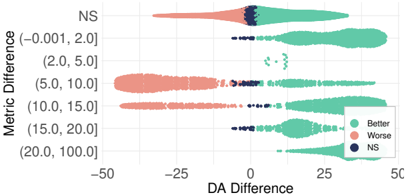
“When we move to the next bin (2, 5], we see that the Type-II error diminishes for all metrics.”
Background
Research works printed but not linked: 13
- 4. Miltiadis Allamanis, Hao Peng, and Charles Sutton. 2016. A convolutional at- tention network for extreme summarization of source code. In International Conference on Machine Learning. 2091ś2100.
- 5. Uri Alon, Shaked Brody, Omer Levy, and Eran Yahav. 2018. code2seq: Gen- erating sequences from structured representations of code. arXiv preprint arXiv:1808.01400 (2018). · arXiv
- 8. Minghao Chen and Xiaojun Wan. 2019. Neural Comment Generation for Source Code with Auxiliary Code Classification Task. In 2019 26th Asia-Pacific Software Engineering Conference (APSEC). IEEE, 522ś529.
- 12. Patrick Fernandes, Miltiadis Allamanis, and Marc Brockschmidt. 2018. Structured Neural Summarization. In International Conference on Learning Representations.
- 17. Tjalling Haije, Bachelor Opleiding Kunstmatige Intelligentie, E Gavves, and H Heuer. 2016. Automatic comment generation using a neural translation model. Inf. Softw. Technol. 55, 3 (2016), 258ś268.
- 28. Yuding Liang and Kenny Zhu. 2018. Automatic generation of text descriptive comments for code blocks. In Proceedings of the AAAI Conference on Artificial Intelligence, Vol. 32.
- 30. Chin-Yew Lin. 2004. Rouge: A package for automatic evaluation of summaries. In Text summarization branches out. 74ś81.
- 37. L. Moreno, A. Marcus, L. Pollock, and K. Vijay-Shanker. 2013. JSummarizer: An automatic generator of natural language summaries for Java classes. In Interna- tional Conference on Program Comprehension (ICPC). 230ś232.
- 44. Stefan Riezler and John T Maxwell III. 2005. On some pitfalls in automatic evaluation and significance testing for MT. In Proceedings of the ACL workshop on intrinsic and extrinsic evaluation measures for machine translation and/or summarization. 57ś64.
- 51. Peter Stanchev, Weiyue Wang, and Hermann Ney. 2020. Towards a Better Evalua- tion of Metrics for Machine Translation. In Proceedings of the Fifth Conference on Machine Translation. Association for Computational Linguistics, Online, 928ś933.
- 53. Akiyoshi Takahashi, Hiromitsu Shiina, and Nobuyuki Kobayashi. 2019. Au- tomatic Generation of Program Comments Based on Problem Statements for Computational Thinking. In 2019 8th International Congress on Advanced Applied Informatics (IIAI-AAI). IEEE, 629ś634.
- 57. Bolin Wei, Ge Li, Xin Xia, Zhiyi Fu, and Zhi Jin. 2019. Code generation as a dual task of code summarization. In Advances in Neural Information Processing Systems. 6563ś6573.
- 58. Kurt D. Welker, Paul W. Oman, and Gerald G. Atkinson. 1997. Development and Application of an Automated Source Code Maintainability Index. Journal of Software Maintenance: Research and Practice 9, 3 (May 1997), 127ś159. · doi:10.5555/271581.271584
Cited by
Few-shot training LLMs for project-specific code-summarization
Ahmed, T., & Devanbu, P. (2022) · Proceedings of the 37th IEEE/ACM International Conference on Automated Software Engineering · doi:10.1145/3551349.3559555 · Cited by 240
“show that BLEU-4 improvements of more than +2 points are reasonable proxies for human-perceptible preference [18].”
BackgroundGeng, M., Wang, S., Dong, D., Wang, H., Li, G., Jin, Z., Mao, X., & Liao, X. (2024) · Proceedings of the IEEE/ACM 46th International Conference on Software Engineering · doi:10.1145/3597503.3608134 · Cited by 155
“Each participant is asked to rate all the 400 comments from [46, 59].”
BackgroundSource Code Summarization in the Era of Large Language Models
Sun, W., Miao, Y., Li, Y., Zhang, H., Fang, C., Liu, Y., Deng, G., Liu, Y., & Chen, Z. (2025) · ACM/IEEE International Conference on Software Engineering: Companion Proceedings (ICSE-Companion) · doi:10.1109/icse55347.2025.00034 · Cited by 217
Recommending Root-Cause and Mitigation Steps for Cloud Incidents using Large Language Models
Ahmed, T., Ghosh, S., Bansal, C., Zimmermann, T., Zhang, X., & Rajmohan, S. (2023) · 2023 IEEE/ACM 45th International Conference on Software Engineering (ICSE) · doi:10.1109/icse48619.2023.00149 · Cited by 148
Out of the BLEU: how should we assess quality of the Code Generation models?
Evtikhiev, M., Bogomolov, E., Sokolov, Y., & Bryksin, T. (2023) · Journal of Systems and Software · doi:10.1016/j.jss.2023.111741 · Cited by 127
“[17] did an extensive study on the applicability of the automated metrics for the code”
BackgroundMethodResultInfluentialSemantic similarity metrics for evaluating source code summarization
Haque, S., Eberhart, Z., Bansal, A., & McMillan, C. (2022) · Proceedings of the 30th IEEE/ACM International Conference on Program Comprehension · doi:10.1145/3524610.3527909 · Cited by 116
“However, researchers are advised to consider warnings regarding corpus-level BLEU [7].”
BackgroundAutomatic Semantic Augmentation of Language Model Prompts (for Code Summarization)
Ahmed, T., Pai, K. S., Devanbu, P., & Barr, E. (2024) · Proceedings of the IEEE/ACM 46th International Conference on Software Engineering · doi:10.1145/3597503.3639183 · Cited by 112
“In most cases, we see improvements of over 2.0 BLEU, the required threshold for human perception noted by Roy et al. [57].”
BackgroundMethodInfluentialCan LLMs Replace Manual Annotation of Software Engineering Artifacts?
Ahmed, T., Dévanbu, P., Treude, C., & Pradel, M. (2025) · International Conference on Mining Software Repositories (MSR) · doi:10.1109/msr66628.2025.00086 · Cited by 162
“Toanswersuchquestions, researchers strongly advocate for, and adopt human subject-based evaluations, e.g., when evaluating code summarization techniques [5], [6].”
Are we building on the rock? on the importance of data preprocessing for code summarization
Shi, L., Mu, F., Chen, X., Wang, S., Wang, J., Yang, Y., Li, G., Xia, X., & Wang, Q. (2022) · ACM Joint European Software Engineering Conference and Symposium on the Foundations of Software Engineering (ESEC/FSE) · doi:10.1145/3540250.3549145 · Cited by 86
“Recent researchers have raised concern over the use of BLEU [55], warning the community that the way BLEU is used and interpreted can greatly affect its reliability.”
Agent READMEs: An Empirical Study of Context Files for Agentic Coding
Chatlatanagulchai, W., Li, H., Kashiwa, Y., Reid, B., Thonglek, K., Leelaprute, P., Rungsawang, A., Manaskasemsak, B., Adams, B., Hassan, A. E., et al. (2025) · ACM Transactions on Software Engineering and Methodology · doi:10.1145/3840295 · Cited by 57
“However, several studies show that improvements in these metrics often fail to align with human-perceived usefulness, with only moderate correlations and even ranking inversions relative to practitioner judgments [32, 58, 65].”
Multilingual training for software engineering
Ahmed, T., & Devanbu, P. (2022) · Proceedings of the 44th International Conference on Software Engineering · doi:10.1145/3510003.3510049 · Cited by 57
“More than 30 papers have been published in the last five years that follow some form of encoder-decoder architecture [58].”
BackgroundMethodInfluentialOn the Effectiveness of LLM-as-a-Judge for Code Generation and Summarization
Crupi, G., Tufano, R., Velasco, A., Mastropaolo, A., Poshyvanyk, D., & Bavota, G. (2025) · IEEE Transactions on Software Engineering · doi:10.1109/tse.2025.3586082 · Cited by 88
“2) Code summarization: Our starting idea was to use the dataset by Roy et al. [33] for the code summarization study: This is a large-scale dataset featuring 6,253 code summary evaluations performed by 226 developers on 2,292 summaries (on average, 2.73 human evaluations each).”
InfluentialAutomatic Commit Message Generation: A Critical Review and Directions for Future Work
Zhang, Y., Qiu, Z., Stol, K.-J., Zhu, W., Zhu, J., Tian, Y., & Liu, H. (2024) · IEEE Transactions on Software Engineering · doi:10.1109/tse.2024.3364675 · Cited by 42
“To compare the performance of the four selected approaches on the dataset with different configurations, we adopted the widely-used metrics BLEU, ROUGE-L, and METEOR [12], [55].”
MethodDistilled GPT for source code summarization
Su, C.-Y., & McMillan, C. (2024) · Automated Software Engineering · doi:10.1007/s10515-024-00421-4 · Cited by 49
“Haque et al (2022); Roy et al (2021) point out that METEOR and USE are closer to human preference because these metrics assign partial credits to words instead of treating the importance of the words equally.”
An Extractive-and-Abstractive Framework for Source Code Summarization
Sun, W., Fang, C., Chen, Y., Zhang, Q., Tao, G., You, Y., Han, T., Ge, Y., Hu, Y., Luo, B., et al. (2024) · ACM Transactions on Software Engineering and Methodology · doi:10.1145/3632742 · Cited by 69
“(Source) code summarization is an active research field [1, 11, 15, 23, 25, 26, 35, 41, 57, 62, 66, 86, 87], which aims at designing advanced techniques to support automatic generation of code summaries (i.”
BackgroundCalibration of Large Language Models on Code Summarization
Virk, Y., Dévanbu, P., & Ahmed, T. (2025) · Proceedings of the ACM on software engineering. · doi:10.1145/3729400 · Cited by 59
“Fortunately, there has been a quite a bit of work on evaluations of code summaries [Haque et al. 2022; Mastropaolo et al. 2024; Roy et al. 2021; Shi et al. 2022].”
Extending Source Code Pre-Trained Language Models to Summarise Decompiled Binaries
Al-Kaswan, A., Ahmed, T., Izadi, M., Sawant, A. A., Dévanbu, P., & van Deursen, A. (2023) · IEEE International Conference on Software Analysis, Evolution and Reengineering (SANER) · doi:10.1109/saner56733.2023.00033 · Cited by 74
“While BLEU-4 is the most popular metric for this task, its reliability has been called into question [43, 44].”
BackgroundAutomatic smart contract comment generation via large language models and in-context learning
Zhao, J. L., Chen, X., Yang, G., & Shen, Y. (2024) · Information and Software Technology · doi:10.1016/j.infsof.2024.107405 · Cited by 50
Assemble Foundation Models for Automatic Code Summarization
Gu, J., Salza, P., & Gall, H. C. (2022) · IEEE International Conference on Software Analysis, Evolution and Reengineering (SANER) · doi:10.1109/saner53432.2022.00112 · Cited by 55
Who evaluates the evaluators? On automatic metrics for assessing AI-based offensive code generators
Liguori, P., Improta, C., Natella, R., Čukić, B., & Cotroneo, D. (2023) · Expert Systems with Applications · doi:10.1016/j.eswa.2023.120073 · Cited by 43
“Roy et al. (2021) worked in the context of code summarization (i.e., the task of creating readable summaries describing the functionality of the code) to provide a critical evaluation of the applicability and interpretation of automatic metrics as evaluation techniques.”
Can Large Language Models Serve as Evaluators for Code Summarization?
Wu, Y., Wan, Y., Chu, Z., Zhao, W., Liu, Y., Zhang, H., Shi, X., Jin, H., & Yu, P. S. (2025) · IEEE Transactions on Software Engineering · doi:10.1109/tse.2025.3595283 · Cited by 45
“However, studies have shown that these automated metrics exhibit a relatively low correlation with human evaluations [11], [12].”
Doc2OracLL: Investigating the Impact of Documentation on LLM-Based Test Oracle Generation
Hossain, S. B., Taylor, R., & Dwyer, M. B. (2025) · Proceedings of the ACM on software engineering. · doi:10.1145/3729354 · Cited by 42
“…documentation varies significantly in practice [42], but short of human subject studies, e.g., [1, 2, 21], determining documentation quality is very challenging especially in light of recent results demonstrating the unreliability of natural language similarity metrics for this problem [35].”
Pitfalls in Language Models for Code Intelligence: A Taxonomy and Survey
She, X., Liu, Y., Zhao, Y., He, Y., Li, L., Tantithamthavorn, C. K., Qin, Z., & Wang, H. (2026) · ACM Transactions on Software Engineering and Methodology · doi:10.1145/3748647 · Cited by 40
AgXQA: A benchmark for advanced Agricultural Extension question answering
Kpodo, J., Kordjamshidi, P., & Nejadhashemi, A. P. (2024) · Computers and Electronics in Agriculture · doi:10.1016/j.compag.2024.109349 · Cited by 36
Promises and perils of using Transformer-based models for SE research
Xiao, Y., Zuo, X., Lu, X., Dong, J. S., Cao, X., & Beschastnikh, I. (2024) · Neural Networks · doi:10.1016/j.neunet.2024.107067 · Cited by 28
Transformers in source code generation: A comprehensive survey
Ghaemi, H., Alizadehsani, Z., Shahraki, A., & Corchado, J. M. (2024) · Journal of Systems Architecture · doi:10.1016/j.sysarc.2024.103193 · Cited by 31
Function Call Graph Context Encoding for Neural Source Code Summarization
Bansal, A., Eberhart, Z., Karas, Z., Huang, Y., & McMillan, C. (2023) · IEEE Transactions on Software Engineering · doi:10.1109/tse.2023.3279774 · Cited by 33
“[70] that found that score differences of less than 2 points may not be detectable by small human studies such as the one we conduct.”
BackgroundMethodEsale: Enhancing Code-Summary Alignment Learning for Source Code Summarization
Fang, C., Sun, W., Chen, Y., Chen, X., Wei, Z., Zhang, Q., You, Y., Luo, B., Liu, Y., & Chen, Z. (2024) · IEEE Transactions on Software Engineering · doi:10.1109/tse.2024.3422274 · Cited by 40
“4) RQ4: Human Evaluation: Many works [21], [22], [28], [29], [30], [39], [58], [80], find that it is not enough to use only automatic evaluation because the automatic metrics (BLEU, METEOR, and ROUGE-L) mainly calculate the textual similarity rather than the semantic similarity between the generated…”
BackgroundInterpretation-based Code Summarization
Geng, M., Wang, S., Dong, D., Wang, H., Cao, S., Zhang, K., & Jin, Z. G. (2023) · IEEE International Conference on Program Comprehension (ICPC) · doi:10.1109/icpc58990.2023.00026 · Cited by 29
“Following the existing studies [68], [69], each participant is asked to rate each generated comment from the three aspects: (1) Naturalness which reflects the fluency”
MethodA review of automatic source code summarization
Zhang, X., Hou, X., Qiao, X., & Song, W. (2024) · Empirical Software Engineering · doi:10.1007/s10664-024-10553-6 · Cited by 34
Context-aware code summary generation
Su, C., Bansal, A., Huang, Y., Li, T. J.-J., & McMillan, C. (2025) · Journal of Systems and Software · doi:10.1016/j.jss.2025.112580 · Cited by 26
SE-Jury: An LLM-as-Ensemble-Judge Metric for Narrowing the Gap with Human Evaluation in SE
Zhou, X., Kim, K., Zhang, T., Weyssow, M., Gomes, L. F., Yang, G., Liu, K., Xia, X., & Lo, D. (2025) · IEEE/ACM International Conference on Automated Software Engineering (ASE) · doi:10.1109/ase63991.2025.00214 · Cited by 29
“• Summary-Assess [17] is a human-annotated dataset for Code Summarization , which focuses on generating accurate descriptions for given code snippets.”
Impact of Evaluation Methodologies on Code Summarization
Nie, P., Zhang, J., Li, J. J., Mooney, R., & Gligoric, M. (2022) · Proceedings of the conference - Association for Computational Linguistics. Meeting · doi:10.18653/v1/2022.acl-long.339 · Cited by 31
“Substantial progress has been reported over years, usually measured in terms of automatic metrics (Roy et al., 2021).”
BackgroundTowards Modeling Human Attention from Eye Movements for Neural Source Code Summarization
Bansal, A., Sharif, B., & McMillan, C. (2023) · Proceedings of the ACM on Human-Computer Interaction · doi:10.1145/3591136 · Cited by 29
“While BLEU has traditionally been the most popular metric, it has fallen under controversy in SE literature on code summarization: [50] show evidence strongly favoring METEOR over BLEU for metrics based on word overlap, while [51] show similar evidence favoring USE as a semantic similarity metric over BLEU.”
BackgroundMethodInfluentialJin, X., & Lin, Z. (2024) · Proceedings of the ACM on software engineering. · doi:10.1145/3660769 · Cited by 28
“To address the limitations of manual evaluations, particularly the labor-intensive nature and potential for human errors, automated metrics for evaluating code summary have gained traction [Haque et al. 2022; Roy et al. 2021].”
InfluentialDing, X., Peng, R., Chen, X., Huang, Y., Bian, J., & Zheng, Z. (2024) · ACM Transactions on Software Engineering and Methodology · doi:10.1145/3652156 · Cited by 26
IRCoCo: Immediate Rewards-Guided Deep Reinforcement Learning for Code Completion
Li, B., Sun, Z., Huang, T., Zhang, H., Wan, Y., Li, G., Jin, Z. G., & Lyu, C. (2024) · Proceedings of the ACM on software engineering. · doi:10.1145/3643735 · Cited by 31
Assessing Evaluation Metrics for Neural Test Oracle Generation
Shin, J., Hemmati, H., Wei, M., & Wang, S. (2024) · IEEE Transactions on Software Engineering · doi:10.1109/tse.2024.3433463 · Cited by 24
“Roy et al. [46] empirically investigated how well automatic metrics, such as BLEU, METEOR, and ROUGE, can measure the quality of code summaries generated by data-driven methods.”
BackgroundMethodFine-grained code-comment semantic interaction analysis
Geng, M., Wang, S., Dong, D., Gu, S., Peng, F., Ruan, W., & Liao, X. (2022) · IEEE International Conference on Program Comprehension (ICPC) · doi:10.1145/3524610.3527887 · Cited by 20
“Despite that these comments are shown to facilitate the comprehension process to some extent [40, 44], one thing remains challenging is the lack of fine-grained interpretation of the”
BackgroundZhu, T., Li, Z., Pan, M., Shi, C., Zhang, T., Pei, Y., & Li, X. (2024) · ACM Transactions on Software Engineering and Methodology · doi:10.1145/3631975 · Cited by 18
“The similar performance of the three approaches is also consistent with the conclusion of Roy et al. [75].”
MethodResultInfluentialOn the Effectiveness of Large Language Models in Statement-level Code Summarization
Zhu, J., Miao, Y., Xu, T., Zhu, J., & Sun, X. (2024) · IEEE International Conference on Software Quality, Reliability and Security (QRS) · doi:10.1109/qrs62785.2024.00030 · Cited by 21
“Automatic evaluation metrics are not always reliable [56].”
BackgroundResource-Efficient & Effective Code Summarization
Afrin, S., Call, J., Nguyen, K.-N., Chaparro, O., & Mastropaolo, A. (2025) · IEEE/ACM International Conference on AI Foundation Models and Software Engineering (FORGE) · doi:10.1109/forge66646.2025.00032 · Cited by 21
“…an early stopping, saving a new checkpoint after every 5,000 training steps, and monitoring the performance of the models using the METEOR score, which acts as a highly reliable proxy for differences exceeding 2 points in evaluating the quality of code summaries as perceived by humans [68].”
On the evaluation of NLP-based models for software engineering
Izadi, M., & Ahmadabadi, M. N. (2022) · IEEE/ACM International Workshop on Natural Language-Based Software Engineering (NLBSE) · doi:10.1145/3528588.3528665 · Cited by 19
“[12] conducted an empirical study on the applicability and interpretation of automatic metrics for evaluation of the.”
Towards Summarizing Code Snippets Using Pre-Trained Transformers
Mastropaolo, A., Ciniselli, M., Pascarella, L., Tufano, R., Aghajani, E., & Bavota, G. (2024) · IEEE International Conference on Program Comprehension (ICPC) · doi:10.1145/3643916.3644400 · Cited by 23
“Our dataset and our models, publicly released [7], represent a step in that direction.”
MethodLLM-as-a-Judge for Software Engineering: Literature Review, Vision, and the Road Ahead
He, J., Shi, J., Zhuo, T. Y., Treude, C., Sun, J., Du, X., Xing, Z., & Lo, D. (2026) · ACM Transactions on Software Engineering and Methodology · doi:10.1145/3797276 · Cited by 12
“Consequently, achieving comprehensive evaluation while ensuring scalable automation remains a persistent challenge in assessing the quality of LLM-generated software artifacts.”
CodeWiki: Evaluating AI’s Ability to Generate Holistic Documentation for Large-Scale Codebases
Hoang, A. N., Le-Anh, M., Le, B., & Bui, N. D. Q. (2026) · Findings of the Association for Computational Linguistics: ACL (Findings of ACL) · doi:10.18653/v1/2026.findings-acl.288 · Cited by 16
AL-Bench : A Benchmark for Automatic Logging
谭博引, Xu, J., Zhu, Z., & He, P. (2026) · ACM Transactions on Software Engineering and Methodology · doi:10.1145/3820884 · Cited by 12
Naturalness in Source Code Summarization. How Significant is it?
Ferretti, C., & Saletta, M. (2023) · IEEE International Conference on Program Comprehension (ICPC) · doi:10.1109/icpc58990.2023.00027 · Cited by 13
“Also in the field of source code summarization, studies evidenced that these metrics based on word overlapping are not sufficient to measure the quality of a code summary [40]– [42].”
BackgroundAdvFusion: Adapter-based Knowledge Transfer for Code Summarization on Code Language Models
Saberi, I., Esmaeili, A., Fard, F. H., & Chen, F. (2025) · IEEE International Conference on Software Analysis, Evolution and Reengineering (SANER) · doi:10.1109/saner64311.2025.00059 · Cited by 16
“Please note that, although there is research about the weaknesses of BLEU score for code summarization [58], [59], it is intuitive and easy to understand, as it measures the overlap between the generated translation and one or more reference translations based on n-grams.”
Zhong, R., Li, Y., Yu, G., Gu, W., Kuang, J., Huo, Y., & Lyu, M. R.-T. (2026) · ACM Transactions on Software Engineering and Methodology · doi:10.1145/3773287 · Cited by 16
“Functionality is preserved with trivial changes.”
FastLog: An End-to-End Method to Efficiently Generate and Insert Logging Statements
Xie, X., Cai, Z., Chen, S., & Xuan, J. (2024) · ACM SIGSOFT International Symposium on Software Testing and Analysis (ISSTA) · doi:10.1145/3650212.3652107 · Cited by 19
“Although text similarity metrics may not fully capture the quality of the generated text [14, 37], we follow previous works [9, 17] to use BLEU and ROUGE as widely-accepted quality measures for the generated log messages.”
MethodCodeExp: Explanatory Code Document Generation
Cui, H., Wang, C., Huang, J., Inala, J. P., Mytkowicz, T., Wang, B., Gao, J., & Duan, N. (2022) · Findings of the Association for Computational Linguistics: EMNLP (Findings of EMNLP) · doi:10.18653/v1/2022.findings-emnlp.174 · Cited by 13
Learning to Generate Structured Code Summaries From Hybrid Code Context
Zhou, Z., Li, M., Yu, H., Fan, G., Yang, P., & Huang, Z. (2024) · IEEE Transactions on Software Engineering · doi:10.1109/tse.2024.3439562 · Cited by 13
He, S., Li, Q., Li, X., & Zhang, M. (2023) · Biomedical Signal Processing and Control · doi:10.1016/j.bspc.2023.105275 · Cited by 10
Revisiting file context for source code summarization
Su, C., Bansal, A., & McMillan, C. (2024) · Automated Software Engineering · doi:10.1007/s10515-024-00460-x · Cited by 10
“We use this metric because Roy et al. (2021) conducted a study with human experts and found that it better correlates to human judgement compared to BLEU.”
Empirical Evaluation of Large Language Models for Novice Program Fault Localization
Liu, Y., Liu, H., Yang, Z., Li, Z., & Liu, Y. (2024) · IEEE International Conference on Software Quality, Reliability and Security (QRS) · doi:10.1109/qrs62785.2024.00027 · Cited by 14
“There are three key areas within novice programming education: novice programming assistance [18], automatic evaluation of novice programs [9], [19], and fault localization of novice programs [8], [20], each vital for facilitating the programming learning process.”
BackgroundSun, Z., Du, X., Song, F., Wang, S., Ni, M., Li, L., & Lo, D. (2025) · ACM Transactions on Software Engineering and Methodology · doi:10.1145/3688831 · Cited by 8
“The shortcomings of such metrics have been investigated by the research community [14, 27], but still remain a significant challenge.”
Dependency-Aware Code Naturalness
Yang, C., Chen, J., Jiang, J., & Huang, Y. (2024) · Proceedings of the ACM on Programming Languages · doi:10.1145/3689794 · Cited by 11
“Even though CodeBLEU has been also used to measure code generation performance, some recent work has pointed out its limitation in this aspect [Roy et al. 2021], and thus we just used it to measure code readability.”
On the Quality of AI-Generated Source Code Comments: A Comprehensive Evaluation
Guelman, I., Leal, A. G., Xavier, L., & Valente, M. T. (2026) · doi:10.1145/3786175.3788344 · Cited by 9
Li, L., Liang, B., Chen, L., & Zhang, X. (2024) · Information and Software Technology · doi:10.1016/j.infsof.2024.107527 · Cited by 9
Learning a holistic and comprehensive code representation for code summarization
Yang, K., Wang, J., & Song, Z. (2023) · Journal of Systems and Software · doi:10.1016/j.jss.2023.111746 · Cited by 7
Adversarial Attack and Robustness Improvement on Code Summarization
Ding, X., Huang, Y., Chen, X., & Bian, J. (2024) · International Conference on Evaluation and Assessment in Software Engineering (EASE) · doi:10.1145/3661167.3661173 · Cited by 6
“Previous research[31] has indicated that fluctuations within a 2 percentage point range in automatic metrics do not necessarily signify a significant improvement or decline in comment quality.”
BackgroundAssessing Project-Level Fine-Tuning of ML4SE ModelsPreprint
Bogomolov, E., Zhuravlev, S., Spirin, E., & Bryksin, T. (2022) · arXiv (Cornell University) · doi:10.48550/arxiv.2206.03333 · Cited by 8
Semantic Similarity Loss for Neural Source CodeSummarizationPreprint
Su, C., & McMillan, C. (2023) · Research Square · doi:10.21203/rs.3.rs-3240092/v1 · Cited by 6
Bash command comment generation via multi-scale heterogeneous feature fusion
Zhang, J., Zhu, Y., Lu, A., Yan, Y., & Wan, Y. (2025) · Automated Software Engineering · doi:10.1007/s10515-025-00494-9 · Cited by 5
“We employ the Wilcoxon signed-rank test (Roy et al. 2021) to determine whether there are significant differences in the comparison results with the baselines.”
Rong, Y., Xu, M., Li, R., Xin, L., & Bao, W. (2025) · Journal of King Saud University - Computer and Information Sciences · doi:10.1007/s44443-025-00075-6 · Cited by 6
“Our approach is built on a Transformer-basedneuralarchitecture,augmentedwithnovelmechanisms to handle cross-function context (Roy et al. 2021).”
Pan, X., Liu, C., Zou, Y., Xie, T., & Xie, B. (2024) · IEEE International Conference on Program Comprehension (ICPC) · doi:10.1145/3643916.3644401 · Cited by 6
Label Smoothing Improves Neural Source Code Summarization
Haque, S., Bansal, A., & McMillan, C. (2023) · IEEE International Conference on Program Comprehension (ICPC) · doi:10.1109/icpc58990.2023.00025 · Cited by 7
Evaluating LLMs for Arabic Code Summarization: Challenges and Insights from GPT-4
Aljohani, A., Alharbi, R., Alkhaldi, A., & Aljedaani, W. (2025) · International Conference on Data Science and Machine Learning Applications (CDMA) · doi:10.1109/cdma61895.2025.00017 · Cited by 4
“The second type of evaluation, which is more commonly used in the literature, is automatic evaluation [20].”
Verity: A Framework to Generate Privacy Captions from Android Source Code using LLMs
Jain, V., Ghanavati, S., Peddinti, S. T., & Collin, M. (2026) · IEEE International Working Conference on Source Code Analysis and Manipulation (SCAM) · doi:10.1109/scam71261.2026.00019 · Cited by 3
Mondal, D., Lodha, A., Sahoo, A., & Kumari, B. (2023) · GenBench Workshop on Generalisation (Benchmarking) in NLP (GenBench) · doi:10.18653/v1/2023.genbench-1.5 · Cited by 5
Instructive Code Retriever: Learn from Large Language Model's Feedback for Code Intelligence Tasks
Lu, J., Wang, H., Liu, Z., Liang, K., Bao, L., & Yang, X. (2024) · IEEE/ACM International Conference on Automated Software Engineering (ASE) · doi:10.1145/3691620.3694997 · Cited by 6
Automatic Code Summarization Using Abbreviation Expansion and Subword Segmentation
Liang, Y., Fan, G., Yu, H., Li, M., & Huang, Z. (2025) · Expert Systems · doi:10.1111/exsy.13835 · Cited by 3
“As suggested by Roy, Fakhoury, and Arnaoudova (2021), this assures systematic enhancements in summarization quality, implying that our proposed methods, in conjunction with the feature fusion approach, could be effectively employed in other code summarization models that utilise a similar framework…”
Leveraging and Evaluating Automatic Code Summarization for JPA Program Comprehension
Mayer, R., Moser, M., & Geist, V. (2023) · IEEE International Conference on Software Analysis, Evolution and Reengineering (SANER) · doi:10.1109/saner56733.2023.00088 · Cited by 4
“We base our study design on approved works on evaluating source code summarization approaches [7], [14], [15].”
BackgroundMethodResultInfluentialJudging Adam: Studying the Performance of Optimization Methods on ML4SE Tasks
Pasechnyuk, D. A., Prazdnichnykh, A., Evtikhiev, M., & Bryksin, T. (2023) · IEEE/ACM International Conference on Software Engineering: New Ideas and Emerging Results (ICSE-NIER) · doi:10.1109/icse-nier58687.2023.00027 · Cited by 3
“[41], we use F1 score and chrF [26] to assess documentation generation models.”
MethodPhan, H., & Jannesari, A. (2023) · ACM International Conference on Information and Knowledge Management (CIKM) · doi:10.1145/3583780.3614869 · Cited by 5
“Prior works [10, 30] show that the BLEU score, a well-known metric for evaluating NMT in NLP, has drawbacks in evaluating the quality of translated SE artifacts, such as the sequence of code tokens.”
BackgroundMethodTab: template-aware bug report title generation via two-phase fine-tuned models
Liu, X., Xu, Y., Sun, W., Huang, N., Sun, S., Li, Q., Yang, D., & Yan, M. L. (2025) · Automated Software Engineering · doi:10.1007/s10515-025-00505-9 · Cited by 3
On the Applicability of Code Language Models to Scientific Computing Programs
Zhao, Q., Liu, F., Long, X., Wu, C., & Zhang, L. (2025) · IEEE Transactions on Software Engineering · doi:10.1109/tse.2025.3564599 · Cited by 4
“METEOR score assesses similarity by considering word overlap and partial matches between words, which aligns more closely with human judgment as it awards partial credit to words rather than treating all words with equal importance [20], [47].”
Mohamed, S., Ismail, N., Amaya, K., Parvin, A., Oliver, M. D., & Parra, E. (2025) · ACM Symposium on Eye Tracking Research and Applications (ETRA) · doi:10.1145/3715669.3725868 · Cited by 3
“Since previous studies have shown that automated measures are not always accurate in analyzing human-generated summaries, we will perform a qualitative evaluation of the summaries conducted by human evaluators [Haque et al. 2022; Roy et al. 2021].”
Zhu, T., Wen, Z., Liu, S. J., Li, Y., Zhang, T., & Xia, X. (2026) · ACM Transactions on Software Engineering and Methodology · doi:10.1145/3808230 · Cited by 3
Using Mutation-Analysis to Examine an LLM's Ability to Summarize Code
Khatib, L., Pu, M., Vasilescu, B., & Nagappan, M. (2026) · ACM International Conference on AI-Powered Software (AIware) · doi:10.1145/3805760.3814892 · Cited by 2
Semantic similarity loss for neural source code summarization
Su, C., & McMillan, C. (2024) · Journal of Software Evolution and Process · doi:10.1002/smr.2706 · Cited by 7
“METEOR is preferred to BLEU for code summarization in light of recent evidence finding that METEOR is more correlated to human judgment 10,62 .”
Evaluating a continuous feedback strategy to enhance machine learning code smell detection
Cruz, D., Santana, A., & Figueiredo, E. (2025) · Science of Computer Programming · doi:10.1016/j.scico.2025.103346 · Cited by 2
CodeExp: Explanatory Code Document Generation
Cui, H., Wang, C., Huang, J., Inala, J. P., Mytkowicz, T., Wang, B., Gao, J., & Duan, N. (2022) · arXiv · doi:10.48550/arxiv.2211.15395 · Cited by 2
“Gros et al. (2020) questioned this adoption of reference-based MT metrics by examining and showing the semantic difference be-tween code and NL. Roy et al. (2021) rigorously examined the consistency between automatic metrics and human assessments using Kendall’s τ as well and recommended the usage of BLEU, ME-TEOR, an…”
BackgroundMethodResultInfluentialAssessing BigBirdPegasus and BART Performance in Text Summarization: Identifying Right Methods
Zeyad, A. M. A., & Biradar, A. (2023) · International Conference on Pervasive Computing and Social Networking (ICPCSN) · doi:10.1109/icpcsn58827.2023.00297 · Cited by 2
PRECOS: Project-specific Retrieval for Better Code Summarization
Zhu, T., Li, Z., Zhang, T. Y., Pan, M., & Li, X. (2024) · IEEE International Conference on Software Maintenance (ICSM) · doi:10.1109/icsme58944.2024.00051 · Cited by 1
“Roy et al. [28] reassessed these automatic evaluation metrics for the code summarization task, so we adopt the same calculation methods as provided in their replication package [29] with the scripts.”
Enhancing Neural Code Representation With Additional Context
Nguyen, H. G., Treude, C., & Thongtanunam, P. (2026) · ACM Transactions on Software Engineering and Methodology · doi:10.1145/3859926 · Cited by 1
Code Comments for Quantum Software Development Kits: An Empirical Study on Qiskit
Zhou, Z., Li, Y., Cai, Y., Wen, J., Yu, X., Zheng, Z., & Yin, B. (2026) · ACM Transactions on Software Engineering and Methodology · doi:10.1145/3847113 · Cited by 1
Context-Aware Code Summarization Using Multimodal Transformer
Saif, S., Yaseen, M., Khattak, U. F., & Rahman, G. (2026) · Engineering Technology & Applied Science Research · doi:10.48084/etasr.15857 · Cited by 1
“Furthermore, reproducibility is constrained by inconsistencies in dataset quality, evaluation metrics, and high computational costs [24].”
Beyond syntax: enhancing automated documentation with data differences
Fantino, G., Vetrò, A., Torchiano, M., & Cappelluti, F. (2026) · Automated Software Engineering · doi:10.1007/s10515-026-00623-y · Cited by 1
“Prior studies have shown that small improvements in these scores often fail to reflect genuine gains in summary quality (Roy et al. 2021).”
Cmdesum: A Cross-Modal Deliberation Network for Code Summarization
Liao, Z., Liu, X., Lan, P., Yu, S., & Liu, P. (2025) · IEEE International Conference on Program Comprehension (ICPC) · doi:10.1109/icpc66645.2025.00034 · Cited by 2
Billah, M. M., Rahman, M. S., & Roy, B. (2025) · International Conference on Evaluation and Assessment in Software Engineering (EASE) · doi:10.1145/3756681.3756977 · Cited by 2
SONAR: Task-Aware Code Summary Evaluation for LLM Consumers Without ReferencesPreprint
Dristi, S., & Dwyer, M. B. (2026) · arXiv (Cornell University) · doi:10.48550/arxiv.2608.04195 · Cited by 1
“Despite these advances and evidence that code comments, and by extension, code summaries, can steer model behavior in meaningful ways [30], evaluation has remained entirely human-centric [2], [5], [6], [20], with no prior work assessing summaries from an LLM’s perspective.”
Demonstration Attack against In-Context Learning for Code Intelligence
Ge, Y., Sun, W., Lou, Y., Fang, C., Zhang, Y., Li, Y., Zhang, X., Liu, Y., Zhao, Z., & Chen, Z. (2024) · arXiv · doi:10.48550/arxiv.2410.02841
“In our study, following the previous study [33], we report the standard BLEU score, which provides a cumulative score of 1-grams, 2-grams, 3-grams, and 4-grams.”
MethodLi, J., & Liu, Y. (2023) · International Journal of Advanced Computer Science and Applications · doi:10.14569/ijacsa.2023.0141077
“Specifically, guided by neural machine translation, early code summarization models focus on the sequential content of code [6].”
BackgroundDuration-Based Investigation of User Content Choices in the Exit of Filter Bubbles
Bunza, R. (2024) · International Congress on Human-Computer Interaction, Optimization and Robotic Applications (ICHORA) · doi:10.1109/hora61326.2024.10550588
Zhang, S., & Liu, Y. (2024) · Lecture notes in computer science · doi:10.1007/978-3-031-66459-5_1
RAPRSUM: Retrieval-Augmented Code Summarization with Advanced Prototype Refinement
Lin, Y., Wang, X., Zhan, S., Wei, D., & Chen, B. (2025) · International Journal of Software Engineering and Knowledge Engineering · doi:10.1142/s0218194025500317
A Human Study of Automatically Generated Decompiler Annotations
Yang, Y., Grandel, S., Lacomis, J., Schwartz, E. J., Vasilescu, B., Goues, C. L., & Leach, K. (2025) · International Conference on Dependable Systems & Networks/Proceedings · doi:10.1109/dsn64029.2025.00026 · Cited by 3
Metadata
- Authors
- Roy, D., Fakhoury, S., & Arnaoudova, V.
- Affiliations
- Washington State University (US)
- Venue
- Proceedings of the 29th ACM Joint Meeting on European Software Engineering Conference and Symposium on the Foundations of Software Engineering
- Publisher
- ACM
- Published
- 2021-08-18
- Pages
- 1105-1116
- OpenAlex
- W3195727321
- Cited by
- 106
- References
- 52
- Citations by year
- 2026: 18 · 2025: 28 · 2024: 31 · 2023: 19 · 2022: 10
- FWCI
- 12.44
- Type
- conference paper
- Language
- en
- Open access
- hybrid
- doi.org
- Licence
- Locations
- ACM Joint European Software Engineering Conference and Symposium on the Foundations of Software Engineering (ESEC/FSE) (publishedVersion, cc-by)
- Topics
- Physical Sciences › Computer Science › Information Systems › Software Engineering Research
- Physical Sciences › Computer Science › Artificial Intelligence › Natural Language Processing Techniques
- Physical Sciences › Computer Science › Artificial Intelligence › Topic Modeling
- Keywords
- source code summarization, automatic evaluation metrics, human evaluation, BLEU, meteors, ROUGE, chrF, measurement reliability
About these checks
Registry, retraction, Cites and statistics results are computed, not judged, with one exception: a printed reference that no index lists is read once by a model before it counts as a citation error. Claims are extracted by a model and kept only when their quote appears verbatim in the text; each cited source is then checked, with a model’s help, for whether it says what the claim relies on. Those verdicts can be wrong — read the claim’s quote and the cited source before relying on one.
Statistics and arithmetic are recomputed, not judged.
Confidence bands are shown only for fields calibrated on our annotated test set. None is calibrated yet, so no band is shown.
What counts as a claim ›How we measure confidence ›How we check this ›
Are you an author, or do you see a problem with this page? Request a review
Data sources
Bibliographic data: Semantic Scholar, OpenAlex, Crossref.
Contains information from the Semantic Scholar Academic Graph Datasets, made available under the ODC Attribution License (ODC-BY 1.0).
Semantic Scholar’s data is described in: Kinney, R., et al. (2023). The Semantic Scholar Open Data Platform. arXiv:2301.10140.
