

Reassessing automatic evaluation metrics for code summarization tasks
Open accessThe DOI matches its Crossref record; 54 of the 54 references it cites were found in a registry or an index.
Abstract
In recent years, research in the domain of source code summarization has adopted data-driven techniques pioneered in machine translation (MT). Automatic evaluation metrics such as BLEU, METEOR, and ROUGE, are fundamental to the evaluation of MT systems and have been adopted as proxies of human evaluation in the code summarization domain. However, the extent to which automatic metrics agree with the gold standard of human evaluation has not been evaluated on code summarization tasks. Despite this, marginal improvements in metric scores are often used to discriminate between the performance of competing summarization models. In this paper, we present a critical exploration of the applicability and interpretation of automatic metrics as evaluation techniques for code summarization tasks. We conduct an empirical study with 226 human annotators to assess the degree to which automatic metrics reflect human evaluation. Results indicate that metric improvements of less than 2 points do not guarantee systematic improvements in summarization quality, and are unreliable as proxies of human evaluation. When the difference between metric scores for two summarization approaches increases but remains within 5 points, some metrics such as METEOR and chrF become highly reliable proxies, whereas others, such as corpus BLEU, remain unreliable. Based on these findings, we make several recommendations for the use of automatic metrics to discriminate model performance in code summarization.
Overview
The claims and statistics of this paper haven’t been checked yet.
Free: it reads the open-access text and checks the first 5 claims that cite a source we can check. Create a free account to check every claim.
Integrity signals
Registry
Cites
Statistics
Figures
Verification
Claims the paper makes
The claims and statistics of this paper haven’t been checked yet.
Free: it reads the open-access text and checks the first 5 claims that cite a source we can check. Create a free account to check every claim.
Claims other papers make about this one
Each is checked against this paper’s own text: does it say what the citing paper says it does?
The cited source doesn’t support the claim as written.
In the citing paper
“Roy et al. show that BLEU-4 improvements of more than +2 points are reasonable proxies for human-perceptible preference [18].”
From Few-shot training LLMs for project-specific code-summarization (2022) · cites this paper as [18]
Checked by a reasoning model — may be wrong.
Experimental — accuracy not yet measuredThe cited source doesn’t support the claim as written.
In the citing paper
“In most cases, we see improvements of over 2.0 BLEU, the required threshold for human perception noted by Roy et al. [57].”
From Automatic Semantic Augmentation of Language Model Prompts (for Code Summarization) (2024) · cites this paper as [57]
Checked by a reasoning model — may be wrong.
Experimental — accuracy not yet measuredThe source backs part of the claim, not all of it — or backs it for a different population, condition or comparison.
In the citing paper
“BLEU [50] is the most widely-used, similarity-based measure for code summarization [57] and commit log generation [16].”
From Automatic Semantic Augmentation of Language Model Prompts (for Code Summarization) (2024) · cites this paper as [57]
Experimental — accuracy not yet measuredThe source backs part of the claim, not all of it — or backs it for a different population, condition or comparison.
In the citing paper
“Roy et al. [57] provide arguments, grounded on human subject study that for code summarization (our central task), that a gain of 2.0 or more BLEU is more likely to correspond with human perception of improvement.”
From Automatic Semantic Augmentation of Language Model Prompts (for Code Summarization) (2024) · cites this paper as [57]
Experimental — accuracy not yet measuredThe cited source says what the claim attributes to it.
In the citing paper
“the 2-BLEU threshold noted by Roy et al. [57], below which BLEU results are unreliable predictors of human preference.”
From Automatic Semantic Augmentation of Language Model Prompts (for Code Summarization) (2024) · cites this paper as [57]
Self-check
Percentages, sums and reported differences re-computed from the paper’s own numbers.
The self-check needs the paper’s full text.
Citations
Cites
(1932) · Medical Entomology and Zoology · Cited by 9,568
BERTScore: Evaluating Text Generation with BERT
Zhang, T., Kishore, V., Wu, F., Weinberger, K. Q., & Artzi, Y. (2019) · arXiv · doi:10.48550/arxiv.1904.09675 · Cited by 2,865 · cited 8×
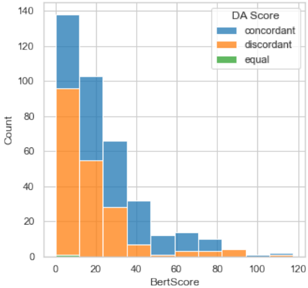
“Similar to the results for MT tasks [33], the correlation between human assessment scores and sentence-level metrics are low for all metrics, between 0.1 for ROUGE-4 and 0.47 for BERTScore.”
MethodInfluentialA Call for Clarity in Reporting BLEU Scores
Post, M. (2018) · Proceedings of the Third Conference on Machine Translation: Research Papers · doi:10.18653/v1/w18-6319 · Cited by 2,112
A Call for Clarity in Reporting BLEU Scores
Post, M. (2018) · arXiv · doi:10.48550/arxiv.1804.08771 · Cited by 2,111
Proceedings of the 40th Annual Meeting on Association for Computational Linguistics
Isabelle, P. (2002) · Cited by 1,635
chrF: character n-gram F-score for automatic MT evaluation
Popović, M. (2015) · Proceedings of the Tenth Workshop on Statistical Machine Translation · doi:10.18653/v1/w15-3049 · Cited by 1,220 · cited 1×
“(c) chrF [41] is another recent automatic evaluation metric”
BackgroundMurray, G., Renals, S. J., Carletta, J., & Moore, J. D. (2005) · Meeting of the Association for Computational Linguistics · Cited by 716
Summarizing Source Code using a Neural Attention Model
Iyer, S., Konstas, I., Cheung, A., & Zettlemoyer, L. (2016) · Proceedings of the 54th Annual Meeting of the Association for Computational Linguistics (Volume 1: Long Papers) · doi:10.18653/v1/p16-1195 · Cited by 701
Hu, X., Li, G., Xia, X., Lo, D., & Jin, Z. (2018) · Proceedings of the 26th Conference on Program Comprehension · doi:10.1145/3196321.3196334 · Cited by 621
Using Machine Learning for Vulnerability Detection and Classification
Alon, U., Brody, S., Levy, O., & Yahav, E. (2018) · arXiv (Cornell University) · doi:10.4230/oasics.slate.2021.14 · Cited by 467 · cited 1×
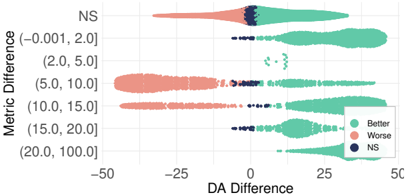
“When we move to the next bin (2, 5], we see that the Type-II error diminishes for all metrics.”
Background
Research works printed but not linked: 13
- 4. Miltiadis Allamanis, Hao Peng, and Charles Sutton. 2016. A convolutional at- tention network for extreme summarization of source code. In International Conference on Machine Learning. 2091ś2100.
- 5. Uri Alon, Shaked Brody, Omer Levy, and Eran Yahav. 2018. code2seq: Gen- erating sequences from structured representations of code. arXiv preprint arXiv:1808.01400 (2018). · arXiv
- 8. Minghao Chen and Xiaojun Wan. 2019. Neural Comment Generation for Source Code with Auxiliary Code Classification Task. In 2019 26th Asia-Pacific Software Engineering Conference (APSEC). IEEE, 522ś529.
- 12. Patrick Fernandes, Miltiadis Allamanis, and Marc Brockschmidt. 2018. Structured Neural Summarization. In International Conference on Learning Representations.
- 17. Tjalling Haije, Bachelor Opleiding Kunstmatige Intelligentie, E Gavves, and H Heuer. 2016. Automatic comment generation using a neural translation model. Inf. Softw. Technol. 55, 3 (2016), 258ś268.
- 28. Yuding Liang and Kenny Zhu. 2018. Automatic generation of text descriptive comments for code blocks. In Proceedings of the AAAI Conference on Artificial Intelligence, Vol. 32.
- 30. Chin-Yew Lin. 2004. Rouge: A package for automatic evaluation of summaries. In Text summarization branches out. 74ś81.
- 37. L. Moreno, A. Marcus, L. Pollock, and K. Vijay-Shanker. 2013. JSummarizer: An automatic generator of natural language summaries for Java classes. In Interna- tional Conference on Program Comprehension (ICPC). 230ś232.
- 44. Stefan Riezler and John T Maxwell III. 2005. On some pitfalls in automatic evaluation and significance testing for MT. In Proceedings of the ACL workshop on intrinsic and extrinsic evaluation measures for machine translation and/or summarization. 57ś64.
- 51. Peter Stanchev, Weiyue Wang, and Hermann Ney. 2020. Towards a Better Evalua- tion of Metrics for Machine Translation. In Proceedings of the Fifth Conference on Machine Translation. Association for Computational Linguistics, Online, 928ś933.
- 53. Akiyoshi Takahashi, Hiromitsu Shiina, and Nobuyuki Kobayashi. 2019. Au- tomatic Generation of Program Comments Based on Problem Statements for Computational Thinking. In 2019 8th International Congress on Advanced Applied Informatics (IIAI-AAI). IEEE, 629ś634.
- 57. Bolin Wei, Ge Li, Xin Xia, Zhiyi Fu, and Zhi Jin. 2019. Code generation as a dual task of code summarization. In Advances in Neural Information Processing Systems. 6563ś6573.
- 58. Kurt D. Welker, Paul W. Oman, and Gerald G. Atkinson. 1997. Development and Application of an Automated Source Code Maintainability Index. Journal of Software Maintenance: Research and Practice 9, 3 (May 1997), 127ś159. · doi:10.5555/271581.271584
Cited by
Items 101–120 of 120
A Survey of Learning-based Method Name Prediction
Qian, H., Liu, W., Xu, T., Yin, J., Feng, X., Sun, W., Ding, Z., Chen, Y., Miao, Y., Li, J., et al. (2026) · ACM Transactions on Software Engineering and Methodology · doi:10.1145/3771999
Evaluating Text Summarization from Multiple Dimensions Using In-Context Learning
Sharma, K. K., Kumar, A., & Srivastava, A. K. (2025) · International Conference on Engineering Innovations and Technologies (ICoEIT) · doi:10.1109/icoeit63558.2025.11210872
“…to work without reference summaries, developed for multi-document summarization and further uses soft token alignment techniques extract relevant lines from different source documents, and compare them to the summary generated by the model for their semantic similarity to pseudo-references [19].”
AI-Powered Commit Explorer (APCE)
Grees, Y., Iaremchuk, P., Ehsani, R., Parra, E., Chatterjee, P., & Haiduc, S. (2025) · IEEE International Conference on Software Maintenance (ICSM) · doi:10.1109/icsme64153.2025.00106
“The evaluation module compares automatically generated commit messages to human-written counterparts and computes standard evaluation metrics ( e . g ., BLEU, ROUGE-L, and METEOR) [12], [15].”
DT4LM: Differential Testing for Reliable Language Model Updates in Classification Tasks
Zuo, X., Xiao, Y., Cao, X., Wang, W., & Dong, J. S. (2025) · IEEE Transactions on Software Engineering · doi:10.1109/tse.2025.3622251 · Cited by 1
“To address this, we employed three metrics to evaluate the effectiveness and efficiency of our algorithm, alongside six quality metrics that closely align with human perception [83], [91].”
An Empirical Study of Test Code Summarization
Chen, Y., Chen, X., Huang, Y., & Zhou, X. (2026) · Communications in computer and information science · doi:10.1007/978-981-95-3483-8_24
Evaluate LLMs on Code Review Understanding: A Multi-step Reasoning Benchmark
Wei, X., & Xin, J. (2026) · Lecture notes in computer science · doi:10.1007/978-981-95-4445-5_34
Mixture-of-Experts Low-Rank Adaptation for Multilingual Code Summarization
Yu, T., Yuan, L., Huang, H., Wang, J., & Cai, Y. (2025) · IEEE/ACM International Conference on Automated Software Engineering (ASE) · doi:10.1109/ase63991.2025.00186 · Cited by 2
“Prior studies [8], [9], [11], [57] have shown that relying solely on automatic evaluation is insufficient, since these metrics may not reliably reflect human judgment.”
Wang, R., Chang, C., Chen, X., Tian, Y., & Huang, R. (2026) · Automated Software Engineering · doi:10.1007/s10515-026-00604-1
“Nevertheless, they cannot comprehensively evaluate the quality of code summaries generated by NMT-based methods (Roy et al. 2021).”
Optimizing Knowledge Utilization for Multi-Intent Comment Generation With Large Language Models
Li, S., Wang, Z., Du, X., Wu, Z., Yu, J., & Chen, J. (2026) · IEEE Transactions on Software Engineering · doi:10.1109/tse.2026.3687241
“This experimental setup is consistent with existing studies [7], [9], [25], [45].”
Precision in practice: Knowledge guided code summarizing grounded in industrial expectations
Li, J., Chen, S., Jin, S., & Xie, X. (2026) · Journal of Systems and Software · doi:10.1016/j.jss.2026.112969 · Cited by 1
Rifa’i, A. M., Utami, E., Amali, A., Fatchan, M., & Ekhsan, M. (2026) · CommIT (Communication and Information Technology) Journal · doi:10.21512/commit.v20i1.13912
“The BLEU score demonstrates a significant degree of n -gram overlap, reflecting accurate word selection and syntactic structure in the generated sentences [32].”
Giagnorio, A., Martin-Lopez, A., & Bavota, G. (2026) · IEEE Transactions on Software Engineering · doi:10.1109/tse.2026.3703553
“The first two authors manually validated the quality of the 707 summaries ( i.e., the doc associated to each function) by following the same procedure used in works assessing the quality of manually [40] or automatically-generated [41] summaries.”
Pokhrel, L., Pokhrel, S., Ganesan, S., & Somasiri, N. (2026) · Artificial Intelligence and Applications · doi:10.47852/bonviewaia62026330
“…they are computationally expensive to fine-tune the custom data, whereas traditional or static word embedding techniques are computationally more efficient, but their incapability to capture the contextualized embeddings makes them less useful in real-world applications for text summarization [54].”
Beyond the Prompt: How Novices Engage with AI During Code Summarization
Mohamed, S., Parvin, A., Ismail, N., Amaya, K., Parra, E., & Oliver, M. D. (2026) · ACM/IEEE International Conference on Software Engineering: Companion Proceedings (ICSE-Companion) · doi:10.1145/3786580.3786961 · Cited by 2
“To assess the quality of code summaries, we adopted a hybrid evaluation approach, combining NLP metrics and human evaluation to ensure a comprehensive and reliable assessment [19, 42].”
Reliable and Developer-Aligned Evaluation of Agents for Software Engineering
Popescu, R. M. (2026) · ACM Joint European Software Engineering Conference and Symposium on the Foundations of Software Engineering (ESEC/FSE) · doi:10.1145/3803437.3804877
“At the same time, many of these metrics are inconsistently used across different coding tasks with minimal to no adaptation, while their coding variants, such as CodeBLEU, or embedding-based versions, such as CodeBERTScore, have shown to perform on par with general translation metrics [2, 7].”
LLMs as judges: Toward the LLM-assisted review of GSN-compliant assurance cases
Yu, G., Sivakumar, M., Belle, A. B., Ghari, S., Wang, S., & Lethbridge, T. C. (2026) · Journal of Systems and Software · doi:10.1016/j.jss.2026.113036 · Cited by 1
A Grounded Theory Study to Guide AI‐Driven Code Comment Improvement
Dhakal, M., Su, C., Wallace, R., Fakhimi, C., Bansal, A., Li, T., Huang, Y., & McMillan, C. (2026) · Journal of Software Evolution and Process · doi:10.1002/smr.70157
“Following [16], we also do Mann–Whitney tests to determine the statistical significance between scores for each model.”
From Draft to Precision: Iterative Agentic Framework for Intent-Aware Code Summarization
Ge, Y., Fang, C., Chen, Z., & Zhai, J. (2026) · Proceedings of the ACM on software engineering. · doi:10.1145/3832150 · Cited by 1
“Prior work [33, 37] has shown that LLMs themselves can serve as a reliable reviewer of code summaries.”
Ly, D., Aydemir, F. B., & Dalpiaz, F. (2026) · IEEE/ACM International Conference on Automated Software Engineering (ASE) · doi:10.1145/3832783.3837558
STUDI KOMPARATIF METODE PARAMETER-EFFICIENT FINE-TUNING UNTUK ABSTRACTIVE TEXT SUMMARIZATION
Akmal, M. S. (2026) · Digital Library UIN Sunan Kalijaga (Sunan Kalijaga State Islamic University)
Metadata
- Authors
- Roy, D., Fakhoury, S., & Arnaoudova, V.
- Affiliations
- Washington State University (US)
- Venue
- Proceedings of the 29th ACM Joint Meeting on European Software Engineering Conference and Symposium on the Foundations of Software Engineering
- Publisher
- ACM
- Published
- 2021-08-18
- Pages
- 1105-1116
- OpenAlex
- W3195727321
- Cited by
- 106
- References
- 52
- Citations by year
- 2026: 18 · 2025: 28 · 2024: 31 · 2023: 19 · 2022: 10
- FWCI
- 12.44
- Type
- conference paper
- Language
- en
- Open access
- hybrid
- doi.org
- Licence
- Locations
- ACM Joint European Software Engineering Conference and Symposium on the Foundations of Software Engineering (ESEC/FSE) (publishedVersion, cc-by)
- Topics
- Physical Sciences › Computer Science › Information Systems › Software Engineering Research
- Physical Sciences › Computer Science › Artificial Intelligence › Natural Language Processing Techniques
- Physical Sciences › Computer Science › Artificial Intelligence › Topic Modeling
- Keywords
- source code summarization, automatic evaluation metrics, human evaluation, BLEU, meteors, ROUGE, chrF, measurement reliability
About these checks
Registry, retraction, Cites and statistics results are computed, not judged, with one exception: a printed reference that no index lists is read once by a model before it counts as a citation error. Claims are extracted by a model and kept only when their quote appears verbatim in the text; each cited source is then checked, with a model’s help, for whether it says what the claim relies on. Those verdicts can be wrong — read the claim’s quote and the cited source before relying on one.
Statistics and arithmetic are recomputed, not judged.
Confidence bands are shown only for fields calibrated on our annotated test set. None is calibrated yet, so no band is shown.
What counts as a claim ›How we measure confidence ›How we check this ›
Are you an author, or do you see a problem with this page? Request a review
Data sources
Bibliographic data: Semantic Scholar, OpenAlex, Crossref.
Contains information from the Semantic Scholar Academic Graph Datasets, made available under the ODC Attribution License (ODC-BY 1.0).
Semantic Scholar’s data is described in: Kinney, R., et al. (2023). The Semantic Scholar Open Data Platform. arXiv:2301.10140.
