

Reassessing automatic evaluation metrics for code summarization tasks
Open accessThe DOI matches its Crossref record; 54 of the 54 references it cites were found in a registry or an index.
Abstract
In recent years, research in the domain of source code summarization has adopted data-driven techniques pioneered in machine translation (MT). Automatic evaluation metrics such as BLEU, METEOR, and ROUGE, are fundamental to the evaluation of MT systems and have been adopted as proxies of human evaluation in the code summarization domain. However, the extent to which automatic metrics agree with the gold standard of human evaluation has not been evaluated on code summarization tasks. Despite this, marginal improvements in metric scores are often used to discriminate between the performance of competing summarization models. In this paper, we present a critical exploration of the applicability and interpretation of automatic metrics as evaluation techniques for code summarization tasks. We conduct an empirical study with 226 human annotators to assess the degree to which automatic metrics reflect human evaluation. Results indicate that metric improvements of less than 2 points do not guarantee systematic improvements in summarization quality, and are unreliable as proxies of human evaluation. When the difference between metric scores for two summarization approaches increases but remains within 5 points, some metrics such as METEOR and chrF become highly reliable proxies, whereas others, such as corpus BLEU, remain unreliable. Based on these findings, we make several recommendations for the use of automatic metrics to discriminate model performance in code summarization.
Overview
The claims and statistics of this paper haven’t been checked yet.
Free: it reads the open-access text and checks the first 5 claims that cite a source we can check. Create a free account to check every claim.
Integrity signals
Registry
Cites
Statistics
Figures
Verification
Claims the paper makes
The claims and statistics of this paper haven’t been checked yet.
Free: it reads the open-access text and checks the first 5 claims that cite a source we can check. Create a free account to check every claim.
Claims other papers make about this one
Each is checked against this paper’s own text: does it say what the citing paper says it does?
The cited source doesn’t support the claim as written.
In the citing paper
“Roy et al. show that BLEU-4 improvements of more than +2 points are reasonable proxies for human-perceptible preference [18].”
From Few-shot training LLMs for project-specific code-summarization (2022) · cites this paper as [18]
Checked by a reasoning model — may be wrong.
Experimental — accuracy not yet measuredThe cited source doesn’t support the claim as written.
In the citing paper
“In most cases, we see improvements of over 2.0 BLEU, the required threshold for human perception noted by Roy et al. [57].”
From Automatic Semantic Augmentation of Language Model Prompts (for Code Summarization) (2024) · cites this paper as [57]
Checked by a reasoning model — may be wrong.
Experimental — accuracy not yet measuredThe source backs part of the claim, not all of it — or backs it for a different population, condition or comparison.
In the citing paper
“BLEU [50] is the most widely-used, similarity-based measure for code summarization [57] and commit log generation [16].”
From Automatic Semantic Augmentation of Language Model Prompts (for Code Summarization) (2024) · cites this paper as [57]
Experimental — accuracy not yet measuredThe source backs part of the claim, not all of it — or backs it for a different population, condition or comparison.
In the citing paper
“Roy et al. [57] provide arguments, grounded on human subject study that for code summarization (our central task), that a gain of 2.0 or more BLEU is more likely to correspond with human perception of improvement.”
From Automatic Semantic Augmentation of Language Model Prompts (for Code Summarization) (2024) · cites this paper as [57]
Experimental — accuracy not yet measuredThe cited source says what the claim attributes to it.
In the citing paper
“the 2-BLEU threshold noted by Roy et al. [57], below which BLEU results are unreliable predictors of human preference.”
From Automatic Semantic Augmentation of Language Model Prompts (for Code Summarization) (2024) · cites this paper as [57]
Self-check
Percentages, sums and reported differences re-computed from the paper’s own numbers.
The self-check needs the paper’s full text.
Citations
Cites
(1932) · Medical Entomology and Zoology · Cited by 9,568
BERTScore: Evaluating Text Generation with BERT
Zhang, T., Kishore, V., Wu, F., Weinberger, K. Q., & Artzi, Y. (2019) · arXiv · doi:10.48550/arxiv.1904.09675 · Cited by 2,865 · cited 8×
“Similar to the results for MT tasks [33], the correlation between human assessment scores and sentence-level metrics are low for all metrics, between 0.1 for ROUGE-4 and 0.47 for BERTScore.”
MethodInfluentialA Call for Clarity in Reporting BLEU Scores
Post, M. (2018) · Proceedings of the Third Conference on Machine Translation: Research Papers · doi:10.18653/v1/w18-6319 · Cited by 2,112
A Call for Clarity in Reporting BLEU Scores
Post, M. (2018) · arXiv · doi:10.48550/arxiv.1804.08771 · Cited by 2,111
Proceedings of the 40th Annual Meeting on Association for Computational Linguistics
Isabelle, P. (2002) · Cited by 1,635
chrF: character n-gram F-score for automatic MT evaluation
Popović, M. (2015) · Proceedings of the Tenth Workshop on Statistical Machine Translation · doi:10.18653/v1/w15-3049 · Cited by 1,220 · cited 1×
“(c) chrF [41] is another recent automatic evaluation metric”
BackgroundMurray, G., Renals, S. J., Carletta, J., & Moore, J. D. (2005) · Meeting of the Association for Computational Linguistics · Cited by 716
Summarizing Source Code using a Neural Attention Model
Iyer, S., Konstas, I., Cheung, A., & Zettlemoyer, L. (2016) · Proceedings of the 54th Annual Meeting of the Association for Computational Linguistics (Volume 1: Long Papers) · doi:10.18653/v1/p16-1195 · Cited by 701
Hu, X., Li, G., Xia, X., Lo, D., & Jin, Z. (2018) · Proceedings of the 26th Conference on Program Comprehension · doi:10.1145/3196321.3196334 · Cited by 621
Using Machine Learning for Vulnerability Detection and Classification
Alon, U., Brody, S., Levy, O., & Yahav, E. (2018) · arXiv (Cornell University) · doi:10.4230/oasics.slate.2021.14 · Cited by 467 · cited 1×
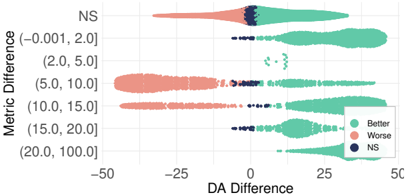
“When we move to the next bin (2, 5], we see that the Type-II error diminishes for all metrics.”
BackgroundA Structured Review of the Validity of BLEU
Reiter, E. (2018) · Computational Linguistics · doi:10.1162/coli_a_00322 · Cited by 386 · cited 3×
“Moreover, while evidence supports BLEU for diagnostic evaluation of MT systems, it does not support using BLEU outside of MT [43].”
BackgroundMethodResultImproving automatic source code summarization via deep reinforcement learning
Wan, Y., Zhao, Z., Yang, M., Xu, G., Ying, H., Wu, J., & Yu, P. S. (2018) · Proceedings of the 33rd ACM/IEEE International Conference on Automated Software Engineering · doi:10.1145/3238147.3238206 · Cited by 385
The Hitchhiker’s Guide to Testing Statistical Significance in Natural Language Processing
Dror, R., Baumer, G., Shlomov, S., & Reichart, R. (2018) · Proceedings of the 56th Annual Meeting of the Association for Computational Linguistics (Volume 1: Long Papers) · doi:10.18653/v1/p18-1128 · Cited by 384 · cited 2×
“A detailed methodology is out-lined in Dror [11] and Graham et al. [15].”
MethodA Transformer-based Approach for Source Code Summarization
Ahmad, W., Chakraborty, S., Ray, B., & Chang, K.-W. (2020) · Proceedings of the 58th Annual Meeting of the Association for Computational Linguistics · doi:10.18653/v1/2020.acl-main.449 · Cited by 378
Improved Code Summarization via a Graph Neural Network
LeClair, A., Haque, S., Wu, L., & McMillan, C. (2020) · Proceedings of the 28th International Conference on Program Comprehension · doi:10.1145/3387904.3389268 · Cited by 312 · cited 1×
“For instance, from the 30 papers that declared state-of-the-art summarization techniques in the past 5 years [2ś5, 8ś10, 12, 17ś21, 23ś25, 28, 31, 35, 39, 48, 54ś 57, 59ś61, 65, 66], 15 declare metrics improvements in the 0-2 range [2, 3, 9, 10, 12, 20, 24, 25, 28, 31, 48, 57, 60, 65, 66].”
BackgroundLang, J. (2018) · HAL · Cited by 312
A Neural Model for Generating Natural Language Summaries of Program Subroutines
LeClair, A., Jiang, S., & McMillan, C. (2019) · 2019 IEEE/ACM 41st International Conference on Software Engineering (ICSE) · doi:10.1109/icse.2019.00087 · Cited by 294 · cited 2×
“…paper using an MT approach was published at an SE conference [39], and, to the best of our knowledge, there are 35 papers thus far that propose an approach, an evaluation, or a critique of MT summarization approaches [2ś5, 8ś10, 12, 16ś21, 23ś 25, 27, 28, 31, 35, 39, 47, 48, 53ś57, 59ś62, 65, 66].”
BackgroundMethodDeep code comment generation with hybrid lexical and syntactical information
Hu, X., Li, G., Xia, X., Lo, D., & Jin, Z. (2020) · Empirical Software Engineering · doi:10.1007/s10664-019-09730-9 · Cited by 278 · cited 2×
“Out of these, only 5 [20, 23, 39, 55, 56] perform human evaluations, none of which follow a systematic method to compare the competing summarization approaches: human evaluations are either conducted on a biased sample (methods chosen among the best performing summaries) or summaries are compared only to the reference…”
BackgroundRetrieval-based neural source code summarization
Zhang, J., Wang, X., Zhang, H., Sun, H., & Liu, X. (2020) · Proceedings of the ACM/IEEE 42nd International Conference on Software Engineering · doi:10.1145/3377811.3380383 · Cited by 275 · cited 1×
“search areaÐat least 18 papers proposing or evaluating automated summarization approaches are published in 2020 [1, 2, 10, 16, 18, 20, 22, 24, 27, 32, 47, 52, 55, 56, 60, 61, 63, 66].”
BackgroundLearning to Generate Pseudo-Code from Source Code Using Statistical Machine Translation
Oda, Y., Fudaba, H., Neubig, G., Hata, H., Sakti, S., Toda, T., & Nakamura, S. (2015) · 2015 30th IEEE/ACM International Conference on Automated Software Engineering (ASE) · doi:10.1109/ase.2015.36 · Cited by 250 · cited 4×
“…paper using an MT approach was published at an SE conference [39], and, to the best of our knowledge, there are 35 papers thus far that propose an approach, an evaluation, or a critique of MT summarization approaches [2ś5, 8ś10, 12, 16ś21, 23ś 25, 27, 28, 31, 35, 39, 47, 48, 53ś57, 59ś62, 65, 66].”
BackgroundMethodInfluentialAutomatic documentation generation via source code summarization of method context
McBurney, P. W., & McMillan, C. (2014) · Proceedings of the 22nd International Conference on Program Comprehension · doi:10.1145/2597008.2597149 · Cited by 220 · cited 1×
“on metrics such as as: content adequacy [36], conciseness [23, 37],”
BackgroundA Systematic Comparison of Smoothing Techniques for Sentence-Level BLEU
Chen, B., & Cherry, C. (2014) · Proceedings of the Ninth Workshop on Statistical Machine Translation · doi:10.3115/v1/w14-3346 · Cited by 191 · cited 2×
“2Chen and Cherry [7] show that smoothing method 7 performs the best, but we encountered unstable results (NANs) with it.”
BackgroundMethodTangled up in BLEU: Reevaluating the Evaluation of Automatic Machine Translation Evaluation Metrics
Mathur, N., Baldwin, T., & Cohn, T. (2020) · Proceedings of the 58th Annual Meeting of the Association for Computational Linguistics · doi:10.18653/v1/2020.acl-main.448 · Cited by 182
Results of the WMT19 Metrics Shared Task: Segment-Level and Strong MT Systems Pose Big Challenges
Ma, Q., Wei, J., Bojar, O., & Graham, Y. (2019) · Proceedings of the Fourth Conference on Machine Translation (Volume 2: Shared Task Papers, Day 1) · doi:10.18653/v1/w19-5302 · Cited by 143 · cited 12×
“In WMT’s formulation, ties in metric differences and human scores are discarded.”
BackgroundMethodResultInfluentialProceedings of the 7th Linguistic Annotation Workshop and Interoperability with Discourse
Banarescu, L., Bonial, C., Cai, S., Georgescu, M., Griffitt, K., Hermjakob, U., Knight, K. K., Koehn, P., Palmer, M. S., & Schneider, N. (2013) · The Association for Computational Linguistics · Cited by 133
Automatic Source Code Summarization with Extended Tree-LSTM
Shido, Y., Kobayashi, Y., Yamamoto, A., Miyamoto, A., & Matsumura, T. (2019) · International Joint Conference on Neural Networks (IJCNN) · doi:10.1109/ijcnn.2019.8851751 · Cited by 120 · cited 1×
“For instance, from the 30 papers that declared state-of-the-art summarization techniques in the past 5 years [2ś5, 8ś10, 12, 17ś21, 23ś25, 28, 31, 35, 39, 48, 54ś 57, 59ś61, 65, 66], 15 declare metrics improvements in the 0-2 range [2, 3, 9, 10, 12, 20, 24, 25, 28, 31, 48, 57, 60, 65, 66].”
BackgroundRecommendations for Datasets for Source Code Summarization
LeClair, A., & McMillan, C. (2019) · Proceedings of the 2019 Conference of the North · doi:10.18653/v1/n19-1394 · Cited by 111 · cited 3×
“[26] (see the left side of Table 2, highlighted in gray).”
BackgroundMethodInfluentialPeer Review on Open-Source Software Projects: Parameters, Statistical Models, and Theory
Rigby, P. C., German, D. M., Cowen, L., & Storey, M.-A. (2014) · ACM Transactions on Software Engineering and Methodology · doi:10.1145/2594458 · Cited by 110 · cited 1×
“Useful source code comments play a vital role in program comprehension and other software maintenance activities [45, 58].”
BackgroundReinforcement-Learning-Guided Source Code Summarization Using Hierarchical Attention
Wang, W., Zhang, Y., Sui, Y., Wan, Y., Zhao, Z., Wu, J., Yu, P. S., & Xu, G. (2022) · IEEE Transactions on Software Engineering · doi:10.1109/tse.2020.2979701 · Cited by 103 · cited 2×
“Out of these, only 5 [20, 23, 39, 55, 56] perform human evaluations, none of which follow a systematic method to compare the competing summarization approaches: human evaluations are either conducted on a biased sample (methods chosen among the best performing summaries) or summaries are compared only to the reference…”
BackgroundImproved Automatic Summarization of Subroutines via Attention to File Context
Haque, S., LeClair, A., Wu, L., & McMillan, C. (2020) · Proceedings of the 17th International Conference on Mining Software Repositories · doi:10.1145/3379597.3387449 · Cited by 102
A neural framework for retrieval and summarization of source code
Chen, Q., & Zhou, M. (2018) · Proceedings of the 33rd ACM/IEEE International Conference on Automated Software Engineering · doi:10.1145/3238147.3240471 · Cited by 98 · cited 1×
“For instance, from the 30 papers that declared state-of-the-art summarization techniques in the past 5 years [2ś5, 8ś10, 12, 17ś21, 23ś25, 28, 31, 35, 39, 48, 54ś 57, 59ś61, 65, 66], 15 declare metrics improvements in the 0-2 range [2, 3, 9, 10, 12, 20, 24, 25, 28, 31, 48, 57, 60, 65, 66].”
BackgroundSummarizing Software Artifacts: A Literature Review
Nazar, N., Hu, Y. Z., & Jiang, H. (2016) · Journal of Computer Science and Technology · doi:10.1007/s11390-016-1671-1 · Cited by 95 · cited 1×
“Those aspects are standard and have been used in both MT [43] and in code summarization [38, 50] evaluations with human annotators.”
MethodAccurate Evaluation of Segment-level Machine Translation Metrics
Graham, Y., Baldwin, T., & Mathur, N. (2015) · Proceedings of the 2015 Conference of the North American Chapter of the Association for Computational Linguistics: Human Language Technologies · doi:10.3115/v1/n15-1124 · Cited by 92 · cited 1×
“While DA scores are continuous and amenable to traditional correlation coefficients such as Pearson’s and Spearman’s Correlation, it has been shown empirically that at least 15 human assessments are required per summary for results to be stable [13].”
MethodA Human Study of Comprehension and Code Summarization
Stapleton, S., Gambhir, Y., LeClair, A., Eberhart, Z., Weimer, W., Leach, K., & Huang, Y. (2020) · Proceedings of the 28th International Conference on Program Comprehension · doi:10.1145/3387904.3389258 · Cited by 77 · cited 1×
“[52] explore how automatically generated summaries effect code comprehension and show that participants per-”
BackgroundA Survey of Automatic Generation of Source Code Comments: Algorithms and Techniques
Song, X., Sun, H., Wang, X., & Yan, J. (2019) · IEEE Access · doi:10.1109/access.2019.2931579 · Cited by 70 · cited 3×
“These approaches typically evaluate the quality of a generated summary using human annotators who rate summaries on metrics such as as: content adequacy [36], conciseness [23, 37], and fluency [37, 38, 50].”
BackgroundMethodDeepTC-enhancer: improving the readability of automatically generated tests
Roy, D., Zhang, Z., Ma, M., Arnaoudova, V., Panichella, A., Panichella, S., Gonzalez, D., & Mirakhorli, M. T. (2020) · IEEE/ACM International Conference on Automated Software Engineering (ASE) · doi:10.1145/3324884.3416622 · Cited by 66 · cited 1×
“search areaÐat least 18 papers proposing or evaluating automated summarization approaches are published in 2020 [1, 2, 10, 16, 18, 20, 22, 24, 27, 32, 47, 52, 55, 56, 60, 61, 63, 66].”
BackgroundSelf-citationLeveraging Code Generation to Improve Code Retrieval and Summarization via Dual Learning
Ye, W., Xie, R., Zhang, J., Hu, T., Wang, X., & Zhang, S. (2020) · Proceedings of The Web Conference 2020 · doi:10.1145/3366423.3380295 · Cited by 53 · cited 1×
“For instance, from the 30 papers that declared state-of-the-art summarization techniques in the past 5 years [2ś5, 8ś10, 12, 17ś21, 23ś25, 28, 31, 35, 39, 48, 54ś 57, 59ś61, 65, 66], 15 declare metrics improvements in the 0-2 range [2, 3, 9, 10, 12, 20, 24, 25, 28, 31, 48, 57, 60, 65, 66].”
BackgroundFret: Functional Reinforced Transformer With BERT for Code Summarization
Wang, R., Zhang, H., Lu, G., Lyu, L., & Lyu, C. (2020) · IEEE Access · doi:10.1109/access.2020.3011744 · Cited by 49 · cited 2×
“Out of these, only 5 [20, 23, 39, 55, 56] perform human evaluations, none of which follow a systematic method to compare the competing summarization approaches: human evaluations are either conducted on a biased sample (methods chosen among the best performing summaries) or summaries are compared only to the reference…”
BackgroundRandomized Significance Tests in Machine Translation
Graham, Y., Mathur, N., & Baldwin, T. (2014) · Proceedings of the Ninth Workshop on Statistical Machine Translation · doi:10.3115/v1/w14-3333 · Cited by 47 · cited 5×
“When we move on to higher bins, all metrics besides BLEU experience significant drops in their overall disagreement rates.”
BackgroundMethodInfluentialCode to comment "translation": data, metrics, baselining & evaluation
Gros, D., Sezhiyan, H., Devanbu, P., & Yu, Z. (2020) · Proceedings of the 35th IEEE/ACM International Conference on Automated Software Engineering · doi:10.1145/3324884.3416546 · Cited by 43 · cited 2×
“[16] show that, as compared to natural language datasets, source code comments are much more repetitive which can have a significant and exaggerated impact on the performance of an approach.”
BackgroundTowards automatically generating block comments for code snippets
Huang, Y., Huang, S., Chen, H., Chen, X., Zheng, Z., Luo, X., Jia, N., Hu, X., & Zhou, X. (2020) · Information and Software Technology · doi:10.1016/j.infsof.2020.106373 · Cited by 41 · cited 1×
“This is one of the motivating factors behind why source code summarization is a rapidly growing research areaÐat least 18 papers proposing or evaluating automated summarization approaches are published in 2020 [1, 2, 10, 16, 18, 20, 22, 24, 27, 32, 47, 52, 55, 56, 60, 61, 63, 66].”
BackgroundDeepCommenter: a deep code comment generation tool with hybrid lexical and syntactical information
Li, B., Yan, M., Xia, X., Hu, X., Li, G., & Lo, D. (2020) · Proceedings of the 28th ACM Joint Meeting on European Software Engineering Conference and Symposium on the Foundations of Software Engineering · doi:10.1145/3368089.3417926 · Cited by 35 · cited 1×
“search areaÐat least 18 papers proposing or evaluating automated summarization approaches are published in 2020 [1, 2, 10, 16, 18, 20, 22, 24, 27, 32, 47, 52, 55, 56, 60, 61, 63, 66].”
BackgroundAugmenting Java method comments generation with context information based on neural networks
Zhou, Y., Yan, X. C., Yang, W., Chen, T., & Huang, Z. (2019) · Journal of Systems and Software · doi:10.1016/j.jss.2019.07.087 · Cited by 34
BLEU deconstructed: Designing a Better MT Evaluation Metric
Song, X., Cohn, T., & Specia, L. (2021) · Figshare · doi:10.6084/m9.figshare.14153117 · Cited by 26
Generating Pseudo-Code from Source Code Using Deep Learning
Alhefdhi, A., Dam, H. K., Hata, H., & Ghose, A. (2018) · Australasian Software Engineering Conference (ASWEC) · doi:10.1109/aswec.2018.00011 · Cited by 26 · cited 1×
“For instance, from the 30 papers that declared state-of-the-art summarization techniques in the past 5 years [2ś5, 8ś10, 12, 17ś21, 23ś25, 28, 31, 35, 39, 48, 54ś 57, 59ś61, 65, 66], 15 declare metrics improvements in the 0-2 range [2, 3, 9, 10, 12, 20, 24, 25, 28, 31, 48, 57, 60, 65, 66].”
BackgroundA Neural-Network based Code Summarization Approach by Using Source Code and its Call Dependencies
Liu, B., Wang, T., Zhang, X., Fan, Q., Yin, G., & Deng, J. (2019) · Asia-Pacific Symposium on Internetware · doi:10.1145/3361242.3362774 · Cited by 24
Towards Context-Aware Code Comment Generation
Yu, X., Huang, Q., Wang, Z., Feng, Y., & Zhao, D. (2020) · Findings of the Association for Computational Linguistics: EMNLP (Findings of EMNLP) · doi:10.18653/v1/2020.findings-emnlp.350 · Cited by 19 · cited 1×
“search areaÐat least 18 papers proposing or evaluating automated summarization approaches are published in 2020 [1, 2, 10, 16, 18, 20, 22, 24, 27, 32, 47, 52, 55, 56, 60, 61, 63, 66].”
BackgroundGenerating summaries for methods of event-driven programs: An Android case study
Aghamohammadi, A., Izadi, M., & Heydarnoori, A. (2020) · Journal of Systems and Software · doi:10.1016/j.jss.2020.110800 · Cited by 16 · cited 1×
“search areaÐat least 18 papers proposing or evaluating automated summarization approaches are published in 2020 [1, 2, 10, 16, 18, 20, 22, 24, 27, 32, 47, 52, 55, 56, 60, 61, 63, 66].”
BackgroundEffective approaches to combining lexical and syntactical information for code summarization
Zhou, Z., Yu, H., & Fan, G. (2020) · Software Practice and Experience · doi:10.1002/spe.2893 · Cited by 13 · cited 1×
“For instance, from the 30 papers that declared state-of-the-art summarization techniques in the past 5 years [2ś5, 8ś10, 12, 17ś21, 23ś25, 28, 31, 35, 39, 48, 54ś 57, 59ś61, 65, 66], 15 declare metrics improvements in the 0-2 range [2, 3, 9, 10, 12, 20, 24, 25, 28, 31, 48, 57, 60, 65, 66].”
BackgroundGenerating comments from source code with CCGs
Matskevich, S., & Gordon, C. S. (2018) · doi:10.1145/3283812.3283822 · Cited by 9 · cited 2×
“…paper using an MT approach was published at an SE conference [39], and, to the best of our knowledge, there are 35 papers thus far that propose an approach, an evaluation, or a critique of MT summarization approaches [2ś5, 8ś10, 12, 16ś21, 23ś 25, 27, 28, 31, 35, 39, 47, 48, 53ś57, 59ś62, 65, 66].”
BackgroundMethodSource Code based On-demand Class Documentation Generation
Liu, M., Peng, X., Meng, X., Xu, H., Xing, S., Wang, X., Liu, Y., & Lv, G. (2020) · IEEE International Conference on Software Maintenance (ICSM) · doi:10.1109/icsme46990.2020.00114 · Cited by 8 · cited 1×
“search areaÐat least 18 papers proposing or evaluating automated summarization approaches are published in 2020 [1, 2, 10, 16, 18, 20, 22, 24, 27, 32, 47, 52, 55, 56, 60, 61, 63, 66].”
BackgroundSource Code Summarization Using Attention-Based Keyword Memory Networks
Choi, Y., Kim, S., & Lee, J.-H. (2020) · IEEE International Conference on Big Data and Smart Computing (BigComp) · doi:10.1109/bigcomp48618.2020.00011 · Cited by 7 · cited 2×
“search areaÐat least 18 papers proposing or evaluating automated summarization approaches are published in 2020 [1, 2, 10, 16, 18, 20, 22, 24, 27, 32, 47, 52, 55, 56, 60, 61, 63, 66].”
BackgroundImproving code summarization by combining deep learning and empirical knowledge (S)
Zeng, L., Zhang, X., Wang, T., Li, X., Yu, J., & Wang, H. (2018) · Proceedings/Proceedings of the ... International Conference on Software Engineering and Knowledge Engineering · doi:10.18293/seke2018-191 · Cited by 6
Automatic Generation of Pseudocode with Attention Seq2seq Model
Xu, S., & Xiong, Y. (2018) · Asia-Pacific Software Engineering Conference (APSEC) · doi:10.1109/apsec.2018.00101 · Cited by 6
Research works printed but not linked: 13
- 4. Miltiadis Allamanis, Hao Peng, and Charles Sutton. 2016. A convolutional at- tention network for extreme summarization of source code. In International Conference on Machine Learning. 2091ś2100.
- 5. Uri Alon, Shaked Brody, Omer Levy, and Eran Yahav. 2018. code2seq: Gen- erating sequences from structured representations of code. arXiv preprint arXiv:1808.01400 (2018). · arXiv
- 8. Minghao Chen and Xiaojun Wan. 2019. Neural Comment Generation for Source Code with Auxiliary Code Classification Task. In 2019 26th Asia-Pacific Software Engineering Conference (APSEC). IEEE, 522ś529.
- 12. Patrick Fernandes, Miltiadis Allamanis, and Marc Brockschmidt. 2018. Structured Neural Summarization. In International Conference on Learning Representations.
- 17. Tjalling Haije, Bachelor Opleiding Kunstmatige Intelligentie, E Gavves, and H Heuer. 2016. Automatic comment generation using a neural translation model. Inf. Softw. Technol. 55, 3 (2016), 258ś268.
- 28. Yuding Liang and Kenny Zhu. 2018. Automatic generation of text descriptive comments for code blocks. In Proceedings of the AAAI Conference on Artificial Intelligence, Vol. 32.
- 30. Chin-Yew Lin. 2004. Rouge: A package for automatic evaluation of summaries. In Text summarization branches out. 74ś81.
- 37. L. Moreno, A. Marcus, L. Pollock, and K. Vijay-Shanker. 2013. JSummarizer: An automatic generator of natural language summaries for Java classes. In Interna- tional Conference on Program Comprehension (ICPC). 230ś232.
- 44. Stefan Riezler and John T Maxwell III. 2005. On some pitfalls in automatic evaluation and significance testing for MT. In Proceedings of the ACL workshop on intrinsic and extrinsic evaluation measures for machine translation and/or summarization. 57ś64.
- 51. Peter Stanchev, Weiyue Wang, and Hermann Ney. 2020. Towards a Better Evalua- tion of Metrics for Machine Translation. In Proceedings of the Fifth Conference on Machine Translation. Association for Computational Linguistics, Online, 928ś933.
- 53. Akiyoshi Takahashi, Hiromitsu Shiina, and Nobuyuki Kobayashi. 2019. Au- tomatic Generation of Program Comments Based on Problem Statements for Computational Thinking. In 2019 8th International Congress on Advanced Applied Informatics (IIAI-AAI). IEEE, 629ś634.
- 57. Bolin Wei, Ge Li, Xin Xia, Zhiyi Fu, and Zhi Jin. 2019. Code generation as a dual task of code summarization. In Advances in Neural Information Processing Systems. 6563ś6573.
- 58. Kurt D. Welker, Paul W. Oman, and Gerald G. Atkinson. 1997. Development and Application of an Automated Source Code Maintainability Index. Journal of Software Maintenance: Research and Practice 9, 3 (May 1997), 127ś159. · doi:10.5555/271581.271584
Cited by
Few-shot training LLMs for project-specific code-summarization
Ahmed, T., & Devanbu, P. (2022) · Proceedings of the 37th IEEE/ACM International Conference on Automated Software Engineering · doi:10.1145/3551349.3559555 · Cited by 240
“show that BLEU-4 improvements of more than +2 points are reasonable proxies for human-perceptible preference [18].”
BackgroundGeng, M., Wang, S., Dong, D., Wang, H., Li, G., Jin, Z., Mao, X., & Liao, X. (2024) · Proceedings of the IEEE/ACM 46th International Conference on Software Engineering · doi:10.1145/3597503.3608134 · Cited by 155
“Each participant is asked to rate all the 400 comments from [46, 59].”
BackgroundSource Code Summarization in the Era of Large Language Models
Sun, W., Miao, Y., Li, Y., Zhang, H., Fang, C., Liu, Y., Deng, G., Liu, Y., & Chen, Z. (2025) · ACM/IEEE International Conference on Software Engineering: Companion Proceedings (ICSE-Companion) · doi:10.1109/icse55347.2025.00034 · Cited by 213
Recommending Root-Cause and Mitigation Steps for Cloud Incidents using Large Language Models
Ahmed, T., Ghosh, S., Bansal, C., Zimmermann, T., Zhang, X., & Rajmohan, S. (2023) · 2023 IEEE/ACM 45th International Conference on Software Engineering (ICSE) · doi:10.1109/icse48619.2023.00149 · Cited by 148
Out of the BLEU: how should we assess quality of the Code Generation models?
Evtikhiev, M., Bogomolov, E., Sokolov, Y., & Bryksin, T. (2023) · Journal of Systems and Software · doi:10.1016/j.jss.2023.111741 · Cited by 127
“[17] did an extensive study on the applicability of the automated metrics for the code”
BackgroundMethodResultInfluential
Metadata
- Authors
- Roy, D., Fakhoury, S., & Arnaoudova, V.
- Affiliations
- Washington State University (US)
- Venue
- Proceedings of the 29th ACM Joint Meeting on European Software Engineering Conference and Symposium on the Foundations of Software Engineering
- Publisher
- ACM
- Published
- 2021-08-18
- Pages
- 1105-1116
- OpenAlex
- W3195727321
- Cited by
- 106
- References
- 52
- Citations by year
- 2026: 18 · 2025: 28 · 2024: 31 · 2023: 19 · 2022: 10
- FWCI
- 12.44
- Type
- conference paper
- Language
- en
- Open access
- hybrid
- doi.org
- Licence
- Locations
- ACM Joint European Software Engineering Conference and Symposium on the Foundations of Software Engineering (ESEC/FSE) (publishedVersion, cc-by)
- Topics
- Physical Sciences › Computer Science › Information Systems › Software Engineering Research
- Physical Sciences › Computer Science › Artificial Intelligence › Natural Language Processing Techniques
- Physical Sciences › Computer Science › Artificial Intelligence › Topic Modeling
- Keywords
- source code summarization, automatic evaluation metrics, human evaluation, BLEU, meteors, ROUGE, chrF, measurement reliability
About these checks
Registry, retraction, Cites and statistics results are computed, not judged, with one exception: a printed reference that no index lists is read once by a model before it counts as a citation error. Claims are extracted by a model and kept only when their quote appears verbatim in the text; each cited source is then checked, with a model’s help, for whether it says what the claim relies on. Those verdicts can be wrong — read the claim’s quote and the cited source before relying on one.
Statistics and arithmetic are recomputed, not judged.
Confidence bands are shown only for fields calibrated on our annotated test set. None is calibrated yet, so no band is shown.
What counts as a claim ›How we measure confidence ›How we check this ›
Are you an author, or do you see a problem with this page? Request a review
Data sources
Bibliographic data: Semantic Scholar, OpenAlex, Crossref.
Contains information from the Semantic Scholar Academic Graph Datasets, made available under the ODC Attribution License (ODC-BY 1.0).
Semantic Scholar’s data is described in: Kinney, R., et al. (2023). The Semantic Scholar Open Data Platform. arXiv:2301.10140.
