

Beyond Skin Deep: Generative Co-Design for Aesthetic Prosthetics
Open accessThe DOI matches its Crossref record; 75 of the 76 references it cites were found in a registry or an index, and 1 are not checked yet.
Abstract
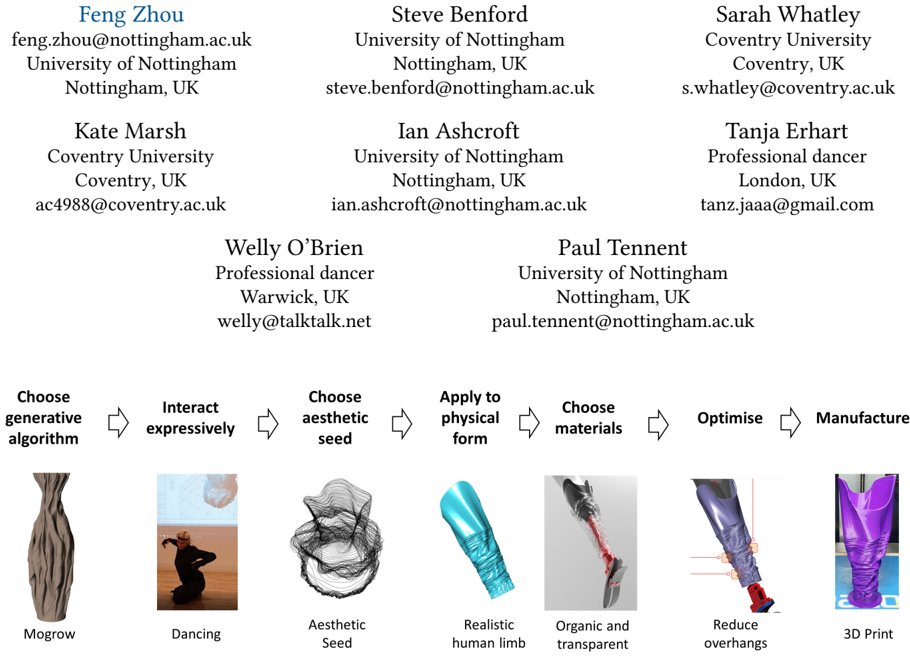
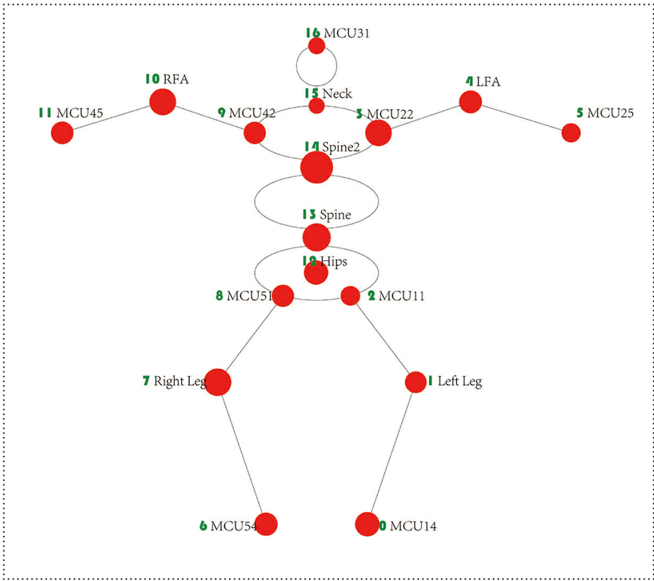
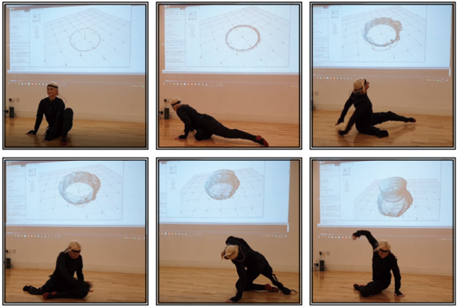
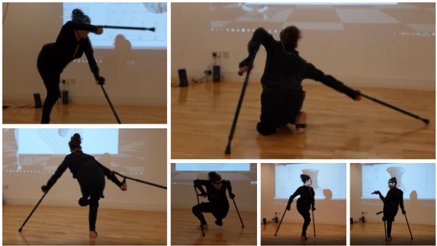
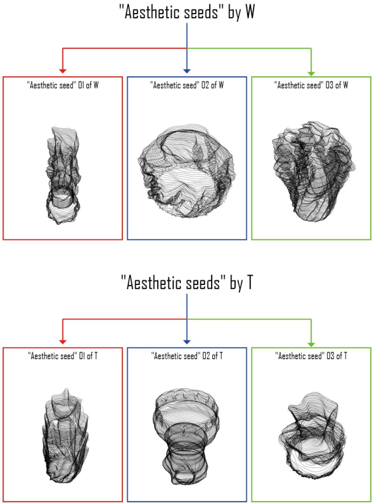
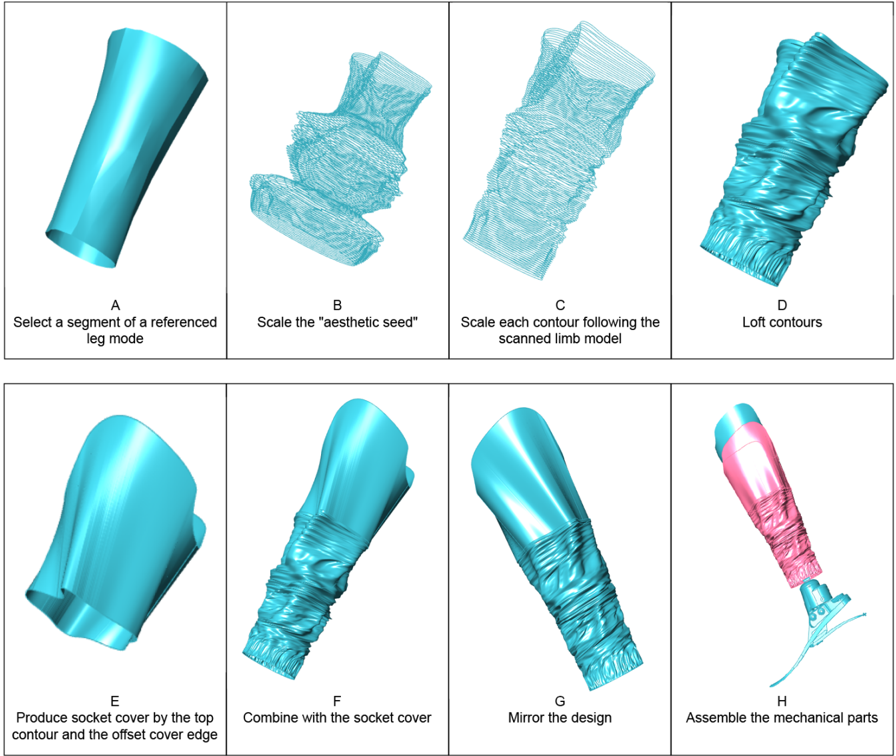
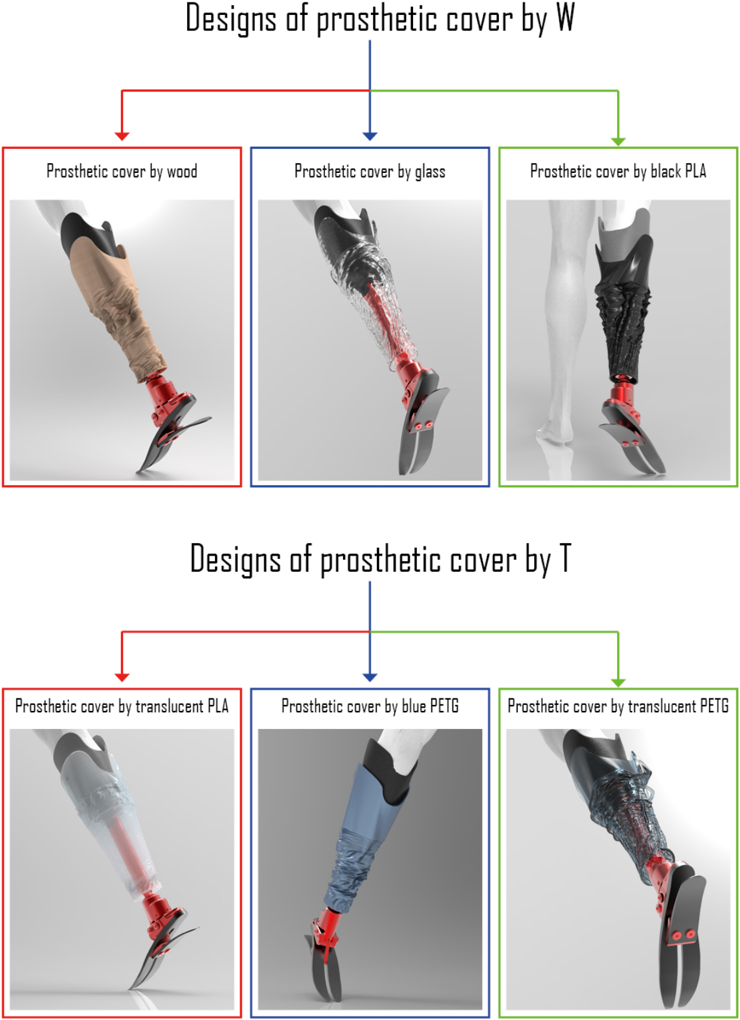
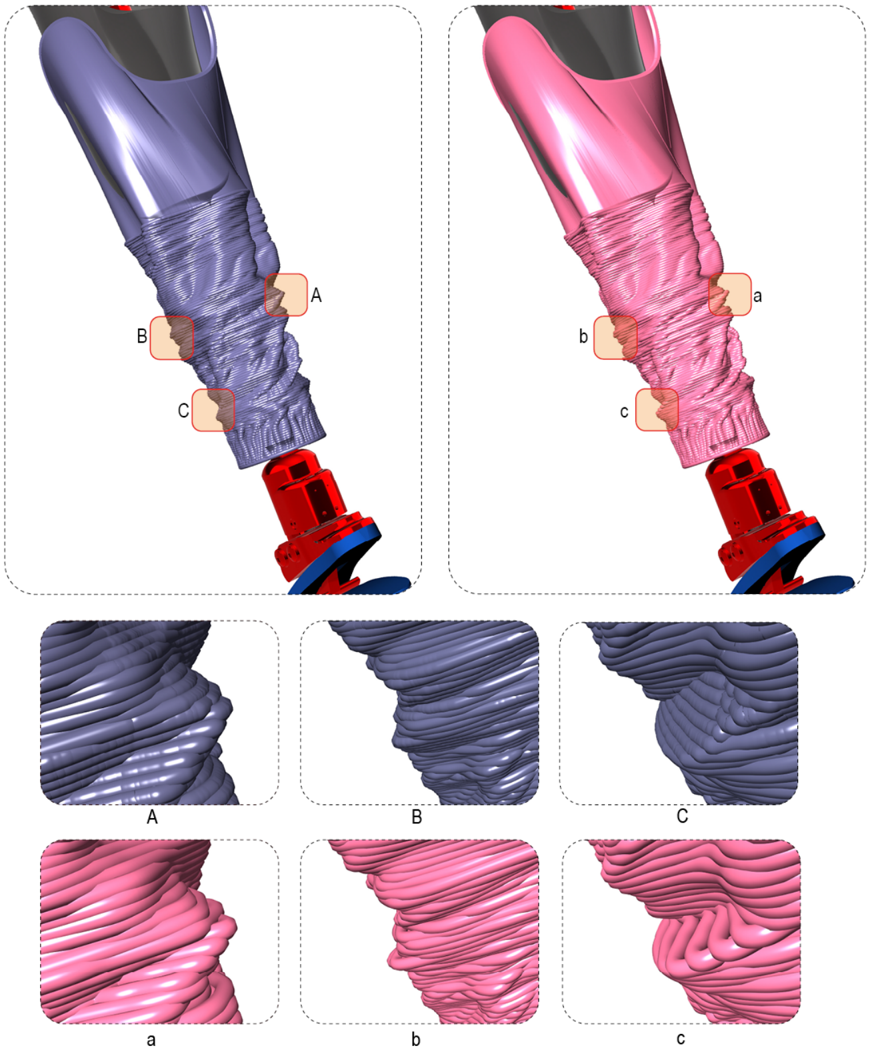
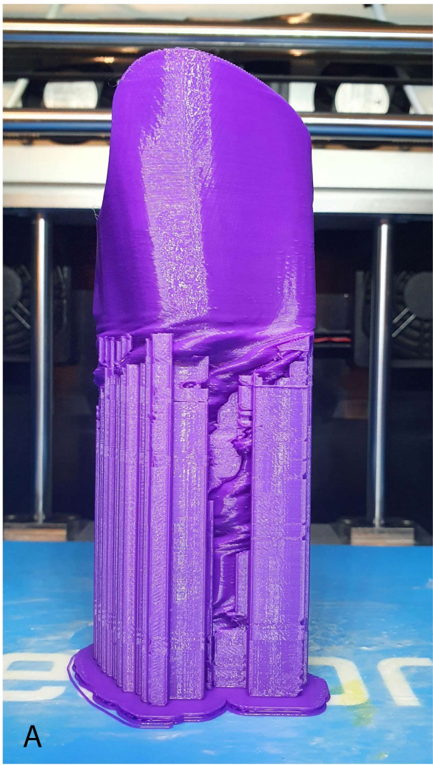
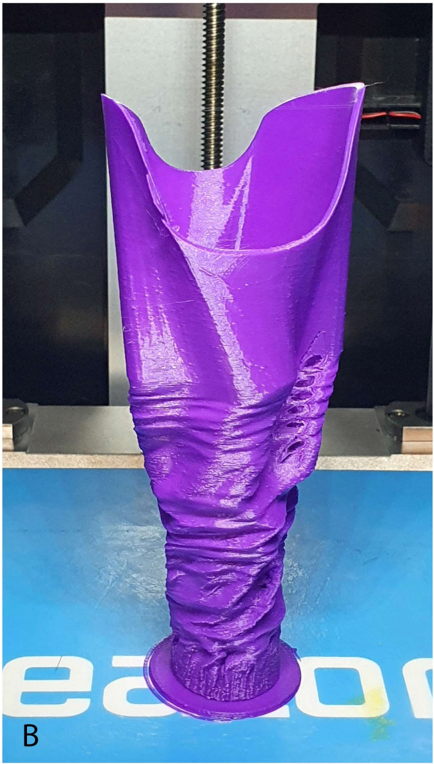
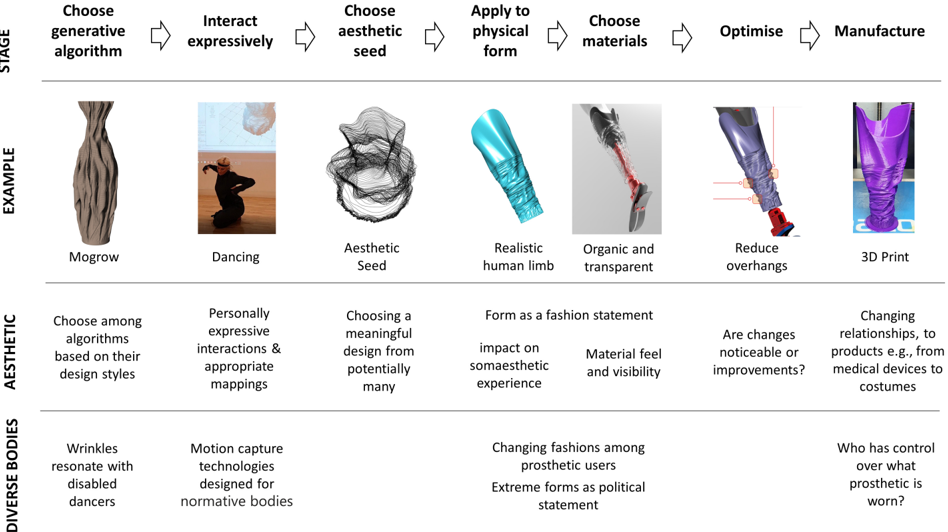
There is a trend for handcrafting bespoke prostheses that embody their wearers’ aesthetic tastes and identities. We explore how this might be extended by enabling users to co-design with algorithms. We report a design-led exploration (Figure 1) in which professional disabled dancers danced with a generative design algorithm to create personalised designs called aesthetic seeds. Further algorithms applied these to prosthetic greaves, rendering them in various materials before optimising for additive manufacture. Interviews with our dancers revealed that the aesthetics of prosthetics reach beyond visual decoration to encompass form, function, bodily experience, body image, and identity; that interactions with generative design algorithms can harness people’s expressive and aesthetic skills; and that we must redesign supporting technologies for diverse bodies. We generalise our findings into a process for how people may co-design 3D printable products with algorithms.
Overview
The claims and statistics of this paper haven’t been checked yet.
Free: it reads the open-access text and checks the first 5 claims that cite a source we can check. Create a free account to check every claim.
Integrity signals
Registry
Cites
Statistics
Figures
Verification
Claims the paper makes
The claims and statistics of this paper haven’t been checked yet.
Free: it reads the open-access text and checks the first 5 claims that cite a source we can check. Create a free account to check every claim.
Claims other papers make about this one
Each is checked against this paper’s own text: does it say what the citing paper says it does?
In the citing paper
“Effective management relies heavily on integrated control mechanisms, including guided input, action coordination frameworks, and robust feedback loops [70, 124, 207].”
From Exploring Collaboration Patterns and Strategies in Human-AI Co-creation through the Lens of Agency: A Scoping Review of the Top-tier HCI Literature (2025) · cites this paper as [207]
In the citing paper
“Zhou et al.'s prosthetic personalization system [207], involving multimodal interaction (movement affecting form generation) and co-operative agency, fits this pattern, likely leveraging guided input.”
From Exploring Collaboration Patterns and Strategies in Human-AI Co-creation through the Lens of Agency: A Scoping Review of the Top-tier HCI Literature (2025) · cites this paper as [207]
Self-check
Percentages, sums and reported differences re-computed from the paper’s own numbers.
The self-check needs the paper’s full text.
Citations
Cites
Co-creation and the new landscapes of design
Sanders, E. B.-N., & Stappers, P. J. (2008) · CoDesign · doi:10.1080/15710880701875068 · Cited by 5,561
Research through design as a method for interaction design research in HCI
Zimmerman, J., Forlizzi, J., & Evenson, S. (2007) · Proceedings of the SIGCHI Conference on Human Factors in Computing Systems · doi:10.1145/1240624.1240704 · Cited by 2,304
Contextmapping: experiences from practice
Visser, F. S., Stappers, P. J., van der Lugt, R., & Sanders, E. B.-N. (2005) · CoDesign · doi:10.1080/15710880500135987 · Cited by 1,007 · cited 1×
“However, appropriate tools must be provided if the consumer is to become a member of the design team as an ‘expert of his/her experiences’ [85].”
BackgroundSiebers, T. (2010) · University of Michigan Press eBooks · doi:10.3998/mpub.1134097 · Cited by 630
Personalization versus Customization: The Importance of Agency, Privacy, and Power Usage
Sundar, S. S., & Marathe, S. S. (2010) · Human Communication Research · doi:10.1111/j.1468-2958.2010.01377.x · Cited by 588 · cited 1×
“when tailoring products, whereas personalisation is algorithmic and data-driven [5, 81].”
BackgroundCo-Design as a Process of Joint Inquiry and Imagination
Steen, M. (2013) · Design Issues · doi:10.1162/desi_a_00207 · Cited by 520
Putting one-to-one marketing to work: Personalization, customization, and choice
Arora, N., Dreze, X., Ghose, A., Hess, J. D., Iyengar, R., Jing, B., Joshi, Y., Kumar, V., Lurie, N., Neslin, S., et al. (2008) · Marketing Letters · doi:10.1007/s11002-008-9056-z · Cited by 480
Towards integrated performance-driven generative design tools
Shea, K., Aish, R., & Gourtovaia, M. (2005) · Automation in Construction · doi:10.1016/j.autcon.2004.07.002 · Cited by 341
Towards an integrated generative design framework
Singh, V., & Gu, N. (2012) · Design Studies · doi:10.1016/j.destud.2011.06.001 · Cited by 317
Designing with the Body: Somaesthetic Interaction Design
Höök, K. (2018) · The MIT Press eBooks · doi:10.7551/mitpress/11481.001.0001 · Cited by 299
Research works printed but not linked: 5
- BELMA Alik and Sonay Ayyildiz. 2016. Fractal and fractal design in architecture. 13th international conference "standardization, prototypes and quality: A means of Balkan countries' collaboration, 3-4.
- Flashforge. 2022. Flashforge Creator 3 FDM 3D Printer Large Build Volume - FlashForge. https://www.fashforge.com/download-center/44
- E B N Sanders. 2006. Nurse and patient participatory workshops for the NBBJ project. Inpatient tower expansion for H. Lee Moftt Cancer Center and Research Institute, Tampa, FL, USA (2006).
- D Shackleton. 2010. Co-Creation and Co-Design in a Post Design Era. Current- Design Research Journal (2010).
- Jianning Su and Shutao Zhang. 2010. Research on product shape innovation design method with human-computer interaction through genetic algorithm. 2010 IEEE 11th International Conference on Computer-Aided Industrial Design & Conceptual Design 1 1, 301-305.
Cited by
Zhang, S., Wang, H., & Yi, X. (2025) · Proceedings of the ACM on Human-Computer Interaction · doi:10.1145/3757594 · Cited by 36
Chen, Q., Shuai, W., Zhang, J., Sun, Z., & Cao, N. (2024) · Proceedings of the CHI Conference on Human Factors in Computing Systems · doi:10.1145/3613904.3642480 · Cited by 20
In the Moment of Glitch: Engaging with Misalignments in Ethical Practice
Garrett, R., Hawkins, K., Brundell, P., Castle-Green, S. D., Tennent, P., Zhou, F., Lampinen, A., Höök, K., & Benford, S. (2025) · CHI Conference on Human Factors in Computing Systems · doi:10.1145/3706598.3713632 · Cited by 18
“…in this project are colleagues rather than recruited participants, who were supported by a team of roboticists, technicians, co-designers who specialize in the development and evaluation of assistive technologies [97, 101], and soma designers who work with the body in interaction design [50, 51].”
Self-citationSarwar, S., & Wilson, D. C. (2025) · ACM Transactions on Accessible Computing · doi:10.1145/3726530 · Cited by 10
“Except for a few cases of bespoke intervention [42] and intimate assistive solutions (prosthetics, orthosis, and wheelchair) [8, 66, 114, 177], this trend seems to be fairly common.”
How Artists Improvise and Provoke Robotics
Benford, S., Garrett, R., Schneiders, E., Tennent, P., Chamberlain, A., Avila, J. P. M., Brundell, P., & Castle-Green, S. D. (2025) · Lecture notes in computer science · doi:10.1007/978-981-96-3525-2_6 · Cited by 14
Self-citationFriction in Processual Ethics: Reconfiguring Ethical Relations in Interdisciplinary Research
Garrett, R., Brundell, P., Castle-Green, S. D., Hawkins, K., Tennent, P., Zhou, F., Lampinen, A., Höök, K., & Benford, S. (2025) · CHI Conference on Human Factors in Computing Systems · doi:10.1145/3706598.3714123 · Cited by 15
“As such, our team was supported by researchers who specialised in developing and evaluating assistive technologies us-ing co-design methods [73, 76] and soma designers, whose methods centre on engaging with the body in design practice [33, 34].”
Self-citationZhang, H., Chen, P., Yang, J., Wu, Y., Jiang, Z., Xie, X., You, W., & Sun, L. (2025) · CHI Conference on Human Factors in Computing Systems · doi:10.1145/3706598.3713528 · Cited by 10
Ramstrand, N., Riveiro, M., Eriksson, L. G., & Ceder, M. (2024) · Journal of Rehabilitation and Assistive Technologies Engineering · doi:10.1177/20556683241289938 · Cited by 3
“10,11 In this study we demonstrate that the perceptions of different prosthetic designs between people classi fi ed as having low, moderate, or high extroversion are quite similar.”
BackgroundGrassroots Maker Perspectives on Participation in Do-It-Yourself Assistive Technology Development
Sarwar, S., Wilson, D. C., & Mahbub, K. (2026) · CHI Conference on Human Factors in Computing Systems · doi:10.1145/3772318.3790477 · Cited by 2
“Moreover, allowing users to assemble with guided instructions creates agency for assistive devices, shifting their relationship with ATs from passive consumption to active creation, as shown in earlier work (section 4.4.4) [8, 65, 67].”
InfluentialCorreia, N. N., Hieda, N., dos Santos, D., Cabral, D., Primett, W., Burloiu, G., Deaconescu, S., Bétourné, C., Levy, M., Sullivan, J., et al. (2026) · International Conference on Movement and Computing (MOCO) · doi:10.1145/3802842.3802874
Moore, A. P., Reardon, I., Ramkissoon, O., Early, F. H., Payerne, E., Ashford, P., Holmes, S., Kelly, M. P., Singh, S., Habib, G. M., et al. (2026) · International Journal of COPD · doi:10.2147/copd.s558338
“…Similarly, the BCW and BCTTv1 taxonomy are often used to specify and categorise BCTs in interventions and to explore the active ingredients associated with improved outcomes 30 In this context, theoretical congruence represents a match between the BCT and the hypothesised mechanism of action (MoA).”
Procedural Design and 3D Printing of Leg Prosthesis Cosmetics Using Rhinoceros and Grasshopper
Cupar, A., Nose, M., Dedić, R., Rašović, N., & Kaljun, J. (2026) · Lecture notes in networks and systems · doi:10.1007/978-3-032-30159-8_20
Wang, M., Aflatoony, L., Hu, Y., Sarwar, S., & Kim, M. (2026) · International ACM SIGACCESS Conference on Computers and Accessibility (ASSETS) · doi:10.1145/3797867.3829015
Metadata
- Authors
- Zhou, F., Benford, S. D., Whatley, S., Marsh, K., Ashcroft, I., Erhart, T., O’Brien, W., & Tennent, P.
- Affiliations
- University of Nottingham (GB)
- University of Nottingham, United Kingdom
- Coventry University (GB)
- professional dancer, United Kingdom
- Warwick, United Kingdom
- ORCID
- Venue
- Proceedings of the 2023 CHI Conference on Human Factors in Computing Systems
- Publisher
- ACM
- Published
- 2023-04-19
- Pages
- 1-19
- OpenAlex
- W4366547553
- Semantic Scholar
- 14eee9ec954774b4aeb46d4e72c53c4c291d6176
- Cited by
- 13
- References
- 72
- Citations by year
- 2026: 5 · 2025: 6 · 2024: 2
- FWCI
- 3.01
- Type
- conference paper
- Language
- en
- Open access
- hybrid
- doi.org
- Licence
- Locations
- CHI Conference on Human Factors in Computing Systems (publishedVersion, cc-by-nc-sa)
- Repository@Nottingham (University of Nottingham) (submittedVersion)
- Pure (Coventry University) (submittedVersion)
- Funders
- Arts and Humanities Research Council (AH/P003702/1, AH/J006491/1)
- Engineering and Physical Sciences Research Council (EP/P027261/1, EP/S023305/1)
- Topics
- Physical Sciences › Computer Science › Human-Computer Interaction › Innovative Human-Technology Interaction
- Health Sciences › Health Professions › Occupational Therapy › Assistive Technology in Communication and Mobility
- Physical Sciences › Engineering › Architecture › Architecture and Computational Design
- Keywords
- generative design, 3D printing, body image, identity, bodily experience
About these checks
Registry, retraction, Cites and statistics results are computed, not judged, with one exception: a printed reference that no index lists is read once by a model before it counts as a citation error. Claims are extracted by a model and kept only when their quote appears verbatim in the text; each cited source is then checked, with a model’s help, for whether it says what the claim relies on. Those verdicts can be wrong — read the claim’s quote and the cited source before relying on one.
Statistics and arithmetic are recomputed, not judged.
Confidence bands are shown only for fields calibrated on our annotated test set. None is calibrated yet, so no band is shown.
What counts as a claim ›How we measure confidence ›How we check this ›
Are you an author, or do you see a problem with this page? Request a review
Data sources
Bibliographic data: Semantic Scholar, OpenAlex, Crossref.
Contains information from the Semantic Scholar Academic Graph Datasets, made available under the ODC Attribution License (ODC-BY 1.0).
Semantic Scholar’s data is described in: Kinney, R., et al. (2023). The Semantic Scholar Open Data Platform. arXiv:2301.10140.
