

Understanding Human-AI Collaboration in Music Therapy Through Co-Design with Therapists
Open accessThe DOI matches its Crossref record; 73 of the 73 references it cites were found in a registry or an index.
Abstract
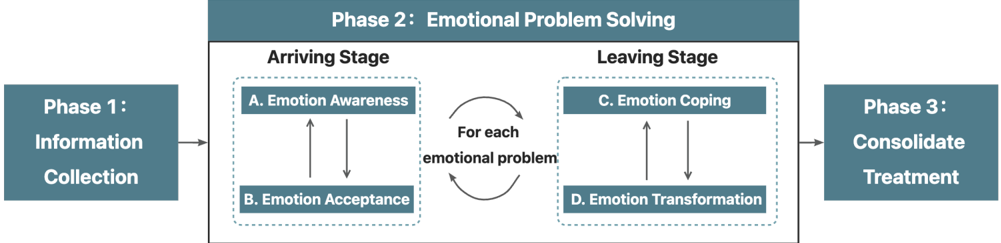
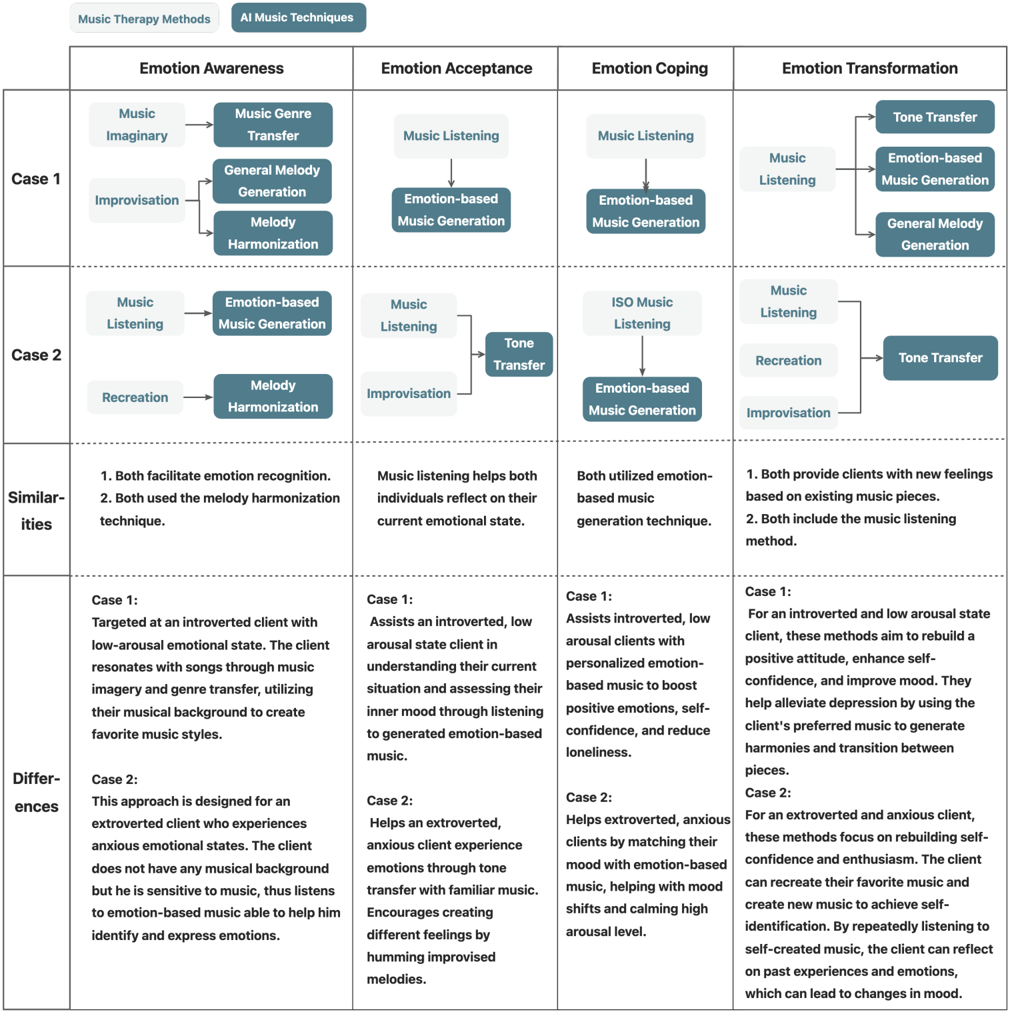
The rapid development of musical AI technologies has expanded the creative potential of various musical activities, ranging from music style transformation to music generation. However, little research has investigated how musical AIs can support music therapists, who urgently need new technology support. This study used a mixed method, including semi-structured interviews and a participatory design approach. By collaborating with music therapists, we explored design opportunities for musical AIs in music therapy. We presented the co-design outcomes involving the integration of musical AIs into a music therapy process, which was developed from a theoretical framework rooted in emotion-focused therapy. After that, we concluded the benefits and concerns surrounding music AIs from the perspective of music therapists. Based on our findings, we discussed the opportunities and design implications for applying musical AIs to music therapy. Our work offers valuable insights for developing human-AI collaborative music systems in therapy involving complex procedures and specific requirements.
Overview
The claims and statistics of this paper haven’t been checked yet.
Free: it reads the open-access text and checks the first 5 claims that cite a source we can check. Create a free account to check every claim.
Integrity signals
Registry
Cites
Statistics
Figures
Verification
Claims the paper makes
The claims and statistics of this paper haven’t been checked yet.
Free: it reads the open-access text and checks the first 5 claims that cite a source we can check. Create a free account to check every claim.
Claims other papers make about this one
Each is checked against this paper’s own text: does it say what the citing paper says it does?
The source backs part of the claim, not all of it — or backs it for a different population, condition or comparison.
In the citing paper
“Mapping interaction flows reveals prevalent patterns and underexplored areas, such as the sparse use of 'Auditory Interaction' [84, 109, 164], signaling innovation opportunities in domains like assistive technology or music co-creation.”
From Exploring Collaboration Patterns and Strategies in Human-AI Co-creation through the Lens of Agency: A Scoping Review of the Top-tier HCI Literature (2025) · cites this paper as [164]
Experimental — accuracy not yet measuredThe source backs part of the claim, not all of it — or backs it for a different population, condition or comparison.
In the citing paper
“Medical AI employs expert-supervised reactive agency, where clinicians maintain final decision-making authority ( reactive ).”
From Exploring Collaboration Patterns and Strategies in Human-AI Co-creation through the Lens of Agency: A Scoping Review of the Top-tier HCI Literature (2025) · cites this paper as [164]
Experimental — accuracy not yet measured
Self-check
Percentages, sums and reported differences re-computed from the paper’s own numbers.
The self-check needs the paper’s full text.
Citations
Cites
PSYCHOLOGICAL CONDITIONS OF PERSONAL ENGAGEMENT AND DISENGAGEMENT AT WORK.
Kahn, W. A. (1990) · Academy of Management Journal · doi:10.2307/256287 · Cited by 10,975 · cited 1×
“The concept of engagement has been defined as associated with cognitive, emotional, and behavioral components [50].”
BackgroundInternational Journal Of Environmental Research And Public Health
Longino, A. (2015) · Wilderness & Environmental Medicine · doi:10.1016/j.wem.2014.12.007 · Cited by 1,120
Personalized medicine: motivation, challenges, and progress
Goetz, L. H., & Schork, N. J. (2018) · Fertility and Sterility · doi:10.1016/j.fertnstert.2018.05.006 · Cited by 976 · cited 1×
“For music therapists, an essential element in personalization is the individual’s musical preferences [31].”
BackgroundRe-examining Whether, Why, and How Human-AI Interaction Is Uniquely Difficult to Design
Yang, Q., Steinfeld, A., Rosé, C., & Zimmerman, J. (2020) · Proceedings of the 2020 CHI Conference on Human Factors in Computing Systems · doi:10.1145/3313831.3376301 · Cited by 622
Sharma, A., Lin, I. W., Miner, A. S., Atkins, D. C., & Althoff, T. (2023) · Nature Machine Intelligence · doi:10.1038/s42256-022-00593-2 · Cited by 500
Greenberg, L. S. (2004) · Clinical Psychology & Psychotherapy · doi:10.1002/cpp.388 · Cited by 489
Proceedings of the 13th International Society for Music Information Retrieval Conference, ISMIR 2012
Gouyon, F., Herrera, P., Martins, L. G., & Müller, M. A. (2012) · Cited by 446
Human-Centered Tools for Coping with Imperfect Algorithms During Medical Decision-Making
Cai, C. J., Reif, E., Hegde, N., Hipp, J., Kim, B., Smilkov, D., Wattenberg, M., Viegas, F., Corrado, G. S., Stumpe, M. C., et al. (2019) · Proceedings of the 2019 CHI Conference on Human Factors in Computing Systems · doi:10.1145/3290605.3300234 · Cited by 405 · cited 1×
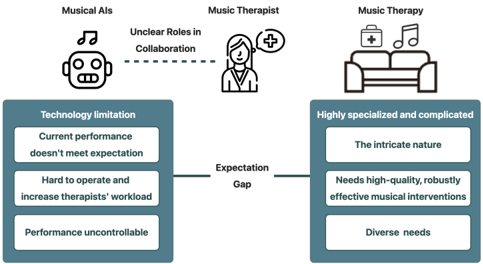
“Our participants point out that current musical AIs have some technical limitations that hinder their ability to provide accurate emotional music for effective therapy interventions, echoing previous work in human-AI collaboration [15, 93].”
BackgroundOh, C., Song, J., Choi, J., Kim, S., Lee, S., & Suh, B. (2018) · Proceedings of the 2018 CHI Conference on Human Factors in Computing Systems · doi:10.1145/3173574.3174223 · Cited by 301
Novice-AI Music Co-Creation via AI-Steering Tools for Deep Generative Models
Louie, R., Coenen, A., Huang, C. Z., Terry, M., & Cai, C. J. (2020) · Proceedings of the 2020 CHI Conference on Human Factors in Computing Systems · doi:10.1145/3313831.3376739 · Cited by 271 · cited 1×
“Growing research interest aims to explore human-AI collaboration in creative music activities, including live performances [9, 37], composition [29, 59], and production [67].”
Background
Research works printed but not linked: 25
- 2. Steven J Ackerman and Mark J Hilsenroth. 2003. A review of therapist charac- teristics and techniques positively impacting the therapeutic alliance. Clinical psychology review 23, 1 (2003), 1-33.
- 11. Gino Brunner, Andres Konrad, Yuyi Wang, and Roger Wattenhofer. 2018. MIDI- VAE: Modeling Dynamics and Instrumentation of Music with Applications to Style Transfer. In Proceedings of the 19th International Society for Music Informa- tion Retrieval Conference, ISMIR 2018, Paris, France, September 23-27, 2018, Emilia
- 14. Leslie Bunt. 2012. Music therapy: A resource for creativity, health and well-being across the lifespan. Musical creativity: Insights from music education research (2012), 165-181.
- 17. Per Carlbring, Heather Hadjistavropoulos, Annet Kleiboer, and Gerhard Ander- sson. 2023. A new era in Internet interventions: The advent of Chat-GPT and AI-assisted therapist guidance. Internet Interventions 32 (2023).
- 19. Caroline Case and Tessa Dalley. 2014. The handbook of art therapy. Routledge.
- Early Intervention Center, Cardiac Rehabilitation Center, and Physical Fitness Center. 2013. Music therapy. (2013).
- 25. Jaime Delgadillo, David Saxon, and Michael Barkham. 2018. Associations be- tween therapists' occupational burnout and their patients' depression and anxi- ety treatment outcomes. Depression and anxiety 35, 9 (2018), 844-850.
- 27. Jesse H. Engel, Lamtharn Hantrakul, Chenjie Gu, and Adam Roberts. 2020. DDSP: Differentiable Digital Signal Processing. In 8th International Conference on Learning Representations, ICLR 2020, Addis Ababa, Ethiopia, April 26-30, 2020. OpenReview.net. https://openreview.net/forum?id=B1x1ma4tDr
- 30. Elżbieta Galińska. 2015. Music therapy in neurological rehabilitation settings. Psychiatria polska 49, 4 (2015), 835-846.
- 32. Jiangtao Gong, Yin Shi, Jue Wang, Danqing Shi, and Yingqing Xu. 2018. Escape from the Dark Jungle: A 3D Audio Game for Emotion Regulation. In Virtual, Augmented and Mixed Reality: Applications in Health, Cultural Heritage, and Industry: 10th International Conference, VAMR 2018, Held as Part of HCI Interna- tional 2018, Las Vegas, NV, USA, July 15-20, 2018, Proceedings, Part II 10. Springer, 57-76.
- 36. Stephane Guetin, F Portet, MC Picot, C Pommié, M Messaoudi, L Djabelkir, AL Olsen, MM Cano, E Lecourt, and J Touchon. 2009. Effect of music therapy on anxiety and depression in patients with Alzheimer's type dementia: randomised, controlled study. Dementia and geriatric cognitive disorders 28, 1 (2009), 36-46.
- 42. Clara E Hill. 2005. Therapist techniques, client involvement, and the therapeutic relationship: Inextricably intertwined in the therapy process. Psychotherapy: theory, research, practice, training 42, 4 (2005), 431.
- 48. Madineh Jasemi, Sanaz Aazami, and Roghaieh Esmaili Zabihi. 2016. The effects of music therapy on anxiety and depression of cancer patients. Indian journal of palliative care 22, 4 (2016), 455.
- 51. Yucheng Jin, Yuanyuan Deng, Jiangtao Gong, Xi Wan, Ge Gao, and Qiany- ing Wang. 2021. OYaYa: A Desktop Robot Enabling Multimodal Interaction with Emotions. In 26th International Conference on Intelligent User Interfaces- Companion. 55-57.
- 54. Eunseo Kim, Jeongmin Hong, Hyuna Lee, and Minsam Ko. 2022. Colorbo: Envi- sioned Mandala Coloringthrough Human-AI Collaboration. In 27th International Conference on Intelligent User Interfaces. 15-26.
- 56. Elise Labbé, Nicholas Schmidt, Jonathan Babin, and Martha Pharr. 2007. Coping with stress: the effectiveness of different types of music. Applied psychophysiol- ogy and biofeedback 32, 3 (2007), 163-168.
- 60. Vittorio Lingiardi, Laura Muzi, Annalisa Tanzilli, and Nicola Carone. 2018. Do therapists' subjective variables impact on psychodynamic psychotherapy outcomes? A systematic literature review. Clinical psychology & psychotherapy 25, 1 (2018), 85-101.
- 63. Raymond MacDonald, Gunter Kreutz, and Laura Mitchell. 2013. Music, health, and wellbeing. Oxford University Press.
- 66. Tencent Meeting. 2022. https://www.tencent.com/en-us/responsibility/combat- covid-19-tencent-meeting.html
- 77. Pablo Perez, Elena Vallejo, Marta Revuelta, María Victoria Redondo Vega, Esther Guervós Sánchez, and Jaime Ruiz. 2022. Immersive Music Therapy for Elderly Patients. In ACM International Conference on Interactive Media Experiences. 47- 52.
- 79. Zipeng Qiu, Ruibin Yuan, Wei Xue, and Yucheng Jin. 2023. Generated Therapeu- tic Music Based on the ISO Principle. In Summit on Music Intelligence. Springer, 32-45.
- 81. Jessica Sharmin Rahman, Tom Gedeon, Sabrina Caldwell, Richard Jones, and Zi Jin. 2021. Towards effective music therapy for mental health care using machine learning tools: human affective reasoning and music genres. Journal of Artificial Intelligence and Soft Computing Research 11 (2021).
- 82. Adam Roberts, Jesse Engel, Colin Raffel, Curtis Hawthorne, and Douglas Eck. 2018. A hierarchical latent vector model for learning long-term structure in music. In International conference on machine learning. PMLR, 4364-4373.
- 86. Markus Schedl, Peter Knees, Brian McFee, Dmitry Bogdanov, and Marius Kamin- skas. 2015. Music recommender systems. Recommender systems handbook (2015), 453-492.
- 89. Clay Spinuzzi. 2005. The methodology of participatory design. Technical communication 52, 2 (2005), 163-174.
Cited by
Zhang, S., Wang, H., & Yi, X. (2025) · Proceedings of the ACM on Human-Computer Interaction · doi:10.1145/3757594 · Cited by 36
“…35, 44, 48, 66, 67, 88, 89, 96, 102, 112, 115, 121, 135, 150, 153, 158, 178, 180, 182, 185, 201] auditory interaction [75, 84, 84, 109, 110, 162, 164, 199] multimodal and hybrid interaction [5, 8, 11, 13, 14, 18, 20, 21, 23, 27, 30, 31, 33, 36, 37, 49, 51, 60, 64, 69, 73, 77, 86, 90, 97, 98,…”
InfluentialA First Look at Generative Artificial Intelligence-Based Music Therapy for Mental Disorders
Shen, L., Zhang, H., Zhu, C., Li, R., Qian, K., Meng, W., Tian, F., Hu, B., Schuller, B. W., & Yamamoto, Y. (2024) · IEEE Transactions on Consumer Electronics · doi:10.1109/tce.2024.3514633 · Cited by 44
Carik, B., Izaac, V. V., Ding, X., Scarpa, A., & Rho, E. H. (2025) · Proceedings of the 2025 CHI Conference on Human Factors in Computing Systems · doi:10.1145/3706598.3714287 · Cited by 21
“Integration of AI-driven features, such as music generation, tone transfer, and transforming sketches into realistic images or artistic styles, expand the potential of these therapeutic methods [32, 112].”
Integrating AI tools for enhanced autism education: a comprehensive review
Adako, O. P., Adeusi, O. C., & Alaba, P. A. (2024) · International Journal of Developmental Disabilities · doi:10.1080/20473869.2024.2392983 · Cited by 28
“Educators and therapists offer crucial social and emotional guidance, bringing qualities like empathy, adaptability, and a nuanced understanding that technology cannot replace (Sun et al. 2024).”
Exploring the Potential of Music Generative AI for Music-Making by Deaf and Hard of Hearing People
Choi, Y., Moon, J., Yoo, J., & Hong, J.-H. (2025) · CHI Conference on Human Factors in Computing Systems · doi:10.1145/3706598.3714298 · Cited by 19
“Sun et al. [73] explored the potential of music GenAI technologies in the field of music therapy by collaboratively designing their integration into emotion-focused therapy with professional music therapists.”
The application of AI-assisted music therapy tools in mental health interventions
Wei, Q., & He, W. (2026) · Frontiers in Psychology · doi:10.3389/fpsyg.2026.1741463 · Cited by 16
“This “AI + music therapy” model aligns with the broader trend of digital health development, providing an innovative solution to the shortage of professional therapists and promoting equitable access to mental health interventions (Sun et al., 2024).”
Breckner, K., Neumayr, T., Mara, M., Streit, M., & Augstein, M. (2025) · International Journal of Human-Computer Interaction · doi:10.1080/10447318.2025.2482742 · Cited by 16
AI in autism education: a review of collaborative and longitudinal approaches
Adako, O. P., Adeusi, O. C., & Alaba, P. A. (2025) · Disability and Rehabilitation Assistive Technology · doi:10.1080/17483107.2025.2579825 · Cited by 11
“…teaching children with ASD, informing the customisation of Ai tools to align with specific learning objectives [14]. therapists offer their understanding of behavioural and developmental aspects, ensuring that Ai interventions are academically beneficial and supportive of overall well-being [15].”
Liu, D., Bai, J., Zhang, Z., Zhang, Y., Zhang, Z., Zhao, J., & An, P. (2025) · Proceedings of the ACM on Interactive Mobile Wearable and Ubiquitous Technologies · doi:10.1145/3749497 · Cited by 18
NoRe: Augmenting Journaling Experience with Generative AI for Music Creation
Park, J., Cho, H., Chu, H., Lee, Y., & Lim, H. (2025) · Designing Interactive Systems Conference · doi:10.1145/3715336.3735845 · Cited by 13
Applications of Artificial Intelligence in Music: A Review
Ma, W., & Zheng, Z. (2025) · International Journal of Crowd Science · doi:10.26599/ijcs.2025.9100011 · Cited by 14
Development of a Tangible Interactive Playware for Autism: Through the Lens of Design Science
Rajendran, D. P. D., Sharma, A., Qiao, H., Sridhar, S., Bagaskara, P. L., Dissanayake, H. A., & Nanayakkara, S. C. (2025) · CHI Conference Extended Abstracts on Human Factors in Computing Systems (CHI EA) · doi:10.1145/3706599.3720176 · Cited by 6
SandTouch: Empowering Virtual Sand Art in VR with AI Guidance and Emotional Relief
Liu, L., Ren, J., Fan, Z., Li, C., He, G., Wang, C., Gao, Y., & Li, C. (2025) · CHI Conference on Human Factors in Computing Systems · doi:10.1145/3706598.3714275 · Cited by 6
Zhao, Q., Jiang, H., Zhang, L., Cui, K., Wu, Z., Zhao, M., Tian, F., & Hu, B. (2025) · IEEE Transactions on Affective Computing · doi:10.1109/taffc.2025.3626385 · Cited by 3
“These technologies enable the objective evaluation of music therapy outcomes and facilitate the development of personalized, data-driven intervention protocols [4], [17], [18], [19].”
Wang, J., Sheng, Y., He, Q., Liu, S., Jing, Y., & He, D. (2025) · CHI Conference Extended Abstracts on Human Factors in Computing Systems (CHI EA) · doi:10.1145/3706599.3720159 · Cited by 5
MVPrompt: Building Music-Visual Prompts for AI Artists to Craft Music Video Mise-en-scène
Lee, C., Lee, D., & Hong, J.-H. (2025) · CHI Conference on Human Factors in Computing Systems · doi:10.1145/3706598.3713876 · Cited by 8
Designing a Generative AI-Assisted Music Psychotherapy Tool for Deaf and Hard-of-Hearing Individuals
Choi, Y., Moon, J., Yoo, J., Kim, J. G., & Hong, J.-H. (2026) · CHI Conference on Human Factors in Computing Systems · doi:10.1145/3772318.3791385 · Cited by 5
“In parallel, the use of creative GenAI has recently expanded in art-based psychotherapy, including visual art, music, and creative writing [42, 46, 84].”
Choi, Y., Yoo, J., Moon, J., Kim, Y., Lee, E. Y., Kim, J. G., & Hong, J.-H. (2026) · CHI Conference on Human Factors in Computing Systems · doi:10.1145/3772318.3791204 · Cited by 4
“Thus, while unembellished outputs are crucial for fostering acceptance, additional design strategies are needed to actively support narrative reframing [26, 33].”
The Possible Effects of Music Therapy Based on Computer Generation on Depression
Chen, H. (2024) · Lecture Notes in Education Psychology and Public Media · doi:10.54254/2753-7048/54/20241584 · Cited by 2
Guo, C. J., Li, A., & Chen, Y. (2025) · Communications in computer and information science · doi:10.1007/978-3-031-94168-9_8 · Cited by 1
Yoo, D., Lopez, D. E. M., Hu, X., Yip, J., & Davis, K. (2026) · International Conference on Human Factors in Computing Systems · doi:10.1145/3772318.3790909 · Cited by 3
A Systematic Review of AI-Based Therapeutic Music Generation Systems
Tandon, A. (2025) · Smart innovation, systems and technologies · doi:10.1007/978-981-96-2124-8_12 · Cited by 1
Human-AI Collaboration Empowered Knowledge-Oriented Agent in Large Language Model
Wang, R., & Gou, J. (2025) · International Conference on Artificial Intelligence and Big Data (ICAIBD) · doi:10.1109/icaibd64986.2025.11082074 · Cited by 1
“Collaboration models need to balance human control and AI autonomy[5].”
Sharrab, Y. O., Jbaily, S., Al-Zu'Bi, S., & Alsmirat, M. A. (2025) · International Conference on Multimedia Computing, Networking and Applications (MCNA) · doi:10.1109/mcna65829.2025.11124391
“Imagine creating personalized auditory environments that promote relaxation for individuals struggling with anxiety or stress [20]; Sun et al., 2024).”
Computer-Generated Music in Patient Treatment: Enhancing Recovery and Well-Being
PALADE, R.-E., Marin, I., Goga, N., Comeagă, A.-M., Popovici, R., Popovici, A.-F., Tacea, F., Goga, M., & Dinu, A. R. (2025) · IEEE International Conference on Blockchain, Smart Healthcare and Emerging Technologies (SmartBlock4Health) · doi:10.1109/smartblock4health64843.2025.11189682
Towards accessible Digital Interfaces for music creativity
Zaccagnino, R., Costagliola, G., Prisco, R. D., Rosa, M. D., Fuccella, V., Malandrino, D., & Salerno, D. (2025) · Biannual Conference of the Italian SIGCHI Chapter (CHItaly) · doi:10.1145/3750069.3750438
Hu, M., & Hou, J. (2026) · The Journal of General Psychology · doi:10.1080/00221309.2026.2656171
“…interaction research has begun to examine therapist co-design and human– AI collaboration in music-therapy settings, suggesting that AI may be most useful when positioned as a transparent support tool within human-led care rather than as an autonomous therapeutic agent (Sun et al., 2024).”
Seah, C., Lee, Y. C., Lee, J.-J., Yen, C. C., & Zheng, C. (2026) · CHI Conference on Human Factors in Computing Systems · doi:10.1145/3772318.3790461 · Cited by 4
Designing Privacy Choice in Generative AI Chatbot Ecosystems
Liu, L., Li, X. A., Lin, A. Y., & Yao, Y. (2026) · CHI Conference on Human Factors in Computing Systems · doi:10.1145/3772318.3790809 · Cited by 1
“GenAI ecosystems are widely applied in diverse domains, including healthcare [51], finance [4], education [27, 53], and personal counseling [44, 50].”
Music Emotion Classification with Audio-Text Fusion
Gao, H., & Xiao, J. (2026) · International Conference on Generative Artificial Intelligence and Digital Media · doi:10.1145/3803730.3803745
Human-Centered AI for Expressive Arts Therapy: Designing for Mental Well-Being and Creativity
Jin, Y., An, P., Cai, W., Yang, J., Chen, L., Moylan, K., Doherty, K., Doherty, G. J., & Gong, J. (2026) · Designing Interactive Systems Conference · doi:10.1145/3802974.3808017
Self-citationYang, M., Park, C., Won, H., Kim, T., Song, H., & Han, J. (2026) · Proceedings of the ACM on Human-Computer Interaction · doi:10.1145/3816903
“In this setting, AI has been increasingly integrated into medical and therapeutic practice [38, 86, 88] and is valued for efficiency and consistency [18, 29, 69].”
Artificial Intelligence Integrated Music Therapy in Digital Therapeutics
Gaba, A., Raut, A., Samantaray, S., & Bondwak, B. (2026) · International Conference on Advancements in Smart, Secure and Intelligent Computing (ASSIC) · doi:10.1109/assic70037.2026.11717394
“…technology have enabled the extraction of intricate audio features such as tonal patterns and therapeutic audio frequencies namely Solfeggio audio, which can be used to personalize music therapy predictions[6]. tics properties, to match music with an individual emotional and therapeutic needs[7].”
EchoWeave: Designing an AI-Driven Conversational Agent System for Product Design Research Interviews
Chen, X., Zhang, L., Xu, L., Bao, L., García, C., & Sareh, P. (2026) · International Journal of Human-Computer Interaction · doi:10.1080/10447318.2026.2744496
Metadata
- Authors
- Sun, J., Yang, J., Zhou, G., Jin, Y., & Gong, J.
- Affiliations
- Tsinghua University (CN)
- Hong Kong Baptist University (HK)
- Venue
- Proceedings of the CHI Conference on Human Factors in Computing Systems
- Publisher
- ACM
- Published
- 2024-05-11
- Pages
- 1-21
- OpenAlex
- W4392120836
- Semantic Scholar
- 08dfb627149c562930b9c22be75382643f0255bc
- Cited by
- 33
- References
- 69
- Citations by year
- 2026: 12 · 2025: 18 · 2024: 3
- FWCI
- 22.16
- Type
- conference paper
- Language
- en
- Open access
- green
- arxiv.org
- Licence
- Locations
- CHI Conference on Human Factors in Computing Systems (publishedVersion)
- arXiv (Cornell University) (submittedVersion, cc-by-nc-sa)
- arXiv (Cornell University)
- Funders
- National Natural Science Foundation Youth Fund (62202267)
- Topics
- Social Sciences › Psychology › Social Psychology › Music Therapy and Health
- Social Sciences › Arts and Humanities › Music › Music Technology and Sound Studies
- Physical Sciences › Computer Science › Human-Computer Interaction › Innovative Human-Technology Interaction
- Keywords
- human-AI collaboration, music therapy, co-design, music therapists, emotion-focused therapy, music generation, therapist perspectives
About these checks
Registry, retraction, Cites and statistics results are computed, not judged, with one exception: a printed reference that no index lists is read once by a model before it counts as a citation error. Claims are extracted by a model and kept only when their quote appears verbatim in the text; each cited source is then checked, with a model’s help, for whether it says what the claim relies on. Those verdicts can be wrong — read the claim’s quote and the cited source before relying on one.
Statistics and arithmetic are recomputed, not judged.
Confidence bands are shown only for fields calibrated on our annotated test set. None is calibrated yet, so no band is shown.
What counts as a claim ›How we measure confidence ›How we check this ›
Are you an author, or do you see a problem with this page? Request a review
Data sources
Bibliographic data: Semantic Scholar, OpenAlex, Crossref.
Contains information from the Semantic Scholar Academic Graph Datasets, made available under the ODC Attribution License (ODC-BY 1.0).
Semantic Scholar’s data is described in: Kinney, R., et al. (2023). The Semantic Scholar Open Data Platform. arXiv:2301.10140.
