

The DOI matches its Crossref record; 80 of the 80 references it cites were found in a registry or an index.
Inflammation and ER Stress Downregulate BDH2 Expression and Dysregulate Intracellular Iron in Macrophages
Open accessAbstract
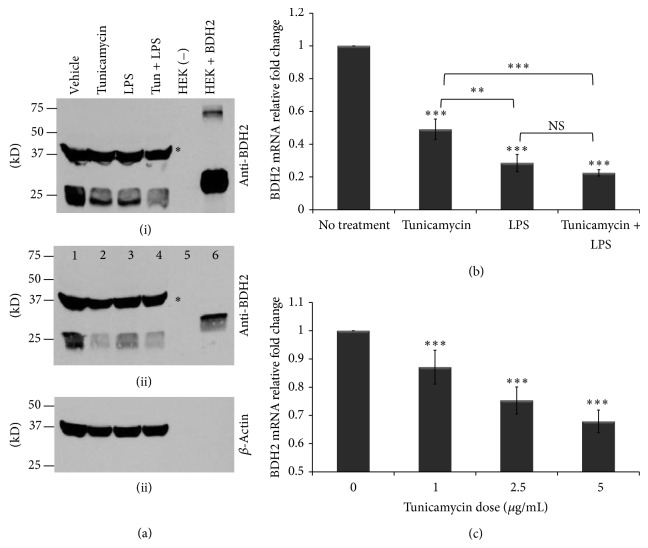
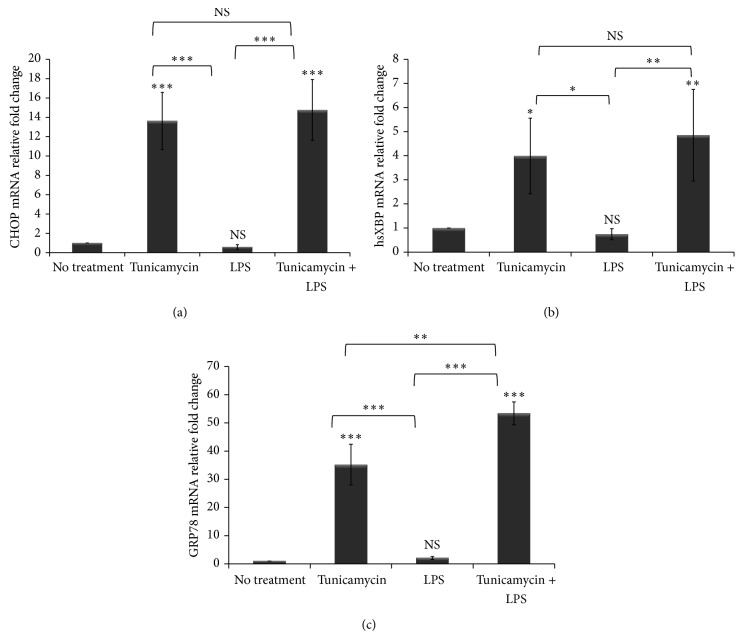
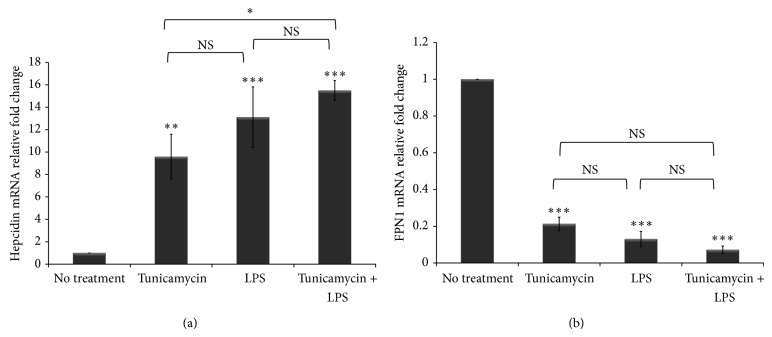
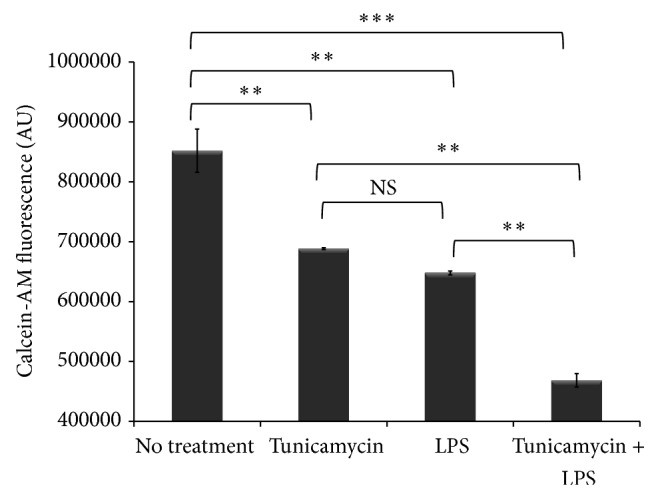
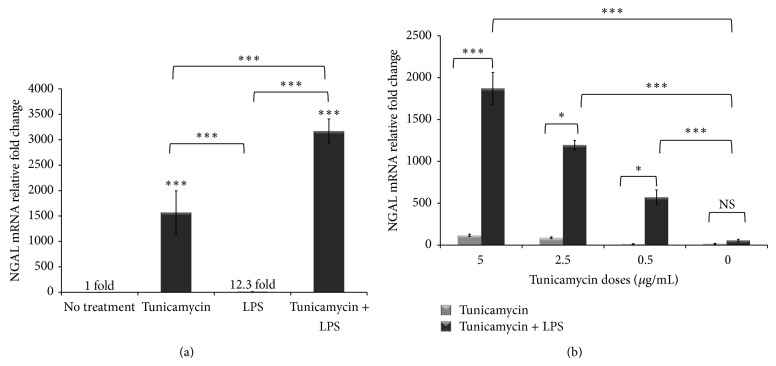
Macrophages play a very important role in host defense and in iron homeostasis by engulfing senescent red blood cells and recycling iron. Hepcidin is the master iron regulating hormone that limits dietary iron absorption from the gut and limits iron egress from macrophages. Upon infection macrophages retain iron to limit its bioavailability which limits bacterial growth. Recently, a short chain butyrate dehydrogenase type 2 (BDH2) protein was reported to contain an iron responsive element and to mediate cellular iron trafficking by catalyzing the synthesis of the mammalian siderophore that binds labile iron; therefore, BDH2 plays a crucial role in intracellular iron homeostasis. However, BDH2 expression and regulation in macrophages have not yet been described. Here we show that LPS-induced inflammation combined with ER stress led to massive BDH2 downregulation, increased the expression of ER stress markers, upregulated hepcidin expression, downregulated ferroportin expression, caused iron retention in macrophages, and dysregulated cytokine release from macrophages. We also show that ER stress combined with inflammation synergistically upregulated the expression of the iron carrier protein NGAL and the stress-inducible heme degrading enzyme heme oxygenase-1 (HO-1) leading to iron liberation. This is the first report to show that inflammation and ER stress downregulate the expression of BDH2 in human THP-1 macrophages.
Overview
The claims and statistics of this paper haven’t been checked yet.
Free: it reads the open-access text and checks the first 5 claims that cite a source we can check. Create a free account to check every claim.
Integrity signals
Registry
Cites
Statistics
Figures


Verification
Claims the paper makes
The claims and statistics of this paper haven’t been checked yet.
Free: it reads the open-access text and checks the first 5 claims that cite a source we can check. Create a free account to check every claim.
Claims other papers make about this one
Each is checked against this paper’s own text: does it say what the citing paper says it does?
The source backs part of the claim, not all of it — or backs it for a different population, condition or comparison.
In the citing paper
“It may be for this reason that TLR ligation, endoplasmatic reticulum stress and T H 17 cytokines result in the down-regulation of BDH2 expression (Zughaier et al., 2014).”
From Iron in infection and immunity (2020) · cites this paper as Zughaier et al., 2014
Experimental — accuracy not yet measuredIn the citing paper
“LPS and endoplasmic reticulum stress downregulate BDH2 expression and modify macrophage iron homeostasis and the iron delivery to pathogens”
From Iron in immune cell function and host defense (2021) · cites this paper as [54]
Self-check
Percentages, sums and reported differences re-computed from the paper’s own numbers.
The self-check needs the paper’s full text.
Citations
Cites
Mosmann, T. (1983) · Journal of Immunological Methods · doi:10.1016/0022-1759(83)90303-4 · Cited by 56,104
Hepcidin Regulates Cellular Iron Efflux by Binding to Ferroportin and Inducing Its Internalization
Nemeth, E., Tuttle, M. S., Powelson, J., Vaughn, M. B., Donovan, A., Ward, D. M., Ganz, T., & Kaplan, J. (2004) · Science · doi:10.1126/science.1104742 · Cited by 4,803
Nemeth, E., Rivera, S., Gabayan, V., Keller, C., Taudorf, S., Pedersen, B. K., & Ganz, T. (2004) · Journal of Clinical Investigation · doi:10.1172/jci200420945 · Cited by 2,650 · cited 13×
“cytokine that plays a significant role in systemic iron metabolism by directly inducing the expression of hepcidin, the master iron-regulating hormone [8].”
BackgroundInfluentialMishra, J., Dent, C., Tarabishi, R., Mitsnefes, M. M., Ma, Q., Kelly, C., Ruff, S. M., Zahedi, K., Shao, M., Bean, J., et al. (2005) · The Lancet · doi:10.1016/s0140-6736(05)74811-x · Cited by 2,394
Lipocalin 2 mediates an innate immune response to bacterial infection by sequestrating iron
Flo, T. H., Smith, K. D., Sato, S., Rodriguez, D. J., Holmes, M. A., Strong, R. K., Akira, S., & Aderem, A. (2004) · Nature · doi:10.1038/nature03104 · Cited by 1,877
Hepcidin, a putative mediator of anemia of inflammation, is a type II acute-phase protein
Nemeth, E., Valore, E. V., Territo, M., Schiller, G., Lichtenstein, A., & Ganz, T. (2003) · Blood · doi:10.1182/blood-2002-10-3235 · Cited by 1,417
Goetz, D. H., Holmes, M. A., Borregaard, N., Bluhm, M. E., Raymond, K. N., & Strong, R. K. (2002) · Molecular Cell · doi:10.1016/s1097-2765(02)00708-6 · Cited by 1,355
Dysmetabolic Hyperferritinemia: All Iron Overload Is Not Hemochromatosis
Makker, J., Hanif, A., Bajantri, B., & Chilimuri, S. (2015) · Case Reports in Gastroenterology · doi:10.1159/000373883 · Cited by 1,351
Use of MTT colorimetric assay to measure cell activation
Gerlier, D., & Thomasset, N. (1986) · Journal of Immunological Methods · doi:10.1016/0022-1759(86)90215-2 · Cited by 1,197
Sindrilaru, A., Peters, T., Wieschalka, S., Baican, C., Baican, A., Peter, H., Hainzl, A., Schatz, S., Qi, Y., Schlecht, A., et al. (2011) · Journal of Clinical Investigation · doi:10.1172/jci44490 · Cited by 1,100 · cited 1×
“Recent evidence showed that iron retention dictates macrophage polarization [5, 57] and induces unrestrained proinflammatory macrophages that impair wound healing [58].”
Background
Research works printed but not linked: 4
- 2010, Postepy Biochemii, 56, 305
- 2002, The Israel Medical Association Journal: IMAJ, 4, 1043
- 2013, Transactions of the American Clinical and Climatological Association, 124, 111
- 2011, Zhongguo Shi Yan Xue Ye Xue Za Zhi, 19, 390
Cited by
Endoplasmic reticulum stress signalling-from basic mechanisms to clinical applications
Almanza, A., Carlesso, A., Chintha, C., Creedican, S., Doultsinos, D., Leuzzi, B., Luís, A., McCarthy, N., Montibeller, L., More, S., et al. (2019) · The FEBS Journal · doi:10.1111/febs.14608 · Cited by 1,034
Iron in infection and immunity
Nairz, M., & Weiss, G. (2020) · Molecular Aspects of Medicine · doi:10.1016/j.mam.2020.100864 · Cited by 359
Iron in immune cell function and host defense
Haschka, D., Hoffmann, A., & Weiss, G. (2021) · Seminars in Cell & Developmental Biology · doi:10.1016/j.semcdb.2020.12.005 · Cited by 188
Liu, J., Hu, Y., Feng, Y., Jiang, Y., Guo, Y., Liu, Y., Chen, X., Yang, J., Chen, Y., Mao, Q.-S., et al. (2020) · Journal of Experimental & Clinical Cancer Research · doi:10.1186/s13046-020-01620-z · Cited by 139
Vascular calcification: Molecular mechanisms and therapeutic interventions
Pan, W. D., Jie, W., & Huang, H. (2023) · MedComm · doi:10.1002/mco2.200 · Cited by 134
Metadata
- Authors
- Zughaier, S. M., Stauffer, B. B., & McCarty, N. A.
- Affiliations
- Emory University (US)
- Corresponding author
- Zughaier, Susu M.
- Venue
- Journal of Immunology Research
- Publisher
- Hindawi Limited
- Published
- 2014
- Volume
- 2014
- Pages
- 1-16
- ISSN
- 2314-7156 (ISSN-L)
- 2314-8861
- PMC
- PMC4267003
- OpenAlex
- W2101874338
- Cited by
- 34
- References
- 80
- Citations by year
- 2026: 1 · 2024: 2 · 2023: 2 · 2022: 8 · 2021: 1 · 2020: 6 · 2019: 7 · 2018: 3 · 2017: 2 · 2016: 2
- FWCI
- 0.95
- Type
- journal article
- Language
- en
- Open access
- gold
- doi.org
- Locations
- Journal of Immunology Research (publishedVersion, cc-by)
- PubMed Central (publishedVersion, cc-by)
- PubMed (publishedVersion)
- DOAJ (DOAJ: Directory of Open Access Journals) (submittedVersion, cc-by-sa)
- Funders
- Emory-Egleston Children’s Research Center
- Topics
- Health Sciences › Medicine › Hematology › Iron Metabolism and Disorders
- Life Sciences › Biochemistry, Genetics and Molecular Biology › Cancer Research › Ferroptosis and cancer prognosis
- Life Sciences › Biochemistry, Genetics and Molecular Biology › Molecular Biology › Heme Oxygenase-1 and Carbon Monoxide
- Keywords
- endoplasmic reticulum stress, inflammation, macrophages, hepcidin, ferroportin, neutrophil gelatinase-associated lipocalin, heme oxygenase-1, lipopolysaccharide, siderophores, cytokine production, THP-1 cells
- MeSH terms
- Lipocalin-2, Acute-Phase Proteins, Cell Line, Endoplasmic Reticulum, Homeostasis, Humans, Hydroxybutyrate Dehydrogenase, Inflammation, Iron, Lipopolysaccharides, Macrophages, Proto-Oncogene Proteins, Stress, Physiological, Down-Regulation, Up-Regulation, Siderophores, Intracellular Space, Heme Oxygenase-1, Lipocalins, Hepcidins
About these checks
Registry, retraction, Cites and statistics results are computed, not judged, with one exception: a printed reference that no index lists is read once by a model before it counts as a citation error. Claims are extracted by a model and kept only when their quote appears verbatim in the text; each cited source is then checked, with a model’s help, for whether it says what the claim relies on. Those verdicts can be wrong — read the claim’s quote and the cited source before relying on one.
Statistics and arithmetic are recomputed, not judged.
Confidence bands are shown only for fields calibrated on our annotated test set. None is calibrated yet, so no band is shown.
What counts as a claim ›How we measure confidence ›How we check this ›
Are you an author, or do you see a problem with this page? Request a review
How to cite
Cite CoChat for the checks on this page, and the paper for its own findings.
- This page
- CoChat. (2026). Citation check: Inflammation and ER Stress Downregulate BDH2 Expression and Dysregulate Intracellular Iron in Macrophages. https://app.cochat.ai/papers/10.1155/2014/140728
- The paper
- Zughaier, S. M., Stauffer, B. B., & McCarty, N. A. (2014). Inflammation and ER Stress Downregulate BDH2 Expression and Dysregulate Intracellular Iron in Macrophages. Journal of Immunology Research. https://doi.org/10.1155/2014/140728
Data sources
Bibliographic data: Semantic Scholar, OpenAlex, Crossref.
Contains information from the Semantic Scholar Academic Graph Datasets, made available under the ODC Attribution License (ODC-BY 1.0).
Semantic Scholar’s data is described in: Kinney, R., et al. (2023). The Semantic Scholar Open Data Platform. arXiv:2301.10140.
