

The DOI matches its Crossref record; 37 of the 37 references it cites were found in a registry or an index.
Topical Application of Retinyl Palmitate-Loaded Nanotechnology-Based Drug Delivery Systems for the Treatment of Skin Aging
Open accessAbstract
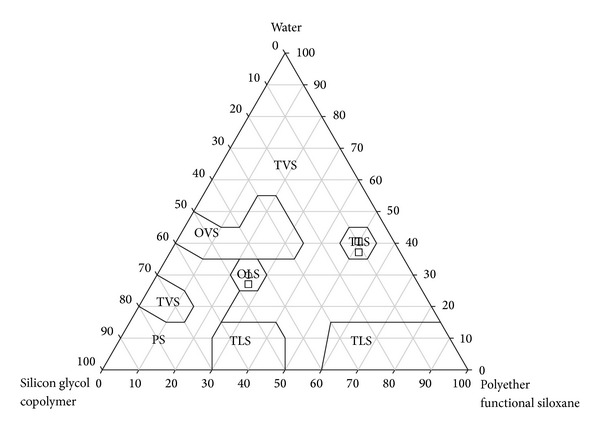
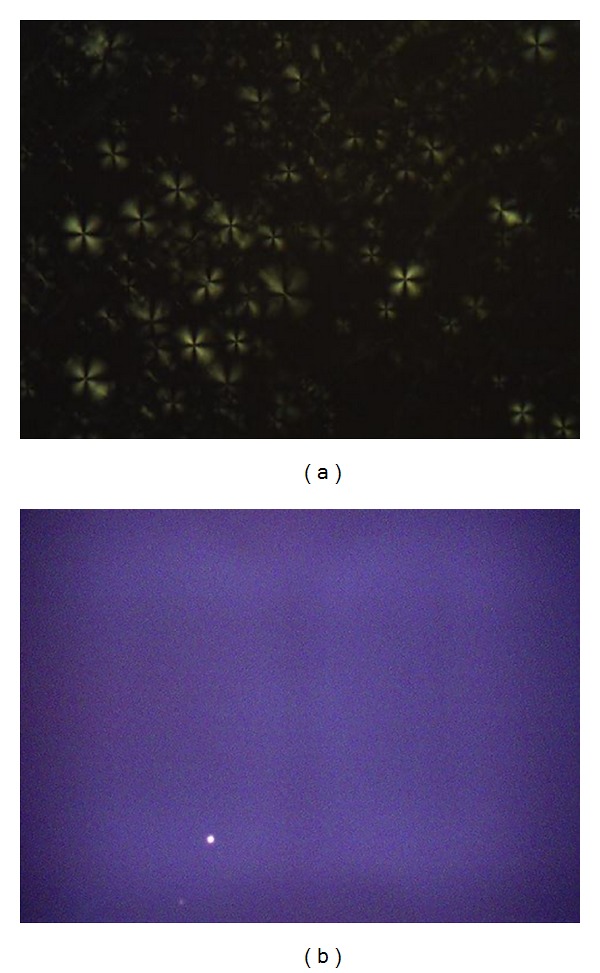
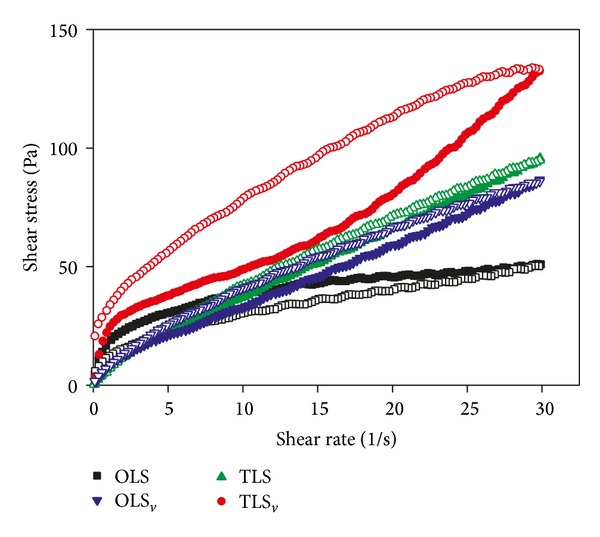
The objective of this study was to perform a structural characterization and evaluate the in vitro safety profile and in vitro antioxidant activity of liquid crystalline systems (LCS) with and without retinyl palmitate (RP). LCS containing polyether functional siloxane (PFS) as a surfactant, silicon glycol copolymer (SGC) as oil phase, and water in the ratios 30 : 25 : 45 and 40 : 50 : 10 with (OLSv= RP-loaded opaque liquid system andTLSv= RP-loaded transparent liquid system, respectively) and without (OLS and TLS, respectively) RP were studied. Samples were characterized using polarized light microscopy (PLM) and rheology analysis.In vitro safety profile was evaluated using red cell hemolysis and in vitro cytotoxicity assays.In vitro antioxidant activity was performed by the DPPH method. PLM analysis showed the presence of lamellar LCS just to TLS. Regardless of the presence of RP, the rheological studies showed the pseudoplastic behavior of the formulations. The results showed that the incorporation of RP in LCS improved the safety profile of the drug.In vitro antioxidant activity suggests that LCS presented a higher capacity to maintain the antioxidant activity of RP. PFS-based systems may be a promising platform for RP topical application for the treatment of skin aging.
Overview
The claims and statistics of this paper haven’t been checked yet.
Run the check — free, no account needed. It reads the open-access text and checks the sources it cites.
Integrity signals
Registry
Cites
Statistics
Figures
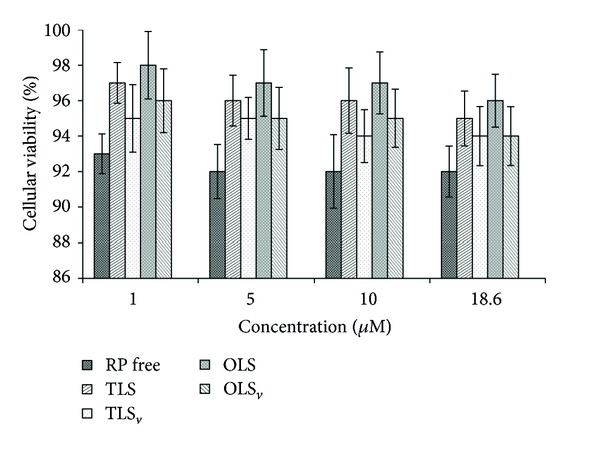
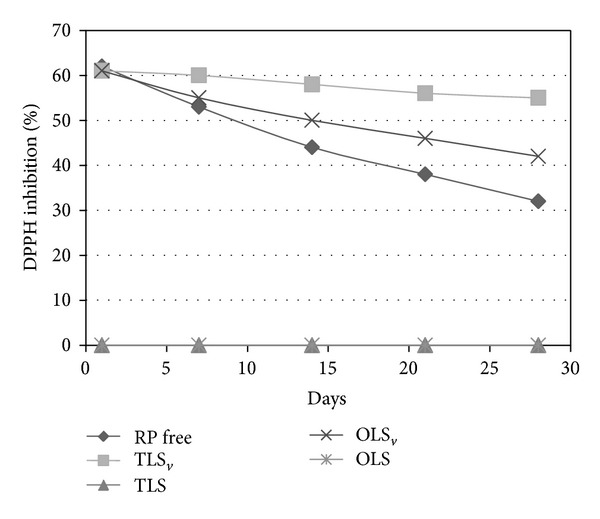
Verification
Claims the paper makes
The claims and statistics of this paper haven’t been checked yet.
Run the check — free, no account needed. It reads the open-access text and checks the sources it cites.
Claims other papers make about this one
Each is checked against this paper’s own text: does it say what the citing paper says it does?
The source backs part of the claim, not all of it — or backs it for a different population, condition or comparison.
In the citing paper
“Retinyl palmitate can be compounded with photostabilizers and UV filters and loaded onto nanotechnology-based drug-delivery systems to improve stability and drug penetration”
From Sunscreens and Photoaging: A Review of Current Literature (2021) · cites this paper as [72]
Experimental — accuracy not yet measured
Self-check
Percentages, sums and reported differences re-computed from the paper’s own numbers.
The self-check needs the paper’s full text.
Citations
Cites
Antioxidant Determinations by the Use of a Stable Free Radical
BLOIS, M. S. (1958) · Nature · doi:10.1038/1811199a0 · Cited by 12,994
Drug Development and Industrial Pharmacy
Rhodes, C. T. (1995) · Drug Development and Industrial Pharmacy · doi:10.3109/03639049509070870 · Cited by 1,258
UV-light-induced signal cascades and skin aging
Rittié, L., & Gary Fisher, J. (2002) · Ageing Research Reviews · doi:10.1016/s1568-1637(02)00024-7 · Cited by 1,011
Nanotechnology-based drug delivery systems and herbal medicines: a review
Silva, P., Bonifácio, B., Ramos, M., Negri, K., Maria Bauab, T., & Chorilli, M. (2013) · International Journal of Nanomedicine · doi:10.2147/ijn.s52634 · Cited by 678
Self-citationInfluence of microemulsions on cutaneous drug delivery
Kreilgaard, M. (2002) · Advanced Drug Delivery Reviews · doi:10.1016/s0169-409x(02)00116-3 · Cited by 629
Overview of skin aging and photoaging.
Helfrich, Y. R., Sachs, D. L., & Voorhees, J. J. (2008) · PubMed · Cited by 259
Antioxidants and vitamins in cosmetics
Lupo, M. P. (2001) · Clinics in Dermatology · doi:10.1016/s0738-081x(01)00188-2 · Cited by 239
Huang, Z.-R., Hua, S.-C., Yang, Y.-L., & Fang, J. (2008) · Acta Pharmacologica Sinica · doi:10.1111/j.1745-7254.2008.00829.x · Cited by 201
Rheological, mechanical, and bioadhesive behavior of hydrogels to optimize skin delivery systems
Carvalho, F. C., Calixto, G. M. F., Hatakeyama, I. N., da Luz, G. M., Gremião, M. P. D., & Chorilli, M. (2012) · Drug Development and Industrial Pharmacy · doi:10.3109/03639045.2012.734510 · Cited by 186
Self-citationRheological behavior and the SPF of sunscreens
Gaspar, L. R., & Campos, P. M. B. G. M. (2002) · International Journal of Pharmaceutics · doi:10.1016/s0378-5173(02)00462-3 · Cited by 172
Norling, T., Lading, P., Engström, S., Larsson, K., Krog, N., & Nissen, S. S. (1992) · Journal Of Clinical Periodontology · doi:10.1111/j.1600-051x.1992.tb02529.x · Cited by 166
Manela-Azulay, M., & Bagatin, E. (2009) · Clinics in Dermatology · doi:10.1016/j.clindermatol.2009.05.010 · Cited by 131
The Nano Man from India: In Celebration of the 60th Birthday of Dr. Hari Singh Nalwa
Schmidt, W. F., & Singh, S. (2014) · Journal of Nanoscience and Nanotechnology · doi:10.1166/jnn.2014.9265 · Cited by 127
Formulation and evaluation of itraconazole via liquid crystal for topical delivery system
Nesseem, D. I. (2001) · Journal of Pharmaceutical and Biomedical Analysis · doi:10.1016/s0731-7085(01)00414-9 · Cited by 119
Vitamin A exerts a photoprotective action in skin by absorbing ultraviolet B radiation
Antille, C., Tran, C., Sorg, O., Carraux, P., Didierjean, L., & Saurat, J.-H. (2003) · Journal of Investigative Dermatology · doi:10.1046/j.1523-1747.2003.12519.x · Cited by 93
Microemulsões e fases líquidas cristalinas como sistemas de liberação de fármacos
Formariz, T. P., Urban, M. C. C., da Silva-Júnior, A. A., Gremião, M. P. D., & de Oliveira, A. G. (2005) · Revista Brasileira De Ciencias Farmaceuticas · doi:10.1590/s1516-93322005000300003 · Cited by 87
Vitamins and photoaging: Do scientific data support their use?
Zussman, J., Ahdout, J., & Kim, J. (2010) · Journal of the American Academy of Dermatology · doi:10.1016/j.jaad.2009.07.037 · Cited by 74 · cited 1×
“A study with 24 Korean women for 24 weeks showed improvement in skin roughness and fine wrinkles [8, 9].”
BackgroundChorilli, M., Prestes, P. S., Rigon, R. B., Leonardi, G. R., Chiavacci, L. A., Sarmento, V. H. V., de Oliveira, A. G., & Scarpa, M. V. (2011) · Colloids and Surfaces B Biointerfaces · doi:10.1016/j.colsurfb.2011.02.027 · Cited by 69
Self-citationAnti-aging products and cosmeceuticals
Glaser, D. A. (2004) · Facial Plastic Surgery Clinics of North America · doi:10.1016/j.fsc.2004.03.004 · Cited by 65
Gonçalez, M. L., Corrêa, M. A., & Chorilli, M. (2013) · BioMed Research International · doi:10.1155/2013/271276 · Cited by 57
Self-citationPathways involved in trifluoperazine-, dibucaine- and praziquantel-induced hemolysis
Malheiros, S. V. P., Meirelles, N. C., & de Paula, E. (2000) · Biophysical Chemistry · doi:10.1016/s0301-4622(99)00125-8 · Cited by 55
Proposed mechanisms of action for retinoid derivatives in the treatment of skin aging
Sorg, O., Kuenzli, S., Kaya, G., & Saurat, J. (2005) · Journal of Cosmetic Dermatology · doi:10.1111/j.1473-2165.2005.00198.x · Cited by 50
Silva, A. C., Santos, D. F. G., Ferreira, D., & Souto, E. B. (2009) · Die Pharmazie · doi:10.31083/ph.2009.8232 · Cited by 47
Cosmeceuticals: focus on topical retinoids in photoaging
Serri, R., & Iorizzo, M. (2008) · Clinics in Dermatology · doi:10.1016/j.clindermatol.2007.09.016 · Cited by 47
Jumaa, M., Kleinebudde, P., & Müller, B. W. (1999) · Pharmaceutica Acta Helvetiae · doi:10.1016/s0031-6865(99)00003-5 · Cited by 46
Hydroxy acids and retinoids in cosmetics
Ramos‐e‐Silva, M., Hexsel, D. M., Rutowitsch, M., et al. (2001) · Clinics in Dermatology · doi:10.1016/s0738-081x(01)00189-4 · Cited by 46
dos Santos, F. K., Garnero, C., de Oliveira, R. N., de Souza, A. L. R., Chorilli, M., Allegretti, S. M., Longhi, M. R., Chaud, M. V., & Gremião, M. P. D. (2014) · Journal of Nanoscience and Nanotechnology · doi:10.1166/jnn.2015.9186 · Cited by 40
Self-citationCytotoxicity Effect of Solid Lipid Nanoparticles on Human Breast Cancer Cell Lines
Abbasalipourkabir, R., Salehzadeh, A., & Abdullah, R. (2011) · Biotechnology(Faisalabad) · doi:10.3923/biotech.2011.528.533 · Cited by 39
Chorilli, M., Prestes, P. S., Rigon, R. B., Leonardi, G. R., Chiavacci, L. A., & Costa, M. V. (2009) · Química Nova · doi:10.1590/s0100-40422009000400035 · Cited by 35
Self-citationEstudo da hidratação da pele por emulsões cosméticas para xerose e sua estabilidade por reologia
Milan, A. L. K., Milão, D., Souto, A. A., & Corte, T. W. F. (2007) · Revista Brasileira De Ciencias Farmaceuticas · doi:10.1590/s1516-93322007000400019 · Cited by 31
Prestes, P. S., Chorilli, M., Chiavacci, L. A., Scarpa, M. V., & Leonardi, G. R. (2009) · Journal of Dispersion Science and Technology · doi:10.1080/01932690903123841 · Cited by 27
Self-citationDesign and Characterization of Silicone and Surfactant Based Systems for Topical Drug Delivery
Oyafuso, M. H., Carvalho, F. C., Chiavacci, L. A., Gremião, M. P. D., & Chorilli, M. (2014) · Journal of Nanoscience and Nanotechnology · doi:10.1166/jnn.2015.9181 · Cited by 26
Self-citationLee, M.-S., Lee, K. H., Sin, H., Um, S., Kim, J., & Koh, B. (2006) · Journal of the American Academy of Dermatology · doi:10.1016/j.jaad.2006.01.013 · Cited by 24
Morais, G. G., dos Santos, O. D. H., OLIVEIRA, W. P. D., & Filho, P. A. R. (2008) · Journal of Dispersion Science and Technology · doi:10.1080/01932690701688581 · Cited by 20
Study of Liquid‐Crystalline Phase Changes during Evaporation in Vegetable Oil Emulsions
dos Santos, O. D. H., de Camargo, M. F. P., de Andrade, F. F., & Filho, P. A. D. R. (2006) · Journal of Dispersion Science and Technology · doi:10.1080/01932690600767023 · Cited by 16
ASPECTOS TEÓRICOS RELACIONADOS À REOLOGIA FARMACÊUTICA
Lahoud, M. H., & Campos, R. (2010) · Visão Acadêmica · doi:10.5380/acd.v11i1.21356 · Cited by 11
Prestes, P. S. (2013) · Journal of Applied Pharmaceutical Science · doi:10.7324/japs.2013.30201 · Cited by 1
Research works printed but not linked: 9
- 2008, Dermatology Nursing, 20, 177
- 2005, Revista Brasileira de Ciências Farmacêuticas, 41, 301
- 2007, Brazilian Journal of Pharmaceutical Sciences, 43
- 2011, Visão Acadêmica, 11
- 2003, Cosmetics and Toiletries, 118, 41
- 2003, Cosmetics & Toiletries, 15, 96
- 2013, Journal of Applied Pharmaceutical Science, 3, 1
- 10.1691/ph.2009.8232 · DOI
- 2014, Journal of Nanoscience and Nanotechnology, 14, 1, 10.1166/jnn.2014.9265 · DOI
Cited by
Sunscreens and Photoaging: A Review of Current Literature
Guan, L. L., Lim, H. W., & Mohammad, T. F. (2021) · American Journal of Clinical Dermatology · doi:10.1007/s40257-021-00632-5 · Cited by 313
Metadata
- Authors
- Oliveira, M. B., Prado, A. H. D., Bernegossi, J., Sato, C. S., Lourenço Brunetti, I., Scarpa, M. V., Leonardi, G. R., Friberg, S. E., & Chorilli, M.
- Affiliations
- Universidade Estadual Paulista (Unesp) (BR)
- Departament of Drugs and Pharmaceuticals, School of Pharmaceutical Sciences, UNESP, 14801-902 Araraquara, SP, Brazil
- Departament of Clinical Analysis, School of Pharmaceutical Sciences, UNESP, 14801-902 Araraquara, SP, Brazil, Brazil
- Universidade Federal de São Paulo (BR)
- Norwegian University of Science and Technology (NO)
- Corresponding author
- Chorilli, Marlus
- ORCID
- Venue
- BioMed Research International
- Publisher
- Wiley
- Published
- 2014
- Volume
- 2014
- Pages
- 1-7
- ISSN
- 1110-7243 (ISSN-L)
- 2314-6133
- 2314-6141
- PMC
- PMC3977527
- OpenAlex
- W1977124446
- Cited by
- 49
- References
- 37
- Citations by year
- 2026: 1 · 2024: 3 · 2023: 2 · 2022: 5 · 2021: 5 · 2020: 9 · 2019: 4 · 2018: 5 · 2017: 3 · 2016: 3 · 2015: 6 · 2014: 3
- FWCI
- 2.84
- Type
- journal article
- Language
- en
- Open access
- hybrid
- doi.org
- Locations
- BioMed Research International (publishedVersion, cc-by)
- Europe PMC (PubMed Central) (publishedVersion, cc-by)
- PubMed Central (publishedVersion, cc-by)
- PubMed (publishedVersion)
- Americanae (AECID Library) (publishedVersion, other-oa)
- Acervo Digital da Universidade Estadual Paulista (Universidade Estadual Paulista) (submittedVersion, other-oa)
- DOAJ (DOAJ: Directory of Open Access Journals) (submittedVersion, cc-by-sa)
- NORA - Norwegian Open Research Archives (submittedVersion, cc-by)
- LA Referencia (Red Federada de Repositorios Institucionales de Publicaciones Científicas) (submittedVersion, other-oa)
- Funders
- Fundação de Amparo à Pesquisa do Estado de São Paulo
- Conselho Nacional de Desenvolvimento Científico e Tecnológico
- Programa de Apoio ao Desenvolvimento Científico
- Topics
- Life Sciences › Pharmacology, Toxicology and Pharmaceutics › Pharmaceutical Science › Advancements in Transdermal Drug Delivery
- Physical Sciences › Chemistry › Physical and Theoretical Chemistry › Surfactants and Colloidal Systems
- Health Sciences › Medicine › Dermatology › Skin Protection and Aging
- Keywords
- retinyl palmitate, skin aging, liquid crystalline systems, topical drug delivery, lamellar phase, rheological properties, shear thinning, cytotoxicity, hemolysis, antioxidant activity, nanotechnology-based drug delivery
- MeSH terms
- Retinyl Esters, Administration, Topical, Diterpenes, Drug Evaluation, Preclinical, Humans, Vitamin A, Skin Aging, Drug Delivery Systems, Nanotechnology
About these checks
Registry, retraction, Cites and statistics results are computed, not judged, with one exception: a printed reference that no index lists is read once by a model before it counts as a citation error. Claims are extracted by a model and kept only when their quote appears verbatim in the text; each cited source is then checked, with a model’s help, for whether it says what the claim relies on. Those verdicts can be wrong — read the claim’s quote and the cited source before relying on one.
Statistics and arithmetic are recomputed, not judged.
Confidence bands are shown only for fields calibrated on our annotated test set. None is calibrated yet, so no band is shown.
What counts as a claim ›How we measure confidence ›How we check this ›
Are you an author, or do you see a problem with this page? Request a review
Data sources
Bibliographic data: Semantic Scholar, OpenAlex, Crossref.
Contains information from the Semantic Scholar Academic Graph Datasets, made available under the ODC Attribution License (ODC-BY 1.0).
Semantic Scholar’s data is described in: Kinney, R., et al. (2023). The Semantic Scholar Open Data Platform. arXiv:2301.10140.
