

Challenges in Interpreting Thyroid Stimulating Hormone Results in the Diagnosis of Thyroid Dysfunction
Open accessThe DOI matches its Crossref record; 63 of the 63 references it cites were found in a registry or an index; 9 of the 87 sources its claims cite were checked for support.
Abstract
The pituitary hormone, thyrotropin (TSH), is regarded as the primary biomarker for evaluating thyroid function and is useful in guiding treatment with levothyroxine for patients with hypothyroidism. The amplified response of TSH to slight changes in thyroid hormone levels provides a large and easily measured signal in the routine care setting. Laboratories provide reference ranges with upper and lower cutoffs for TSH to define normal thyroid function. The upper limit of the range, used to diagnose subclinical (mild) hypothyroidism, is itself a matter for debate, with authoritative guidelines recommending treatment to within the lower half of the range. Concomitant diseases, medications, supplements, age, gender, ethnicity, iodine status, time of day, time of year, autoantibodies, heterophilic antibodies, smoking, and other factors influence the level of TSH, or the performance of current TSH assays. The long-term prognostic implications of small deviations of TSH from the reference range are unclear. Correction of TSH to within the reference range does not always bring thyroid and other biomarkers into range and will not always resolve the patient’s symptoms. Overt hypothyroidism requires intervention with levothyroxine. It remains important that physicians managing a patient with symptoms suggestive of thyroid disease consider all of the patient’s relevant disease, lifestyle, and other factors before intervening on the basis of a marginally raised TSH level alone. Finally, these limitations of TSH testing mitigate against screening the population for the undoubtedly substantial prevalence of undiagnosed thyroid disease, until appropriately designed randomised trials have quantified the benefits and harms from this approach.
Overview
CoChat Summary
TL;DR
This narrative review argues that TSH is the primary biomarker for thyroid dysfunction but that its interpretation is complicated by demographic, disease, medication, assay, and temporal factors, and by uncertain reference-range cutoffs. It concludes that clinicians should not treat a marginally raised TSH alone and that population screening lacks sufficient evidence.
Key findings
- Guidelines cite an adult TSH reference and therapeutic target range of 0.4–4.0 mIU/mL; subclinical hypothyroidism is TSH above the reference with normal thyroid hormones, and NICE recommends controlling TSH to 0.4–2.5 mIU/L for most people with treated subclinical hypothyroidism.
- TSH upper reference limits vary with age: in about 150,000 thyroid antibody-negative people, the 97.5th percentile increased from 3.98 mIU/L at age 31–40 to 5.94 mIU/L at age >90 years; higher TSH is also seen in women and in some ethnic groups.
- Many factors affect TSH or TSH assays, including medications/supplements (e.g., metformin lowers TSH), assay interference estimated in almost 1% of all thyroid function tests, macro-TSH, heterophilic antibodies, biotin, diurnal/circannual variation, pregnancy, obesity, smoking, and endocrine disruptors.
- Small TSH elevations may resolve: 37/40 people with subclinical hypothyroidism (TSH >5 mIU/L) reverted to normal over 5 years; undiagnosed thyroid disease prevalence was about 6% in NHANES III and about 5% undiagnosed hypothyroidism and 2% undiagnosed hyperthyroidism in a European meta-analysis, but screening is not supported by current evidence.
Methods
- Narrative review summarizing the evidence-based rationale for current thyroid testing and common pitfalls in interpreting TSH results.
- No primary data or systematic sample; it draws on published studies, guidelines, and reviews, including large population cohorts and meta-analyses.
- Main analysis is a qualitative synthesis of factors affecting TSH and reference ranges; no meta-analysis or formal risk-of-bias assessment is described.
Limitations
- The paper states that the upper TSH cutoff best predicting prognosis remains uncertain, the long-term prognostic implications of small TSH deviations are unclear, evidence is insufficient for population screening and for individualized/optimal TSH ranges, and easily measurable biomarkers of tissue thyroid hormone status are needed.
- Evident from the text: as a narrative review, it does not report a systematic search strategy, study selection, or quality appraisal, and it presents no primary data.
Model-written summary. Check it against the paper before relying on it.
Integrity signals
Registry
Cites
Statistics
Figures
Verification
Claims the paper makes
8 Valid · 4 Not valid · 56 Not checked · 17 Own results and interpretations
Every source the paper cites for this claim was checked and supports it.
In the paper
“Treatment with levothyroxine has been shown to influence an individual's set point for thyroid function, with higher FT4 and lower FT3, despite a lower TSH level compared with untreated patients [42].”
§ Challenges in Interpreting Thyroid Stimulating Hormone Results in the Diagnosis of Thyroid Dysfunction > 3. Serum TSH as the Principal Diagnostic Marker of Systemic Thyroid Status > 3.2. Limitations of TSH as a Diagnostic Marker of Thyroid Function
What the sources say
- Supportedcites [42] Hoermann R. Midgley J. E. M. Giacobino A. Homeostatic equilibria between free thyroid hormones and pituitary thyrotropin are modulated by various influences including age, body mass index and treatment Clinical Endocrinology 2014 81 6 907 915 10.1111/cen.12527 2-s2.0-84912530723 24953754 source
The Influence of L-T4 treatment section reports that treated patients with autoimmune thyroiditis had lower FT3 and higher TSH-adjusted FT4 than untreated patients; the Discussion also notes lower TSH in the treated group. The paper describes these differences as modified homeostatic equilibria, supporting the paraphrase about a changed thyroid-function set point. Page numbers were not available in our copy. (LLM, conf=0.91)
plainstates a cause- Asserted: passes — The authors put it forward as true.
- Checkable: passes — It can be checked against evidence.
- Load-bearing: unclear — It is unclear whether the paper’s conclusions depend on it.
- Based: passes — The paper gives a reason why it holds.
- Supported
The cited sources support only part of this claim — read each source’s verdict below.
In the paper
“Biotin, antistreptavidin antibodies, antiruthenium antibodies, and thyroid hormone autoantibodies provide other sources of interference with the TSH test that may lead to an aberrant result [36].”
§ Challenges in Interpreting Thyroid Stimulating Hormone Results in the Diagnosis of Thyroid Dysfunction > 3. Serum TSH as the Principal Diagnostic Marker of Systemic Thyroid Status > 3.2. Limitations of TSH as a Diagnostic Marker of Thyroid Function
What the sources say
- Partly supportedcites [36] Favresse J. Burlacu M.-C. Maiter D. Gruson D. Interferences with thyroid function immunoassays: clinical implications and detection algorithm Endocrine Reviews 2018 39 5 830 850 10.1210/er.2018-00119 2-s2.0-85054467081 29982406 sourceExperimental — accuracy not yet measured
The Abstract (our copy) names exactly these agents among the six main interferences affecting TSH, FT4 and FT3 measurements, and the body documents TSH-specific distortion for three of them: biotin causing 'falsely low TSH levels' (Biotin Interference), anti-streptavidin antibodies with 'TSH ↓' (Table 3 / Anti-Streptavidin Antibody Interference), and anti-Ru antibodies that 'may also induce elevated TSH' (Anti-Ru Interference). The fourth item is not supported for TSH: the TH Autoantibody Interference section states that anti-T3/anti-T4 THAAbs are the ones that interfere in thyroid hormone measurements and that 'In patients known to exhibit THAAbs, TSH measurement provides the most reliable thyroid function test' — i.e. THAAbs are presented as an interference with FT3/FT4, not with the TSH assay. The hedged 'may lead to an aberrant result' matches the source's own wording. (LLM, conf=0.78)
hedgedstates a possible cause- Asserted: passes — The authors put it forward as true.
- Checkable: passes — It can be checked against evidence.
- Load-bearing: passes — The paper’s conclusions depend on it.
- Based: passes — The paper gives a reason why it holds.
- Partly supported
The cited sources support only part of this claim — read each source’s verdict below.
In the paper
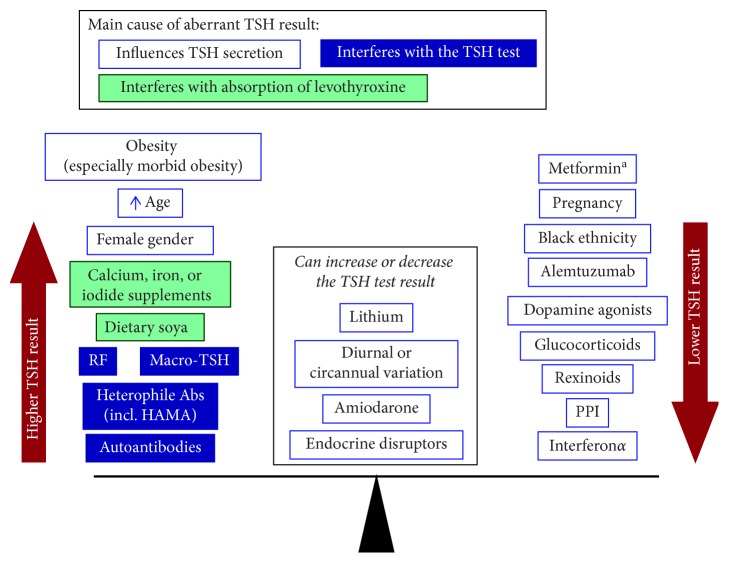
“Numerous concurrent medications and supplements can interfere with thyroid function tests (summarised in Figure 1) [27, 28].”
§ Challenges in Interpreting Thyroid Stimulating Hormone Results in the Diagnosis of Thyroid Dysfunction > 3. Serum TSH as the Principal Diagnostic Marker of Systemic Thyroid Status > 3.2. Limitations of TSH as a Diagnostic Marker of Thyroid Function
What the sources say
- Not checked yetcites [27] Faix J. D. Thienpoint L. M. Thyroid-Stimulating Hormone. Why Efforts to Harmonize Testing are Critical to Patient Care 2013 Washington, DC, USA American Association of Clinical Chemists https://www.aacc.org/publications/cln/articles/2013/may/tsh-harmonization
- Partly supportedcites [28] Koulouri O. Moran C. Halsall D. Chatterjee K. Gurnell M. Pitfalls in the measurement and interpretation of thyroid function tests Best Practice & Research Clinical Endocrinology & Metabolism 2013 27 6 745 762 10.1016/j.beem.2013.10.003 2-s2.0-84888313903 24275187 PMC3857600 sourceExperimental — accuracy not yet measured
The 'Drug therapy' section of Koulouri et al. (2013) supports the medications half of the claim: it opens 'An array of commonly prescribed drugs may result in altered thyroid function/status, either by modulating the HPT axis itself, or through downstream effects on thyroid hormone transport or metabolism', and goes on to list numerous agents (oral oestrogen, raloxifene, tamoxifen, mitotane, fluorouracil, methadone, heroin, androgens, glucocorticoids, nicotinic acid for TBG changes; furosemide, aspirin, NSAIDs, phenytoin and heparin for T4/T3 displacement distorting FT4/FT3 measurement), with Table 3 cataloguing drugs altering pituitary TSH or thyroidal T4/T3 secretion. However, no passage of our copy addresses supplements: searches for 'supplements', 'biotin' and 'nutritional' returned only these drug/assay-interference passages and reference-list entries, so the supplement component of the claim is not attributable to this source (it presumably rests on the companion citation [28]). (LLM, conf=0.78)
plainstates a cause- Asserted: passes — The authors put it forward as true.
- Checkable: passes — It can be checked against evidence.
- Load-bearing: passes — The paper’s conclusions depend on it.
- Based: passes — The paper gives a reason why it holds.
The paper states this without a source or data behind it here, so there is nothing to check it against. The quote shows it is in the paper.
In the paper
“Importantly, a halving of circulating T4 is accompanied by up to a 100-fold increase in serum TSH.”
§ Challenges in Interpreting Thyroid Stimulating Hormone Results in the Diagnosis of Thyroid Dysfunction > 2. Overview of TSH and Relationship with Thyroid Hormones
plainstates an association- Asserted: passes — The authors put it forward as true.
- Checkable: passes — It can be checked against evidence.
- Load-bearing: passes — The paper’s conclusions depend on it.
- Based: unclear — It is unclear why the paper says it holds.
None of the sources cited for this claim have been checked yet.
In the paper
“A diurnal variation exists for TSH levels in euthyroid and hypothyroid patients (treated or untreated), with lower values in the daytime [44, 45].”
§ Challenges in Interpreting Thyroid Stimulating Hormone Results in the Diagnosis of Thyroid Dysfunction > 3. Serum TSH as the Principal Diagnostic Marker of Systemic Thyroid Status > 3.2. Limitations of TSH as a Diagnostic Marker of Thyroid Function
What the sources say
- Not checked yetcites [44] Warade J. Pandey A. Diurnal variation of TSH: factor affecting interpretation of test Journal of Pharmaceutical and Biomedical Analysis 2014 04 9 776 780
- Not checked yetcites [45] Weeke J. Laurberg P. Diurnal TSH variations in hypothyroidism The Journal of Clinical Endocrinology & Metabolism 1976 43 1 32 37 10.1210/jcem-43-1-32 2-s2.0-0017099609 985825 source
plainstates an association- Asserted: passes — The authors put it forward as true.
- Checkable: passes — It can be checked against evidence.
- Load-bearing: unclear — It is unclear whether the paper’s conclusions depend on it.
- Based: passes — The paper gives a reason why it holds.
22 more claims
Create a free account to see all 85 claims and to verify the 78 references still open.
- It may state two separate claims as one. 32
- Probably not a substantial claim. 36
Claims other papers make about this one
Each is checked against this paper’s own text: does it say what the citing paper says it does?
The cited source says what the claim attributes to it.
In the citing paper
“However, serum TSH levels may be influenced by numerous factors, such as ethnicity, gender, age [1,2,22] and pregnancy; for the latter specific reference interval related to age of gestation are required [23,24].”
The cited source says what the claim attributes to it.
In the citing paper
“Considering the diurnal variation of especially TSH [22]”
In the citing paper
“The current TSH reference interval, especially the upper limit, is still under debate [22,25,26], due to the possible high prevalence of subclinical thyroid diseases that makes it difficult to identify truly healthy subjects.”
In the citing paper
“Mean TSH was lower in those who received T3 vs.only LT4 (1.1 vs. 2.1 mIU/L), though both mean values were within the usual reference range for TSH 10 .”
From A review of the safety of triiodothyronine in combination with levothyroxine for the management of hypothyroidism (2024) · cites this paper as [10]
Self-check
Percentages, sums and reported differences re-computed from the paper’s own numbers.
Each contradiction between two passages listed here was confirmed by an independent check.
Rated minor: it would not touch a result — a value no result rests on, a p-value that stays on the same side of the significance level, or a conflict that is clerical, resolved elsewhere in the paper, or outside its own findings.
In the paper
§ Challenges in Interpreting Thyroid Stimulating Hormone Results in the Diagnosis of Thyroid Dysfunction > 3. Serum TSH as the Principal Diagnostic Marker of Systemic Thyroid Status > 3.1. Evolution of the TSH Test
“Guidelines cite a reference and therapeutic target range for TSH to define normal thyroid function in adults at 0.4–4.0 mIU/mL [9].”
§ Challenges in Interpreting Thyroid Stimulating Hormone Results in the Diagnosis of Thyroid Dysfunction > 3. Serum TSH as the Principal Diagnostic Marker of Systemic Thyroid Status > 3.2. Limitations of TSH as a Diagnostic Marker of Thyroid Function
“Guidance from the UK National Institute for Health and Care Excellence (NICE) recommends controlling TSH to the lower half of the reference range (0.4–2.5 mIU/L) for most people with subclinical hypothyroidism who require treatment [8].”
Citations
Cites
Hollowell, J. G., Staehling, N. W., Flanders, W. D., Hannon, W. H., Gunter, E. W., Spencer, C. A., & Braverman, L. E. (2002) · The Journal of Clinical Endocrinology & Metabolism · doi:10.1210/jc.87.2.489 · Cited by 4,279 · cited 4×
“non-Hispanic black orMexican American subjects [24].”
BackgroundResultInfluentialStagnaro-Green, A., Abalovich, M., Alexander, E., Azizi, F., Mestman, J., Negro, R., Nixon, A., Pearce, E. N., Soldin, O. P., Sullivan, S., et al. (2011) · Thyroid · doi:10.1089/thy.2011.0087 · Cited by 2,942
Alexander, E. K., Pearce, E. N., Brent, G. A., Brown, R. S., Chen, H., Dosiou, C., Grobman, W. A., Laurberg, P., Lazarus, J. H., Mandel, S. J., et al. (2017) · Thyroid® · doi:10.1089/thy.2016.0457 · Cited by 2,731 · cited 1×
“Current guidelines for the management of thyroid disease accept the need for a lower upper limit of the reference range during different stages of pregnancy, but differences between populations in the magnitude of the effect of pregnancy on thyroid hormone levels have been observed [8, 48].”
BackgroundThyroid Hormone Regulation of Metabolism
Mullur, R., Liu, Y.-Y., & Brent, G. A. (2014) · Physiological Reviews · doi:10.1152/physrev.00030.2013 · Cited by 2,421
Jonklaas, J., Bianco, A. C., Bauer, A. J., Burman, K. D., Cappola, A. R., Celi, F. S., Cooper, D. S., Kim, B. W., Peeters, R. P., Rosenthal, M. S., et al. (2014) · Thyroid® · doi:10.1089/thy.2014.0028 · Cited by 1,928 · cited 3×
“(e management of overt thyroid dysfunction is not disputed, and there is widespread agreement that this condition should be treated [8, 9].”
BackgroundGlobal epidemiology of hyperthyroidism and hypothyroidism
Taylor, P. N., Albrecht, D., Scholz, A., Gutierrez-Buey, G., Lazarus, J. H., Dayan, C. M., & Okosieme, O. E. (2018) · Nature Reviews Endocrinology · doi:10.1038/nrendo.2018.18 · Cited by 1,552
2013 ETA Guideline: Management of Subclinical Hypothyroidism
Pearce, S. H. S., Brabant, G., Duntas, L. H., Monzani, F., Peeters, R. P., Razvi, S., & Wemeau, J.-L. (2013) · European Thyroid Journal · doi:10.1159/000356507 · Cited by 877
Self-citationThe Incidence and Prevalence of Thyroid Dysfunction in Europe: A Meta-Analysis
Garmendia Madariaga, A., Santos Palacios, S., Guillén-Grima, F., & Galofré, J. C. (2014) · The Journal of Clinical Endocrinology & Metabolism · doi:10.1210/jc.2013-2409 · Cited by 800 · cited 2×
“A meta-analysis of studies from Europe found a high prevalence of undiagnosed hypothyroidism of about 5% and of undiagnosed hyperthyroidism of about 2% [5].”
BackgroundAndersen, S., Pedersen, K. M., Bruun, N. H., & Laurberg, P. (2002) · The Journal of Clinical Endocrinology & Metabolism · doi:10.1210/jcem.87.3.8165 · Cited by 686 · cited 1×
“Longitudinal measurement of thyroid hormones in healthy individuals has shown that levels of T3, T4, and FT4 index vary little over time [38].”
BackgroundThe Evidence for a Narrower Thyrotropin Reference Range Is Compelling
Wartofsky, L., & Dickey, R. A. (2005) · The Journal of Clinical Endocrinology & Metabolism · doi:10.1210/jc.2005-0455 · Cited by 424 · cited 1×
“5mIU/L and people with higher values were likely to have Hashimoto’s thyroiditis or other conditions that increase TSH [56].”
Background
Research works printed but not linked: 4
- Shahid M. A. Sharma S. Physiology, Thyroid Hormone 2019 Treasure Island, FL, USA Stat Pearls https://www.ncbi.nlm.nih.gov/books/NBK500006
- Spencer C. A. De Groot L. J. Chrousos G. Dungan K. Assay of Thyroid Hormones and Related Substances 2017 San Francisco, CA, USA South Dartmouth: MDText.com, Inc. https://www.thyroidmanager.org/chapter/assay-of-thyroid-hormones-and-related-substances3
- Warade J. Pandey A. Diurnal variation of TSH: factor affecting interpretation of test Journal of Pharmaceutical and Biomedical Analysis 2014 04 9 776 780
- Helfand M. Stone M. B. Wallace R. B. Appendix B. Screening for thyroid disease: systematic evidence review Medicare Coverage of Routine Screening for Thyroid Dysfunction. Institute of Medicine (US) Committee on Medicare Coverage of Routine Thyroid Screening 2003 Washington, DC, USA National Academies Press (US) https://www.ncbi.nlm.nih.gov/books/NBK221542/ 25057658
Cited by
Individualized Therapy for Hypothyroidism: Is T4 Enough for Everyone?
Ettleson, M. D., & Bianco, A. C. (2020) · The Journal of Clinical Endocrinology & Metabolism · doi:10.1210/clinem/dgaa430 · Cited by 75
The role of thyroid function in female and male infertility: a narrative review
Mazzilli, R., Medenica, S., Tommaso, A. M. D., Fabozzi, G., Zamponi, V., Cimadomo, D., Rienzi, L. F., Ubaldi, F. M., Watanabe, M., Faggiano, A., et al. (2022) · Journal of Endocrinological Investigation · doi:10.1007/s40618-022-01883-7 · Cited by 102
“Several studies suggest that fetal exposure to excessive levels of maternal thyroid hormone induces low birth weight, intrauterine growth restriction and stillbirth; furthermore, this condition could be related to seizure and neurobehavioral disorders in the offspring [30, 31].”
Vegan nutrition: a preliminary guide for health professionals
Koeder, C., & Pérez-Cueto, F. J. A. (2022) · Critical Reviews in Food Science and Nutrition · doi:10.1080/10408398.2022.2107997 · Cited by 80
Urgatz, B., & Razvi, S. (2023) · Current Medical Research and Opinion · doi:10.1080/03007995.2023.2165811 · Cited by 82
Self-citationOptical Detection of Cancer Cells Using Lab-on-a-Chip
Hernández, L. A. G., Martínez‐Martínez, E., Pazos-Solis, D. M., Aguado-Preciado, J., Dutt, A., Chávez-Ramírez, A. U., Korgel, B. A., Sharma, A. K., & Oza, G. (2023) · Biosensors · doi:10.3390/bios13040439 · Cited by 54
“The early diagnosis of thyroid cancer is crucial, and thyroid-stimulating hormone (TSH) is a widely used biomarker for this purpose [50].”
BackgroundBottani, M., Aarsand, A. K., Banfi, G., Locatelli, M., Coşkun, A., Díaz-Garzón, J., Fernandez-Calle, P., Sandberg, S., Ceriotti, F., & Carobene, A. (2022) · Clinical Chemistry and Laboratory Medicine (CCLM) · doi:10.1515/cclm-2020-1885 · Cited by 46
“The current TSH reference interval, especially the upper limit, is still under debate [22, 25, 26], due to the possible high prevalence of subclinical thyroid diseases that makes it difficult to identify truly healthy subjects.”
InfluentialChrysant, S. G. (2020) · International Journal of Clinical Practice · doi:10.1111/ijcp.13499 · Cited by 52
Low awareness and under-diagnosis of hypothyroidism
Gottwald‐Hostalek, U., & Schulte, B. (2021) · Current Medical Research and Opinion · doi:10.1080/03007995.2021.1997258 · Cited by 50
Yamada, S., Horiguchi, K., Akuzawa, M., Sakamaki, K., Shimomura, Y., Kobayashi, I., Andou, Y., & Yamada, M. (2022) · Journal of the Endocrine Society · doi:10.1210/jendso/bvac054 · Cited by 23
“We can therefore diagnose subclinical both hypothyroidism and hyperthyroidism using serum TSH levels in subjects with serum thyroid hormone levels in the reference range [3].”
Andersen, S., Karmisholt, J., Bruun, N. H., Riis, J., Noahsen, P., Westergaard, L. T. M., & Andersen, S. L. (2022) · Thyroid Research · doi:10.1186/s13044-022-00137-1 · Cited by 27
“The fact that clinical consequences can be identified even with thyroid function tests within the reference range [20] emphasises their limitations [5, 6, 9, 15], and supports that the better correlation between T4 and allcause mortality and morbidity in populations has limited relevance for the management of thyroid…”
BackgroundAdministration and pharmacokinetics of levothyroxine
Lipp, H.-P. (2021) · 70 Years of Levothyroxine · doi:10.1007/978-3-030-63277-9_2 · Cited by 18
Thyroid disorders in elderly: A comprehensive review
Thiruvengadam, S., & Luthra, P. (2021) · Disease-a-Month · doi:10.1016/j.disamonth.2021.101223 · Cited by 24
Wu, J., Zhao, Y., Wang, M., Tang, M.-Q., & Liu, Y. (2021) · Frontiers in Endocrinology · doi:10.3389/fendo.2021.745199 · Cited by 18
“TSH, hyroid-stimulating hormone; FT3, free triiodothyronine; FT4, free thyroxine; TPOAb, thyroid peroxidase antibody; TgAb, thyroglobulin antibody. analysis showed no significant difference between TSH, FT3, FT4, AMH, and FSH.”
BackgroundInfluentialManaging symptoms in hypothyroid patients on adequate levothyroxine: a narrative review
Razvi, S., Mrabeti, S., & Luster, M. (2020) · Endocrine Connections · doi:10.1530/ec-20-0205 · Cited by 15
“Dietary soya, as well as calcium, iron or iodide supplements may reduce the absorption of LT4 into the circulation [69-71].”
BackgroundSelf-citationJavaid, U., Kennedy, D., Addison, C., Tsatlidis, V., & Razvi, S. (2022) · European Journal of Endocrinology · doi:10.1530/eje-21-1172 · Cited by 14
Self-citationUpdate on therapeutic use of levothyroxine for the management of hypothyroidism during pregnancy
Urgatz, B., & Poppe, K. G. (2024) · Endocrine Connections · doi:10.1530/ec-23-0420 · Cited by 24
“The changes in circulating TH (especially) during the first half of pregnancy suggest that the reference ranges used to diagnose thyroid disease routinely in non-pregnant subjects (6) are likely to be inappropriate during pregnancy.”
BackgroundXu, B., Gu, S.-Y., Zhou, N.-M., & Jiang, J. (2023) · Open Life Sciences · doi:10.1515/biol-2022-0671 · Cited by 19
“Although TSH is a sensitive and speci fi c bio-marker of thyroid status, age, sex, ethnicity, iodine status, body mass index (BMI), smoking, and other factors can all a ff ect TSH levels [41].”
Greco, M., FOTI, D. P., Aversa, A., Fuíano, G., Brunetti, A., & Simeoni, M. (2020) · Journal of Clinical Medicine · doi:10.3390/jcm9092958 · Cited by 13
“In fact, according to the American Thyroid Association and the American Association of Clinical Endocrinologists guidelines, TSH is considered the best marker of thyroid dysfunction [23].”
BackgroundFerraro, S., Luconi, E., Calcaterra, V., Cordaro, E., Bianchi, A., Cereda, C., Zuccotti, G., Kavsak, P. A., Plebani, M., Biganzoli, E. M., et al. (2023) · Clinical Chemistry and Laboratory Medicine (CCLM) · doi:10.1515/cclm-2022-1053 · Cited by 12
Kuś, A., Sterenborg, R. B. T. M., Haug, E. B., Galesloot, T. E., Visser, W. E., Smit, J. W. A., Bednarczuk, T., Peeters, R. P., Åsvold, B. O., Teumer, A., et al. (2024) · Thyroid · doi:10.1089/thy.2024.0045 · Cited by 15
“4 However, serum TSH and TH concentrations in healthy individuals show substantial inter-individual variation leading to wide population-based reference ranges, while the intra-individual variation is much smaller, suggesting that every individual has its own unique HPT-axis setpoint, i.e., a speci…”
Comorbidities of hypothyroidism
Brenta, G., & Gottwald‐Hostalek, U. (2025) · Current Medical Research and Opinion · doi:10.1080/03007995.2025.2476075 · Cited by 17
“A fall in the level of circulating thyroid hormone causes a large (up to 100-fold) increase in the level of TSH 4 .”
InfluentialZhang, H., Tong, W., Zeng, W., Luo, H., Zhang, L., Feng, J., Xiao, Y., & Wang, G. A. (2025) · Frontiers in Endocrinology · doi:10.3389/fendo.2025.1627787 · Cited by 19
Triggiani, V., Cittadini, A., & Lisco, G. (2022) · Frontiers in Endocrinology · doi:10.3389/fendo.2022.1013641 · Cited by 11
“First of all, several factors may increase TSH circulating levels, including advanced age (42).”
BackgroundTriiodothyronine alongside levothyroxine in the management of hypothyroidism?
Gottwald-Hostalek, U., & Kahaly, G. J. (2021) · Current Medical Research and Opinion · doi:10.1080/03007995.2021.1984219 · Cited by 9
“39 DB, XO (12) 2009 68 75/15 (5:1) Significant benefit for QoL and depression scores for combination vs.”
BackgroundMatei, M., Vlad, M., Golu, I., Dumitru, C. Ș., Scisciolo, G. D., & Matei, S.-C. (2023) · Medicina · doi:10.3390/medicina59081488 · Cited by 9
“The timing of TSH measurement in relation to these interventions may influence the observed TSH levels and their significance in differentiating between benign and malignant thyroid nodules [54].”
BackgroundKumarathunga, P. A. D. M., Kalupahana, N. S., & Antonypillai, C. N. (2021) · Endocrinology, Diabetes & Metabolism Case Reports · doi:10.1530/edm-21-0070 · Cited by 9
Barr, C. E., Njoku, K., Hotchkies, L., Ryan, N. A. J., Wan, Y.-L. L., Davies, D. A., Razvi, S., & Crosbie, E. J. (2021) · Cancers · doi:10.3390/cancers13215444 · Cited by 10
“Most were biochemically euthyroid, but 30% had elevated serum TSH levels, suggesting suboptimal thyroid replacement therapy or inappropriate reference ranges [46,47].”
BackgroundSelf-citationTimmons, J. G., & Mukhopadhyay, B. (2020) · HORMONES · doi:10.1007/s42000-020-00180-3 · Cited by 8
“Since some analytical methods are more susceptible to the effects of assay interference than others, this issue can generally be identified by remeasuring both TSH and fT4 using a different manufacturer’s assay platform [2].”
BackgroundMethodInfluentialLiem, J. F., Subekti, I., Mansyur, M., Soemarko, D. S., Kekalih, A., Suyatna, F. D., Suryandari, D. A., Malik, S. G., & Pangaribuan, B. (2023) · Heliyon · doi:10.1016/j.heliyon.2023.e16435 · Cited by 12
“Since most steps involved in thyroglobulin biosynthesis and secretion are TSH-dependent, thus thyroglobulin concentrations will increase following the TSH stimulation during the synthesis of TH [26].”
BackgroundOptimizing levothyroxine treatment for subclinical hypothyroidism during pregnancy
Gottwald‐Hostalek, U., & Kahaly, G. J. (2023) · Current Medical Research and Opinion · doi:10.1080/03007995.2023.2276120 · Cited by 12
Sung, J., & Kim, J. (2024) · Environmental Research · doi:10.1016/j.envres.2024.119918 · Cited by 11
Hypothyroidism: playing the cardiometabolic risk concerto
Kahaly, G. J., Liu, Y., & Persani, L. (2025) · Thyroid Research · doi:10.1186/s13044-025-00233-y · Cited by 16
“Mor-bid obesity per se increases TSH, and bariatric surgery leads to a reduction in TSH without a change in the level of FT4 [87].”
InfluentialGottwald‐Hostalek, U., & Tayrouz, Y. (2021) · Current Medical Research and Opinion · doi:10.1080/03007995.2021.1978959 · Cited by 7
Ni, W.-C., Kong, S., Lin, K., Huang, Y., Li, J., Shi, S., Lu, Y.-C., Cheng, L., Chen, C., & Zhou, H. (2023) · European journal of medical research · doi:10.1186/s40001-023-01149-9 · Cited by 8
“Prior studies reported conflicting optima for TSH reference ranges [37, 38].”
BackgroundTreatment of subclinical hypothyroidism: assessing when treatment is likely to be beneficial
Leng, O., & Razvi, S. (2020) · Expert Review of Endocrinology & Metabolism · doi:10.1080/17446651.2020.1738924 · Cited by 9
“There are several challenges when interpreting serum TSH results in the diagnosis and management of patients with hypothyroidism [22,23].”
BackgroundSelf-citationGottwald-Hostalek, U., & Tayrouz, Y. (2024) · Current Medical Research and Opinion · doi:10.1080/03007995.2024.2435460 · Cited by 6
“Clinical studies have demonstrated that levels of T3 in people with optimally TSH-treated hypothyroidism tend to be lower than those of the general population without thyroid dysfunction, and it may not be possible to bring T3 back to the usually observed level without suppressing TSH to below its own reference range…”
InfluentialBiological Variation of Thyroid Function Biomarkers over 24 hours
Zhang, Y., He, D.-H., Jiang, S.-N., Wang, H.-L., Xu, X.-H., & Kong, L.-R. (2021) · Clinica Chimica Acta · doi:10.1016/j.cca.2021.11.007 · Cited by 5
Relationship between TSH and free thyroxine in outpatient cancer patient population
Alkhalaileh, H., Wei, R., Lee, J. K. Y., Jones, J., & Li, J. (2023) · Endocrine · doi:10.1007/s12020-023-03399-3 · Cited by 5
Time-dependent characteristics of analytical measurands
Özcürümez, M. K., Coşkun, A., Arzideh, F., Streichert, T., Quast, C., Canbay, A. E., Götze, O., & Broecker‐Preuss, M. (2024) · Clinical Chemistry and Laboratory Medicine (CCLM) · doi:10.1515/cclm-2023-1439 · Cited by 6
Prognostic Value of Normal Thyroid Stimulating Hormone in Long-Term Mortality in Patients With STEMI
Sun, L., Xiao, K., Miao, Z., Zhang, Y., Jin, S., Shi, N., Zhang, H., Zhao, T., & Li, J. (2022) · Frontiers in Endocrinology · doi:10.3389/fendo.2022.806997 · Cited by 5
SDIMMMER: A Proposed Clinical Approach to Optimize Cellular Physiology in Regenerative Medicine
Lana, J. V., Lana, J. F., Melo, G., Azzini, G. O. M., Santos, G. S., Mosaner, T., Jorge, D. D. M. F., da Fonseca, L. F., Kruel, A., Costa, F. R., et al. (2024) · Life · doi:10.3390/life14101287 · Cited by 6
“[64] T3 and T4 (T4 is a precursor to T3) T3 and T4 regulate energy metabolism.”
BackgroundBecker, A., Ittermann, T., Dörr, M., Felix, S. B., Nauck, M. A., Teumer, A., Völker, U., Völzke, H., Kaderali, L., & Nath, N. (2022) · PLoS ONE · doi:10.1371/journal.pone.0271610 · Cited by 4
ASSESSING THYROID FUNCTION: A REVIEW OF BIOCHEMICAL MARKERS AND TESTING STRATEGIES
Jasem, N. M., Kadhim, S. H., & Sharba, M. M. (2024) · International Journal of Medical Science and Dental Health · doi:10.55640/ijmsdh-10-02-17 · Cited by 6
Pharmacodynamic and Therapeutic Actions of Levothyroxine
Hennessey, J. V. (2021) · 70 Years of Levothyroxine · doi:10.1007/978-3-030-63277-9_3 · Cited by 4
SERS-Driven Evolution of Lateral and Vertical Flow Assays in Medical Diagnostics
Heo, B., & Jung, H. S. (2025) · Biosensors · doi:10.3390/bios15090573 · Cited by 7
“Clinically, an accurate measurement of TSH is essential for diagnosing both hypothyroidism and hyperthyroidism [66].”
Alokley, A. A., ALNasser, M. N., Alabdulqader, R. A., Aljohni, F. A., Alqadhib, D. H., Aljuaid, R. K., Ali, M. A. A., Hanbazazah, S. S., & Almaqhawi, A. (2025) · BMC Neurology · doi:10.1186/s12883-025-04214-4 · Cited by 4
“Normal thyroxine (T4) and increased thyroid stimulating hormone (TSH) values are hallmarks of subclinical hypothyroidism [12].”
Knowledge gaps about the diagnosis and treatment of hypothyroidism: an international patient survey
Perros, P., Poots, A. J., Nagy, E. V., Papini, E., Hay, H. A., Abad-Madroñero, J., Tallett, A. J., Lakwijk, P., & Hegedűs, L. D. (2025) · Frontiers in Endocrinology · doi:10.3389/fendo.2025.1663497 · Cited by 3
“First, a debate has been ongoing among experts on the de fi nition of the reference range for serum TSH (39 – 41).”
Insight into Therapeutic Role of Plant-derived Medicines in Thyroid Dysfunction
Jabeen, Q. (2021) · doi:10.34297/ajbsr.2021.12.001802 · Cited by 4
Big Data Analytics on Thyroid: A Review on Algorithms, Attributes and Future
Priya, K. H., & Valarmathi, K. (2022) · 2022 1st International Conference on Computational Science and Technology (ICCST) · doi:10.1109/iccst55948.2022.10040437 · Cited by 3
Sheikhi, V., & Heidari, Z. (2021) · Medical Journal of the Islamic Republic of Iran · doi:10.47176/mjiri.35.167 · Cited by 5
Understanding the Drivers of Hypothyroidism in Patients Undergoing Chronic Hemodialysis
Rațiu, I. A., Babeş, E. E., Georgescu, L. M., Hocopan, O., Dejeu, D., Moisa, C., Gavra, D. N., & Raţiu, C. A. (2026) · Diagnostics · doi:10.3390/diagnostics16020177 · Cited by 2
“Studies have shown that in morbid obesity, TSH levels are elevated relative to fT 4 levels when compared with the non-obese population, potentially due to increased leptin synthesis [45].”
Kagansky, D., Or, K., Elkan, M., Koren, S., & Koren, R. (2023) · Journal of Investigative Medicine · doi:10.1177/10815589231162542 · Cited by 2
“diagnosed in 5% of the population, FT3a and FT4 are below the reference range.(8,9) The least common thyroid disturbance is hyperthyroidism reaching 2% in various studies.”
BackgroundTherapeutic Use of Levothyroxine: A Historical Perspective
Kahaly, G. J. (2021) · Springer eBooks · doi:10.1007/978-3-030-63277-9_1 · Cited by 2
Комплаєнс до лікування левотироксином хворих на гіпотиреоз під час пандемічної ери SARS-CoV-2
Bilgin, S., Tel, B. M. A., Duman, T. T., Kurtkulağı, Ö., Kahveci, G. B., Sagdic, T., & Aktaş, G. (2021) · INTERNATIONAL JOURNAL OF ENDOCRINOLOGY (Ukraine) · doi:10.22141/2224-0721.17.2.2021.230563 · Cited by 2
“Thyroid stimulating hormone (TSH) is secreted from the pituitary gland and the TSH level and FT4 level are inversely proportional to the logarithm [7].”
BackgroundAlbassam, M. M., Obaid, N. M., & Al-Zwaini, Y. K. H. (2024) · Baghdad Journal of Biochemistry and Applied Biological Sciences · doi:10.47419/bjbabs.v5i03.285 · Cited by 2
“It is often essential to conduct TSH screening within a span of 1 to 3 months prior to diagnosing hypothyroidism, particularly in instances of subclinical hypothyroidism 53–55 .”
Azad, A. R. A. J., & Zohara, Z. (2025) · Cureus · doi:10.7759/cureus.93945 · Cited by 8
“TSH levels in adults are considered within the normal range when they fall between 0.4 and 4.0 mIU/mL [13].”
InfluentialClinical insights into levothyroxine overdose: A systematic review
Ata, F., Khan, H. A., Kashif, A., Khan, A. A., Fawad, R., Younas, H. W., Ahmed, B. A., & Javed, H. (2026) · World Journal of Methodology · doi:10.5662/wjm.v16.i2.111025 · Cited by 1
“Levothyroxine is an NTI drug due to the high sensitivity of the hypothalamic-pituitary axis to minor fluctuations in T4, which can lead to significant variations in TSH secretion[74].”
Gautam, S., Bhattarai, A., Simran, K. C., Singh, R., Sah, S. K., Budha, B., Poudel, C. M., & Khanal, R. R. (2026) · PLoS ONE · doi:10.1371/journal.pone.0353676 · Cited by 1
“…and the American Thyroid Association respectively require either repeat biochemical confirmation, oral glucose tolerance testing, HbA1c correlation [17], multiple blood pressure measurements across separate visits [18,19], or clinical symptom correlation before a diagnosis can be assigned [20,21].”
Serum lipid profile among Sudanese patients diagnosed with hyperthyroidism
(2022) · Muthanna Medical Journal · doi:10.52113/1/1/2022-176-184 · Cited by 1
(2023) · Journal of Population Therapeutics and Clinical Pharmacology · doi:10.47750/jptcp.2023.30.13.019 · Cited by 1
Farhadi, M. R., Ghanbari, H., Salehi, A., Ashique, S., & Taghizadeh‐Hesary, F. (2024) · Biomedicines · doi:10.3390/biomedicines12081897 · Cited by 1
“Even the time of blood sampling can impact the TSH level [3].”
BackgroundGiusti, M., & Sidoti, M. (2025) · Thyroid Research · doi:10.1186/s13044-025-00225-y · Cited by 5
“…reference range for “normal” TSH is defined as containing 95% of a “normal” population - subjects who are believed to be free of conditions that could influence TSH levels, with 2.5% of subjects below (i.e. <2.5th percentile) and 2.5% of subjects above (i.e. >97.5th percentile) the range [1, 15].”
InfluentialLaflamme, N., Krnel, R., Candeliere, J., & Stamatakos, D. E. (2020) · Undergraduate Research in Natural and Clinical Science and Technology (URNCST) Journal · doi:10.26685/urncst.172
“In a clinical setting, biofluids could be monitored in a similar way for the detection of hypothyroidism or iodine deficiency syndromes [18, [23].”
MethodThe Underlying Pathology of Autoimmune Thyroid Disease is Il-22 Independent
Hamad, H. H., & Raziq, A. H. (2020) · Science Journal of University of Zakho · doi:10.25271/sjuoz.2020.8.2.710 · Cited by 2
“Former studies revealed that the inactivated Barr body in women is still partially active, and up to 15% of Xchromosome genes can thus be expressed by both chromosomes (Rubtsov et al., 2010).”
BackgroundÇelik, E., & Anık, A. (2020) · Journal of Dr Behcet Uz Children s Hospital · doi:10.5222/buchd.2020.57704 · Cited by 1
Jiao, Y., Hu, R., Hu, S., Wang, B., Huang, D., & Lan, Z. (2021) · Journal of Herbal Medicine · doi:10.1016/j.hermed.2021.100470
Association of Thyroid Dysfunction and Pregnancy Outcomes
Bibi, N., Inam, I., & Hassan, G. (2021) · Pakistan Journal of Medical and Health Sciences · doi:10.53350/pjmhs2115123367 · Cited by 1
A multi-centric study on establishing reference interval for TSH, TT4 and TT3 in Western India
Shetty, S. S., Munshi, N. K., Patil, A. A., Joshi, M. D., & Joshi, P. M. (2022) · International Journal of Clinical Biochemistry and Research · doi:10.18231/j.ijcbr.2022.009
Родинський, О. Г., Voichenko, Y. S., Бібікова, В. М., Гузь, Л. В., & Gninenko, O. M. (2022) · Bulletin of Problems Biology and Medicine · doi:10.29254/2077-4214-2022-1-163-62-66
Mohmmed, A. H., Jubair, S., & Hoshi, B. (2023) · Human Gene · doi:10.1016/j.humgen.2023.201142
RetractedMujawar, V. U., Byakod, A. C., P., L. D. P., Walikar, B. N., & Usmangani, T. A. (2023) · International Journal of Research in Medical Sciences · doi:10.18203/2320-6012.ijrms20230590
EXPERIMENTAL ANIMAL MODELS USED IN HYPOTHYROIDISM - OVERVIEW
(2023) · International Journal of Biology Pharmacy and Allied Sciences · doi:10.31032/ijbpas/2023/12.5.7163
Predictors of Serum TSH in a Healthy Adult Sample of the Lebanese Population
Achkar, A., Mourad, D., Naous, E., Sleilaty, G., & Gannagé‐Yared, M. (2022) · Annals of Thyroid Research · doi:10.26420/annalsthyroidres.2022.1089
SDIMMMER: A propaedeutic approach in regenerative medicine
Lana, J. V., Melo, G., Santos, G. S., Azzini, G. O. M., Mosaner, T., Jorge, D. D. M. F., da Fonseca, L. F., de Macedo, A. P., Santos, N., Pires, L., et al. (2024) · World Journal of Advanced Research and Reviews · doi:10.30574/wjarr.2024.22.1.1068
Mousa, M. M. I., Agouza, I. M. A. E., Amin, A. A.-W., Hafez, F. H., & Omran, M. M. (2024) · GSC Biological and Pharmaceutical Sciences · doi:10.30574/gscbps.2024.27.1.0135
Detection of TPO antibody and TFT among Thyroiditis patients in Thi-Qar Governorate, Iraq
Gaseb, N. A., Hamim, S. S., & Al-Mankhee, A. A. (2024) · University of Thi-Qar Journal of Science · doi:10.32792/utq/utjsci/v11i1.1244
Chang, J. Y., Kim, J. K., & Hong, S. H. (2024) · American journal of biochemistry & biotechnology/American journal of biochemistry and biotechnology · doi:10.3844/ajbbsp.2024.243.249
“TSH has an inverse logarithmic relationship with gree thyroxine (free T4), making small changes in serum-free T4 levels result in significant changes in TSH levels (Razvi et al ., 2019).”
BackgroundÍpsilon invertida. Retratos romanos con motivo en forma de Y en el flequillo
Ojeda, D. (2024) · Archivo Español de Arqueología · doi:10.3989/aespa.097.024.686
Tilahun, M. (2025) · Ethiopian Journal of Health Sciences · doi:10.4314/ejhs.v35i2.9 · Cited by 3
Automatic Detection and Classification of Thyroid Nodules by Thermal Imaging
Selvam, I. J., & Madhavan, M. (2025) · Biomedical & Pharmacology Journal · doi:10.13005/bpj/3181
Zaree, M., Jahromi, B. N., Parsanezhad, M. E., Mosallanezhad, Z., Hashemi, S., YaghoobiGorgi, F., & Salehi, A. (2025) · Clinical Case Reports · doi:10.1002/ccr3.71036 · Cited by 1
“…and endocrine profile: day-3 FSH was 7 mIU/mL (reference: 2.8–11.3 mIU/mL) [16], LH was 8 mIU/mL (1.1–11.6 mIU/mL), estradiol was 60 pg/mL (30–100 pg/mL), TSH was 3.5 mIU/mL (0.4–4.0 mIU/mL) [17], prolactin was 14 μg/L (5–20 μg/L), and day-21 progesterone was 10 ng/mL (6–11 ng/mL) [18] (Table 1).”
InfluentialCORRELATION BETWEEN GENDER AND HBA1C OF DIABETIC PATIENTS WITH THYROID DYSFUNCTION
Jarallah, F. M., & Algdar, A. A. (2024) · Journal of Basic Sciences · doi:10.59743/jbs.v37i.271
“Sugar levels rise as a result of hyperthyroidism's increased metabolism, which speeds up the removal of insulin[23].”
Managing the wait: A practical guide to diagnosis and management of common endocrine conditions
Williams, A., & Herndon, J. S. (2025) · JAAPA · doi:10.1097/01.jaa.0000000000000311
Viswanath, C., Srujan Raju, K., Bhaskar, N., Maheswari, K., Kumar, G. P., & Santhuja, P. (2025) · IEEE International Conference on Intelligent Signal Processing and Effective Communication Technologies (INSPECT) · doi:10.1109/inspect67393.2025.11350303
“These include limited model interpretability, privacy and data sharing concerns, lack of generalizability across regions and populations, and suboptimal integration of feature selection and deep learning [22].”
Zheng, P., Semancik, S., & Barman, I. (2026) · Nano Letters · doi:10.1021/acs.nanolett.5c06426
Vera-Ponce, V. J., Ballena-Caicedo, J., Valladolid-Sandoval, L. A. M., Zuzunaga-Montoya, F. E., Mestanza, R. L. P., & Castillo, M. F. G. (2026) · Health Sciences Review · doi:10.1016/j.hsr.2026.100268
DNA aptamer based detection of thyroid stimulating hormone for point of care testing
Rosandi, R., Rudijanto, A., Aulanni'am, & Sujuti, H. (2026) · Clinica Chimica Acta · doi:10.1016/j.cca.2026.121059
Detection of previously undiagnosed conditions in midlife preventive health examinations
Kalski, L., Hafermann, L., Caliman, T. J. P., Greiß, F., Karathanos, A., Pächter, C., Herrmann, C., & Wolfarth, B. (2026) · Scientific Reports · doi:10.1038/s41598-026-53658-2
“Due to the often vague and non-specific symptomatology of thyroid disorders, TSH screening enables early detection of dysfunctions that might otherwise remain undetected 35-37 .”
Xiang, J., Yan, J., Shen, J., Mao, M., Zheng, Z., & Deng, S. (2026) · International Journal of Endocrinology · doi:10.1155/ije/6688740
“Thyroid hormones can infuence hematopoiesis and the bone marrow microenvironment by modulating hematopoietic stem/progenitor proliferation and diferentiation [23, 25, 26], and hyperthyroid states have been linked to immune and infammatory changes [5, 27].”
Metadata
- Authors
- Razvi, S., Bhana, S., & Mrabeti, S.
- Affiliations
- Newcastle University (GB)
- University of the Witwatersrand (ZA)
- Medical Affairs EMEA, Merck Serono Middle East FZ-LLC, Dubai, UAE
- Corresponding author
- Razvi, Salman
- Venue
- Journal of Thyroid Research
- Publisher
- Wiley
- Published
- 2019-09-22
- Volume
- 2019
- Pages
- 1-8
- ISSN
- 2042-0072 (ISSN-L)
- 2090-8067
- PMC
- PMC6778876
- OpenAlex
- W2972101486
- Semantic Scholar
- af972752786d7340b3608677dac4457e01c214eb
- Cited by
- 90
- References
- 63
- Citations by year
- 2026: 8 · 2025: 13 · 2024: 15 · 2023: 14 · 2022: 13 · 2021: 17 · 2020: 10
- FWCI
- 1.54
- Type
- journal article
- Language
- en
- Open access
- hybrid
- doi.org
- Locations
- Journal of Thyroid Research (publishedVersion, cc-by)
- PubMed Central (publishedVersion, cc-by)
- PubMed (publishedVersion)
- DOAJ (DOAJ: Directory of Open Access Journals) (submittedVersion, cc-by-sa)
- Newcastle University ePrints (Newcastle Univesity) (cc-by)
- Topics
- Health Sciences › Medicine › Endocrinology, Diabetes and Metabolism › Thyroid Disorders and Treatments
- Health Sciences › Medicine › Endocrinology, Diabetes and Metabolism › Thyroid Cancer Diagnosis and Treatment
- Health Sciences › Medicine › Surgery › Thyroid and Parathyroid Surgery
- Keywords
- thyroid-stimulating hormone, TSH reference range, subclinical hypothyroidism, hypothyroidism diagnosis, levothyroxine, heterophile antibodies, thyroid autoantibodies, overt hypothyroidism, thyroid screening, thyroid function tests
About these checks
Registry, retraction, Cites and statistics results are computed, not judged, with one exception: a printed reference that no index lists is read once by a model before it counts as a citation error. Claims are extracted by a model and kept only when their quote appears verbatim in the text; each cited source is then checked, with a model’s help, for whether it says what the claim relies on. Those verdicts can be wrong — read the claim’s quote and the cited source before relying on one.
The claim verdicts this report counts are experimental: their accuracy is not yet measured.
A language model drew the claims from the paper on 2026-10-07, under version 3 of the claim definition (model deepseek-v4.1-flash, prompt extract-v3).
A second model labelled each claim on 2026-10-07 (model jev-1.13-20260917, definition revision gold-guideline-v0.2).
Cited sources are checked with a language model’s help (gpt-6-sol and qwen3.8-omni-flash).
Statistics and arithmetic are recomputed, not judged.
Confidence bands are shown only for fields calibrated on our annotated test set. None is calibrated yet, so no band is shown.
What counts as a claim ›How we measure confidence ›How we check this ›
Are you an author, or do you see a problem with this page? Request a review
Data sources
Bibliographic data: Semantic Scholar, OpenAlex, Crossref.
Contains information from the Semantic Scholar Academic Graph Datasets, made available under the ODC Attribution License (ODC-BY 1.0).
Semantic Scholar’s data is described in: Kinney, R., et al. (2023). The Semantic Scholar Open Data Platform. arXiv:2301.10140.
