

The DOI matches its Crossref record; 130 of the 131 references it cites were found in a registry or an index.
Endothelial-to-Mesenchymal Transition (EndoMT): Roles in Tumorigenesis, Metastatic Extravasation and Therapy Resistance
Open accessAbstract
Cancer cells evolve in a very complex tumor microenvironment, composed of several cell types, among which the endothelial cells are the major actors of the tumor angiogenesis. Today, these cells are also characterized for their plasticity, as endothelial cells have demonstrated their potential to modify their phenotype to differentiate into mesenchymal cells through the endothelial-to-mesenchymal transition (EndoMT). This cellular plasticity is mediated by various stimuli including transforming growth factor-β (TGF-β) and is modulated dependently of experimental conditions. Recently, emerging evidences have shown that EndoMT is involved in the development and dissemination of cancer and also in cancer cell to escape from therapeutic treatment. In this review, we summarize current updates on EndoMT and its main induction pathways. In addition, we discuss the role of EndoMT in tumorigenesis, metastasis, and its potential implication in cancer therapy resistance.
Overview
The claims and statistics of this paper haven’t been checked yet.
Run the check — free, no account needed. It reads the open-access text and checks the sources it cites.
Integrity signals
Registry
Cites
Statistics
Figures
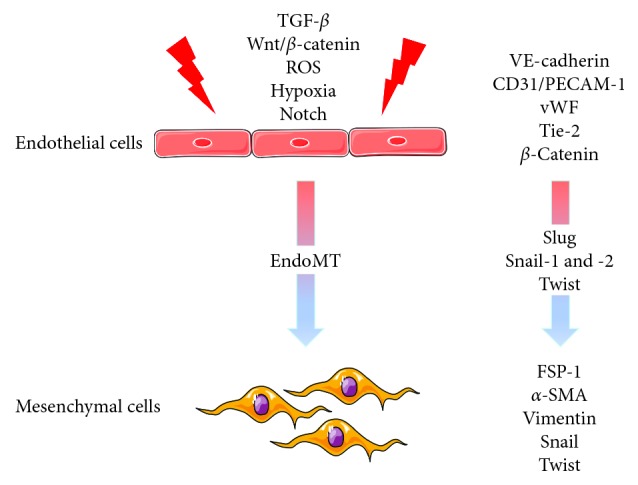
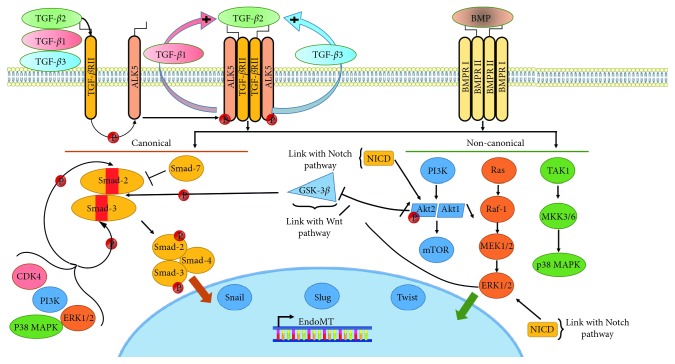
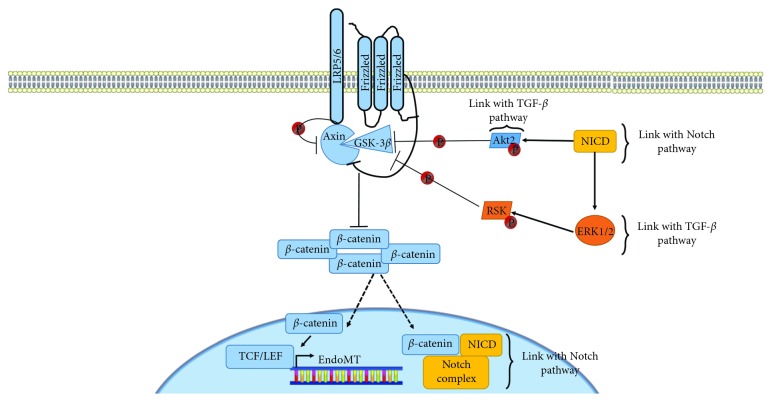
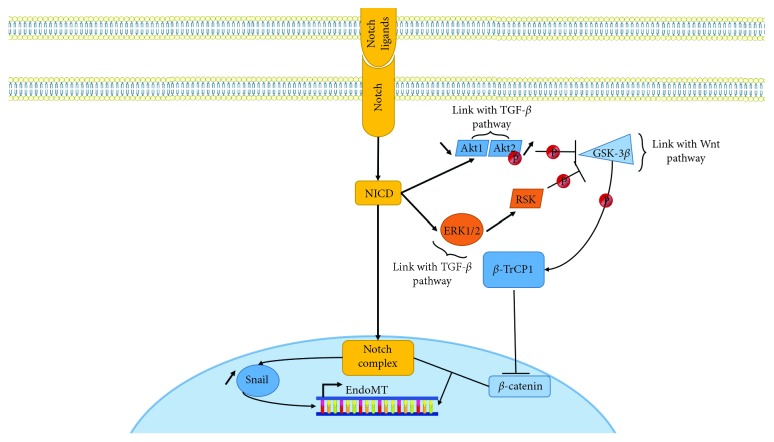
Verification
Claims the paper makes
The claims and statistics of this paper haven’t been checked yet.
Run the check — free, no account needed. It reads the open-access text and checks the sources it cites.
Claims other papers make about this one
Each is checked against this paper’s own text: does it say what the citing paper says it does?
In the citing paper
“Extravasation is known to be influenced by various environmental factors, such as ECM heterogeneity [4], immune cells [68], epithelial-to-mesenchymal transition (EMT) [69], integrins [70,71], blood flow [4,72], and biochemical gradients [73].”
From Cancer-on-chip models for metastasis: importance of the tumor microenvironment (2024) · cites this paper as [69]
Self-check
Percentages, sums and reported differences re-computed from the paper’s own numbers.
The self-check needs the paper’s full text.
Citations
Cites
1 retracted
Vetter, G., Saumet, A., Moes, M., Vallar, L., Béchec, A. L., Laurini, C., Sabbah, M., Arar, K., Theillet, C. G., Lecellier, C., et al. (2010) · Oncogene · doi:10.1038/onc.2010.181 · Cited by 122
RetractedHallmarks of Cancer: The Next Generation
Hanahan, D., & Weinberg, R. A. (2011) · Cell · doi:10.1016/j.cell.2011.02.013 · Cited by 66,590
Hanahan, D., & Weinberg, R. A. (2000) · Cell · doi:10.1016/s0092-8674(00)81683-9 · Cited by 29,219
Tumor angiogenesis: therapeutic implications
Sherwood, L. M., Parris, E. E., & Folkman, J. (1971) · New England Journal of Medicine · doi:10.1056/nejm197111182852108 · Cited by 10,187
Microenvironmental regulation of tumor progression and metastasis
Quail, D. F., & Joyce, J. A. (2013) · Nature Medicine · doi:10.1038/nm.3394 · Cited by 7,994
Accessories to the Crime: Functions of Cells Recruited to the Tumor Microenvironment
Hanahan, D., & Coussens, L. M. (2012) · Cancer Cell · doi:10.1016/j.ccr.2012.02.022 · Cited by 4,632 · cited 1×
“*is microenvironment is composed of numerous cell types: immune cells (bone marrow-derived inflammatory cells, monocytes/ macrophages, and lymphocytes), vascular cells (endothelial cells and pericytes), and stromal fibroblastic cells, and of an extracellular matrix composed of collagen and proteoglycans [3, 4].”
BackgroundKalluri, R., & Zeisberg, M. (2006) · Nature Reviews Cancer · doi:10.1038/nrc1877 · Cited by 4,538
Cano, A., Pérez‐Moreno, M., Rodrigo, I., Locascio, A., Blanco, M. J., Barrio, M. G. D., Portillo, F., & Nieto, M. A. (2000) · Nature Cell Biology · doi:10.1038/35000025 · Cited by 3,672
T cell exclusion, immune privilege, and the tumor microenvironment
Joyce, J. A., & Fearon, D. T. (2015) · Science · doi:10.1126/science.aaa6204 · Cited by 2,539
Endothelial-to-mesenchymal transition contributes to cardiac fibrosis
Zeisberg, E. M., Tarnavski, O., Zeisberg, M., Dorfman, A. L., McMullen, J. R., Gustafsson, E., Chandraker, A. K., Yuan, X., Pu, W. T., Roberts, A. B., et al. (2007) · Nature Medicine · doi:10.1038/nm1613 · Cited by 2,251
Cited by
Sorted by citations
Kumar, V., Ramnarayanan, K., Sundar, R., Padmanabhan, N., Srivastava, S., Koiwa, M., Yasuda, T., Koh, V., Huang, K. K., Tay, S. T., et al. (2022) · Cancer Discovery · doi:10.1158/2159-8290.cd-21-0683 · Cited by 573
TGF-β-Induced Endothelial to Mesenchymal Transition in Disease and Tissue Engineering
Ma, J., Sánchez‐Duffhues, G., Goumans, M., & ten Dijke, P. (2020) · Frontiers in Cell and Developmental Biology · doi:10.3389/fcell.2020.00260 · Cited by 250
Single-cell atlas of the human brain vasculature across development, adulthood and disease
Wälchli, T., Ghobrial, M., Schwab, M., Takada, S., Zhong, H., Suntharalingham, S., Vetiska, S., Rodríguez, D. G., Wu, R., Rehrauer, H., et al. (2024) · Nature · doi:10.1038/s41586-024-07493-y · Cited by 217
Endothelial cells in tumor microenvironment: insights and perspectives
Leone, P., Malerba, E., Susca, N., Favoino, E., Perosa, F., Brunori, G., Prete, M., & Racanelli, V. (2024) · Frontiers in Immunology · doi:10.3389/fimmu.2024.1367875 · Cited by 158
Endothelial-to-mesenchymal transition in anticancer therapy and normal tissue damage
Choi, K. J., Nam, J.-K., Kim, J.-H., Choi, S., & Lee, Y. (2020) · Experimental & Molecular Medicine · doi:10.1038/s12276-020-0439-4 · Cited by 116
Metadata
- Authors
- Platel, V., Faure, S., Corre, I., & Clere, N.
- Affiliations
- Centre National de la Recherche Scientifique (FR)
- Inserm (FR)
- Corresponding author
- Corre, Isabelle
- Clere, Nicolas
- Venue
- Journal of Oncology
- Publisher
- Wiley
- Published
- 2019-08-01
- Volume
- 2019
- Pages
- 1-13
- ISSN
- 1687-8450 (ISSN-L)
- 1687-8469
- PMC
- PMC6701373
- OpenAlex
- W2953419714
- Cited by
- 101
- References
- 131
- Citations by year
- 2026: 2 · 2025: 14 · 2024: 16 · 2023: 17 · 2022: 14 · 2021: 18 · 2020: 16 · 2019: 2
- FWCI
- 1.19
- Type
- journal article
- Language
- en
- Open access
- hybrid
- doi.org
- Locations
- Journal of Oncology (publishedVersion, cc-by)
- PubMed Central (publishedVersion, cc-by)
- PubMed (publishedVersion)
- HAL (submittedVersion, other-oa)
- DOAJ (DOAJ: Directory of Open Access Journals) (submittedVersion, cc-by-sa)
- Funders
- Région Pays de la Loire
- Comité départemental du Maine et Loire de la Ligue contre le Cancer
- Comité départemental de Loire Atlantique de la Ligue contre le Cancer
- Topics
- Health Sciences › Medicine › Oncology › Cancer Cells and Metastasis
- Life Sciences › Biochemistry, Genetics and Molecular Biology › Molecular Biology › TGF-β signaling in diseases
- Life Sciences › Biochemistry, Genetics and Molecular Biology › Molecular Biology › Angiogenesis and VEGF in Cancer
- Keywords
- endothelial-to-mesenchymal transition, endothelial cells, cellular plasticity, carcinogenesis, metastasis, cancer therapy resistance, tumor microenvironment, tumor angiogenesis, TGF-beta, mesenchymal differentiation
About these checks
Registry, retraction, Cites and statistics results are computed, not judged, with one exception: a printed reference that no index lists is read once by a model before it counts as a citation error. Claims are extracted by a model and kept only when their quote appears verbatim in the text; each cited source is then checked, with a model’s help, for whether it says what the claim relies on. Those verdicts can be wrong — read the claim’s quote and the cited source before relying on one.
Statistics and arithmetic are recomputed, not judged.
Confidence bands are shown only for fields calibrated on our annotated test set. None is calibrated yet, so no band is shown.
What counts as a claim ›How we measure confidence ›How we check this ›
Are you an author, or do you see a problem with this page? Request a review
