

The DOI matches its Crossref record.
Research on the Evaluation of Ecotourism Resources: Based on the AHP Model
Abstract
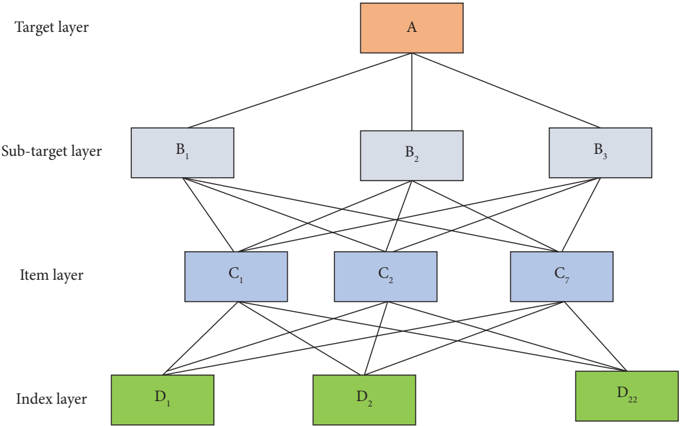
The comprehensive evaluation of ecotourism resources in the Qinling Mountains scenic spot using the AHP method can provide a reference for the sustainable construction and development of ecotourism resources, as well as the development of other tourism areas. Based on the analytic hierarchy process, the evaluation system of Qinling Mountain Ecotourism Resources is constructed, and the construction system is used to evaluate tourism ecological resources. The results show that, among the subtarget levels, the highest score is the interaction of tourism areas in the same region and the second is the applicability of regulations. These two indicators have a high impact on the score of Qinling Mountain Ecotourism Resources. In the project layer, the source of passenger flow has the largest weight, which is 0.1717, and the distribution of resource types has a smaller weight. At the index level, participation needs to be considered for tourism participation design. The Qinling scenic area has high historical and cultural value, diverse resource types, good tourist source market conditions, and great tourism development potential. However, problems exist, such as low resource aggregation and imperfect tourism supporting facilities development. It is necessary to develop ecotourism resources on the premise of ensuring environmental quality while taking into account the in-depth excavation of the experience and ornamental values of tourism resources, establishing the tourism characteristics of scenic spots from many aspects, such as improving tourism participation.
Overview
The claims and statistics of this paper haven’t been checked yet.
Run the check — free, no account needed. It reads the open-access text and checks the sources it cites.
Integrity signals
Registry
Cites
Statistics
Figures
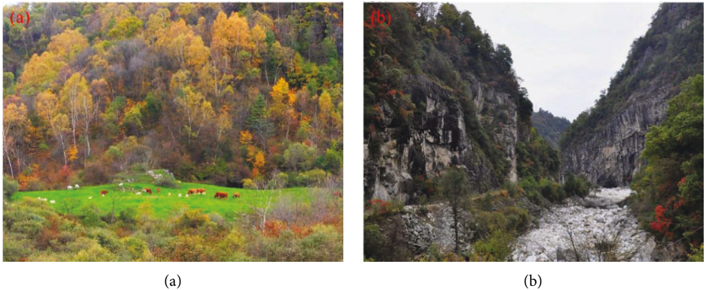
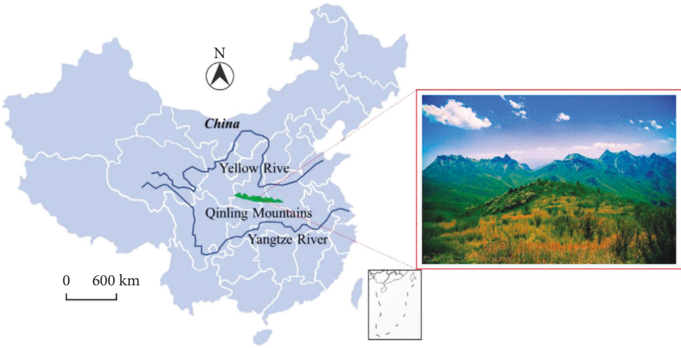
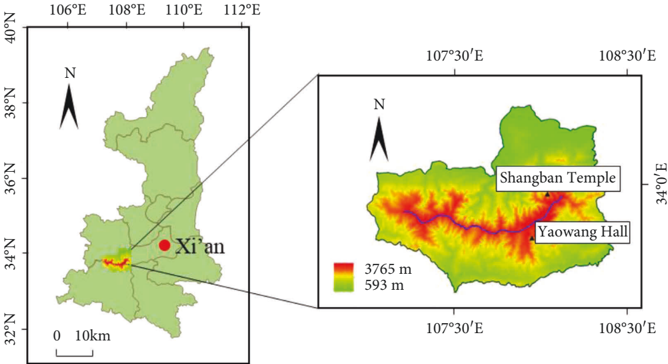
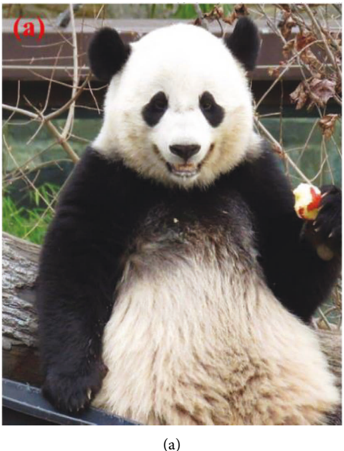
Verification
Claims the paper makes
The claims and statistics of this paper haven’t been checked yet.
Run the check — free, no account needed. It reads the open-access text and checks the sources it cites.
Claims other papers make about this one
Each is checked against this paper’s own text: does it say what the citing paper says it does?
In the citing paper
“For instance, studies on the Qinling Mountains highlight how administrative divisions disrupt ecological and cultural continuity, with localized policies often prioritizing economic development over holistic heritage integration 7,8 .”
From Circuit theory-based cultural heritage corridor network development in qin river basin (2025) · cites this paper as [7]
Self-check
Percentages, sums and reported differences re-computed from the paper’s own numbers.
The self-check needs the paper’s full text.
Citations
Cites
No references could be resolved yet.
Research works printed but not linked: 30
- X. Chen, 2020, Study on the rural ecotourism resource evaluation system, Environmental Technology & Innovation, 20
- 10.1177/1550147719895953 · DOI
- 10.1007/s13157-020-01274-9 · DOI
- 10.3390/su6106781 · DOI
- 10.1007/s12145-021-00611-8 · DOI
- A. Smriti, 2019, Evaluating the applicability of ESM (Ecotourism Sustainability Maximization) model to assess, monitor, and manage the ecotourism sustainability in mountain ecosystem (Mt. Kangchendzonga Base Camp Trek, India), Environmental Monitoring and Assessment, 191, 1
- 10.1016/j.cosust.2018.04.004 · DOI
- 10.2112/09-1181.1 · DOI
- W. Wu, 2015, Comprehensive evaluation of cloud manufacturing service based on fuzzy theory ecotourism suitability and zoning from the tourist perspective: a nature reserve case study, Polish Journal of Environmental Studies, 24, 2683, 10.15244/pjoes/59422 · DOI
- 10.1007/s40815-021-01071-4 · DOI
- 10.1155/2022/9047644 · DOI
- 10.1007/s10668-021-01528-4 · DOI
- S. A. Jozi, 2010, Presentation of strategic management plan in ecotourism development through SWOT: case study of Qeshm Island, Journal of Food Agriculture and Environment, 8, 1123
- 10.1007/s10668-020-00964-y · DOI
- S. Gass, 2005, Model world: the great debate - MAUT versus AHP journal, Interfaces, 35, 308, 10.1287/inte.1050.0152 · DOI
- 10.1007/s13762-020-02633-z · DOI
- 10.1007/s41324-020-00316-y · DOI
- M. Salemi, 2019, Conceptual framework for evaluation of ecotourism carrying capacity for sustainable development of Karkheh protected area, Iran, The International Journal of Sustainable Development and World Ecology, 26, 1, 10.1080/13504509.2019.1570379 · DOI
- 10.1016/j.tmp.2018.09.007 · DOI
- 10.1111/j.1523-1739.2007.00703.x · DOI
- 10.1155/2022/7106926 · DOI
- M. Kolahi, 2014, From paper parks to real conservations: case study of social capital in Iran’s biodiversity conservation, International Journal of Environmental Research, 8, 101
- 10.3390/su7044727 · DOI
- 10.3390/w14162486 · DOI
- S. Wearing, 2019, Exploring tripartite praxis for the REDD + forest climate change initiative through community based ecotourism, Journal of Sustainable Tourism, 28, 1
- F. Monti, 2018, The price of success: integrative long-term study reveals ecotourism impacts on a flagship species at a UNESCO site, Animal Conservation, 21, 10.1111/acv.12407 · DOI
- 10.1016/j.ecolecon.2018.04.036 · DOI
- M. Erfani, 2015, Tourism positioning using decision support system (case study: chahnime-Zabol, Iran), Environmental Earth Sciences, 74, 3135, 10.1007/s12665-015-4365-z · DOI
- 10.1080/13504509.2011.556816 · DOI
- T. P. L. Nguyen, 2020, Promoting participation in local natural resource management through ecological cultural tourism: case study in vam nao reservoir area, an giang province, vietnam, Journal of Asian and African Studies, 55, 863, 10.1177/0021909620935426 · DOI
Cited by
Circuit theory-based cultural heritage corridor network development in qin river basin
Lin, Z., & Li, B. (2025) · npj Heritage Science · doi:10.1038/s40494-025-01906-5 · Cited by 24
Metadata
- Authors
- Ren, L., & Lei, W.
- Affiliations
- Polus International College, Sichuan, Chengdu 610103, China
- Sichuan Conservatory of Music, Sichuan, Chengdu 610021, China
- ORCID
- Ren, Lei
- Venue
- Mathematical Problems in Engineering
- Publisher
- Wiley
- Published
- 2022-10-06
- Volume
- 2022
- Pages
- 1-10
- ISSN
- 1563-5147
- 1024-123X
- Cited by
- 5
- References
- 0
- Language
- en
About these checks
Registry, retraction, Cites and statistics results are computed, not judged, with one exception: a printed reference that no index lists is read once by a model before it counts as a citation error. Claims are extracted by a model and kept only when their quote appears verbatim in the text; each cited source is then checked, with a model’s help, for whether it says what the claim relies on. Those verdicts can be wrong — read the claim’s quote and the cited source before relying on one.
Statistics and arithmetic are recomputed, not judged.
Confidence bands are shown only for fields calibrated on our annotated test set. None is calibrated yet, so no band is shown.
What counts as a claim ›How we measure confidence ›How we check this ›
Are you an author, or do you see a problem with this page? Request a review
How to cite
Cite CoChat for the checks on this page, and the paper for its own findings.
- This page
- CoChat. (2026). Citation check: Research on the Evaluation of Ecotourism Resources: Based on the AHP Model. https://app.cochat.ai/papers/10.1155/2022/7398537
- The paper
- Ren, L., & Lei, W. (2022). Research on the Evaluation of Ecotourism Resources: Based on the AHP Model. Mathematical Problems in Engineering. https://doi.org/10.1155/2022/7398537
Data sources
Bibliographic data: Semantic Scholar, OpenAlex, Crossref.
Contains information from the Semantic Scholar Academic Graph Datasets, made available under the ODC Attribution License (ODC-BY 1.0).
Semantic Scholar’s data is described in: Kinney, R., et al. (2023). The Semantic Scholar Open Data Platform. arXiv:2301.10140.
